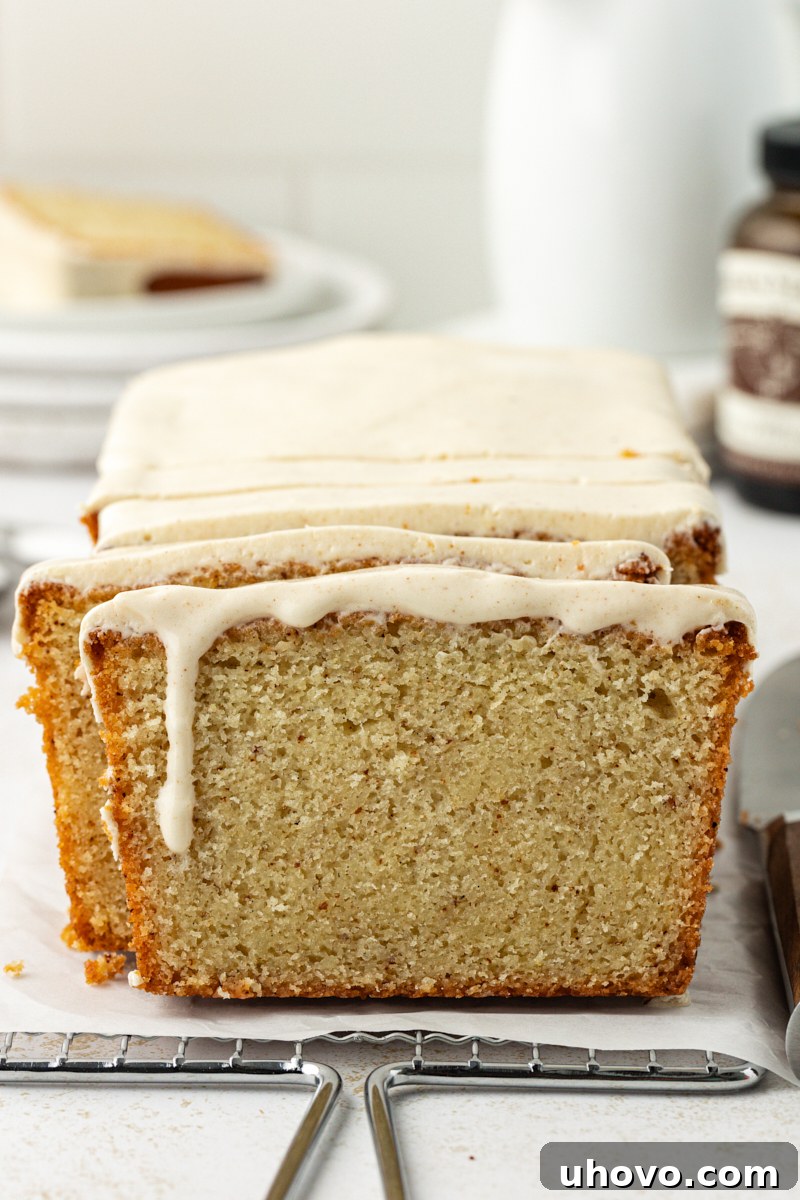
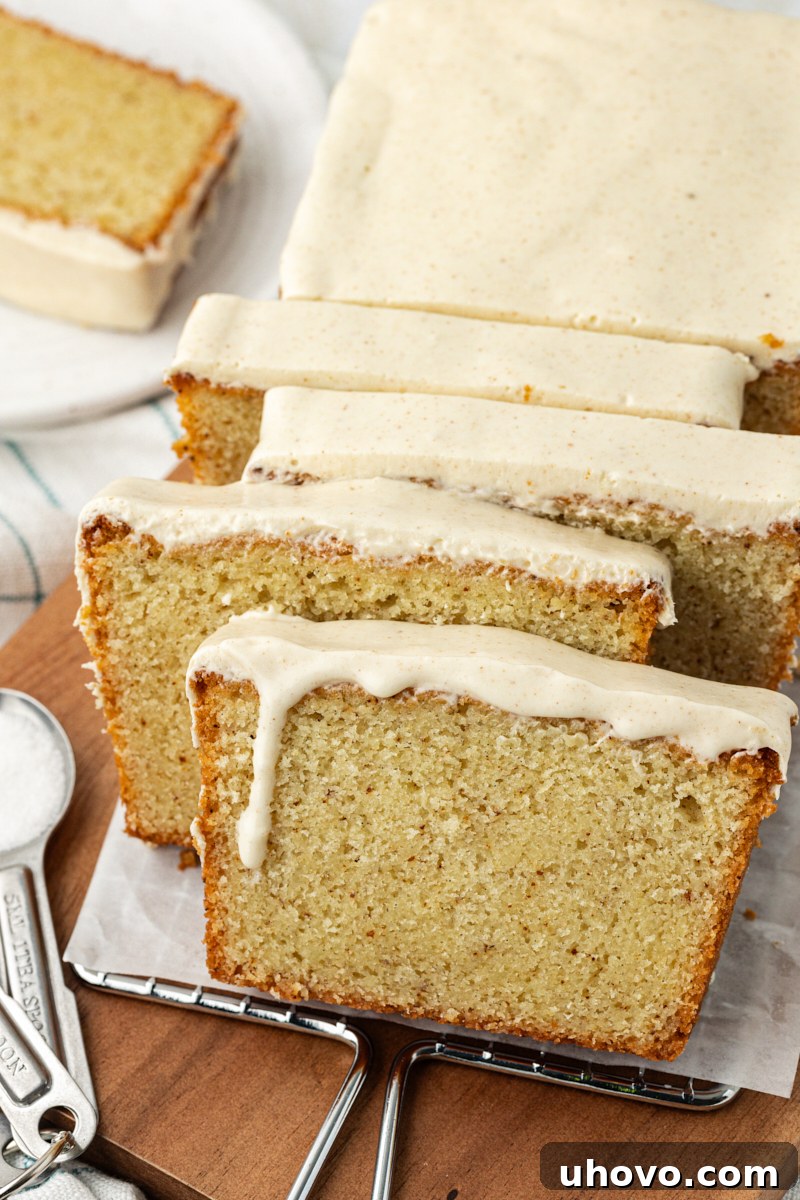
This incredibly easy brown butter cake recipe delivers a wonderfully moist, rich, and utterly delicious dessert that will quickly become a household favorite. The secret to its irresistible flavor lies in the aromatic, nutty brown butter, which elevates a classic vanilla pound cake to an extraordinary experience. Prepare yourself for a cake that boasts a depth of flavor far beyond its simple ingredients.
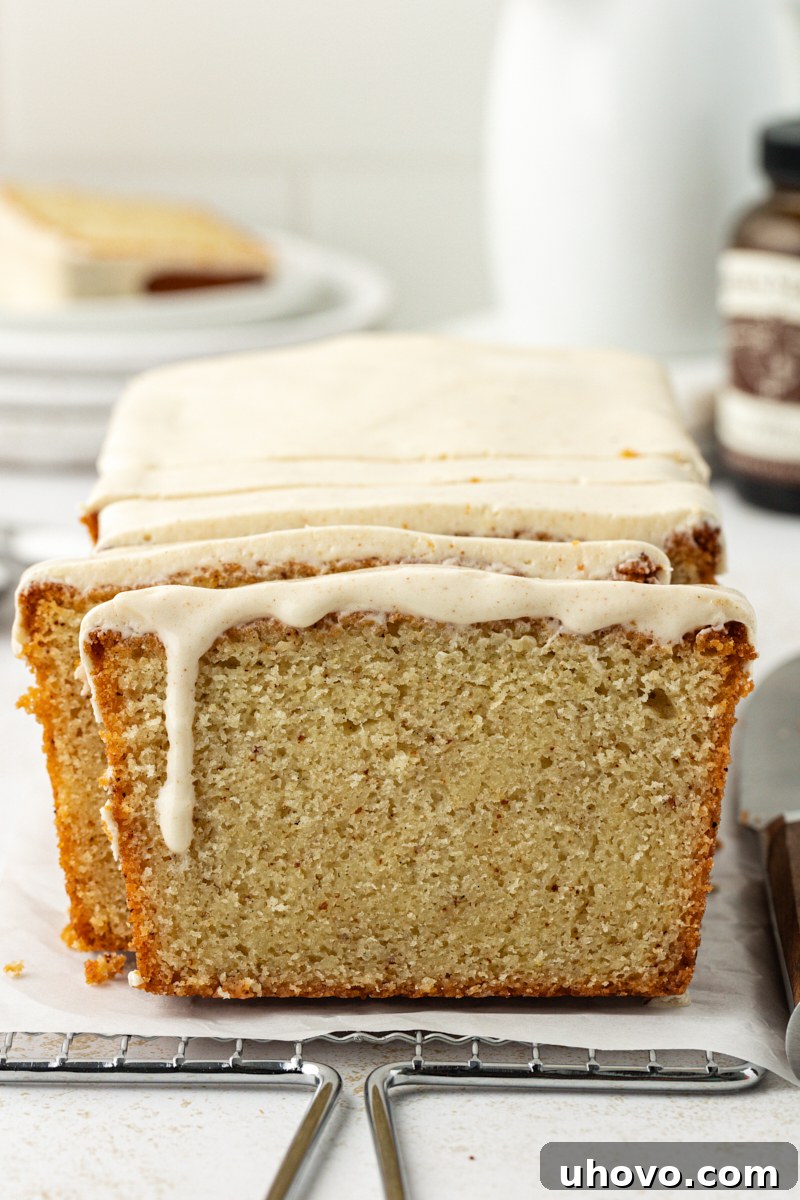
While a traditional pound cake might sometimes be considered a straightforward dessert, the introduction of brown butter transforms it into something truly crave-worthy. This simple yet profound change infuses the cake with a warm, toasted, and slightly caramel-like nuance that is simply captivating. And for an even greater flavor boost, we incorporate that same luscious brown butter into a sweet, creamy cheese glaze, creating a symphony of textures and tastes that will delight your palate.
Why You’ll Adore This Brown Butter Cake Recipe
- Unmatched Versatility. This brown butter cake is a perfect companion for any occasion. Enjoy a slice as a comforting snack, serve it as an elegant dessert after dinner, or even secretly savor it with your morning coffee. Its balanced sweetness and comforting flavor profile make it suitable for breakfast, brunch, or an afternoon treat, proving that a truly delicious cake knows no boundaries!
- Exquisitely Balanced Flavor. Unlike many desserts that rely on overwhelming sweetness, this brown butter cake prioritizes a harmonious flavor profile. The star of the show is the wonderful nutty, toasted notes of the brown butter, which provides a sophisticated depth that complements the vanilla without being overly sugary. Each bite offers a rich, buttery taste with subtle hints of caramel.
- Effortless Elegance with Pantry Staples. You’ll be delighted to find that most, if not all, the ingredients needed for this brown butter cake are likely already in your kitchen. This makes it an ideal recipe to turn to whenever a craving strikes, allowing you to whip up a simple yet impressively flavorful dessert without a special trip to the grocery store. It’s truly one of those recipes you’ll find yourself making time and again when you desire a foolproof and crowd-pleasing treat.
- Beginner-Friendly Yet Impressive. Despite its complex and sophisticated taste, this recipe is remarkably straightforward, making it accessible even for novice bakers. The steps are clearly outlined, and the magic of brown butter requires minimal effort for maximum flavor payoff, ensuring a stunning result every time.
Want to Save This Recipe?
Enter your email below to have this delicious brown butter cake recipe sent directly to your inbox. Plus, you’ll receive more of our best baking recipes and tips!
(Email submission feature removed as per instructions to remove Javascript code.)
Essential Ingredients for Your Brown Butter Cake
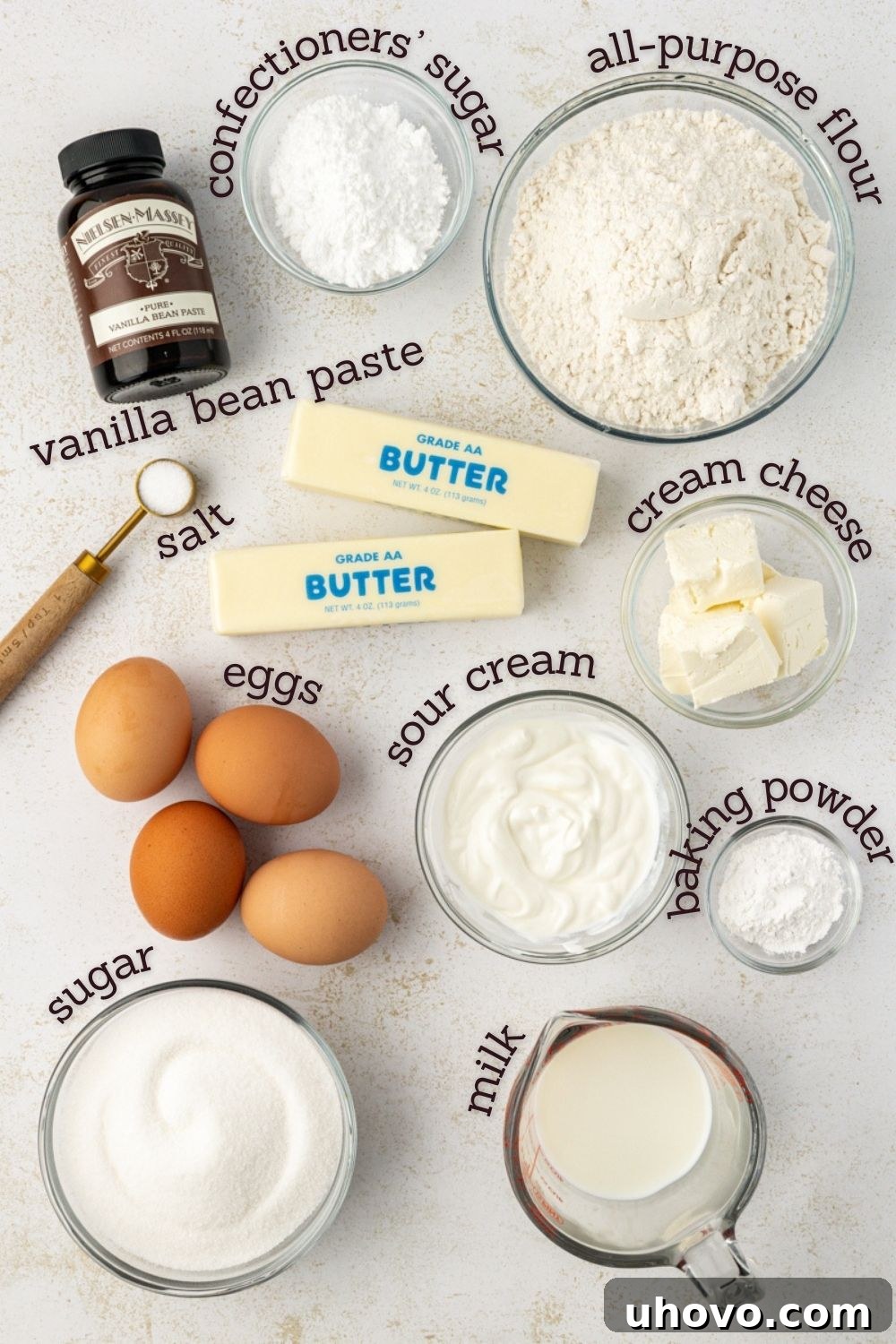
Creating this irresistible brown butter cake requires a selection of common baking ingredients, but remember that the quality of each plays a significant role in the final flavor. For precise quantities and detailed instructions, please refer to the recipe card below.
For the Cake:
- Unsalted Butter – As the centerpiece of this recipe, the butter’s quality shines through. Opt for a good quality unsalted butter, as it will be transformed into flavorful brown butter, imparting a rich, nutty base to your cake.
- All-Purpose Flour – Ensure accurate measurements for the best texture. Learn how to measure flour correctly to prevent a dense or dry cake. Properly measured flour is key to a tender crumb.
- Baking Powder – This leavening agent gives the cake its lift, contributing to a light and airy texture. Ensure yours is fresh for optimal results.
- Salt – A touch of salt balances the sweetness and enhances all the other flavors, particularly the rich butter notes.
- Granulated Sugar – Provides sweetness and moisture, and also contributes to the cake’s golden-brown crust.
- Large Eggs – For optimal emulsification and a smooth batter, allow your eggs to come to room temperature before you begin baking. This helps them incorporate more easily and evenly into the batter.
- Sour Cream – The inclusion of sour cream is vital for ensuring a wonderfully moist and tender crumb. Its acidity also helps activate the baking powder, contributing to a good rise. Make sure it’s at room temperature for seamless mixing.
- Vanilla Bean Paste – For an authentic, intense vanilla flavor and those beautiful specks of vanilla bean, paste is ideal. You can substitute the seeds of 1 whole vanilla bean or 1 tablespoon of high-quality vanilla extract if paste is unavailable.
For the Glaze:
- Unsalted Butter – Again, quality matters here as this butter will also be browned to create the flavorful glaze.
- Cream Cheese – For the best creamy, tangy glaze, use full-fat block cream cheese, not the spreadable kind that comes in a tub. Ensure it’s softened to room temperature for a lump-free glaze.
- Confectioners’ Sugar – Also known as powdered sugar, this is essential for a smooth, sweet glaze. Sifting is highly recommended to prevent lumps.
- Warm Milk – Any type of milk you have on hand will work to achieve the perfect pourable consistency for your glaze.
What Is Vanilla Bean Paste?
Vanilla bean paste is a concentrated, thick paste made from the seeds of vanilla bean pods, often combined with a natural sweetener and vanilla extract. It’s treasured in baking for its ability to impart a robust, authentic vanilla flavor and those characteristic tiny black specks that signify true vanilla goodness. Think of vanilla bean paste as a convenient and more economical alternative to whole vanilla beans, offering an intensified flavor that surpasses standard vanilla extract in many applications, perfect for enhancing your cakes and desserts.
Crafting Your Delicious Brown Butter Cake: A Step-by-Step Guide
Follow these detailed instructions to create a moist, flavorful brown butter pound cake with a luscious cream cheese glaze. Precision and patience are key to unlocking the best flavors.
To Prepare the Cake:
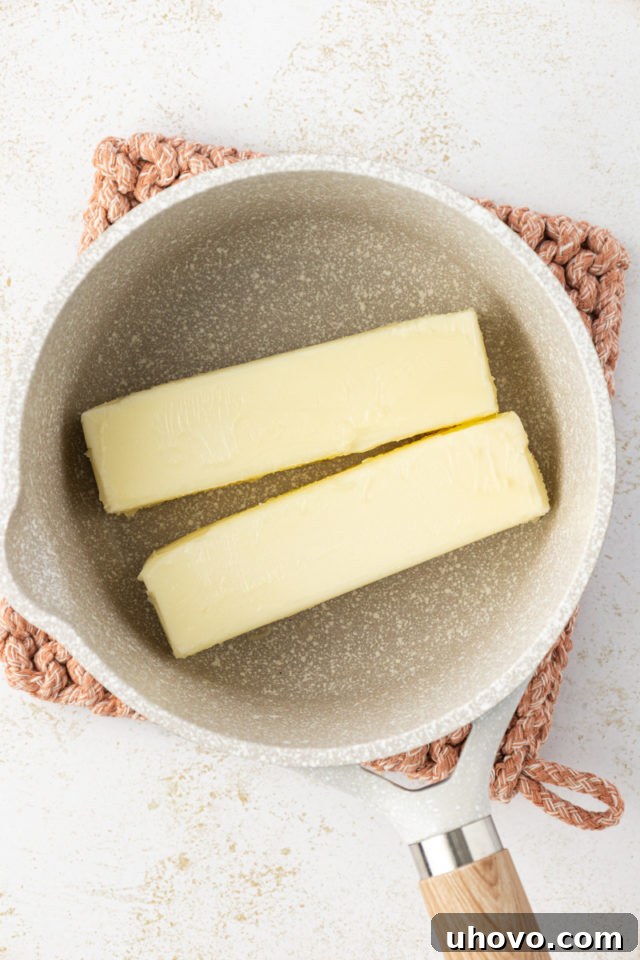
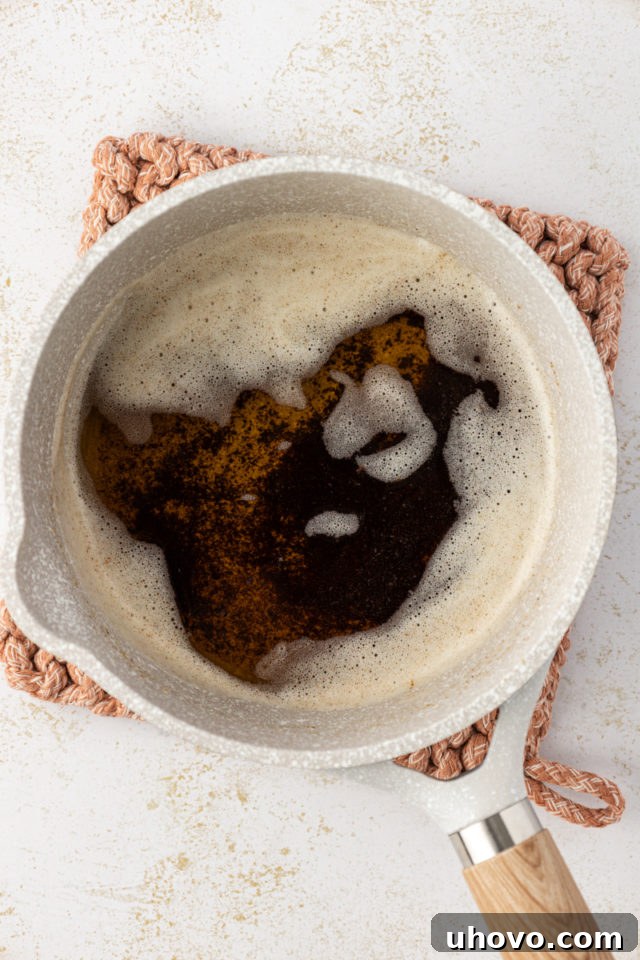
- Brown the Butter to Perfection. Place the specified amount of unsalted butter for the cake in a medium-sized saucepan or skillet. Cook over medium heat, stirring occasionally, until the butter melts, foams, and then transitions into a beautiful golden-brown color. You’ll notice delightful brown specks forming at the bottom of the pan, and a distinct, rich, nutty aroma will fill your kitchen. This is the essence of brown butter! Immediately transfer the hot brown butter, including all the browned bits (they’re full of flavor!), to a large mixing bowl. Allow it to cool undisturbed for approximately one hour, or until it re-solidifies to a soft, spreadable consistency. This step is crucial for the cake’s texture.
- Preheat and Prepare. While the brown butter cools, preheat your oven to 350°F (175°C). Generously grease and lightly flour a standard 9×5-inch loaf pan, ensuring all interior surfaces are covered to prevent sticking.
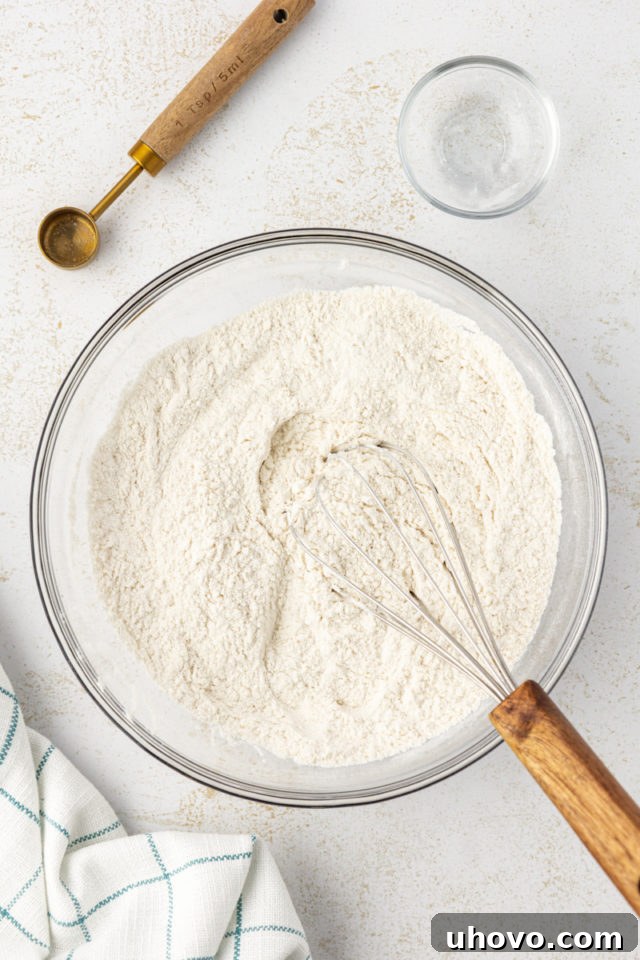
- Whisk Dry Ingredients. In a separate medium mixing bowl, whisk together the all-purpose flour, baking powder, and salt until they are thoroughly combined. Set this mixture aside for later.
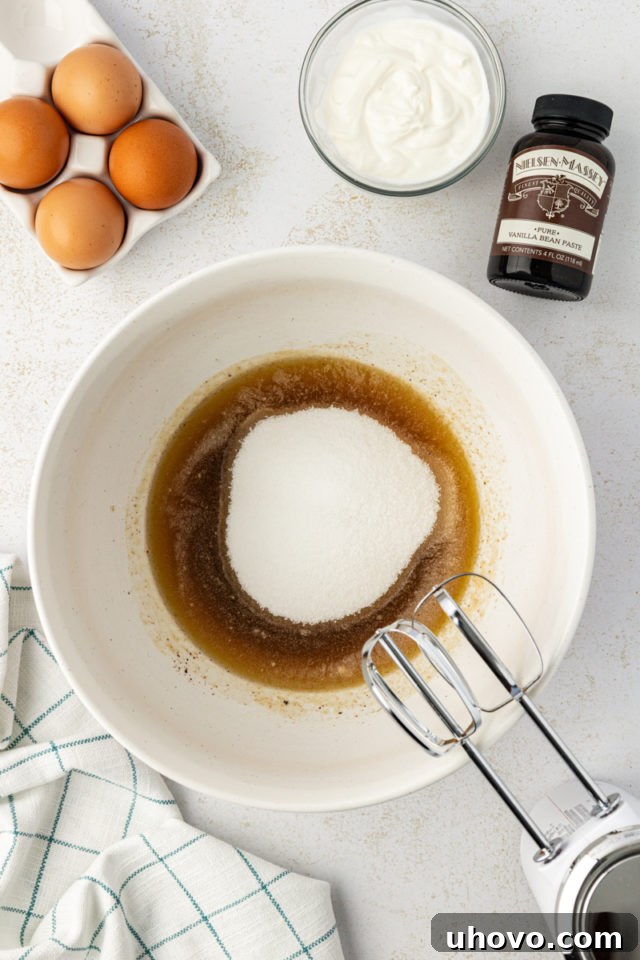
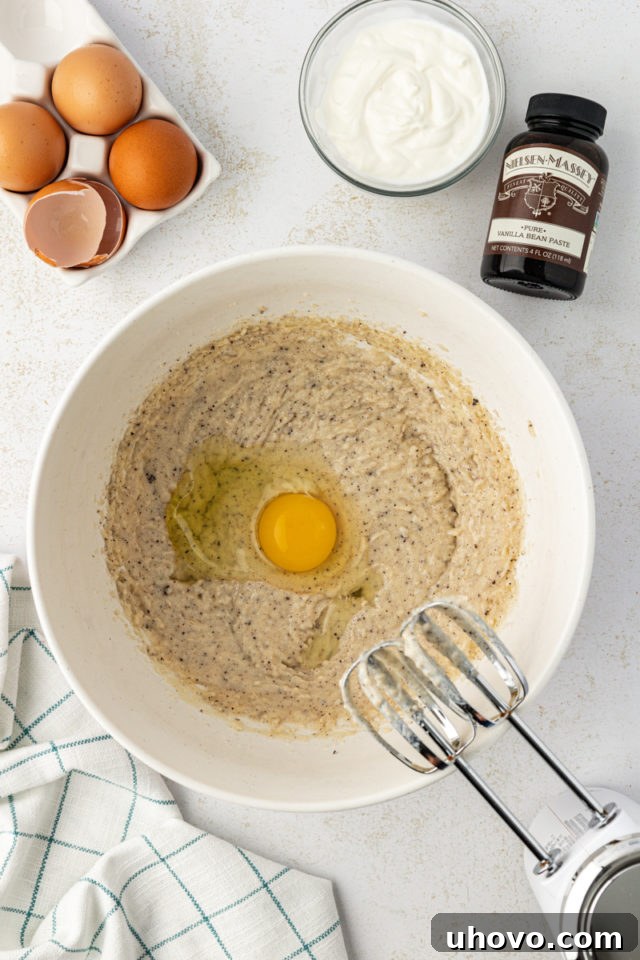
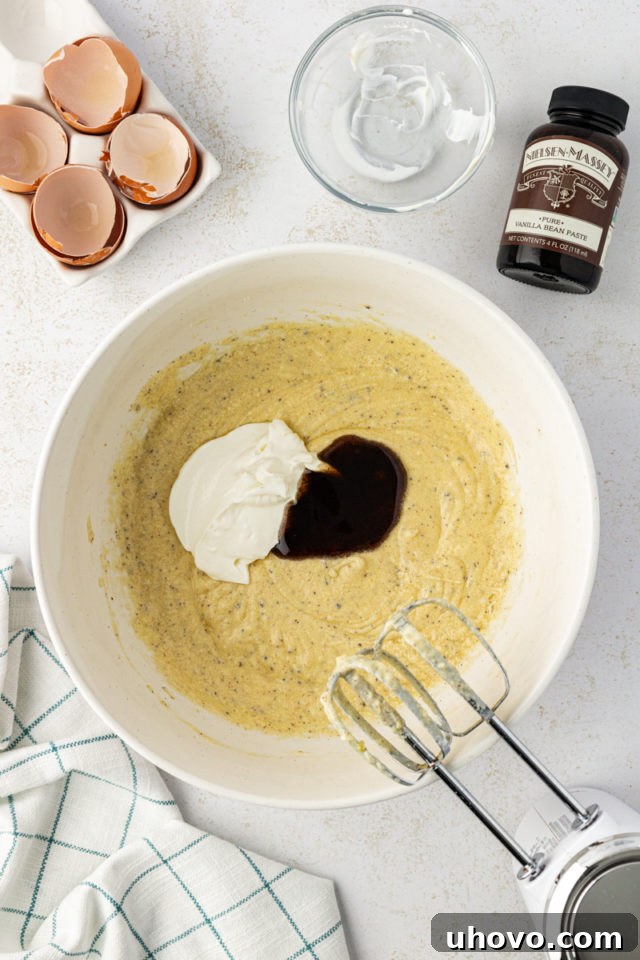
- Cream Wet Ingredients. Once the brown butter has cooled and solidified, add the granulated sugar to it in the large mixing bowl. Using an electric mixer on medium speed, beat the brown butter and sugar together until the mixture becomes light, fluffy, and noticeably paler in color. Next, add the large eggs one at a time, beating well after each addition until fully incorporated. Finally, mix in the room-temperature sour cream and vanilla bean paste until just combined, scraping down the sides of the bowl as needed.
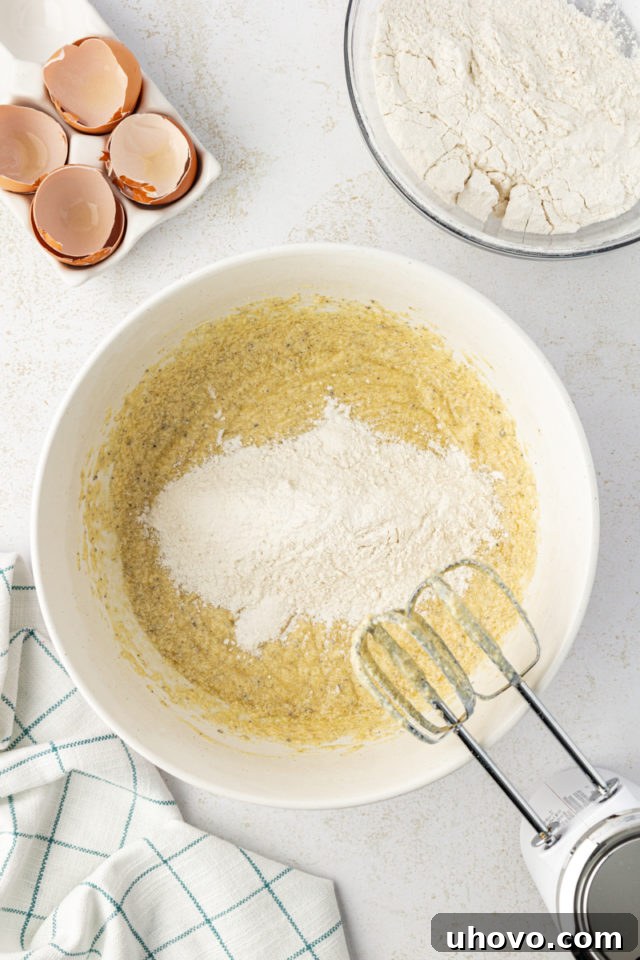
- Combine Wet and Dry. Reduce your electric mixer’s speed to low. Gradually add the dry flour mixture to the wet ingredients, mixing only until just combined. Be careful not to overmix the batter, as this can develop the gluten too much, leading to a tough cake. A few streaks of flour are acceptable; the goal is just to incorporate.
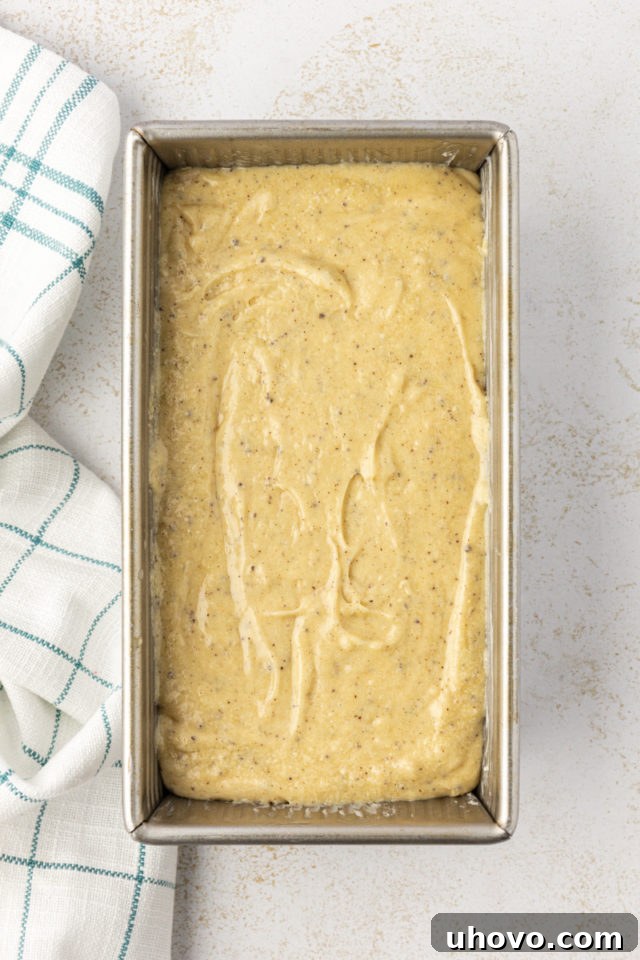
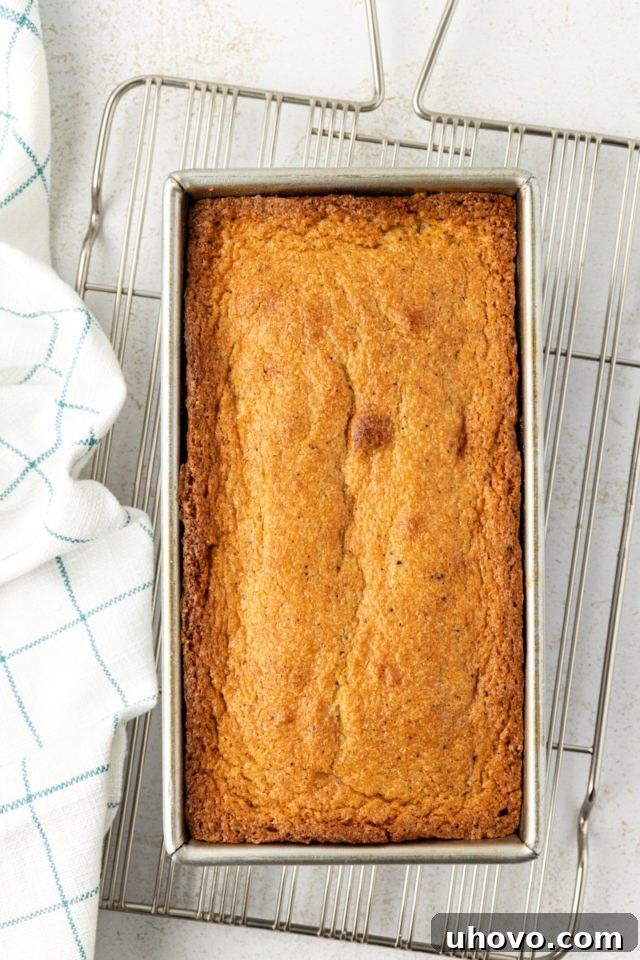
- Bake to Golden Perfection. Pour the prepared cake batter evenly into your greased and floured loaf pan, spreading it gently with a spatula to ensure a level top. Bake for 50 to 60 minutes, or until the cake is beautifully golden brown on top and a wooden skewer or toothpick inserted into the center comes out with moist crumbs attached (not wet batter). If the top of the cake begins to brown too quickly, you can loosely tent it with aluminum foil for the remaining baking time.
- Cool Completely. Once baked, remove the cake from the oven and let it cool in the loaf pan on a wire rack for at least 20 minutes. This allows the cake to set and firm up before handling. After 20 minutes, carefully invert the cake onto the wire rack to cool completely. Allowing it to cool fully is essential before applying the glaze to prevent it from melting.
Crafting the Irresistible Glaze:
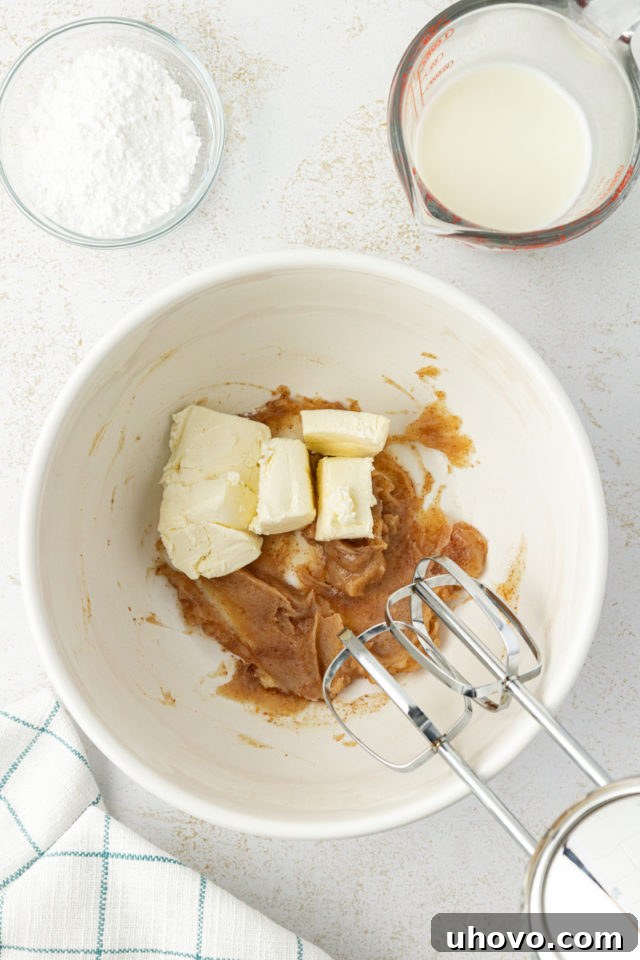
- Brown the Glaze Butter. Using a clean medium saucepan or skillet, repeat the browning process with the 3 tablespoons of unsalted butter designated for the glaze. Cook until it turns golden brown with nutty specks and a fragrant aroma. Immediately transfer this browned butter (bits included) to a medium mixing bowl and let it cool and solidify for about an hour, similar to the cake butter.
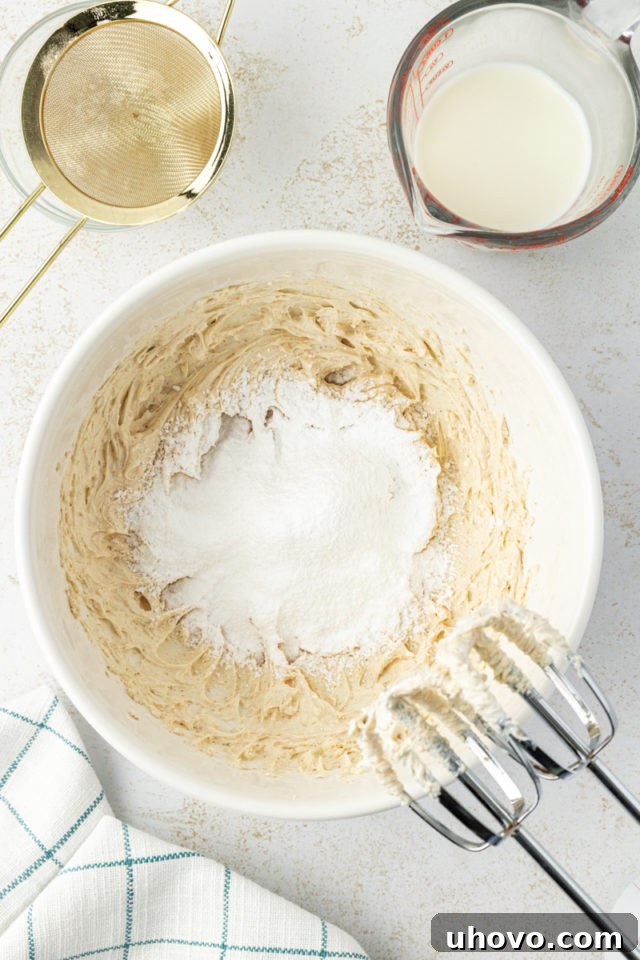
- Whip the Glaze Ingredients. In the bowl with the cooled, solidified brown butter, add the softened cream cheese. Using an electric mixer on medium speed, beat the brown butter and cream cheese together until the mixture is light, fluffy, and perfectly smooth. Gradually add the sifted confectioners’ sugar, beating thoroughly until no lumps remain.
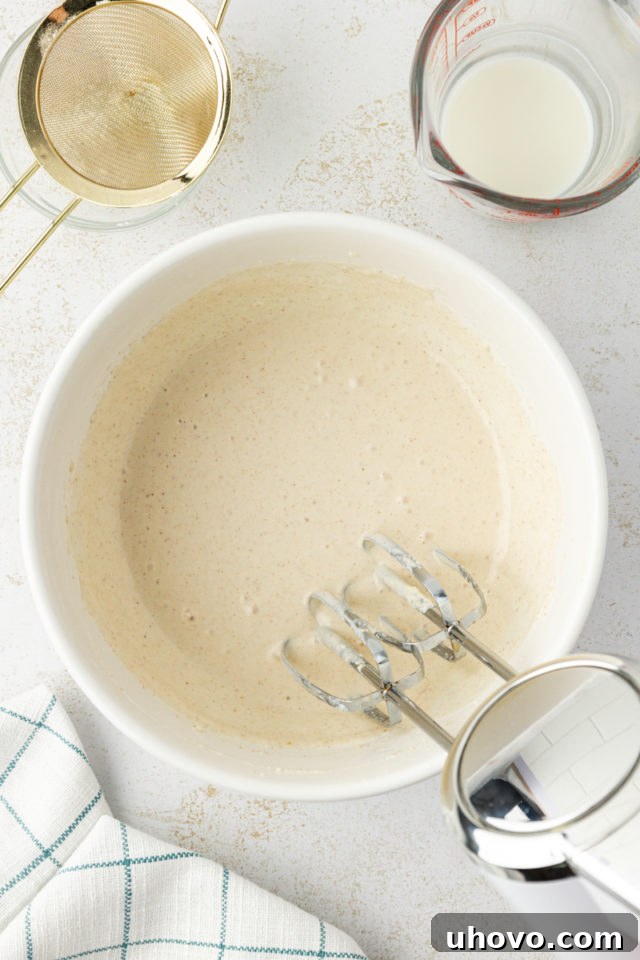
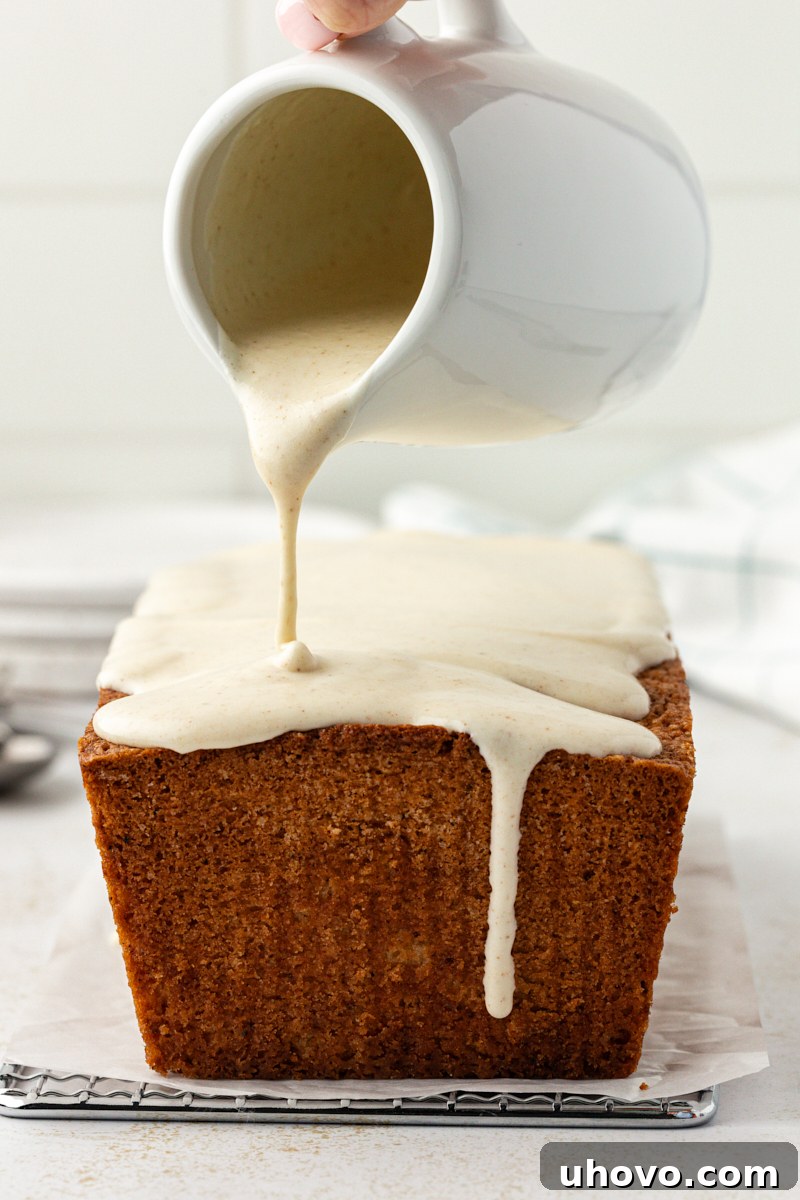
- Achieve Perfect Consistency. Begin by adding 2 tablespoons of warm milk to the glaze mixture, beating well until fully incorporated. Continue adding more warm milk, a small amount (about a teaspoon) at a time, until the glaze reaches a thick but pourable consistency. You want it to be thick enough to cling to the cake but still flow smoothly.
- Glaze and Serve. Once the cake has completely cooled, generously pour the prepared brown butter cream cheese glaze over the top, allowing it to drip down the sides for an appealing finish. Let the glaze set for a few minutes before slicing and serving. Enjoy!
Expert Tips for Brown Butter Cake Success
- Allow the Brown Butter to Cool and Solidify. This is a critical step that might differ from other brown butter recipes. After browning the butter for both the cake and the glaze, it’s essential to let it cool completely until it re-solidifies to a soft, spreadable consistency. This unique texture allows it to be creamed with sugar much like softened butter, contributing to the pound cake’s classic structure and tender crumb. Patience here yields the best results.
- Brown Butter Separately for Cake and Glaze. Although it might seem tempting to brown all the butter at once, it’s highly recommended to brown the butter for the cake and the glaze in separate batches. This is because butter loses approximately 25% of its total volume during the browning process as water evaporates. Browning it separately ensures you measure the correct amount for each component of the recipe, guaranteeing optimal flavor and consistency. You can simply wipe out the pan used for the cake butter and use it again for the glaze butter.
- Sift Your Confectioners’ Sugar. To achieve a perfectly smooth and lump-free glaze, sifting the confectioners’ sugar is a non-negotiable step. Even if your powdered sugar looks fine, it often contains tiny clumps that, if not sifted out, will result in a grainy glaze. If you don’t have a fine-mesh sifter, a fine-mesh strainer will work just as well.
- Ensure Room Temperature Cream Cheese. For a silky-smooth glaze, it’s crucial that your cream cheese is at true room temperature. Cold cream cheese will not blend evenly and will leave unsightly lumps in your glaze, no matter how much you beat it. Take it out of the refrigerator at least an hour before you plan to make the glaze.
- Cool the Cake Completely Before Glazing. This tip cannot be stressed enough! Applying glaze to a warm or hot cake is a recipe for disaster. The heat will cause the glaze to melt instantly, running off the sides of the cake and absorbing into the crumb, leaving you with a sticky mess and no beautiful top coating. Always wait until the cake is entirely cool to the touch.
- Do Not Overmix the Batter. Once you add the flour mixture to the wet ingredients, mix only until just combined. Overmixing develops the gluten in the flour, which can lead to a dense, tough, and chewy cake instead of the desired tender and moist pound cake texture. A few small streaks of flour are preferable to an overmixed batter.
- Proper Pan Preparation is Key. Even with a non-stick pan, thoroughly greasing and flouring your loaf pan is essential for easy release. You can use butter or baking spray with flour. This simple step prevents the cake from sticking and ensures it comes out perfectly formed.
- Trust Your Oven Thermometer. Oven temperatures can vary significantly. Using an oven thermometer to verify your oven’s actual temperature can make a huge difference in baking success, ensuring your cake bakes evenly and perfectly.
Delicious Brown Butter Cake Variations to Explore
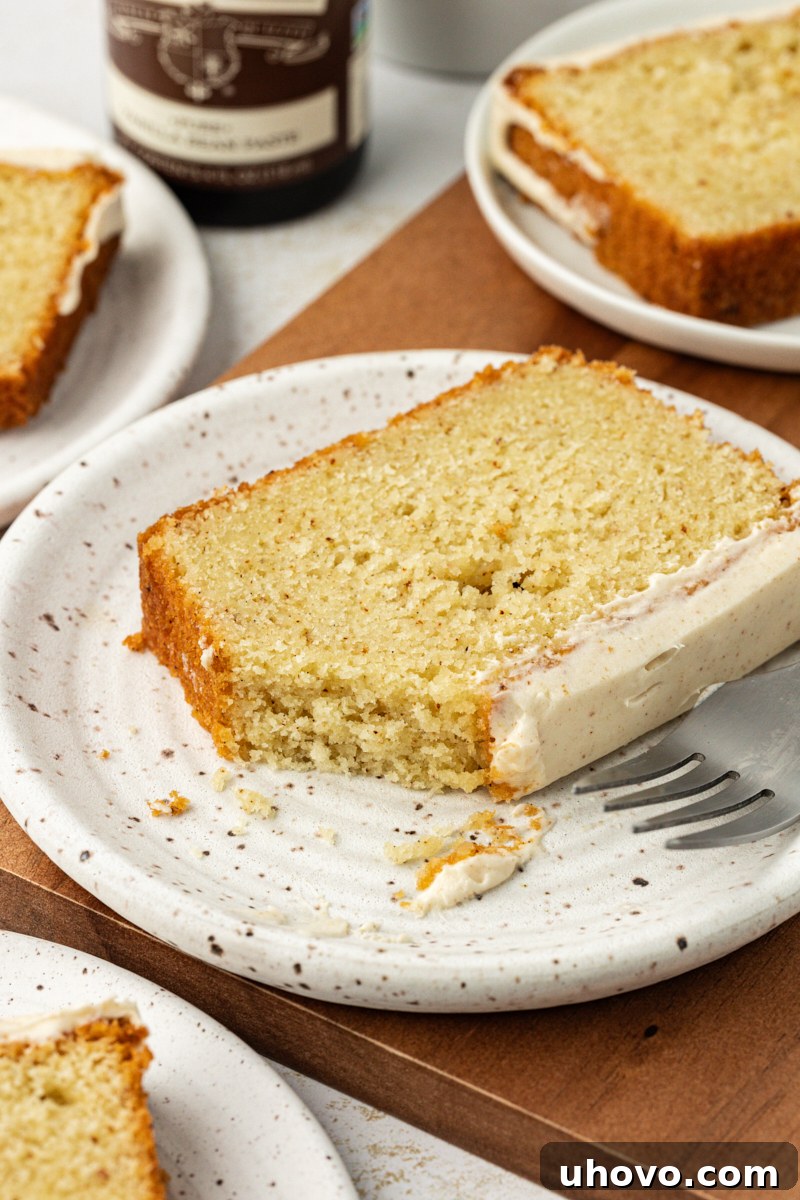
While this brown butter cake is exquisite on its own, it also serves as a fantastic canvas for creative additions. Here are a few ideas to customize your next bake:
- Infuse with a Bright Citrus Twist. For a delightful contrast and burst of freshness, incorporate the finely grated zest of one large orange into the cake batter. The bright notes of orange beautifully complement the deep, nutty flavor of brown butter without overpowering it, offering a sophisticated flavor pairing. You could also try grapefruit or lemon zest for a different profile.
- Enhance the Nutty Profile. To amplify the inherent nuttiness of the brown butter and add a satisfying textural crunch, fold in half a cup of finely chopped walnuts or pecans into the cake batter just before baking. Alternatively, sprinkle them generously over the wet glaze before it sets for a beautiful presentation and added crunch. Toasting the nuts lightly before adding them will further deepen their flavor.
- Warm It Up with Spices. Introduce a cozy, aromatic dimension by sprinkling half a teaspoon of ground cinnamon into the warm brown butter just after you remove it from the stovetop but before it cools. The residual heat from the butter will “bloom” the spice, releasing its full fragrance and infusing the brown butter cake with a warm, inviting cinnamon flavor. Nutmeg or a pinch of cardamom would also be lovely additions.
- Add a Touch of Chocolate. For chocolate lovers, folding in half a cup of mini chocolate chips or finely chopped bittersweet chocolate into the batter can create a delightful surprise in every bite. The chocolate pairs wonderfully with the caramel-like notes of brown butter.
- Berry Bliss. Fresh or frozen (not thawed) berries like blueberries or raspberries can be gently folded into the batter. This adds a burst of fruity tang that cuts through the richness of the cake, offering a lovely balance.
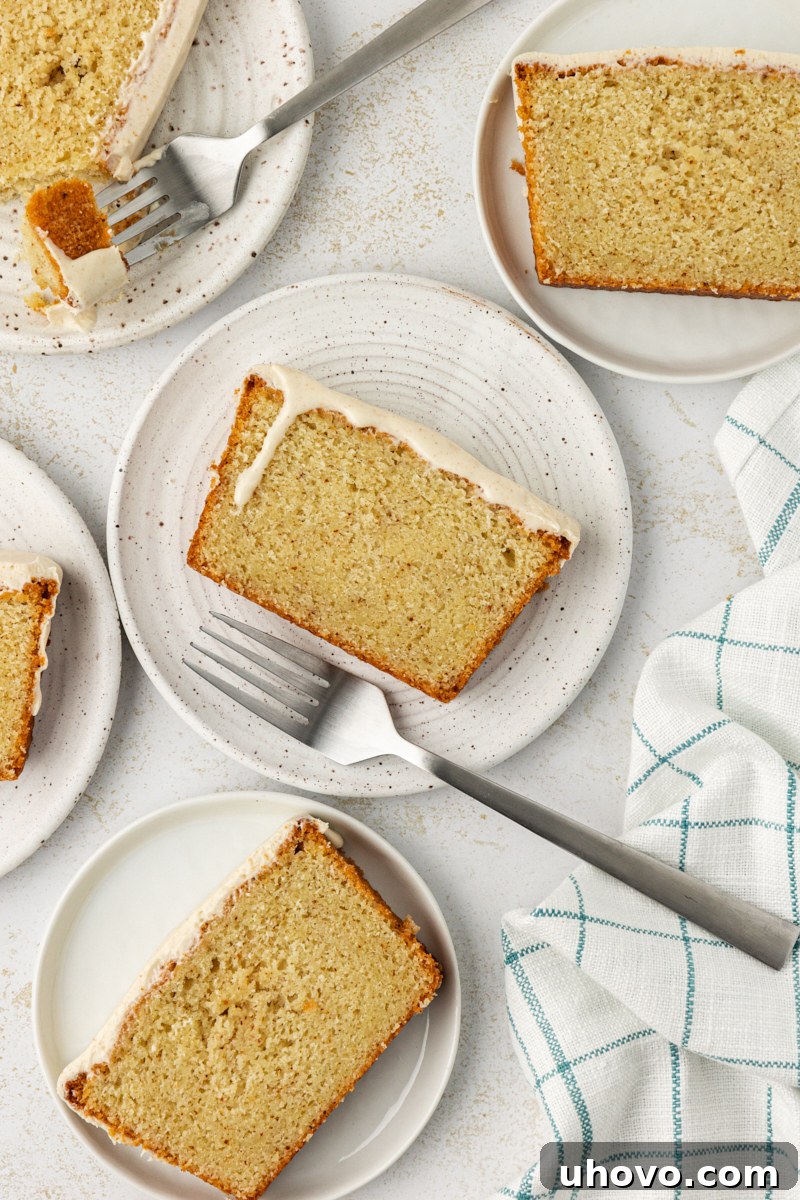
How to Store Your Brown Butter Cake
To maintain its freshness and delightful flavor, store your brown butter cake properly. At room temperature, wrapped tightly in plastic wrap or placed in an airtight container, the cake will remain delicious for up to 2 days. For extended enjoyment, you can refrigerate the cake for up to a week. Before serving chilled cake, allow it to sit at room temperature for about an hour. This brings out the best flavors and softens the texture, making for a truly enjoyable slice.
Can I Freeze This Recipe?
Absolutely! This brown butter cake freezes beautifully, allowing you to prepare it in advance or save leftovers for a later treat. To freeze, wrap the cooled cake tightly first in plastic wrap, ensuring no air can reach it, and then follow with a layer of aluminum foil. This double-layer protection is crucial to prevent freezer burn and preserve its delicate flavor and moist texture for up to 3 months. When you’re ready to enjoy it, simply thaw the cake overnight in the refrigerator before bringing it to room temperature for serving.
More Irresistible Recipes Featuring Brown Butter
Brown Butter Cake
10
servings
30 minutes
1 hour
20 minutes
1 hour
50 minutes
Pin Recipe
Leave a Review
Ingredients
For the cake:
- 1 cup (226 g) unsalted butter
- 1 ¾ cups (210 g) all-purpose flour
- 1 ½ teaspoons baking powder
- 1 teaspoon salt
- 1 cup (200 g) granulated sugar
- 4 large eggs, at room temperature
- ¼ cup (56 g) sour cream, at room temperature
- 1 tablespoon vanilla bean paste*
For the glaze:
- 3 tablespoons (42 g) unsalted butter
- 3 ounces (85 g) cream cheese, at room temperature
- ¼ cup (27 g) confectioners’ sugar, sifted
- 2 to 4 tablespoons (30 to 60 ml) warm milk
Recommended Products
-
Enameled Cast Iron Covered Round Dutch Oven, 4.3-Quart
-
USA Pan Standard Loaf Pan 9″ x 5″
-
OXO Good Grips Cake Tester
Instructions
To make the cake:
- Place the butter in a medium saucepan or skillet. Cook over medium heat until the butter melts and begins to foam.
- Continue cooking, stirring occasionally, until brown specks begin to form at the bottom of the pan and the butter has a nutty aroma.
- Transfer the butter (including the browned bits) to a large mixing bowl. Set aside until the butter has solidified (about an hour).
- Preheat oven to 350°F (175°C). Grease a 9″x 5″ loaf pan.
- Whisk together the flour, baking powder, and salt. Set aside.
- Add the sugar to the cooled brown butter. Using an electric mixer on medium speed, beat the butter and sugar until light and fluffy. Add the eggs, one at a time, mixing well after each addition. Mix in the sour cream and vanilla bean paste.
- Reduce mixer speed to low. Gradually add the flour mixture, mixing just until combined.
- Transfer the batter to the prepared pan, and spread evenly.
- Bake 50 to 60 minutes, or until the cake is golden brown and a pick inserted into the center comes out with moist crumbs. If the top of the cake is getting too brown, cover it loosely with aluminum foil.
- Cool the cake on a wire rack for 20 minutes. Then transfer the cake from the pan to a wire rack to cool completely.
To make the glaze:
- Repeat the browning process with the 3 tablespoons of butter.** Place the butter (including the browned bits) in a medium bowl and allow to cool and solidify a bit (about an hour).
- Add the cream cheese to the cooled brown butter. Using an electric mixer on medium speed, beat the butter and cream cheese until fluffy. Add the confectioners’ sugar, and mix thoroughly.
- Add 2 tablespoons of milk, and mix well. Add more milk, a small amount at a time, until the glaze is thick but pourable.
- Top the cooled cake with the glaze and allow to set before serving.
Notes
- *You can also substitute the seeds of 1 vanilla bean or 1 tablespoon vanilla extract.
- **If you like, wipe out the pan you used for browning the butter for the cake and then brown the butter for the glaze. Browning all the butter at once and then measuring out the amount for the glaze can be a bit tricky, as the total volume decreases by about 25% after it’s browned.
- Recipe slightly adapted from Food Network.
- Store in an airtight container at room temperature up to 2 days or in the refrigerator up to a week.
Jennifer McHenry
cakes
American
Show off your baking masterpiece!
Snap a pic, tag @bakeorbreak, and use #bakeorbreak on Instagram. Can’t wait to see your creation!