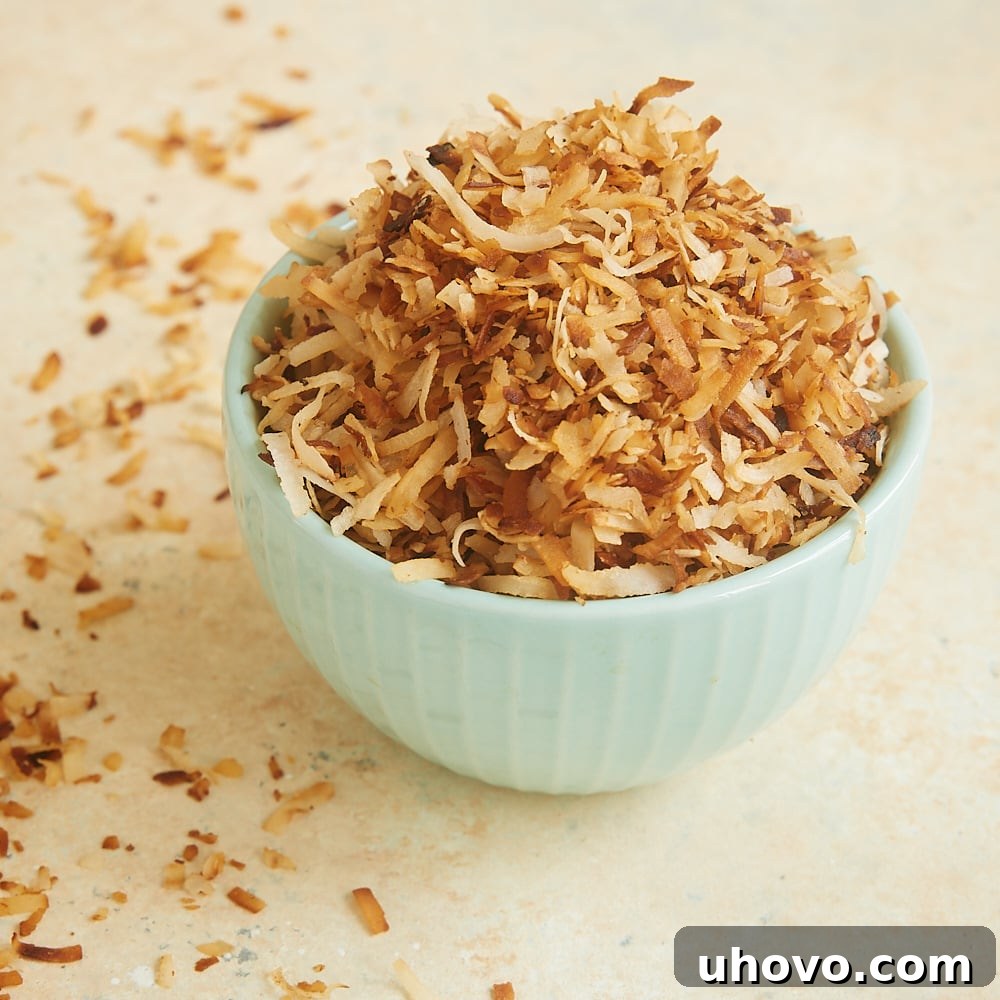
Welcome, fellow coconut enthusiasts! While some might find its unique flavor polarizing, for those of us firmly in the “love coconut” camp, there’s nothing quite like the rich, aromatic transformation that occurs when coconut is perfectly toasted. If you’ve ever wondered how to unlock that deeper, nuttier dimension of flavor, you’ve arrived at the ultimate guide. We’re about to explore the simple secrets to achieving beautifully golden brown toasted coconut, elevating your culinary creations from delicious to absolutely irresistible.
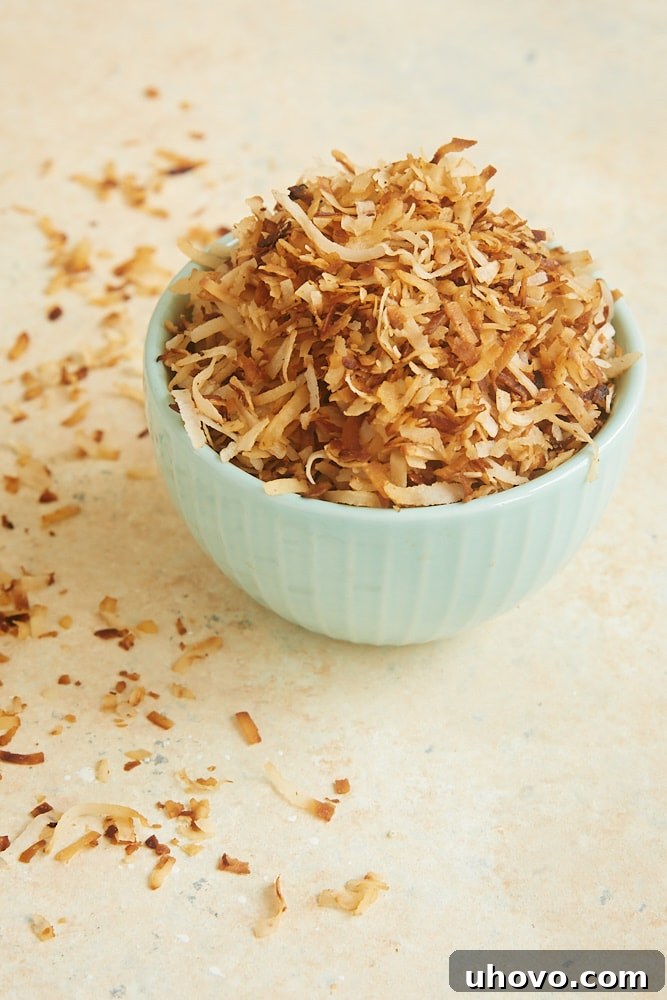
Let’s be clear from the start: learning how to toast coconut is incredibly straightforward. It might seem like an extra step in your recipe, but we promise those few additional minutes are genuinely worth the investment. Toasted coconut isn’t just a slightly browner version of its raw counterpart; it’s a completely reimagined ingredient. The toasting process brings forth a more complex, nutty, and intensely flavorful profile that coconut lovers crave. It adds a delightful crunch and an unparalleled depth that can transform everything from your morning oatmeal to your most elaborate dessert.
In this comprehensive guide, we’ll walk you through two foolproof methods to toast coconut perfectly: using your oven or your stovetop. Both techniques are simple, quick, and deliver fantastic results, making the choice largely a matter of personal preference and the quantity you wish to toast. We’ll also share invaluable tips for consistent success, explain how to select the best coconut for toasting, and provide expert advice on storing your homemade toasted coconut so you can enjoy its exquisite flavor for weeks to come.
Why Toast Coconut? Unlocking a World of Flavor
If you’ve ever wondered why so many recipes, particularly those from avid bakers, recommend toasting coconut, the answer lies in a remarkable flavor transformation. Toasted coconut isn’t just a garnish; it’s a star ingredient that elevates dishes with its unique characteristics. The process of gentle heat application triggers a series of chemical reactions, most notably the Maillard reaction, which is responsible for the enticing aromas and browning found in many cooked foods. This reaction significantly deepens and concentrates coconut’s natural sweetness and nutty nuances.
Beyond the undeniable enhancement of flavor, toasting coconut also offers several other benefits. It introduces a wonderfully satisfying crunch and a more aromatic profile compared to raw coconut. This added texture and fragrance can dramatically improve the sensory experience of any dish. Furthermore, some studies suggest that the toasting process can make the nutrients within coconut easier to digest by breaking down its cell walls. Toasted coconut is also a natural source of dietary fiber, healthy fats, and essential minerals like potassium, magnesium, and zinc. Incorporating it into your diet, whether as a snack or an ingredient, adds both taste and nutritional value. For any true coconut aficionado, mastering this simple skill is an essential step towards culinary excellence.
Choosing the Best Coconut for Toasting
One of the beauties of toasting coconut is its versatility across various forms. Whether you have sweetened or unsweetened coconut, fine flakes, shredded, or larger chips, all can be successfully toasted to perfection. The key is understanding how each type behaves under heat and adjusting your timing accordingly.
- Sweetened vs. Unsweetened Coconut: Both types yield delicious results. Unsweetened coconut tends to toast a bit faster because it lacks the added sugar, which can caramelize and burn more quickly. Keep a very close eye on unsweetened varieties. Sweetened coconut will develop a lovely golden-brown hue and a slightly richer, more dessert-like flavor, but requires careful monitoring to prevent burning due to its sugar content.
- Fine vs. Coarse Flakes/Shredded Coconut: The thickness and size of your coconut flakes will directly impact toasting time. Thicker, larger flakes or chips will naturally take longer to achieve a golden brown color than finer, shredded coconut. Finer shreds are fantastic for coating cookies or adding a delicate touch to desserts, while bolder, coarser flakes provide a satisfying textural crunch, perfect for decorating cakes or sprinkling over ice cream. Regardless of the form, the inherent flavor of toasted coconut is a universal improvement.
- Desiccated Coconut: This very fine, dry form of coconut also toasts wonderfully and quickly. It’s excellent for incorporating into batters or as a delicate coating.
Ultimately, the “best” coconut is the one you have on hand or the one that suits your recipe’s desired texture. Just remember that the general rule of thumb is: the thinner and less sweet the coconut, the faster it will toast, requiring more diligent supervision.
How to Toast Coconut in the Oven: The Hands-Off Approach
Toasting coconut in the oven is often favored for its ability to produce more evenly toasted results with less constant supervision. This method is particularly convenient when you’re toasting a larger batch or multitasking in the kitchen. Here’s how to achieve perfectly golden toasted coconut using your oven:
- Preheat Your Oven: Start by preheating your oven to 325°F (160°C). This moderate temperature allows for gradual, even browning without rushing the process and increasing the risk of burning.
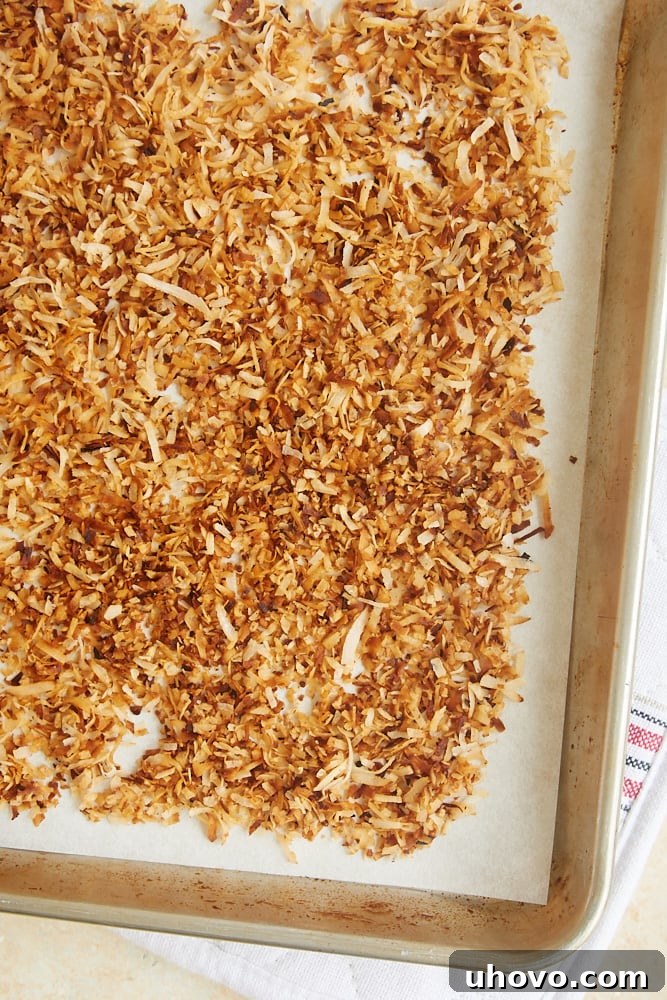
- Prepare Your Baking Sheet: Line a rimmed baking sheet with parchment paper. The parchment paper is crucial for preventing the coconut from sticking to the pan, ensuring easy cleanup, and promoting uniform toasting. A rimmed sheet prevents any stray flakes from falling off.
- Spread the Coconut: Spread your desired amount of coconut (sweetened or unsweetened, shredded or flaked) in a single, even layer across the prepared baking sheet. Avoid overcrowding the pan; if toasting a large quantity, use multiple sheets. A thin layer ensures all pieces have direct contact with the heat, browning consistently.
- Bake and Stir: Place the baking sheet in the preheated oven. Bake for approximately 10 to 15 minutes. The key to even toasting is to stir the coconut every 3-5 minutes using a long-handled spoon or spatula. This redistributes the flakes, allowing different surfaces to brown.
- Monitor Closely: Pay extra attention during the last few minutes of baking. Coconut can go from perfectly golden to burnt very quickly. Look for a uniform golden-brown color and a fragrant, nutty aroma. If you prefer a lighter toast, remove it sooner.
- Cool Completely: Once toasted to your liking, remove the baking sheet from the oven. Transfer the hot coconut immediately to a clean plate or another cool baking sheet to stop the cooking process. Allow it to cool completely before storing or using. It will crisp up further as it cools.
The oven method is an excellent choice for those who prefer a more relaxed approach, freeing you up to focus on other aspects of your meal preparation while the coconut turns beautifully golden.
How to Toast Coconut on the Stovetop: The Quick and Attentive Method
For smaller batches or when you need toasted coconut quickly, the stovetop method is your go-to. It requires more hands-on attention but offers precise control over the browning process. Here’s how to toast coconut beautifully on your stovetop:
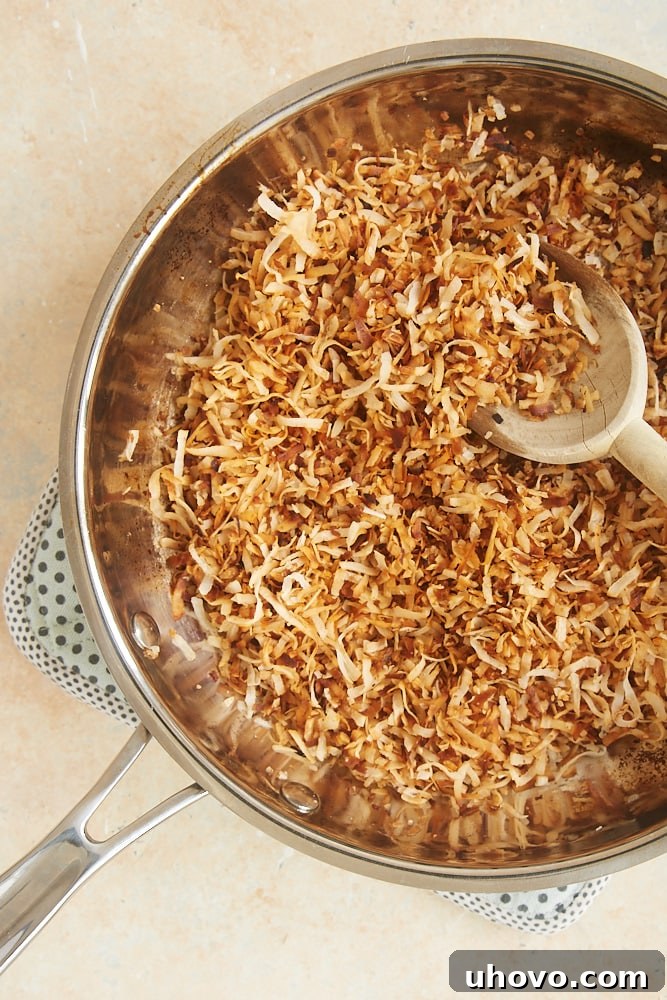
- Select Your Skillet: Choose a dry, non-stick skillet or a light-colored stainless steel pan. A lighter colored pan makes it easier to observe the coconut’s browning progression. Avoid dark-colored pans, as they can obscure the color changes and lead to accidental burning.
- Heat the Skillet: Place the empty skillet over medium-low heat. It’s crucial to start with a lower heat setting to prevent scorching.
- Add the Coconut: Once the skillet is warm (not smoking hot), add your coconut in a single layer. Again, avoid overcrowding the pan. If toasting a larger amount, work in batches to ensure even contact with the pan’s surface.
- Stir Continuously: This is the most important step for stovetop toasting. Using a heat-resistant spatula or wooden spoon, stir the coconut almost continuously. You want to keep the flakes moving, ensuring every piece gets exposed to the heat and browns evenly. Don’t step away from the pan!
- Watch for Color and Aroma: Within 5 to 10 minutes (depending on the type and quantity of coconut), you’ll notice the flakes beginning to turn a beautiful golden brown and release a rich, nutty aroma. This visual and olfactory cue is your signal that it’s almost done.
- Remove from Heat Immediately: As soon as the coconut reaches your desired level of golden brown, remove the skillet from the heat immediately. Even off the burner, residual heat in the pan can continue to cook and burn the coconut. Transfer the toasted coconut to a plate or a cool baking sheet to stop the cooking process and allow it to cool completely.
The stovetop method is perfect for beginners as it allows for constant monitoring, giving you direct control over the browning and minimizing the risk of over-toasting. Just be prepared to stay by the stove!
Can I Toast It in the Microwave or Air Fryer?
While various online sources might suggest microwave methods for toasting coconut, we generally advise against it if you’re seeking truly golden and crispy results. The microwave primarily heats through moisture, and while it can cause some browning, it doesn’t effectively remove the liquid from the coconut in the same way dry heat from an oven or skillet does. This often results in a softer, chewier texture rather than the desired crispy, nutty consistency of perfectly toasted coconut. For that rich, bold flavor and satisfying crunch, the stovetop or oven methods remain vastly superior.
What about an air fryer? An air fryer can certainly toast coconut, utilizing its powerful convection heat. If you choose this method, preheat your air fryer to around 300-325°F (150-160°C). Spread the coconut in a single layer in the air fryer basket (you might need to work in batches). Cook for 3-5 minutes, shaking the basket or stirring the coconut frequently, until golden brown. Be aware that air fryers cook very quickly, so vigilance is key to prevent burning. While effective, the evenness might vary depending on your air fryer model, making the oven and stovetop methods generally more reliable for consistent results.
How Long Does It Take to Toast Coconut?
The timing for perfectly toasted coconut isn’t an exact science, as it depends on several factors: the type of coconut, its flake size, and the method you employ. However, you can generally expect the process to take anywhere from 5 to 15 minutes.
- Coconut Type: Unsweetened coconut typically toasts faster than sweetened varieties, as the sugars in sweetened coconut require a little more time to caramelize without burning.
- Flake Size: Fine, shredded coconut will toast much more quickly (sometimes in as little as 5 minutes on the stovetop) compared to thicker, coarser flakes or coconut chips, which can take closer to 10-15 minutes, especially in the oven.
- Method: The stovetop method is often quicker, but demands constant attention, usually completing within 5-10 minutes. The oven method takes slightly longer, often 10-15 minutes, due to its more gradual, even heating.
Regardless of the method, constant vigilance is paramount. Coconut has a tendency to go from perfectly golden to charred in a matter of seconds. Rely on your senses: watch for a rich, uniform golden-brown color, and listen for the subtle sizzle (especially on the stovetop). Most importantly, pay attention to the aroma. As coconut toasts, it releases a distinct, warm, and nutty fragrance that signals it’s nearing perfection. If you prefer a lighter, milder flavor, remove the coconut from the heat as soon as it achieves a pale golden hue.
When in doubt, it’s always better to slightly under-toast and continue for another minute or two than to over-toast and end up with burnt, bitter coconut. The stovetop method provides an advantage here, as your close proximity allows for immediate adjustments.
How to Store Toasted Coconut for Lasting Freshness
Once you’ve mastered the art of toasting coconut, you’ll want to preserve its delightful crunch and flavor. Proper storage ensures you can enjoy your homemade toasted coconut for an extended period. The key is to ensure it is completely cool before storing, as any residual warmth can create condensation and lead to sogginess or spoilage.
- Room Temperature: For immediate use or storage up to two weeks, place the completely cooled toasted coconut in an airtight container. A glass jar or a sealed plastic container works perfectly. Keep it in a cool, dry place away from direct sunlight and humidity.
- Refrigerator: To extend its shelf life, you can store toasted coconut in an airtight container in the refrigerator for up to a month. The cooler temperature helps maintain its freshness and prevents oils from going rancid.
- Freezer: For long-term storage, the freezer is your best friend. Once fully cooled, transfer the toasted coconut to a freezer-safe bag or airtight container. It can be stored in the freezer for up to six months. When you’re ready to use it, simply take out the desired amount; it thaws quickly at room temperature.
If your stored toasted coconut loses a bit of its crispness over time, don’t despair! You can easily refresh it. Simply spread it on a baking sheet and place it in a preheated 350°F (175°C) oven for about 5-7 minutes, or until it becomes fragrant and re-crisped. Let it cool completely before using, and it will be as good as new!
Essential Tips for Perfectly Toasted Coconut Every Time
Achieving consistently perfect toasted coconut is easy when you keep a few key tips in mind. These insights will help you avoid common pitfalls and ensure delightful results, whether you’re a seasoned baker or just starting out.
- Choose Your Method Wisely: Both oven and stovetop methods yield delicious results. Consider the quantity you’re toasting and your comfort level. The oven is excellent for larger batches and a more hands-off approach, while the stovetop is ideal for smaller amounts and offers precise control.
- Preheat is Key (Oven): Always preheat your oven to the recommended temperature (typically 325°F/160°C). Placing coconut into a cold oven will result in uneven toasting and a longer cooking time.
- Use a Light-Colored Pan (Stovetop): For stovetop toasting, a light-colored skillet allows you to better monitor the color changes of the coconut, preventing it from burning unexpectedly. Dark pans can mask the true color until it’s too late.
- Spread Thinly: No matter the method, ensure your coconut is spread in a single, thin layer. Overcrowding the pan or baking sheet will steam the coconut rather than toast it, leading to uneven browning and a chewy texture. Work in batches if necessary.
- Stir Regularly: This cannot be stressed enough. For oven toasting, stir every 3-5 minutes. For stovetop toasting, stir almost continuously. This ensures even exposure to heat and prevents hot spots that can cause burning.
- Watch (and Smell) Closely: Coconut burns quickly. Stay near your oven or stovetop, especially during the last few minutes. Use your nose; a rich, nutty aroma indicates it’s toasting beautifully. If you smell even a hint of burning, remove it immediately.
- Cool Immediately: Once toasted, remove the coconut from the hot pan or baking sheet and spread it on a cool plate or fresh sheet of parchment paper. This stops the cooking process and prevents residual heat from over-toasting. It will crisp up as it cools.
- Start with Room Temperature Coconut: If your coconut has been refrigerated or frozen, bring it to room temperature before toasting for more even results.
- Safety First: Always use oven mitts when handling hot baking sheets and a heat-resistant spatula or wooden spoon for stirring, especially on the stovetop.
How to Use Toasted Coconut: Beyond the Basics
Now that you’re a master of toasting coconut, the possibilities for incorporating this flavorful ingredient into your culinary repertoire are endless! Toasted coconut adds a layer of sophistication, crunch, and rich aroma that raw coconut simply can’t match. Here are just a few ideas to inspire your next kitchen adventure:
In Baked Goods:
- Cakes & Cupcakes: Sprinkle generously over frosting, fold into cake batter for added texture, or create a toasted coconut crust for pies and cheesecakes.
- Cookies & Bars: Mix into your favorite cookie dough, use as a topping for chewy bars, or incorporate into no-bake recipes for a tropical crunch.
- Muffins & Breads: Add to muffin or quick bread batters for a subtle nutty flavor and texture.
For Breakfast & Snacks:
- Oatmeal & Yogurt: A sprinkle of toasted coconut transforms a simple bowl of oatmeal or yogurt into a gourmet treat.
- Granola & Cereal: Mix into homemade granola or add to your morning cereal for an extra layer of flavor and crunch.
- Smoothie Bowls: A beautiful and tasty topping for vibrant smoothie bowls.
- Trail Mix & Energy Balls: Combine with nuts, seeds, and dried fruit for a custom, healthy snack, or roll energy balls in it.
- Standalone Snack: Enjoy a handful of plain toasted coconut as a satisfying and flavorful snack.
In Desserts & Frozen Treats:
- Ice Cream & Sorbets: A quintessential topping that adds texture and a tropical essence to any scoop.
- Puddings & Custards: Sprinkle over creamy desserts like rice pudding, chia pudding, or crème brûlée.
- Fruit Salads: Enhance fresh fruit salads with a scattering of toasted coconut.
In Savory Dishes:
- Curries & Soups: Use as a fragrant garnish for Thai curries, pumpkin soups, or lentil stews, adding depth and crunch.
- Salads: Sprinkle over fresh green salads, particularly those with a tropical flair, for a delightful textural contrast.
- Breading: Combine with panko breadcrumbs to create a unique, flavorful coating for chicken, fish, or shrimp.
Don’t be afraid to experiment! Toasted coconut brings out its natural sweetness and nutty notes, making it incredibly versatile. Its warm, inviting flavor can enhance almost anything that benefits from a hint of tropical richness and a satisfying crunch.
Here are some of my absolute favorite recipes that truly shine with the addition of toasted coconut:
- Coconut Buttermilk Pound Cake
- Chocolate Mousse Pie with Toasted Coconut Crust
- Coconut Cream Cheese Oat Muffins
- Coconut Almond Chocolate Chip Cookies
- Toasted Coconut Cake Doughnuts