
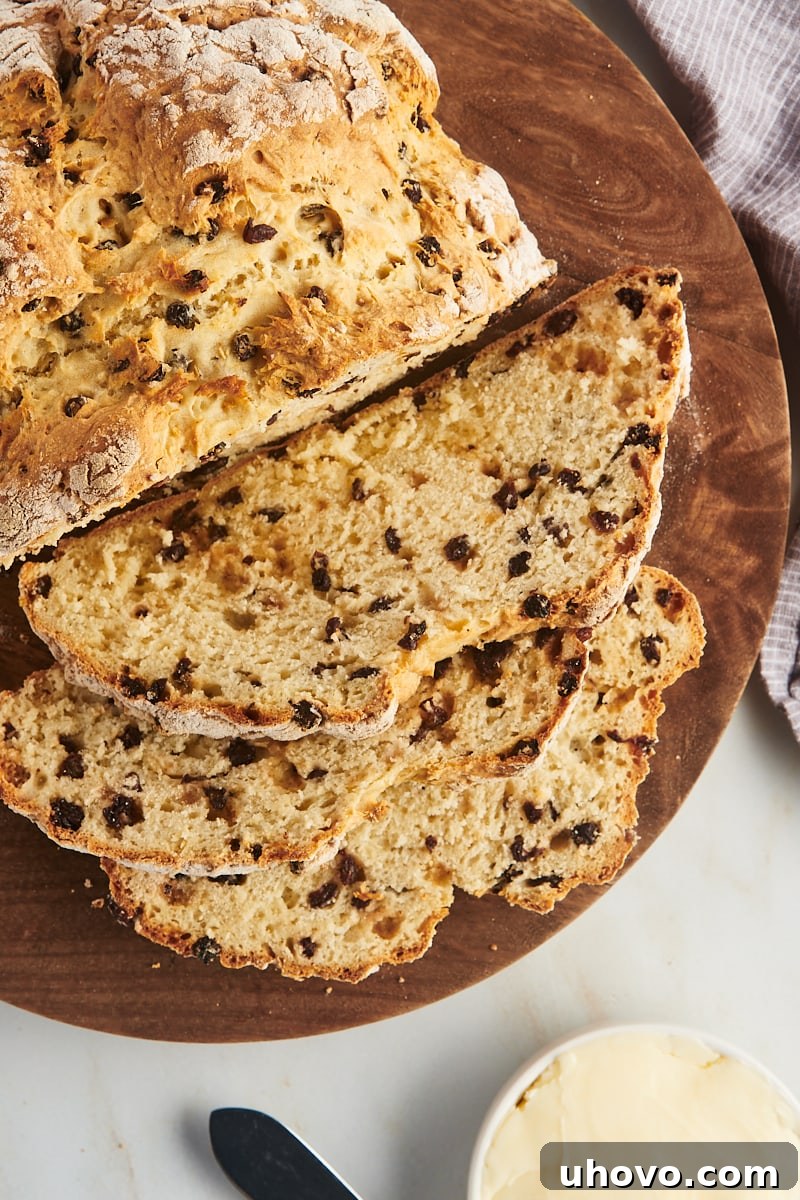
In the realm of baking, few creations capture the essence of tradition and home comfort quite like Irish Soda Bread. With its characteristically tender crumb and invitingly rustic, crusty exterior, this humble loaf stands as a beautiful testament to the power of simplicity. Crafted from just a handful of everyday ingredients, it offers the profound satisfaction of freshly baked homemade bread without any of the complexities or lengthy waiting periods typically associated with yeast-leavened loaves. It’s the ultimate quick bread for those moments when you yearn for that comforting aroma and taste of warm bread, made effortlessly in your own kitchen.
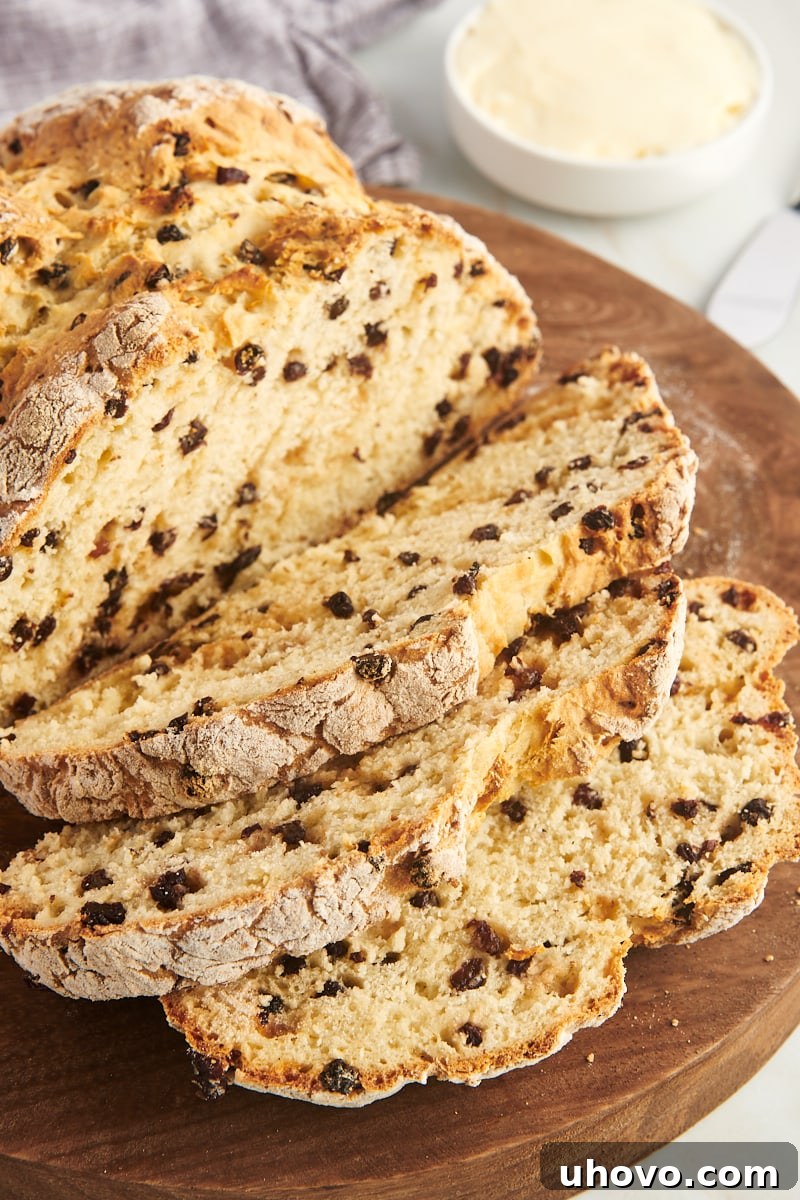
There’s an undeniable magic in baking your own bread, a sense of accomplishment and warmth that permeates your home. However, modern life often leaves little room for the time-consuming process of traditional bread-making. This is where the charm of a classic Irish Soda Bread recipe shines brightest. It delivers all the joy and pride of creating a delicious loaf from scratch, filling your kitchen with an irresistible aroma, but without the usual fuss of kneading or multiple rises. Its delightful versatility makes it an ideal accompaniment for virtually any meal or occasion, from a hearty breakfast to a cozy dinner.
Why You’ll Adore This Easy Irish Soda Bread Recipe
Discover the myriad reasons why this traditional Irish Soda Bread will quickly become a cherished staple in your baking repertoire:
- Effortless Ingredients: Forget specialty flours or exotic leavening agents. This recipe relies on a simple selection of pantry staples—flour, baking soda, salt, and buttermilk. These readily available ingredients transform into something truly extraordinary, making this a wonderfully accessible and stress-free baking project for everyone, regardless of their baking experience.
- No Yeast, No Waiting: The true genius of Irish Soda Bread lies in its quick rise. Harnessing the natural chemical reaction between baking soda and acidic buttermilk, this recipe allows you to achieve a beautifully risen, tender loaf in record time. It’s the perfect solution for those spontaneous cravings for fresh bread, eliminating the lengthy waiting times associated with yeast-based recipes.
- Remarkably Versatile: One of the greatest attributes of Irish Soda Bread is its adaptability. Whether your palate craves a hint of sweetness or a robust savory note, this bread can be effortlessly customized. Enjoy it plain, slathered with butter, or elevate it with additions like dried fruits for a sweet treat. For a savory twist, incorporate aromatic herbs and rich cheese, making it suitable for any meal or snack.
- Authentic Rustic Charm: Each loaf of Irish Soda Bread possesses a unique, artisanal quality. Its rustic, craggy appearance is as appealing to the eye as its taste is to the palate. This is the kind of homemade bread that instantly infuses your kitchen with a cozy, comforting ambiance, reminding you of simpler times and hearty, wholesome food.
- Quick and Rewarding: From mixing bowl to golden-brown perfection, this bread comes together rapidly. The minimal prep time and straightforward baking process mean you can enjoy a warm, fresh loaf in under an hour, making it an incredibly rewarding recipe for busy bakers.
What Exactly Is Irish Soda Bread?
Irish Soda Bread is a quintessential quick bread from Ireland, celebrated for its striking simplicity and heartwarming rustic character. What sets it apart from conventional breads is its unique leavening process: it requires no yeast, no elaborate kneading, and none of the prolonged rising times often demanded by traditional bread recipes. Instead, its lift and airy texture come from the magic of baking soda reacting with acidic buttermilk. This chemical interaction rapidly produces carbon dioxide gas, which expands in the hot oven, resulting in a distinctively dense, yet tender loaf with a slightly tangy flavor and an exquisitely crunchy crust.
At its core, traditional Irish Soda Bread is famously minimalist, often made with just four primary ingredients: flour, baking soda, salt, and buttermilk. This minimalist approach beautifully encapsulates the essence of authentic Irish cooking—simple, hearty, and profoundly delicious. While the basic recipe is cherished, it also welcomes creative variations. Bakers often add ingredients like dried fruits such as currants or raisins for a touch of sweetness, or nuts and seeds for added texture and nutritional value, truly making each loaf a personalized culinary expression.
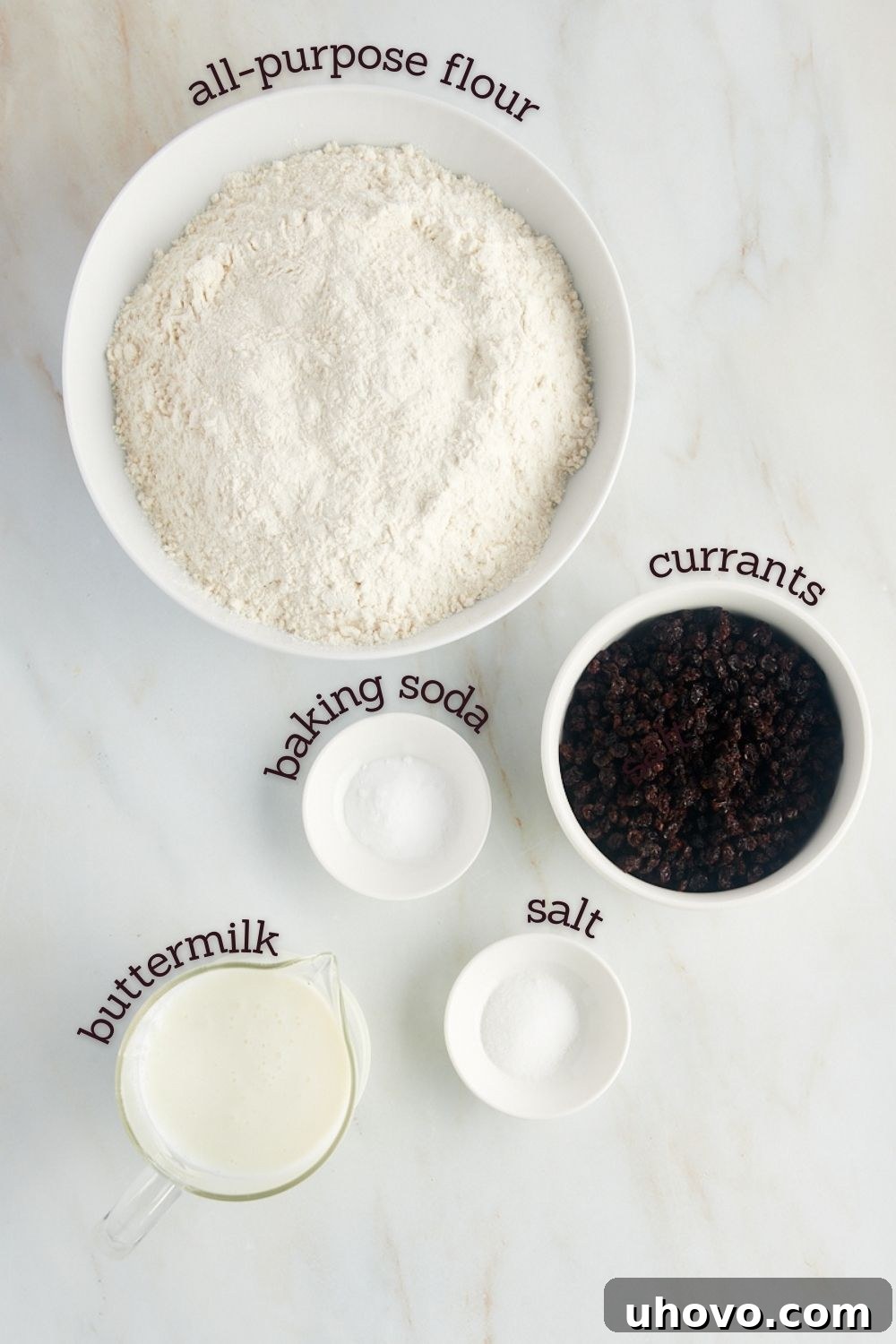
Essential Ingredients for Your Irish Soda Bread
Baking this delightful bread requires just a few staple items. For precise quantities and step-by-step instructions, please refer to the recipe card located further down. Here are some detailed notes about the key ingredients:
- All-purpose flour: The foundation of our bread. For the most accurate and consistent results, measuring flour by weight is highly recommended. If you don’t yet own a digital kitchen scale, employ the spoon and sweep method: gently spoon the flour into your measuring cup until it overflows, then level it off with a straight edge. This prevents compaction, which can lead to a dry, dense loaf. Learn more about How to Measure Flour for perfect baking.
- Baking soda: This is the crucial leavening agent that gives Irish Soda Bread its distinctive rise and, of course, its name! It reacts with the acidity in the buttermilk to create carbon dioxide, resulting in a light and airy texture.
- Salt: A fundamental ingredient that enhances all the flavors in the bread and helps to balance the slight tang from the buttermilk. While regular table salt works perfectly, feel free to use your preferred type of salt.
- Buttermilk: Far more than just a liquid, buttermilk is integral to both the texture and flavor of Irish Soda Bread. Its acidity is essential for activating the baking soda, while its unique tang contributes to the bread’s characteristic taste and wonderfully tender crumb.
- Dried currants: These are an optional but highly recommended addition. Dried currants lend a subtle sweetness and a pleasant chewiness to the bread, elevating its flavor profile. Raisins can also be used as a delicious alternative.
Buttermilk Substitute Options: What If You Don’t Have Any?
If you find yourself without buttermilk, you can certainly create a substitute. A widely used method involves mixing one tablespoon of lemon juice or white vinegar with enough regular milk to make one cup, then letting it sit for 5-10 minutes until it slightly curdles. Repeat this for every cup of buttermilk required in the recipe.
While this homemade substitute can work in a pinch, for a recipe where buttermilk is a primary ingredient like Irish Soda Bread, the differences in texture, flavor, and consistency compared to genuine buttermilk can be quite noticeable. Authentic buttermilk offers a richer tang and a specific consistency that contributes significantly to the final loaf. Therefore, I strongly recommend using real buttermilk whenever possible for the best results. For more details and additional substitution options, explore Buttermilk Substitutes in Baking.
Crafting Your Homemade Irish Soda Bread: A Simple Guide
Whipping up this incredibly delicious and comforting homemade bread is truly a cinch! Just follow these straightforward steps to achieve a perfect loaf:
Preparing the Dough:
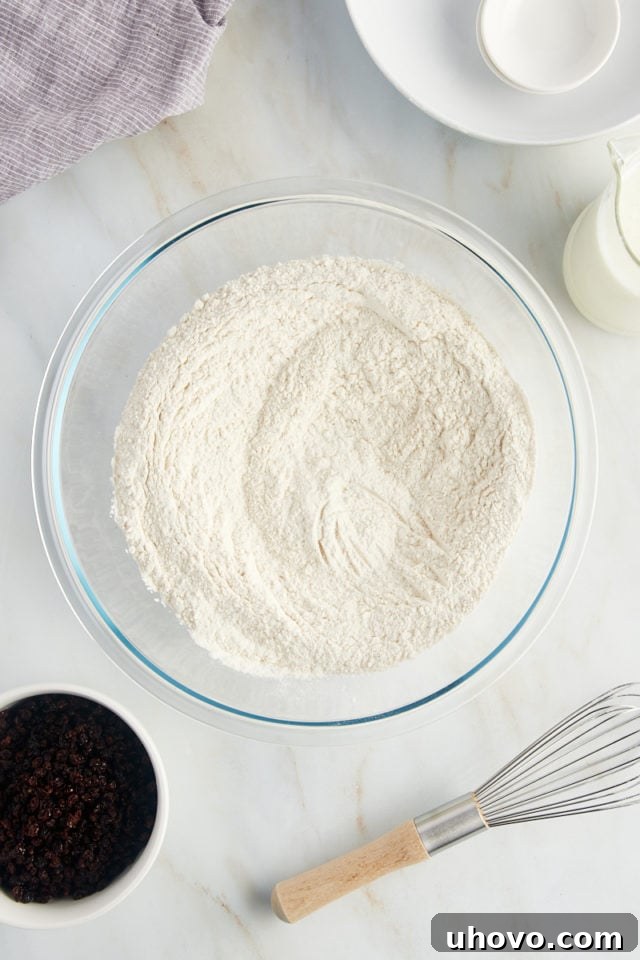
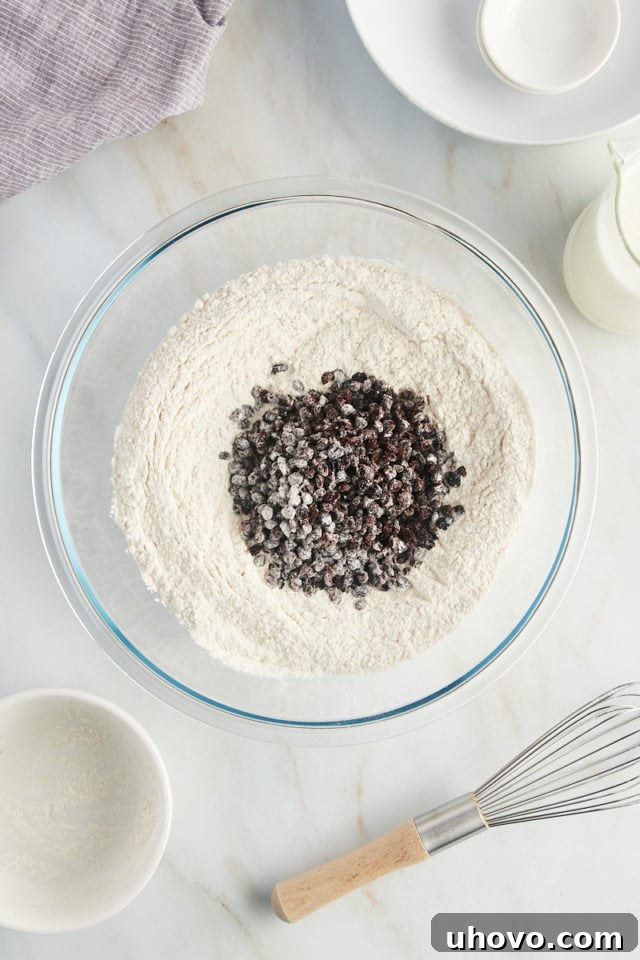
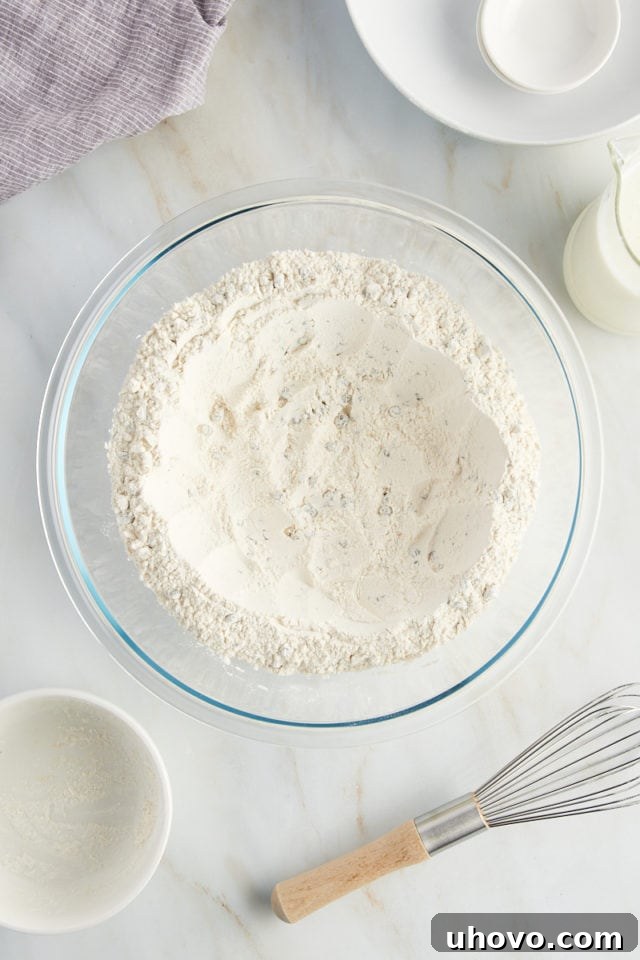
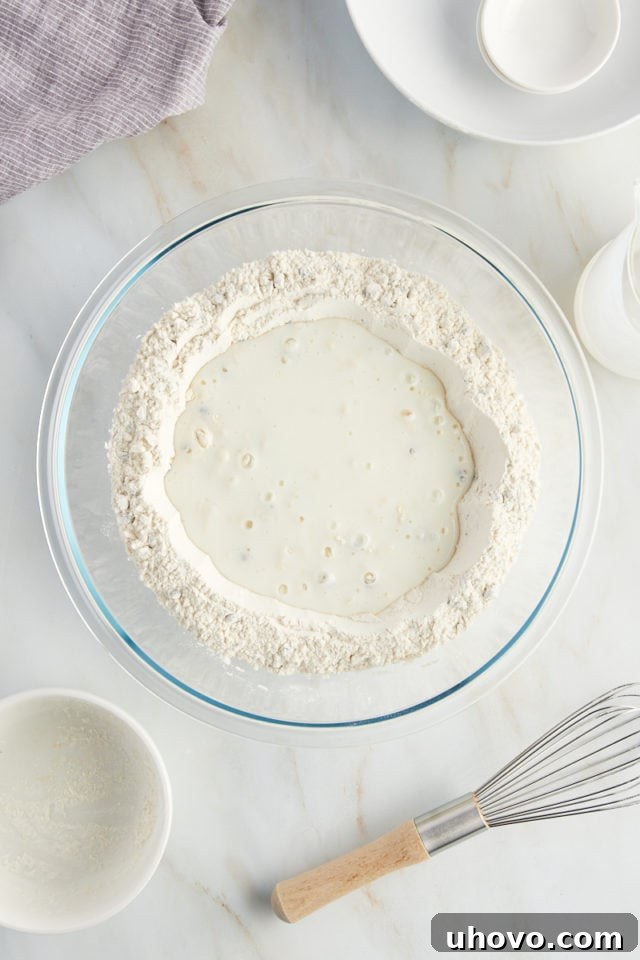
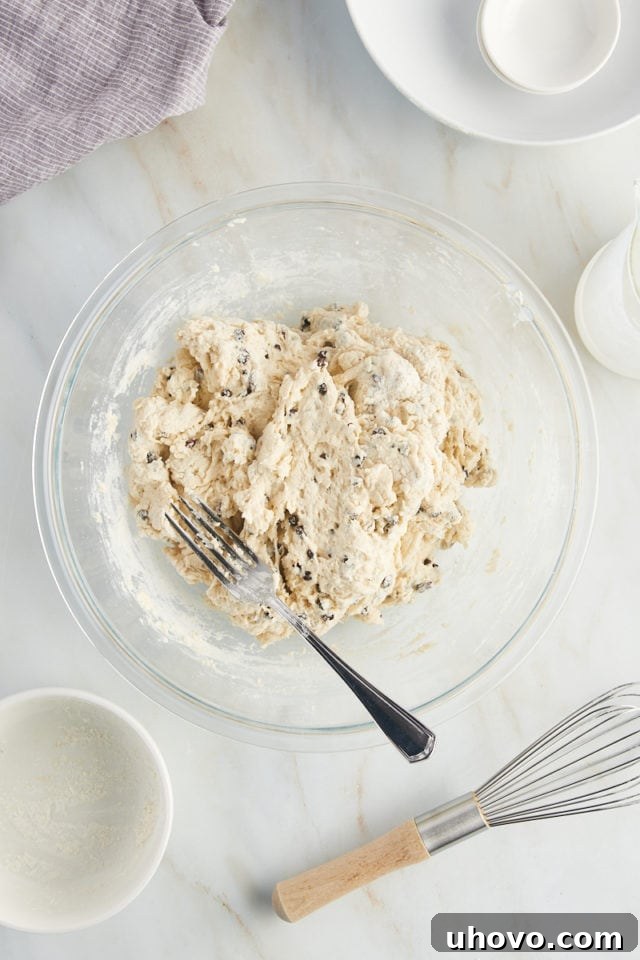
- Prepare any dried fruit: If you’ve chosen to include currants, raisins, or other dried fruits, place them in a bowl and cover them with warm water. Let them soak for 10 to 15 minutes. This rehydrates the fruit, making them plump and juicy. After soaking, drain them thoroughly and pat them very dry with a paper towel. This crucial step prevents them from drawing moisture out of your bread dough during baking, ensuring a moist loaf.
- Preheat your oven and prepare for baking: Set your oven to a high temperature of 425°F (220°C). Prepare a baking sheet by lining it with a silicone baking mat or parchment paper that is rated for high temperatures. Alternatively, you can lightly flour the baking sheet directly if you prefer not to use a liner.
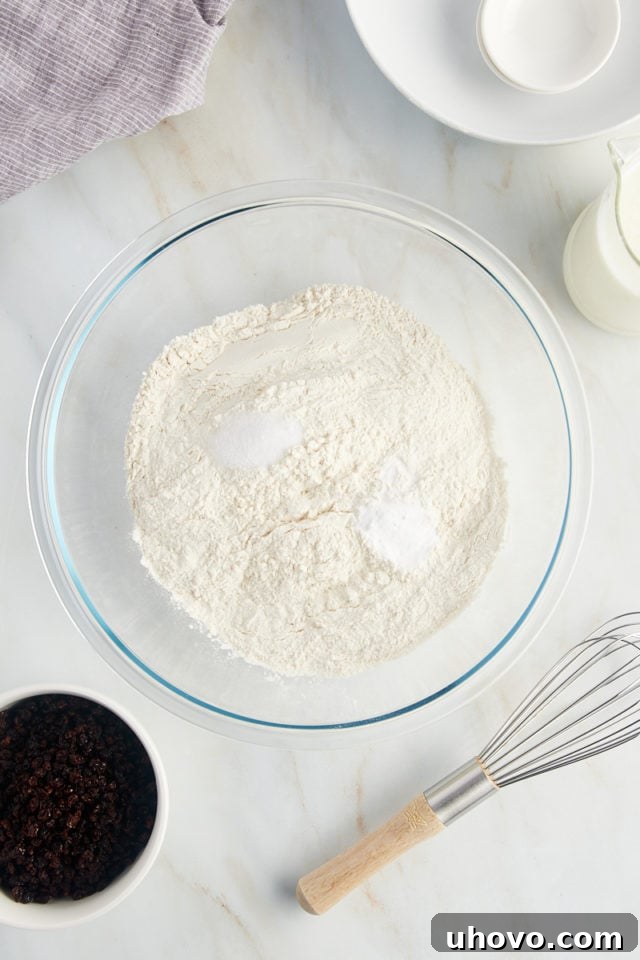
- Combine the dry ingredients: In a large mixing bowl, whisk together the all-purpose flour, baking soda, and salt until they are well combined and uniformly distributed. If you’re using currants, toss them with a small amount of the flour mixture first. This light coating helps to prevent the fruits from clumping together and ensures they are evenly dispersed throughout the dough, rather than sinking to the bottom. Then, stir them into the remaining flour mixture.
- Incorporate the buttermilk: Create a deep well in the center of your dry ingredients. Pour the cold buttermilk into this well. Using a fork or your clean hands, gently mix the ingredients. The goal is to bring the dough together just until it forms a soft, shaggy mass. It should be pliable and only slightly sticky. If the dough feels too wet or sticky to handle comfortably, add a small amount of extra flour, a tablespoon at a time, until it reaches the right consistency. Be careful not to over-mix at this stage.
Shaping and Baking Your Soda Bread:
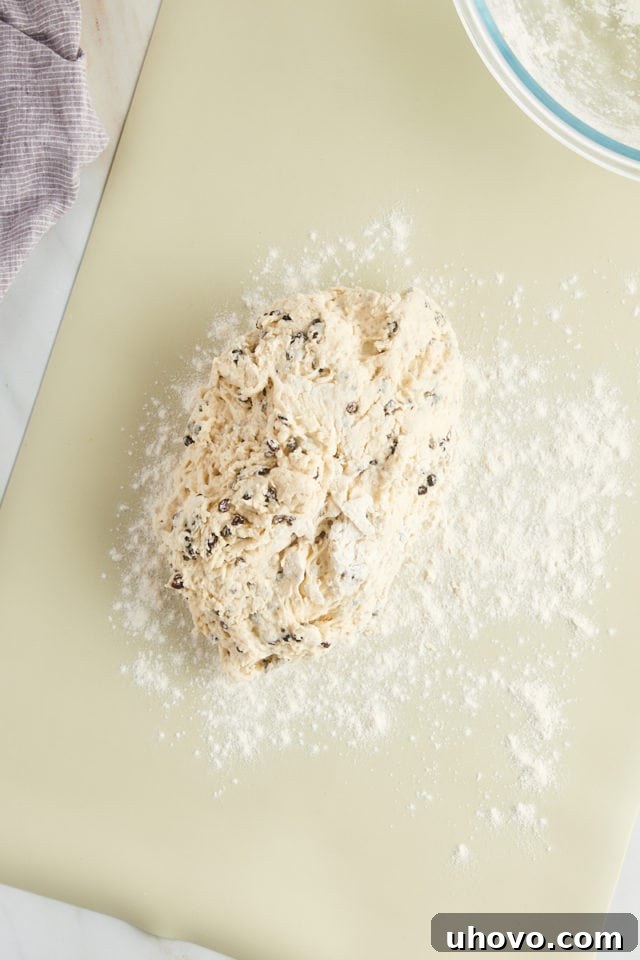
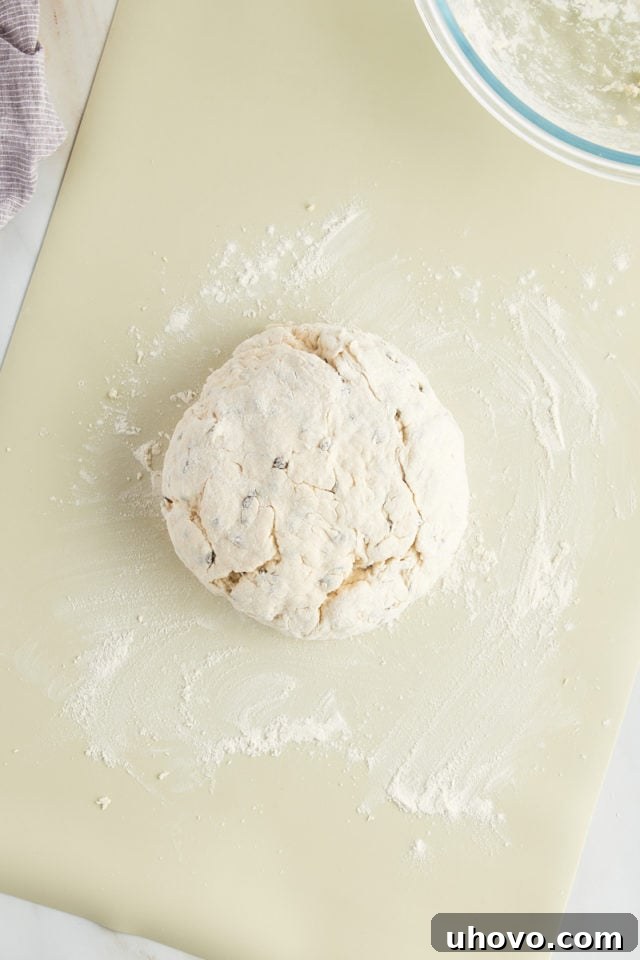
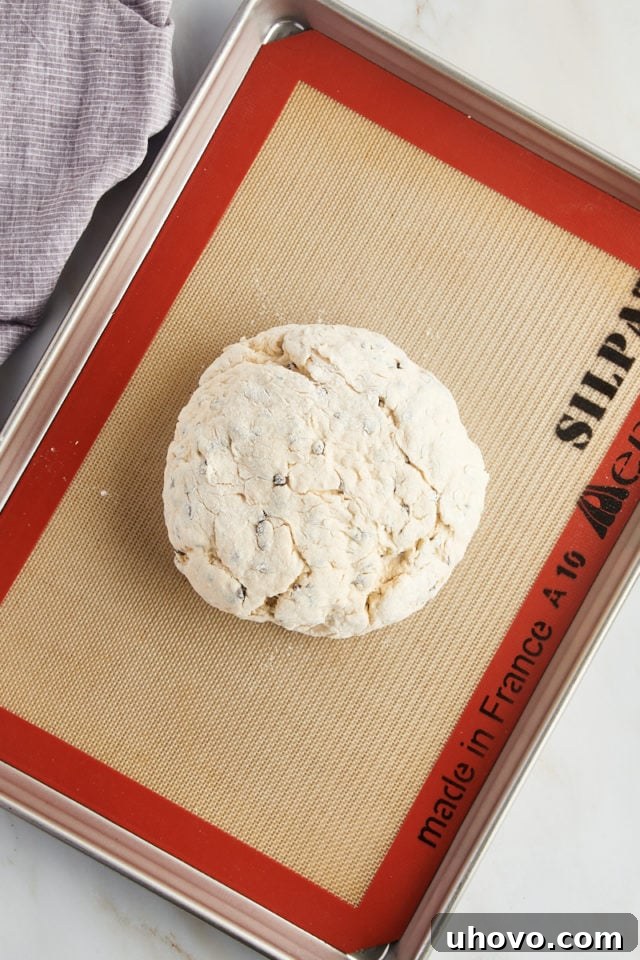
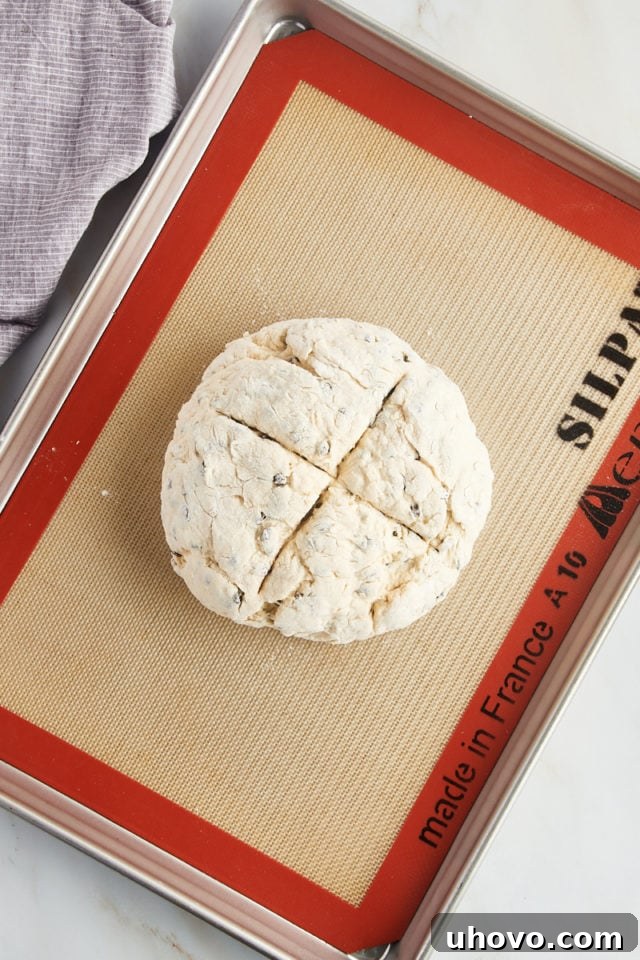
- Shape the bread with care: Gently turn the dough out onto a lightly floured work surface. With a very light touch, gently knead the dough just a few times. The goal is simply to bring it together and shape it into a cohesive, round loaf. Avoid heavy or prolonged kneading, as this can develop the gluten too much, resulting in a tough rather than tender bread. Transfer the perfectly shaped dough onto your prepared baking sheet.
- Score for even baking: Using a sharp knife, make a deep X-shaped cut (or a cross) into the top of the loaf. This isn’t just for aesthetics; it’s a traditional and functional step that allows the bread to expand freely and bake more evenly from the center outwards, preventing the crust from cracking unevenly.
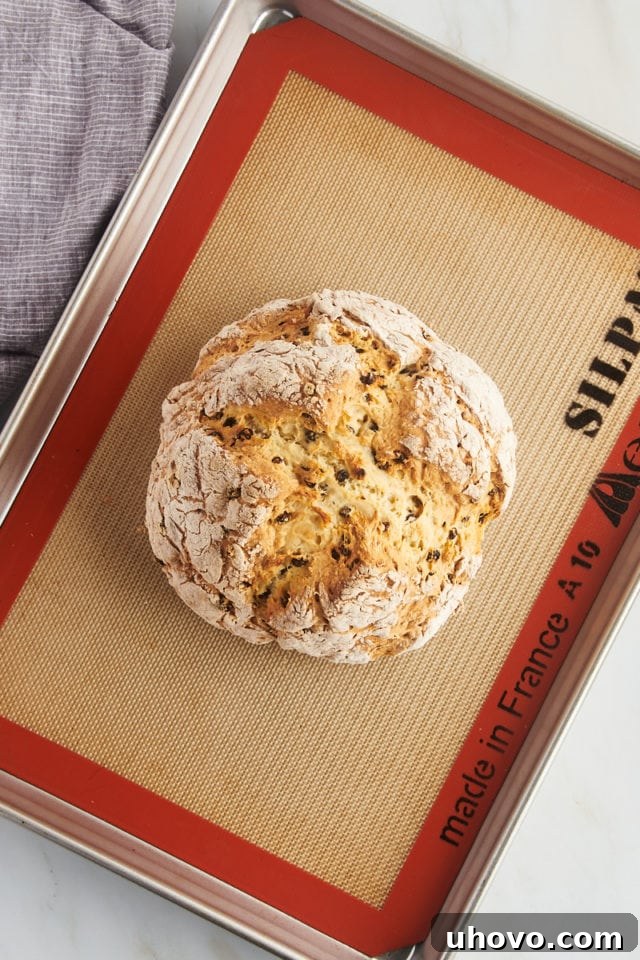
- Time to bake: Carefully place the baking sheet into your preheated oven. Bake for approximately 35 to 40 minutes. The bread is done when its crust is a beautiful golden brown and it produces a hollow sound when gently tapped on the bottom. For a precise check, an instant-read thermometer inserted into the center of the loaf should register between 190°F and 200°F (88°C to 93°C).
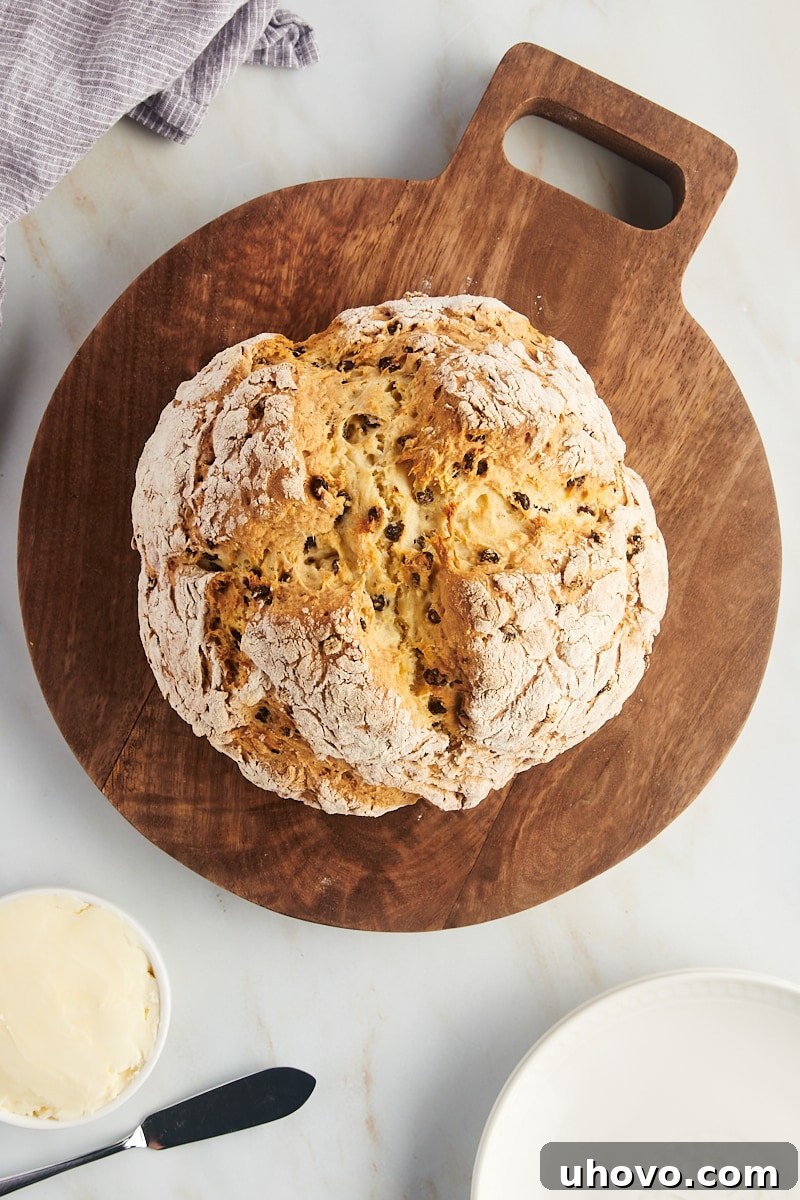
- Cool before slicing: Once baked to perfection, remove the pan from the oven and immediately transfer the hot bread to a wire rack. Allow it to cool for at least 10 to 15 minutes before attempting to slice. This cooling period is crucial as it allows the internal structure of the bread to set and prevents it from becoming gummy or falling apart when cut.
Mastering Your Irish Soda Bread: Expert Tips for Success
To ensure your Irish Soda Bread turns out perfectly every single time, take a moment to review these invaluable tips before you begin your baking adventure:
- Avoid over-mixing at all costs: This is perhaps the most critical tip for quick breads. Mix the ingredients only until they are just combined and no dry streaks of flour remain. Over-mixing develops gluten excessively, which can lead to a tough, rubbery bread instead of the desired tender crumb. Using a fork to mix is an excellent strategy as it encourages a lighter touch, making it harder to overwork the dough.
- Utilize cold buttermilk: The temperature of your buttermilk plays a role in the bread’s rise. Cold buttermilk reacts more slowly with the baking soda initially, allowing the leavening gas to be produced more effectively once the dough hits the intense heat of the oven. This contributes to a stronger, more vigorous rise and a wonderfully airy texture.
- Account for environmental humidity: Like many bread recipes, the consistency of your dough can be influenced by the humidity in your kitchen. If your dough feels excessively wet and sticky, making it difficult to handle, add a very small amount of extra flour (about a tablespoon at a time) until it reaches a manageable consistency. Remember, you’re aiming for a soft dough that feels only slightly sticky to the touch. It’s always easier to add more flour than to correct a dough that has become too dry.
- Flour your work surface generously: When it’s time to shape the dough, ensure your work surface is well-floured. This prevents the dough from sticking without forcing you to incorporate too much additional flour directly into the dough, which could inadvertently dry it out and make it tough.
- Score the bread deeply: The traditional X or cross cut on top of the dough before baking is more than just decorative. It’s essential for proper expansion. A deep score allows the bread to expand freely and evenly in the oven, preventing an uneven rise or cracking, and ensuring the center bakes thoroughly.
- Confirm doneness accurately: Your Irish Soda Bread is fully baked when it boasts a beautiful golden-brown crust and emits a hollow sound when you tap its bottom. For absolute certainty, use an instant-read thermometer; when inserted into the deepest part of the loaf, it should register an internal temperature between 190°F and 200°F (88°C to 93°C).
Exciting Variations to Customize Your Irish Soda Bread
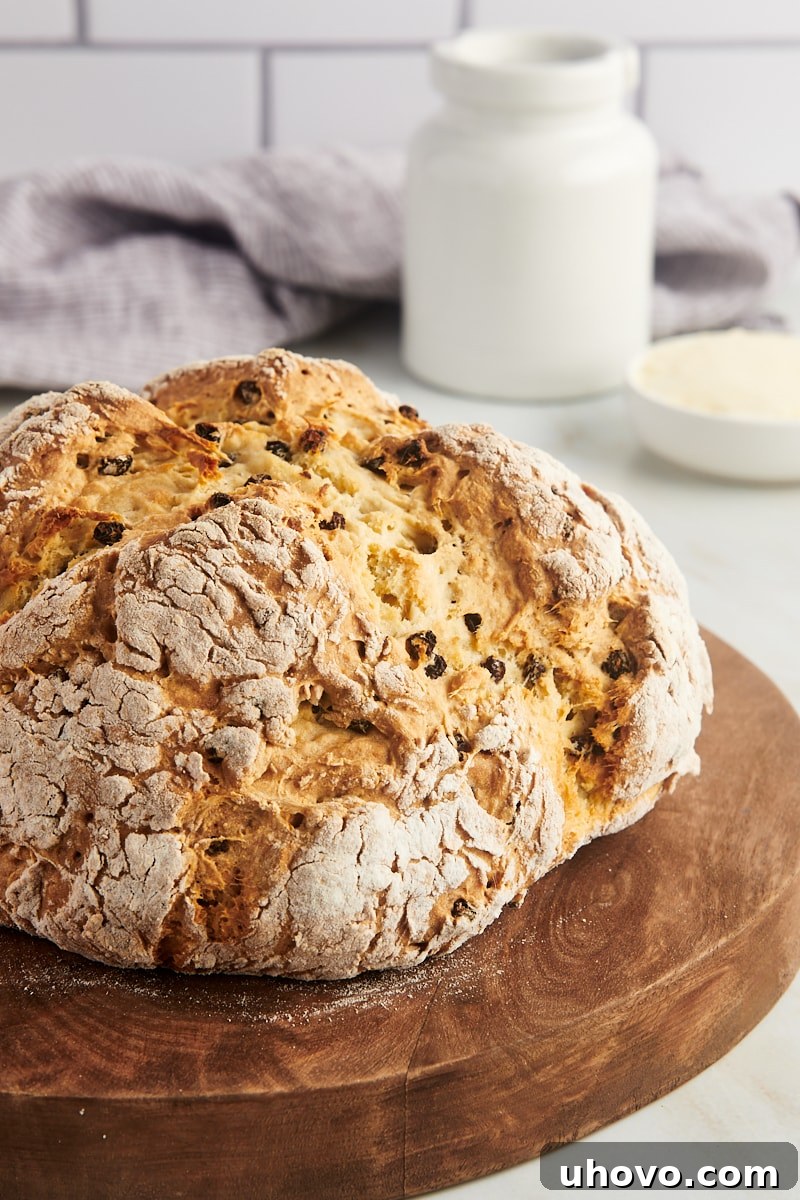
The beauty of this simple quick bread lies in its incredible versatility, allowing for countless ways to customize it to your personal taste. While dried currants are a classic choice and one I frequently use, other dried fruits like plump raisins or tart cranberries make equally excellent additions. You might also consider incorporating chopped nuts such as walnuts or pecans, or a medley of savory seeds like sunflower, pumpkin, or caraway seeds for diverse flavors and textures. Remember, when adding heavier inclusions like nuts or larger fruits, a light coating in a bit of flour helps prevent them from sinking to the bottom of the loaf. For those who prefer a more savory and robust bread, omit the dried fruits entirely. Instead, fold in about 1/2 to 1 cup of shredded cheese (cheddar or a robust Irish cheese works wonderfully) and approximately 2 tablespoons of finely chopped fresh herbs like chives, rosemary, or thyme for a fragrant and savory twist that pairs perfectly with stews or soups.
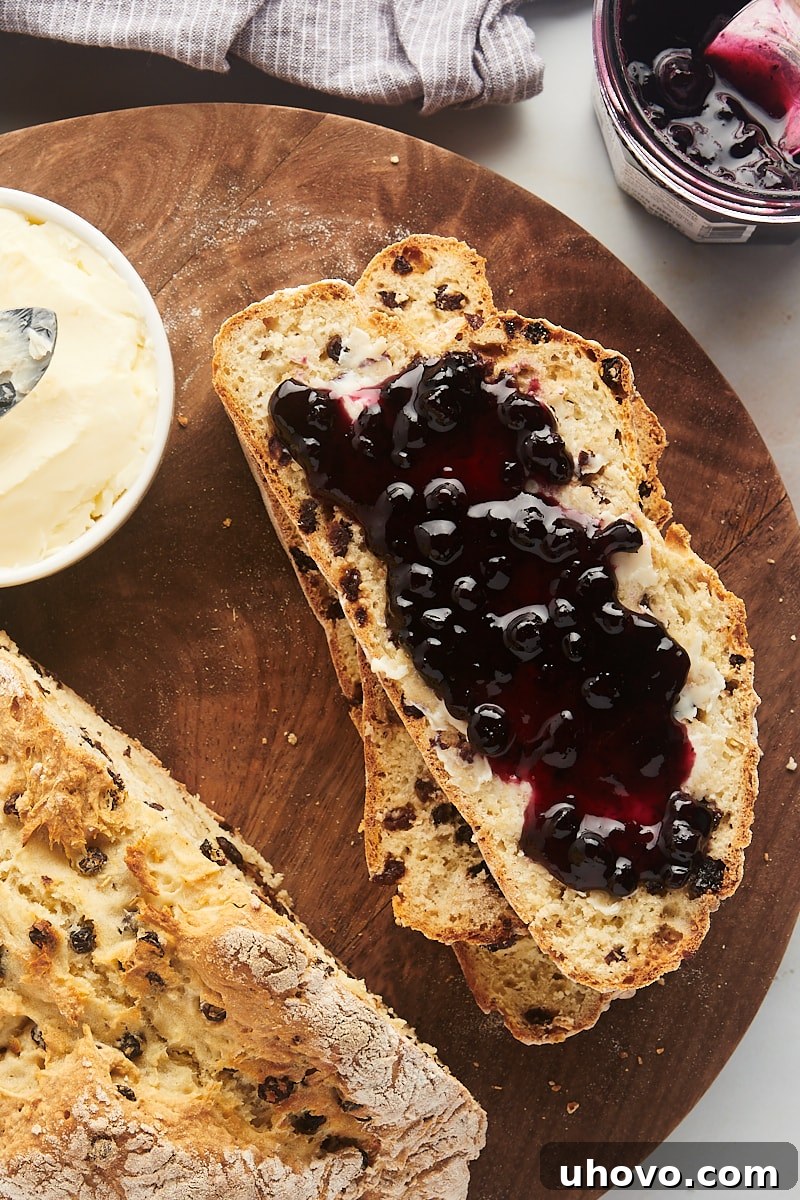
Delightful Serving Suggestions for Irish Soda Bread
You’ll quickly discover that this simple, rustic Irish Soda Bread is incredibly versatile, making it a welcome addition to any meal or snack. Its comforting texture and wholesome flavor are always a crowd-pleaser. Here are some inspiring ideas to get you started:
- A Perfect Breakfast Treat: Serve warm, thick slices of Irish Soda Bread alongside a generous smear of creamy butter and your favorite fruit jam or marmalade for a simple yet profoundly satisfying breakfast or brunch.
- The Ultimate Soup Companion: A robust slice of this bread makes an absolutely ideal partner for creamy soups, hearty stews, or a classic chili. Its dense, sturdy texture is exceptionally good at soaking up rich flavors, ensuring no drop of deliciousness is left behind.
- Elevate Your Cheese Board: Incorporate slices or rustic chunks of Irish Soda Bread onto your next cheese board. Its subtle tang and firm texture provide a fantastic counterpoint to a wide array of cheeses, from sharp, aged cheddar to soft, delicate brie or even a tangy goat cheese.
- Creative Open-Faced Sandwiches: Use thick slices of the bread as the base for imaginative open-faced sandwiches. Top with avocado and a sprinkle of chili flakes, smoked salmon and cream cheese, or a simple sliced tomato and fresh basil.
- A Quintessential Tea Time Delight: Irish Soda Bread is a naturally delightful addition to any afternoon tea spread. It’s especially charming if you’ve opted to include dried fruits in the dough, complementing hot beverages perfectly.
- Experiment with Custom Toppings: Don’t limit yourself to butter and jam. Explore other delicious toppings such as a drizzle of golden honey, a dollop of rich nut butter, or even a sprinkle of cinnamon sugar for a sweet indulgence. For a savory kick, try a spread of savory herb butter or a spiced cream cheese.
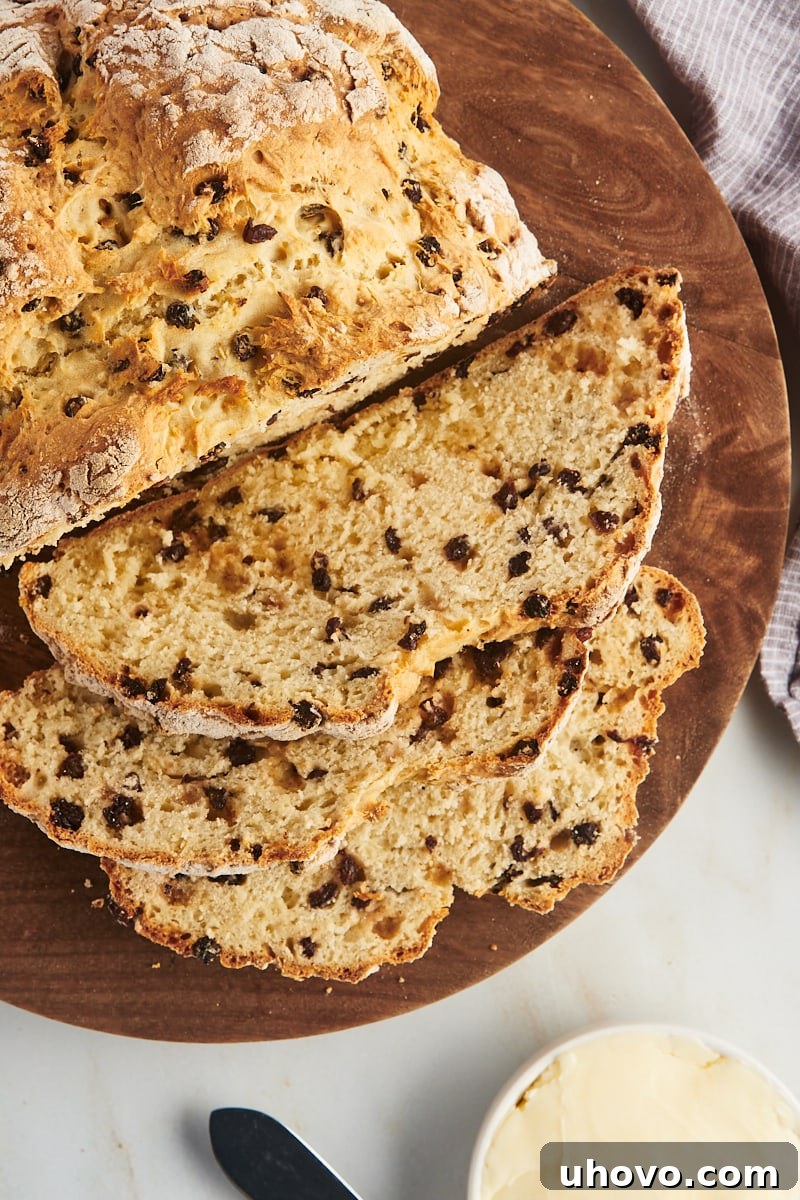
Proper Storage for Optimal Freshness
Irish Soda Bread is truly at its peak when enjoyed fresh from the oven, ideally on the day it’s baked. However, any leftover bread can be wrapped tightly in plastic wrap or aluminum foil and stored at room temperature for up to two days. To revive its delightful texture and warmth, simply place slices or the entire loaf in a moderate oven (around 300°F/150°C) for a few minutes until gently warmed through.
Freezing Your Irish Soda Bread for Later Enjoyment
This bread freezes remarkably well, making it perfect for meal prep or ensuring you always have a homemade treat on hand. After your Irish Soda Bread has cooled completely to room temperature, wrap it very tightly in plastic wrap, ensuring no air can get in. You can freeze individual slices for quick portions or freeze the entire loaf. Place the wrapped bread inside an airtight freezer-safe container or a heavy-duty freezer bag to prevent freezer burn. When properly stored, it will maintain its quality in the freezer for up to three months. To thaw, simply let it sit at room temperature for several hours, or for a faster method, warm it directly in a 350°F (175°C) oven for about 10-15 minutes until heated through and refreshed.
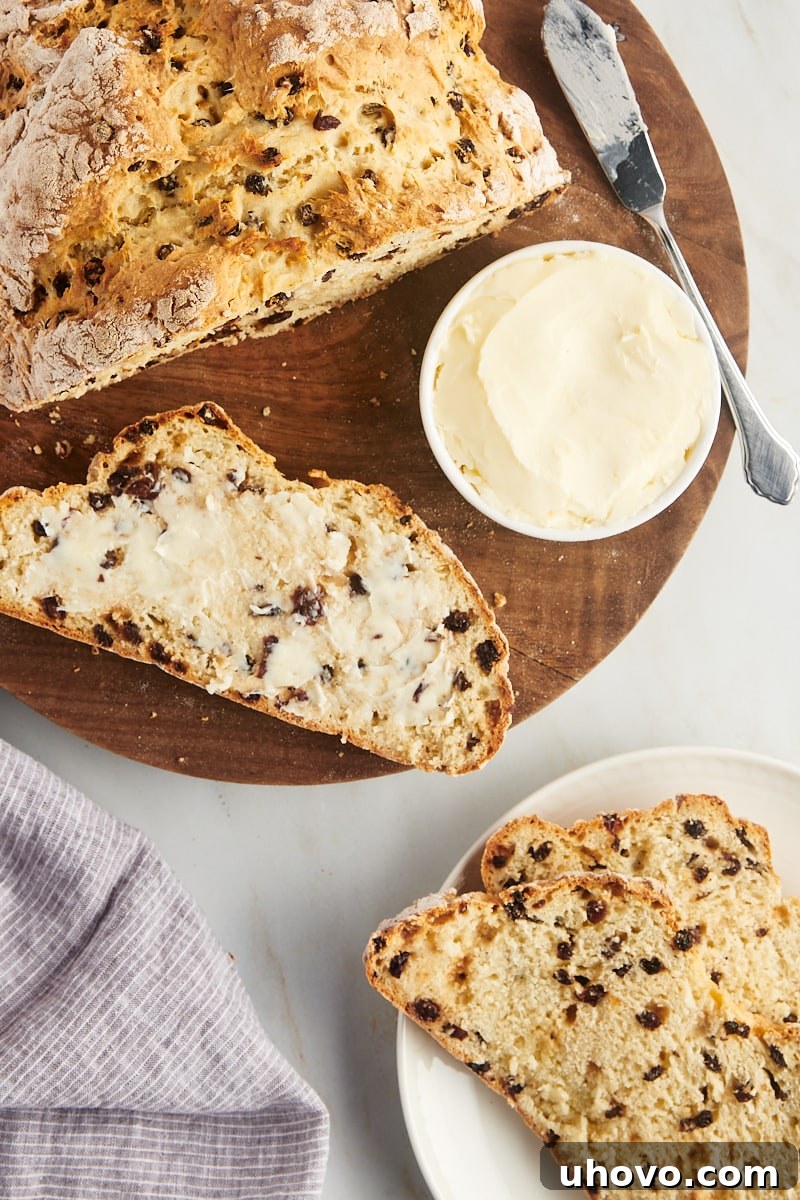
More Easy Bread Recipes to Explore
Irish Soda Bread
Pin Recipe
Leave a Review
Ingredients
- 1 cup dried currants or raisins, optional
- 4 cups (480 g) all-purpose flour, plus more for kneading and shaping the dough
- 1 teaspoon baking soda
- 1 teaspoon salt
- 1 ¾ cups (420 ml) buttermilk
Recommended Products
-
Escali Kitchen Scale
-
USA Pan Half Sheet Pan
-
Silpat Non-Stick Silicone Baking Mat, Half Sheet Size
Instructions
-
If you opt to use dried fruit, place it in warm water to soak for approximately 10 to 15 minutes. This step helps rehydrate the fruit. Once softened, drain it thoroughly and pat it very dry with a paper towel to remove any excess moisture, which helps prevent a gummy texture in the bread.
-
Preheat your oven to 425°F (220°C). Prepare a baking sheet by lightly flouring it or lining it with a silicone baking mat or high-temperature parchment paper.
-
In a large mixing bowl, whisk together the all-purpose flour, baking soda, and salt until uniformly combined. If incorporating currants or other dried fruits, toss them with a small portion of the flour mixture first, then stir them into the remaining dry ingredients to ensure even distribution.
-
Create a deep well in the center of your dry mixture and pour in the cold buttermilk. Using a fork or your hands, gently mix until the dough just begins to come together. The dough should be soft and only slightly sticky. If it feels too wet to handle, add a tablespoon of flour at a time until the desired consistency is achieved, being careful not to overwork the dough.
-
Turn the dough out onto a lightly floured surface. With minimal handling, gently knead it just a few times to form it into a round loaf. Remember, over-kneading will develop gluten, which can make your soda bread tough rather than tender.
-
Place the shaped dough onto your prepared baking sheet. Using a sharp knife, make a deep X-shaped cut into the top of the loaf. This scoring helps the bread expand evenly during baking and prevents the crust from tearing haphazardly.
-
Bake for 35 to 40 minutes, or until the bread achieves a beautiful golden-brown crust and sounds hollow when tapped on the bottom. For an accurate measure of doneness, an instant-read thermometer inserted into the center should read between 190°F (88°C) and 200°F (93°C).
-
Once baked, remove the bread from the oven and transfer it to a wire rack to cool. Allow it to rest for at least 10 to 15 minutes before slicing and serving. This cooling period is crucial for the bread’s internal structure to set properly.
Notes
- Irish soda bread is at its absolute best when it’s fresh. For optimal taste and texture, try to enjoy it on the day it’s baked. However, it can be stored in an airtight container at room temperature for up to 2 days, or refreshed in the oven for a few minutes.
In conclusion, Irish Soda Bread is much more than just a recipe; it’s an invitation to embrace the heartwarming tradition of homemade baking with unparalleled ease. Its simple ingredients, quick preparation, and comforting flavor make it an indispensable staple for any home baker. Whether you’re an experienced chef or a novice in the kitchen, this traditional loaf promises a rewarding experience, filling your home with an irresistible aroma and your table with a delicious, versatile bread that truly tastes of home. So, tie on your apron, gather your few simple ingredients, and experience the pure satisfaction of baking your very own perfect Irish Soda Bread.