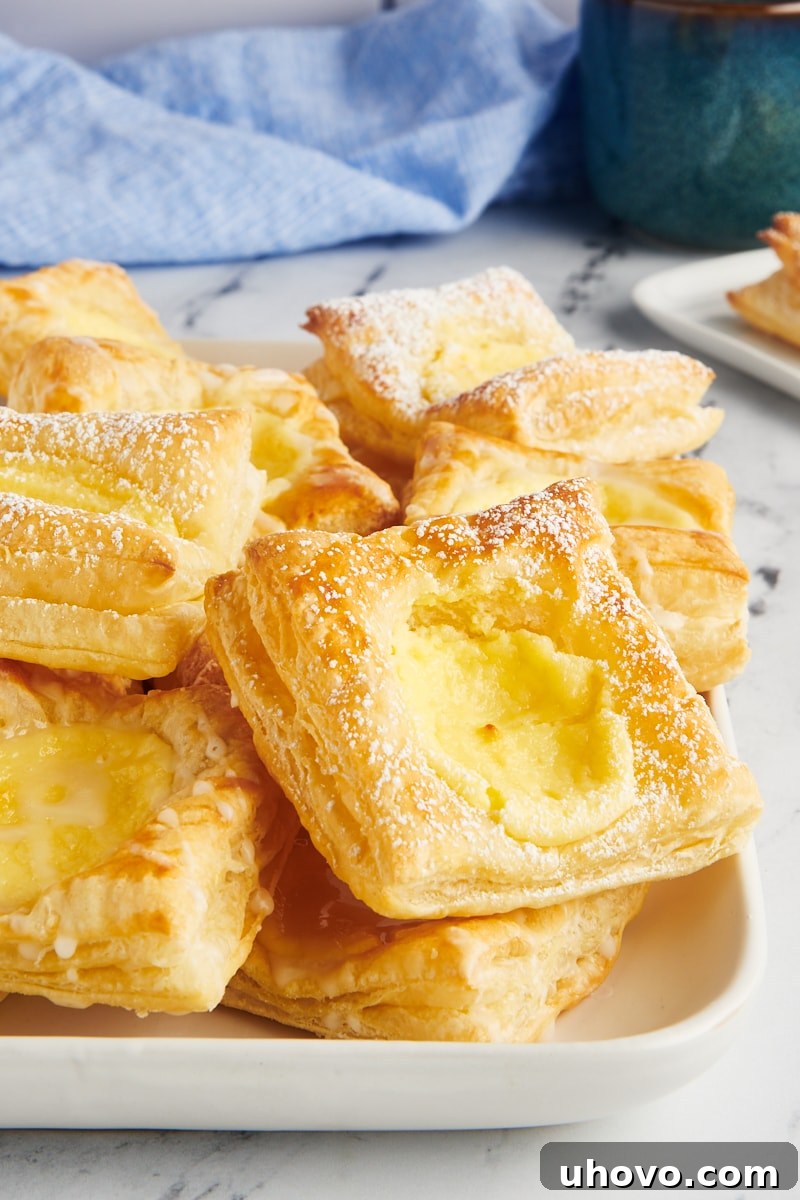
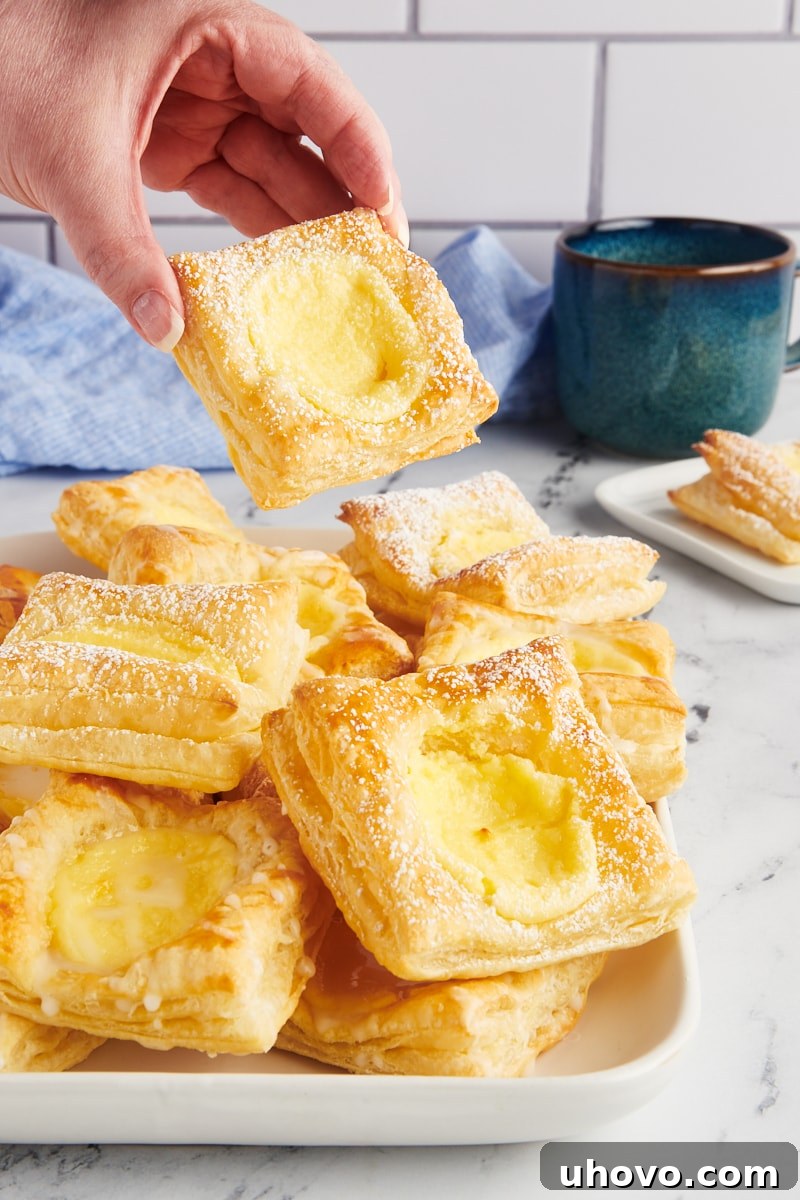
Cheese danishes are a timeless classic, gracing breakfast tables and bakery displays with their irresistible charm. Imagine a delicate, flaky pastry, rich with butter, enveloping a sweet, tangy, and lusciously creamy cheese filling. The thought alone is enough to make mouths water! While these elegant pastries might seem like a complex endeavor best left to professional bakers, this recipe is here to prove otherwise. We’re about to unveil the secret to creating bakery-quality cheese danishes right in your own kitchen, using a clever shortcut that makes the process surprisingly simple: store-bought puff pastry. Prepare to impress your family and friends with these delectable treats that are much easier to make than they look!
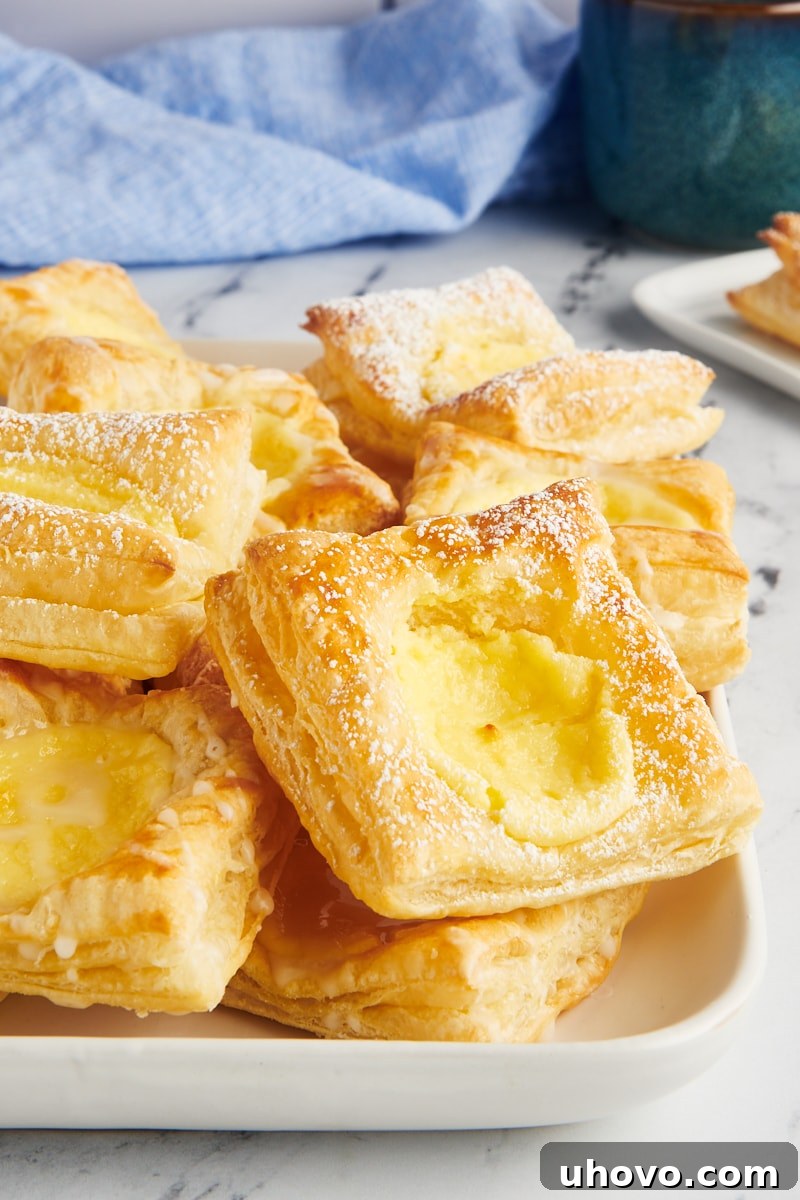
Unlike many elaborate breakfast recipes, such as intricate Sour Cream Coffee Cake Loaf or time-consuming artisan bread, these cheese danishes are a glorious exception. They deliver all the satisfaction of a gourmet pastry without requiring hours of effort. By combining a wonderfully creamy cheese filling with the convenience of store-bought puff pastry, we eliminate the most daunting step of pastry-making: preparing the laminated dough from scratch. This intelligent approach ensures a stunning result with minimal fuss, perfect for a delightful weekend breakfast or a special brunch gathering.
Why You’ll Adore This Easy Cheese Danish Recipe
- Effortlessly Elegant: Easier Than You Imagine. The secret weapon here is store-bought puff pastry. This incredible shortcut transforms what could be a multi-hour project into a simple, enjoyable baking experience. You’ll create beautiful, golden-brown pastries with countless flaky layers, making them look as if they came straight from a high-end bakery. Your guests will be thoroughly impressed by your baking prowess, and you won’t have to reveal just how little effort went into their creation!
- Infinitely Customizable: Make It Your Own. This recipe serves as a fantastic foundation for culinary creativity. While the classic cheese filling is divine, you can easily personalize your danishes to suit any taste. Consider adding fresh fruit like raspberries or thinly sliced apples, a sprinkle of toasted nuts such as almonds or pecans, or even mini chocolate chips to the cream cheese mixture for an extra touch of decadence. A dash of cinnamon or a citrus zest can also introduce new dimensions of flavor.
- A Guaranteed Crowd-Pleaser: Perfect for Any Occasion. Whether you’re hosting a festive holiday breakfast, contributing to a brunch potluck, or simply looking to elevate a leisurely Sunday morning, these cheese danishes are an instant hit. Their inviting aroma, beautiful golden appearance, and rich, satisfying taste make them universally loved. They’re impressive enough for special events yet simple enough to whip up whenever a craving strikes.
Don’t miss out on more fantastic recipes! Subscribe to our newsletter for baking inspiration delivered straight to your inbox.
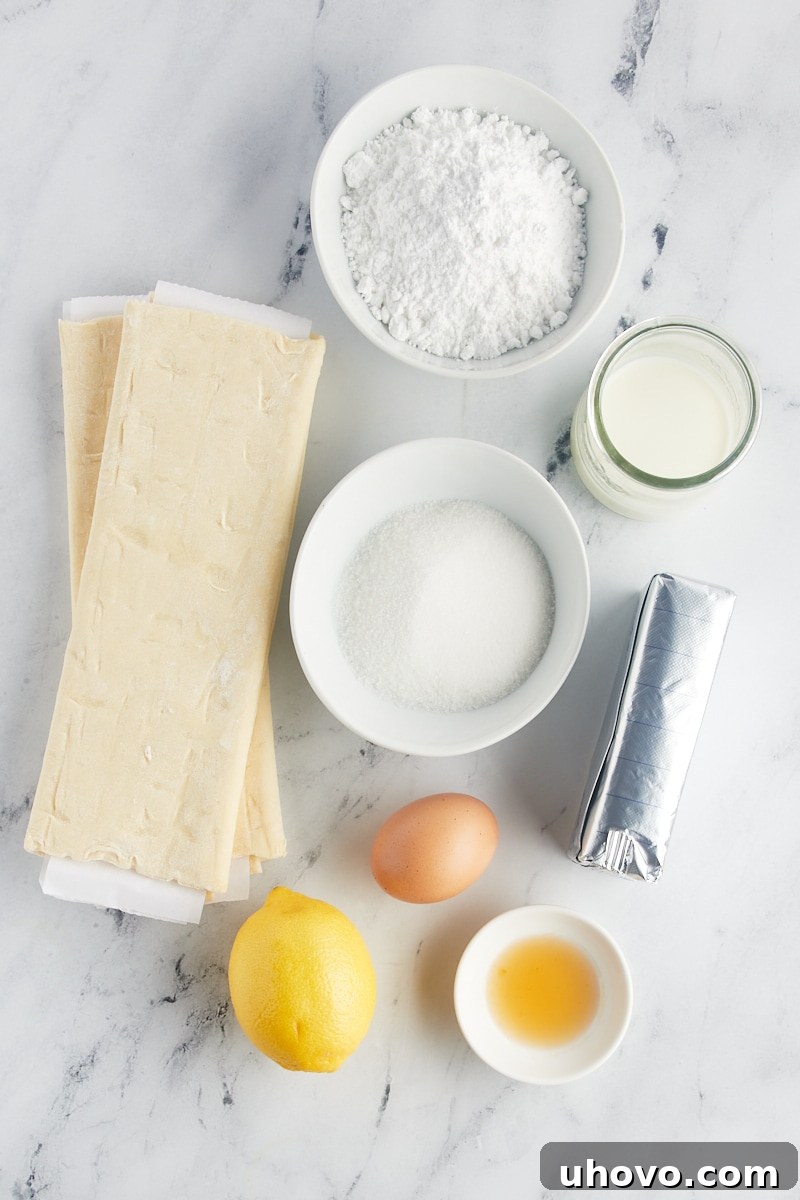
Essential Ingredients for Your Delicious Danishes
To craft these delightful cheese danishes, you’ll need a handful of readily available ingredients. The key to a truly fantastic result lies in using good quality components, especially for the cream cheese and puff pastry. Below is a detailed breakdown of what you’ll need, along with tips for each item.
Refer to the detailed recipe card below for precise quantities and instructions.
For the Creamy Pastries:
- Cream cheese – Opt for full-fat block cream cheese, not the spreadable variety that comes in tubs. Block cream cheese has a firmer texture and less water content, which is crucial for a thick, stable, and perfectly creamy filling that holds its shape during baking. Ensure it’s softened to room temperature before mixing to prevent lumps and ensure a smooth consistency.
- Granulated sugar – This provides the perfect touch of sweetness, balancing the tanginess of the cream cheese without making the filling overly sugary.
- Large egg – You’ll separate the egg; the yolk adds richness and helps bind the filling, contributing to its creamy texture. The egg white is reserved for an egg wash, which gives the puff pastry a beautiful golden sheen and helps seal the edges. Separating a cold egg is often easier than a room-temperature one.
- Fresh lemon juice – A squeeze of fresh lemon juice is a game-changer! It brightens the flavor of the cream cheese filling, adding a subtle tang that elevates the entire pastry and cuts through the richness, preventing it from tasting too heavy. Freshly squeezed is always best for the most vibrant flavor.
- Vanilla extract – Essential for adding a warm, aromatic depth to the cheese filling. Use a good quality pure vanilla extract or, if you’re feeling adventurous, homemade vanilla extract for an unparalleled flavor.
- Puff pastry sheets – This is your primary shortcut to success. You’ll find these in the frozen section of most grocery stores. Look for all-butter puff pastry if available, as it offers a superior flavor and flakiness compared to those made with vegetable shortening. Remember to thaw them according to package directions before use, typically overnight in the refrigerator or for about 30-40 minutes at room temperature.
For the Sweet Glaze:
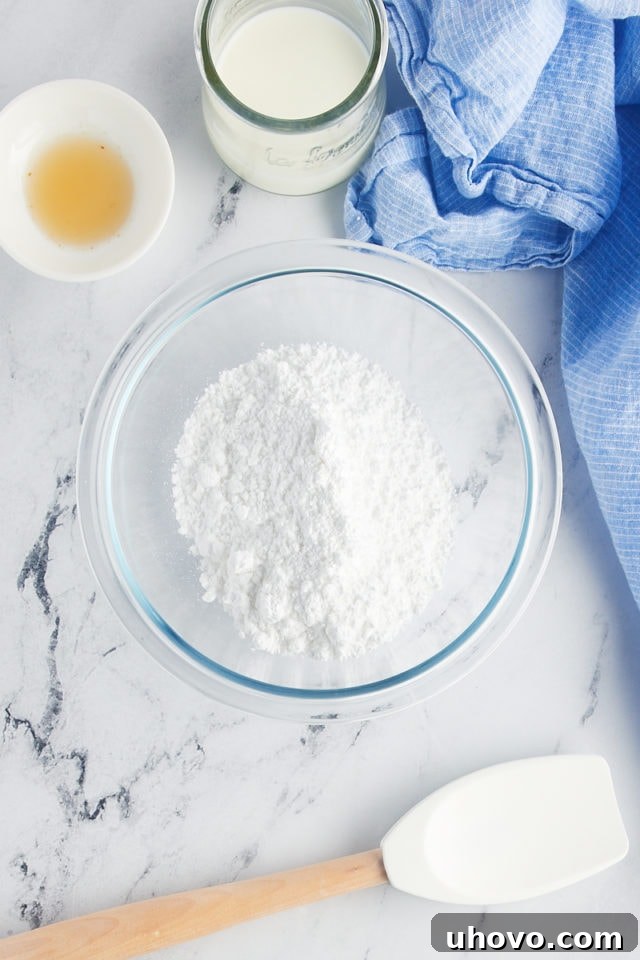
- Confectioners’ sugar – Also known as powdered sugar, this fine sugar dissolves easily to create a smooth, pourable glaze.
- Milk or heavy cream – Either works perfectly to achieve the desired consistency for your glaze. Heavy cream will result in a richer, slightly thicker glaze, while milk offers a lighter option. Use whichever you have on hand.
- Vanilla bean paste or vanilla extract – Vanilla bean paste will give your glaze lovely, visible flecks of vanilla bean for an artisanal touch and a more intense vanilla flavor. However, vanilla extract is a perfectly suitable and delicious alternative.
Phyllo Dough vs. Puff Pastry: Understanding the Difference
A common question among home bakers is whether phyllo dough and puff pastry are interchangeable. The answer is a resounding no. While both are celebrated for their thin, flaky layers, their composition, texture, and culinary applications are distinctly different. Phyllo (or filo) dough is incredibly thin, almost translucent, and very delicate. It’s typically brushed with butter or oil between many layers to create its crisp texture, commonly used in Mediterranean and Middle Eastern dishes like spanakopita, baklava, and börek. Puff pastry, on the other hand, is significantly thicker and achieves its characteristic “puff” from layers of butter folded into dough, which creates steam during baking, separating the layers into an airy, rich, and buttery crust. This robust flakiness makes puff pastry ideal for heartier sweet and savory applications, such as turnovers, tarts, beef Wellington, and, of course, our delicious cheese danishes.
Step-by-Step Guide: Crafting Your Cheese Danishes
Making these cheese danishes is a straightforward process, broken down into a few simple steps. Follow along to create perfectly baked pastries every time.
- Step 1: Prepare Your Workspace and Oven. Begin by preheating your oven to 400°F (200°C). This ensures the oven is at the correct temperature when the danishes go in, which is crucial for puff pastry. Line two large baking sheets with parchment paper or silicone baking mats. This prevents sticking and makes cleanup a breeze.
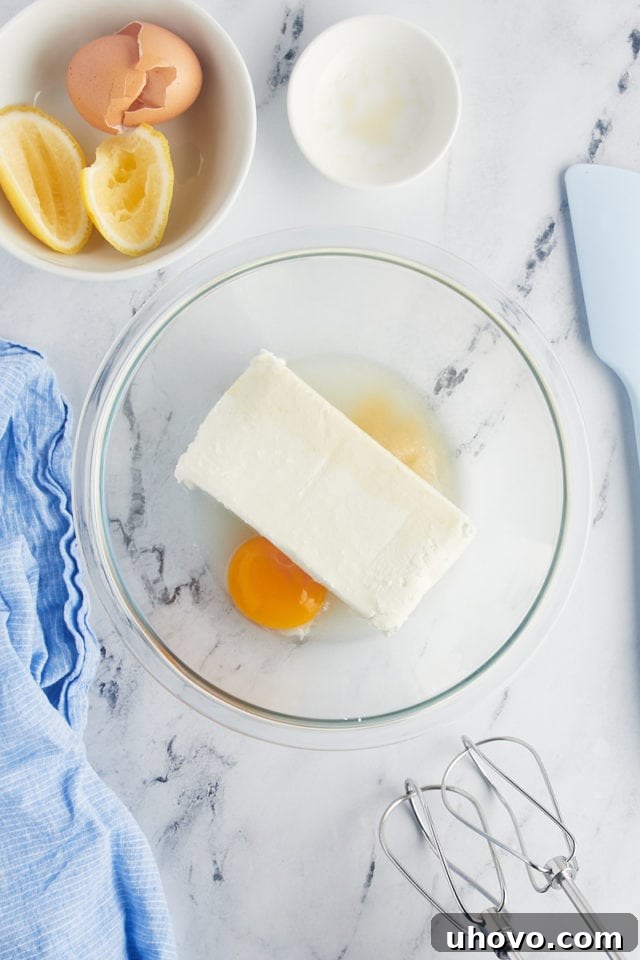
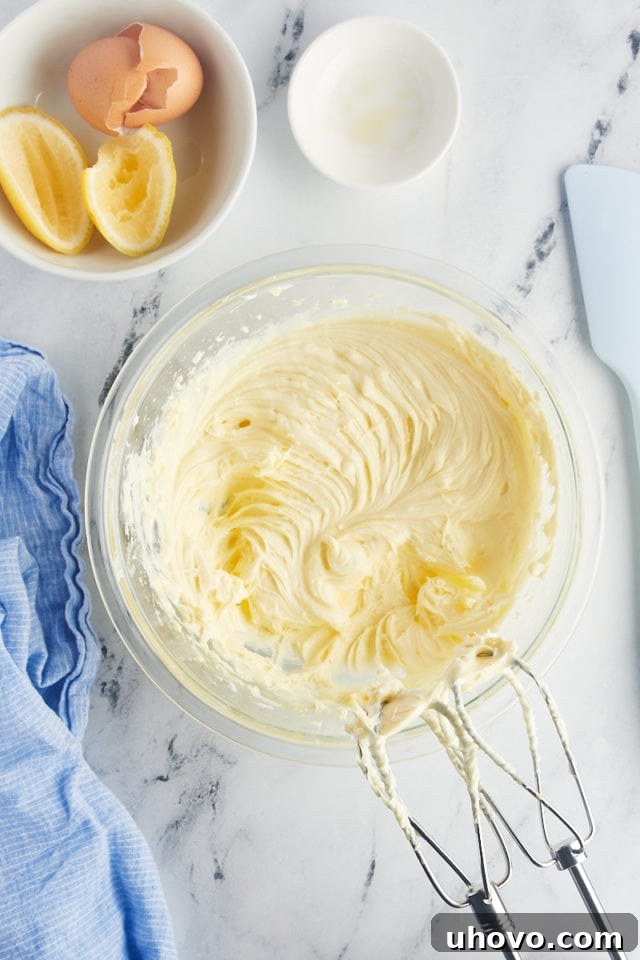
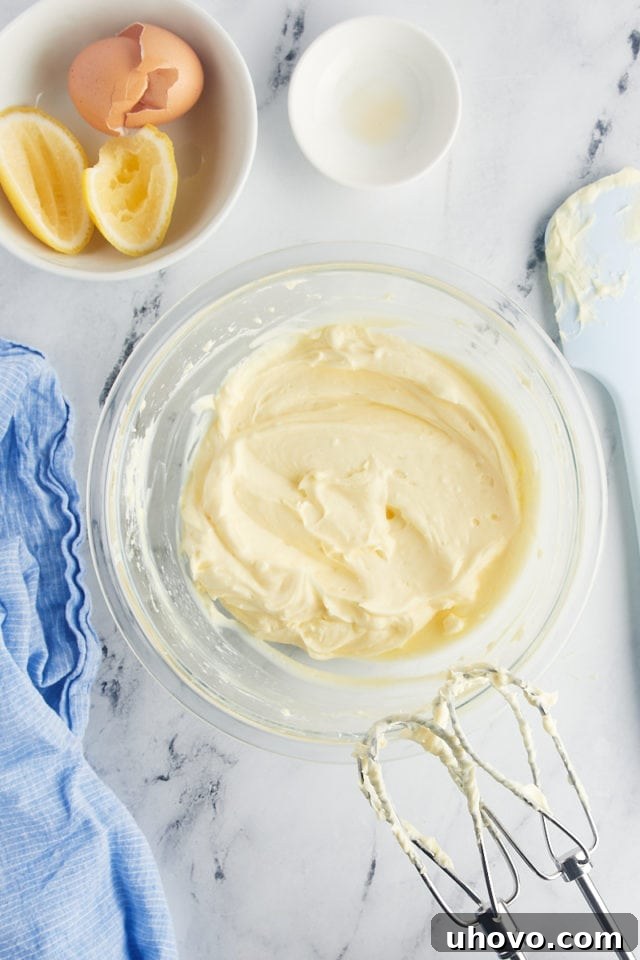
- Step 2: Create the Luscious Cheese Filling. In a medium bowl, combine the softened cream cheese, granulated sugar, egg yolk, fresh lemon juice, and vanilla extract. Using an electric mixer set to medium speed, beat these ingredients together until the mixture is completely smooth, creamy, and free of any lumps. Scrape down the sides of the bowl as needed to ensure everything is thoroughly incorporated.
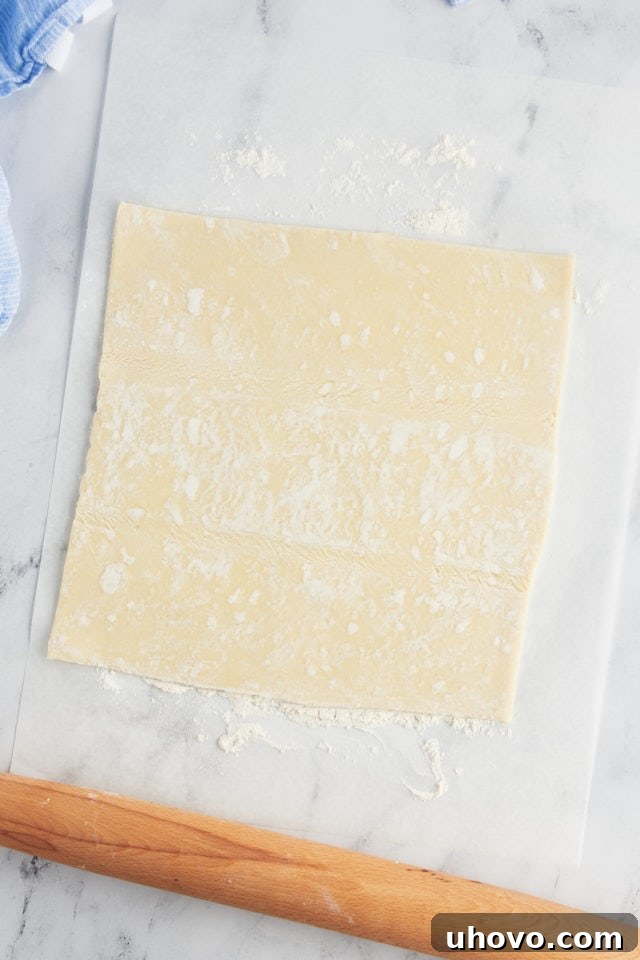
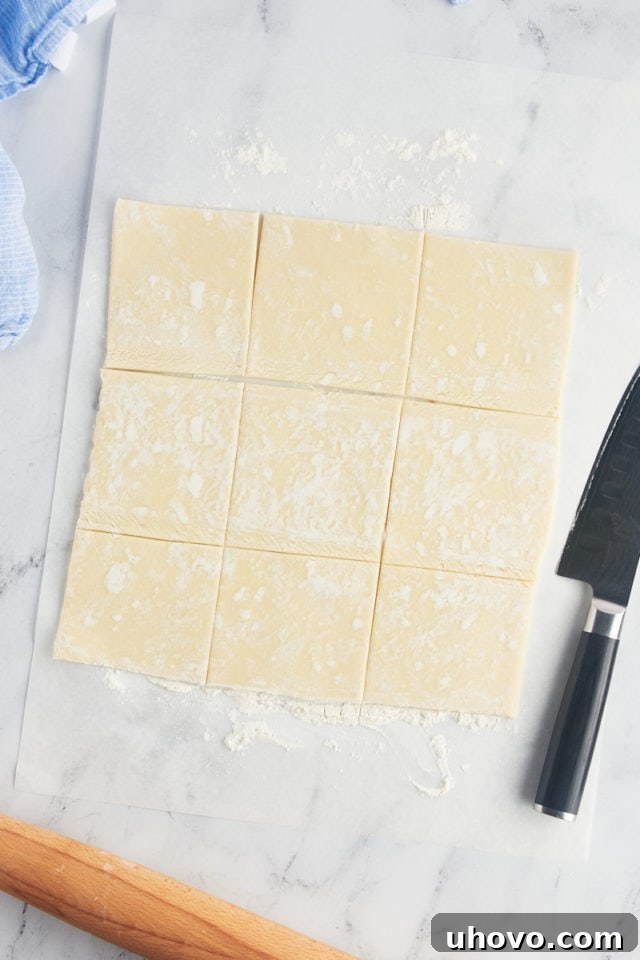
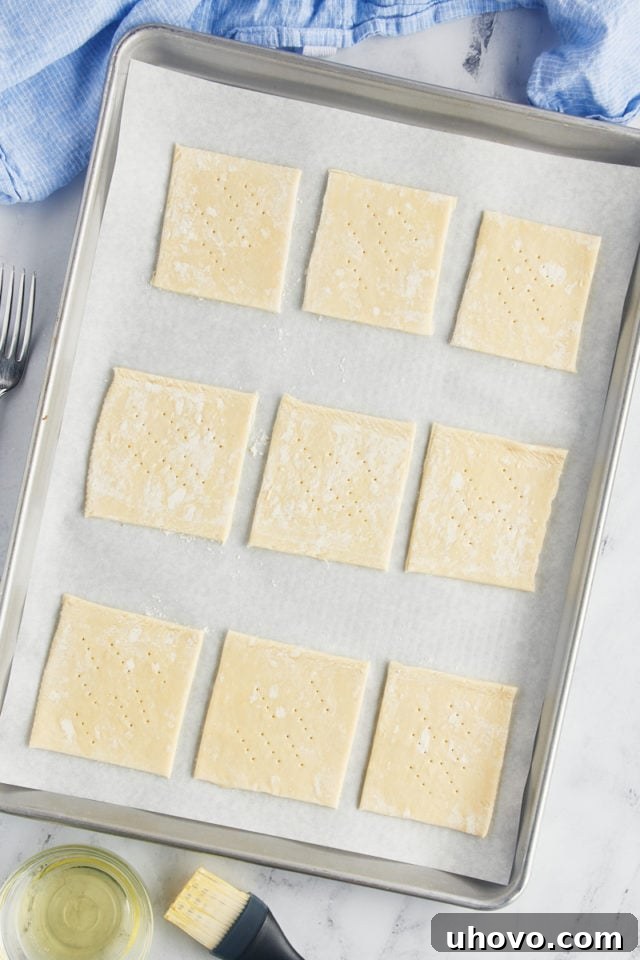
- Step 3: Prepare the Puff Pastry Squares. Lightly dust a clean work surface with flour to prevent the pastry from sticking. Gently unfold one sheet of thawed puff pastry. Using a rolling pin, carefully roll it out into an approximately 10-inch (25.5 cm) square. With a sharp knife or a pizza cutter, cut this large square into nine smaller, even squares. Repeat this process with the second sheet of puff pastry.
- Step 4: Shape and Brush the Pastry. Transfer the puff pastry squares to your prepared baking sheets, leaving some space between each for expansion. Use a fork to “dock” the center of each pastry square. To do this, lightly poke holes in the center area, leaving an approximate 1 & 1/2 inch (3.8 cm) border around the edges. This docking helps prevent the center from puffing up too much, creating a perfect well for the filling. Next, lightly brush the borders of each puff pastry square with the reserved egg white. This egg wash contributes to a beautiful golden-brown and shiny crust. You may not use all of the egg white.
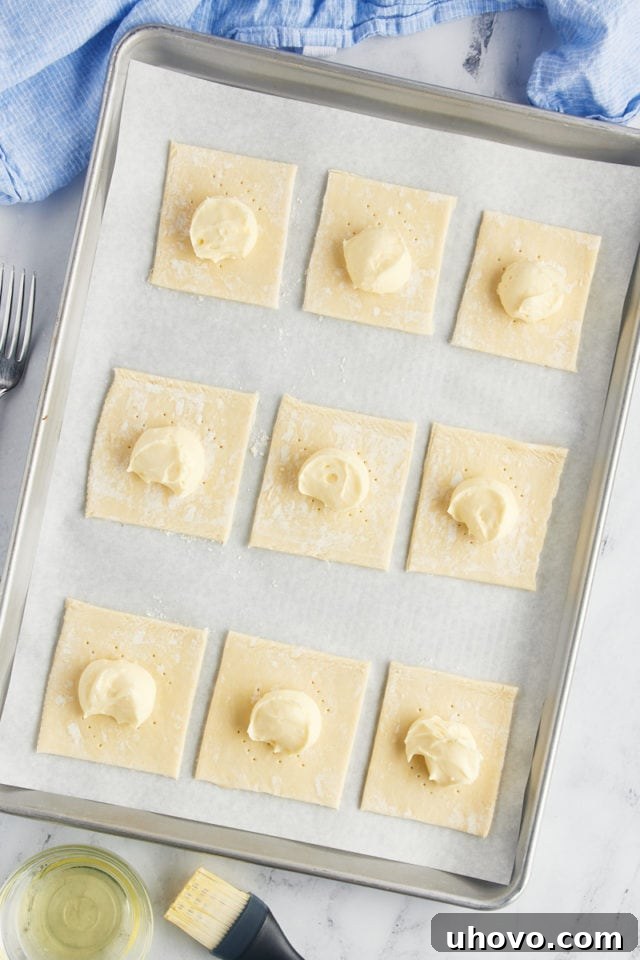
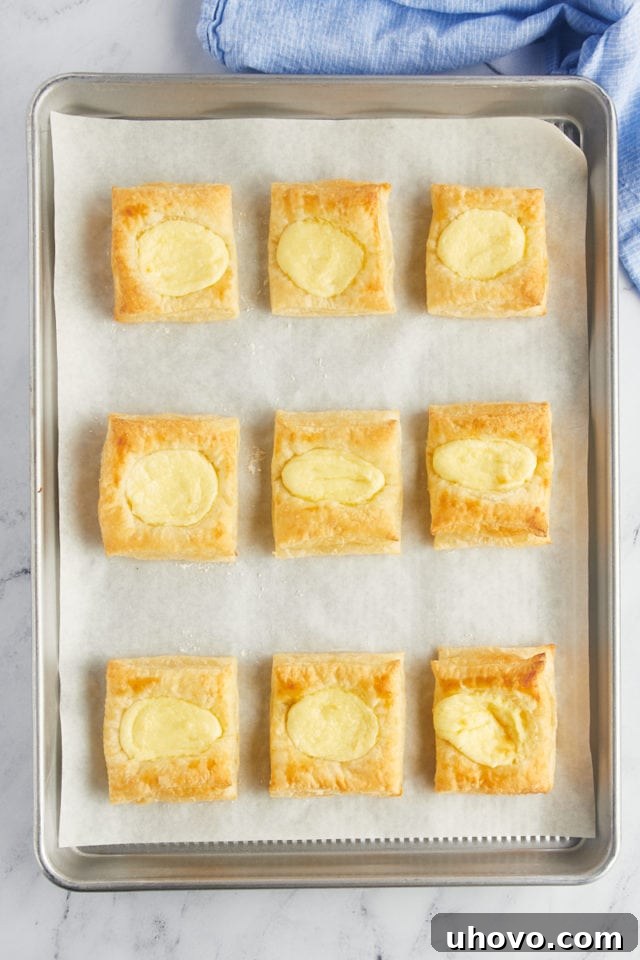
- Step 5: Fill and Bake to Golden Perfection. Carefully spoon about a tablespoon of the cream cheese mixture onto the center of each prepared pastry square, making sure not to overfill. The filling will spread slightly as it bakes. Transfer the baking sheets to the preheated oven. Bake for 12 to 16 minutes, or until the puff pastry is beautifully golden brown and puffed around the edges, and the filling is set. For even baking, you might rotate the pans halfway through the baking time.
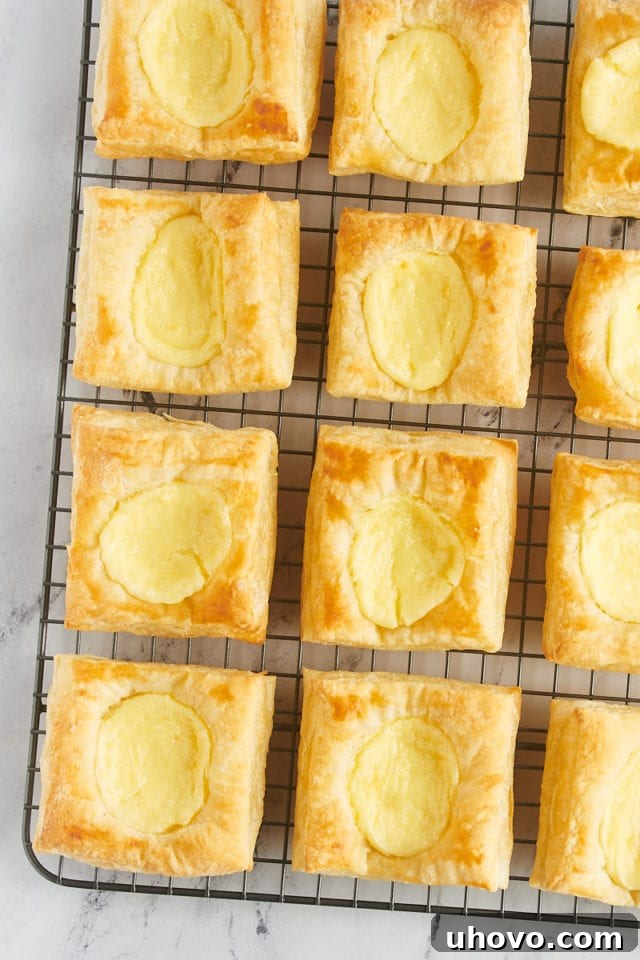
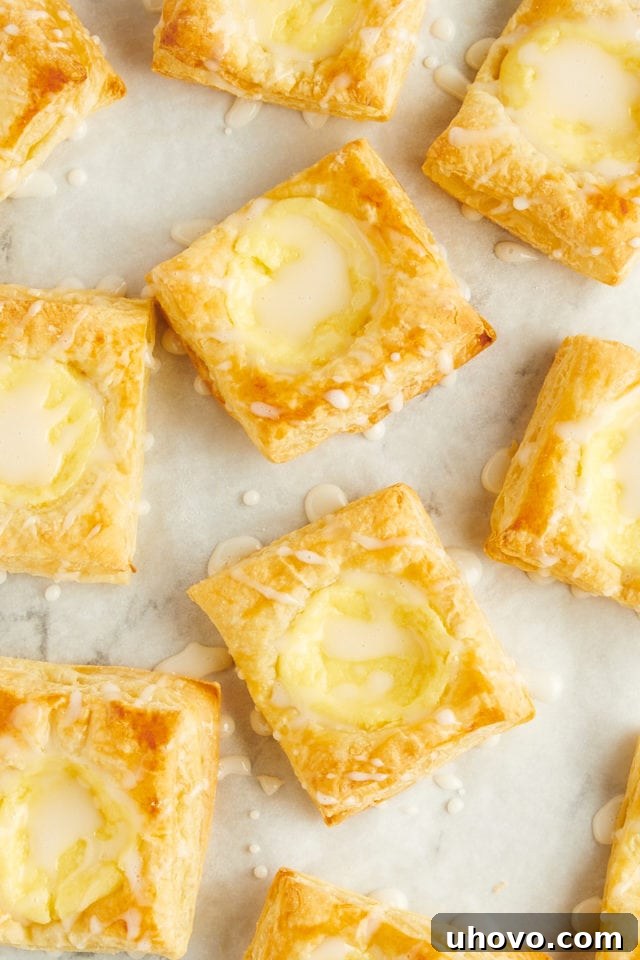
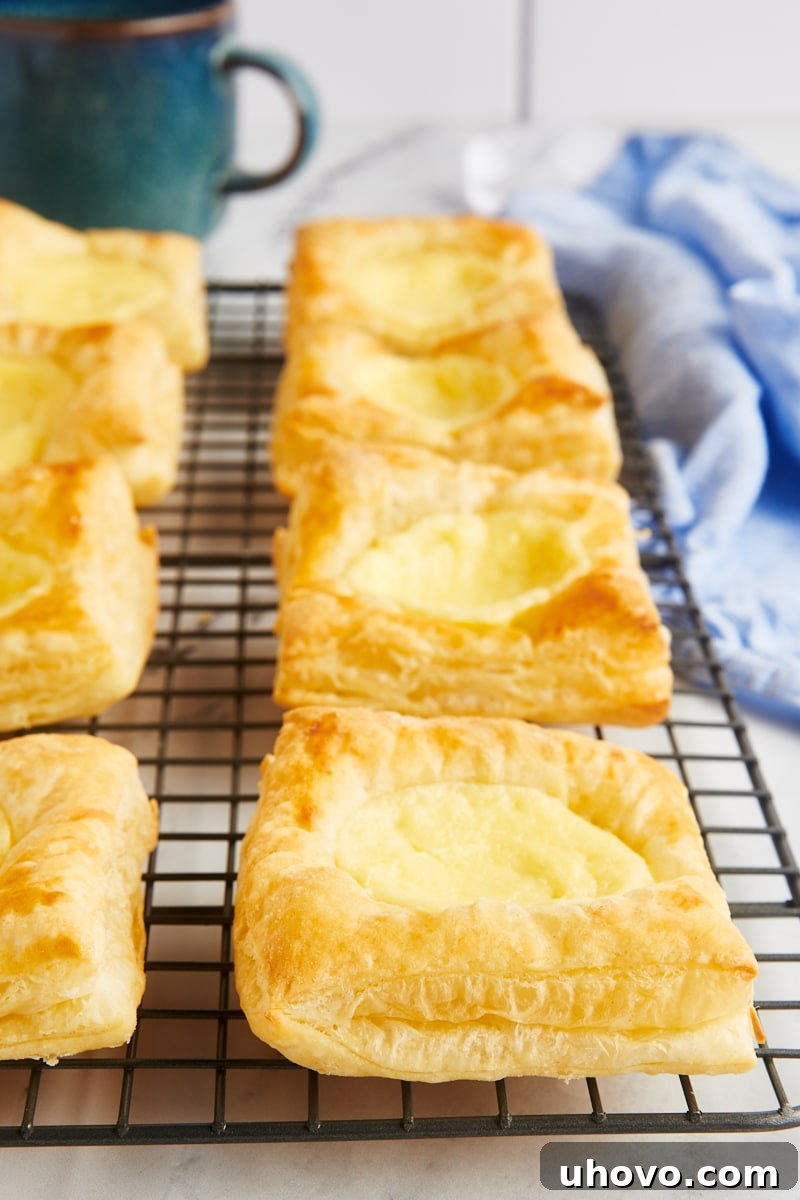
- Step 6: Cool and Glaze Your Masterpieces. Once baked, carefully transfer the hot pans to wire racks to cool. You can enjoy the danishes warm, which is truly heavenly, or allow them to cool completely. Cooling on a wire rack ensures air circulation, preventing the bottoms from becoming soggy.
- Step 7: Prepare the Simple Glaze. While the cheese danishes are cooling, whisk together the confectioners’ sugar, 1-2 tablespoons of milk or heavy cream, and vanilla bean paste or vanilla extract in a small bowl. Start with 1 tablespoon of liquid and gradually add more, a small amount at a time, until you achieve a glaze that is thick enough to coat a spoon but still easily pourable.
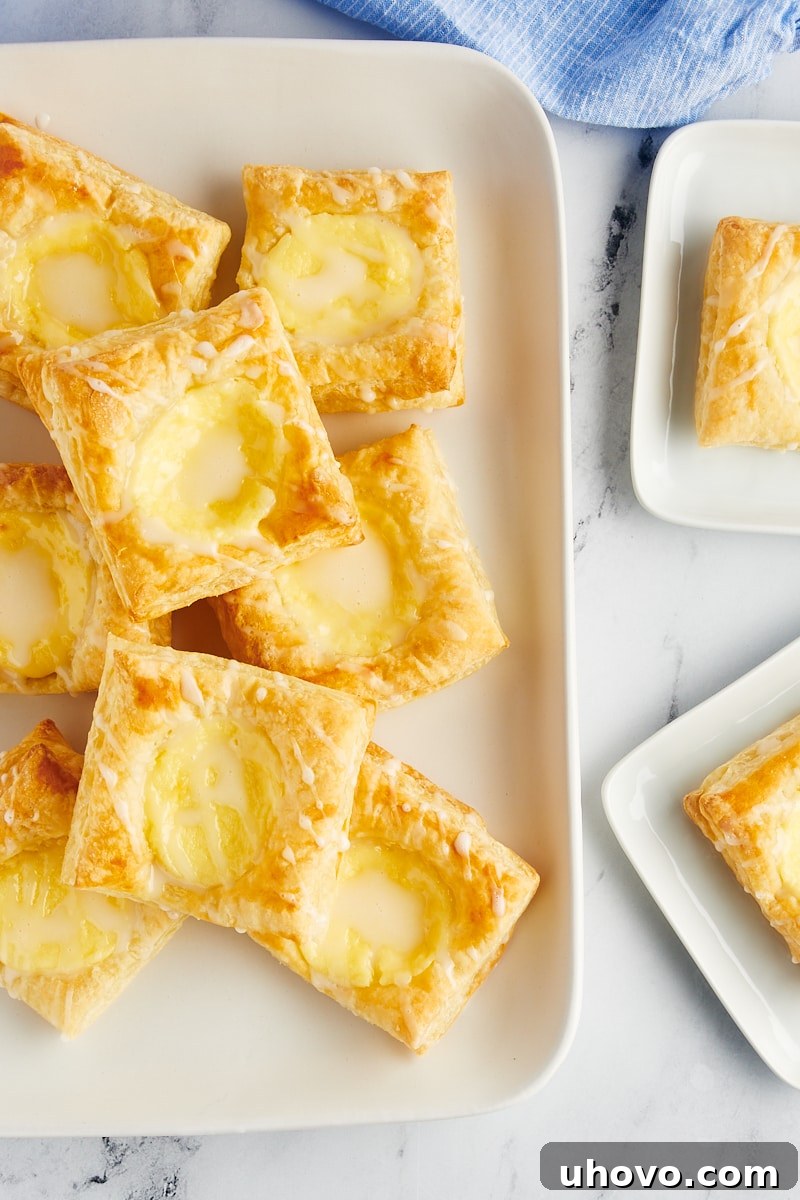
- Step 8: The Finishing Touch. Once the danishes have cooled slightly or completely, drizzle the prepared glaze generously over each pastry. A spoon or a small whisk works well for this. Serve immediately and savor the moment!
Expert Tips for Perfect Cheese Danishes
While this recipe is incredibly forgiving, a few simple tips can elevate your cheese danishes from good to absolutely outstanding:
- Ensure Softened Cream Cheese. This cannot be stressed enough! Cold cream cheese will result in a lumpy filling, no matter how much you beat it. Allow your cream cheese to come to room temperature for at least 30-60 minutes before mixing for a perfectly smooth, creamy, and uniform filling.
- Invest in Quality Puff Pastry. Since puff pastry is the foundation of this recipe, its quality significantly impacts the final taste and texture. If possible, seek out all-butter puff pastry. It delivers a richer flavor and a more superior flaky texture that truly sets your danishes apart.
- Mind the Filling Quantity. Resist the urge to overfill the pastry squares. A single tablespoon of the cream cheese mixture might seem modest, but it’s the ideal amount. The filling will naturally spread during baking. Overfilling can lead to messy overflows, prevent those desirable crisp edges, and make the danishes soggy.
- Keep the Puff Pastry Cold. Work quickly with the puff pastry. Cold pastry yields the flakiest results. If your kitchen is warm or if you find the pastry becoming too soft and sticky, pop it back into the refrigerator for 10-15 minutes to firm up before continuing.
- Don’t Overwork the Dough. When rolling out the puff pastry, use light, even pressure. Overworking the dough can compress its delicate layers, resulting in less “puff” and a tougher texture.
- Even Baking is Key. Ovens can have hot spots. To ensure your danishes bake evenly and achieve a consistent golden-brown color, rotate your baking sheets halfway through the baking time.
Delicious Variations to Explore
While the classic cheese danish is a beloved favorite, this recipe is incredibly versatile. Don’t hesitate to experiment with these exciting variations to create new flavor profiles:
- Fruit Danishes. Transform your cheese danishes into delightful fruit pastries. Instead of the plain cream cheese filling, or in addition to it, swirl in your favorite fruit jam, fruit preserves, or a spoon of canned fruit pie filling (cherry, apple, or blueberry are excellent choices). You can also top the cream cheese with a few fresh berries or thin slices of apple before baking.
- Chocolate Chip Cream Cheese Danishes. For a touch of chocolatey indulgence, fold a quarter cup of mini chocolate chips into the cream cheese filling. The mini chips ensure even distribution and a burst of chocolate in every bite.
- Nutty Danishes. Add texture and a rich, earthy flavor by sprinkling chopped toasted nuts like almonds, pecans, or walnuts over the cream cheese filling before baking. A light dusting of cinnamon can further enhance this variation.
- Savory Danishes. For a unique twist, consider a savory cheese danish. Omit the granulated sugar from the filling and instead mix in chopped herbs (like chives or dill), a pinch of garlic powder, and some shredded Gruyere or cheddar cheese. You could even add cooked, crumbled bacon or sautéed spinach.
- Maple Glaze. Instead of the vanilla glaze, whisk confectioners’ sugar with a tablespoon or two of maple syrup and a splash of milk for a warm, autumnal flavor.
- Simple Sugar Dusting. If you prefer a less sweet finish or want to highlight the pastry’s natural flavors, skip the glaze altogether and simply dust the cooled danishes with a generous amount of powdered sugar just before serving.
Storing Your Delectable Cheese Danishes
These cheese danishes are undeniably best enjoyed fresh out of the oven when their flaky layers are at their peak and the filling is warm and gooey. However, any leftovers can be stored and savored for a couple of days with proper care.
To store leftover cream cheese danishes, place them in an airtight container or wrap them tightly with plastic wrap. They will keep well in the refrigerator for 2-3 days. Storing them in the fridge is important due to the cream cheese filling. While they’re delightful at room temperature, for longer storage, refrigeration is key.
When you’re ready to enjoy them, you have a few options. You can eat the leftover danishes straight from the refrigerator, allowing them to come to room temperature for about 15-20 minutes for a softer texture. For that “freshly baked” experience, reheating is recommended. Place the pastries in a preheated oven at 350°F (175°C) for about 5-8 minutes, or until warmed through and the pastry re-crisps slightly. While the microwave works for quick reheating, be aware that it can make the puff pastry less flaky and somewhat chewy, so the oven method is preferred for optimal texture.

Freezing Cheese Danishes for Future Enjoyment
Yes, these versatile cheese danishes can absolutely be frozen, both before and after baking, making them an excellent option for meal prepping or having a quick treat on hand.
Freezing Before Baking:
This method is highly recommended as it yields danishes that taste incredibly fresh once baked. Follow the recipe instructions up to the point of baking. Instead of placing them in the oven, arrange the assembled, unbaked danishes on a baking sheet lined with parchment paper. Flash-freeze them for 1-2 hours until they are solid. Once frozen solid, transfer them to a freezer-safe, airtight bag or container, separating layers with parchment paper to prevent sticking. They can be stored in the freezer for up to 3 months. When you’re ready to bake, simply place the frozen danishes on a prepared baking sheet and bake according to the recipe instructions, adding a few extra minutes (typically 5-10 minutes) to the baking time, as they will be baking from frozen.
Freezing After Baking:
If you have leftover baked danishes or wish to bake a large batch in advance, you can freeze them after they’ve been fully baked. First, ensure the pastries are completely cooled to room temperature. Then, wrap each danish individually in plastic wrap, followed by a layer of aluminum foil, or place them in a freezer-safe bag or container. They will maintain their quality in the freezer for up to 2 months. To reheat, thaw the danishes overnight in the refrigerator. Once thawed, you can warm them in a preheated oven at 350°F (175°C) for about 5-10 minutes until heated through. Keep in mind that the texture of the pastry might not be as perfectly crisp and flaky as freshly baked or baked-from-frozen danishes, but they will still be delicious.
More Delightful Breakfast Recipes
Cheese Danish
Pin Recipe
Ingredients
For the pastries:
- 8 ounces (226 g) cream cheese, softened
- ⅓ cup (67 g) granulated sugar
- 1 large egg, separated
- 1 teaspoon lemon juice
- 1 teaspoon vanilla extract
- 1 17.3-ounce (490 g) package puff pastry sheets
For the glaze:
- ¾ cup (83 g) confectioners’ sugar
- 1-2 tablespoons (15-30 ml) milk or heavy cream
- ¼ teaspoon vanilla bean paste or vanilla extract
Recommended Products
-
French Rolling Pin
-
1-Tablespoon Stainless Steel Measuring Scoop, #60
-
Silicone Brush, Set of 2
-
Half Sheet Nonstick Cooling Rack
Instructions
To make the pastries:
-
Preheat oven to 400°F (200°C). Line two baking sheets with parchment paper or silicone liners.
-
Using an electric mixer on medium speed, beat the cream cheese, sugar, egg yolk, lemon juice, and vanilla until smooth.
-
Lightly flour a work surface. Roll one sheet of puff pastry into an approximately 10-inch (25.5cm) square. Cut into 9 squares.
-
Transfer the squares to the prepared pan. Use a fork to dock the center of the pastry, leaving a 1 & 1/2 inch (3.8cm) border. You don’t need to poke holes all the way through, just lightly into the pastry.
-
Brush the borders of each pastry with the egg white.
-
Top each square with about a tablespoon of cream cheese mixture, placing it just in the center. It will spread as it bakes. (A #50 scoop works very well.)
-
Bake for 12 to 16 minutes, or until the pastries are lightly browned and puffed.
-
Place the pans on wire racks to cool. Serve warm or at room temperature.
To make the glaze:
-
Stir together the confectioners’ sugar, 1 tablespoon milk/cream, and vanilla. Add more milk or cream, a small amount at a time until the glaze is thick but pourable.
-
Drizzle the glaze over the pastries before serving.
Notes
- These danishes are best enjoyed freshly baked but can be stored in an airtight container in the refrigerator for a couple of days. For best re-crisping, reheat in a 350°F oven for a few minutes.