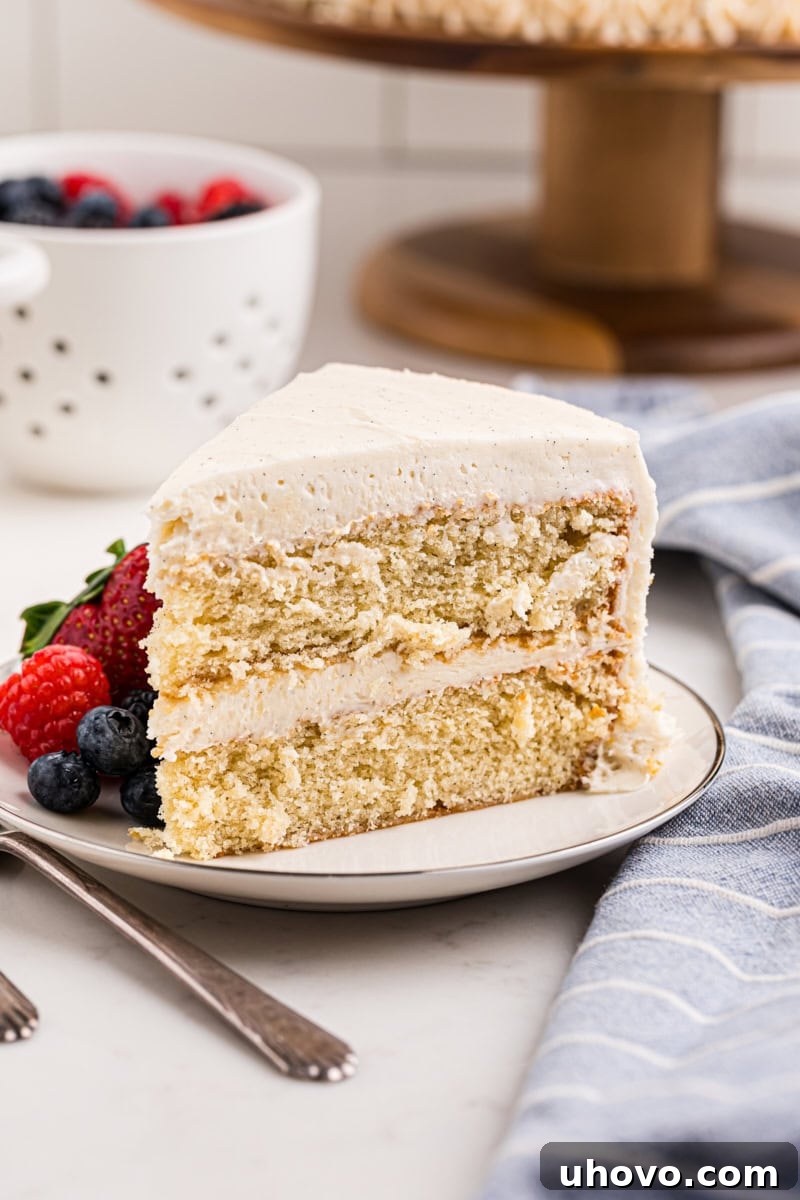
This classic vanilla layer cake is a recipe every baker should have on hand. Soft, buttery cake layers paired with a light, fluffy vanilla buttercream make it ideal for birthdays, gatherings, or any time you want a dependable, crowd-pleasing dessert.
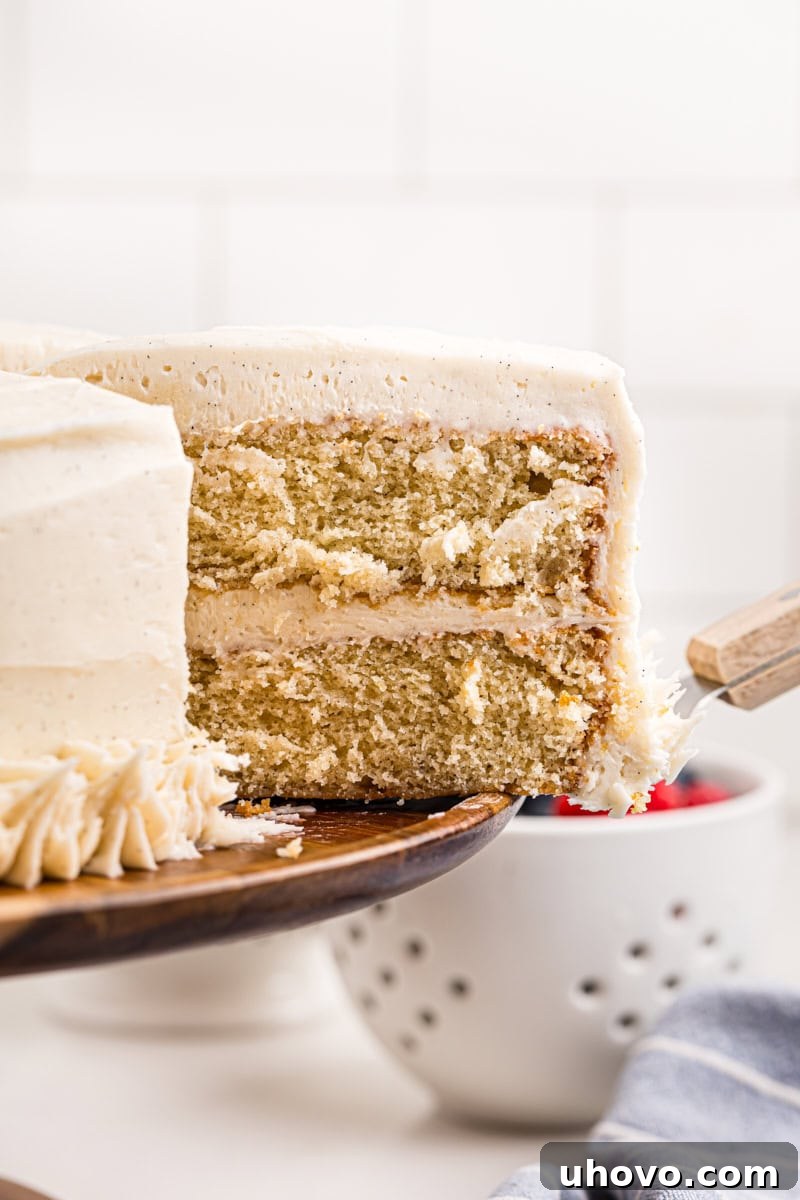
Some recipes focus on unusual flavors or elaborate decoration; this one celebrates simplicity. The layers bake up tender and moist with a warm vanilla profile, and the buttercream is airy and smooth. The result is an elegant, reliable cake that suits special occasions and everyday celebrations alike.
The method is straightforward and accessible: no specialty equipment, no advanced techniques, and no fussy decorating required. If you want a classic vanilla cake that consistently turns out well, this is it.
Why You’ll Love This Vanilla Layer Cake
- Soft, tender cake layers. A combination of butter, oil, and buttermilk keeps the crumb moist and pleasant.
- Rich vanilla flavor. Vanilla bean paste gives both cake and frosting a deeper flavor and pretty specks throughout; vanilla extract will also work.
- Classic and versatile. Finish it simply for a timeless look or add piping and sprinkles for a celebration cake.
- Easy to make. Straightforward steps and forgiving technique make this a great everyday recipe.
- A dependable go-to. Adaptable for different occasions and easy to customize.
Key Ingredients
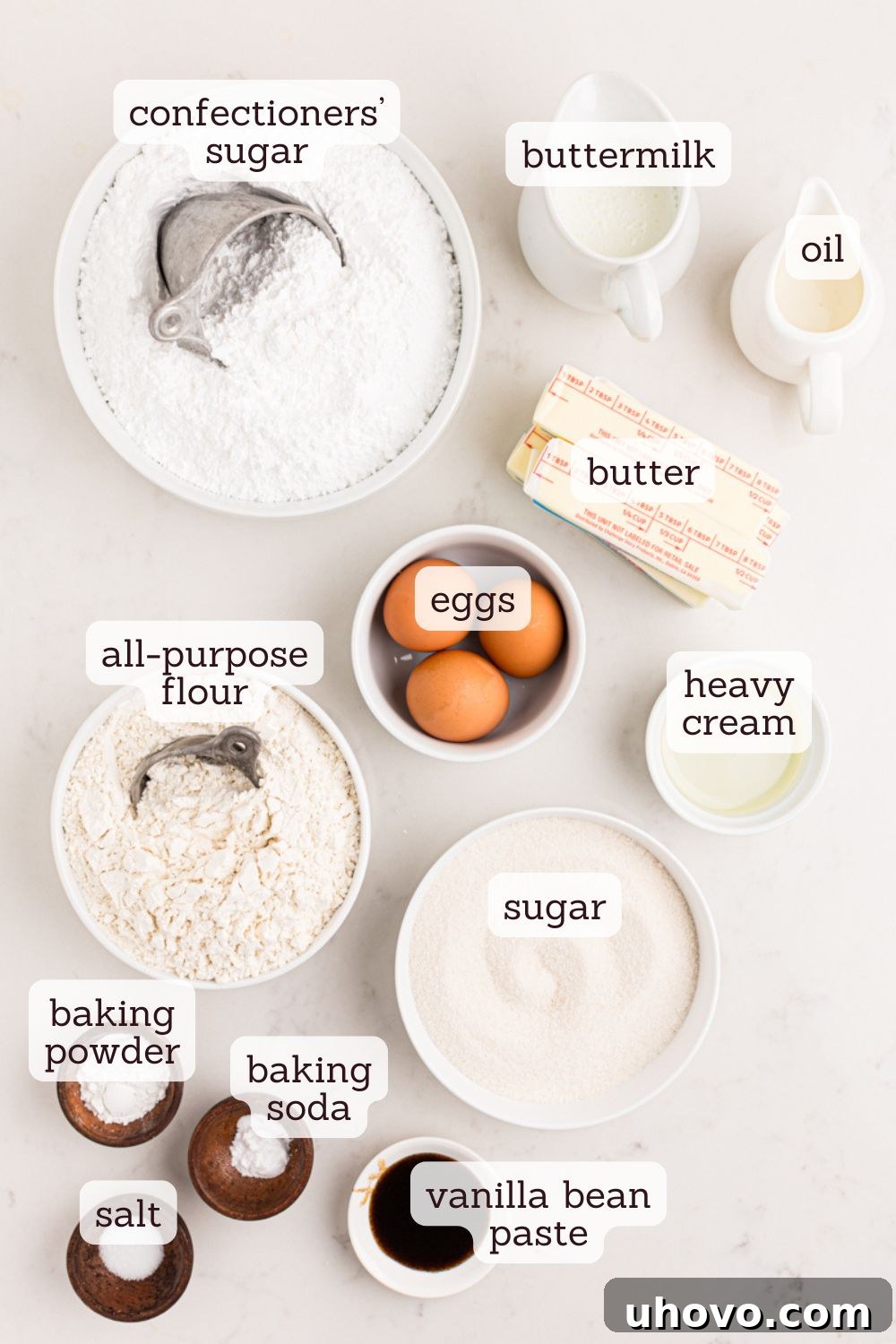
- Vanilla bean paste – Adds depth and visible vanilla flecks in cake and frosting. Pure vanilla extract can be substituted.
- Butter + oil – Butter provides flavor while oil helps keep the layers extra moist and tender.
- Buttermilk – Keeps the crumb tender and adds a subtle tang to balance the sweetness.
- Vanilla buttercream – Classic American-style buttercream beaten until light and smooth for the best texture.
How to Make Vanilla Layer Cake
Prepare the pans. Grease the pans and line the bottoms with parchment to prevent sticking and ensure clean release.
Whisk the dry ingredients. Combine flour, baking powder, baking soda, and salt to distribute the leavening evenly.
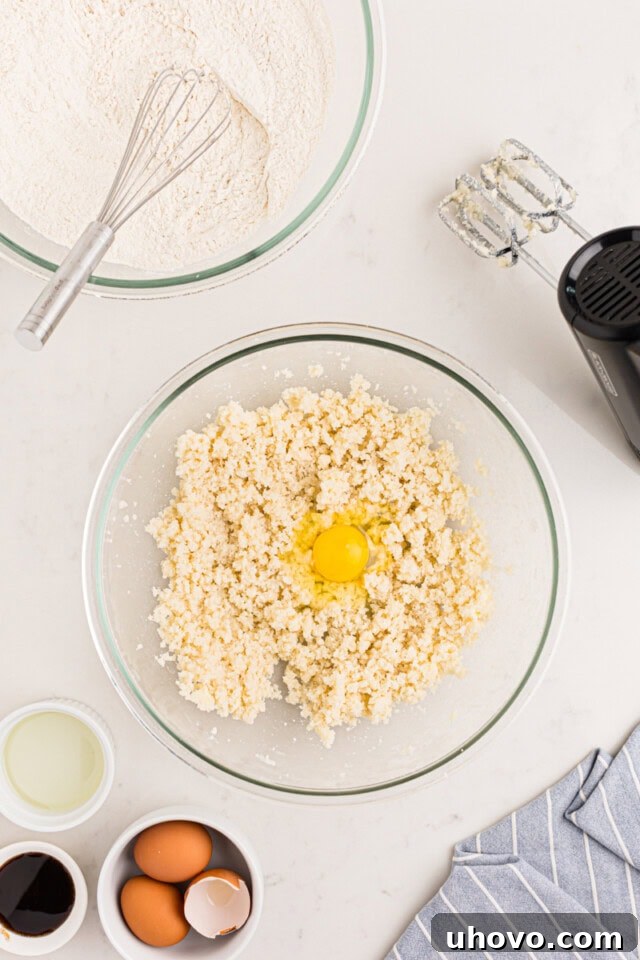
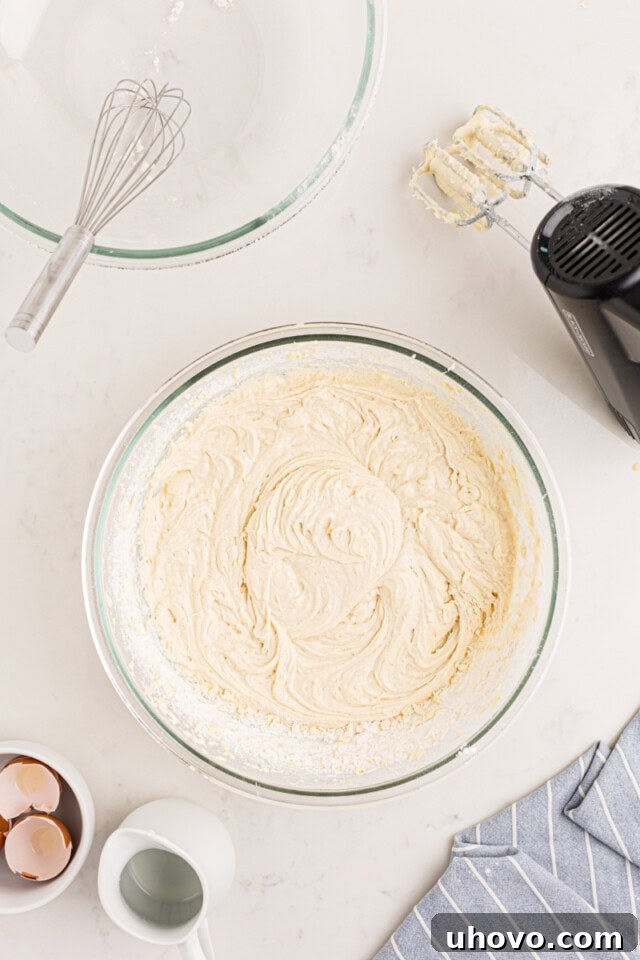
Cream the butter and sugar thoroughly. Beat until noticeably paler and fluffy; this helps create a lighter texture in the finished cake.
Add eggs one at a time. Incorporate each egg fully before adding the next to keep the batter smooth. Mix in the vanilla and oil until the batter is uniform.
Alternate dry ingredients and buttermilk. Add the flour mixture in portions, alternating with buttermilk, and mix just until combined to avoid overworking the batter.
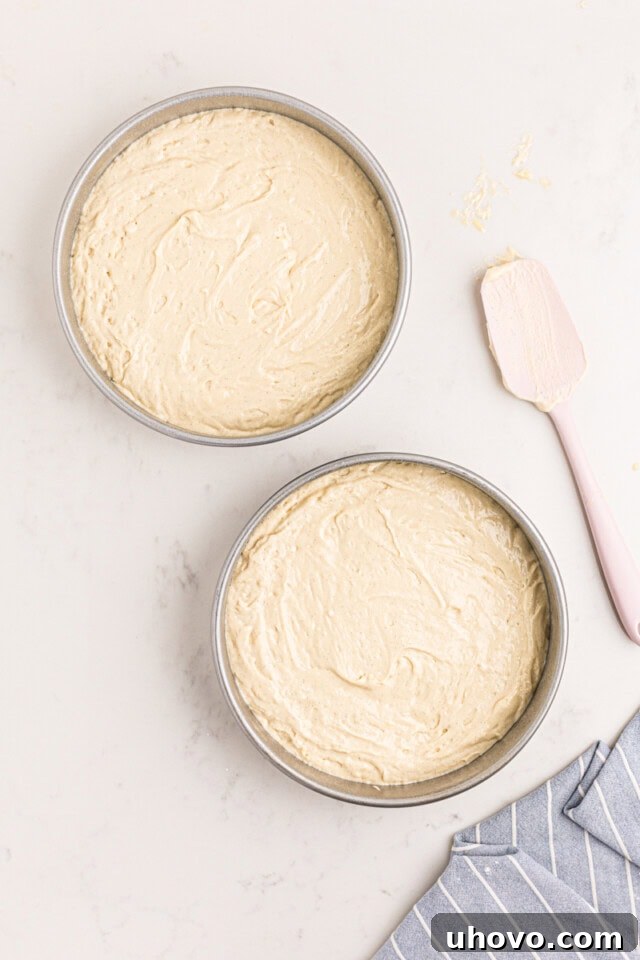
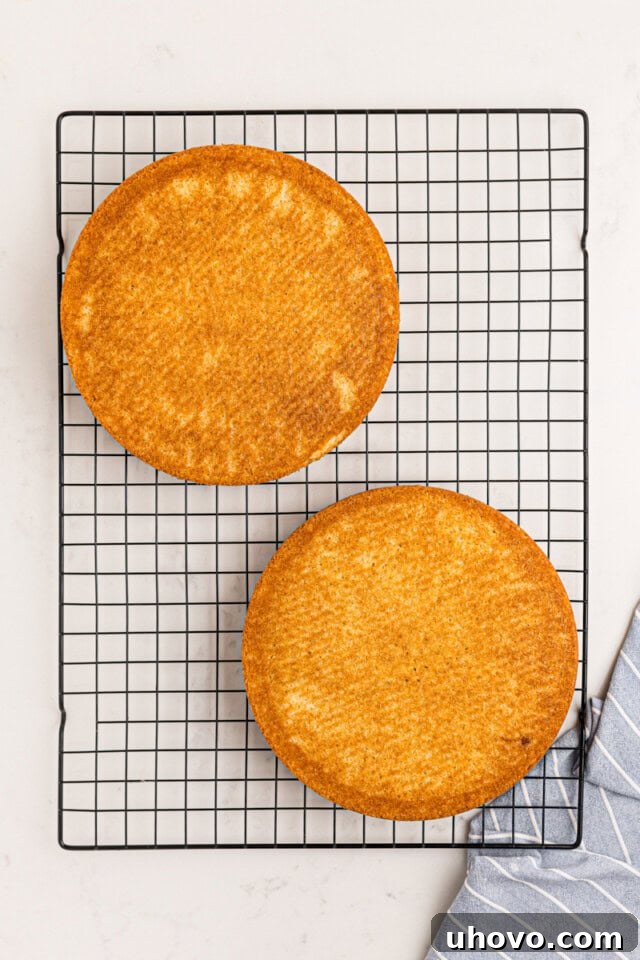
Bake until just done. The layers are ready when the tops spring back lightly and edges are lightly golden—avoid over-baking to preserve moisture.
Cool completely before frosting. Let pans cool briefly, then transfer layers to a wire rack. Frost only when the layers are fully cool to prevent the buttercream from softening.
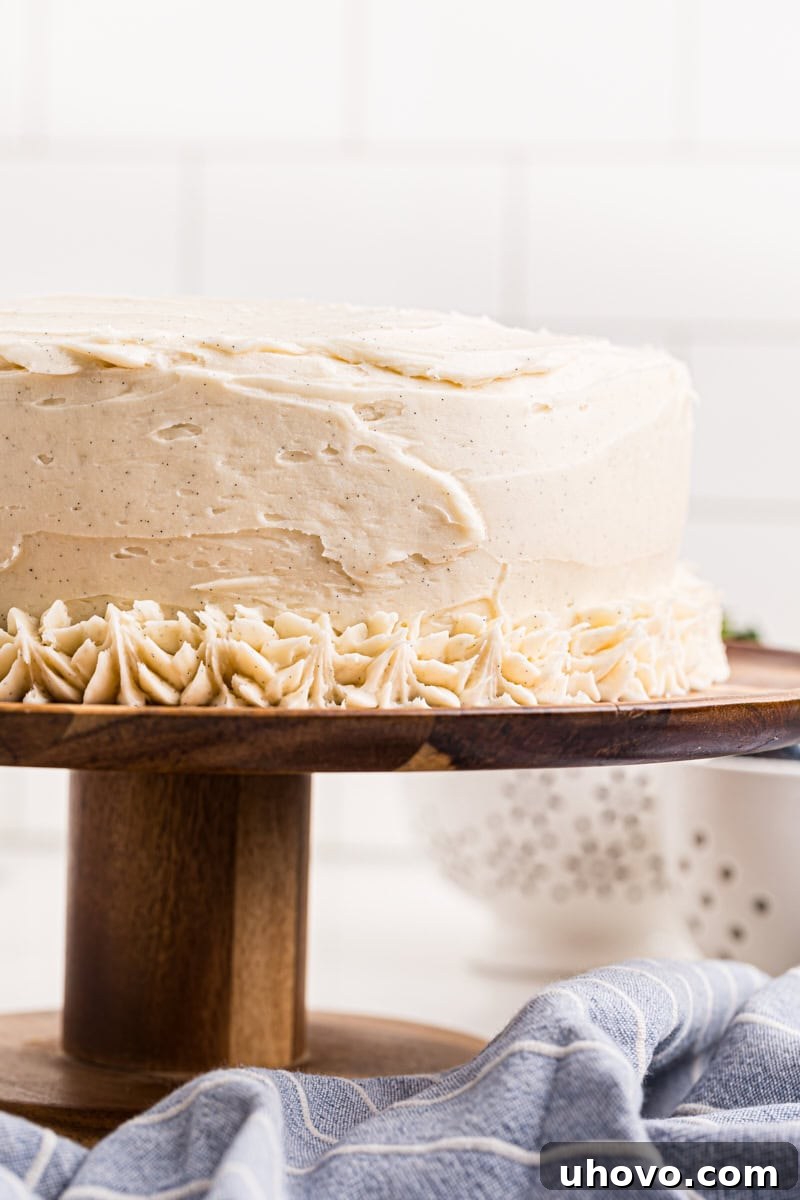
Use a crumb coat. A thin initial layer of frosting traps stray crumbs and gives a clean base for the final coat. If frosting becomes too soft while decorating, chill the cake for 15–20 minutes before finishing.
Keep decorating simple. A smooth finish with gentle swirls looks beautiful; reserve extra frosting for piping if you want a more decorative border.
Tips for Success
- Use room-temperature ingredients for a smoother batter and even texture.
- Weigh the flour when possible to prevent adding too much, which can dry the cake.
- Cool layers fully before applying frosting.
- Beat the frosting well after adding cream to make it light and spreadable.
- Chill after the crumb coat if the frosting softens while you decorate.
- For clean slices, chill briefly before cutting and wipe your knife between cuts.
Variations and Serving Ideas
This cake is a versatile base you can easily customize:
- Add sprinkles for a festive birthday cake
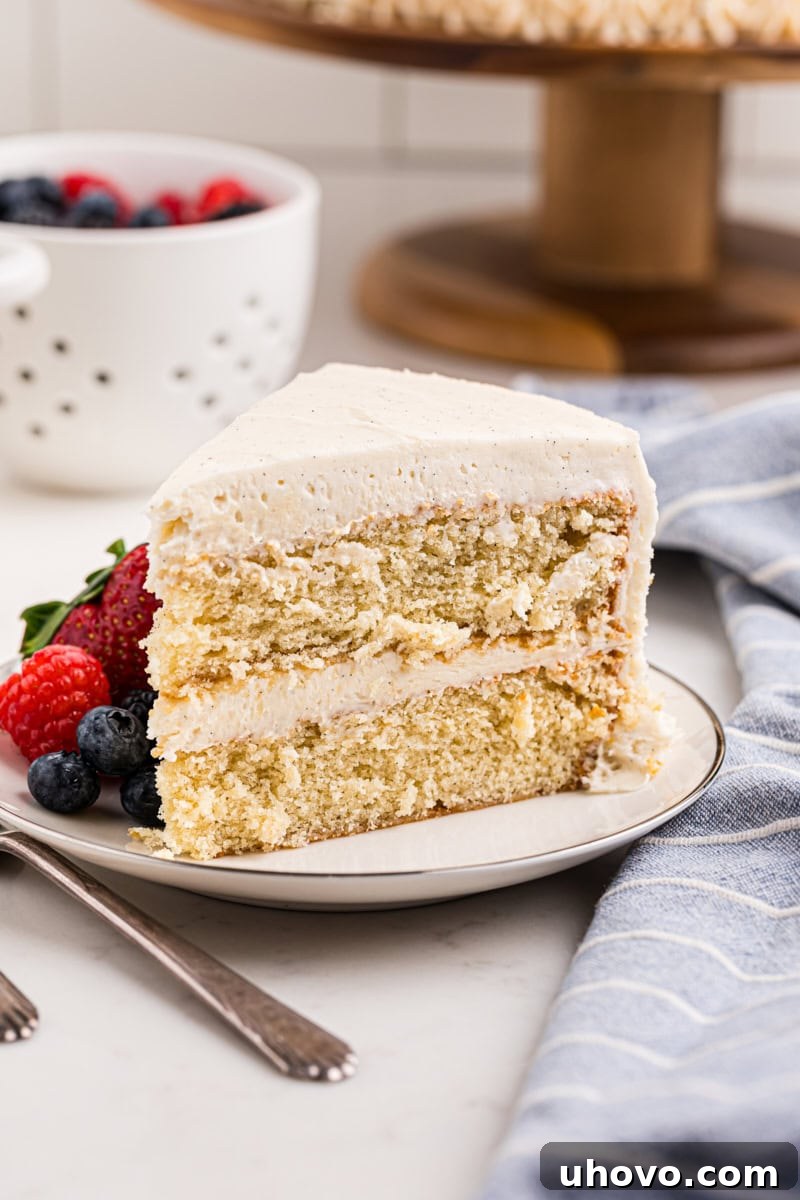
- Top with fresh berries for a seasonal, elegant finish
- Fold citrus zest into batter or frosting for a bright twist
- Garnish with chocolate curls or white chocolate shavings
Keep the finish simple for a timeless look or add piping and decorations for a more polished presentation.
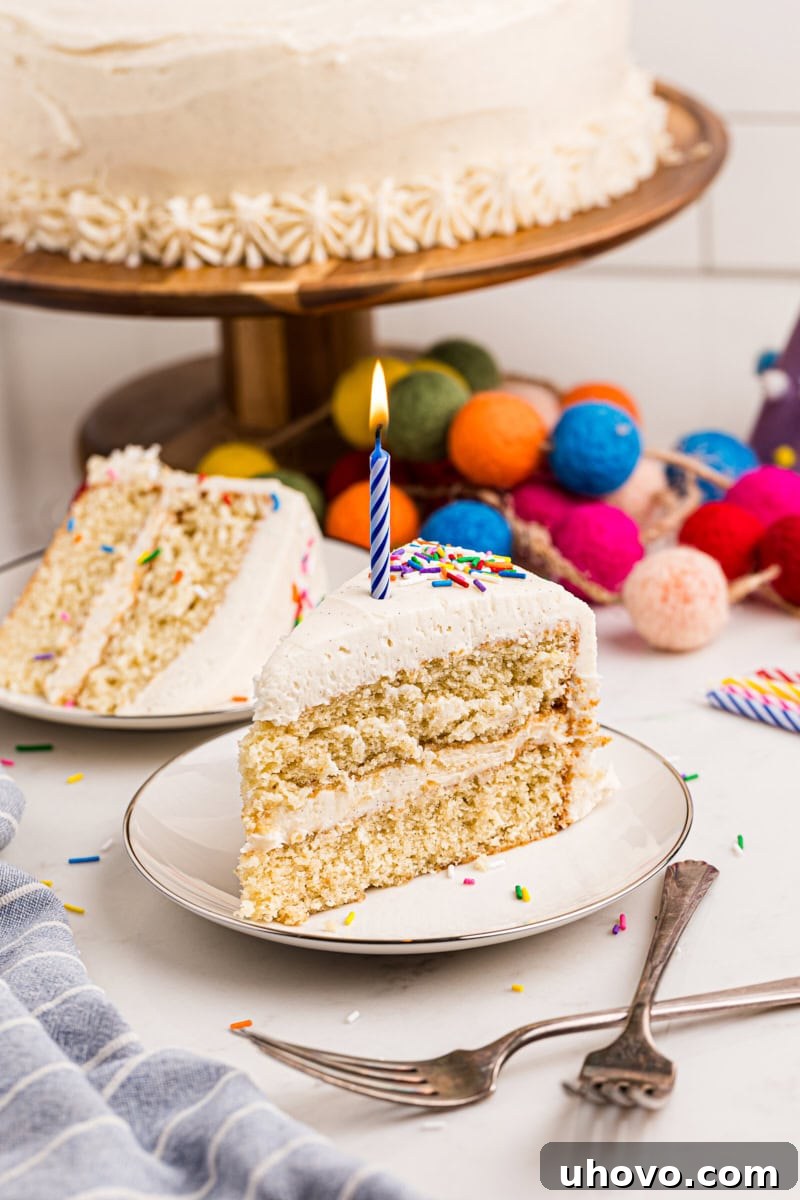
How to Store
A frosted cake can be kept covered at room temperature for up to 1 day or refrigerated for up to 4 days. For best texture and flavor, allow refrigerated cake to come to room temperature before serving.
Unfrosted layers can be wrapped tightly and frozen for up to 2 months. A fully frosted cake can also be frozen—either whole or in slices—once the frosting has set firm.
A Classic Vanilla Cake for Any Celebration
Whether you’re baking for a birthday, a family get-together, or simply craving a dependable vanilla cake, this recipe delivers. The tender layers, airy buttercream, and true vanilla flavor make it a timeless favorite that’s both simple and impressive.
More Layer Cake Recipes
Lemon Raspberry Cake
Strawberry Crunch Cake
German Chocolate Cake
Cookies and Cream Cake
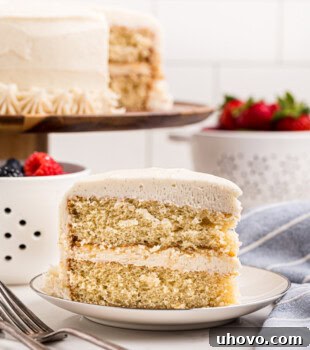
Vanilla Layer Cake
Ingredients
For the cake:
- 2 ½ cups (300 g) all-purpose flour
- 2 ½ teaspoons baking powder
- ½ teaspoon baking soda
- ½ teaspoon salt
- ¾ cup (170 g) unsalted butter, softened
- 1 ¾ cups (350 g) granulated sugar
- 3 large eggs, at room temperature
- 1 tablespoon (15 ml) vanilla bean paste, or vanilla extract
- ¼ cup (60 ml) vegetable or canola oil, or other neutral oil
- 1 cup (240 ml) buttermilk, at room temperature
For the frosting:
- 1 ¼ cups (283 g) unsalted butter, softened
- 4 cups (440 g) confectioners’ sugar, sifted recommended
- 1 tablespoon (15 ml) vanilla bean paste, or 2 teaspoons (10ml) vanilla extract
- ¼ teaspoon salt
- 2 to 3 tablespoons (30 to 45 ml) heavy cream
Instructions
To make the cake:
-
Preheat the oven to 350°F (175°C). Grease and line two 8-inch round pans.
-
Whisk together the flour, baking powder, baking soda, and salt. Set aside.
-
In a large bowl, beat the butter and sugar on medium speed until light and fluffy, about 3–4 minutes. Beat until noticeably paler for the best texture.
-
Add the eggs one at a time, mixing well after each addition. Stir in the vanilla, then the oil.
-
With the mixer on low, add the flour mixture in three portions, alternating with two portions of buttermilk. Mix just until combined.
-
Divide the batter evenly between the pans and spread smoothly.
-
Bake 28–32 minutes, or until the edges are lightly golden and the tops spring back when touched.
-
Cool in the pans for 10–15 minutes, then turn out onto a wire rack to cool completely.
To make the frosting:
-
Beat the butter on medium speed until creamy and lighter in color, about 2–3 minutes.
-
With the mixer on low, add the confectioners’ sugar gradually. Once incorporated, increase speed and beat until smooth.
-
Mix in the vanilla and salt.
-
Add 2 tablespoons cream and beat on medium-high for 2–3 minutes. Add more cream, a little at a time, until the frosting is smooth and spreadable.
-
Frost one cooled layer, top with the second layer, then apply a thin crumb coat. Finish with a final coat of frosting; reserve some if you want to pipe decorations.
Notes
- Vanilla options: Use vanilla extract if you don’t have vanilla bean paste; the paste adds specks and a touch more depth.
- Frosting texture: Use 2 tablespoons cream for firmer frosting suitable for piping; add a bit more for a softer, swoopier finish.
- Frosting yield: This amount covers a filled and frosted two-layer cake with a crumb coat and smooth finish. Increase frosting by about 25% if you want heavier decoration.
- Storage: Keep the frosted cake covered at room temperature for 1 day or refrigerated for 4 days. Let refrigerated cake sit briefly at room temperature before serving for best texture.