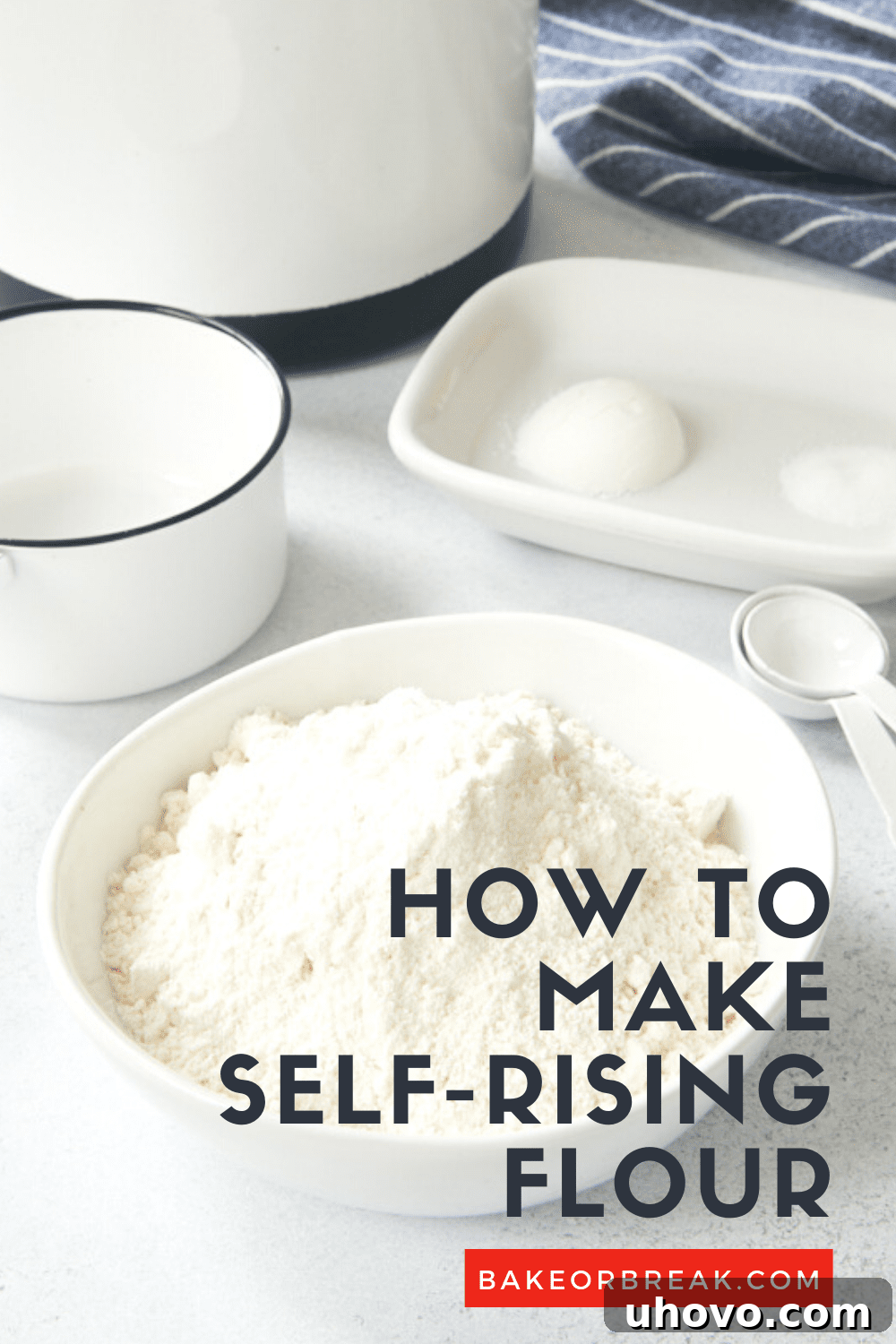
Unlock the secret to effortless baking with this simple guide! Learn how to create your own homemade self-rising flour substitute in minutes, using just a few common pantry ingredients. Say goodbye to last-minute store runs and hello to baking convenience!
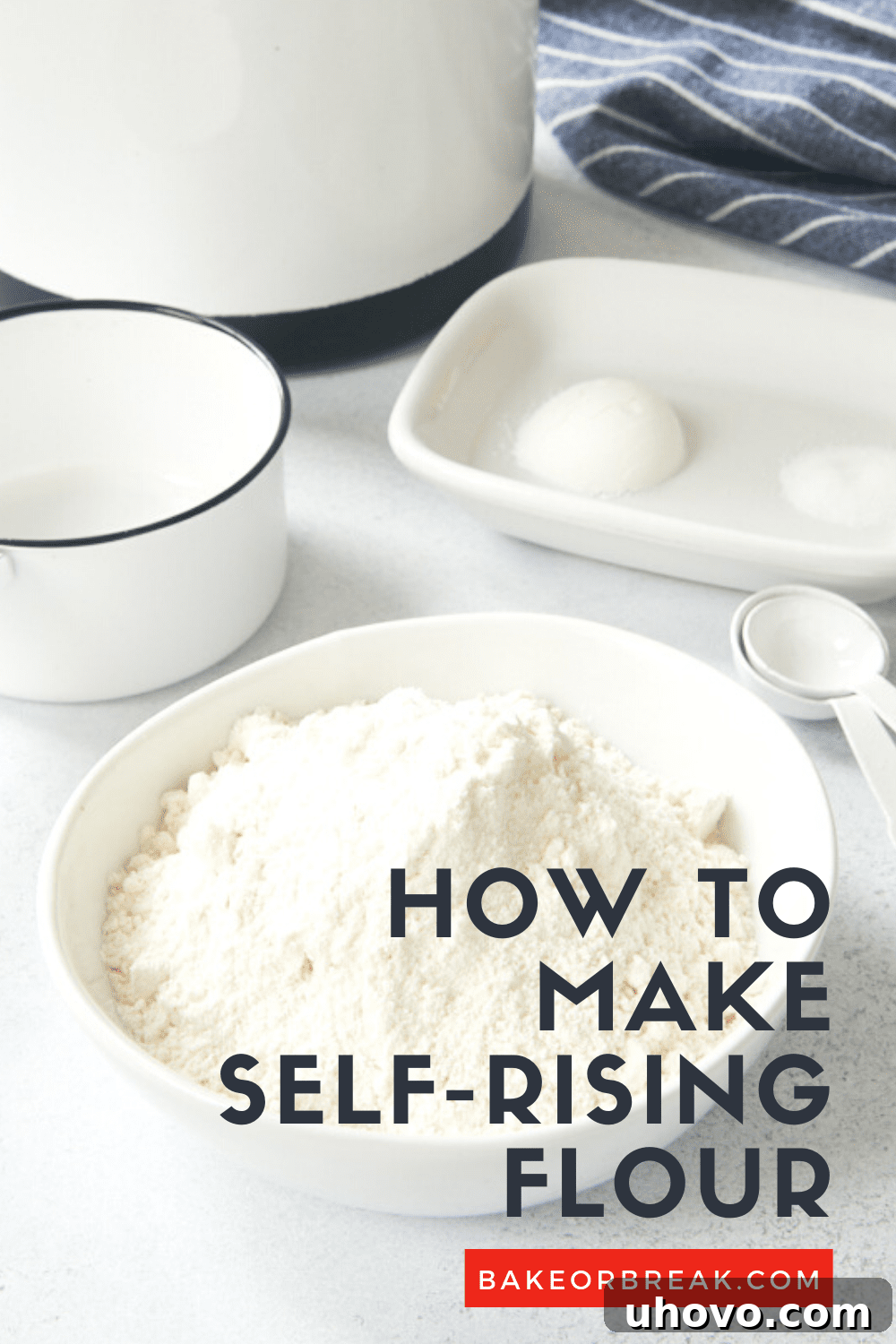
Do you love the comforting aroma of freshly baked goods filling your home, but often find your baking plans derailed by a missing ingredient? It’s a common scenario for home bakers: you’re halfway through a recipe for fluffy biscuits or a tender cake, only to discover you don’t have self-rising flour on hand. This specialized flour is a staple in many quick bread and Southern-style recipes, and its absence can bring your culinary creativity to a screeching halt.
But what if you could easily whip up a perfect substitute from scratch, right in your own kitchen? That’s exactly what this guide is for! I’m here to show you a super simple, DIY method to make your own self-rising flour. All it takes are three basic ingredients that you likely already have in your pantry. Not only is this a fantastic money-saving hack, but it’s also incredibly convenient, especially if self-rising flour isn’t readily available in your local grocery stores. Let’s dive in and elevate your baking game!
What Exactly is Self-Rising Flour?
Self-rising flour is more than just plain flour; it’s a pre-mixed convenience that simplifies baking. At its core, self-rising flour is a blend of all-purpose flour, a leavening agent (typically baking powder), and a touch of salt. The magic happens because these three components are perfectly proportioned and evenly distributed, saving you the step of measuring and mixing them separately.
The baking powder acts as a chemical leavening agent. When combined with liquid and exposed to heat, it produces carbon dioxide bubbles that cause your baked goods to rise, creating that light, airy texture we all love. The salt, while seemingly minor, plays a crucial role in enhancing the overall flavor of your baked treats. This pre-formulated mix is specifically designed for recipes that rely on chemical leavening, which means you won’t typically find it in yeast-based breads, as yeast provides its own distinct rising power.
While most everyday baking recipes use all-purpose flour and call for baking powder and salt to be added independently, self-rising flour truly shines in specific applications. It’s particularly popular in Southern United States cuisine, being the star ingredient in classic dishes like fluffy buttermilk biscuits, tender pancakes, and various quick breads and muffins. Its convenience makes it a shortcut ingredient that can shave precious minutes off your prep time, allowing you to enjoy your delicious creations sooner.
You can certainly purchase self-rising flour at most grocery stores, but there’s a unique satisfaction and practical benefit to making it yourself. Crafting it at home gives you complete control over the ingredients and allows you to prepare only the amount you need, reducing waste and often proving more cost-effective. Plus, knowing how to make it means you’ll never be without this essential ingredient again, making last-minute substitutions a thing of the past.
Can I Substitute All-Purpose Flour for Self-Rising Flour?
Absolutely, yes! This is one of the most common baking questions, and the good news is that substituting all-purpose flour for self-rising flour is not only possible but also incredibly simple. In fact, learning this conversion is essentially learning how to make self-rising flour from scratch!
When a recipe calls for self-rising flour and you only have all-purpose flour in your pantry, you’ll need to add the leavening and salt components that are already present in the self-rising variety. The key is to get the proportions right to ensure your baked goods rise properly and have the intended flavor and texture. For every one cup of all-purpose flour, you will typically add 1 ½ teaspoons of baking powder and ¼ teaspoon of fine salt. It’s crucial to whisk these ingredients together thoroughly to ensure the leavening agent and salt are evenly distributed throughout the flour. This meticulous mixing prevents pockets of unmixed ingredients, which could lead to uneven rising or inconsistent flavor in your final product. This article provides the exact ratios and steps, making it easy to create a perfect substitute for any recipe.
Can I Substitute Self-Rising Flour for All-Purpose Flour?
Generally, substituting self-rising flour for all-purpose flour is not recommended without careful consideration and adjustment. This is because, as we’ve established, self-rising flour already contains baking powder and salt. If a recipe specifically calls for all-purpose flour, it will typically list separate measurements for additional leavening agents (like baking powder or baking soda) and salt.
If you were to simply swap self-rising flour into such a recipe, you would be essentially adding double the amount of leavening and salt. This can lead to a host of problems: your baked goods might rise too quickly and then collapse, develop a metallic or soapy taste from too much baking powder, or become excessively salty. The texture could also be negatively impacted, resulting in a dense or crumbly product.
However, there’s a nuanced exception. If a recipe calls for all-purpose flour *and no additional baking powder or baking soda, but perhaps a little salt*, you might be able to use self-rising flour. In this specific scenario, you would still need to omit any additional salt the recipe calls for, as the self-rising flour already contains it. Even then, it’s a substitution best made by experienced bakers who understand how to anticipate and adjust for potential textural changes. For most home bakers, it’s safer and yields more consistent results to stick to the flour type specified in the recipe or to convert all-purpose flour to self-rising as outlined above.
How to Make Homemade Self-Rising Flour: The Easy Recipe
Creating your own self-rising flour is incredibly straightforward and requires minimal effort, making it an ideal solution whether you don’t use it frequently enough to warrant buying a large bag, or you simply prefer to have more control over your ingredients. This simple recipe eliminates the need for any complex preparation or exotic ingredients. You’ll only need three foundational items: your preferred flour, reliable baking powder, and a pinch of salt. The best part? The prep time is virtually non-existent!
With just a few moments dedicated to accurate measuring and a thorough whisking, you’ll have perfectly mixed self-rising flour ready for your next baking adventure. The following recipe is tailored to produce one cup of self-rising flour, a convenient amount for many common recipes. However, one of the greatest advantages of this DIY method is its scalability. You can easily multiply the quantities to create a larger batch for future use, or scale it down precisely to meet the exact requirements of your current recipe. This flexibility ensures you always have the right amount on hand without any waste.
What is the Ideal Ratio of Baking Powder and Salt to Flour in Self-Rising Flour?
The standard and most reliable ratio for homemade self-rising flour is consistent and easy to remember: for every 1 cup of all-purpose flour, you’ll need 1 ½ teaspoons of baking powder and ¼ teaspoon of salt. This ratio is carefully calibrated to provide sufficient leavening for a light texture and balanced flavor without overpowering the other ingredients in your recipe.
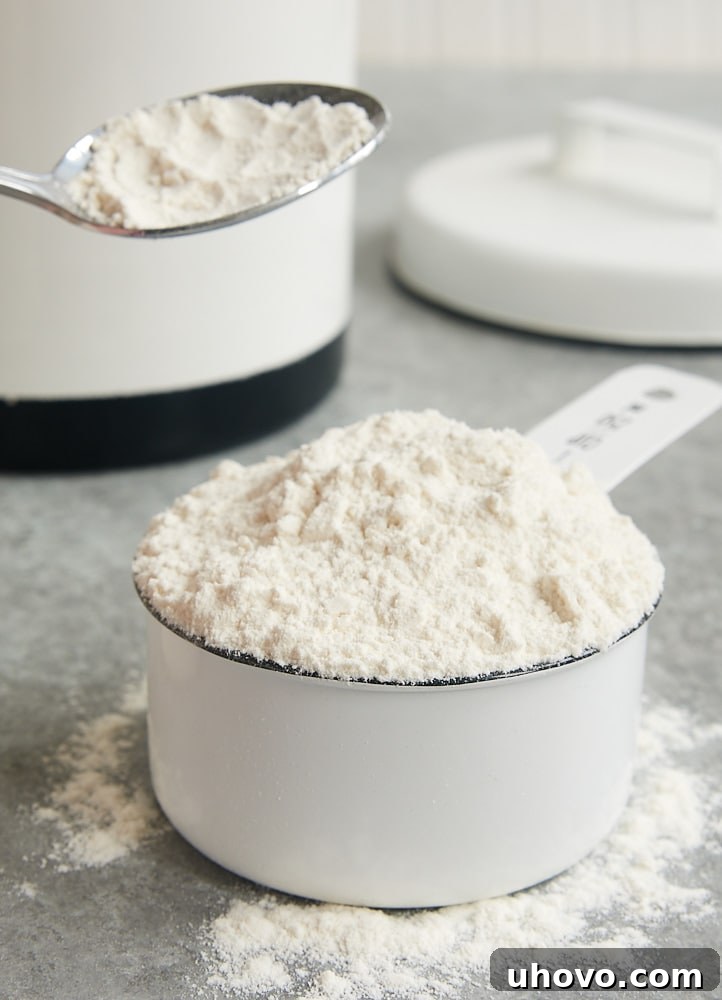
Achieving accuracy in this ratio, especially with the flour, is paramount for consistent baking results. Flour, by its nature, can be compressed easily, meaning the weight of flour in a measuring cup can vary significantly depending on how it’s scooped. For this reason, many professional bakers advocate for measuring flour by weight (grams) for the highest precision. However, if you’re measuring by volume, the “spoon and sweep method” is the best practice to ensure you’re using the correct amount of flour and not packing it too densely. Here’s how to do it:
- Gently fluff up the flour in its container with a spoon or whisk.
- Lightly spoon the flour into your measuring cup until it’s overfilled, allowing it to mound above the rim. Do not pack it down.
- Use a straight edge, such as the back of a knife or a flat spatula, to level off the excess flour, sweeping it across the top of the measuring cup.
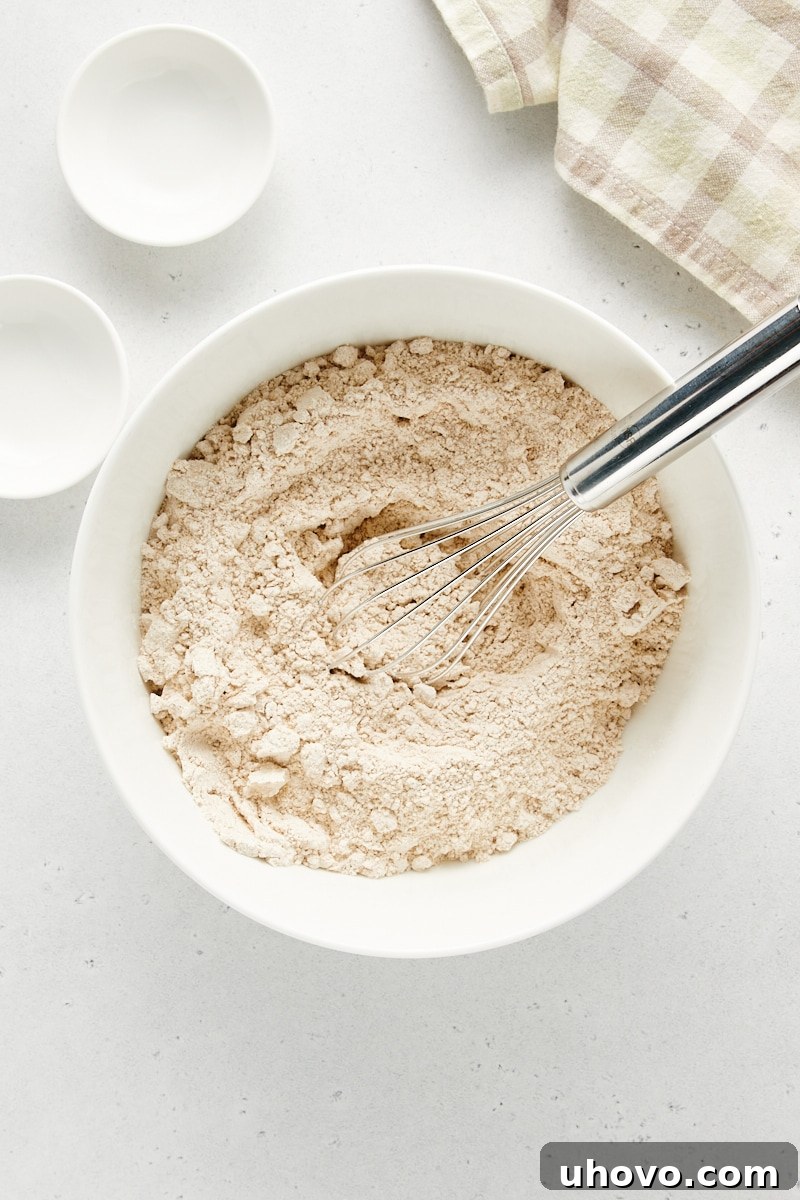
Once you’ve measured your flour, baking powder, and salt, it’s absolutely critical to whisk them together very thoroughly. Don’t just stir a few times; whisk for at least 30-60 seconds to ensure the leavening agent and salt are perfectly distributed throughout the flour. Some bakers even prefer to sift the mixture two or three times for optimal blending. This ensures every part of your dough or batter receives an even boost of leavening, leading to a consistently risen and textured final product.
What is the Best Type of Flour to Use for Homemade Self-Rising Flour?
When it comes to making your own self-rising flour, the most universally accessible and highly recommended base is **all-purpose flour**. It’s the flour most home bakers keep on hand, and its moderate protein content makes it incredibly versatile, yielding good results for a wide range of baked goods, from fluffy biscuits to tender cakes.
However, the “best” flour can sometimes depend on the specific texture you’re trying to achieve, particularly if you’re aiming to replicate the distinct qualities of traditional Southern baking. Self-rising flour gained immense popularity in the Southern United States, where beloved brands like White Lily flour became pantry staples. These Southern flours are often milled from softer wheat, resulting in a lower protein content compared to many national all-purpose brands. Lower protein flour means less gluten development, which translates to a more tender, delicate crumb in your baked goods, a hallmark of classic Southern biscuits and pastries.
If you’re looking to achieve that ultra-tender, melt-in-your-mouth texture, you might consider experimenting with flours that naturally have a lower protein content:
- Pastry Flour: This flour has a protein content slightly lower than all-purpose, making it excellent for tender crusts, cookies, and, of course, pastries. It’s a great choice for a softer self-rising flour.
- Cake Flour: With the lowest protein content among common flours, cake flour is finely milled and ideal for incredibly delicate cakes. Using it for self-rising flour will result in very tender, light baked goods, though it might be too delicate for some sturdier quick breads.
You can also try a blend of flours, perhaps combining all-purpose with a smaller amount of cake or pastry flour, to custom-tune the protein content to your preference. Remember that while the protein content affects texture, the basic ratio of leavening and salt to volume of flour remains constant regardless of the specific type of flour used.
What Role Does Baking Powder Play in Baking?
Baking powder is a true workhorse in the world of baking, serving as a chemical leavening agent that is crucial for giving countless baked goods their desirable rise and airy texture. Without it, many cakes, muffins, and quick breads would turn out dense and flat.
At its heart, baking powder is a mixture of an alkaline component (baking soda), an acid, and usually a starch (like cornstarch) to keep it dry and prevent premature reactions. Most baking powders available today are “double-acting.” This means they produce carbon dioxide gas in two stages:
- First reaction: When baking powder is mixed with liquid in your batter, the acid and alkaline components react, immediately producing carbon dioxide bubbles. This initial burst of gas helps to lighten the batter before it even enters the oven.
- Second reaction: The second, more powerful reaction occurs when the batter is exposed to heat in the oven. The heat causes the remaining acid and alkaline components to react again, creating another surge of carbon dioxide. This second wave of gas significantly boosts the rise, creating a fluffy and open crumb structure.
This double-action ensures a consistent and impressive lift for your baked creations. However, baking powder’s effectiveness isn’t eternal. It loses its potency over time, especially after the container has been opened and exposed to air and moisture. Using expired or ineffective baking powder is a common culprit behind baked goods that fail to rise.
To avoid a baking disaster, it’s wise to test your baking powder for freshness before you begin. Simply stir about half a teaspoon of baking powder into half a cup of hot tap water. If it’s fresh and potent, it will immediately start bubbling vigorously. If you observe only a few weak bubbles or no reaction at all, it’s a clear sign that your baking powder has lost its oomph and needs to be replaced. It’s always better to catch this issue before it ruins an entire batch of dough or batter!

Is Baking Soda an Ingredient in Self-Rising Flour?
No, self-rising flour does not typically contain baking soda as a standalone ingredient. This is a common point of confusion for many bakers, but understanding the difference between baking soda and baking powder is key. While baking powder *contains* baking soda as one of its components, baking soda itself is not added separately to self-rising flour.
Baking soda (sodium bicarbonate) is a pure alkali. To produce carbon dioxide gas and create lift in baked goods, it needs to react with an acidic ingredient present in the recipe, such as buttermilk, yogurt, lemon juice, vinegar, or molasses. Without an acidic component, baking soda won’t activate, and your baked goods won’t rise.
Baking powder, on the other hand, is a complete leavening system. It already contains both the baking soda (alkali) and an acid, pre-packaged together. This means it doesn’t require an additional acidic ingredient in the recipe to initiate its leavening action. Self-rising flour relies solely on the baking powder within its blend for its rising power. Therefore, baking soda and baking powder are not interchangeable in recipes, and self-rising flour is formulated to work without the need for external acids that would activate baking soda.
How to Properly Store Your Homemade Self-Rising Flour
One of the great advantages of making your own self-rising flour is the ability to prepare it in batches—whether it’s just enough for a single recipe or a larger quantity to have on hand. Proper storage is essential to maintain its freshness and, more importantly, its leavening power over time.
To store your homemade self-rising flour, transfer it to an airtight container. Glass jars with tight-fitting lids, plastic food storage containers, or even heavy-duty zip-top bags are excellent choices. The goal is to protect the flour from moisture, air, and strong odors, which can all degrade its quality and the potency of the baking powder. Find a cool, dry, and dark place in your pantry or cupboard to store it. Avoid locations near heat sources like ovens or windows where temperature fluctuations could compromise its shelf life.
The primary factor determining how long your homemade self-rising flour will remain effective is the freshness of the baking powder you used. Baking powder gradually loses its leavening ability over time, typically retaining its full potency for about 6-12 months after opening. For this reason, it’s a good practice to label your storage container with two key dates:
- The date you mixed the self-rising flour.
- The expiration date of the baking powder you used.
This guideline will help you gauge its shelf life. While the flour itself has a longer shelf life, the baking powder will be the first component to diminish in effectiveness. If you plan to make a very large batch, consider that it might not be as potent after 6-9 months, even in ideal storage conditions. When in doubt, perform the baking powder freshness test mentioned earlier before using a stored batch in a crucial recipe.
Creative Ways to Use Your Homemade Self-Rising Flour
Your freshly made self-rising flour is just as versatile and reliable as any store-bought version, opening up a world of delightful baking possibilities. It’s specifically formulated for recipes that benefit from a tender crumb and a good lift, making it a fantastic ingredient for a wide array of quick breads and pastries.
Here are some of the most popular and delicious ways you can put your homemade self-rising flour to good use:
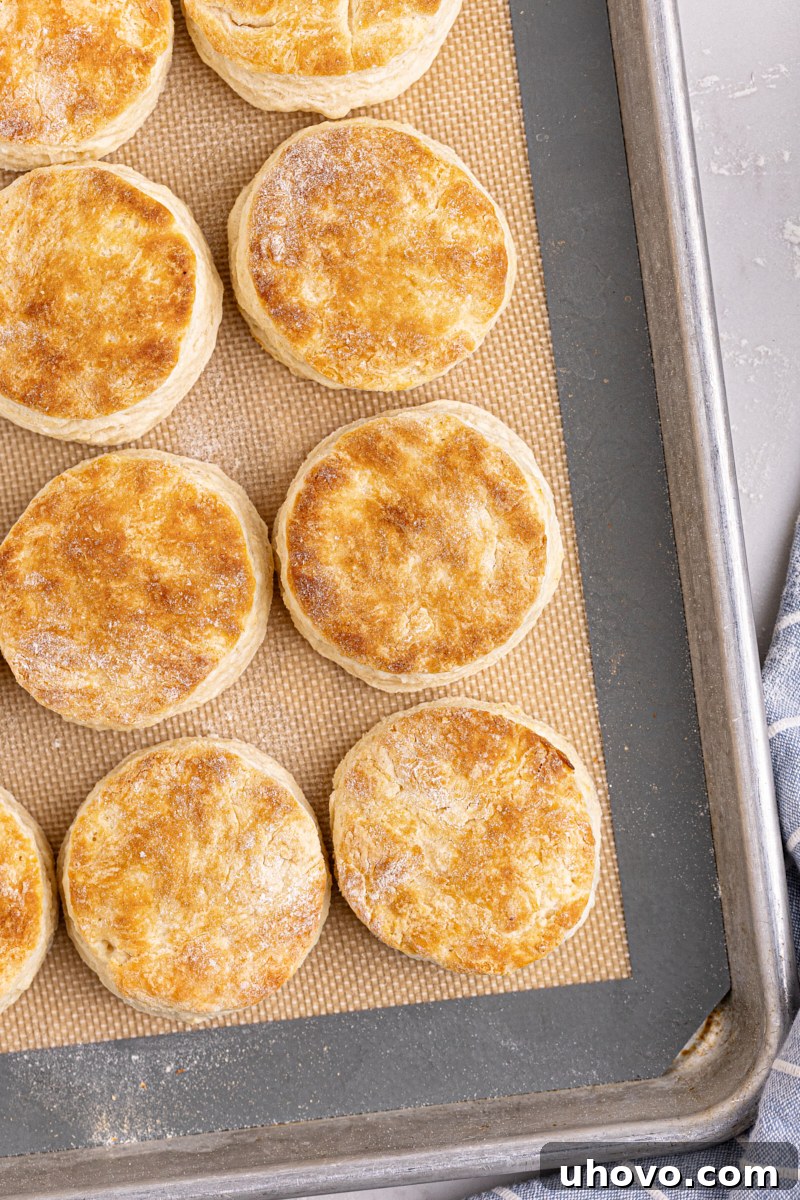
- Fluffy Biscuits: This is arguably its most iconic application. Self-rising flour is the secret to tall, tender, and flaky biscuits that are a staple in Southern cuisine. From classic buttermilk biscuits to cream biscuits, your homemade flour will deliver exceptional results.
- Perfect Pancakes and Waffles: Achieve light and airy breakfast favorites with ease. The leavening in the flour ensures consistently fluffy pancakes and crisp waffles every time.
- Tender Muffins and Scones: For muffins that rise beautifully and scones with a delicate texture, self-rising flour is an excellent choice. It simplifies the dry ingredient mix, allowing you to focus on flavor additions.
- Quick Breads: Many quick bread recipes, such as banana bread, zucchini bread, or savory cheese bread, can be adapted or are specifically designed to use self-rising flour for a moist crumb and good volume.
- Simple Cakes and Cupcakes: For certain easy cake recipes that don’t require elaborate leavening processes, self-rising flour can provide a lovely, tender crumb, perfect for everyday baking.
Experiment with your favorite recipes or seek out new ones that call for this convenient flour. Its ability to create light, fluffy, and tender baked goods makes it an indispensable ingredient for any home baker.
Explore More Baking Substitutions and Tips
Mastering the art of ingredient substitutions is a valuable skill for any home baker. It allows for flexibility, reduces waste, and helps you create delicious treats even when your pantry isn’t fully stocked. Check out these other helpful guides for common baking dilemmas:
- How to Make Superfine Sugar
- Buttermilk Substitutes in Baking
- Half and Half Substitutes
Homemade Self-Rising Flour
1 cup self-rising flour
5 minutes
5 minutes
It’s incredibly easy to make your own self-rising flour at home using just three basic pantry ingredients!
Ingredients
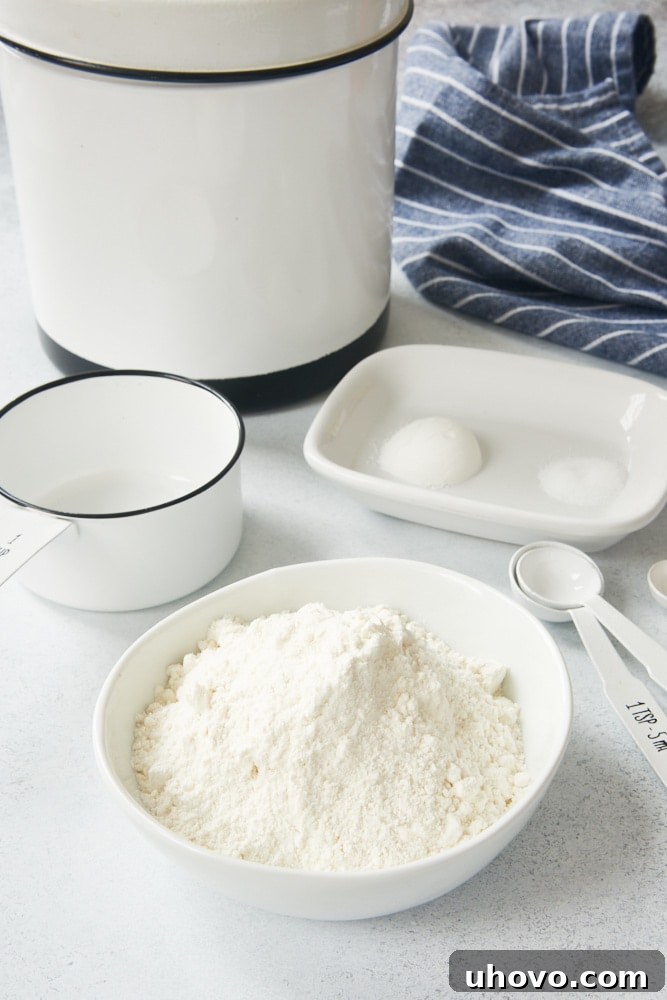
- 1 cup (120g) all-purpose flour*
- 1 & 1/2 teaspoons baking powder
- 1/4 teaspoon salt
Instructions
- Place the all-purpose flour in a small mixing bowl.
- Add the baking powder and salt to the bowl with the flour.
- Use a wire whisk to thoroughly mix the flour, baking powder, and salt. Whisk for at least 30-60 seconds to ensure all ingredients are evenly distributed.
- Your homemade self-rising flour is now ready to use in any recipe, or it can be stored for future baking.
Notes
*If you opt to use a different type of flour or a blend (like pastry flour or cake flour), remember that the weight per cup may vary. Always use the specified volume (1 cup) as the primary measurement for consistency, but be aware of potential slight weight differences.
Recommended Baking Tools
As an Amazon Associate, I earn from qualifying purchases made through links on this site.
- Essential Wire Whisk
- Airtight Food Storage Container
Share Your Baking Success!
We’d love to see your creations! Snap a photo, tag @bakeorbreak, and use #bakeorbreak on Instagram. Happy baking!