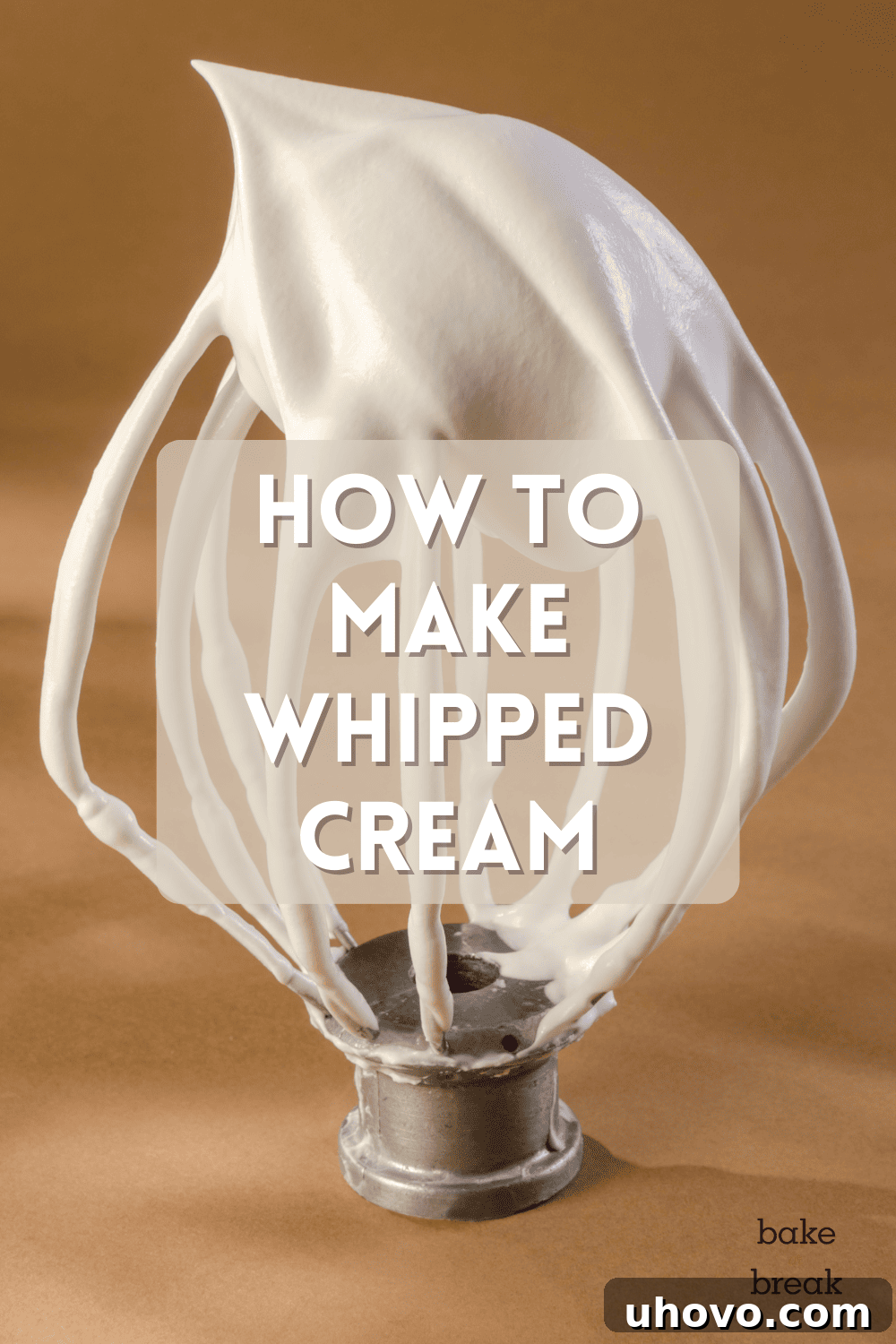
How to Make Homemade Whipped Cream: Your Ultimate Guide to Perfect Dessert Topping
Discover the simple secrets to creating luscious, cloud-like homemade whipped cream that will transform your desserts from ordinary to extraordinary. Once you master this easy technique, you’ll never reach for store-bought versions again. It’s not just a topping; it’s an essential element in countless beloved dessert recipes, adding a touch of elegance and unparalleled flavor!
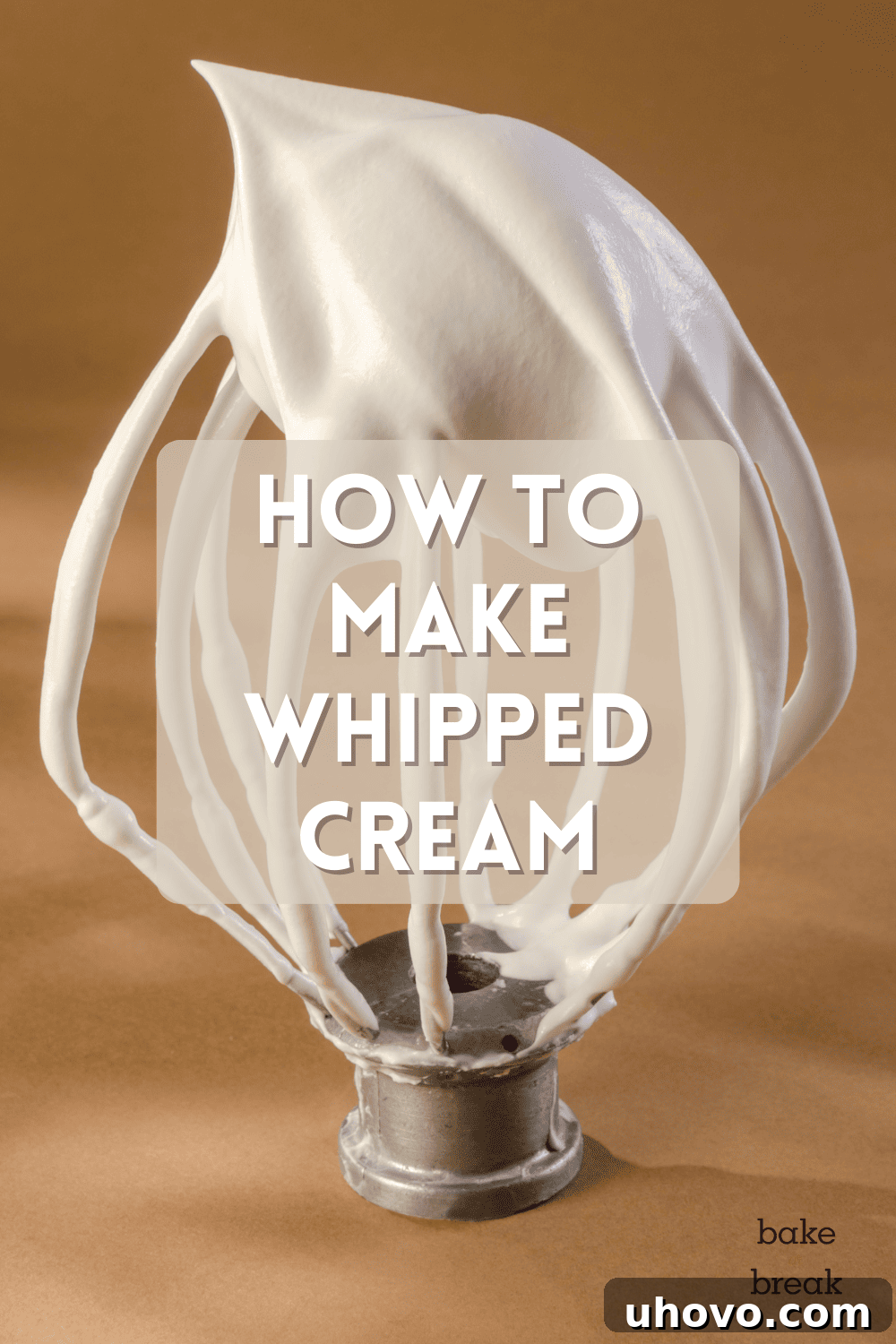
The Unbeatable Charm of Homemade Whipped Cream
I wholeheartedly believe that once you experience the rich, fresh taste and delicate texture of truly homemade whipped cream, any store-bought alternative will simply pale in comparison. Beyond its superior flavor, the process itself is surprisingly straightforward and remarkably quick, making it an accessible luxury for any home baker.
Few ingredients are as simple, versatile, and impactful as freshly whipped cream. It effortlessly elevates a wide array of sweet treats. Imagine a generous dollop adorning a warm slice of sour cream pound cake, a light and airy addition when mixed with seasonal berries, or even acting as a delicate cake frosting for a casual summer dessert. It can even be seamlessly incorporated into a creamy pie filling, adding body and lightness. No matter how you choose to incorporate it, the lusciousness of homemade whipped cream is sure to captivate you from your very first delicious bite!
Essential Ingredients for Perfect Whipped Cream
Creating magnificent homemade whipped cream requires only a few high-quality ingredients. The magic truly lies in their selection and preparation. You’ll find specific quantities and detailed instructions in the comprehensive recipe card further down this page.
- Heavy Cream or Heavy Whipping Cream: This is the star of our show. For the most stable, luxurious, and best-holding whipped cream, always opt for heavy cream or heavy whipping cream. Their higher fat content is crucial for achieving that perfect structure.
- Confectioners’ Sugar (Powdered Sugar): While granulated sugar can be used, confectioners’ sugar is highly recommended. The fine texture of powdered sugar dissolves instantly, ensuring a smooth, non-gritty finish. More importantly, the cornstarch typically found in confectioners’ sugar acts as a natural stabilizer, helping your whipped cream hold its shape longer.
- Flavor Additions (Optional): While classic vanilla is a popular choice, the possibilities for flavoring your whipped cream are endless! We’ll explore a variety of exciting flavor ideas below to inspire your culinary creativity.
Choosing the Right Cream for Whipping Success
The secret to successful whipped cream lies primarily in the fat content of your chosen cream. Not all creams are created equal when it comes to whipping. Generally, you’ll want to use heavy cream, heavy whipping cream, or regular whipping cream. Understanding the differences in their milk fat content will help you achieve your desired consistency.
For optimal results, a milk fat content of at least 30% is essential. Products like light cream, half-and-half, or other dairy alternatives with lower fat percentages simply lack the necessary fat globules to trap air and form a stable foam. Attempting to whip these will either result in very soft, unstable cream or, more often, no whipping action at all.
Standard whipping cream (without the “heavy” prefix) typically contains around 30-35% milk fat. This will yield a lighter, softer, and airier whipped cream. It’s perfect for delicate toppings or when a less dense texture is preferred.
My personal recommendation for this easy whipped cream recipe is to use heavy cream or heavy whipping cream. Both varieties generally boast a milk fat content of 36% or higher. This higher fat percentage allows them to whip up into a much thicker, sturdier, and more stable consistency. This makes them ideal for piping, holding their shape longer, and providing a richer mouthfeel, which many find superior.
Step-by-Step Guide: How to Make Whipped Cream
Making homemade whipped cream is a surprisingly quick and gratifying process. Follow these simple steps for a flawless result every time.
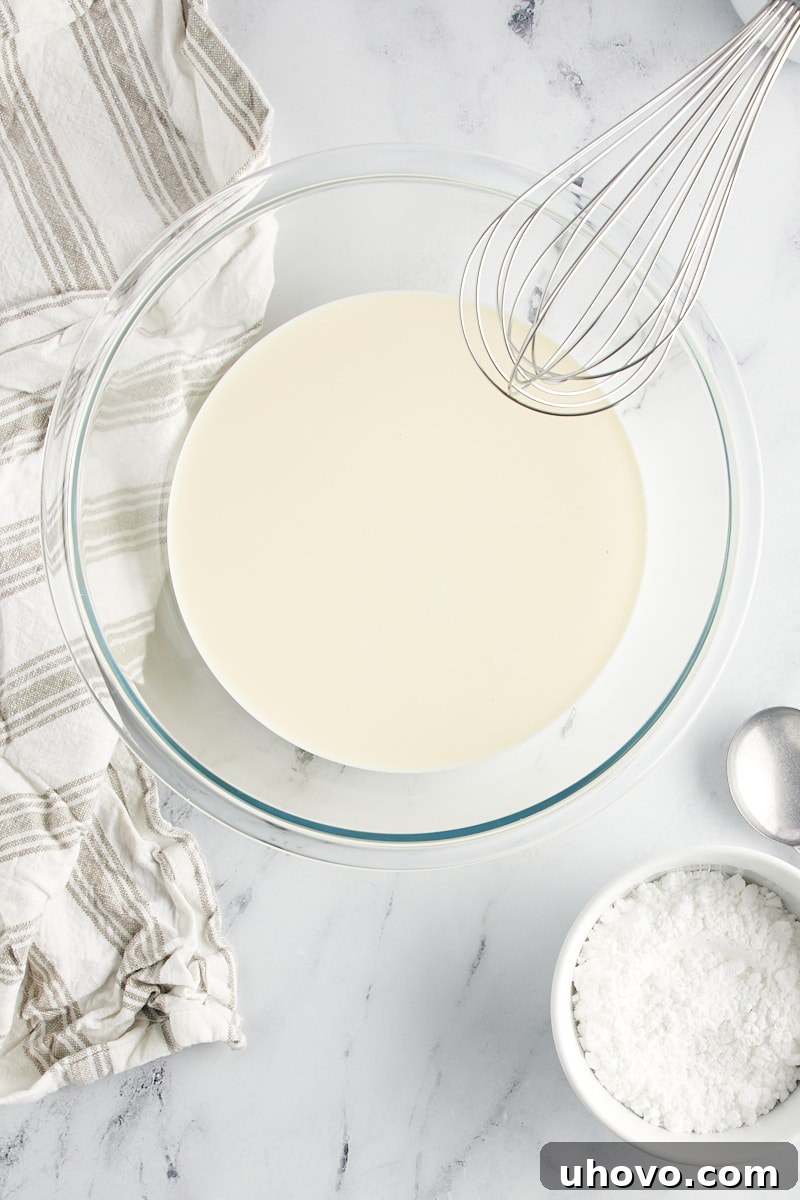
- Prepare for Whipping: Begin by pouring your thoroughly chilled heavy cream into a large, cold mixing bowl. Ensure your whisk attachment (for an electric hand mixer or stand mixer) is also cold. Starting at a low speed, gradually increase to medium-high speed over about a minute. This gentle start helps prevent splattering and allows the cream to gradually incorporate air, building structure.
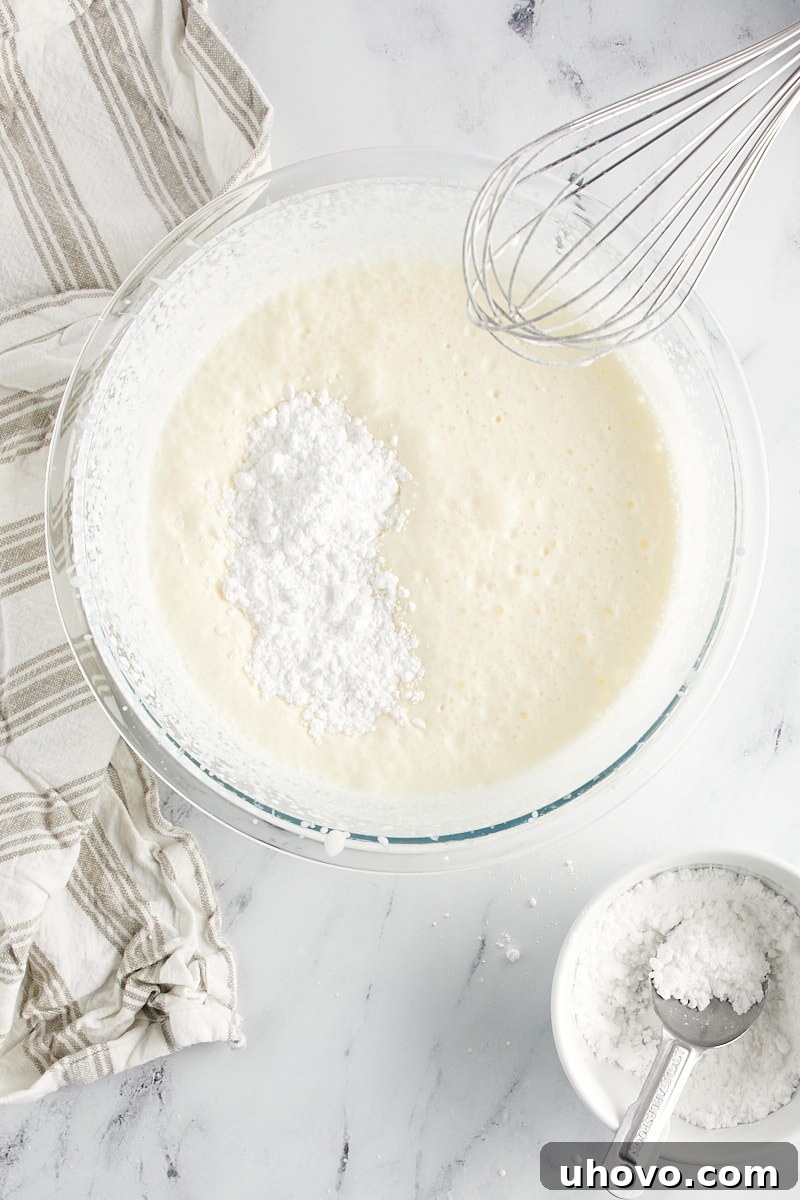
- Introduce the Sweetener: Once the cream begins to thicken slightly and holds soft impressions from the whisk, it’s time to add the sugar. Gently sprinkle the confectioners’ sugar evenly over the partially thickened cream. Continue whisking on medium-high speed until the sugar is fully incorporated and the mixture smooths out.
- Infuse Flavor (Optional): If you’re adding vanilla extract or any other liquid flavorings, now is the ideal moment. Drizzle them into the cream and whisk briefly, just until evenly distributed. Be careful not to overmix at this stage.
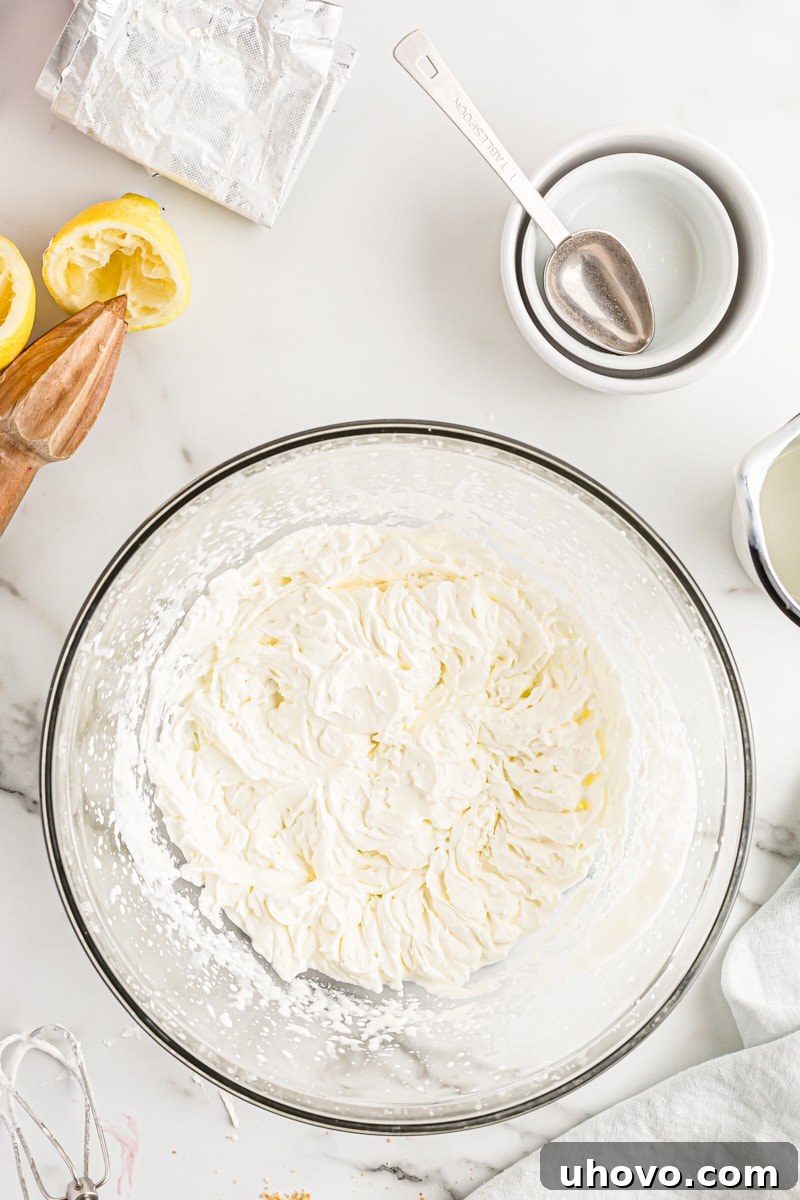
- Achieve Desired Consistency: Continue mixing the cream, keeping a close eye on its texture. The cream will rapidly transform from liquid to luscious, holding peaks. Stop mixing as soon as it reaches your desired consistency – whether that’s soft, medium, or stiff peaks. Over-whipping can quickly turn your beautiful cream into a grainy, curdled mess, or even butter!
Understanding Whipped Cream Peaks: Soft, Medium, and Stiff
When making homemade whipped cream, recipes often refer to whipping until a certain “peak” is reached. This simply describes the consistency and firmness of the whipped cream, which is determined by how much air has been incorporated. It’s less intimidating than it sounds, and knowing the differences allows you to tailor your whipped cream perfectly for its intended use.
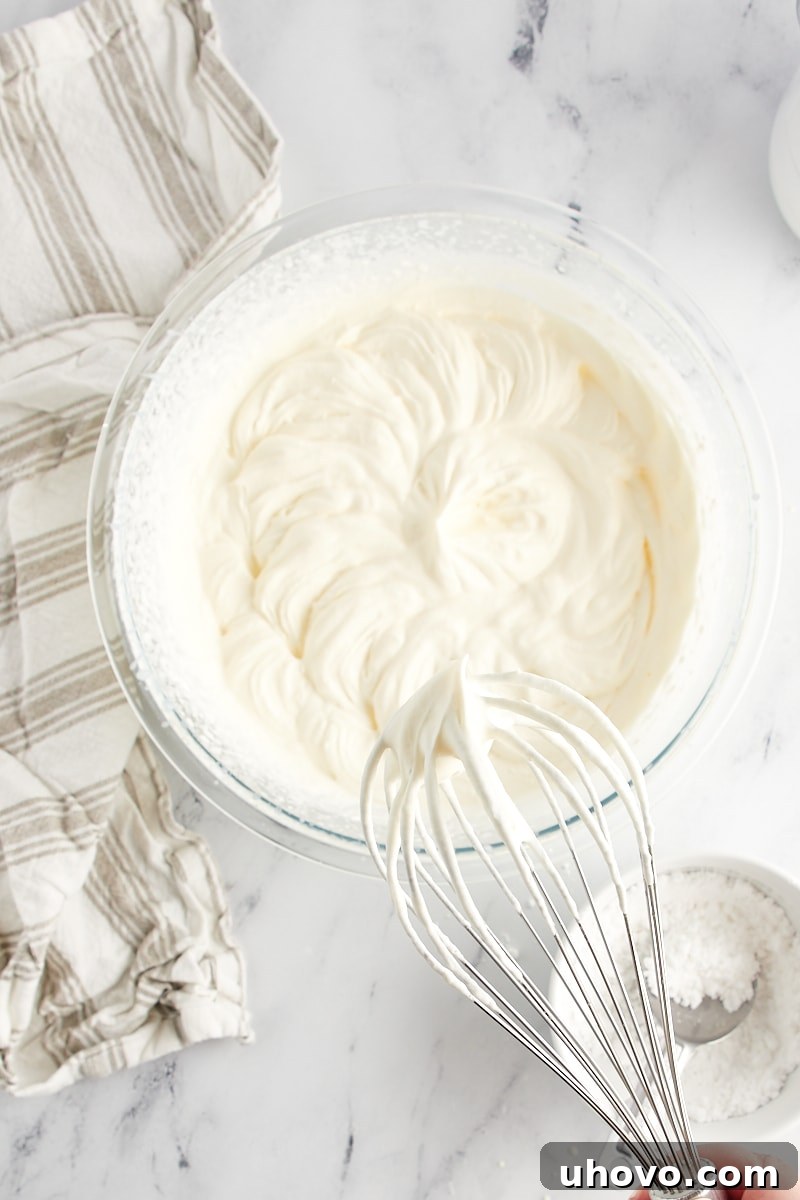
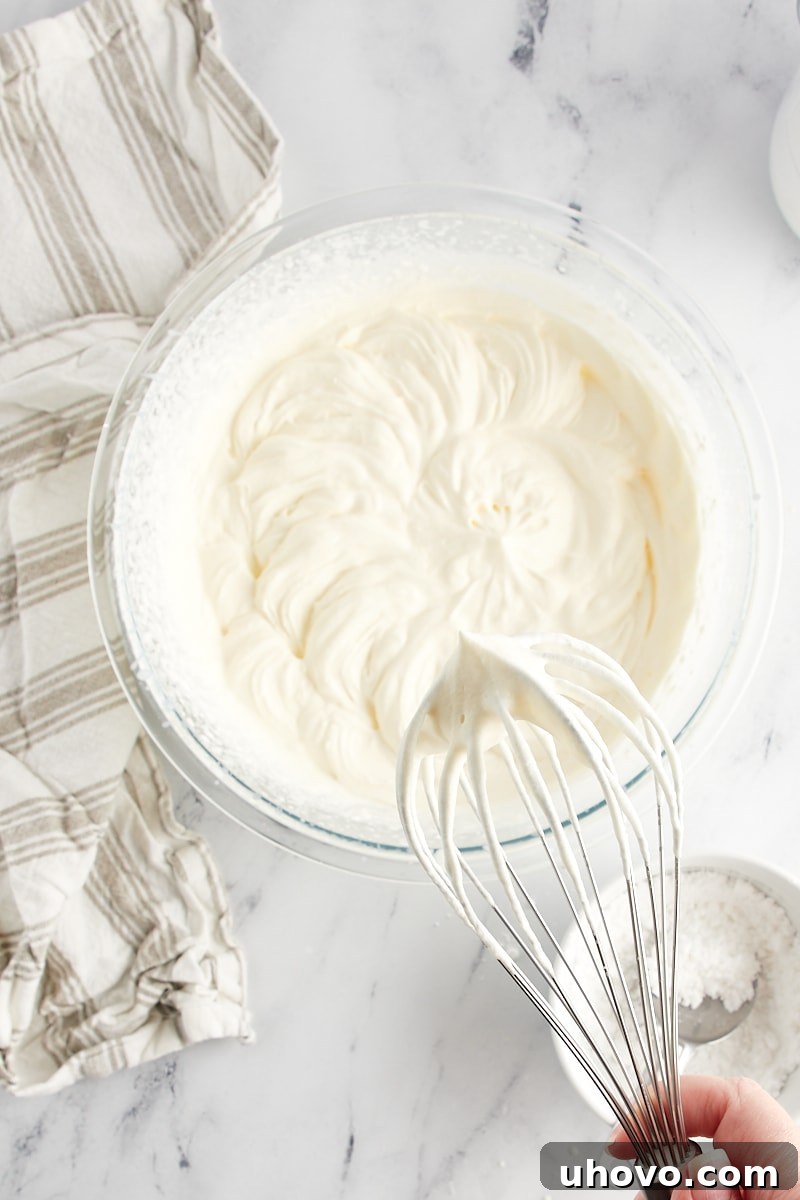
If you’re whipping cream as a simple topping for most desserts, you’ll typically aim for either medium peaks or stiff peaks. For recipes where whipped cream is an ingredient, the specific peak type will usually be indicated.
- Soft Peaks: When you lift the whisk out of the cream, the cream will form gentle peaks that immediately fold over and barely hold their shape. This consistency is light and airy, ideal for folding into mousses or for a very delicate topping that gently melts into a warm dessert.
- Medium Peaks: For medium peaks, the tip of the peak will curve slightly downward when the whisk is lifted. The cream will hold its shape better than soft peaks but still retain a luscious, creamy texture. This is a versatile stage, perfect for most dessert toppings and fillings.
- Stiff Peaks: At this stage, when the whisk is lifted, the peak will stand straight up and hold its shape firmly without collapsing. This firm consistency is excellent for piping decorations, layering in trifles, or when maximum stability is required. Be cautious not to overmix past this point, as the cream can quickly become grainy, look curdled, and separate into butter and buttermilk.
Expert Tips for Achieving Perfect Homemade Whipped Cream
While this whipped cream recipe is wonderfully straightforward, a few key tips can ensure your results are consistently perfect and hold up beautifully.
The Importance of Keeping Everything Cold
This might seem intuitive, but ensuring your cream is thoroughly chilled is paramount. Cold cream contains fat globules that are firmer and more distinct, allowing them to trap air more effectively and create a stable emulsion. I always keep my heavy cream in the coldest part of the refrigerator and only take it out when I’m literally ready to begin whipping.
Going a step further, I highly recommend chilling your mixing bowl and whisk attachment in the refrigerator for at least 20-60 minutes before you start. This simple step can make a significant difference, especially if you have a warm kitchen. Cold equipment helps maintain the cream’s low temperature throughout the whipping process, preventing the fat from warming up and hindering proper aeration. A cold environment promotes stronger, more stable whipped cream that holds its structure longer.
Selecting the Right Mixing Bowl
The type and size of your mixing bowl can indeed impact the success of your homemade whipped cream. Metal bowls are often preferred because they retain cold temperatures exceptionally well, which, as discussed, is crucial for stable whipping. If you frequently find your kitchen warm, a pre-chilled metal bowl is an invaluable asset.
Beyond material, ensure your mixing bowl is adequately deep and spacious. Whipping cream significantly increases in volume – it will essentially double. Starting with a bowl that is too small can lead to messy splatters. To minimize this, always begin whipping at a lower speed and gradually increase to high speed as the cream begins to thicken. This controlled approach helps keep the cream in the bowl and ensures even aeration.
Remember the volume rule: if you need 2 cups of finished whipped cream, start with 1 cup of heavy cream. The recipe below provides 2 cups of luscious whipped cream. If your needs differ, simply scale the recipe accordingly, making sure to adjust the amount of sugar and flavorings as well.
Electric Mixer vs. Hand Whisking
While it’s entirely possible to make whipped cream by hand with a sturdy whisk and a good amount of elbow grease, an electric mixer (either a handheld model or a stand mixer with a whisk attachment) will make the process much quicker and considerably less strenuous. It also provides more consistent results and allows you to focus on the cream’s consistency without tiring your arm.
For sweetened whipped cream, you have a choice between granulated sugar and confectioners’ sugar. Having experimented with both extensively, I consistently prefer confectioners’ sugar. The primary reason for this preference is its ability to create a more stable whipped cream. Confectioners’ sugar typically contains a small amount of cornstarch, which acts as a fantastic stabilizer. This makes the whipped cream less prone to weeping and deflating, a significant advantage if you’re not planning to use it immediately or if it needs to hold up for a few hours. Granulated sugar will still sweeten effectively, but it won’t offer the same stabilizing benefits.
Storing Homemade Whipped Cream for Freshness
This homemade whipped cream recipe is undeniably at its peak freshness and texture when served immediately after whipping. However, there are certainly occasions when preparing it slightly in advance is necessary. You can store whipped cream for a short period while maintaining much of its delightful quality.
To store, transfer the whipped cream to an airtight container. Place the container towards the back of your refrigerator, which is typically the coldest section. This cooler environment helps preserve its structure. When made with confectioners’ sugar for added stability, your whipped cream should keep well for a day, possibly even two. Be aware that over time, it may begin to lose some of its airiness and become slightly softer, but it will still be delicious.
Freezing Whipped Cream: A Handy Trick for Leftovers
Did you know that leftover homemade whipped cream can be successfully frozen? This is a fantastic trick for avoiding waste and having a delightful topping ready at a moment’s notice. Freezing individual portions makes them incredibly convenient for garnishing desserts or hot beverages.
To freeze, simply scoop or pipe portions of your whipped cream onto a baking sheet lined with parchment paper. You can make dollops of various sizes, depending on your typical usage. Once the baking sheet is filled, place it in the freezer until the whipped cream portions are completely frozen solid. This usually takes a few hours, but leaving them overnight ensures they are fully set.
After they are frozen solid, carefully transfer the whipped cream pieces from the parchment paper to a freezer-safe container or a re-sealable freezer bag. They will keep beautifully in the freezer for up to a month. When you’re ready to use them, there’s no need for extensive thawing. The frozen whipped cream thaws surprisingly quickly, so you can often place a frozen dollop directly on top of warm treats like pie or hot cocoa, or allow it to gently soften for a few minutes before serving on chilled desserts.
Creative Ideas for Whipped Cream Flavor Add-Ins
While classic sweetened whipped cream is divine, don’t hesitate to experiment with different flavorings to complement your desserts perfectly. Start with a small amount of any new addition and taste as you go. Remember, you can always add more flavor, but you can’t remove what’s already been mixed in!
- Classic Vanilla: My go-to is often pure vanilla extract or, for an extra gourmet touch and beautiful specks, vanilla bean paste. Start with 1/2 to 1 teaspoon per cup of cream.
- Other Extracts: Broaden your horizons with other delightful extracts! Almond extract pairs wonderfully with fruit desserts, coconut extract adds a tropical twist, and peppermint extract is perfect for holiday treats or chocolate desserts.
- Rich Cocoa Powder: For chocolate lovers, whisk in about 2 tablespoons of natural or Dutch process cocoa powder per cup of cream after it starts to thicken. Adjust to your desired chocolate intensity.
- Sweet Honey: Replace some or all of the sugar with honey for a different kind of sweetness. Approximately 1 tablespoon of honey per cup of cream is a good starting point, adjusting to taste.
- Bright Lemon Zest and Juice: For a zesty, refreshing whipped cream, add 2 to 3 teaspoons of fresh lemon juice along with a tablespoon of finely grated lemon zest per cup of cream.
- Decadent Dulce de Leche or Caramel: Swirl in 2 or 3 tablespoons of rich dulce de leche or caramel sauce per cup of cream for an incredibly indulgent topping. (Try it with my Dulce de Leche Cheesecake!)
- Warm Cinnamon: Add a cozy, spiced note with ground cinnamon. Begin with 1/4 to 1/2 teaspoon per 1 cup of cream and increase if you desire a stronger spice presence.
- Creamy Peanut Butter: For a unique and satisfying flavor, beat in about 2 tablespoons of creamy peanut butter per cup of cream. My Chocolate Peanut Butter Icebox Cake features both peanut butter and chocolate whipped creams!
- Adult Liqueur: Elevate your whipped cream with a splash of your favorite liqueur! Irish cream, Kahlua, Amaretto, rum, or Grand Marnier all work beautifully. Start with about a tablespoon per cup of cream and adjust to your preference, keeping in mind that too much liquid can prevent the cream from whipping properly.
- Fruity Jam or Preserve: Incorporate 2 or 3 tablespoons of your favorite fruit jam or preserve for a burst of fruit flavor and a lovely color. See an exquisite apricot version in action in my Brown Butter Almond Cake.
Endless Possibilities: How to Use Your Homemade Whipped Cream
The versatility of homemade whipped cream truly knows no bounds! It’s an indispensable component for any baker or dessert enthusiast, capable of transforming a simple dish into something truly memorable. I particularly adore adding a generous dollop of sweetened whipped cream on top of an astonishing variety of desserts. In fact, for many applications, I often prefer its light, airy texture to ice cream when topping warm cakes, bubbling fruit crisps, and rich pies.
Beyond being a delightful garnish, whipped cream—often unsweetened or lightly sweetened—serves as a crucial ingredient in numerous recipes. You’ll frequently find it as a base for many luscious chilled pies, providing a light, mousse-like texture. It’s also fundamental in crafting creamy no-churn ice creams, giving them their characteristic smooth consistency without the need for an ice cream maker. Furthermore, it’s a key component in the effortless creation of decadent no-bake cheesecakes, adding lightness and volume.
This sweetened whipped cream recipe can also be artfully used as a simple yet elegant frosting for cakes, such as a refreshing Lemon-Strawberry Shortcake Cake, or to crown rich cheesecakes like my Spiced Cheesecake. Its adaptability ensures it will quickly become a go-to in your kitchen, adding a touch of homemade goodness to almost any sweet creation.
Frequently Asked Questions About Whipped Cream
There are a few common reasons why your cream might not be whipping up properly. The most frequent culprit is that the cream, bowl, or whisk might not be cold enough. Cold temperatures are crucial for the fat globules in the cream to stabilize and trap air. Try placing your bowl and cream back in the refrigerator for 15-20 minutes, or even in the freezer for 5-10 minutes, then try whipping again. Another possibility is insufficient fat content; ensure you are using heavy cream or heavy whipping cream, not light cream or half-and-half. Lastly, make sure you’ve given it enough time – sometimes it just needs a little more vigorous whipping.
It’s easy to get carried away and over-whip cream, moving past stiff peaks. If you’ve only slightly over-whipped it and it’s just beginning to look a little grainy, you might be able to salvage it. Try gently folding in a tablespoon or two of fresh, unwhipped heavy cream until the texture smooths out. Do this very carefully to avoid overmixing further. However, if it has progressed to a significantly curdled or greasy appearance, it might be beyond saving as whipped cream. At that point, if you keep whipping, you’ll eventually end up with butter! While delicious, it’s probably not what you intended for your dessert topping.
Absolutely! The beauty of homemade whipped cream is that you can perfectly customize its sweetness level to your personal preference and the dessert it will accompany. The amount of sugar suggested in the recipe is a general guideline. If you’re topping a very sweet dessert, you might want to reduce the sugar slightly. Conversely, if the dessert is tart or less sweet, you might prefer a little more. The best and most enjoyable way to determine the ideal sweetness is to taste the cream as you whip it. Don’t be shy about taking a small spoonful off the whisk for a quick sample – it’s the perfect excuse to enjoy a sneak peek!
While freshly made whipped cream offers the best texture and volume, it can certainly be prepared a few hours to a day in advance. The key to successful advance preparation is proper storage and using confectioners’ sugar. As mentioned, the cornstarch in confectioners’ sugar helps stabilize the cream, making it more resilient. Store your whipped cream in an airtight container in the coldest part of your refrigerator. Be aware that over time, even stabilized whipped cream will naturally begin to soften and deflate slightly. For optimal presentation and texture, it’s always best to whip it as close to serving time as possible.
Recipe: Homemade Whipped Cream
Whipped Cream
2 cups
5 minutes
5 minutes
10 minutes
Once you’ve mastered homemade whipped cream, you’ll never use store-bought again!
Ingredients
- 1 cup cream*
- 2-3 tablespoons confectioners’ sugar or granulated sugar**
- 1/2 to 1 teaspoon vanilla extract (optional)
Instructions
- Place the cream in a large, cold mixing bowl. Using an electric mixer with a whisk attachment, beat the cream until it begins to thicken. Start at medium-low speed and work your way up to high speed over a minute or so to minimize splatters.
- Sprinkle the desired amount of sugar over the cream. Continue whisking until combined. Add the vanilla, if using.
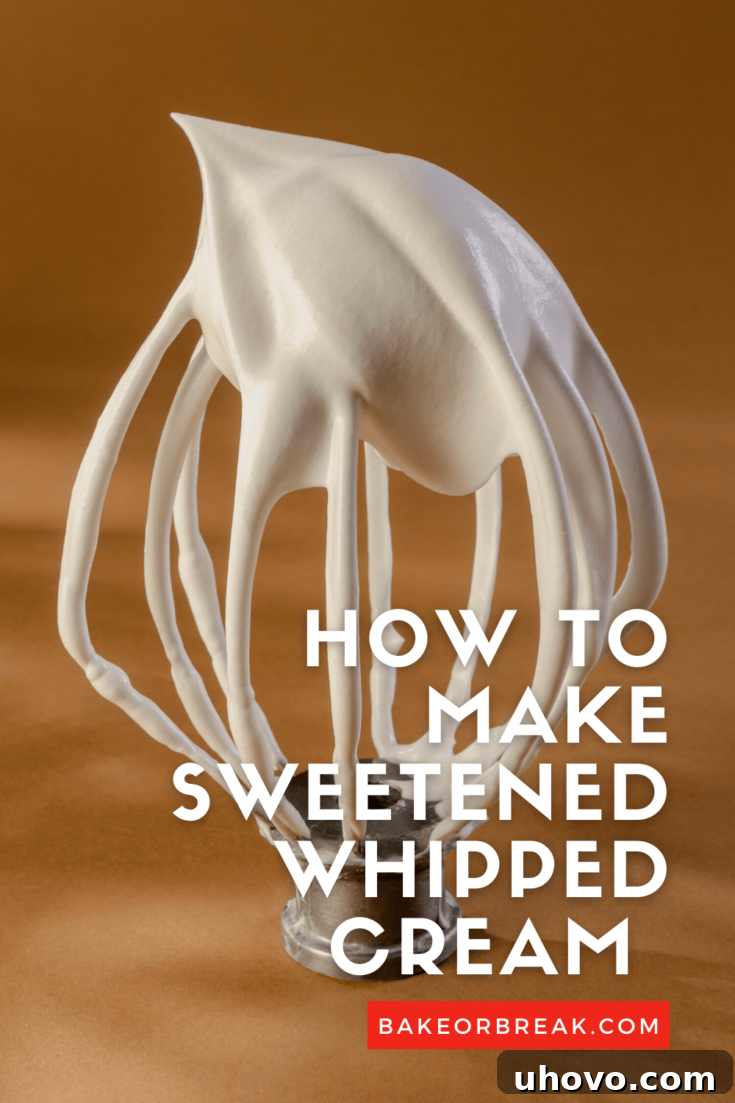
- Continue beating until you achieve the desired consistency. For soft peaks, the cream should fold over when the whisk is lifted out of the cream. For medium peaks, the tip of the peak should curve downward. For stiff peaks, the peak should remain straight up.
Notes
*You can use heavy cream, heavy whipping cream, or whipping cream. My preference is to use heavy cream or heavy whipping cream, as they tend to hold up better when whipped.
**Confectioners’ sugar will make a more stable whipped cream.
Recommended Products
Bake or Break is a participant in the Amazon Services LLC Associates Program, an affiliate advertising program designed to provide a means for us to earn fees by linking to Amazon.com and affiliated sites.
- Stainless-Steel Mixing Bowls with Airtight Lids (Set of 5)
- KitchenAid 9-Speed Digital Hand Mixer
Show off your baking masterpiece!
Snap a pic, tag @bakeorbreak, and use #bakeorbreak on Instagram. Can’t wait to see your creation!
More Essential Baking Basics
Ready to further hone your baking skills? Explore these other foundational guides to become a more confident and capable baker!
- How to Make Vanilla Extract
- Tips for Baking Fluffy Muffins
- Types of Salt: A Home Baker’s Comprehensive Guide
- How to Assemble a Stunning Christmas Cookie Tray
- Mastering Bundt Cakes: Essential Baking Tips
Bake or Break is a participant in the Amazon Services LLC Associates Program, an affiliate advertising program designed to provide a means for us to earn fees by linking to Amazon.com and affiliated sites.