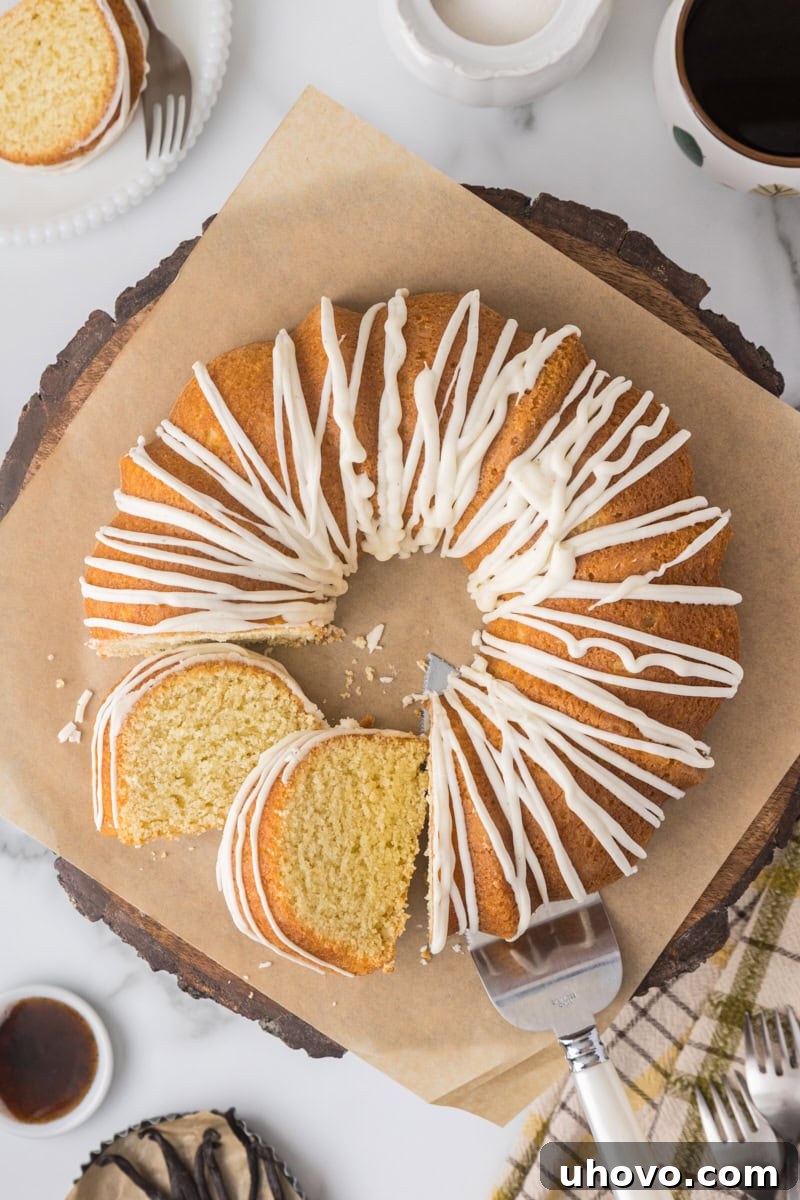
A truly exquisite vanilla Bundt cake, renowned for its soft, buttery texture and infused with the rich essence of real vanilla bean. This elegant dessert is beautifully finished with a smooth, luscious vanilla glaze, making it versatile enough for a simple afternoon treat or a grand celebration.
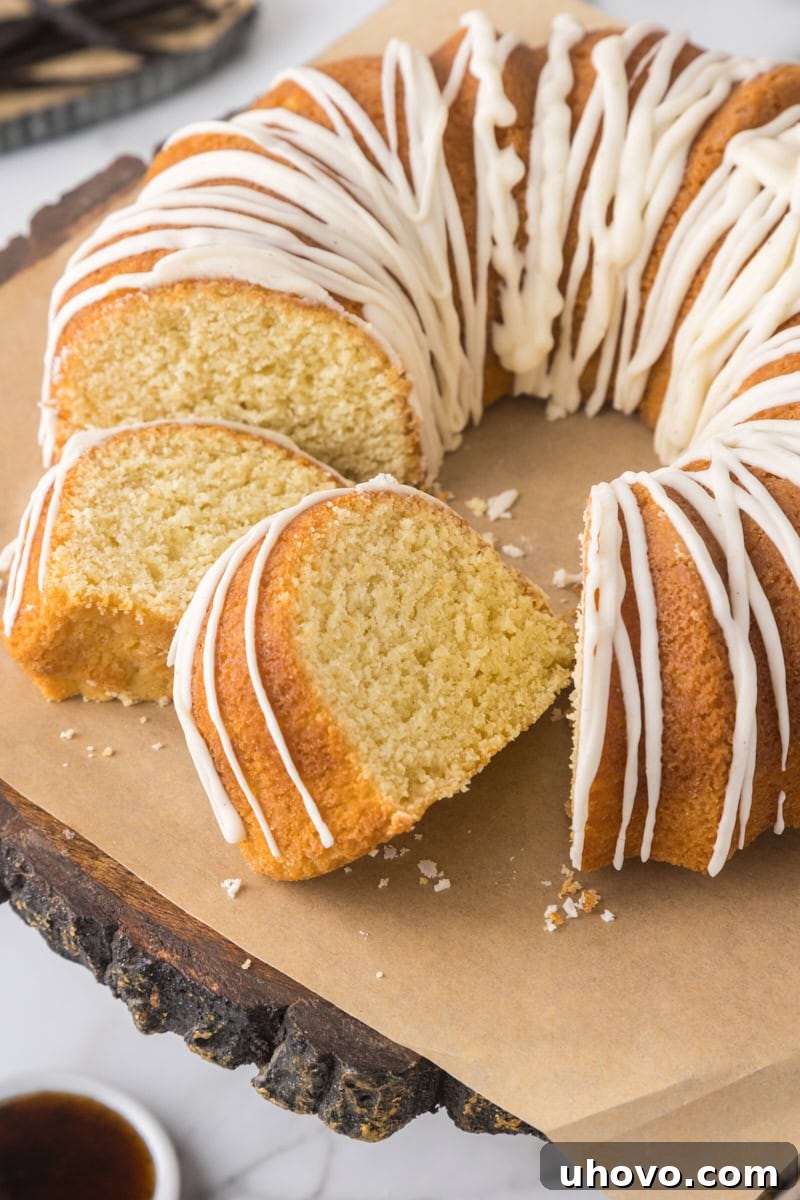
Welcome to the ultimate guide to baking a sensational vanilla Bundt cake that will undoubtedly become a staple in your recipe collection. This vanilla bean Bundt cake is one of those culinary masterpieces that effortlessly impresses without requiring overly complicated techniques or extravagant ingredients. Its true beauty lies in its simplicity, relying on the exceptional quality of its components, a remarkably light and tender crumb, and an abundance of authentic vanilla flavor. The result is a cake that feels perfectly at home whether served at a casual family gathering or as the star dessert on a meticulously arranged table.
What sets this recipe apart is the thoughtful combination of both vanilla bean paste and pure vanilla extract. This dual approach ensures a profound, multi-layered vanilla flavor profile that is both complex and deeply satisfying. The vanilla bean paste introduces those charming, visible specks of vanilla, signifying its genuine quality, while the extract rounds out the flavor with its familiar, comforting notes. A delicate, yet perfectly balanced glaze then adds just the right amount of sweetness and a polished, inviting finish. This is more than just a cake; it’s a dependable and elegant creation that promises to delight with every single slice, making you eager to bake it time and time again.
Why You’ll Adore This Vanilla Bundt Cake
- Effortlessly Elegant: This Bundt cake strikes the perfect balance between simplicity and sophistication. It stands beautifully on its own, showcasing its natural charm, but can also be adorned with a simple glaze or fresh fruit to elevate it for special events, making it a versatile choice for any occasion.
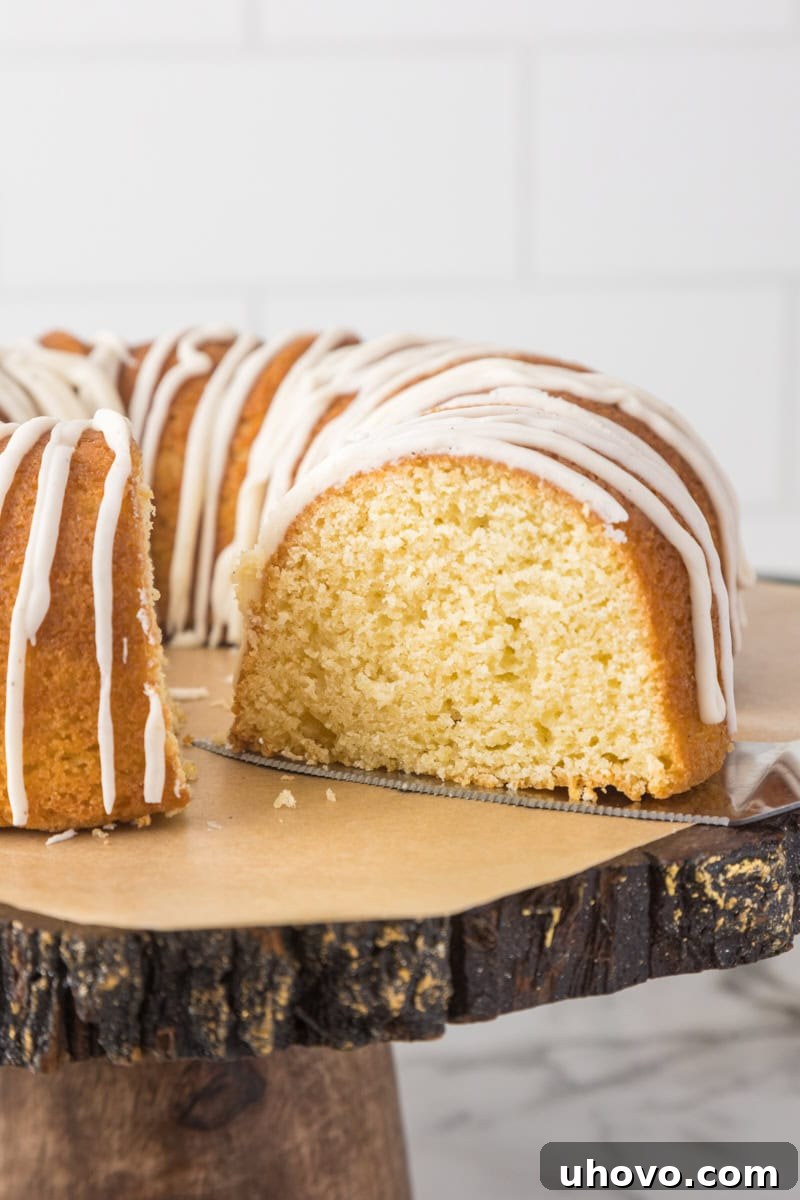
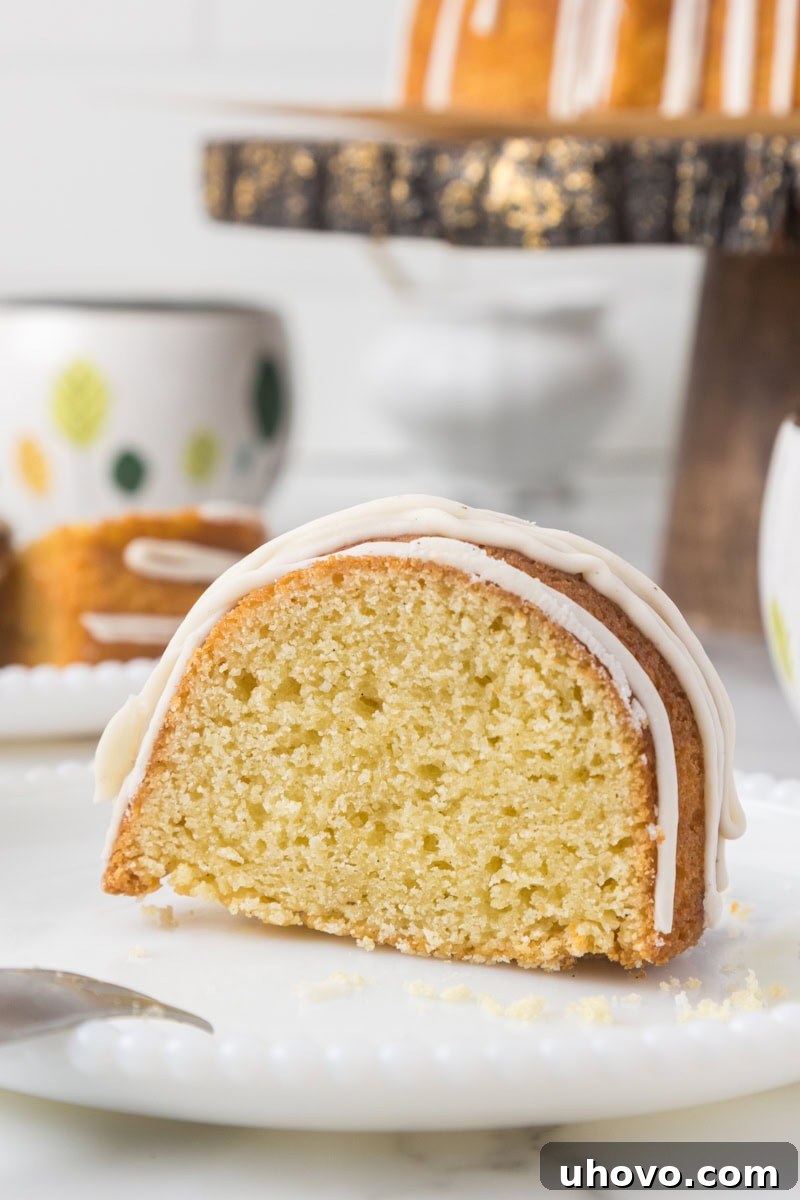
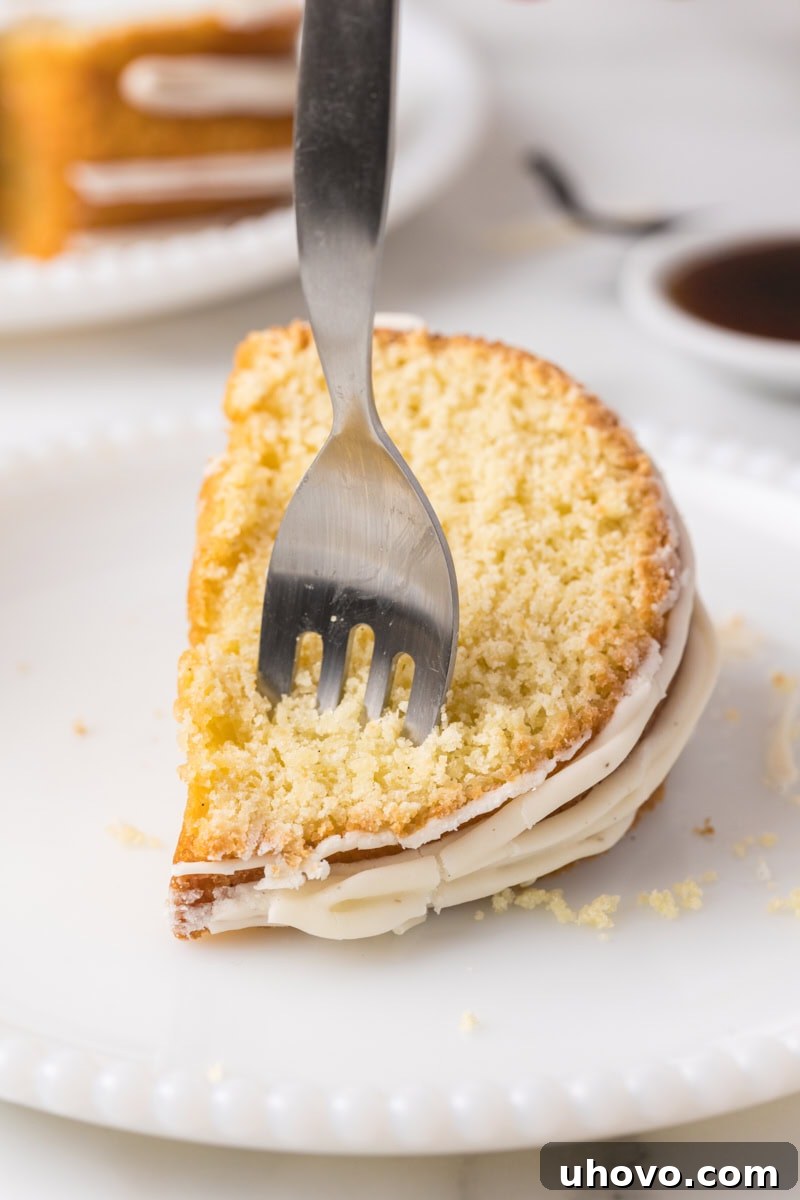
- Unbelievably Tender Crumb: Prepare for a cake that boasts an incredibly soft and moist texture. It’s never dense or heavy, instead offering a delicate crumb that practically melts in your mouth, a testament to proper ingredient ratios and careful mixing.
- Rich, Authentic Vanilla Flavor: Unlike cakes that merely hint at vanilla, this recipe celebrates its true essence. The inclusion of vanilla bean paste delivers both an intense, deep vanilla taste and those visually appealing tiny black specks. Complemented by vanilla extract, the overall flavor is wonderfully balanced and robust, providing a genuinely classic vanilla experience.
- Reliable and Beautiful Bundt: Bundt cakes are celebrated for their distinctive shapes, and this recipe ensures your cake bakes evenly and releases cleanly from the pan. Its sturdy yet tender structure allows for graceful slicing, making it as pleasing to the eye as it is to the palate. It’s a foolproof recipe for a stunning presentation every time.
Essential Ingredients for Perfection
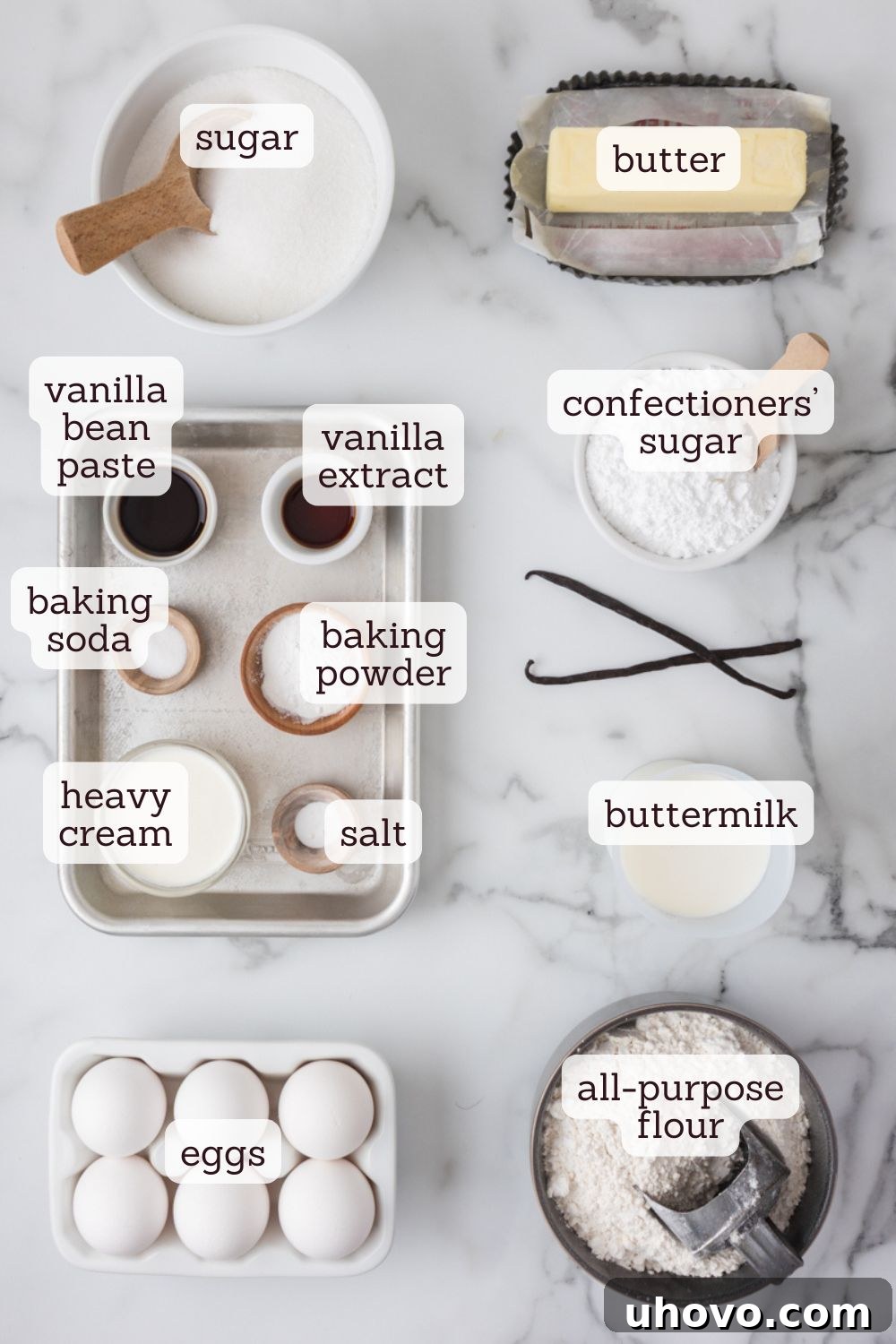
- Vanilla Bean Paste (or Vanilla Bean): This ingredient is a game-changer, providing both an incredibly deep, complex vanilla flavor and those beautiful, tell-tale vanilla speckles scattered throughout the cake’s crumb. Vanilla bean paste offers a more concentrated and nuanced flavor than extract alone, bringing an artisanal touch. If you prefer, the seeds scraped directly from one whole vanilla bean can be used as an excellent substitute, delivering the same exquisite quality.
- Vanilla Extract: While vanilla bean paste provides the core flavor, pure vanilla extract plays a crucial supporting role. Used in conjunction with the paste, it helps to broaden and soften the vanilla profile, contributing that comforting, classic aroma and taste that makes a vanilla cake so universally loved. Together, these two forms of vanilla create a full-bodied, harmonious flavor that is simply irresistible.
- Unsalted Butter: The foundation of any truly great cake, high-quality unsalted butter is vital for this Bundt. It contributes unparalleled richness and moisture, creating the signature soft and tender crumb. Furthermore, butter provides essential structure, allowing the cake to hold its intricate Bundt shape perfectly while baking and unmolding. Ensure it’s softened to room temperature for optimal creaming.
- Buttermilk: This unassuming ingredient is key to achieving a remarkably moist, light, and tender cake. The acidity in buttermilk reacts with the baking soda, aiding in leavening and creating a fine, delicate crumb. It also imparts a subtle tang that beautifully balances the cake’s sweetness and enhances the bright notes of the vanilla.
- Large Eggs: Eggs serve multiple critical functions in baking. They act as a binder, holding the cake together, and contribute to its overall structure and stability. When incorporated correctly, eggs help the cake rise evenly and ensure that it slices cleanly without crumbling, yielding a consistently perfect texture. Ensure they are at room temperature for better emulsion with the butter.
- All-Purpose Flour: The primary structural component, all-purpose flour provides the framework for the cake. Measured correctly, it ensures a tender crumb that isn’t too dense or too fragile.
- Granulated Sugar: Beyond sweetness, sugar plays a vital role in moisture, tenderness, and crust development. Creaming it with butter incorporates air, leading to a lighter cake.
- Baking Powder & Baking Soda: These chemical leaveners are essential for the cake’s rise and light texture. Baking powder provides initial lift, while baking soda reacts with the buttermilk to create additional air pockets, contributing to the cake’s airy crumb.
- Salt: A pinch of salt is crucial for enhancing all the other flavors, especially the vanilla, and balancing the sweetness. It’s a flavor enhancer that should never be overlooked.
Step-by-Step Guide to Baking Your Vanilla Bundt Cake
1. Prepare Your Pan and Oven for Success
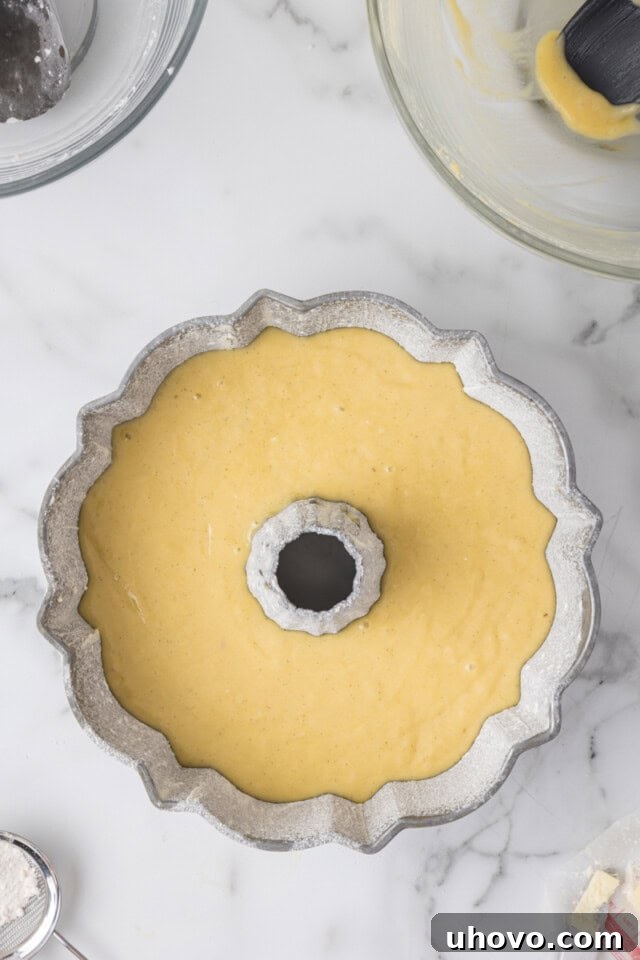
The distinctive grooves and curves of a Bundt pan, while beautiful, can be a challenge if not prepared correctly. To ensure a flawless release and prevent any sticking, dedicate a little extra time and care to this crucial first step. Begin by generously coating every intricate detail of your Bundt pan with softened butter, ensuring no spot is missed. Follow this with a thorough dusting of all-purpose flour, tapping out any excess. Alternatively, a high-quality baking spray that contains flour can be an excellent, convenient option. For optimal baking, preheat your oven to a slightly lower temperature than many standard cakes. This helps the cake to rise more evenly, promoting a tender crumb and preventing the edges from over-baking before the center is cooked through.
2. Whisk Together the Dry Ingredients
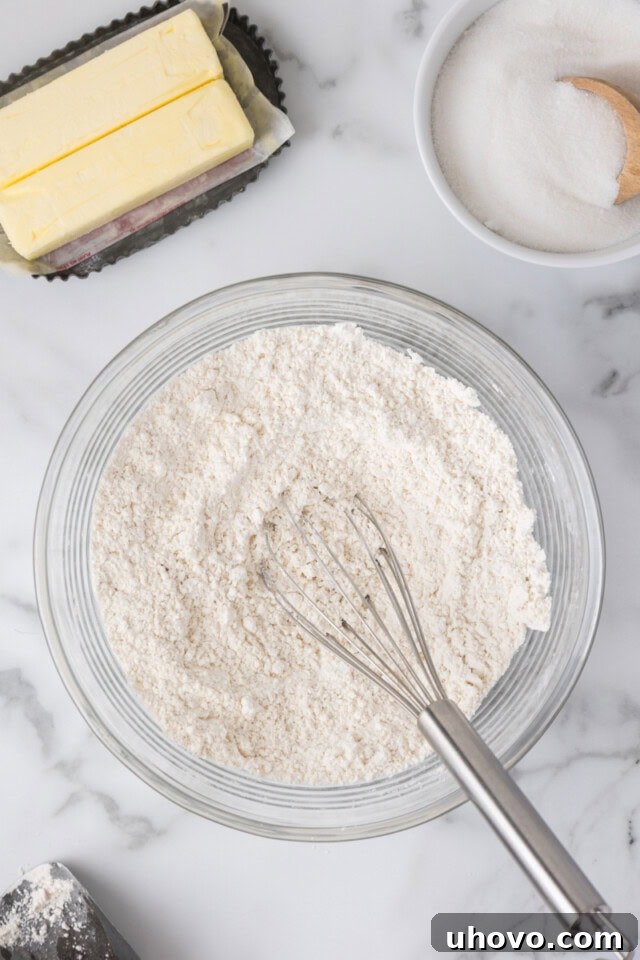
In a separate bowl, combine your all-purpose flour, baking powder, baking soda, and salt. Whisk these dry ingredients together thoroughly for about 30 seconds to a minute. This seemingly simple step is vital as it ensures that the leavening agents and salt are perfectly distributed throughout the flour. This uniform distribution is key to achieving an even rise and consistent texture in your final cake, preventing pockets of unmixed ingredients and reducing the need for excessive mixing once wet ingredients are added, which can lead to a tough cake.
3. Cream the Butter and Sugar Until Light
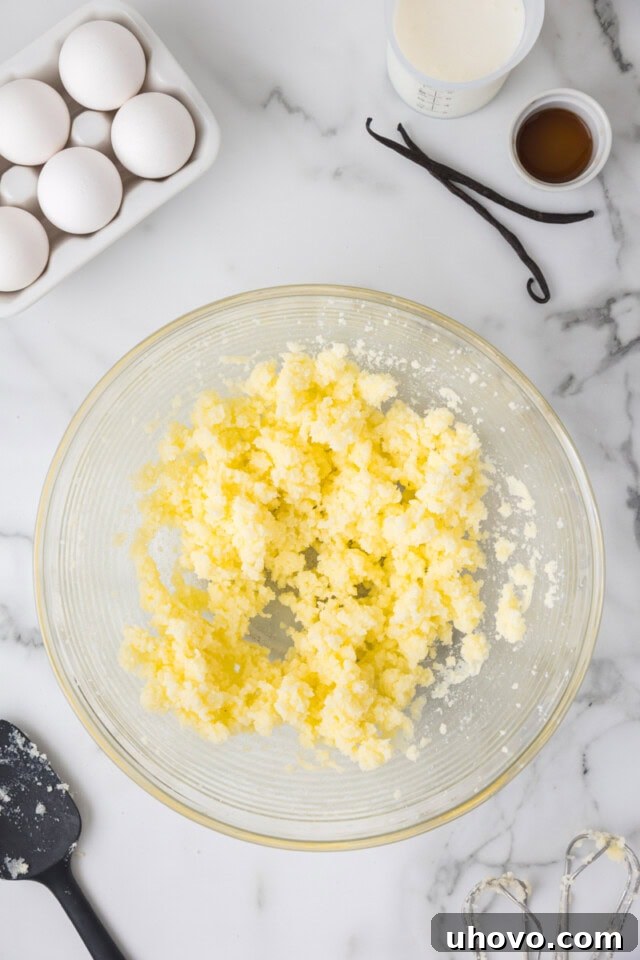
In a large mixing bowl, beat the softened unsalted butter and granulated sugar together using an electric mixer on medium speed. This creaming process is more than just combining ingredients; it’s about incorporating air into the mixture. Continue beating for approximately 3-5 minutes, or until the mixture transforms into a pale, fluffy, and significantly increased in volume. This aeration creates tiny air pockets that will expand during baking, resulting in a light, soft, and airy crumb. Do not rush this step, as it forms the foundational structure and tenderness of your vanilla Bundt cake.
4. Incorporate Eggs and Vanilla for Depth of Flavor
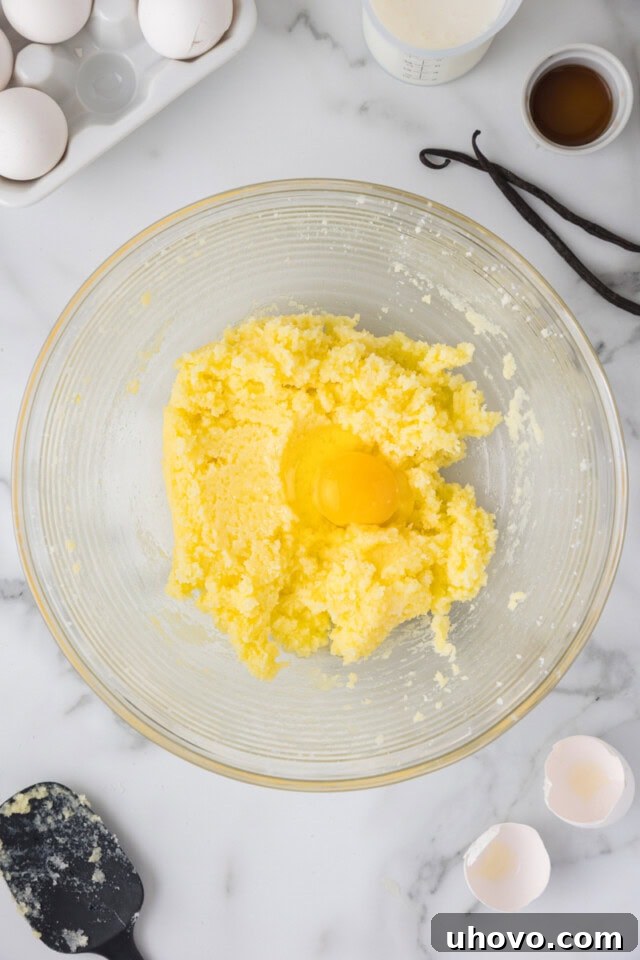
Once your butter and sugar are perfectly creamed, add the large, room-temperature eggs one at a time. Beat well after each addition, allowing each egg to fully incorporate into the mixture before adding the next. This methodical approach ensures a smooth, emulsified batter. After the eggs, it’s time for the star of the show: the vanilla. Mix in both the vanilla bean paste and pure vanilla extract. The paste will infuse the batter with its profound, genuine vanilla essence and introduce those characteristic beautiful speckles, while the extract enhances the overall aroma and classic flavor. Mix until just combined, being careful not to overbeat.
5. Alternate Dry and Wet Ingredients Carefully
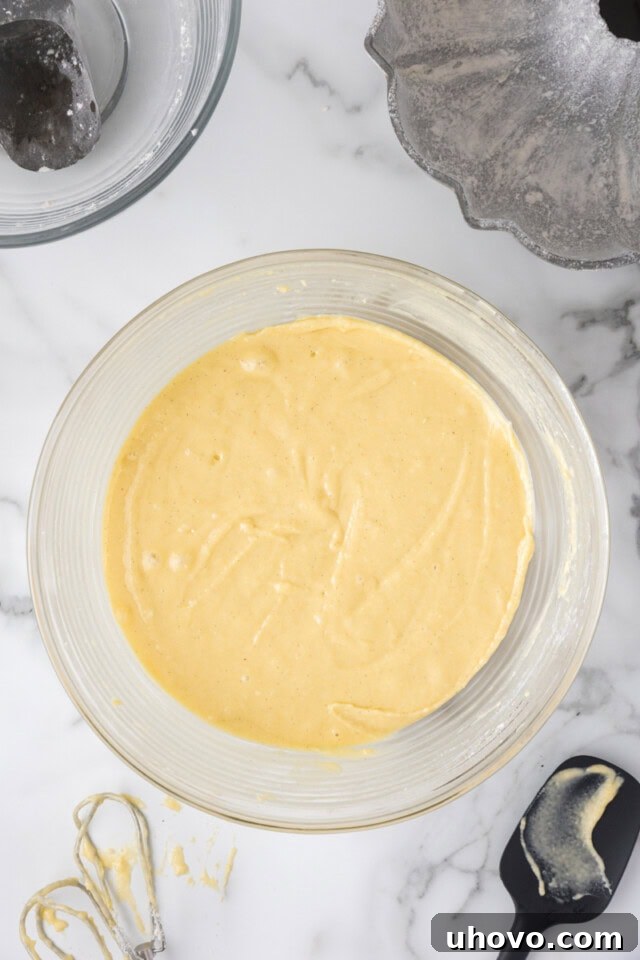
With your mixer set to its lowest speed, begin to add the whisked flour mixture in three distinct additions, alternating with the buttermilk in two portions. Always start and end with the dry ingredients. This method helps to properly emulsify the batter, preventing it from separating and ensuring a uniformly moist cake. The key here is to mix only until the ingredients are just combined. Over-mixing at this stage can develop the gluten in the flour too much, leading to a tough, dry cake instead of the desired light and tender crumb. Stop as soon as no streaks of flour are visible.
6. Bake to Perfection and Avoid Over-Baking
Gently spoon the prepared vanilla Bundt cake batter into your thoroughly prepared Bundt pan, spreading it evenly and smoothing the top. Place the pan in your preheated oven and bake for the recommended time, typically between 55 to 65 minutes. The crucial indicator of doneness is when the cake is beautifully golden brown and a wooden skewer or toothpick inserted into the thickest part of the cake (avoiding the very center, which may cook faster) comes out clean or with only a few moist crumbs attached. Over-baking is the enemy of a moist vanilla cake, as it can quickly lead to a dry, crumbly texture, so begin checking for doneness a few minutes before the minimum bake time.
7. Cool Thoroughly Before Glazing
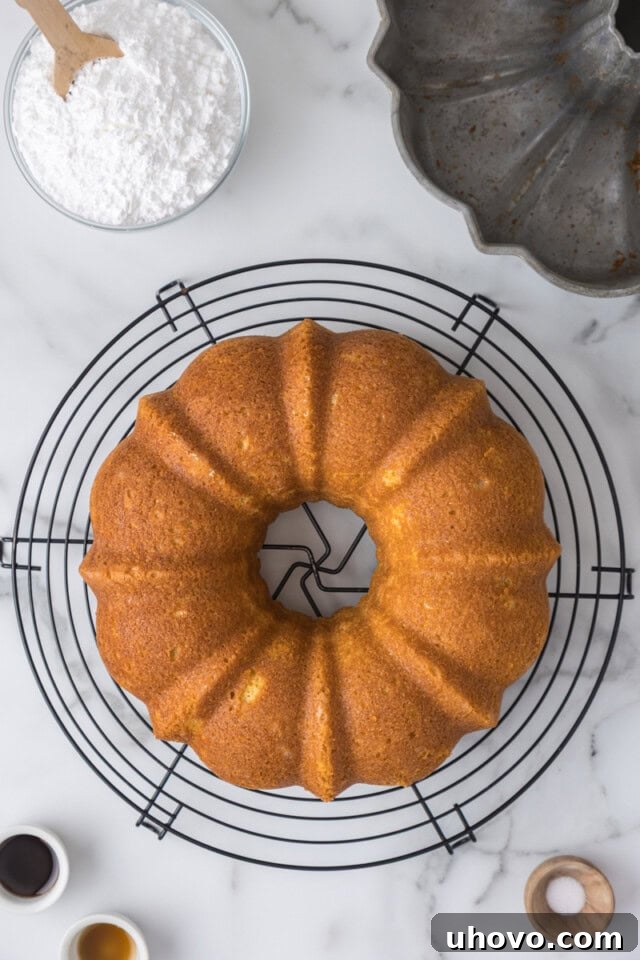
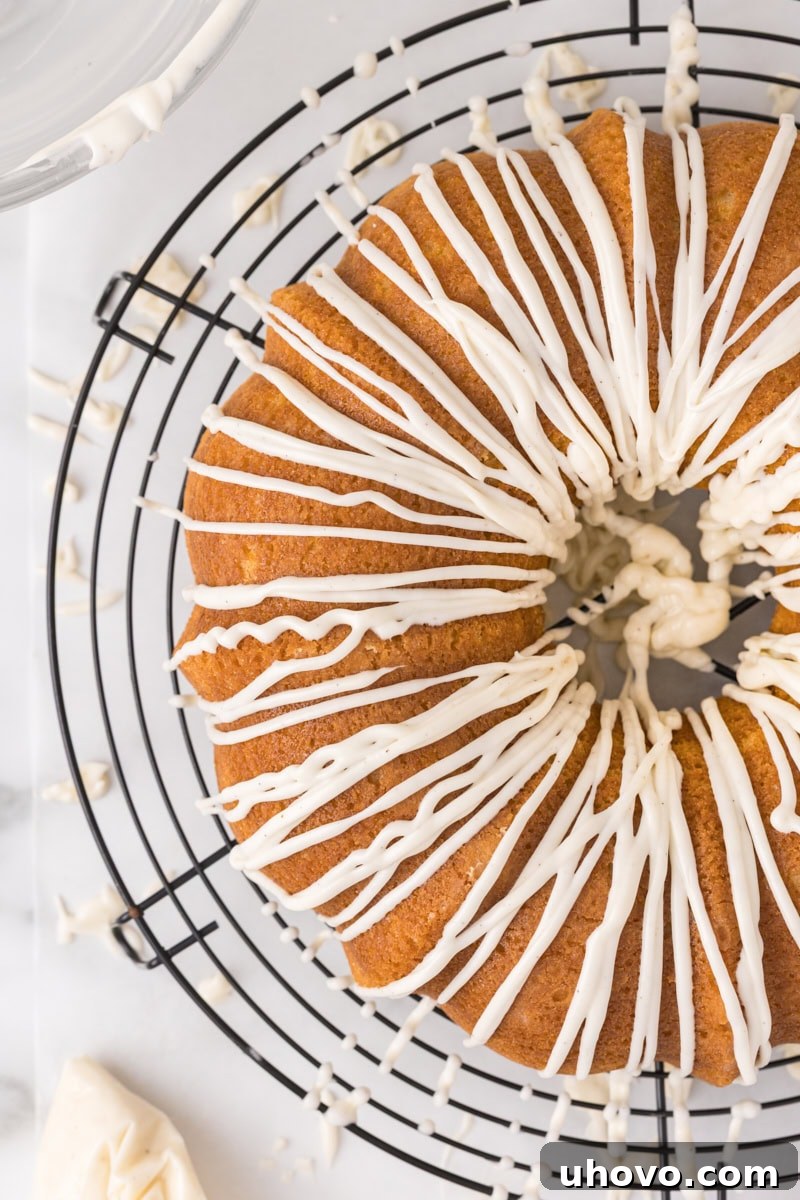
Once your magnificent Bundt cake emerges from the oven, allow it to cool in the pan on a wire rack for about 15-20 minutes. This crucial resting period allows the cake to firm up slightly, making it less fragile and easier to invert. After this initial cooling, carefully invert the pan onto the wire rack and lift the pan away, allowing the cake to cool completely to room temperature. This complete cooling is essential before applying the glaze. Attempting to glaze a warm cake will cause the glaze to melt, run off, and absorb into the cake, rather than setting into a smooth, elegant, and visually appealing finish.
Expert Tips for Baking the Perfect Vanilla Bundt Cake
- Master the Pan Preparation: Bundt cakes are famously beautiful but can be notoriously prone to sticking if the pan isn’t prepared meticulously. Don’t rush this step! Use softened butter and flour, making sure to get into every single crevice and curve of the pan. Alternatively, a high-quality baking spray specifically designed for baking, often containing flour, offers a highly reliable release. A well-prepared pan is your best defense against a stuck cake.
-
Let the Vanilla Shine Bright: Vanilla isn’t just a background flavor in this cake; it’s the star. The quality and type of vanilla you use will dramatically impact the final taste. We recommend using a combination of vanilla bean paste for its visual appeal and deep flavor, alongside pure vanilla extract for its classic aroma. If you’re curious about the nuances between vanilla extract, vanilla bean paste, and whole vanilla beans, understanding these differences can truly elevate your baking. Explore a comprehensive
guide to the different types of vanilla
to make an informed choice. - Embrace Room-Temperature Ingredients: This tip is paramount for achieving the best cake texture. Softened butter, alongside room-temperature eggs and buttermilk, emulsifies far more smoothly and evenly into the batter. This creates a homogeneous mixture that holds air better during the creaming process and bakes more uniformly, resulting in a consistently tender and fine-crumbed cake. Plan ahead by taking these ingredients out of the refrigerator at least an hour before you begin baking.
- Cream Butter and Sugar with Patience: This is a foundational step for a light and airy cake. The goal isn’t just to combine the butter and sugar but to incorporate ample air. Beat them together on medium speed for a good 3-5 minutes until the mixture visibly lightens in color and becomes fluffy. This aeration creates tiny pockets that expand in the oven, giving your cake its delightful rise and tender texture.
- Avoid the Pitfall of Over-Mixing: Once you’ve added the dry ingredients to the wet, it’s crucial to mix just until everything is combined and no streaks of flour remain. Over-mixing develops the gluten in the flour, which can lead to a dense, tough, and chewy cake – precisely what you want to avoid in a delicate vanilla Bundt. A gentle hand and a watchful eye are your best assets here.
- Trust But Verify Doneness: Baking times can vary considerably based on your oven’s calibration and the specific material or color of your Bundt pan. Start checking for doneness a few minutes before the lower end of the recommended baking time. A reliable indicator is when a wooden skewer or toothpick inserted into the thickest part of the cake comes out clean. The cake should also spring back gently when lightly touched. An oven thermometer can be a valuable tool to ensure your oven is truly at the set temperature.
- Cool Completely Before Glazing: This step cannot be emphasized enough for a picture-perfect glaze. Glazing a warm cake will cause the glaze to melt and run down the sides, resulting in a sticky mess rather than a smooth, even coating. Allow your cake to cool thoroughly to room temperature on a wire rack before applying the vanilla glaze. This patience will be rewarded with a beautifully set, elegant finish.
- Weigh Your Ingredients: For the most precise and consistent results, especially with flour, consider using a kitchen scale. Volume measurements (cups) can vary significantly depending on how the flour is scooped, but weight measurements (grams) are always accurate. This small change can make a big difference in the final texture of your cake.
Creative Variations and Elegant Serving Suggestions
- Embrace Simplicity (Skip the Glaze): While the vanilla glaze adds a lovely finish, this Bundt cake is absolutely delightful on its own. For an understated yet elegant presentation, simply dust the cooled cake with a generous layer of powdered sugar. This minimalist approach allows the pure vanilla flavor and tender texture of the cake to truly shine, making it ideal for everyday enjoyment with a cup of coffee or tea.
- Infuse with a Bright Citrus Note: For a delightful twist that brightens the vanilla flavor without overpowering it, consider adding finely grated zest from one lemon, orange, or even lime to the cake batter. A touch of citrus zest can also be incorporated into the glaze for an extra burst of freshness. The bright acidity of citrus beautifully complements the warmth of vanilla, creating a refreshing contrast.
-
Pair with Fresh Seasonal Fruit: The classic vanilla base of this Bundt cake makes it a perfect canvas for fresh, vibrant fruits. Serve individual slices with a medley of fresh berries (strawberries, blueberries, raspberries), a spoonful of sweet
homemade fruit compote
(like blueberry or mixed berry), or simply some macerated strawberries. The natural sweetness and slight tartness of the fruit provide a wonderful counterpoint to the rich cake. -
Elevate to a Decadent Dessert: Transform this simple Bundt cake into a show-stopping dessert for any special occasion. Serve warm slices alongside a dollop of freshly made, lightly sweetened
whipped cream, or pair it with a scoop of creamy
vanilla bean ice cream. A drizzle of caramel sauce or a sprinkle of toasted nuts can add another layer of indulgence. -
Adapt for the Seasons: This versatile cake can be tailored to suit any time of year. In the cooler months, consider serving it with warm, spiced fruit sauces like an
apple or pear compote
infused with cinnamon and nutmeg. During warmer seasons, keep it light and refreshing with chilled fresh fruit and a delicate crème anglaise or a simple berry coulis. - Nutty Crunch: For added texture and flavor, gently fold 1/2 to 1 cup of finely chopped toasted nuts (such as pecans, walnuts, or almonds) into the batter just before baking. This adds a delightful crunch that contrasts with the soft crumb.
- Chocolate Swirl: Create a striking visual and flavor contrast by swirling a thin ribbon of melted dark chocolate or chocolate ganache through a portion of the batter before pouring it into the Bundt pan. This adds a sophisticated touch for chocolate lovers.
Optimal Storage and Make-Ahead Instructions
One of the many advantages of this delightful vanilla Bundt cake is its excellent keeping quality, making it an ideal candidate for baking in advance. Proper storage ensures that each slice remains as fresh and delicious as the day it was baked.
-
Room Temperature Storage: For optimum freshness and flavor, store the glazed vanilla Bundt cake at room temperature. Once the vanilla glaze has fully set, it forms a protective layer that helps lock in moisture and prevents the cake from becoming soggy or soft. Place the cake in an airtight container or cover it tightly with plastic wrap to protect it from air exposure. It will remain wonderfully moist and delicious for up to
3 days. -
Refrigerator Storage: If you live in a particularly warm or humid climate, or if you prefer a chilled cake, refrigeration is an option. Store the cake in a well-sealed, airtight container in the refrigerator for up to
5 days. To ensure the best texture and allow the flavors to fully develop, always bring individual slices to room temperature for about 30 minutes before serving. This will restore the cake’s tender crumb. -
Freezer Storage: The unglazed vanilla Bundt cake freezes exceptionally well, allowing you to prepare it far in advance for future enjoyment. Once the cake has cooled completely, wrap it tightly first in plastic wrap, ensuring no air can reach the surface, and then in a layer of aluminum foil. This double-layer protection helps prevent freezer burn. It can be stored in the freezer for up to
2 months.
When ready to enjoy, thaw the cake overnight in the refrigerator or at room temperature. Once thawed, you can then proceed to prepare and apply the fresh vanilla glaze before serving.
Pro Make-Ahead Tip: To achieve the freshest appearance and taste, consider baking the cake a day or two in advance. Store it properly (unglazed if freezing), and then prepare and drizzle the smooth vanilla glaze just a few hours before you plan to serve. This ensures the glaze is perfectly set and shiny, making for an even more impressive presentation.
The Unforgettable Vanilla Bundt Cake: A Timeless Favorite
This exquisite vanilla Bundt cake stands as a testament to the fact that simplicity in baking can yield the most extraordinary results. It’s a comforting reminder that you don’t need elaborate decorations or complex flavor combinations to create something truly special and memorable. With its incredibly light, tender, and moist crumb, generously infused with the pure, authentic essence of real vanilla bean, this recipe embodies classic perfection. It’s the quintessential cake that fits seamlessly into any moment, whether it’s a casual afternoon treat enjoyed with a hot cup of coffee or a grand dessert to cap off a festive celebration.
Whether you choose to adorn it with its signature smooth vanilla glaze for an elegant finish, or opt for a more understated presentation with a delicate dusting of powdered sugar, this vanilla Bundt cake is a dependable and beloved recipe you’ll want to keep within easy reach. Its straightforward preparation belies its sophisticated flavor, making it an approachable bake for any skill level. It’s a delightful creation that is always welcomed with enthusiasm and is guaranteed to bring smiles to anyone lucky enough to enjoy a slice at your table. Get ready for this to become your new go-to vanilla cake recipe!
More Classic Cakes to Indulge In
Vanilla Bundt Cake
servings
5 minutes
25 minutes
smooth vanilla glaze. Simple, elegant, and perfect for any occasion.
Pin Recipe
Ingredients
For the cake:
-
3
cups (360
g)
all-purpose flour -
2 ½
teaspoons
baking powder -
¼
teaspoon
baking soda -
½
teaspoon
salt -
1
cup (226
g)
unsalted butter,
softened -
1 ¾
cups (350
g)
granulated sugar -
4
large
eggs,
at room temperature -
1
tablespoon (15
ml)
vanilla bean paste,
or seeds from 1 vanilla bean -
1
teaspoon
vanilla extract -
1
cup (240
ml)
buttermilk,
at room temperature
For the glaze:
-
1 ½
cups (165
g)
confectioners’ sugar,
sifted -
3 to 4
tablespoons (45 to 60
ml)
heavy cream,
or whole milk -
1
teaspoon
vanilla bean paste -
¼
teaspoon
vanilla extract -
pinch
salt
Recommended Products
-
Nordic Ware 12 Cup Bundt Pan
-
Nielsen-Massey Pure Vanilla Bean Paste
-
Round Cooling Rack
Instructions
To make the cake:
-
Preheat the oven to 325°F (160°C). Generously butter and flour a 10–12 cup
Bundt pan (or use a baking spray with flour). -
Whisk together the flour, baking powder, baking soda, and salt. Set aside.
-
In a large bowl, beat the butter and sugar on medium speed with an electric
mixer until light and fluffy (about 3 minutes). -
Beat in the eggs one at a time. Mix in the vanilla bean paste and extract.
-
With the mixer on low speed, add the flour mixture in three portions,
alternating with the buttermilk in two portions, beginning and ending with
flour. Mix just until combined. -
Pour the batter into the pan and smooth the top. Bake 55–65 minutes, or until a
pick inserted in the center comes out clean. -
Let cool in the pan 15–20 minutes, then turn out onto a wire rack to cool
completely.
To make the glaze:
-
Whisk the confectioners’ sugar, 3 tablespoons cream, vanilla bean paste,
vanilla extract, and salt. Add more cream a teaspoon at a time until the glaze
is thick but pourable. -
Spoon or drizzle over the cooled cake. Let set before serving.
Video
Notes
-
Vanilla Bean Paste:Vanilla bean paste gives the best flavor and appearance, but you can substitute the
seeds from one whole vanilla bean. -
No Vanilla Bean Paste or Bean?You can use additional vanilla extract if needed, though the cake will be slightly
less intense in flavor and won’t have vanilla speckles. -
Buttermilk Substitution: If you don’t have buttermilk, you can make a quick substitute by stirring
1 tablespoon lemon juice or white vinegar into 1 cup milk. Let it stand for 5 minutes before using. - Make Ahead:The cake can be baked a day in advance and glazed just before serving.
-
Storage: Keep in an airtight container at room temperature up to 3
days. -
Freezing:Freeze the unglazed cake, well wrapped, for up to 2 months. Thaw completely before
glazing.
Show off your baking masterpiece!Snap a pic, tag
@bakeorbreak, and use
#bakeorbreak
on Instagram. Can’t wait to see your creation!