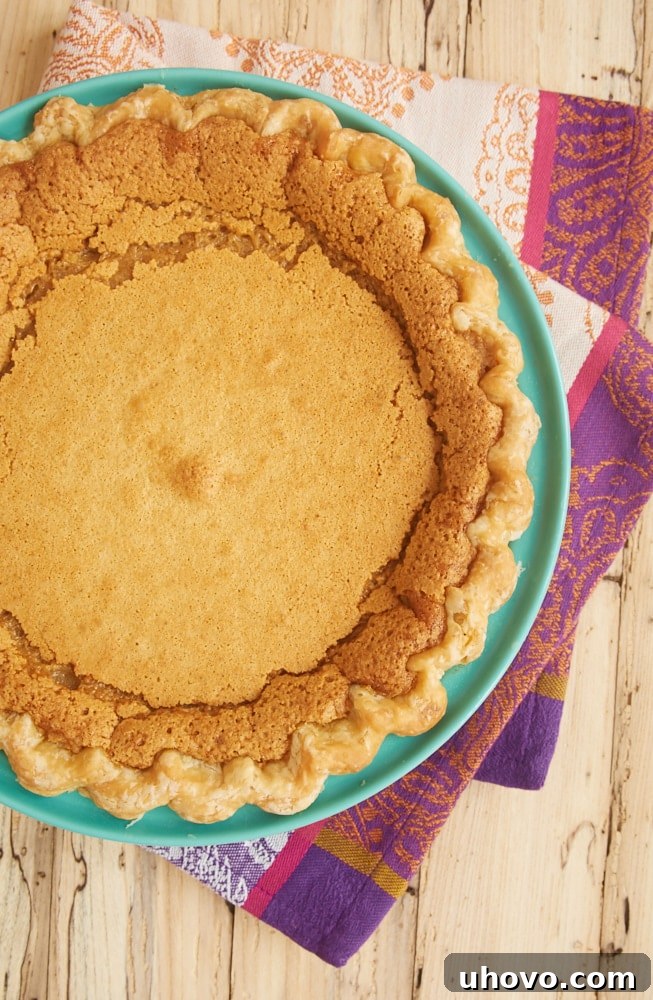
If you’re a devout admirer of classic Chess Pie but find yourself craving a delightful and distinctive variation, then prepare to be captivated by this extraordinary Peanut Butter Chess Pie. It masterfully preserves all the beloved qualities of the traditional Southern dessert—that rich, sweet, and irresistibly gooey custard filling nestled in a flaky crust—but introduces an exciting and utterly delectable peanut butter essence that elevates it to new heights. This isn’t just a twist; it’s a revelation for peanut butter enthusiasts and pie lovers alike.
For those who cherish the timeless original, our old-fashioned Chess Pie recipe remains a cherished classic.
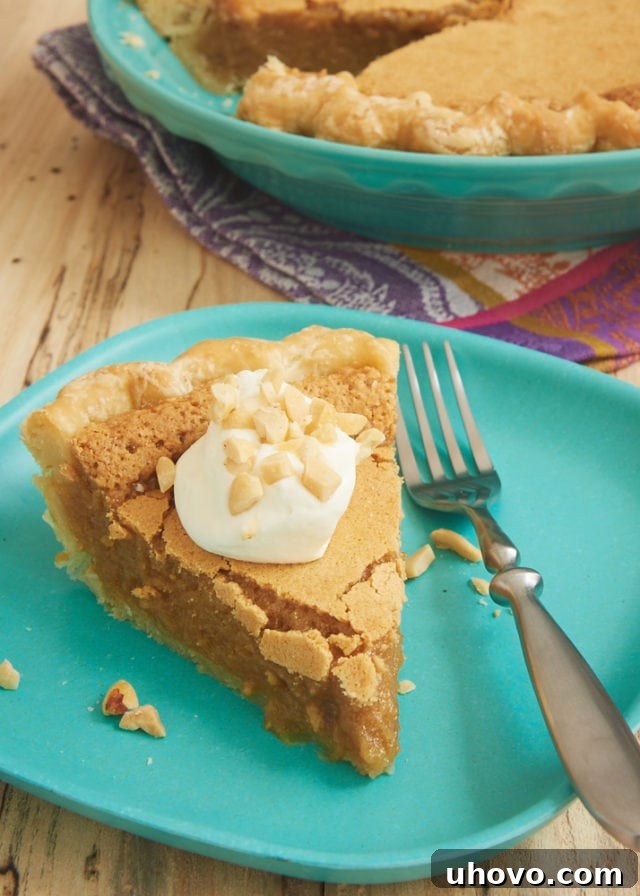
Introducing the Irresistible Peanut Butter Chess Pie
Chess Pie has always held a special place in my heart, a dessert I’ve found utterly irresistible since childhood. Its humble origins and the sheer simplicity of its construction, relying on basic pantry staples to create such a profound depth of flavor and texture, only deepen my appreciation for it today. It’s a testament to the fact that culinary magic often lies in the most straightforward ingredients, transformed through careful preparation into something truly memorable.
For a long time, the idea of infusing this beloved classic with the creamy, nutty goodness of peanut butter lingered in my mind. I envisioned how the distinct flavor of peanut butter could perfectly complement the sweet, custardy base of a traditional chess pie, creating a symphony of tastes that would be both familiar and wonderfully novel. It was an intuition, a culinary hunch that promised an exciting new dimension to a time-honored recipe. Having finally brought this vision to life, I can confidently say that my only regret is not experimenting with it sooner!
Truth be told, a slight apprehension accompanied my initial foray into adding peanut butter to the delicate chess pie filling. My primary concern was that the peanut butter might alter the filling’s signature texture, rendering it too dense or dry. However, with the very first bite, all worries melted away. The result was pure delight: the pie retained that characteristic soft, sweet, and delightfully gooey filling that defines a classic chess pie, but with an unmistakable and generous infusion of rich peanut butter flavor. It was a flawless marriage of two beloved comfort food icons, achieving a perfect balance between the traditional and the innovative. This Peanut Butter Chess Pie delivers on every promise of its name, offering a familiar comfort with an exciting, flavorful twist.
Essential Ingredients for Your Peanut Butter Chess Pie
One of the enduring charms of chess pie, and indeed this peanut butter rendition, is its reliance on fundamental baking ingredients. You likely have most of these staples already in your pantry! While the full recipe with precise quantities and step-by-step instructions is provided below, let’s delve deeper into each key ingredient and understand its specific role in creating this magnificent pie.
- Pastry for a 9-inch pie: The foundation of any great pie is its crust. We’ve included a reliable, all-butter pie crust recipe in the instructions, known for its exceptional flakiness and rich flavor. However, baking is about personal preference and convenience, so feel free to use your absolute favorite homemade pie crust recipe, or opt for a high-quality store-bought option for a quicker preparation. A well-made crust not only provides structural integrity but also adds a crucial textural contrast to the smooth, creamy filling. The butter in the crust is key to achieving that desirable flaky texture, as it creates steam pockets during baking, separating the layers of dough.
- Unsalted butter: In baking, using unsalted butter is a golden rule for precision. Different brands of salted butter contain varying amounts of salt, which can make it difficult to control the overall saltiness of your dessert. By using unsalted butter, you gain complete command over the flavor profile, allowing you to add salt precisely as needed to enhance and balance the sweetness. This meticulous approach ensures consistent, delicious results every time. For more on this, explore the Unsalted vs. Salted Butter debate. For the filling, ensure the butter is melted but slightly cooled; too hot, and it can prematurely cook the eggs.
- Eggs: Eggs are far more than just binders in this recipe; they are the heart of the chess pie’s custardy texture. The proteins in the eggs coagulate as they bake, transforming the liquid filling into that characteristic smooth, creamy, and irresistible set. Without eggs, you wouldn’t have the rich, structured interior that defines a perfect chess pie. Using large eggs ensures the correct ratio for the custard’s consistency.
- Granulated sugar: This provides the primary sweetness to the pie, contributing to the classic chess pie’s famously sweet profile. Beyond flavor, sugar interacts with other ingredients to create the filling’s texture, helping to create a tender crumb and contributing to the golden-brown crust that forms on top during baking.
- Light brown sugar: While granulated sugar offers a clean sweetness, light brown sugar introduces a subtle molasses note and a deeper, more complex sweetness. This adds a lovely dimension to the flavor, complementing both the classic custard and the nutty peanut butter. Dark brown sugar can also be used for an even more pronounced caramel-like flavor, but light brown sugar offers a perfect balance that lets the peanut butter shine.
- Milk: Whole milk is highly recommended for this recipe due to its higher fat content, which contributes significantly to the richness and velvety texture of the custard filling. The fat in the milk helps create a smooth mouthfeel and adds to the overall decadent quality of the pie. However, if whole milk isn’t available, 2% milk has also been used successfully, yielding a slightly lighter but still delicious result.
- Cornmeal: This might seem like an unusual addition, but it’s a traditional ingredient in chess pies for a crucial reason. Cornmeal acts as a subtle thickener, giving the filling its characteristic slight firmness without making it dense or heavy. It helps the custard set beautifully, ensuring a sliceable pie while maintaining that desirable gooey center. It also contributes to the pie’s unique, slightly gritty texture, a hallmark of authentic chess pie.
- Vanilla extract: A staple in most dessert recipes, vanilla extract is a flavor enhancer that bridges and brightens the other ingredients. It adds warmth and depth, rounding out the sweetness and providing a comforting aroma that is essential for a truly delicious pie. Don’t skip it, as it subtly elevates the entire flavor profile.
- Salt: Just like in savory cooking, a pinch of salt in baking is vital for balancing sweetness and enhancing all other flavors. It prevents the pie from tasting overwhelmingly sugary and instead brings out the nuances of the peanut butter and the rich custard. Always use the specified amount to ensure perfect flavor harmony.
- Creamy peanut butter: The star ingredient of this twist! For optimal results, use traditional creamy peanut butter (like Jif or Skippy). It provides the smooth texture and consistent emulsification needed for the filling. Exercise caution with natural peanut butters (the kind that separate oil), as their different fat and oil ratios can significantly alter the pie’s texture, potentially leading to a greasier or less cohesive filling. Stick to the classic, well-emulsified varieties for the best outcome.
- Toppings: While this Peanut Butter Chess Pie is undeniably delicious on its own, a few thoughtful garnishes can elevate the experience even further. A dollop of sweetened whipped cream or a scoop of vanilla ice cream (especially with warm slices!) provides a wonderful creamy contrast. For an added layer of texture and a boost of nutty flavor, a sprinkling of finely chopped peanuts makes a beautiful and delicious finish. You could even drizzle a little melted chocolate for an extra indulgent touch.
Crafting Your Delicious Peanut Butter Chess Pie: A Step-by-Step Guide
One of the most appealing aspects of this pie is its straightforward preparation. Beyond the basic tools for preparing your pie crust, you’ll find that the filling comes together with minimal fuss—requiring just a single mixing bowl, a whisk or mixing spoon, and your trusty pie plate. This simplicity ensures a delightful baking experience without unnecessary complications.
1. Prepare the Pie Crust: The Foundation of Flaky Perfection. Begin by preparing your 9-inch pie crust according to the detailed recipe provided below. Whether you opt for homemade for that unparalleled flakiness or choose a quality store-bought crust for convenience, ensuring it’s properly prepared is key. If making your own, remember the importance of working with cold butter and not overworking the dough, which are crucial for achieving a tender, flaky texture. Once the crust is nestled into your pie pan and the edges are beautifully crimped, place it into the refrigerator. Chilling the crust before adding the filling is a vital step; it helps prevent the crust from shrinking excessively during baking and keeps the butter cold, which promotes maximum flakiness. For comprehensive guidance on perfecting your homemade crust, refer to our All-Butter Pie Crust tutorial.
2. Preheat and Organize: Setting the Stage for Success. With your pie crust chilling, take a moment to set up your baking station. Preheat your oven to 325°F (160°C). This lower temperature is ideal for chess pies, allowing the custard to bake slowly and set evenly without curdling or cracking prematurely. While the oven comes to temperature, measure out all of your filling ingredients. Having everything pre-measured and ready (mise en place) ensures a smooth and stress-free mixing process, preventing any last-minute scrambling.
3. Combine the Luscious Filling Ingredients: One Bowl Wonder. The beauty of this filling lies in its one-bowl simplicity. In a large mixing bowl, combine the slightly cooled melted butter, eggs, granulated sugar, light brown sugar, milk, cornmeal, vanilla extract, and salt. Whisk these ingredients together until they are well-incorporated and smooth. Then, add the creamy peanut butter. You may find that the peanut butter requires a little extra effort to fully integrate, but persist with thorough mixing until the entire filling is completely smooth and free of lumps. Ensure no streaks of peanut butter remain, so every bite delivers consistent flavor.
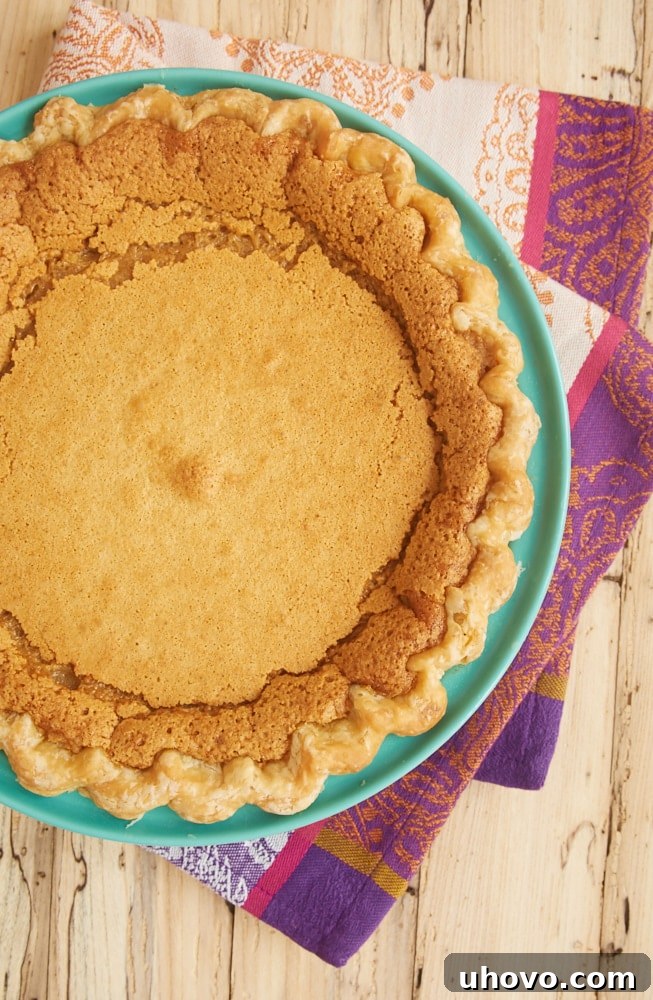
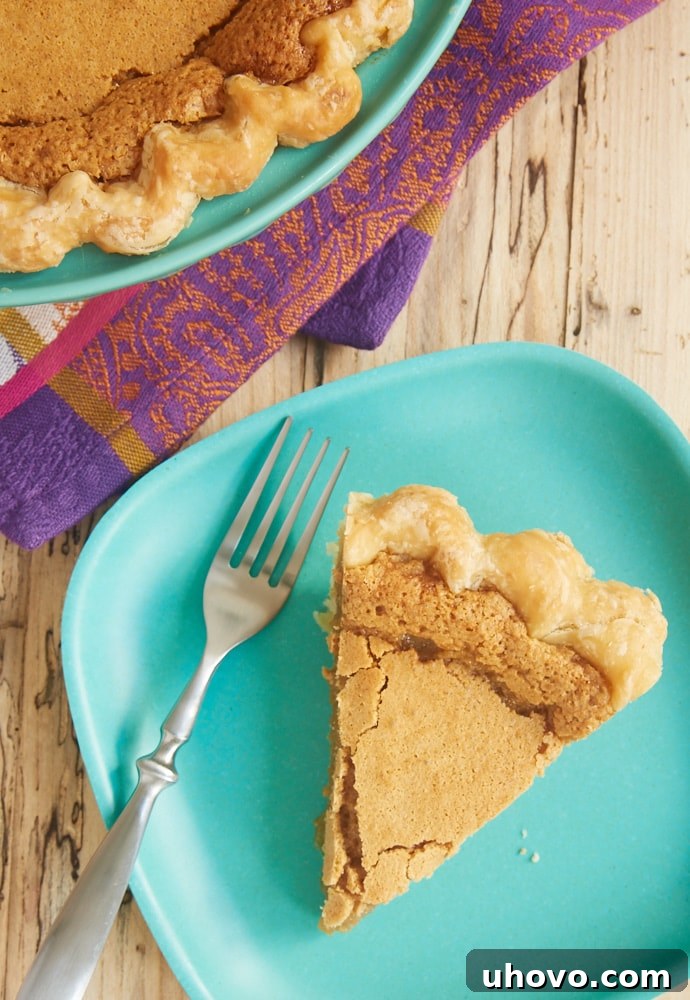
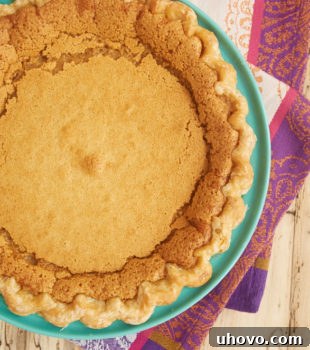
4. Bake to Golden Perfection: The Transformation. Carefully pour the prepared peanut butter filling into your chilled pie crust, spreading it evenly across the bottom. Place the pie into the preheated oven and bake for approximately 55 to 60 minutes. The pie is perfectly baked when its surface achieves a beautiful golden-brown hue and the center appears mostly set with a slight, delicate jiggle. During baking, it’s completely normal and expected for the pie to puff up quite nicely and tall in the oven due to the expansion of steam and air within the custard. However, do not be alarmed when it gradually deflates as it cools outside the oven. This natural settling process is what creates the characteristic charmingly cracked topping that is a hallmark of traditional chess pies, adding to its rustic appeal and delightful texture.
Mastering Your Peanut Butter Chess Pie: Expert Tips for Success
Achieving peanut butter chess pie perfection is within your reach with these invaluable tips. Follow them diligently to ensure a flawless, delicious dessert every time.
- Measure Accurately, Always: Baking is a science as much as an art, and precise measurements are paramount. While cooking allows for more flexibility, baking requires exact ratios for chemical reactions to occur correctly. Use proper measuring cups for dry ingredients (levelled off) and liquid measuring cups for wet ingredients. A kitchen scale can provide the most accurate measurements for flour and butter, leading to consistently excellent results.
- Ensure Butter is Melted and Cooled: This seemingly small detail is critical for the custard’s texture. If the melted butter is too hot when combined with the eggs, it can cause the eggs to curdle or scramble, resulting in a lumpy, unpleasant filling. Allow your melted butter to cool for several minutes until it’s just warm to the touch, or even lukewarm. This prevents any unwanted textural issues and ensures a silky-smooth custard.
- Protect the Crust Edges During Baking: Pie crusts often bake faster than the filling, especially along the edges. Keep a close eye on your pie as it bakes. If you notice the crust edges beginning to darken too quickly or appear fully done before the filling is set, gently cover them with strips of aluminum foil. This acts as a shield, preventing over-browning or burning while allowing the rest of the pie to finish baking beautifully.
- Cool Completely for Optimal Setting: Patience is a virtue when it comes to pie, particularly chess pie. It’s absolutely crucial to allow the pie to cool completely—ideally to room temperature, which can take several hours—before you even think about slicing into it. This extended cooling period gives the custard filling ample time to finish setting up properly. Slicing into a warm pie will likely result in a gooey, runny mess because the internal structure hasn’t fully solidified. A fully cooled pie will offer that perfect sliceable texture with a creamy, rich interior.
- Mind Your Peanut Butter Choice: As mentioned, sticking to traditional creamy peanut butter is advised. Natural peanut butters, with their tendency to separate and often thicker, less emulsified consistency, can behave differently in the baking process. Their oil content might leach out or result in a less uniform texture in the final pie.
- Don’t Overmix the Filling: While you want the peanut butter fully incorporated, avoid excessive mixing once all ingredients are combined. Overmixing can introduce too much air, which might lead to a less dense, more airy filling rather than the rich, compact custard characteristic of chess pie. Mix until just smooth.
Storing Your Peanut Butter Chess Pie
Proper storage is key to enjoying your delicious Peanut Butter Chess Pie for days after baking. Because of its rich, custardy filling, it requires refrigeration to maintain its freshness and food safety.
Refrigeration: Any leftover slices or the entire pie should be tightly covered with plastic wrap or placed in an airtight container. Store it in the refrigerator, where it will remain fresh and delicious for up to 3 days. When you’re ready to enjoy another slice, you can either rewarm it gently in the microwave for a few seconds until just warm (which is fantastic with a scoop of ice cream!), or simply allow it to come to room temperature on your kitchen counter for about 20-30 minutes for a softer texture.
Freezing: For longer storage, this pie freezes beautifully, allowing you to savor its goodness weeks or even months later. To freeze individual slices, first arrange them on a baking sheet and place them in the freezer until they are solid (this prevents them from sticking together). Once firm, wrap each frozen slice securely in plastic wrap, followed by a layer of aluminum foil, or place them into a freezer-safe bag, ensuring as much air is removed as possible to prevent freezer burn. Frozen slices can be stored for up to 2-3 months. To thaw, simply transfer a slice overnight to the refrigerator, or let it sit at room temperature for a few hours until thawed through. You can then gently rewarm it if desired.
Explore More Classic & Creative Chess Pie Recipes
Get the Recipe:
Peanut Butter Chess Pie
Yield: 8 servings
Prep Time: 25 minutes
Cook Time: 1 hour
Total Time: 1 hour 25 minutes
Indulge in a fantastic twist on a Southern classic with this rich and creamy Peanut Butter Chess Pie!
Pin Recipe
Ingredients
For the Crust:
- 1 ¼ cups (150 g) all-purpose flour
- 1 teaspoon granulated sugar
- ½ teaspoon salt
- ½ cup (113 g) cold unsalted butter, cut into 1/2-inch cubes
- 2 to 4 tablespoons (30 to 60 ml) cold water
For the Filling:
- ½ cup (113 g) unsalted butter, melted and slightly cooled
- 3 large eggs
- 1 ¼ cups (250 g) granulated sugar
- ½ cup (50 g) firmly packed light brown sugar
- ¼ cup (60 ml) milk (whole milk preferred)
- 2 tablespoons cornmeal
- 1 teaspoon vanilla extract
- ¼ teaspoon salt
- ½ cup (127 g) creamy peanut butter
- Ice cream or sweetened whipped cream, for garnish (optional)
- Chopped peanuts, for garnish (optional)
Recommended Products
- USA Pan Pie Pan, 9-Inch
- OXO Good Grips Dough Blender
- French Rolling Pin
Instructions
To Make the Crust:
- In a large bowl, whisk together the flour, sugar, and salt.
- Add the cold, cubed butter. Using a pastry blender or your fingertips, cut the butter into the flour mixture until it resembles coarse meal with some pea-sized butter pieces remaining.
- Gradually add 1 tablespoon of cold water at a time, mixing until the dough just comes together. Be careful not to overmix.
- Form the dough into a disc, wrap it tightly in plastic wrap, and refrigerate for at least 2 hours (or up to 2 days). Chilling is crucial for a flaky crust.
- Once chilled, remove the dough from the refrigerator. If it’s too firm, let it sit at room temperature for 10-15 minutes to soften slightly, but ensure it remains cold.
- Lightly flour a clean work surface. Roll out the dough into a circle, approximately 1/8-inch thick.
- Carefully transfer the rolled dough into a 9-inch pie plate. Trim any excess dough and crimp the edges as desired for a decorative finish. Place the pie plate back into the refrigerator while you prepare the filling.
To Make the Filling:
- Preheat your oven to 325°F (160°C).
- In a large mixing bowl, combine the cooled melted butter, eggs, granulated sugar, light brown sugar, milk, cornmeal, vanilla extract, and salt. Whisk vigorously until all ingredients are well-combined and the mixture is smooth.
- Add the creamy peanut butter to the mixture. Continue to whisk until the peanut butter is thoroughly integrated and the filling is completely smooth, with no lumps or streaks of peanut butter remaining.
- Pour the prepared filling into the chilled pie crust, spreading it evenly across the bottom.
- Bake for 55 to 60 minutes, or until the pie is golden brown on top and the filling is set with a slight wobble in the center when gently shaken.
- Remove the pie from the oven and allow it to cool completely on a wire rack before slicing and serving. This allows the custard to fully set and ensures perfect slices.
Author: Jennifer McHenry
Course: Chess Pies
Cuisine: American