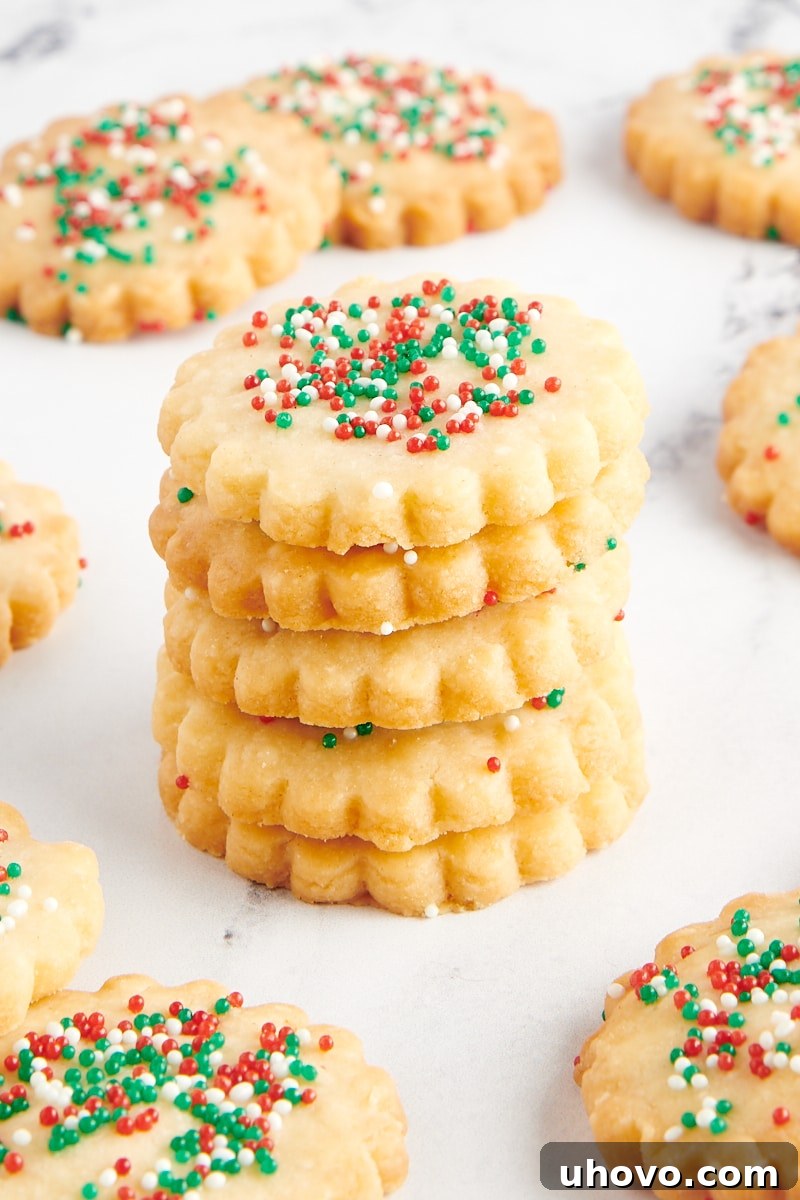
This wonderfully easy shortbread cookie recipe crafts soft, melt-in-your-mouth, and undeniably buttery cookies using an incredibly simple roster of just three essential ingredients! You’ll be delighted by the sheer versatility of this recipe, allowing you to create them as charming cutouts, convenient drop cookies, or elegant bars. Whether you’re a novice baker or a seasoned pro seeking a quick yet impressive treat, these classic shortbread cookies are destined to become a staple in your repertoire.
For those who simply can’t get enough of that rich, buttery shortbread goodness, we have more delightful variations to explore. Dive into the nutty goodness of butter pecan shortbread, savor the timeless charm of old-fashioned pecan sandies, or indulge your chocolate cravings with our decadent chocolate shortbread. Each offers a unique twist on this beloved classic.
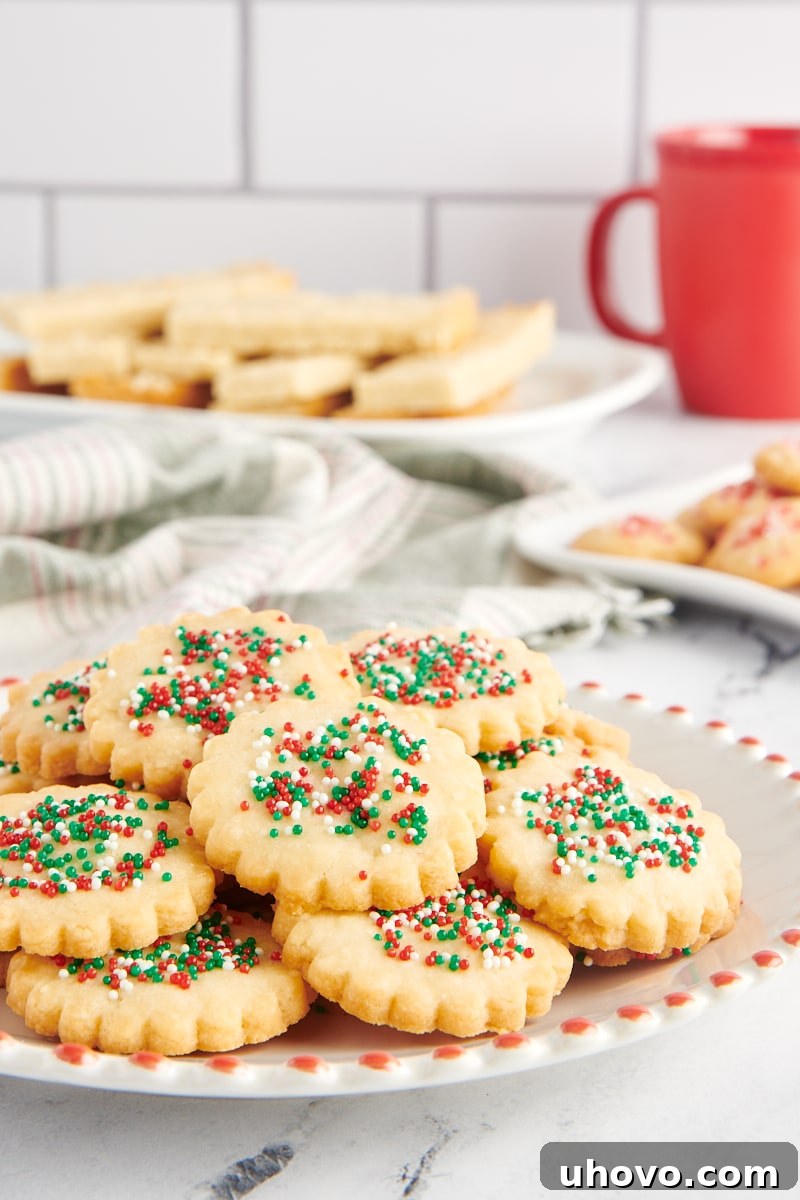
No matter the shape or occasion, these shortbread cookies are guaranteed to be a crowd-pleaser. They’re perfect for a relaxed baking session on a cozy weekend afternoon, bringing a touch of simple elegance to your table. Alternatively, whip up a generous batch to share with friends and family during festive holiday gatherings, spreading joy with every buttery bite. Their inherent simplicity and delightful flavor profile make them universally loved.
Why You’ll Adore This 3-Ingredient Shortbread Cookie Recipe
The world of baking is rich with diverse opinions, especially when it comes to timeless classics like shortbread cookies. While countless recipes exist, each claiming to be “the right way,” this particular 3-ingredient version stands out as my ultimate go-to for its unwavering reliability and straightforward approach. Here’s why this recipe will quickly become your favorite:
- Irresistibly Soft and Crumbly Texture: Prepare to be captivated by the delicate, melt-in-your-mouth quality of these cookies. Their signature tender, crumbly texture is incredibly addictive, making it nearly impossible to stop at just one. You’ll find yourself reaching for a second, then a third, savoring the buttery goodness with every bite.
- Effortlessly Easy to Master: This recipe is designed for maximum simplicity. With only three basic ingredients, the dough comes together quickly and easily, requiring minimal effort. You’ll be genuinely surprised at how such humble components can transform into such exquisitely tender and flavorful cookies. It’s the perfect recipe for busy bakers or anyone new to the kitchen.
- Remarkably Adaptable for Any Occasion: One of the greatest strengths of this recipe is its incredible versatility. Whether you prefer the charm of intricately shaped cutout cookies, the rustic appeal of dropped cookies, or the elegant simplicity of bar cookies, this dough can do it all. Beyond shaping, these cookies serve as a fantastic canvas for customization. Add your favorite sprinkles for a pop of color, a drizzle of chocolate for extra indulgence, or any other creative touch to make them uniquely yours.
- A Staple for Holiday Baking: Their simple ingredients and delightful flavor make them perfect for festive seasons. Easily decorated with seasonal sprinkles, they make wonderful Christmas cookies, gifts, or additions to any holiday platter.
- Budget-Friendly Baking: With only butter, confectioners’ sugar, and flour, this recipe uses common pantry staples, making it an economical choice for delicious homemade treats.
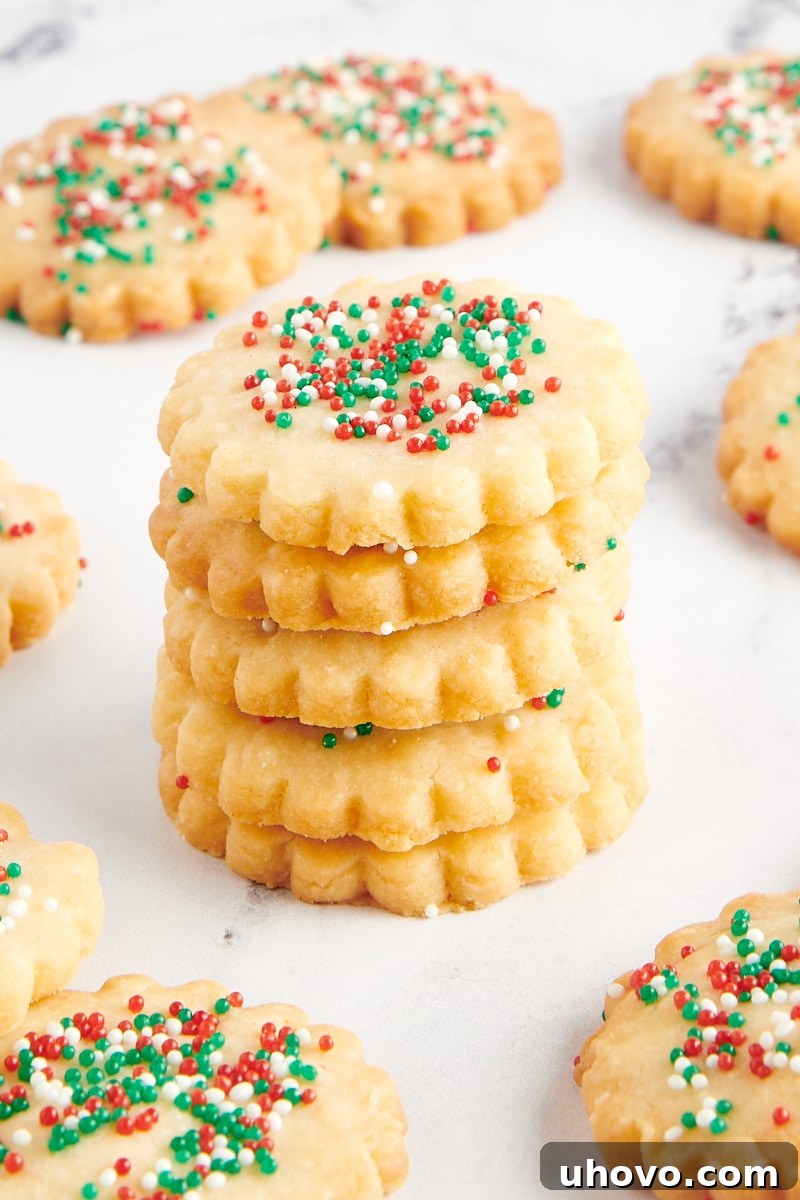
What Is Shortbread? The History and Definition of a Classic Cookie
Shortbread is a beloved classic, characterized by its tender, crumbly, and wonderfully sweet profile, rich with buttery flavor. Originating in Scotland, these simple yet exquisite cookies have been cherished for centuries, a testament to their enduring appeal and delicious simplicity. Historically, shortbread was considered a luxury item, often served at special occasions like weddings and Hogmanay (New Year’s Eve).
The traditional shortbread recipe often adheres to a specific ratio: one part sugar, two parts butter, and three to four parts flour. While this classic proportion serves as a fantastic guideline, many modern variations exist that gracefully deviate from it to achieve different textures or flavor profiles. A defining characteristic that sets shortbread apart from many other cookies is the absence of a leavening agent, such as baking powder or baking soda. This lack of leavening is precisely what contributes to its dense, yet wonderfully crumbly texture, preventing it from rising or expanding too much during baking.
The name “shortbread” itself is quite telling, referring directly to its unique texture. In the culinary world, “short” describes a food that is crumbly and breaks easily, a result of a high fat content that inhibits the formation of long gluten strands, which would otherwise make dough stretchy (like “long” bread dough). This high butter content gives shortbread its distinctive melt-in-your-mouth quality and rich, luxurious feel, making every bite a truly indulgent experience.
Essential 3-Ingredient Shortbread: What You’ll Need
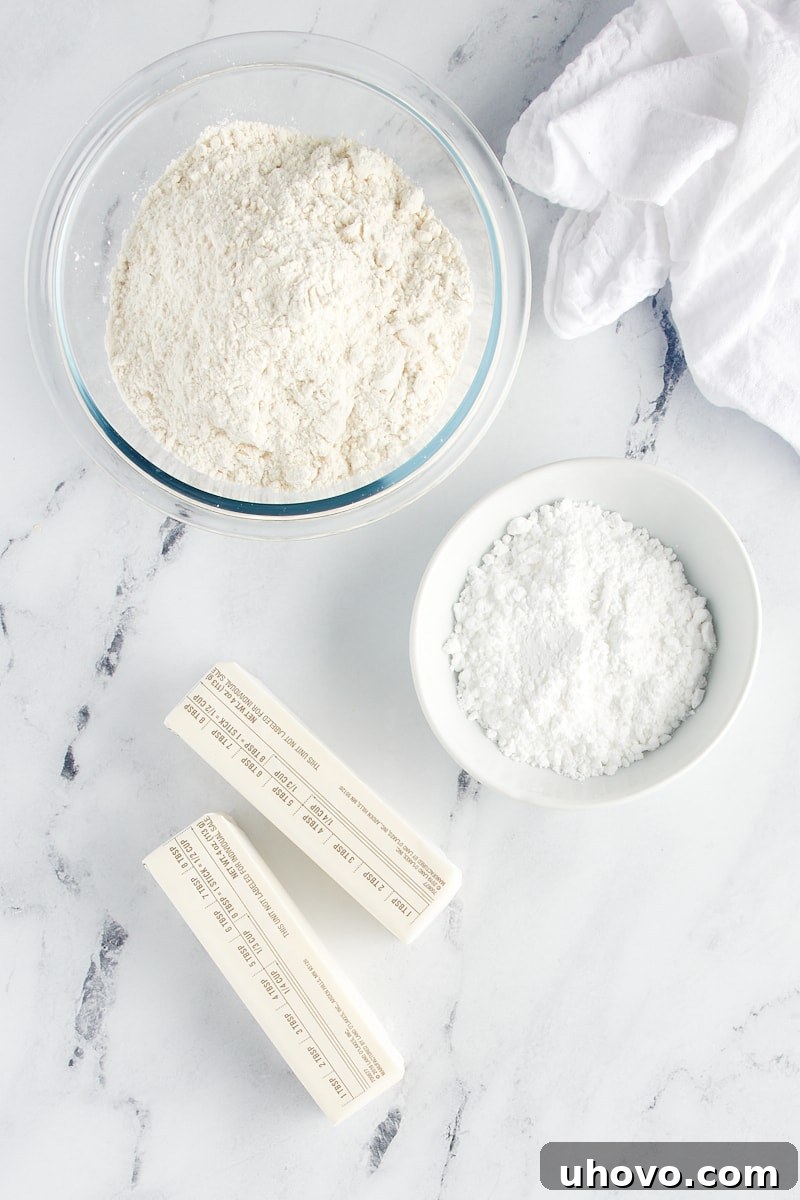
As the name clearly suggests, this recipe requires an incredibly short ingredient list. High-quality ingredients are paramount when you’re working with so few components, as each one truly shines through in the final product. For precise quantities and detailed instructions, please refer to the comprehensive recipe card located at the bottom of this post. Here are a few essential notes about the key ingredients you’ll need to create these perfect shortbread cookies:
- Salted Butter: For the best results, ensure your butter is properly softened. Let it sit on your kitchen counter until it’s pliable enough to leave a slight indentation when gently pressed with your thumb, yet still cool to the touch. This optimal temperature allows it to cream beautifully with the sugar, creating an airy base for your cookies. For more detailed guidance, consider reading up on how to properly soften butter.
- Confectioners’ Sugar (Powdered Sugar): This fine sugar is crucial for achieving the shortbread’s characteristic tender texture and helps it melt in your mouth. If your confectioners’ sugar appears lumpy, a quick sift before adding it to the butter mixture will ensure a perfectly smooth and consistent dough, preventing any gritty pockets in your finished cookies.
- All-Purpose Flour: Accuracy in measuring flour is key for shortbread. For the most consistently perfect results, I highly recommend measuring your flour by weight using a kitchen scale. If you don’t have a scale, use the widely recommended “spoon and sweep” method: lightly spoon the flour into your measuring cup until it overflows, then level it off with a straight edge without packing it down. This prevents over-measuring, which can lead to dry, tough cookies.
Why We Use Salted Butter for These Shortbread Cookies
Regular visitors to Bake or Break know that I almost always advocate for baking with unsalted butter to have precise control over the salt content in a recipe. However, these shortbread cookies represent one of my rare and deliberate exceptions to that rule. With such a minimal ingredient list, the nuances of each component become profoundly important. I find that using salted butter in this particular recipe significantly enhances the overall flavor profile, creating a more balanced and deeply satisfying buttery taste than adding salt separately to unsalted butter. The subtle saltiness perfectly complements the sweetness, preventing the cookies from tasting one-dimensional.
That being said, if you find yourself with only unsalted butter in your refrigerator, there’s no need to fret! You can absolutely still make these delicious shortbread cookies. Simply substitute the salted butter with unsalted butter and incorporate about 1/2 teaspoon of fine salt into your dry ingredients. The result will still be wonderfully delicious, maintaining the essence of this simple yet profound recipe.
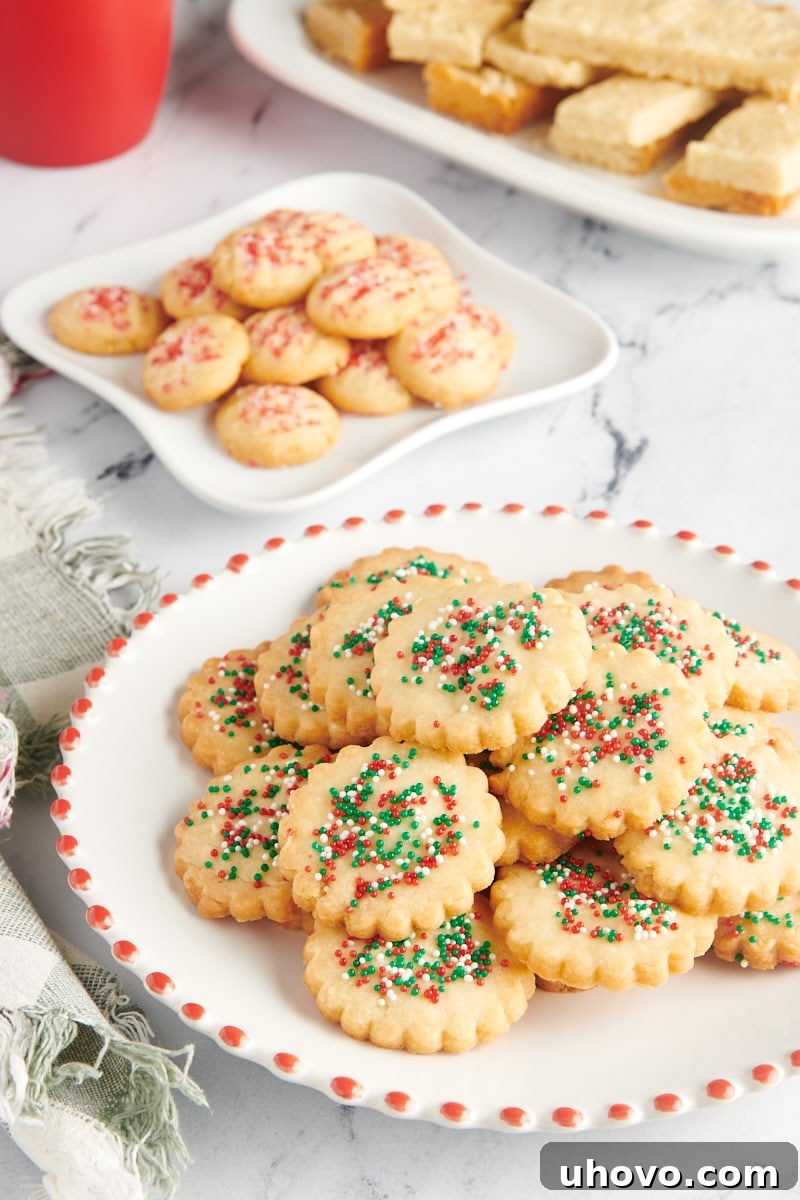
Step-by-Step Guide: Crafting Your Perfect 3-Ingredient Shortbread Cookies
You’ll be amazed at just how straightforward it is to whip up a batch of these exquisite shortbread cookies! This detailed guide focuses on the popular cutout cookie method, allowing for beautiful, consistent shapes. If you’re interested in alternative presentations, don’t worry – instructions for making them as drop cookies or elegant bars can be found in the “Recipe Variations” section further down this page.
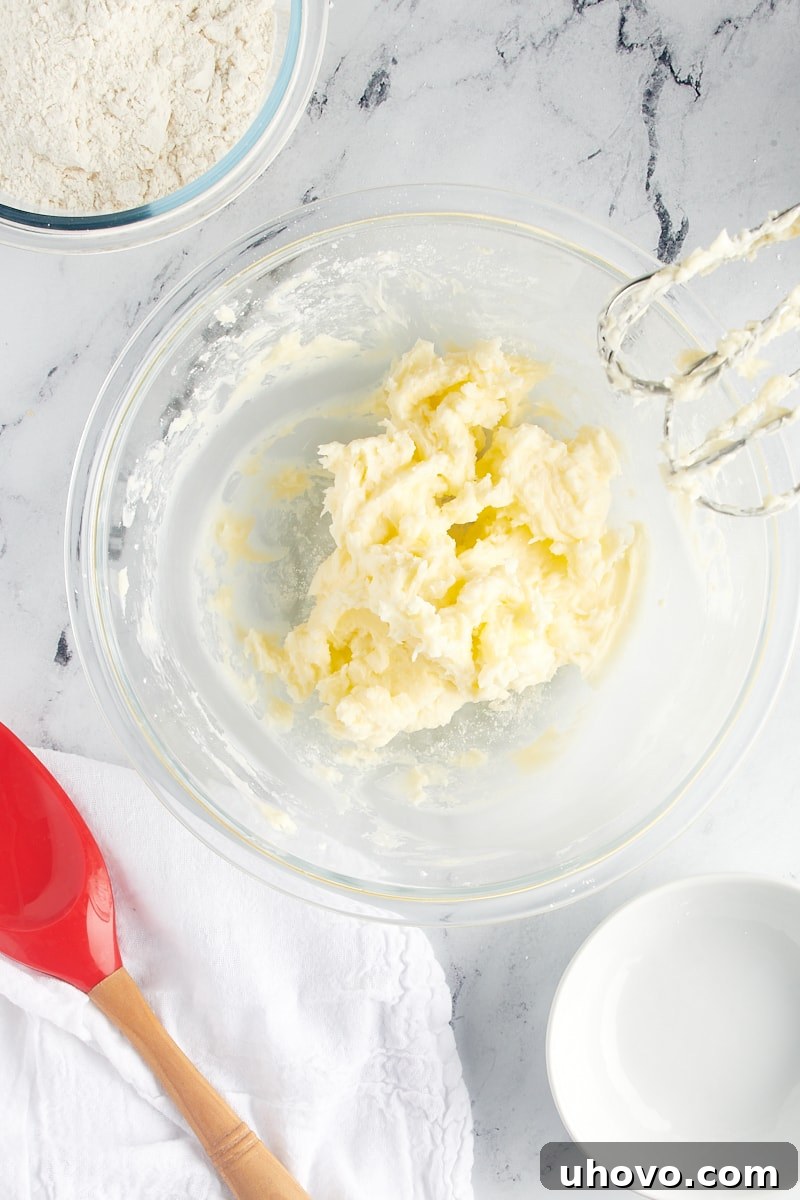
- Cream the Butter and Sugar: Begin by placing your softened salted butter and confectioners’ sugar into a large mixing bowl. Using an electric mixer set to medium speed, beat these two ingredients together until the mixture transforms. It should become noticeably lightened in color and wonderfully fluffy, indicating that air has been incorporated. This step is crucial for achieving the shortbread’s signature tender texture.
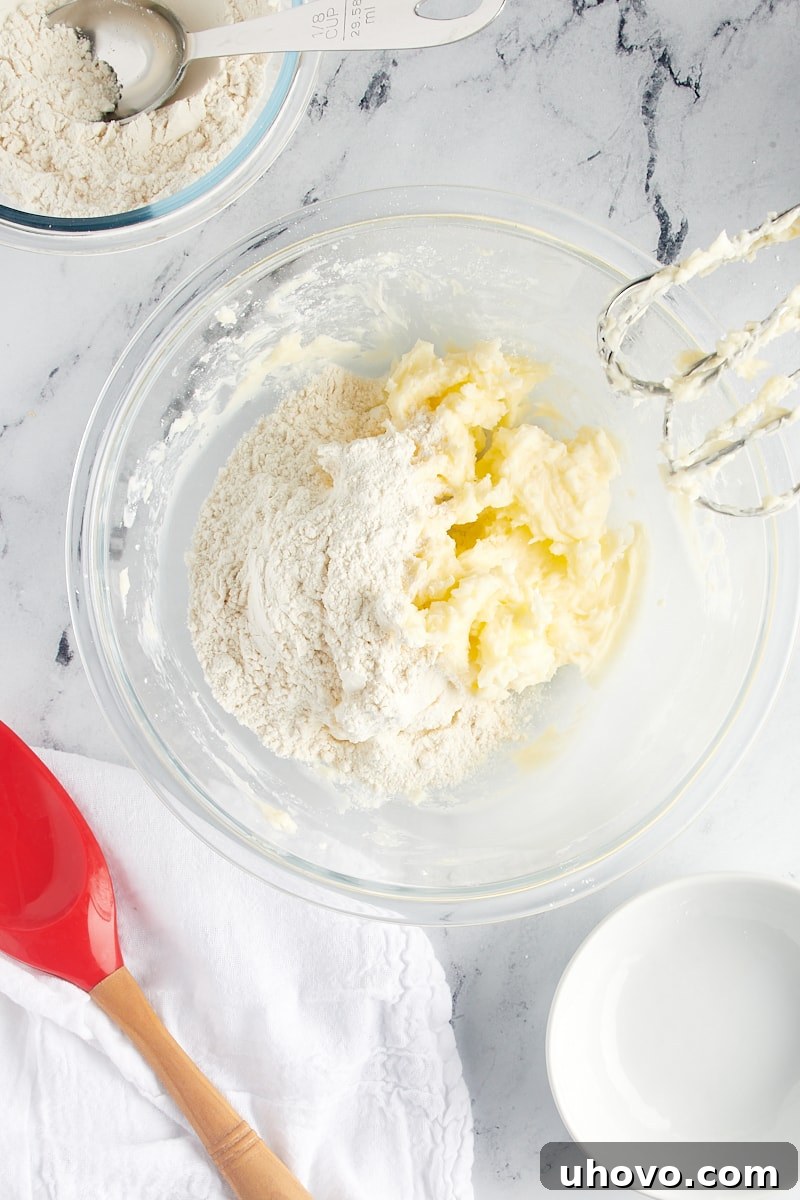
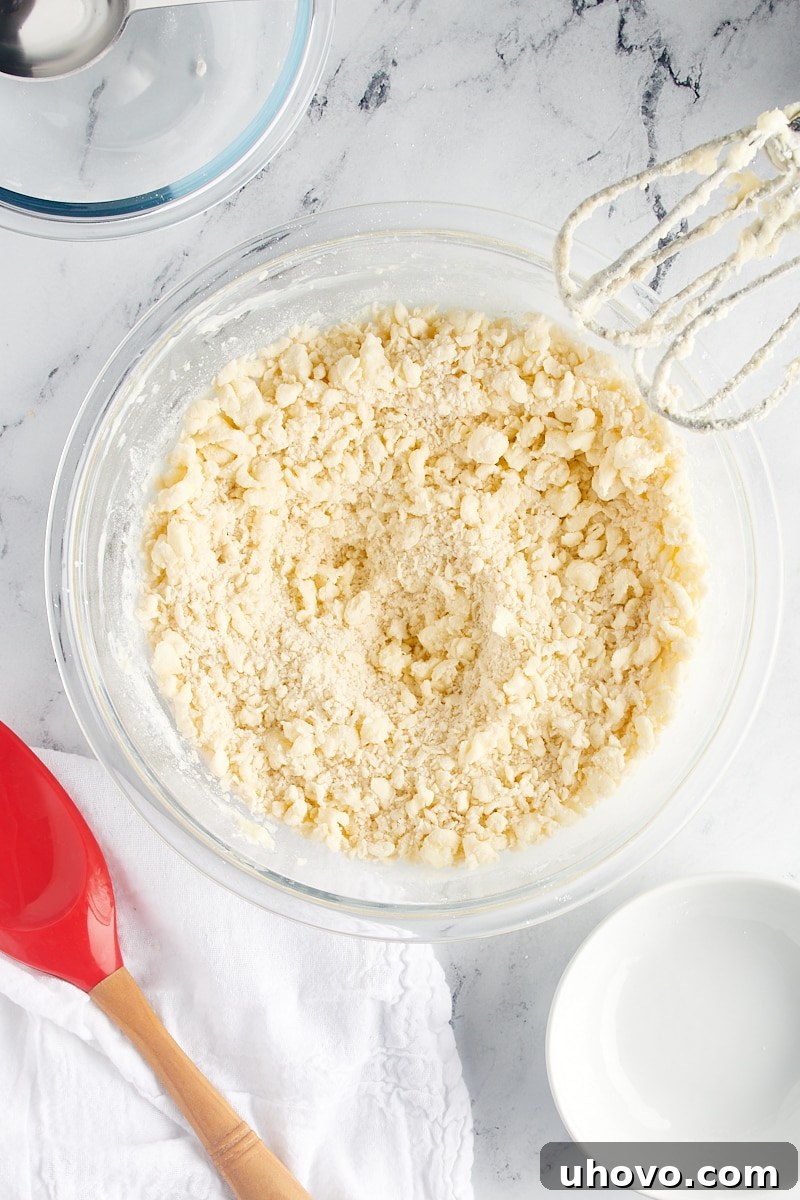
- Gradually Incorporate the Flour: Reduce your mixer speed to low. Begin to gradually add the all-purpose flour to the butter and sugar mixture. Mix just until the flour is barely combined and no dry streaks remain. It’s crucial not to over-mix at this stage, as overworking the dough can develop gluten, leading to tougher cookies rather than the desired “short” and crumbly texture. At this point, the mixture may appear quite loose and not entirely cohesive – this is perfectly normal and expected for shortbread dough.
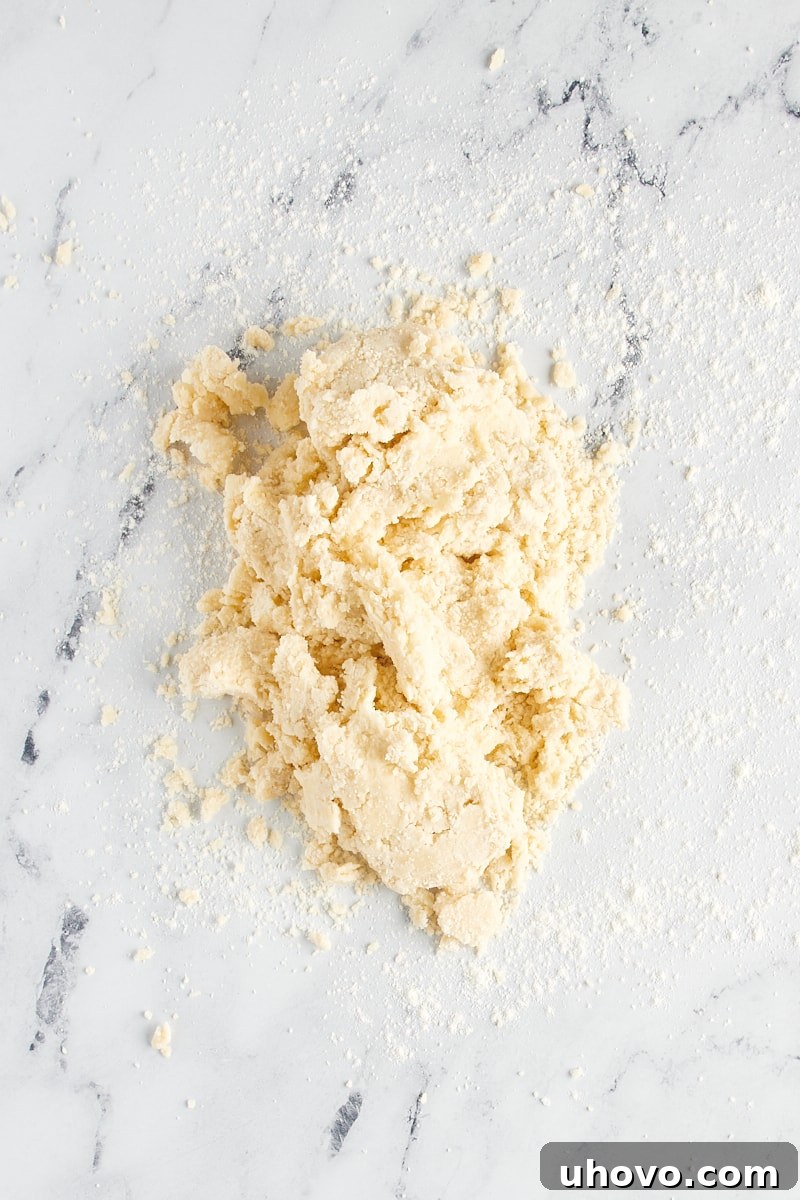
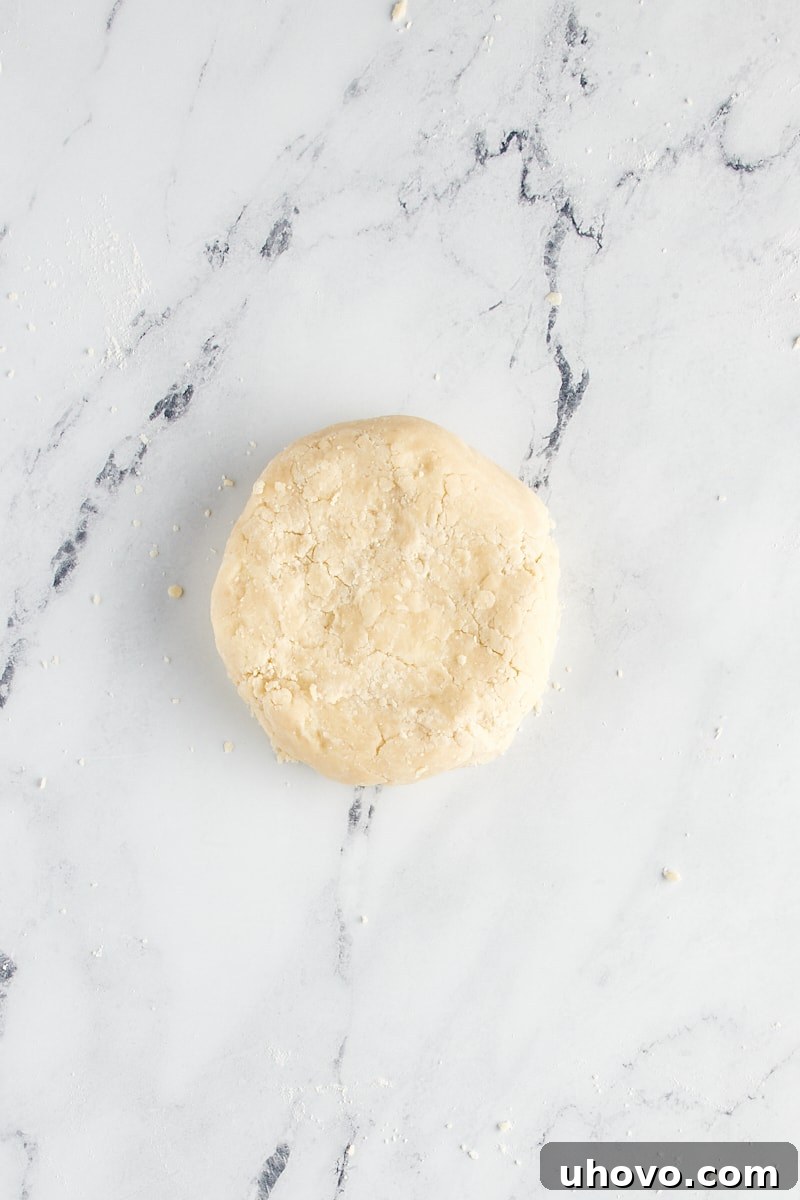
- Bring the Dough Together: Gently transfer the loose, mixed dough onto a lightly floured surface. Using your hands, gather the dough fragments and work them together, pressing firmly until they form a cohesive, smooth disc. The warmth from your hands will help the butter bind the flour, creating a workable dough.
- Chill the Dough for Optimal Texture: Once your dough disc is formed, wrap it tightly in plastic wrap. Place the wrapped dough in the refrigerator and allow it to chill for at least one hour. This chilling period is crucial: it firms up the butter, prevents the cookies from spreading excessively during baking, and helps develop that characteristic “short” and crumbly texture that defines perfect shortbread.
- Prepare Your Baking Station: While the dough chills, preheat your oven to 350°F (175°C). Line your baking sheets with parchment paper or silicone baking mats. This non-stick surface ensures easy removal of your delicate cookies and promotes even baking.
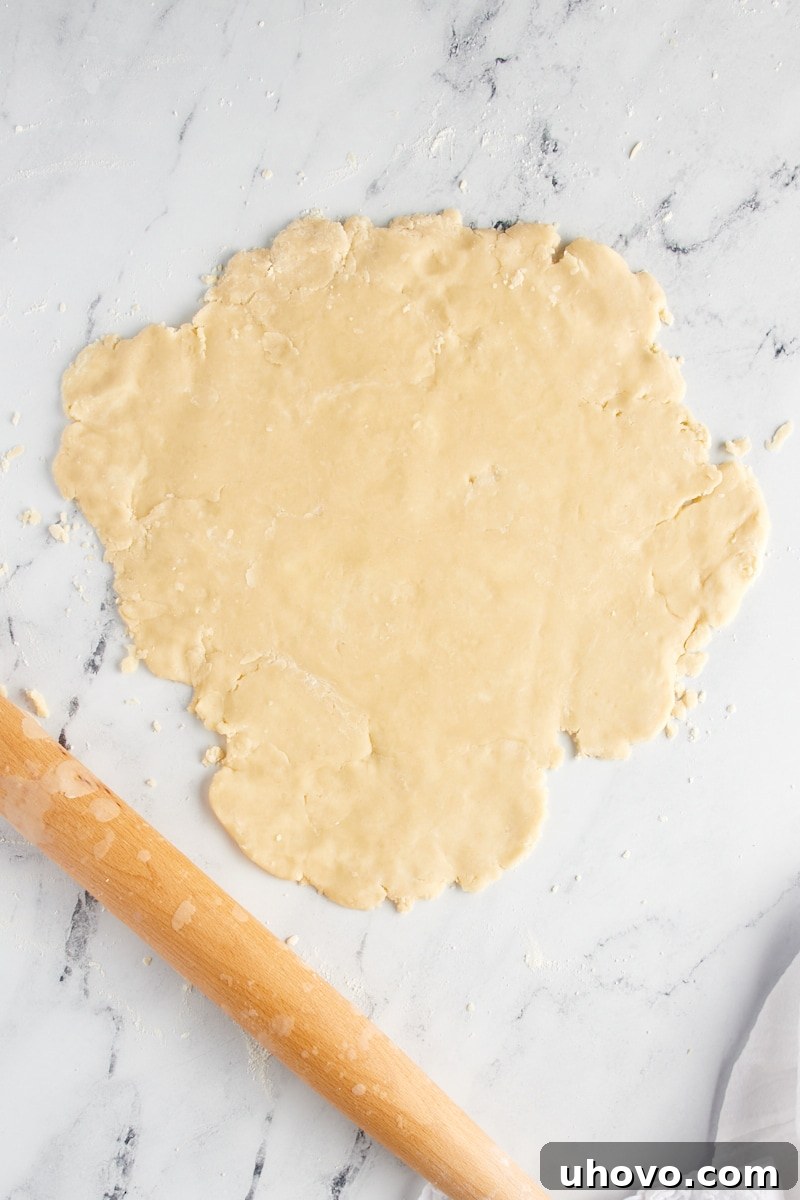
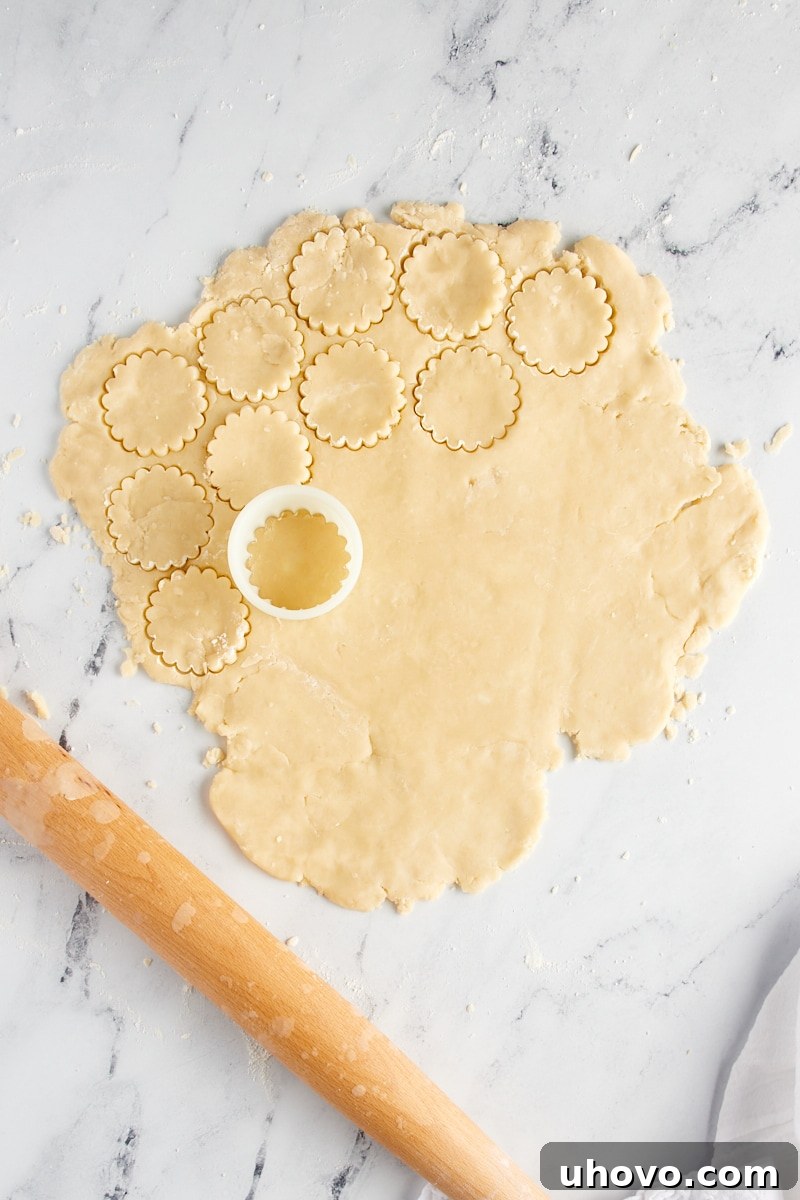
- Roll and Cut Your Cookies: Once chilled, unwrap the dough and place it onto a lightly floured surface. Use a rolling pin to carefully roll the dough to a uniform thickness of approximately 1/4-inch (6mm). Next, take a 2-inch (5cm) cookie cutter of your preferred shape and cut out your cookies. Gather any dough scraps, gently press them back together, and re-roll once to cut out any remaining cookies. Avoid re-rolling too many times, as this can toughen the dough. Arrange the cut-out cookies on your prepared baking sheets, ensuring about 2 inches of space between each one to allow for even airflow. If you plan to add sprinkles, now is the perfect time to gently press them onto the tops of the unbaked cookies. For extra crispness and to minimize spreading, you can also chill the cut-out cookies on the baking sheet for 10-15 minutes before baking.
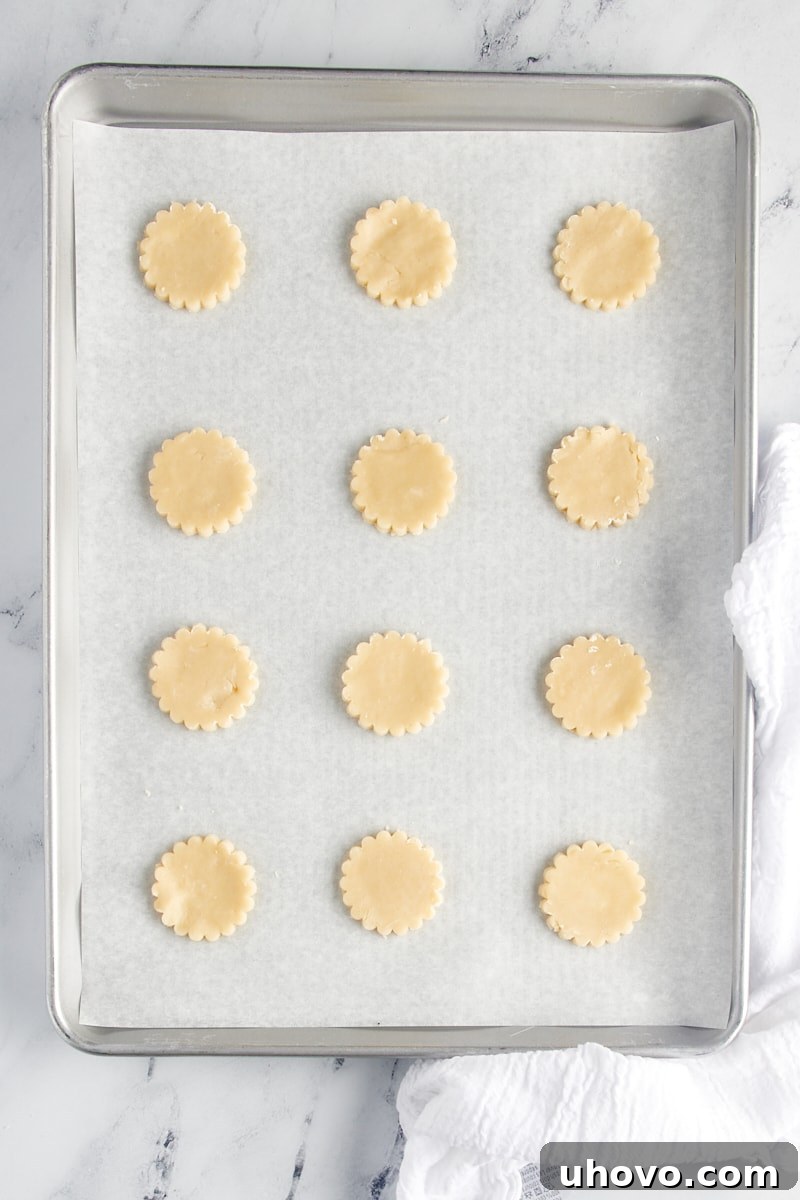
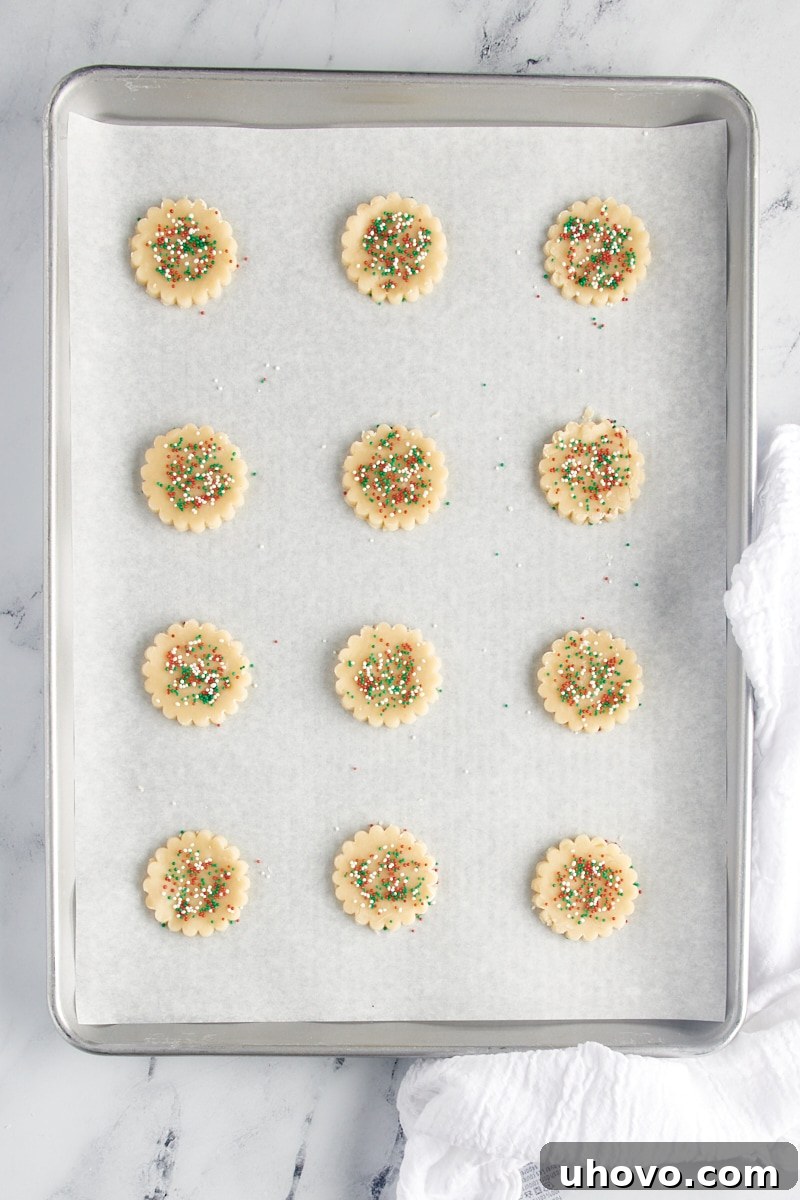
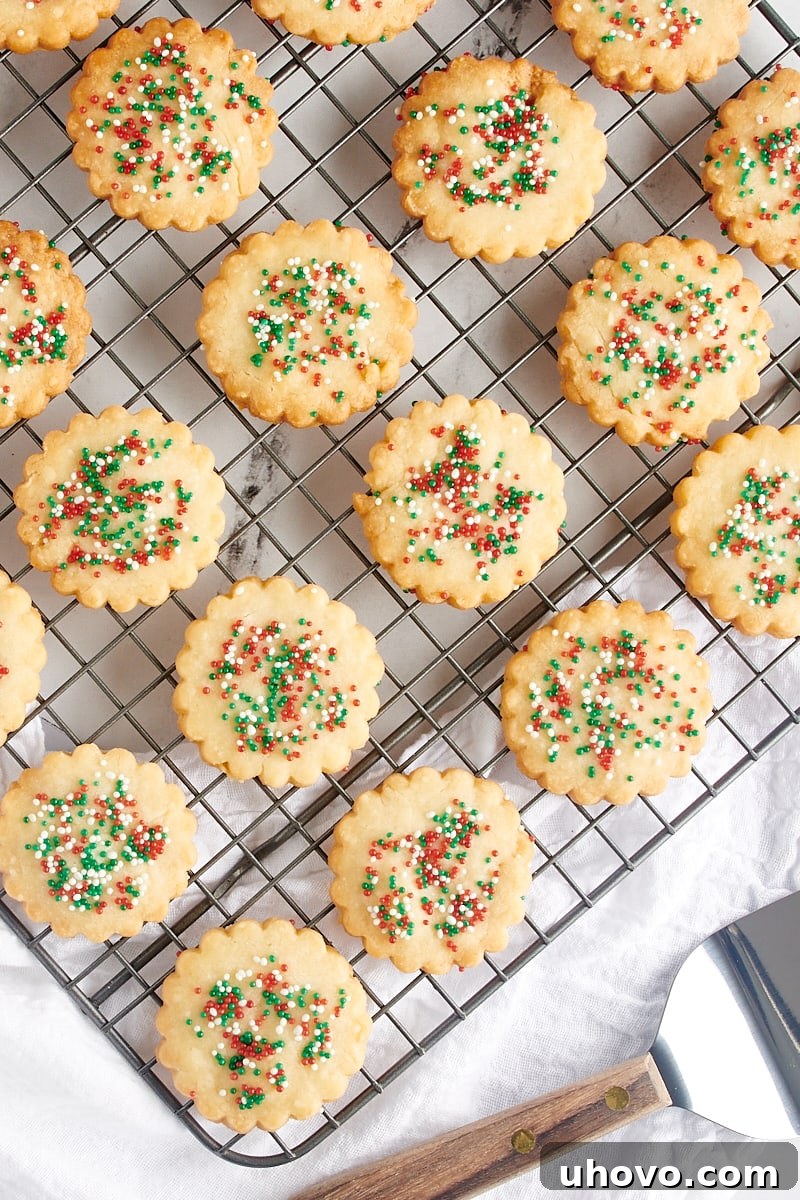
- Bake to Golden Perfection: Place one pan of cookies into your preheated oven at a time. Bake for approximately 15 to 18 minutes. Shortbread cookies are notoriously delicate, so keep a close eye on them. They are perfectly baked when their edges begin to turn a beautiful, light golden-brown color. Promptly remove them from the oven once this stage is reached. To ensure consistency, keep any unbaked dough refrigerated between baking batches, especially if your kitchen is warm. This prevents the butter from softening too much, which could lead to excessive spreading.
- Cool Completely: Carefully transfer the baking pan containing the freshly baked cookies to a wire rack. Allow the cookies to cool on the pan for about 5 minutes. This brief resting period helps them firm up, preventing breakage when you move them. After 5 minutes, gently remove the cookies from the pan and place them directly onto the wire rack to cool down completely. Cooling on a rack ensures proper air circulation, preventing soggy bottoms and maintaining their crisp, crumbly texture.
Pro Tips for Shortbread Perfection: Achieving Flawless Results
As you’ve seen, shortbread cookie recipes can hardly get any easier than this simple 3-ingredient version! However, even with minimal ingredients, a few key techniques can elevate your baking from good to absolutely perfect. Here are some invaluable tips to ensure your shortbread cookies turn out beautifully every single time:
- Measure Ingredients with Precision: With only three ingredients at play, the accuracy of your measurements is paramount. Any slight deviation can significantly impact the dough’s consistency and the final cookie’s texture. If you own a digital kitchen scale, this is the ideal time to use it for butter and flour, ensuring exact amounts. For confectioners’ sugar, make sure it’s lightly spooned and leveled, especially if it’s prone to clumping.
- Understanding Dough Consistency: The most common question I receive about shortbread pertains to the dough’s texture. After initial mixing, the dough will appear quite loose and crumbly, almost like wet sand. Don’t be alarmed! This is entirely normal. It absolutely will come together once you transfer it to a lightly floured surface and work it with your hands, pressing and kneading it gently until it forms a cohesive mass. If, after several minutes of working it, the dough still seems stubbornly dry and refuses to come together, it’s highly probable that there was an inaccuracy in your measurements (most often, too much flour). As a last resort, you can sprinkle a very small amount of water (half a teaspoon at a time) over the dough and continue working it, but exercise extreme caution. Adding too much liquid can adversely affect the delicate texture of the shortbread.
- Embrace the Chill Time: Do not skip or shorten the chilling time for the dough, both before rolling and potentially after cutting. This crucial step serves multiple purposes. First, it allows the butter to firm up, which helps the cookies maintain their shape and minimizes excessive spreading during baking, resulting in crisp edges and perfectly defined cutouts. Second, chilling helps to relax the gluten that may have developed during mixing, contributing to the characteristic tender, crumbly texture of traditional shortbread. If your kitchen is particularly warm, it’s an excellent idea to chill the shaped, cut-out cookies on the baking sheet for an additional 10-15 minutes before they go into the oven.
- Don’t Overbake: Shortbread is a delicate cookie. It should be lightly golden, particularly around the edges, but not deeply browned. Overbaking will result in a dry, hard cookie rather than the tender, crumbly shortbread you’re aiming for. Keep a close watch on them, especially during the last few minutes of baking.
- Bake One Tray at a Time: For the most consistent results, bake only one tray of cookies at a time in the center rack of your oven. This ensures even heat distribution and proper browning, preventing some cookies from being underbaked while others are overbaked.
Creative Variations: Beyond Cutouts for Your Shortbread Cookies
While the classic cutout version of these shortbread cookies holds a special place in my heart, the beauty of this versatile dough lies in its ability to adapt to different shapes and presentations. Whether you prefer a more traditional look, or simply want to skip the rolling and cutting steps for a quicker bake, these variations offer delightful alternatives. Here are the details for transforming your shortbread:
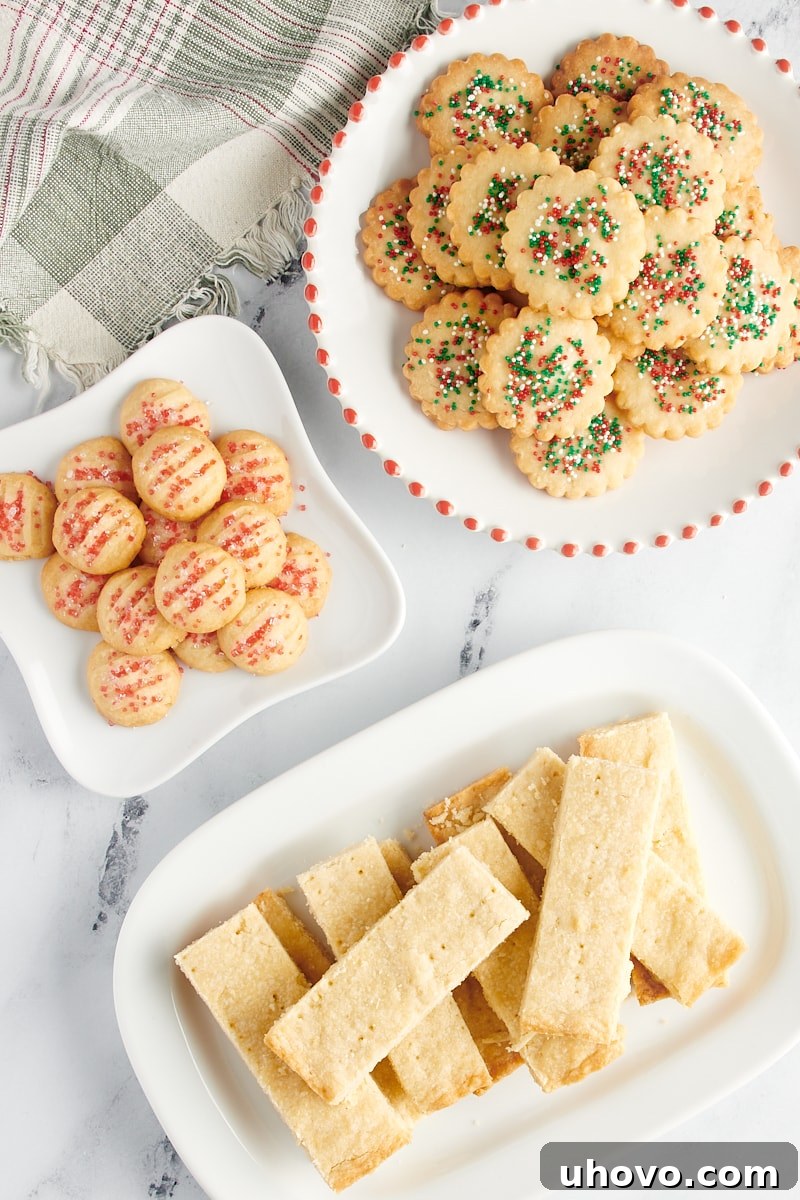
- Elegant Shortbread Bar Cookies: For a timeless and sophisticated presentation, bake your shortbread as thick, sturdy bars in a square pan. After mixing the dough, transfer it to a lightly greased 9-inch square baking pan that you’ve lined with parchment paper. Ensure the parchment paper overhangs by a couple of inches on two opposite sides; this ingenious trick creates “handles” that make it incredibly easy to lift the entire slab of shortbread out of the pan once baked. Press the dough firmly and evenly into the pan, ensuring a consistent thickness from edge to edge. To achieve the classic shortbread aesthetic and aid in even baking, use a fork, toothpick, or another small tool to gently poke small holes across the entire surface of the dough. Chill the pressed dough in the pan for 15 minutes. Bake at a slightly lower temperature of 325°F (160°C) for 30 to 35 minutes, or until the edges are beautifully golden brown. Shortbread bars are much easier to cut when they are still warm, so within a few minutes of removing the pan from the oven, carefully use the parchment paper overhangs to lift the warm shortbread slab onto a cutting board. Immediately cut into rectangles, squares, or even decorative fingers while still warm for clean, precise cuts.
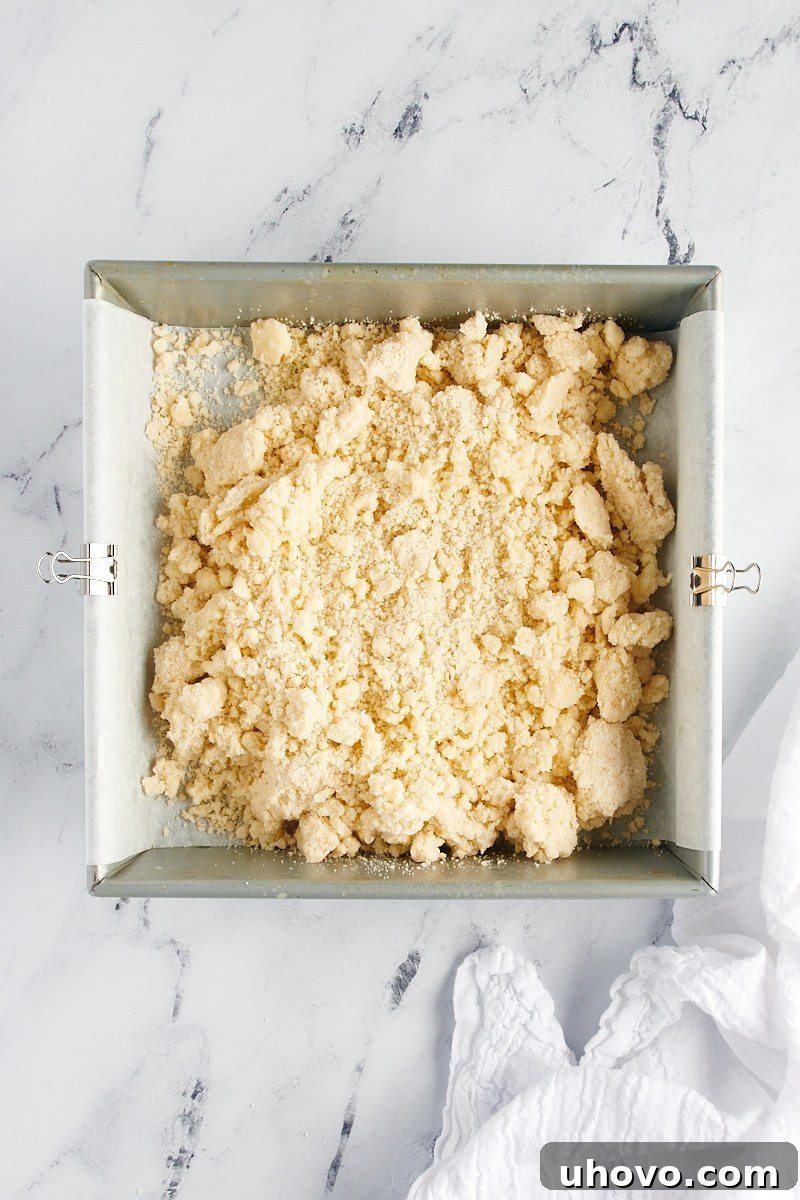
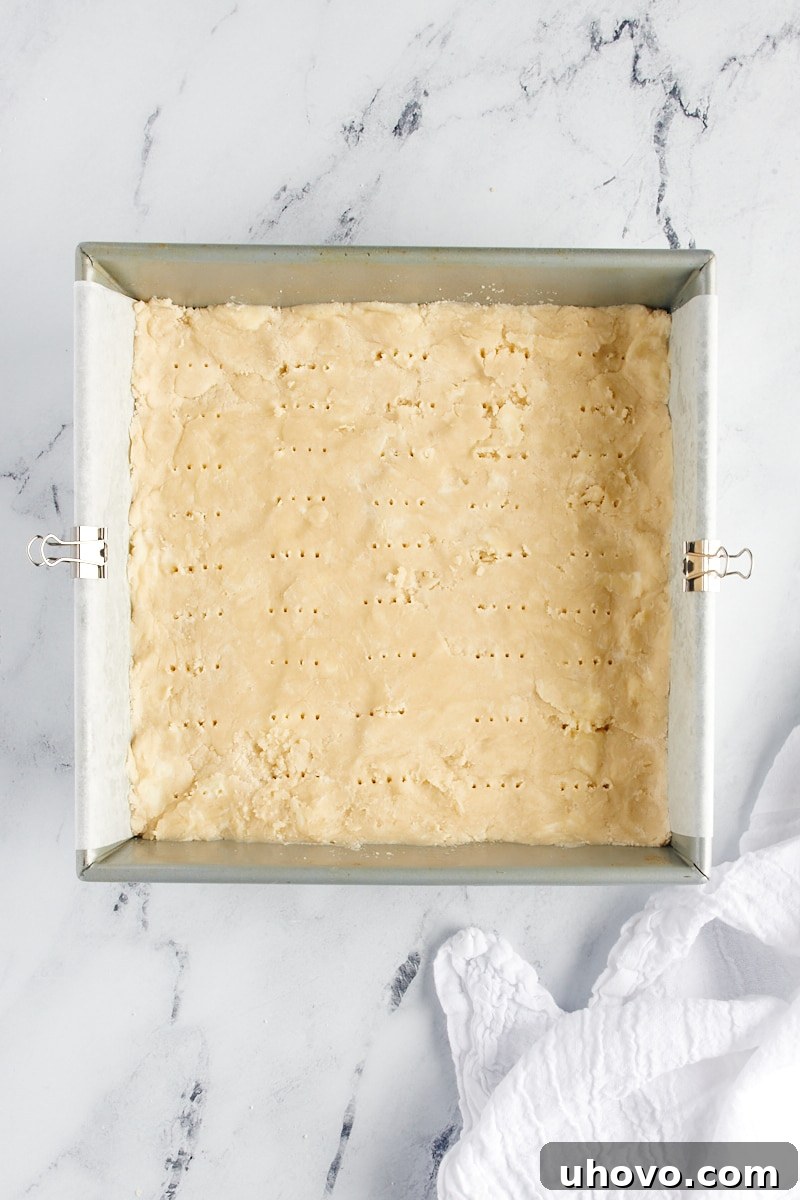
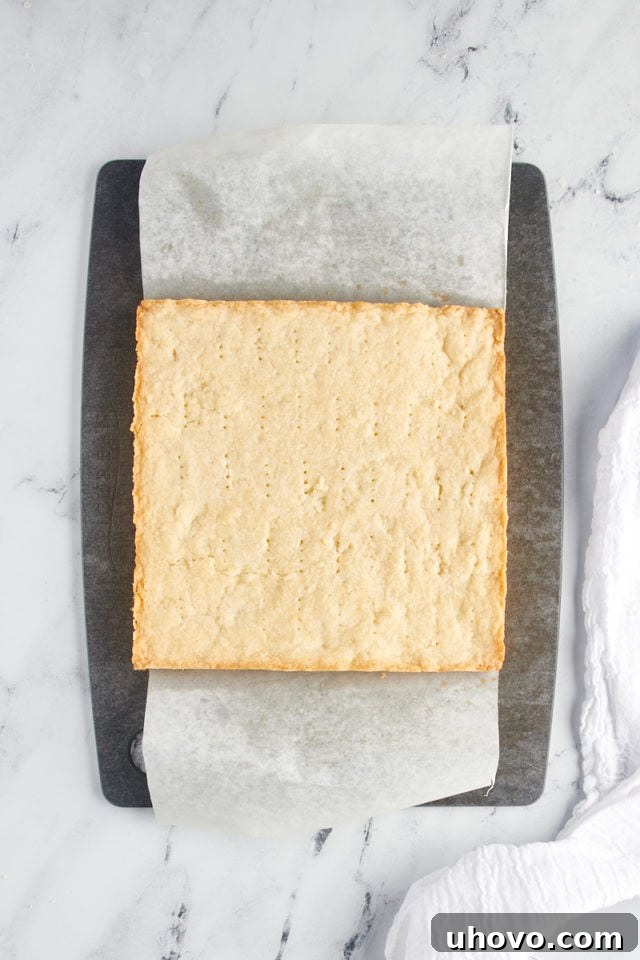
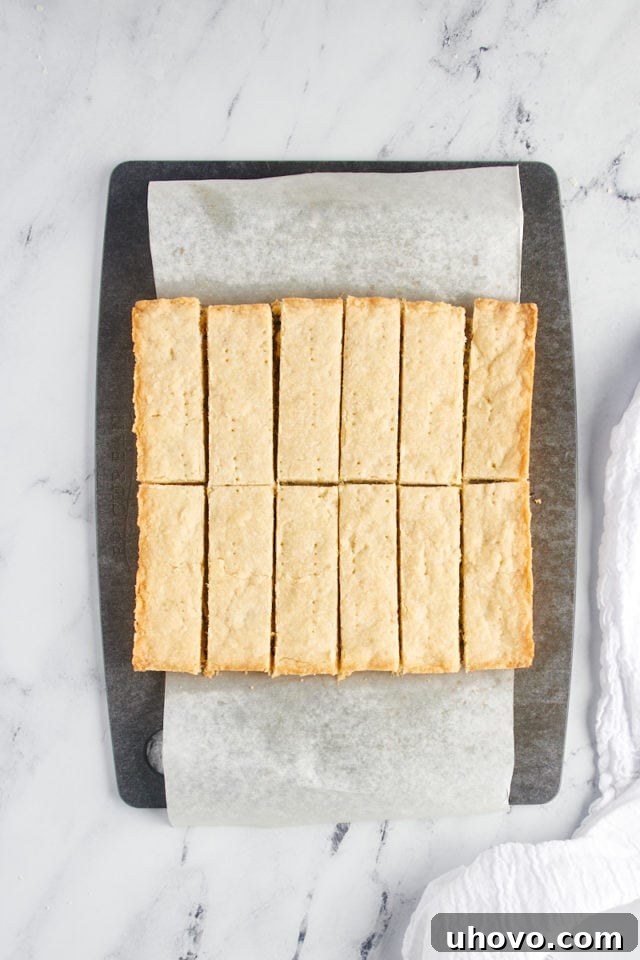
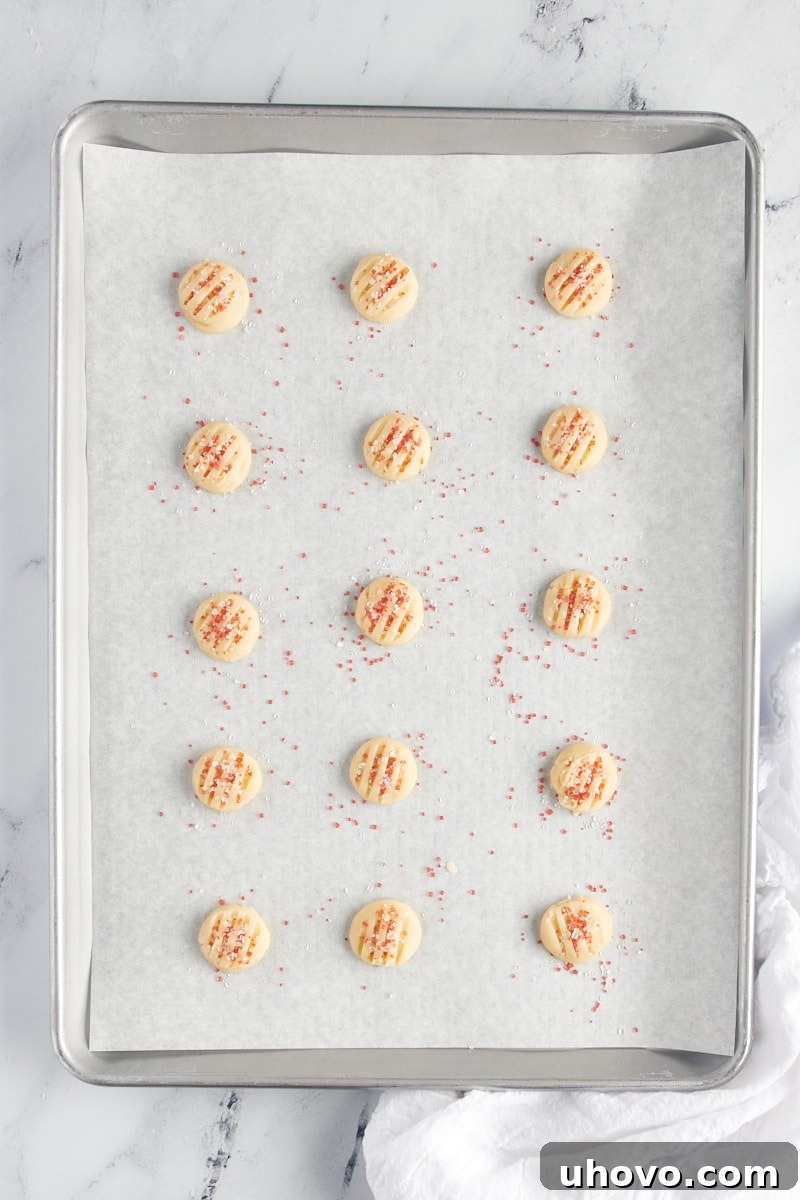
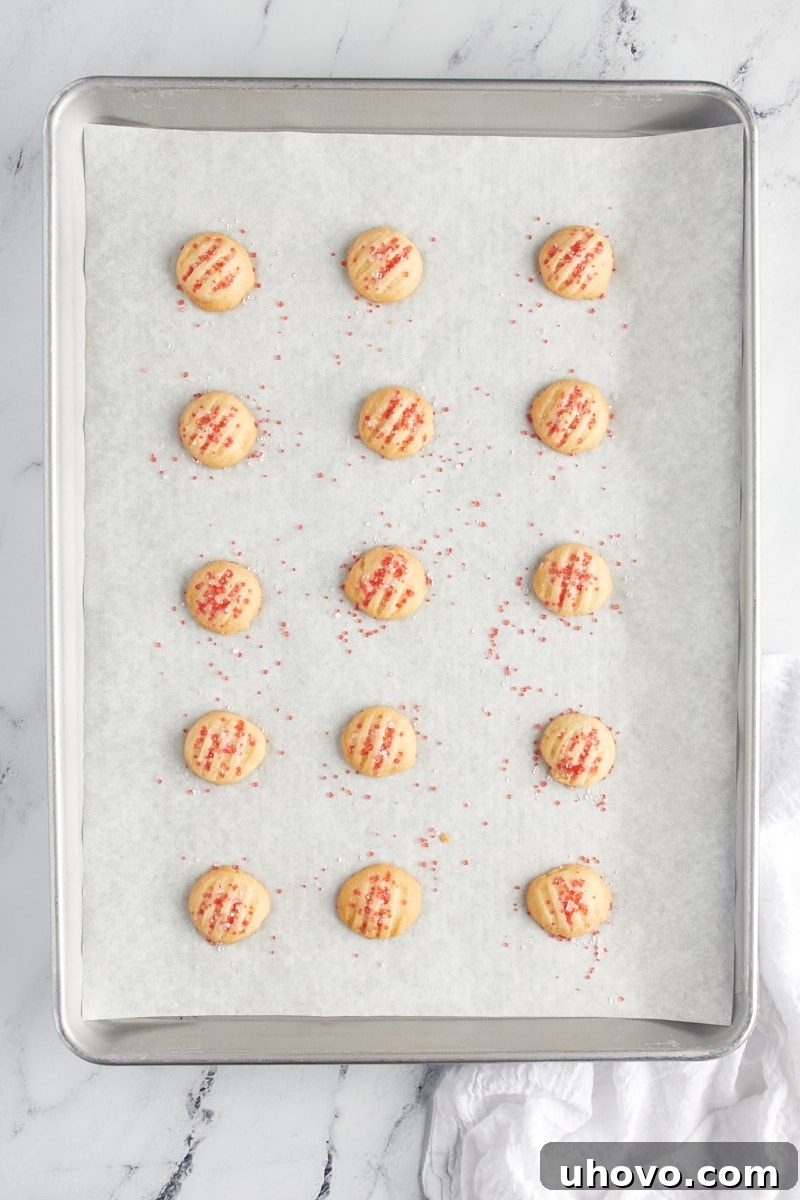
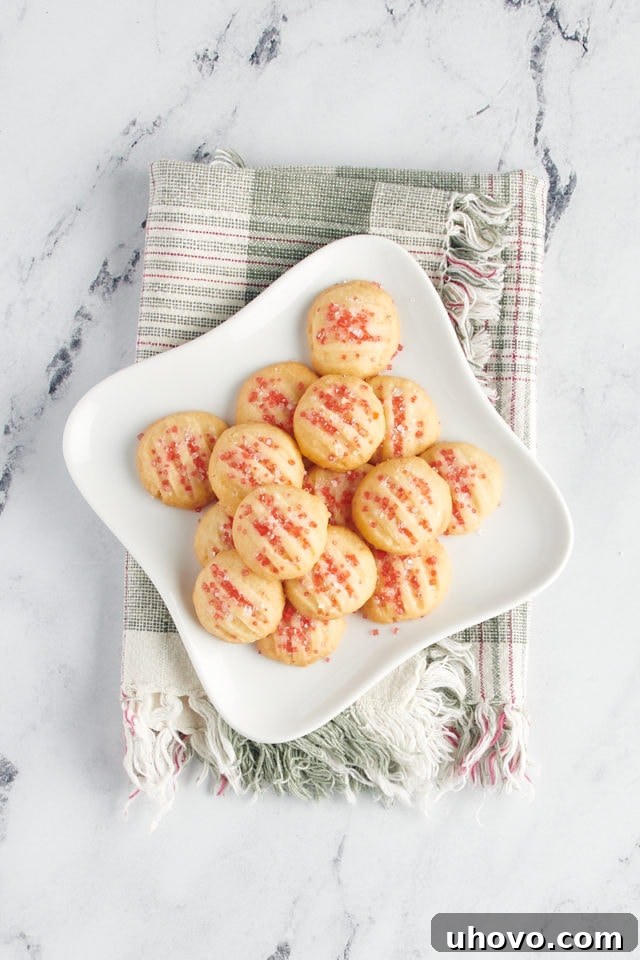
- Charming Drop Cookies: If you’re short on time or prefer a more rustic look, transforming this recipe into drop cookies is wonderfully simple. Just like with the cutout method, after you’ve mixed the dough, gather it together on a lightly floured surface and gently press it to form a cohesive ball or disc. Wrap and chill this dough for at least 1 hour. Once thoroughly chilled, use a small cookie scoop (I often use a #100 or #110 scoop, which yields about a half-tablespoon of dough) to portion out uniform cookies. Place these scooped portions onto a lined baking sheet. For a finished look, you can slightly flatten the tops of each cookie using the back of a fork to create a simple crisscross design, or simply leave them as is. If desired, add sprinkles at this stage. Crucially, chill the shaped drop cookies on the baking sheet for another 15 minutes before baking. This helps prevent spreading and ensures a tender crumb. Bake at 325°F (160°C) for 15 to 18 minutes, or until they are lightly browned around the edges.
Elevate Your Shortbread: Delightful Topping and Flavor Ideas
While these simple 3-ingredient shortbread cookies are incredibly delicious and satisfying on their own, their neutral, buttery base makes them a fantastic canvas for creative embellishments. Here are some wonderful ideas to dress up your shortbread, adding extra flavor, texture, and visual appeal:
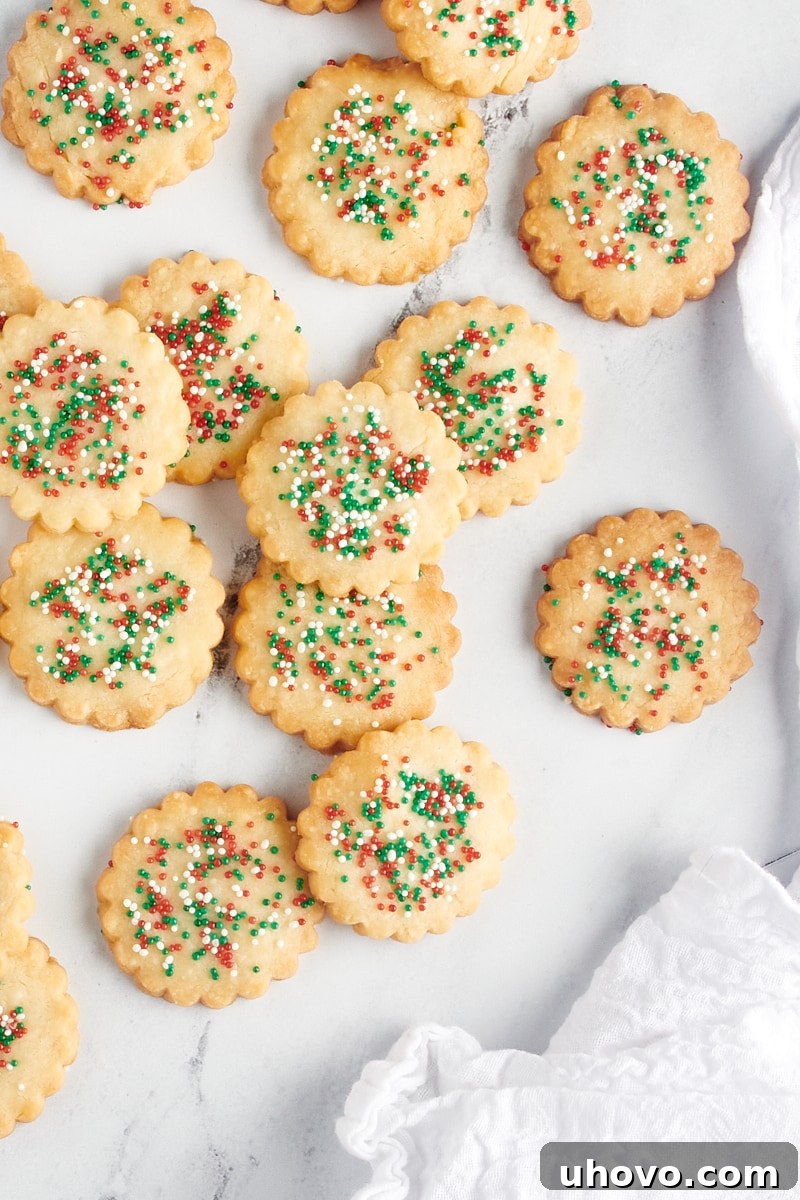
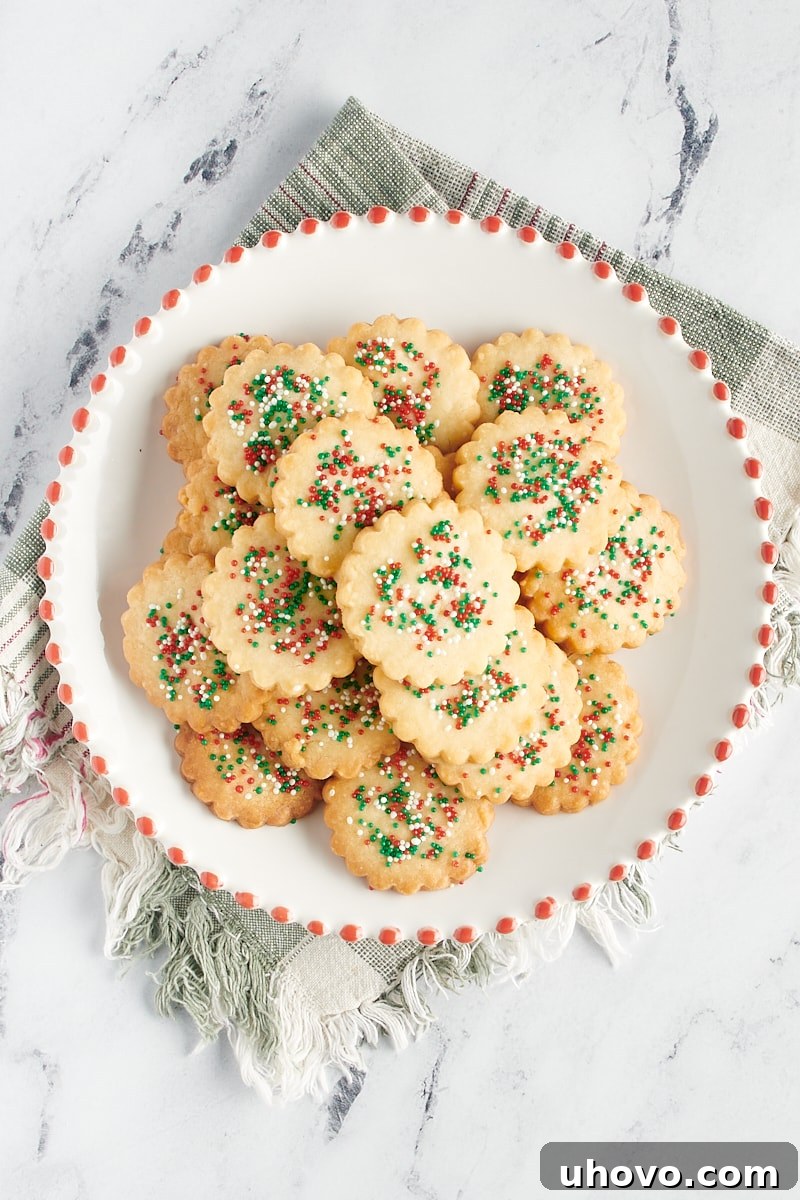
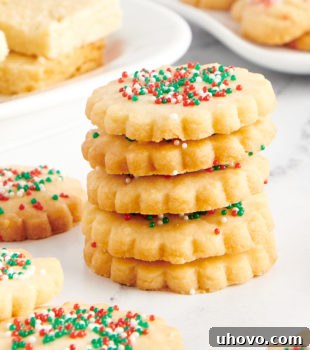
- Vibrant Sprinkles: My absolute favorite way to add a festive touch to these cookies is with a generous shower of sprinkles! They instantly transform plain shortbread into charming treats, perfect for any celebration. For beautiful Christmas cookies, choose a mix of red, green, and white sprinkles. Nonpareils work exceptionally well as they tend to hold their shape and color without melting or bleeding into the cookies during baking. Jimmies can also be used, but nonpareils offer a better texture contrast.
- Decadent Chocolate Dipped: For an extra layer of indulgence, melt some semisweet, milk, or even white chocolate. Once your shortbread cookies are fully baked and completely cooled, dip them halfway into the melted chocolate. For an even more luxurious treat, before the chocolate sets, sprinkle the chocolate-dipped portion with chopped nuts (like pecans or walnuts), toasted coconut flakes, or more sprinkles. Place the dipped cookies on waxed paper or a silicone mat and allow the chocolate to set completely at room temperature or in the refrigerator.
- Sparkling Coarse Sugar: A simple yet elegant topping is coarse sanding sugar. Its larger crystals catch the light beautifully and add a delightful textural crunch. Sprinkle a pinch or two of white sanding sugar over the unbaked cookies just before placing them in the oven. For a touch of festivity, experiment with colored sanding sugars to match any holiday or theme.
- Fruity Jam or Preserves: Transform your shortbread into delicate sandwich cookies! Once your cookies are baked and cooled, spread a small amount of your favorite jam or preserves (raspberry, apricot, or strawberry work wonderfully) onto the flat side of half the cookies. Then, gently top with another cookie to create a delicious, fruit-filled sandwich.
- Nutty Peanut Butter Perfection: For a comforting and familiar flavor, spread a thin layer of creamy or crunchy peanut butter over the tops of your baked and cooled shortbread cookies. Enhance this with a sprinkle of chopped peanuts, mini chocolate chips, or a drizzle of melted chocolate. Alternatively, create peanut butter sandwich cookies by filling two shortbread cookies with your desired amount of peanut butter.
- Citrus Zest Infusion: For a bright and zesty twist, finely grate the zest of half a lemon or orange into your dough along with the flour. The citrus oils will infuse the buttery shortbread with a refreshing aroma and flavor.
- A Hint of Spice: Add a pinch of ground cinnamon, cardamom, or nutmeg to your flour for a warm, subtly spiced shortbread, especially delightful during cooler months.
Storage and Freezing: Keeping Your Shortbread Fresh
Proper storage is key to enjoying your homemade shortbread cookies for as long as possible. Their robust nature makes them excellent candidates for making ahead or enjoying over several days.
How to Store Baked Shortbread Cookies
Once your shortbread cookies have completely cooled to room temperature, arrange them in an airtight container. If you need to stack them, place a sheet of waxed paper or parchment paper between each layer to prevent sticking and protect their delicate surfaces. Stored properly in an airtight container at room temperature, these buttery cookies will remain wonderfully fresh and flavorful for up to a full week. This excellent shelf life makes them ideal for gifting, preparing in advance for parties, or simply enjoying as a daily treat with your coffee or tea.
How to Freeze Shortbread Cookies and Dough
Freezing shortbread is a fantastic way to extend its enjoyment even further, whether you freeze the baked cookies or the unbaked dough.
Freezing Baked Shortbread Cookies:
To freeze baked shortbread, ensure the cookies are completely cool. Place them in an airtight, freezer-safe container. Again, if stacking, interleave layers with waxed paper or parchment paper to prevent them from freezing together. Properly stored, baked shortbread cookies can be kept in the freezer for up to 3 months without any loss of quality. When you’re ready to enjoy them, simply remove them from the freezer and let them thaw at room temperature for about an hour. They will taste just as fresh as the day they were baked.
Freezing Unbaked Shortbread Dough:
Freezing the dough is an excellent strategy for having freshly baked cookies on demand with minimal effort. I recommend chilling and shaping the dough into your desired cutouts, bars, or drop cookies first. Once shaped, arrange the unbaked cookies in a single layer on a rimmed baking sheet. Freeze them until they are completely solid, which usually takes about 2 to 3 hours. Once frozen solid, transfer the individual cookie dough pieces to an airtight, freezer-safe container or a heavy-duty freezer bag, placing waxed paper or parchment paper between layers to prevent sticking. The unbaked dough can be stored in the freezer for up to 2-3 months. When you’re ready to bake, simply arrange the frozen dough pieces on a prepared baking sheet (no need to thaw!) and follow the recipe’s baking directions, adding an extra minute or two to the baking time to account for the frozen state.
Frequently Asked Questions About Shortbread Cookies
Here are some common questions about making perfect shortbread cookies:
- Can I use unsalted butter? Yes, if you only have unsalted butter, use it and add ½ teaspoon of fine salt to the flour. The salted butter, however, often provides a slightly more complex and traditional flavor in this specific recipe.
- Why is my shortbread dough crumbly? Shortbread dough is naturally crumbly due to its high butter content and low liquid. It’s meant to be “short,” meaning it doesn’t have much gluten development. It will come together with gentle kneading by hand. If it’s excessively dry, check your flour measurement.
- How do I prevent my shortbread from spreading? Ensure your butter is softened but still cool, not melted. Crucially, chill the dough thoroughly before rolling and cutting, and if your kitchen is warm, chill the cut-out cookies again before baking. Baking on parchment paper also helps.
- What’s the best way to get uniform cookies? For cutout cookies, use a consistent thickness when rolling. For drop cookies, a cookie scoop ensures even sizing. For bars, pressing the dough evenly into the pan is key.
- Can I add flavorings to the dough? Absolutely! You can mix in a teaspoon of vanilla extract, almond extract, citrus zest, or even a pinch of ground spices like cinnamon or cardamom with the flour for added flavor.
- How do I know when shortbread is done baking? Shortbread is ready when the edges are lightly golden, and the center still looks pale but set. Avoid heavy browning, as this can lead to a tougher texture.
More Delightful Shortbread Recipes to Explore
If you’ve fallen in love with the simplicity and rich flavor of this 3-ingredient shortbread, you’re in for a treat! There’s a whole world of shortbread variations waiting to be discovered. Ready to expand your shortbread repertoire? Give these fantastic recipes a try:
- Cranberry Shortbread Cookies – A delightful balance of tart cranberries and sweet, buttery shortbread.
- Chocolate Peanut Butter Shortbread – The irresistible combination of chocolate and peanut butter in a crumbly shortbread form.
- Peach Shortbread Cookies – A seasonal favorite, featuring the sweet, delicate flavor of peaches.
- Brown Sugar Shortbread – A deeper, caramelized flavor thanks to the rich notes of brown sugar.
3-Ingredient Shortbread Cookies
30
cookies
10
minutes
18
minutes
1
hour
1
hour
28
minutes
Pin Recipe
Ingredients
-
1 cup
(226 g)
salted butter, softened -
½ cup
(55 g)
confectioners’ sugar -
2 cups
(240 g)
all-purpose flour -
sprinkles, optional
Recommended Products
-
French Rolling Pin
-
Fat Daddio’s 9-Piece Fluted Round Nylon Cutter Set
-
OXO Half Sheet Pan 13 x 18 Inch
-
Half-Tablespoon (#110) Stainless Steel Scoop
-
OXO 9 x 9 Inch Square Pan
Instructions
-
Using an electric mixer on medium speed, beat the softened salted butter and confectioners’ sugar in a large bowl until light, fluffy, and noticeably lighter in color. Scrape down the sides of the bowl as needed.
-
Reduce the mixer speed to low. Gradually add the all-purpose flour, mixing just until combined and no dry streaks of flour remain. Be careful not to over-mix. The mixture will be loose and crumbly but should hold together when pinched.
-
Transfer the crumbly dough onto a lightly floured surface. Use your hands to gather the dough together, pressing and kneading it gently until it forms a cohesive, smooth disc.
-
Wrap the dough disc tightly in plastic wrap and refrigerate for at least 1 hour. This chilling step is essential for texture and to prevent spreading during baking.
-
Preheat your oven to 350°F (175°C). Line two large baking sheets with parchment paper or silicone baking mats.
-
Remove the chilled dough from the refrigerator and place it on a lightly floured surface. Using a rolling pin, roll the dough evenly to a 1/4-inch (6mm) thickness. Use a 2-inch (5cm) cookie cutter to cut out your desired shapes. Gather the dough scraps, gently press them back together, and re-roll once to cut out additional cookies.
-
Carefully transfer the cut-out cookies to the prepared baking sheets, leaving about 2 inches of space between each one. If desired, gently press sprinkles onto the top of each cookie. For best results, place the baking sheets with cut-out cookies into the refrigerator for an additional 10 to 15 minutes before baking.
-
Bake one pan of cookies at a time in the preheated oven for 15 to 18 minutes, or until the edges of the cookies are lightly golden brown. The centers should remain pale but set. Keep any unbaked dough refrigerated between batches.
-
Once baked, transfer the baking pan to a wire rack and allow the cookies to cool on the pan for 5 minutes. This helps them firm up. Then, carefully transfer the cookies directly from the pan to the wire rack to cool completely.
Video
Notes
- Yield: This recipe typically yields about 30 delicious shortbread cookies, depending on the size of your cookie cutter.
- To make drop cookies: After the dough is mixed, gather it on a lightly floured surface to form a cohesive dough. Wrap and chill for 1 hour. Use a small cookie scoop (like a #100 or #110 scoop) to portion the cookies onto a lined baking sheet. Bake at 325°F (160°C) for 15 to 18 minutes, or until lightly browned.
- To make as bars: After mixing, transfer the dough to a greased 9-inch square baking pan lined with parchment paper, ensuring an overhang on two sides. Press the dough evenly into the pan. Use a fork to poke holes over the surface. Chill for 15 minutes. Bake at 325°F (160°C) for 30 to 35 minutes. After cooling in the pan for about 10 minutes, use the parchment paper to lift the slab onto a cutting board and cut into bars or squares while still warm.
- To store baked cookies: Once completely cooled, store the cookies in an airtight container at room temperature for up to a week. They maintain their freshness beautifully, making them excellent for gifts or enjoying over several days.
- To freeze baked cookies: Place cooled shortbread cookies in an airtight, freezer-safe container, separating layers with waxed or parchment paper. They will keep in the freezer for up to 3 months. Thaw at room temperature for about an hour before serving.
- To freeze the dough: Chill and shape the dough as desired (cutouts, balls for drop cookies, or pressed into a bar pan). Freeze the shaped dough pieces on a rimmed baking sheet until solid (2-3 hours). Transfer to a freezer-safe container with waxed paper between layers. When ready to bake, follow recipe directions from frozen, adding an extra 1-2 minutes to the baking time.
Jennifer McHenry
cookies
American
Show off your baking masterpiece!
Snap a pic, tag @bakeorbreak, and use #bakeorbreak on Instagram. We can’t wait to see your delicious creations!