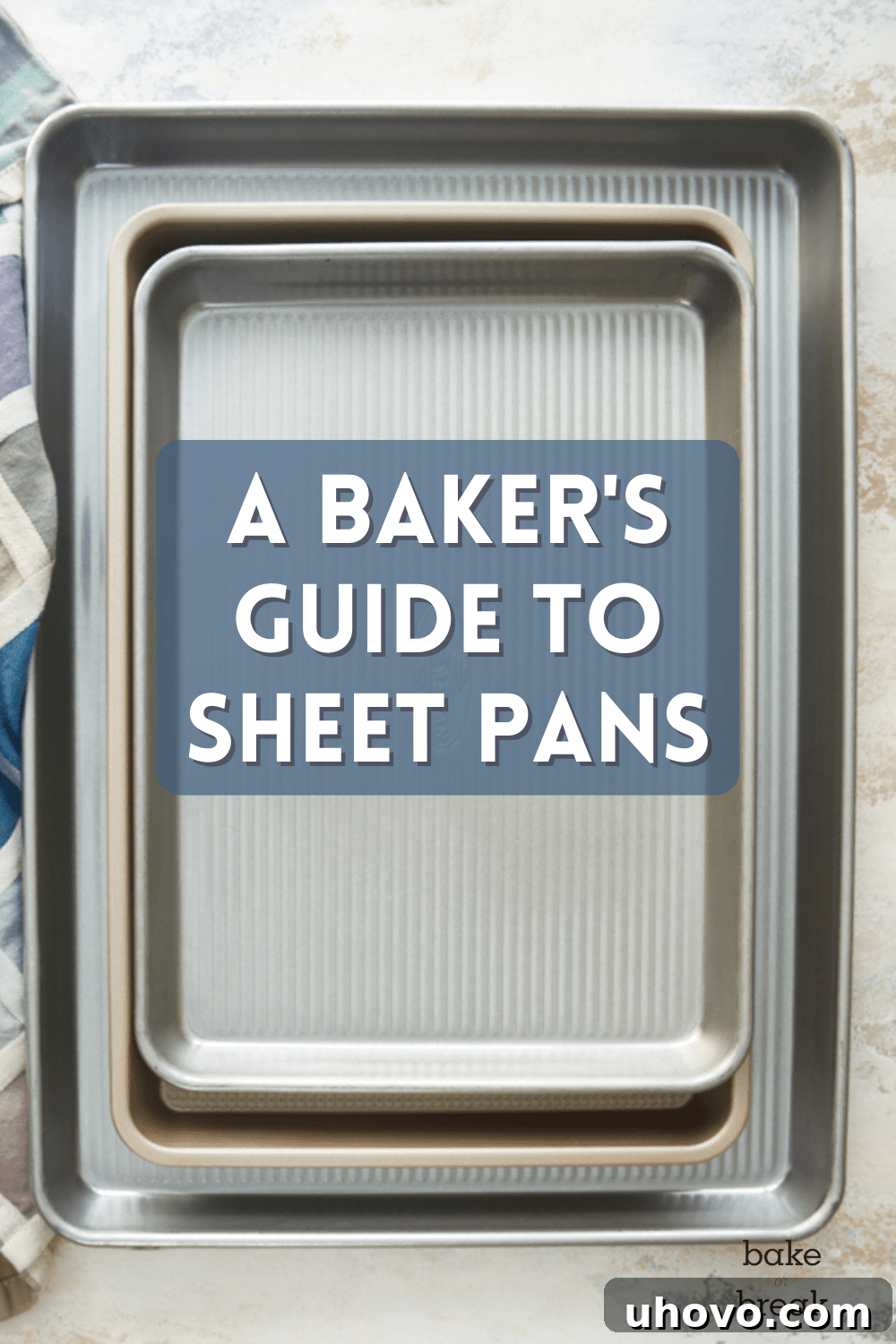
Welcome to the ultimate guide for home bakers, where we demystify the world of sheet pans, cookie sheets, and jelly roll pans! Understanding your bakeware is the first step to achieving baking perfection, and this comprehensive resource will help you choose the right tools for every culinary creation.
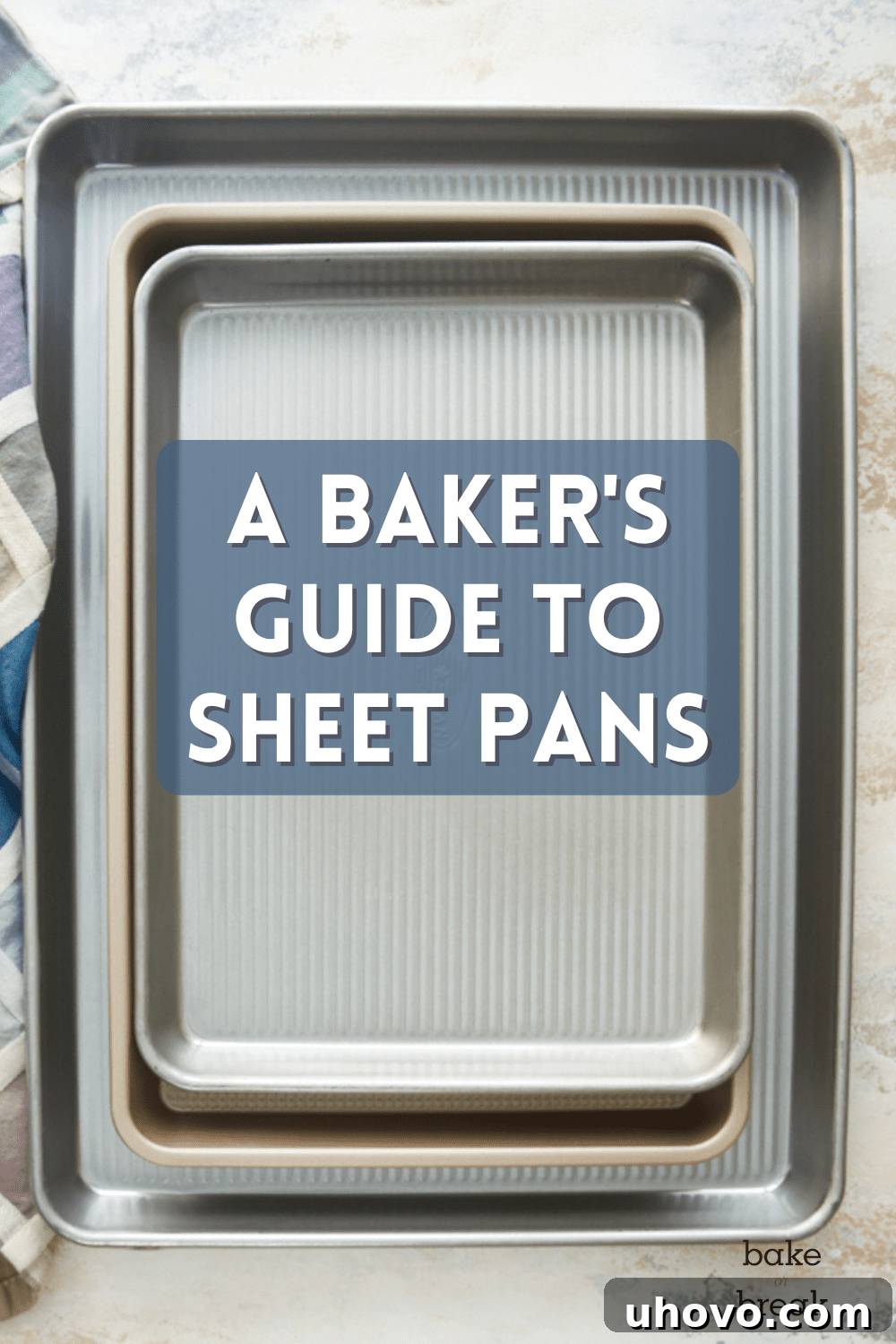
Demystifying Baking Sheet Sizes and Their Key Differences
Whether you’re just embarking on your baking journey or boast years of experience, the array of sheet pans available can be surprisingly confusing. What exactly differentiates a sheet pan from a cookie sheet? Is a jelly roll pan a unique entity, or just another name for a standard sheet pan? These are common questions, and by the end of this guide, you’ll possess the confidence and knowledge to navigate the bakeware aisle like a seasoned professional.
Before we dive into the specific dimensions and applications of each pan type, it’s crucial to understand the fundamental principles behind selecting quality bakeware. I highly recommend taking a moment to read my detailed tips for choosing baking pans. This essential resource covers how to pick bakeware based on critical factors such as material (aluminum, stainless steel), thickness (which impacts heat distribution and warp resistance), color (light vs. dark for browning), and other design elements that significantly influence your baking results. Equipped with this foundational knowledge, you’ll be even better prepared to choose the perfect sheet pans for your kitchen.
Now, let’s explore the fascinating world of sheet pans!
Full Sheet Pans: The Commercial Giant
For most home cooks and bakers, the full-size sheet pan remains an aspirational piece of equipment rather than a practical one. These substantial pans typically measure an impressive 26″ x 18″ and feature a sturdy 1-inch rim around their perimeter. Their sheer size means they simply won’t fit into the vast majority of standard residential ovens. Full sheet pans are specifically engineered for the demands of large-scale commercial kitchens, such as bustling restaurants, busy bakeries, and catering operations, where ample oven space and high-volume production are standard. While they represent the largest category, their primary purpose lies beyond the home kitchen.
Half Sheet Pans: The Home Baker’s Indispensable Workhorse
As their name suggests, half sheet pans are precisely half the size of their commercial full sheet counterparts, making them perfectly suited for standard home ovens. These incredibly versatile pans typically measure 18″ x 13″, complete with a consistent 1-inch raised rim along all four edges. While you might encounter minor variations in these dimensions across different brands, the 18″x13″ standard is widely adopted and recognized.
The half sheet pan is undeniably the unsung hero of many home kitchens, earning its reputation as the ultimate workhorse. Its generous surface area and rimmed design make it ideal for an astonishing range of culinary tasks. From baking batch after batch of perfectly golden cookies and crafting moist, evenly baked sheet cakes, to roasting an assortment of vegetables, crisping up bacon, or preparing a sheet pan dinner, its utility is unmatched. The rim is crucial for containing ingredients, preventing spills, and ensuring liquids or fats don don’t drip into your oven.
For most bakers, owning a pair of these robust pans will comfortably meet their needs. However, if you frequently find yourself on a baking spree—especially when tackling holiday cookie baking or meal prepping—having three half sheet pans in your arsenal offers unparalleled flexibility and efficiency, allowing you to cycle through batches seamlessly.
Some of my top recommendations for durable and reliable half sheet pans include:
- USA Pan: Renowned for its corrugated surface, which promotes airflow for even baking and easy release.
- OXO: Celebrated for its thoughtful design, including large handles for a secure grip and excellent non-stick properties.
- Nordic Ware: A classic choice, known for its sturdy aluminum construction and consistent performance.
Quarter Sheet Pans: Small But Mighty
Following the pattern, a quarter sheet pan is indeed one-quarter the size of a full sheet pan and, consequently, half the size of a half sheet pan. These compact yet incredibly useful pans typically measure 13″ x 9″, also featuring a 1-inch rim around the outside. It’s crucial not to confuse this pan with a traditional 13″ x 9″ cake or casserole pan, which generally has much taller sides (at least 2 inches high) designed to hold liquid batters or layered dishes. The quarter sheet pan’s shallower rim makes it distinctly different.
Despite their smaller footprint, quarter sheet pans prove remarkably versatile for various kitchen tasks. They are absolutely perfect for small-batch baking, ideal when you only need a few cookies, biscuits, or scones without heating up your entire oven for a larger pan. I also find them indispensable when preparing cookie dough for freezing; you can arrange numerous scoops of dough on a quarter sheet pan and place it in the freezer to flash-freeze them. Its compact size means it takes up less precious freezer space while the dough firms up, making it easier to transfer to freezer bags for long-term storage.
Beyond baking, you’ll discover many non-baking applications for these nimble pans. They are excellent for organizing ingredients during mise en place, toasting small quantities of nuts or spices, roasting a single serving of vegetables, or even simply catching drips under a cooling rack. Once you incorporate them into your routine, you’ll likely wonder how you ever managed without them.
My top picks for quarter sheet pans include:
- USA Pan: Offers the same reliable performance and easy-release surface as their larger counterparts.
- OXO: Known for their thoughtful design and durable construction, even in a smaller size.
Jelly Roll Pans: The Specialist for Rolled Cakes
As their specific name suggests, jelly roll pans are primarily designed for baking thin sponge cakes that are destined to be filled and rolled into delicate confections like jelly rolls or Swiss rolls. These cakes require a specific rectangular shape and a relatively shallow bake to remain pliable enough for rolling without cracking. Jelly roll pans are generally a bit smaller than half sheet pans, but their exact dimensions can be a source of confusion.
A quick search for “jelly roll pan” will reveal a few common sizes, most frequently either 10″ x 15″ or 12″ x 17″. If you recall your basic geometry, you’ll quickly realize that the difference in surface area between these two sizes is quite significant. The 12″ x 17″ pan, in particular, is very close in dimensions to a standard half sheet pan, which can sometimes lead to interchangeable use. However, traditional jelly roll recipes are often calibrated for the slightly smaller 10″ x 15″ pan, allowing the cake to bake thinner and cool more quickly.
If a recipe calls for a jelly roll pan but doesn’t specify dimensions, you may need to use your best judgment. Consider the desired thickness of your cake layer and whether a larger or smaller pan would be more appropriate for the volume of batter. While I don’t use a jelly roll pan in every baking session, you’ll find them featured in specific recipes here at Bake or Break, such as my popular Toasted Pecan Roulade and the delightful Butterscotch Cream Cheese Swirl Bars.
Beyond their namesake, these pans can certainly be repurposed for baking smaller batches of cookies or for some cooking applications. However, accurately scaling recipes designed for a different pan size can be tricky, so it’s often best to stick to their intended use or experiment with caution.
Some of my favorite jelly roll pans include:
- USA Pan (10″ x 15″): An excellent choice for traditional jelly rolls, offering consistent baking.
- OXO (10″x 15″): Combines durability with ease of use for perfect rolled cakes.
- Calphalon (12″ x 17″): A slightly larger option, offering more surface area if your recipe or preference leans that way.
Cookie Sheets: The Rimless Option
Cookie sheets are a distinct category of bakeware primarily designed, as their name implies, for baking cookies. Their most defining characteristic is the absence of a full rim; instead, they typically have either one or two slightly elevated sides, or sometimes no rim at all. This unique design is intended to facilitate easy sliding of baked goods on and off the pan and, theoretically, to allow for more unimpeded heat circulation around the items baking on the surface. This improved airflow can contribute to more even browning and crispier edges on cookies.
It’s crucial to understand the limitations of cookie sheets due to their design. You absolutely would not want to use these pans for anything that involves a liquid batter, such as cakes, brownies, or anything that might spread significantly or produce juices, like roasted vegetables. Their lack of a full rim means there’s nothing to contain spills, leading to a messy oven and potentially a fire hazard. Therefore, cookie sheets are best reserved for items that hold their shape well: cookies, drop biscuits, scones, and other pre-portioned doughs.
While cookie sheets have their place, many bakers find that their versatile half sheet pans can effectively handle all their cookie-baking needs. In fact, I’ll let you in on a little secret: I don’t believe I’ve ever owned a dedicated cookie sheet, and yet I bake an enormous quantity of cookies year-round. A good quality half sheet pan, perhaps lined with parchment paper or a silicone mat, performs exceptionally well for cookies and offers the added benefit of being suitable for a much wider range of other baking and cooking tasks, making it a more practical investment for most home bakers.
Two-Thirds Sheet Pans: For Larger Home Ovens
For those fortunate enough to possess a larger-than-average home oven, a two-thirds sheet pan can be a welcome addition to the bakeware collection. As the name indicates, these pans are approximately two-thirds the size of a full commercial sheet pan, typically measuring around 16″ x 22″. They strike a balance between the commercial full sheet pan and the standard half sheet pan, offering significantly more baking surface without requiring a truly commercial-grade oven.
These larger pans are absolutely excellent for tackling substantial baking projects. Imagine baking massive batches of cookies for a large gathering, roasting a whole turkey or substantial cuts of meat with plenty of surrounding vegetables, or preparing multiple sheet pan meals simultaneously. The extra space allows for better airflow around individual items, which can lead to more even cooking and browning. If your oven can accommodate it, a two-thirds sheet pan can dramatically increase your kitchen’s efficiency and capacity for large-scale cooking and baking.
Eighth Sheet Pans: Micro-Sized Utility
While not as widely used or as immediately obvious in its utility as its larger siblings, the eighth sheet pan can prove surprisingly helpful in very specific situations. These diminutive pans measure approximately 6.5″ x 9″, making them exactly half the size of a quarter sheet pan. They are the smallest of the rimmed sheet pan family, and their compact nature defines their specialized role.
Eighth sheet pans excel at micro-tasks. Use them for toasting a tiny amount of nuts for a garnish, warming a single serving of leftovers, or baking just a few cookies straight from the freezer when a craving strikes. They are also fantastic for organizing small ingredients during meal prep – think of them as mini mise en place stations for minced garlic, chopped herbs, or measuring spices. Some very specific small-batch baking recipes are designed precisely for this pan size, yielding just a couple of servings. They’re a niche item, but when you need them, they are invaluable for efficiency and preventing waste.
Tailoring Your Bakeware Collection to Your Baking Style
When it comes to building or updating your bakeware collection, a thoughtful approach will serve you well. If you’re replacing existing pans, you likely already have a good sense of which sizes and types you reach for most frequently. However, for those new to baking, the sheer variety can be overwhelming, making it difficult to know where to begin to establish a basic, yet effective, baking setup. In either scenario, my paramount piece of advice is to carefully consider the specific types of baked goods and culinary creations you envision making most often. Your personal baking style should dictate your bakeware purchases.
For instance, if you anticipate becoming a dedicated cookie baker, I wholeheartedly recommend starting with at least a couple of half sheet pans. These pans are not only superb for baking perfectly even batches of cookies, but their versatile rimmed design simultaneously opens up a world of other baking possibilities. You’ll be well-equipped to bake delicious sheet cakes, flaky scones, roast vegetables, and even prepare entire sheet pan meals. Their multi-functionality makes them the smartest initial investment for nearly any home baker. Think about what you love to eat and what you aspire to create, and let that guide your pan selection.
Extending the Life of Your Sheet Pans: Essential Care Tips
The longevity and performance of your baking sheets are directly tied to the care they receive. Depending on the material, finish, and overall quality of your pans, they will require varying degrees of attention to maintain their optimal condition and prevent premature wear.
- Cleaning – Most high-quality baking sheets, especially those made from aluminum, will benefit significantly from hand-washing. Harsh dishwasher detergents and high heat can be abrasive, potentially dulling the finish, causing discoloration, or even stripping protective coatings on nonstick pans. For stubborn baked-on grime, soak the pan in hot, soapy water, then gently scrub with a non-abrasive sponge or brush. Always dry your pans thoroughly immediately after washing to prevent water spots and rust, particularly with steel pans.
- Lining – Employing parchment paper or a silicone baking mat is one of the easiest and most effective ways to simplify cleanup and extend the life of your pans. These liners create a non-stick barrier, preventing food from adhering directly to the pan’s surface. This not only makes cleaning a breeze but also protects the pan from scratches and reduces the need for aggressive scrubbing. If you prefer to bake directly on the pan, be prepared for more thorough cleaning, and acknowledge that this practice may contribute to the pan’s faster degradation.
- Avoiding Scratches – Scratches are the enemy of any baking pan, especially those with nonstick coatings. They can create uneven baking surfaces, lead to food sticking, and compromise the integrity of the pan’s finish. Always use silicone, plastic, or wooden utensils when working with your pans. A flexible cookie spatula is an invaluable tool for safely removing cookies and other delicate items without damaging the pan’s surface. As mentioned, lining your pans offers an additional layer of protection against accidental scratches.
- Longevity – A well-made, good quality baking sheet, when properly cared for, should serve you reliably for many years. Stainless steel and heavy-gauge aluminum pans are particularly known for their durability. If you primarily use nonstick baking sheets, pay close attention to any signs of damage to the coating, such as peeling, flaking, or excessive scratching. A compromised nonstick surface will not only cause food to stick but can also affect heat distribution and pose health concerns. Consider replacing nonstick pans when the coating begins to fail.
- Warping – The telltale “pop” or “clank” sound you sometimes hear from your oven is a common indicator that your baking sheet has warped. This typically occurs when a pan is subjected to rapid and extreme temperature changes (e.g., placing a cold pan into a hot oven) or when the metal is thin and unable to withstand high heat. A warped pan is no longer perfectly flat, which can lead to uneven baking and browning, particularly with cookies and other delicate items. While minor warping can sometimes resolve as the pan cools, persistent warping affects results. Investing in heavier-gauge pans can help mitigate this issue.
Essential Considerations for Selecting Baking Pans
Beyond size and type, the material, finish, and color of your baking pans play a significant role in how your baked goods turn out. The market offers a wide array of options: shiny aluminum, dark non-stick, durable stainless steel, and even glass bakeware. Each has distinct characteristics that affect heat conductivity, browning, and ease of release.
For a comprehensive deep dive into these considerations, including how different materials impact baking performance, the benefits and drawbacks of light versus dark pans, and the importance of pan thickness, I highly recommend consulting my detailed guide: How to Choose Baking Pans. Understanding these nuances will empower you to make informed decisions and build a bakeware collection perfectly suited to your specific needs and desired baking outcomes.
Elevate Your Baking Knowledge Further
To truly master the art of baking, expanding your understanding of essential tools and techniques is key. Continue to enhance your baking acumen with these related and highly beneficial topics:
- Why Every Baker Needs Wire Cooling Racks – Discover the critical role airflow plays in preventing soggy bottoms and ensuring your baked goods cool properly. Learn how a simple wire cooling rack can dramatically improve the texture and quality of your cookies, cakes, and breads after they emerge from the oven.
- Unlined vs Lined Baking Sheets – Explore the pros and cons of baking directly on your pans versus using parchment paper or silicone baking mats. This guide offers side-by-side comparisons, demonstrating how different lining methods affect everything from non-stick performance to cleanup, and ultimately, the final appearance and texture of your baked treats.
Frequently Asked Questions About Baking Sheets
For the majority of home bakers, the half sheet pan is considered the standard and most versatile size. These pans typically measure 18″ x 13″ and feature a uniform 1-inch rim around all edges, making them perfectly suited for standard residential ovens.
The primary distinction lies in their edges. A cookie sheet usually features only one or two slightly elevated sides (or sometimes no rim at all), allowing for easy sliding of baked items. In contrast, a baking sheet (or sheet pan) has a continuous rim that extends around all four sides, typically about 1 inch high. Both can be used for baking cookies and other items that don’t require high edges to contain liquid or prevent sliding.
Common sheet pan sizes include: Half sheet pans (18″ x 13″), Quarter sheet pans (13″ x 9″), and Eighth sheet pans (9″ x 6.5″). Jelly roll pans are typically either 10″ x 15″ or 12″ x 17″. For commercial use, Full sheet pans measure 26″ x 18″. All these rimmed pans generally feature a raised edge of approximately 1 inch.
To accurately measure your baking sheet, simply use a measuring tape or a ruler to measure the interior width and length of the pan, from edge to edge. This will provide you with the precise dimensions.
A rimmed baking sheet is any baking pan that features a shallow raised edge, typically about 1 inch high, extending continuously around all four outside edges. This rim helps to contain liquids, prevent food from sliding off, and adds structural rigidity. Common examples of rimmed baking sheets include standard sheet pans and jelly roll pans.
Bake or Break is a participant in the Amazon Services LLC Associates Program, an affiliate advertising program designed to provide a means for us to earn fees by linking to Amazon.com and affiliated sites.