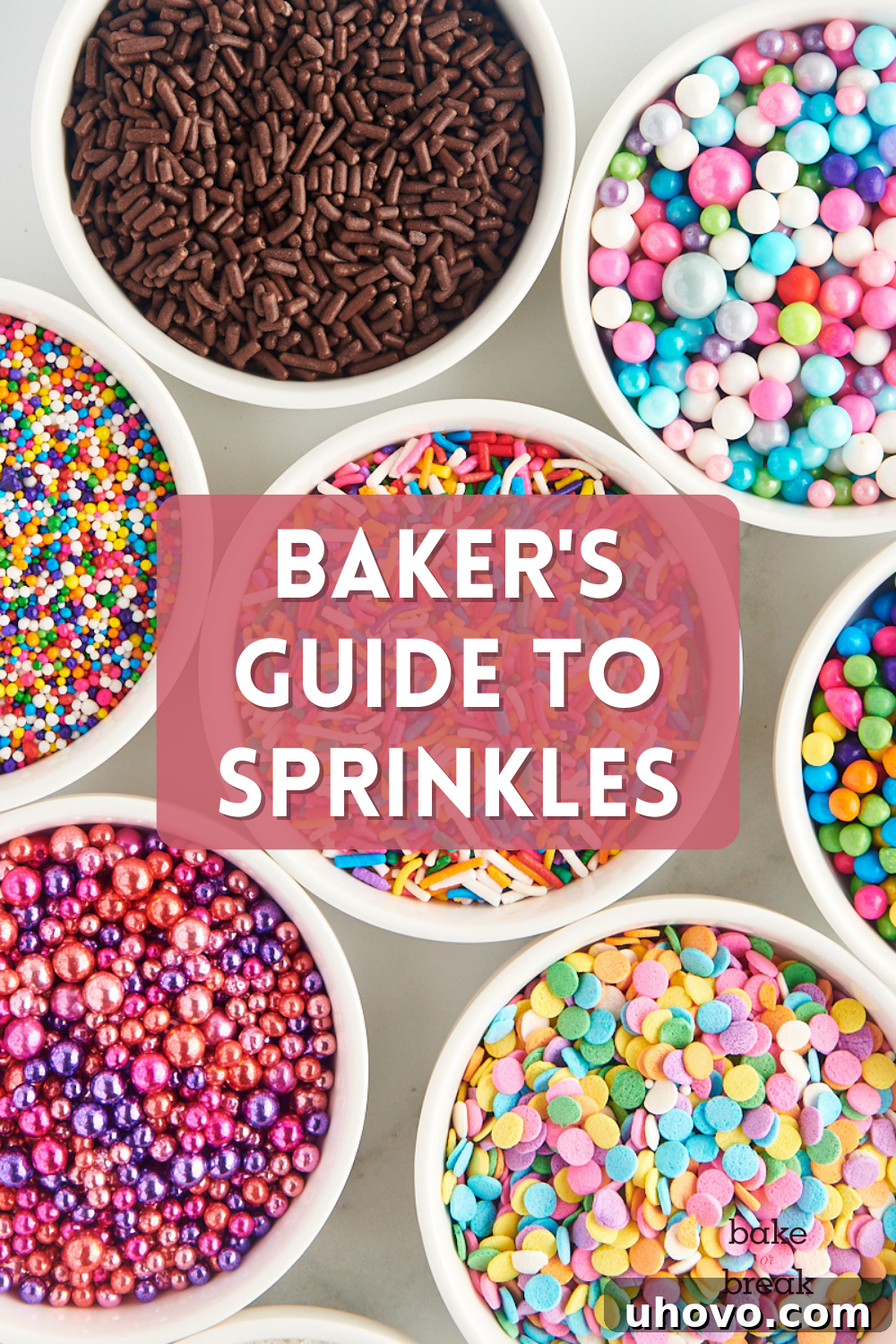
Welcome to the wonderful world of sprinkles! These tiny, vibrant confections are more than just a garnish; they’re an essential tool in any baker’s arsenal, capable of transforming simple desserts into celebratory masterpieces. From adding a playful pop of color to introducing delightful textural contrasts, sprinkles bring joy and personality to everything they adorn. But with such a dazzling array of options available, how do you choose the right sprinkle for your baking adventure? This ultimate guide will demystify the different types of sprinkles, reveal their unique characteristics, and provide expert tips on how to use them to elevate your baked goods.
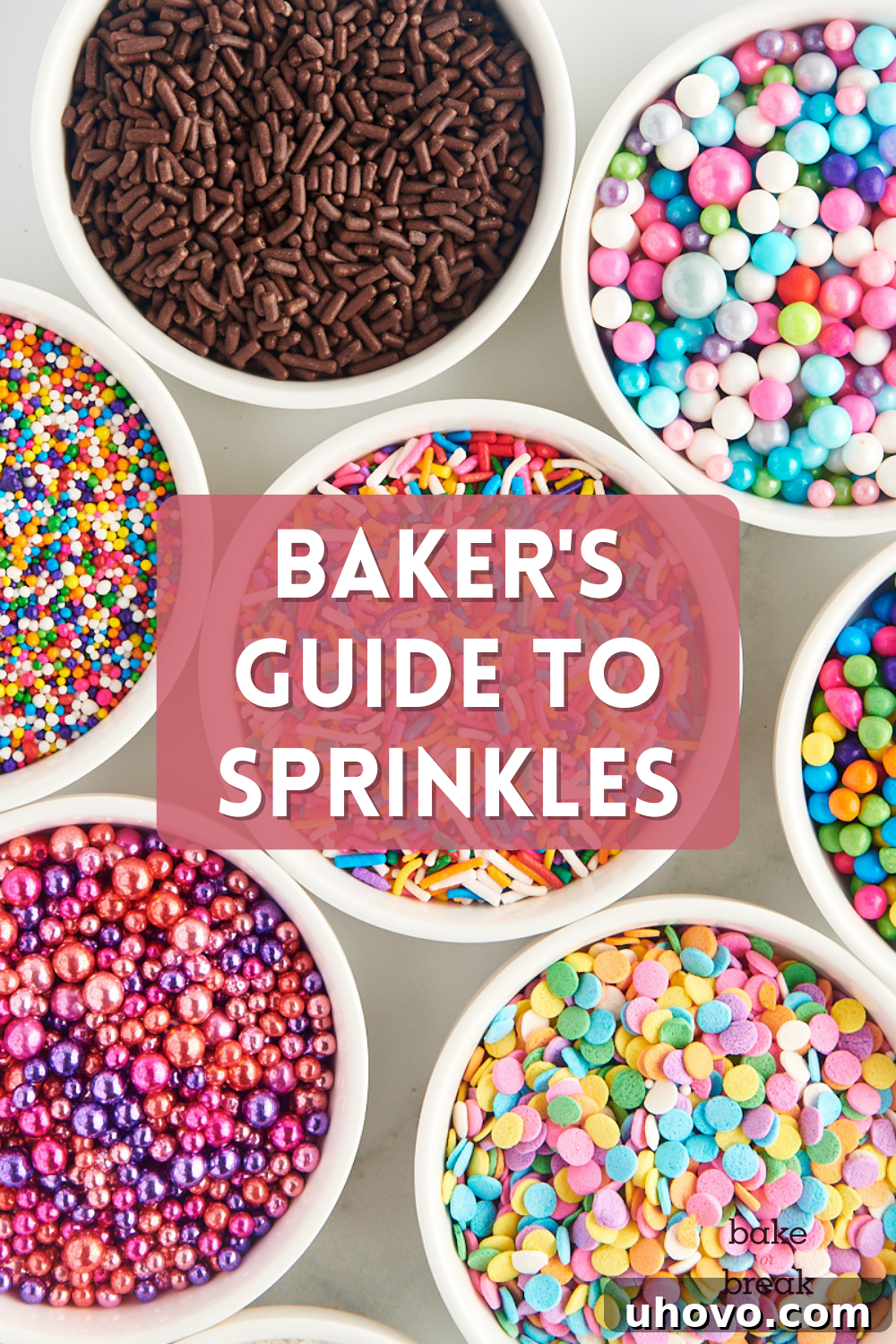
Exploring the Dazzling World of Sprinkles: A Comprehensive Guide
Sprinkles are a baker’s secret weapon, offering an instant upgrade to any dessert. They add not just visual appeal but also intriguing textures that make each bite more enjoyable. Navigating the vast selection of sprinkles can be daunting, with countless shapes, sizes, and colors designed for specific applications. Understanding the distinctions between each type is key to achieving your desired baking and decorating results. Whether you’re aiming for a playful birthday cake, an elegant wedding dessert, or just a fun weeknight treat, this guide will help you select the perfect sprinkle to match your vision.
From the familiar rainbow rods that evoke childhood nostalgia to the sophisticated shimmer of metallic pearls, there’s a sprinkle for every mood and occasion. Let’s delve into the characteristics, ideal uses, and best practices for some of the most popular types of sprinkles, ensuring your next baking project is nothing short of spectacular.
Jimmies: The Classic Go-To Sprinkles
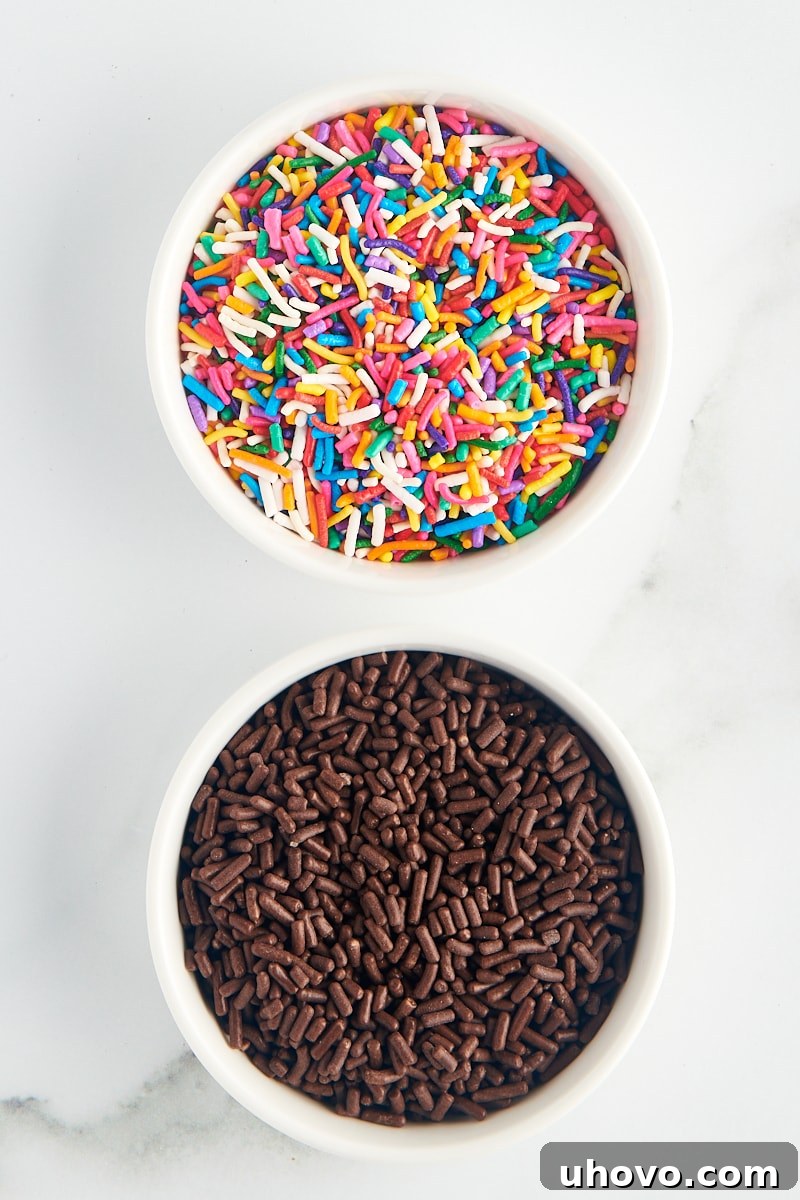
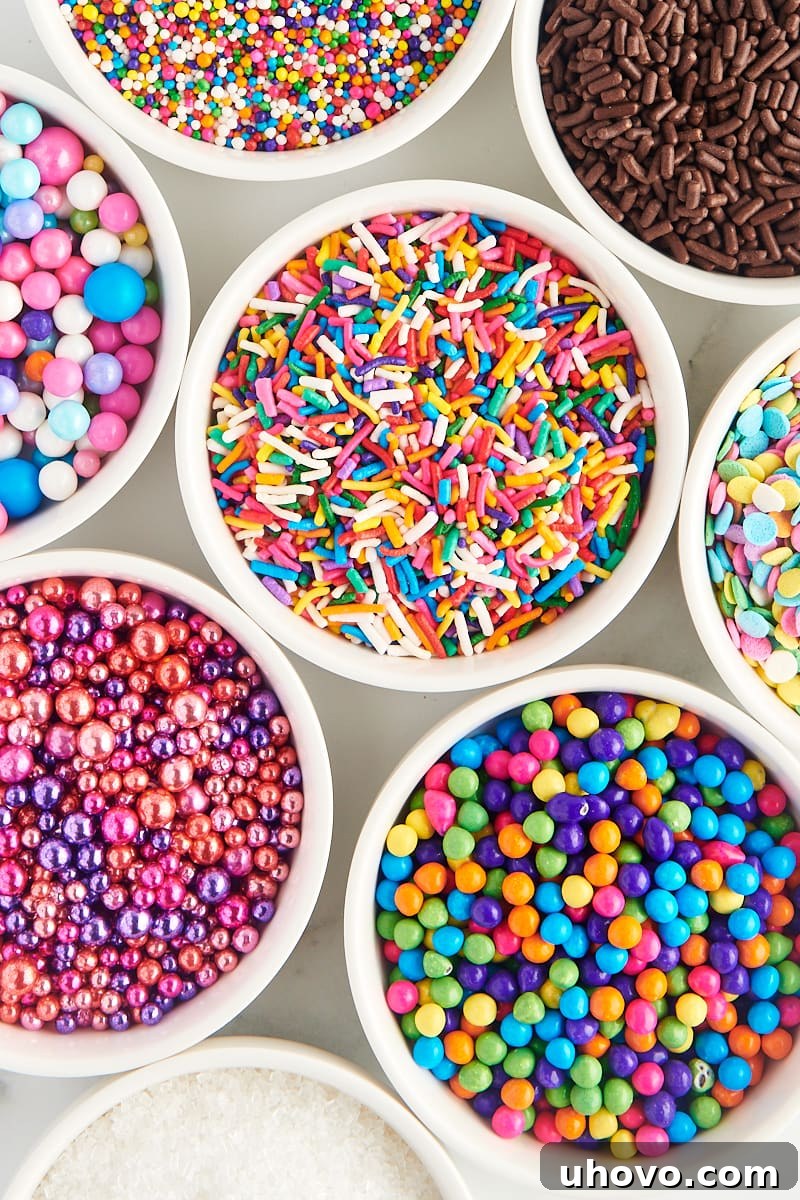
What are Jimmies? Jimmies, often the first image that comes to mind when you hear “sprinkles,” are distinctive for their long, slender rod-like shape. Made primarily from sugar, cornstarch, and vegetable oil, they have a softer, slightly waxy texture compared to some other sprinkle types, lacking a hard candy shell. Available in a dazzling spectrum of colors, including the ever-popular rainbow mix, jimmies are incredibly versatile. You’ll also frequently encounter chocolate jimmies; for true chocolate flavor, always check the ingredient label as some are merely cocoa-colored for appearance.
When should I use Jimmies? Jimmies are renowned for their exceptional versatility. They are perfect for decorating a wide range of baked goods and desserts, from topping ice cream sundaes and cupcakes to adorning cookies and cakes. What truly sets them apart, however, is their stability when baked directly into batters and doughs. Their colors are far less prone to bleeding, making them an excellent choice for recipes like funfetti cakes, birthday pancakes, or delightful Sprinkle Crinkle Cookies, where you want the colors to remain vibrant and distinct after baking. Their soft chew adds a pleasant textural element without being overly crunchy, making them a crowd-pleaser for all ages.
Quins (Confetti Sprinkles): Flat, Fun, and Festive
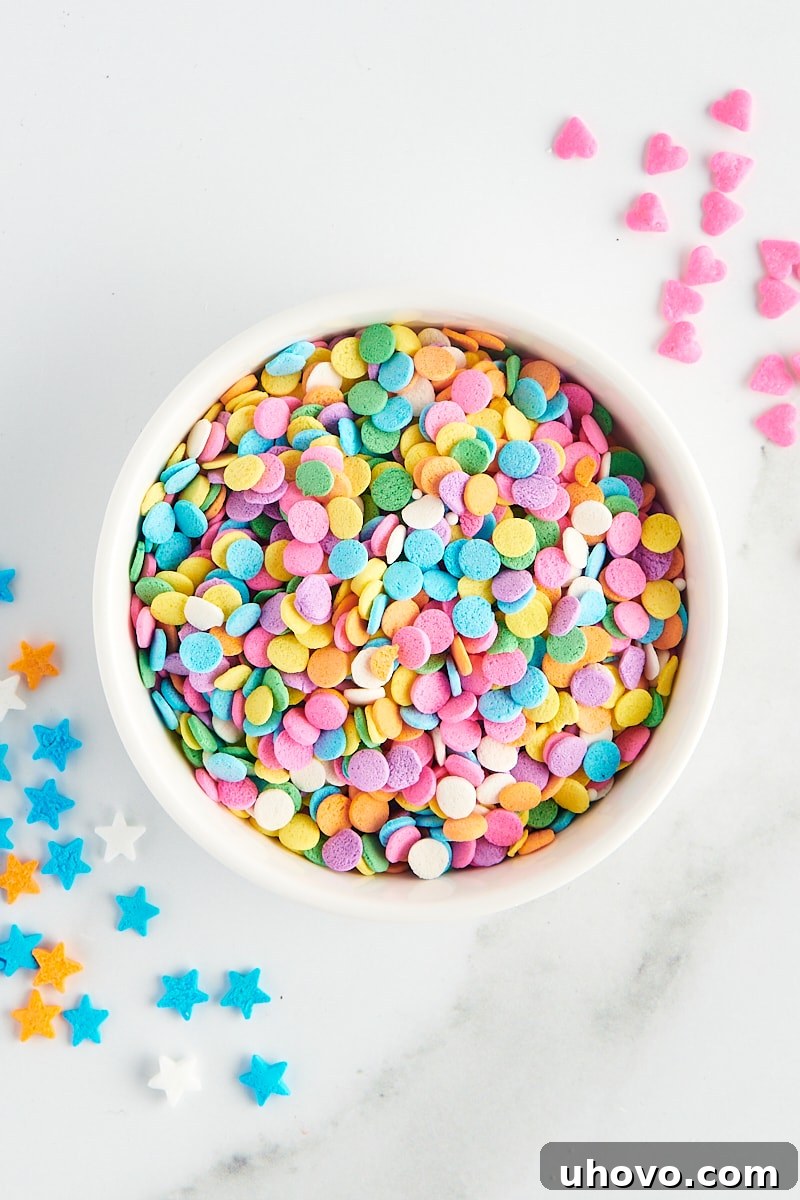
What are Quins? Quins, also widely known as confetti sprinkles or sequins, are flat, disc-shaped sprinkles that bring a playful charm to any dessert. While typically round, they are also available in a delightful assortment of shapes such as stars, hearts, flowers, and seasonal motifs, allowing for endless creative possibilities. Their flat profile makes them distinct and visually appealing, resembling tiny edible pieces of confetti. Like jimmies, they offer a softer texture, providing a slight give when bitten.
When should I use Quins? Similar to jimmies, quins are exceptionally versatile, excelling as both decorative garnishes for finished baked goods and as mix-ins for batters and doughs. Their flat surface adheres beautifully to frosting, creating a smooth, integrated look, as seen on a festive vanilla sheet cake. A significant advantage of quins is their general resistance to color bleeding, even when baked. This makes them an excellent choice for funfetti-style cakes, cookies, and muffins where you want distinct, vibrant shapes to shine through the cooked dough. Always check the brand, but most quins hold their shape and color brilliantly, adding both visual interest and a subtle sweetness.
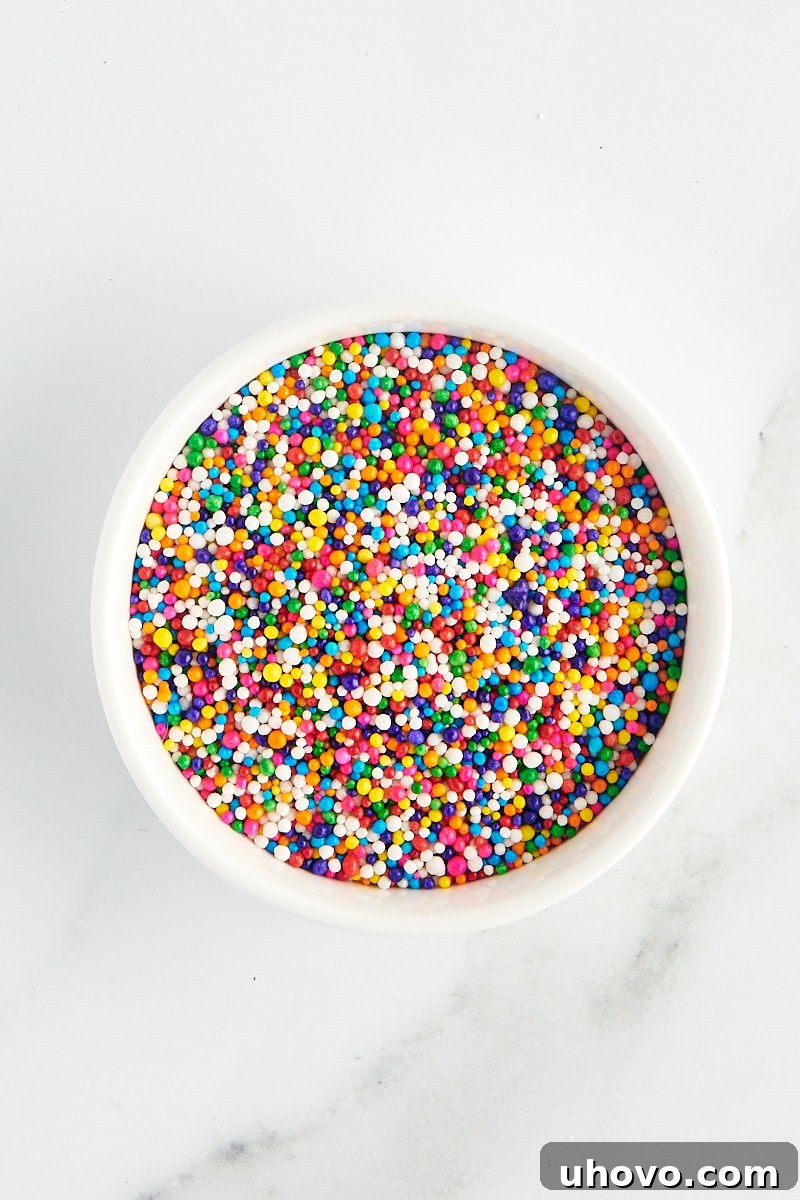
Nonpareils: Tiny Spheres of Vibrant Crunch
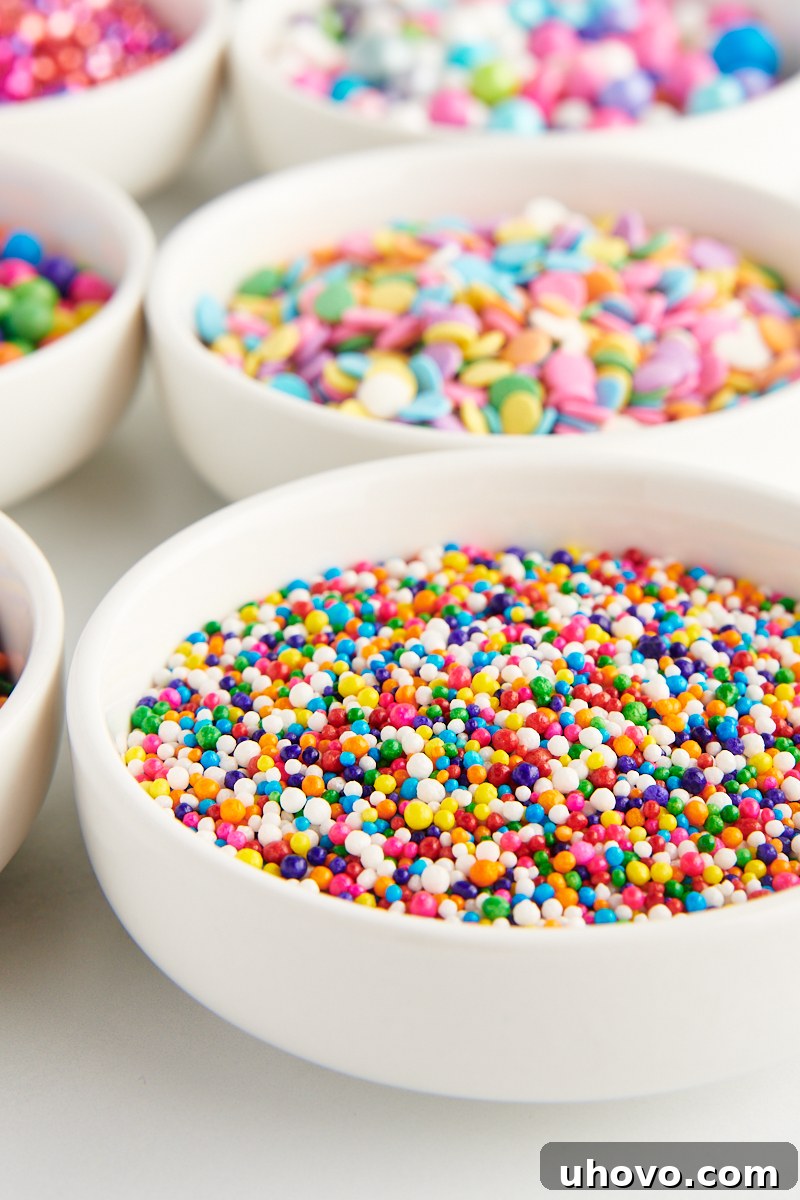
What are Nonpareils? Nonpareils (pronounced “non-PUH-rells”) are unmistakable for their tiny, spherical shape and hard, crunchy candy shell. Often playfully referred to as “sprinkle dots” or “hundreds and thousands” in other parts of the world, these minuscule spheres are made from sugar and starch, then coated with bright, often intense, food coloring. Their small size allows for a dense, colorful coverage, creating a visually striking effect that is both delicate and bold.
When should I use Nonpareils? While nonpareils are incredibly appealing, their specific characteristics dictate their best uses. They are fantastic as a decorative garnish for finished baked goods, offering a satisfying crunch and burst of color on top of frosted cakes, cupcakes, or chocolate-dipped treats. However, due to their tendency for colors to bleed significantly, especially when exposed to moisture or heat over time, they are generally not recommended for mixing into batters or doughs that will be baked. The vibrant hues can dissolve and create an unintended muddy appearance. An exception to this rule is rolling cookie dough in nonpareils before baking, such as with these delightful Drop Sugar Cookies. Here, the nonpareils adhere to the surface, creating a beautiful outer crust that retains most of its color, while the quick baking time minimizes bleeding. They are also excellent for rimming glasses for festive drinks or adding a delicate border to pastries.
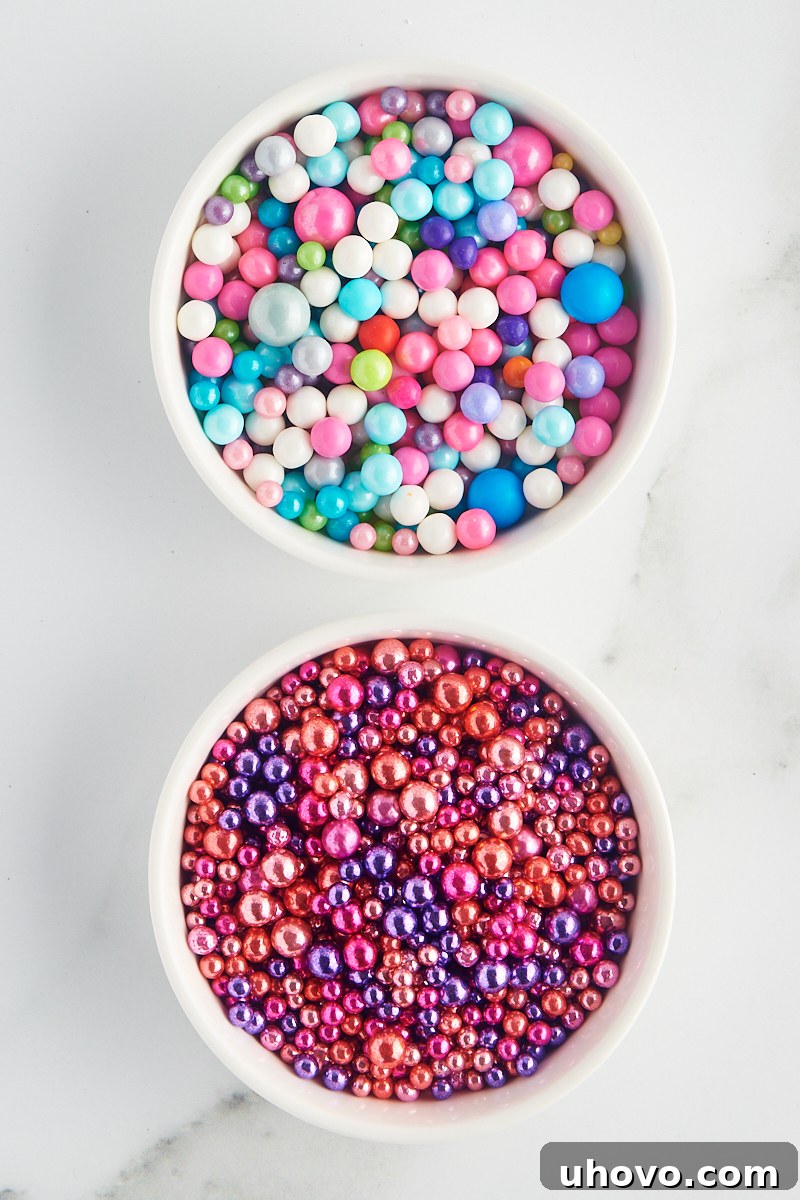
Dragées and Sugar Pearls: Luxurious Accents
What are Dragées? Dragées (pronounced “drah-ZHAY”) are large, typically spherical sprinkles characterized by their hard outer shell and often shimmering, metallic finish. Historically, they were made with a silver coating, and while edible in many parts of the world, the metallic varieties are generally not considered edible in the U.S. due to their silver or gold leaf content being classified as a non-food item by the FDA. Despite this, they remain popular for decorative purposes.
What are Sugar Pearls? Sugar pearls are also sizable, round sprinkles that share a visual resemblance with dragées. However, they are typically coated with an edible wax or shellac, making them universally considered food-safe. They come in various pearlized or matte finishes and are quite hard and crunchy, offering a substantial textural element.
When should I use them? Both dragées and sugar pearls are undeniably beautiful and eye-catching, perfect for adding a touch of elegance, sophistication, or drama to your baked creations. They are best used sparingly and strategically as decorative elements, rather than being generously scattered. Their significant hardness can make consuming them unpleasant if used in large quantities, potentially posing a risk to teeth. When incorporating dragées, especially the metallic ones, it’s crucial to be aware of local food safety regulations regarding their edibility. For assured food safety and a similar aesthetic, sugar pearls are an excellent alternative. They are ideal for wedding cakes, anniversary desserts, or any occasion demanding a refined and impactful visual statement.
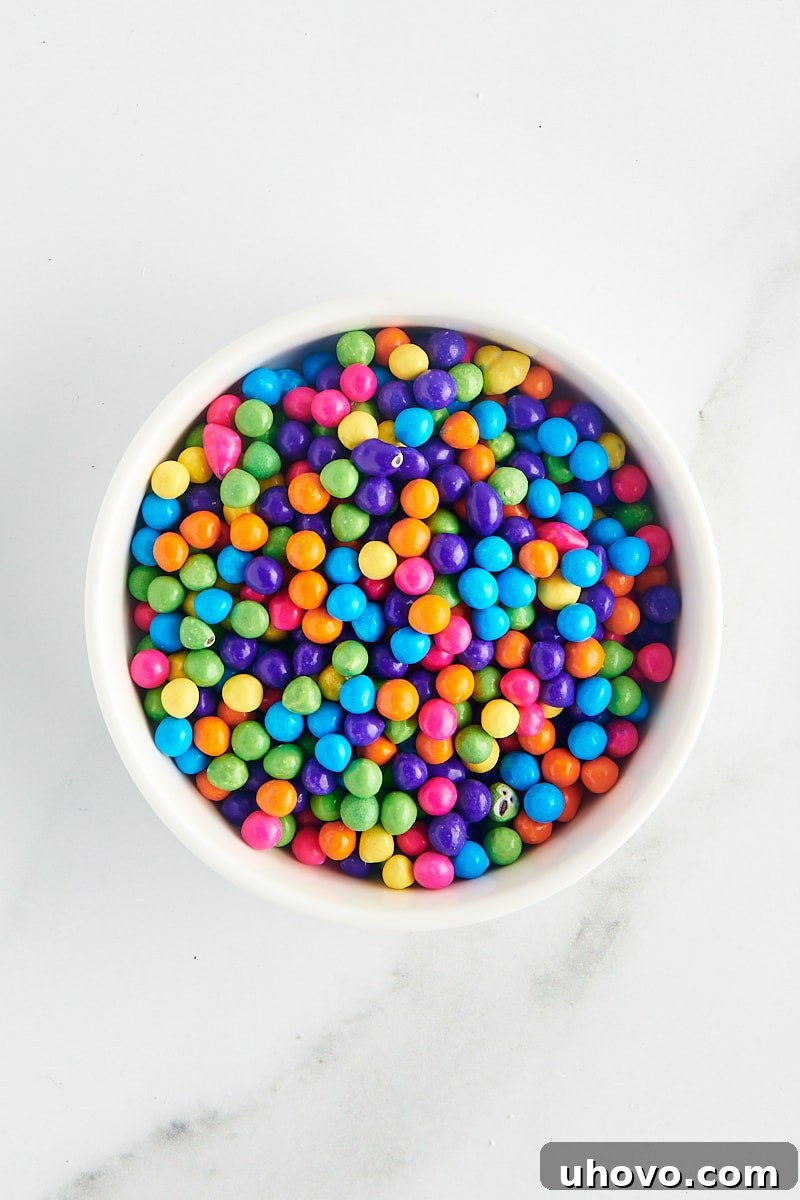
Sixlets: The Candy-Coated Chocolate Delight
What are Sixlets? Sixlets are unique in the sprinkle family because they are essentially candy-coated chocolate balls. They feature a smooth, hard candy shell, similar to M&M’s but typically smaller and perfectly spherical. Available in a rainbow of vibrant colors, Sixlets offer a delightful combination of crunchy outer shell and creamy chocolate center, making them a popular treat in their own right, as well as a decorative element.
When should I use Sixlets? Sixlets are fantastic for adding a distinct chocolate flavor and a satisfying crunch to your finished baked goods. They work wonderfully as a garnish on cupcakes, cookies, brownies, and ice cream. However, it is crucial to remember that Sixlets contain chocolate and will melt if subjected to high heat. Therefore, they should never be baked into batters or doughs, as the chocolate will melt and potentially create a greasy mess or seize up, losing their distinct shape and appealing texture. Use them exclusively for post-baking decoration to enjoy their full visual and taste appeal.
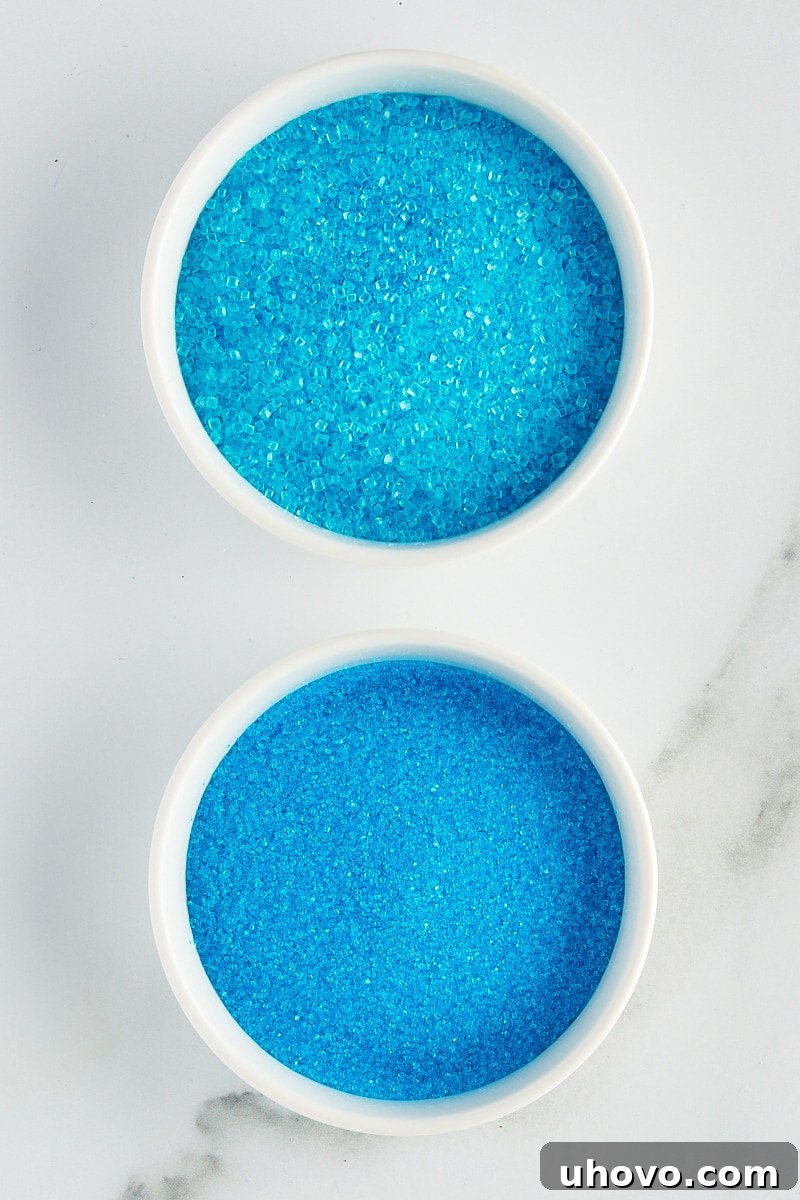
Sanding Sugar and Sparkling Sugar: The Glittering Grains
What is Sanding Sugar? Sanding sugar, also known as decorating sugar or crystal sugar, is a fine-grained sugar that is coarser than granulated sugar but finer than sparkling sugar. It’s designed to withstand higher temperatures without melting, allowing it to retain its sparkle during baking. It comes in a beautiful array of colors, as well as classic white, and offers a subtle, elegant shimmer.
What is Sparkling Sugar? Sparkling sugar, often simply called coarse sugar, features larger, more irregularly shaped crystals than sanding sugar. These larger granules create a more dramatic, pronounced sparkle and a satisfying crunch. Like sanding sugar, it’s available in white and various vibrant colors, providing a bolder decorative effect.
When should I use them? Both sanding and sparkling sugars are incredibly versatile and can be used for both pre-baking and post-baking applications. They are fantastic for garnishing finished baked goods, providing an extra layer of sweetness, sparkle, and textural contrast. For an impressive effect, sprinkle them generously on top of batters and doughs before baking. This not only adds a beautiful glimmer that catches the light but also creates a wonderfully crisp and sweet crust on cookies, muffins, scones, and pie tops. Sanding sugar is perfect for delicate finishes, while sparkling sugar delivers a more impactful, crunchy adornment. They are also excellent for rimming cocktail glasses or adding a festive touch to fruit tarts.
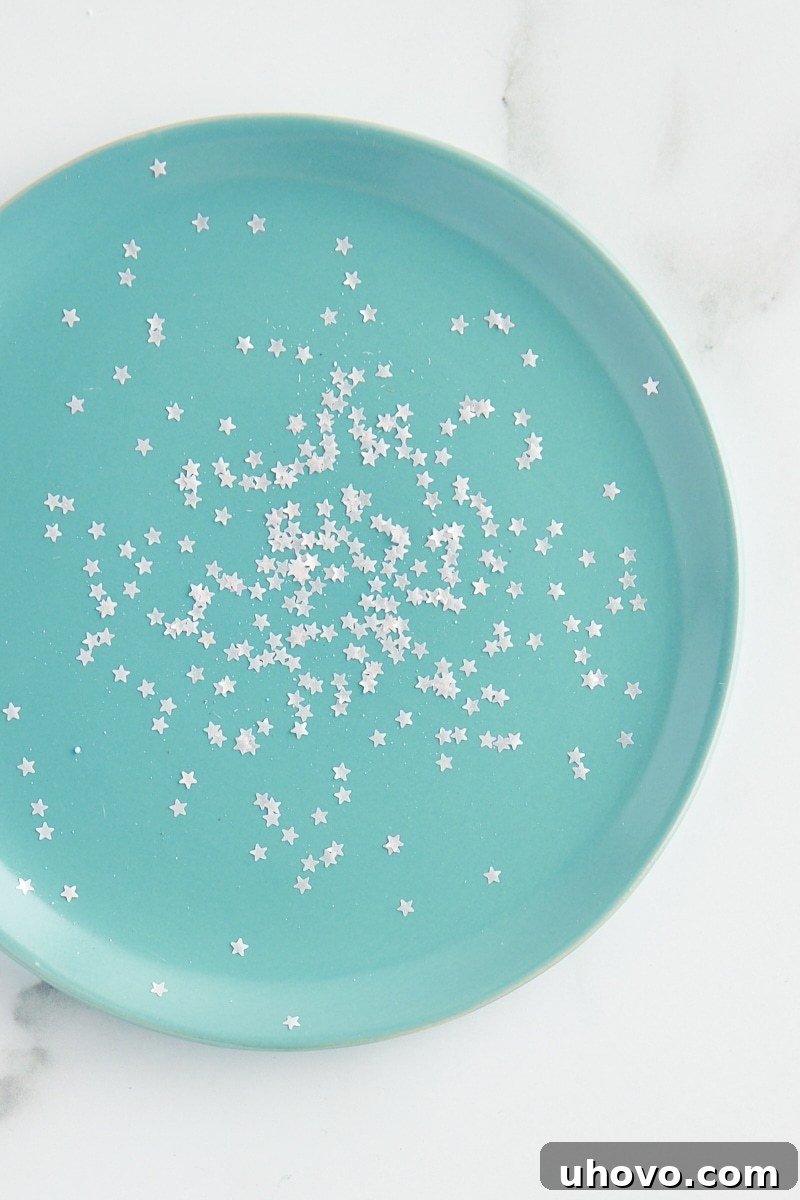
Edible Glitter: Adding a Touch of Magic
What is Edible Glitter? Edible glitter is precisely what its name suggests: a dazzling, shimmering substance designed to add sparkle and shine to your food, safely. It comes in various forms, including fine dusts, larger flakes, and even tiny, shaped pieces like stars or hearts. Made from food-grade ingredients, often including sugar, gum arabic, and food colorings, edible glitter is specifically formulated for consumption.
When should I use Edible Glitter? Edible glitter is purely for decorative purposes and is best applied to your baked goods just before serving to maximize its sparkling effect. It is perfect for adding a touch of glamour to cakes, cupcakes, cookies, and even drinks. The glitter will dissolve or lose its luster if added to batters or doughs before baking, so always apply it as a finishing touch. It’s absolutely critical to differentiate between food-grade edible glitter and craft glitter. Craft glitter is not safe for consumption and can contain harmful plastics and dyes. Always check the ingredients list to ensure the product is clearly labeled “edible” and “food-safe” to guarantee it’s meant for consumption. A little edible glitter can transform a simple dessert into a show-stopping creation, perfect for celebrations and special occasions.
Choosing the Right Sprinkles for Your Baking Project
With so many delightful options, selecting the perfect sprinkle can feel like an art form. Consider these factors to ensure your chosen sprinkles enhance your baked goods beautifully:
- Application: Baked In vs. Topping: If mixing into batter, opt for jimmies or quins to avoid color bleeding and melting. For post-baking decoration, nonpareils, dragées, Sixlets, sugars, and glitters are excellent choices.
- Desired Texture: Do you want a soft chew (jimmies, quins), a satisfying crunch (nonpareils, sugar pearls, sparkling sugar), or just a subtle shimmer (sanding sugar, edible glitter)?
- Aesthetic and Theme: Are you aiming for a whimsical look (rainbow jimmies, shaped quins), an elegant finish (sugar pearls, metallic dragées – with caution), or a rustic sparkle (sanding/sparkling sugar)?
- Color Stability: Be mindful that nonpareils are prone to bleeding, especially in moist environments or when baked in, so they are best reserved for dry applications or quick decorating.
- Edibility and Safety: Always confirm that all sprinkles, especially metallic or glitter varieties, are certified food-safe in your region.
Expert Tips for Baking and Decorating with Sprinkles
To get the most out of your sprinkles and ensure your desserts look professionally decorated, keep these tips in mind:
- Application Timing: For optimal adherence, apply sprinkles to frosting or glaze before it sets completely. If working with baked goods directly, a thin layer of melted chocolate, royal icing, or corn syrup can act as an adhesive.
- Preventing Bleeding: When baking with sprinkles, opt for types known for color stability (jimmies, most quins). For surface decoration, if you anticipate moisture or humidity, a light dusting with cornstarch over the sprinkles can sometimes help.
- Even Distribution: To achieve an even coat, pour sprinkles into a shallow dish and roll the sides of frosted cupcakes or cookies in them. For larger surfaces, gently scatter them by hand or use a small spoon.
- Layering: Don’t be afraid to combine different types of sprinkles for added depth and visual interest. A base of jimmies topped with a few sugar pearls can create a dynamic look.
- Storage: As detailed in the FAQ, proper storage is paramount for maintaining sprinkle quality. Keep them in airtight containers in a cool, dry place away from direct sunlight and humidity.
Frequently Asked Questions About Sprinkles
Sprinkles are primarily made of small pieces of sugar-based confectionery. Common ingredients include sugar (often powdered or granulated), cornstarch or tapioca starch, hydrogenated palm kernel oil, carnauba wax (for shine), dextrin, soy lecithin (as an emulsifier), and a variety of food colorings and sometimes natural or artificial flavorings. The exact composition varies significantly by manufacturer and sprinkle type, with some containing cocoa for chocolate varieties or specific coatings for texture and appearance.
Yes, sprinkles do have an expiration date, although they tend to have a long shelf life. The longevity of sprinkles can vary based on the type (e.g., sugar-based vs. chocolate-based), storage conditions, and the specific manufacturer’s formulation. As a general guideline, most sprinkles can last for up to 12-24 months if stored correctly in a cool, dry place and in an airtight container. Always check the “best by” or expiration date on the package. Discard any sprinkles that appear stale, clumped, discolored, or have an off smell, as these indicate they may no longer be suitable for consumption.
Proper storage is key to preserving the freshness, vibrant color, and texture of your sprinkles. Sprinkles should always be stored in a cool, dry place, away from direct sunlight and any sources of heat or humidity. An airtight container is essential to prevent moisture absorption, which can lead to clumping, stickiness, color degradation, and even mold growth. A pantry or cupboard that maintains a stable temperature and low humidity is an ideal location. Avoid storing them in the refrigerator, as condensation can introduce moisture, and freezing can alter their texture.
Sprinkles can indeed be gluten-free and/or vegan, but it is not a universal rule. Their suitability for specific dietary needs depends entirely on the brand, the type of sprinkle, and the manufacturing process. Many brands now offer clearly labeled gluten-free sprinkles, using alternative starches. For vegan sprinkles, look for those that do not contain confectioner’s glaze (which can be shellac, an insect-derived product), dairy, or other animal by-products. Always thoroughly read the ingredient list and look for explicit certifications or statements on the product packaging to ensure they align with your dietary requirements.
Yes, you can make simple sprinkles at home, primarily jimmie-style or sanding sugar. Homemade sprinkles typically involve mixing powdered sugar with a liquid (like water or meringue powder dissolved in water), a touch of corn syrup for flexibility, and food coloring to create a thick paste. This paste is then piped into thin lines and allowed to dry completely before being cut into small pieces. While it requires patience and some practice, it can be a fun project and allows for custom colors and control over ingredients.
While nonpareils are a type of sprinkle, the term “sprinkles” is a broader category that encompasses many varieties. The key difference lies in their shape and texture. Sprinkles (often referring specifically to jimmies) are typically rod-shaped and have a softer, slightly waxy chew. Nonpareils, on the other hand, are tiny, hard, spherical beads with a crunchy candy shell. Nonpareils are also more prone to color bleeding than jimmies, making them suitable for different applications.
Unleash Your Creativity with Sprinkles!
Sprinkles are more than just a sweet decoration; they’re an invitation to creativity and a source of pure joy in the kitchen. Understanding the different types and their unique properties empowers you to transform ordinary desserts into extraordinary celebrations of flavor and color. Whether you’re a seasoned baker or just starting your culinary journey, this guide provides the knowledge you need to confidently choose, use, and store sprinkles, ensuring every bake is a dazzling success. So go ahead, open that jar of sprinkles, and add a little extra magic to your next creation!
More Essential Ingredient Guides for Home Bakers
Deepen your baking knowledge with these comprehensive guides to foundational ingredients: