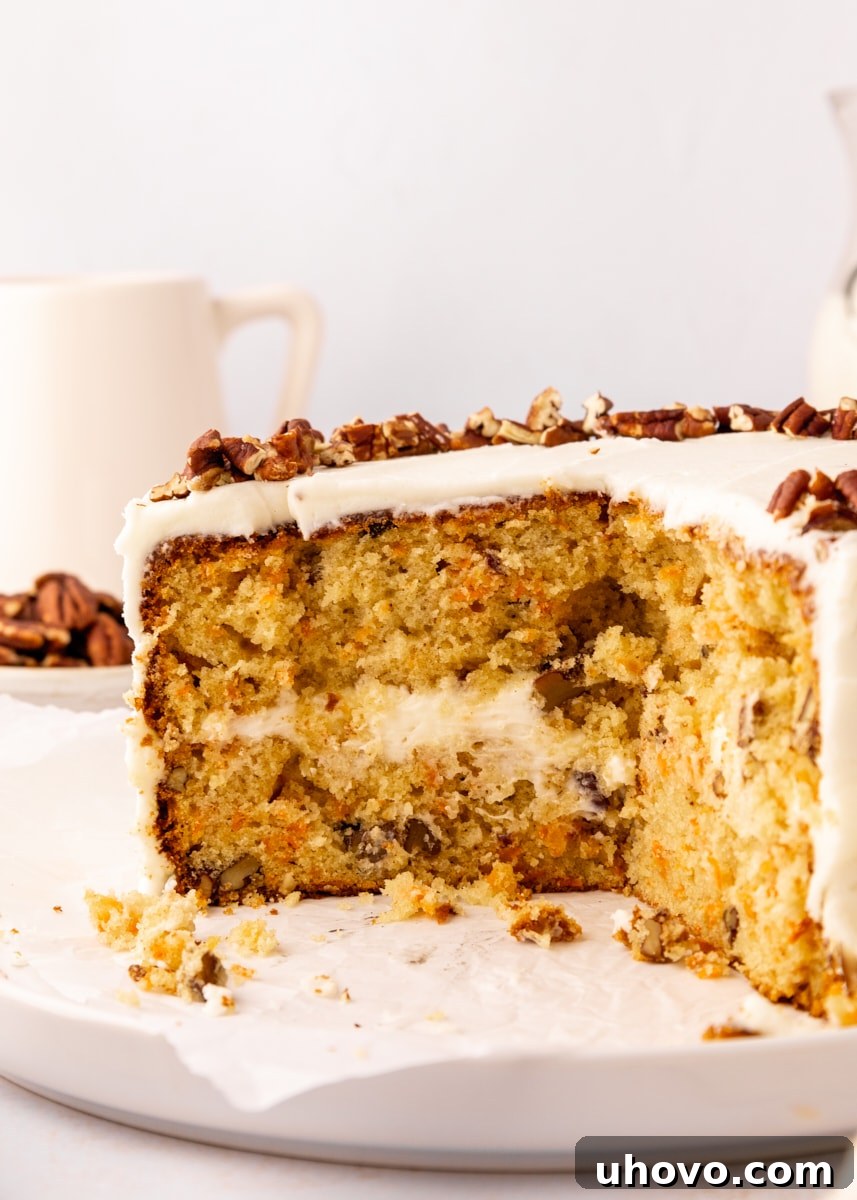
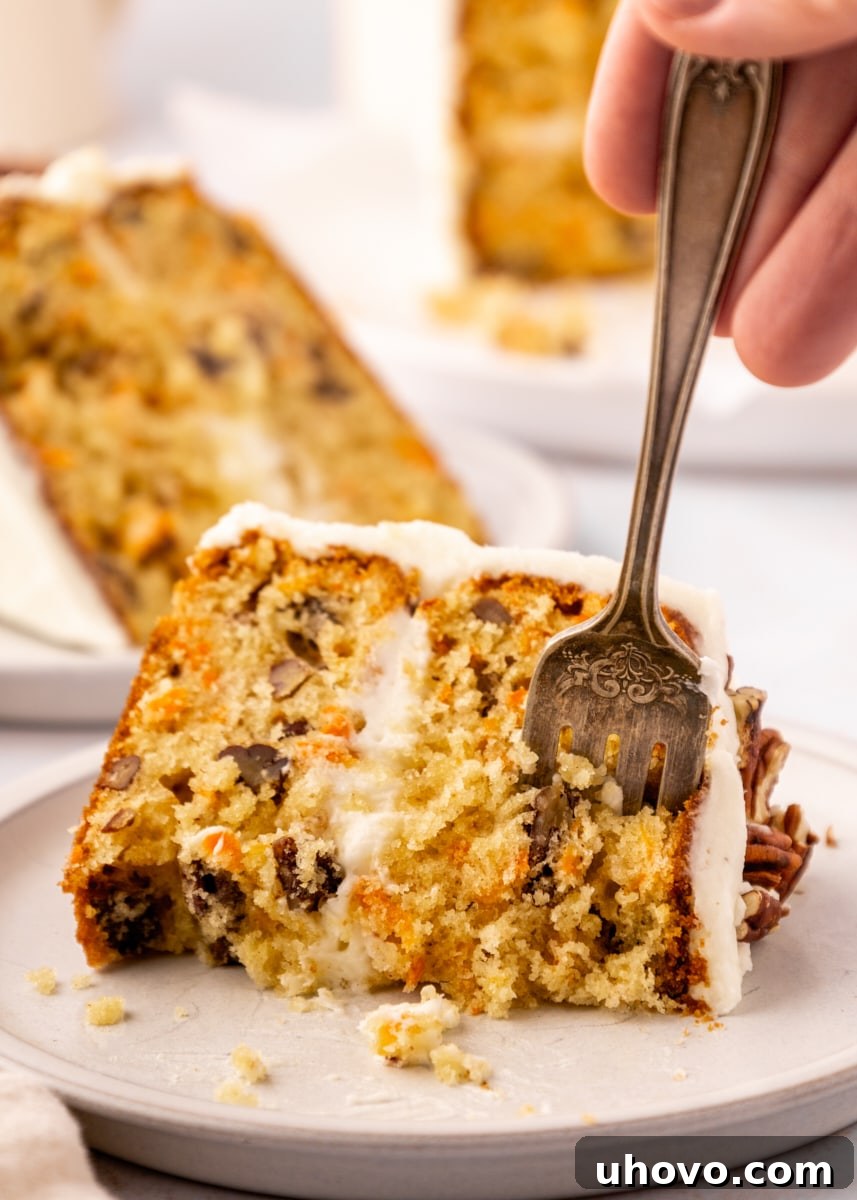
Delight in the quintessential comfort of a classic carrot cake, where each bite reveals a symphony of moist crumb, aromatic spices, and a luscious, tangy cream cheese frosting. This timeless dessert is not just a cake; it’s an experience – a perfect blend of rustic charm and sophisticated flavor that has captivated hearts for generations.
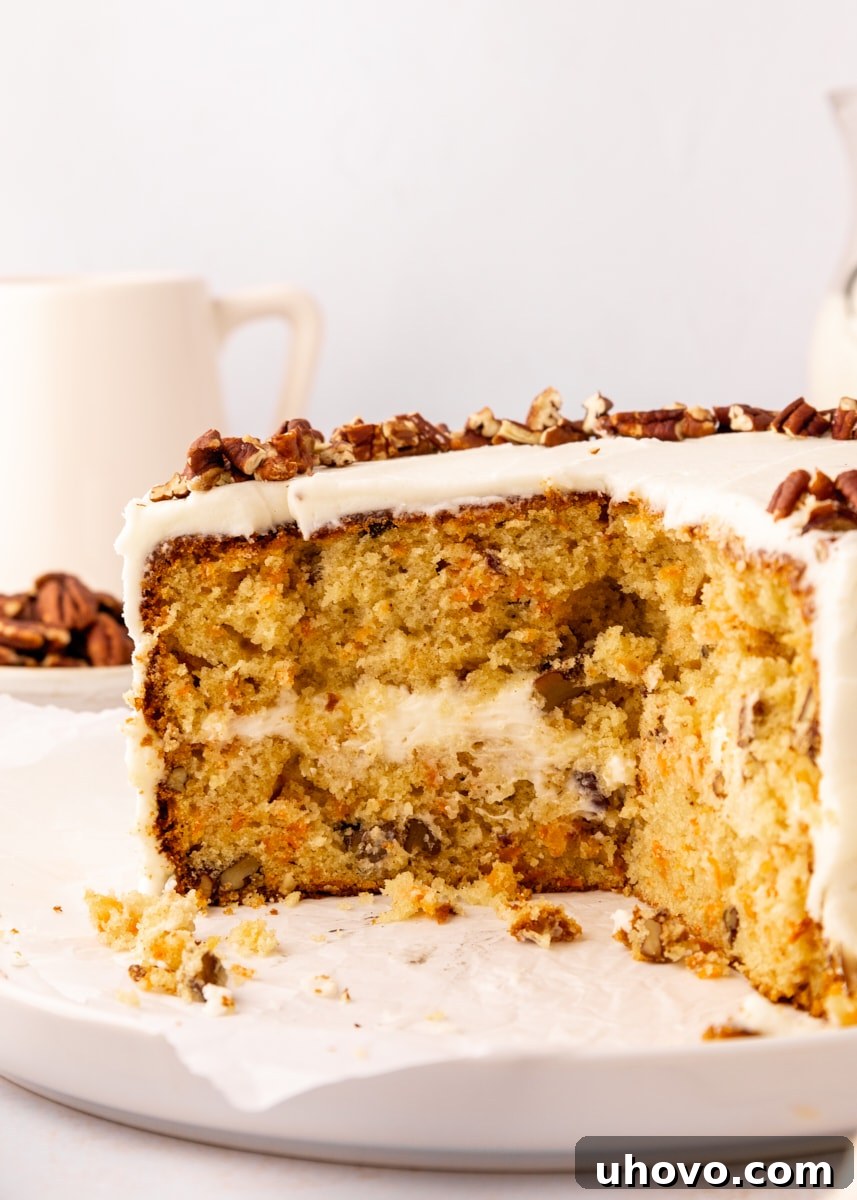
Carrot cake stands as a true culinary masterpiece, celebrated for its unique blend of sweet and savory notes. From the first forkful, you’ll be enchanted by the depth of flavor, the incredibly tender texture, and, of course, that heavenly, cloud-like layer of cream cheese frosting. It’s a cake that effortlessly marries comfort with sophistication, making it the ideal centerpiece for any gathering, from casual family dinners to elegant holiday celebrations. This straightforward recipe ensures that even novice bakers can achieve a show-stopping dessert that tastes as wonderful as it looks.
Whether you’re planning your festive Easter feast, a joyous birthday party, or simply craving a delightful homemade treat, this carrot cake recipe is designed to impress and satisfy everyone at your table. For more seasonal inspiration, explore our collection of the best Easter desserts and discover more ways to sweeten your celebrations.
Why This Carrot Cake Recipe Will Be Your New Favorite
Prepare to fall in love with this carrot cake recipe. It’s more than just a dessert; it’s an invitation to create lasting memories in your kitchen. Here’s why this particular recipe stands out:
- Effortless Baking Experience: This recipe is crafted for simplicity, making it incredibly accessible for bakers of all skill levels, from beginners to seasoned pros. The instructions are clear and concise, guiding you through each step with ease. You’ll be amazed at how simple it is to produce a cake that boasts a gourmet bakery quality in both appearance and taste, without any complicated techniques or obscure ingredients.
- Unmatched Versatility for Any Occasion: The beauty of carrot cake lies in its adaptability. It’s sophisticated enough to grace the most special occasions – imagine it as the star of your holiday dinner table (especially perfect for Easter!), a memorable birthday cake, or a delightful addition to a bridal shower. Yet, it’s also wonderfully comforting and approachable for a casual weeknight dessert, a weekend brunch, or an afternoon treat with coffee. No matter the event, this carrot cake fits seamlessly.
- A Guaranteed Crowd-Pleaser: This recipe strikes an exquisite balance between the natural sweetness of carrots, the warmth of carefully selected spices, and the rich tang of cream cheese frosting. This harmonious flavor profile ensures it’s a resounding hit with everyone – kids and adults alike will ask for seconds. It’s a classic for a reason, and this rendition guarantees an irresistible taste that consistently pleases any crowd, making you the star baker of any gathering.
Essential Ingredients for Your Perfect Carrot Cake
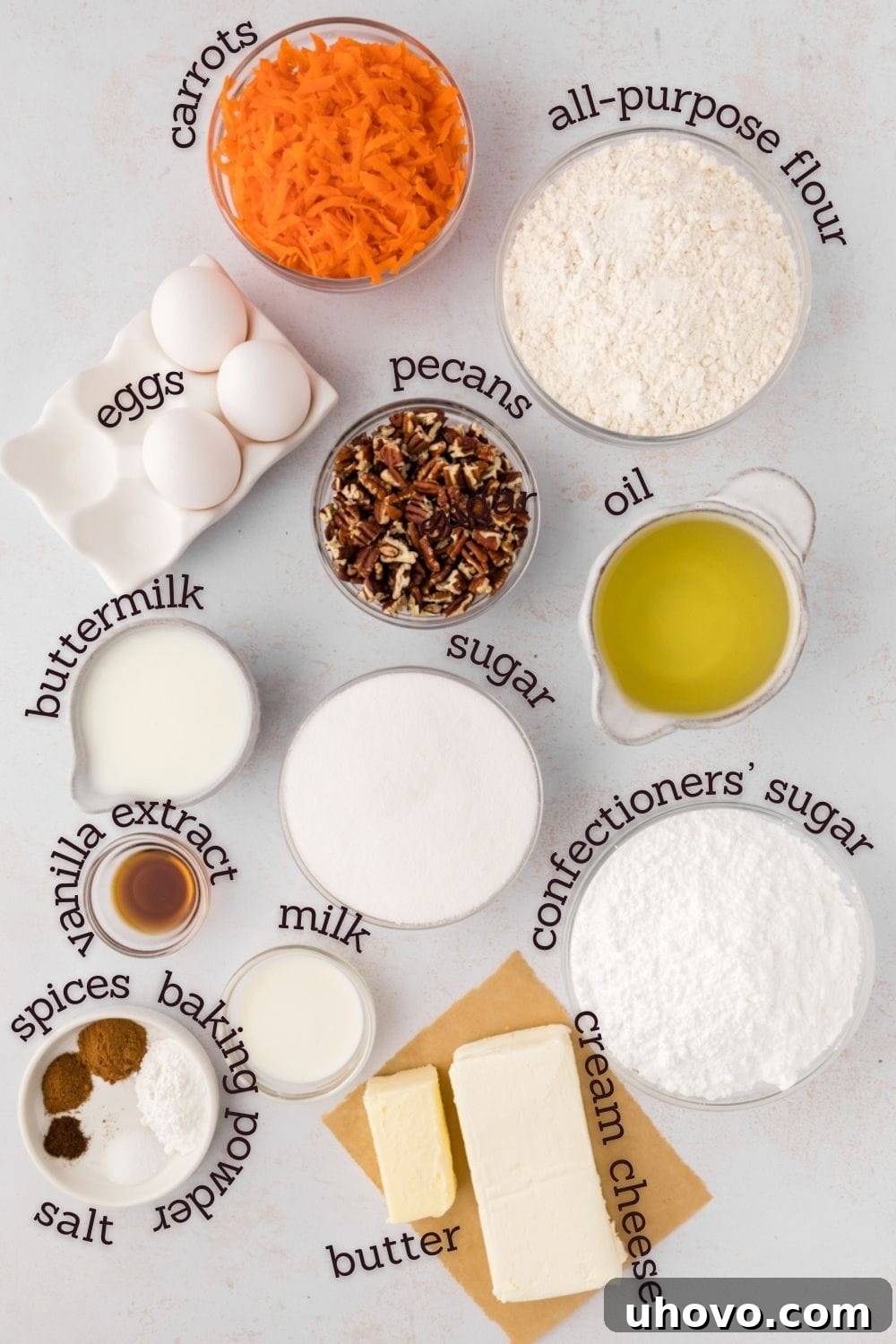
Crafting the perfect carrot cake starts with selecting the right ingredients. Below, you’ll find a detailed breakdown of each component, along with helpful tips to ensure your cake achieves optimal flavor and texture. Refer to the comprehensive recipe card at the end of this article for precise quantities and full instructions.
- Granulated Sugar: This provides the primary sweetness for our cake. Regular white sugar is all you need to create a beautifully balanced flavor that complements the spices and carrots.
- Large Eggs: It’s crucial for your eggs to be at room temperature. This allows them to emulsify more effectively with the other ingredients, leading to a smoother batter and a lighter, more tender cake texture. Plan ahead and take them out of the refrigerator at least 30 minutes before baking.
- Vegetable Oil: Unlike butter-based cakes, oil-based cakes tend to be exceptionally moist and stay fresh longer. Any neutral-flavored oil, such as canola oil, will work beautifully here, adding richness without overpowering the other flavors.
- Buttermilk: Also bring your buttermilk to room temperature. Buttermilk reacts with the baking powder, contributing to the cake’s tenderness and moisture while adding a subtle tang that enhances the overall flavor. While using genuine buttermilk yields the best results, you can easily create a substitute in a pinch using milk and lemon juice or vinegar.
- Vanilla Extract: A staple in almost any dessert, high-quality vanilla extract adds a warm, sweet aroma and deepens the overall flavor profile of the cake.
- All-Purpose Flour: For accurate and consistent results, always measure your flour correctly. We highly recommend measuring by weight using a kitchen scale for precision. If you don’t have a scale, use the “spoon and sweep” method: spoon the flour into your measuring cup until it’s overflowing, then level it off with the back of a knife. Avoid scooping directly from the bag, as this can compact the flour and lead to a dry cake. Learn more about How to Measure Flour.
- Baking Powder: This leavening agent is essential for giving the cake its lift and airy texture. Ensure your baking powder is fresh for optimal rise.
- Cinnamon, Nutmeg, and Cloves: These warming spices are the heart of carrot cake’s distinctive flavor. Before adding them, take a moment to smell your spices; if they lack a strong, pungent aroma, it’s likely time to replace them for the best flavor impact. Fresh spices make all the difference!
- Salt: A pinch of salt might seem small, but it’s vital for balancing the sweetness and enhancing all the other flavors in the cake, making them more vibrant and complex.
- Fresh Carrots: This is where the “carrot” in carrot cake comes from! Always use freshly grated carrots for the best results. Pre-shredded carrots from the store tend to be drier and less flavorful, and they can also be thicker, leading to a less desirable texture in your cake. Grating them yourself ensures maximum moisture and delicate texture.
- Pecans: Chopped pecans add a delightful crunch and nutty flavor that perfectly complements the soft cake. For an even more intense flavor, we highly recommend taking a few extra minutes to toast your pecans before adding them to the batter. If pecans aren’t your preference, walnuts make an excellent alternative.
- Cream Cheese (for frosting): For that signature rich and tangy cream cheese frosting, use full-fat cream cheese that comes in a brick, not the spreadable kind from a tub. Just like the eggs, ensure it’s softened to room temperature for a smooth, lump-free frosting that’s easy to spread.
- Unsalted Butter (for frosting): Use unsalted butter for the frosting, as this gives you control over the overall saltiness. Make sure it’s properly softened, but not melted, for a creamy, well-incorporated frosting. Learn more about How to Soften Butter.
- Confectioners’ Sugar: Also known as powdered sugar, this is the sweetener for your frosting. While not strictly required, sifting the confectioners’ sugar before adding it can significantly help achieve a wonderfully smooth, lump-free frosting texture.
- Milk (for frosting): A small amount of milk helps achieve the perfect consistency for your cream cheese frosting. While we prefer whole milk for richness, most any kind will work, including plant-based alternatives, depending on your dietary needs or preference.
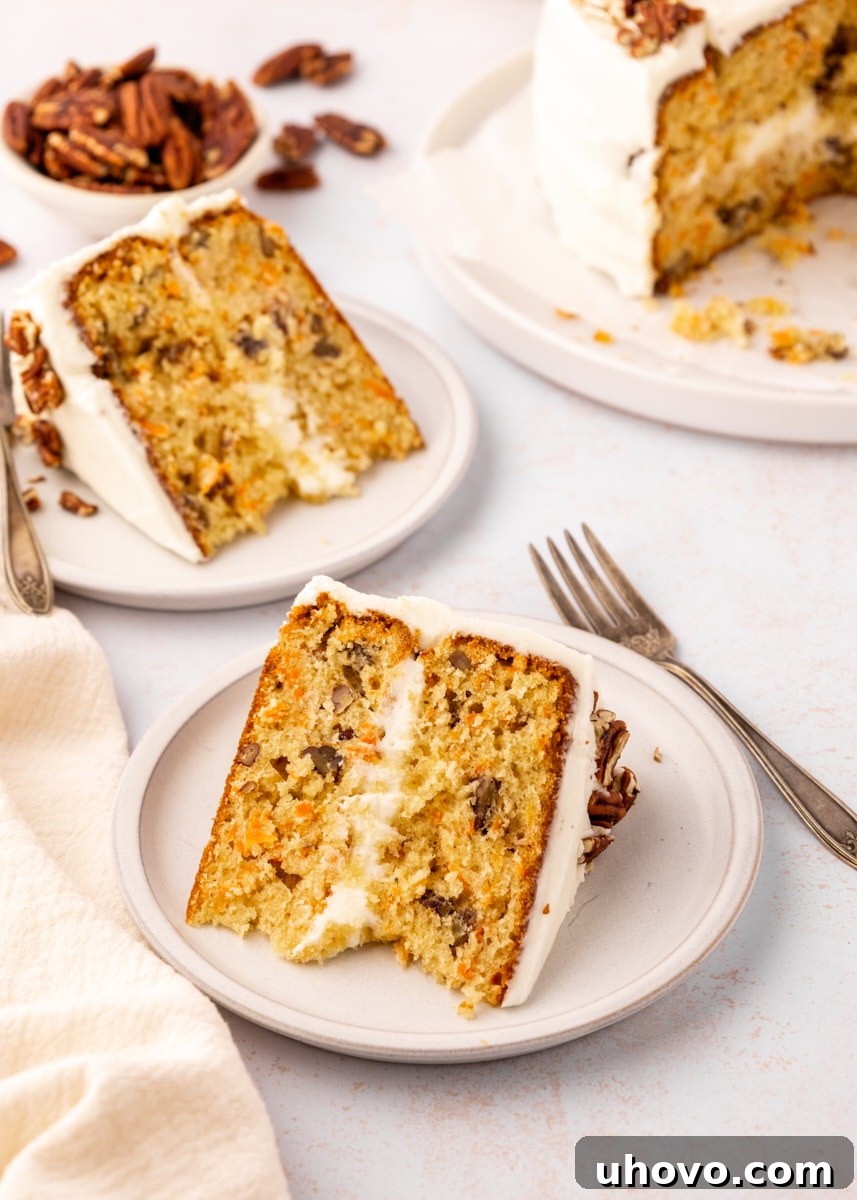
Step-by-Step Guide: Crafting Your Carrot Cake Masterpiece
Creating this delicious carrot cake is surprisingly simple, especially given its impressive outcome. Follow these easy steps, and you’ll be enjoying a slice of homemade heaven in no time. The true magic of this recipe lies in its straightforward nature, making it a joy to bake and an absolute pleasure to eat!
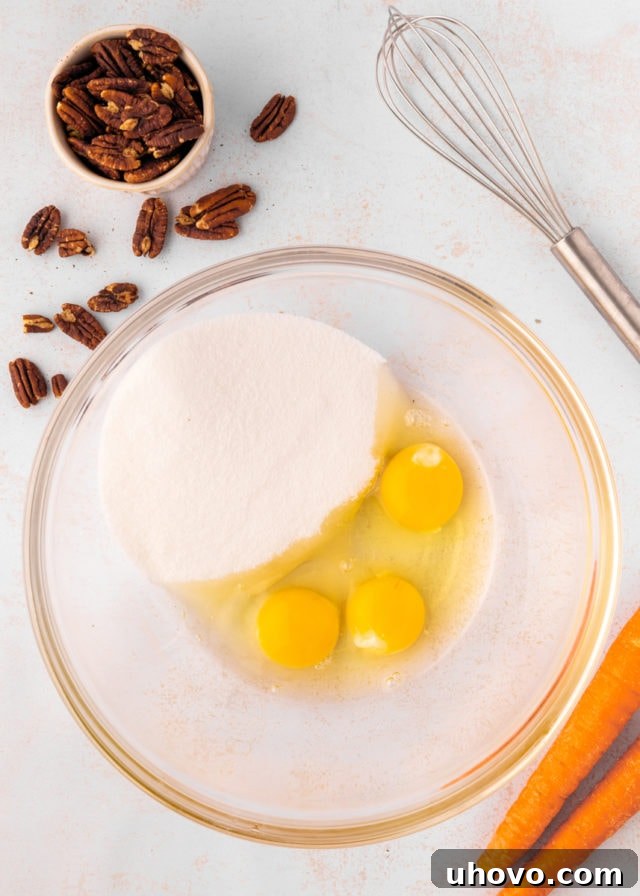
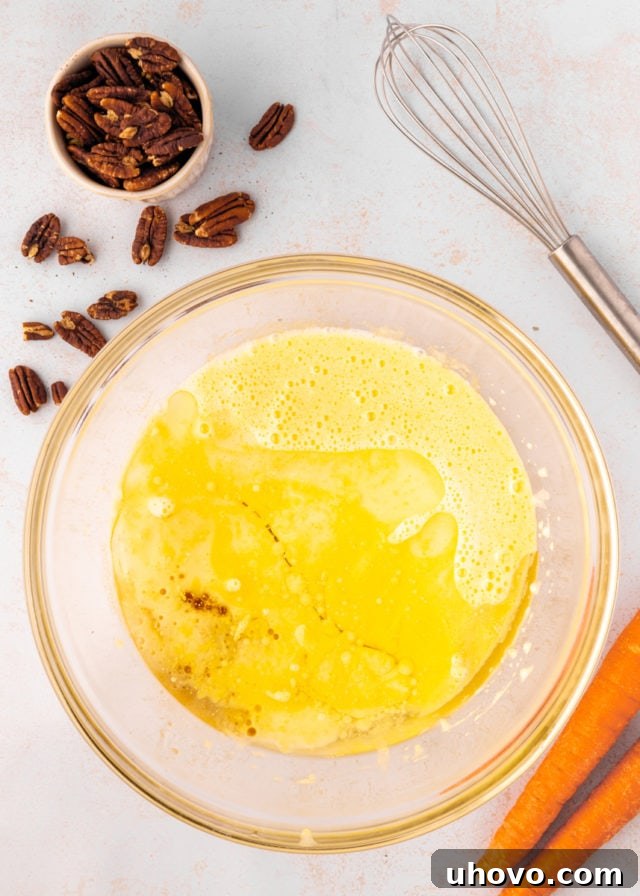
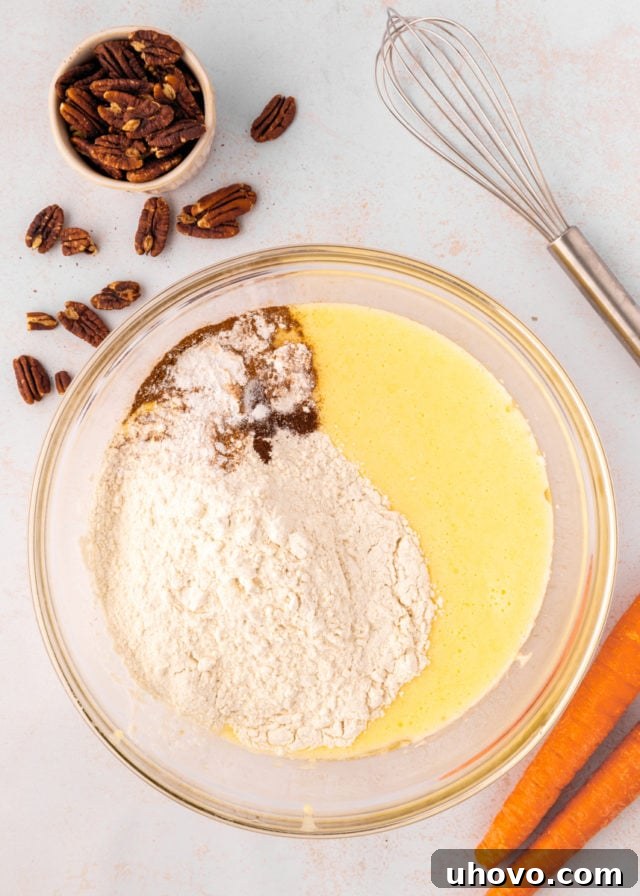
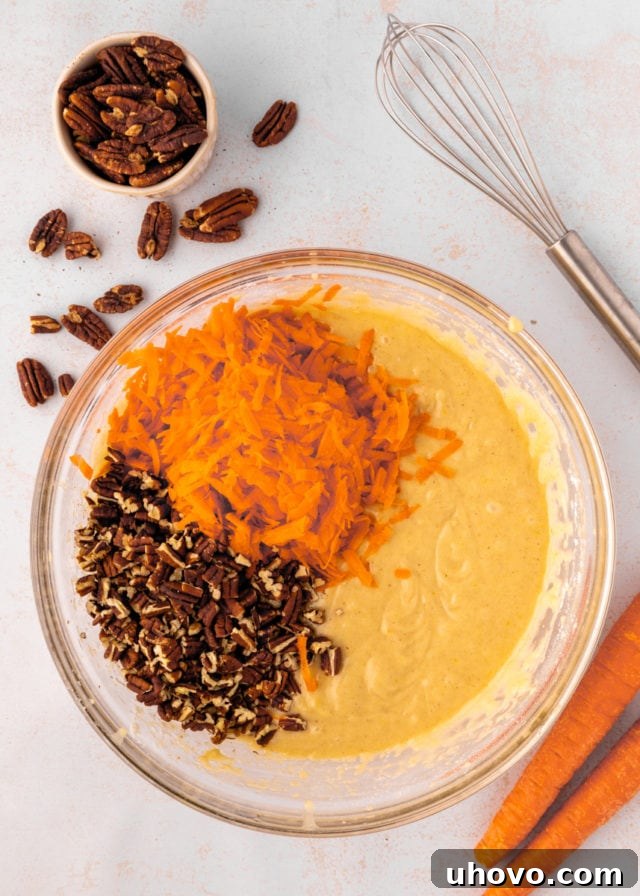
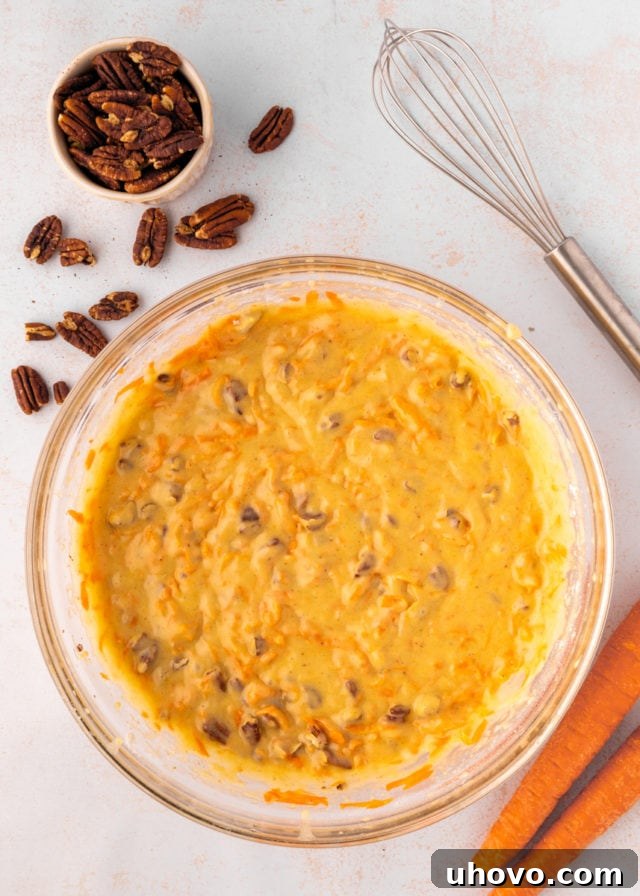
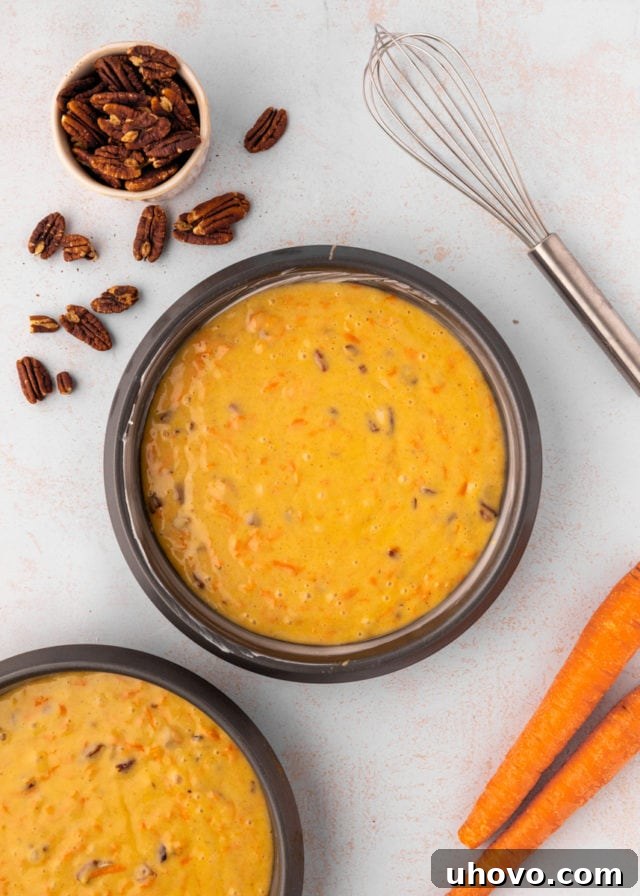
Creating Your Moist Cake Layers:
- Prepare for Baking: Begin by preheating your oven to 350°F (175°C). Next, prepare two 8-inch round cake pans. For effortless removal and to prevent sticking, generously grease the pans, then line the bottoms with parchment paper. This simple step makes a huge difference in ensuring your beautiful cake layers come out perfectly intact.
- Combine Wet Ingredients: In a large mixing bowl, use an electric mixer on medium speed to beat the granulated sugar and room temperature eggs until the mixture is light yellow and well combined – this usually takes about 2 minutes. This aeration is key for a tender crumb. Then, thoroughly mix in the vegetable oil, room temperature buttermilk, and vanilla extract until everything is fully incorporated.
- Incorporate Dry Ingredients: With the mixer on low speed, gradually add the all-purpose flour, baking powder, cinnamon, nutmeg, cloves, and salt to the wet ingredients. Mix just until combined. Be careful not to over-mix at this stage; over-mixing can develop the gluten in the flour, resulting in a tough, dense cake. A few small streaks of flour are acceptable and will disappear during the folding of the carrots.
- Final Mix-ins: Gently fold the freshly grated carrots and chopped pecans into the batter using a spatula. Mix just enough to distribute them evenly without deflating the batter.
- Bake to Perfection: Divide the prepared batter evenly between your two greased and parchment-lined cake pans. Bake for 25 to 30 minutes, or until a toothpick inserted into the center of each cake comes out clean. This indicates that the cakes are fully cooked through.
- Cooling Process: Once baked, transfer the cake pans to wire racks and allow the cakes to cool in their pans for about 10 minutes. This resting period helps the cakes firm up. After 10 minutes, carefully invert the cakes onto the wire racks, remove the pans, and peel off the parchment paper (if used). Allow the cake layers to cool completely on the wire racks before frosting. Attempting to frost a warm cake will cause the frosting to melt and slide off.
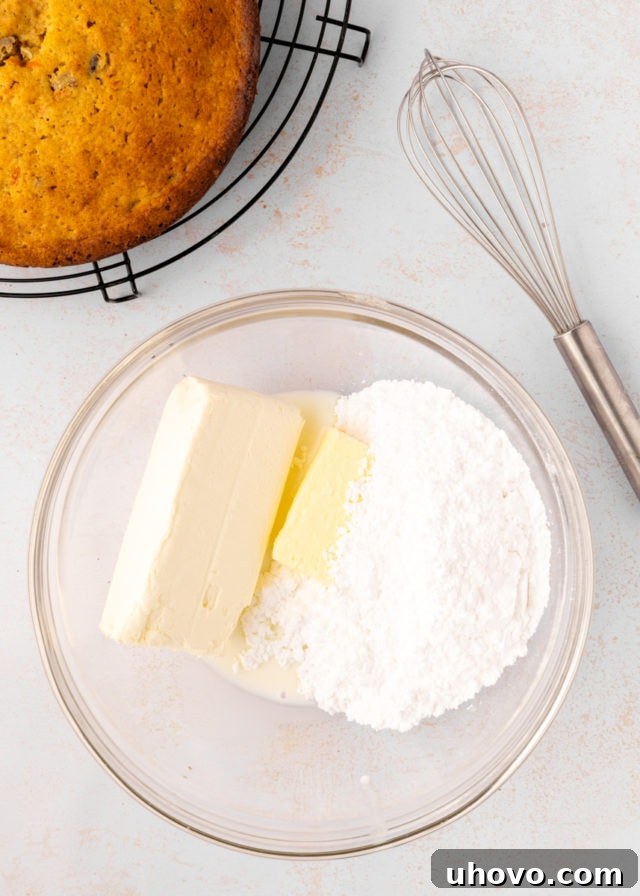
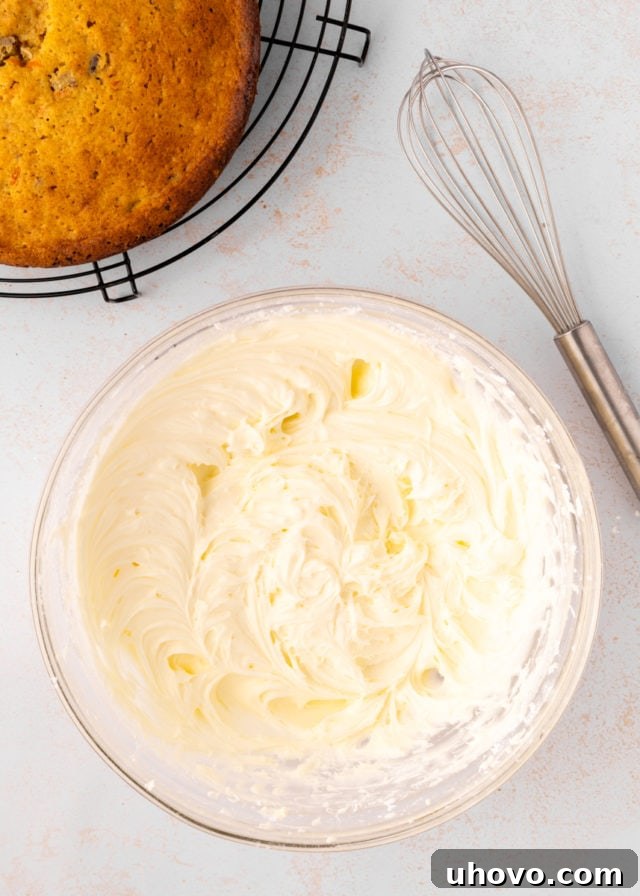
Whipping Up the Velvety Cream Cheese Frosting:
- Initial Mixing: In a clean mixing bowl, combine the softened cream cheese, softened unsalted butter, 4 cups of confectioners’ sugar, and the milk. Using an electric mixer on medium speed, beat these ingredients together until the mixture is completely smooth and creamy. Ensure there are no lumps of cream cheese or butter remaining.
- Adjusting Consistency: If your frosting appears too thick, you can add a tiny bit more milk, one teaspoon at a time, until you reach your desired spreading consistency. Conversely, if it seems too thin, gradually add more confectioners’ sugar (up to 1 additional cup) until it thickens to a perfect, pipeable or spreadable consistency. The goal is a frosting that holds its shape beautifully.
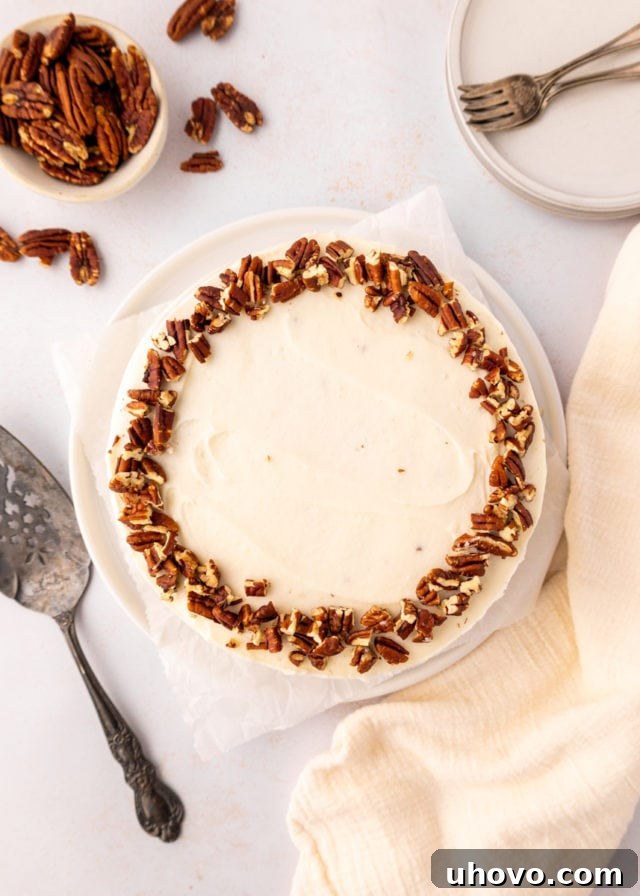
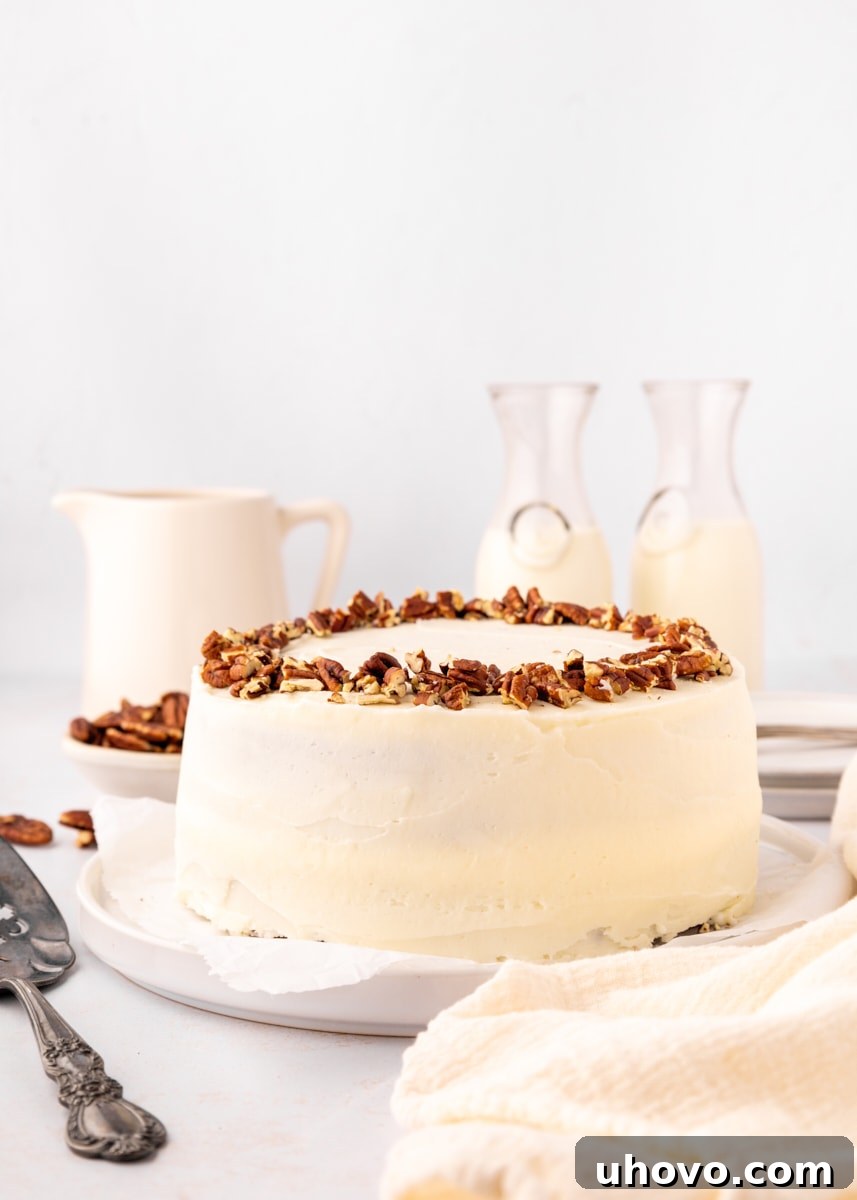
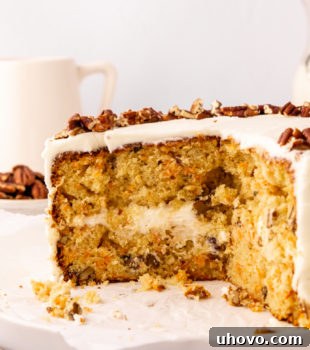
- Assemble and Frost: Once your cake layers are completely cool and your frosting is ready, it’s time to assemble! Place one cake layer onto your chosen cake plate or serving stand. Evenly spread a generous amount of frosting over the top of this first layer. Carefully place the second cake layer on top, aligning it carefully. Then, generously frost the top and sides of the entire cake using an offset spatula for smooth coverage or a piping bag for more decorative flair. For a final elegant touch, garnish as desired, perhaps with chopped pecans or a sprinkle of cinnamon.
Adapt This Recipe: Cupcakes or a Single-Layer Cake?
This versatile carrot cake batter can easily be adapted to suit different serving styles, making it perfect for any occasion. Whether you prefer individual treats or a larger sheet cake, this recipe has you covered:
For Cupcakes: This recipe yields approximately 2 dozen standard-sized cupcakes. Prepare your muffin tins by greasing them or lining them with paper cupcake liners. Fill each cup about three-quarters full with batter to allow for proper rising. Bake for a shorter duration, typically 20 to 22 minutes, or until a toothpick inserted into the center of a cupcake comes out clean. Cupcakes are a fantastic option for parties or when you need individual servings.
For a Single-Layer Sheet Cake: If you prefer a larger, easier-to-serve cake, you can bake this recipe in a 9×13-inch pan. Prepare the pan by greasing it thoroughly; for even easier removal, you can also line it with parchment paper first, allowing some overhang on the sides to create “handles.” Spread the entire batter evenly into the prepared pan. The baking time will be longer for a single, thicker layer, usually around 35 to 40 minutes, or until a toothpick inserted into the center of the cake comes out clean. This makes a wonderful, casual dessert for family gatherings.
Mastering Your Carrot Cake: Expert Tips for Success
To ensure your carrot cake consistently turns out perfectly moist, beautifully spiced, and utterly unforgettable, take a moment to review these foolproof tips. They are the secret ingredients to making your homemade carrot cake the absolute highlight of any table:
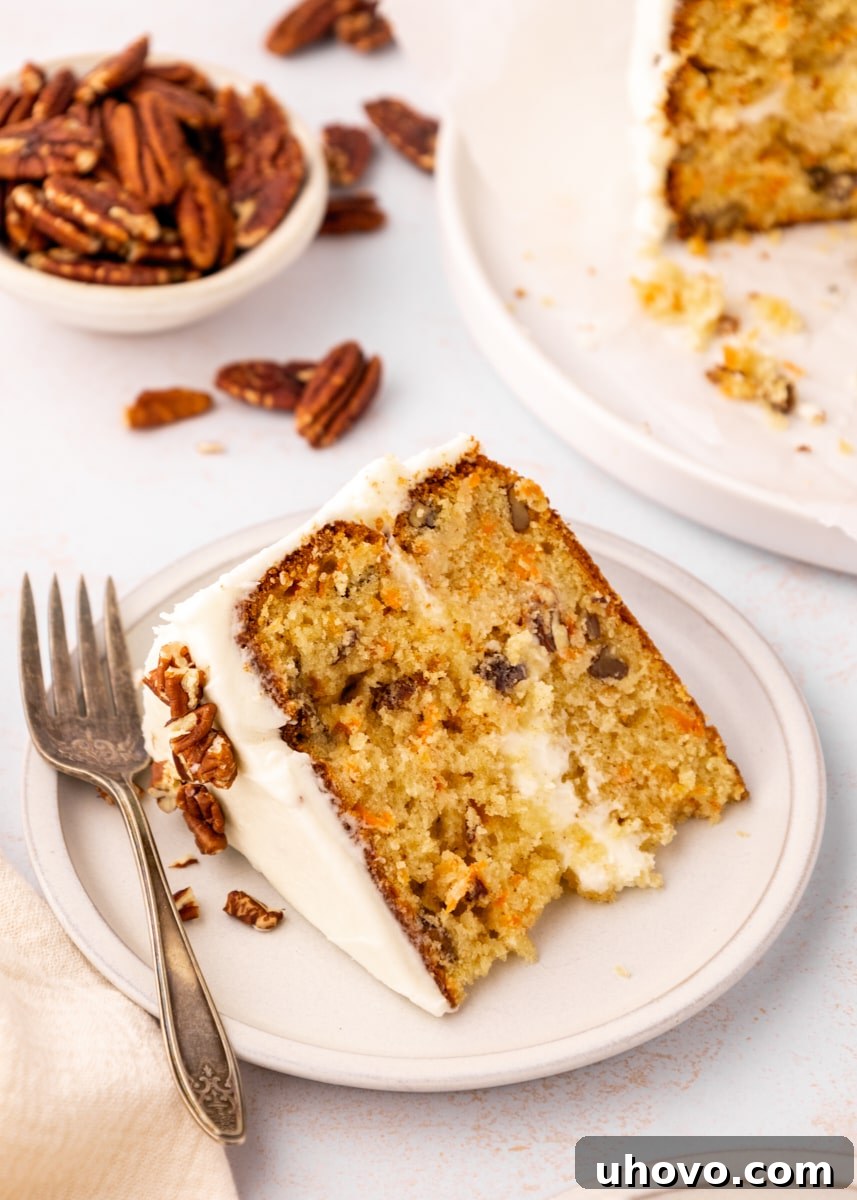
- Always Use Freshly Grated Carrots: This is perhaps the most crucial tip! For superior flavor, moisture, and texture, always grate whole carrots yourself. Pre-shredded carrots from the grocery store often lack moisture, can be overly thick, and may have a drier, less vibrant flavor profile. Freshly grated carrots melt into the cake, creating that signature moist crumb.
- Avoid Over-mixing the Batter: Once you add the dry ingredients to the wet, mix just until they are barely combined. Over-mixing develops the gluten in the flour, which can lead to a dense, tough, and chewy cake instead of the desired tender crumb. A few small streaks of flour are fine; they will disappear during baking.
- Opt for Light-Colored Metal Cake Pans: Darker pans absorb more heat, which can cause the cake edges to bake too quickly and potentially burn before the center is cooked. Light-colored metal pans promote more even heat distribution, resulting in thoroughly and uniformly baked cake layers.
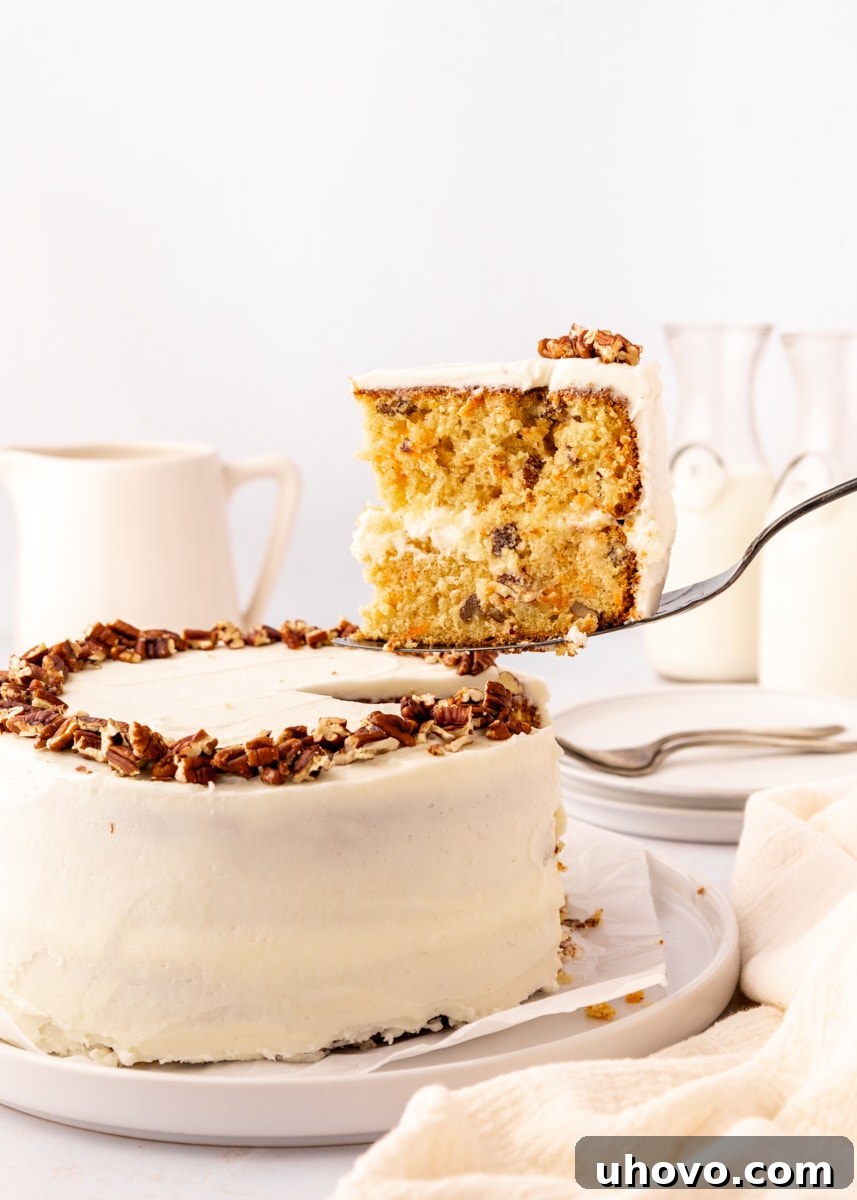
- Divide Batter Evenly for Perfect Layers: For stunning, level cake layers, it’s essential to divide the batter as evenly as possible between your pans. The most accurate way to do this is by weight. First, weigh your empty mixing bowl. After mixing the batter, weigh the bowl again and subtract the empty bowl’s weight to determine the total batter weight. Divide this number by two (for two 8-inch pans). Then, place one prepared cake pan on your scale, zero it out, and pour in half of the calculated batter weight. Repeat for the second pan. This ensures perfectly balanced layers.
- Ensure Cakes Are Completely Cool Before Frosting: Patience is key here! It’s absolutely vital that your cake layers are completely cooled to room temperature before you even think about applying the cream cheese frosting. Frosting a warm cake will cause the butter and cream cheese in the frosting to melt, resulting in a runny, messy disaster instead of a beautifully firm and spreadable layer.
- Leveling Domed Cake Layers: It’s common for cakes to bake with a slight dome in the center. If your cake layers have domed significantly and you desire perfectly flat layers for stacking, use a long, serrated knife (a bread knife works well) to carefully trim off the domed tops, making them level. This creates a professional look and ensures stability for your layered cake.
- Bring Ingredients to Room Temperature: As mentioned, make sure your eggs, buttermilk, cream cheese, and butter are all at room temperature before you start mixing. This allows them to emulsify and combine much more smoothly, leading to a homogenous batter and a wonderfully consistent frosting.
- Don’t Skimp on the Spices: Carrot cake relies heavily on its warm, aromatic spices. Ensure your spices are fresh and don’t be afraid to use the specified amounts. They are what give the cake its signature cozy flavor.
Creative Variations to Customize Your Carrot Cake
One of the joys of baking is the ability to personalize recipes to your taste. This carrot cake is incredibly forgiving and open to delicious modifications. Here’s a handful of easy twists and additions to make this beloved classic uniquely yours:
- Tropical Coconut Twist: For a delightful texture and tropical hint, add about a cup of shredded coconut to the batter along with the carrots. This can be in addition to the nuts for extra crunch, or you can use it as a substitute for a nut-free option. For a more pronounced flavor, lightly toast the shredded coconut before incorporating it.
- Elevate the Spice Profile: The beauty of carrot cake spices is their versatility. Feel free to experiment and adjust the cinnamon, nutmeg, and cloves to suit your personal preference. Consider adding a teaspoon of ground ginger for a zesty kick, or a half-teaspoon of allspice for a deeper, more complex warmth. A touch of cardamom can also introduce an exotic, fragrant note.
- Brighten with Zesty Citrus: Introduce a refreshing burst of flavor by incorporating fresh orange or lemon zest. Add the zest of one orange or lemon to both the cake batter and a tablespoon to the cream cheese frosting. The citrus brightens the richness of the cake and provides a lovely counterpoint to the sweet frosting, creating a more vibrant taste experience.
- Sweet Raisin Richness: If you’re a fan of classic additions, a cup of plump raisins makes a wonderful inclusion. Add them to the batter alongside the carrots and nuts. For an extra layer of flavor and moisture, you can rehydrate the raisins in warm water or a splash of rum for about 15-20 minutes before draining and folding them into the batter. This is also an excellent option if you’re aiming for a nut-free cake.
- Frosting Flavor Adventures: While classic vanilla extract in the cream cheese frosting is superb, don’t hesitate to get creative. Try replacing some of the vanilla with almond extract for a delicate nutty flavor, coconut extract for a tropical twist, or even maple extract for a cozy, autumnal vibe. A tiny splash of bourbon or rum can also add sophisticated depth to the frosting.
- Garnish with Flair: Beyond chopped pecans, there are countless ways to adorn your finished carrot cake. Consider toasted coconut flakes for a lovely texture and flavor, finely chopped candied ginger for a spicy-sweet bite, or even elegant candied carrot curls for a truly gourmet touch. For a whimsical finish, small carrot-shaped candies or a sprinkle of edible gold dust can add charm. You can also reserve a portion of the frosting, tint it with food coloring if desired, and use a piping bag to create intricate designs or simple borders.
Storing Your Carrot Cake for Optimal Freshness
To keep your carrot cake delicious and moist for as long as possible, proper storage is essential. Due to its cream cheese frosting, this cake requires careful attention to temperature.
For immediate serving (within a day), you can comfortably leave the frosted carrot cake at room temperature. However, for extended freshness and to prevent any spoilage, it’s best to store the frosted cake in the refrigerator. To protect its flavor and texture, place the cake in an airtight container. If an airtight container isn’t available, cover it loosely but thoroughly with plastic wrap to prevent it from drying out or absorbing other odors and flavors from your fridge. Stored this way, your magnificent carrot cake will remain fresh and delightful for up to 5 days. For the best taste and texture, always allow the cake to come to room temperature for about 30-60 minutes before serving.
Freezing Carrot Cake for Future Enjoyment
Carrot cake is an excellent candidate for freezing, allowing you to enjoy a slice of this comforting dessert weeks or even months later. Whether you want to freeze the whole cake, a partial cake, or individual slices, here’s how to do it correctly to maintain its quality:
- Firm Up the Frosting: First, place the frosted cake (or individual slices) uncovered in the freezer for a few hours. This step allows the cream cheese frosting to firm up, preventing it from sticking to the wrapping.
- Wrap Thoroughly: Once the frosting is firm to the touch, wrap the cake tightly. Begin with two layers of plastic wrap, ensuring no air can get in. Then, add another layer of heavy-duty aluminum foil for extra protection against freezer burn. Alternatively, you can place the plastic-wrapped cake in an airtight, freezer-safe container.
- Storage Duration: Properly stored, your carrot cake can keep beautifully in the freezer for up to 3 months.
- Thawing and Serving: When you’re ready to enjoy your frozen cake, transfer it to the refrigerator to thaw overnight. For the absolute best flavor and texture, remove the cake from the refrigerator and place it on the counter for a few hours (1-2 hours) to allow it to come to room temperature before serving.
More Classic Cake Recipes to Love
Get the Recipe:
Carrot Cake
Yield: 12 servings
Prep Time: 20 minutes
Cook Time: 30 minutes
Total Time: 50 minutes
Indulge in the timeless comfort of this classic carrot cake, where moist, spiced layers meet a velvety cream cheese frosting, topped with a crown of crunchy pecans. It’s a slice of home in every bite, perfect for both grand celebrations and cozy, quiet afternoons.
Pin Recipe
Ingredients
For the cake:
- 3 cups (360 g) all-purpose flour
- 2 teaspoons baking powder
- 1 teaspoon cinnamon
- ½ teaspoon salt
- ½ teaspoon nutmeg
- ¼ teaspoon cloves
- 2 cups (400 g) granulated sugar
- 3 large eggs (room temperature)
- 1 cup (240 ml) vegetable oil
- ¾ cup (180 ml) buttermilk (room temperature)
- 2 teaspoons vanilla extract
- 2 cups grated peeled carrots (freshly grated)
- 1 cup chopped pecans (toasted, optional)
For the frosting:
- 8 ounces (226 g) cream cheese, softened (full-fat brick)
- ¼ cup (56 g) unsalted butter, softened
- 4-5 cups (440-550 g) confectioners’ sugar (sifted, optional)
- 3 tablespoons (45 ml) milk (whole milk preferred)
- Pecan halves, for garnish (optional)
Recommended Products
- USA Pan Bakeware Round Cake Pan, 8 inch
- OXO Box Grater
- Half Sheet Nonstick Cooling Rack
- Offset Spatula
Instructions
To make the cake:
- Preheat the oven to 350°F (175°C). Grease two 8-inch round cake pans. For easier removal, line the bottoms of the pans with parchment paper.
- Using an electric mixer on medium speed, beat the eggs and granulated sugar until light yellow and fluffy (about 2 minutes). Mix in the vegetable oil, buttermilk, and vanilla extract until well combined.
- With the mixer on low speed, gradually add the flour, baking powder, salt, cinnamon, nutmeg, and cloves. Mix until just combined, being careful not to over-mix. Fold in the grated carrots and chopped pecans.
- Divide the batter evenly between the two prepared cake pans.
- Bake for 25 to 30 minutes, or until a toothpick inserted into the center of the cakes comes out clean.
- Place the pans on wire racks to cool for 10 minutes. Then, remove the cakes from the pans, peel off the parchment paper, and place directly on wire racks to cool completely.
To make the frosting and assemble:
- Using an electric mixer on medium speed, beat together the softened cream cheese, softened butter, 4 cups of confectioners’ sugar, and milk until smooth and creamy. Add more confectioners’ sugar as needed until the frosting reaches the desired consistency.
- Once the cakes have cooled completely, place one layer on a cake stand or serving plate. Frost the top of this layer, then carefully place the second cake layer on top. Frost the top and sides of the entire cake with a frosting spatula or piping bag.
- If desired, garnish the frosted cake with pecan halves or your chosen decoration.
Notes
- Store tightly covered in the refrigerator for up to 5 days. Bring to room temperature before serving for best flavor.
Author: Jennifer McHenry
Course: Cakes
Cuisine: American
Show off your baking masterpiece!
Snap a pic, tag @bakeorbreak, and use #bakeorbreak on Instagram. We can’t wait to see your delicious creation!