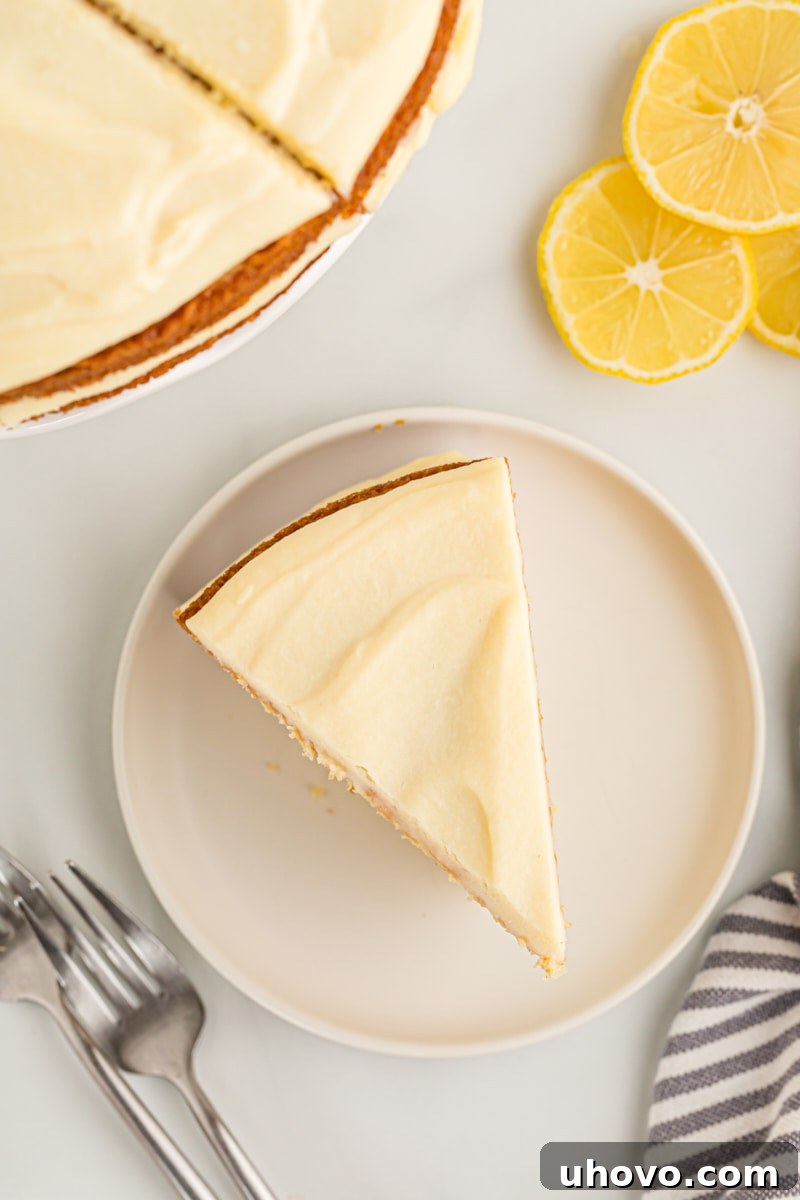
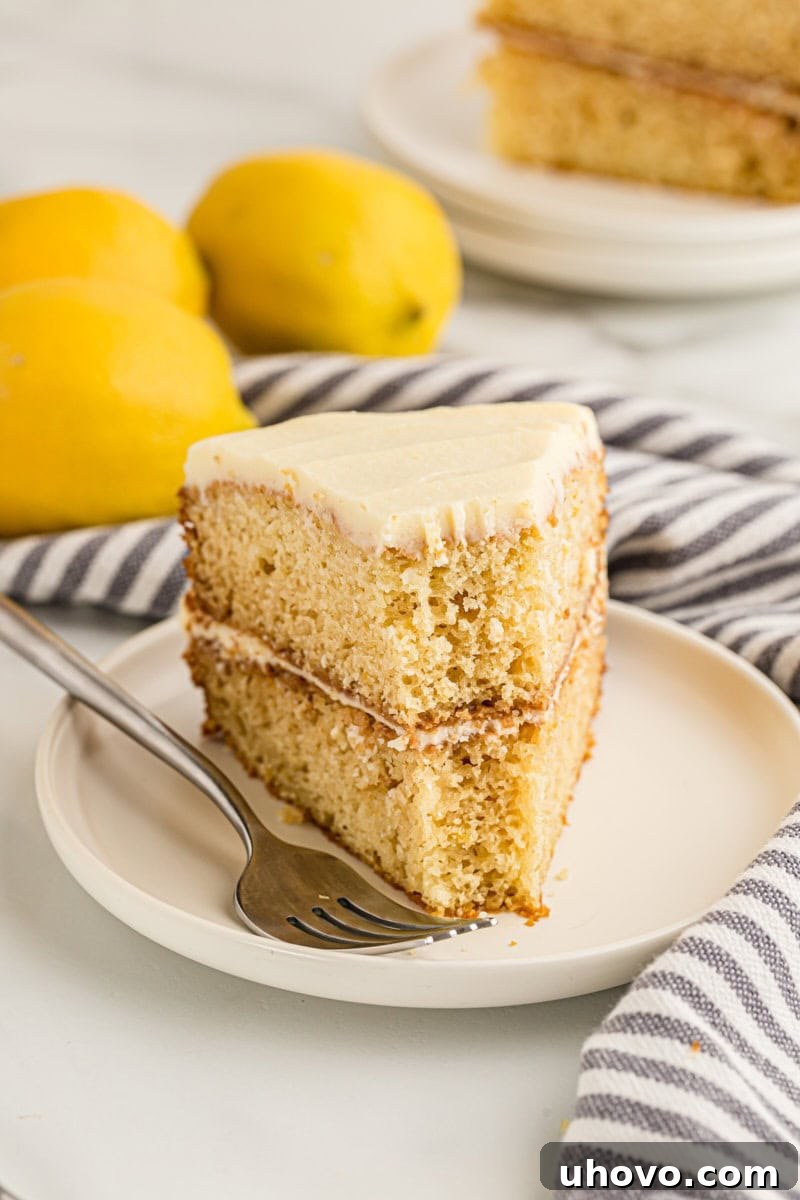
This lemon cream cake recipe is truly a masterpiece, my absolute favorite when I crave an immersive lemon dessert experience! It features a wonderfully moist, tender cake infused with Limoncello, perfectly complemented by a luscious whipped mascarpone frosting. The result is an unforgettable treat that promises to delight every lemon lover.
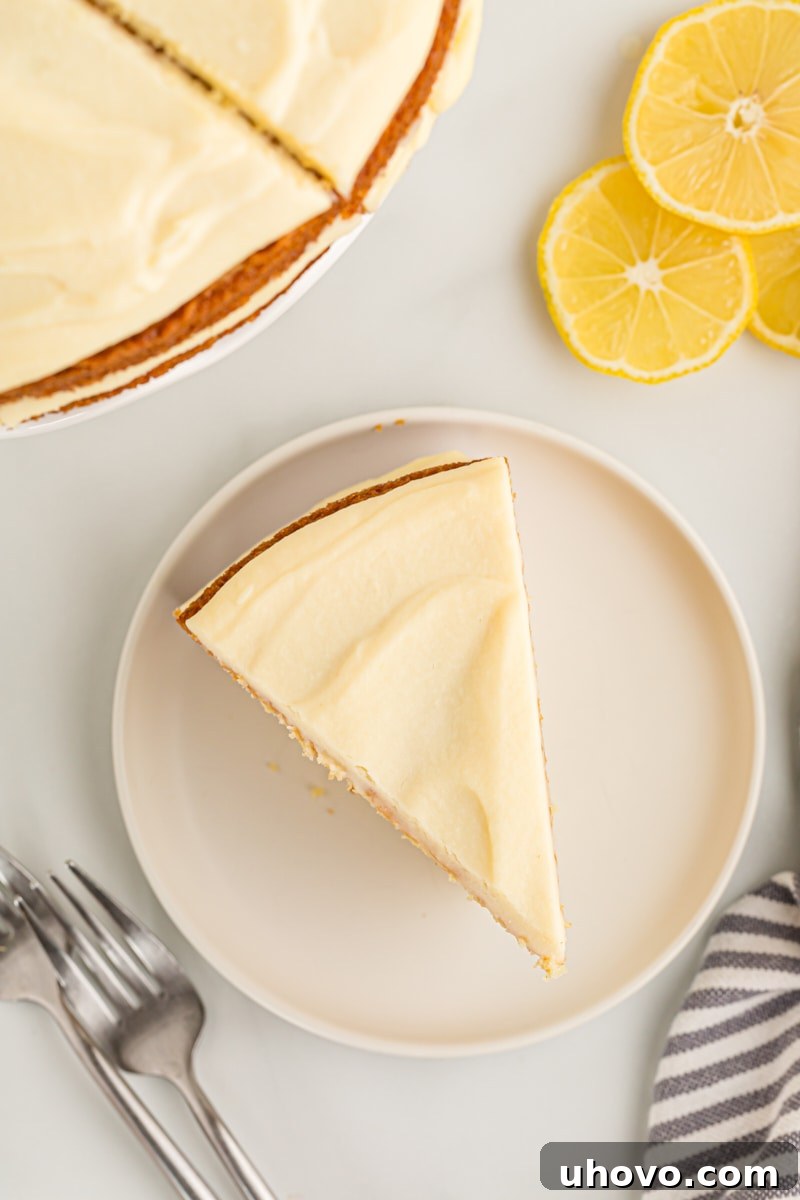
Experience the Ultimate Zesty Delight: A Two-Layer Lemon Cake With Mascarpone Frosting
I often find myself reminiscing about my grandmother and her profound love for baking. Her kitchen was a magical place, perpetually filled with the comforting aromas of something delicious simmering or baking, from elaborate cakes to rustic fried pies. Among her many culinary creations, one cake held a special place in my heart: her signature lemon cake. It was a masterpiece of dense, flavorful lemon cake layers topped with a light, airy, and intensely lemony frosting – so good, I could have happily eaten it straight with a spoon!
While I’m fortunate to have inherited many of her treasured recipes, the one for her iconic lemon cake, regrettably, never made it into my collection. For years, I’ve been on a quest, trying various recipes and techniques to recapture that specific taste and texture. I am thrilled to say that with this particular lemon cream cake, I believe I have finally come incredibly, exquisitely close to recreating that cherished memory. It captures the essence of her baking while adding a few modern twists that elevate it to a truly spectacular dessert.
One distinct difference from my grandmother’s probable version, however, is the inclusion of Limoncello. This vibrant Italian lemon liqueur isn’t mixed into the cake batter itself. Instead, it serves a more elegant purpose: it is delicately brushed over the warm, freshly baked cake layers, allowing them to slowly absorb its bright, sweet-tart essence. This simple step infuses the cake with an extra layer of deep lemon flavor, enhancing its natural citrus notes and contributing to an all-out lemon delight that truly sings on the palate. It’s a secret weapon for maximizing that fresh, zesty impact.
As for the accompanying frosting, its simplicity is its genius. Crafted from just three core ingredients, it yields a remarkably fantastic frosting that boasts a beautiful lemon flavor, perfectly balancing the cake’s intensity. I must offer a small word of caution: when first mixed, this mascarpone frosting has a thinner consistency than traditional buttercreams. Do not be alarmed! Its delicate nature is part of its charm. The magic happens once your beautifully frosted cake chills in the refrigerator for a while. During this time, the frosting transforms, setting up into a wonderfully stable, yet still light and airy, coating that perfectly complements the moist cake layers. Patience is key to achieving its ideal texture and ensuring a stunning presentation.
Essential Ingredients for Your Lemon Cream Cake
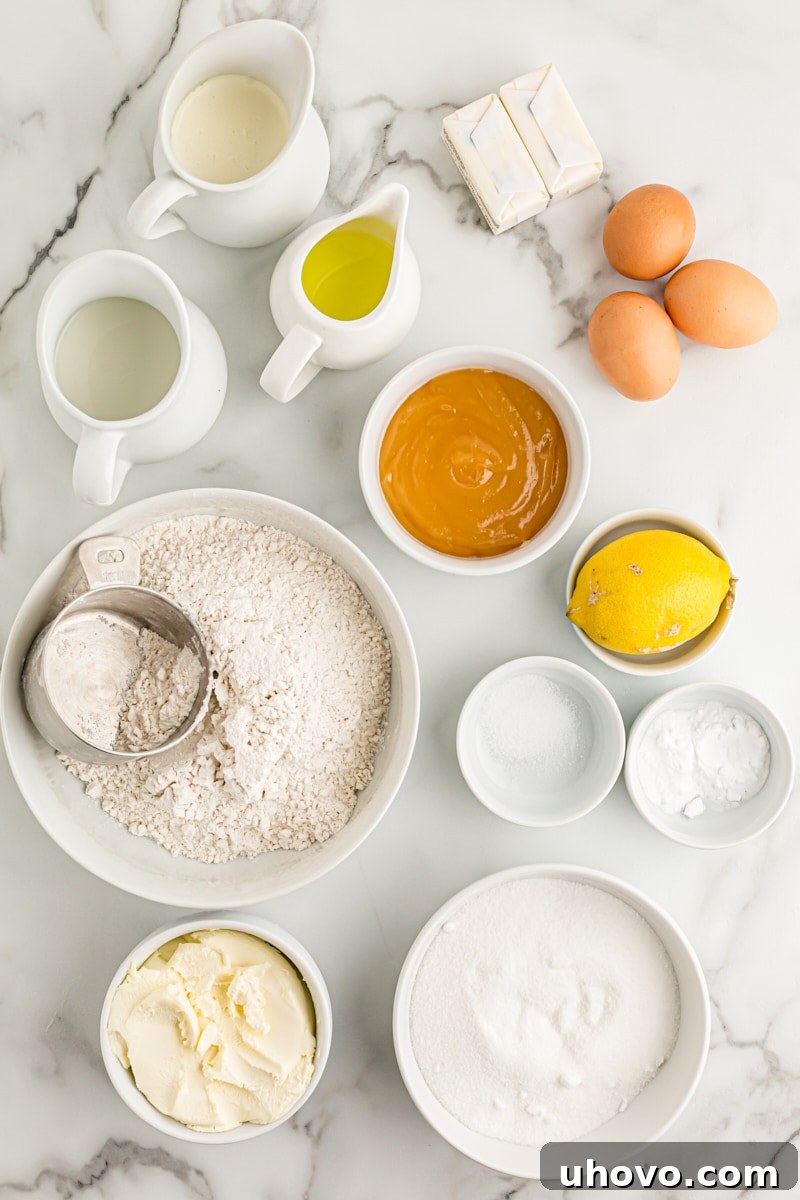
For precise quantities and detailed instructions, please refer to the comprehensive recipe card located further down the page.
For the Moist Lemon Cake Layers:
- All-purpose flour – The backbone of our cake. Proper measurement is crucial for the right texture; learn how to measure flour accurately to avoid a dense cake.
- Baking powder – This leavening agent ensures our cake rises beautifully, creating those desirable light and fluffy layers.
- Salt – A pinch of salt is vital in baking; it enhances all the other flavors, particularly the sweet and tart notes of lemon, and balances the overall taste.
- Lemon – You’ll need both the fragrant zest and the tangy juice from fresh lemons. Always remember to zest the lemon before juicing it to get the most flavor from its rind.
- Unsalted butter – Softened to room temperature, unsalted butter allows you to control the total sodium in your recipe. It also creams much better with sugar, incorporating air for a lighter cake.
- Granulated sugar – Provides sweetness and helps create a tender crumb in the cake. When creamed with butter, it also contributes to the cake’s structure and texture.
- Eggs – Large eggs should also be at room temperature, just like your butter. This helps them emulsify better with other ingredients, leading to a smoother batter and a more uniform cake texture.
- Milk – While whole milk offers the richest flavor and best texture for baking, feel free to use any milk you have on hand. The fat content impacts moisture, so full-fat options are generally preferred for optimal results.
For the Dreamy Whipped Mascarpone Frosting:
- Mascarpone cheese – This Italian cream cheese is the star of our frosting. Its rich, buttery, and slightly sweet flavor provides an unparalleled creamy base. Finding it might require a little hunt; check the gourmet cheese section, near the ricotta, or occasionally with yogurts in your grocery store.
- Heavy cream – Essential for whipping the mascarpone into a light, airy, and pipeable consistency. Ensure it’s very cold for best whipping results.
- Lemon curd – Whether you opt for a high-quality store-bought version or whip up a batch of homemade lemon curd, this ingredient is key for that intense, bright lemon flavor in the frosting.
- Limoncello – This sweet and tangy lemon liqueur is brushed onto the cake layers to boost the lemon flavor. If you prefer to avoid alcohol or don’t have it, you can simply omit it without compromising the cake’s deliciousness, though the flavor will be slightly less intense.
Substituting Mascarpone: Can I Use Cream Cheese?
Absolutely! If mascarpone is not readily available or if you simply prefer it, you can indeed substitute cream cheese in this recipe. Just use the same quantity of cream cheese as you would mascarpone, ensuring it’s also softened to room temperature for smooth blending. Follow the frosting instructions exactly as written. While the flavor profile will be slightly tangier and the texture a touch firmer, cream cheese will still yield a delicious and stable frosting that beautifully complements the lemon cake.
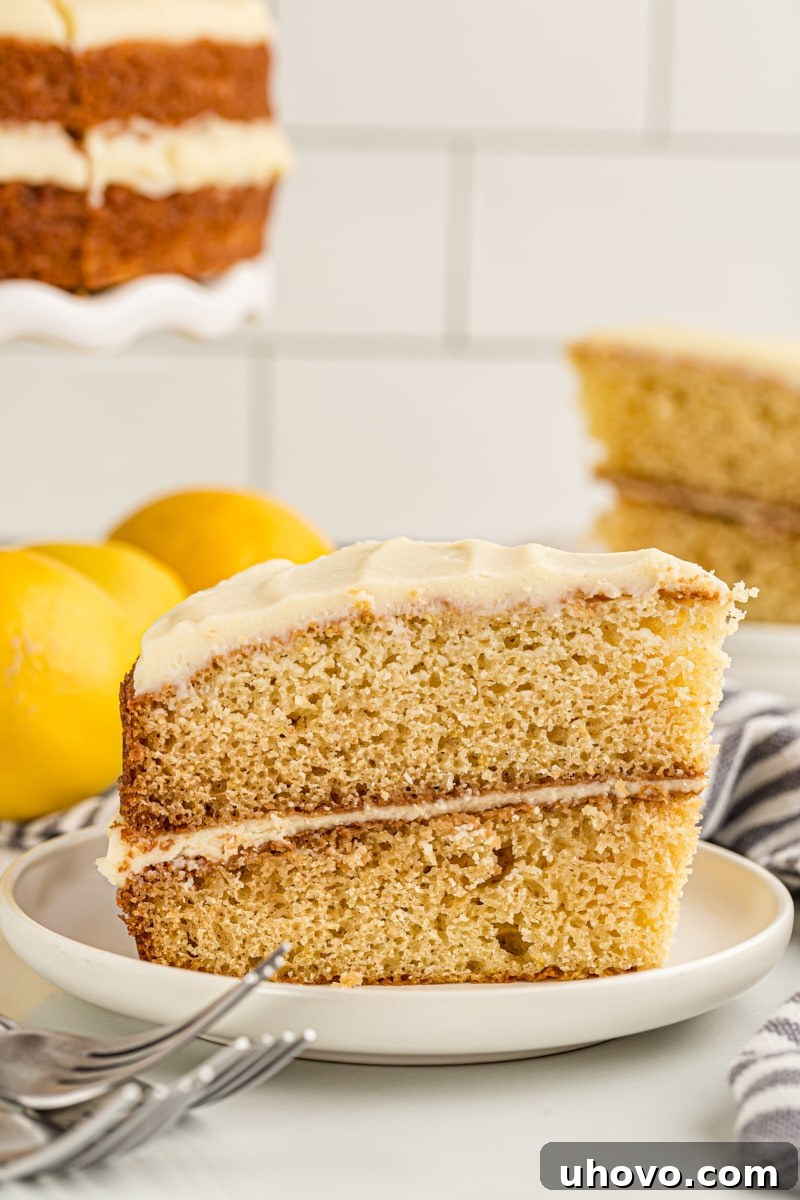
Step-by-Step Guide: Crafting Your Perfect Lemon Cream Cake
Despite being a stunning two-layer cake, this recipe is surprisingly unfussy and doesn’t demand elaborate piping skills or complex techniques. In fact, I often recommend this as an excellent project for beginners who want to impress. It delivers incredibly impressive flavor with minimal effort, making it a very accessible and satisfying baking experience. Just follow these steps, and you’ll be enjoying your homemade lemon cream cake in no time.
Crafting the Moist Lemon Cake Layers:
Prepare Your Pans and Oven. Begin by preheating your oven to a steady 350°F (175°C). This ensures the oven is at the correct temperature when your batter is ready. Thoroughly butter two 9-inch round cake pans, ensuring every crevice is coated. Then, for easy release and perfectly flat bottoms, line the base of each pan with a circle of parchment paper. Finally, butter the parchment paper as well. This double-layer of preparation guarantees your cake layers won’t stick and will release effortlessly.
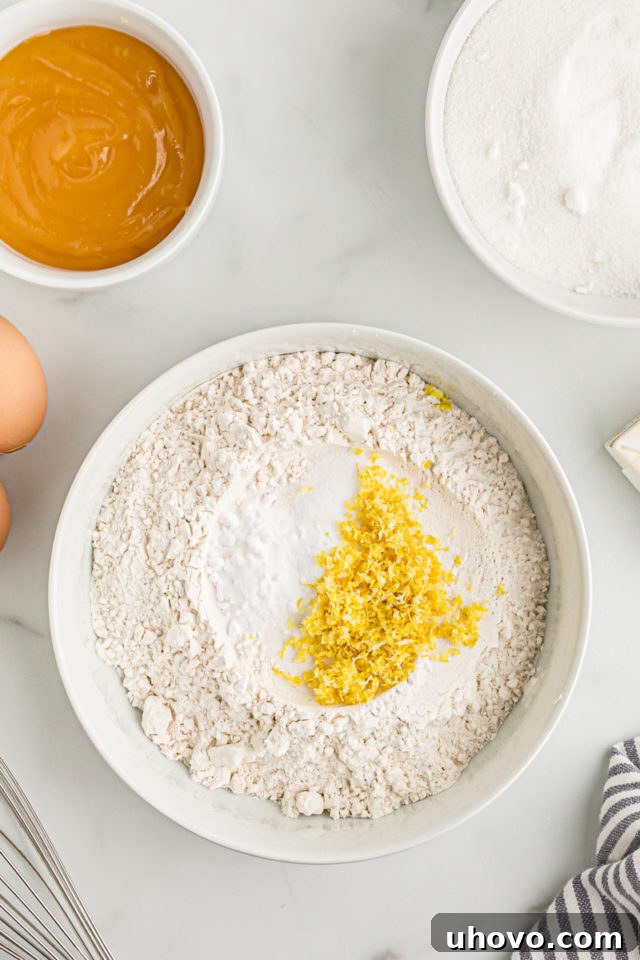
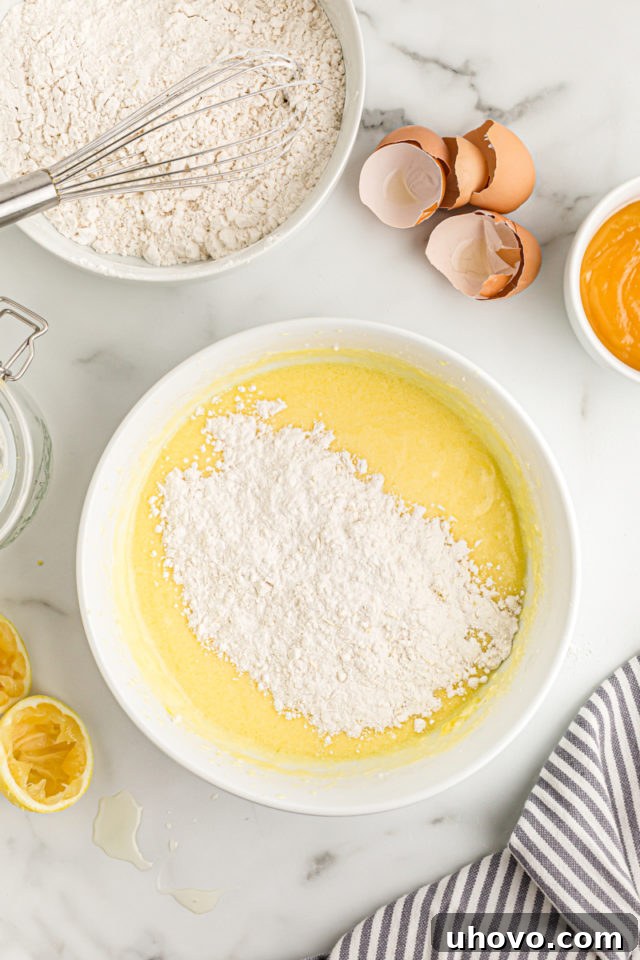
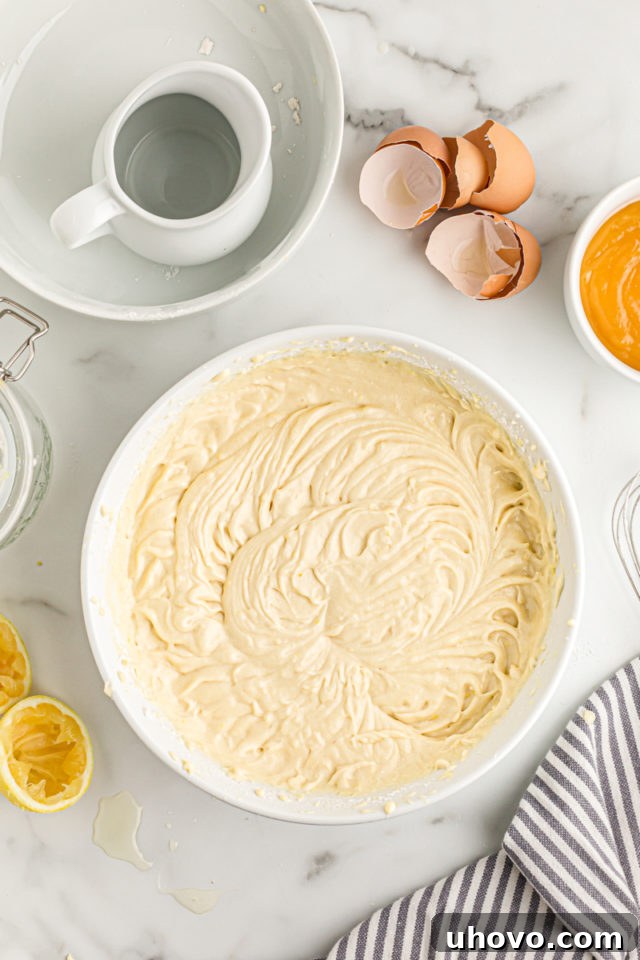
Combine the Dry Ingredients. In a medium mixing bowl, thoroughly whisk together the all-purpose flour, baking powder, salt, and vibrant lemon zest. Whisking ensures these ingredients are evenly distributed, which is essential for uniform leavening and flavor throughout the cake. Set this mixture aside for a moment.
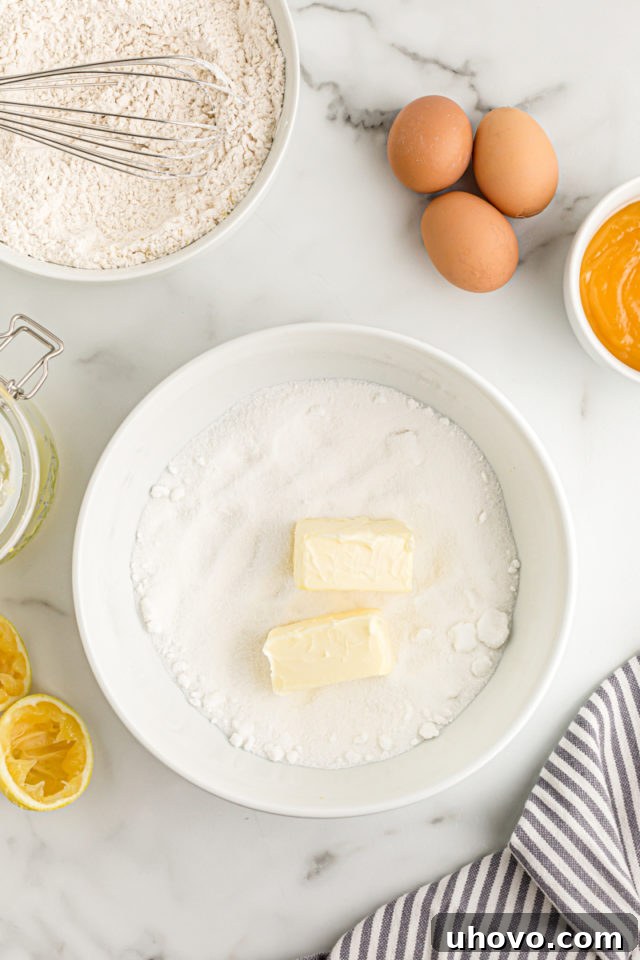
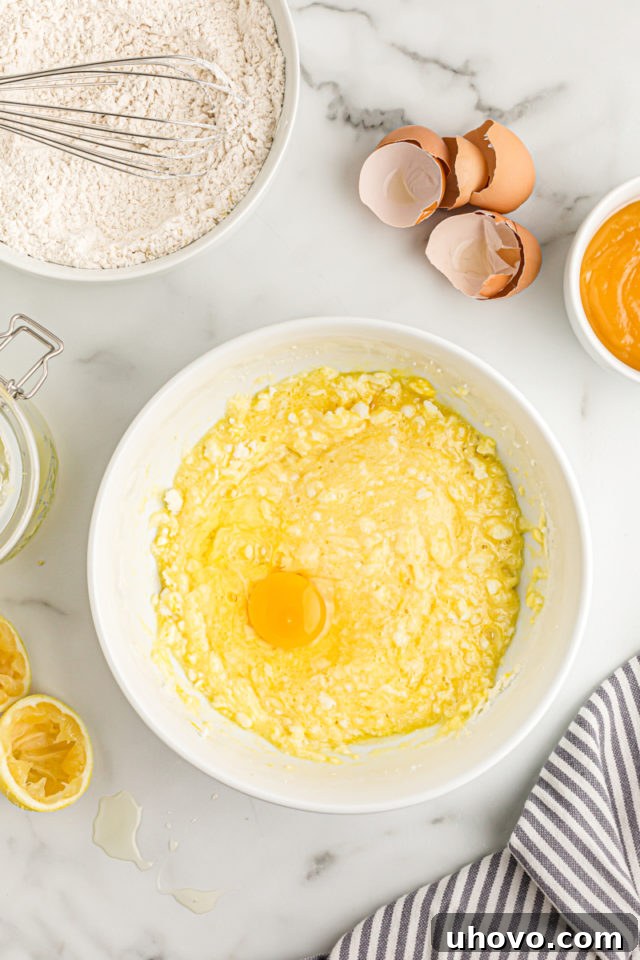
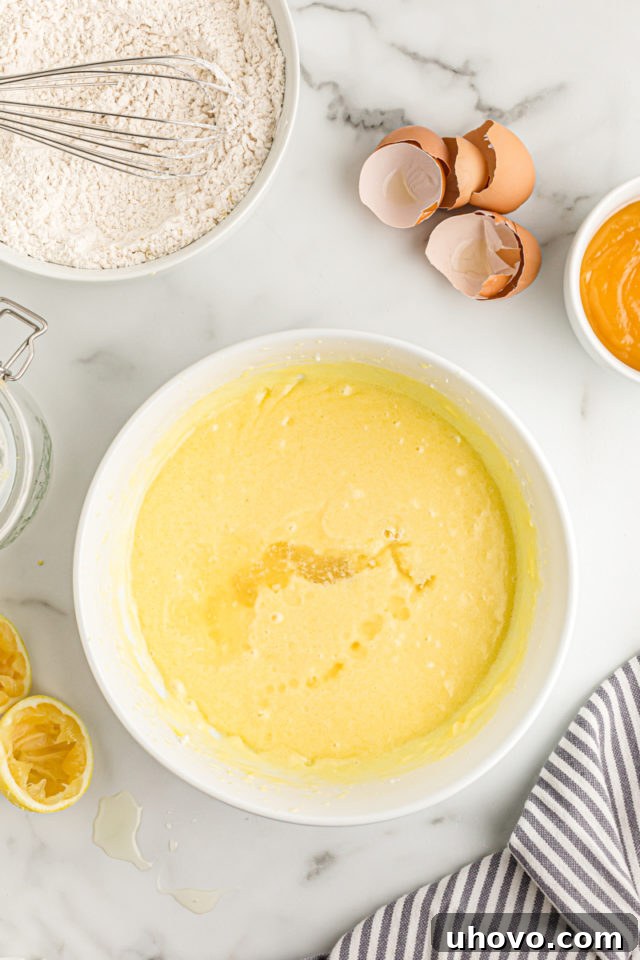
Prepare the Wet Ingredients. In a separate, larger mixing bowl, use an electric mixer set to medium speed to beat the softened butter and granulated sugar. Continue beating until the mixture becomes notably light in color and fluffy in texture, indicating that air has been incorporated. This creaming process is fundamental for a tender cake. Next, beat in the eggs one at a time, ensuring each egg is fully incorporated before adding the next. This prevents the batter from curdling. Finally, mix in the fresh lemon juice, which adds a bright, zesty kick to the wet ingredients.
Complete the Cake Batter. Reduce the mixer speed to low. Gradually add the dry flour mixture in three alternating portions with two portions of milk. Begin and end with the flour mixture. Mix just until the ingredients are combined and no streaks of flour remain. Be careful not to overmix the batter, as this can develop the gluten in the flour too much, leading to a tough, dry cake. A few small lumps are preferable to an overmixed batter.
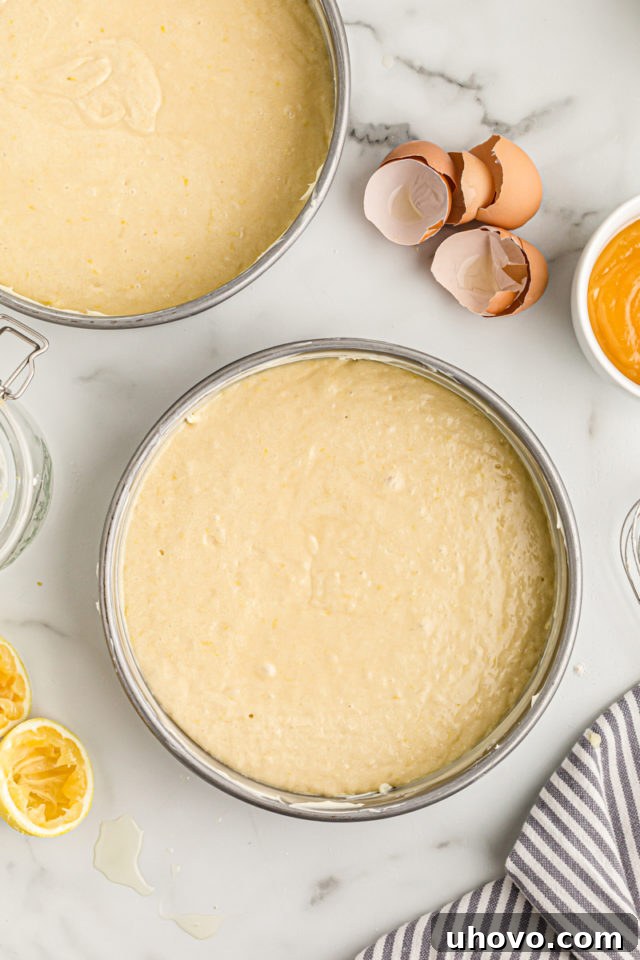
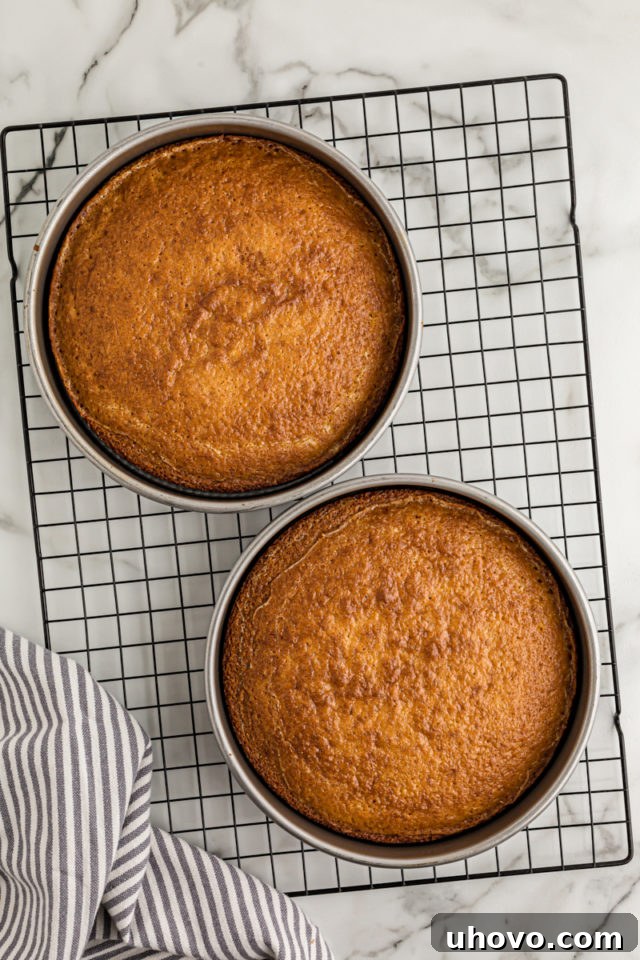
Bake to Perfection. Evenly divide the finished cake batter between your two prepared pans, spreading it gently with an offset spatula to ensure level layers. Bake for 30 to 35 minutes, or until a wooden toothpick inserted into the center of each cake comes out clean, indicating it’s fully cooked. Baking times can vary by oven, so keep a close eye on them towards the end.
Cool Completely. Once baked, remove the cakes from the oven and let them cool in their pans for about 10 minutes. This allows the cake to firm up slightly before handling. After 10 minutes, carefully invert the cakes onto a wire rack to cool completely. Allowing them to cool on a rack prevents condensation and ensures the bottom of the cakes don’t become soggy. It’s crucial that the cake layers are entirely cool before frosting to prevent the frosting from melting and sliding off.
Whipping the Frosting and Assembling Your Cake:
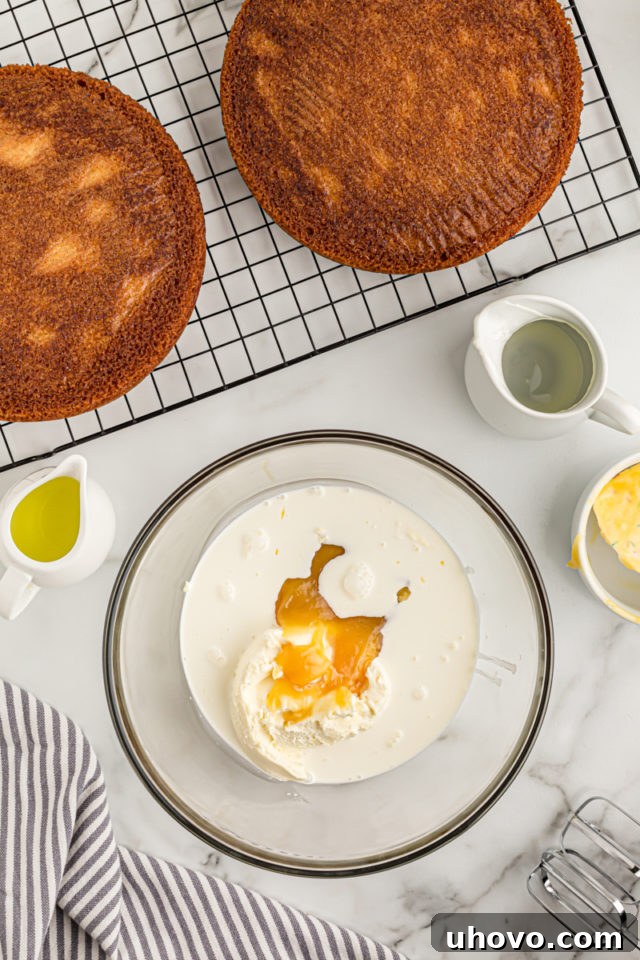
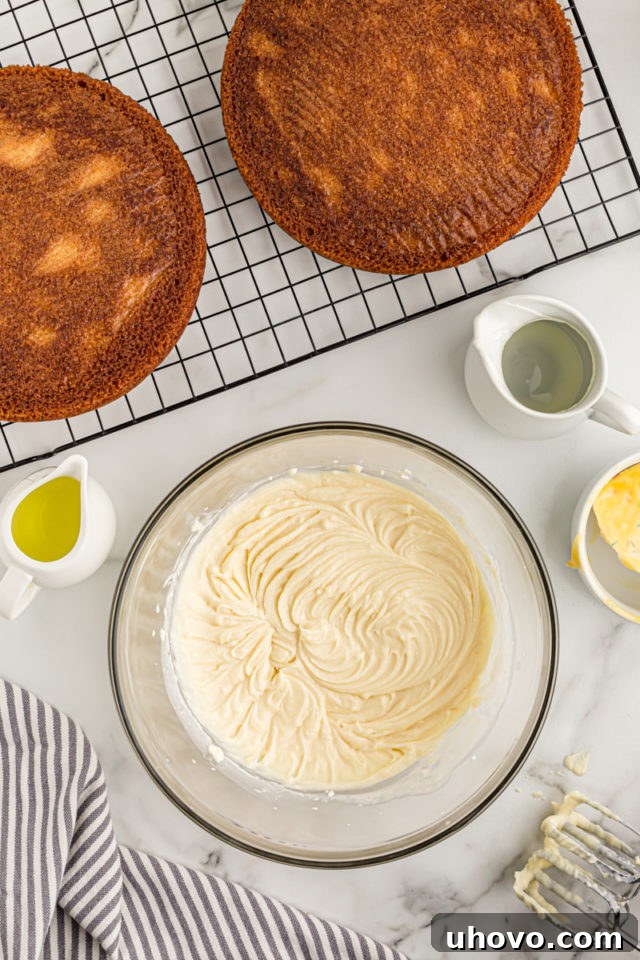
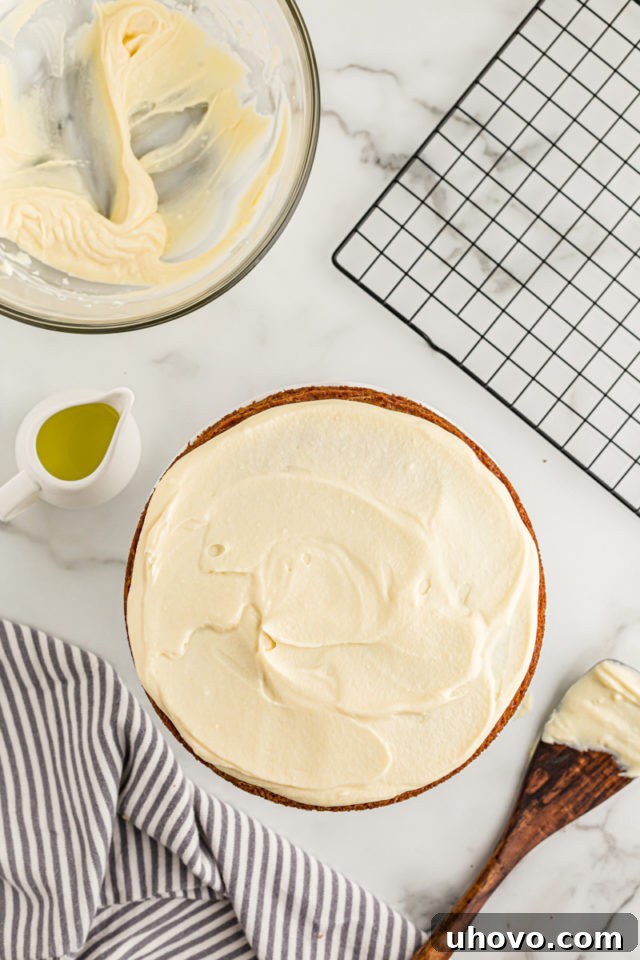
Whip the Dreamy Frosting. In a clean mixing bowl, using an electric mixer on medium speed, beat together the softened mascarpone cheese, cold heavy cream, and vibrant lemon curd. Continue beating until all ingredients are thoroughly combined, smooth, and the frosting reaches a light, airy, yet stable consistency. Be careful not to over-mix, as mascarpone can curdle if beaten too vigorously or for too long. Stop as soon as it reaches a spreadable consistency.
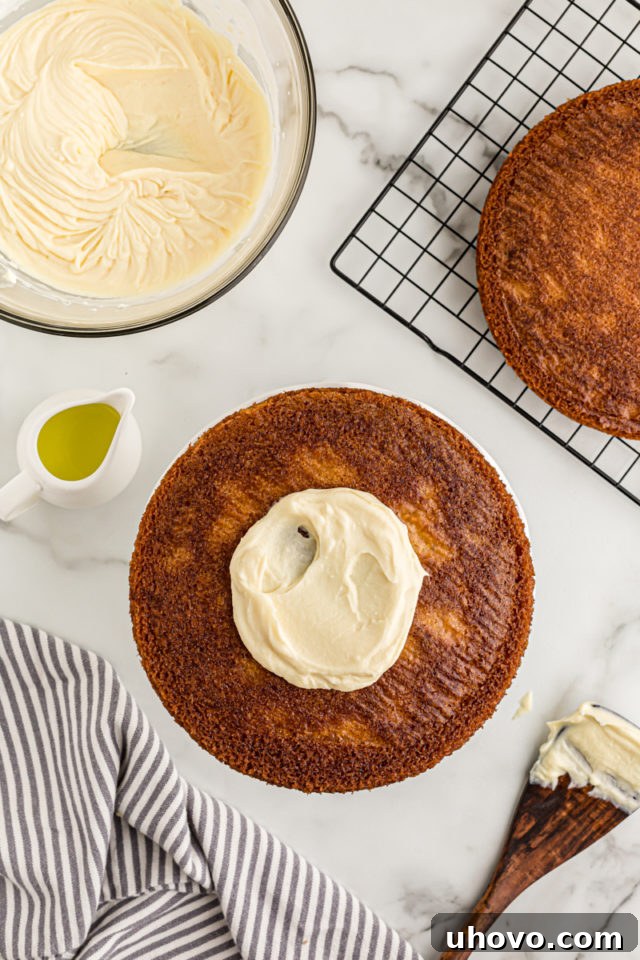
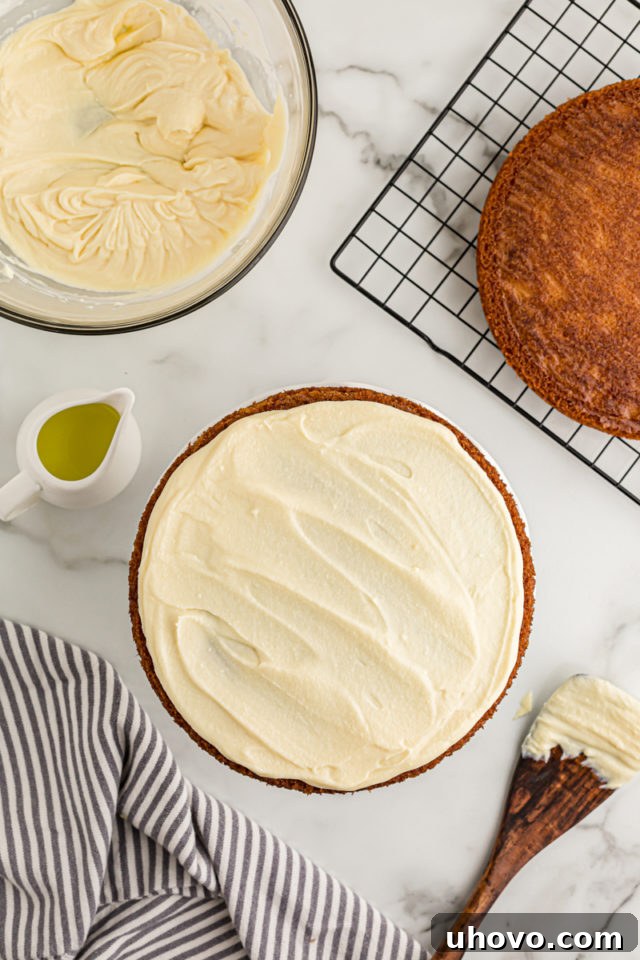
Frost the First Cake Layer. Carefully place one of your completely cooled cake layers onto your chosen cake plate or serving stand. Evenly brush or drizzle approximately half of the Limoncello over the top surface of this cake layer, allowing it to soak in for a minute. Then, using an offset spatula or the back of a spoon, spread about half of the prepared mascarpone frosting evenly over the Limoncello-infused cake layer, creating a generous filling.
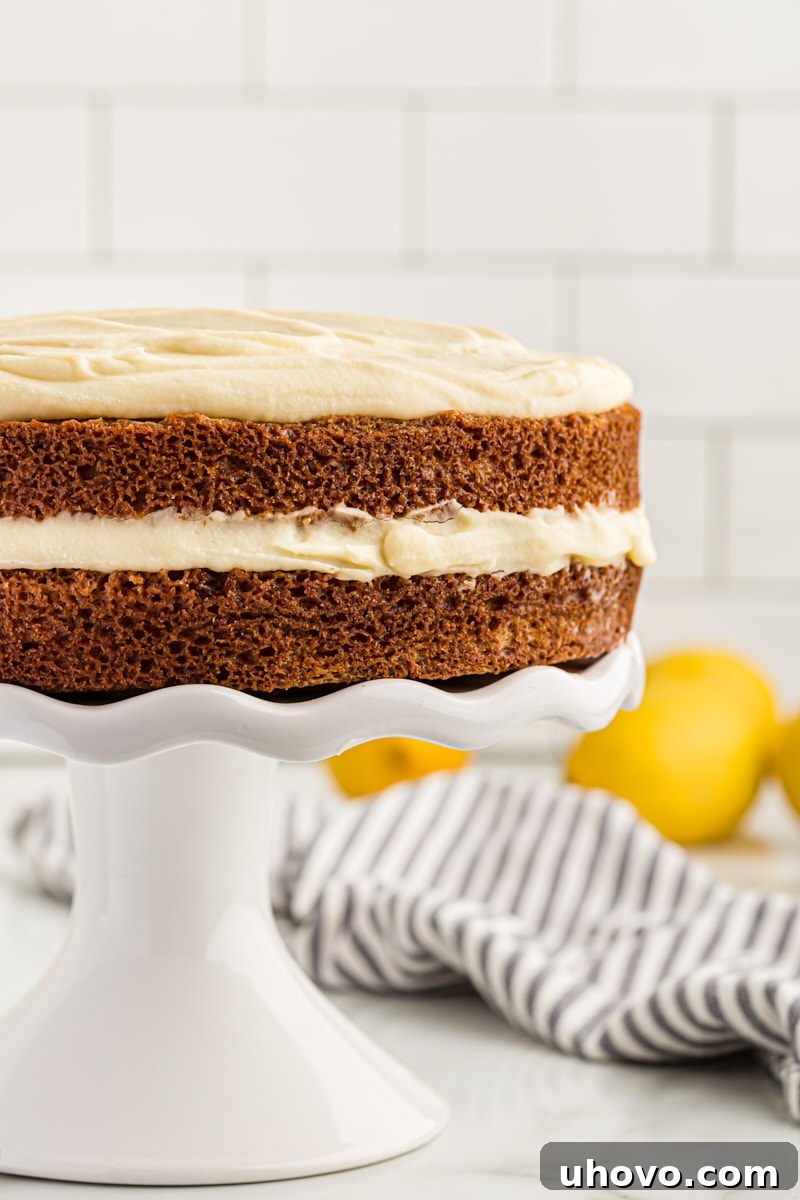
Add the Second Cake Layer and Finish Frosting. Gently place the remaining cooled cake layer directly on top of the frosted first layer. Repeat the Limoncello application, brushing or drizzling the remaining liqueur over this top layer. Finally, spread the rest of the creamy mascarpone frosting over the top and sides of the entire cake, aiming for a smooth, rustic finish. Don’t worry about perfection; the charm of this cake lies in its homemade elegance.
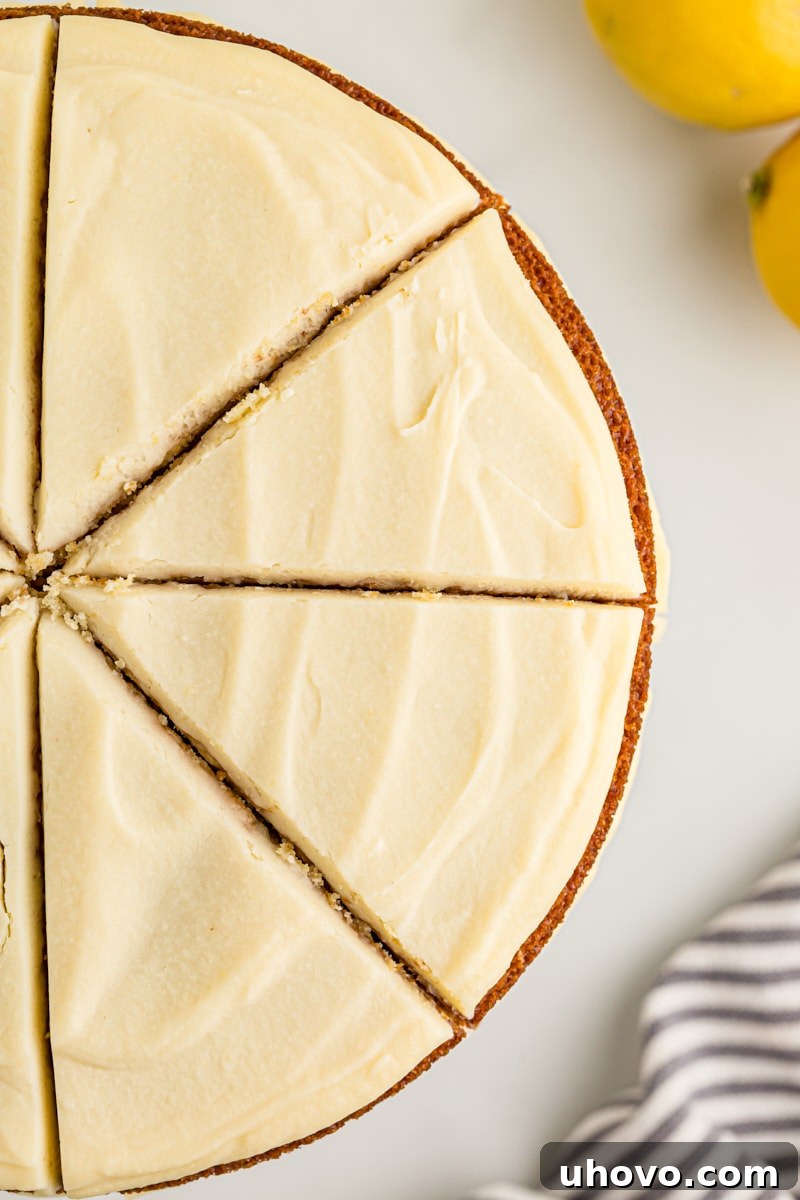
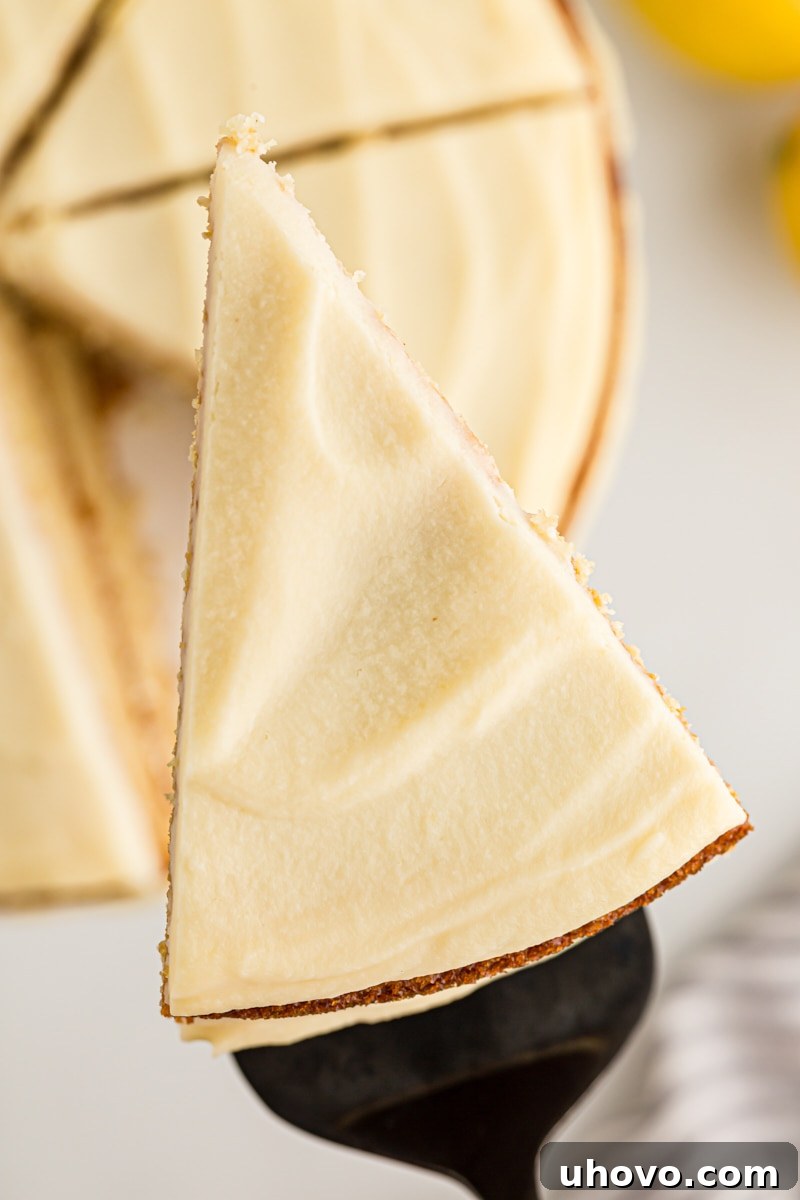
Chill for Perfection. This step is non-negotiable for achieving the ideal texture and stability of your lemon cream cake. Refrigerate the assembled and frosted cake for at least an hour before slicing and serving. This chilling time allows the mascarpone frosting to firm up beautifully, ensuring clean slices and preventing any “runniness.” It also gives the flavors a chance to meld and deepen, resulting in an even more delightful taste experience.
Expert Tips for a Flawless Lemon Cream Cake
Beyond general baking tips for beginners, consider these specific pointers to ensure your lemon cream cake is nothing short of perfect:
- Gentle Mixing is Key for Tender Cake. When combining your wet and dry ingredients, mix the batter only until just combined. The moment you see no more dry streaks of flour, stop mixing. Overmixing develops the gluten in the flour, which can lead to a tough, chewy cake with a less desirable crumb and also inhibit its rise, resulting in a denser texture.
- Achieve Perfectly Even Cake Layers. For a professionally styled layer cake, uniform layers are essential. The most accurate way to achieve this is by weighing your batter. Place your empty mixing bowl on a kitchen scale and tare it to zero. After you’ve finished mixing the cake batter, weigh the bowl again. The difference is the total weight of your batter. Divide this number by two, and that’s precisely how much batter should go into each of your two cake pans. This ensures both layers bake and rise consistently.
- Trim for a Bakery-Style Finish. If your cake layers bake with a slight dome in the center (which is common), you’ll want to trim these domes to create perfectly flat, stackable layers. While special cake leveling tools exist, a long, sharp serrated knife works wonderfully. Gently hold the cake layer steady (a lazy Susan can be incredibly helpful here for easy rotation) and use a sawing motion to carefully slice off the domed top, creating a level surface. This simple step makes assembling and frosting your layer cake significantly easier and yields a more polished, professional appearance.
- Room Temperature Ingredients Matter. Ensure your butter and eggs are at true room temperature. This allows them to emulsify correctly with the sugar and other ingredients, creating a smooth, homogenous batter that traps air efficiently, resulting in a light and airy cake crumb.
- Don’t Skimp on the Chill Time. While it’s tempting to dig in immediately, the chilling period for this cake is crucial. It not only allows the mascarpone frosting to set properly, making it easier to slice neatly, but it also gives the Limoncello time to fully permeate the cake layers, deepening and unifying all the incredible lemon flavors.
Elegant Serving Suggestions for Your Lemon Cream Cake
This magnificent lemon cream cake is a showstopper on its own, but a few simple garnishes can elevate its presentation and taste even further.
For a burst of color and fresh flavor, consider topping slices or the entire cake with some fresh berries. Blueberries, raspberries, blackberries, or sliced strawberries all pair wonderfully with the bright lemon notes. Their natural sweetness and slight tartness provide a beautiful contrast and make the cake even more eye-catching, perfect for spring gatherings or summer soirées.
Feeling a little ambitious and want to truly impress? Take the time to candy some lemon peel. These shimmering, sweet-tart curls make an incredibly elegant and delicious garnish, emphasizing the cake’s lemon essence. If you’re short on time but still want a sophisticated touch, delicate white chocolate shavings scattered over the top create a pretty, subtle finish that complements the creamy frosting.
For an extra treat, serve slices with a dollop of extra lemon curd on the side, or a small scoop of vanilla bean ice cream. Consider pairing this cake with a light, refreshing beverage like iced tea, sparkling water with a lemon twist, or even a glass of crisp Prosecco for an adult gathering.
Proper Storage for Maximum Freshness
Just as my grandmother did with her legendary lemon cakes, I always store this lemon cream cake in the refrigerator and serve it chilled. Keeping it refrigerated is crucial for two main reasons: it maintains the firm, delightful texture of the mascarpone frosting and preserves the cake’s overall freshness and moisture. Stored properly, either covered with a cake dome or in an airtight container, this lemon cream cake will remain wonderfully delicious for approximately 4 days in the fridge. Bringing it out a few minutes before serving can allow the flavors to open up slightly, but it’s equally delightful served directly from its chilled state.
Can You Freeze Lemon Cream Cake? Yes!
Yes, this lemon cream cake freezes beautifully, allowing you to enjoy a slice of sunshine even months later! You can freeze it for up to 2 months while maintaining its quality. To do so, first place the entire frosted cake (or individual slices) on a parchment-lined baking sheet and freeze it uncovered just until the frosting is solid to the touch. This “flash freeze” step prevents the frosting from sticking to the wrapping.
Once frozen solid, carefully wrap the cake. Start with a layer of plastic wrap, ensuring it adheres snugly to all surfaces to prevent freezer burn. Follow this with a layer of aluminum foil for extra protection. This double-layer wrapping is crucial for maintaining freshness and preventing any freezer odors from permeating the cake.
When you’re ready to indulge, transfer the wrapped frozen cake to the refrigerator and allow it to thaw slowly overnight. This gradual thawing process helps maintain the cake’s moist texture and prevents any weeping or sogginess. Once thawed, unwrap and enjoy! It will taste almost as fresh as the day it was baked.
Explore More Zesty Lemon Recipes
Lemon Cream Cake
12
servings
30 minutes
35 minutes
1 hour
2 hours
5 minutes
Pin Recipe
Ingredients
For the cake:
-
2
cups
(240
g)
all-purpose flour -
2
teaspoons
baking powder -
½
teaspoon
salt -
zest of 1 medium lemon -
½
cup
(113
g)
unsalted butter,
softened -
1 ¼
cups
(250
g)
granulated sugar -
3
large
eggs -
juice of 1 medium lemon -
1
cup
(240
ml)
milk
For the frosting:
-
8
ounces
(226
g)
mascarpone,
softened* -
1
cup
(240
ml)
heavy cream -
½
cup
lemon curd
,
store-bought or homemade -
2 to 3
tablespoons
(30 to 45
ml)
Limoncello**
Recommended Products
-
USA Pan Bakeware Round Cake Pan, 9 inch
-
OXO Silicone Basting and Pastry Brush
-
Offset Spatula
Instructions
To make the cake:
-
Preheat oven to 350°F (175°C). Butter two 9-inch round cake pans and line the bottoms with parchment paper. Butter the paper.
-
Whisk together the flour, baking powder, salt, and lemon zest. Set aside.
-
Using an electric mixer on medium speed, beat the butter and sugar until light and fluffy. Add the eggs, one at a time, mixing well after each addition. Mix in the lemon juice.
-
Reduce mixer speed to low. Add the flour mixture in three portions, alternating with two portions of milk. Mix just until combined.
-
Divide the batter evenly between the prepared pans. Spread evenly.
-
Bake 30 to 35 minutes, or until a pick inserted into the center of the cakes comes out clean. Cool the cakes in the pans for 10 minutes. Then invert the cakes onto a wire rack to cool completely.
To make the frosting:
-
Using an electric mixer on medium speed, beat the mascarpone, cream, and lemon curd until thoroughly combined and smooth. Do not over-mix.
-
Place one cooled cake layer on a cake plate. Brush or drizzle about half of the Limoncello onto the cake. Spread about half of the frosting over the top of the cake.
-
Place the other cake layer on top of the frosted layer. Brush with the remaining Limoncello. Spread the remaining frosting over the top of the cake.
-
Chill the cake for at least an hour before serving to allow the frosting to set.
Notes
- *Cream cheese will work as a suitable substitute if you don’t have mascarpone.
- **If you don’t have Limoncello or simply prefer not to use alcohol, you can easily omit it without significantly altering the cake’s core deliciousness.
- Recipe slightly adapted from Taste of Home.
Jennifer McHenry
cakes
American
Show off your baking masterpiece!
Snap a pic, tag
@bakeorbreak, and use
#bakeorbreak on Instagram. Can’t wait to see your creation!