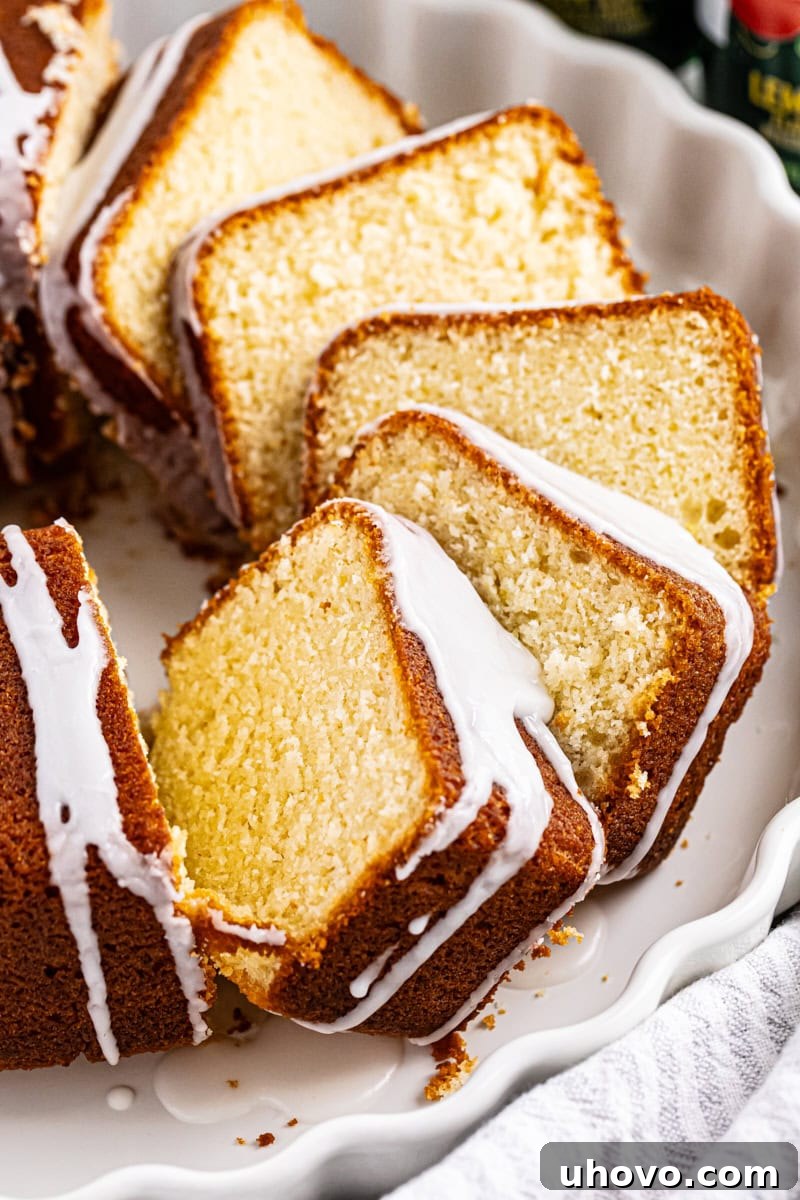
Bright, citrusy, and oh-so-moist, this 7UP cake is a true dessert masterpiece you never knew you needed! Perfect for any celebration, from casual family gatherings to elegant potlucks, it offers a delightful and refreshing twist on classic cake recipes. Its vibrant lemon-lime flavor and incredibly tender crumb make it an instant favorite that will have everyone reaching for another slice.
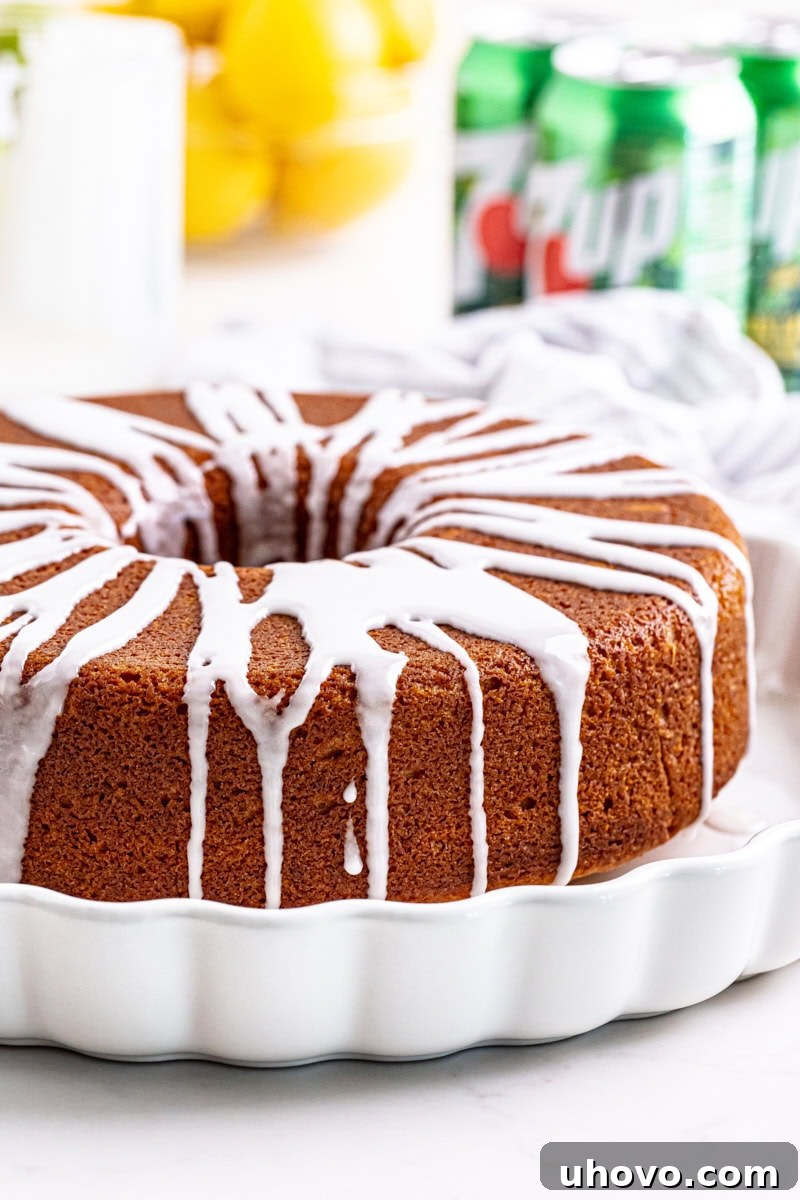
For decades, 7UP cake has captivated dessert lovers with its ingenious use of lemon-lime soda in the batter. This unique ingredient isn’t just a gimmick; it’s the secret to a cake with an exceptionally tender crumb, a refreshing burst of citrus flavor, and a signature tangy glaze that perfectly complements every bite. The mild carbonation from the soda contributes to a lighter, airier texture than traditional cakes, yet it maintains a delightful richness and density that often draws comparisons to classic pound cake. It’s a nostalgic treat that transcends generations, proving that some recipes truly never go out of style. Whether served at a holiday feast or a simple weeknight dessert, this 7UP cake promises to be a memorable addition to any table.
Why You’ll Love This 7UP Cake Recipe
- Unparalleled Moistness and Tenderness: The magical combination of creamy sour cream and the effervescent 7UP soda works wonders, resulting in a cake that is incredibly soft, flavorful, and melt-in-your-mouth moist. This isn’t your average dry cake; it’s a testament to the power of unique ingredients.
- Effortlessly Simple to Bake: Don’t let its gourmet taste fool you – this recipe uses readily available ingredients and a straightforward mixing process, making it accessible and enjoyable for bakers of all skill levels, from beginners to seasoned pros. You’ll be amazed at the professional-quality results you can achieve with minimal fuss.
- Guaranteed Crowd-Pleaser: There’s a reason this cake has remained a beloved classic. Its bright, comforting flavors and inviting texture consistently earn rave reviews. Whether it’s the centerpiece of a family gathering, a delightful addition to a potluck, or just a treat “just because,” this cake is sure to impress and satisfy every palate.
The Enduring Legacy: The Origins of 7UP Cake
The history of the 7UP Cake, often referred to as 7UP Pound Cake, stretches back to the mid-20th century, a time when inventive home bakers began experimenting with incorporating carbonated beverages into their culinary creations. This trend wasn’t merely about adding convenience; it was a clever way to introduce unique flavors and achieve lighter, more interesting textures in baked goods. The specific choice of 7UP soda was a stroke of genius, as its distinct lemon-lime profile infused the cake with a bright, zesty character, while its carbonation acted as a natural leavening agent. This gentle fizz helped to create the cake’s signature tender, delicate crumb, distinguishing it from denser, more traditional pound cakes.
Over the decades, this innovative recipe cemented its place as a nostalgic favorite. It became a staple at countless potlucks, family reunions, and holiday celebrations across America, cherished for its refreshing taste and comforting familiarity. The 7UP cake represents a period of culinary experimentation where everyday ingredients were transformed into extraordinary desserts. For those who appreciate the charm of soda-infused baking, my Coca-Cola cake offers a rich, chocolatey counterpart, proving the versatility and enduring appeal of this unique baking tradition.
Essential Ingredients for Your 7UP Cake
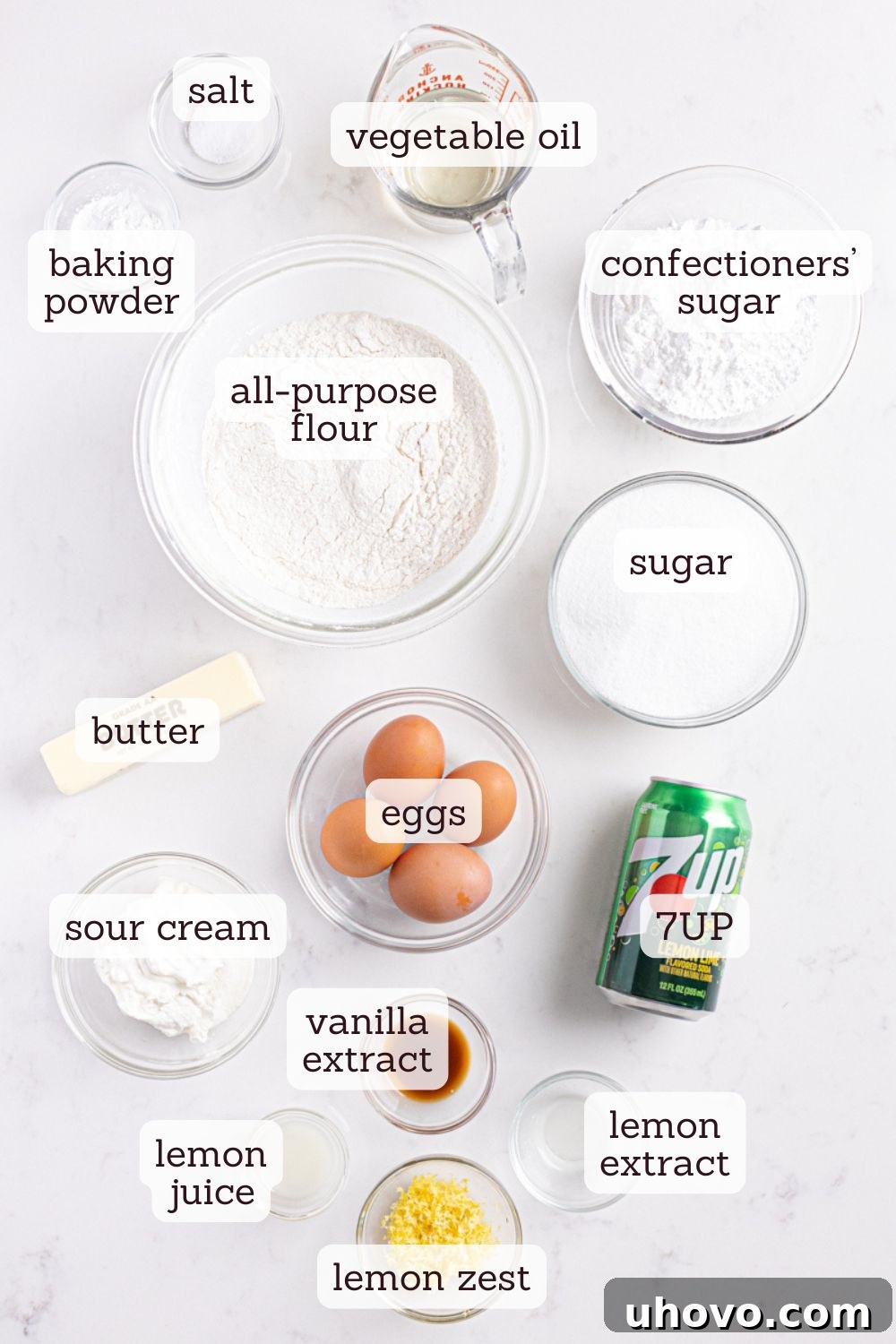
Achieving the perfect 7UP cake starts with quality ingredients. For precise quantities and a detailed step-by-step guide, please refer to the comprehensive recipe card located further below.
- All-Purpose Flour: The foundation of our cake’s structure. For consistent results, it’s crucial to measure flour accurately. I highly recommend using a digital kitchen scale for the most precise measurement, or employing the classic spoon and sweep method to avoid compacting the flour. Learn more about How to Measure Flour for baking success.
- Baking Powder: This chemical leavening agent is key to helping our cake rise beautifully and achieve its light, tender texture. Always ensure your baking powder is fresh for optimal lift and airiness. A quick test can confirm its freshness: How to Test Baking Powder for Freshness.
- Salt: A pinch of salt is vital for balancing the sweetness and enhancing all the flavors in the cake. My recipes typically call for table salt. If you prefer to use a different variety, such as kosher or sea salt, be aware that adjustments may be necessary due to varying crystal sizes and densities. Understand the nuances with my guide on Types of Salt for Baking.
- Unsalted Butter and Vegetable Oil: This dynamic duo provides the best of both worlds. Unsalted butter imparts rich, buttery flavor and a tender crumb, while vegetable oil ensures the cake remains incredibly moist and prevents it from drying out over time, even days after baking. Ensure your butter is softened to room temperature for proper creaming.
- Granulated Sugar: Sweetness and structure are primarily provided by granulated sugar. It also contributes to the cake’s golden-brown crust and moist interior.
- Large Eggs: Eggs serve multiple functions in baking: binding ingredients, adding richness, and contributing to the cake’s rise and structure. For the best incorporation and a smoother batter, always allow your eggs to come to room temperature before mixing.
- Vanilla and Lemon Extracts: These two extracts create a harmonious flavor profile. The vanilla extract provides a warm, comforting base, while the lemon extract amplifies the bright citrus notes, making the lemon-lime flavor truly sing.
- 7UP Soda: The star ingredient! Beyond its signature lemon-lime taste, the carbonation in 7UP acts as a gentle leavening agent, contributing significantly to the cake’s remarkably light and tender texture. While traditional 7UP is recommended, Sprite or any other clear lemon-lime soda can be used as a convenient substitute. Ensure it’s at room temperature before adding to the batter.
- Sour Cream: This ingredient is a moisture powerhouse, adding richness, a slight tang, and an incredibly soft texture to the cake. For the richest results, opt for full-fat sour cream and ensure it’s at room temperature before incorporating it into the batter.
- Fresh Lemon: You’ll need both the zest and the juice of one fresh lemon. The zest provides concentrated aromatic oils for intense citrus flavor, while the juice is crucial for the tangy glaze.
- Confectioners’ Sugar: Also known as powdered sugar, this fine sugar is essential for creating the smooth, pourable glaze that crowns our 7UP cake. If your confectioners’ sugar has lumps, a quick sift through a fine-mesh sieve will ensure a perfectly silky glaze.
Crafting Your Perfect 7UP Cake: A Step-by-Step Guide
- Prepare for Baking Success: Begin by preheating your oven to the specified temperature. Next, meticulously grease and flour your Bundt or tube pan. This crucial step ensures that your beautifully baked cake will release effortlessly, preserving its intricate shape.
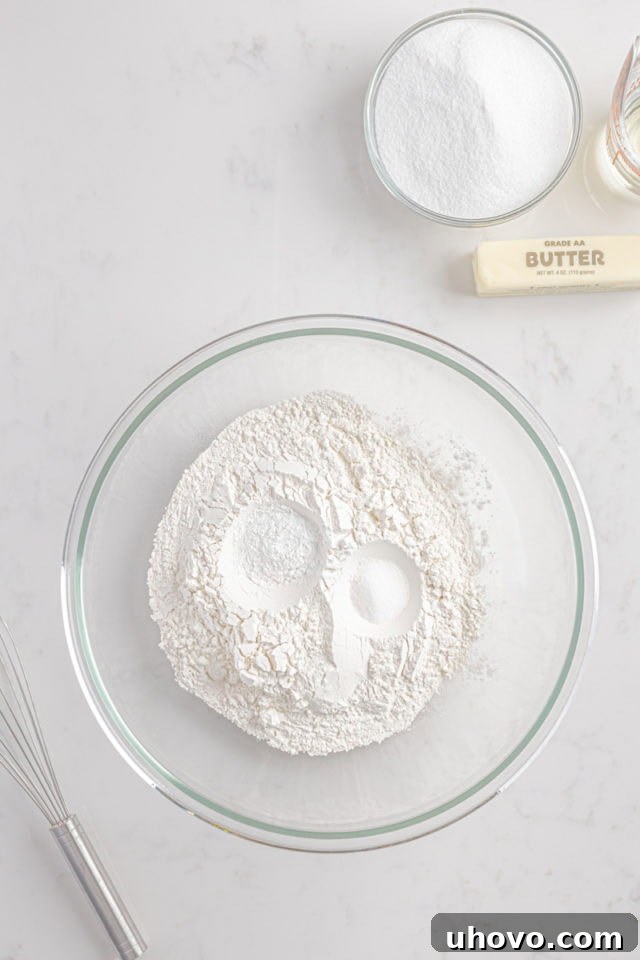
- Whisk the Dry Ingredients: In a medium-sized mixing bowl, combine the all-purpose flour, baking powder, and salt. Whisk them together thoroughly until they are evenly distributed. This prevents pockets of leavening agents or salt in the final cake. Set this mixture aside.
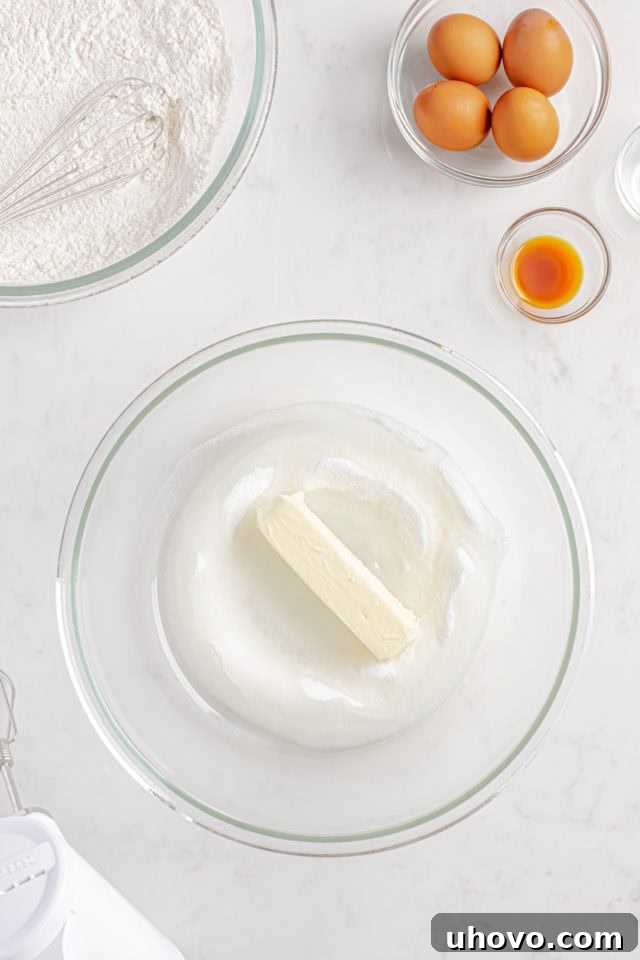
- Cream the Fats and Sugar: In a large mixing bowl, using an electric mixer, cream together the softened unsalted butter, vegetable oil, and granulated sugar. Beat on medium speed for about 3-4 minutes until the mixture becomes notably light, fluffy, and pale in color. This process incorporates air, which is vital for a tender cake.
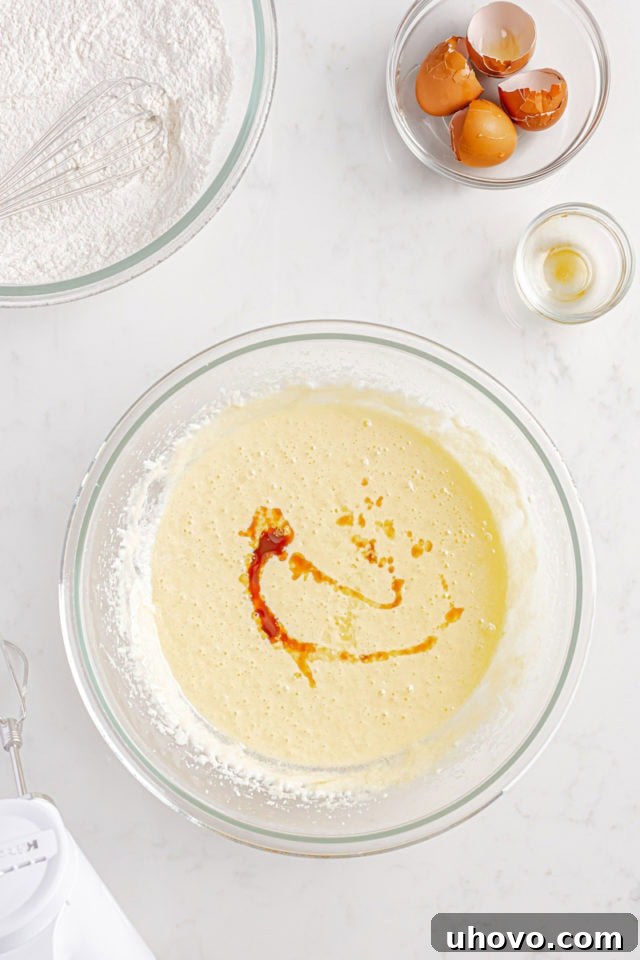
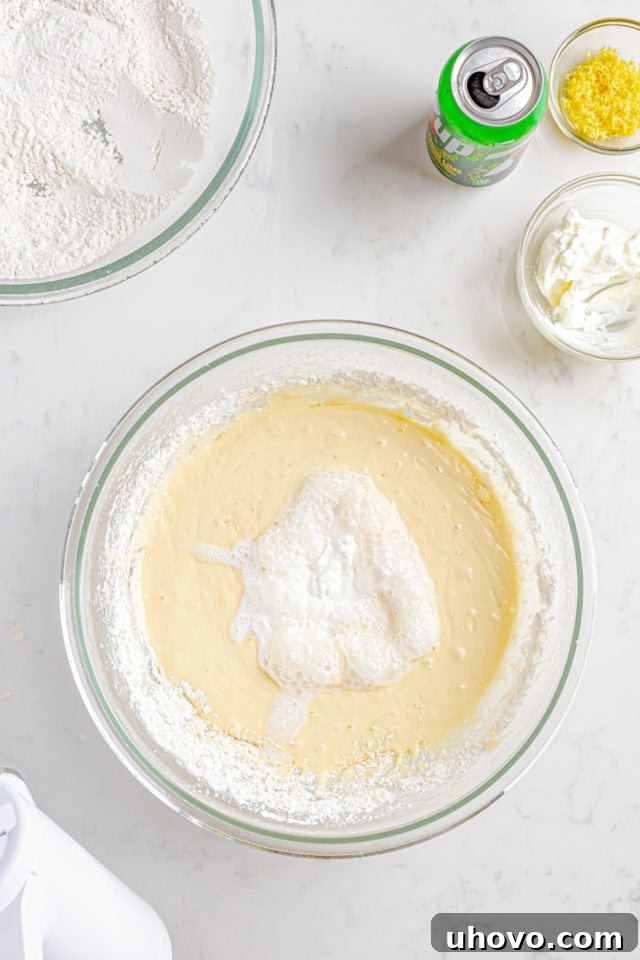
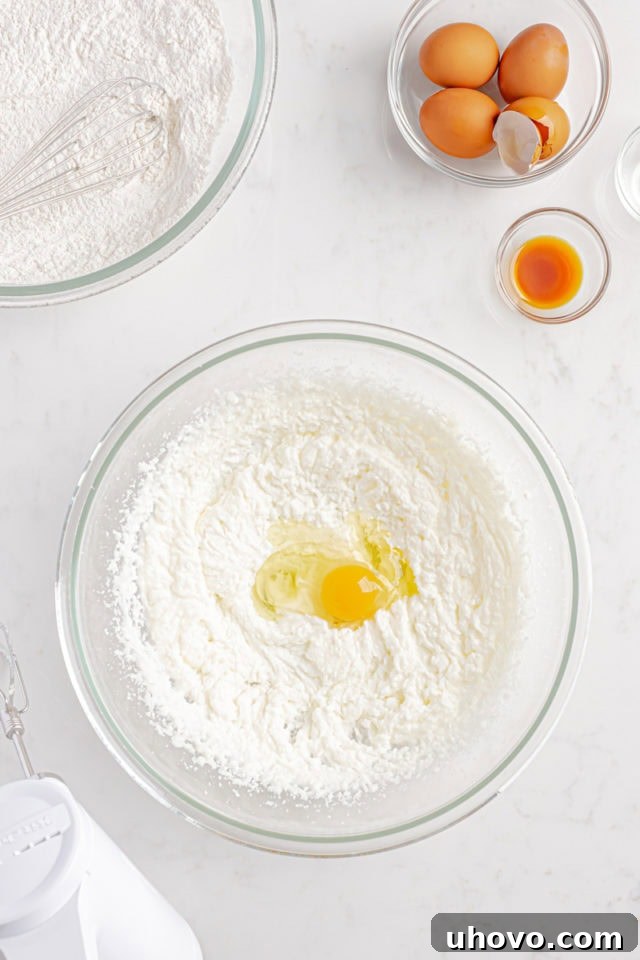
- Integrate Eggs and Flavoring: Add the large eggs one at a time to the creamed mixture, beating thoroughly after each addition until fully incorporated. This ensures a stable emulsion. Follow this by mixing in both the pure vanilla extract and lemon extract until their fragrant essences are evenly distributed throughout the batter.
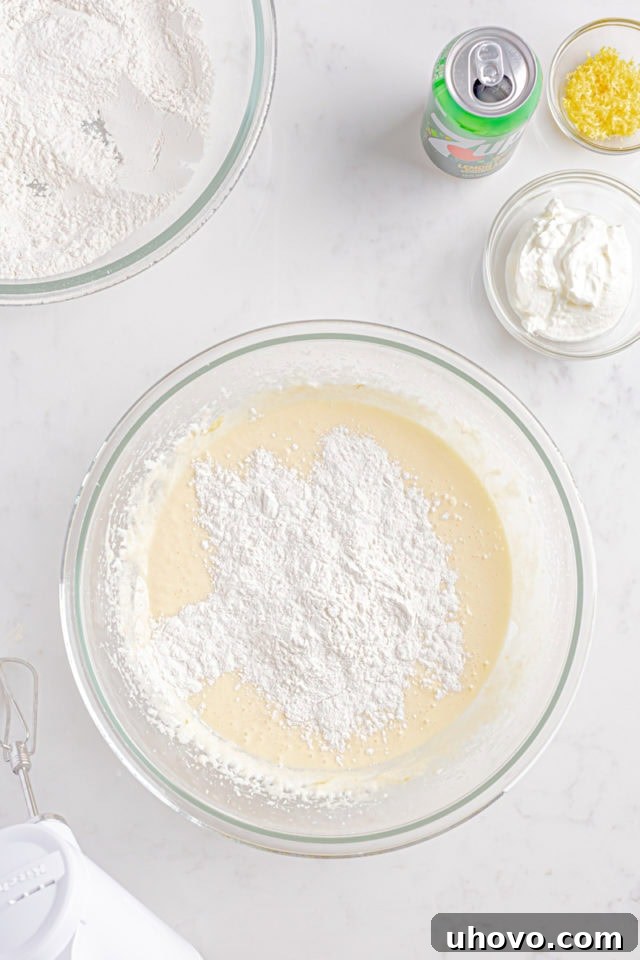
- Alternate Wet and Dry Ingredients: With your mixer on low speed, begin adding the dry ingredient mixture to the wet mixture in three separate additions, alternating with the 7UP soda and sour cream. Always start and end with the dry ingredients. Mix on low speed just until combined, then increase to medium speed and beat until the batter is smooth. Be vigilant to avoid over-mixing, as this can lead to a tough cake. Finally, gently fold in the fresh lemon zest, allowing its aromatic oils to permeate the batter.
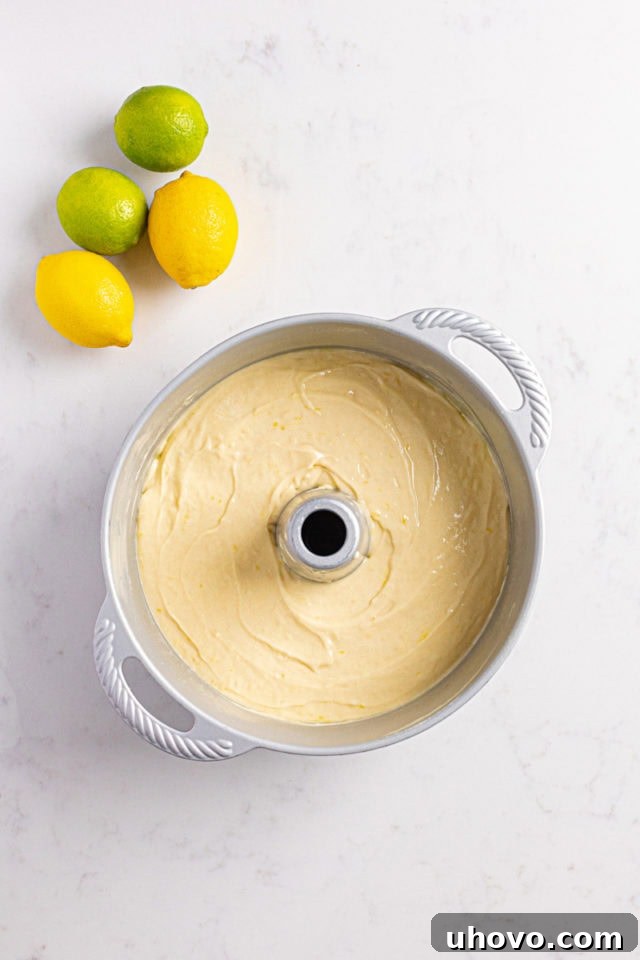
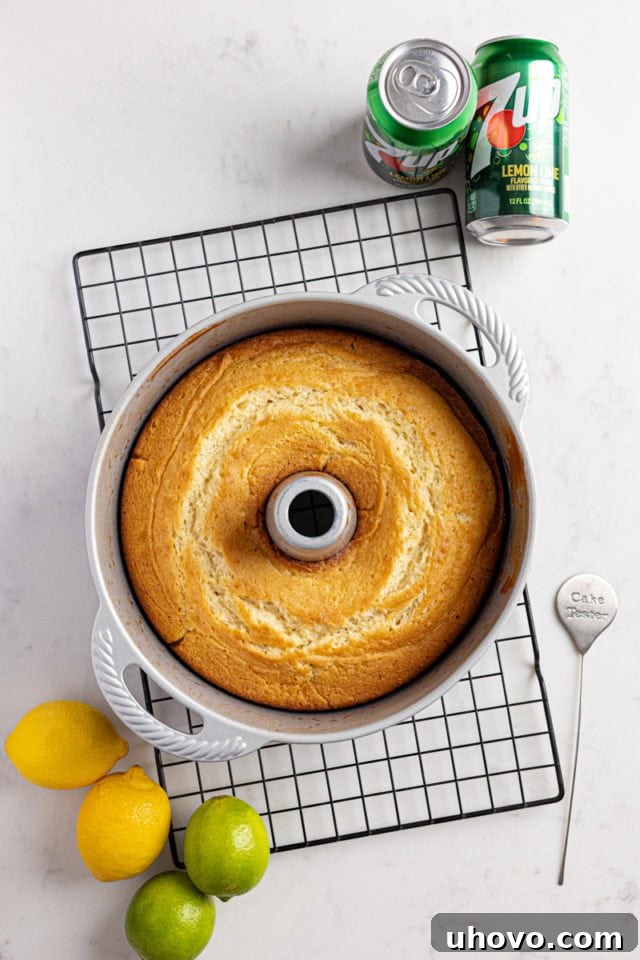
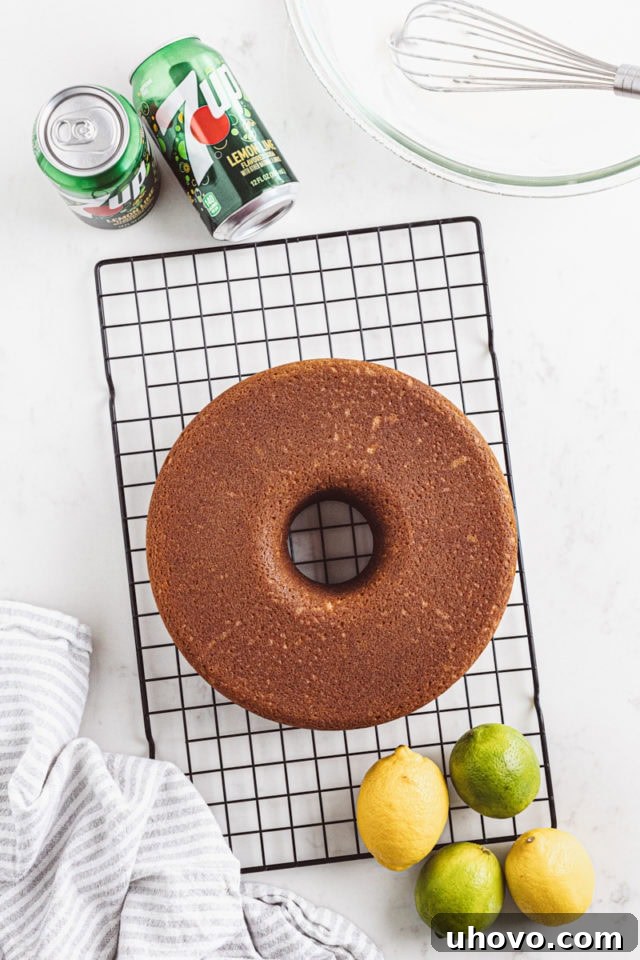
- Bake to Golden Perfection: Carefully pour the prepared batter into your greased and floured pan, using a spatula to spread it evenly. Bake in the preheated oven for approximately 55 minutes, or until a wooden toothpick or cake tester inserted into the center of the cake comes out perfectly clean. Once baked, allow the cake to cool in its pan for about 10 minutes before carefully inverting it onto a wire rack. This initial cooling in the pan helps the cake firm up. Let it cool completely on the wire rack before proceeding to the glazing step.
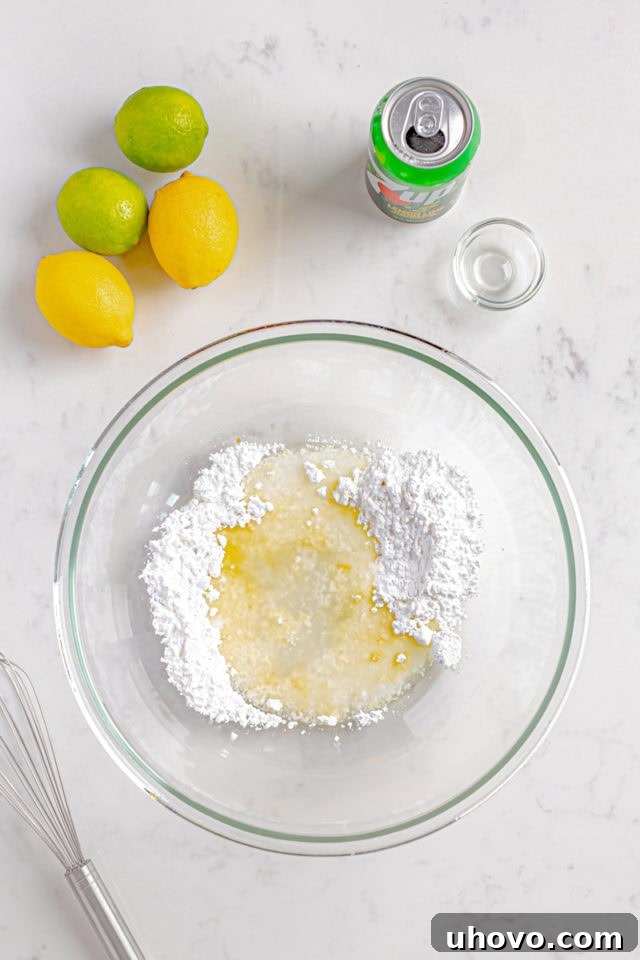
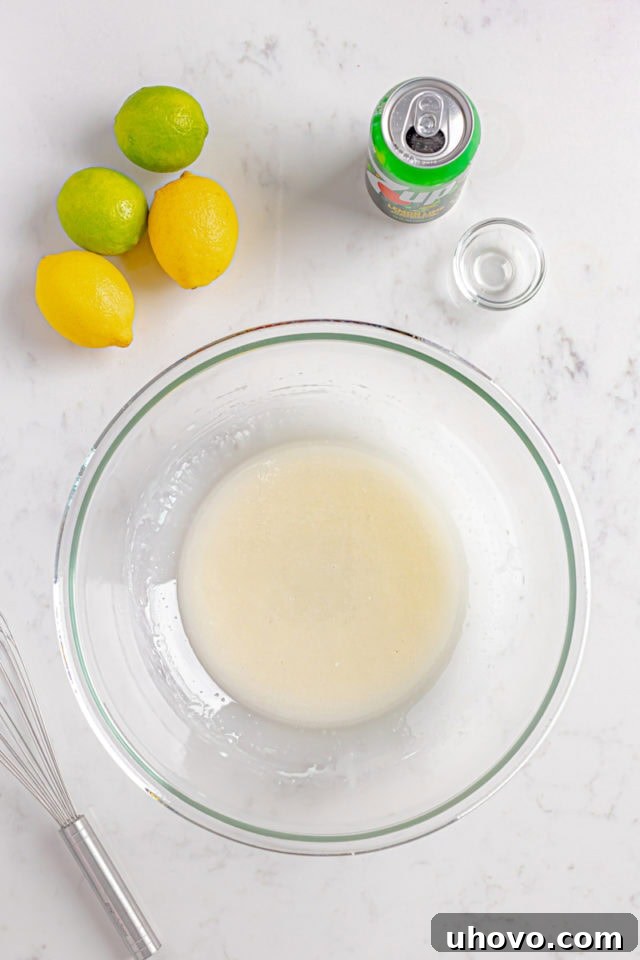
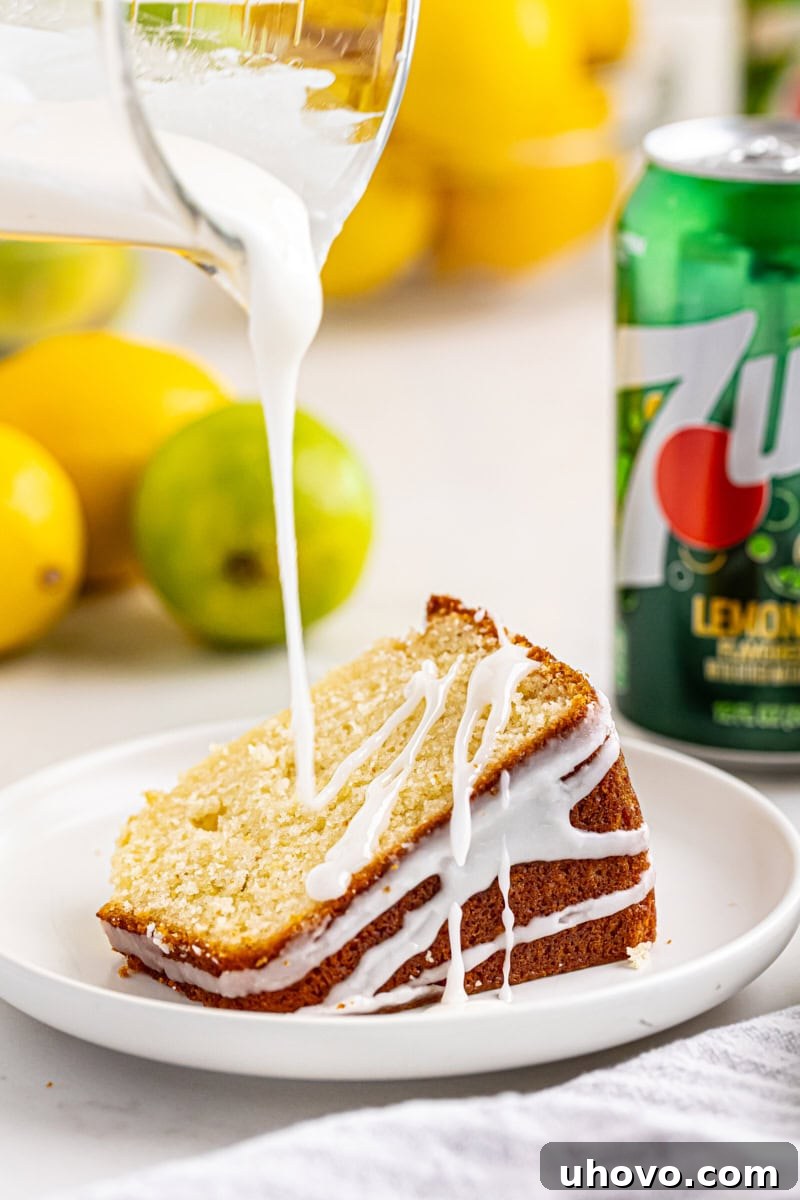
- Prepare the Tangy Glaze: While your cake is cooling, prepare the vibrant glaze. In a small bowl, whisk together the confectioners’ sugar, a splash of 7UP soda, fresh lemon juice, and a hint of vanilla extract. Continue whisking until the mixture is perfectly smooth and has a pourable consistency – thick enough to cling to the cake but thin enough to drip elegantly.
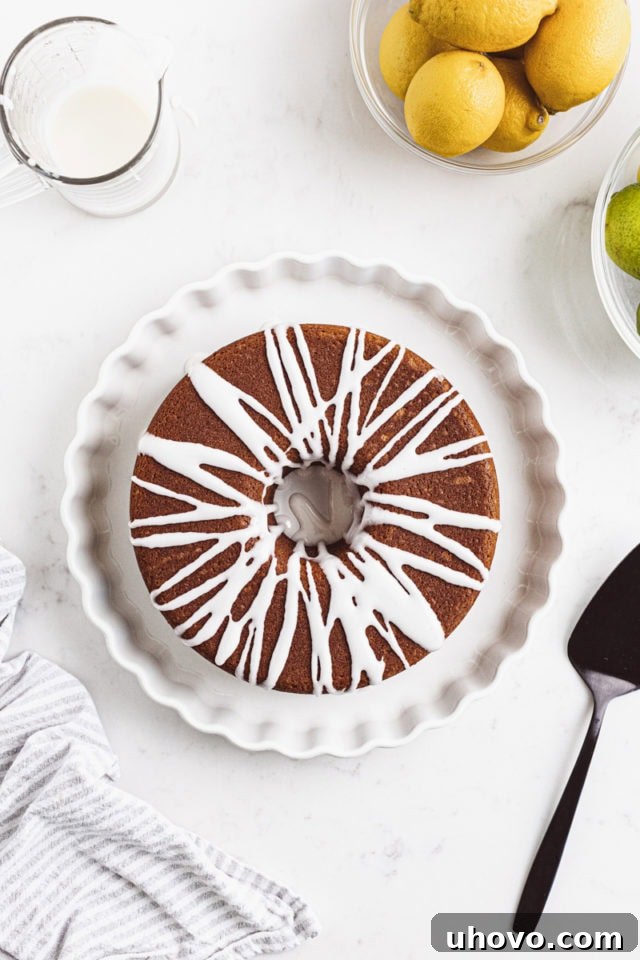
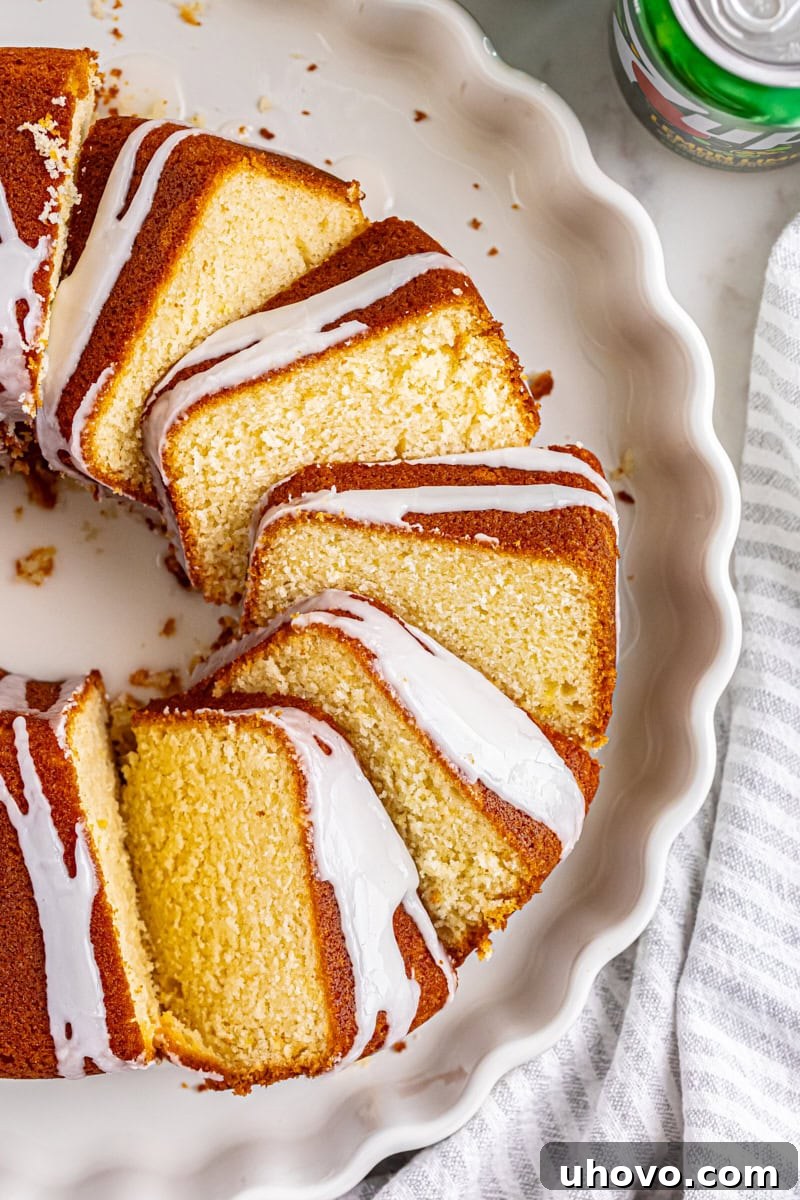
- Glaze and Serve: Once the cake has cooled completely, artfully drizzle the prepared glaze evenly over the top, allowing it to cascade down the sides. Allow the glaze to set for about 10-15 minutes before slicing and serving. This setting time ensures a beautiful finish and prevents the glaze from running too much when cut.
Mastering Your 7UP Cake: Expert Tips for Success
- Room Temperature Matters Immensely: For a truly smooth, perfectly emulsified batter and an ultimately tender cake, ensure that your butter is properly softened and that both your eggs and sour cream are at room temperature. Cold ingredients can cause the batter to curdle or become lumpy, affecting the final texture.
- Flawless Pan Preparation is Key: A well-prepared pan is crucial for a cake that releases cleanly and beautifully. Take your time to thoroughly grease and flour your Bundt or tube pan, making sure to cover every crevice. For extra assurance, I highly recommend using a cooking spray that contains flour, such as Baker’s Joy or Pam Baking, as it creates an excellent non-stick surface.
- Embrace Fresh 7UP: The effervescence and flavor of the 7UP are central to this cake. Always use a freshly opened can or bottle of 7UP (or your chosen lemon-lime soda) for the best carbonation and most vibrant citrus flavor. Flat soda will not provide the same lift or zest.
- Zest Before You Juice: This simple trick makes life in the kitchen much easier! When preparing your lemon, always zest it first, while it’s still whole and firm. Attempting to zest a lemon after it’s been cut and juiced can be quite challenging and messy.
- The Art of Not Over-Mixing: Once you begin combining the wet and dry ingredients, mix only until they are just incorporated. Over-mixing develops the gluten in the flour excessively, which can result in a dense, tough, and chewy cake rather than the desired light and tender crumb.
- Accurate Doneness Check: To prevent a dry cake, it’s vital to bake it just until done. Insert a wooden toothpick or a dedicated cake tester into the thickest part of the cake. It should come out clean or with only a few moist crumbs attached. If it comes out wet with batter, continue baking for a few more minutes and re-test.
- Adjusting Your Glaze to Perfection: The ideal glaze should be thick enough to coat the cake beautifully but still pourable. If your glaze seems too thick, gradually add a tiny bit more lemon juice or 7UP soda, a teaspoon at a time, until the desired consistency is achieved. Conversely, if it’s too thin, sift in a small amount of additional confectioners’ sugar until it thickens up to a smooth, elegant pour.
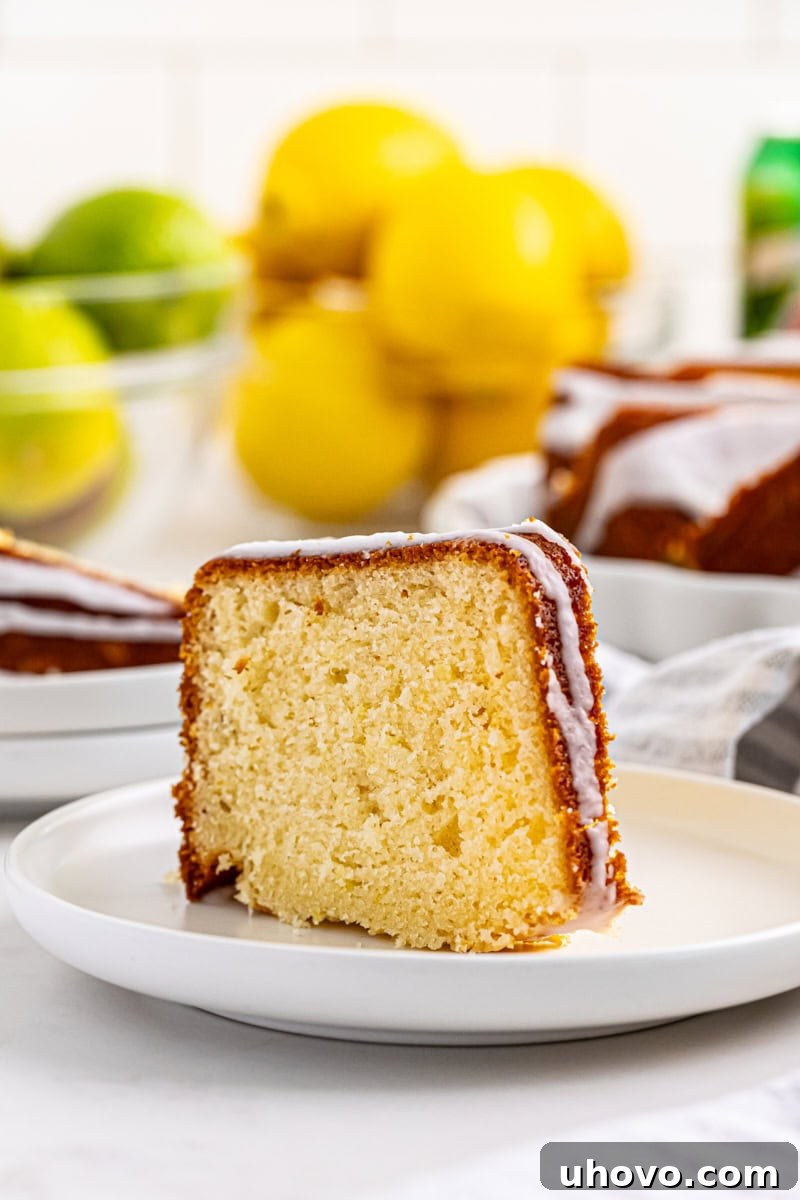
Creative Variations & Elegant Serving Suggestions
- Embrace More Lime: For a delightful twist, substitute the lemon zest and juice with fresh lime zest and juice. You can experiment with either the more common Persian limes for a subtle flavor or the intensely aromatic Key limes for a more pronounced tangy punch.
- Limoncello Glaze: Elevate your glaze by replacing some or all of the lemon juice with a splash of Limoncello. You can even add it alongside the lemon juice for an extra-boozy, sophisticated citrus kick that’s perfect for adult gatherings.
- Charming Mini Bundt Cakes: Transform this recipe into individual servings by dividing the batter into mini Bundt pans. This recipe typically yields 6-8 mini Bundts, depending on the size of your pans. Remember to reduce the baking time significantly, usually to about 20-25 minutes, and check for doneness with a toothpick. These are perfect for parties or as edible gifts.
- Skip the Glaze for Versatile Serving: While the tangy glaze is fantastic, sometimes simplicity is best. Serve slices of unglazed 7UP cake with a generous dollop of sweetened whipped cream or a scoop of creamy vanilla ice cream. Garnish with a scattering of fresh berries like raspberries or blueberries, or a delicate dusting of powdered sugar for an effortlessly elegant presentation.
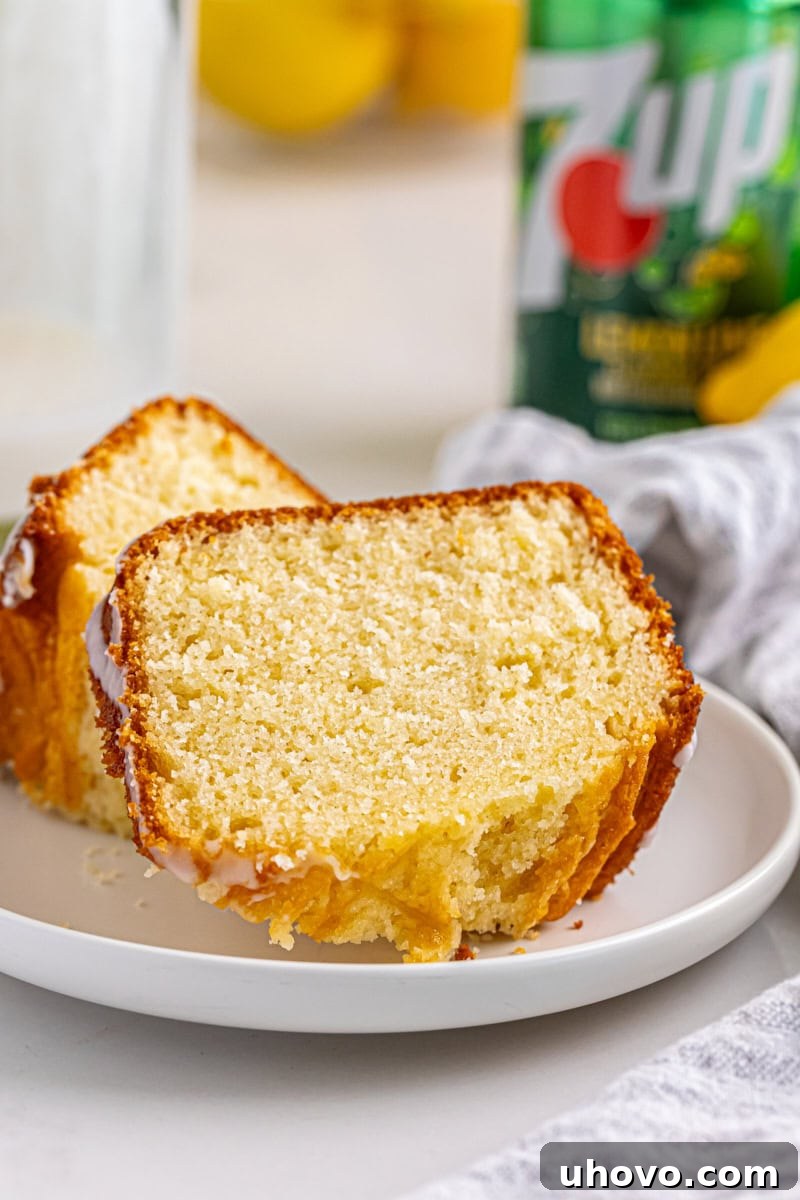
Storing Your 7UP Cake to Maintain Freshness
- At Room Temperature: To keep your 7UP cake fresh and delicious, store it in an airtight container at room temperature for up to 3 days. This helps maintain its moist texture without refrigeration.
- In the Refrigerator: For extended freshness, particularly in warmer climates or if your cake contains perishable fillings (though this recipe doesn’t), you can store it in an airtight container in the refrigerator for up to a week. For the best flavor and texture, allow the cake to come to room temperature for about 30 minutes before serving.
- Freezing for Long-Term Enjoyment: This cake freezes beautifully! For optimal results, it’s best to freeze the cake without the glaze. Wrap individual slices or the whole cake tightly in plastic wrap, then an additional layer of aluminum foil, or place them in an airtight, freezer-safe container or resealable bag. It can be frozen for up to 3 months. When ready to enjoy, thaw the cake at room temperature. If you choose to glaze before freezing, first place slices on a rimmed baking sheet and freeze until the glaze is completely set (this usually takes about 2 hours) to prevent sticking, then wrap as directed. Always add a fresh glaze just before serving for the freshest taste and most appealing presentation.
Explore More Zesty Citrus Cake Recipes
7UP Cake
12
servings
15
minutes
55
minutes
1
hour
10
minutes
Pin Recipe
Ingredients
For the cake:
- 2 ½ cups (300 g) all-purpose flour
- 2 teaspoons baking powder
- ½ teaspoon salt
- ½ cup (113 g) unsalted butter, softened
- ½ cup (120 ml) vegetable oil
- 1 ½ cups (300 g) granulated sugar
- 4 large eggs, at room temperature
- 1 teaspoon pure vanilla extract
- ½ teaspoon lemon extract
- 1 cup (240 ml) 7UP soda, at room temperature
- ½ cup (113 g) sour cream, at room temperature
- Zest of 1 lemon, about 1 tablespoon
For the glaze:
- 1 ½ cups (165 g) confectioners’ sugar
- 2 tablespoons (30 ml) 7UP soda
- 1 teaspoon lemon juice
- ¼ teaspoon vanilla extract
Recommended Products
-
Nordic Ware Tube Pan/Angel Food Cake Pan
-
Microplane Classic Zester/Grater
-
Citrus Juicer
Instructions
To make the cake:
-
Preheat the oven to 325°F (160°C). Thoroughly grease and flour a 10-inch Bundt pan or tube pan, ensuring all nooks and crannies are coated.
-
In a medium bowl, whisk together the all-purpose flour, baking powder, and salt until well combined and lump-free. Set this dry mixture aside.
-
In a large bowl, using an electric mixer on medium speed, cream together the softened unsalted butter, vegetable oil, and granulated sugar. Beat for about 3-4 minutes until the mixture is light, fluffy, and noticeably pale.
-
Add the large eggs one at a time to the creamed mixture, beating well after each addition until fully incorporated. Once the eggs are mixed in, stir in the pure vanilla extract and lemon extract until evenly distributed.
-
Gradually add the dry ingredients to the wet mixture in 3 parts, alternating with the room temperature 7UP soda and sour cream. Start and end with the dry ingredients. Mix on low speed just until combined, then increase the speed to medium and beat until the batter is smooth. Be careful not to over-mix. Finally, gently fold in the fresh lemon zest.
-
Pour the prepared batter evenly into the greased and floured pan and smooth the top with a spatula. Bake for 55 minutes, or until a wooden toothpick inserted into the center of the cake comes out clean or with only a few moist crumbs.
-
Allow the cake to cool in the pan for approximately 10 minutes. Then, carefully invert the cake onto a wire rack to cool completely before applying the glaze.
To make the glaze:
-
While the cake is cooling, prepare the glaze by whisking together the confectioners’ sugar, 7UP soda, lemon juice, and vanilla extract in a small bowl until the mixture is smooth and has a pourable consistency.
-
Once the cake has cooled completely to room temperature, drizzle the prepared glaze evenly over the top, allowing it to artfully drip down the sides. Let the glaze set for 10-15 minutes before slicing and serving.
Notes
- Store your 7UP cake in an airtight container at room temperature for up to 3 days to maintain its optimal freshness.
- For additional tips, helpful step-by-step photos, and extra details that can answer common questions, be sure to read the full article above before you begin baking. It’s packed with valuable information to ensure your success!
Jennifer McHenry
cakes
American
Show off your baking masterpiece!
Snap a pic, tag @bakeorbreak, and use #bakeorbreak on Instagram. We can’t wait to see your delicious creation!