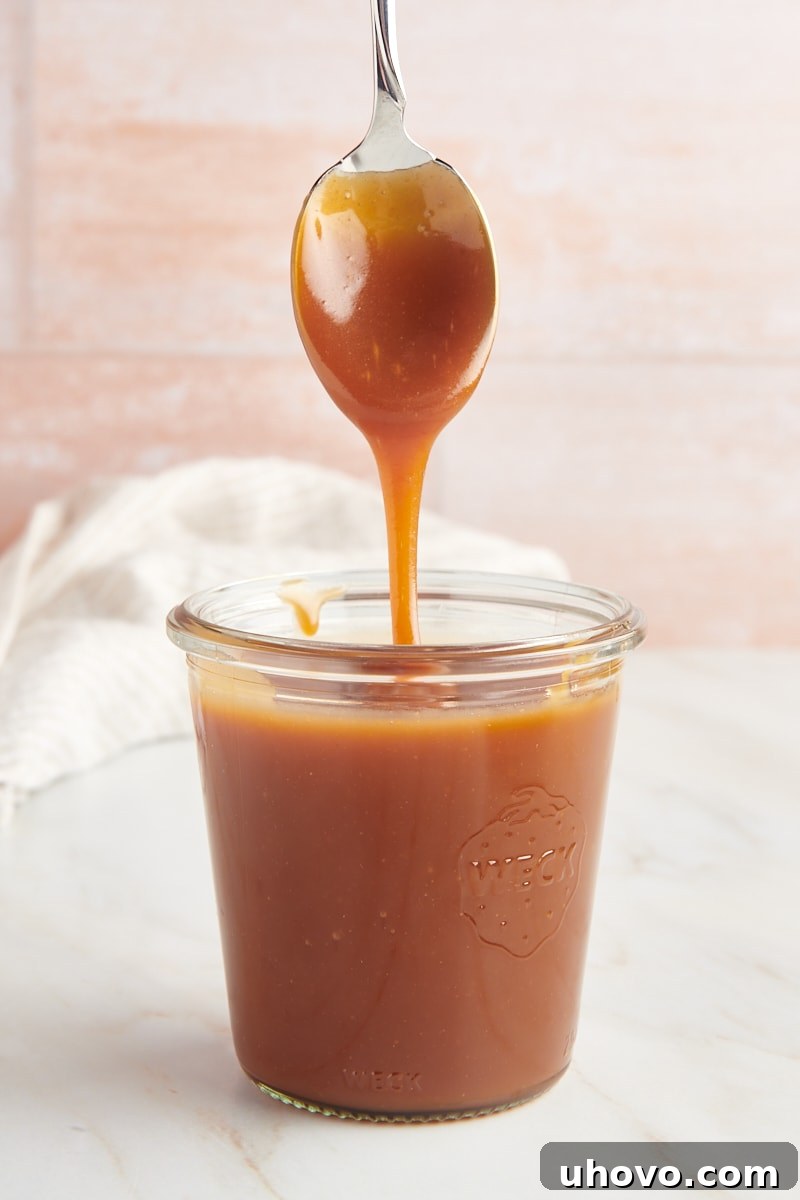
Imagine a rich, gooey, and unbelievably decadent caramel sauce, drizzled generously over your favorite desserts. What if we told you that this luxurious indulgence isn’t just for gourmet bakeries but can be easily crafted in your very own kitchen? Discover the simple yet magical process of making homemade caramel sauce with our comprehensive guide, ensuring flawless results every single time.
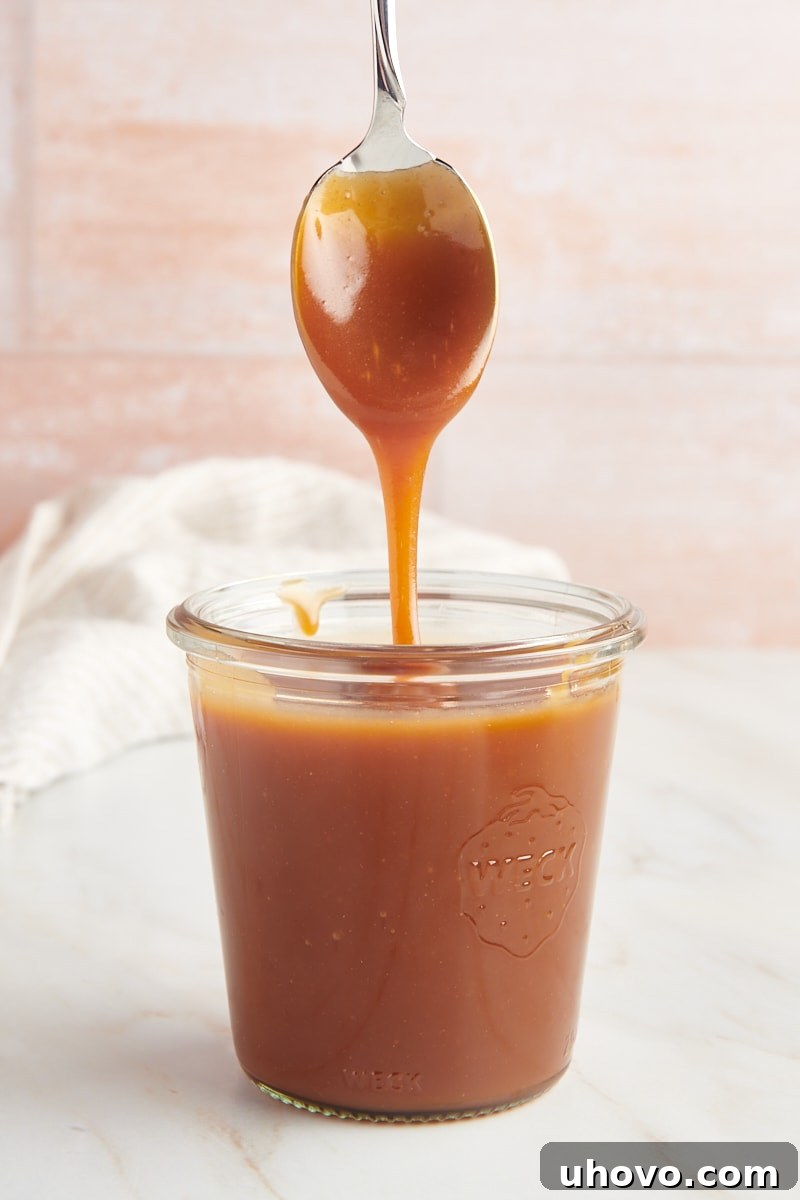
Easy Homemade Caramel Sauce: A Sweet Revelation
Caramel is more than just a sweet treat; it’s a transformative ingredient capable of turning ordinary dishes into extraordinary culinary experiences. Its buttery, rich, and deeply satisfying sweetness can be drizzled over a scoop of vanilla ice cream, layered between the sponges of a majestic cake, swirled into a morning coffee, or even used as a dip for fresh fruit. The versatility of caramel knows no bounds, making it a beloved staple in kitchens worldwide.
While the thought of making caramel from scratch might seem daunting, conjuring images of burnt sugar and sticky disasters, I am thrilled to assure you that with the right technique and a few simple tips, you can create a perfectly smooth, luscious caramel sauce in your own home with surprising ease. This guide will walk you through my tried-and-true method, ensuring your homemade caramel sauce comes out flawlessly, impressing both your palate and your guests.
Why You’ll Absolutely Love This Homemade Caramel Sauce Recipe
Making your own caramel sauce is a truly rewarding experience, offering benefits far beyond just flavor. Here’s why this recipe will become your new go-to:
- Simplicity Meets Decadence: Forget complicated steps. With common kitchen ingredients and a straightforward method, you’ll whip up a luxurious, buttery, and profoundly flavorful caramel sauce that tastes like it came from a gourmet confectionery.
- Unparalleled Homemade Goodness: When you craft caramel sauce yourself, you gain complete control over the quality and freshness of ingredients. This translates to a pure, authentic flavor free from artificial additives, a taste that store-bought versions simply can’t match. You’ll savor every spoonful, knowing exactly what went into it.
- Endless Culinary Versatility: Once you taste this delectable sauce, you’ll find yourself searching for every opportunity to incorporate it. From enhancing simple desserts to elevating complex bakes, its uses are truly limitless. It’s a condiment, an ingredient, and a standalone treat all in one.
- Impress with Effortless Elegance: Imagine serving your guests a dessert adorned with your homemade caramel, or gifting charming jars of it to friends and family. Your culinary prowess will shine, and they’ll be amazed by your skill. It’s a sophisticated touch that requires minimal fuss.
- Cost-Effective Indulgence: Producing a large batch of premium caramel sauce at home is significantly more economical than purchasing specialty store varieties. Enjoy gourmet quality without the gourmet price tag.
Save This Delicious Recipe!
Don’t miss out on this fantastic recipe! If you’d like to keep it handy, consider saving it to your favorite recipe collection or simply bookmark this page for easy access later.
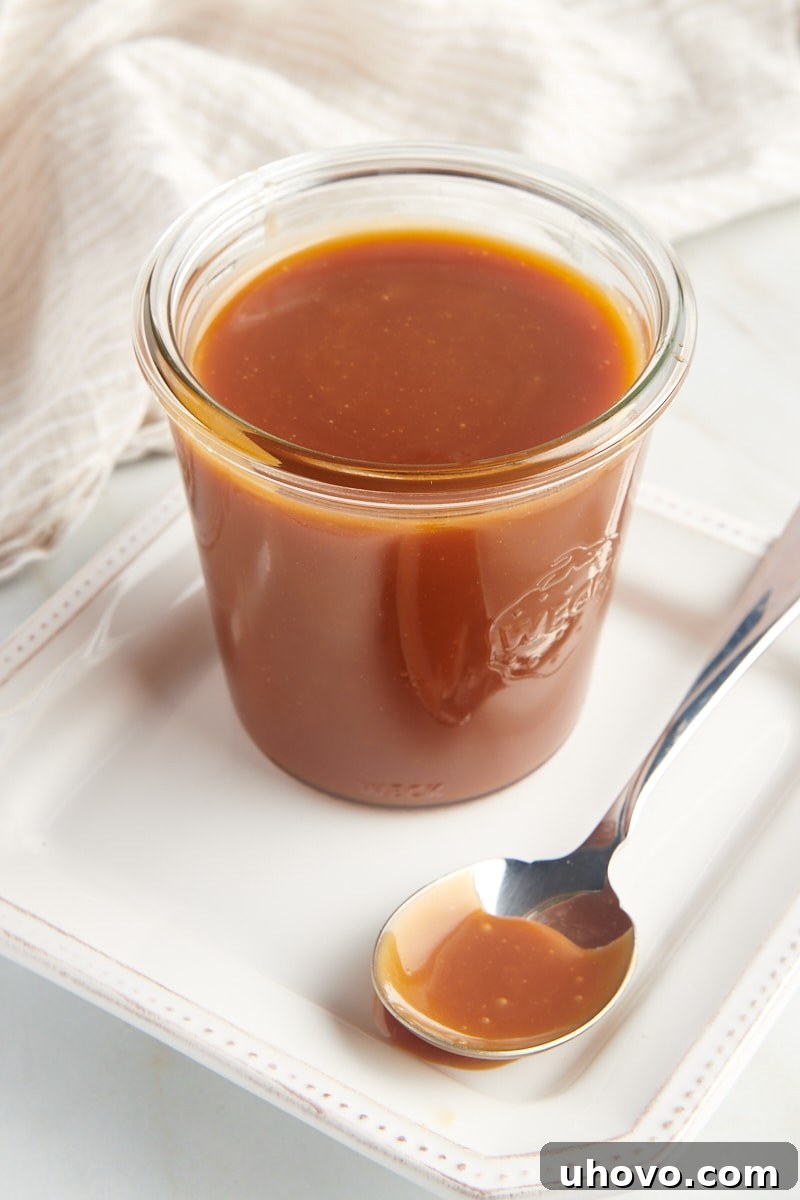
Understanding the Wet Method for Making Caramel
When it comes to caramel making, there are two primary approaches: the wet method and the dry method. This recipe utilizes the wet method, a technique favored by many for its reliability and forgiving nature, especially for home bakers.
The wet method begins by dissolving sugar in a liquid, typically water, often with the addition of a small amount of corn syrup. This liquid serves several crucial functions. Firstly, it ensures that the sugar dissolves evenly, preventing localized burning and promoting consistent caramelization. Secondly, the presence of water significantly reduces the risk of sugar crystallization – a common pitfall in caramel making where sugar molecules clump together, creating a grainy texture. The water helps keep the sugar in solution until it reaches the desired temperature for caramelization.
Compared to the dry method, which involves heating sugar alone until it melts and caramelizes, the wet method generally yields a lighter-colored caramel with a milder, more delicate flavor profile. This makes it an excellent choice for beginners and for recipes where a subtle caramel note is desired, rather than the intense, sometimes slightly bitter notes that can come from a dark dry caramel. Its forgiving nature makes it an ideal starting point for anyone looking to master the art of homemade caramel without unnecessary stress.
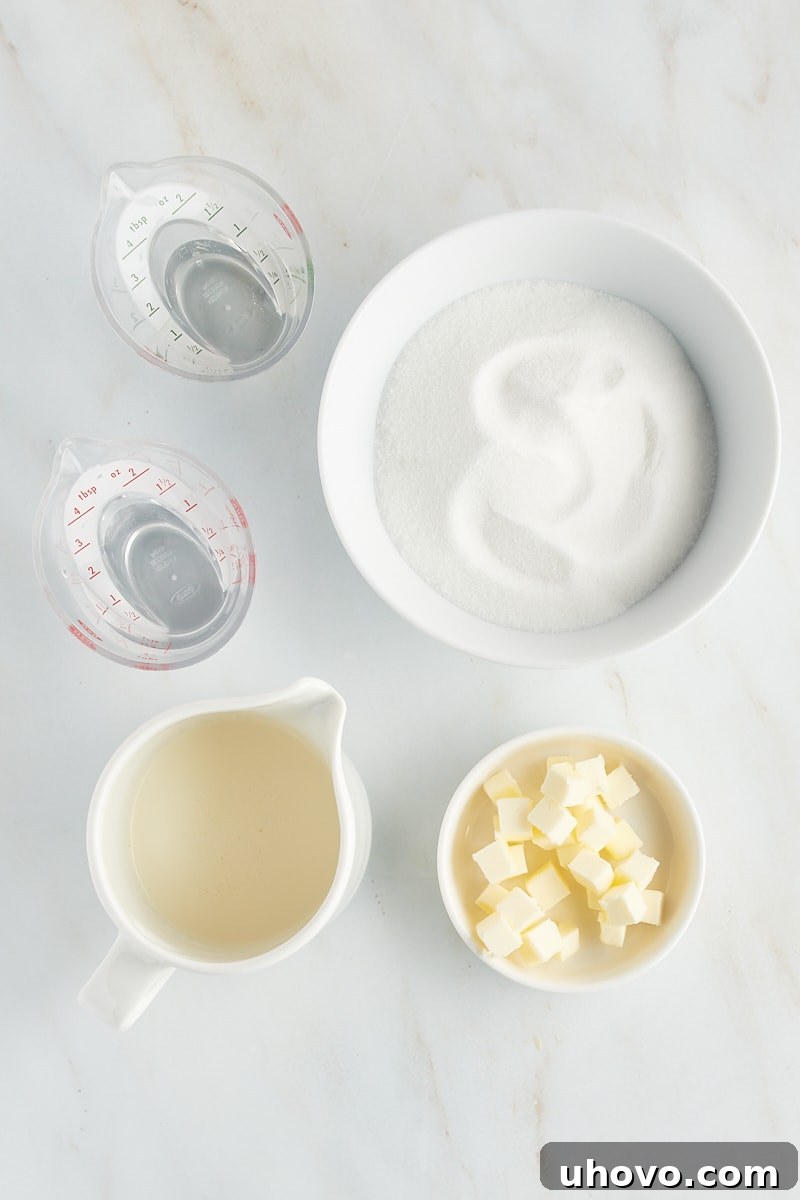
What You’ll Need: Essential Ingredients for Perfect Caramel
Crafting exquisite caramel sauce requires just a handful of basic ingredients, each playing a vital role in achieving that rich flavor and perfect texture. You’ll find the exact quantities in the detailed recipe card below, but here’s a closer look at what you’ll need and why:
- Granulated Sugar: This is the star of our show! Use fresh, standard white granulated sugar. Ensure it’s free of lumps or debris, as any impurities can encourage crystallization. The sugar will undergo a fascinating chemical transformation, evolving from sweet crystals to a complex, caramelized syrup.
- Water: Crucial for the wet method, water helps dissolve the sugar evenly and gently, preventing it from burning too quickly and greatly reducing the risk of crystallization. It acts as a medium to ensure uniform heating across all sugar particles.
- Light Corn Syrup: While not strictly essential for all caramel recipes, a small amount of light corn syrup (or glucose syrup) is a fantastic secret weapon in homemade caramel. It’s an invert sugar that acts as an anti-crystallization agent, ensuring your caramel stays incredibly smooth and silky, even after cooling. It helps prevent those frustrating grainy bits from forming.
- Heavy Cream (or Heavy Whipping Cream): This is where the luscious richness comes from! Do not substitute with lighter creams or milk, as they lack the necessary fat content for a truly decadent sauce. For the best results and to prevent the caramel from seizing too aggressively when added, ensure your heavy cream is at room temperature.
- Butter: Another essential for richness and flavor. You can use either unsalted or salted butter based on your preference. Unsalted butter gives you more control over the final salt content, allowing you to add a pinch of sea salt later for a salted caramel. Cutting it into small cubes helps it melt more quickly and incorporate smoothly into the hot caramel.
Equipment and Tools for Successful Caramel Making
While making caramel is often seen as an art, having the right tools can certainly make the process much smoother and significantly increase your chances of success. You don’t need a professional kitchen setup, but a few key pieces of equipment will make all the difference:
- Heavy-Bottomed Saucepan: This is arguably the most important tool. Choose a sturdy, heavy-bottomed saucepan with high sides. The heavy base ensures even heat distribution, preventing hot spots that can cause sugar to burn quickly and unevenly. High sides are crucial to contain the vigorous bubbling that occurs when hot caramel meets cool cream. Furthermore, ensure your saucepan is meticulously clean; even a speck of sugar or dirt can trigger crystallization.
- Long-Handled Whisk or Silicone Spatula: You’ll need a reliable utensil for stirring ingredients initially and for whisking in the cream and butter. A long handle is a safety feature, keeping your hands away from the extremely hot, bubbling caramel. A standard balloon whisk works well, but a flat whisk is excellent for reaching the corners of the pan. A heatproof silicone spatula is also ideal for scraping down the sides of the pan during the initial dissolving phase.
- Candy Thermometer (or Instant-Read Thermometer): While experienced caramel makers can often judge by color, a thermometer is an invaluable tool for precision, especially for beginners. It allows you to monitor the sugar mixture’s temperature accurately, ensuring you reach the perfect caramelization point (around 350°F / 175°C) without overcooking. A candy thermometer that clips to the side of your pan is convenient, or a good quality instant-read thermometer will also suffice.
- Oven Mitts or Pot Holders: Safety first! Caramel becomes extremely hot – significantly hotter than boiling water – and can cause severe burns. Always use a dependable pair of oven mitts or pot holders when handling the hot saucepan, pouring the caramel, or even gently swirling the pan.
- Pastry Brush (Optional but Recommended): A small pastry brush dipped in water can be used to brush down any sugar crystals that cling to the sides of the saucepan during boiling. This technique helps prevent crystallization.
How to Make Homemade Caramel Sauce: A Step-by-Step Guide
Let’s delve into the detailed process of creating your very own luscious homemade caramel sauce. Follow these steps carefully for the best results.
Step 1: Combine and Dissolve the Sugar Mixture
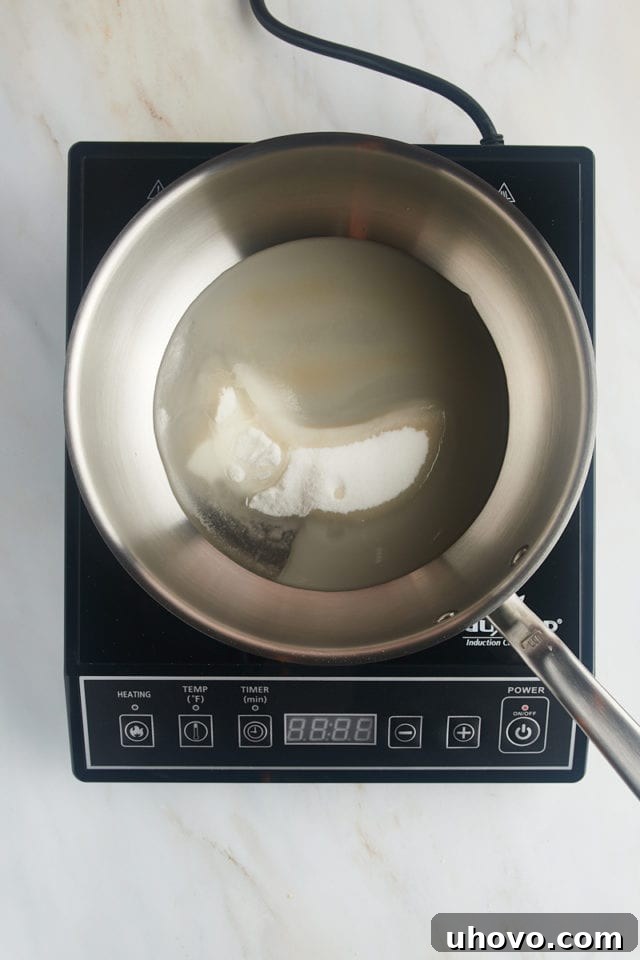
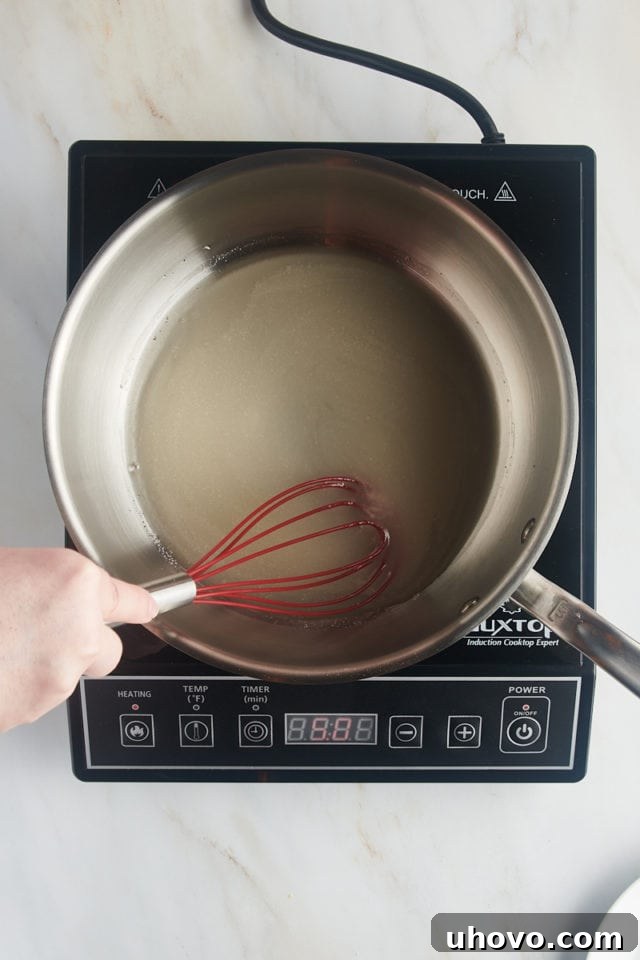
Begin by combining the granulated sugar, water, and light corn syrup in your large, heavy-bottomed saucepan. As previously mentioned, selecting a sufficiently large pan is critical to accommodate the significant bubbling that will occur later. Place the saucepan over medium heat. Stir the mixture occasionally using your long-handled whisk or silicone spatula until you observe that all the sugar crystals have completely dissolved. The mixture should appear clear and syrupy. Once dissolved, increase the heat slightly and bring the mixture to a rolling boil. At this point, stop stirring.
Step 2: Caramelize to a Golden Amber Hue
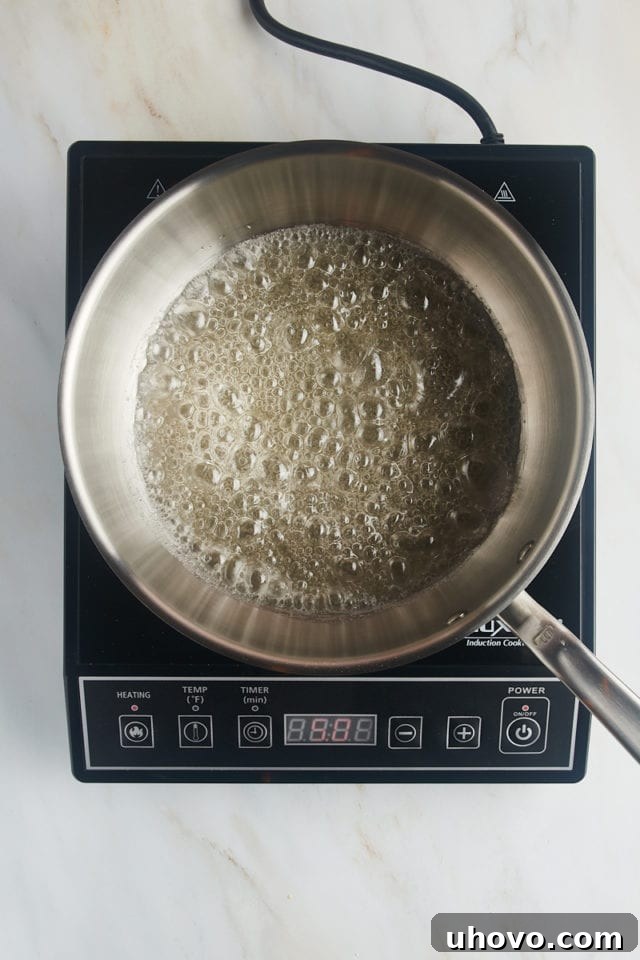
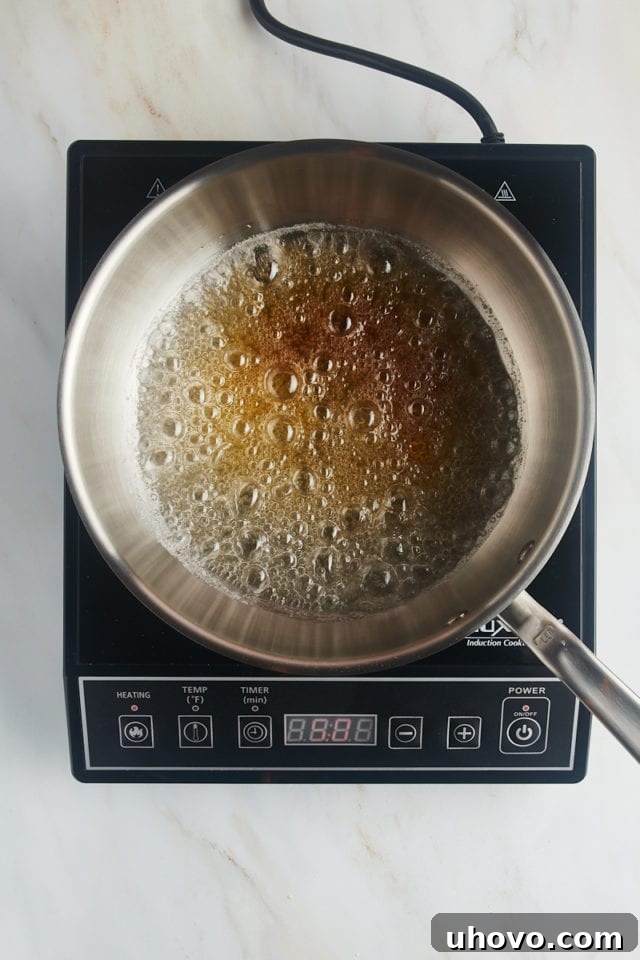
Once boiling, resist the urge to stir the sugar mixture. Allow it to continue cooking undisturbed. You will observe the liquid gradually thicken and change color, progressing from clear to a pale straw yellow, then to a beautiful deep golden amber. This caramelization process typically takes approximately 8 to 12 minutes, though the exact time can vary depending on your stove’s heat output, the type of pan, and even ambient humidity. If using a candy thermometer, aim for a temperature of about 350°F (175°C). While stirring is prohibited during this phase, if you notice the caramelizing unevenly or developing hot spots, you can gently swirl the pan to redistribute the heat. Keep a watchful eye, as caramel can go from perfectly golden to burnt in a matter of seconds.
Step 3: Introduce the Cream for Richness
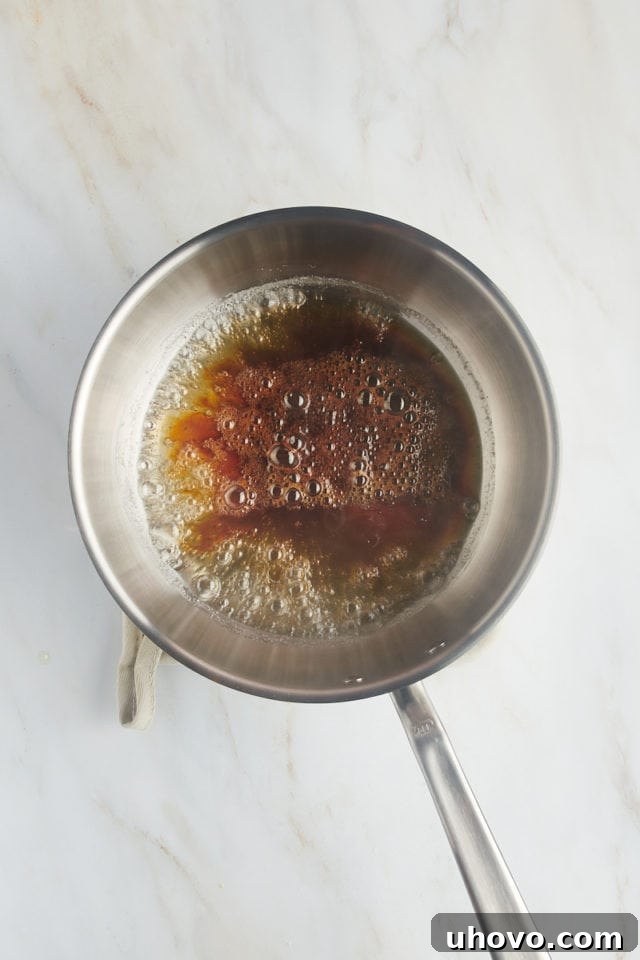
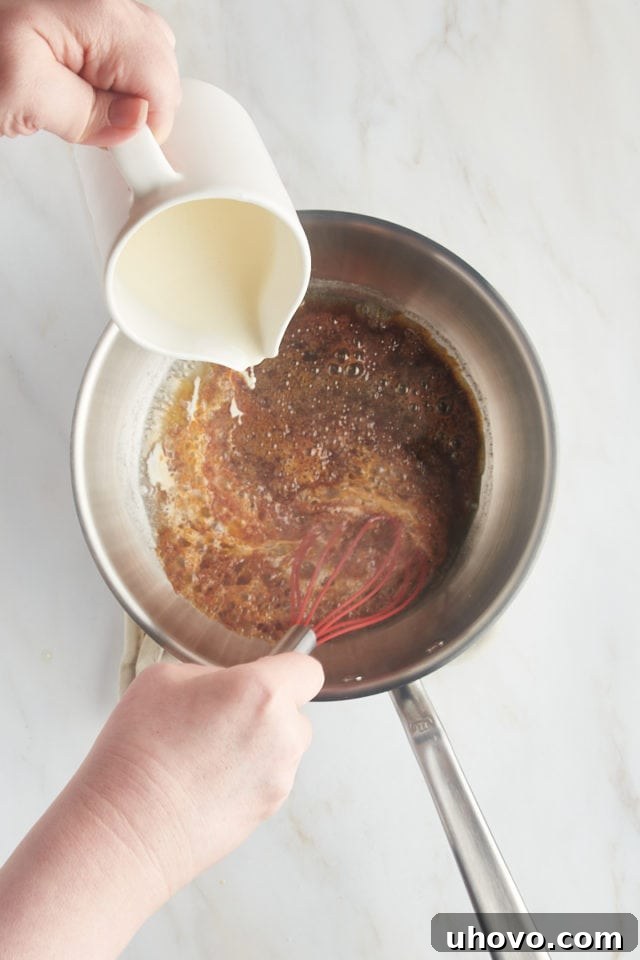
Once the caramel reaches its desired deep golden amber color (or 350°F/175°C), immediately remove the pan from the heat. This is a critical step, so have your room temperature heavy cream ready. Slowly and steadily pour the cream into the hot sugar mixture while continuously whisking with your long-handled whisk. Be prepared for a vigorous reaction: the mixture will bubble up intensely and steam will rise. This is normal! Continue whisking until the cream is fully incorporated and the bubbling subsides. If, by chance, the caramel hardens or seizes into a solid mass upon adding the cream, do not panic. Simply return the pan to very low heat and continue whisking gently until the hardened sugar dissolves and the mixture becomes smooth again. The key is patience.
Step 4: Incorporate Butter and Cool
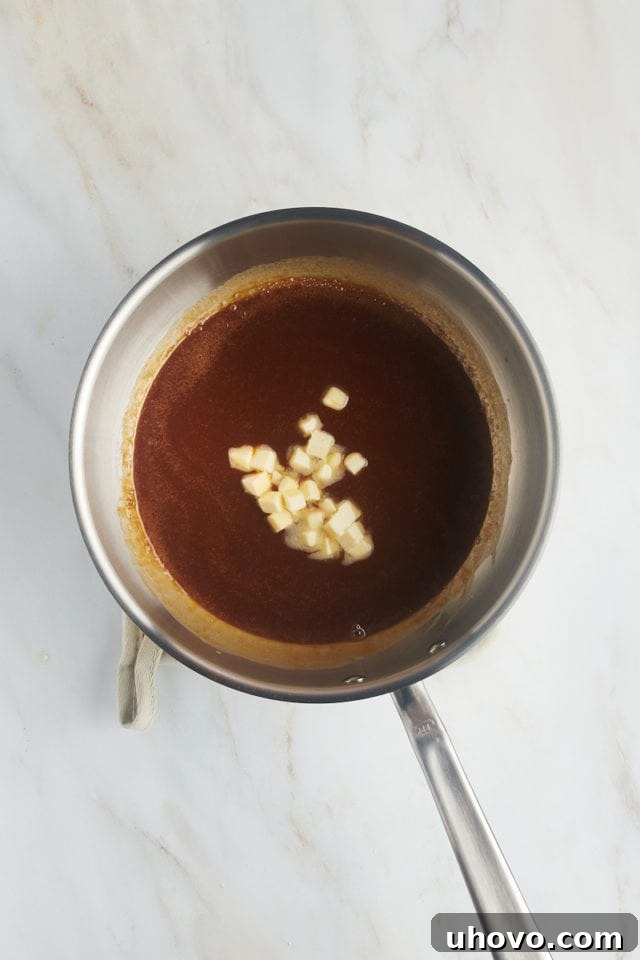
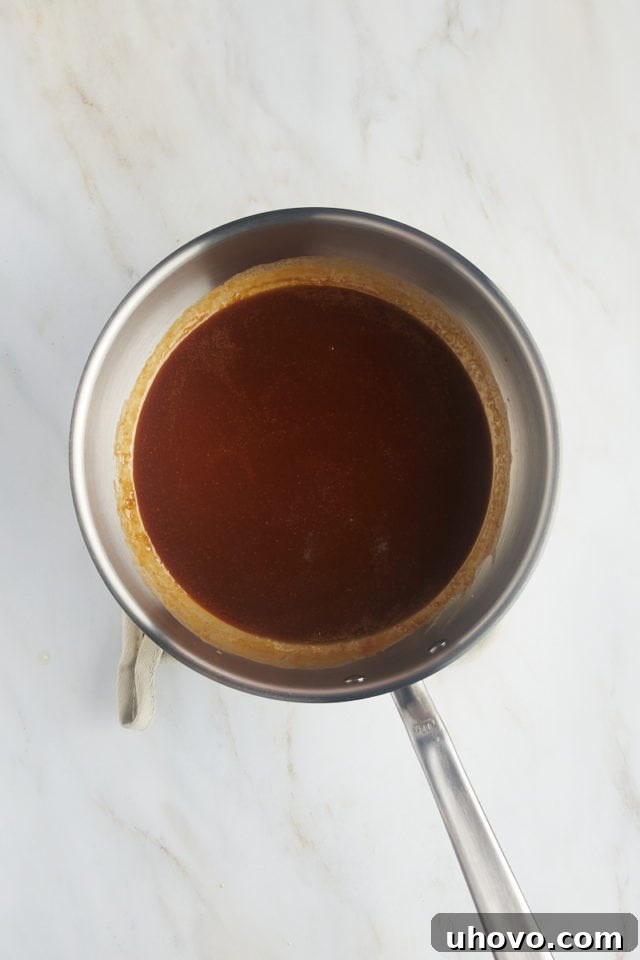
With the cream fully incorporated, add the cubed butter to the caramel sauce. Whisk continuously until the butter has completely melted and is thoroughly combined, creating a beautifully smooth, glossy, and emulsified sauce. Continue whisking for another minute or two off the heat; this helps to slightly cool the caramel and ensure all ingredients are perfectly blended. At this stage, you can stir in any desired flavor variations, such as sea salt or vanilla extract.
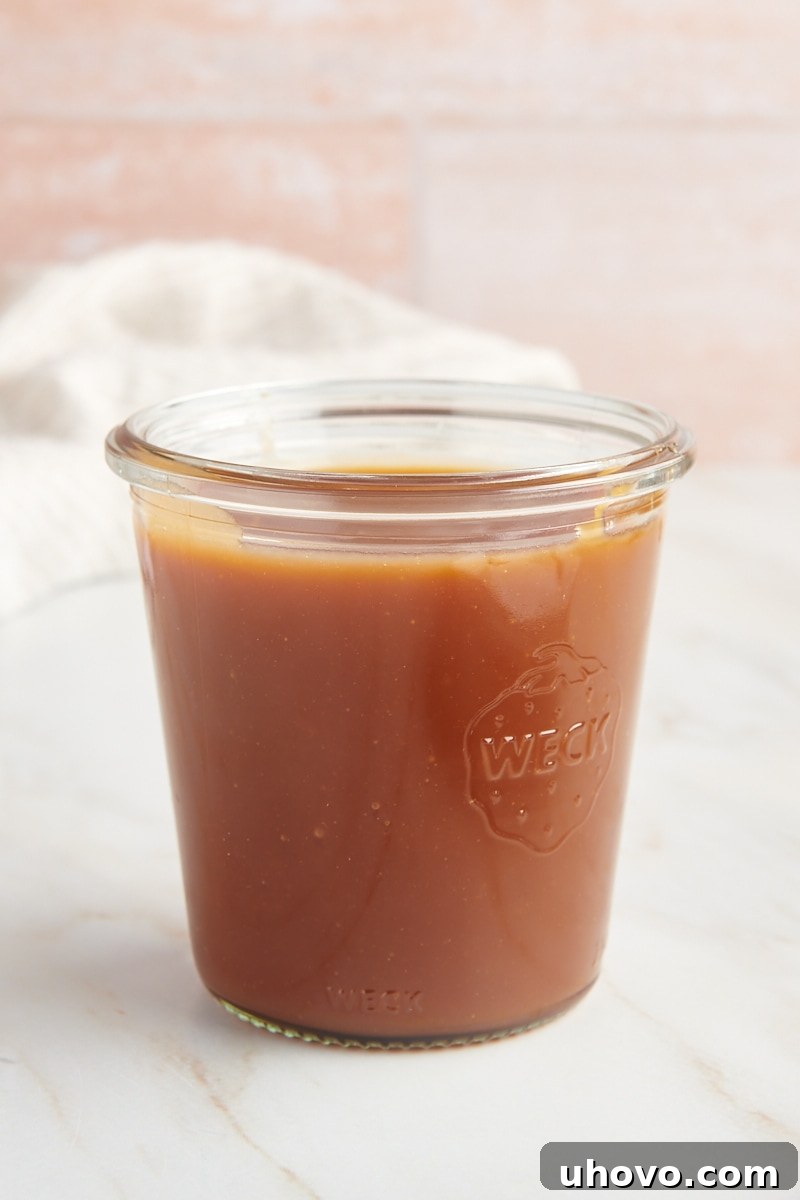
Cool Completely: The caramel sauce will appear quite thin when hot. It’s crucial to allow it to cool completely to room temperature before storing or using it. As it cools, the sauce will thicken significantly, reaching its ideal rich and gooey consistency. This can take several hours.
Store: If you’re not planning to use your homemade caramel sauce immediately, transfer it to a clean, airtight container. It can then be stored in the refrigerator.
Essential Tips for Caramel Sauce Success
While this method makes caramel sauce approachable, keeping a few key pointers in mind will help ensure your batch turns out absolutely perfect. For any challenges, also refer to our detailed troubleshooting section below.
- Mise en Place is Your Friend: “Mise en place” means having all your ingredients measured and prepared before you start cooking. This is always good practice in baking, but it’s absolutely essential for caramel. The process of adding cream and butter happens quickly, and you need to be ready. This also gives your heavy cream ample time to come to room temperature, which is crucial for a smooth emulsion and preventing seizing.
- Invest in a Heavy-Bottomed Saucepan: As emphasized in the equipment section, a quality heavy-bottomed saucepan provides even heat distribution, preventing hot spots that can cause sugar to burn in one area while remaining undercooked in another. This uniformity is key to consistent caramelization.
- No Multi-Tasking Allowed: Making caramel demands your full attention. Do not walk away from the stove, even for a moment. The transition from perfectly caramelized to irrevocably burnt can occur in mere seconds. Stay focused on the color and, if using, the temperature of your sugar mixture.
- Address Hot Spots Proactively: If you observe one section of your caramel cooking faster than the rest, gently swirl the pan to redistribute the sugar mixture. You can also rotate the pan on your burner to account for any uneven heating from your stovetop. Uniformity is the goal.
- Beware of Overcooking: It’s far better to err on the side of slightly undercooked caramel than burnt. Burnt caramel cannot be salvaged; it will impart an acrid, bitter taste. The moment your caramel reaches that beautiful deep golden amber color, remove it from the heat immediately. If you’re using a thermometer, as soon as it hits 350°F (175°C), it’s time to take it off.
- Cleanliness is Next to Caramel Goodness: Ensure your saucepan and whisk are scrupulously clean before you begin. Even a tiny sugar crystal or food particle can act as a “seed” for crystallization, ruining your smooth sauce.
Troubleshooting Common Caramel Issues
Even with the best intentions and careful execution, making caramel can sometimes present challenges. Don’t despair! Many common issues have straightforward solutions or preventative measures. Let’s explore how to prevent or fix them:
- Sugar Crystallization: This is a common nemesis of caramel makers, resulting in a grainy texture. Our recipe uses water and corn syrup to help prevent this. To further ensure success:
- Ensure your pan and whisk are impeccably clean.
- Avoid stirring the mixture once it begins to boil and caramelize (unless gently swirling the pan for even cooking).
- Use a wet pastry brush to wash down any sugar crystals that cling to the sides of the pan during boiling.
- To fix: If you do end up with some lumps or graininess, you can try straining the warm caramel through a fine-mesh sieve to remove larger crystals. For widespread crystallization, gently reheat the caramel over very low heat, adding a tablespoon or two of water, and stirring until the crystals dissolve.
- Burnt Caramel: This happens when the sugar is cooked too long or over too high heat. It develops an unpleasant, bitter taste and cannot be salvaged.
- Prevention: Maintain constant vigilance! Watch the color closely and remove it from the heat as soon as it reaches the desired deep amber. Using a thermometer is your best defense against overcooking.
- Fix: Unfortunately, there’s no fixing burnt caramel. You’ll need to discard it and start over.
- Separation (Caramel Breaking): If your caramel appears oily, separated, or grainy after adding the cream and butter, it usually means the emulsion has broken. This can happen if ingredients are added too quickly, if the temperature contrast is too great, or if the fats separate.
- To fix: Gently reheat the separated caramel over very low heat. Whisk continuously and vigorously. Sometimes adding a teaspoon of warm heavy cream or water while whisking can help re-emulsify the mixture.
- Caramel Too Thick: Caramel thickens considerably as it cools. If it’s too thick after cooling, it might have been slightly overcooked, or simply needs to be thinned for your intended use.
- To fix: Gently reheat the thick caramel in a double boiler or in the microwave on a low power setting, stirring frequently, until it reaches your desired consistency. Avoid boiling it again. If needed, stir in a small amount (1-2 teaspoons) of warm heavy cream until it thins out.
- Caramel Too Thin: If your caramel sauce is too runny even after cooling, it may not have cooked long enough to evaporate sufficient moisture and reach the correct caramelization stage.
- To fix: Return the caramel to a saucepan and gently heat it to a simmer over low to medium-low heat, stirring constantly. As it simmers, moisture will evaporate, and it will thicken. Continue cooking until it reaches a temperature of around 230-240°F (110-115°C) for a thicker sauce, remembering it will continue to thicken significantly as it cools.
Delicious Variations to Customize Your Caramel Sauce
While classic homemade caramel sauce is perfect on its own, it also serves as a fantastic base for exciting flavor variations. Get creative and tailor your sauce to your taste preferences:
- Salted Caramel Sauce: For a popular and irresistible twist, add a generous pinch (or more, to taste) of high-quality sea salt flakes after the butter has been incorporated and the sauce has cooled for a minute or two. The salt beautifully enhances and balances the sweetness.
- Vanilla or Bourbon Caramel: For a delightful aromatic kick, stir in a splash (1-2 teaspoons) of pure vanilla extract or a good quality bourbon after the caramel sauce has cooled slightly off the heat. The alcohol will evaporate, leaving behind a wonderful depth of flavor.
- Warm Spiced Caramel: Infuse your caramel with cozy, warm spices. Whisk cinnamon, nutmeg, cardamom, or even a touch of ginger into the heavy cream before you add it to the caramelized sugar. The heat will help release their aromatic oils.
- Espresso Caramel: For coffee lovers, mix a pinch (1/2 to 1 teaspoon) of instant espresso powder or finely ground coffee into the heavy cream before incorporating it. This adds a subtle, sophisticated coffee note that pairs wonderfully with the caramel.
- Nutty Caramel Sauce: For an added textural and flavor dimension, stir in a handful of finely chopped toasted nuts (like pecans, walnuts, or almonds) into the caramel sauce while it’s still warm. This is fantastic for ice cream toppings or pie fillings.
- Citrus Zest Caramel: For a brighter, fresher caramel, add a teaspoon of finely grated orange or lemon zest along with the butter. The citrus oils will infuse the sauce with a delicate, tangy aroma.
Endless Serving Suggestions for Your Homemade Caramel
The beauty of homemade caramel sauce lies in its incredible versatility. Once you’ve made a batch, you’ll find countless delicious ways to enjoy it:
- Classic Ice Cream Topping: The most obvious, yet always satisfying. Drizzle warm caramel over a bowl of vanilla ice cream for a timeless dessert. It also pairs wonderfully with chocolate, coffee, or pecan ice cream.
- Coffee and Hot Beverages: Swirl a tablespoon or two into your morning coffee, latte, or hot chocolate for a gourmet touch. It’s an instant upgrade to any warm drink.
- Fruit Dip: Serve it alongside sliced apples, pears, bananas, or berries for a delightful and simple fruit dip. Perfect for entertaining or a sweet snack.
- Breakfast & Brunch Enhancement: Transform your breakfast staples. Pour it over fluffy waffles, stacks of pancakes, or even French toast for an indulgent start to your day.
- Cake and Brownie Glaze: Use it as a glaze for cakes, particularly chocolate or apple cakes. It also makes an exceptional topping for brownies, enhancing their richness.
- Pie and Tart Filling: Incorporate it into pecan pie, apple pie, or other fruit tarts for an added layer of flavor and moisture.
- Cheesecake and Custard Topping: Elevate a creamy cheesecake, panna cotta, or bread pudding with a generous dollop of warm caramel. It’s particularly good on caramel apple cheesecake bars or bread pudding.
- Milkshakes and Smoothies: Blend a spoonful into milkshakes or smoothies for a rich, sweet undertone.
- Dessert Pizza or Flatbread: Spread a thin layer of caramel onto a dessert pizza base before adding fruit and other toppings.
How to Store Homemade Caramel Sauce
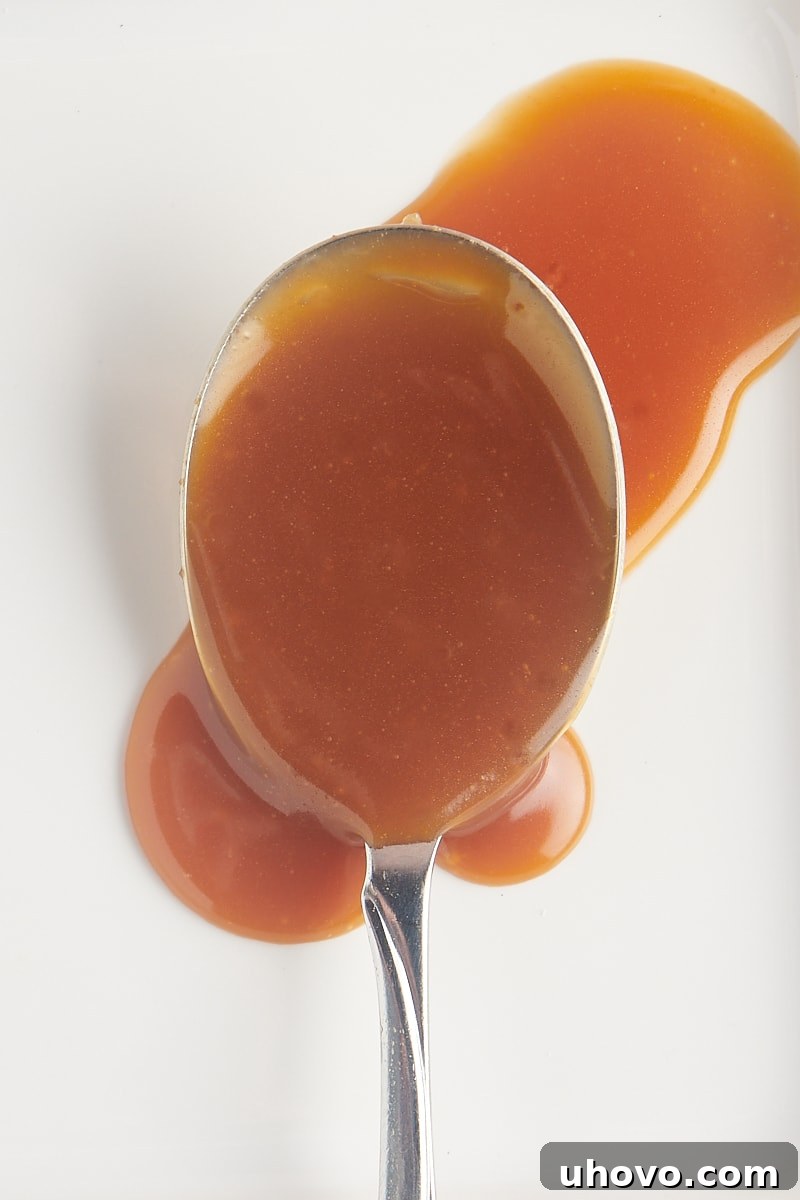
Proper storage ensures your delicious homemade caramel sauce stays fresh and ready to enjoy for an extended period. Once your caramel sauce has cooled completely to room temperature, transfer it to a clean, airtight container, such as a glass jar with a tight-fitting lid. Store it in the refrigerator. When properly stored, homemade caramel sauce will keep beautifully for up to 2 weeks.
To reheat the sauce, you have a couple of options: gently warm it in the microwave on a low power setting, stirring every 15-30 seconds until it reaches your desired consistency, or warm it in a saucepan over very low heat on the stovetop, stirring constantly to prevent scorching.
Can Homemade Caramel Sauce Be Frozen?
Yes, absolutely! If you’ve made a large batch or wish to extend the shelf life of your homemade caramel sauce even further, it freezes exceptionally well. Pour the cooled caramel into a freezer-safe container or heavy-duty freezer bag, leaving about an inch of headspace to account for expansion during freezing. It can be frozen for up to 3 months without significant loss of quality or texture.
When you’re ready to use it, thaw the frozen caramel sauce in the refrigerator overnight. Once thawed, you can reheat it using the methods described above (microwave or stovetop) until it’s smooth and pourable.
No ratings yet
Caramel Sauce
1
cup
5 minutes
15 minutes
20 minutes
Homemade caramel sauce is wonderfully rich and decadent. A great topping for so many of your favorite desserts!
Pin Recipe
Leave a Review
Ingredients
- 1 cup (200 g) granulated sugar
- 2 tablespoons (30 ml) water
- 1 tablespoon (15 ml) light corn syrup
- ½ cup (120 ml) heavy cream, at room temperature
- 2 tablespoons (28 g) unsalted butter, cut into small cubes*
Recommended Products
-
All-Clad 3-Quart Steel Sauce Pan
-
OXO Good Grips Stainless Steel Flat Whisk
-
9-Inch Wire Whisk
Instructions
-
Combine the sugar, water, and corn syrup in a large, heavy saucepan. (Ensure your pan is large enough, as the caramel will become very bubbly.)
-
Cook over medium heat, stirring occasionally, until the sugar has dissolved and the mixture is clear. Bring the mixture to a boil. Stop stirring, and allow the mixture to cook until it reaches a deep golden amber color and a temperature of 350°F (175°C). This process typically takes 8 to 12 minutes. Do not stir during this caramelization phase, but you may gently swirl or rotate the pan if needed to ensure even cooking.
-
Remove the pan from the heat. Slowly and steadily pour the room temperature heavy cream into the hot sugar mixture while continuously whisking with a long-handled whisk. Be mindful, as the mixture will bubble vigorously. If the mixture hardens or seizes, return it to very low heat and continue whisking until it becomes smooth again before proceeding.
-
Stir in the cubed butter until it is completely melted and thoroughly combined, creating a smooth and glossy caramel sauce.
-
Allow the caramel sauce to cool completely at room temperature before storing or using. It will thicken considerably as it cools.
Notes
- *You can use salted butter if you prefer a subtle salty kick in your caramel sauce. For a more pronounced salted caramel, add a pinch of sea salt flakes after the butter is incorporated.
- Store the cooled caramel sauce in an airtight container in the refrigerator for up to 2 weeks. Before serving, allow it to come to room temperature or warm it briefly in the microwave or on the stovetop over low heat until it reaches your desired consistency.
Jennifer McHenry
toppings
American
Show Off Your Baking Masterpiece!
Snap a pic, tag @bakeorbreak, and use #bakeorbreak on Instagram. We can’t wait to see your delicious creation!