Unlock the Secrets to Perfect Bundt Cakes: Your Ultimate Baking Guide
There’s an undeniable charm to a beautifully baked Bundt cake. Here at Bake or Break, my passion for these elegant desserts shines through our extensive collection of Bundt cake recipes. Their inherent simplicity and incredible versatility make them a firm favorite in any baker’s repertoire. Whether topped with a delicate glaze, a dusting of confectioners’ sugar, or left exquisitely unadorned, Bundt cakes eliminate the need for elaborate layers or intricate decorating, allowing their distinctive shapes to take center stage.
The true beauty of a Bundt cake lies in this very simplicity. My baking philosophy revolves around making the process straightforward while consistently delivering outstanding results, and Bundt cakes perfectly embody this mission. Furthermore, who can resist the allure of those stunning pan designs that effortlessly transform a humble cake into an eye-catching, show-stopping dessert?
While Bundt cakes are often celebrated for their ease, their unique pan characteristics can sometimes introduce challenges. From ensuring an even bake to achieving that flawless release from the pan, common issues can arise. This comprehensive guide is meticulously crafted to equip you with all the essential tips and tricks, guaranteeing your Bundt cakes are not only delicious but also visually spectacular every single time. Get ready to master the art of Bundt baking and create desserts that impress with minimal fuss!
And because every great baking journey needs inspiration, I’m also delighted to share some of Bake or Break’s most beloved and popular Bundt cake recipes, perfect for sparking your next baking adventure.
Foundational Baking Excellence: Essential Tips for Any Cake
Before we dive into the specifics of Bundt cakes, let’s establish a strong foundation with some universal baking principles. These general tips apply to almost any baking project and are crucial for consistent, delicious results:
- Measure Ingredients Accurately: Baking is a science, and precision matters. Always use proper measuring cups and spoons, and for dry ingredients like flour, ideally use a kitchen scale for the most accurate results. Too much or too little of any ingredient can drastically alter your cake’s texture and flavor.
- Use Quality Ingredients: The final taste of your cake is directly influenced by the quality of its components. Fresh eggs, good quality butter, and flavorful extracts make a noticeable difference. Ensure your leavening agents (baking powder, baking soda) are fresh and active.
- Check Your Oven’s Temperature: An inaccurate oven temperature is a common culprit for baking failures. Ovens can run hot or cold by as much as 50 degrees Fahrenheit. Invest in an inexpensive oven thermometer to verify your oven’s accuracy and adjust accordingly. Proper temperature ensures even baking and prevents burnt edges or raw centers.
- Avoid Dark or Shiny Pans: While visually appealing, dark metal or shiny pans can absorb and reflect heat differently, often leading to over-browning on the outside and an underbaked interior. Stick to light-colored, non-stick pans for the best heat distribution and more evenly baked cakes.
- Resist Substitutions (Unless Directed): Unless a recipe explicitly offers alternatives, avoid making ingredient substitutions. Each ingredient plays a specific role in the cake’s chemistry and structure. Unplanned changes can significantly impact the final texture, rise, and taste.
- Bring Ingredients to Room Temperature: Butter, eggs, and milk often need to be at room temperature for optimal emulsification. This allows them to combine more smoothly, creating a homogeneous batter that traps air efficiently, resulting in a lighter, more tender cake.
Mastering these basic techniques will elevate all your baking, including your Bundt cakes. Now, let’s explore tips specific to the unique world of Bundt cake baking.
Selecting the Perfect Bundt Pan: Shape, Size, and Material Matters
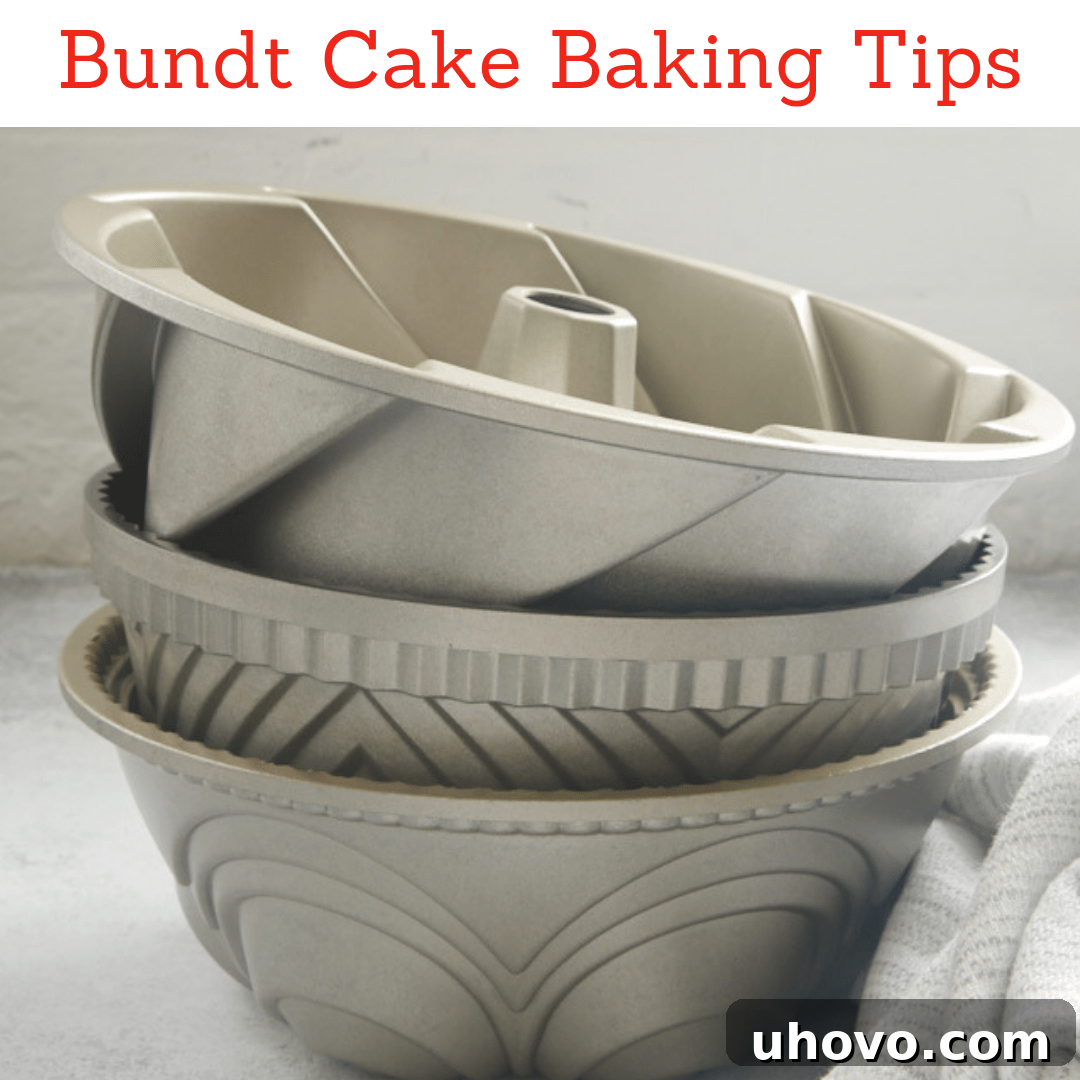
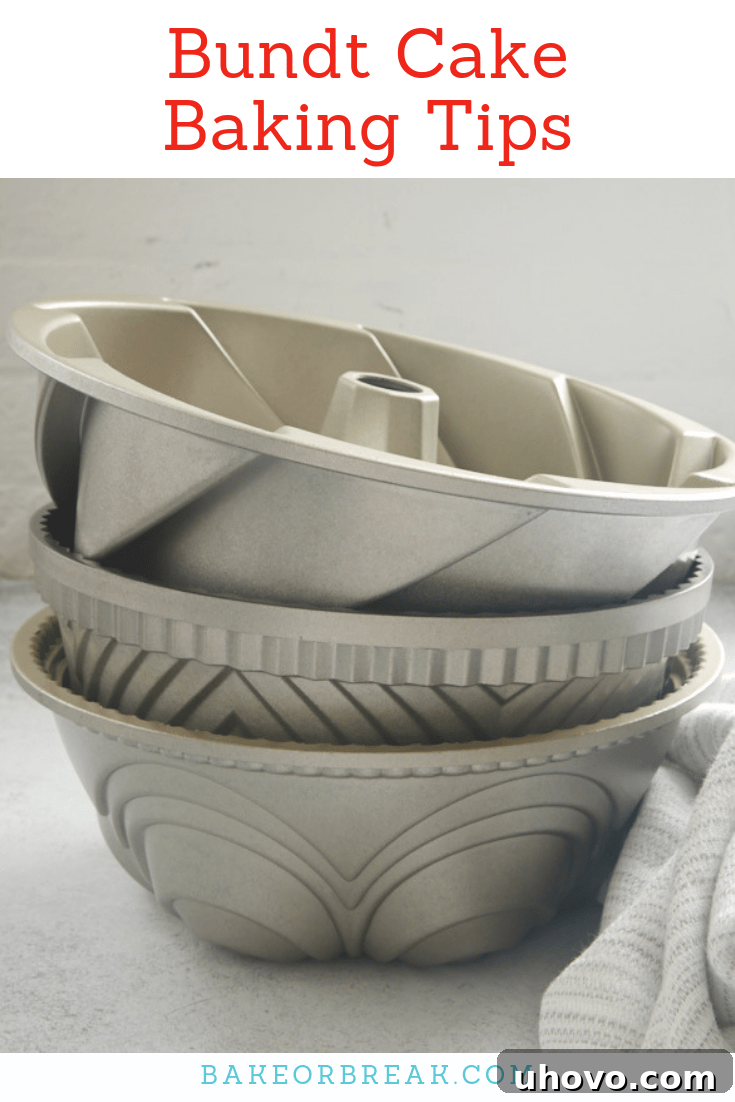
The distinctive shape of a Bundt cake is, of course, defined by its pan. The market offers an astonishing array of Bundt pan designs, from classic fluted patterns to intricate, sculptural forms. As a passionate baker, I admit I’m always tempted by new designs!
When choosing a Bundt pan for your next baking project, the most critical factor is aligning the pan’s volume capacity with your recipe’s recommendation. Bundt pans vary significantly in size, commonly ranging from 6-cup to 15-cup capacities. My go-to is often a 12-cup Bundt pan, but I frequently use 10-cup pans and adorable mini Bundt pans for individual servings. Always check your recipe for the specified pan size.
Using the correct pan size is paramount for several reasons:
- Preventing Overflow: A pan that is too small for the batter will inevitably lead to a messy oven and a wasted cake as the batter spills over during baking.
- Ensuring Even Baking: If the pan is too large, the batter will spread too thin, potentially resulting in a dry cake with uneven texture and doneness. The cake may also bake faster than expected, risking overbaking.
- Achieving Desired Shape and Pattern: A cake that doesn’t adequately fill the pan will not showcase the beautiful design or reach the desired height, impacting the visual appeal that Bundt cakes are known for.
- Optimal Crust Development: The right pan size allows for proper heat distribution, contributing to a perfectly golden crust without burning.
Regardless of the pan size, a general rule of thumb is to fill your Bundt pan no more than three-quarters full with batter. This allows ample room for the cake to rise during baking without overflowing. Every cake recipe has a unique rise, so this guideline provides a safe margin.
What if you need to adjust pan size? If you must deviate from the recipe’s recommended pan size, always adhere to the three-quarters full rule. If you find yourself with extra batter, don’t despair! It’s a perfect opportunity to bake a few cupcakes or a smaller cake in a different mold. This prevents waste and ensures your main Bundt cake bakes perfectly.
Beyond functionality, consider the aesthetics of your pan’s design. Intricate patterns are stunning but can be challenging for glazes to adhere evenly. For highly detailed pans, simpler toppings like confectioners’ sugar or a light dusting of cocoa powder might be more suitable, or even letting the cake stand alone as a work of art. For smoother, more classic fluted pans, a flowing glaze or sauce will beautifully highlight the contours.
Accurately Measuring Your Bundt Pan’s Capacity
Unsure about the volume capacity of your Bundt pan? It’s a common question, and there’s a simple, reliable way to find out. Carefully fill your Bundt pan with water, one cup at a time, until the water reaches the very top rim. The total number of cups of water you used will tell you the exact capacity of your pan in cups.
Important note: This capacity measurement tells you the maximum volume your pan can hold, not the amount of batter you should add. As discussed, you should typically fill the pan to about three-quarters of its total capacity to allow for proper rising and prevent overflow.
The Art of Greasing Your Bundt Pan: Ensuring a Flawless Release
One of the most frequent and understandable concerns when baking Bundt cakes is how to prevent them from sticking to the pan. Few things are as disheartening as putting effort into baking a beautiful cake only for it to cling stubbornly to the mold. Bundt pans, with their intricate designs, nooks, and crannies, present unique challenges. Here’s how to master the art of greasing:
Traditional Greasing Method: Butter/Shortening and Flour
This classic method provides an excellent non-stick surface, especially effective for intricate designs. Here’s how to do it:
- Choose Your Fat: You can use softened butter (not melted, as it can be too thin), solid shortening, or even a flavorless vegetable oil. Many bakers prefer shortening for its higher melting point. For chocolate Bundt cakes, you can use cocoa powder instead of flour to prevent a white, floury residue on your dark cake.
- Apply Generously: Use a pastry brush or a paper towel to thoroughly coat every single interior surface of the pan. Pay special attention to all the intricate details, crevices, and the central tube. Ensure there are no missed spots, as even a tiny dry patch can cause sticking.
- Flour the Pan: Once coated with fat, sprinkle about 1-2 tablespoons of all-purpose flour into the pan. Hold the pan over your sink or a waste bin. Tilt and rotate the pan, gently tapping the sides, to distribute the flour evenly over all the greased surfaces. The flour should adhere to the fat, creating a thin, protective layer.
- Remove Excess: Once fully coated, invert the pan and firmly tap it against the counter to remove any excess flour. You should be left with a thin, even layer of flour. Too much flour can create a gummy texture on the cake’s crust.
My Preferred Method: Baking Spray with Flour
For convenience and consistent results, my go-to choice for greasing Bundt pans 99% of the time is a cooking spray that contains flour, such as Baker’s Joy or Pam Baking. These sprays are specifically formulated to tackle the challenges of intricate pans.
- Spray Generously and Evenly: Hold the can about 6-8 inches from the pan and spray thoroughly, ensuring every inner surface, including the central tube and all decorative crevices, is completely coated.
- Distribute if Needed: If you notice any pooling or uneven coverage, use a clean pastry brush to gently distribute the spray evenly over all surfaces. This ensures no spot is missed and prevents thick, gummy patches.
- Timing is Key: To prevent the spray from dripping and pooling at the bottom of the pan, wait until just before you are ready to add the batter to spray your pan. This ensures the coating remains where it’s most needed.
Important Considerations for Pan Greasing:
- Pan Condition: A well-used pan with numerous scratches or a worn-out non-stick coating is more prone to sticking. If your pan is showing significant signs of wear and tear, it might be time to invest in a new one for optimal results.
- Temperature: Ensure your pan is at room temperature when greasing. A cold pan can cause the fat to solidify too quickly or unevenly, hindering proper coating.
The Delicate Balance of Mixing Bundt Cake Batter
Properly mixing your cake batter is fundamental to achieving a tender, moist Bundt cake. One of the most common mistakes bakers make, leading to dry, tough cakes, is overmixing. This applies regardless of the type of cake you’re making.
When adding dry ingredients, especially flour, to your wet ingredients, the goal is to mix just until the ingredients are combined. Overmixing develops gluten in the flour, which is desirable in breads but undesirable in cakes. Developed gluten creates a dense, chewy, and sometimes rubbery texture, rather than the light, tender crumb we seek in a Bundt cake.
Here’s how to ensure perfect mixing:
- Gentle Incorporation: Once you add the flour and other dry ingredients, mix on the lowest speed or by hand with a spatula. Stop mixing as soon as the flour streaks disappear and the batter looks cohesive.
- The “Almost There” Trick: If your recipe calls for additional ingredients like chocolate chips, nuts, or fruit to be folded into the batter, stop mixing the flour when there are still a few visible streaks of flour remaining. As you gently fold in the additional ingredients, you will naturally finish incorporating the remaining flour, ensuring the batter isn’t overworked.
- Scrape Down the Bowl: Periodically scrape down the sides and bottom of your mixing bowl to ensure all ingredients are fully incorporated and no dry pockets remain.
Remember, a light hand in mixing translates to a light, airy cake. Err on the side of slightly undermixing rather than overmixing.
Filling Your Bundt Pan: Techniques for a Picture-Perfect Cake
Once your batter is perfectly mixed and your pan is meticulously greased, the next step is to carefully transfer the batter into the Bundt pan. This seemingly simple step can significantly impact the final shape and texture of your cake.
Add the batter to the prepared pan slowly and deliberately, allowing it to gradually settle into all the intricate crevices of the pan. My preferred method is to use a large scoop or a measuring cup. This allows for a controlled distribution of batter, preventing air pockets and ensuring the batter reaches every part of the detailed mold.
Here’s a step-by-step approach:
- Scoop and Distribute: Use a large scoop or a 1/2-cup measuring cup to dollop spoonfuls of batter evenly around the pan. Don’t just dump it all in the center.
- Smooth the Surface: Once all the batter is in the pan, use a spatula to gently smooth the top surface. Ensure the batter is evenly distributed, and pay attention to the center of the pan.
- Achieving the Signature Dome: To help ensure your Bundt cake develops a beautifully defined dome, you’ll often find recommendations to spread the batter a little higher around the edges of the pan compared to the center. This slight concave shape encourages the cake to rise evenly and form a lovely, classic Bundt dome.
- Tap to Release Air Bubbles: After the batter is in place, gently tap the filled pan on your counter a few times. This helps to dislodge any trapped air bubbles, which can otherwise create unsightly holes or large pockets in your baked cake. A smooth, even batter leads to a finer, more consistent crumb.
Optimal Oven Placement: Where to Position Your Bundt Cake for Success
The placement of your oven rack can significantly impact how evenly your Bundt cake bakes. Always refer to your recipe for specific rack positioning instructions. If the recipe does not specify, a good general rule for Bundt cakes and many other baked goods is to place the oven rack in the bottom third of your oven.
Here’s why this position is often preferred:
- Even Heat Distribution: In most ovens, placing the rack in the bottom third helps to ensure more even heat distribution around the Bundt pan. This prevents the top of the cake from browning too quickly before the center is fully cooked, which can be a common issue with tall, dense cakes.
- Promotes Proper Rise: Adequate heat from below supports the cake’s initial rise, contributing to a lighter texture.
Additionally, ensure that the oven rack is perfectly level. An uneven rack can cause your cake to bake lopsidedly, affecting its appearance and potentially its internal structure. Once the rack is correctly positioned and level, place your filled Bundt pan squarely in the center of the rack, allowing for consistent heat circulation on all sides.
Knowing When Your Bundt Cake is Perfectly Baked
Accurately determining when your Bundt cake is fully baked is crucial for a moist and tender result. An underbaked cake can be soggy and collapse, while an overbaked cake will be dry and crumbly. Here’s how to test for doneness with confidence:
- The Clean Tester Method: This is the most reliable test. Gently insert a long pick, skewer, or a dedicated cake tester into the deepest part of the cake near the center (away from the central tube, if possible). For thicker cakes like Bundts, a standard toothpick might not reach far enough. I highly recommend investing in an inexpensive, longer cake tester. When you pull the tester out, if it comes out clean with no wet batter or moist crumbs attached, your cake is likely done. A few moist crumbs are acceptable, but wet batter indicates it needs more time.
- Visual Cues:
- The cake’s surface should be golden brown and appear set.
- The edges of the cake will often start to pull away slightly from the sides of the pan.
- When gently pressed with a fingertip, the top of the cake should spring back.
- Minimizing Oven Door Openings: Resist the urge to open the oven door frequently, especially during the first two-thirds of the baking time. Each time the door opens, the oven temperature drops, which can cause the cake to sink or affect its rise. Only open the door when it’s time to start checking for doneness, typically towards the end of the specified baking time.
- If Not Done: If your cake tester comes out with wet batter, simply close the oven door and continue baking for another 5-10 minutes. Then, re-test. Repeat this process until the cake is fully baked.
The Grand Reveal: Expert Tips for Releasing Your Bundt Cake Flawlessly
Successfully removing your beautifully baked Bundt cake from its pan is the moment of truth for any baker. This step requires patience and a gentle touch to preserve the cake’s intricate design. Follow these guidelines for a flawless release:
- Initial Cooling in the Pan: Once your cake is baked, immediately transfer the Bundt pan (still upright) to a wire rack. Allow the cake to cool in the pan for the length of time specified in your recipe, typically between 10 to 20 minutes. This initial cooling period is critical:
- It allows the cake to firm up slightly, making it less prone to crumbling or breaking when inverted.
- It gives the cake time to shrink away from the sides of the pan as it cools, facilitating an easier release.
- The Inversion Technique: After the recommended cooling time, place a cooling wire rack directly on top of the Bundt pan. Using both hands, carefully but confidently grasp both the rack and the pan together. In one swift, smooth motion, flip them over simultaneously, so the cake pan is now upside down on the wire rack.
- Encourage Release: Once inverted, gently tap the bottom and sides of the pan a few times on your counter. This mild shock can help loosen the cake from any remaining sticking points. A gentle shaking of the pan should cause the cake to move freely within it. If you can’t easily tell if the cake has loosened, you can gently lift one side of the pan slightly to check.
- Dealing with Stubborn Cakes: If the cake feels resistant and doesn’t release easily, do not force it. Instead, flip the pan back upright, and gently run a thin, flexible knife or a small, offset spatula around the outer edges of the cake and the inner tube. Be careful not to scratch your pan. Then, try the inversion process again. For very stubborn cakes, sometimes placing a warm, damp towel over the inverted pan for a few minutes can help, as the warmth can relax the fat in the pan lining.
- Complete Cooling on a Wire Rack: Once your Bundt cake has successfully released from the pan, lift the pan away. Allow the cake to cool completely on the wire rack before transferring it to a serving plate or decorating. Cooling completely on the rack prevents condensation from forming on the bottom of the cake, which can lead to a soggy texture. Patience here ensures your cake retains its beautiful shape and perfect texture.
From simple coffee cakes and comforting pound cakes to elaborate creations brimming with delectable additions or swirled fillings, Bundt cakes offer endless possibilities. Whatever your favorite recipe or baking aspiration, these detailed tips are designed to ensure your Bundt cake turns out perfectly every single time – moist, tender, and with that enviable, flawless shape. You can explore all my tried-and-true Bundt cake recipes in the extensive Bake or Break Recipe Index.
To further enhance your Bundt baking experience, I’ve curated a list of my favorite Bundt pans and essential tools. Discover my Bundt Cake Essentials in my Amazon Storefront, carefully selected to help you achieve professional-level results at home.
Bake or Break is a participant in the Amazon Services LLC Associates Program, an affiliate advertising program designed to provide a means for us to earn fees by linking to Amazon.com and affiliated sites.