Welcome to the comprehensive world of wheat flours! While these foundational ingredients are indispensable in traditional baking, the sheer variety can often lead to confusion. Fear not, home bakers, for this guide is meticulously crafted to demystify wheat flours, making your baking journey more informed and enjoyable.
The Essential Baker’s Guide to Wheat Flours: Mastering Your Dough
Flour stands as the cornerstone of countless traditional baking recipes, dictating everything from structure to texture. As passionate bakers, understanding the nuances of different wheat flour types is an invaluable skill, akin to mastering your mixer, scale, or oven. This knowledge empowers you to select the perfect flour for every creation, ensuring consistent and delectable results. While the vast array of options might initially seem daunting, the principles behind wheat flour varieties are surprisingly straightforward once you grasp their fundamental characteristics and how they interact in the baking process.
The term “wheat flour” is broad, encompassing a wide spectrum of products derived from wheat grains. This includes the ubiquitous all-purpose flour, the delicate cake flour, the robust bread flour, and the wholesome whole wheat flour, among others. Each type possesses unique attributes that make it ideal for specific baking applications. Before we delve into the specifics of each flour type, let’s establish a foundational understanding of what flour contributes to baked goods and the key factors that differentiate one wheat flour from another.
The Core Function of Flour in Baking: Structure and Elasticity
At its heart, flour is the primary structural component in most baked goods. Its transformative power comes alive when it interacts with liquid. Upon hydration and mixing, two key proteins found in wheat flour – gliadin and glutenin – combine to form gluten. This intricate protein network is responsible for providing elasticity and strength to doughs and batters. As dough is kneaded or mixed, the gluten strands develop, trapping gases produced by leavening agents (like yeast or baking powder). This trapped gas causes the baked good to rise, giving it its characteristic volume and texture.
The extent to which gluten develops directly influences the final texture of your baked product. A strong, highly developed gluten network yields a chewy, resilient texture, perfect for artisan breads. Conversely, a weak or minimal gluten network results in a tender, delicate crumb, ideal for cakes and pastries. Understanding this relationship between flour, gluten, and texture is paramount for any baker aiming for specific results.
For traditional baking, we primarily focus on wheat-based flours. These wheats are meticulously classified based on several key characteristics that directly impact the flour’s properties: their color (red or white), their growing season (winter or spring), and their hardness (hard or soft). Each classification plays a subtle yet significant role in the flour’s flavor profile, protein content, and overall performance in the kitchen.
The color of the wheat primarily influences the flavor of the resulting flour. White wheat typically produces a milder, sweeter flour, making it versatile for a wide range of recipes. Red wheat, on the other hand, yields a flour with a more robust, sometimes nuttier, and slightly stronger flavor profile, often preferred in heartier baked goods.
The growing season often dictates the wheat’s protein content. Spring wheat, harvested in late summer, tends to have a higher protein content due to its shorter, more intense growing period. Winter wheat, planted in the fall and harvested in early summer, generally has a lower protein content. This distinction is crucial as protein content is a primary determinant of flour’s baking capabilities.
Finally, the hardness of the wheat is a direct indicator of its protein content. Hard wheats contain more protein, producing flours that are ideal for strong, elastic doughs. Soft wheats, with their lower protein levels, yield flours that create tender, delicate baked goods. The amount of protein present within the flour directly correlates with its potential to form gluten, thus impacting structure and texture.
While you don’t need to memorize every single classification detail, understanding these foundational aspects provides invaluable insight into why different flours behave the way they do and how they contribute to the magic of baking.
Decoding Protein Content: The Key to Baking Success
The protein content of flour is arguably the most critical factor influencing its performance in baking. This percentage directly dictates how much gluten can be formed when the flour is mixed with liquid. A higher protein percentage means more gluten-forming proteins are available, leading to a stronger, more elastic gluten network. This characteristic is highly desirable in recipes where a robust structure and chewy texture are paramount, such as crusty artisan breads, bagels, and pizzas, which benefit from extensive kneading.
Conversely, a lower protein percentage signifies fewer gluten-forming proteins, resulting in a weaker gluten network. This leads to a softer, more tender texture, which is precisely what you seek in delicate baked goods like fluffy cakes, tender pastries, and light muffins. The nuanced balance of protein content allows bakers to precisely control the final mouthfeel and crumb structure of their creations.
While flours are classified in various ways, their protein content often serves as the ultimate differentiator for experienced bakers. However, this seemingly simple metric can be surprisingly complex. Protein content can vary not only among different types of flour (e.g., bread flour vs. cake flour) but also significantly among different brands of the same flour type. To add another layer of complexity, some brands may even exhibit slight variations in protein content from one bag to the next within the same product line, making consistency a challenge for some home bakers.
For optimal and consistent baking results, paying close attention to flour branding and labeling is crucial. Reputable brands often maintain tighter control over their flour’s protein content, ensuring greater consistency across batches. Always check the packaging for the protein percentage. If a brand provides a wide range (e.g., a 2% or more difference) or omits specific protein information altogether, be aware that you might encounter inconsistent results. Investing in brands known for their consistency, like King Arthur Flour, can make a significant difference in the predictability and quality of your baked goods.
Bleached vs. Unbleached Flour: A Clarity on Processing
The distinction between bleached and unbleached flour is a fascinating aspect of flour production, one that many home bakers might overlook but can subtly impact their baking. Freshly milled flour, in its natural state, has a yellowish tint and needs time to “age” or oxidize. This natural aging process mellows the flour’s flavor and causes it to become whiter and less dense, improving its baking properties by strengthening its gluten-forming potential.
To expedite this natural process and achieve a whiter appearance more quickly, some manufacturers use chemical agents to bleach young flour. Common bleaching agents include chlorine gas, benzoyl peroxide, or azodicarbonamide. These chemicals not only lighten the flour’s color but also alter its protein structure, sometimes reducing its ability to absorb liquid and form strong gluten. You might also encounter flour labeled as “bromated,” indicating it has been artificially aged with potassium bromate, an additive that enhances elasticity and rise but is restricted or banned in many countries due to health concerns. Many bakers prefer unbleached and unbromated flours, as they have been allowed to age naturally, preserving their inherent flavor and performance characteristics without chemical intervention. While the impact of bleached flour on taste and texture can be subtle, many discerning bakers believe naturally aged flour offers superior results, particularly in recipes where flavor is paramount.
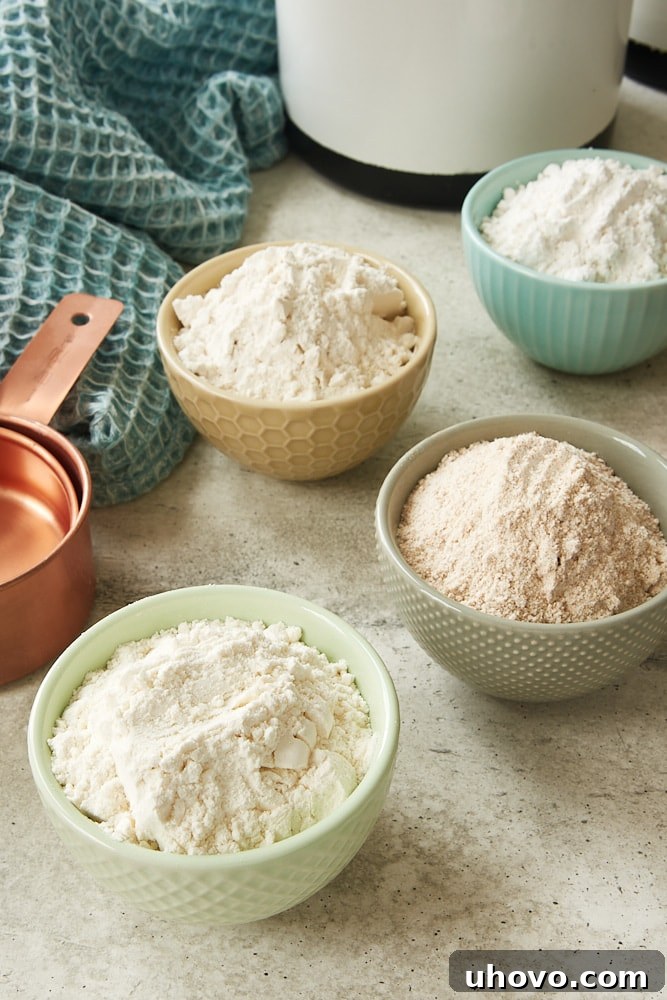
Exploring the Diverse World of Wheat Flour Types
The array of wheat flours available can be overwhelming, leading many bakers to wonder which one to choose for a specific recipe or why certain recipes demand a particular type. Each flour is uniquely suited for different baking applications, a suitability largely determined by its protein content and milling process. Let’s delve into the specific characteristics and optimal uses for the most common types of wheat flours you’ll encounter.
All-Purpose Flour: The Versatile Kitchen Staple
All-purpose (AP) flour is undoubtedly the most common flour found in home kitchens and the go-to choice for a vast majority of recipes. As its name suggests, it’s designed to be versatile, performing adequately in a broad range of baking tasks, from cookies and cakes to quick breads and pancakes. AP flour is typically a blend of hard spring wheat and soft winter wheat, striking a balance in protein content that offers good results for general baking. Its protein content usually falls within a range of 9 to 12 percent, allowing it to form enough gluten for structure without making baked goods overly tough.
However, the “all-purpose” nature also means it’s a jack-of-all-trades but a master of none. While it can be used for almost anything, it might not yield the absolute best results for highly specialized recipes that truly benefit from flours with a higher or lower protein content. A critical point to remember is that not all brands of all-purpose flour are created equal; protein percentages can vary significantly, sometimes even regionally within the same brand. For bakers seeking consistency, reputable brands that maintain a stable protein content across their products, such as King Arthur Flour, are highly recommended.
Bread Flour: The Baker’s Choice for Hearty Loaves
As its name clearly indicates, bread flour is specifically formulated for baking yeast breads. This specialized flour boasts a higher protein content, typically ranging from 12 to 13 percent, sometimes even higher. This elevated protein level is crucial for developing a strong, elastic gluten network during the kneading process. The robust gluten structure in bread flour allows yeast doughs to rise significantly, trapping more carbon dioxide and resulting in a lofty loaf with a chewy texture and a desirable crust. It’s the ideal flour for recipes like artisan sourdoughs, chewy baguettes, pizza doughs, and bagels, where strength and elasticity are paramount to achieving that characteristic bite and open crumb structure.
Cake Flour: For the Most Tender Crumbs
Cake flour is the secret ingredient for exceptionally tender and delicate baked goods. With the lowest protein content among wheat flours, usually ranging from 6 to 9 percent, it forms very little gluten. This minimal gluten development contributes to a fine, soft, and velvety crumb that is highly prized in cakes, cupcakes, and some delicate pastries. Beyond its low protein, cake flour is often bleached using a special process that makes it slightly acidic. This acidity helps to weaken the protein structure further and allows starches to absorb more liquid and fat, resulting in an even finer, more moist texture in cakes.
Due to its unique properties, interchanging cake flour with other flours typically requires adjustments. If a recipe calls for cake flour and you only have all-purpose flour, a common substitution is to replace 2 tablespoons of every 1 cup of all-purpose flour with 2 tablespoons of cornstarch. Sift or whisk this mixture thoroughly before using. The cornstarch helps to mimic the tenderizing effect by interfering with gluten formation. Conversely, if you need to substitute cake flour for all-purpose flour, a general rule is to use an extra 2 tablespoons of cake flour for every cup of all-purpose flour to account for its lower density and protein.
Pastry Flour: The Perfect Balance for Flaky Delights
Pastry flour occupies a desirable middle ground between all-purpose and cake flour in terms of protein content, usually hovering around 8 to 10 percent. It is a finely ground soft wheat flour, designed to create products that are tender yet have a slight structure, making it ideal for pastries that require flakiness without being overly chewy. Bakers frequently choose pastry flour for achieving light, flaky pie crusts, tender biscuits, shortbreads, scones, and delicate tarts. Its balanced protein level provides enough structure to hold shape while preventing excessive gluten development that could lead to toughness.
For those familiar with White Lily all-purpose flour, it’s worth noting that its remarkably low protein content (around 9 percent) essentially classifies it as a pastry flour. This explains its legendary reputation for producing exceptionally tender and flaky biscuits in the Southern United States.
Self-Rising Flour: Convenience in a Bag
Self-rising flour is a convenience product designed to simplify baking. It is essentially all-purpose flour to which a leavening agent (typically baking powder) and salt have already been added. The precise ratio of these additions varies among brands. This flour is commonly used in quick breads, biscuits, and some cakes where a rapid rise is desired without the need for separate leavening agents. While convenient, it offers less control over the leavening process and salt content than adding these ingredients separately.
Should a recipe call for self-rising flour and you find your pantry lacking, you can easily create your own. A common homemade self-rising flour recipe involves whisking together 1 cup of all-purpose flour with 1½ teaspoons of baking powder and ¼ teaspoon of salt. This simple mixture provides the necessary leavening for most recipes.
Whole Wheat Flour: The Wholesome and Hearty Choice
Unlike the white flours discussed above, which are primarily made from the endosperm of the wheat berry, whole wheat flour utilizes the entire wheat kernel. This includes the bran (outer layer), germ (embryo), and endosperm (starchy inner part). The inclusion of all three components gives whole wheat flour its characteristic speckled brown color, richer, nuttier flavor, and higher nutritional value, including more fiber and micronutrients. Its protein content is typically higher, ranging from 13 to 14 percent. However, the presence of bran can interfere with gluten development, sometimes resulting in denser baked goods. Recipes using whole wheat flour often require more liquid and a longer hydration time to achieve optimal results.
White Whole Wheat Flour: A Milder Whole Grain Option
White whole wheat flour offers a fantastic compromise for those seeking the nutritional benefits of whole grains without the robust flavor or dense texture often associated with traditional whole wheat flour. It is milled from a variety of soft white winter wheat, which naturally has a lighter color and milder flavor profile compared to hard red winter wheat. While still a whole grain, it produces baked goods that are lighter in color and have a more delicate texture and taste. Its protein content is usually slightly lower than traditional whole wheat flour, typically around 11 to 13 percent, making it a versatile option for incorporating whole grains into a wider array of recipes, including muffins, cookies, and even some cakes, without drastically altering the flavor or texture.
Other Specialized Wheat Flours
Beyond these common types, the world of wheat flours includes several more specialized varieties, each with unique applications. Italian 00 flour, for instance, is an incredibly finely milled flour with a moderate protein content, highly prized for making authentic Neapolitan pizza crusts and delicate pasta due to its silky texture and ability to create a crispy-chewy crust. Graham flour, a coarsely ground whole wheat flour, is famously used in graham crackers, imparting a distinct texture and flavor. Semolina flour, derived from durum wheat, is hard and high in protein, making it ideal for firm pasta and some rustic breads. While these flours have their specific niches, for most traditional home baking, the primary types discussed above will be your most frequently used ingredients.
Making the Right Choice: Selecting Flour for Your Recipe
While gaining a deep understanding of the distinctions among various wheat flours is incredibly empowering, it’s crucial to remember a fundamental rule: **the best flour for any given recipe is almost always the flour explicitly listed in the ingredients.** Recipe developers carefully select specific flour types to achieve a particular structure, texture, and flavor profile. Deviating from the recommended flour without understanding the implications can lead to unexpected and often undesirable results.
However, armed with the knowledge from this guide, you’ll be able to move beyond simply following instructions. You’ll understand *why* a recipe calls for bread flour in a chewy artisan loaf or cake flour in a delicate sponge cake. This comprehension will not only deepen your appreciation for the craft but also equip you to troubleshoot when things don’t go as planned or even to confidently experiment with substitutions. You’ll be better prepared to predict how changing the type of flour might affect the final outcome, allowing you to adapt recipes or even create your own with greater precision.
Don’t allow the extensive variety of flours at your local market to overwhelm you. Think of each type as a specialized tool in your baking arsenal. With this comprehensive guide to wheat-based flours, you now possess the simple yet profound overview necessary to understand which flour is the perfect fit for virtually any baking project you undertake. Embrace this knowledge, and let it transform your baking from a routine task into an art form.
Happy baking, and may your loaves be lofty and your cakes tender!
Before you embark on your next baking adventure, take a moment for a crucial review of how to measure flour accurately – precision is key for perfect results!