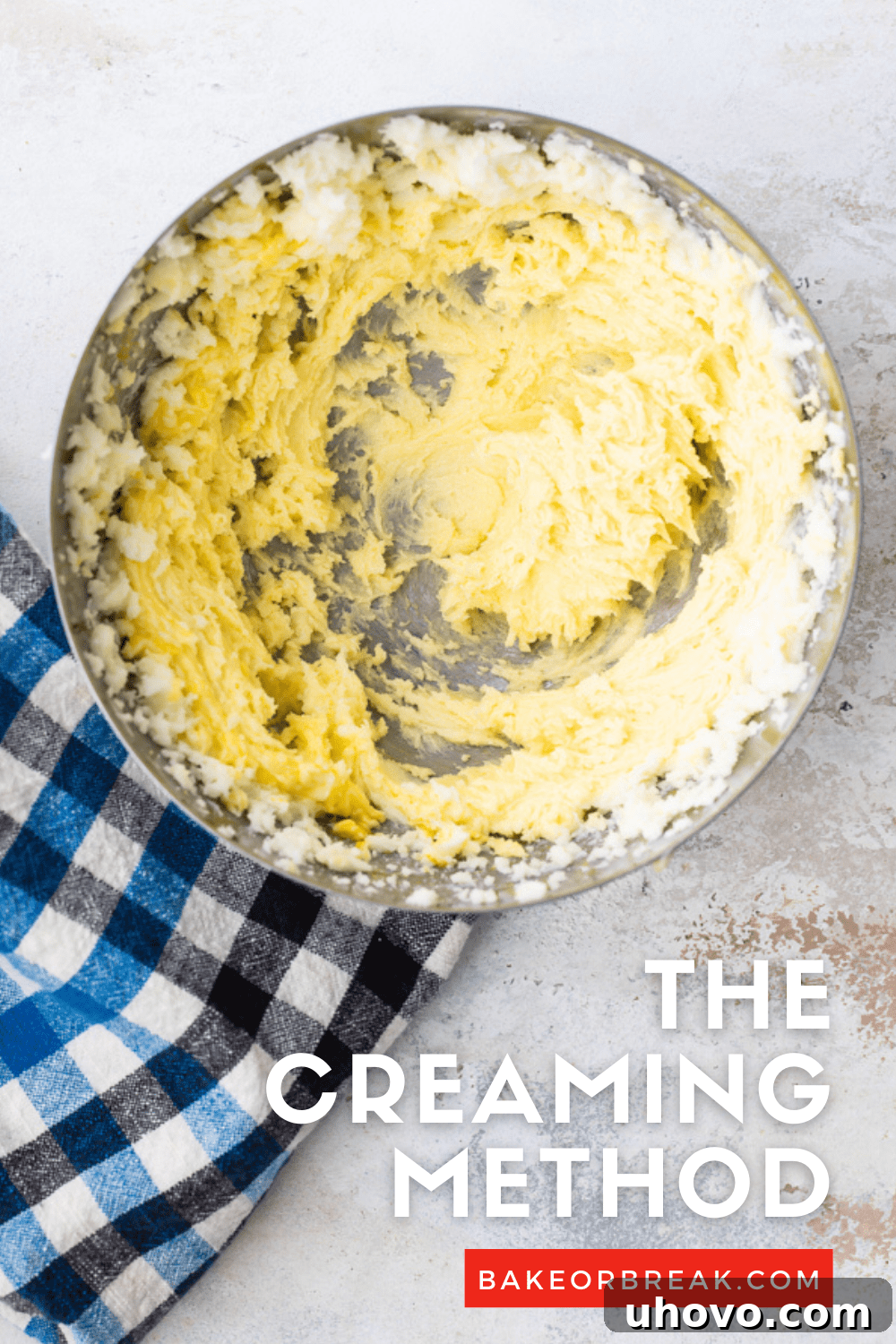
Mastering the creaming method is arguably the most crucial skill for any home baker aspiring to create truly perfect cakes, cookies, and a variety of other delightful baked goods. It’s a fundamental technique that, when executed correctly, unlocks incredible textures and flavors. In this comprehensive guide, we’ll delve deep into the creaming method, ensuring you understand every nuance and can apply it flawlessly in your kitchen. Say goodbye to dense cakes and flat cookies – and hello to light, airy, and utterly delicious results!
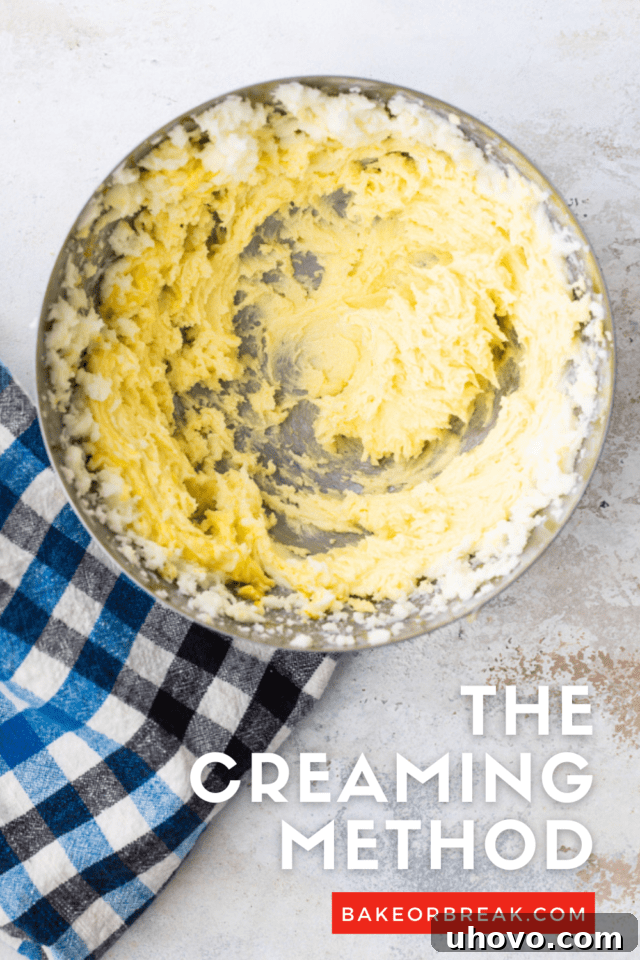
The creaming method stands as one of the most widely recognized and frequently utilized mixing techniques in the baking world. You’ll encounter its instructions in countless recipes for beloved treats like cookies, cakes, cupcakes, and even some quick breads, typically asking you to “cream butter and sugar until light and fluffy.” While many bakers are familiar with the term, the intricacies of achieving that perfect “light and fluffy” state are often undersold in standard recipe instructions.
This article aims to demystify the creaming method, providing a thorough understanding of not just *what* to do, but *why* each step is essential. By grasping these underlying principles, you’ll elevate your baking from good to exceptional, consistently producing baked goods with superior texture and rise.
Understanding the Creaming Method: A Core Baking Technique
At its heart, the creaming method is a specific sequence of mixing ingredients designed to incorporate air into your batter, creating a lighter, more tender final product. While variations exist, the general pattern involves first creaming softened butter with sugar, followed by the gradual addition of eggs. Finally, the dry and liquid ingredients are incorporated in alternating stages. This methodical approach is particularly favored for recipes where a delicate, airy crumb and significant rise are desired, such as classic layer cakes, moist cupcakes, and chewy cookies.
It’s a foundational technique that every aspiring baker should master, as it directly impacts the texture, volume, and overall success of a vast array of sweet treats. Recognizing this pattern is one thing; executing it with precision is where the magic truly happens.
The Science of Creaming: How Butter and Sugar Create Air
Let’s zoom in on the critical initial step: the act of “creaming” itself. This refers specifically to mixing softened butter and sugar together until they transform into a pale, airy, and voluminous mixture. This seemingly simple action is where the crucial aeration process begins. As the sugar crystals are beaten into the softened butter, their sharp edges literally cut through the fat, creating thousands of tiny air pockets or bubbles within the mixture. Think of it as a microscopic network of tiny balloons being inflated.
These entrapped air bubbles are paramount. They serve as the foundational structure that allows chemical leavening agents, such as baking powder and baking soda, to do their job effectively. When activated by heat and moisture during baking, these leaveners produce gases (carbon dioxide), which then expand the pre-existing air pockets created by creaming. This expansion is what gives your cakes their beautiful rise and light, open crumb, and your cookies their signature chewiness and spread. Without proper creaming, your baked goods can turn out dense, flat, and unappealing. This critical first step sets the stage for success, so mastering the art of perfectly softened butter is your first hurdle.
The Foundation: Achieving Perfectly Softened Butter
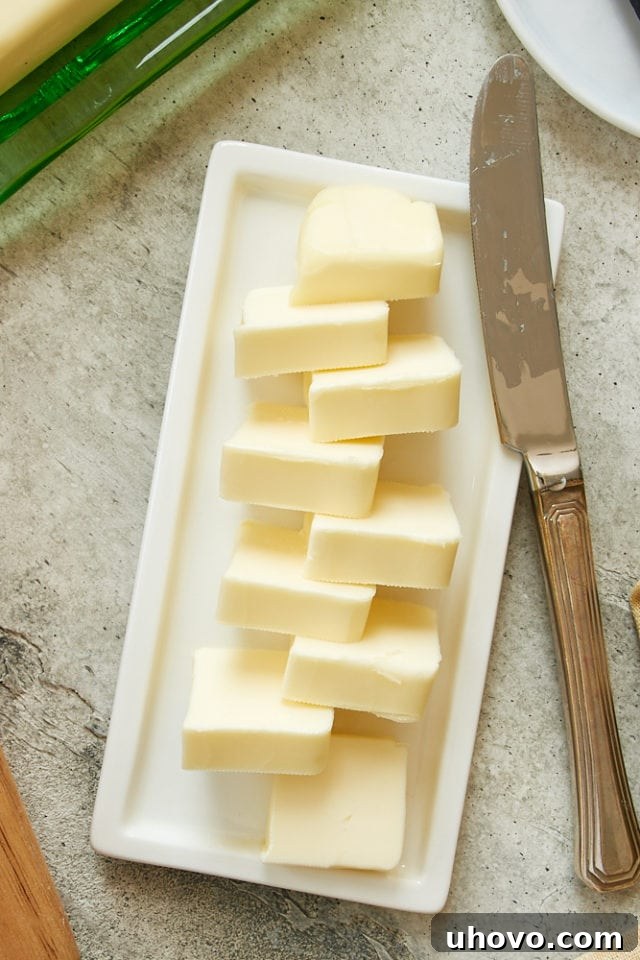
The success of the creaming method hinges almost entirely on your butter being at the correct temperature and consistency. This isn’t just a suggestion; it’s a non-negotiable requirement. Butter that is too cold won’t incorporate sugar effectively, resulting in poor aeration. Butter that is too warm, on the other hand, will melt and become greasy, losing its ability to trap air efficiently.
So, what exactly does “softened” mean? Properly softened butter should feel cool to the touch, not warm. When you press it with your thumb, it should leave a distinct indentation without your thumb sinking all the way through or the butter becoming greasy. Another good test is to slice it with a knife; it should offer a slight, yielding resistance rather than being hard or squishy.
It’s crucial to understand that butter begins to melt at a relatively low temperature, around 68°F (20°C). If your butter looks shiny or is too soft to hold a thumbprint, it has started to melt. Melted butter will separate from the sugar and won’t create those vital air pockets, leading to dense, flat, or greasy baked goods. Moreover, remember that the friction from your mixer will generate heat, further warming the butter during the creaming process. Therefore, it’s generally best to avoid letting your butter come to full room temperature, especially in warmer environments. Aim for a temperature range of 65-67°F (18-19°C) for optimal results.
The most reliable method for achieving perfectly softened butter is simply patience: allow it to sit out at a cool room temperature for approximately 30-60 minutes, depending on your ambient temperature. For those times you’re in a hurry, various techniques can speed up the process without melting the butter. For an in-depth guide and practical tips, explore my detailed article on How to Soften Butter.
The Art of Creaming Butter and Sugar: Step-by-Step
With your butter perfectly softened, it’s time to begin the creaming process. For best results, a stand mixer fitted with the paddle attachment is ideal, though a good quality hand mixer will also work wonderfully, albeit potentially requiring a bit more time and effort. While theoretically possible by hand, it demands significant physical exertion and patience.
Many recipes will instruct you to add the butter and sugar to the mixing bowl simultaneously, while others may have you beat the butter alone for a moment before the sugar joins the party. Follow your recipe’s specific guidance. Begin mixing on a medium-low speed to initially combine the ingredients, preventing a sugary cloud from engulfing your kitchen. Once combined, increase the speed to medium. This consistent, moderate speed is key to developing those fine, stable air pockets.
After about two to three minutes of mixing, pause and use a flexible rubber spatula to meticulously scrape down the sides and bottom of the mixing bowl. This step is non-negotiable! Sugar and butter often cling to the edges, remaining uncreamed, which leads to an inconsistent mixture. Continue mixing, repeating the scraping process every couple of minutes as needed. As the creaming progresses, you’ll visibly notice the mixture becoming significantly lighter in color and increasing in volume, indicating that air is successfully being incorporated.
Recall our discussion about butter temperature: it’s equally important to keep the butter cool during mixing. If your mixing bowl feels noticeably warm to the touch, or if the butter starts to look greasy, stop immediately. Transfer the bowl to the refrigerator or freezer for 5-10 minutes to chill the butter slightly before resuming. This prevents the butter from melting and ensures proper aeration. The beautiful, airy mixture you’re creating is a type of emulsion – a stable dispersion of sugar crystals within the butterfat, holding trapped air. Embrace your inner scientist; baking truly is a delicious science!
Knowing When to Stop: The “Light and Fluffy” Benchmark
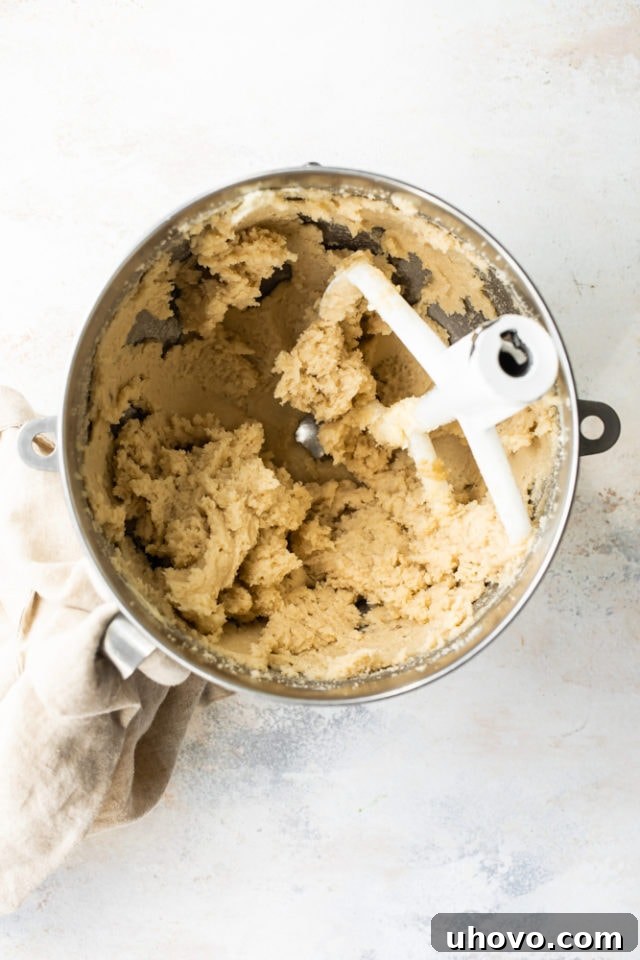
Identifying the precise moment to stop creaming is paramount. This is where the elusive “light and fluffy” description truly comes into play. A perfectly creamed mixture will exhibit several distinct characteristics:
- Color: It will be significantly paler than the original butter, often a very light yellow or off-white, as the air reflects light.
- Volume: The mixture will have noticeably increased in volume, typically almost doubling, due to the abundance of trapped air bubbles.
- Texture: It will appear visibly fluffy and aerated, resembling a cloud or soft whipped cream.
Despite its airy appearance, the mixture should still feel cool to the touch. If you rub a small amount between your fingers, you should feel a slight grittiness from the sugar crystals, but they should no longer be distinctly visible. The level of grittiness can vary depending on the type and granulation of sugar used (e.g., superfine sugar will feel less gritty than granulated). It’s a balance: you want the sugar to have cut into the butter and dispersed, but not dissolved entirely.
Once you achieve this ideal consistency, stop mixing immediately. Over-mixing at this stage is a common pitfall. Continuing to beat the mixture beyond this point will cause those delicate air pockets you’ve worked so hard to create to collapse, leading to a denser product with less rise. Trust your senses – look for the visual cues of lightness and volume, and the textural cue of subtle grittiness.
How Long Does Creaming Butter and Sugar Take?
There isn’t a universal timer for creaming butter and sugar, as the duration can vary significantly based on several factors, including the power of your mixer, the initial temperature of your butter, and even the type of sugar being used. However, a good rule of thumb is that it often takes longer than many home bakers initially anticipate. Depending on your equipment, this crucial process can range anywhere from a quick 3-4 minutes with a powerful stand mixer to 7-8 minutes or even slightly longer with a less powerful hand mixer.
Instead of relying strictly on a stopwatch, prioritize the visual and textural cues we discussed in the previous section. Constantly monitor the mixture for changes in color, volume, and fluffiness. If it looks light and fluffy and has nearly doubled in size, it’s ready, regardless of the exact time on the clock. Patience and careful observation are your best allies here.
Incorporating Additional Ingredients: Maintaining the Emulsion
Once your butter and sugar are perfectly creamed, the subsequent steps involve carefully integrating the remaining ingredients while preserving the delicate emulsion and trapped air. While the exact order can vary by recipe, these general guidelines will help ensure consistent results.
- Eggs: Add eggs one at a time, mixing thoroughly after each addition until just incorporated. This gradual addition helps to maintain the stability of the emulsion you’ve created and prevents the mixture from curdling. Ensure your eggs are at room temperature; cold eggs can shock the emulsion, causing it to break or curdle. Once eggs are in, add any extracts or flavorings like vanilla.
- Dry Ingredients:
- For Cookies: Typically, the dry ingredients are added all at once or in two additions, mixing on a low speed until just combined. Overmixing cookie dough develops gluten excessively, resulting in tough cookies. If your recipe includes add-ins like chocolate chips or nuts, mix the dry ingredients only until a few streaks of flour remain, then fold in the add-ins by hand or on very low speed until just combined.
- For Cakes: The dry ingredients are usually added in portions, alternating with liquid ingredients (such as milk, buttermilk, or sour cream). A common pattern is three additions of dry ingredients alternating with two additions of liquid, beginning and ending with dry. This method, often referred to as the “creamed method for cakes,” helps to maintain the batter’s structure and emulsification, preventing it from breaking. Mix only until the ingredients are just combined after each addition to avoid gluten development.
- Room Temperature Ingredients (General Rule): Beyond butter and eggs, it’s generally beneficial for all cold ingredients, such as milk, yogurt, or sour cream, to be at or near room temperature. This ensures they emulsify smoothly into the creamed butter mixture without causing it to seize or curdle, resulting in a homogenous batter and a finer crumb. Developing the habit of gathering and measuring all your ingredients (“mise en place”) before you start mixing will naturally bring many to room temperature.
- Scraping the Bowl: Continue to scrape down the sides and bottom of the mixing bowl, as well as the beaters, periodically throughout the entire mixing process. This simple action ensures all ingredients are evenly incorporated, preventing pockets of unmixed flour or butter that can lead to an uneven texture in your final product.
Remember, the goal in these final stages is thorough incorporation without excessive mixing. Overworking the batter will inevitably lead to increased gluten development, which can result in tough, rubbery baked goods, negating all the effort you put into achieving that light, airy foundation with the creaming method.
Popular Recipes That Master the Creaming Method
The creaming method is a versatile cornerstone for countless beloved desserts. Most classic cookie and cake recipes rely on this technique to achieve their signature textures. While these are the most common applications, you might also find it in certain muffin, scone, or quick bread recipes where a richer, more tender crumb is desired. Here are some quintessential recipes where applying the creaming method correctly will truly make a difference, yielding irresistible results:
- Vanilla Cake with Vanilla Frosting
- Salted Oatmeal Cookies
- Frosted Sugar Cookie Bars
- Sour Cream Pound Cake
- Brown Sugar Oatmeal Chocolate Chip Cookies
- Mexican Chocolate Cupcakes with Dulce de Leche Frosting
By diligently following the guidelines outlined in this article, you’ll be well on your way to mastering the creaming method, transforming your baking efforts into consistently impressive and utterly delicious creations. Happy baking!