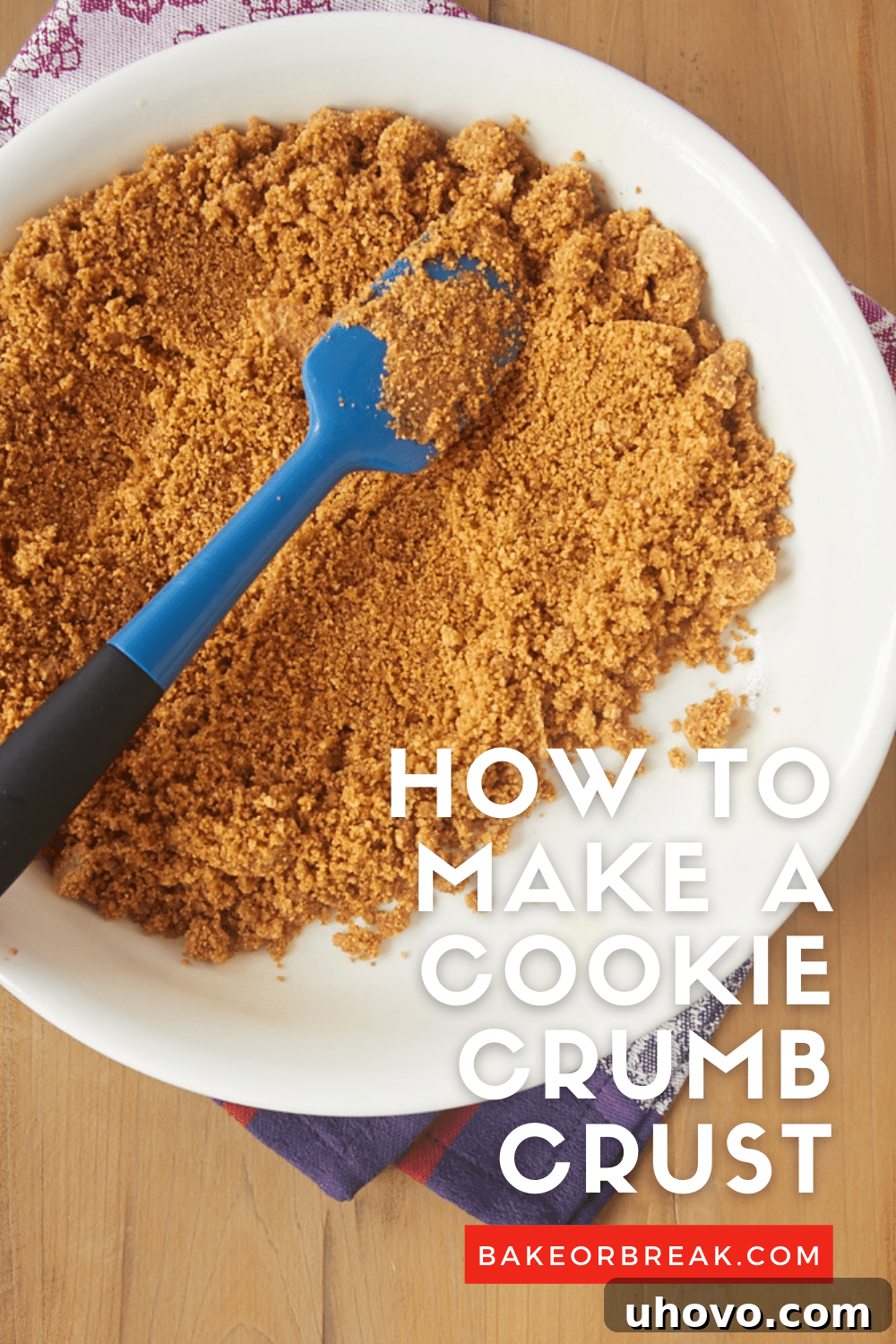
Creating a homemade cookie crumb crust is an effortlessly rewarding culinary skill that every home baker should master. These versatile, delicious crusts serve as the perfect foundation for a myriad of desserts, from creamy cheesecakes to delightful pies and beyond. Forget the store-bought varieties; with a few simple tips, you’ll be crafting flaky, flavorful crusts that elevate your sweet treats to an entirely new level. This comprehensive guide will walk you through every step, ensuring your homemade cookie crusts are consistently perfect.
There’s a special kind of joy that comes with using cookies to form the base of a dessert. It’s an ingenious way to combine two beloved treats – the crunch and flavor of your favorite cookies seamlessly integrated into the structure of a pie or cheesecake. This delightful synergy truly creates a win-win situation for any dessert enthusiast.
While often associated with pies and cheesecakes, the adaptability of a cookie crumb crust allows it to shine in a wide array of sweet applications. From individual tartlets to layered parfaits, this simple base offers endless creative possibilities. The best part? The process is remarkably straightforward, requiring just two core ingredients: your chosen cookies and a touch of melted butter.
The Foundation: Understanding Cookie Crumb Crusts
A cookie crumb crust is essentially a mixture of finely crushed cookies and melted butter, pressed into a pan and then either baked or chilled to set. This method offers several advantages over traditional pastry crusts. Firstly, it’s incredibly quick and easy, eliminating the need for precise measurements, pastry blenders, or complex rolling techniques. Secondly, it introduces an immediate layer of flavor and texture that complements many fillings beautifully, offering a unique profile that’s often richer and more satisfying than a neutral shortcrust.
The versatility of these crusts makes them an invaluable addition to your baking repertoire. They are particularly ideal for no-bake desserts, where a traditional baked crust might introduce too much moisture or require additional cooling time. But their utility doesn’t stop there; they also provide a sturdy, flavorful base for many baked desserts, adding an extra dimension of taste and crunch.
Choosing Your Cookie: A World of Flavor Possibilities
The beauty of the cookie crumb crust lies in its inherent customization. The question of “what kind of cookies are good for making cookie crusts?” opens up a delicious world of options, far too extensive to list exhaustively. The guiding principle is simple: almost any crunchy or semi-firm cookie will work wonderfully. The key is that the cookie should be able to hold its shape when crushed and mix well with butter to form a cohesive base.
Popular Choices and Their Unique Twists
- Graham Crackers: The undisputed champion and most commonly used cookie for crusts, graham crackers offer a mildly sweet, subtly honeyed flavor that pairs perfectly with almost any filling, especially cheesecakes and key lime pies. Their neutral yet inviting taste allows the filling to truly shine.
- Oreos: For chocolate lovers, Oreo cookie crusts are a game-changer. Crushing the entire cookie, cream filling and all, creates a rich, dark chocolate base that’s fantastic for mint, peanut butter, or classic vanilla cheesecakes. The cream adds an extra layer of richness and helps bind the crumbs.
- Vanilla Wafers: Light, crisp, and delicately sweet, vanilla wafers provide a sophisticated, buttery flavor that’s excellent for fruit tarts, banana puddings, or cream pies. They offer a slightly finer crumb than graham crackers, resulting in a very tender crust.
- Shortbread: These buttery, crumbly cookies contribute a luxurious, rich flavor to any crust. Their high butter content means you might need to adjust the amount of added butter slightly, but the resulting crust is incredibly tender and melt-in-your-mouth delicious, ideal for berry tarts or lemon desserts.
- Chocolate Wafers: Similar to Oreos but without the cream filling, chocolate wafers offer an intense, deep chocolate flavor. They create a wonderfully dark and slightly bitter contrast that can be superb with sweet, creamy fillings or coffee-flavored desserts.
- Pecan Sandies: For a nutty, buttery, and slightly sandy texture, pecan sandies are an excellent choice. They impart a distinct flavor profile that works beautifully with caramel, butterscotch, or fall-themed pies like pumpkin or sweet potato.
- Ginger Snaps: If you’re looking for a warm, spicy kick, ginger snaps make a phenomenal crust, especially for apple tarts, pumpkin cheesecakes, or pear desserts. The crispness and bold flavor add an exciting dimension.
- Biscoff/Speculoos Cookies: These spiced caramel cookies create an incredibly fragrant and flavorful crust, perfect for autumn desserts, coffee-flavored treats, or anything that benefits from a hint of cinnamon and warm spices.
Don’t be afraid to experiment! Consider your filling and choose a cookie that will complement or provide an interesting contrast to its flavors. The world of cookies is vast, offering endless combinations for your perfect crust.
Mastering the Crumble: From Cookie to Crumb
Once you’ve selected your cookie, the next crucial step is transforming them into fine, uniform crumbs. The consistency of your crumbs directly impacts the texture and stability of your final crust.
Crushing Methods for Perfect Crumbs
- The Food Processor Method (Highly Recommended): For maximum efficiency and consistently fine crumbs, a food processor is your best friend. Simply break the cookies into smaller pieces and pulse them in the food processor until they resemble fine sand. Be careful not to over-process, as this can turn some cookies into a paste, especially those with high sugar or fat content. A quick pulse-and-check method works best. This method is not only the easiest but also ensures that your crumbs are uniformly sized, which is key for an even crust.
- The Manual Method (Rolling Pin): If you don’t have a food processor, a heavy-duty plastic bag (like a freezer bag) and a rolling pin will do the trick. Place your cookies in the bag, seal it, and then use the rolling pin to crush them. Start gently, then apply more pressure, moving the cookies around to ensure even crushing. While effective, this method requires a bit more effort and might result in a slightly coarser, less uniform crumb texture, but it’s perfectly viable.
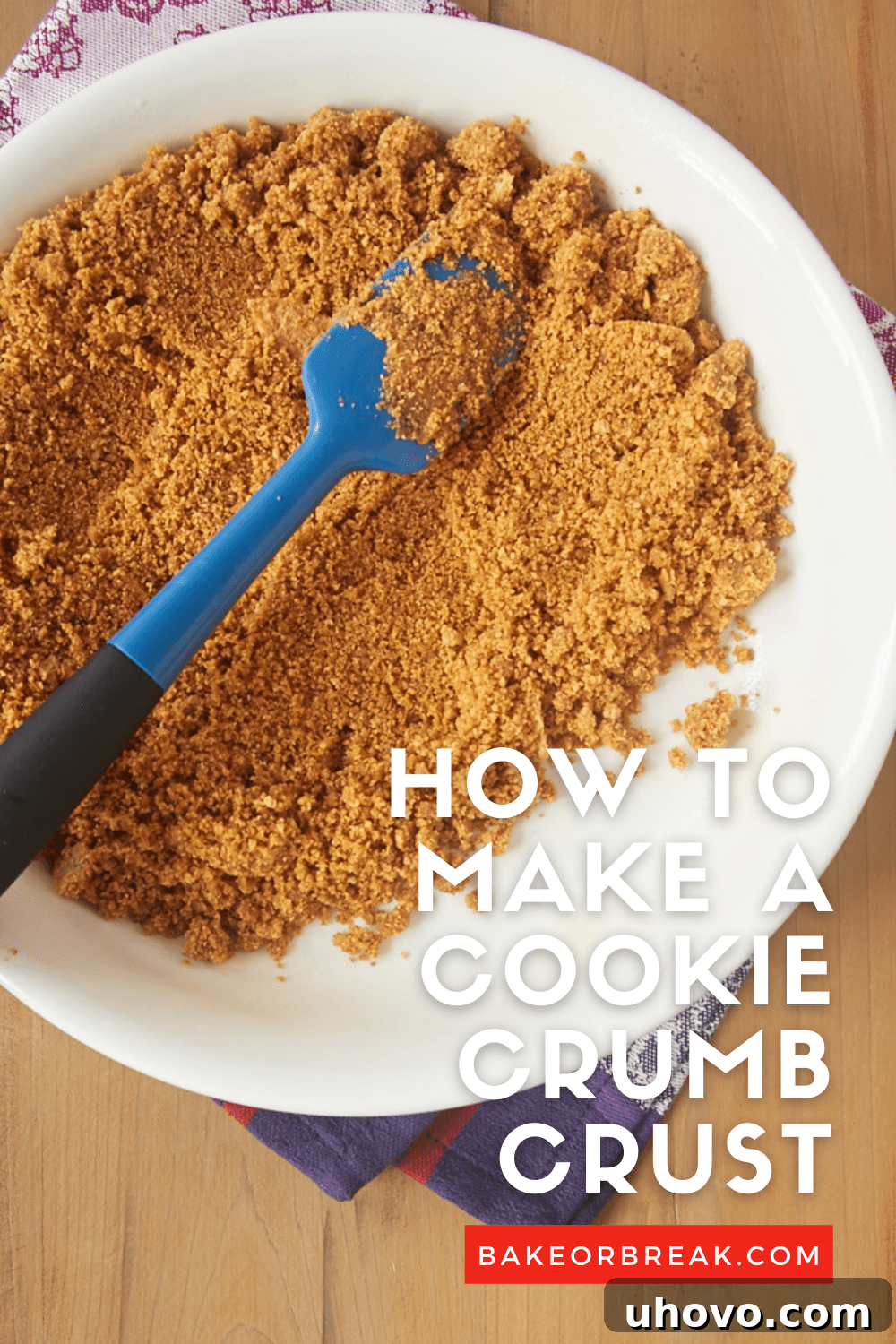
Aim for a texture similar to coarse sand or fine breadcrumbs. Avoid large chunks, as they won’t bind as well and can make for a crumbly crust. Conversely, avoid over-processing to the point of a paste, which can make the crust dense and oily.
Pro Tip for Convenience: If you frequently make cookie crumb crusts, consider processing an entire package of cookies at once. Store any leftover crumbs in an airtight container in the pantry for future use. This saves time and ensures you always have a ready supply for spontaneous baking endeavors.
Once your cookie crumbs are perfectly prepared, it’s time to introduce the binding agent: melted butter. The goal is to thoroughly coat every crumb. Just make sure to mix well, ensuring all those crumbs are glistening and uniformly saturated with butter. This is what creates a cohesive crust that holds its shape beautifully.
The Perfect Binder: Butter and Sweetness Balance
The interaction between cookie crumbs and melted butter is what transforms loose particles into a sturdy, flavorful crust. Understanding this relationship and how to adjust sweetness will help you achieve perfection every time.
The Essential Role of Butter
Melted butter acts as the primary binder in a cookie crumb crust. As it cools, the fat in the butter solidifies, essentially gluing the crumbs together. This creates a firm, sliceable crust that won’t fall apart when you cut into your dessert. The butter also contributes to the rich, appealing flavor and helps crisp up the crust if it’s baked.
The standard ratio of crumbs to butter is generally quite reliable, but it can vary slightly depending on the type of cookie you use. Some cookies are naturally drier (like graham crackers), while others contain more fat (like shortbread or Oreos, thanks to their cream filling). If you’re using a new type of cookie for your crust, it’s wise to start with a slightly lower amount of butter and add more, a teaspoon at a time, until the mixture holds together when pressed.
A good test for the right consistency is to squeeze a handful of the butter-crumb mixture. It should hold its shape without being overly greasy or falling apart immediately. If it crumbles, add a touch more butter. If it feels excessively wet and oily, you might have added too much, which can lead to a greasy crust.
To Sweeten or Not to Sweeten?
One common question about cookie crumb crusts revolves around adding extra sugar. As a general rule, many cookies are inherently sweet enough on their own. For example, Oreos, vanilla wafers, and most shortbread cookies pack plenty of sweetness, so I often find no need to add more sugar to the crust mixture.
However, there are always exceptions based on flavor preferences or the specific recipe. If you’re using a less sweet cookie (like certain types of digestive biscuits or very plain graham crackers) or if your filling is particularly tart (think lemon meringue pie), a little extra sugar can balance the flavors perfectly. You might also want a sweeter crust if you enjoy a very pronounced sugary base.
If you decide to add sugar, both granulated sugar and brown sugar are viable options. Granulated sugar will dissolve easily and offer a clean sweetness, while brown sugar will add a subtle molasses note and a slightly softer, chewier texture to the crust, which can be delightful with fall or caramel-based desserts. For the typical recipe below, you can safely add up to 1/4 cup of sugar. After adding the sugar, give the mixture another good stir. If the crust mixture seems a bit too crumbly after the addition, it might need just a little more melted butter, usually no more than a tablespoon, to regain its perfect consistency.
Forming Your Crust: Into the Pan
Once your cookie crumbs are perfectly mixed with butter, it’s time to transfer them into your chosen pan. The pan you select will depend on your dessert – usually a pie plate, springform pan for cheesecakes, or individual tart molds.
Preparing Your Pan
Given the generous amount of butter in the crust mixture, you often won’t need to grease the pan excessively, if at all. The butter acts as a natural non-stick agent. However, if you’re particularly concerned about easy release, especially for cheesecakes or when you plan to photograph your creation, a light coating of non-stick spray or butter can provide extra assurance. For springform pans, I often line the bottom with parchment paper for effortless removal, even if the crust itself is rich in butter.
The Art of Pressing for an Even Crust
Achieving an evenly pressed crust is crucial for both aesthetic appeal and structural integrity. Many tools are recommended for this task: spatulas, the bottom of measuring cups, or even the back of a spoon. While these can certainly help, I find the most effective tools are right at your fingertips: your own hands.
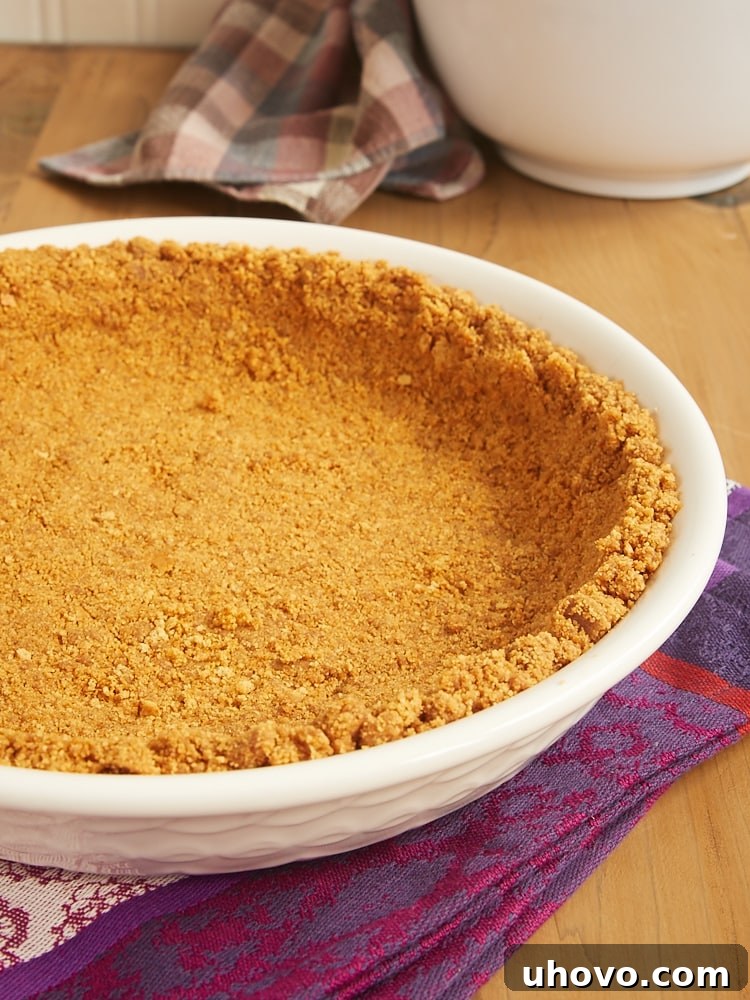
Start by using the spatula or spoon you used for mixing to roughly spread the buttered crumbs across the bottom and up the sides of the pan. Then, switch to your fingers. Begin by firmly pressing the crumbs into the bottom of the pan, working from the center outwards. Use your knuckles or the pads of your fingers to apply even pressure across the entire base. For the sides, use your thumbs to press the crumbs firmly against the pan, rotating it as you go. You can also use the flat bottom of a measuring cup or glass to help flatten the bottom and create a sharper edge where the bottom meets the sides.
Using your fingers allows you to feel for any uneven spots, ensuring the crust is consistently thick throughout. This tactile feedback is invaluable in creating a professional-looking and perfectly stable crust. A uniform thickness ensures even baking (if applicable) and prevents thin spots that might crumble when sliced. Aim for a compact, solid layer that looks neat and tidy.
To Bake or Not to Bake: Customizing Your Crust
A frequently pondered question is whether to bake a cookie crumb crust or simply chill it. The answer largely depends on the type of filling you’re using and the desired texture of your final dessert.
For No-Bake Fillings
When pairing your cookie crust with a no-bake filling (like a no-bake cheesecake, icebox pie, or mousse), you have two excellent options:
- Chilling the Crust: This is the simplest approach. After pressing the crust into the pan, place it in the refrigerator for at least 30 minutes (or even longer, up to a few hours) before adding your filling. The chilling time allows the melted butter to firm up completely, solidifying the crust and making it stable enough to hold your filling. This method results in a softer, chewier crust that still holds together well.
- Baking the Crust: Many bakers, myself included, prefer to bake these crusts briefly, even for no-bake fillings. A quick bake in a preheated oven (around 350°F or 175°C) for about 10 minutes offers several benefits:
- Enhanced Sturdiness: Baking helps the crust set more firmly, making it less prone to crumbling when sliced, especially for denser fillings.
- Deeper Flavor: The heat lightly toasts the cookie crumbs, intensifying their flavor and adding a pleasant, slightly caramelized note. This can add an extra layer of complexity to your dessert.
- Improved Texture: A baked crust often has a crisper, more satisfying texture compared to a purely chilled one.
After baking, allow the crust to cool completely at room temperature before adding your filling. Adding a cold filling to a warm crust can cause issues like condensation or even melt your filling.
For Baked Fillings
When your cookie crust is destined for a dessert that also requires baking (such as a traditional cheesecake or a baked pie), the instructions from your specific recipe should always take precedence. Some recipes may call for a brief pre-bake of the crust to prevent it from becoming soggy under the weight of a wet filling or to give it a head start in setting. Other recipes might instruct you to add the filling directly to an unbaked crust, allowing both to bake together. Always refer to the filling recipe’s guidelines to determine the appropriate preparation for your cookie crust in these cases.
Endless Possibilities: What to Fill Your Crust With
Now that you’re an expert in crafting the perfect cookie crumb crust, the fun truly begins: choosing a filling! The potential combinations for delicious filling and cookie crust duos are virtually limitless. The right pairing can transform a simple dessert into an unforgettable culinary experience.
Popular Pairings and Dessert Types
- Cheesecakes: This is arguably the most classic pairing. A sturdy cookie crust provides the perfect counterpoint to the rich, creamy texture of cheesecake. Whether it’s a no-bake version or a traditional baked New York-style, the cookie crust adds a fantastic base.
- Cream Pies: From classic chocolate cream to banana cream or coconut cream, these smooth, often chilled pies benefit immensely from a flavorful cookie crust. Graham cracker or vanilla wafer crusts are particularly popular here.
- Mousses and Puddings: Light and airy mousses or dense, decadent puddings find a wonderful home atop a crunchy cookie crust. Imagine a rich chocolate mousse nestled in an Oreo crust!
- Icebox Pies: These easy, often no-bake pies are practically designed for cookie crusts. Think key lime pie, lemon icebox pie, or refreshing fruit-flavored options.
- Tarts: Both fruit tarts and cream tarts gain an extra layer of flavor and texture from a cookie crust, especially when using shortbread or ginger snap crumbs.
- Bars and Squares: Cookie crusts aren’t just for round pans. They can be pressed into square or rectangular baking dishes to create delicious dessert bars, like lemon bars with a vanilla wafer crust or s’mores bars with a graham cracker base.
- Parfaits and Layered Desserts: Crumbled cookie crust can also be used as a delicious layer in individual parfaits, adding crunch and flavor between layers of cream, fruit, or custard.
For even more inspiration and specific recipes, explore our recipe index to discover a wealth of fantastic ideas for pies, cheesecakes, and so much more. Here are some of our personal favorites that showcase the incredible versatility and deliciousness of a homemade cookie crumb crust:
The Ultimate Homemade Cookie Crumb Crust Recipe
Homemade cookie crumb crusts are incredibly easy to make and offer a superior taste and texture compared to any store-bought alternative. Use this simple recipe as your go-to guide for creating perfect crusts for pies, cheesecakes, and all your favorite desserts.
Cookie Crumb Crust
Yield: 1 crust for a 9-inch pie
Prep Time: 5 minutes
Cook Time: 10 minutes (if baking)
Total Time: 15 minutes (if baking)
Ingredients
- 1 ¾ cups* cookie crumbs (from approximately 25-30 standard graham crackers, 1 ½ sleeves of Oreos, or similar volume of other cookies)
- 5 tablespoons (70g) unsalted butter, melted**
- Optional: up to ¼ cup granulated or brown sugar, for sweeter crusts
Recommended Products
- Kitchenaid Plastic Measuring Spoons, Set of 5, Ocean Blue
- KitchenAid Classic Set of 3 Mixing Bowls
- Food Processor (for optimal crumb consistency)
Instructions
- Combine the cookie crumbs and melted butter in a medium bowl. If adding optional sugar, stir it in now. Mix thoroughly until all the crumbs are evenly coated with butter. The mixture should resemble wet sand and hold together when squeezed.
- Pour the mixture into a 9-inch round pie pan or springform pan.
- Using your fingers, the back of a spoon, or the flat bottom of a measuring cup, press the crumb mixture firmly and evenly into the bottom and up the sides of the pan. Ensure a compact and consistent layer to prevent crumbling.
For No-Bake Fillings:
- If baking the crust (recommended for extra sturdiness and flavor), preheat your oven to 350°F (175°C). Bake the crust for 10 minutes. Remove from oven and set aside to cool completely before filling.
- If not baking the crust, place the pan in the refrigerator for at least 30 minutes (or up to several hours) to allow the butter to firm up and set the crust before adding your chosen filling.
For Baked Fillings:
- Follow the specific directions of your chosen recipe to determine if the crust should be pre-baked before adding the filling and baking further.
Notes
- *For those who prefer measuring by weight, be aware that the weight of 1 ¾ cups of crumbs can vary significantly depending on the type of cookie used due to differences in density. The volume measurement (1 ¾ cups) is the most reliable guide for this recipe. For graham cracker crumbs, 1 ¾ cups typically weighs around 175g.
- **Occasionally, some very dry cookie crumbs might require a little more butter, while very rich or moist cookies (like those with cream fillings) might need slightly less. If you’re using a new cookie type, start with 4 tablespoons of melted butter and add more, up to a total of 6 tablespoons, if the mixture still feels too dry and crumbly to hold its shape. The mixture should feel like wet sand and clump together easily when squeezed.
Frequently Asked Questions About Cookie Crumb Crusts
Can I make a cookie crumb crust in advance?
Absolutely! Cookie crumb crusts are excellent for meal prep. Once pressed into the pan, a baked crust can be stored at room temperature for up to 2 days, or refrigerated for up to 4-5 days. An unbaked, chilled crust can be refrigerated for 2-3 days before filling. For longer storage, you can freeze a baked or unbaked crust for up to 1 month, wrapped tightly in plastic wrap and then foil. Thaw in the refrigerator before using.
What if my crust is too crumbly?
If your mixture is too crumbly and won’t hold together when pressed, it likely needs more butter. Melt another half tablespoon to a tablespoon of butter and mix it in thoroughly. Test again by squeezing a small amount; it should hold its shape. Different cookies absorb butter differently, so minor adjustments are sometimes necessary.
What if my crust is too greasy?
If your crust feels overly greasy, you might have added too much butter. While it’s hard to reverse, you can try mixing in a few extra tablespoons of finely ground cookie crumbs (if you have them) to help absorb some of the excess fat. Alternatively, you can proceed with the slightly greasy crust; it might just be a bit richer. Ensuring your crumbs are fine and uniform also helps with proper butter distribution.
Can I make this recipe gluten-free?
Yes! Simply choose a gluten-free crunchy cookie, such as gluten-free graham crackers, gluten-free Oreos, or gluten-free vanilla wafers. The method and proportions for butter will remain the same. Always double-check ingredient labels to ensure they are certified gluten-free if catering to strict dietary needs.
Do I need a special pan for a cookie crumb crust?
No, not necessarily. While springform pans are excellent for cheesecakes (making it easy to remove the dessert for a clean presentation), a standard 9-inch pie plate works perfectly for most pies and tarts. You can also use square or rectangular baking dishes for bars. The key is to ensure the pan is sturdy enough to withstand the pressing of the crust.
How can I prevent the crust from becoming soggy?
For baked fillings, a common method to prevent sogginess is to pre-bake the crust as directed in the recipe. This creates a barrier between the wet filling and the crust. For no-bake fillings, ensure the crust is completely cooled (if baked) or thoroughly chilled (if unbaked) before adding the filling. A thin layer of melted chocolate or a sprinkle of finely crushed nuts over the crust before adding a very moist filling can also create a protective layer.
Conclusion: Your Path to Perfect Crusts
The humble cookie crumb crust is a testament to the fact that sometimes, the simplest things are the most brilliant. With just a few basic ingredients and techniques, you can create a delicious, versatile, and incredibly easy foundation for countless desserts. From the comforting familiarity of a graham cracker crust to the decadent richness of an Oreo base, the power to customize and create is in your hands.
Embrace the joy of homemade baking and experiment with different cookie flavors to find your signature crust. Whether you’re whipping up a quick no-bake treat or crafting an elaborate cheesecake, mastering the cookie crumb crust is a skill that will serve you well in all your sweet endeavors. So go forth, crush some cookies, and prepare to delight your taste buds!