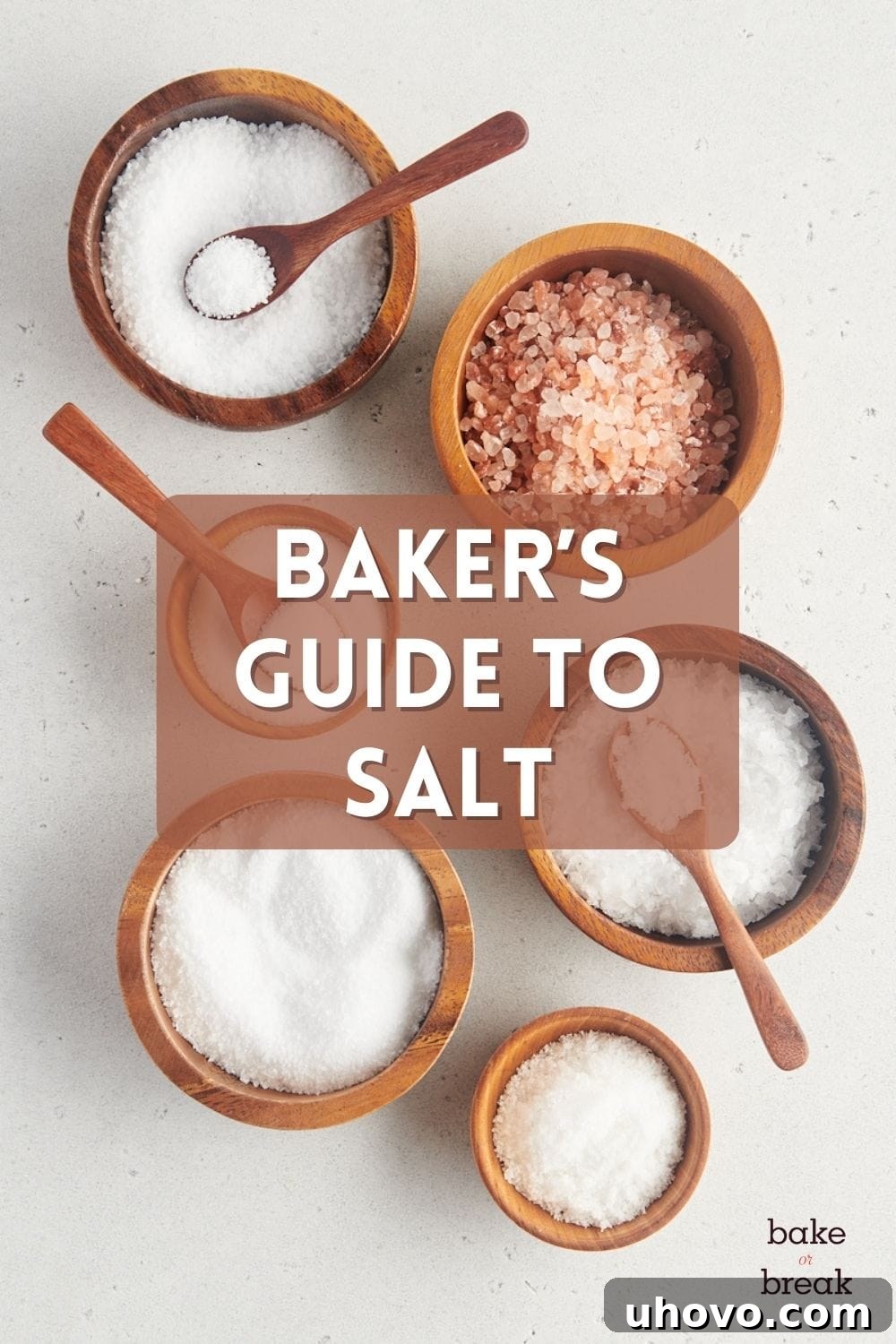
In the expansive and often precise world of baking, certain ingredients are hailed as stars, while others, like humble salt, often work tirelessly behind the scenes. Yet, to overlook salt’s profound impact is to miss a crucial element that elevates good baked goods to truly exceptional ones. More than just a seasoning, salt is a fundamental game-changer, wielding transformative power over flavor, texture, and even the structural integrity of your culinary creations. It’s the silent hero, capable of rescuing a dish from blandness, enhancing its inherent qualities, and ensuring a perfectly balanced profile.
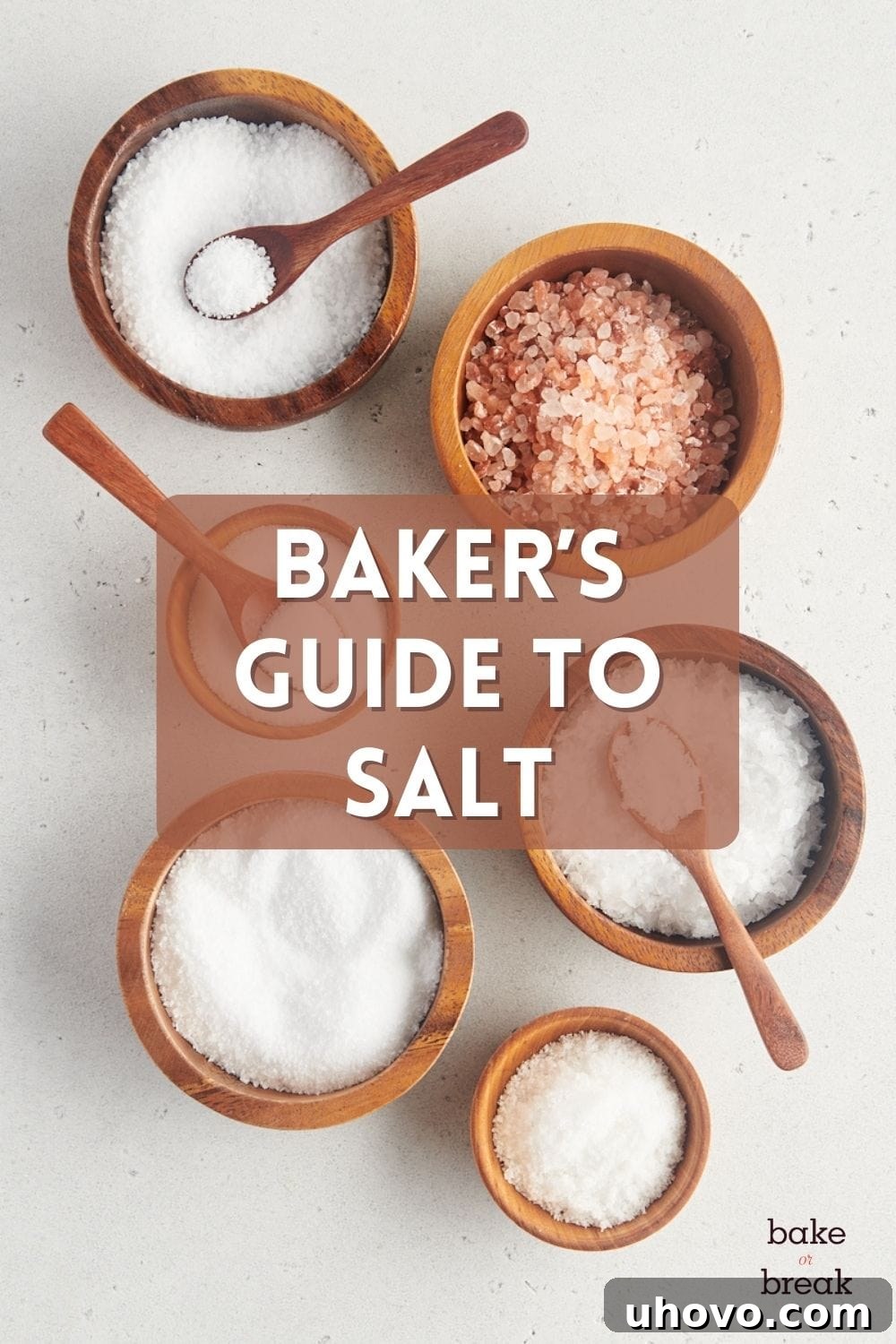
Have you ever taken a bite of a seemingly perfect cookie, a luscious cake, or a rustic loaf of bread, only to sense that something undefinable was missing? That subtle void, that almost imperceptible lack of depth, can often be attributed to the absence or improper use of this essential mineral. Salt acts as the culinary conductor, harmonizing the symphony of flavors, preventing overly sweet notes from dominating, and ensuring every component sings in unison. It’s the invisible thread that weaves through your recipes, holding everything together with its unassuming strength.
In the realm of sweetness, salt acts as a counterpoint, cutting through cloying sugary notes and allowing the nuances of other ingredients to shine through. Beyond this delicate balancing act, salt plays a critical role in the foundational mechanics of baking. For bread bakers, it’s indispensable for strengthening the gluten network, leading to a more elastic dough, improved texture, and a satisfying chew. Furthermore, it diligently regulates yeast activity, ensuring a controlled fermentation process that results in the ideal rise and crumb structure, preventing over-proofing that can lead to dense or collapsed loaves.
This comprehensive guide invites you to delve deeper into the fascinating world of salt, uncovering its multifaceted contributions to baking success. From understanding its fundamental roles to differentiating between various types and mastering substitution techniques, prepare to elevate your baking prowess by recognizing this basic kitchen staple as the unsung hero of every truly delicious baked good.
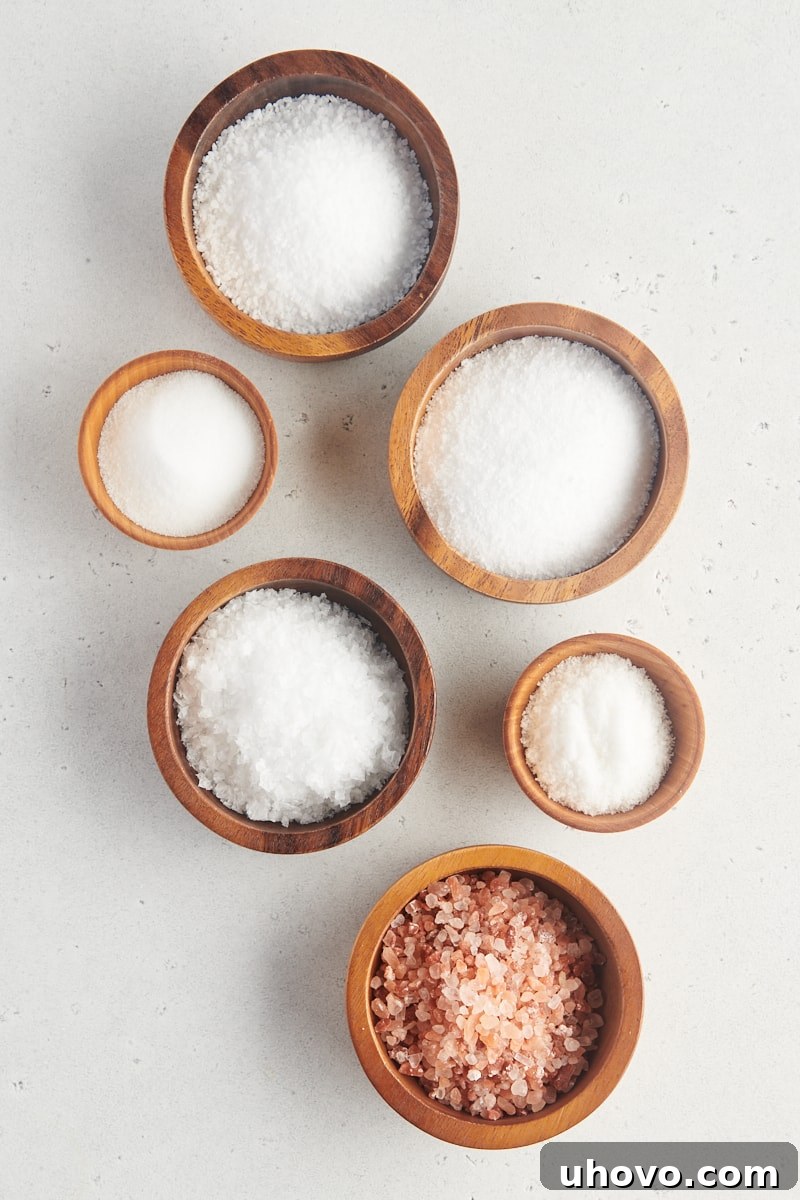
What Salt Does in Baking: The Essential Roles
Salt is far more than just a seasoning shaker sitting on your countertop; it’s a versatile ingredient that takes on several critical roles in the baking process. Understanding these functions is key to mastering its use and consistently achieving outstanding results.
Flavor Enhancer and Balancer
For most home bakers, the most immediate and appreciated role of salt is its ability to enhance flavor. It doesn’t just make things taste “saltier”; it profoundly impacts the perception of all other flavors. Specifically, salt performs a remarkable balancing act by mitigating excessive sweetness and subduing any lingering bitterness. Consider a rich chocolate cake: without salt, the chocolate’s depth would be muted, and the sugar might overwhelm the palate. Salt works synergistically to make chocolate notes richer and more intense, vanilla aromas more pronounced, and the creamy richness of butter more evident. It “opens up” the flavor receptors, ensuring that each bite delivers a full and complex spectrum of taste sensations, transforming a flat taste into a vibrant, multi-layered experience. This is why a touch of salt is often recommended even in the sweetest desserts – it’s not about making them savory, but about making them taste more like themselves, only better.
Dough Strengthener and Structure Builder
In the world of yeast-leavened goods like breads, pastries, and pizza dough, salt is absolutely indispensable for its role in gluten development. Gluten, a protein network formed when flour and water are mixed, gives dough its elasticity and structure. Salt interacts with these gluten proteins, tightening their structure and making them stronger and more extensible. This enhanced gluten network is crucial for trapping the gases produced by yeast, allowing the dough to rise properly and maintain its shape during baking. Without adequate salt, bread dough can become sticky, difficult to handle, and prone to spreading, resulting in a dense, crumbly texture rather than the desired airy and chewy crumb. It contributes to the overall stability of the dough, providing the foundation for beautifully formed and risen baked goods.
Yeast Controller and Fermentation Regulator
Any experienced bread baker knows that salt is one of the four fundamental ingredients in most bread recipes, alongside flour, water, and yeast. Its esteemed position on this short list is due to its crucial function in regulating yeast fermentation. Yeast feeds on sugars in the dough, producing carbon dioxide gas and alcohol. While this gas is essential for leavening, unchecked yeast activity can lead to rapid, uncontrolled rising – a phenomenon known as over-proofing. Salt acts as a mild inhibitor to yeast, slowing down its activity to a more manageable pace. This controlled fermentation allows flavors to develop more fully, results in a more consistent rise, and prevents the dough from collapsing or developing off-flavors. Without salt, dough can rise too quickly and then fall, producing a flat, dense, and unappealing loaf. It’s a delicate balance; too much salt can completely inhibit yeast, while too little allows it to run wild.
Preservative: Extending Shelf Life
Beyond its immediate impact on taste and structure, salt also plays a significant, if often overlooked, role as a natural preservative in baked goods. Salt is hygroscopic, meaning it actively attracts and absorbs moisture from its surroundings. In baking, this property helps to draw water out of the baked item and also reduces the overall water activity. By minimizing the available moisture, salt creates an environment less hospitable for microbial growth, such as mold and bacteria, which are major culprits in food spoilage. This action helps to keep baked goods fresher for longer, slowing down the staling process and extending their shelf life. While it’s not a primary preservative in modern baking in the same way it is in traditional curing, its contribution is still valuable in maintaining the freshness and quality of your homemade treats.
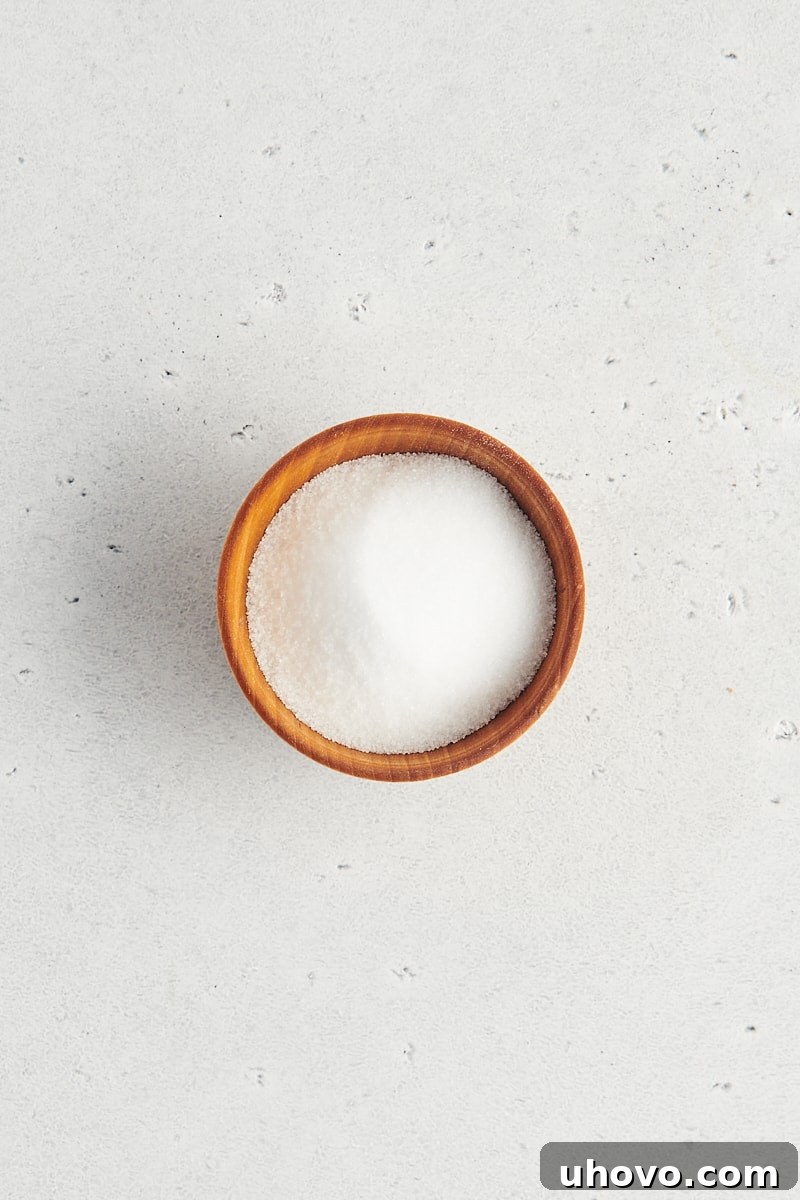
Types of Salt Used in Baking: A Closer Look
While the fundamental roles of salt remain constant, the type of salt you choose can significantly influence your baking outcomes. Understanding the characteristics of each variety is essential for making informed choices and achieving desired textures and flavors.
Table Salt
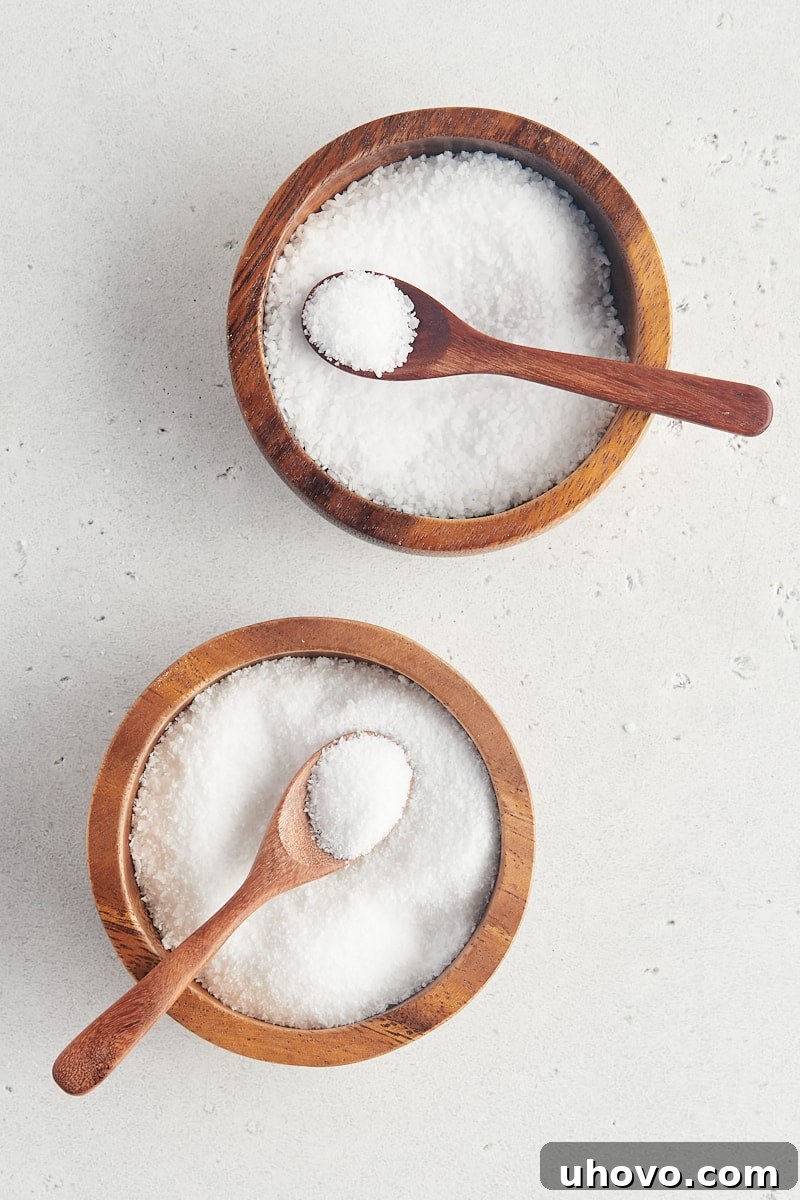
Table salt is arguably the most common and widely available type of salt in kitchens globally, characterized by its consistently fine, uniform grains. This fine granulation is its superpower in baking, as it dissolves quickly and distributes incredibly evenly throughout batters and doughs. This ensures a consistent level of saltiness in every single bite, which is crucial for delicate recipes like cakes, cookies, muffins, and quick breads where precise seasoning is paramount. Most table salt is also iodized, meaning iodine has been added, which is beneficial for health. However, some bakers claim that iodized table salt can impart a slight metallic or chemical aftertaste, especially in recipes with very few ingredients where the salt flavor is more prominent. For general baking, un-iodized table salt (if available) or fine sea salt can be a good alternative if you are sensitive to the taste of iodine.
Kosher Salt
Kosher salt derives its name not from its religious certification, but from its historical use in the koshering process, where its large, coarse flakes are ideal for drawing out blood from meat. In baking, kosher salt is highly favored by many professional chefs and home bakers alike for its pure, clean taste. Unlike many table salts, kosher salt typically does not contain iodine or anti-caking agents, which can sometimes impart unwanted flavors or cloudiness. Its larger, irregular crystal structure provides a different textural experience compared to fine-grained salts. When used as a finishing salt, its flakiness can add a desirable crunch and a burst of well-rounded saltiness. However, its coarser texture means it doesn’t dissolve as rapidly or distribute as evenly as table salt in batters. This makes it a popular choice for seasoning meats or for applications where a distinct salt crystal presence is desired, but it requires careful measurement in baking recipes.
Morton Kosher Salt vs. Diamond Crystal Kosher Salt: A Crucial Distinction
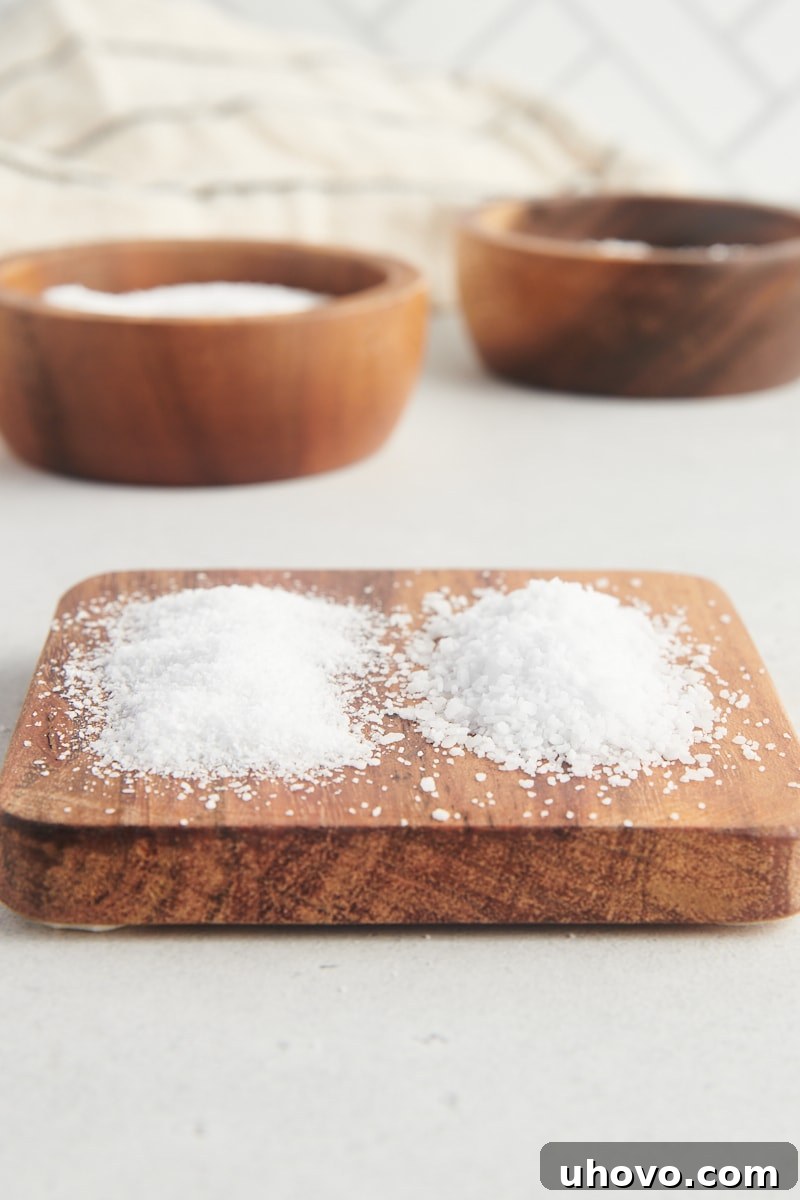
For bakers opting to use kosher salt, a critical understanding is that not all kosher salts are created equal. The two most prominent brands, Morton and Diamond Crystal, have significant differences in their crystal structure and density, which directly impacts how they should be measured and used in recipes. Ignoring these differences can lead to vastly different outcomes in your baked goods, ranging from overly salty to surprisingly bland.
- Grain Size and Shape: Diamond Crystal kosher salt boasts a lighter, flakier structure characterized by larger, hollow, irregular crystals. This unique shape makes it less dense. In contrast, Morton’s kosher salt has smaller, denser, and more uniform cube-like grains. This fundamental difference in texture means Diamond Crystal dissolves more quickly and adheres to food surfaces in a delicate way, while Morton’s offers a more concentrated salty punch per crystal.
- Volume vs. Weight Discrepancy: Because of these structural variances, the same measured volume of Morton’s and Diamond Crystal kosher salt will not yield the same weight. Morton’s, with its denser grains, will weigh significantly more per teaspoon or tablespoon than an equivalent volume of the flakier Diamond Crystal. This is an absolutely critical point in baking, where precision is paramount. If a recipe simply states “kosher salt” without specifying a brand, this variance can drastically alter the final saltiness and overall success of your recipe. For instance, one tablespoon of Diamond Crystal kosher salt weighs roughly 9 grams, whereas one tablespoon of Morton’s kosher salt can weigh approximately 15-18 grams. This nearly twofold difference highlights the importance of brand awareness.
- Measuring and Substituting Accurately: When substituting one brand of kosher salt for another, or even for table salt, relying on volume measurements alone is a recipe for inconsistency. For the most accurate results, it is imperative to go by weight. If a recipe specifies 1 teaspoon of Diamond Crystal kosher salt and you only have Morton’s, you would use a notably smaller amount of Morton’s by volume to achieve the same salty impact because of its greater weight per volume. A common guideline suggests using approximately 3/4 tablespoon of Morton’s to match the saltiness of 1 tablespoon of Diamond Crystal, illustrating the significant density difference. Understanding these conversion factors is vital for maintaining the intended flavor profile and structural integrity of your baked goods, ensuring consistency regardless of the brand you have on hand.
Sea Salt
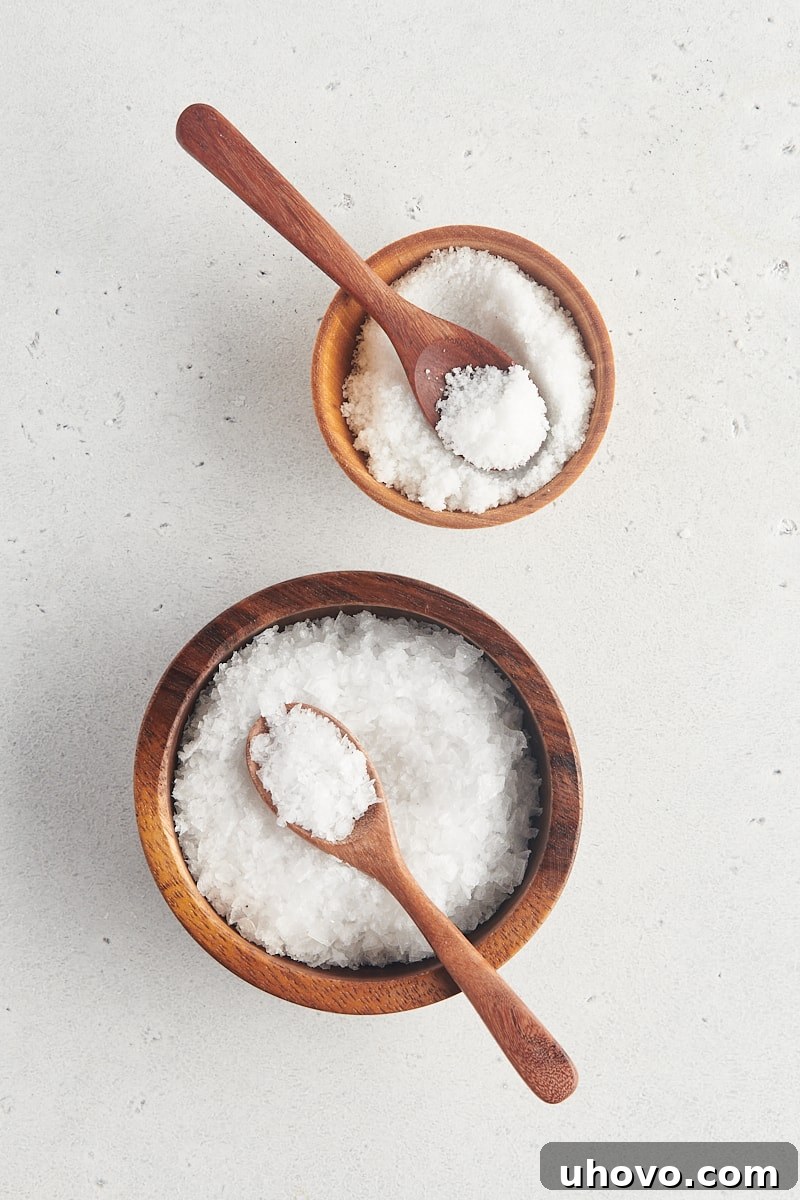
Harvested from evaporated seawater, sea salt comes in a wide array of textures, from fine, powdery grains to large, irregular flakes. What sets it apart is its unique mineral content, which varies depending on its origin. These trace minerals (such as magnesium, calcium, and potassium) can impart subtle, complex flavors that can add an extra layer of nuance to baked goods. In baking, sea salt is frequently employed as a finishing salt. A sprinkle of flaky sea salt on top of rich chocolate chip cookies, caramel brownies, or even a savory scone provides a delightful textural contrast and an intermittent burst of clean, briny flavor that enhances sweetness and depth, as seen in salted brown butter chocolate chip cookies and salted fudge brownies.
Fine sea salt, with its grain size comparable to that of table salt, is an excellent choice for incorporating directly into batters and doughs. Due to its similar density and rapid dissolving properties, it can typically be substituted for table salt in a 1:1 volume ratio in most baking recipes. However, always be mindful of its distinct mineral flavor. While often appealing, this subtle earthiness can be more pronounced in simpler recipes with fewer ingredients, so taste and adjust if you are experimenting with a new brand or type of sea salt.
Himalayan Pink Salt
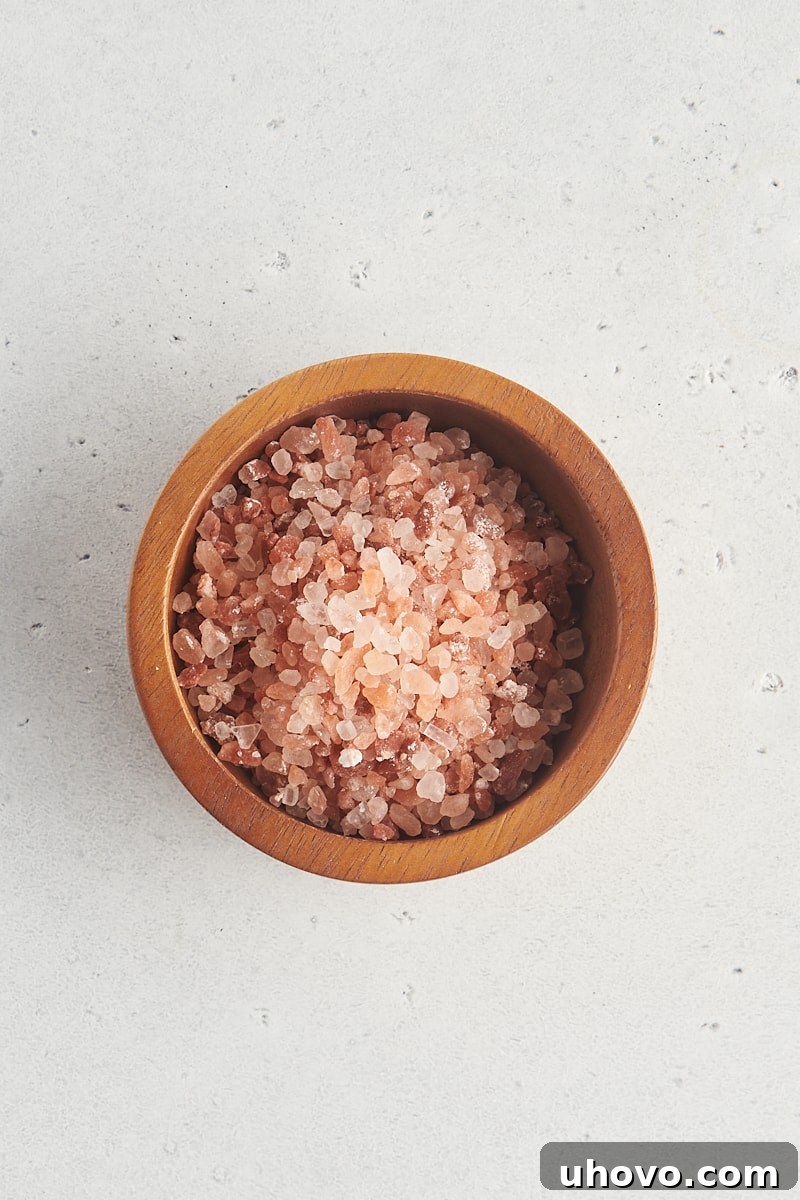
Characterized by its beautiful rosy hue, Himalayan pink salt is mined from ancient salt beds in the Himalayan mountains. Its distinctive color comes from the trace minerals, particularly iron oxide, present within its crystals. While often marketed for its perceived health benefits, in the context of baking, Himalayan pink salt is primarily valued for its aesthetic appeal. Its coarse, crystalline texture and striking color make it an exquisite decorative finish for gourmet desserts, artisanal chocolates, or even savory crackers. While it can certainly be used as an ingredient, its cost and coarser grain mean it’s typically reserved for situations where its visual impact is desired rather than its functional role within the dough itself. When using it internally, fine-grain versions are preferred, and its mineral content should be considered as it can impart a slight metallic taste if overused.
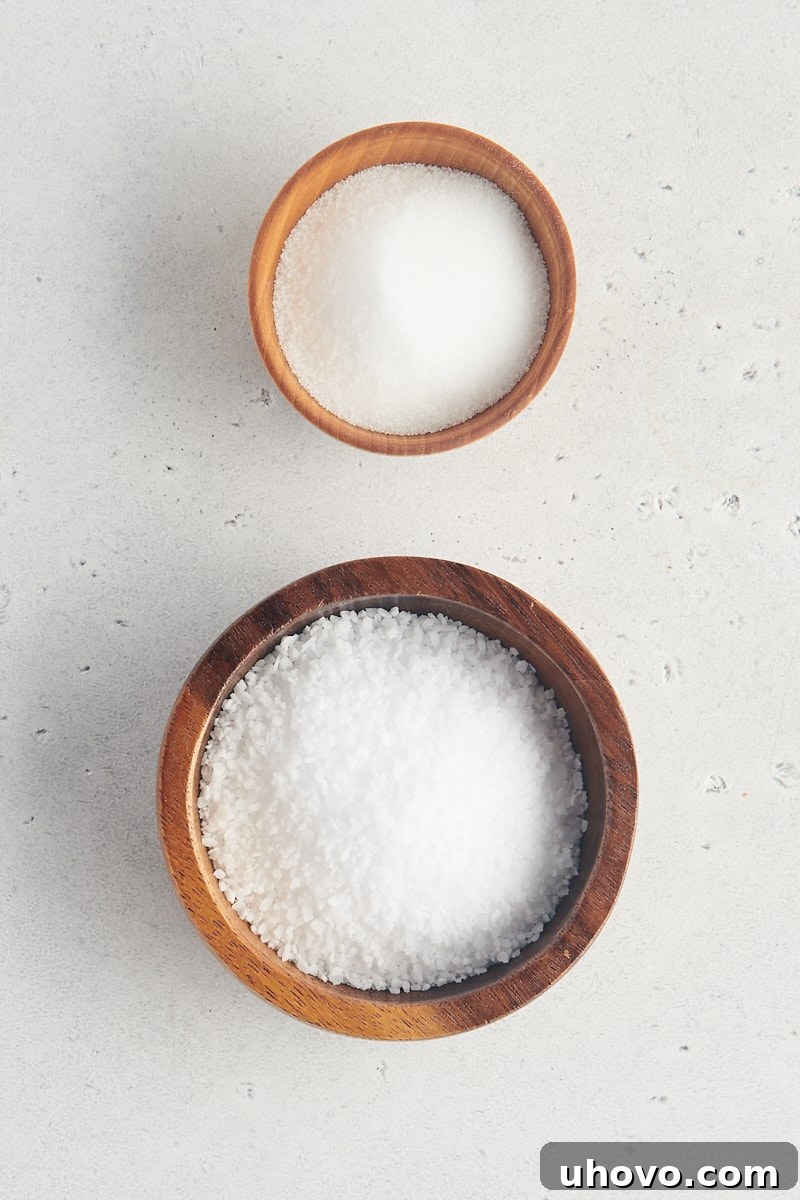
Table Salt vs. Kosher Salt: A Baker’s Dilemma
The choice between table salt and kosher salt is one of the most frequently debated topics among bakers. While both can perform the essential functions of salt in baking, understanding their differences is paramount to achieving consistent and desired results. In most scenarios, particularly for general home baking, table salt is often the more straightforward choice, though kosher salt certainly has its merits.
The Critical Impact of Grain Size
The most immediate and impactful difference between table salt and kosher salt is their grain size and shape. Table salt features very fine, uniform crystals, allowing it to pack tightly into a measuring spoon. Kosher salt, on the other hand, consists of larger, coarser, and often irregularly shaped flakes (especially Diamond Crystal). This seemingly cosmetic difference has profound implications for measurement and dissolution. Because of its finer particles, a given volume (e.g., one teaspoon) of table salt will contain significantly more individual salt crystals and thus weigh more than the same volume of kosher salt. This means that, volume for volume, table salt is inherently “saltier” than kosher salt. If a recipe calls for one type of salt and you substitute an equal volume of the other without adjustment, your final product will either be too salty (if using table salt in place of kosher) or under-seasoned (if using kosher in place of table).
How to Substitute Accurately
To accurately substitute one salt for the other and maintain the intended level of saltiness in a recipe, volume adjustments are almost always necessary. A common guideline is that you might need approximately 1.5 to 2 times the volume of kosher salt to achieve the same level of saltiness as table salt. For example, if a recipe calls for 1 teaspoon of table salt, you might substitute with 1.5 to 2 teaspoons of kosher salt. However, this ratio can vary based on the specific brand of kosher salt (remember Morton vs. Diamond Crystal!) and the recipe’s overall composition. It is always wise to start with a slightly lower amount when substituting, especially if you are unsure, and then adjust to taste if the recipe allows. For professional accuracy, measuring by weight is the gold standard for salt substitutions, eliminating the ambiguities of volume differences.
Mastering Salt Substitutions in Baking
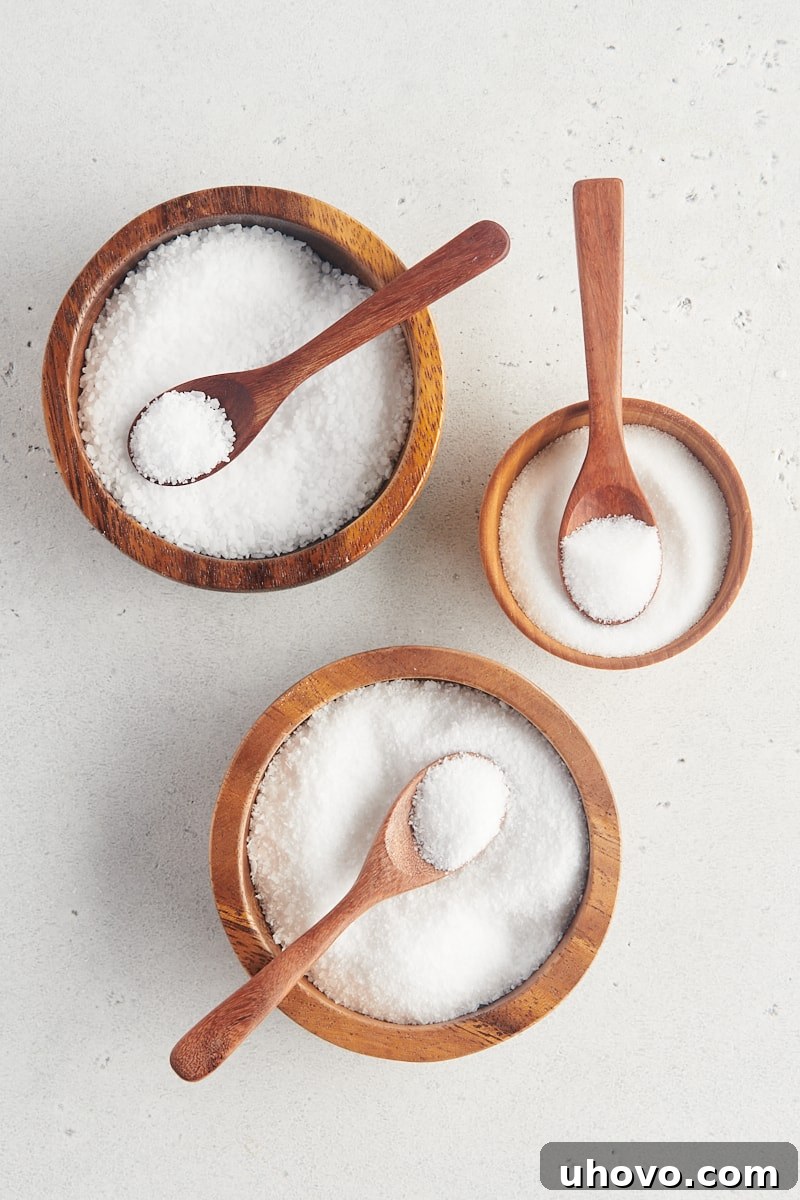
While precision is key in baking, recipes don’t always specify the exact type or brand of salt, and sometimes you simply have to work with what’s available. Understanding the general principles of how different salts compare in terms of density and solubility is crucial for making informed and successful substitutions. While measuring by weight is the most accurate method for small ingredients like salt, many home recipes still rely on volume. Here are some practical guidelines for substituting various salts, keeping in mind that these are starting points, and a little experimentation may be needed for perfection:
- Table Salt and Fine Sea Salt:
- These two salts can generally be interchanged at a 1:1 ratio by volume. Their crystal sizes and densities are quite similar, meaning they will dissolve and distribute in a comparable manner within your batter or dough. However, fine sea salt may have a slightly larger crystal size than table salt, and its mineral content can introduce subtle flavor variations. If you are particularly sensitive to taste, or if it’s a very simple recipe where salt flavor stands out, you might start with an equal amount and taste to adjust if possible.
- Table Salt to Kosher Salt (and vice versa):
- Since kosher salt grains are larger and less dense, you will consistently need a greater volume of kosher salt to match the saltiness delivered by an equal volume of table salt.
- For Diamond Crystal kosher salt, which is notably less dense and flakier, you will typically need about 1.5 to 2 times the volume of table salt. For example, if a recipe calls for 1 teaspoon of table salt, use 1.5 to 2 teaspoons of Diamond Crystal.
- For Morton’s kosher salt, which is denser than Diamond Crystal but still less dense than table salt, you might need approximately 1.25 to 1.5 times the volume of table salt. If a recipe requires 1 teaspoon of table salt, opt for 1.25 to 1.5 teaspoons of Morton’s.
- Conversely, if a recipe calls for kosher salt (and you assume it’s Diamond Crystal if not specified) and you only have table salt, you would use about 1/2 to 2/3 the volume of table salt. If it calls for Morton’s, use about 2/3 to 4/5 the volume of table salt.
- Fine Sea Salt to Kosher Salt:
- Given that fine sea salt and table salt share similar densities and crystal structures, the same substitution ratios for table salt to kosher salt can be applied here.
- For instance, 1 teaspoon of fine sea salt would equate to approximately 1.5 to 2 teaspoons of Diamond Crystal kosher salt, or 1.25 to 1.5 teaspoons of Morton’s kosher salt.
- Morton’s Kosher Salt to Diamond Crystal Kosher Salt:
- If you need to substitute Diamond Crystal for Morton’s, you will generally need a larger volume of Diamond Crystal due to its significantly lighter and flakier structure. A good starting ratio would be around 1.5 to 2 times the volume of Morton’s. So, if a recipe specifies 1 tablespoon of Morton’s, you might use 1.5 to 2 tablespoons of Diamond Crystal.
It’s crucial to remember that these ratios are general guidelines. The exact conversion can be influenced by the specific batch of salt, environmental humidity, and how tightly you pack your measuring spoon. For critical recipes, especially those where salt plays a structural role (like bread), or where the flavor balance is delicate, using a kitchen scale to measure salt by weight is the most reliable approach, even if you have to convert from a volume measurement first.
Expert Tips for Using Salt in Baking
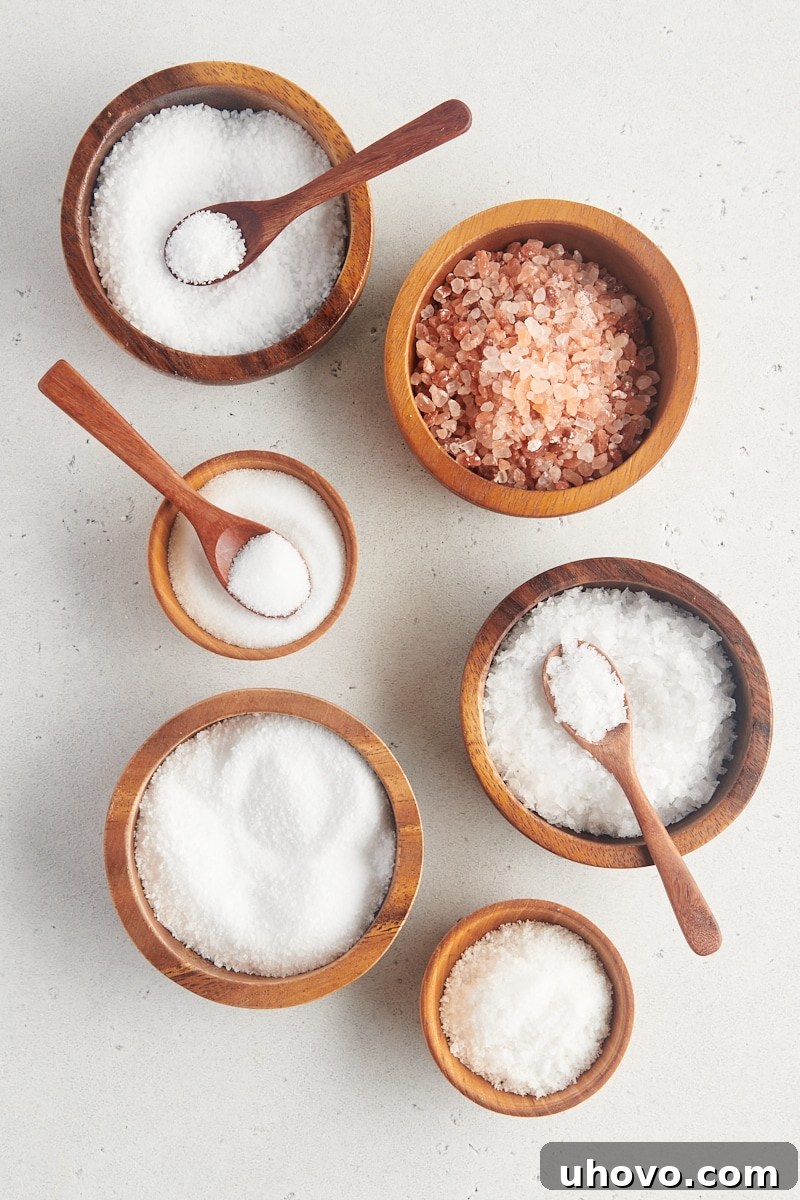
To truly harness the power of salt in your baking, keep these practical tips in mind:
- Always Follow the Recipe Carefully. The amount and type of salt specified in a recipe are usually carefully balanced to achieve specific flavor profiles and chemical reactions. Deviating significantly without understanding the implications can affect everything from sweetness balance to dough texture and rise. For recipes found here on Bake or Break (BoB), assume table salt is used unless explicitly stated otherwise.
- Know Your Salts Intimately. Develop an understanding of the inherent differences between various types of salt. The primary factor to consider is grain size, as it directly impacts both the weight per volume and how quickly the salt dissolves and disperses in your recipe. A coarse salt won’t dissolve as readily as a fine one, affecting consistency.
- Exercise Caution with Substitutions. When you must substitute one type of salt for another, especially between table salt and kosher salt, prioritize accuracy. If possible, use a kitchen scale to measure by weight. If using volume, internalize the conversion ratios: roughly 1 teaspoon of table salt equates to about 1.5 teaspoons of Morton’s kosher salt or approximately 2 teaspoons of Diamond Crystal kosher salt. Always err on the side of slightly less salt and add more if needed, as it’s easier to correct an undersalted dish than an oversalted one.
- Proper Storage is Non-Negotiable. To prevent clumping and ensure consistent measurement, always store your salt in a cool, dry place in an airtight container. Moisture causes salt crystals to stick together, making accurate volumetric measurement challenging and potentially leading to uneven distribution in your baked goods.
- Embrace the Art of Experimentation. The best way to understand salt’s impact is to experience it firsthand. Try baking a familiar recipe, such as your favorite chocolate chip cookies, using different types of salt – table salt, kosher salt, and fine sea salt – in separate batches. Pay close attention to the subtle differences in flavor depth, texture, and overall balance. This hands-on approach will significantly deepen your understanding and intuition for using salt effectively.
Navigating the World of Salt in Baking: Your Path to Mastery
While salt may often be relegated to a footnote in the grand recipe of baking, its profound and multifaceted impact on flavor, texture, and the overall quality of baked goods cannot be overstated. From its indispensable role in enhancing the subtle sweetness of desserts and deepening rich chocolate notes, to its critical functions in strengthening gluten structure and precisely controlling yeast fermentation in bread, salt is undeniably a powerhouse ingredient. Whether your kitchen staple is fine table salt, a more artisanal sea salt, or the versatile kosher salt, cultivating a thorough understanding of their unique characteristics and how they interact with other ingredients is the cornerstone of consistent baking success.
Remember that baking is a beautiful blend of art and science. While precise measurements and established guidelines provide a vital framework, do not shy away from adjusting and experimenting. Your palate is your ultimate guide, and the ingredients you have on hand should always be considered. The next time you reach for the salt shaker during your baking endeavors, pause for a moment. Consider not just the quantity required, but also the specific type you are using and the nuanced, yet profoundly significant, ways it will influence your final delicious product.
May your kitchen adventures be filled with continuous learning, delightful creations, and the perfect touch of salt. Happy baking!