Successful baking isn’t just an art; it’s a precise science where accurate measurements are paramount. Mastering the proper use of your dry and liquid measuring cups is a fundamental step that will significantly elevate your baking game. Often overlooked, the subtle differences between these two essential kitchen tools play a critical role in achieving consistently perfect results. Understanding how and when to use each type can transform your baking from hit-or-miss to reliably delicious.
If you’ve ever pondered whether investing in separate sets of measuring cups for liquid and dry ingredients is truly necessary, the unequivocal answer is yes. While they might appear similar at first glance and some home cooks might mistakenly use them interchangeably, each type is meticulously engineered for a distinct purpose: to measure different categories of ingredients with unparalleled accuracy. Let’s delve into the specific functionalities and design elements that set them apart, eliminating guesswork from your kitchen and paving the way for consistent baking success.
The Unrivaled Importance of Accurate Measurements in Baking
It’s no secret to seasoned bakers that baking operates under the strict laws of chemistry. Unlike cooking, where a pinch of this or a dash of that often works wonders, baking demands exactitude. Every gram, every milliliter, and every level cup directly impacts the final texture, flavor, and appearance of your baked goods. A slight deviation in the amount of flour can lead to a dense, tough cake instead of a light, airy one. Too much sugar might result in an overly sweet and sticky cookie, while too little could leave it bland and crumbly. Precision isn’t just a suggestion; it’s the foundation upon which every successful recipe is built.
When someone seeks advice on how to become a better baker, my primary recommendation always revolves around the mastery of accurate ingredient measurement. This fundamental skill ensures consistency, allowing you to replicate beloved recipes flawlessly every time. It also empowers you to confidently troubleshoot and adapt recipes, understanding how each component contributes to the overall structure and taste profile. Embrace accuracy, and you’ll unlock a new level of confidence and enjoyment in your baking journey.
Key Differences Between Liquid and Dry Measuring Cups
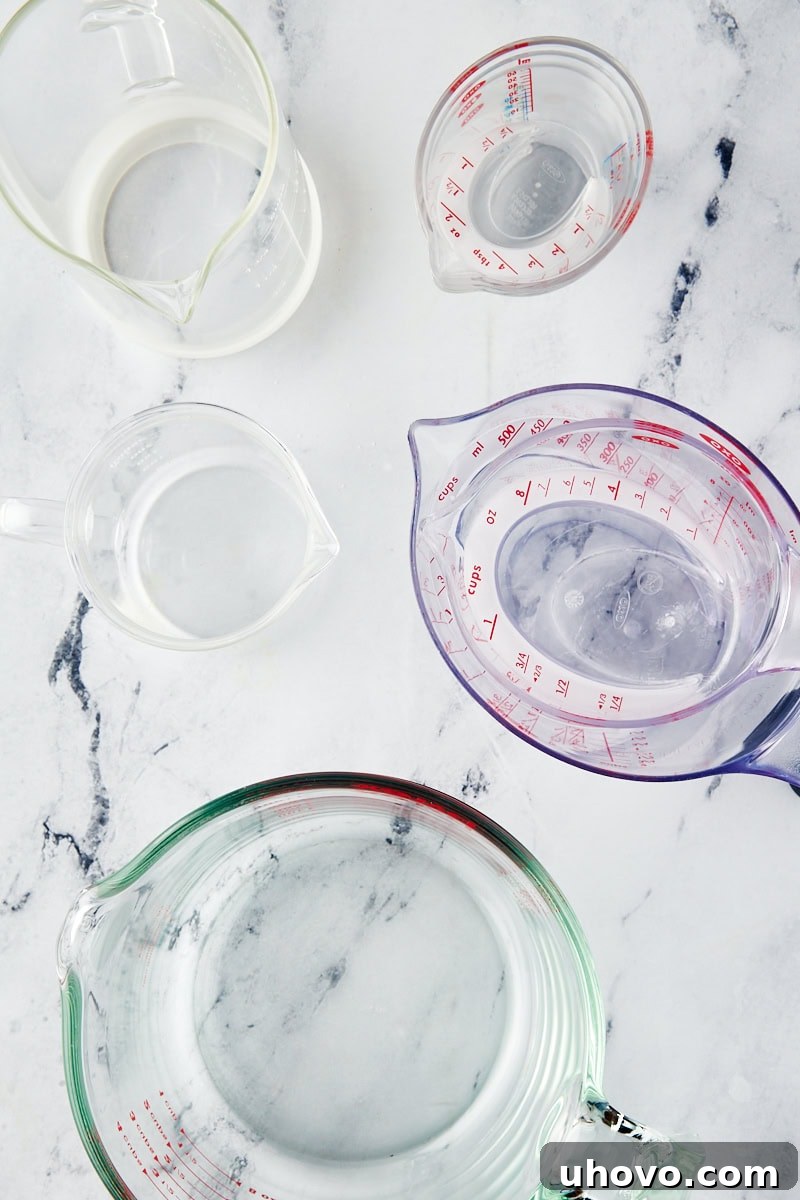
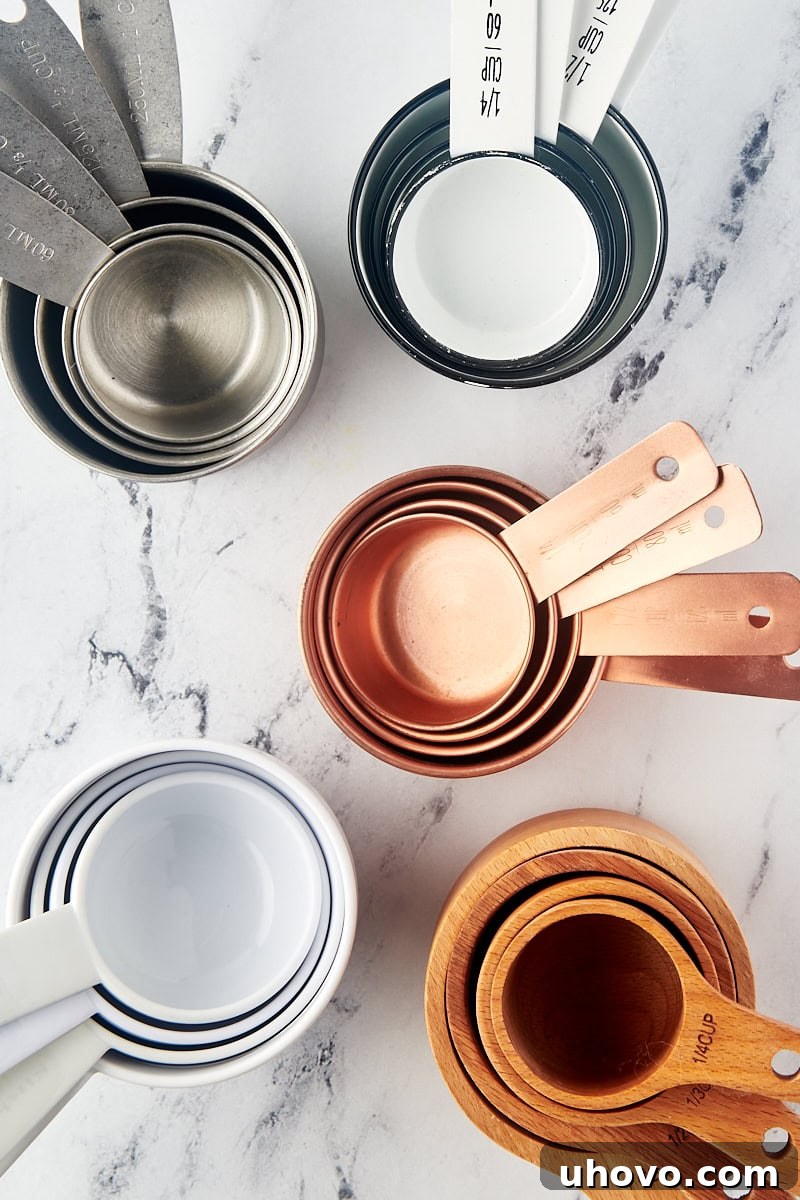
As their names aptly suggest, liquid measuring cups, often referred to as wet measuring cups, are specifically designed for fluid ingredients such as water, milk, oil, and extracts. Conversely, dry measuring cups are tailored for granular or solid ingredients like flour, sugar, cocoa powder, and oats. The fundamental difference lies in their design, which directly addresses the unique properties of each ingredient type to ensure the most accurate measurement possible. Understanding these design distinctions is crucial for achieving consistent and reliable baking outcomes.
Liquid Measuring Cups: Engineered for Fluids
- Design and Structure: Liquid measuring cups are characteristically clear, allowing for easy visibility of the liquid level. They feature a convenient handle for steady pouring and, most notably, a spout designed to prevent spills and facilitate precise transfer of liquids into your mixing bowl. Measurement markings are typically printed on the side of the cup, enabling you to read the quantity at eye level. Some innovative designs, known as angled measuring cups, even feature markings on an interior angled surface, offering the convenience of reading from above.
- Material: The most common materials for liquid measuring cups are glass and plastic. Glass options are valued for their heat resistance, making them suitable for both hot and cold liquids, and their non-reactive nature ensures no flavor transfer. They also offer excellent clarity. Plastic alternatives are lighter, less prone to breaking if dropped, and often more affordable, though some may stain over time or absorb odors.
- Functionality: The integrated spout is a game-changer for liquids, allowing for clean, controlled pouring directly into other containers without drips or waste. Reading the measurement at eye level is a critical technique to avoid parallax error, which occurs when your viewing angle distorts the perceived liquid level. This ensures you consistently measure the exact amount required by your recipe, a vital step for chemical reactions in baking.
Dry Measuring Cups: Built for Solids
- Design and Structure: Dry measuring cups are distinguished by their flat top and smooth brim. They typically come in nested sets of various standard sizes, commonly ranging from 1/4 cup to 1 cup. This design is deliberate, created to facilitate a technique called “leveling off,” which ensures precise measurement of dry ingredients.
- Material: These cups are frequently crafted from metal (such as stainless steel or aluminum), plastic, or silicone. Metal cups are celebrated for their durability, resistance to staining, and ability to withstand rigorous use. Plastic and silicone cups offer lightweight convenience, are often more budget-friendly, and are typically dishwasher-safe, though plastic can be more susceptible to wear or discoloration over time.
- Functionality: The flat top is the cornerstone of a dry measuring cup’s accuracy. After filling the cup, you can use a straight edge – like the back of a knife or a flat spatula – to sweep across the brim, removing any excess and ensuring a perfectly level measure. This method guarantees you have the exact volume specified in the recipe, preventing ingredients from being packed too tightly or measured too loosely, which can significantly alter the outcome of your baked goods.
Navigating the Gray Area: What Makes an Ingredient Dry or Liquid?
For most ingredients, the distinction between liquid and dry is straightforward. Water, milk, oil, and extracts are clear liquids; they flow freely and conform to the shape of their container. Flour, granulated sugar, cocoa powder, oats, chocolate chips, and spices are unequivocally dry; they can be scooped and leveled without effort. However, some ingredients present a nuanced challenge, blurring the lines between these categories. Understanding how to correctly measure these “semi-solids” or “thick liquids” is key to maintaining recipe accuracy.
- Peanut Butter: This beloved spread is a classic example of a semi-solid. Due to its thick, viscous nature, it’s best measured in a dry measuring cup. To ensure an accurate measurement and facilitate easier transfer from the cup into your mixing bowl, it’s highly recommended to lightly grease the inside of the measuring cup with a neutral oil or cooking spray before adding the peanut butter. Alternatively, for utmost precision, measuring peanut butter by weight on a digital kitchen scale is the superior method.
- Honey, Molasses, and Syrups: These are thick liquid ingredients that often cause confusion. While some argue for liquid measuring cups due to their fluidity, many professional bakers advocate for dry measuring cups for greater volumetric accuracy, especially with smaller quantities. The challenge with these sticky ingredients, regardless of the cup type, is their tendency to cling to the sides, making full transfer difficult. If using a dry measuring cup, press the ingredient in and level, then scrape out thoroughly. If using a liquid measuring cup, the spout assists with pouring, but ensure you scrape the cup clean. A clever trick for both methods is to lightly grease the measuring cup or spoon before adding these sticky substances, which helps them slide out effortlessly.
- Yogurt and Sour Cream: These dairy products are also categorized as semi-solids. They should always be measured using a dry measuring cup. Fill the cup, then use a straight edge to level off the top, ensuring an accurate and consistent volume. Avoid pressing or compacting them unless the recipe specifically states to do so.
- Applesauce and Mashed Banana: Despite their moist consistency, these thick, pureed fruits are best measured in dry measuring cups. Like yogurt and sour cream, they should be scooped into the cup and then leveled off with a straight edge for precise results. Their density and inability to flow freely make them unsuitable for liquid measuring techniques.
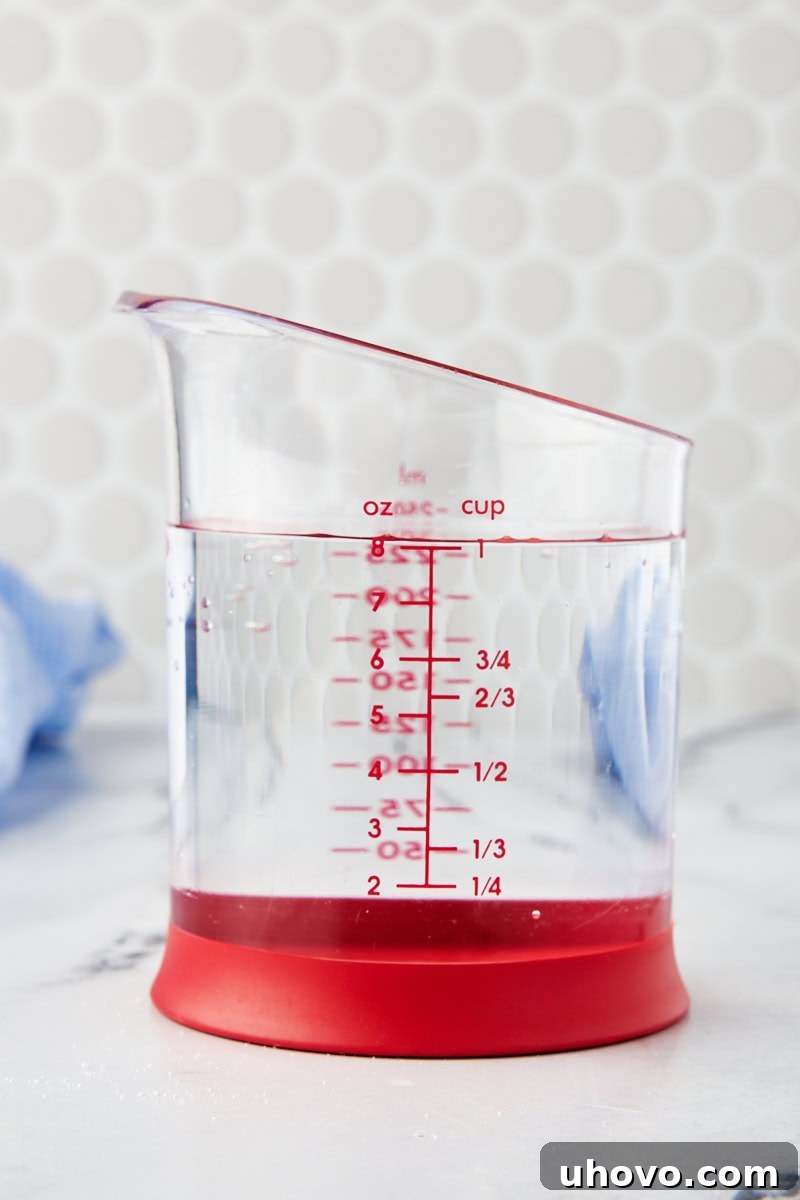
Mastering the Art of Using Liquid Measuring Cups
While using liquid measuring cups might seem straightforward, applying a few precise techniques can significantly enhance your accuracy and, by extension, the quality of your baked goods. These seemingly small steps can make a big difference in ensuring your liquids are measured perfectly every time.
- Select the Smallest Appropriate Cup: For optimal accuracy, always use the smallest measuring cup that can comfortably hold the required quantity of liquid. For instance, if a recipe calls for one cup of milk, opt for a 1-cup liquid measuring cup rather than filling a 2-cup or 4-cup vessel only partially. This minimizes the surface area of the liquid, reducing the potential for visual errors and making it easier to read the exact measurement.
- Always Use a Level Surface: Before pouring any liquid, place your measuring cup on a flat, stable countertop or table. Holding the cup in your hand while pouring can lead to an uneven tilt, resulting in an inaccurate reading. Ensuring the cup is perfectly level is the foundational step for precise measurement.
- Read Measurements at Eye Level: This is perhaps the most crucial tip for liquid measurement. Once the liquid is in the cup and resting on a level surface, bend down so your eyes are perfectly aligned with the desired measurement mark on the side of the cup. You’ll observe a slight curve at the liquid’s surface, known as the meniscus. For most liquids, especially water-based ones, the correct measurement is at the bottom of this meniscus curve. Reading from above or below eye level can introduce parallax error, causing you to over- or under-measure.
- Utilize Measuring Spoons for Small Quantities: For very small amounts of liquid, such as vanilla extract, almond extract, or food coloring (typically less than 1/4 cup), always opt for measuring spoons rather than liquid measuring cups. Measuring spoons are designed for this level of precision and provide much greater accuracy for potent ingredients that can significantly impact flavor in small doses.
The Convenience of Angled Measuring Cups
Angled measuring cups represent a clever innovation in liquid measurement, designed to circumvent the need for bending down to eye level. These cups feature measurement markings printed on an internal, angled surface, allowing you to simply look directly down into the cup from above to read the liquid volume accurately. This design is particularly beneficial for those with mobility issues or anyone seeking a quicker, more ergonomic way to measure liquids without sacrificing precision. While they don’t replace traditional methods entirely, they offer a convenient alternative for many everyday baking tasks.
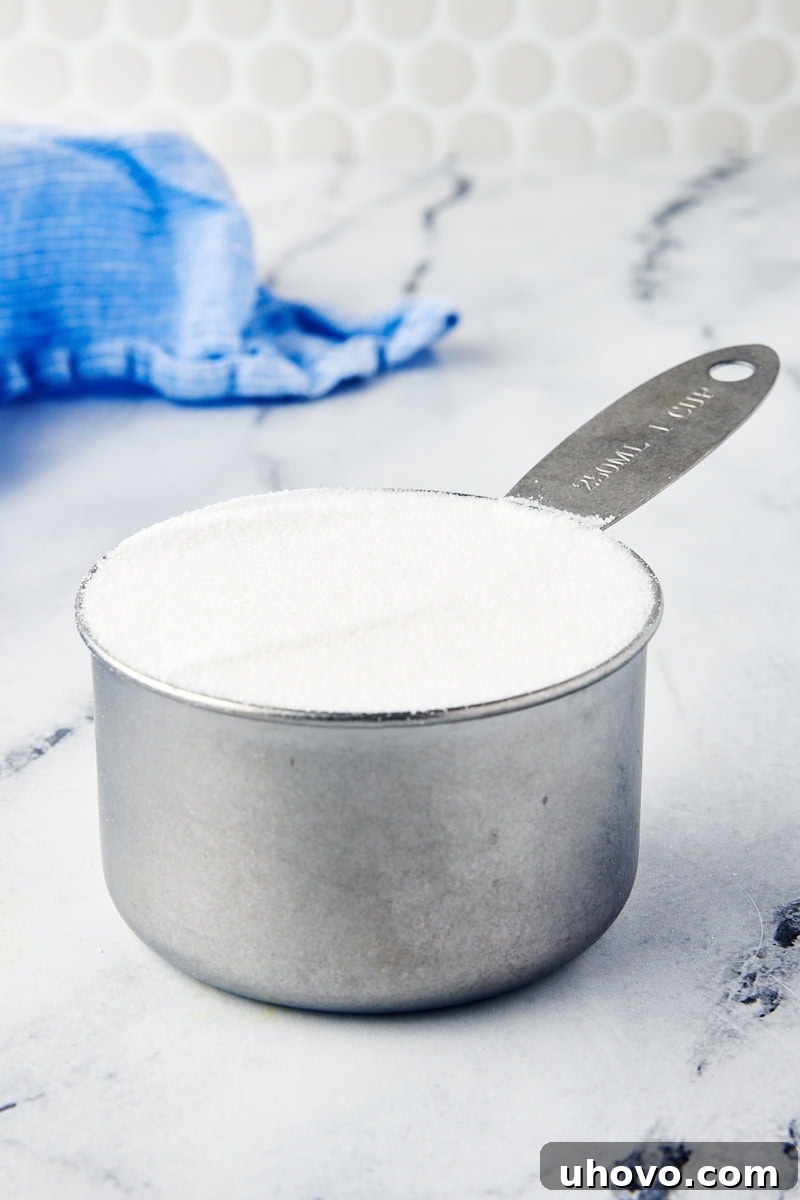
Achieving Precision with Dry Measuring Cups
For the utmost accuracy when measuring dry ingredients, particularly flour, I wholeheartedly recommend using a digital kitchen scale. Measuring by weight is inherently more precise than measuring by volume, as the density of dry ingredients can vary significantly depending on how they are scooped or packed. (You can delve deeper into this topic in our guide on How to Measure Flour.) However, dry measuring cups are still widely used and can yield excellent results if employed correctly. Here are the essential practices to ensure your dry ingredient measurements are spot-on:
- Choose the Correct Cup Size: Dry measuring cups are designed to be filled precisely to the brim for accurate volumetric measurement. Always select the measuring cup that matches the exact quantity specified in your recipe. Avoid using a larger cup and estimating a partial fill, as this significantly increases the margin of error.
- Do Not Scoop Directly from the Container: A common mistake is plunging the measuring cup directly into a bag or canister of flour or sugar. This action compacts the ingredient, leading to a much greater quantity than intended for the specified volume. Instead, use a spoon to lightly fluff the ingredient if it’s settled, then gently spoon it into the measuring cup until it’s overflowing.
- Avoid Packing Unless Directed: For most dry ingredients, such as all-purpose flour, granulated sugar, or cocoa powder, it is crucial to avoid packing them into the cup. The goal is a light, airy fill. The only common exception to this rule is brown sugar, which recipes almost always specify as “packed brown sugar.” For brown sugar, press it firmly into the cup with the back of a spoon until it holds its shape when inverted.
- Level Off the Top with a Straight Edge: Once the measuring cup is overflowing with the ingredient, take a straight edge – like the back of a knife, a metal spatula, or even a ruler – and sweep it across the top of the cup. This action removes any excess, ensuring a perfectly flat, level measure right at the brim. This is how the design of dry measuring cups guarantees accuracy.
- Check for and Break Up Clumps: Ingredients like powdered sugar (confectioners’ sugar) or certain spices can sometimes form clumps. Before measuring, gently sift these ingredients or break up any lumps with a fork or whisk to ensure a consistent, accurate volume. Measuring clumps can lead to an incorrect amount, affecting the texture and sweetness of your baked goods.
- Understand Sifting Instructions: Pay close attention to how “sifted” is specified in a recipe. If it reads “1 cup sifted flour,” you should sift the flour *before* measuring it. If it reads “1 cup flour, sifted,” you should measure the flour *first*, and then sift that measured amount. This distinction is vital, as sifted flour takes up more volume than unsifted flour, impacting the final hydration and consistency of your dough or batter.
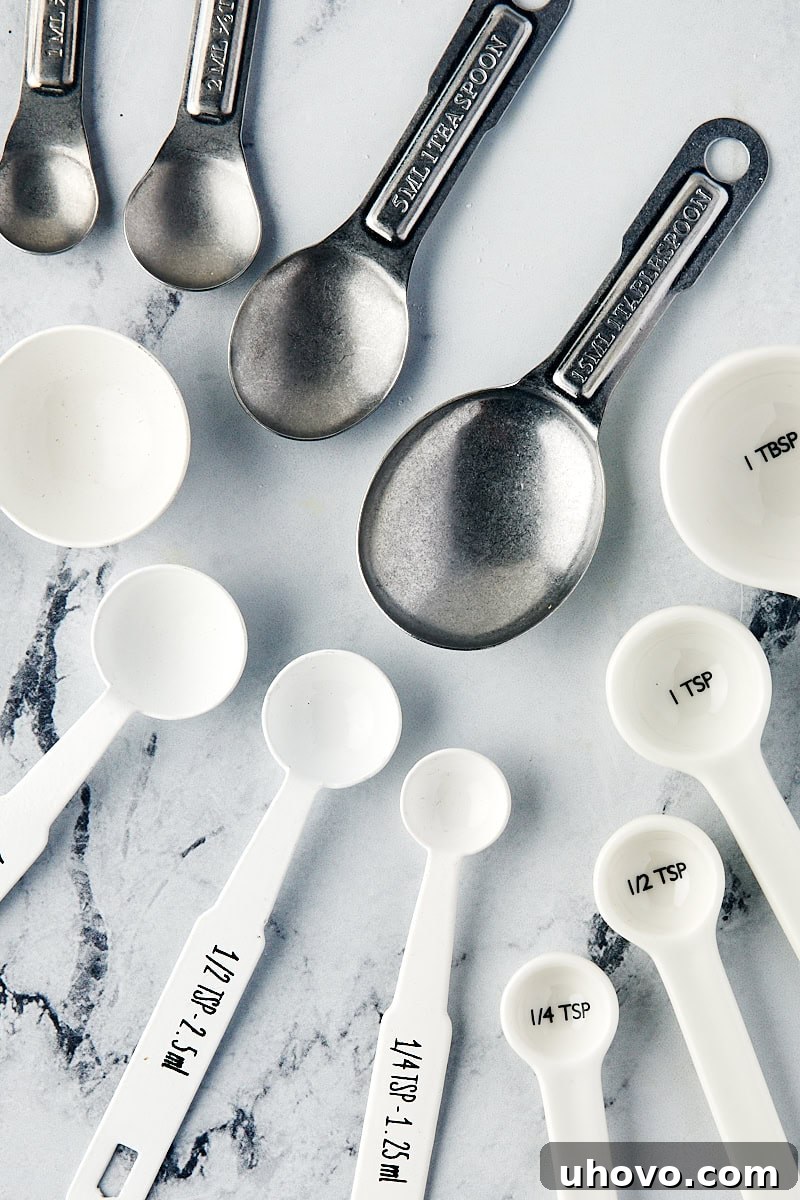
The Indispensable Role of Measuring Spoons
Measuring spoons are the versatile workhorses of any baker’s kitchen, essential for accurately portioning small quantities of both liquid and dry ingredients. From a mere pinch of salt to a tablespoon of vanilla extract, these miniature tools ensure that even the most potent flavors and critical leavening agents are added in the precise amounts needed for a balanced and successful recipe.
- Always Use the Correct Size: Just like with measuring cups, selecting the measuring spoon that exactly matches the recipe’s requirement is fundamental. Attempting to eyeball half of a teaspoon in a full teaspoon spoon will introduce inaccuracies. Invest in a set that includes standard sizes (1/4 teaspoon, 1/2 teaspoon, 1 teaspoon, 1 tablespoon).
- Measure Dry or Liquid Appropriately: For dry ingredients, gently spoon the ingredient into the measuring spoon until it overflows, then use a straight edge (like a butter knife) to level it off, just as you would with a dry measuring cup. For liquid ingredients, carefully fill the spoon to the very top, allowing the liquid to form a slight dome without overflowing. For sticky liquids or semi-solids (like honey or peanut butter, if measuring small amounts), a light greasing of the spoon or using a small spatula to help transfer the ingredient can prevent waste and ensure full removal.
- Combine Measurements for Odd Sizes: If your recipe calls for a measurement not included in your standard spoon set (e.g., 3/4 teaspoon), simply combine smaller increments. For 3/4 teaspoon, measure out 1/2 teaspoon and then 1/4 teaspoon separately and add them together. This additive approach maintains precision.
- Never Measure Over the Mixing Bowl: This is a golden rule taught to every aspiring baker! Always hold your measuring spoon away from or over a separate small bowl or plate when adding ingredients. This practice prevents accidental spills of too much salt, baking soda, or extract from potentially ruining your entire recipe. A single misplaced ingredient can throw off the delicate balance of flavors and textures, so take this extra precaution seriously.
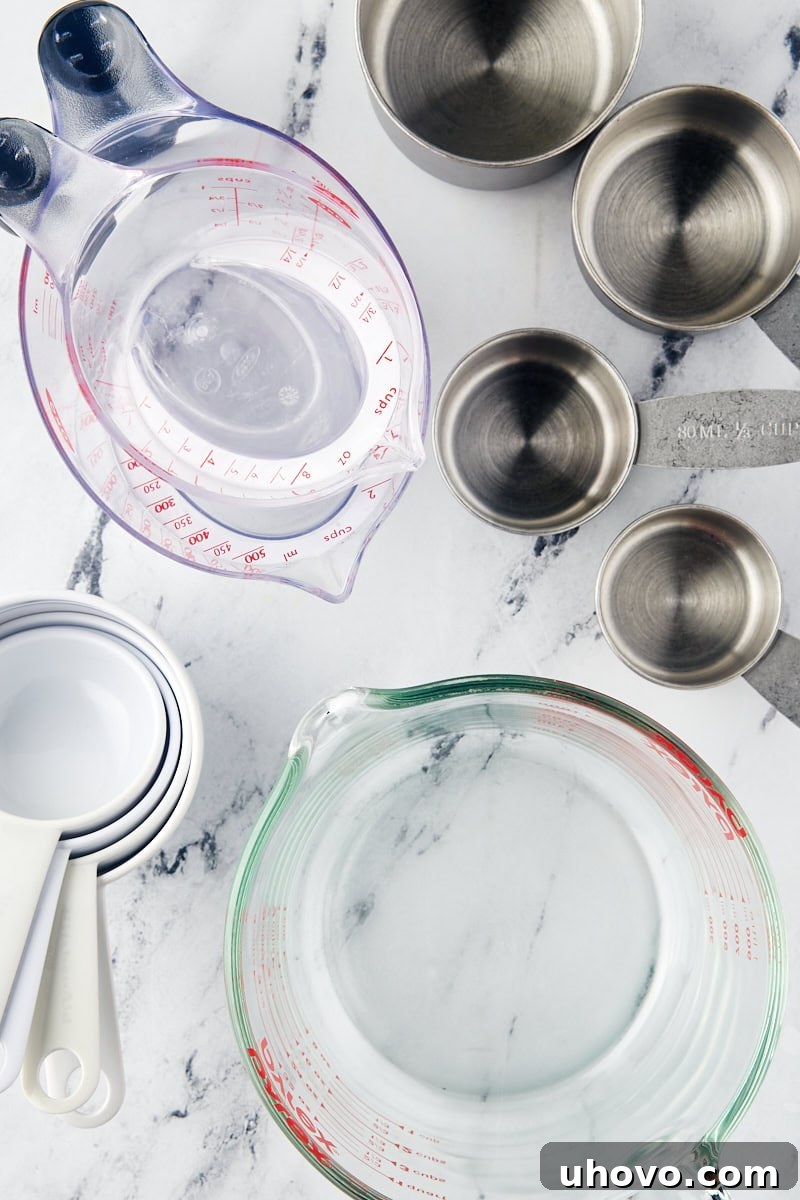
Selecting the Best Measuring Tools for Your Kitchen
Outfitting your kitchen with reliable measuring cups and spoons is an investment that pays dividends in consistent baking results. With a myriad of options available, selecting the right tools can feel overwhelming. You can explore some of my recommended products in my Amazon storefront. When adding new measuring tools to your collection, consider these key factors to find the ones that best suit your baking needs and preferences:
- Material:
- Metal (Stainless Steel, Aluminum): Highly durable, resistant to rust and staining, and typically dishwasher-safe. Metal cups often have engraved measurements that won’t fade. However, they can be heavier and generally more expensive.
- Plastic: Lightweight, often more affordable, and usually dishwasher-safe. Plastic can be good for everyday use but may be prone to staining from ingredients like tomato paste or turmeric, and can potentially warp or degrade over time, especially with hot liquids or harsh dishwasher cycles.
- Glass (for Liquid Cups): Offers excellent clarity, heat resistance, and won’t absorb odors or flavors. Measurements are often printed or etched, which can be durable. Glass is heavier and more fragile than plastic or metal, making it susceptible to breaking if dropped.
- Design: For dry measuring cups, prioritize sets with flat, even rims for easy and accurate leveling. For liquid measuring cups, look for clear bodies, ergonomic handles, and a well-designed pour spout that minimizes drips. Angled liquid measuring cups offer a convenient alternative for reading from above.
- Accuracy and Durability of Markings: This is paramount. Ensure the measurement markings are clearly legible, precisely calibrated, and durable enough not to wear off after repeated washing. Avoid decorative or novelty measuring sets, as they often prioritize aesthetics over accuracy. Opt for trusted brands known for their kitchenware quality. Adjustable measurers, while space-saving, can sometimes be less accurate due to moving parts and potential for misalignment.
- Ease of Use: Consider the handles – are they comfortable to grip, even with wet or sticky hands? Do they feel sturdy? The tools should also have a balanced weight to prevent tipping over when filled, especially for liquid measuring cups. Look for sets where the cups detach easily from rings, allowing for individual use and cleaning.
- Sizes Included: A basic set should include standard measurements (1/4, 1/3, 1/2, 1 cup for dry; 1, 2, 4 cup for liquid; 1/4, 1/2, 1 tsp, 1 tbsp for spoons). For a more comprehensive collection, consider sets that include odd sizes (like 2/3 cup or 1 1/2 tbsp) if your recipes frequently call for them. If you bake often, having multiple sets can be incredibly convenient, especially when juggling several ingredients simultaneously.
- Storage Solutions: If kitchen space is a premium, look for measuring sets designed to nest or stack neatly. This helps keep your drawers and cabinets organized and prevents individual pieces from getting lost. Some sets come with a ring to keep spoons or cups together, which can be very practical.