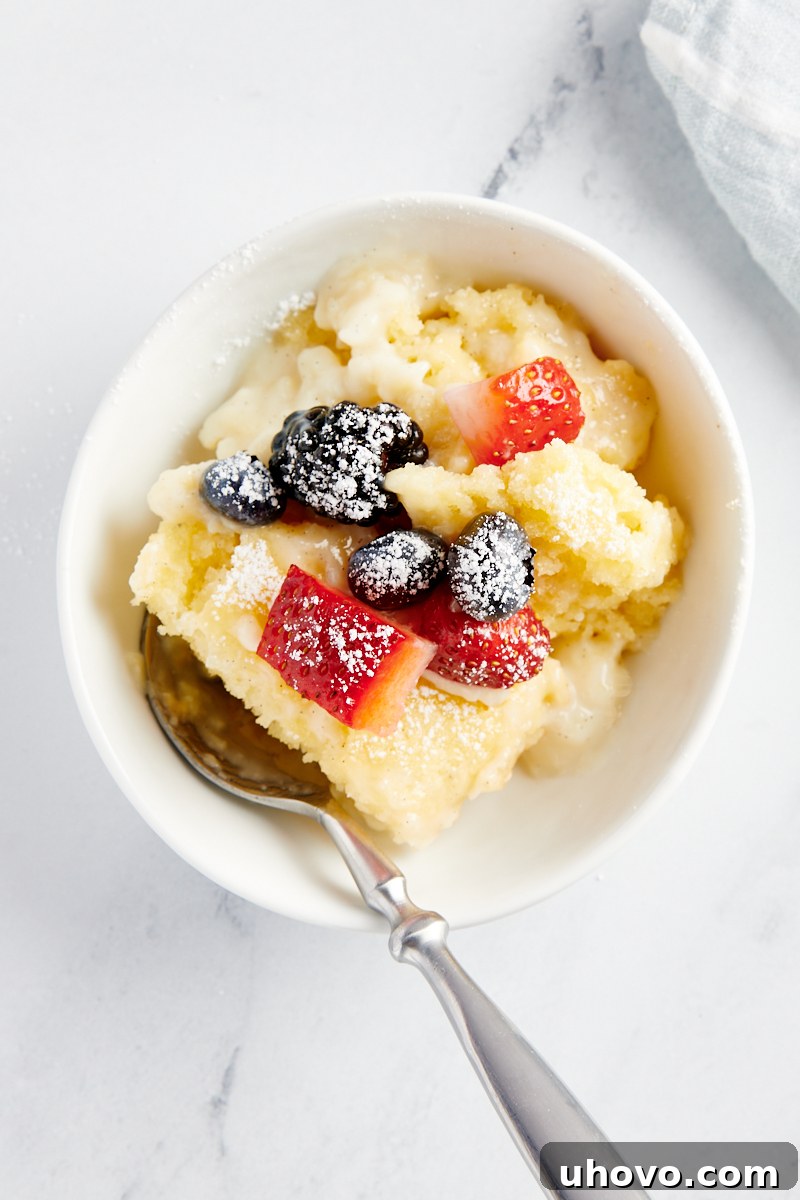
Step into a world of comforting aroma and delightful flavor with this incredibly easy Vanilla Pudding Cake. More than just a simple dessert, this self-saucing wonder promises a baking experience that’s as fuss-free as it is rewarding. Imagine a tender, golden cake floating atop a rich, warm vanilla sauce – all baked to perfection in a single pan. This classic treat, bursting with the timeless elegance of pure vanilla, is destined to become a staple in your kitchen. Whether enjoyed in its purest form or adorned with your favorite accompaniments, it’s a dessert that speaks of warmth, nostalgia, and effortless indulgence. Get ready to bake a cake that everyone will adore, and that you’ll find yourself returning to time and time again.
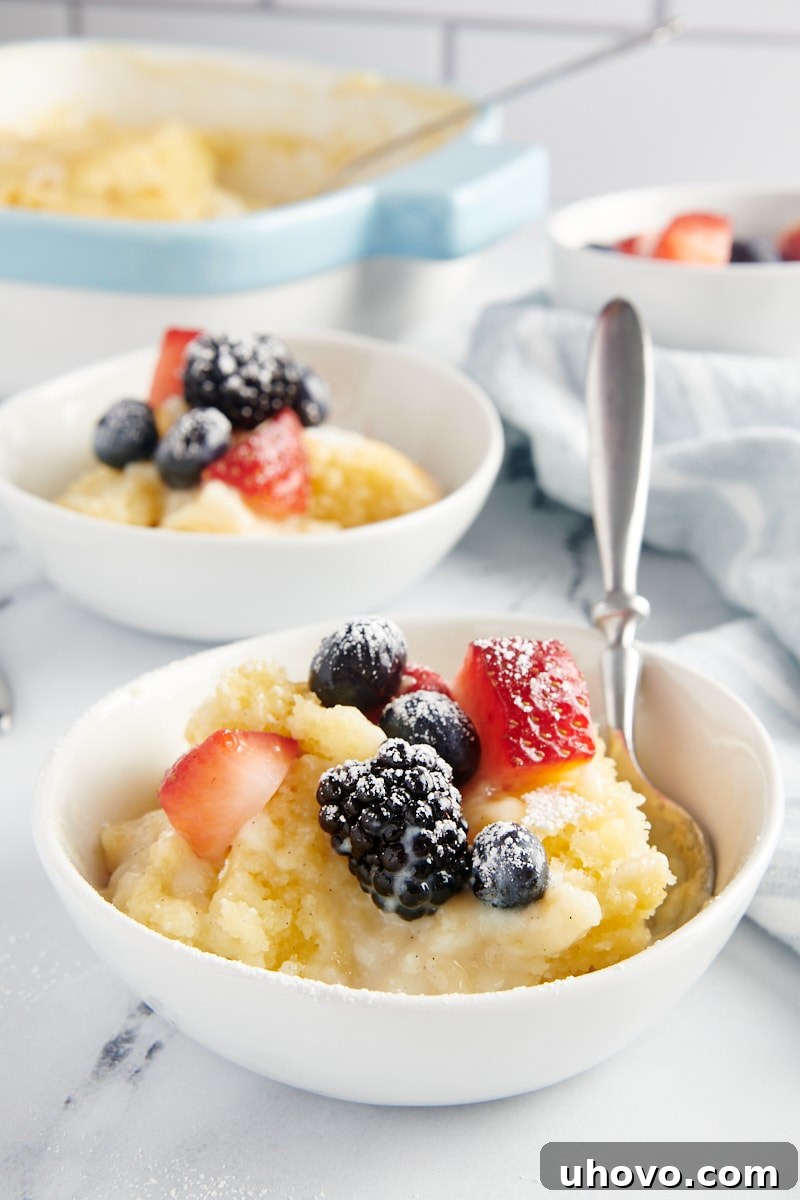
Embracing the Charm of Old-Fashioned Vanilla Pudding Cake
In the vast world of baking, vanilla often plays the noble supporting character, enhancing other flavors with its aromatic depth. However, in this classic Vanilla Pudding Cake, it steps into the spotlight, proving that sometimes, simplicity is the ultimate sophistication. This recipe revives the charm of traditional home baking, offering a dessert that feels both familiar and profoundly special. It’s a celebration of pure vanilla essence, allowing its sweet, fragrant notes to truly shine, creating a dessert that’s both elegant and approachable.
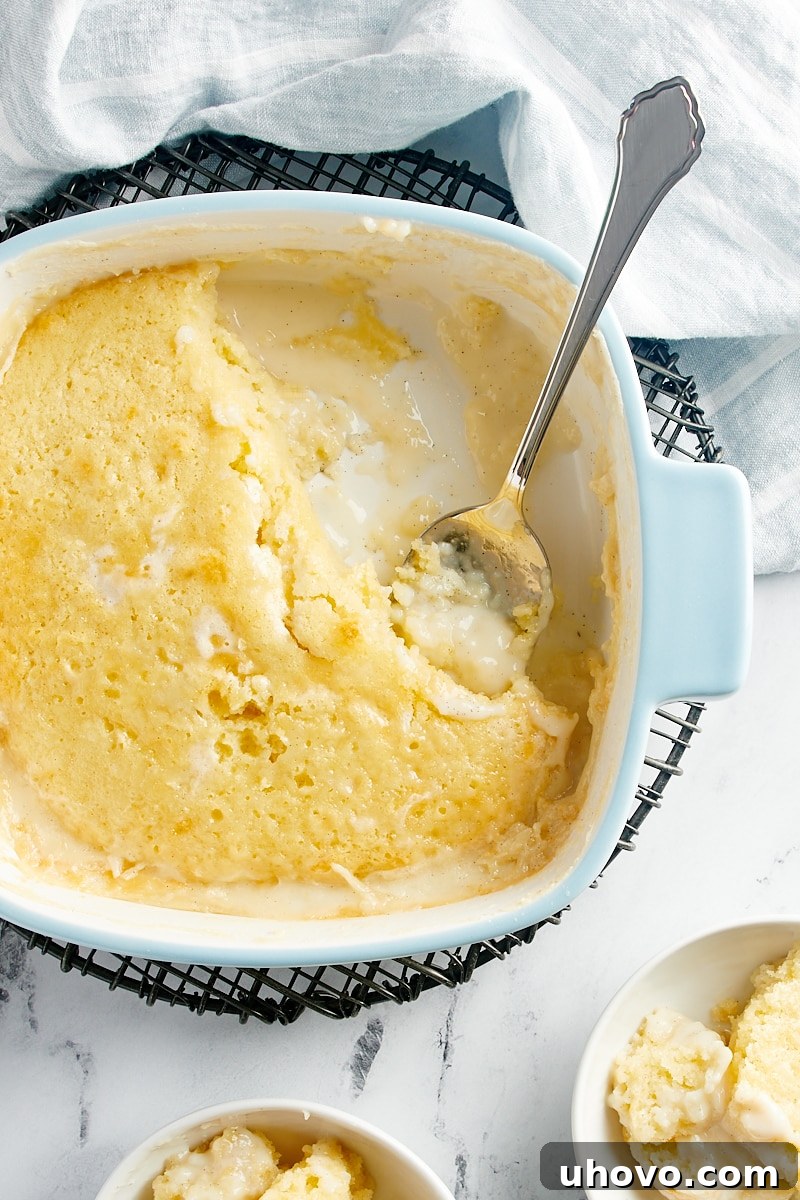
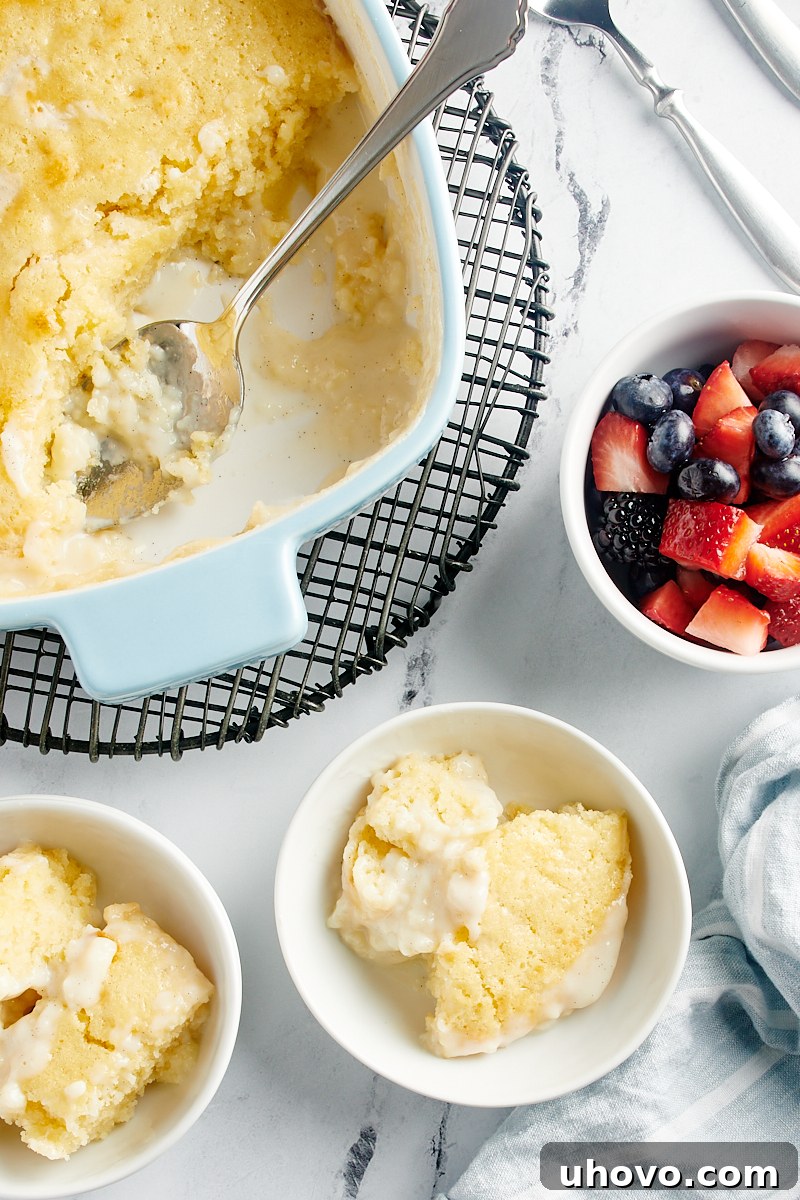
Imagine the delightful experience of slicing into a warm, freshly baked cake, where a soft, golden sponge gives way to a luscious, gooey vanilla sauce underneath. This is the magic of an old-fashioned pudding cake – a true comfort food masterpiece. The aroma alone is enough to transport you to cozy memories, and the taste is even more enchanting. The contrasting textures of the light cake and the rich, warm sauce create an unforgettable sensory experience. While it’s tempting to dig in immediately, enjoying your first slice warm amplifies its inherent coziness, allowing you to fully appreciate the harmonious blend of flavor, texture, and pure baking bliss.
Unraveling the Mystery: What Exactly is a Pudding Cake?
The term “pudding cake” can sometimes be a little ambiguous, leading to delicious but distinct interpretations. Some might imagine a cake batter enriched with instant pudding mix for extra moisture and flavor, while others might think of a “poke cake” generously filled and topped with creamy pudding. However, the delightful confection we’re celebrating here belongs to a particularly magical category: the self-saucing cake. This ingenious dessert masterfully creates two distinct layers—a light, tender cake and a rich, warm, pudding-like sauce—all within a single baking pan, transforming as it bakes in the oven.
Often affectionately referred to as “self-saucing cakes” or sometimes “magical cakes,” these old-fashioned treats are a marvel of baking simplicity. The wonder lies in their unique preparation: a thin, liquid sauce mixture is poured into the bottom of the baking pan, and then the cake batter is gently spooned over the top. As the cake bakes, the warmer, less dense cake batter rises, while the heavier, saucier mixture sinks and thickens beneath, creating that incredible, hidden layer of warm pudding. This process, while seemingly complex, is incredibly straightforward, relying on basic principles of density and heat distribution to produce an effortlessly impressive dessert. The oven truly does all the enchanting work!
If the allure of a self-saucing dessert captures your imagination, you’re in for a treat. Beyond this vanilla delight, there’s a whole world of these wondrous cakes to explore. Consider trying a rich Brownie Chocolate Pudding Cake for the ultimate chocolate fix, a fragrant Cinnamon Pudding Cake for a spiced twist, or perhaps the seasonal elegance of Ginger Pear Pudding Cakes. Each offers its own unique flavor profile, but all share that irresistible, hidden layer of warm, comforting sauce that makes these cakes so special.
The Irresistible Allure of Vanilla in Baking
Vanilla. It’s a flavor that transcends trends, a timeless classic that holds a special place in the hearts of bakers and dessert lovers alike. Far from being “plain,” high-quality vanilla extract or vanilla bean paste boasts a complex flavor profile with hundreds of aromatic compounds, ranging from sweet and creamy to slightly woody and floral notes. This intricate depth is precisely why vanilla is so much more than just a background note; it can be a star in its own right, as perfectly demonstrated in this pudding cake.
Using good quality vanilla is paramount in a recipe where it is the hero. Pure vanilla extract, derived from real vanilla beans, offers a superior, more nuanced flavor compared to artificial vanilla. For an even richer, more visually appealing experience, vanilla bean paste, with its suspended flecks of actual vanilla bean, not only intensifies the flavor but also adds a gourmet touch to your dessert. Investing in quality vanilla ensures that every bite of your pudding cake is infused with that authentic, comforting, and utterly delicious essence that only real vanilla can provide.
Essential Ingredients for Your Vanilla Pudding Cake
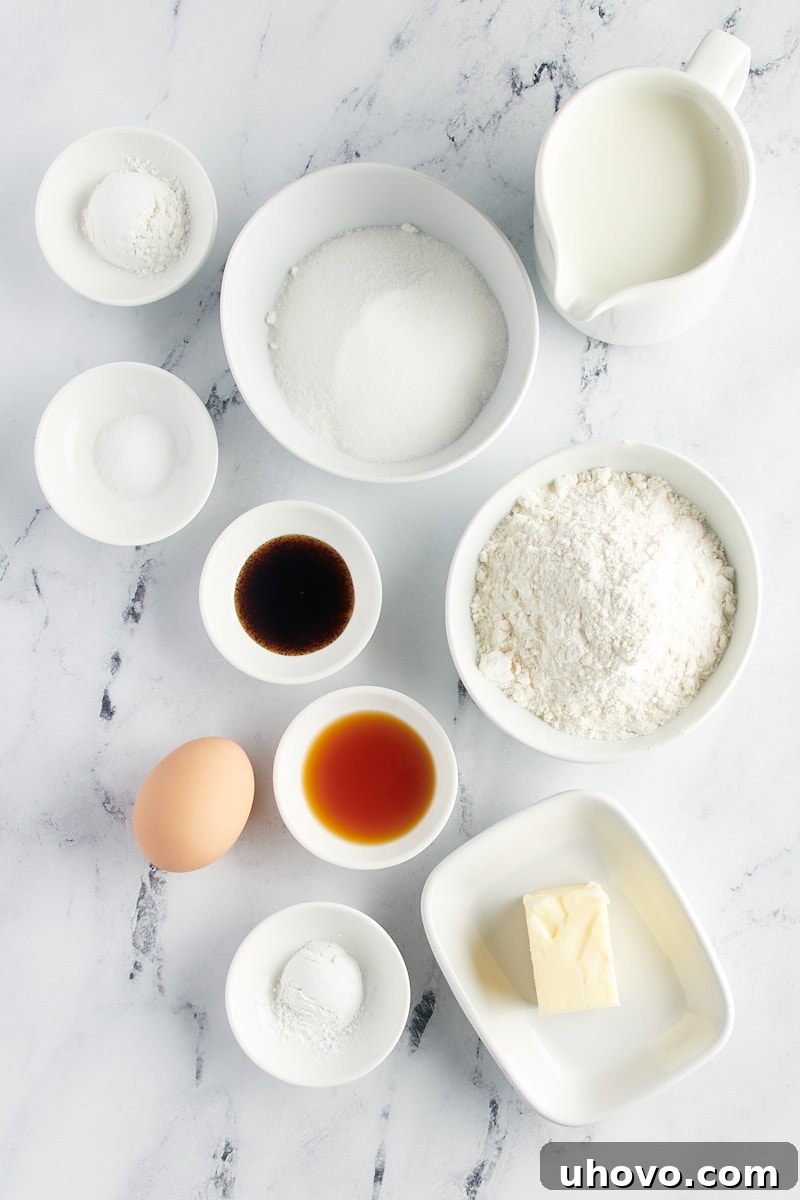
Crafting this delightful vanilla pudding cake requires a few simple, high-quality ingredients. While exact quantities and detailed instructions are provided in the comprehensive recipe card below, here’s a closer look at each component and why it’s crucial for achieving that perfect self-saucing magic:
- Cornstarch: This unassuming ingredient is the secret weapon for our luscious, thick sauce. It acts as a superb thickening agent, ensuring the pudding layer achieves that wonderfully smooth and velvety consistency as it bakes beneath the cake. Without it, your sauce might be too thin.
- Milk: You’ll notice milk is a star player in both the pudding and the cake mixtures. For the richest flavor and most decadent texture, whole milk is highly recommended. Its higher fat content contributes to a creamier sauce and a tenderer cake. If whole milk isn’t available, 2% milk can be a suitable alternative, though the results may be slightly less indulgent. Be mindful to measure the milk separately for each component as instructed.
- Granulated Sugar: Providing the perfect balance of sweetness, sugar is essential for both the vibrant vanilla sauce and the tender cake batter. It not only sweetens but also contributes to the cake’s golden-brown crust and moist crumb.
- Vanilla: As the namesake and star of this dessert, the quality of your vanilla truly makes a difference. I personally love combining vanilla bean paste for its intense flavor and beautiful visual specks, with a touch of pure vanilla extract for added depth. If you have only one, pure vanilla extract will still yield fantastic results. Avoid imitation vanilla for this recipe to let the true vanilla flavor shine. Explore more about different Types of Vanilla to elevate your baking.
- Salt: A small pinch of salt in both the sauce and the cake batter might seem minor, but it’s a critical flavor enhancer. It doesn’t make the cake salty, but rather sharpens and balances the sweetness, making the vanilla flavors pop and preventing the dessert from tasting flat or overly sweet.
- All-Purpose Flour: The structural backbone of our cake, all-purpose flour provides the necessary framework for a soft and airy crumb. For the most accurate and consistent results, always measure your flour by weight using a kitchen scale rather than by volume. This prevents compaction and ensures you don’t add too much flour, which can lead to a dry cake. Learn more about How to Measure Flour accurately.
- Baking Powder: This chemical leavening agent is responsible for the cake’s delightful rise and light texture. Ensure your baking powder is fresh for optimal results; expired leavening agents can lead to a dense, flat cake.
- Large Egg: The egg contributes to the cake’s structure, richness, and moisture. For seamless incorporation into the batter and a smoother emulsion, allow your egg to come to room temperature before mixing. A cold egg can cause melted butter to seize up.
- Unsalted Butter: Melted butter adds richness and moisture to the cake. It’s crucial to use unsalted butter to control the overall salt content of your dessert. After melting, allow the butter to cool slightly to a lukewarm temperature before adding it to the egg mixture. Introducing hot melted butter to a cold egg will essentially scramble the egg, leading to an undesirable texture with small bits of cooked egg in your batter.
Step-by-Step Guide: How to Bake Your Vanilla Pudding Cake
Creating this irresistible vanilla pudding cake is a surprisingly simple and gratifying process. Forget about complicated machinery; this recipe comes together beautifully with just a whisk, a mixing spoon, and a little love. Follow these straightforward steps to achieve a perfectly moist cake with a delightful hidden sauce.
Crafting the Luscious Pudding Base
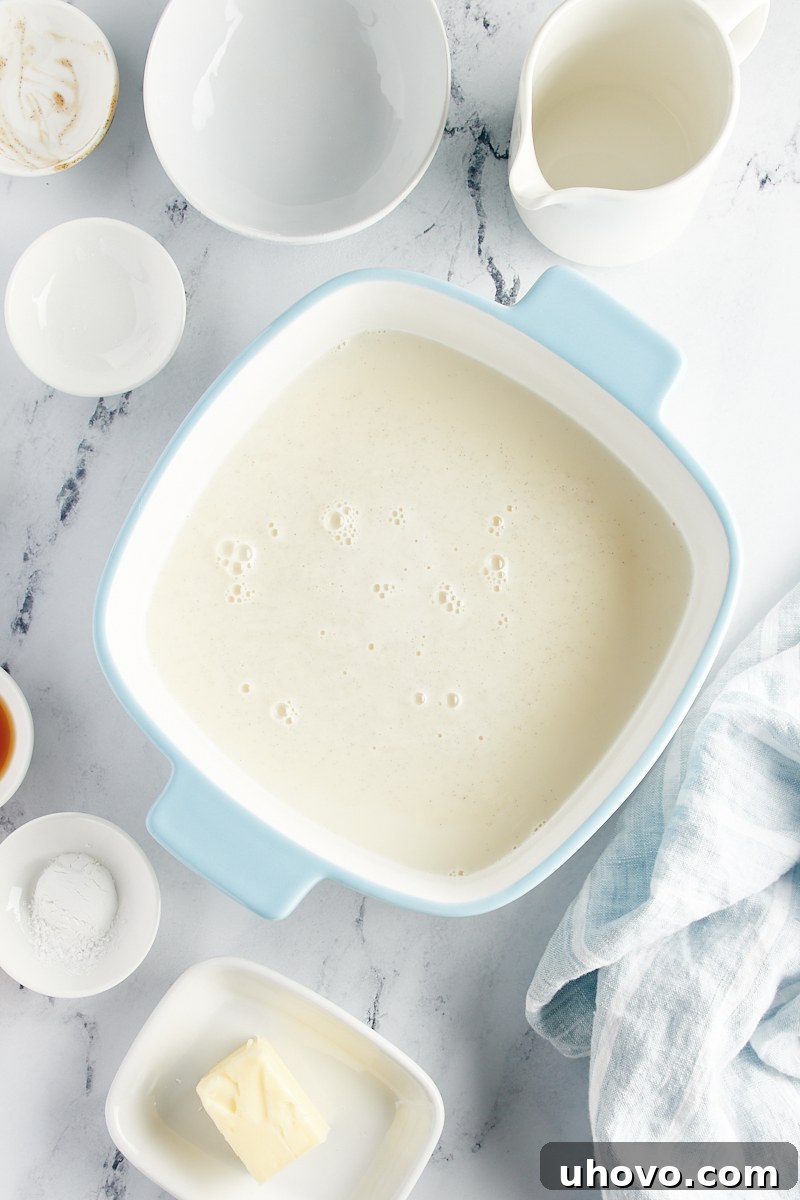
- Prepare Your Baking Environment: Start by preheating your oven to a consistent 350°F (175°C). Next, lightly butter an 8-inch square or 9-inch round baking pan. This crucial step ensures your cake doesn’t stick and releases cleanly, preserving its beautiful presentation.
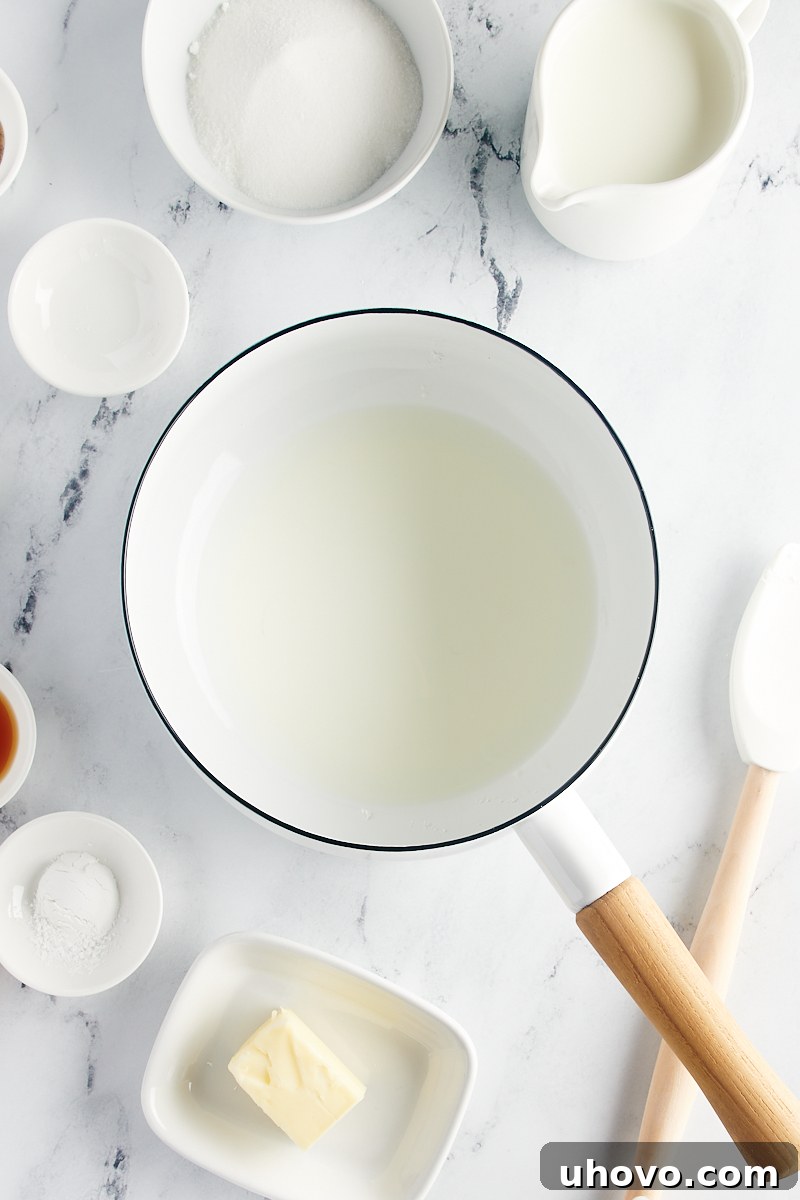
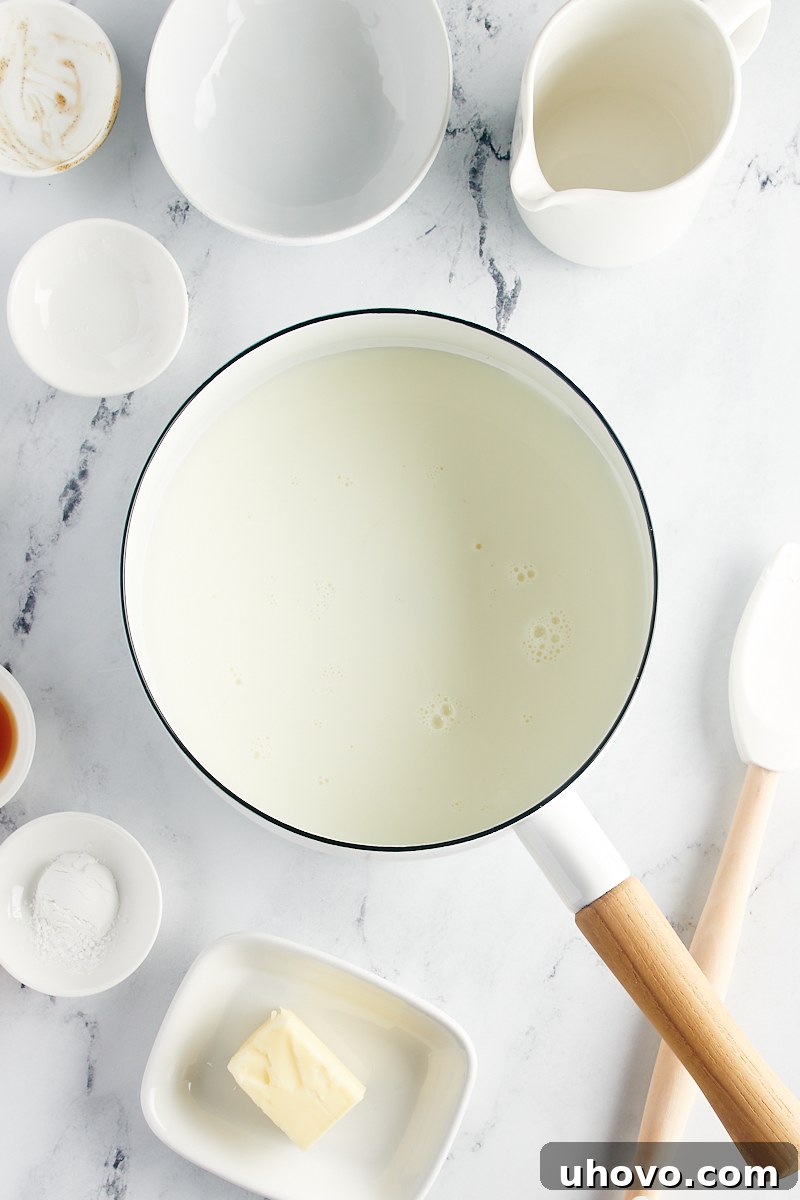
- Initiate the Pudding Base: Begin by measuring out the total amount of milk needed for the sauce (1 ½ cups). In a medium saucepan, whisk together 1 tablespoon of cornstarch with just 2 tablespoons of this measured milk until a smooth, lump-free slurry forms. This initial whisking prevents the cornstarch from clumping when heated. Now, add the remaining milk, ½ cup of granulated sugar, your chosen vanilla bean paste (or vanilla extract), and a pinch of salt to the saucepan.
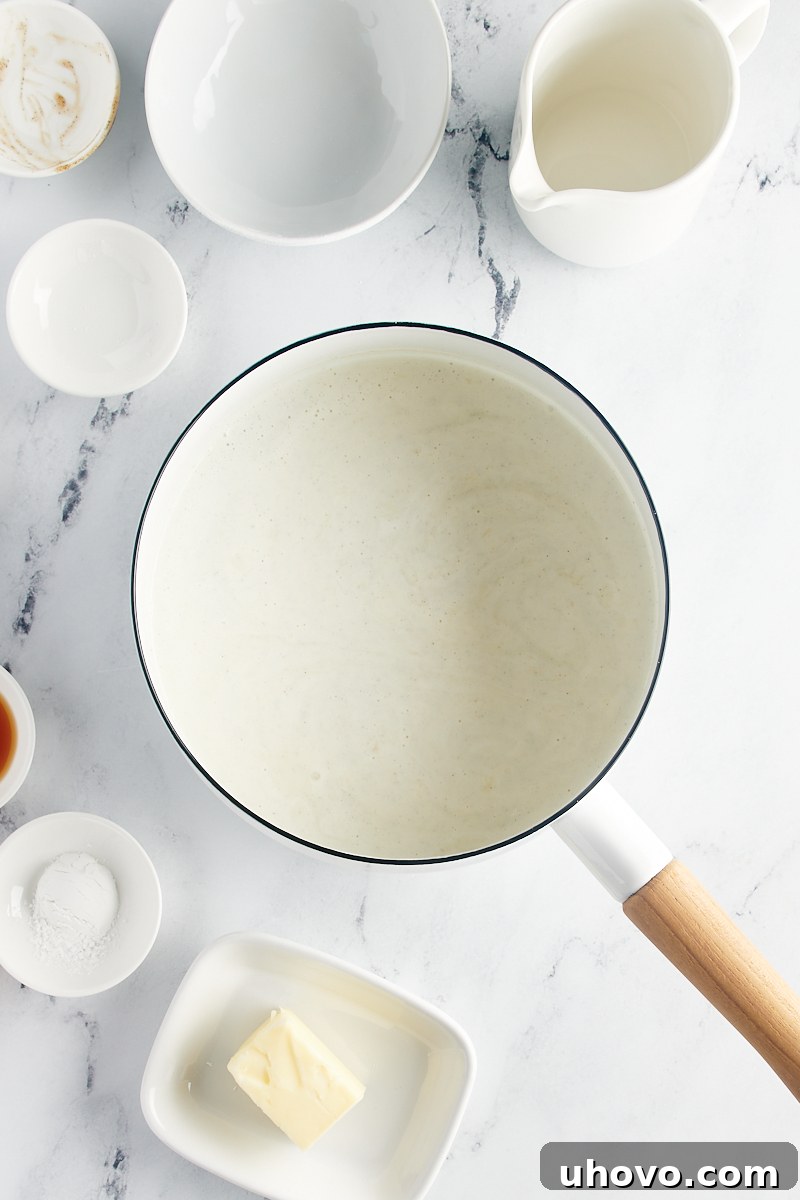
- Cook the Pudding to Perfection: Place the saucepan over medium-low heat. Stir the mixture occasionally to prevent sticking and ensure even heating. Continue heating until the mixture gently begins to simmer and thickens slightly to a pourable, custard-like consistency. It won’t be as thick as fully cooked pudding, but it should visibly coat the back of a spoon. Remove it from the heat as soon as it simmers.
- Lay the Pudding Foundation: Carefully pour the warm pudding mixture evenly into your prepared baking pan. This forms the essential bottom layer of your self-saucing cake. Set it aside while you quickly prepare the cake batter.
Preparing the Fluffy Cake Batter
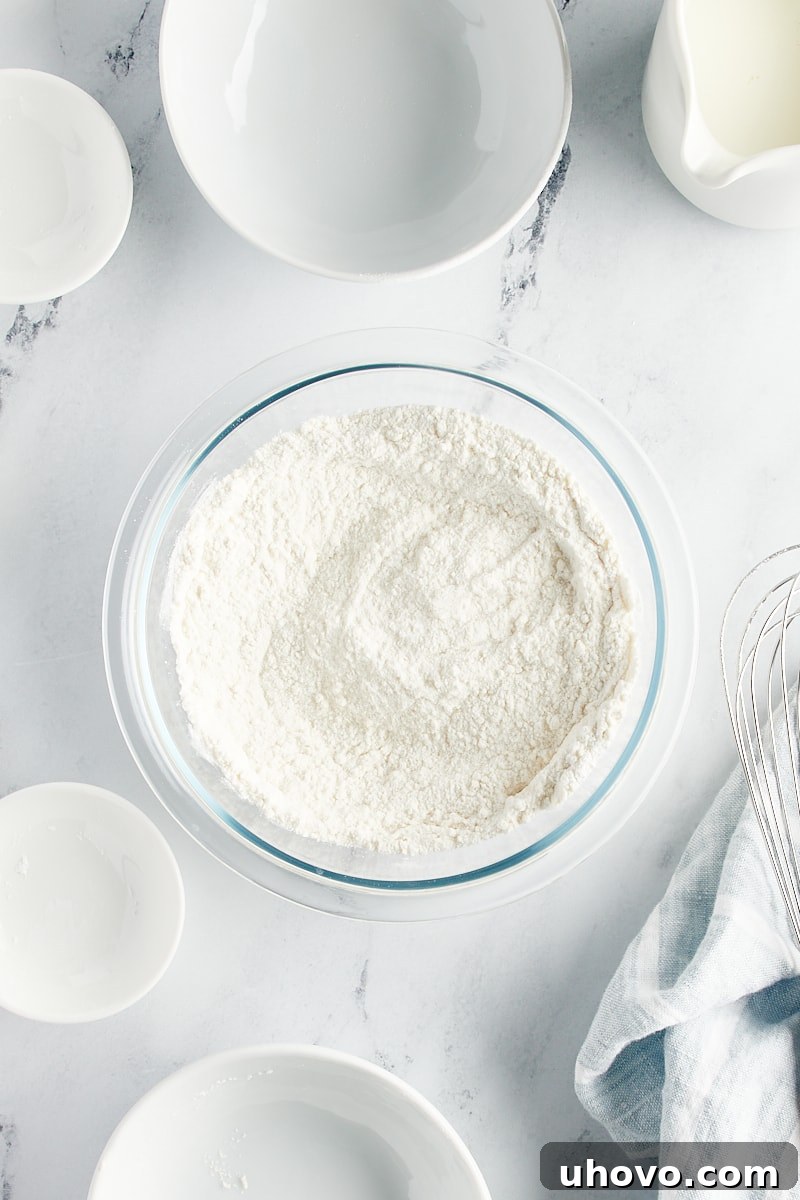
- Combine Dry Ingredients: In a medium mixing bowl, whisk together the all-purpose flour, the remaining ½ cup of granulated sugar, baking powder, and ½ teaspoon of salt. Whisk well to ensure the leavening agent and salt are evenly distributed throughout the flour.
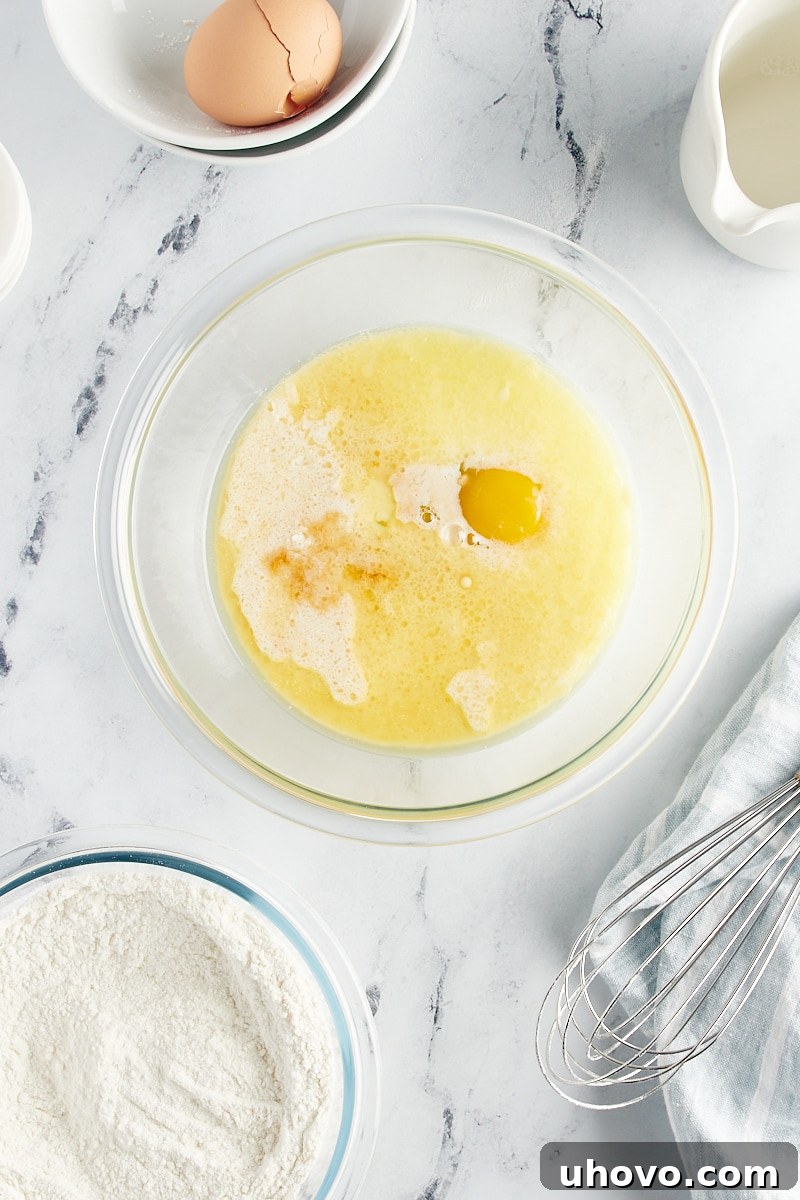
- Mix Wet Ingredients: In a separate bowl, whisk together the ¾ cup of milk, the slightly cooled melted unsalted butter, the room-temperature large egg, and 1 tablespoon of vanilla extract. Whisk until these wet ingredients are thoroughly combined and smooth.
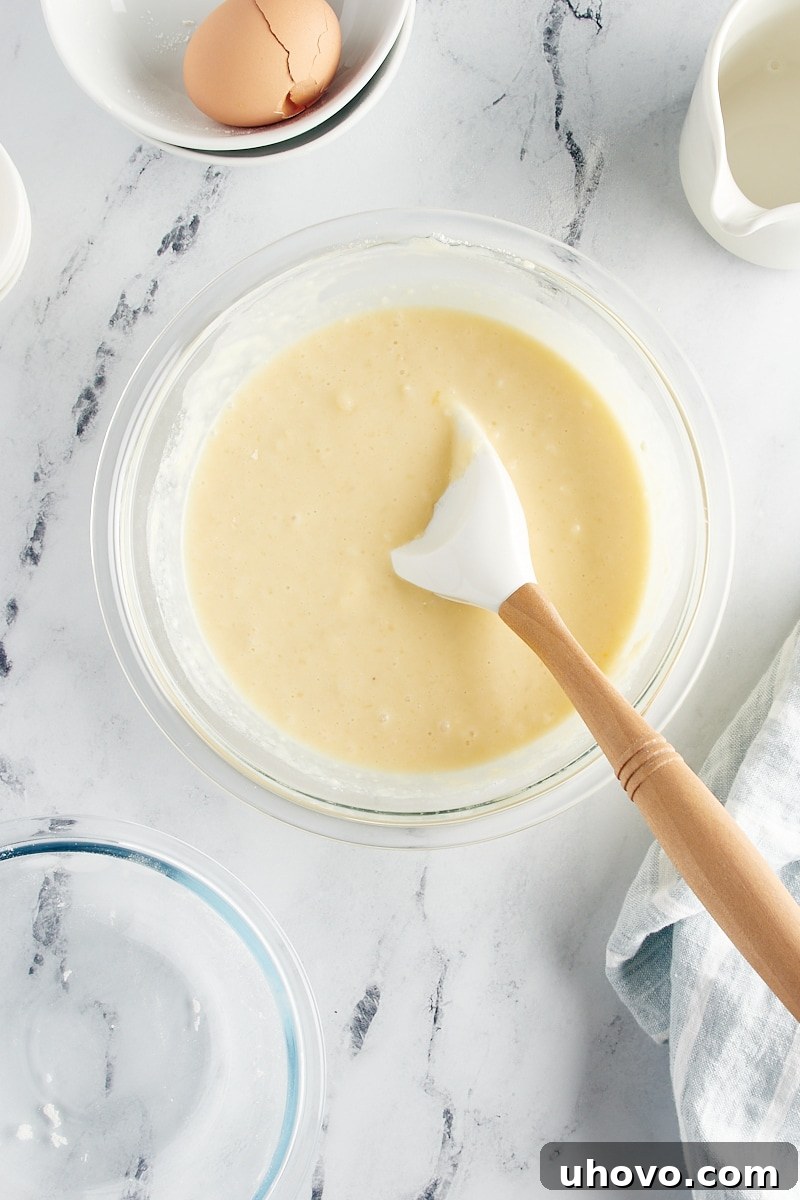
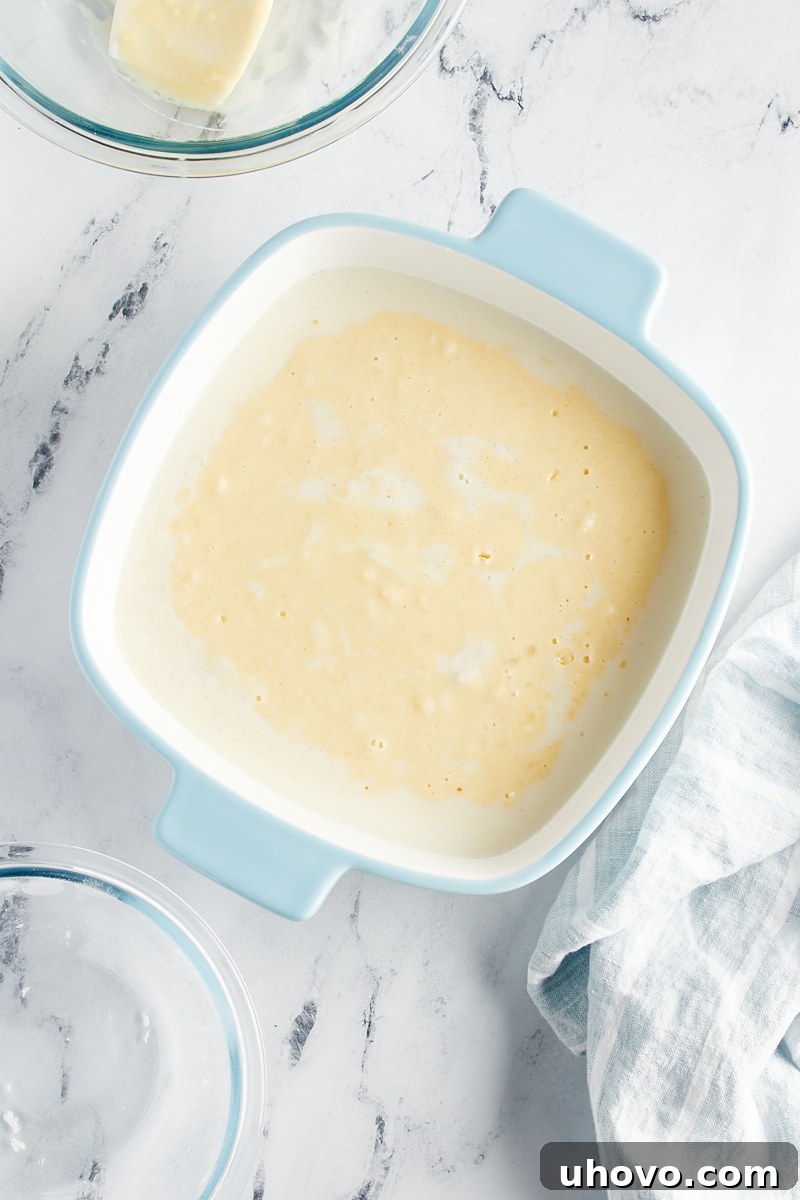
- Form the Cake Batter: Pour the wet ingredient mixture into the bowl with the dry ingredients. Using a mixing spoon or a spatula, stir just until the ingredients are combined and no dry streaks of flour remain. Be careful not to overmix, as this can lead to a tough cake.
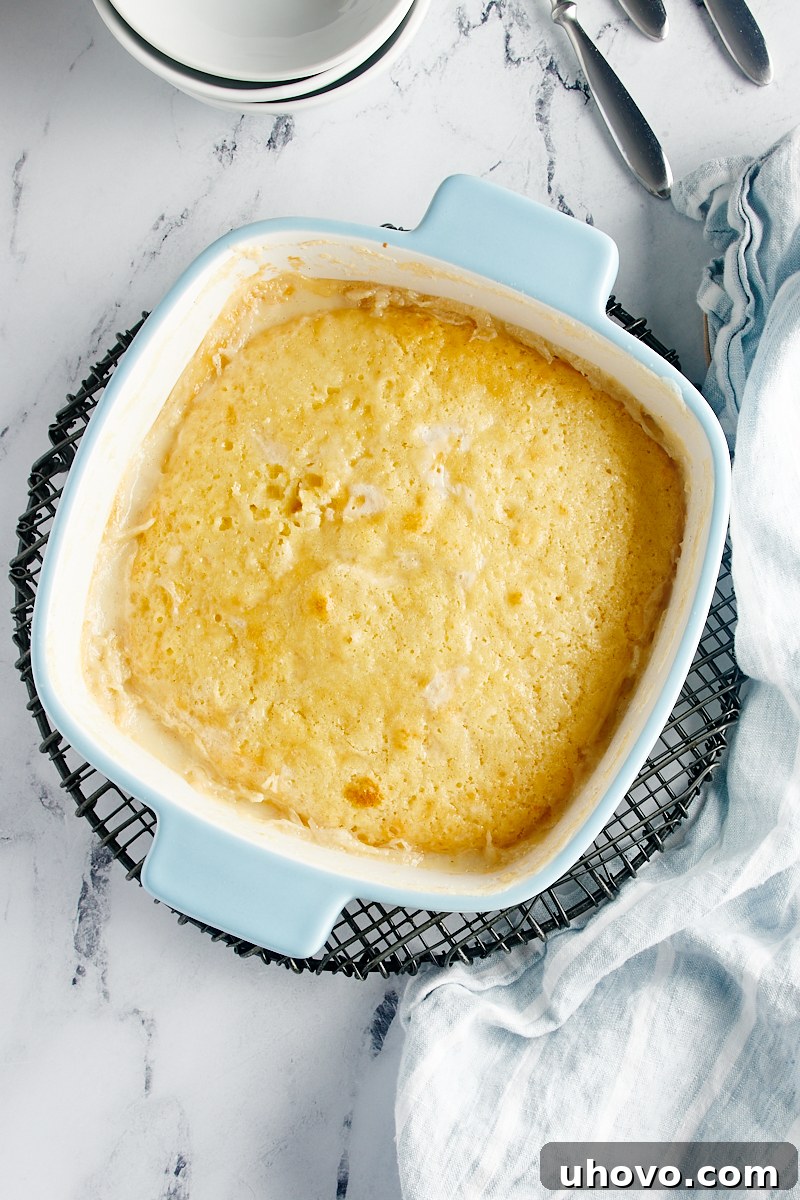
- Assemble and Bake: Gently spoon the cake batter evenly over the pudding mixture already in your baking pan. Try to distribute it carefully to avoid disturbing the pudding layer too much. Place the pan in your preheated oven and bake for 35 to 40 minutes. The cake is done when its top is golden brown and a toothpick inserted into the center of the cake layer (not the sauce) comes out clean. You’ll also observe the pudding bubbling invitingly around the cake’s edges.
- Cool Before Serving: Once baked, remove the pan from the oven and place it on a wire rack. Allow the cake to cool for approximately 15 minutes before serving. This brief cooling period allows the cake to set slightly and the sauce to thicken to the perfect consistency, ensuring every spoonful is a delight.
Expert Tips for a Flawless Vanilla Pudding Cake
Achieving a perfectly moist cake with a delightful, hidden sauce is easier than you think with these expert tips. Keep these pointers in mind to ensure your Vanilla Pudding Cake turns out beautifully every single time, delighting everyone with its cozy goodness.
- Prioritize Quality Vanilla: Since vanilla is the undeniable star of this cake, investing in a high-quality vanilla extract or vanilla bean paste will profoundly impact the final flavor. Premium vanilla delivers a complex, aromatic depth that artificial versions simply cannot replicate. For store-bought excellence, brands like Nielsen-Massey are highly recommended. Alternatively, you can embark on your own culinary adventure by learning How to Make Vanilla Extract at home.
- Embrace “Mise en Place”: This French culinary term means “everything in its place,” and it’s particularly vital for this recipe. Before you even begin mixing, measure out all your ingredients and have them ready. Since some ingredients, like milk and sugar, are used in both the sauce and the cake components, carefully separating and labeling them will prevent confusion and ensure accurate proportions, making the baking process smooth and stress-free.
- Avoid Overmixing the Batter: Once you combine the wet and dry ingredients for the cake, mix only until just combined. Overmixing develops the gluten in the flour too much, leading to a tough, rubbery cake texture rather than the desired soft and tender crumb. A few lumps of flour are acceptable; they will typically disappear during baking.
- Baking Pan Selection: While an 8-inch square or 9-inch round pan works perfectly, ensure your pan has sufficient depth (at least 2.5 to 3 quarts capacity). This allows ample space for the cake to rise and the sauce to bubble without overflowing in the oven. If you’re concerned about potential spills, placing the baking pan on a rimmed baking sheet can offer peace of mind.
- Consider Individual Servings: For an elegant presentation or portion control, this recipe adapts wonderfully to individual ramekins. Divide both the pudding mixture and the cake batter evenly among eight buttered 8-ounce ramekins. Arrange them on a lined rimmed baking sheet for easy transfer into and out of the oven. When baking in ramekins, reduce the baking time to approximately 25 to 30 minutes, or until a toothpick comes out clean.
- Don’t Overbake: Overbaking is the enemy of a moist cake. Start checking for doneness at the lower end of the recommended baking time. The cake is ready when the top is golden, and a toothpick inserted into the cake portion comes out clean. The sauce underneath will still be delightfully gooey and bubbling.
Elevate Your Dessert: Creative Serving Suggestions
The beauty of this Vanilla Pudding Cake lies not only in its inherent deliciousness but also in its versatility. Its pure vanilla base provides a perfect canvas for a myriad of delightful complements. While utterly enchanting on its own, here are some of my favorite ways to enhance this cozy dessert, transforming it into an even more memorable treat:
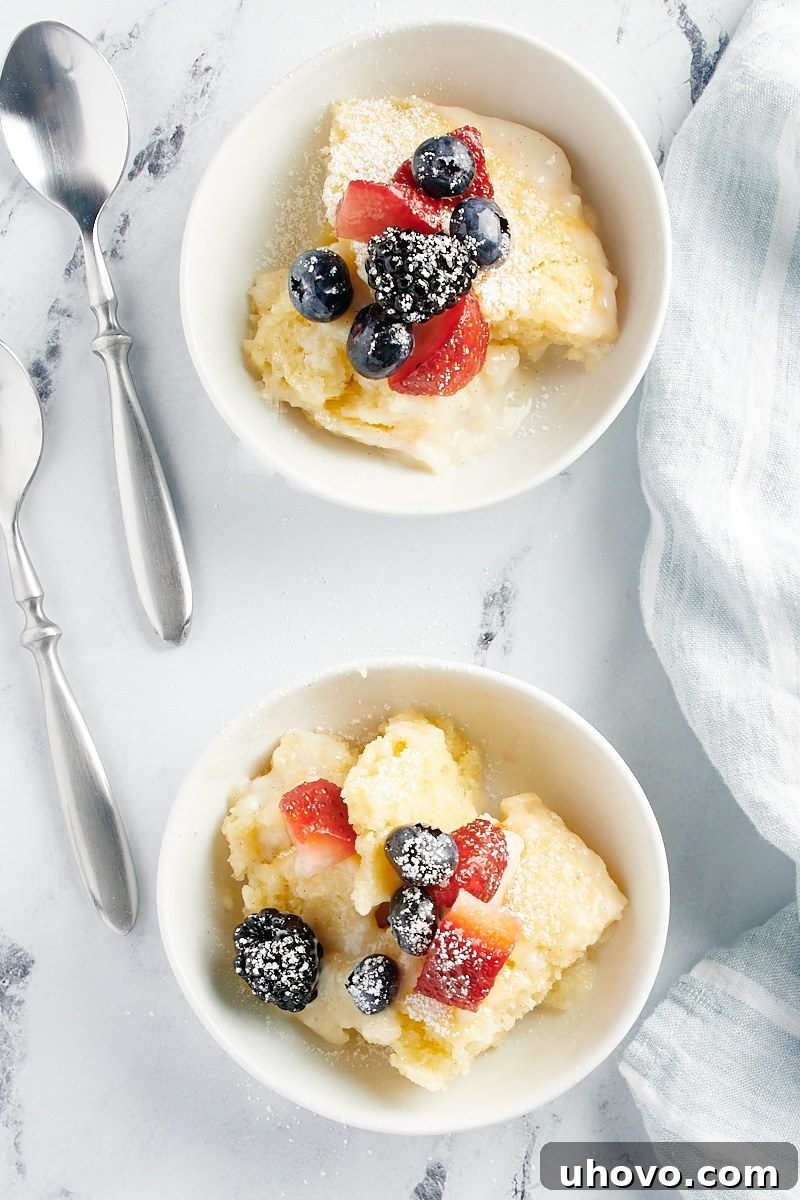
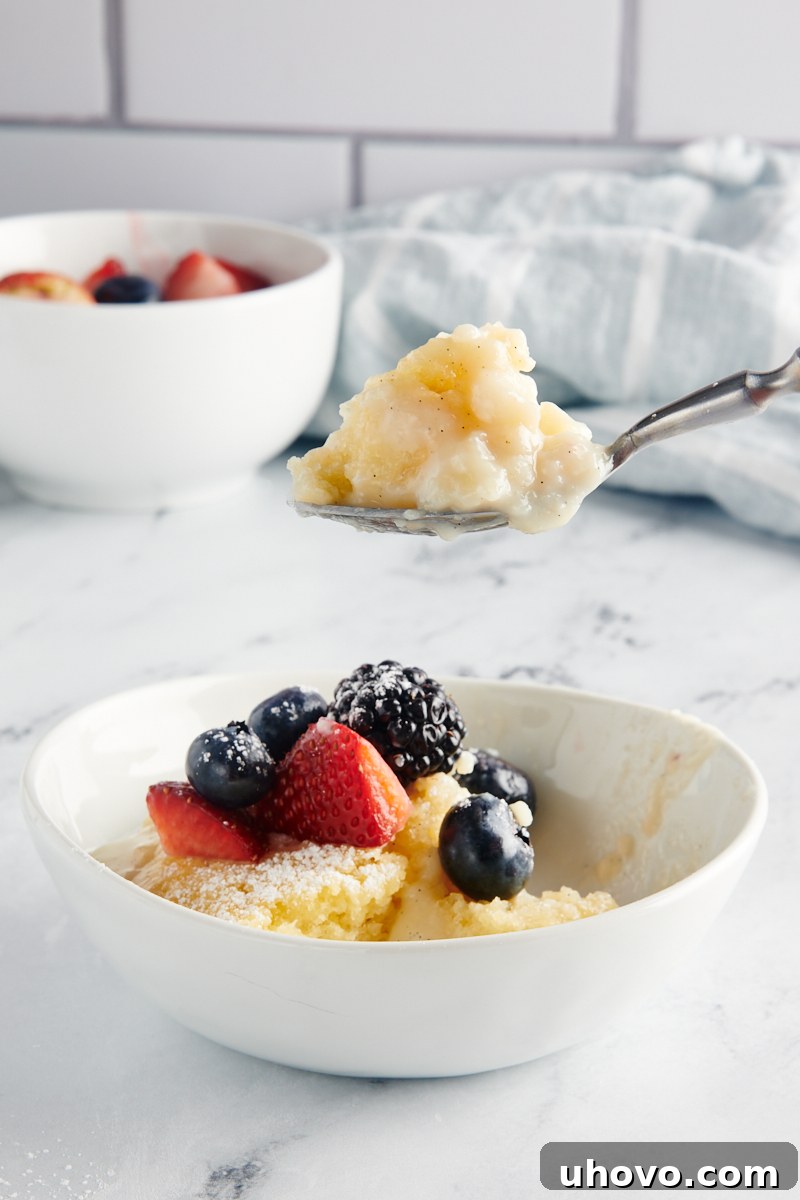
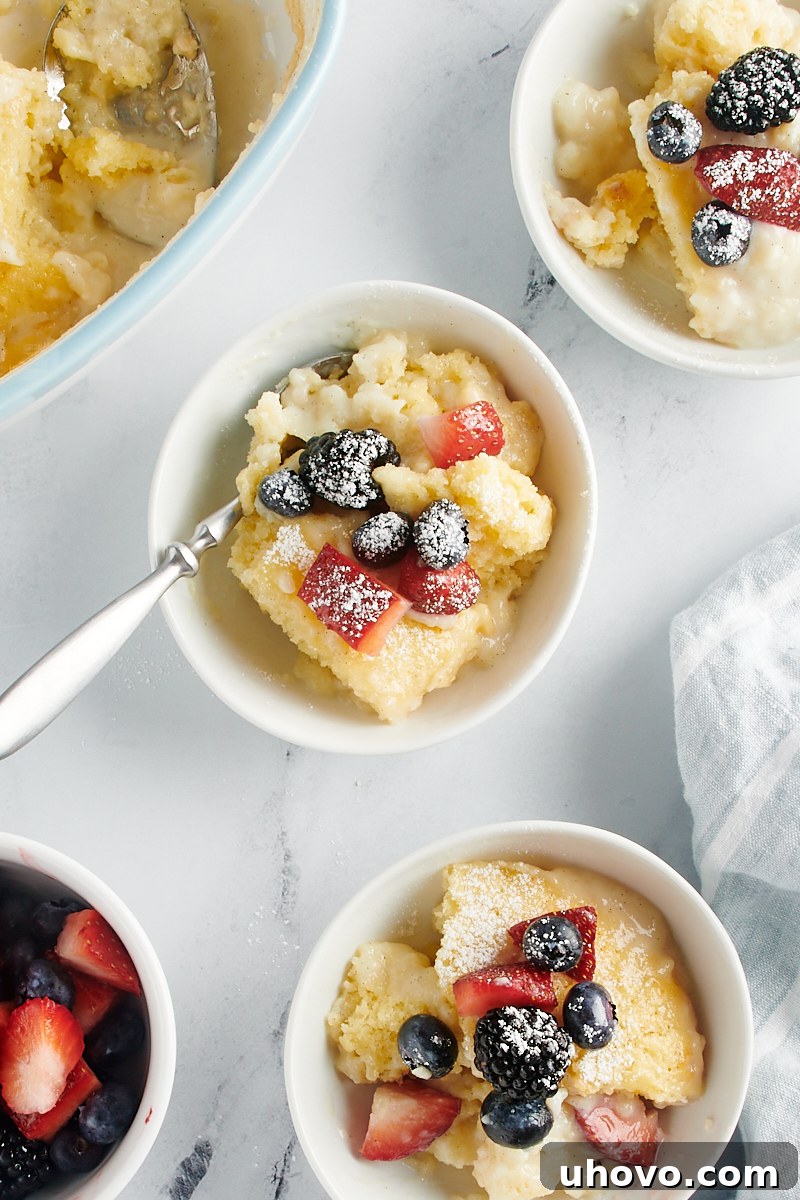
- Fresh Berries: A vibrant cascade of fresh berries is arguably one of the most classic and visually stunning toppings. The slight tartness of mixed berries (raspberries, blueberries, strawberries, or blackberries) provides a beautiful contrast to the cake’s sweetness, and their juicy burst adds a refreshing element. For a festive touch during the holidays, consider serving your cake alongside glistening sugared cranberries.
- A Simple Dusting of Confectioners’ Sugar: Sometimes, less is truly more. A delicate dusting of confectioners’ sugar (also known as powdered sugar) offers an elegant finish and a subtle extra touch of sweetness without overshadowing the cake’s primary flavor. It’s quick, easy, and always impressive.
- Luxurious Whipped Cream: A generous dollop of freshly made whipped cream adds a cloud-like texture and rich creaminess that perfectly complements the warm cake and sauce. You can stick to a classic sweetened whipped cream, or venture into flavored variants. Imagine whipped cream infused with a hint of your favorite jam, a splash of liqueur (like Grand Marnier or rum), a swirl of dulce de leche, or a dusting of cocoa powder for a subtle chocolate note. Master the art of How to Make Whipped Cream for the best results.
- Homemade Fruit Compote: For an additional layer of fruit flavor and a delightful texture, serving your vanilla pudding cake with a warm fruit compote is an excellent choice. The tender, cooked fruit pairs wonderfully with vanilla. Try my comforting spiced apple compote for a autumnal feel, or the bright and zesty blueberry compote, famously featured with one of my favorite almond cakes, for a burst of summer flavor.
- A Scoop of Vanilla Bean Ice Cream: While the cake itself has a warm pudding, a scoop of premium vanilla bean ice cream creates a delightful hot-cold contrast, adding another layer of creamy indulgence. The melting ice cream mixes with the warm sauce to create an even more decadent experience.
- Caramel or Chocolate Drizzle: For those with a sweet tooth, a light drizzle of homemade salted caramel sauce or a rich chocolate ganache can transform this dessert into an opulent treat. The added sweetness and depth of these sauces marry beautifully with the vanilla.
Storing Your Vanilla Pudding Cake
While this vanilla pudding cake is undeniably at its peak when served warm and fresh from the oven, any leftovers can be stored for later enjoyment. To maintain its delightful qualities, transfer any remaining cake into an airtight container and refrigerate it for up to 4 days. It’s important to note that as the cake cools and is stored, the luscious sauce layer will naturally thicken and may begin to absorb into the cake itself. This will alter the texture slightly, making it less distinctly separate, but still wonderfully delicious.
When you’re ready to enjoy your stored leftovers, gently reheat individual portions. A microwave works quickly to warm through the cake and reactivate the sauce. Alternatively, a low-temperature oven can also be used for a more gradual, even reheating, ensuring that comforting warmth is restored throughout. Avoid reheating at high temperatures, which can dry out the cake.
Can You Freeze Vanilla Pudding Cake?
Yes, this vanilla pudding cake can be frozen, making it an excellent option for meal prep or enjoying a homemade treat whenever a craving strikes. To freeze, allow the cake to cool completely to room temperature first. Then, transfer the cake, either whole or in individual portions, into a freezer-safe, airtight container or wrap it tightly in several layers of plastic wrap followed by aluminum foil. Properly stored, your pudding cake can maintain its quality in the freezer for up to 3 months.
When you’re ready to indulge, simply transfer the frozen cake to the refrigerator and allow it to thaw overnight. Once thawed, you can reheat it using the methods mentioned above (microwave or low-temperature oven) to restore its warmth and bring back some of that delightful saucy goodness. While the texture might be slightly softer after freezing and thawing, the comforting vanilla flavor will remain beautifully intact.
Troubleshooting Common Vanilla Pudding Cake Issues
Even the simplest recipes can present challenges occasionally. Here are some common issues you might encounter when baking your Vanilla Pudding Cake and how to address them:
- My sauce didn’t form properly, or it’s too thin: This is often due to insufficient heating or an imbalance in the cornstarch-to-liquid ratio. Ensure you heat the pudding mixture to a gentle simmer, allowing the cornstarch to fully activate and thicken the liquid. Stirring occasionally helps prevent sticking and ensures even thickening. Double-check your cornstarch measurement; even a slight deviation can affect the sauce’s consistency.
- My cake is dry or tough: Overmixing the cake batter is the most common culprit for a dry or tough cake. Mix only until the dry ingredients are just incorporated. Additionally, ensure you’re measuring flour by weight for accuracy, as too much flour can also lead to dryness. Overbaking can also dry out the cake, so keep an eye on the baking time and rely on the toothpick test.
- The cake and sauce layers mixed together: While some natural integration can occur, a completely mixed layer might happen if the cake batter was too thin or if it was poured too forcefully onto the pudding layer. Make sure your cake batter has a good, spoonable consistency. When adding the cake batter, spoon it gently and evenly over the pudding rather than pouring it all in one spot.
- The sauce bubbled over in the oven: This usually indicates that your baking pan was too small for the volume of the cake and sauce, or your oven temperature was too high, causing aggressive bubbling. Use a pan with adequate depth (2.5-3 quart capacity) and consider placing the pan on a rimmed baking sheet for extra protection against spills. Verify your oven temperature with an oven thermometer if you suspect it’s running hot.
- The vanilla flavor isn’t strong enough: The quality of your vanilla extract or paste is crucial. If the flavor is lacking, you might be using an imitation vanilla or one that has lost its potency. Ensure you’re using pure vanilla extract or, for a more intense flavor, vanilla bean paste. You can also slightly increase the amount of vanilla next time, to taste.
Customizing Your Vanilla Pudding Cake
While this classic Vanilla Pudding Cake is perfect as is, it also serves as a fantastic base for creative culinary experiments. Don’t hesitate to personalize it with your favorite flavors and additions:
- Citrus Zest: For a bright and fragrant twist, add 1-2 teaspoons of finely grated lemon, orange, or lime zest to the cake batter. The citrus notes will beautifully complement the vanilla, adding a refreshing dimension.
- Spiced Variations: Introduce a hint of warmth by whisking in a small amount of ground cinnamon, nutmeg, or cardamom (1/2 teaspoon) into the dry cake ingredients. This is especially delightful during cooler months.
- Almond Extract: For those who love the subtle nuttiness of almond, replace half of the vanilla extract with almond extract (e.g., 1/2 tablespoon vanilla, 1/2 tablespoon almond) in the cake batter.
- Chocolate Chips or Toffee Bits: Gently fold ½ cup of mini chocolate chips, white chocolate chips, or toffee bits into the cake batter just before spooning it over the pudding layer. They’ll melt slightly during baking, creating pockets of gooey goodness.
- Fruit Additions: Beyond fresh berries as a topping, you can gently fold a small amount (about ½ cup) of finely diced fresh fruit, such as peaches or blueberries, into the cake batter. Be careful not to add too much moisture.
- Coffee Infusion: For a sophisticated flavor, replace a tablespoon or two of the milk in the pudding sauce with strong brewed coffee or espresso. This creates a subtle coffee-vanilla blend that is incredibly appealing.
Vanilla Pudding Cake
This old-fashioned Vanilla Pudding Cake bakes into a soft cake with a pudding-like sauce underneath. It’s baking magic!
Ingredients
For the sauce:
- 1 tablespoon cornstarch
- 1 ½ cups (360 ml) milk, divided
- ½ cup (100 g) granulated sugar
- 1 teaspoon vanilla bean paste or vanilla extract
- ⅛ teaspoon salt
For the cake:
- 1 cup (120 g) all-purpose flour
- ½ cup (100 g) granulated sugar
- 1 ½ teaspoons baking powder
- ½ teaspoon salt
- ¾ cup (180 ml) milk
- 3 tablespoons (42 g) unsalted butter, melted and slightly cooled
- 1 large egg
- 1 tablespoon vanilla extract
Recommended Products
- KitchenAid 2.8-Quart Baking Dish
- Le Creuset Enameled Cast-Iron Saucepan, 2 1/4 Quart
- 9-Inch Wire Whisk
- OXO Good Grips Dusting Wand for Sugar, Flour and Spices
Instructions
To make the sauce:
-
Preheat the oven to 350°F (175°C). Butter a 2.5- to 3-quart baking pan.*
-
Place the cornstarch and 2 tablespoons of the milk in a saucepan, and stir until throughly combined. Add the remaining milk, sugar, vanilla bean paste, and salt. Heat over medium-low heat, stirring occasionally, until the mixture comes to a simmer.
-
Pour the sauce mixture into the prepared pan, and set aside while you make the cake.
To make the cake:
-
Whisk together the flour, sugar, baking powder, and salt. In a separate bowl, whisk together the milk, melted butter, egg, and vanilla.
-
Add the flour mixture to the milk mixture, and stir just until combined. Spoon or slowly pour the batter over the sauce mixture in the pan.
-
Bake for 35 to 40 minutes, or until a pick inserted into the center comes out clean. The top of the cake should be golden brown, and the sauce will be bubbling around the edges.
-
Cool the pan on a wire rack for about 15 minutes before serving. Serve warm.
Notes
- *Make sure your pan is large enough to prevent bubbling over during baking. If you’re worried about spills, place the pan on a rimmed baking sheet before placing in the oven.
- Recipe slightly adapted from King Arthur.
- Store leftovers in an airtight container in the refrigerator up to 4 days. Reheat before serving. The sauce will thicken and begin absorbing into the cake the longer it is stored.
- To make individual servings, divide the two mixtures among eight buttered 8-ounce ramekins and place on a rimmed baking sheet. Reduce the baking time to 25 to 30 minutes.