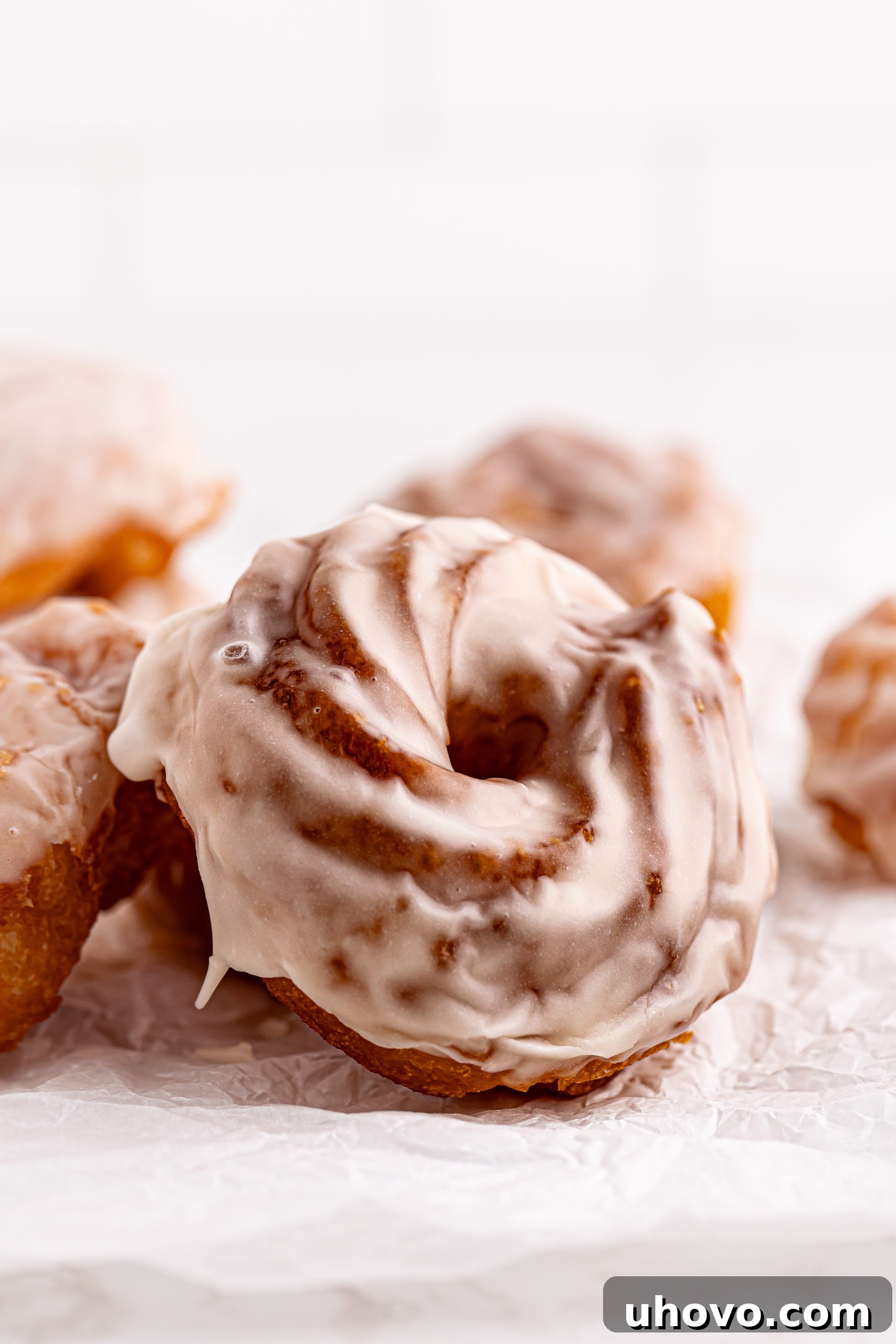
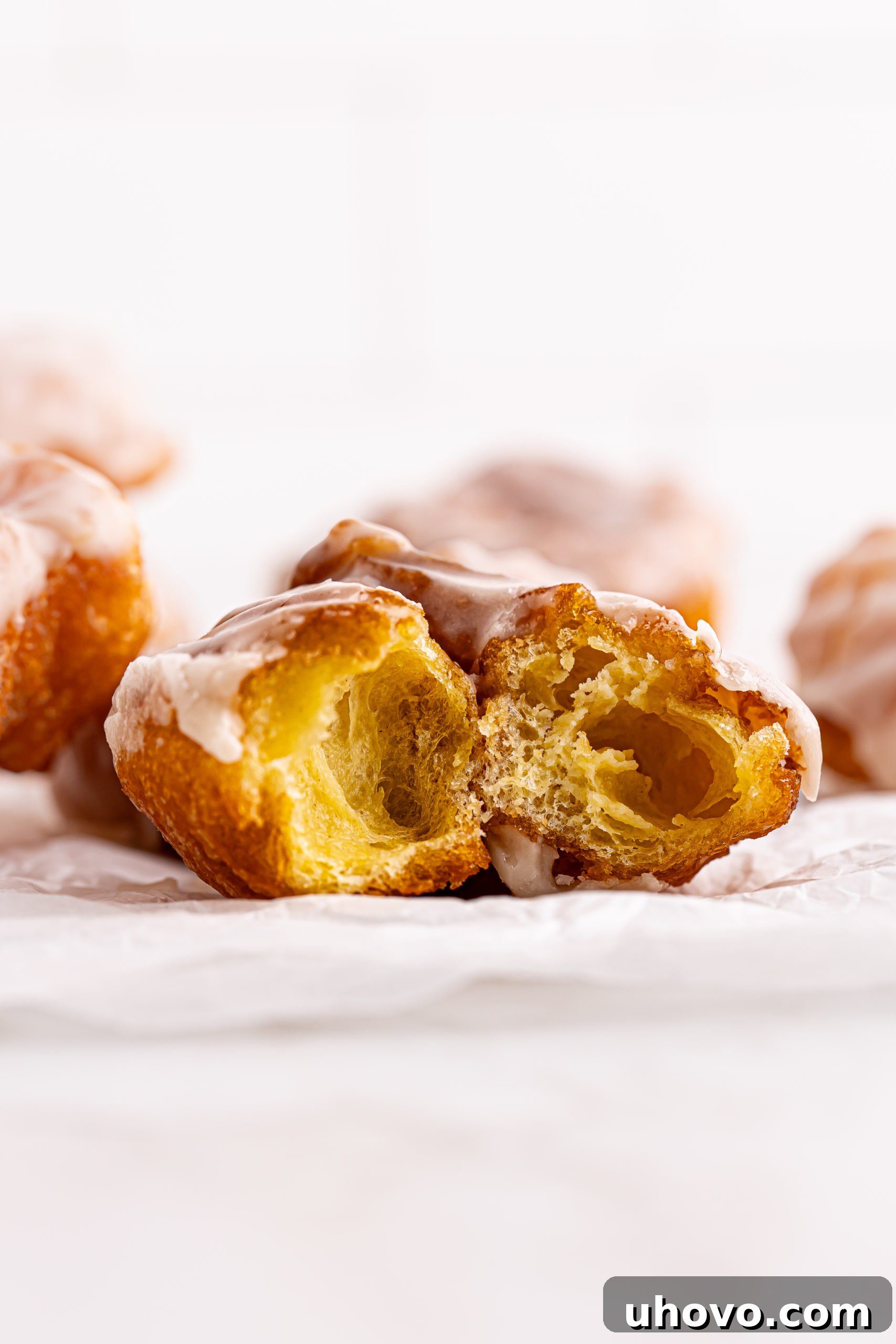
French crullers are far from your average doughnut. While they might share the irresistible appeal of a glazed sweet treat, their true magic lies beneath the surface. With an incredibly crisp, distinctively ridged exterior, these pastries hide an interior that is ethereally light, airy, and delicately tender – a texture quite unlike any other doughnut you’ve experienced.
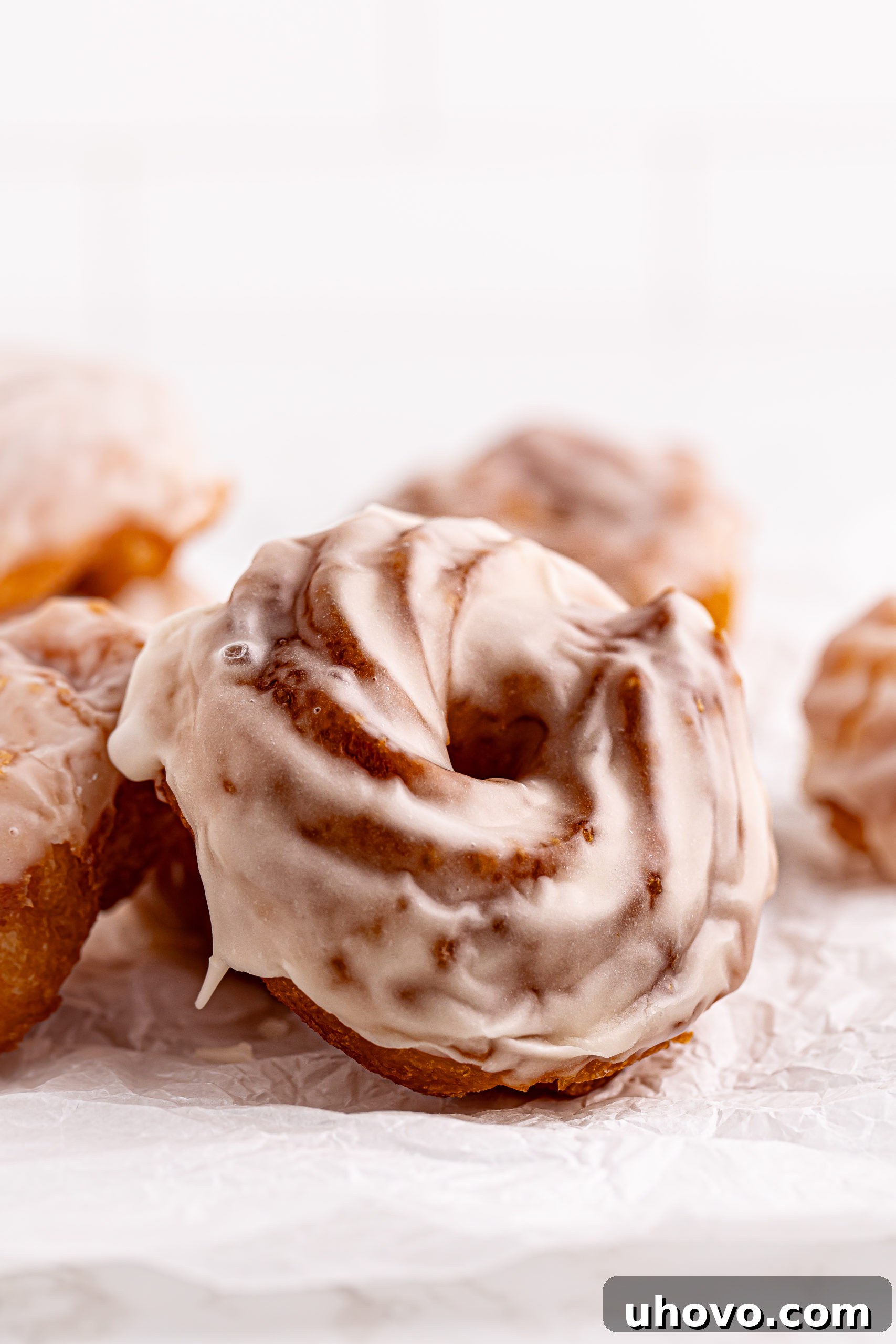
Unlike standard doughnuts, which typically rely on a yeast-based dough, French crullers are crafted from a delicate foundation: choux pastry (also known as *pâte à choux*). This classic French dough is also the star behind beloved pastries like savory gougères and sweet cream puffs. If you’re familiar with the magic of choux, you already know the sublime experience crullers offer: a wonderfully light, airy, and almost custard-like interior, perfectly contrasted by a golden brown, delightfully crispy shell. This unique combination makes French crullers a truly exceptional dessert, elevating them beyond the realm of everyday doughnuts into a sophisticated pastry class of their own.
Why This French Cruller Recipe Will Become Your New Favorite
Embarking on the journey of making French crullers from scratch is more than just following a recipe; it’s an immersive baking experience that culminates in an extraordinary treat. Here’s why this particular recipe will capture your heart and impress every palate:
- A Truly Rewarding Culinary Project. While French crullers do require a dedicated block of time and a bit of patience, the process itself is incredibly enjoyable for those who appreciate the art of baking. It’s not just about the delicious outcome, but the satisfaction derived from mastering a classic technique. If you find joy in engaging project recipes like kolaches, you’ll undoubtedly savor every step of making these elegant crullers. It’s an opportunity to refine your skills and connect with the traditions of French patisserie.
- A Doughnut Experience Like No Other. Forget everything you think you know about glazed doughnuts. French crullers are in a league of their own. They aren’t simply glazed doughnuts with a fancy, ridged shape; they offer an entirely different textural and flavor profile. Their light-as-air interior, born from choux pastry, provides a delicate counterpoint to the crispy exterior, creating a sophisticated bite that traditional yeast doughnuts can’t replicate. The shape, the glaze, and the frying method might be their only common ground with the fluffy, yeasted varieties you find at your local doughnut shop. Prepare for a revelation!
- Effortlessly Impress Your Guests (and Yourself!). The elegance and unique texture of homemade French crullers are bound to earn you accolades. After meticulously crafting and frying a batch of these beauties, you’ll feel an immense sense of pride. Serve them for a special brunch, an afternoon tea, or simply as an indulgent weekend treat, and watch as your guests shower you with praise for your exceptional baking prowess. Even if it’s just for yourself, the sheer delight of biting into a perfectly made cruller is a reward in itself.
- Freshness You Can Taste. Like many fine pastries, French crullers are best enjoyed fresh, ideally within hours of being made. This recipe ensures you experience them at their peak of flavor and texture, something often missed with store-bought options. The crispness of the shell and the tenderness of the interior are truly at their best when warm and freshly glazed.
Want to save this recipe?
Enter your email and we’ll send it directly to your inbox. Plus, you’ll receive more of our best recipes!
By sharing your email, you consent to receiving emails from Bake or Break. You can unsubscribe at any time.
Essential Ingredients for Perfect Crullers
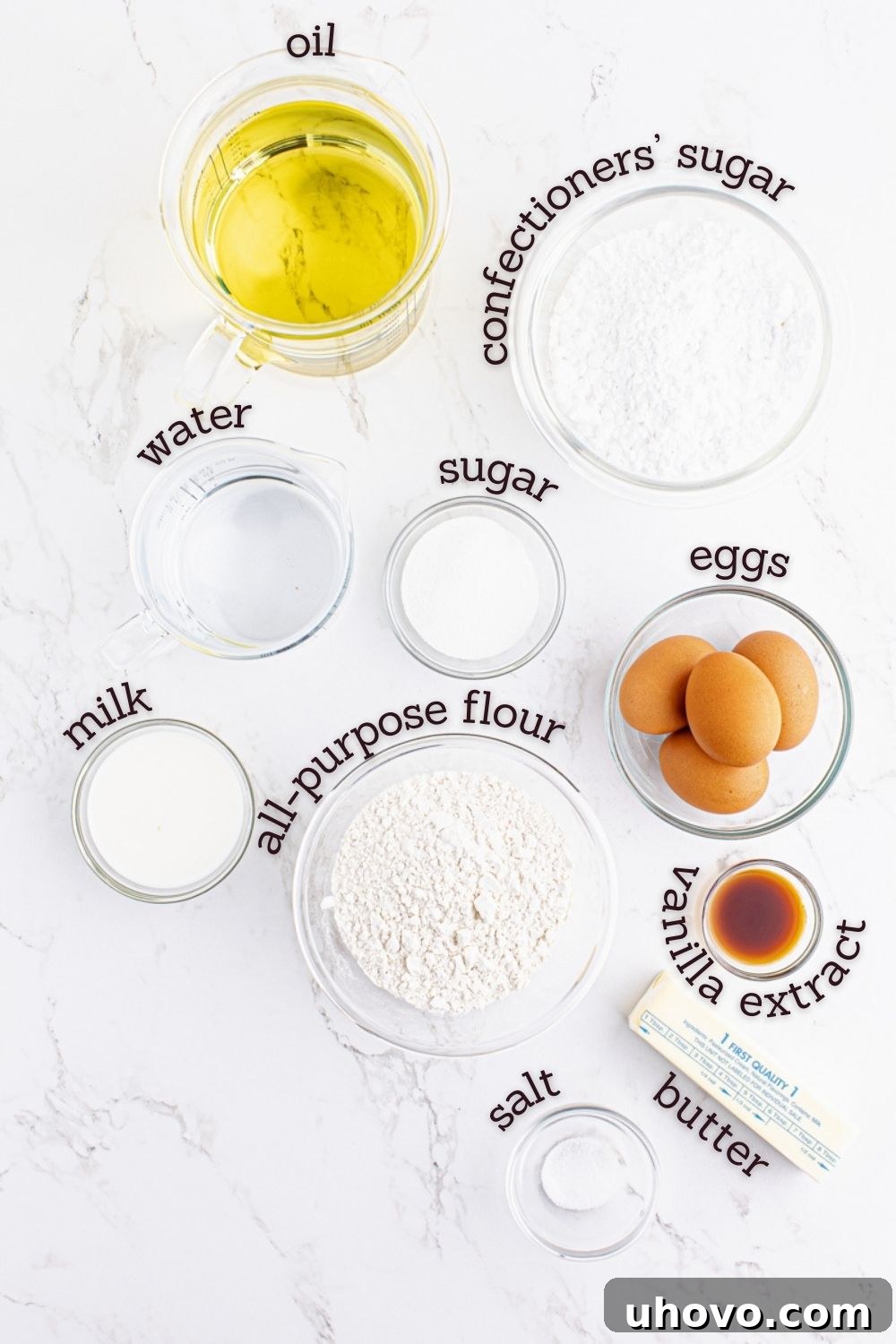
Crafting delicious French crullers requires a handful of common pantry staples. Each ingredient plays a crucial role in achieving that signature light and crispy texture. Below is a detailed list of what you’ll need, along with insights into their function.
For the Choux Pastry (Crullers):
- Water: The base liquid for our choux pastry. It combines with the butter to create steam, which is vital for the pastry’s hollow interior.
- Unsalted Butter: Provides richness and helps create a tender crumb. Using unsalted butter is key, as it gives you precise control over the total salt content in your recipe. Learn more about its importance: Unsalted or Salted Butter: Which is Better for Baking?
- Granulated Sugar: A small amount is added to the pastry for a hint of sweetness and to aid in browning.
- Salt: Enhances the overall flavor profile and balances the sweetness.
- All-Purpose Flour: The structural backbone of the choux pastry. It absorbs the hot liquid, forming a paste. For best results, ensure accurate measurement: Here’s how to measure flour for baking correctly.
- Large Eggs: These are the leavening agents in choux pastry. Unlike yeast doughs, choux relies on a high egg-to-flour ratio. When cooked, the moisture in the eggs turns to steam, causing the pastry to puff up and create its characteristic light, hollow, and airy texture. They also contribute to the richness and tender quality of the crullers.
- Oil for Frying: Essential for achieving that golden, crispy exterior. Neutral oils with a high smoke point are best. Good options include vegetable oil, canola oil, or peanut oil. You’ll need enough to fill a deep pan with 2 to 3 inches of oil.
For the Irresistible Glaze:
- Confectioners’ Sugar: Also widely known as powdered sugar or icing sugar. It’s the primary ingredient for a smooth, fast-setting glaze. Its fine texture ensures a silky finish without graininess.
- Milk: Used to adjust the glaze’s consistency. Any type of milk you have on hand will work perfectly. Start with a small amount and add more gradually to reach your desired dipping consistency.
- Vanilla Extract: Adds a warm, classic flavor that complements the crullers beautifully. For an extra touch of homemade goodness, consider using my homemade vanilla extract.
Crafting Perfect French Crullers: A Step-by-Step Guide
Making French crullers involves a few distinct stages, from preparing the choux pastry to frying and glazing. Follow these detailed steps for a successful and delicious batch.
- Prepare Parchment Squares: Begin by cutting 20 individual four-inch squares of parchment paper. These will serve as a non-stick base for piping your crullers and making transfer to the hot oil much easier. Placing them on a baking sheet beforehand can streamline the process.
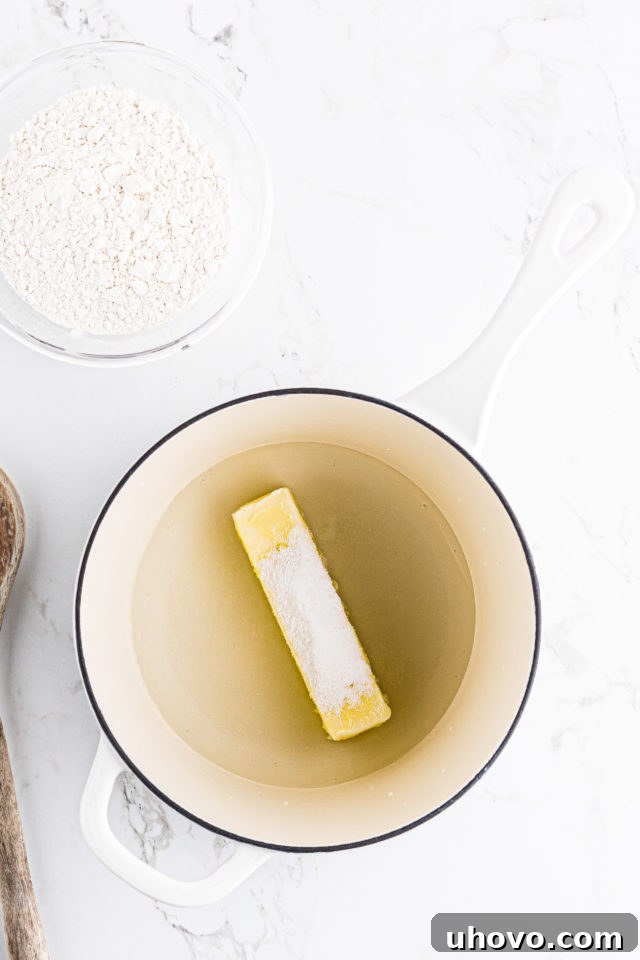
- Initiate the Choux Pastry Base: In a sturdy saucepan, combine the measured water, unsalted butter, granulated sugar, and salt. Place the saucepan over medium-high heat and bring the mixture to a rolling boil. Ensure the butter is fully melted and the sugar and salt are dissolved.
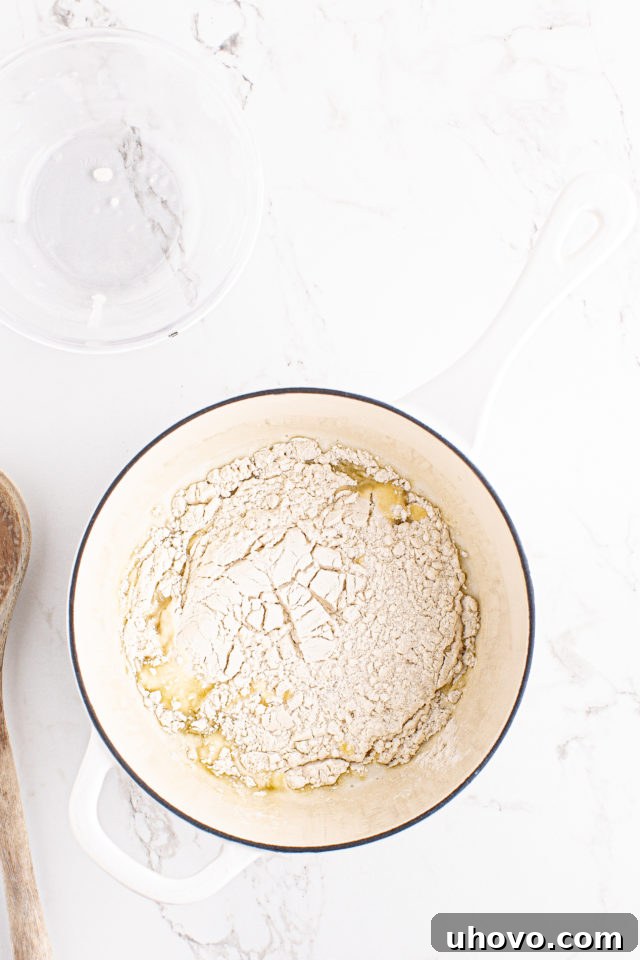
- Incorporate the Flour: As soon as the mixture reaches a boil, promptly remove the pan from the heat. Add all of the all-purpose flour into the hot liquid at once. Work quickly and vigorously, stirring with a wooden spoon or heatproof spatula until the flour is thoroughly combined and a smooth, thick paste forms. This quick action is crucial to prevent lumps.
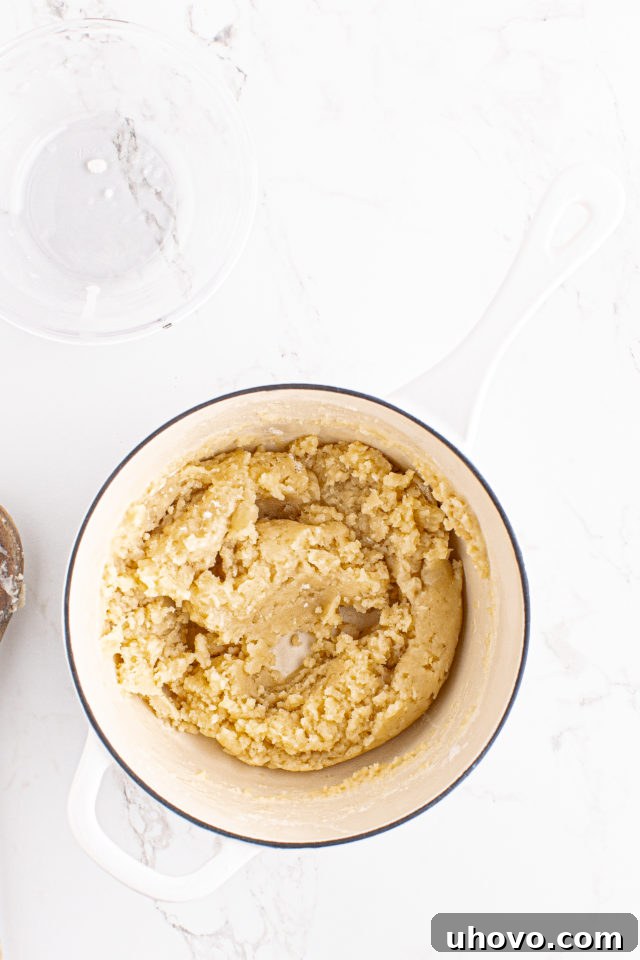
- Cook the Choux Pastry: Return the pan to medium heat. Continue stirring the dough for another 2-3 minutes. During this stage, the moisture will evaporate, and the dough will become very thick, pulling away from the sides of the pan. A thin crust should form on the bottom of the pan – this indicates your choux pastry is properly cooked and ready for the next step.
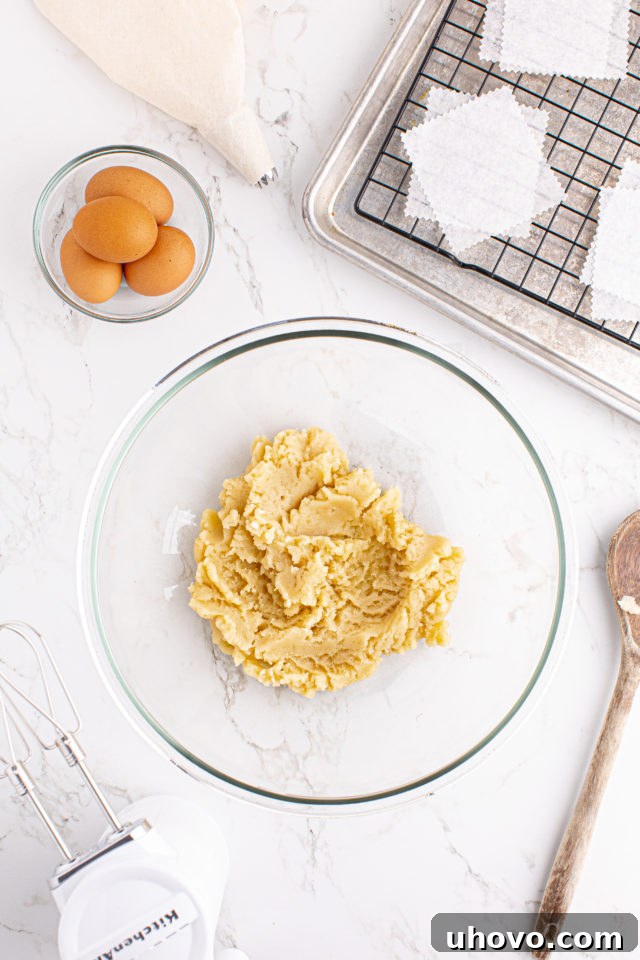
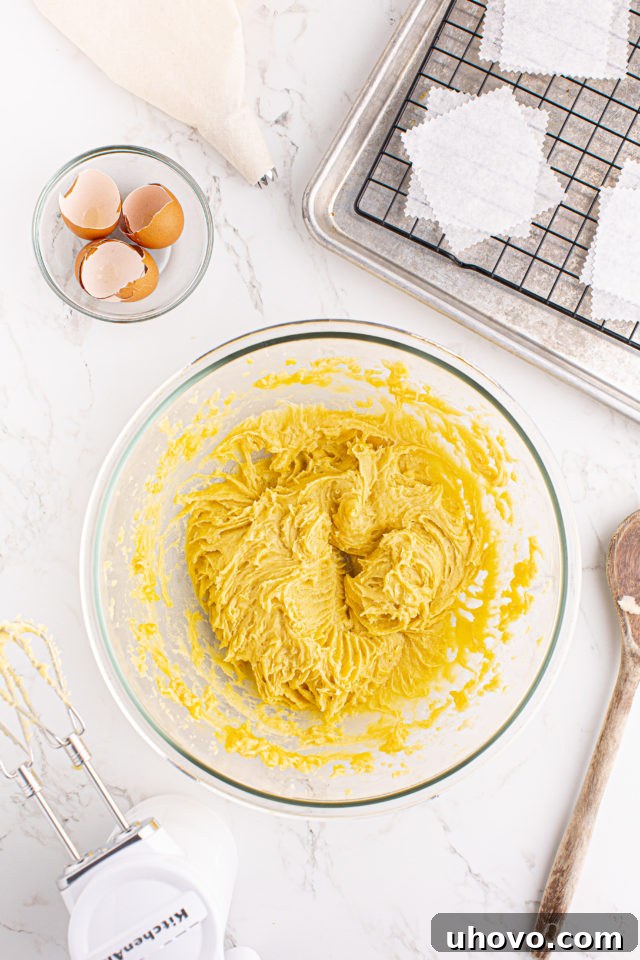
- Cool the Dough: Remove the pan from the heat again and let the choux pastry cool for approximately 5 minutes directly in the pan. Then, transfer the mixture to a large mixing bowl. Allow it to continue cooling until it’s still warm to the touch but below 125°F (51°C). This typically takes another 5-10 minutes. Cooling is essential to prevent the eggs from scrambling when added.
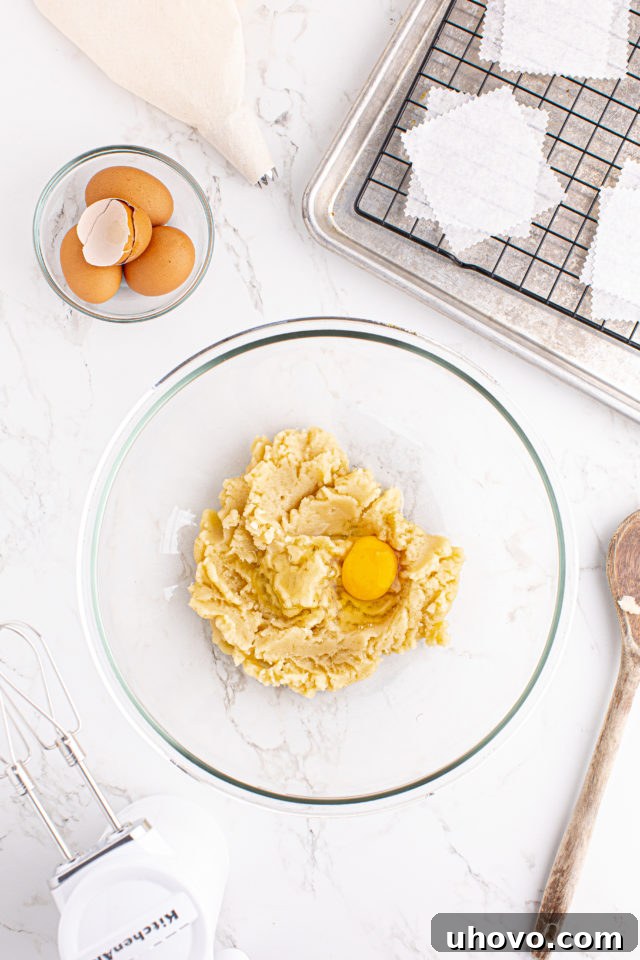
- Add the Eggs: Using an electric mixer on medium speed, beat in the large eggs one at a time. Mix thoroughly after each addition for about 1 minute, ensuring each egg is fully incorporated before adding the next. The pastry will initially look separated and shiny but will come together into a smooth, soft, and pipeable consistency.
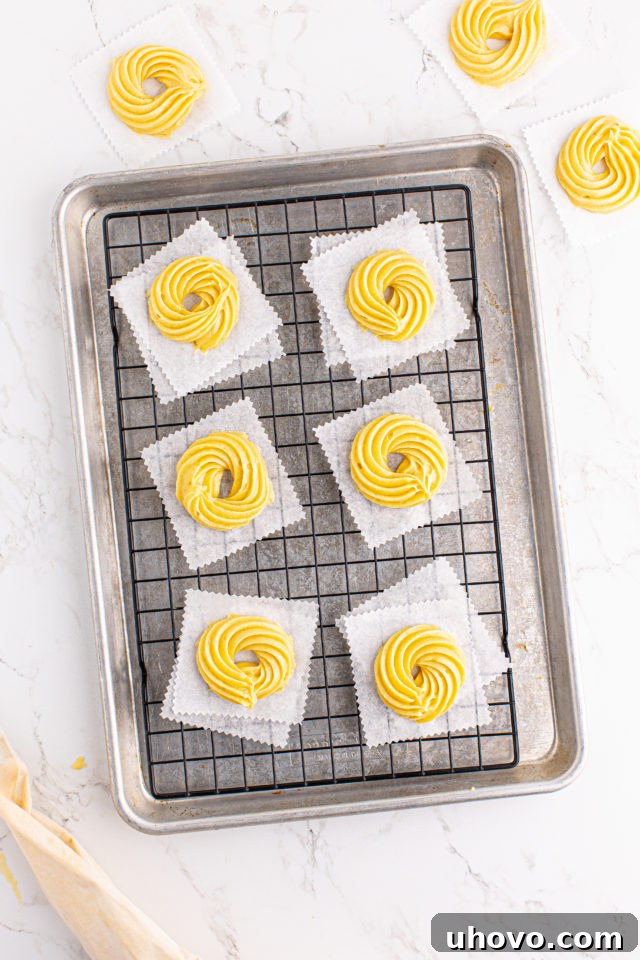
- Pipe the Crullers: Scoop the prepared choux pastry into a sturdy pastry bag fitted with a large open star tip (such as Wilton 1M). Fill the bag about halfway for easier handling. Carefully pipe 3-inch (7.5 cm) circles of dough onto the pre-cut parchment squares. Overlap the ends slightly to ensure the circle holds its shape during frying. Allow the piped dough to rest while you move on to heating the oil.
- Heat the Frying Oil: In a deep, heavy-bottomed pan (like a Dutch oven), pour 2 to 3 inches of your chosen frying oil. Place the pan over medium heat and heat the oil until it reaches a consistent temperature of 375°F (190°C). Use a candy or deep-fry thermometer to accurately monitor the temperature throughout the frying process.
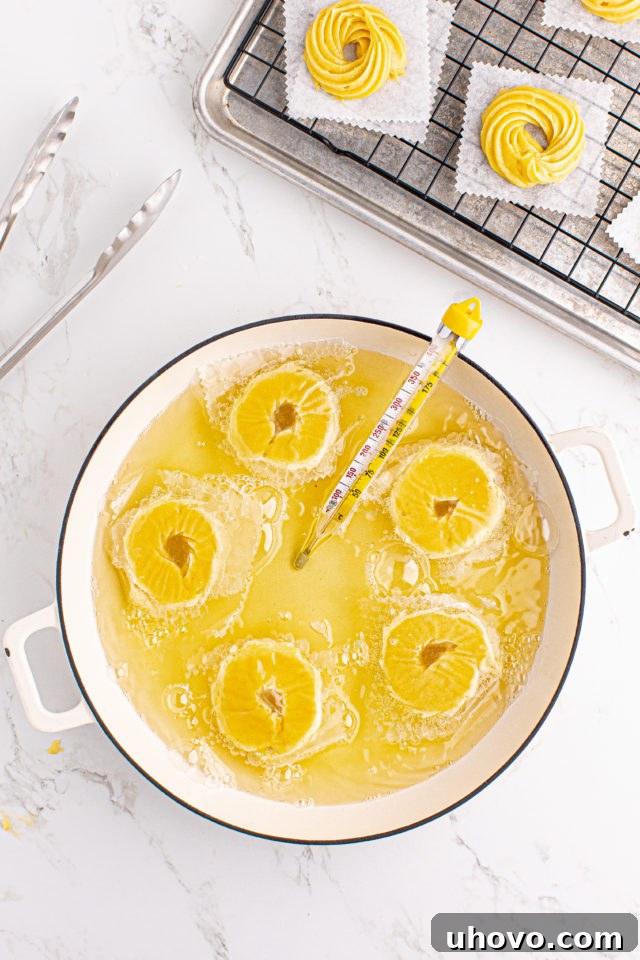
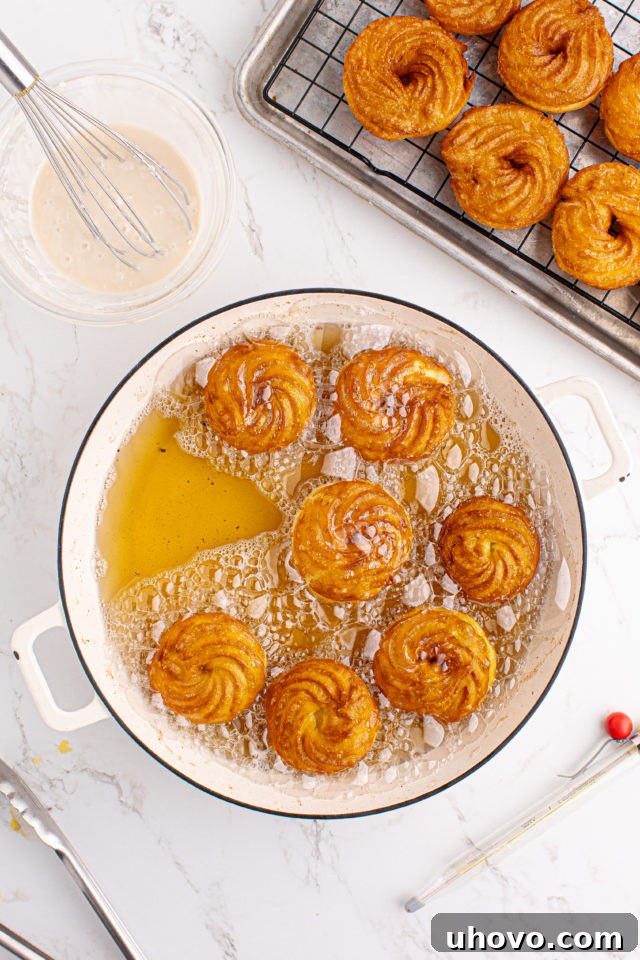
- Frying the Crullers: Carefully use metal tongs to pick up a parchment square by its corner and gently lower it into the hot oil, parchment side facing up. The cruller will quickly detach from the paper. Repeat with 1 or 2 more crullers, ensuring not to overcrowd the pan. After approximately one minute, use the tongs to remove the parchment paper from the oil. Continue to cook the crullers for another 2-3 minutes until they begin to puff and turn light golden. Then, use tongs to gently flip the crullers and cook for an additional 2-3 minutes on the other side until they are evenly golden brown and crisp. Maintain the oil temperature as consistently as possible.
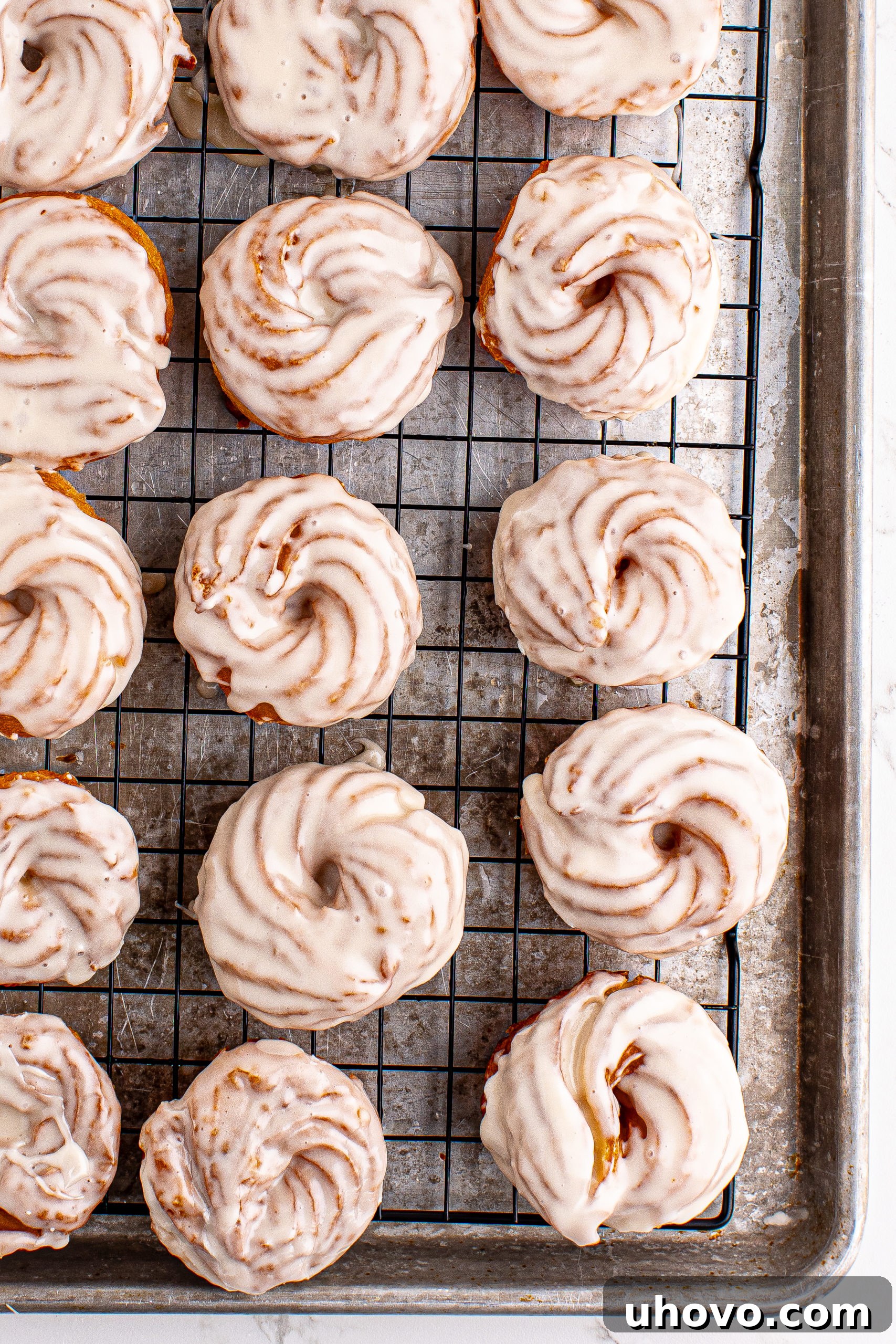
- Drain the Crullers: Once perfectly fried, remove the crullers from the oil using tongs or a large slotted spoon. Immediately transfer them to a wire rack placed over a baking sheet. This setup allows excess oil to drip away and ensures even cooling. Continue frying the remaining dough in batches, adjusting the oil temperature as needed between batches.
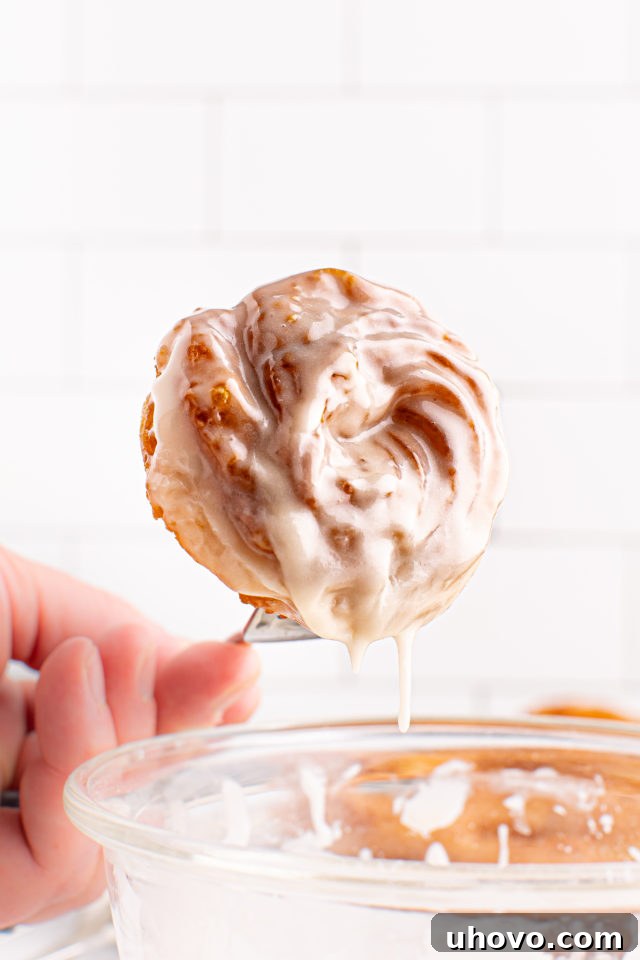
- Prepare the Glaze: While the crullers are cooling slightly but still warm, prepare the glaze. In a medium bowl, whisk together the confectioners’ sugar, milk, and vanilla extract. Start with the smaller amount of milk and add more gradually, a teaspoon at a time, until you achieve a thin, smooth consistency that is easily dip-able. If the glaze becomes too thin, simply whisk in a bit more confectioners’ sugar to thicken it.
- Glaze and Serve: Dip each warm cruller into the prepared glaze, ensuring it’s fully coated. Lift it out, allowing any excess glaze to drip back into the bowl. Return the glazed crullers to the wire rack, allowing the glaze to set. Serve these exquisite French crullers warm for the ultimate taste and texture experience.
Expert Tips for French Cruller Perfection
Achieving perfectly light and crispy French crullers is all about precision and a few clever techniques. Keep these tips in mind to ensure your baking endeavor is a resounding success:
- Utilize a Sheet Pan for Parchment Squares. Before you even start piping, arrange all your parchment squares on one or two large baking sheets. This simple step is a game-changer. It allows you to pipe all your crullers efficiently and, crucially, to move them as a group if needed, rather than struggling with individual delicate pastry rounds. This minimizes handling and helps maintain their perfect shape.
- Mastering the Art of Piping Perfect Crullers. Don’t be discouraged if your first cruller isn’t a masterpiece! Consider it practice. Choux pastry can be a bit tricky to pipe smoothly at first. Hold the pastry bag 2 to 3 inches above the parchment paper and apply steady, even pressure as you pipe a continuous 3-inch circle. The key is to keep a consistent hand motion. Once you’ve completed the circle, overlap the ends just slightly. This overlap is important; it ensures that the cruller forms a complete, sealed ring, preventing it from breaking apart in the hot oil. You’ll gain confidence and precision with each one.
- Vigilantly Manage Oil Temperature. This is perhaps the most critical factor for perfectly cooked crullers. Always use a reliable candy or deep-fry thermometer to constantly monitor the oil’s temperature. Aim to keep it consistently around 375ºF (190°C). When you add crullers to the pot, the temperature will naturally drop, so be prepared to slightly increase the heat. Conversely, if the heat is too high, the oil temperature will rise quickly, requiring you to reduce the heat.
- Too Hot Oil: If the oil is too hot, the exterior of the crullers will brown and crisp too rapidly, while the interior remains undercooked and potentially raw.
- Too Cool Oil: If the oil is too cool, the crullers will absorb an excessive amount of oil, resulting in a greasy, heavy texture instead of the desired light and airy one.
Consistent temperature ensures even cooking, a beautifully golden exterior, and that signature delicate interior.
- Don’t Overcrowd the Pan: Fry crullers in small batches (1-3 at a time, depending on your pan size). Overcrowding lowers the oil temperature too drastically, leading to greasy, poorly cooked crullers. Give them space to swim and crisp up!
Exciting Glaze Variations
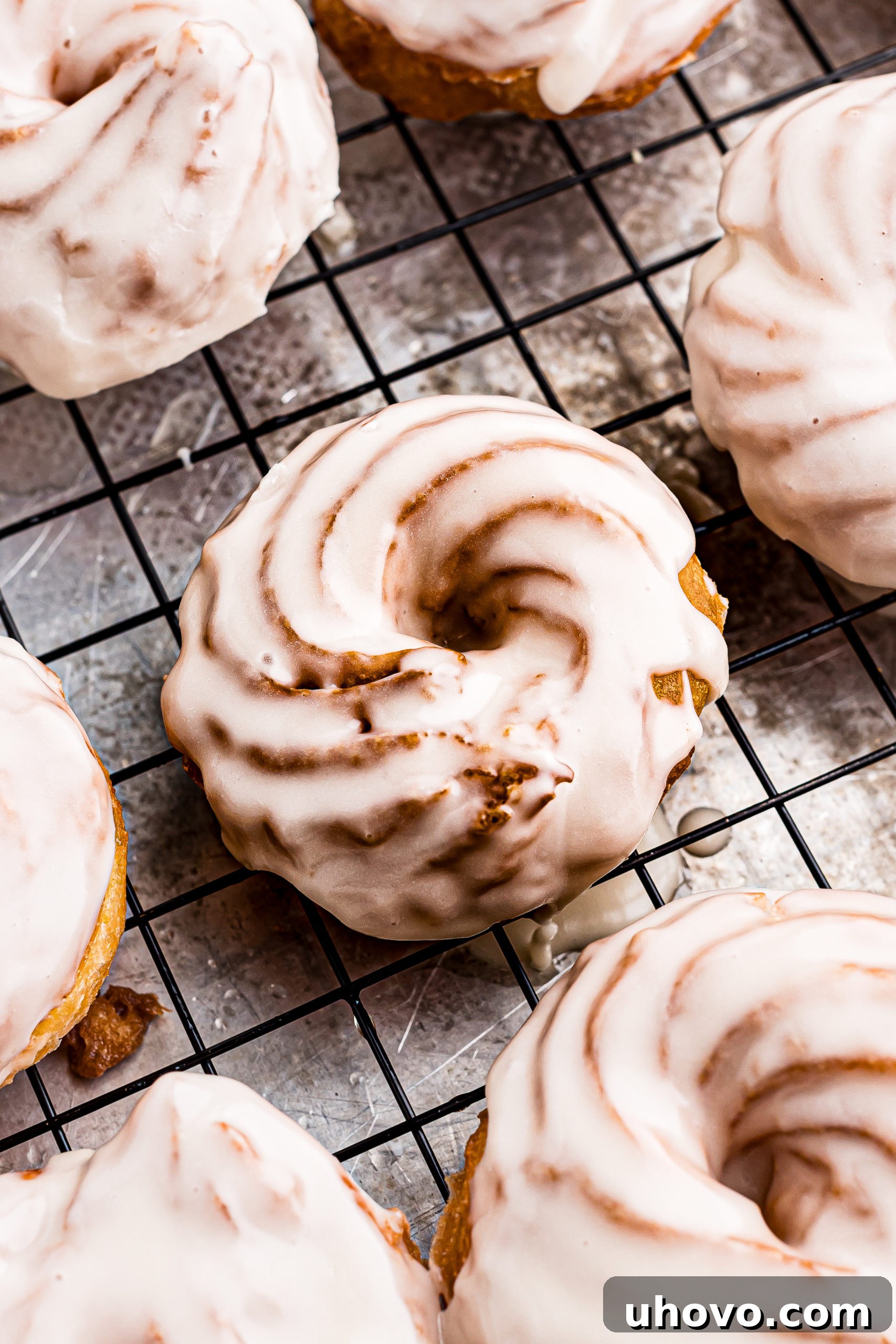
While the choux pastry itself is a delicate balance that is best left unaltered, the glaze offers a fantastic opportunity for creative customization. The classic vanilla glaze is always a winner, but don’t hesitate to experiment with different flavor profiles to suit your mood or occasion. Here are some delightful options to inspire you:
- Almond Extract Swap: For an unexpected yet utterly delicious twist, simply replace the vanilla extract in the basic glaze with an equal amount of almond extract. The subtle nutty notes pair wonderfully with the light pastry.
- Marshmallow Glaze: Elevate your crullers with a fluffy marshmallow glaze. This sweet, chewy coating adds a unique texture and flavor dimension, perfect for a cozy treat (inspired by my hot chocolate cookies).
- Brown Butter Glaze: For a sophisticated, nutty, and rich flavor, a brown butter glaze is unparalleled. The caramelized notes of the butter add incredible depth (borrowed from my caramelized banana bread).
- Butterscotch Glaze: Indulge in the sweet, buttery notes of butterscotch. This glaze adds a nostalgic and comforting sweetness that’s simply divine (a favorite from my mini chocolate pound cakes).
- Caramel Glaze: A rich, sticky caramel glaze provides a decadent topping that is both sweet and complex, offering a luxurious finish to your crullers (as seen in my apple spice cake).
- Lemon Glaze: For a bright and zesty contrast, a lemon glaze offers a refreshing tang that cuts through the richness of the fried pastry, making them incredibly vibrant (a beloved option from my mini lemon pound cakes).
Storage Recommendations for French Crullers
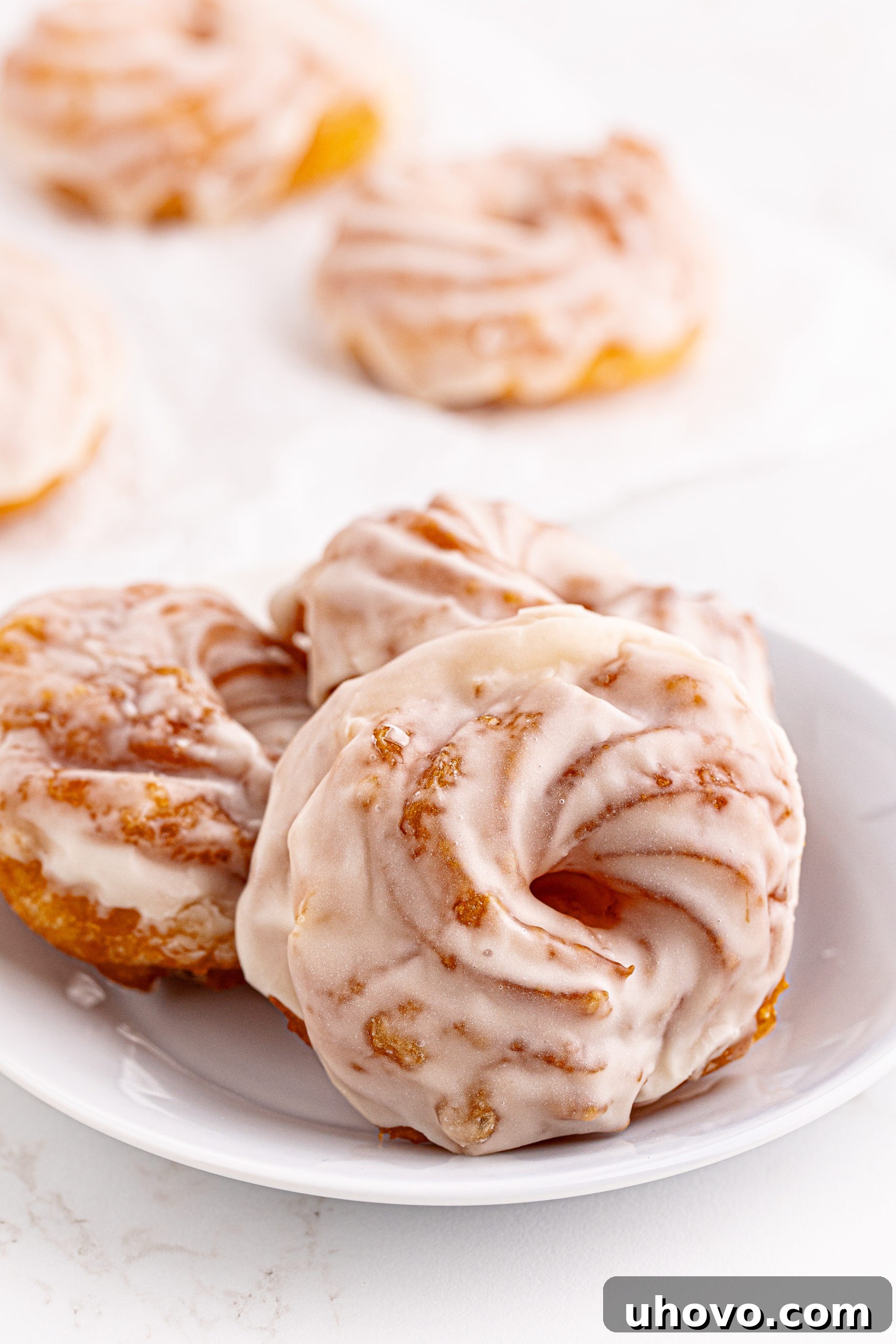
French crullers, with their delicate crispness and light interior, are unequivocally at their best when enjoyed fresh. Ideally, they should be savored as soon as the glaze has set, offering the peak textural experience. However, if you find yourself with a few irresistible leftovers, proper storage can help maintain their quality for a short period.
If you absolutely must store them for longer than a few hours, transfer them to an airtight container at room temperature. This will help prevent them from going stale too quickly. Stored this way, they will generally keep for about 2 days. Be aware that the exterior crispness will soften over time, and the delicate interior may become a bit chewier. While still delicious, they won’t have the same magical fresh-from-the-fryer quality.
Freezing French Crullers: Tips for Make-Ahead Doughnuts
As emphasized, French crullers truly shine when eaten fresh. However, if you’re planning ahead or want to manage portion sizes, you can certainly freeze them. The good news is, you have a couple of options, depending on whether you prefer to freeze them before or after frying.
Freezing Cooked Crullers:
If you’ve already fried and glazed your crullers, you can safely freeze them for up to 2 months. To do so, place them in a single layer on a baking sheet and freeze until solid. Once frozen, transfer them to a freezer-safe bag or an airtight container, separating layers with parchment paper to prevent sticking. When you’re ready to enjoy, simply let them thaw at room temperature for a few hours before serving. While the crispness might not be as pronounced as fresh, they will still be a delightful treat.
Freezing Unfried Crullers (Highly Recommended for Freshness!):
This is arguably the best method for freezing, especially if you anticipate not being able to enjoy an entire batch on the day they’re made. Freezing the piped dough before frying allows you to have “freshly fried” crullers whenever the craving strikes!
Here’s how to do it:
- After piping the choux dough onto the parchment squares, place these squares on a baking sheet.
- Transfer the entire baking sheet to the freezer and allow the piped crullers to freeze until they are completely solid. This usually takes 1-2 hours.
- Once frozen solid, carefully transfer the individual frozen cruller doughs (still on their parchment squares) to a freezer-safe bag or an airtight container. They can be stored this way for up to a month.
- When you’re ready to fry, remove the desired number of frozen crullers from the freezer. Let them sit at room temperature for about 15-30 minutes while you heat your frying oil to 375°F (190°C).
- Proceed with frying them as directed in the recipe. Keep in mind that frozen crullers might take a slightly longer time to cook through compared to frying from fresh, so monitor them closely for golden brown color and doneness. This method ensures you get that wonderful crisp exterior and tender interior very close to the fresh experience.
Explore More Breakfast Pastry Recipes
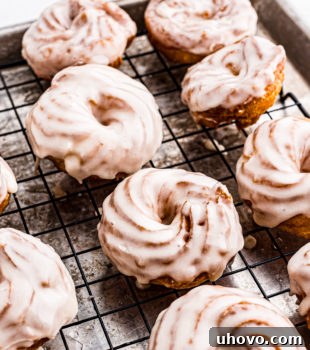
Get the Recipe:
French Crullers
20
crullers
20 minutes
20 minutes
40 minutes
This recipe for French crullers delivers a perfectly crisp, ridged exterior and an incredibly light, fluffy interior, creating a unique glazed doughnut experience unlike any you’ve had before!
Ingredients
For the Crullers:
- 1 cup (240 ml) water
- ½ cup (113 g) unsalted butter
- 2 tablespoons (25 g) granulated sugar
- ¼ teaspoon salt
- 1 cup (120 g) all-purpose flour
- 4 large eggs
- Oil for frying, such as vegetable, canola, or peanut
For the Glaze:
- 2 cups (220 g) confectioners’ sugar
- 2 to 3 tablespoons (30 to 45 ml) milk
- 1 teaspoon vanilla extract
Recommended Equipment
- Parchment Paper
- Heavy-Bottomed Saucepan or Dutch Oven
- Electric Mixer
- Pastry Bag
- Large Open Star Piping Tip (e.g., Wilton 1M)
- Candy or Deep-Fry Thermometer
- Metal Tongs or Large Slotted Spoon
- Wire Rack and Baking Sheet
Instructions
To make the crullers:
- Cut parchment paper into twenty 4-inch squares.
- Stir together the water, butter, sugar, and salt in a saucepan. Bring to a boil over medium-high heat.
- Remove the pan from the heat, and add the flour all at once. Working quickly, stir vigorously until thoroughly combined.
- Return the pan to medium heat, and continue stirring until the mixture is smooth and forms a thin crust on the bottom of the pan. The dough will be thick. (This should only take 2-3 minutes.)
- Remove the pan from the heat, and allow the mixture to cool for about 5 minutes. Then transfer the mixture to a mixing bowl and let it continue cooling until it is still warm to the touch (below 125°F / 51°C). This will take 5-10 minutes.
- Using an electric mixer on medium speed, add the eggs one at a time, mixing well after each addition (about 1 minute per egg). The pastry should be soft but pipeable.
- Transfer the batter to a pastry bag fitted with a large star tip, filling it about halfway. Pipe 3-inch (7.5 cm) circles of dough onto the parchment squares, overlapping the ends slightly. Allow the piped dough to rest while you heat the oil.
- Fill a deep pan with 2 to 3 inches of oil. Heat to 375°F (190°C) over medium heat.
- Use tongs to grab a corner of a parchment square and gently place it into the hot oil with the parchment side facing up. Repeat with another 1 or 2 crullers, being sure not to crowd them in the pan.
- After about a minute, use tongs to remove the parchment paper. Cook for another 2-3 minutes, then use tongs to turn the crullers over and cook 2-3 more minutes until lightly browned and crisp. Keep an eye on the oil temperature and adjust the heat as needed.
- Remove the crullers from the oil using tongs or a large slotted spoon. Place them onto a wire rack set over a baking sheet to drain.
- Repeat with the remaining dough in batches.
To make the glaze:
- Combine the confectioners’ sugar, milk, and vanilla extract, using enough milk to make a thin, dip-able consistency.
- Dip the warm crullers into the glaze, then return them to the rack to allow the glaze to set. Serve immediately for best results.
Notes
- French crullers are best enjoyed fresh, as soon as the glaze has set.
- Leftovers can be stored in an airtight container for up to 2 days, though they will lose some crispness.
- Unfried cruller dough can be frozen on parchment squares, then transferred to an airtight container for up to a month. Fry from frozen (after a brief rest at room temp) for fresh results.
Jennifer McHenry
Breakfast, Dessert
French
Show off your baking masterpiece!
Snap a pic, tag @bakeorbreak, and use #bakeorbreak on Instagram. We can’t wait to see your delicious creation!