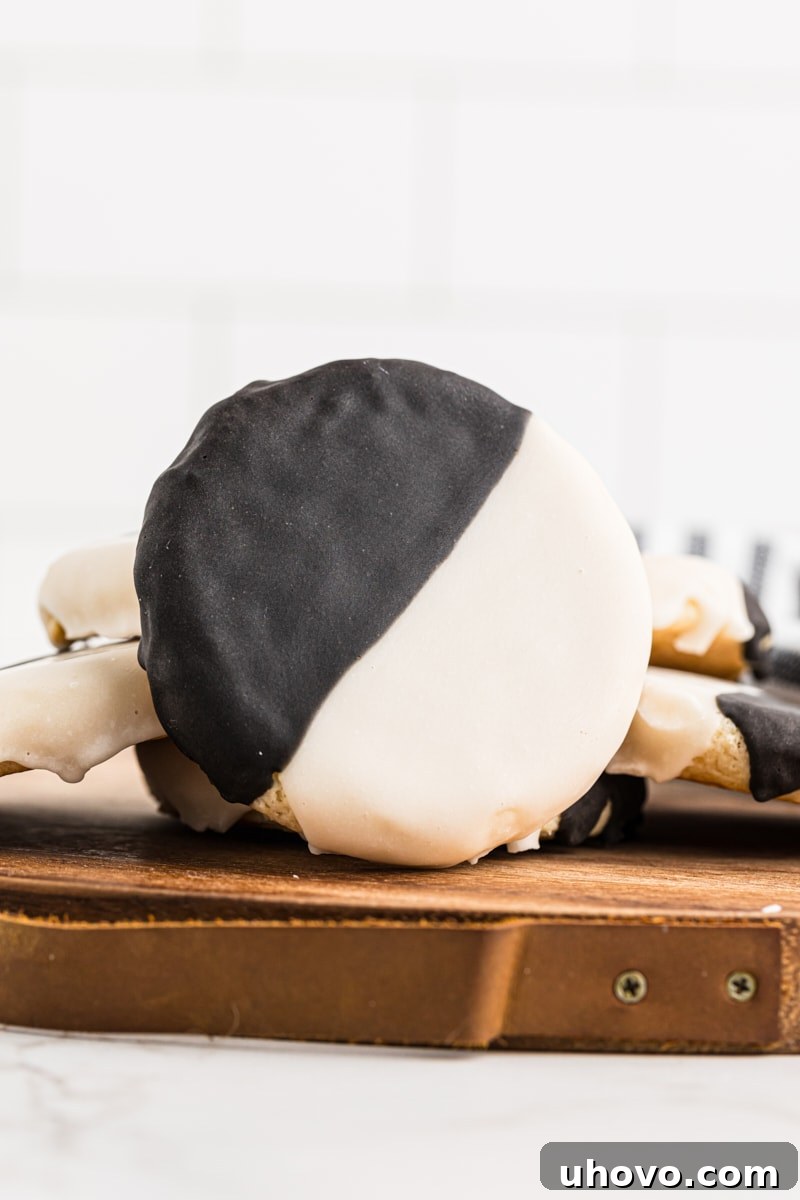
Experience the unparalleled delight of Black and White Cookies—a New York City icon blending effortless simplicity with captivating elegance. Each bite offers a harmonious contrast of delicate flavors and a tender, cake-like texture that truly satisfies.
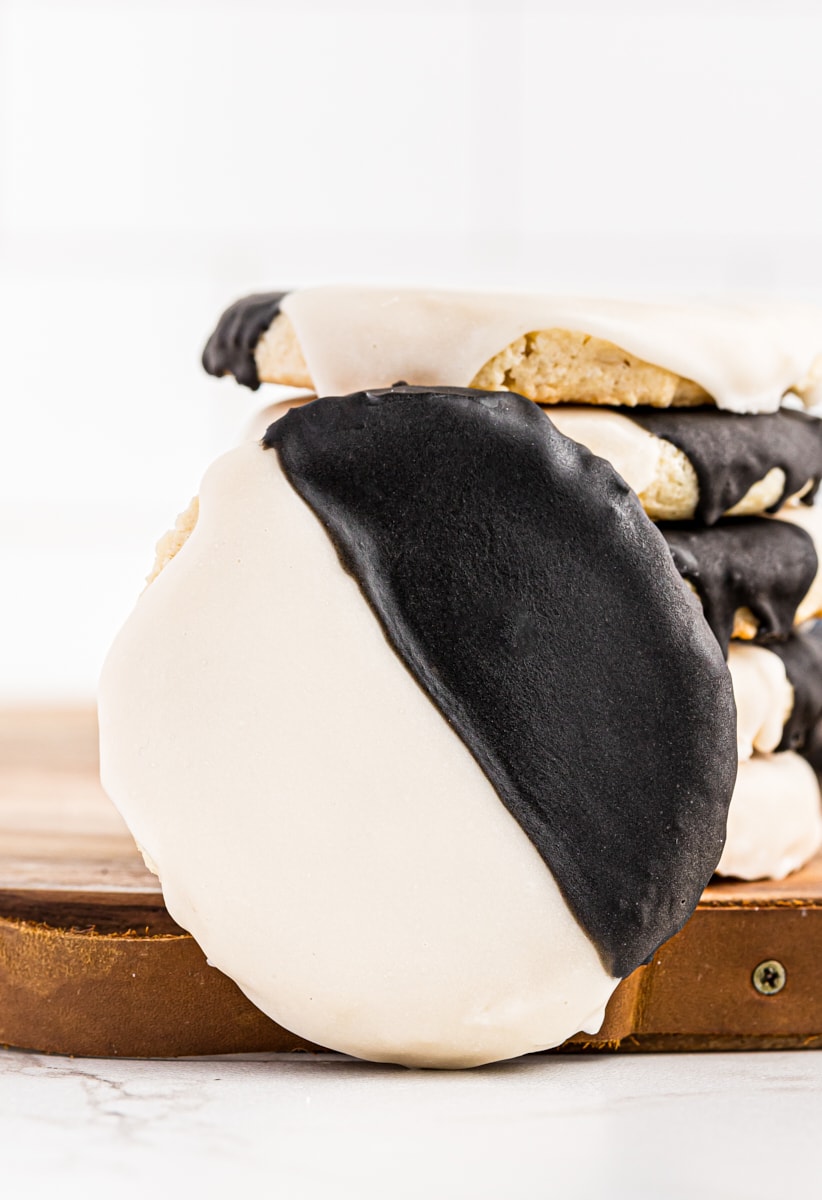
In the expansive and diverse world of classic baked goods, few treats capture the imagination and devotion quite like the Black and White Cookie. Far more than just a dessert, these distinctive cookies embody a celebrated tradition, particularly within New York City’s vibrant culinary scene. Known for their striking visual contrast and a flavor profile that perfectly marries two beloved tastes, these soft, cake-like delights are a true testament to the beauty of thoughtful baking. Adorned with a meticulously divided layer of rich vanilla and decadent chocolate icing, each cookie offers a unique symphony of textures and flavors, making every bite a memorable experience and a delightful celebration for the palate.
Why You’ll Adore This Black and White Cookie Recipe
- An Authentic New York Classic. This recipe allows you to bring the quintessential taste of New York City’s beloved bakeries straight into your home kitchen. It’s an opportunity to create a piece of culinary history, offering a genuine flavor experience that echoes the bustling streets and rich heritage of the Big Apple. Share a piece of this iconic legacy with friends and family, making it an instant crowd-pleaser and conversation starter.
- Remarkable Flavor from Simple Ingredients. Crafted using everyday pantry staples, these cookies consistently deliver a profound sense of comfort and a depth of flavor that is truly unparalleled. The magic lies in the carefully balanced combination of light, airy cake-like cookie and the dual vanilla and chocolate icing, creating a texture and taste sensation that is simply irresistible. This recipe proves that extraordinary results don’t always require exotic components.
- The Ultimate Sweetness Harmony. With its signature half-vanilla, half-chocolate icing, this cookie thoughtfully caters to all palates, offering the very best of both worlds. It’s a brilliantly engineered treat that allows you to savor two distinct yet complementary flavors in a single, delightful bite. Whether you prefer the classic warmth of vanilla or the rich intensity of chocolate, this cookie delivers a perfect blend for an endlessly enjoyable dessert experience.
- An Engaging and Rewarding Baking Project. The process of decorating these distinct cookies is an absolute joy and surprisingly therapeutic. From meticulously piping the smooth vanilla side to carefully adding the dark chocolate half, each step is satisfying. It’s an ideal baking activity to enjoy with children, friends, or as a calming solo endeavor, promising not only delicious results but also a fun, creative outlet in the kitchen.
By sharing your email, you can receive this recipe directly in your inbox and stay updated with more delicious baking ideas from Bake or Break. We value your privacy, and you can unsubscribe at any time.
Unveiling the Black and White Cookie: A Culinary Story
The iconic black and white cookie, an unmistakable emblem of New York City’s vibrant and eclectic culinary landscape, boasts a fascinating, albeit somewhat mysterious, origin. These beloved treats first emerged in the early 20th century from the bustling ovens of local bakeries, many of which were founded and operated by German and Eastern European immigrants. While the precise genesis of this delectable cookie remains a subject of friendly debate, with several historic bakeries laying claim to its creation, its significance extends far beyond its tantalizing taste.
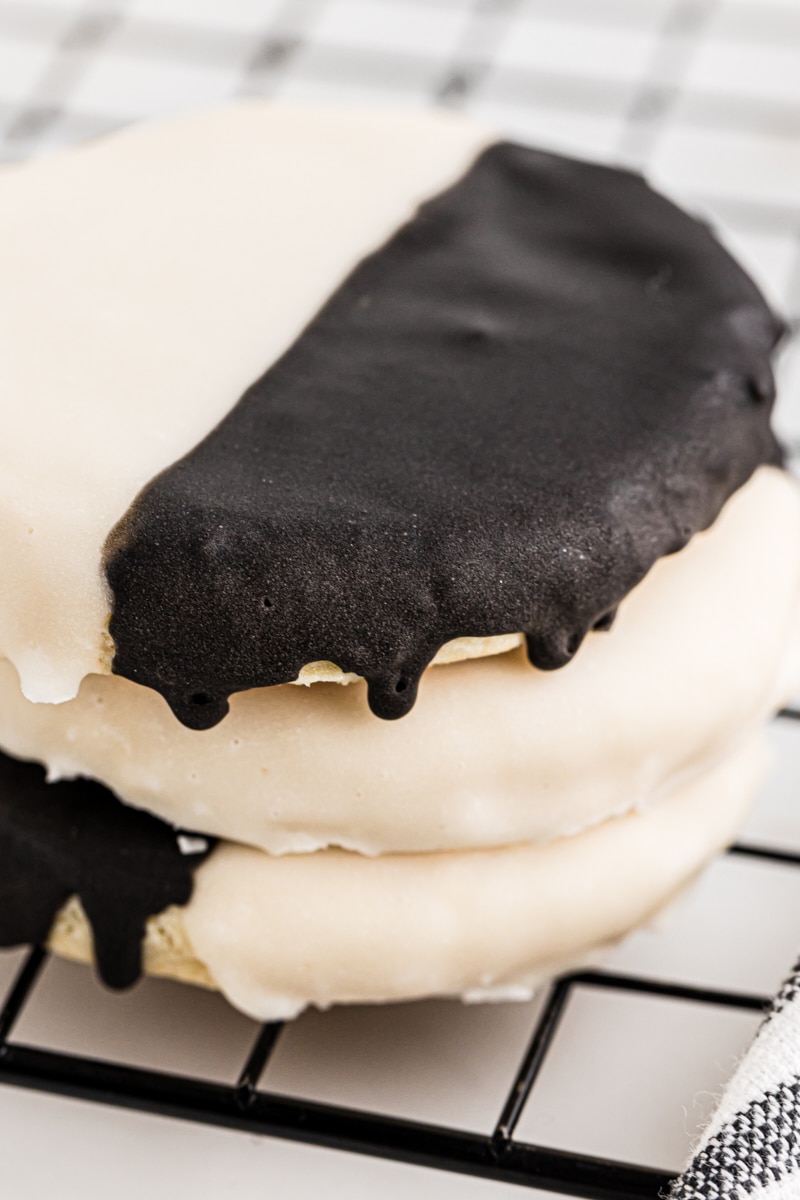
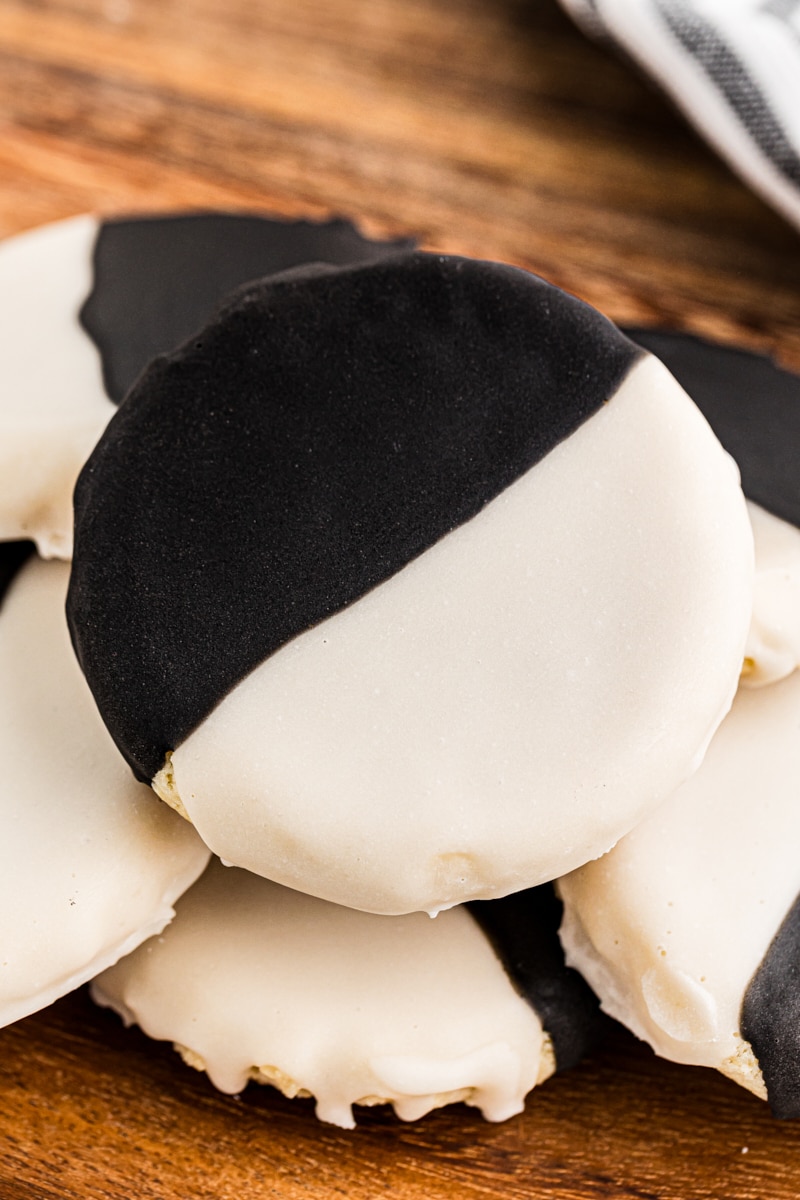
The black and white cookie beautifully mirrors New York’s rich “melting pot” culture. It serves not merely as a sweet indulgence but as a poignant, edible reminder of the city’s enduring historical and cultural richness, a testament to the diverse communities that shaped its unique identity. Affectionately known by various regional names such as “half-and-half cookies” or “half-moon cookies,” this distinctive dessert features a wonderfully tender, almost cake-like base. This soft foundation is then artfully topped with two dramatically contrasting halves of icing: one a smooth, subtly sweet vanilla (sometimes infused with a hint of lemon for an extra zing), and the other a rich, dark chocolate. This visual and gastronomic division creates a simple yet powerful symbol of unity, reflecting the harmonious blend of differences that define both the cookie and the city it represents. Its balanced flavors and striking appearance have cemented its place as a cherished classic, enjoyed by generations and adored by anyone seeking a taste of authentic New York tradition.
Essential Ingredients for Your Black and White Cookies
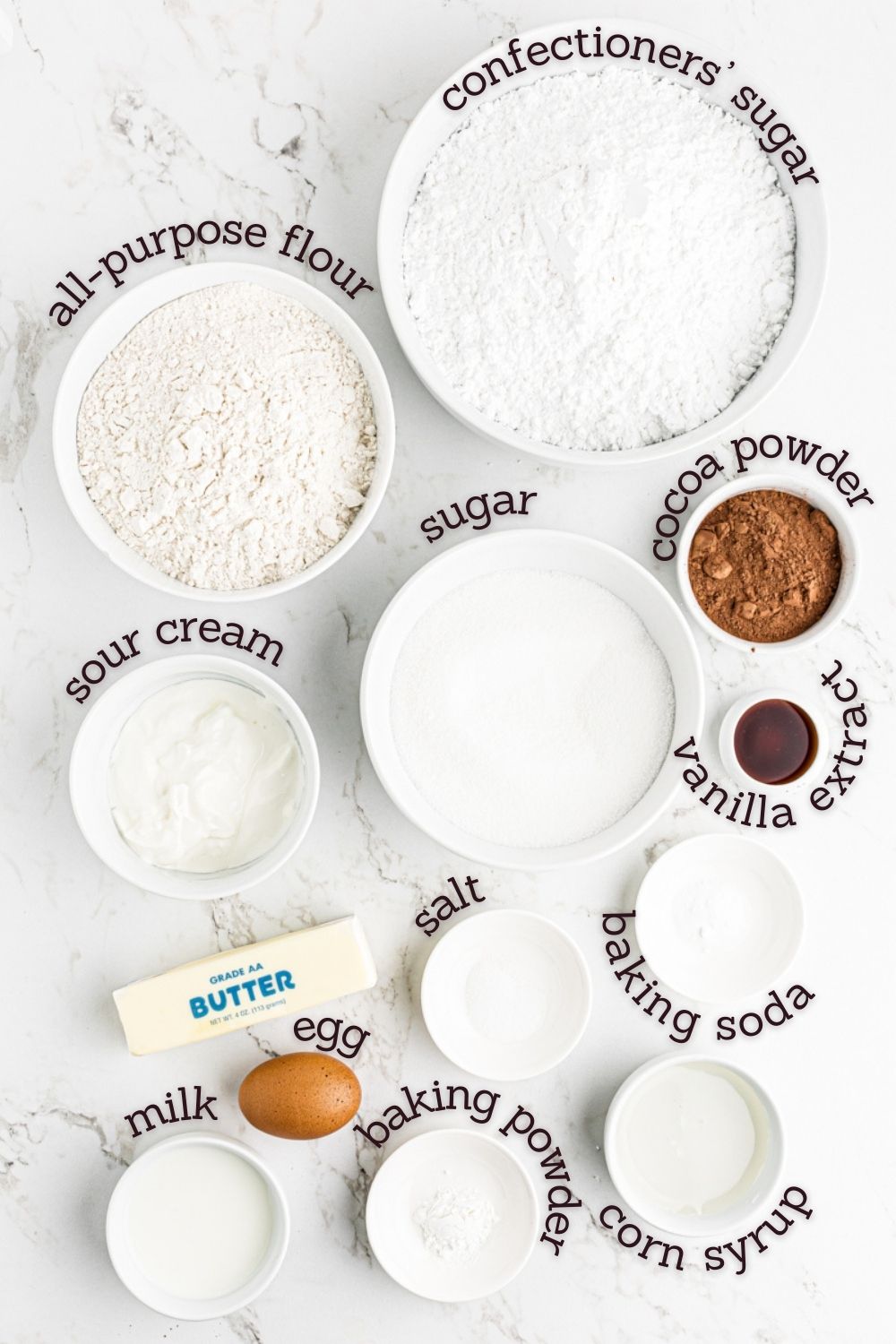
Crafting these classic cookies requires a thoughtful selection of ingredients, each playing a crucial role in achieving that perfect cake-like texture and balanced flavor. For precise quantities and comprehensive instructions, please refer to the detailed recipe card provided below. Here are some important notes regarding the key components you’ll need for your black and white cookies:
- Unsalted butter – For optimal texture and seamless blending, ensure your butter is thoroughly softened to room temperature before you begin mixing. Using unsalted butter grants you complete control over the overall saltiness of your cookies, allowing other flavors to truly shine. Learn more about achieving the perfect consistency: How to Soften Butter.
- Granulated sugar – This provides the primary sweetness and contributes to the cookie’s delicate structure and golden-brown edges.
- Egg – A large egg adds richness, moisture, and acts as a binding agent. Like the butter, it’s vital for the egg to be at room temperature; this ensures it emulsifies properly with the other ingredients, resulting in a smooth, consistent dough.
- Vanilla extract – A generous amount of high-quality vanilla extract is essential, as you’ll need it to infuse both the cookie dough and the distinct vanilla portion of the icing with its warm, aromatic essence.
- Sour cream – Full-fat sour cream is highly recommended for its ability to lend a superior moistness and a subtle tang to the cookies, balancing the sweetness beautifully. Bringing it to room temperature helps it blend smoothly into the batter, contributing to the cookie’s signature cake-like softness.
- All-purpose flour – For the most consistent and accurate baking results, we strongly advise measuring your flour by weight using a kitchen scale. If a scale isn’t available, employ the “spoon and sweep” method to avoid over-packing the flour, which can lead to dense, dry cookies. Discover the best way to measure flour: How to Measure Flour.
- Baking powder – This leavening agent works to give the cookies their characteristic rise and light, airy texture, ensuring they are tender and soft.
- Baking soda – Collaborating with the sour cream’s acidity, baking soda enhances the cookies’ lift and promotes a wonderfully tender crumb.
- Salt – A pinch of salt is crucial for balancing the sweetness, enhancing all the other flavors, and preventing the cookies from tasting bland.
- Confectioners’ sugar – Also widely recognized as powdered sugar, this fine sugar is indispensable for creating a perfectly smooth and melt-in-your-mouth icing. For the silkiest results, it’s highly recommended to sift it thoroughly before mixing to eliminate any lumps.
- Milk – Whole milk is my preferred choice for the icing, as its higher fat content contributes to a richer flavor and a luxuriously smooth, creamy texture. However, any type of milk you have on hand will work effectively.
- Corn syrup – A small amount of light corn syrup is included in the icing recipe to provide stability and a beautiful sheen. It helps prevent the icing from crystallizing, ensuring it remains wonderfully glossy and firm once set.
- Dark cocoa powder – To achieve the striking, deep “black” appearance and rich, intense flavor of the chocolate icing, dark cocoa powder (like Dutch-processed) is paramount. If you opt for regular unsweetened cocoa powder, you can easily enhance its dark hue by adding a tiny drop of black gel food coloring for a similar dramatic effect.
Mastering the Art of Black and White Cookie Creation
Eager to embark on your baking journey and create a batch of these universally adored cookies? Follow these detailed steps to achieve perfect results, from mixing the dough to applying that iconic two-tone icing:
Baking the Perfect Cookie Base
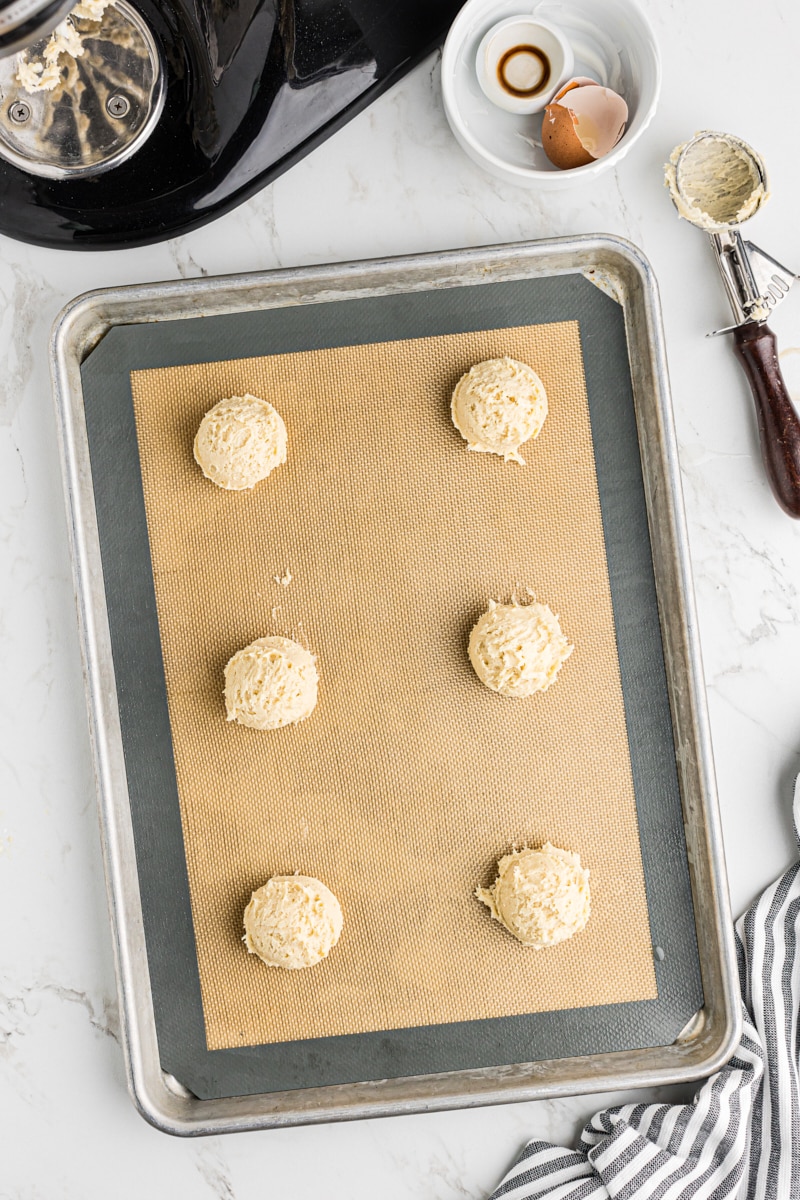
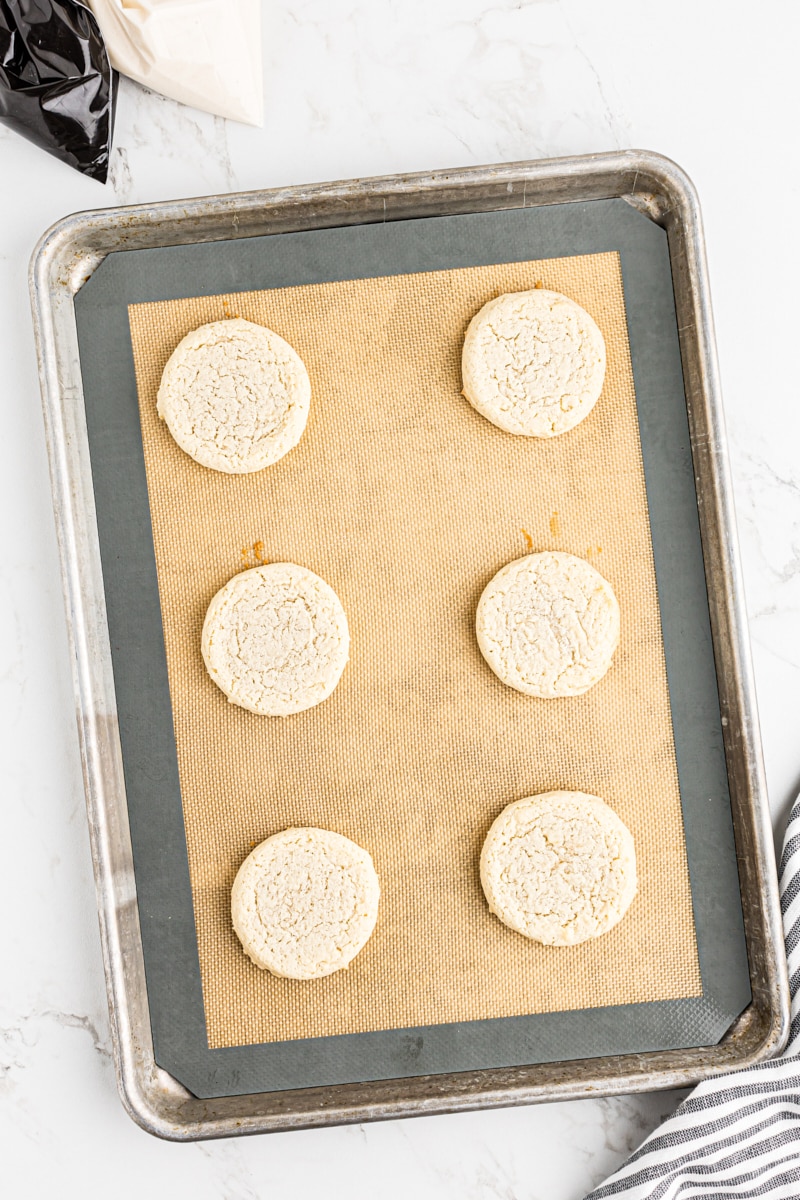
- Prepare for baking excellence. Start by preheating your oven to a precise 350°F (175°C). To prevent sticking and ensure easy cleanup, meticulously line your baking sheet(s) with either parchment paper or a high-quality silicone baking mat. This step is crucial for achieving uniformly baked cookies.
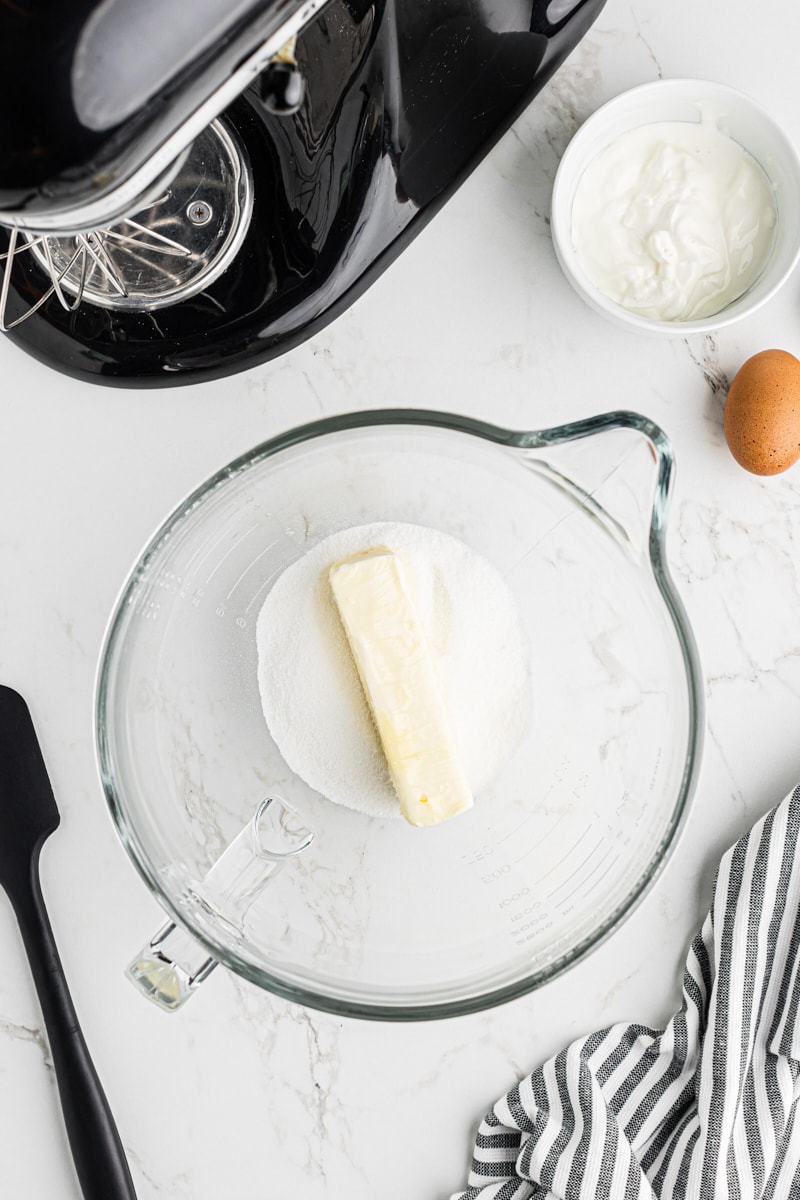
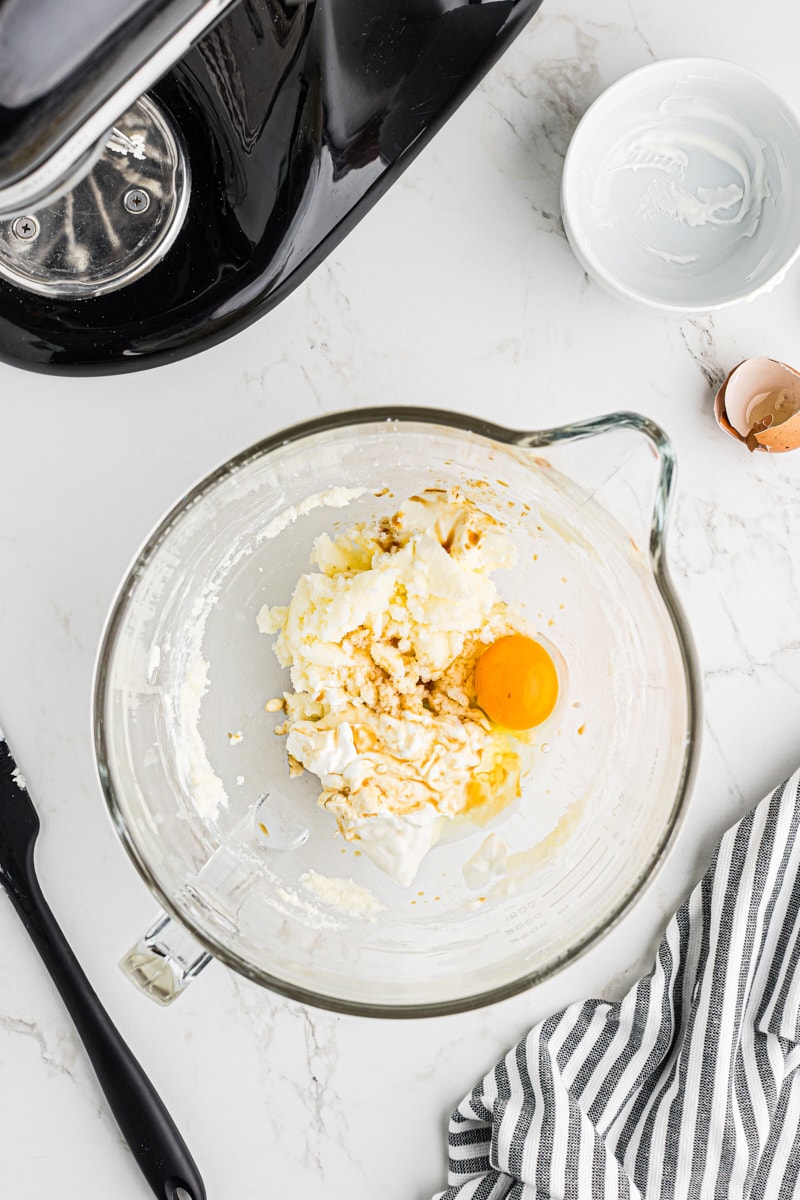
- Master the wet ingredients. In a sizable mixing bowl, using an electric mixer fitted with a whisk attachment, cream together the softened unsalted butter and granulated sugar until the mixture becomes wonderfully light, fluffy, and visibly pale. This process incorporates air, essential for a tender cookie. Next, carefully add the room-temperature egg, vanilla extract, and full-fat sour cream, continuing to mix until all components are thoroughly incorporated and the batter is smooth and homogenous.
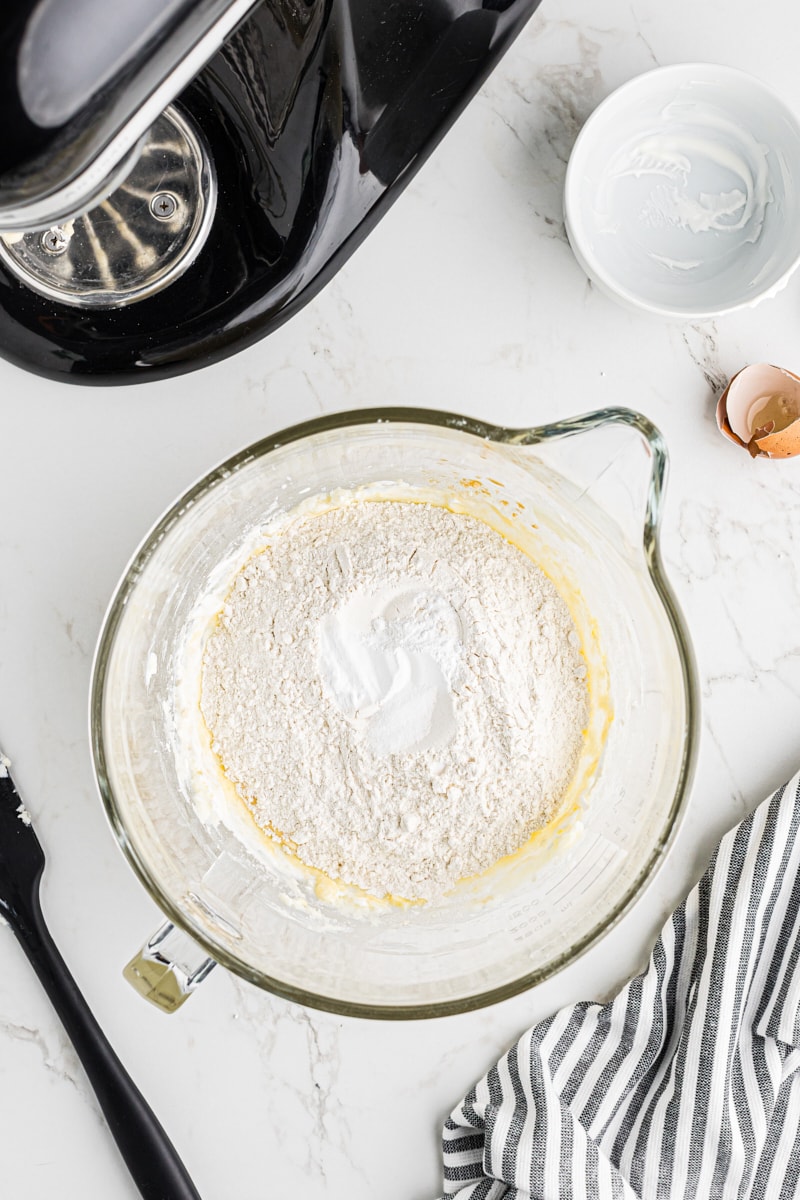
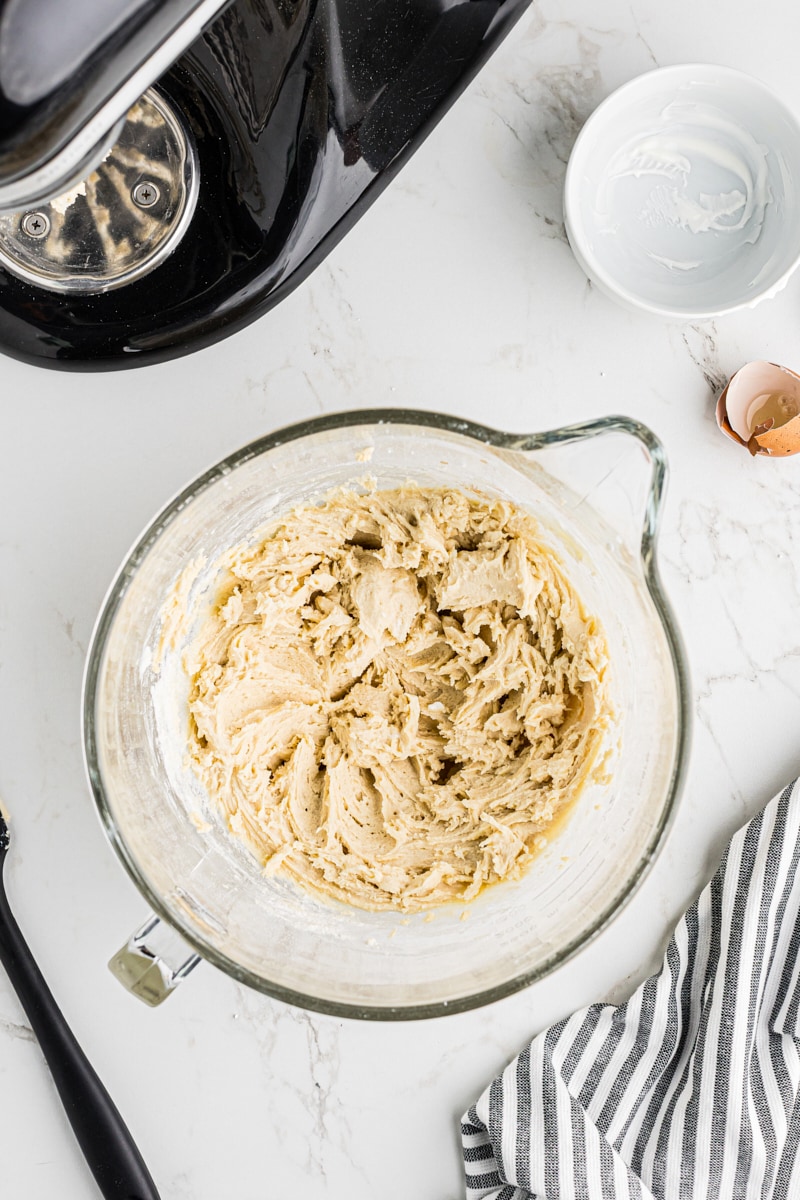
- Integrate the dry ingredients. Gently introduce the measured all-purpose flour, baking powder, baking soda, and salt into the wet mixture. Mix on a low speed, just until the dry ingredients are fully combined with the wet, being careful not to overmix. Overmixing can develop the gluten in the flour, resulting in a tougher cookie.
- Portion and bake with precision. Using a 2-tablespoon scoop or similar tool, divide the soft dough into 12 equal portions. Carefully place these portions onto your prepared baking pan(s), ensuring there is at least 2 inches of space between each cookie. This generous spacing allows for proper spreading without crowding. Bake in the preheated oven for approximately 15 minutes, or until the edges of the cookies are just beginning to show a light golden-brown hue. The centers should still appear soft.
- Flatten and cool for perfection. Immediately after removing the baking pan from the oven, transfer it to a wire rack. While the cookies are still warm and pliable, you have two options: either carefully flip them over to expose their naturally flat bottoms, or gently press down on the tops of each cookie using the flat bottom of a glass or measuring cup. This flattening technique is crucial for creating a smooth, even surface, which is ideal for applying the icing. Allow the cookies to cool completely on the wire rack before proceeding to the icing step.
Crafting the Signature Two-Tone Icing
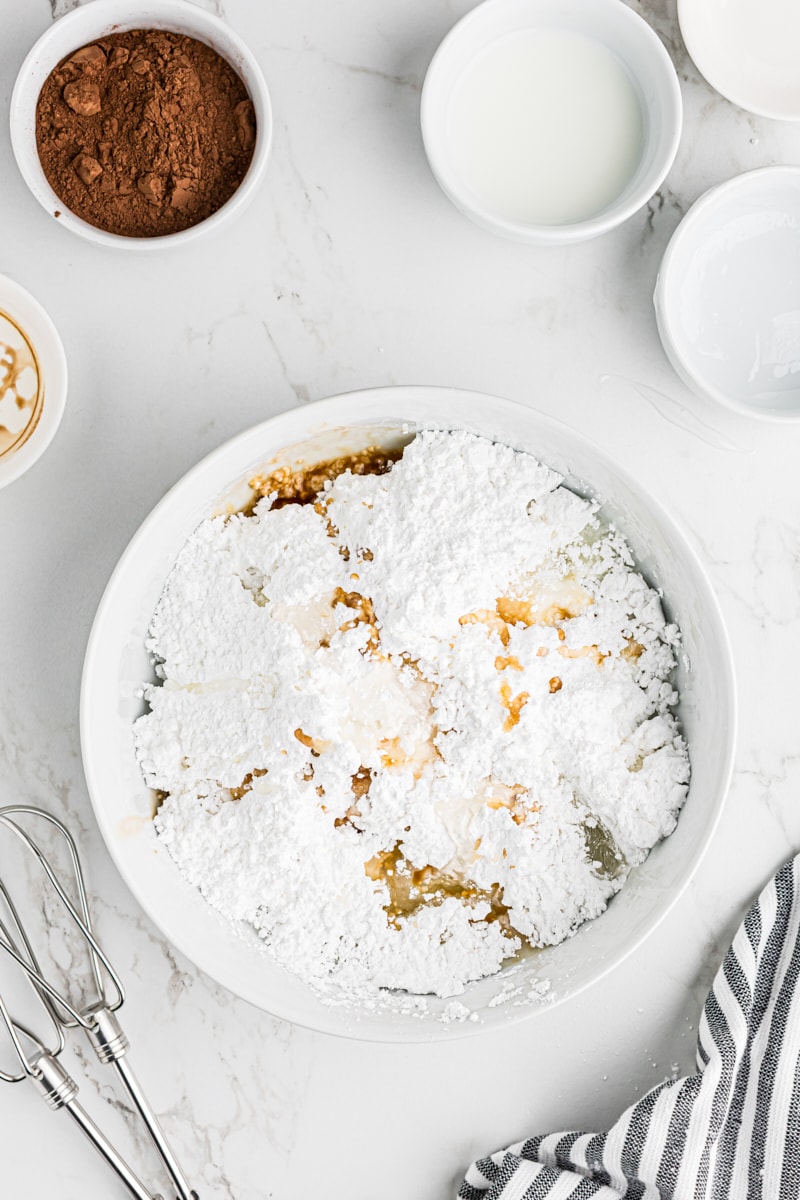
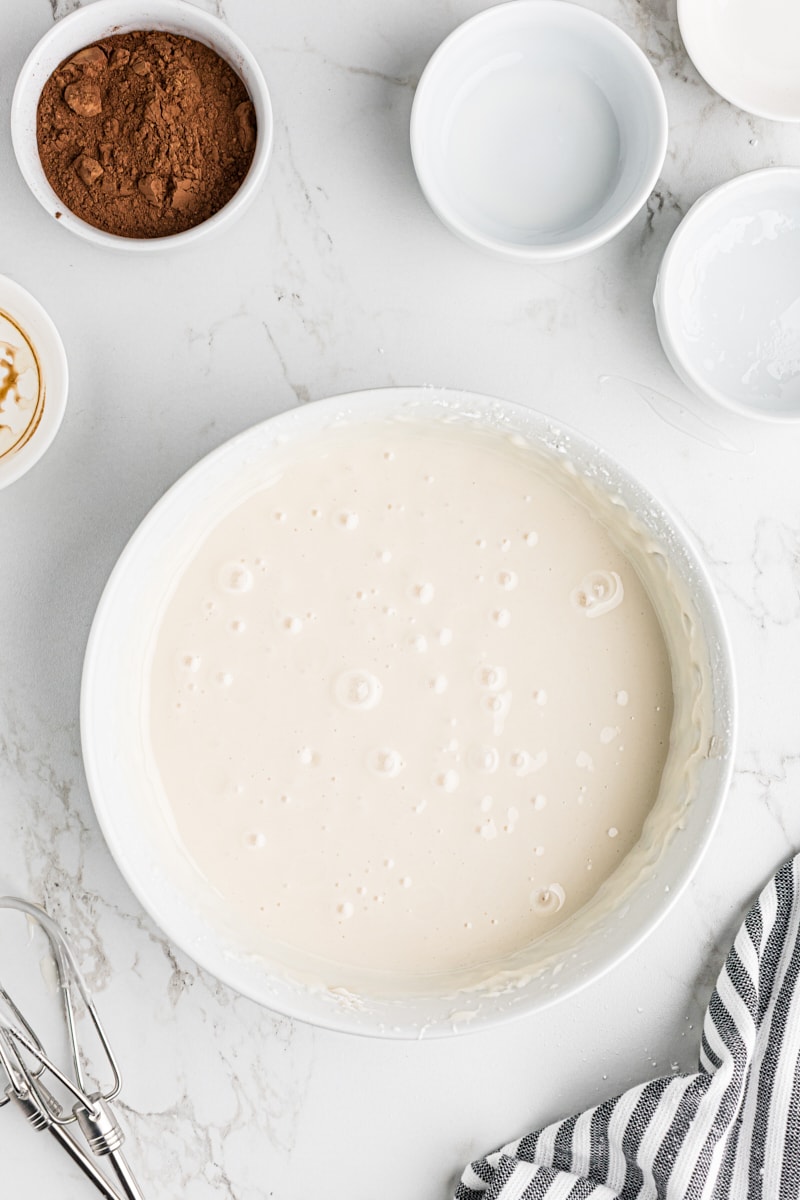
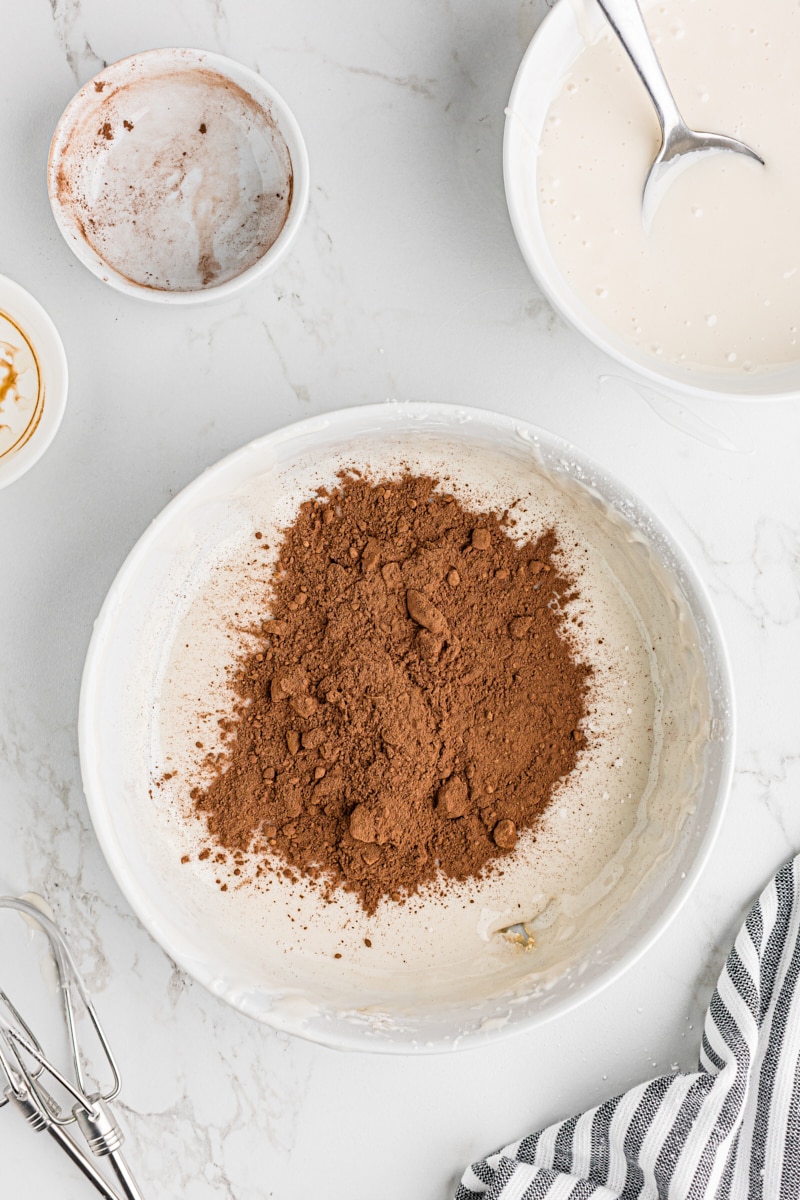
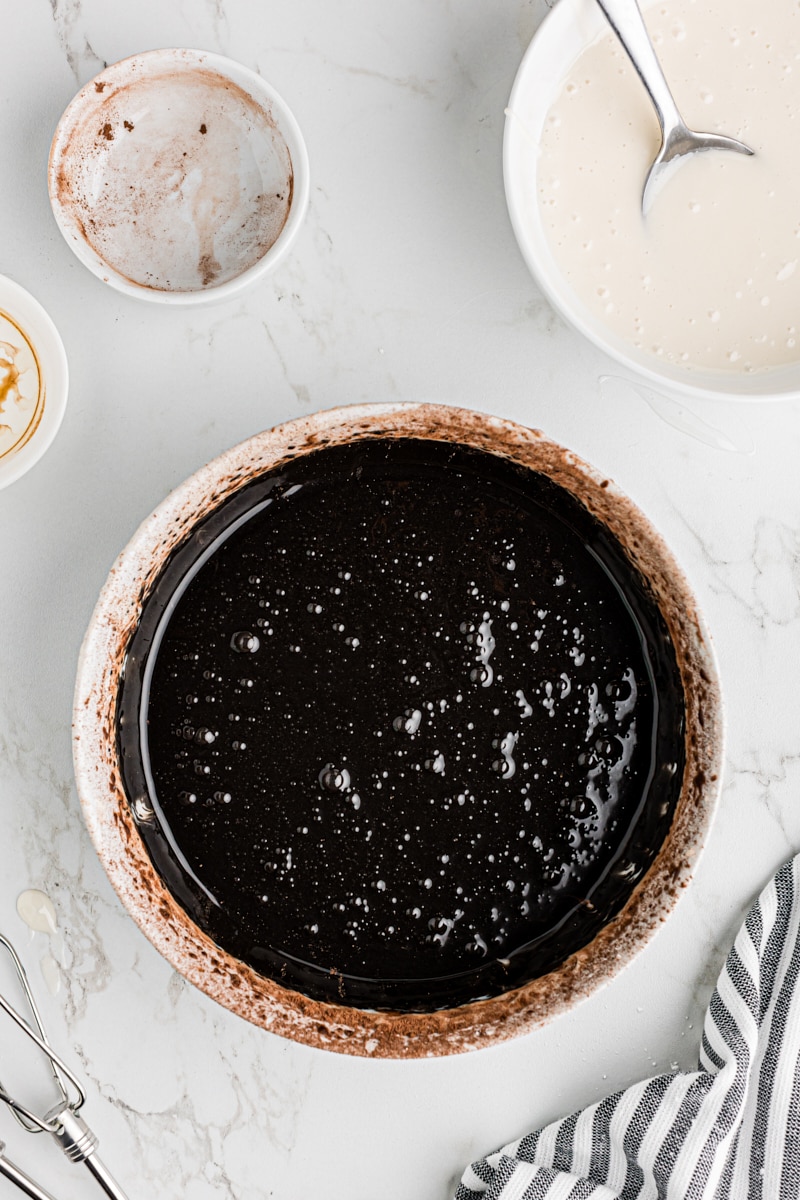
- Prepare the luscious vanilla icing. In a clean mixing bowl, meticulously whisk together the sifted confectioners’ sugar, whole milk, light corn syrup, vanilla extract, and a pinch of salt. Continue whisking until the mixture is completely smooth, glossy, and free of any lumps. This will form the base for both your vanilla and chocolate icings.
- Create the rich chocolate icing. Carefully divide the prepared vanilla icing into two separate bowls, ensuring equal portions. Into one of these bowls, add the dark cocoa powder. Stir vigorously until the cocoa powder is fully incorporated and the icing transforms into a smooth, uniformly rich chocolate color.
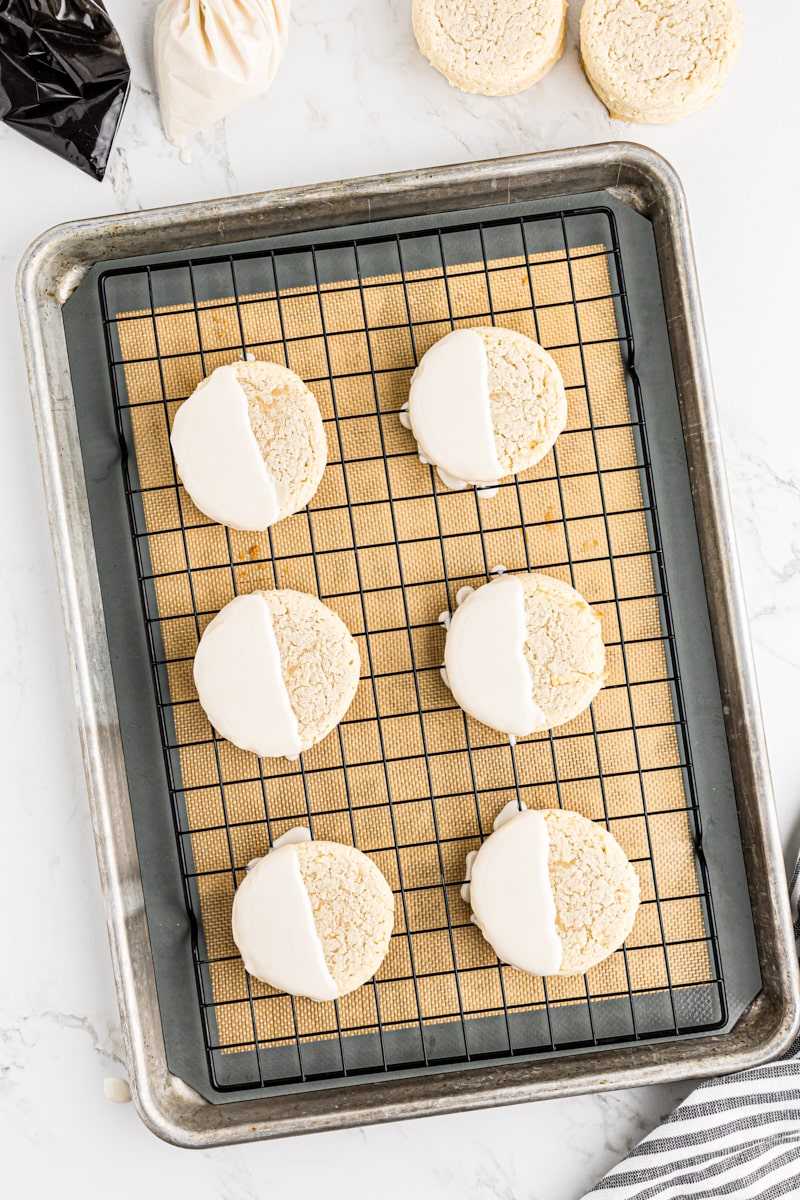
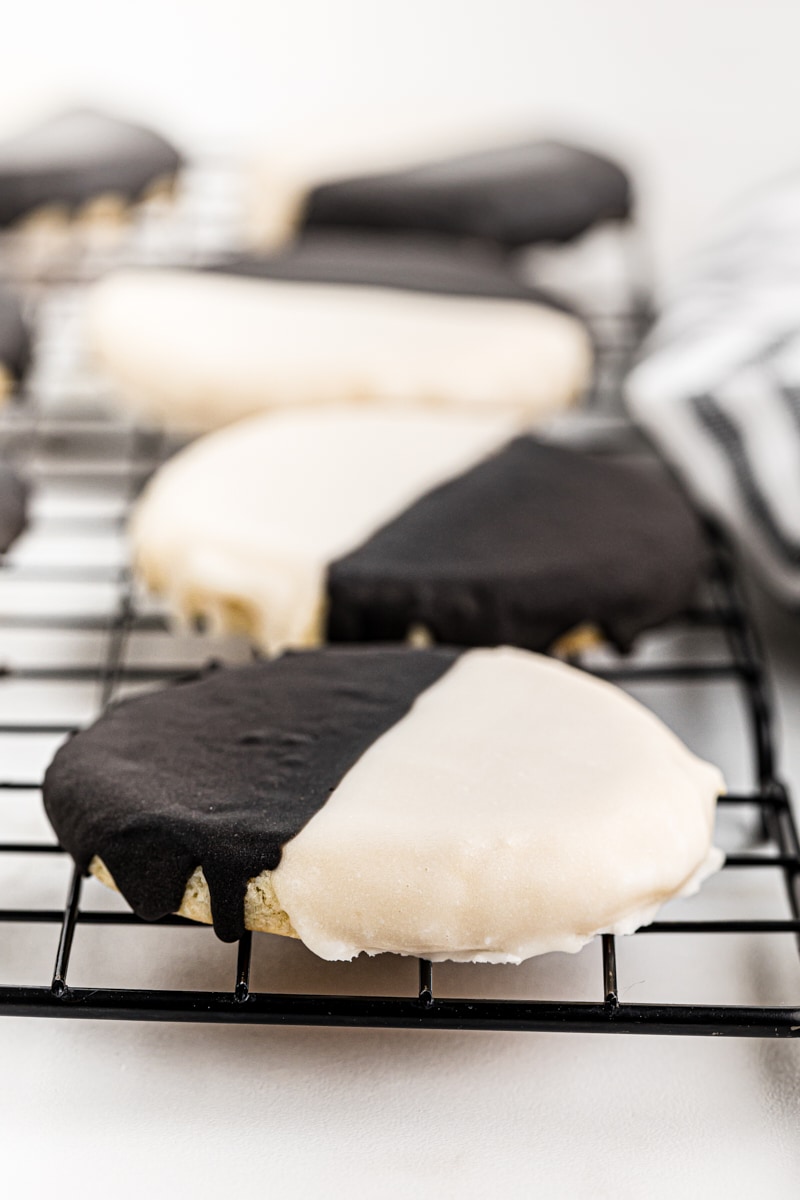
- Begin the icing process with vanilla. For a clean, professional finish, transfer each icing (vanilla and chocolate) into individual piping bags. Snip a small opening at the end of each bag. Take a cooled cookie and meticulously pipe the vanilla icing onto exactly half of its flattened surface. Aim for a neat, straight line down the center. Once all cookies have their vanilla halves iced, place them in the freezer for just a few minutes. This brief chilling period allows the vanilla icing to firm up slightly, preventing it from bleeding into the chocolate layer and ensuring a crisp division.
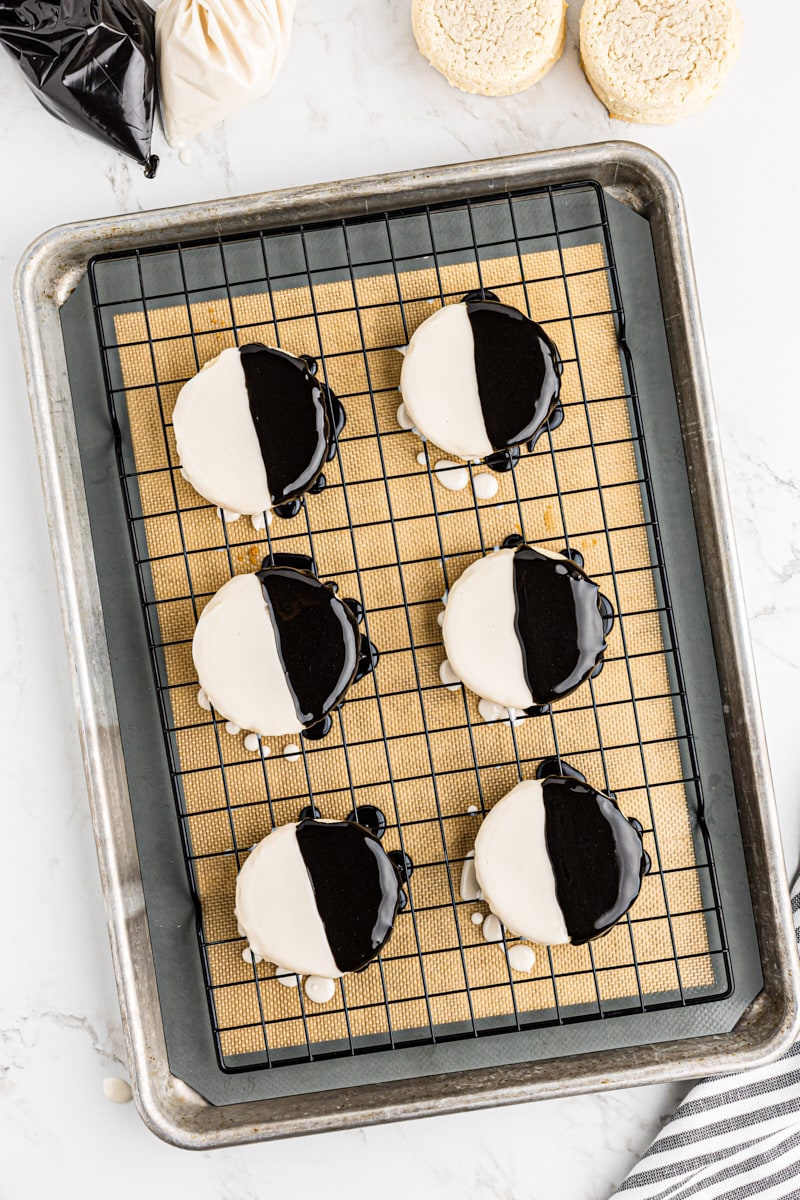
- Complete with chocolate and set. After the vanilla icing has set, remove the cookies from the freezer. Now, carefully pipe the chocolate icing onto the remaining un-iced half of each cookie, again striving for a clean, distinct line where the two colors meet. Once all cookies are beautifully adorned, allow the icing to fully set at room temperature for several hours, or until it is firm to the touch, before serving. This patience ensures a perfect presentation and a delightful bite.
Expert Tips for Black and White Cookie Perfection
- The critical role of temperature. Achieving a truly smooth and even cookie dough, which is essential for that cake-like texture, hinges significantly on ingredient temperature. Always allow your unsalted butter to soften sufficiently and ensure both your egg and sour cream come to a full room temperature before mixing. This temperature consistency promotes seamless emulsification, prevents curdling, and ensures a light, airy dough that bakes beautifully.
- Flat tops are non-negotiable for the classic look. The signature appearance of black and white cookies relies heavily on a perfectly flat surface for the icing. Immediately after baking, while the cookies are still warm and pliable, either gently flip them over to utilize their naturally flat undersides or use a flat-bottomed glass or measuring cup to carefully press down and flatten the tops. This creates an ideal, smooth canvas for your dual icing application, ensuring a professional and neat finish.
- Mastering the two-tone icing technique. To achieve that iconic, clean dividing line between the vanilla and chocolate icings, a strategic approach is key. Begin by applying the vanilla icing to exactly one half of each cooled cookie. Once this is done for all cookies, transfer them to the freezer for a brief few minutes. This quick chill allows the vanilla layer to set slightly, preventing any unwanted mixing of colors when you then apply the chocolate icing to the remaining half. This meticulous technique guarantees a sharp, beautiful contrast that defines the cookie.
- Embrace homemade charm over factory perfection. While striving for neatness is commendable, remember that slight variations in the icing application or individual cookie shapes are part of the charm of homemade baked goods. Don’t let the pursuit of “factory-perfect” aesthetics overshadow the joy of baking. Each cookie, with its unique characteristics, will be a testament to your personal touch and effort, adding to its appeal and deliciousness. Focus on the process and the delightful taste, and allow the minor imperfections to contribute to their authentic, rustic charm.
Optimizing Storage for Freshness
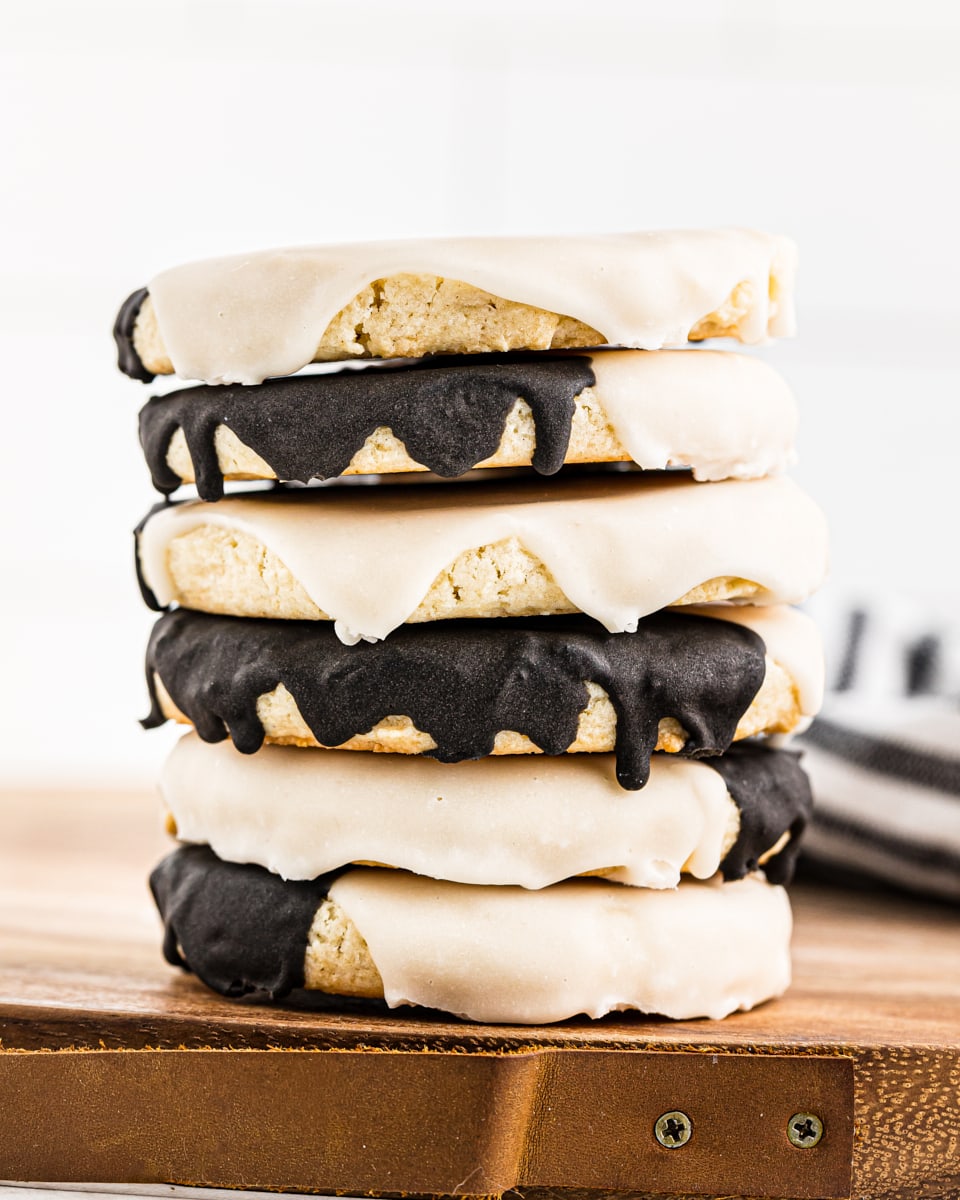
To ensure your delicious black and white cookies maintain their tender texture and vibrant flavors, proper storage is paramount. Once the icing has fully set, carefully arrange the cookies in a single layer or with parchment paper between layers within an airtight container. Stored at a comfortable room temperature, these cookies will remain delightfully fresh and soft for up to 3 days. For those who wish to extend their enjoyment slightly longer, transferring the airtight container to the refrigerator can prolong their freshness for up to 5 days. However, for the best eating experience, always allow refrigerated cookies to return to room temperature before serving; this will bring back their optimal softness and flavor profile.
Freezing Black and White Cookies: A Comprehensive Guide
Freezing these delightful cookies is an excellent way to prepare them in advance or preserve any leftovers, but the approach differs slightly depending on whether they are iced or un-iced. For the absolute best results and to preserve the pristine appearance of the icing, it is highly recommended to freeze the cookies before they are iced. Once baked and completely cooled, arrange the un-iced cookies in a single layer on a baking sheet and freeze until solid. Then, transfer them to an airtight, freezer-safe container or a heavy-duty freezer bag, ensuring layers are separated by parchment paper to prevent sticking. When stored correctly, these un-iced cookies can be kept in the freezer for up to 3 months. When you’re ready to enjoy them, simply thaw the cookies to room temperature before proceeding with the icing steps as outlined in the recipe.
Should you need to freeze cookies that have already been iced, a slightly different method is advised to protect the delicate frosting. First, ensure the icing on your cooled cookies is completely set and firm. Then, place the iced cookies in a single layer on a rimmed baking sheet and put them into the freezer until they are frozen solid. This “flash freezing” step prevents the icing from sticking together when stacked. Once solid, transfer the cookies to a freezer-safe container, placing layers of parchment paper between them for added protection. When the craving strikes, thaw these iced cookies overnight in the refrigerator. This slow, gradual thawing process is crucial as it helps minimize condensation, which can otherwise cause the icing to become sticky or watery. After thawing in the refrigerator, bring them to room temperature for optimal taste and texture before serving.
More Irresistible Cookie Recipes You’ll Love
Black and White Cookies
Pin Recipe
Leave a Review
Ingredients
For the cookies:
- ½ cup (113 g) unsalted butter
- 1 cup (200 g) granulated sugar
- 1 large egg
- 2 teaspoons vanilla extract
- ⅓ cup (75 g) sour cream
- 2 cups (240 g) all-purpose flour
- ½ teaspoon baking powder
- ¼ teaspoon baking soda
- ¼ teaspoon salt
For the icing:
- 3 cups (330 g) confectioners’ sugar
- ¼ cup (60 ml) whole milk
- 2 tablespoons (30 ml) light corn syrup
- 1 teaspoon vanilla extract
- ½ teaspoon salt
- 3 tablespoons (15 g) dark cocoa powder
Recommended Products
-
USA Pan Half Sheet Pan
-
2-Tablespoon (#30) Scoop
-
Wilton 12-Inch Disposable Decorating Bags for Piping and Decorating
Instructions
To make the cookies:
-
Preheat your oven to 350°F (175°C) and line a baking sheet with a silicone mat or parchment paper, preparing it for baking.
-
Using an electric mixer with a whisk attachment, beat the softened butter and granulated sugar together until they achieve a light, airy, and fluffy consistency. Then, incorporate the room temperature egg, vanilla extract, and sour cream, mixing until the mixture is thoroughly combined and smooth.
-
Add the all-purpose flour, baking powder, baking soda, and salt to the wet ingredients. Mix on low speed, just until all dry ingredients are barely incorporated and the dough comes together. Be careful not to overmix to maintain a tender cookie texture.
-
Divide the cookie dough into 12 equal portions, approximately 2 tablespoons each. Arrange these portions on the prepared baking sheet, ensuring at least a couple of inches of space between each cookie to allow for proper spreading during baking.
-
Bake the cookies for about 15 minutes, or until their edges just begin to turn a light golden-brown. Remove the pan from the oven and immediately transfer it to a wire rack. While the cookies are still warm, either carefully flip them over to utilize their flat undersides or gently press down on the tops of each cookie with a flat-bottomed glass to flatten them for icing.
-
Allow the cookies to cool completely on the wire rack before proceeding to the icing stage. This step is crucial for the icing to set properly.
To make the icing and assemble:
-
In a clean bowl, whisk together the confectioners’ sugar, milk, corn syrup, vanilla extract, and salt until the mixture is perfectly smooth and free of any lumps. This will be your base icing.
-
Divide the prepared icing equally into two separate bowls. To one of these portions, add the dark cocoa powder and stir thoroughly until it is fully combined and has achieved a rich, uniform chocolate color.
-
Once the cookies have fully cooled to room temperature, transfer both vanilla and chocolate icings into individual piping bags with small tips. Pipe the vanilla icing over exactly half of each cookie, creating a neat, straight line down the center. After icing with vanilla, place the cookies in the freezer for a few minutes to allow this layer to set firmly.
-
Next, remove the cookies from the freezer and pipe the chocolate icing over the other un-iced half of each cookie, carefully meeting the vanilla line. Allow the cookies to sit at room temperature for several hours until both icings are completely set and firm before serving to ensure a perfect presentation.
Notes
- For optimal freshness, store the black and white cookies in an airtight container at room temperature for up to 3 days, or extend their shelf life to up to 5 days by refrigerating them.