
Brown Butter: How to Make It and Elevate Your Baking
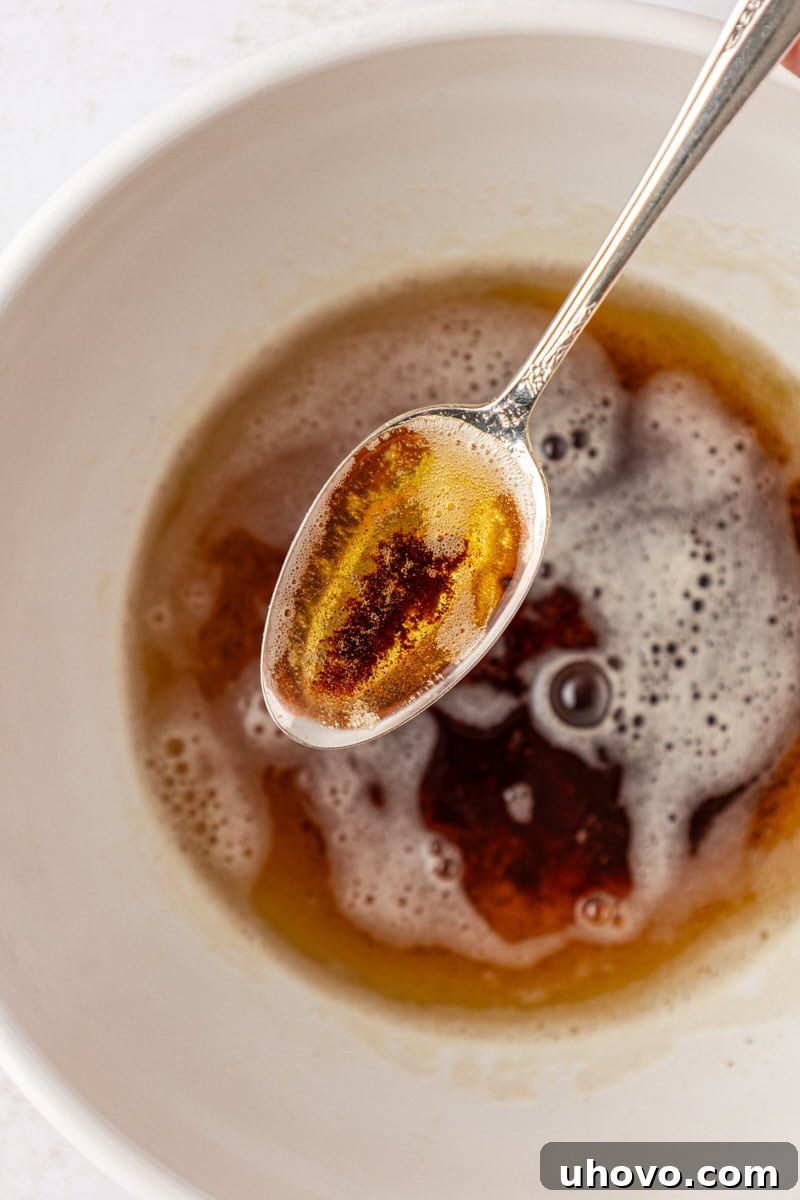
Brown butter delivers a deep, nutty richness to everything from cookies to cakes. Making it requires only one ingredient and a few minutes on the stove. Here’s a clear, reliable way to get it right every time.
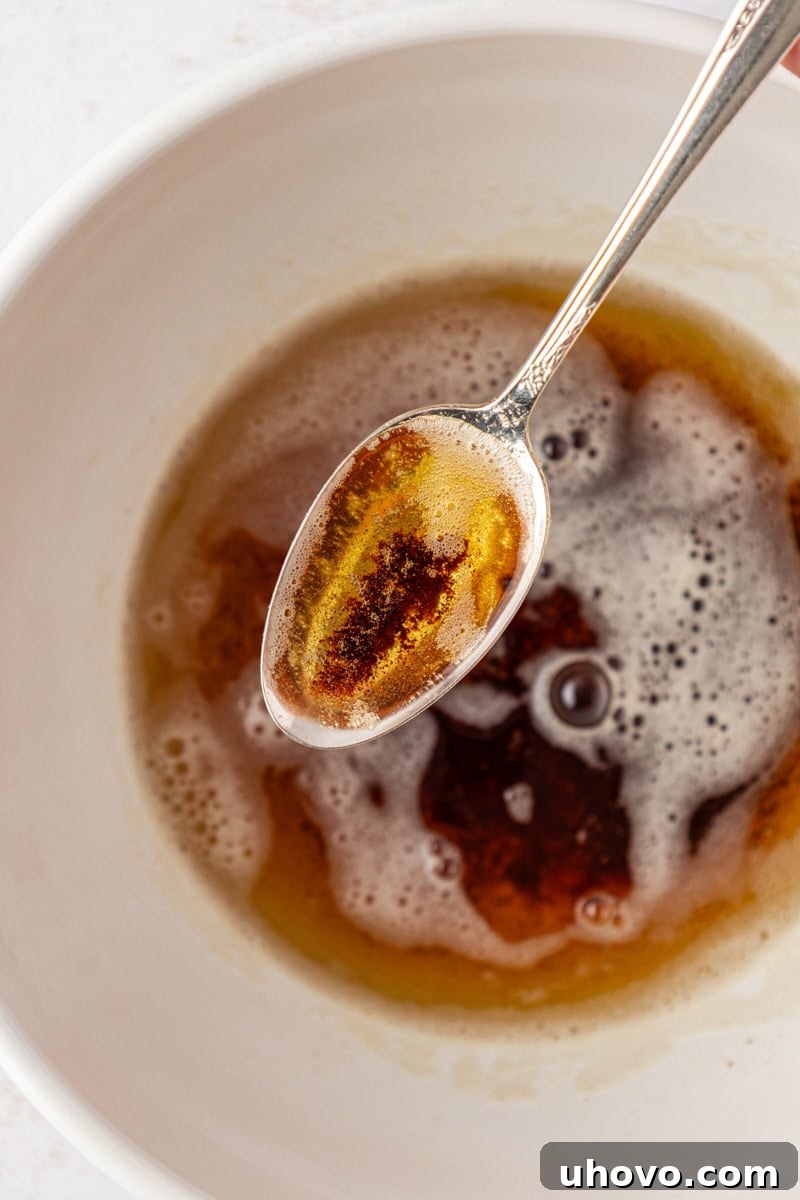
If you’ve never used brown butter in baking, you’re in for a treat. Browning butter changes its familiar flavor into something toastier and more complex, with warm, caramel-like notes. It’s a simple technique that elevates ordinary baked goods without extra ingredients.
You don’t need special tools—just butter, a saucepan, and a little attention while it cooks.
What is Brown Butter?
Brown butter, or beurre noisette, is butter cooked until the milk solids turn golden brown. As the butter melts, water evaporates and the milk solids toast, producing a nutty aroma and deeper flavor. The result is a warm amber-colored fat with tiny browned bits that add flavor and texture.
It’s especially useful in cookies, brownies, cakes, and other baked goods where you want a richer, more toasty note without changing the recipe significantly.
How to Brown Butter
Browning butter typically takes 5 to 10 minutes, depending on quantity, pan size, and stove heat. Rely on visual and aromatic cues rather than a timer. Stay nearby: browned butter can turn to burnt butter very quickly at the end.
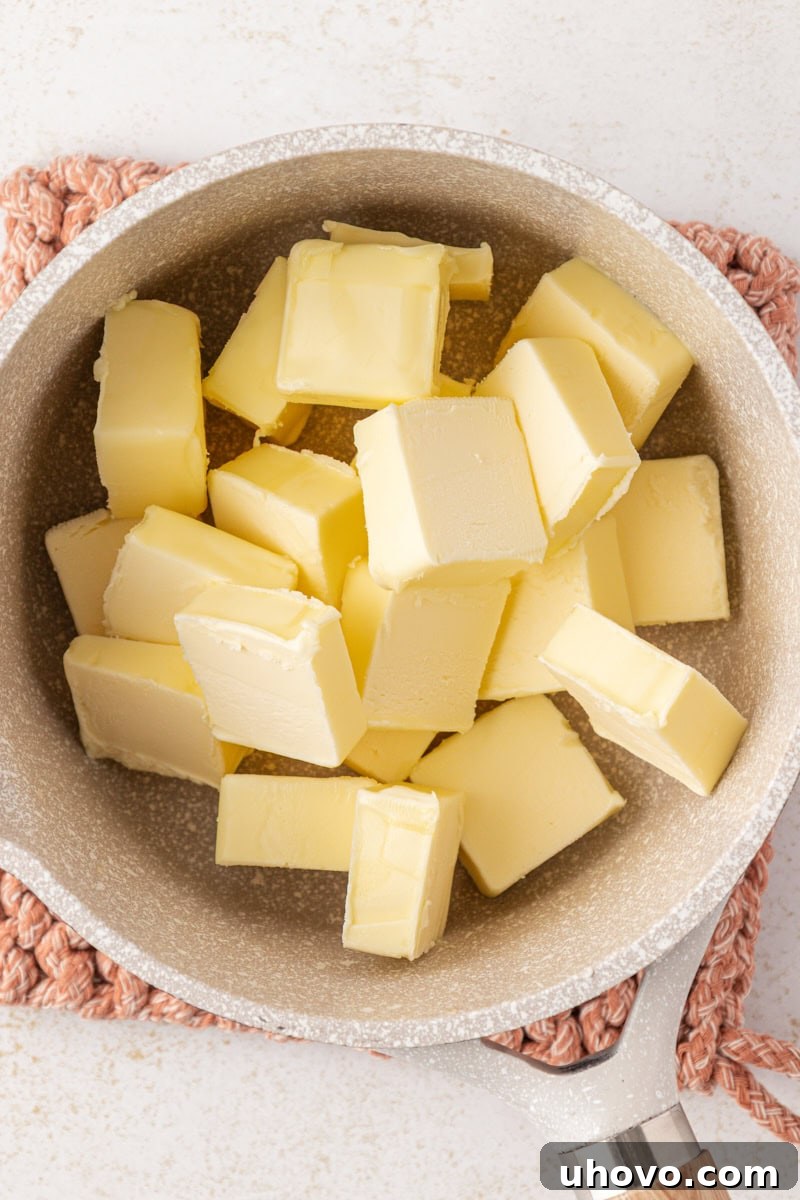
1. Melt the butter. Cut the butter into even pieces and put it in a light-colored saucepan that gives you space for bubbling. Use medium heat and stir or swirl occasionally until it’s completely melted.
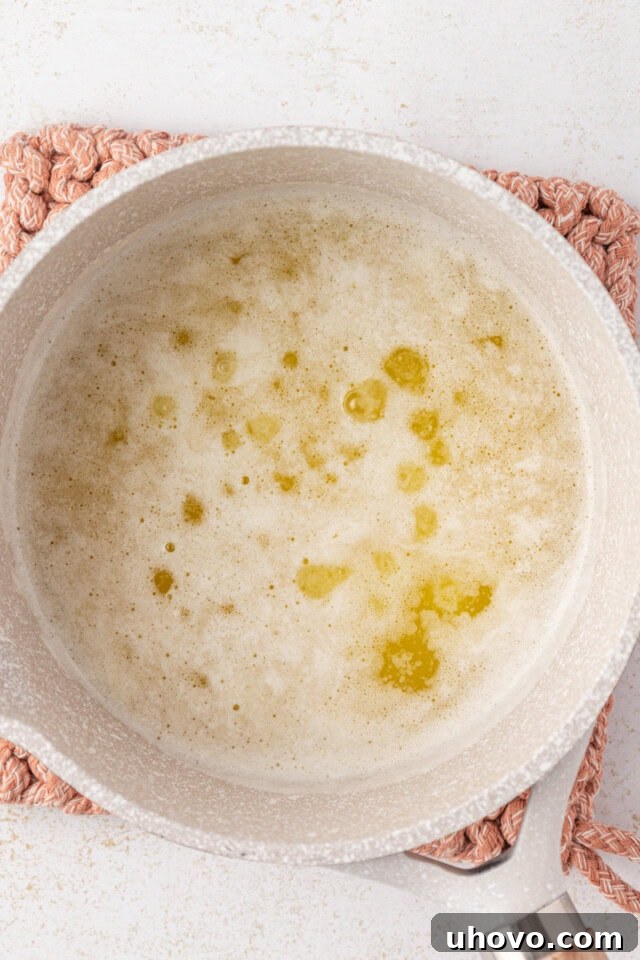
2. Let it foam and bubble. Keep cooking over medium heat. The butter will sizzle and form a layer of foam as moisture evaporates. Stir or swirl occasionally so the milk solids don’t stick and burn.
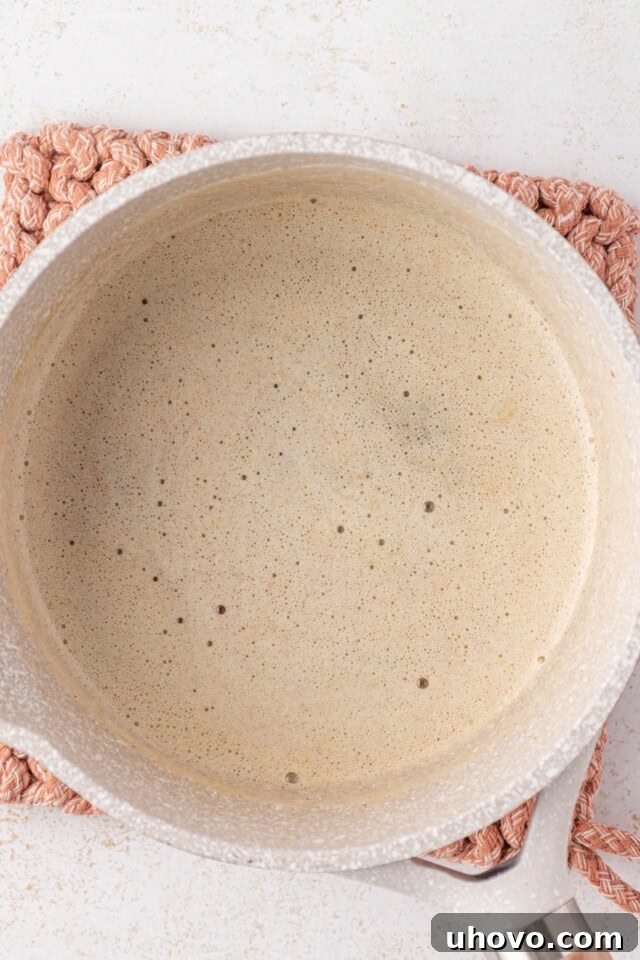
3. Watch for browning. As the sizzling slows, the milk solids will settle and begin to turn golden brown. The butter will take on an amber hue and a deep, nutty aroma. Stir more often now and move aside the foam to inspect the color of the solids. Pay close attention so you don’t overshoot to burning.
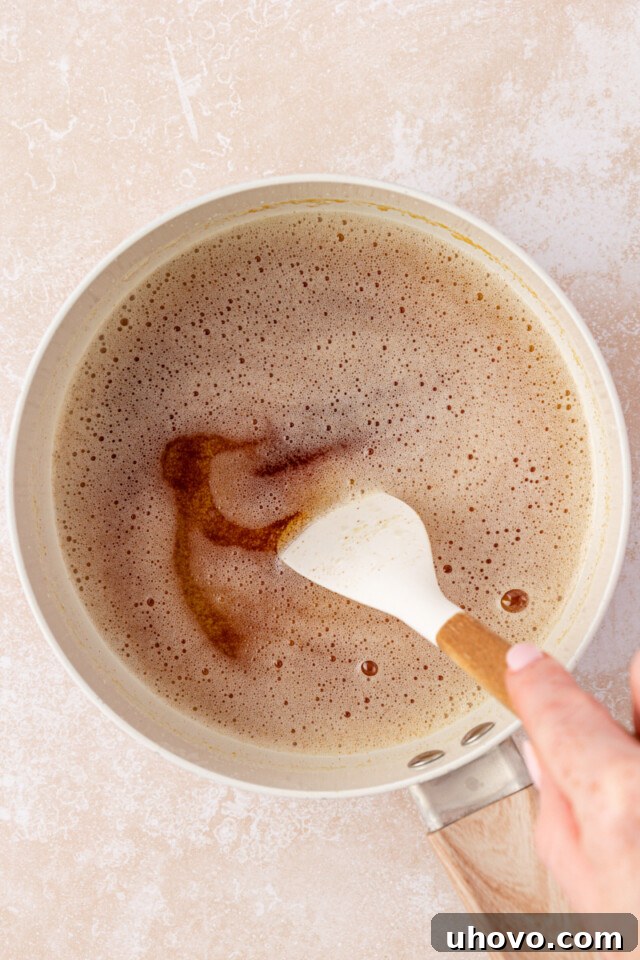
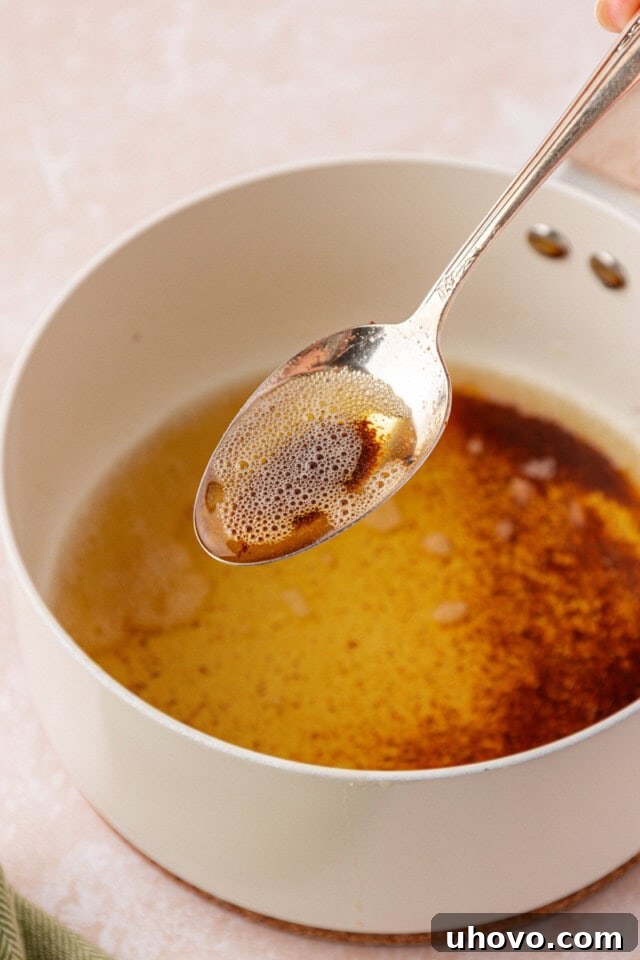
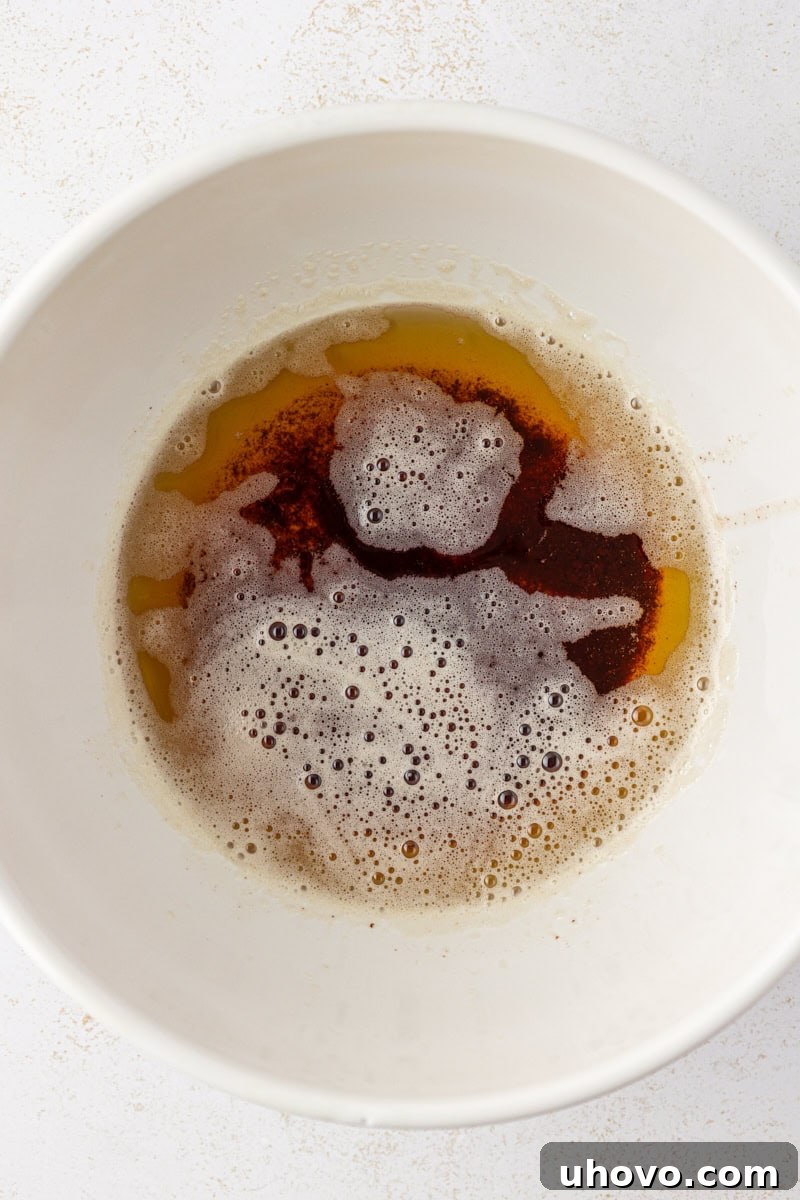
4. Remove from the heat. As soon as the butter is golden and smells nutty, pour it into a heatproof bowl to stop the cooking and scrape in the browned bits. Let it cool to the temperature or consistency your recipe specifies before using.
Tips for Perfect Brown Butter
- Use a light-colored pan. It’s easier to judge how browned the milk solids are against a light surface.
- Keep the heat moderate. Medium heat lets the butter brown gradually so you can monitor its progress.
- Rely on aroma. A warm, nutty, toasted smell is a great cue that the butter is ready.
- Don’t leave it unattended. The final stage happens fast; stay nearby and watch it carefully.
- Transfer it promptly. Butter will continue to cook in a hot pan after you turn off the heat, so pour it into another container to halt the process.
Brown Butter Troubleshooting
Why is my butter taking so long to brown? Time varies with the amount of butter, the pan size, and stovetop output. The water in the butter must evaporate before the solids can toast. If bubbling is minimal, slightly raise the heat but stay vigilant.
How can I tell if I’ve burned it? Proper brown butter smells toasty and shows golden to medium-brown bits. If those bits turn black or the smell becomes acrid and sharp, the butter is burnt.
Can I fix burnt butter? No. Once the milk solids are burned, the bitter flavor can’t be removed. It’s best to discard it and start over.
Using Brown Butter in Baking
Brown butter brings a toasted, nutty complexity to cookies, brownies, cakes, and more. A few practical points will help you use it successfully.
Can you substitute brown butter for regular butter?
Sometimes, but it isn’t always a one-to-one swap. Browning reduces some of the butter’s water content, which can subtly change the texture of baked goods, especially in recipes that depend on precise moisture balance.
For consistent results, use recipes that specifically call for brown butter. Those recipes account for the flavor and moisture differences.
Does brown butter need to cool before baking?
It depends on the recipe. Some recipes use brown butter while it’s still warm and liquid; others require it cooled or solidified. Follow your recipe’s instructions—temperature and consistency affect texture and mixing.
Make-ahead tip: You can brown butter ahead of time. Cool it, store it in an airtight container in the refrigerator, and bring it to the required temperature before using. Be sure to include the flavorful browned bits when you measure it out.
Put Your Brown Butter Skills to Use
Now that you know how to brown butter, try it in your favorite baked goods. It enhances simple cookies, bars, cakes, and more with a warm, toasted depth of flavor.
If you want recipe ideas, look for collections and recipes that specifically call for brown butter—those are designed to showcase its nutty character.
More Baking Tips & Tutorials

How to Toast Pecans
Unsalted or Salted Butter: Which is Better for Baking?
How to Make Cinnamon Sugar