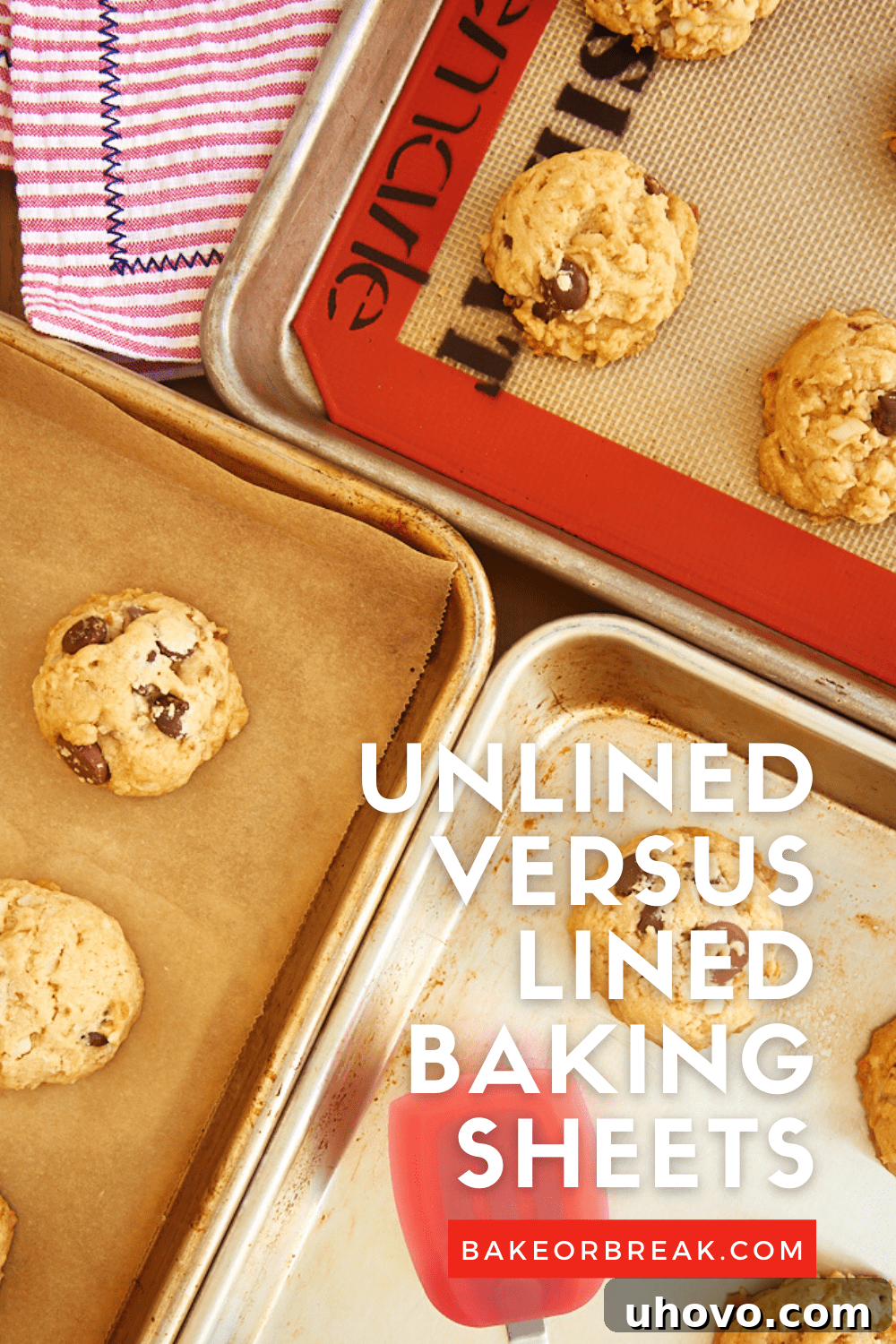
Achieving perfect cookies often boils down to the finer details, and one of the most frequently debated topics among bakers is whether to line your baking sheets. The choice between an unlined, parchment-lined, or silicone mat-lined baking sheet can significantly impact the final characteristics of your cookies, from their golden-brown bottoms to their chewiness and overall texture. This comprehensive guide delves into a direct comparison, revealing the distinct differences you’ll encounter and helping you decide the best approach for your next batch of delicious homemade treats.
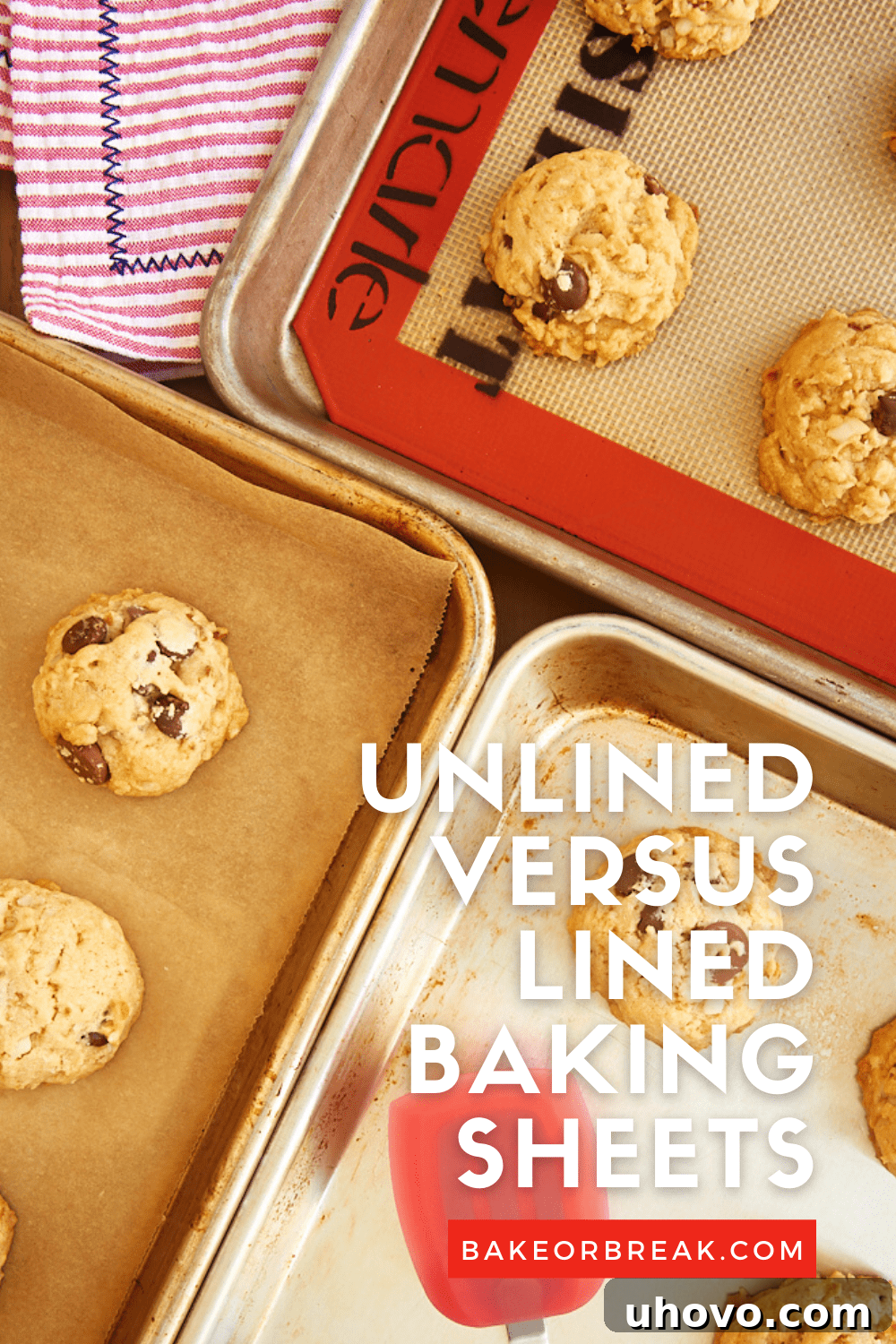
For many home bakers, myself included, the instruction to line baking sheets with parchment paper or silicone mats is a common directive found in countless cookie recipes. But have you ever paused to wonder if this step is truly essential, or merely a suggestion? While “necessary” might be a strong word, understanding the direct impact of your chosen baking surface is crucial for achieving consistently excellent results. This article aims to demystify the debate by showcasing the tangible differences in cookies baked on unlined sheets compared to those prepared with either parchment paper or silicone liners.
To provide a clear, side-by-side comparison, I conducted a meticulous baking experiment. The goal was not just to contrast lined versus unlined pans, but also to evaluate the performance of the two most popular lining materials: parchment paper and silicone baking mats. The methodology was designed to isolate the variable of the baking surface, ensuring that all other factors remained constant to provide the most accurate insights.
The experiment began with a single batch of meticulously prepared cookie dough. This ensured uniformity in ingredients, mixing, and chilling, which are all critical elements in cookie quality. I then selected three identical light-colored, non-reflective baking pans, chosen for their consistent heat distribution properties. Each pan was prepared differently: one was equipped with a high-quality silicone baking mat, another was lined with a sheet of premium parchment paper, and the third was left unlined, prepared only with a very light coating of cooking spray to prevent sticking. The dough was consistently chilled for the same duration before being portioned and baked. Moreover, the baking temperature and time were kept precisely the same across all three pans to ensure a fair and accurate comparison of the final baked goods. So, what transformative differences did these simple distinctions reveal?
The Science of Cookie Browning: Lined vs. Unlined Surfaces
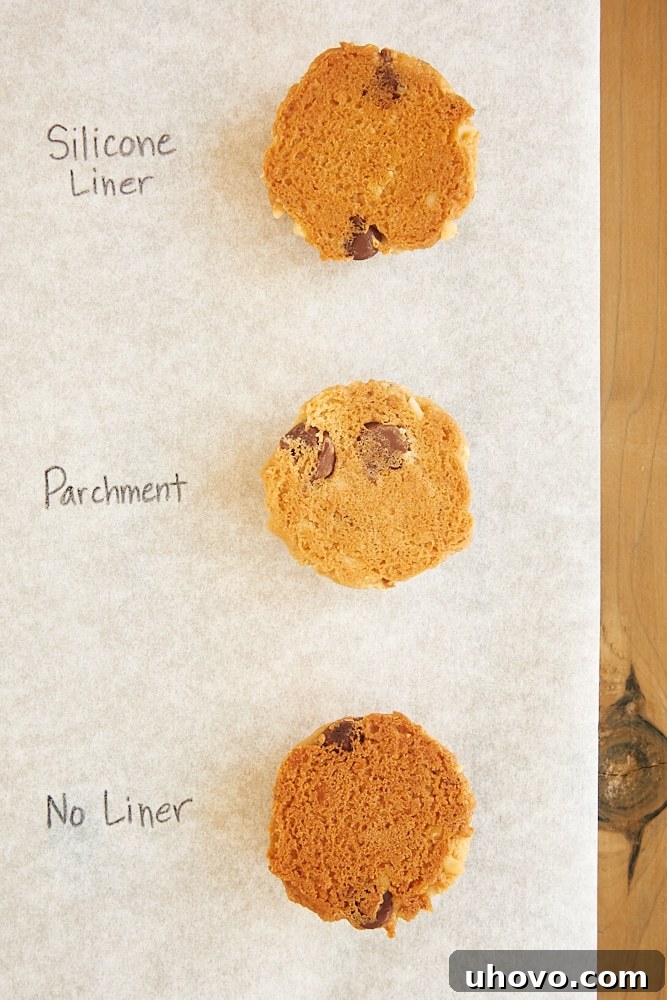
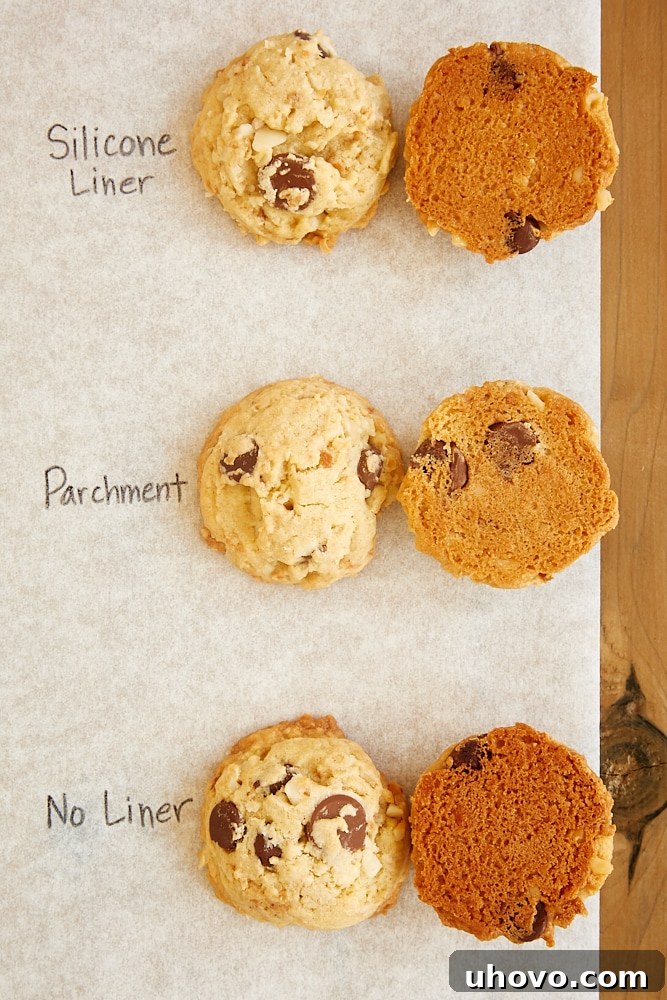
One of the most visually striking differences observed in the experiment was the degree of browning on the bottoms of the cookies. The cookies baked on the baking sheet lined with a silicone mat consistently emerged with lightly browned bottoms. This result aligns perfectly with the expected performance of silicone, which acts as a mild insulator, moderating the direct heat transfer from the hot metal pan to the cookie dough. This gentle browning is often preferred for cookies that require a softer, less crispy base.
Surprisingly, the cookies baked on parchment paper also exhibited a light browning on their undersides. While many bakers might anticipate parchment to allow for slightly more browning than silicone due to its thinner material, in this experiment, the browning was actually a touch less intense than what the silicone liner provided. This subtle difference highlights parchment’s insulating properties, which, although less pronounced than silicone, still protect the cookie from direct, intense heat. This results in a delicate, even browning that contributes to a tender crumb.
In stark contrast, the cookies baked directly on the unlined, lightly greased baking sheet developed a decidedly more significant browning on their bottoms. The direct contact between the cookie dough and the hot metal surface facilitates maximum heat transfer, accelerating the Maillard reaction – the chemical process responsible for browning and flavor development in many baked goods. This intense browning leads to a crisper, sometimes even hard, bottom crust. Depending on your preference, this could be either a desired outcome for a crunchy cookie or an undesirable characteristic for a soft and chewy one.
Texture Transformation: How Baking Surfaces Impact Cookie Chewiness and Softness
Beyond visual appeal, the choice of baking surface profoundly influences the texture of your cookies, impacting everything from their chewiness to their tenderness. In our experiment, both parchment paper and silicone liners consistently yielded soft, delicate cookies. The insulating layer provided by these materials helps to regulate the baking process, preventing rapid moisture loss from the cookie dough. This slower, more even bake promotes a tender crumb and a desirable soft, chewy interior, which is often the hallmark of a perfectly baked cookie.
While both liners excelled at producing soft cookies, a subtle distinction emerged: I personally found that parchment paper provided a marginally superior overall texture, often resulting in a slightly more consistent chewiness throughout the cookie. However, the difference was so minimal that it’s truly a matter of personal preference and often too close to definitively declare one superior to the other. Both offer excellent results for soft-baked treats.
Conversely, the cookies baked on the unlined baking sheet presented a distinctly different textural profile. Due to the accelerated browning and more intense, direct heat exposure, these cookies were noticeably chewier and denser. The lack of an insulating barrier allowed moisture to evaporate more quickly, leading to a firmer, more compact internal structure. While perfectly edible and indeed enjoyed by those who prefer a more robust, chewy cookie, their texture, combined with the extra browning on the bottom, generally made them the least appealing option in terms of overall tenderness and delicate mouthfeel. Understanding these textural nuances allows bakers to select the ideal lining based on their desired cookie outcome, whether it’s a melt-in-your-mouth softness or a hearty, satisfying chew.
Controlling the Spread: How Lined Baking Sheets Influence Cookie Diameter
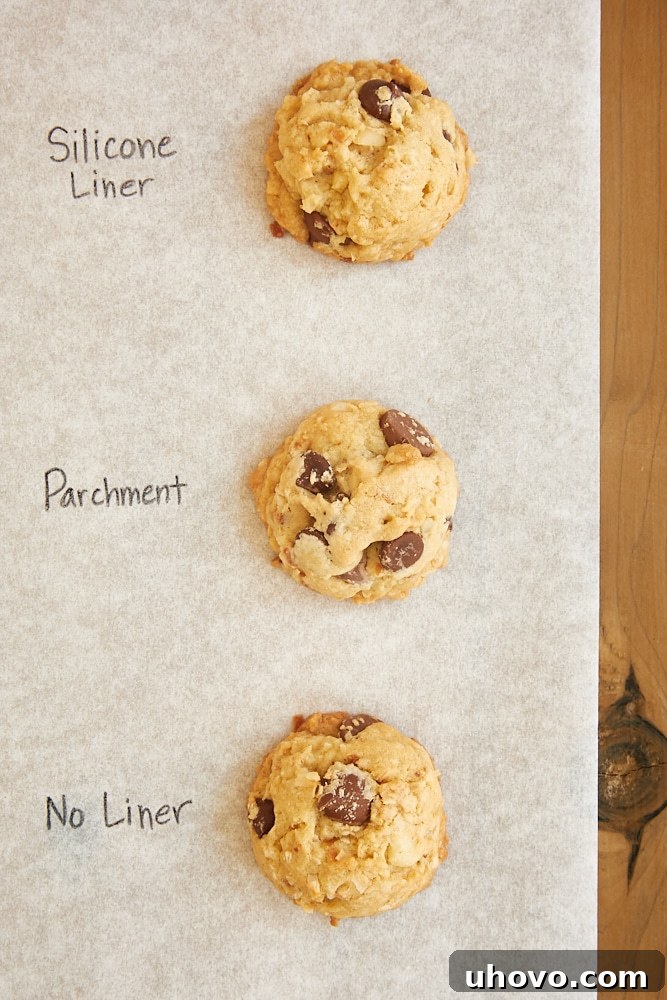
The spread of cookies during baking is a critical factor influencing their final appearance and consistency. Our experiment revealed subtle yet noteworthy differences in how much the cookies spread across the various baking surfaces. The cookies baked on the unlined sheet consistently spread the most. This can be attributed to the direct contact with the greased metal surface, which provides minimal friction. If I had used a more generous amount of grease, it’s highly probable they would have spread even further, resulting in thinner, lacier cookies. The smoother, more lubricated surface allows the cookie dough to relax and flatten more easily as it heats up.
The silicone liner resulted in slightly less spreading compared to the unlined pan. While silicone mats are renowned for their non-stick properties, which might suggest a greater spread, they actually provide a certain degree of gentle resistance or friction. The non-stick nature prevents the dough from adhering, but the material itself doesn’t offer the same slickness as a heavily greased metal pan, thus slightly mitigating excessive spread. However, it’s worth remembering that nothing truly sticks to silicone, so you might still observe a bit more spreading than other methods, especially with high-fat or warm doughs.
Ultimately, parchment paper delivered the least amount of cookie spreading. The paper offers a delicate balance: it’s non-stick enough to prevent adhesion but provides just the right amount of surface friction to gently hold the cookie dough in place as it melts and spreads. This controlled spread often results in cookies with a more consistent shape and thickness, which is particularly desirable for presentation and uniformity. Again, while the differences in spreading were subtle, they are certainly significant enough to consider when aiming for a specific cookie aesthetic or texture.
Beyond the Bake: Practicalities and Preferences for Your Baking Sheets
While browning, spreading, and texture are paramount to the sensory experience of cookies, practical considerations also play a significant role in a baker’s choice of baking surface. Convenience and cleanup are often key decision-making factors, especially for those who bake frequently.
When it comes to sheer ease of cleanup, parchment paper is undoubtedly the champion. Its disposable nature means that after baking, you simply lift the paper (and any residual crumbs or drips) off the pan and discard it. This translates to virtually no mess on your actual baking sheet, saving valuable time and effort in scrubbing. However, the environmental impact of single-use items is a growing concern for many. If sustainability is a priority, continuously purchasing and discarding parchment paper might not align with your values.
For environmentally conscious bakers, or simply those seeking a long-term solution, silicone baking mats are an excellent investment. They are incredibly easy to clean, typically requiring just a quick wash with soap and water, or often just a wipe-down. Designed for repeated use, a high-quality silicone mat can last for hundreds, if not thousands, of baking cycles, making them a cost-effective and eco-friendlier option over time. When choosing silicone mats, be sure to measure your baking pans accurately to ensure a perfect fit, as properly sized mats prevent bunching and ensure even baking.
Opting for an unlined baking pan, while seemingly simpler initially, often translates to more arduous cleanup. Even with a light greasing, residual sugars and fats from the cookies can caramelize and stick to the pan surface, necessitating scrubbing, soaking, and often more vigorous cleaning. Personally, I avoid this method unless absolutely necessary for a particular recipe, precisely because I prefer to minimize post-baking chores. The convenience factor alone makes lining your pans a highly appealing choice for most home bakers, drastically simplifying the cleanup process and allowing you to enjoy your delicious creations without the lingering dread of dirty dishes.
Expert Tips for Optimal Cookie Baking Success
Beyond the choice of lining, several other factors contribute significantly to achieving cookie perfection. Firstly, always trust an oven thermometer over your oven’s dial; oven temperatures can fluctuate wildly, and an accurate reading ensures consistent baking. Secondly, ensure your ingredients are at room temperature unless specified otherwise, as this promotes even mixing and emulsion. Chilling your cookie dough, as was done in our experiment, is a step often overlooked but critical for preventing excessive spread and developing deeper flavors. When baking multiple batches, allow your baking sheets to cool completely between uses; placing dough on a hot sheet will cause immediate spreading and affect texture. Finally, resist the urge to overbake. Cookies continue to bake for a few minutes after being removed from the oven, so pull them when the edges are set and the centers still look slightly soft. Adhering to these principles, in conjunction with your chosen baking surface, will elevate your cookie game to new heights.
Ultimately, the decision of whether and how to line your baking sheets for cookies rests with your personal preferences and the specific demands of your recipe. For my regular cookie baking endeavors, I predominantly reach for parchment paper. Its ease of use and the consistent results it provides for browning, texture, and minimal spread make it an indispensable tool in my kitchen. I find pre-cut parchment sheets to be a particularly convenient solution, saving time and effort during busy baking sessions. For times when I’m not engaged in heavy-duty baking or when I prioritize reusability, silicone liners are my go-to. It’s important to remember that some cookie recipes are highly sensitive to their environment, and certain formulations may inherently perform better on one type of liner over another. Don’t be afraid to experiment to discover what works best for your favorite recipes and your desired cookie characteristics.
What’s your preferred method for preparing your baking pans for cookies, and why does it work best for you?
More Essential Cookie Baking Resources
- Preventing Cookie Spread: A Baker’s Guide
- Must-Have Cookie Baking Essentials
- Mastering Freezing Drop Cookie Dough
- Choosing the Right Baking Pans for Every Recipe
- An In-Depth Baker’s Guide to Sheet Pans
Bake or Break is a participant in the Amazon Services LLC Associates Program, an affiliate advertising program designed to provide a means for us to earn fees by linking to Amazon.com and affiliated sites.