In the vibrant world of baking, two common ingredients often spark confusion due to their similar names and essential roles: baking soda and baking powder. While both are powerful leavening agents that help baked goods achieve that desired fluffy texture and rise, they operate on distinct chemical principles. Understanding the fundamental differences between baking powder vs baking soda is crucial for any baker, from novice to expert, ensuring optimal results and avoiding common pitfalls. This comprehensive guide will delve into the science behind these pantry staples, demystifying their functions, usage, and why some recipes cleverly combine them for a truly perfect bake.
Table of contents
- What is Leavening?
- Are Baking Soda and Baking Powder the Same?
- What is Baking Soda?
- What is Baking Powder?
- Why Do Some Recipes Have Both Baking Powder and Baking Soda?
- Can I Substitute Baking Powder for Baking Soda?
- Can I Substitute Baking Soda for Baking Powder?
- Essential Tips for Perfect Rise
- Frequently Asked Questions
What is Leavening?
At the heart of many beloved baked goods lies the magical process of leavening. Simply put, leavening refers to the incorporation of gas bubbles into batters and doughs, which then expand during baking, causing the mixture to rise. These tiny pockets of gas are responsible for the light, airy, and tender textures we crave in everything from cakes and cookies to breads and muffins. Without effective leavening, your creations would be dense, flat, and unappetizing.
Leavening agents achieve this effect through various mechanisms. Yeasts, for instance, are living organisms that consume sugars and release carbon dioxide, slowly creating gas and distinctive flavors in breads. Mechanical leavening involves physical methods like whipping egg whites or creaming butter and sugar, which trap air bubbles in the mixture. However, in the realm of quick breads and many desserts, chemical leavening agents like baking soda and baking powder are the stars, producing rapid and reliable rise through chemical reactions.
Both baking soda and baking powder fall under the category of chemical leaveners. Their ability to generate carbon dioxide gas through specific reactions is what makes them indispensable in countless recipes. Understanding how these chemical reactions unfold is key to mastering their use and achieving consistently delightful results in your kitchen.
Are Baking Soda and Baking Powder the Same?
Despite their shared goal of helping baked goods rise, baking soda and baking powder are unequivocally not the same. While they are both chemical leaveners, their compositions and activation mechanisms differ significantly, making them non-interchangeable in most recipes without careful adjustments. Think of them as two distinct tools in a baker’s toolkit, each designed for specific tasks. Mistaking one for the other can lead to disappointing outcomes, ranging from a metallic aftertaste to a dense, flat product. Knowing their unique properties is fundamental to utilizing them effectively for optimal texture, flavor, and volume in your culinary creations.
What is Baking Soda?
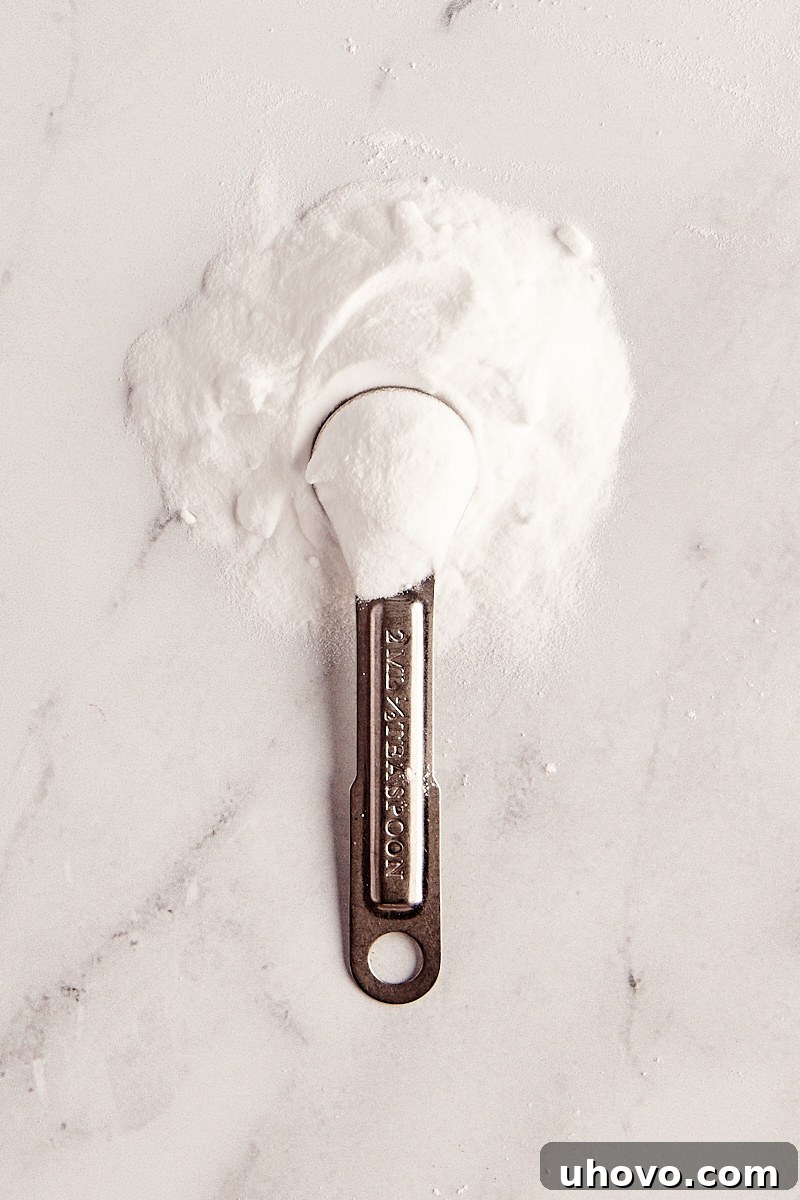
Baking soda, scientifically known as sodium bicarbonate (NaHCO₃), is a pure alkaline compound. It’s often referred to as bicarbonate of soda in many parts of the world, including the UK and Australia. This simple yet powerful chemical requires an acidic ingredient to trigger its leavening action. When baking soda comes into contact with an acid and a liquid, it produces carbon dioxide gas almost immediately, creating those much-desired bubbles that lighten batters and doughs. This makes baking soda a “single-acting” leavening agent, as its reaction occurs as soon as the wet and dry ingredients are combined.
Recipes that call for baking soda typically include an acidic component to ensure this reaction takes place. Common acidic ingredients found in baking soda recipes include:
- Lemon Juice: A classic activator, often used in lemon-flavored baked goods.
- Buttermilk: Its lactic acid provides a consistent and mild acidity.
- Yogurt: Similar to buttermilk, the lactic acid here is a great pairing.
- Sour Cream: Adds richness along with the necessary acidity.
- Cocoa Powder: Natural cocoa powder (not Dutch-processed) is quite acidic.
- Molasses: A sweet and acidic liquid, common in gingerbread.
- Brown Sugar: Contains molasses, making it slightly acidic.
- Vinegar: Less common in sweet baking, but a potent acid.
- Honey: Mildly acidic and a flavorful addition.
- Cream of Tartar: A dry acid often used in combination with baking soda to mimic baking powder.
It’s crucial to use baking soda in the correct proportion. Too much baking soda in a recipe without enough acid to neutralize it can lead to an unpleasant metallic or soapy taste, and sometimes even a yellowish tint in your baked goods. The goal is to have just enough acid to react with all the baking soda, ensuring efficient leavening without residual alkaline flavors. Additionally, while baking soda can react with heat alone to some extent, this reaction is less efficient and more likely to leave an undesirable taste if no acid is present.
Due to its immediate activation, batters containing baking soda should be baked promptly. The carbon dioxide bubbles begin forming as soon as the wet and dry ingredients mix, and if left to sit too long, these bubbles can escape, resulting in a less airy product. Baking soda also plays a role beyond leavening; its alkaline nature helps tenderize gluten, leading to softer, more spread-out cookies, and promotes browning for a more appealing crust.
What is Baking Powder?
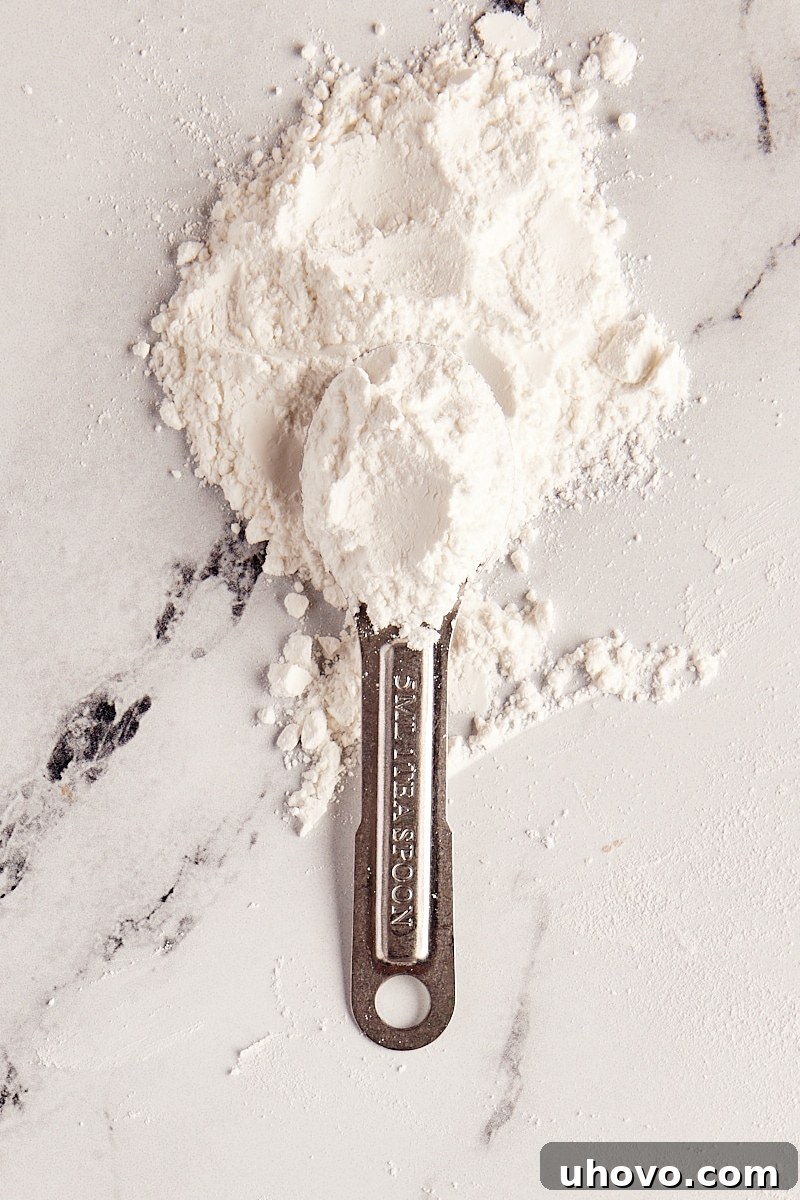
Baking powder is a complete leavening system in itself, designed for convenience and reliability. Unlike pure baking soda, baking powder is a mixture of several ingredients: sodium bicarbonate (baking soda), one or more dry acids, and typically an inert filler like cornstarch. The cornstarch serves a vital purpose, absorbing moisture to prevent premature reaction between the soda and the acid components during storage, ensuring the powder remains effective until it’s used in your recipe.
Because it already contains its own acidic component(s), baking powder only needs liquid to initiate its leavening action. This makes it ideal for recipes that don’t inherently contain enough acidic ingredients to activate baking soda, such as those relying heavily on milk, water, or neutral fats.
There are two primary types of baking powder, distinguished by how and when their acidic components react:
Single Acting Baking Powder
Single acting baking powder contains only one type of acid, which reacts instantly with the baking soda component as soon as it comes into contact with liquid. This immediate reaction produces carbon dioxide gas, causing the batter or dough to begin rising. Because the entire leavening effect happens rapidly and only once, it’s crucial to mix your ingredients and transfer the batter or dough into the oven as quickly as possible. Any delay can lead to a loss of the precious gas bubbles, resulting in a denser, flatter finished product. While effective, single-acting baking powder demands swift action from the baker, making it less forgiving for recipes that require complex handling or a moment of rest.
Double Acting Baking Powder
Double acting baking powder is the more common and preferred choice for most home bakers, primarily because it offers a two-stage leavening process, providing a more reliable and consistent rise. It contains two different types of acid: one that reacts with liquid at room temperature and another that reacts when exposed to heat in the oven. The first reaction occurs upon mixing with wet ingredients, providing an initial lift. The second, more powerful reaction is triggered by the oven’s heat, giving the baked good a final boost in volume and ensuring an even texture.
This dual action provides a significant advantage: reduced urgency. While it’s always best practice to bake promptly, the delayed second rise means that batters and doughs made with double-acting baking powder can sit for a short period without losing all their leavening power. This makes it more forgiving for recipes involving multiple batches or intricate preparation steps. The result is typically a more consistent rise, superior texture, and greater confidence in your baking outcomes.
What Type of Baking Powder Should I Use?
For most baking applications, especially those found in modern recipes, double-acting baking powder is the recommended choice. Its dual leavening action provides a safety net against slight delays in baking and generally yields a more consistent, reliable rise. This is the type you’re most likely to find readily available in grocery stores. Unless a recipe specifically calls for single-acting baking powder (which is rare in contemporary baking), opting for a quality double-acting variety will generally lead to the best and most predictable results.
Why Do Some Recipes Have Both Baking Powder and Baking Soda?
It might seem counterintuitive to use both baking soda and baking powder in a single recipe, given their distinct activation methods. However, many successful recipes, particularly those for chocolate cakes, buttermilk pancakes, or certain muffins, strategically incorporate both leavening agents. This seemingly complex approach is actually a clever way to achieve a perfect balance of rise, flavor, and texture.
One primary reason is to manage the acidity of the batter. Many delicious recipes feature acidic ingredients like buttermilk, yogurt, cocoa powder, or citrus juice. Baking soda is essential here to neutralize some of that acidity, which in turn helps prevent a sour taste and contributes to browning. However, if relying solely on baking soda, you might need a large quantity to get sufficient leavening, which could lead to an overly alkaline product with a metallic flavor. By adding baking powder as well, you can achieve the necessary lift without overdoing the baking soda. The baking powder takes care of a portion of the leavening, allowing the baking soda to focus on neutralizing a specific amount of acid while preserving the desired tangy or rich flavor from ingredients like buttermilk or natural cocoa.
Furthermore, each leavener affects the final product in subtle but important ways. Baking soda, being alkaline, plays a significant role in promoting a rich, golden-brown crust and a finer crumb structure. It also weakens gluten strands, contributing to a tender texture and helping items like cookies spread beautifully. Baking powder, on the other hand, provides a consistent and powerful lift that ensures the baked good rises adequately without collapsing. Using both allows bakers to fine-tune the chemical reactions, balancing pH levels for optimal browning, controlling spread for desired texture, and guaranteeing a robust rise, ultimately leading to a more complex and satisfying result.
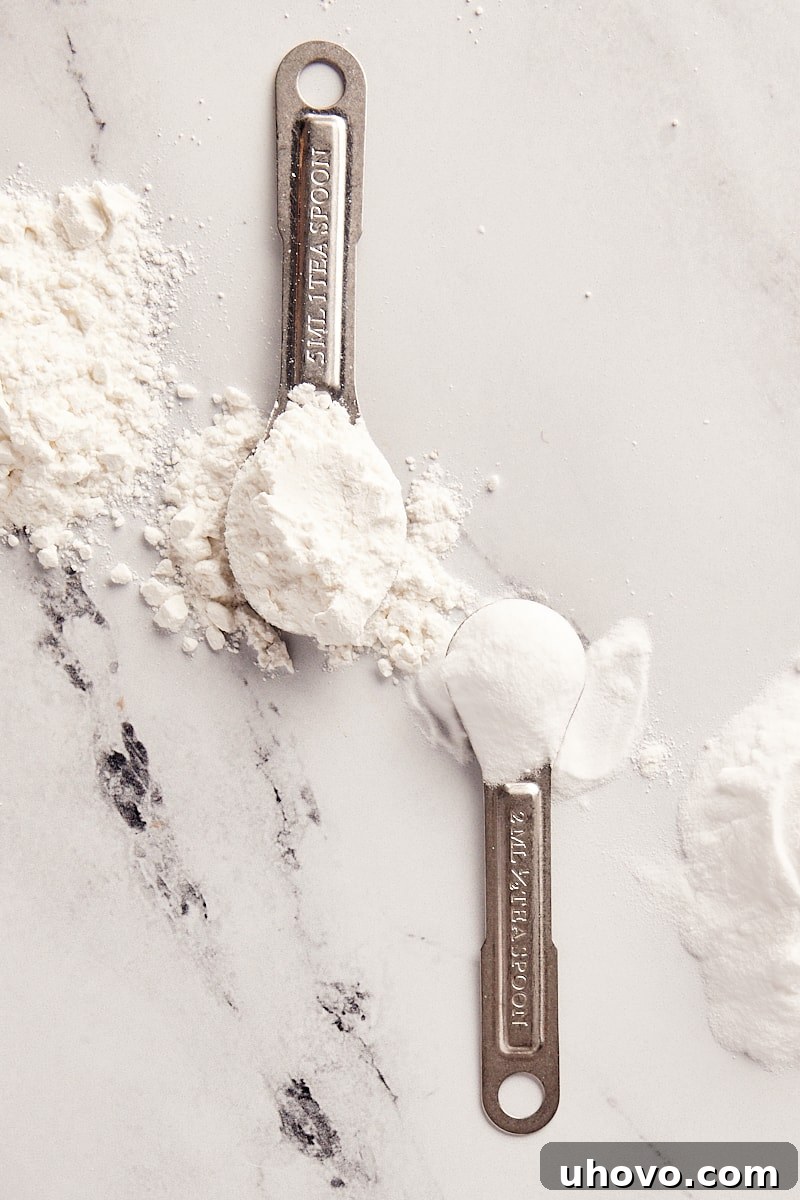
Can I Substitute Baking Powder for Baking Soda?
Substituting baking powder for baking soda is generally not recommended as a direct one-to-one swap, and often leads to an inferior product. The fundamental difference lies in their activation: baking soda requires an external acid, while baking powder contains its own. If your recipe calls for baking soda and also includes an acidic ingredient (like buttermilk or lemon juice), substituting with baking powder means you’re introducing additional acid that may not be needed, potentially altering the flavor balance. More critically, if the recipe relies solely on baking soda and lacks sufficient acidic components, substituting with baking powder might not provide the intended chemical reaction or sufficient leavening.
Another crucial factor is their potency. Baking soda is significantly stronger than baking powder – typically three to four times more potent in terms of leavening power per teaspoon. So, even if you manage the acidity issue, using the same volume of baking powder as baking soda would result in a severely under-leavened product. Trying to compensate by adding more baking powder could introduce too much of its own acidic components, affecting flavor, and might still not deliver the same robust rise due to the different reaction dynamics.
However, in a true emergency and if you have no other options, you can attempt a substitution, but be prepared for altered results in texture, flavor, and rise. A general guideline is to use approximately 3 to 4 times the amount of baking powder for the baking soda specified. For example, if a recipe calls for 1/4 teaspoon of baking soda, you would use 3/4 to 1 teaspoon of baking powder. Remember that this will likely be a single-acting reaction if using standard double-acting baking powder (as the initial liquid reaction would be the main one), so prompt baking is advised. For optimal results, it is always best to stick to the specific leavening agent listed in the recipe.
Can I Substitute Baking Soda for Baking Powder?
Attempting to substitute baking soda for baking powder presents its own set of challenges and is generally not ideal for the reasons highlighted in the previous section. Baking powder includes the necessary acidic components for activation, whereas baking soda relies on acidic ingredients already present in the recipe or added alongside it. Simply replacing baking powder with baking soda without introducing an acid will likely result in a very dense, flat baked good with little to no rise, as the baking soda will have nothing to react with.
If you absolutely must make this substitution and have no other choice, you will need to create your own makeshift baking powder by combining baking soda with a dry acid. The most common and effective method is using cream of tartar. A good ratio is 2 parts cream of tartar to 1 part baking soda. So, if your recipe calls for 1 tablespoon (3 teaspoons) of baking powder, you would combine 2 teaspoons of cream of tartar with 1 teaspoon of baking soda. This mixture acts as a single-acting baking powder, meaning the reaction will begin immediately upon contact with liquid, and your batter or dough must be transferred to the oven as quickly as possible to capture all the leavening power.
Alternatively, if you don’t have cream of tartar, you could try substituting baking soda directly, but you will also need to introduce an acidic liquid into the recipe. A rough guideline is to use approximately 1/4 of the baking powder amount in baking soda, and then add about 1/2 teaspoon of an acidic liquid (such as lemon juice or vinegar) for every 1/4 teaspoon of baking soda used. For instance, if the recipe requires 1 teaspoon of baking powder, you could use 1/4 teaspoon of baking soda plus 1/2 teaspoon of lemon juice or vinegar, ensuring you reduce another liquid in the recipe by the same amount to maintain consistency. Be aware that this approach can significantly alter the flavor and texture of your final product, as the acidity might become noticeable, and the overall rise may not be as robust or consistent as with genuine baking powder. Always prioritize using the specified ingredients for the best outcome.
Essential Tips for Perfect Rise
Beyond understanding the chemical differences, a few practical tips can elevate your baking game and ensure your leavening agents work their magic every time:
- Check for Freshness: Both baking soda and baking powder have a finite shelf life. They lose potency over time, especially if exposed to moisture or extreme temperatures. To test baking soda, mix 1/4 teaspoon with 2 tablespoons of vinegar or lemon juice; it should bubble vigorously. To test baking powder, mix 1 teaspoon with 1/2 cup of hot water; it should also bubble. If there’s no fizz, it’s time for a new container.
- Proper Storage: Store both baking soda and baking powder in airtight containers in a cool, dry place. Moisture is their enemy, as it can trigger premature reactions and reduce their effectiveness.
- Accurate Measurement: Leavening agents are powerful, and even slight discrepancies in measurement can impact your results. Always level off your measuring spoons carefully. For precision, particularly in larger batches, using a digital scale to measure by weight can be beneficial.
- Don’t Overmix: Once leavening agents are activated (especially baking soda), overmixing can deflate the tiny gas bubbles that have formed, leading to a tougher texture and reduced rise. Mix just until combined.
- Bake Promptly: As discussed, single-acting leaveners (and the first phase of double-acting ones) begin reacting as soon as they meet liquid. Get your batter into the oven quickly to capitalize on the initial burst of gas.
Frequently Asked Questions
The core difference lies in their composition and activation. Baking soda is pure sodium bicarbonate and requires an acidic ingredient (like buttermilk or lemon juice) to react and produce carbon dioxide gas. Baking powder, on the other hand, is a complete leavening system; it contains both baking soda and one or more dry acids (plus a starch filler). This means baking powder only needs liquid to start reacting, and double-acting types get a second boost from heat.
Several factors can contribute to a lack of rise. The most common culprit is expired or inactive baking soda or baking powder. These ingredients lose potency over time, especially if stored improperly. Always test their freshness before baking. Other reasons might include inaccurate measurements (too little leavener), using the wrong type of leavening agent for the recipe, insufficient acidity in a baking soda recipe, or overmixing the batter, which can deflate gas bubbles. Always ensure all your ingredients are fresh and measured correctly, ideally by weight for precision.
It is generally not advisable to let a batter made primarily with baking soda sit for an extended period. The leavening reaction begins almost immediately upon combining the wet and dry ingredients (especially if an acid is present). As the batter sits, the carbon dioxide gas bubbles will escape, leading to a loss of leavening power. If you stir the batter again after it has sat, you’ll lose even more of the trapped gas, resulting in a dense, flat final product. Promptly bake batters containing baking soda for the best rise and texture.
When used in the correct proportions, the amount of acid needed to activate baking soda is usually minimal and is intended to be neutralized during the reaction. In most cases, it should not impart an off-flavor to your baked goods. In fact, many acidic ingredients like buttermilk or cocoa powder contribute desirable flavors and moisture. However, potent acids like lemon juice or vinegar, if used excessively or if the balance is off, could potentially be noticeable. Always follow recipe guidelines for quantities to ensure flavor harmony.
Cornstarch in baking powder acts as an inert filler. Its primary purpose is to absorb moisture, preventing the acidic and alkaline components from reacting prematurely during storage. This ensures the baking powder remains stable and effective until it’s introduced into a wet batter. It also helps in standardizing the potency of the baking powder, making it easier to measure and use consistently in recipes.
Use baking soda when your recipe contains an acidic ingredient such as buttermilk, yogurt, sour cream, molasses, brown sugar, or natural cocoa powder. The baking soda will react with the acid to provide lift and also help balance the pH. Use baking powder when your recipe does not contain significant acidic ingredients, or when you need a consistent, reliable rise that doesn’t depend on external acids. Many recipes use both to achieve a specific balance of rise, flavor, and browning.
Mastering the art of baking often comes down to understanding the science behind your ingredients. By recognizing the unique roles of baking soda and baking powder, you gain the knowledge to confidently tackle any recipe, troubleshoot issues, and even experiment with your own creations. Remember these distinctions, keep your leavening agents fresh, and get ready to enjoy perfectly risen, tender, and delicious baked goods every time.