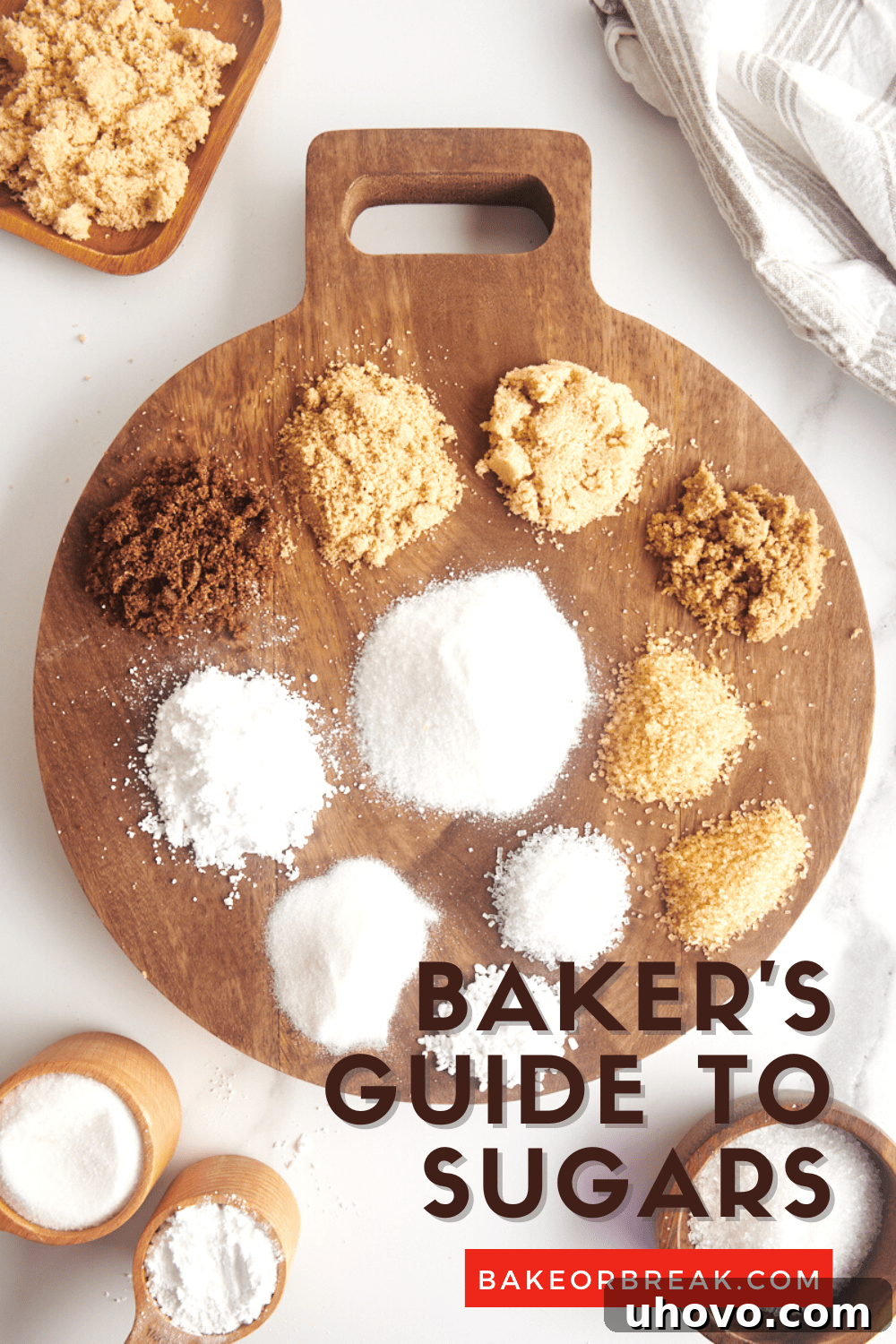
Welcome to the ultimate guide for understanding one of baking’s most fundamental ingredients: sugar! Far more than just a sweetener, sugar plays a multifaceted role in transforming raw ingredients into delectable baked goods. Whether you’re a novice home baker or a seasoned pastry enthusiast, delving into the nuances of different sugar types and their functions will elevate your baking skills and results.
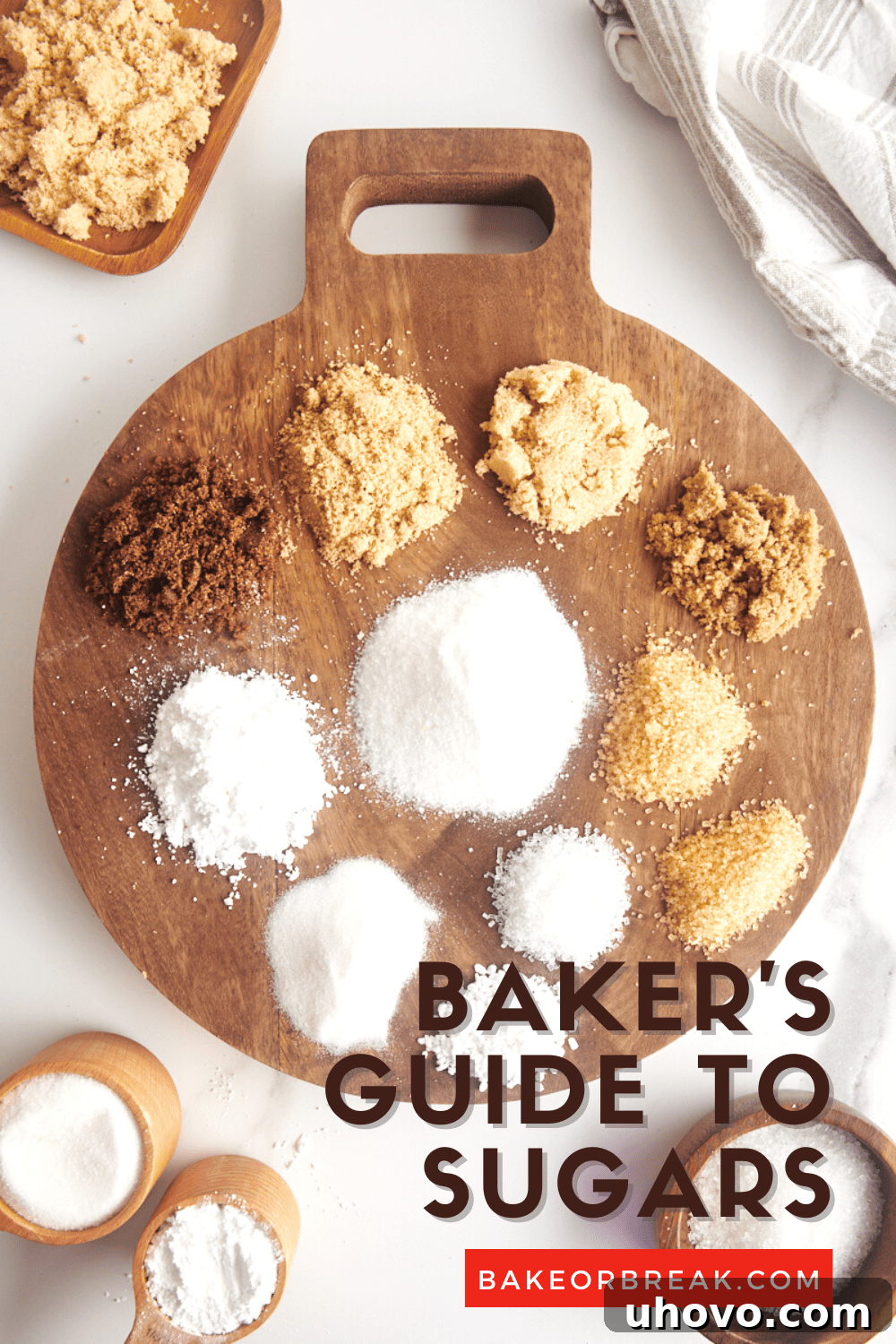
The Essential Role of Sugar in Baking
Sugar is often considered the heart of many baking recipes, and for good reason. Its contributions extend far beyond simply adding sweetness. From influencing texture and moisture to aiding in the browning process and extending shelf life, sugar is a truly dynamic ingredient. This guide focuses on common sugars readily available to traditional home bakers, providing practical insights into how each type interacts within your recipes.
What Sugar Does in Baked Goods
Understanding the science behind sugar’s interaction with other ingredients can significantly improve your baking outcomes. Here’s a detailed look at the vital functions sugar performs:
- Provides Sweetness: This is sugar’s most obvious role. Different types of sugar offer varying levels and nuances of sweetness, from the pure taste of granulated sugar to the complex caramel notes of brown sugar.
- Tenderizes and Moistens: Sugar is a “humectant,” meaning it attracts and retains moisture. This property helps keep baked goods moist and prevents them from drying out too quickly. Additionally, sugar interferes with gluten development, inhibiting the formation of long, strong gluten strands that can lead to tough textures. The result is a more tender, softer crumb in cakes, cookies, and muffins.
- Aids in Leavening and Structure: When sugar is creamed with butter, it creates countless tiny air pockets. During baking, these air pockets expand, contributing to a light and airy texture. This ‘creaming method’ is crucial for many cakes and cookies, helping them rise beautifully.
- Promotes Browning and Flavor Development: Sugar undergoes two important chemical reactions when heated:
- Caramelization: When sugar is heated above its melting point (around 320°F or 160°C), it breaks down and forms new compounds that give baked goods a rich, golden-brown color and complex caramel flavors.
- Maillard Reaction: This is a complex chemical reaction between amino acids and reducing sugars (found in most common baking sugars) at high temperatures. It contributes to the desirable brown crust and savory-sweet flavors found in many baked goods, such as cookies and bread crusts.
- Stabilizes Egg Foams: In recipes like meringues or soufflés, sugar is added to egg whites as they are whipped. The sugar dissolves into the egg whites, strengthening the protein structure and preventing the air bubbles from collapsing. This results in a more stable, glossy, and voluminous foam.
- Acts as a Preservative: Sugar helps to extend the shelf life of baked goods by binding water, which reduces the free water available for microbial growth. This is why high-sugar items like jams, preserves, and certain cakes have a longer freshness.
Sugar: A “Wet” Ingredient in Dry Form?
While sugar is physically a dry, crystalline ingredient, it behaves much like a wet ingredient in the context of baking chemistry. This unique characteristic stems from its hygroscopic nature – its strong ability to absorb and hold onto moisture from its surroundings. When sugar is incorporated with other liquid ingredients in a batter, it readily absorbs some of that liquid. This is vital because it limits the amount of liquid available for the flour to absorb, thus preventing excessive gluten development. Without this interaction, flour would absorb too much liquid, leading to a tough, dry, and chewy texture in your final baked product.
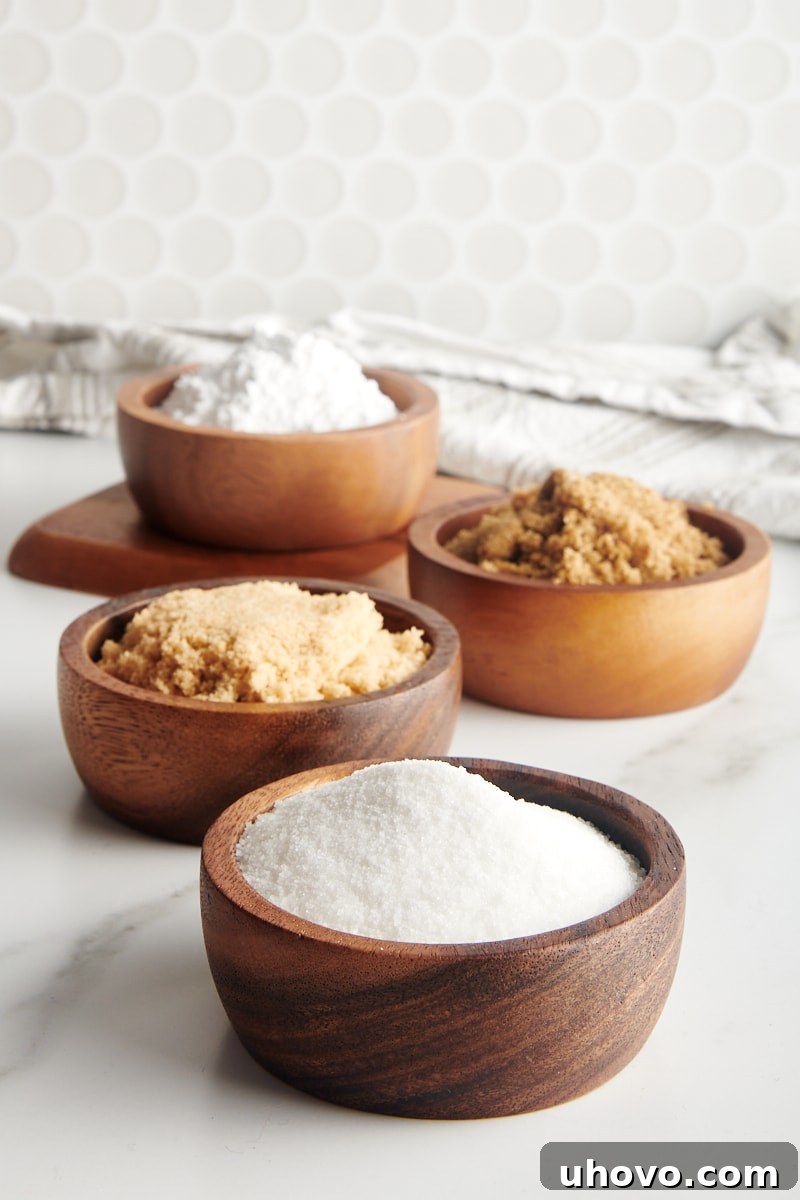
Common Dry Sugars for Every Baker
The world of dry sugars for baking might seem extensive, but three types form the cornerstone of almost every home baker’s pantry. These variations arise from different processing and refining methods, each contributing unique characteristics to your creations.
Granulated Sugar: The All-Purpose Sweetener
Granulated sugar, also widely known as white sugar or table sugar, is undoubtedly the most prevalent sugar in home baking. When a recipe simply calls for “sugar,” it almost universally refers to granulated sugar. Derived from either sugar cane or sugar beets, it undergoes a meticulous refining process to strip away molasses and impurities, resulting in its characteristic white, fine crystalline form. Sometimes, it is further bleached to achieve an even purer white color.
Its fine crystals dissolve readily, making it ideal for a vast array of baked goods, from cookies and cakes to frostings and fillings. Its neutral flavor allows the other ingredients in your recipe to shine, providing clean sweetness without imparting additional notes.
Brown Sugar: For Moisture and Chewiness
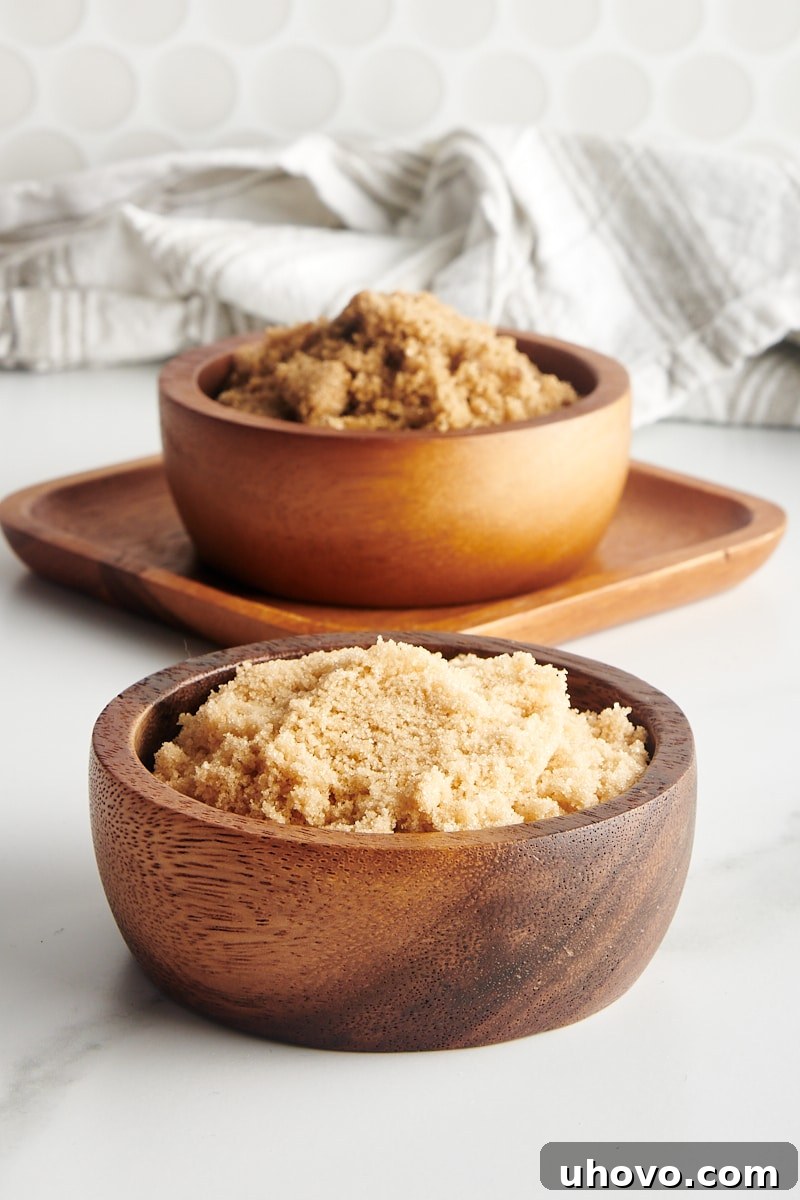
Brown sugar is essentially refined white sugar with molasses reintroduced, which coats the sugar crystals. This molasses infusion is responsible for its distinctive brown color, moist texture, and unique flavor profile. The amount of molasses added determines whether it’s classified as light or dark brown sugar:
- Light Brown Sugar: Contains less molasses, offering a milder caramel flavor and a softer texture. It’s incredibly versatile and widely used in cookies, cakes, and many savory dishes.
- Dark Brown Sugar: With a higher molasses content, dark brown sugar boasts a more robust, intense caramel-molasses flavor and a deeper color. It’s often preferred for richer, chewier baked goods like gingerbread, fruitcakes, and barbecue sauces.
The molasses in brown sugar makes it more hygroscopic than granulated sugar, meaning it brings extra moisture to baked goods, contributing to a wonderfully moist and chewy texture. This higher moisture content also makes it prone to clumping, so proper storage is essential. Learning how to soften hardened brown sugar is a useful skill for any baker.
Confectioners’ Sugar: The Finest Touch
Also known as powdered sugar or icing sugar, confectioners’ sugar is granulated sugar that has been finely ground into a delicate powder. To prevent caking and clumping, a small amount of cornstarch (typically 3-5%) is added. This sugar is graded by its fineness, with “10X” being the most common and finely ground variety available to home bakers.
Its ultra-fine texture allows it to dissolve instantly, creating smooth, lump-free frostings, icings, and glazes. It’s also perfect for dusting over finished baked goods, like brownies, cakes, or pastries, for a beautiful, delicate finish and a touch of sweetness.
Measuring Sugar for Baking Accuracy
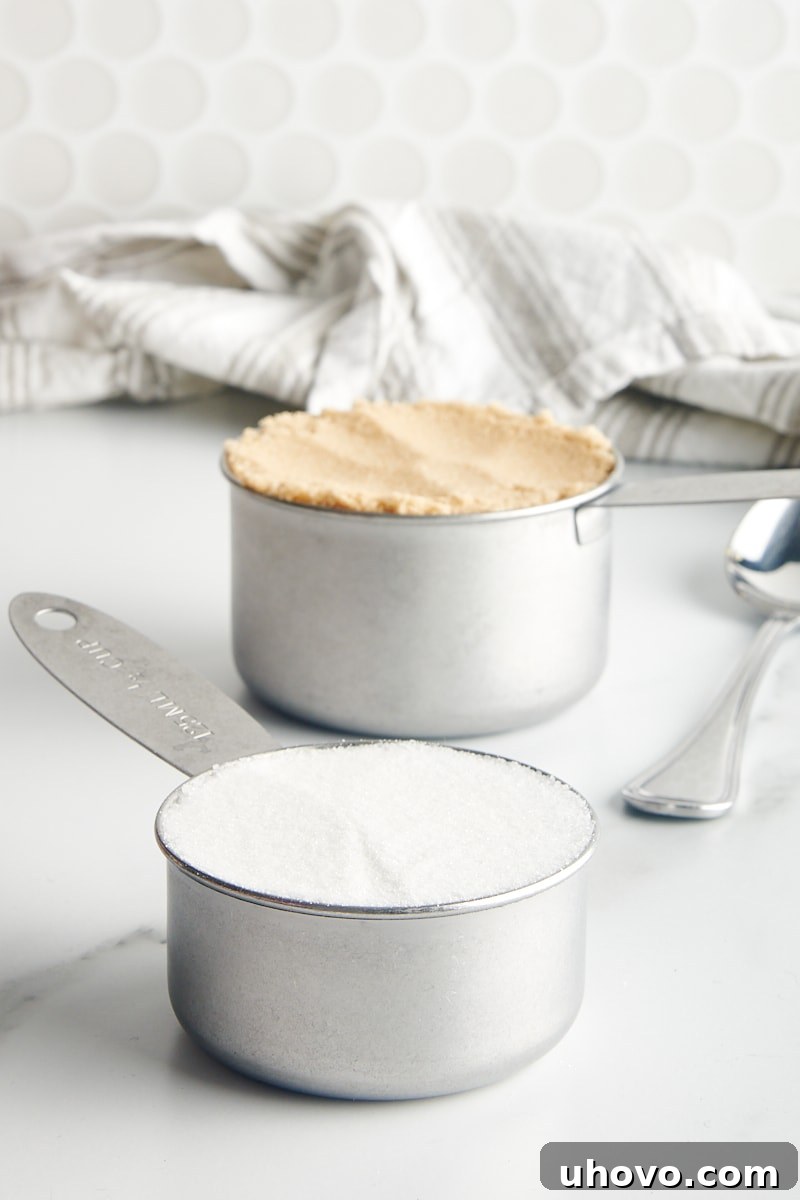
Precision in baking is key, and measuring sugar correctly is no exception. Although we categorize sugar as a “wet ingredient” for its chemical behavior, it is always measured using dry measuring cups or, ideally, a kitchen scale.
Measuring by weight is the most accurate method and is highly recommended for consistent baking results, as it eliminates variables like how densely a cup is packed. However, if you’re using measuring cups, follow these guidelines:
- Granulated Sugar and Confectioners’ Sugar: Spoon the sugar into the dry measuring cup until it overflows slightly, then level off the top with a straight edge (like the back of a knife). Do not pack these sugars down.
- Brown Sugar: This is the exception. Due to its moist and clumpy nature, brown sugar must be firmly packed into the measuring cup. Use the back of a spoon to press it down until it retains the cup’s shape when inverted.
Exploring Other Specialty Dry Sugars
Beyond the core three, a fascinating array of specialty dry sugars can add unique textures, flavors, and visual appeal to your baked goods.
Superfine (Caster) Sugar: For Delicate Desserts
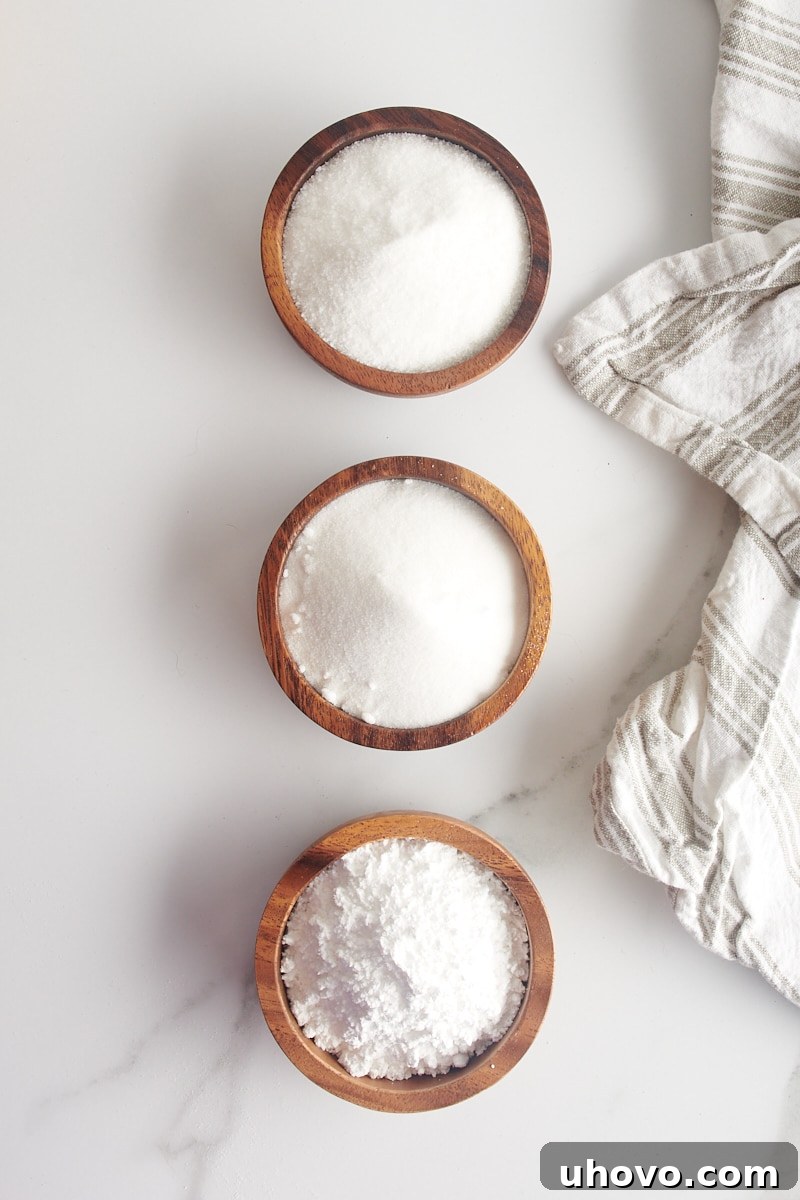
Superfine sugar, often called caster sugar in the UK, is granulated sugar that has been ground to an even finer consistency than regular white sugar, but not as fine as confectioners’ sugar. Its minuscule crystals dissolve remarkably quickly, making it ideal for delicate applications where gritty textures are undesirable. Think meringues, mousses, soufflés, and light cakes where a smooth batter is paramount. It’s also excellent for sweetening cold beverages, as it dissolves without fuss. If you can’t find it, you can easily make superfine sugar at home by processing granulated sugar briefly in a food processor.
Sanding Sugar: The Sparkling Garnish
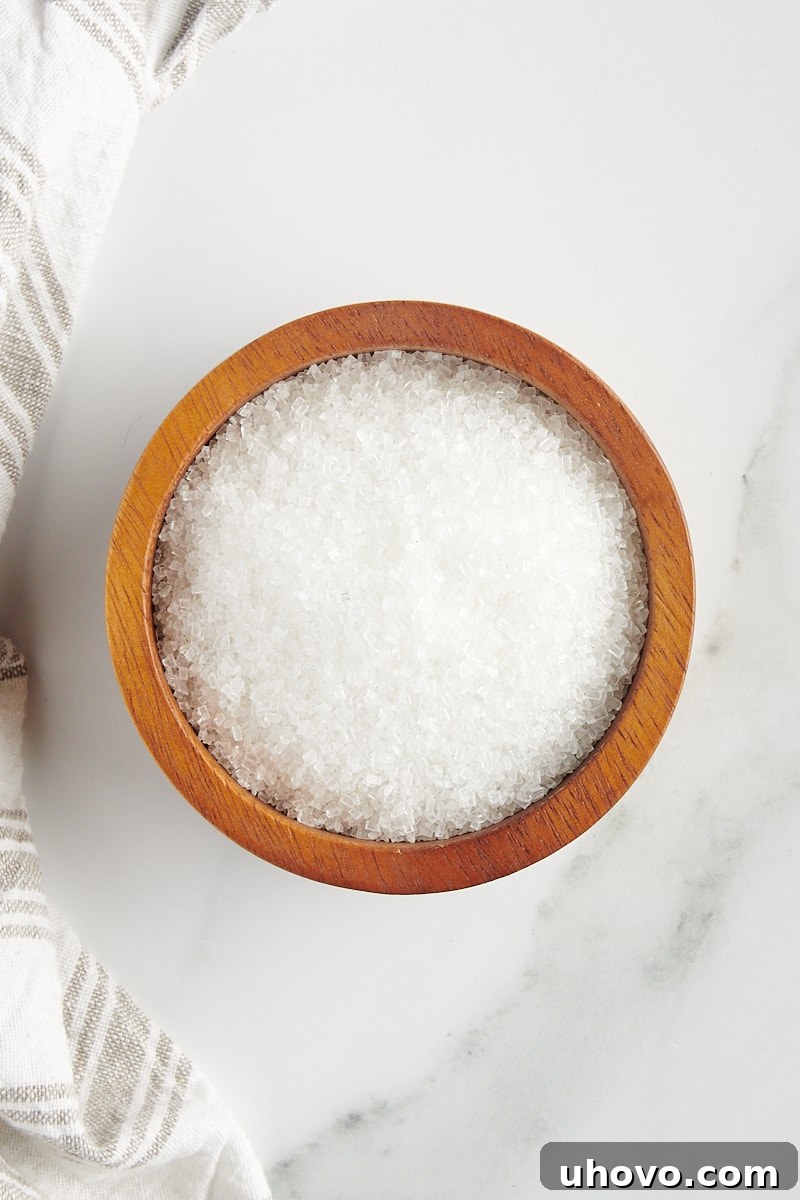
Also known as coarse sugar or sparkling sugar, sanding sugar features larger, sparkling crystals that are significantly bigger than granulated sugar. Its primary use is decorative; it’s typically sprinkled on baked goods before baking. The large crystals are heat-stable and generally do not melt in the oven, providing a beautiful, reflective sparkle and a delightful textural crunch. Sanding sugar is available in a vibrant array of colors, making it a favorite for holiday cookies, cupcakes, and muffins. It’s a fantastic pantry staple for adding an extra touch of sweetness and visual appeal to quick breads and fruit tarts.
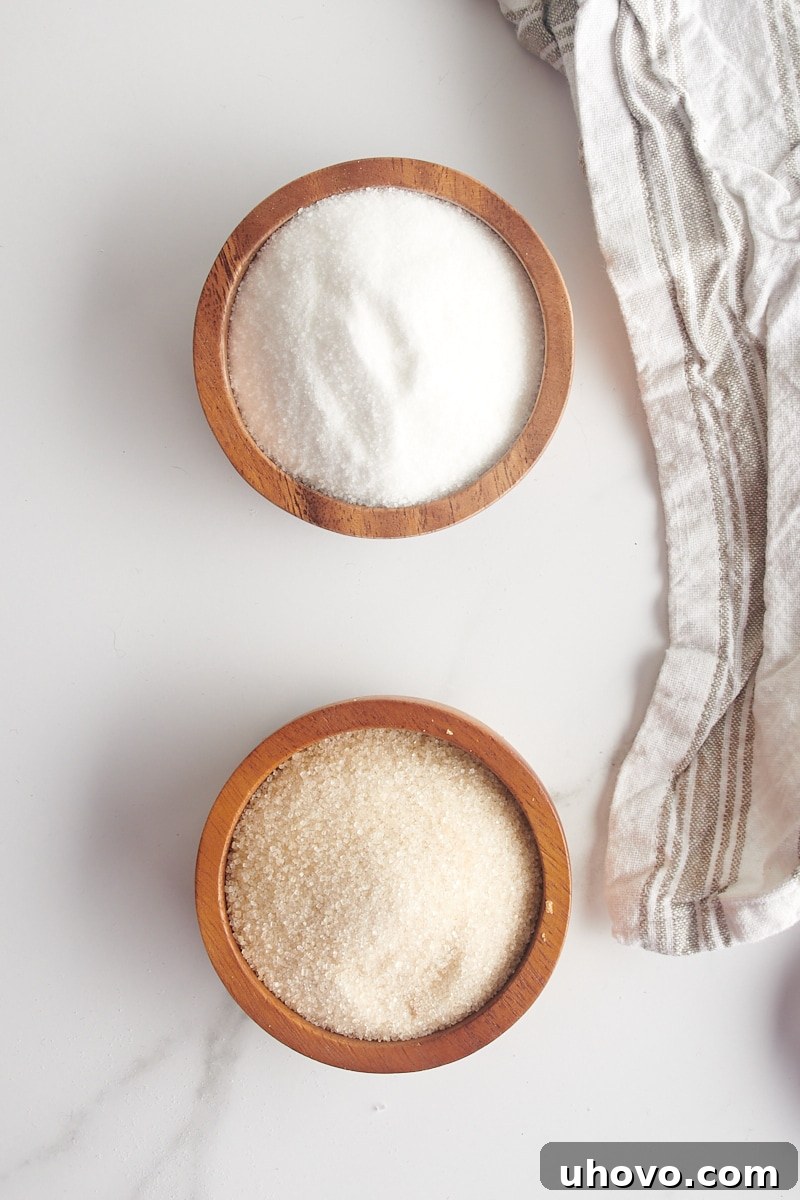
Cane Sugar: Minimally Processed Sweetness
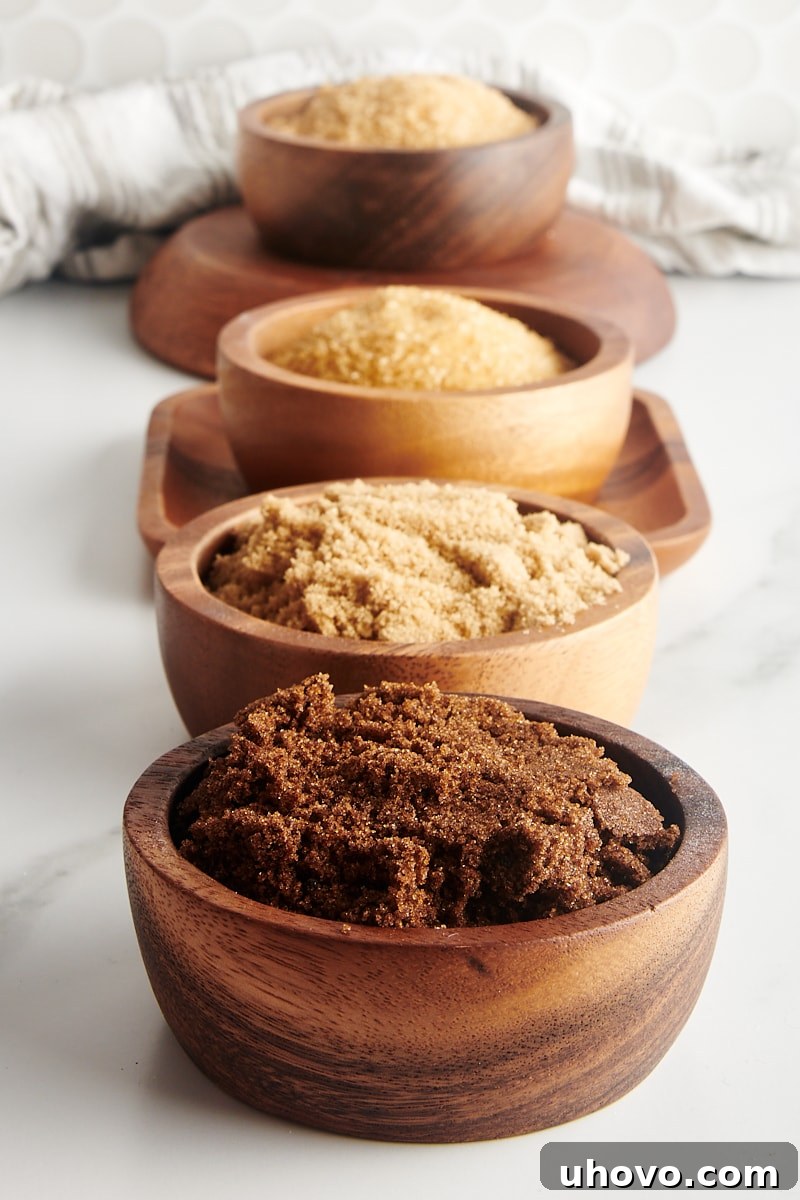
Cane sugar is produced exclusively from sugarcane and undergoes minimal processing compared to highly refined white granulated sugar. Its crystals are slightly larger and often have a natural, light golden hue. While it offers a slightly richer flavor due to trace amounts of molasses, cane sugar can generally be used as a 1:1 substitute for granulated sugar in most baking applications, providing a similar sweetening power with a subtle depth of flavor.
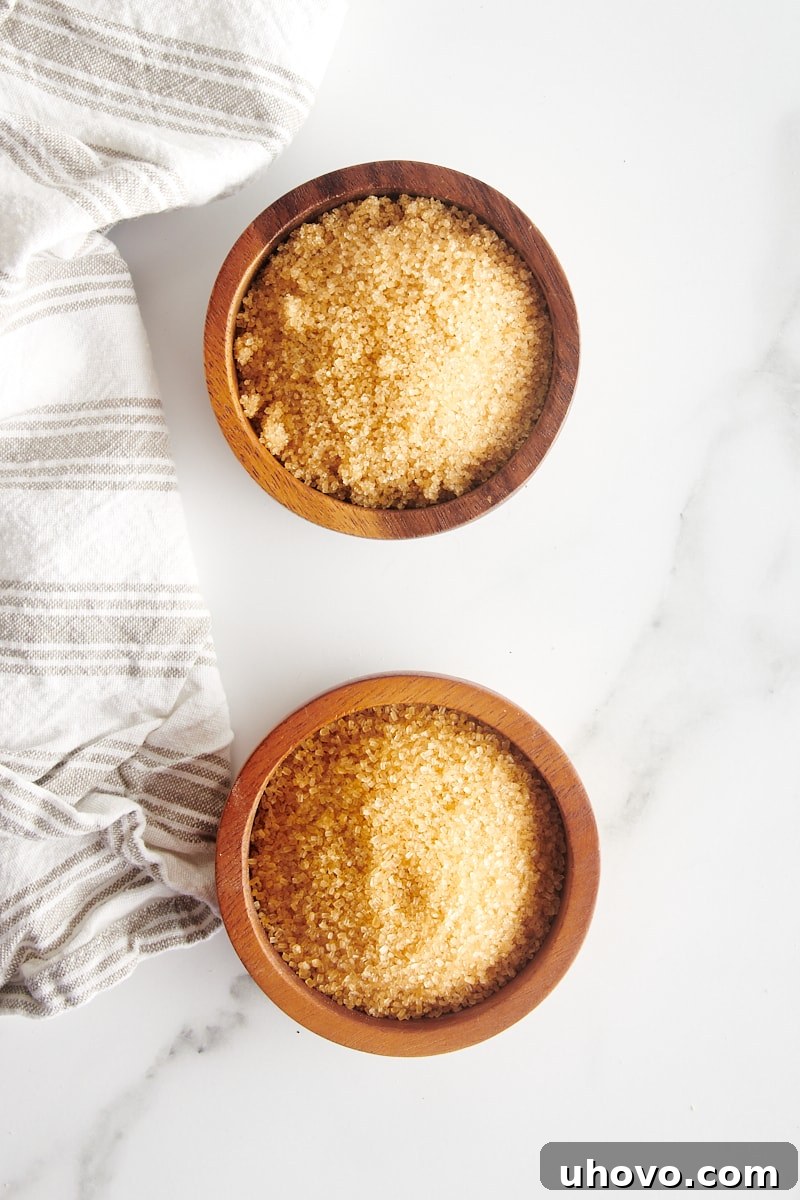
Turbinado Sugar: Raw with a Caramel Note
Turbinado sugar is a type of raw sugar, meaning it has been minimally processed to remove surface molasses but retains some of its natural caramel color and flavor. Its large, coarse crystals have a pleasant crunch and a distinct caramel-like taste, differing from the more assertive molasses flavor of brown sugar. It’s an excellent choice for adding a sweet, crunchy topping to muffins, scones, and pies. It can also be incorporated into batters for added texture and a subtle richness, such as in Banana Nut Muffins.
Demerara Sugar: Golden and Crunchy
Similar to turbinado, demerara sugar is another raw sugar characterized by its large, golden-brown crystals. It boasts a delicate, slightly sticky texture and a mild molasses flavor that is often described as toffee-like. While it shares visual similarities with turbinado, demerara crystals are typically larger and have a more pronounced flavor. It excels as a decorative topping, providing a beautiful shimmer and crunch to shortbread, crumbles, and even hot beverages like coffee, making it a versatile addition to your sugar collection.
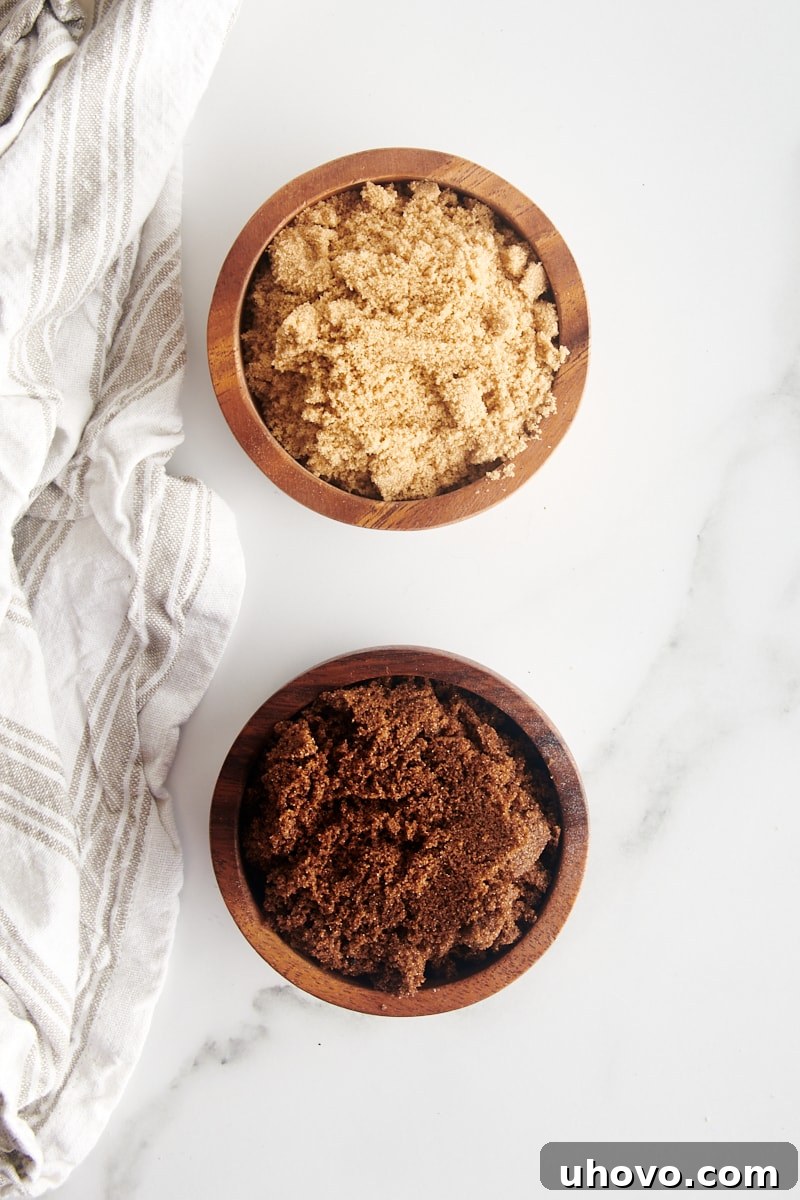
Muscovado (Barbados) Sugar: Rich and Complex
Muscovado sugar, also known as Barbados sugar, is an unrefined or partially refined brown sugar with a very high molasses content. This gives it a deep brown color, a moist, somewhat sticky texture, and an incredibly robust, complex flavor profile that’s often described as smoky, malty, or even licorice-like. It’s available in both light and dark varieties, with the dark version having an even stronger flavor. While it can technically be used interchangeably with regular brown sugar, its intense flavor can significantly alter a recipe, making it best suited for rich, deeply flavored baked goods like gingerbread, fruitcakes, or chocolate desserts where its unique character can truly shine.
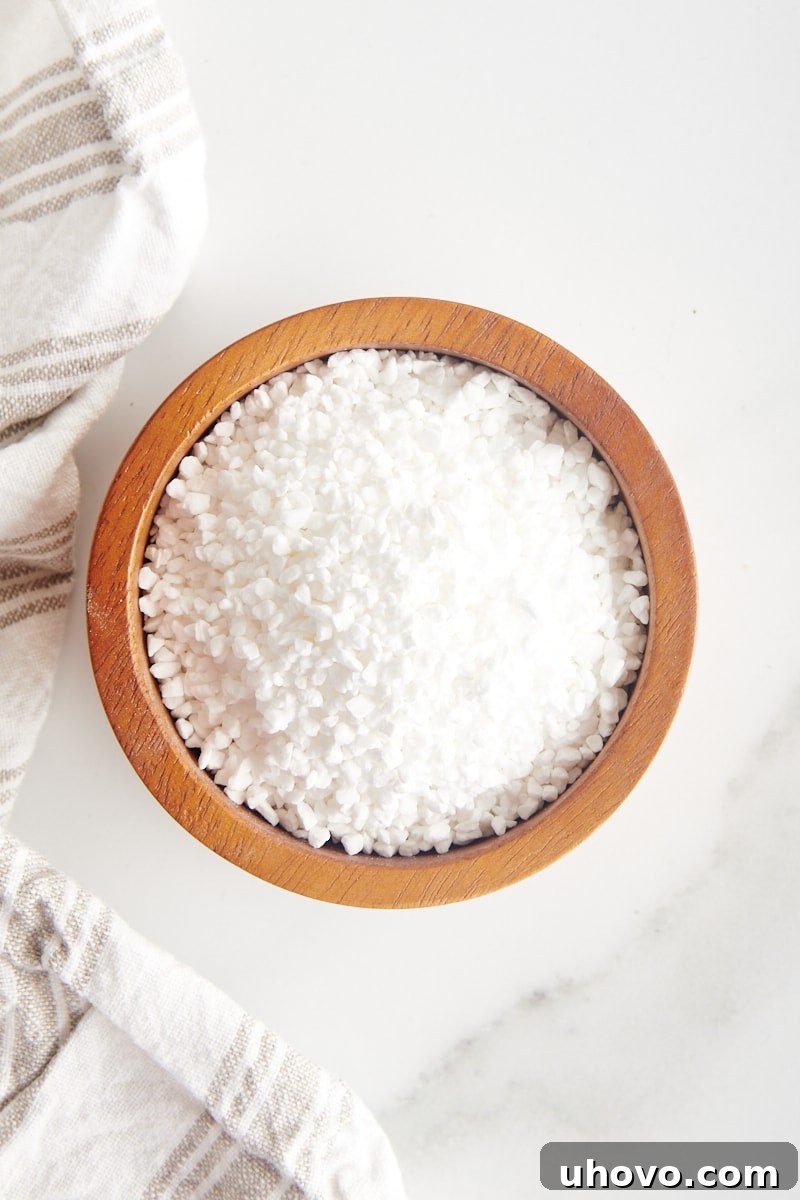
Pearl Sugar: The Non-Melting Crunch
Pearl sugar, or nib sugar, is distinguished by its opaque, white, irregularly shaped, and hard granules. Unlike sanding sugar, pearl sugar pieces are larger and crunchier, maintaining their distinct shape and texture even when subjected to high baking temperatures. This makes it an ideal choice for decorating baked goods where a resilient, non-melting crunch is desired, such as on traditional Belgian Liege waffles, brioche, or specific types of pastries and cookies. It offers a pleasant textural contrast and an elegant, frosted appearance.
Liquid Sweeteners in Baking
Beyond crystalline sugars, a variety of liquid sweeteners contribute unique flavors, moisture, and textures to baked goods. While many liquid sugars exist for beverages, we’ll focus on those most frequently encountered in home baking.
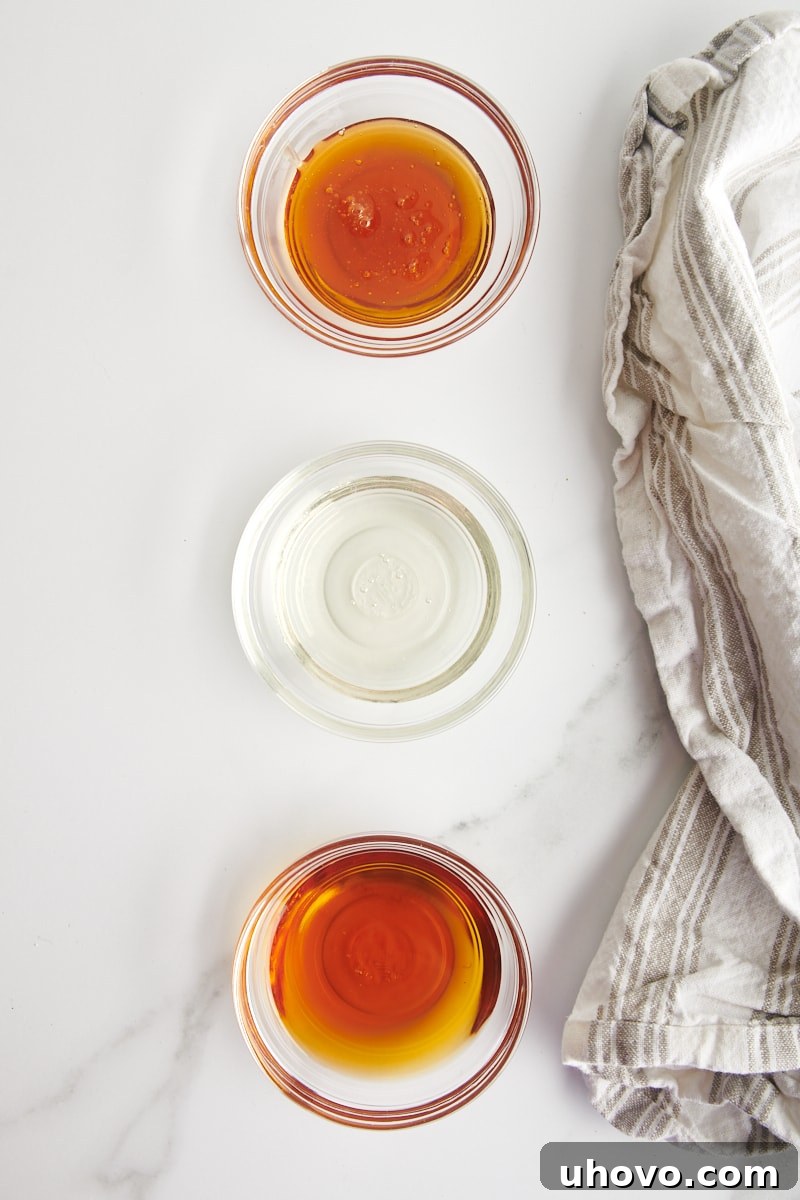
Honey: The Bee’s Sweet Gift
Honey, a natural sweetener produced by bees from flower nectar, is beloved for its distinctive floral flavor and golden hue. The taste of honey varies significantly depending on the floral source, from light and delicate clover honey to rich, robust buckwheat honey. For most baking, readily available grocery store honey works perfectly. Beyond sweetness, honey is a powerful humectant, contributing exceptional moisture and chewiness to baked goods, making it excellent for items like Currant Oat Scones and Honey Oat Rolls. Its unique aroma can add an extra layer of complexity to your recipes.
Molasses: Deep and Dark
Molasses is a thick, dark syrup that is a byproduct of refining sugarcane or sugar beets into sugar. Its flavor and color intensity depend on the stage of processing:
- Light Molasses: The sweetest and lightest in flavor, often used in baked goods like cookies and sauces.
- Dark (Original) Molasses: Richer and less sweet than light, with a more pronounced flavor. A staple for gingerbread and many traditional desserts like Gingerbread Cupcakes and Soft Ginger Molasses Cookies.
- Blackstrap Molasses: The darkest and most bitter, with the lowest sugar content and highest mineral content. It’s rarely used in baking for its taste alone, but sometimes for its nutritional profile.
Molasses adds not only a unique, robust flavor but also significant moisture and a chewy texture to baked goods.
Corn Syrup: For Smoothness and Stability
Corn syrup, derived from corn starch, is a versatile liquid sweetener not to be confused with high-fructose corn syrup. It comes in light and dark varieties, with light corn syrup being clear and dark corn syrup having added caramel coloring and a richer flavor. In baking, corn syrup is invaluable for several reasons:
- Prevents Crystallization: It helps prevent sugar from crystallizing, making it essential for candies, fudges, and glazes, ensuring a smooth texture.
- Adds Moisture and Chewy Texture: Like honey, it’s a humectant that keeps baked goods moist and contributes to a desirable chewy texture.
- Provides Body and Smoothness: It adds body and a glossy finish to sauces, fillings, and even ganache.
Familiar from classic pecan pie, it also plays a critical role in binding ingredients in treats like Peanut Butter Corn Flake Bars and creating a more pliable dough for recipes such as Almond Spice Cookies.
Agave Nectar: The Mild Sweetener
Agave nectar (or agave syrup) is extracted from the agave plant, primarily in Mexico. It typically has a thinner consistency than honey and comes in clear or amber varieties, both offering a mild, relatively neutral flavor profile, often described as honey-like but less viscous. It’s sweeter than granulated sugar, so recipes usually call for less quantity. Agave’s lower glycemic index often appeals to health-conscious bakers, and it works well in recipes where you want sweetness without a dominant flavor, providing moisture and a tender crumb.
Maple Syrup: Distinctive Flavor
Genuine maple syrup, harvested from the sap of maple trees, is instantly recognizable by its rich amber color and distinct, earthy, sweet flavor. It’s crucial to use real maple syrup, not imitation pancake syrup, to achieve its unique taste and benefits. While its bold flavor makes it less universally interchangeable in baking, it’s a star in recipes designed to highlight its particular character, such as Maple Nut Muffins and Maple Ginger Cookies. Maple syrup also functions as a humectant, adding moisture and a slight chewiness to baked goods.
The Impact of Changing Sugar Amounts in Recipes
Given sugar’s extensive roles in baking, altering the amount in a recipe can have far-reaching consequences beyond just the sweetness level. It’s a delicate balance that affects almost every aspect of the final product:
- Flavor: The most obvious change. Too little sugar will result in a bland product, while too much can be cloyingly sweet and mask other flavors.
- Texture:
- Reducing Sugar: Can lead to drier, tougher, and denser baked goods because there’s less tenderizing effect and less moisture retention. It may also affect the chewiness, making cookies more crumbly.
- Increasing Sugar: Can make baked goods excessively moist and tender, sometimes even gummy or overly soft. In cookies, too much sugar can lead to excessive spreading.
- Moisture: Sugar is a humectant. Less sugar means less moisture retention, potentially leading to quick drying and staling. More sugar means a moister product.
- Color and Browning:
- Reducing Sugar: Less sugar means less caramelization and Maillard reaction, resulting in paler baked goods that don’t achieve that desirable golden-brown crust.
- Increasing Sugar: Can cause baked goods to brown too quickly, potentially burning the exterior before the interior is fully cooked.
- Leavening: Sugar contributes to the creaming process, which incorporates air. Reducing sugar can result in a denser product with less rise.
- Shelf Life: As a preservative, sugar helps inhibit microbial growth. Reducing sugar can shorten the shelf life, making items stale or spoil faster.
For these reasons, it’s generally advised against making drastic changes to the sugar content of a recipe, especially if you’re new to baking or unfamiliar with a particular recipe. Small adjustments (e.g., 10-15%) are usually tolerable, but always be prepared for the potential impact on the final outcome.
Frequently Asked Questions About Baking Sugars
The three most commonly used sugars by home bakers are granulated (white) sugar, brown sugar (light and dark), and confectioners’ (powdered) sugar.
While you can make minor adjustments, remember that sugar impacts more than just sweetness. Reducing or increasing it can significantly alter the texture, moisture level, browning, and overall structure of your baked goods. Proceed with caution, especially with larger changes.
Sugar is essential for sweetness, but it also plays crucial roles in tenderizing, moistening, promoting browning (caramelization and Maillard reaction), stabilizing egg foams, aiding in leavening, and extending the shelf life of baked goods.
Technically, sugar is a dry, crystalline ingredient. However, in baking, it’s often treated as a “wet” ingredient due to its hygroscopic nature. It absorbs liquid from other wet ingredients, preventing flour from absorbing too much and thus contributing to a tender, moist final product.
Sometimes, but not always as a direct 1:1 swap. Granulated sugar, superfine sugar, and cane sugar are often interchangeable. Brown sugar can sometimes replace granulated sugar for added moisture and chewiness, but it introduces molasses flavor. Confectioners’ sugar is generally for specific applications like frostings. Always consider the impact on flavor, texture, and moisture content before making substitutions.