If you’ve ever found yourself gazing at your freshly baked muffins, cakes, or quick breads, only to discover a disappointing cluster of chocolate chips at the bottom, you’re not alone. This common baking dilemma can be incredibly frustrating, especially when you’re aiming for that perfect, even distribution of delicious add-ins throughout your baked goods. The good news? Understanding why this happens and implementing a few simple, yet effective, strategies can significantly improve your results. This comprehensive guide will delve into the science behind sinking chocolate chips and provide you with actionable tips and tricks to keep them beautifully suspended, ensuring every bite is packed with flavor.
The question of how to prevent chocolate chips from sinking is one of the most frequently asked in the baking community. While there’s no single magic bullet that works for every single recipe, a combination of understanding the underlying principles and applying proven techniques can dramatically improve the outcome. While our focus here will primarily be on chocolate chips due to their popularity, it’s crucial to remember that these principles and tips apply equally to other common add-ins like nuts, dried fruits, fresh berries, and even sprinkles. Mastering the art of suspending chocolate chips will empower you to tackle any similar challenge in your baking endeavors.
The Science Behind Sinking: Why Chocolate Chips Descend
Before we dive into the solutions, let’s first explore the fundamental reason why chocolate chips, and indeed most solid add-ins, tend to migrate to the bottom of your batter during baking. The answer, at its core, is quite simple and governed by a universal force:
Gravity: The Primary Culprit
Yes, it’s that straightforward. Chocolate chips, being denser and heavier than most batters, are naturally pulled downwards by gravity. As your baked goods cook in the oven, the batter itself initially remains a liquid or semi-liquid suspension. During this phase, any object denser than the surrounding batter will inevitably sink. Think of it like dropping a pebble into a pool of water – it immediately falls to the bottom. The same principle applies, albeit at a slower, more viscous pace, to chocolate chips in a raw cake or muffin batter.
Batter Consistency: The Crucial Factor
The primary battleground against gravity is the consistency, or viscosity, of your batter. A thin, runny batter simply doesn’t have the structural integrity to hold heavier particles suspended. It’s like trying to hold a bowling ball in a thin jelly versus a thick, firm one.
- Thin Batters: Recipes for light, airy cakes, some delicate muffins, or certain quick breads might inherently produce a thinner batter. In these cases, a certain degree of sinking is almost unavoidable and often part of the recipe’s characteristic texture. Trying to drastically thicken a batter by simply adding more flour is generally not recommended, as it can significantly alter the intended texture, moisture content, and overall balance of the final product, potentially leading to dry or tough baked goods.
- Thicker Batters: Conversely, denser batters found in recipes for coffee cakes, rich pound cakes, and many robust quick breads offer much better support for add-ins. Their higher viscosity provides more resistance against gravity, allowing chocolate chips to remain suspended more effectively.
However, beyond the inherent nature of a recipe, several factors can cause a batter to be thinner than it should be, exacerbating the sinking problem:
Common Causes for Thin Batter
Understanding these variables can help you troubleshoot and adjust your baking process:
- Over-mixing: Excessive mixing of batter, especially those containing flour, can lead to over-development of gluten. While some gluten development is necessary for structure, too much can break down the batter’s viscosity, making it thinner and more fluid. Over-mixing also incorporates too much air, which can then escape during baking, leaving a less stable structure that can’t hold up chips. Always mix just until the ingredients are combined, unless the recipe specifically directs otherwise.
- Excessive Warmth: A warm kitchen environment or overly warm ingredients can lead to a thinner batter. Fats like butter might be too soft or even partially melted, and liquids can become less viscous. This loss of stability in the batter makes it less capable of suspending denser add-ins. Try to keep your kitchen cool, and ensure ingredients like eggs and butter are at the correct temperature specified by the recipe (often room temperature, but sometimes chilled).
- Inaccurate Measurements: This is arguably one of the most common culprits for a multitude of baking issues, including batter consistency. If you use too little flour or too much liquid, your batter will inevitably be thinner than intended. Conversely, too much flour can lead to a dry, dense product.
- The Importance of a Kitchen Scale: For unparalleled accuracy, measuring ingredients by weight using a digital kitchen scale is highly recommended. This eliminates discrepancies that arise from how tightly flour is packed into a measuring cup or variations in spooning techniques. Many professional bakers and advanced home bakers swear by weight measurements.
- Spoon and Sweep Method: If you must use volume measurements for flour, the “spoon and sweep” method is the gold standard. Gently spoon flour into your measuring cup until it’s overflowing, then level it off with a straight edge (like the back of a knife) without packing it down. Avoid scooping directly from the bag, as this compacts the flour, resulting in significantly more flour than intended. For a deeper dive into this crucial technique, refer to guides like How to Measure Flour.
Effective Strategies to Prevent Chocolate Chips from Sinking
Now that we understand the ‘why,’ let’s explore the practical ‘how’ to achieve that beautiful, even distribution of chocolate chips in your baked creations. These methods combat gravity and improve batter support in various ways.
1. Toss Chips in Flour or Cocoa Powder
One of the oldest and simplest tricks in the book is to lightly coat your chocolate chips (or other add-ins) in a small amount of flour (from the recipe’s total flour) or cocoa powder before folding them into the batter. The idea behind this method is that the flour coating creates a slightly rougher surface on the chips and absorbs a bit of moisture from the surrounding batter, potentially increasing the friction and preventing them from sliding down too easily. While this method can offer a slight improvement, particularly in batters that are only moderately thin, it’s generally not a dramatic game-changer. Don’t expect it to miraculously levitate chips in a very thin batter, but it’s a good first line of defense and certainly doesn’t hurt.
2. Reduce the Heft: Use Smaller or Chopped Chocolate
This is arguably one of the most effective and reliable strategies, especially when dealing with recipes prone to sinking. The logic is simple: if the add-ins weigh less, gravity has less of an impact. You can achieve this in a couple of ways:
- Use Mini Chocolate Chips: These smaller versions of standard chocolate chips are inherently lighter and have less mass, making them significantly less prone to sinking. They are an excellent choice for recipes like delicate muffins, light quick breads, or certain cake batters where uniform distribution is paramount.
- Chop Your Own Chocolate: For a gourmet touch and even more control, consider using a bar of good quality baking chocolate and chopping it into smaller, irregular pieces. This not only reduces the weight of individual pieces but also allows for a wider variety of shapes and sizes, which can add visual appeal and a more complex chocolate texture to your finished product. Chopping chocolate also often means you get more surface area of chocolate, leading to a richer flavor experience. This is my personal go-to solution when I want to guarantee better distribution.
3. Strategic Placement: Topping and Layering
Sometimes, preventing sinking isn’t just about what you mix into the batter, but where you place it:
- Sprinkle on Top: A straightforward method is to reserve a portion of your chocolate chips and sprinkle them directly onto the surface of the batter just before it goes into the oven. Since these chips start at the top, they have less distance to sink, ensuring a beautiful, chocolate-studded crust. This is particularly effective for muffins, quick breads, and coffee cakes where a visually appealing top is desired.
- Layering the Batter: For larger baked goods like Bundt cakes or loaves, you can try layering. Pour about half of your batter into the prepared pan, then evenly distribute half of your chocolate chips over this layer. Gently cover with the remaining batter, and then sprinkle the remaining chips on top. While this method can work, it sometimes yields inconsistent results depending on the batter’s viscosity and how carefully you spread the subsequent layers. If the batter is too thin, the chips might still migrate through the bottom layer. Proceed with caution and a gentle hand.
4. Chill Your Batter and Chips
Temperature plays a surprisingly important role in batter viscosity. A colder batter is generally thicker and more viscous than a warm one. If your recipe allows, chilling the prepared batter for 15-30 minutes before adding the chocolate chips and baking can help thicken it slightly, providing better support. Similarly, keeping your chocolate chips chilled (or even frozen for a short period) before adding them to the batter can help. Cold chips are firmer and less likely to melt prematurely and become denser as they are folded in, which can also contribute to sinking.
5. Optimize Baking Temperature
While not a direct anti-sinking method for the chips themselves, proper oven temperature is critical for the overall structure of your baked goods. A correctly preheated oven ensures that the batter begins to set quickly, forming a stable matrix that can encapsulate and hold the add-ins in place before they have too much time to sink. If the oven is too cool, the batter remains liquid for longer, giving gravity more time to work its magic.
Putting It All Together: A Holistic Approach to Perfect Distribution
The key to preventing chocolate chips from sinking is often a combination of these techniques, tailored to the specific recipe you’re working with. Always prioritize accurate measurements and avoid over-mixing. For naturally thin batters, consider using mini chips or chopped chocolate. For any recipe, a light flour coating is a simple extra step, and strategic topping can enhance visual appeal. Don’t be afraid to experiment to find what works best for your favorite recipes and your baking environment.
Ultimately, while achieving perfect chip distribution is satisfying, remember that the most important aspect of baking is enjoyment and deliciousness. Even if a few chocolate chips decide to make a cozy home at the bottom of your cake, if it tastes fantastic, it’s a success! Every baking experience is a learning opportunity, and understanding these principles will make you a more confident and skilled baker.
Do you have a personal tip or trick for keeping chocolate chips from sinking that you swear by? Share your insights with the baking community!
For a treasure trove of recipes featuring delicious chocolate chips, be sure to explore our extensive Recipe Index. Happy baking!
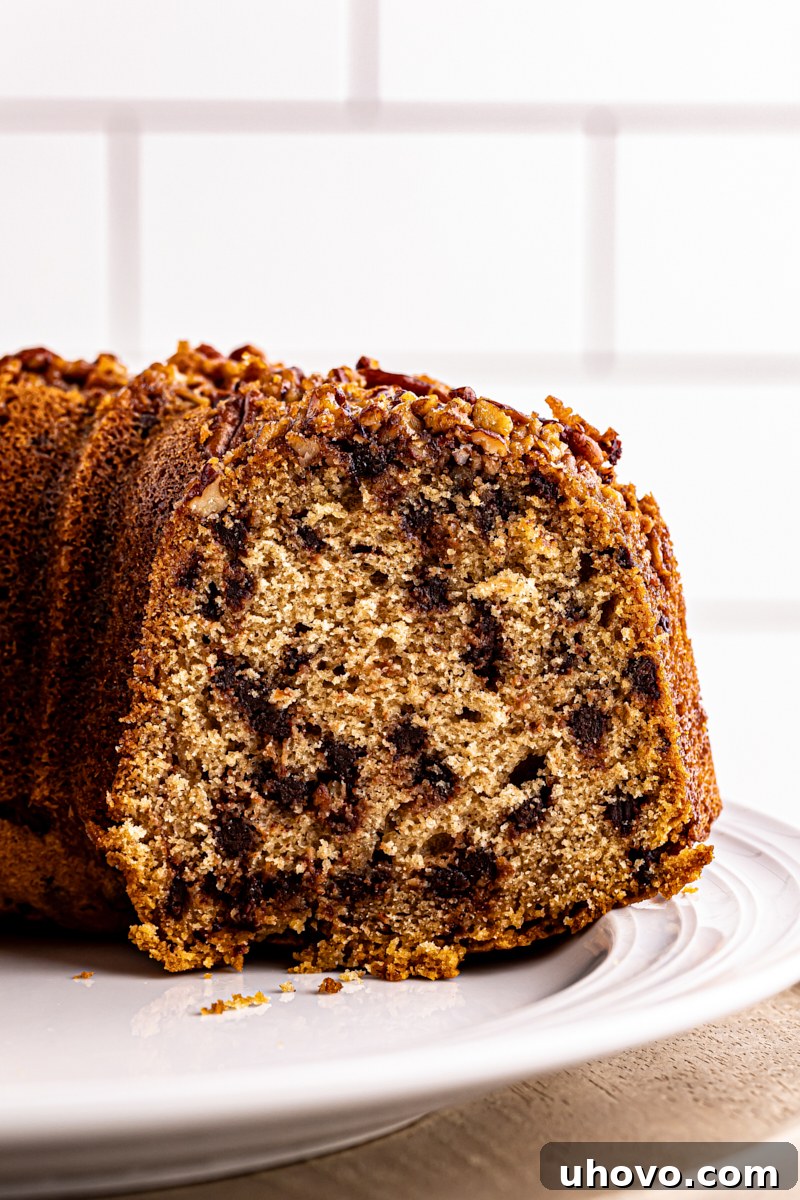
Top photo inspiration: Chocolate Chip Cream Cheese Pound Cake