Mastering the Art of Quick Bread: Effortlessly Convert Muffin Recipes to Loaves and Vice Versa
Have you ever found yourself craving a warm slice of quick bread, but only had a fantastic muffin recipe on hand? Or perhaps you’ve got a beloved quick bread recipe and envision it transformed into a batch of perfectly portioned muffins for a brunch spread or convenient grab-and-go breakfasts? The good news is, you don’t need to search for an entirely new recipe. With just a few simple adjustments, you can seamlessly convert your favorite muffin recipes into quick bread loaves, and quick bread recipes into delightful muffins. It’s a game-changer for any home baker looking to maximize their culinary flexibility and creativity.
The beauty of this conversion lies in the fundamental similarity between traditional muffin batters and quick bread batters. Both are leavened with baking powder and/or baking soda, relying on chemical reactions rather than yeast to achieve their rise. This shared foundation means that the core ingredients and mixing methods are remarkably similar, making the transition between forms surprisingly straightforward. With a little understanding of how pan size impacts baking temperature and time, you’ll be baking muffins and quick breads like a seasoned pro in no time.
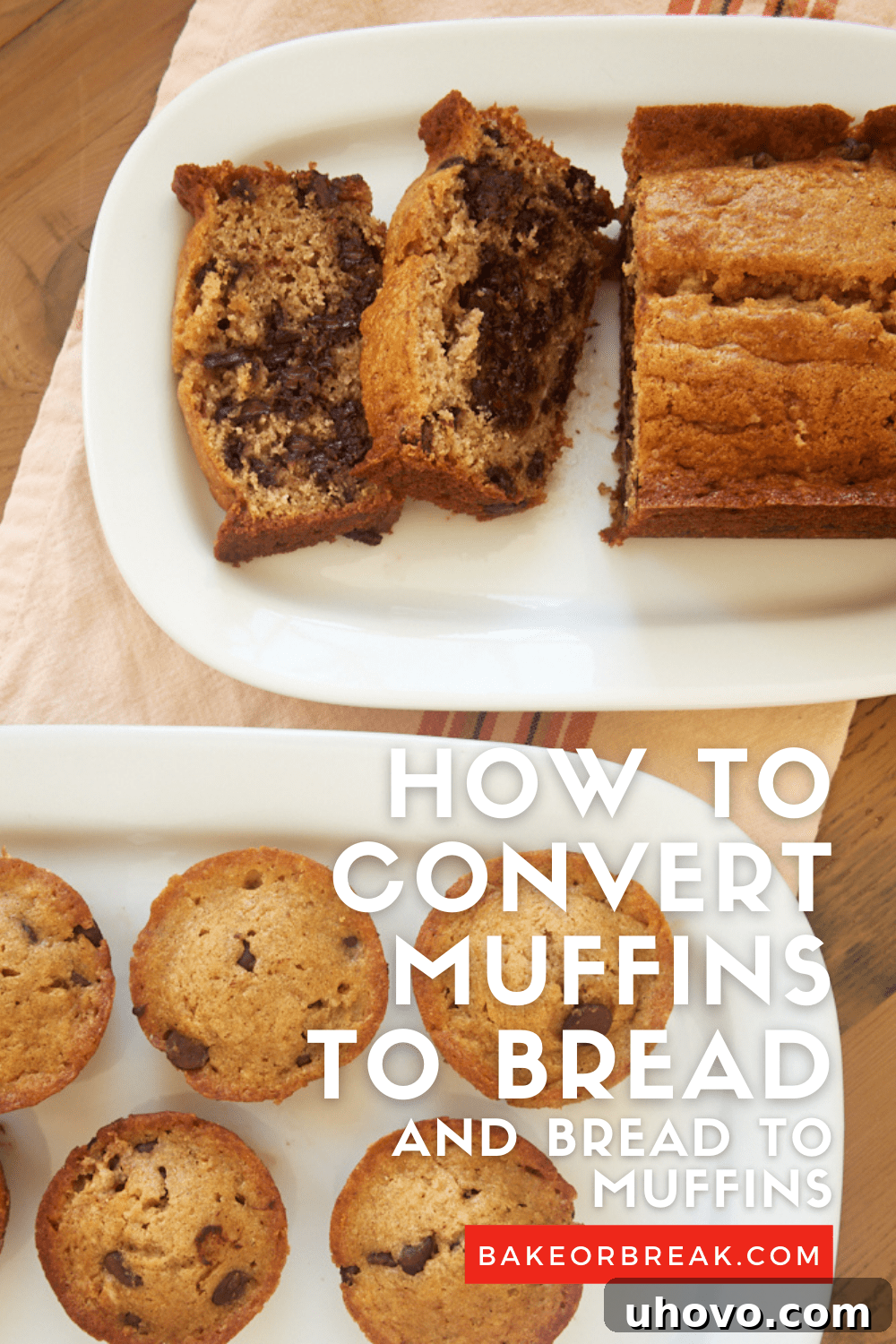
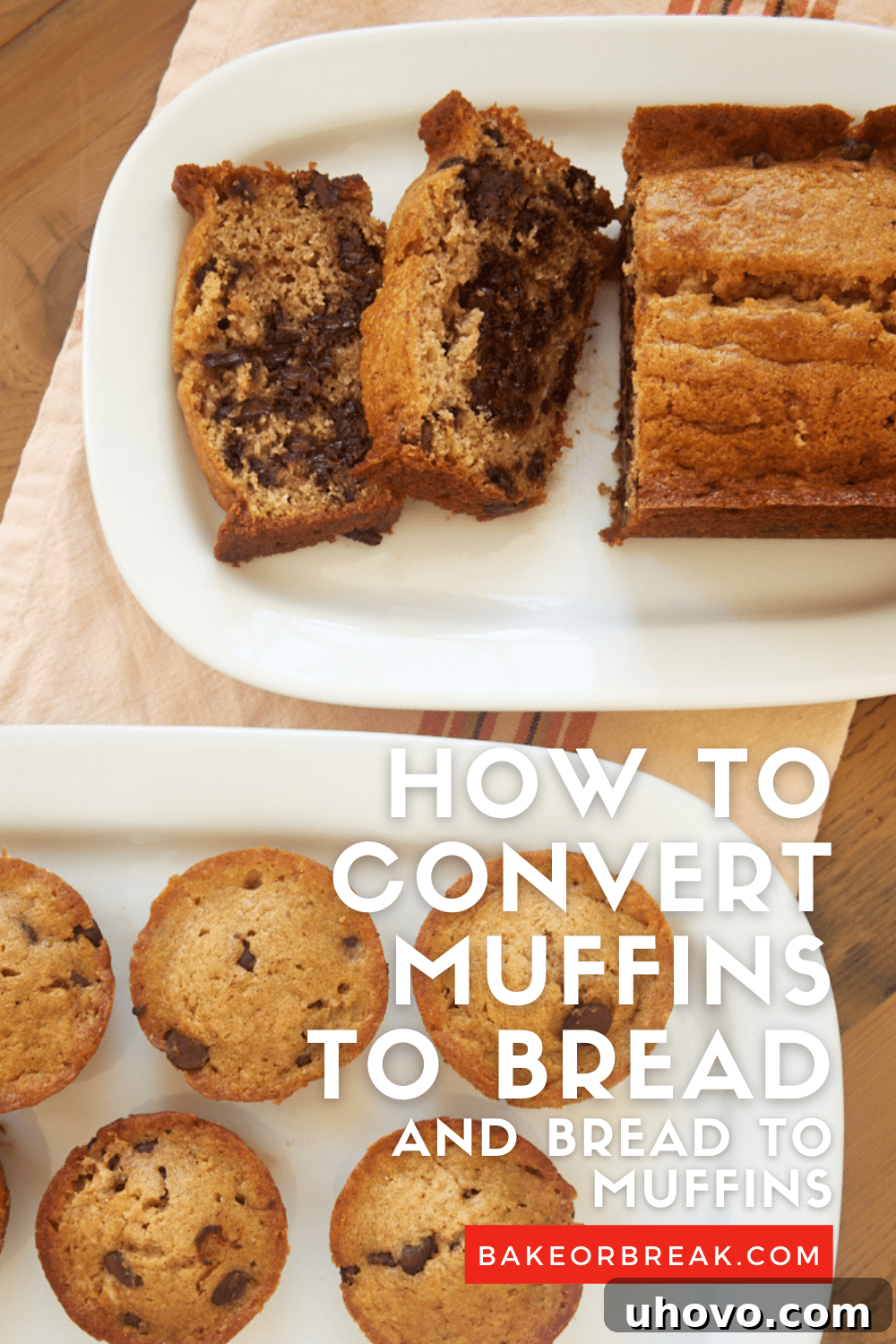
For instance, the image above showcases our popular Chocolate Chip Muffins recipe, flawlessly baked in both its classic muffin form and as a robust quick bread loaf. This versatility allows you to choose the perfect presentation for any occasion, whether you’re serving individual treats or a shareable loaf. Below, you’ll discover even more delightful recipes that lend themselves beautifully to these simple conversions, offering endless possibilities for your baking adventures.
Choosing the Right Pans for Muffins and Quick Breads
The first step in any successful conversion is selecting the appropriate baking vessel. The volume of batter your recipe yields is the primary factor. While I don’t typically keep exact batter volume measurements on hand, understanding the standard yields and capacities of common baking pans makes the conversion process intuitive.
Standard Muffin Pans: Your Go-To for Individual Treats
A recipe designed to yield 12 standard muffins typically fills a standard 12-cup muffin pan. Each cavity in a standard muffin pan generally has a 1/2-cup capacity. These are widely available in both 6-cup and 12-cup configurations, offering flexibility depending on the batch size you desire. While we’re focusing on standard sizes here, it’s worth noting that mini muffin pans (with smaller capacities) and jumbo muffin pans (with larger capacities) exist and would require further adjustments to baking times, though the principles remain the same.
Standard Loaf Pans: The Foundation for Quick Bread Loaves
When it comes to loaf pans, the term “standard” can sometimes be a bit ambiguous, as dimensions can vary slightly among manufacturers. Some consider a 9″x 5″ loaf pan to be the standard, while others might refer to an 8 & 1/2″x 4 & 1/2″ pan. I predominantly use and specify a 9″x 5″ pan in most of my quick bread recipes, as it accommodates a typical quick bread batter volume beautifully. If your loaf pan is on the smaller side of the “standard” spectrum (e.g., 8 & 1/2″x 4 & 1/2″), exercise caution to avoid overfilling. A good rule of thumb for any quick bread or muffin batter is to fill your chosen pan or cavities no more than 3/4 full. This allows for proper rise without overflowing, ensuring a beautifully shaped and evenly baked product every time.
Preparing Your Pans for Optimal Results
Regardless of whether you’re baking muffins or a loaf, proper pan preparation is key to preventing sticking and ensuring easy release. For most quick breads and muffins, a light greasing and flouring of the pan or muffin cavities will suffice. Alternatively, parchment paper slings for loaf pans or paper liners for muffin tins are excellent choices, especially for delicate batters or to facilitate easy cleanup. Ensure that every crevice is coated if you’re not using liners or parchment, as quick breads can be quite sticky.
For your convenience, these are the pan sizes I rely on most frequently in my kitchen:
- 1/2-cup capacity muffin pan, available as 6-cup and 12-cup pans
- 9″x 5″ loaf pan
Converting Muffins to a Loaf of Quick Bread
When transforming a muffin recipe into a quick bread loaf, the primary adjustments you’ll need to make involve oven temperature and baking time. Muffins typically bake at a higher temperature for a shorter duration, promoting a quick rise and a desirable dome. A larger, denser loaf, however, requires a more gradual and thorough bake.
Temperature Adjustments for a Quick Bread Loaf
The general rule for converting muffins to a loaf is to lower your oven temperature. Muffins often bake in the 375-400°F range, but a quick bread loaf needs a gentler heat to cook through evenly without burning the exterior. I recommend lowering the oven temperature by 25-50°F from what the muffin recipe suggests. A temperature of 350°F is a reliable starting point for most quick bread loaves. This lower temperature allows the heat to penetrate the denser batter more slowly, ensuring the center is fully cooked and preventing a raw middle or overly browned crust.
Baking Time Adjustments for a Quick Bread Loaf
Naturally, a larger volume of batter will require significantly more time in the oven. While muffins might be done in 20-25 minutes, a quick bread loaf will typically need 45-60 minutes, and sometimes even longer, especially at 350°F. Begin checking for doneness around the 45-minute mark. Visual cues are your first indicator: look for a nicely browned top and edges that are pulling away slightly from the pan. The ultimate test, however, is the toothpick test. Insert a wooden toothpick or thin skewer into the center of the loaf. For most quick breads, you’re looking for the toothpick to come out clean or with only a few moist crumbs attached. If it comes out with wet batter, continue baking in 5-10 minute increments until it passes the test.
Cooling Your Quick Bread Loaf Properly
Once baked, proper cooling is essential for the texture and integrity of your quick bread loaf. Allow the loaf to cool in the pan for about 10-15 minutes before attempting to remove it. This crucial resting period allows the bread to set and firm up, making it easier to transfer to a wire rack without falling apart. Cooling completely on a wire rack ensures air circulation around all sides, preventing condensation that can make the bottom soggy. Patience during this stage will reward you with a perfectly textured loaf.
Converting a Loaf of Quick Bread to Muffins
The process of converting a quick bread loaf recipe into muffins follows the same principles as above, but in reverse. You’ll increase the oven temperature and decrease the baking time to accommodate the smaller, individual portions.
Temperature Adjustments for Muffins
To achieve those coveted domed tops and a tender crumb in muffins, you’ll want to bake them at a higher temperature than a loaf. Start by raising the oven temperature by 25-50°F from the quick bread recipe’s recommendation. This usually places you in the 375-400°F range, which is ideal for muffins. The initial blast of high heat helps the leavening agents activate quickly, setting the structure and contributing to that classic muffin top. Remember, a higher temperature generally translates to taller muffins.
Baking Time Adjustments for Muffins
As expected, muffins will bake considerably faster than a full loaf of quick bread. When baking at 375°F, most standard muffins will be ready in approximately 23 to 28 minutes. If you opt for a higher temperature of 400°F, anticipate a slightly shorter baking window, typically 20 to 25 minutes. Always keep a close eye on your muffins as they approach the lower end of these time estimates. Visual cues include golden-brown tops and edges, and when gently pressed, the muffins should spring back. The toothpick test should also yield a clean result, indicating they are fully baked through.
Cooling Your Freshly Baked Muffins
After removing muffins from the oven, allow them to cool in the muffin pan for 5-10 minutes. This short cooling period helps them firm up and makes them easier to remove without breaking. Then, transfer them to a wire rack to cool completely. Cooling on a rack ensures proper air circulation, preventing the bottoms from becoming soggy and maintaining their delightful texture.
Essential Baking Tips for Perfect Conversions
Beyond pan choice, temperature, and time, a few general baking principles will elevate your quick bread and muffin conversions from good to truly exceptional.
Don’t Overmix Your Batter
This is perhaps the most crucial tip for any quick bread or muffin. Overmixing develops the gluten in the flour too much, resulting in a tough, chewy texture and often creating undesirable “tunnels” within your baked goods. Mix the wet and dry ingredients just until combined; a few lumps are perfectly acceptable and even desirable for a tender crumb.
Ensure Room Temperature Ingredients
Unless specifically stated otherwise, most quick bread and muffin recipes benefit from using room temperature ingredients (eggs, milk, butter). Ingredients at a similar temperature emulsify more easily, creating a smoother, more uniform batter. This leads to a finer crumb and a more consistent rise.
Know Your Oven
Oven temperatures can vary significantly from what the dial indicates. An inexpensive oven thermometer is a valuable tool for any baker. Calibrating your oven or simply knowing its true temperature will help you apply these conversion tips more accurately and consistently achieve perfectly baked goods.
Consider Your Add-ins
If your recipe includes chunky add-ins like chocolate chips, nuts, or fruit, be mindful that these can slightly alter baking times. Denser or wetter additions might require a few extra minutes of baking, especially in a larger loaf form. Ensure they are evenly distributed throughout the batter for consistent flavor and texture.
With these comprehensive tips, you are now equipped to confidently convert your favorite muffin recipes into hearty loaves and transform quick bread recipes into charming individual muffins. Remember that these are general guidelines designed to set you on the right path. Baking is both an art and a science, so always use your best judgment and observe your baked goods as they progress. A little experimentation and attention to detail will help you fine-tune these adjustments for truly spectacular results.
Now that you’re ready to embrace the versatility of quick bread baking, explore our extensive collections of muffin recipes and quick bread loaf recipes to find your next delicious inspiration!
Bake or Break is a participant in the Amazon Services LLC Associates Program, an affiliate advertising program designed to provide a means for us to earn fees by linking to Amazon.com and affiliated sites.