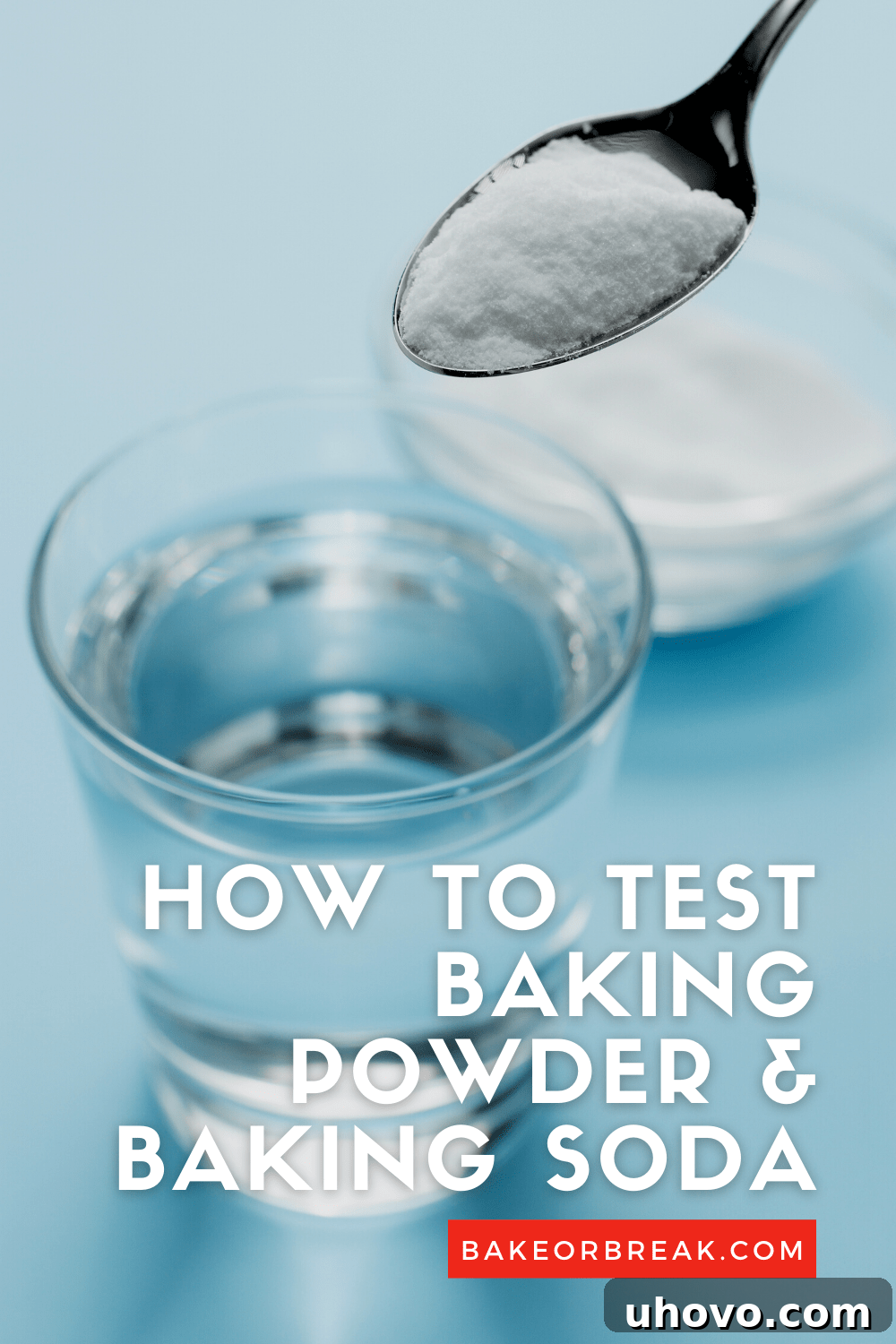
In less than a minute, you can easily test the freshness of your baking powder and baking soda! Discover how these simple checks can transform your baking results.
Photo ©gojak via Canva.com
Ensure Perfect Bakes: The Ultimate Guide to Testing and Storing Baking Powder and Baking Soda
Every home baker understands the frustration of a recipe that doesn’t quite turn out right. Sometimes, despite following instructions meticulously, cakes fall flat, cookies remain dense, and breads lack that desired airy texture. More often than not, the culprit isn’t your technique, but rather the silent saboteurs in your pantry: stale baking powder and baking soda.
These unassuming white powders, often used in tiny quantities, are powerhouse leavening agents. They initiate crucial chemical reactions that produce carbon dioxide gas, creating bubbles that expand during baking, giving your treats their signature rise and light crumb. When they lose their potency, these reactions don’t occur, leading to disappointing, heavy results.
While checking expiration dates is a good habit for all ingredients, it’s particularly vital for baking powder and baking soda. However, expiration dates don’t always tell the whole story. Factors like improper storage, exposure to air, and humidity can render these ingredients ineffective long before their printed date, especially if they’ve been sitting on your shelf for six months or more since opening. Even relatively new packages can sometimes fail to perform as expected. This guide will show you how to quickly and reliably test your baking powder and baking soda for freshness, ensuring your baking endeavors are always a success.
The Science of Leavening: Why Freshness Matters
To truly appreciate the importance of fresh baking powder and baking soda, it helps to understand how they work. Both are alkaline compounds, but they function differently in recipes:
- Baking Soda (Sodium Bicarbonate): This ingredient requires an acid and moisture to activate. When combined with acidic ingredients (like buttermilk, yogurt, lemon juice, or vinegar) and liquid, it produces carbon dioxide bubbles almost instantly. Recipes using baking soda often rely on quick baking times to capture this initial burst of gas.
- Baking Powder: This is a more complex leavening agent. It’s essentially baking soda combined with one or more acids (often cream of tartar and sodium aluminum sulfate) and a starch (like cornstarch) to keep the acid and base separate until liquid is added. Most baking powders today are “double-acting,” meaning they produce carbon dioxide in two stages: once when mixed with liquids at room temperature, and again when heated in the oven. This provides a sustained lift throughout the baking process.
When these ingredients lose their effectiveness, their ability to produce carbon dioxide diminishes significantly. This directly impacts the structure and texture of your baked goods, leading to dense, heavy, and often rubbery results. A quick freshness test can save you from wasted ingredients and baking disappointment.
Beyond the Expiration Date: When to Test Your Leavening Agents
While the expiration date on the package offers a guideline, it’s not foolproof. Baking powder and baking soda begin to degrade the moment they are exposed to air and moisture. The clock starts ticking as soon as you open the container. Here are key indicators and times when you should definitely perform a freshness check:
- After Six Months of Opening: Even if the expiration date is still far off, it’s generally recommended to test baking powder and baking soda that have been opened for more than six months. Their potency can significantly diminish after this period.
- Infrequent Baking: If you don’t bake often, or if a significant amount of time has passed since your last baking session (say, two to three months), it’s a good practice to test them before starting a new recipe.
- Troubleshooting Baking Issues: If your recent baking projects aren’t rising as expected, or consistently turning out flat and dense, stale leavening agents are a primary suspect. A quick test can confirm or rule out this possibility.
- Unsure of Purchase Date: If you’ve inherited ingredients or simply can’t remember when you bought or opened a particular container, a test is your best bet.
To help you keep track, consider writing the date you opened the container directly on the label with a permanent marker. This simple habit can save you guesswork and ensure you’re always using fresh ingredients.
How to Test Baking Powder for Freshness
Testing baking powder is incredibly simple and takes less than a minute. You’ll need just two ingredients: the baking powder itself and hot water.
Step-by-Step Baking Powder Test:
- Gather Your Materials: You’ll need about 1/2 teaspoon of baking powder and 1/4 cup of hot water. Ensure the water is hot from the tap, but not necessarily boiling. The heat helps to activate the second stage of double-acting baking powder, giving you a more reliable fizz.
- Combine Ingredients: Place the 1/2 teaspoon of baking powder in a small bowl or a measuring cup. Pour the 1/4 cup of hot water directly over the baking powder.
- Observe the Reaction: Watch closely. You should observe an immediate and vigorous fizzing action, accompanied by numerous small bubbles rising to the surface. This reaction might take a few seconds to fully start, especially if it’s a double-acting powder, but it should be clearly evident.
- Interpret the Results:
- Fresh: A strong, sustained fizzing and bubbling indicates that your baking powder is potent and ready to use.
- Stale: If you see only a few weak bubbles, or no fizzing whatsoever, your baking powder has lost its leavening power. It’s time to discard it and replace it with a fresh container.
Remember, using cold water won’t yield reliable results for baking powder, as it won’t fully activate the double-acting components responsible for the sustained lift. Always opt for hot water.
How to Test Baking Soda for Freshness
Testing baking soda is just as straightforward as testing baking powder, but it requires an acidic ingredient to trigger the reaction.
Step-by-Step Baking Soda Test:
- Gather Your Materials: You will need about 1/2 teaspoon of baking soda and 3 tablespoons of plain white vinegar. Lemon juice can also work as an alternative acidic liquid.
- Combine Ingredients: Place the 1/2 teaspoon of baking soda into a small bowl or cup. Pour the 3 tablespoons of vinegar directly onto the baking soda.
- Observe the Reaction: Look for an immediate and vigorous bubbling and fizzing. This reaction should be quite dramatic and noticeable.
- Interpret the Results:
- Fresh: A robust, energetic bubbling and fizzing indicates that your baking soda is potent and effective.
- Stale: If you observe only a minimal number of bubbles or no reaction at all, your baking soda is past its prime and should be replaced.
The strength of the reaction is key here. A weak fizz means a weak rise in your baked goods.
Optimal Storage Practices: Keeping Your Leavening Agents Fresh Longer
Even the freshest baking powder and baking soda can quickly lose their potency if not stored correctly. Implementing good storage habits is just as important as knowing how to test them. Here are simple yet effective strategies to maximize their shelf life:
1. Store Baking Powder and Baking Soda in Airtight Containers.
Exposure to air and moisture is the primary enemy of these leavening agents. Air introduces humidity and can prematurely activate the chemical reactions, while moisture itself can cause caking and diminish potency.
- Baking Powder: Most baking powder is sold in metal or plastic containers that are generally designed to be airtight. However, after opening, ensure the lid is always tightly sealed. If you have any doubts about its seal, consider transferring it to another, more robust airtight container.
- Baking Soda: Baking soda is frequently packaged in cardboard boxes, which are notoriously poor for long-term airtight storage. It is highly recommended to transfer baking soda to a dedicated airtight container immediately after opening. Glass jars with rubber-sealed lids, sturdy plastic containers with tight-fitting seals, or even empty, clean, and thoroughly dry spice jars (ensure the lid seals well) are excellent choices. Resealable bags can work in a pinch, provided you press out as much air as possible before sealing.
Crucially, always replace the lid promptly and securely after each use to minimize exposure.
2. Store Baking Powder and Baking Soda in a Cool, Dry Place.
Temperature fluctuations and high humidity can accelerate the degradation of these ingredients. Aim for a stable environment.
- Ideal Location: A cool, dark pantry or a cupboard away from heat-generating appliances is ideal. Think of spots that maintain a consistent, moderate temperature.
- Avoid Heat Sources: Do not store them near your oven, microwave, stovetop, or even your coffee maker. The heat emanating from these appliances can prematurely activate the ingredients or introduce moisture.
- Avoid Moisture Zones: Steer clear of areas prone to steam and humidity, such as cabinets directly above or next to your dishwasher or sink. The moist air can seep into containers, even those that seem well-sealed, and compromise freshness.
3. Do Not Store Baking Powder and Baking Soda in the Refrigerator or Freezer.
This might seem counterintuitive, as refrigeration is often used to preserve food. However, for baking powder and baking soda, it’s detrimental.
- Moisture Risk: Refrigerators and freezers are humid environments. The fluctuating temperatures when taking them in and out can lead to condensation forming inside the container, introducing moisture. This moisture can trigger the leavening agents prematurely, causing them to lose their potency rapidly.
- Odor Absorption: While baking soda is excellent at absorbing odors (which is why many keep an open box in the fridge), this same quality makes it a poor choice for baking once it’s been exposed to various food smells. If you use baking soda for odor absorption, clearly label it and never use it for baking.
4. Always Use Dry Measuring Spoons.
This might seem like a small detail, but it’s critical. Introducing even a tiny amount of moisture from a damp measuring spoon can start the chemical reaction within the container, compromising the freshness of the entire batch.
- Best Practice: Ensure your measuring spoons are completely clean and thoroughly dry before dipping them into your baking powder or baking soda container. If you’ve just used a spoon for a wet ingredient, wash and dry it completely, or use a separate, dry spoon.
The Investment of Freshness: Saving Time, Money, and Effort
Baking is often described as a science, and nowhere is this more evident than in the precise roles of leavening agents. They may be small components of your recipe, but their impact on the final product is enormous. Investing a few moments to test their freshness and adhering to proper storage guidelines is a small effort with significant returns.
Consider the alternative: spending time, effort, and money on quality ingredients like flour, sugar, eggs, and butter, only for your baked goods to turn out flat and disappointing due to stale baking powder or baking soda. The cost of replacing these inexpensive ingredients pales in comparison to the wasted resources and the frustration of a failed baking project.
By making these simple tests and storage habits part of your routine, you empower yourself with the confidence that your foundational ingredients are always working optimally. This ensures your cakes are light and fluffy, your cookies perfectly chewy, and your breads beautifully risen, transforming every baking endeavor into a successful and satisfying experience. Happy baking!