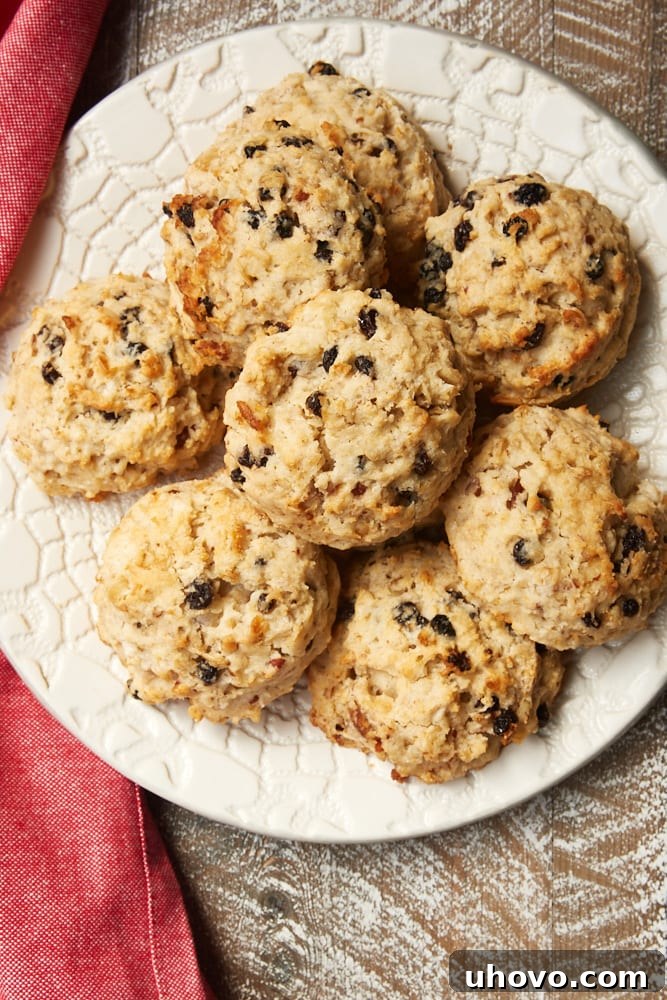
Delightful Currant Oat Scones: A Simple, Not-Too-Sweet Treat
Looking for a comforting, subtly sweet treat that’s perfect for breakfast, brunch, or an afternoon snack? These easy-to-make Currant Oat Scones are your answer! With their wholesome texture and balanced flavor, they offer a delightful alternative to overly sugary baked goods.
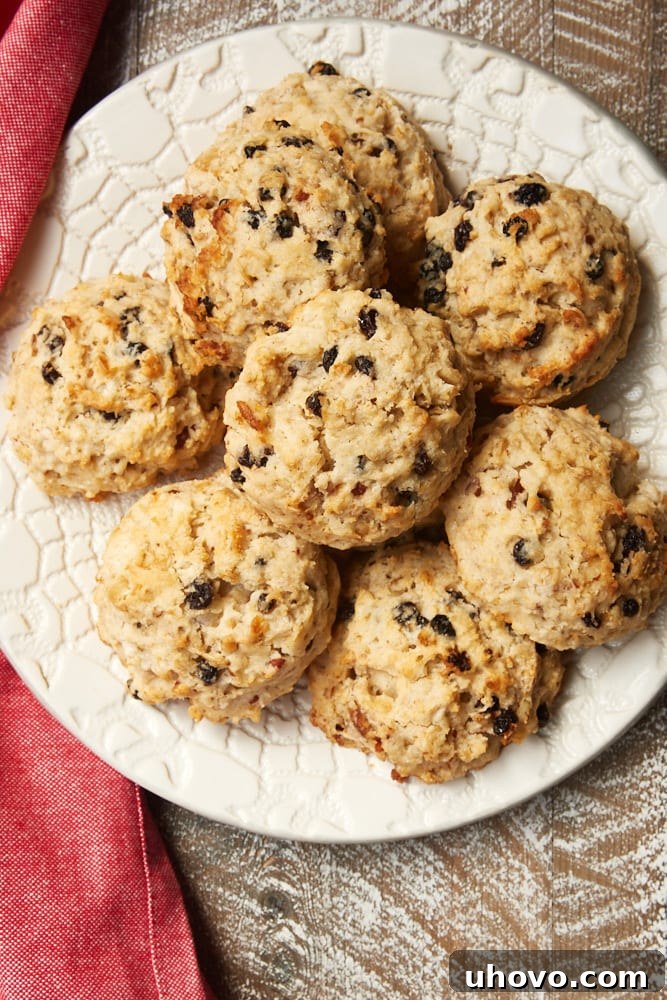
Why These Currant Oat Scones Are a Must-Try
In a world often filled with overwhelmingly sweet desserts and pastries, there’s a unique comfort in a baked good that finds the perfect balance. These Currant Oat Scones strike that harmonious note, offering just enough sweetness to satisfy without overpowering your palate. They are an ideal companion to your morning coffee or tea, a lovely addition to a leisurely brunch, or a satisfying snack any time of day.
What makes these scones truly special is their incredible simplicity. You don’t need fancy equipment or advanced baking skills to whip up a batch. Using a few common pantry staples, you can have these delicious treats mixed, shaped, and in the oven in surprisingly little time. They embody the essence of no-fuss baking, making them a fantastic project for both novice bakers and seasoned pros looking for a quick and rewarding recipe.
This particular recipe holds a special place, being a cherished variation of an oat scone recipe from my very own cookbook. Even among a collection of many delightful creations, those original oat scones stood out for their unique character. Just like their predecessor, these currant oat scones incorporate honey and wholesome oats, contributing a delicate sweetness, a lovely chewiness, and a depth of flavor that’s hard to resist.
Scones offer a wonderfully versatile alternative to muffins or other breakfast pastries. Their dough comes together effortlessly, and portioning them is a breeze, especially with the aid of a large scoop. If you’re seeking a straightforward yet elegant sweet treat for any occasion, these Currant Oat Scones are an absolute delight that promise to impress with minimal effort.
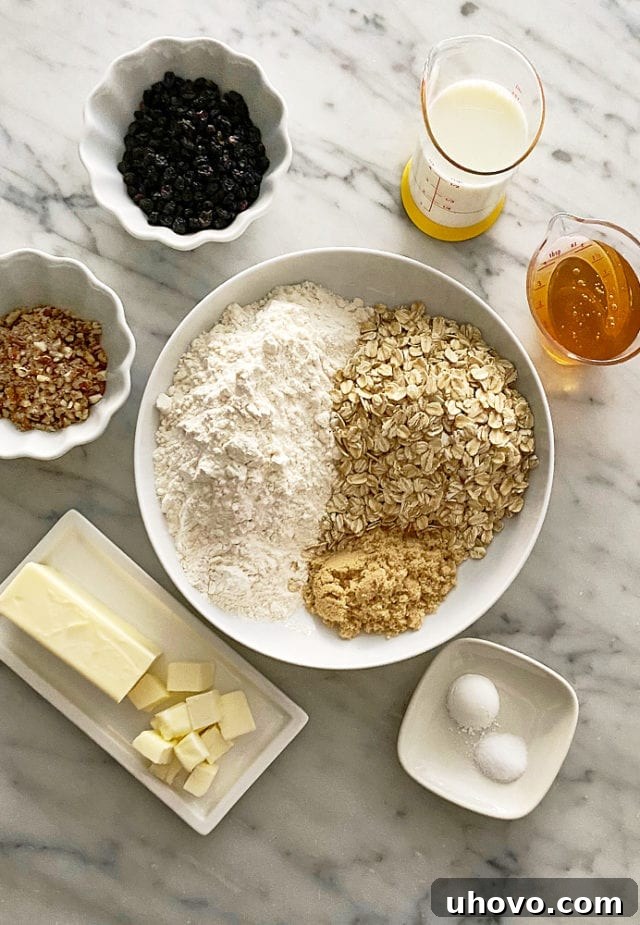
Essential Ingredients for Perfect Currant Oat Scones
Crafting these delicious scones requires a handful of basic baking ingredients, each playing a crucial role in achieving the desired texture and flavor. Here’s a closer look at what you’ll need and some tips for best results:
- All-purpose flour: The foundation of our scones. For the most accurate results, especially in baking, measuring flour by weight (grams) is highly recommended. If you don’t have a kitchen scale, use the spoon and sweep method: gently spoon flour into your measuring cup until it overflows, then level it off with a straight edge. This prevents compaction, which can lead to dry, dense scones.
- Oats: Old-fashioned rolled oats are preferred here. They lend a wonderful chewiness and a rustic texture that quick oats simply can’t replicate. While quick oats can be used in a pinch, be aware that the final texture will be noticeably different – less chewy and more uniform.
- Brown sugar: This provides a deeper, caramel-like sweetness compared to white sugar, complementing the oats and currants beautifully. Both light and dark brown sugar will work well, with dark brown offering a slightly richer molasses flavor. Make sure it’s firmly packed when measuring.
- Baking powder: The leavening agent that gives our scones their characteristic lift and tender crumb. Ensure your baking powder is fresh for optimal results; old baking powder can lead to flat, heavy scones.
- Salt: A crucial ingredient that enhances all the other flavors and balances the sweetness. Don’t skip it!
- Unsalted butter: The key to flaky, tender scones is cold butter. I highly recommend cutting it into small cubes and returning it to the refrigerator while you gather and measure the other ingredients. This keeps the butter firm, allowing it to create pockets of steam during baking, which results in those desirable flaky layers.
- Milk: Whole milk or 2% milk is best for these scones. The fat content contributes to a richer flavor and a more tender crumb. Skim milk might make the scones a bit drier.
- Honey: Adds a unique, natural sweetness and a subtle floral note that pairs beautifully with the oats and currants. It also contributes to the moistness and tender texture of the scones.
- Dried currants: These tiny, tangy fruits are perfect for scones. Their small size distributes evenly throughout the dough, and their bright, slightly tart flavor provides a lovely counterpoint to the sweetness of the honey and brown sugar. If currants aren’t available, dried cranberries are an excellent alternative, offering a similar tartness. Most other dried fruits, or even a combination, would also be delicious – think chopped apricots, cherries, or raisins.
- Chopped nuts (optional): For an added layer of flavor and a delightful textural crunch, consider incorporating chopped nuts like pecans, walnuts, or almonds. They toast slightly during baking, releasing their aromatic oils and enhancing the overall experience.
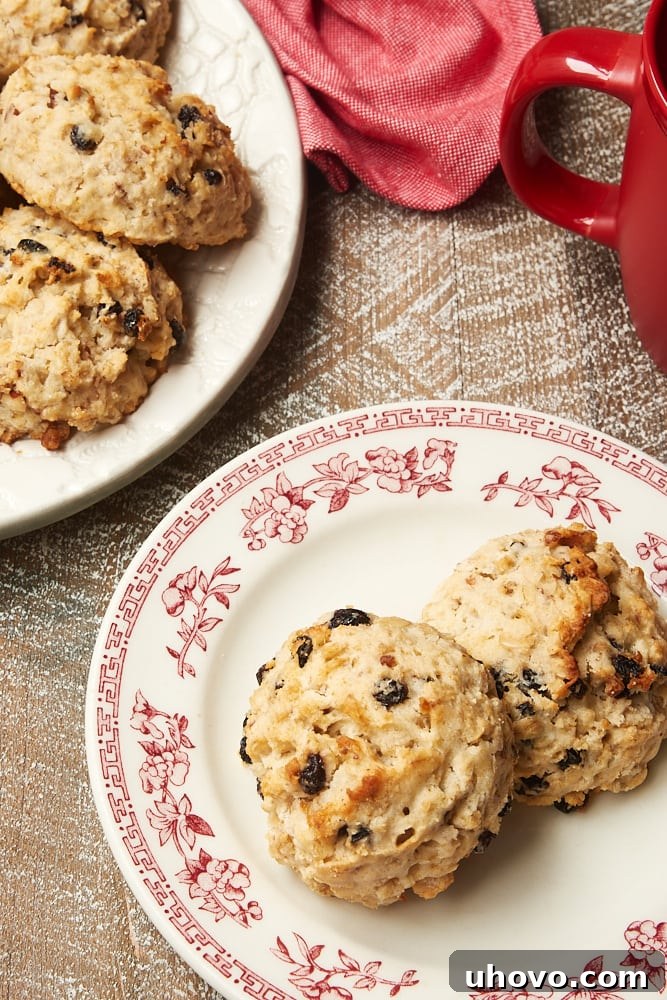
Step-by-Step Guide: Crafting Your Currant Oat Scones
One of the greatest joys of these scones is just how incredibly straightforward they are to make. From combining ingredients to baking, the entire process is designed for ease and efficiency. You can have them mixed and ready for the oven in a remarkably short amount of time, making this recipe a fantastic choice for impromptu baking sessions. With common pantry staples likely on hand, you’re never far from enjoying a batch of these wonderful treats!
- Prepare for baking: Begin by preheating your oven to a precise 400°F (200°C). This ensures the oven is at the correct temperature when your scones go in, promoting a proper rise. Line a sturdy baking sheet with parchment paper or a silicone baking mat. This prevents sticking and makes cleanup a breeze.
- Combine the dry ingredients: In a large mixing bowl, thoroughly whisk together the all-purpose flour, old-fashioned rolled oats, brown sugar, baking powder, and salt. Ensure these ingredients are well-combined so the leavening and seasoning are evenly distributed throughout the dough.
- Incorporate the cold butter: Add the cold, cubed unsalted butter to the dry mixture. Using a pastry blender, two forks, or even your fingertips (working quickly to avoid warming the butter), cut the butter into the dry ingredients. Continue until the mixture resembles coarse crumbs, with the largest pieces of butter being about the size of small peas. These small pockets of butter are what create the flaky texture in your scones.
- Add the wet ingredients: Pour in the milk and honey. Mix gently with a spoon or your hands, just until a shaggy dough begins to form. Be careful not to overmix; overworking the dough can develop the gluten, resulting in tough scones. A few dry spots are perfectly acceptable at this stage.
- Fold in the currants and nuts: Add the dried currants and optional chopped nuts to the dough. Stir gently, just until they are evenly incorporated. Again, avoid overmixing to maintain a tender crumb.
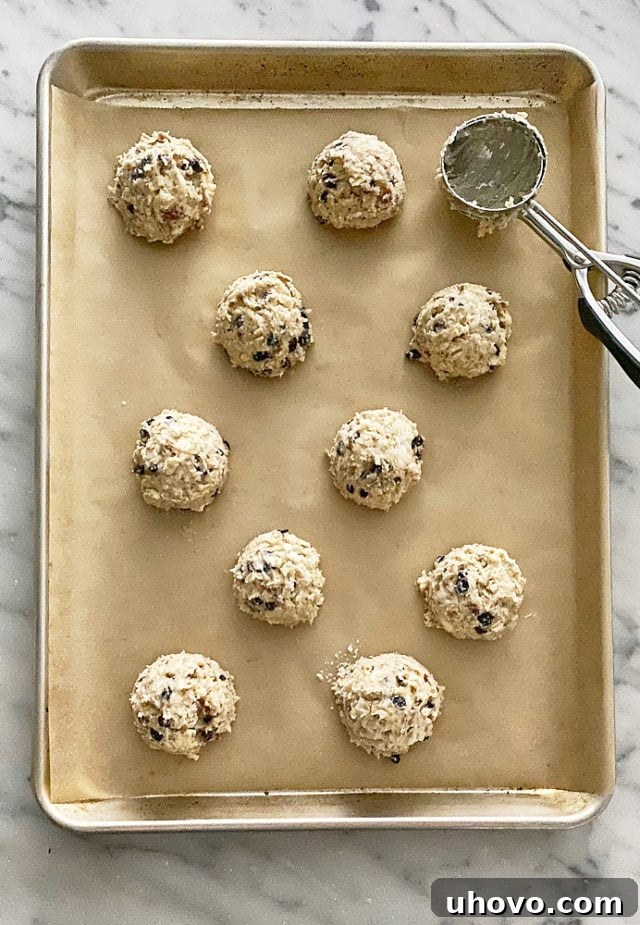
- Portion the dough: Using a 1/4-cup measure or a 4-tablespoon scoop (which is ideal for consistent sizing), drop portions of the dough onto your prepared baking pan. Leave about 2 inches of space between each scone to allow for proper spreading and even baking. The rustic dropped shape contributes to their homemade charm.
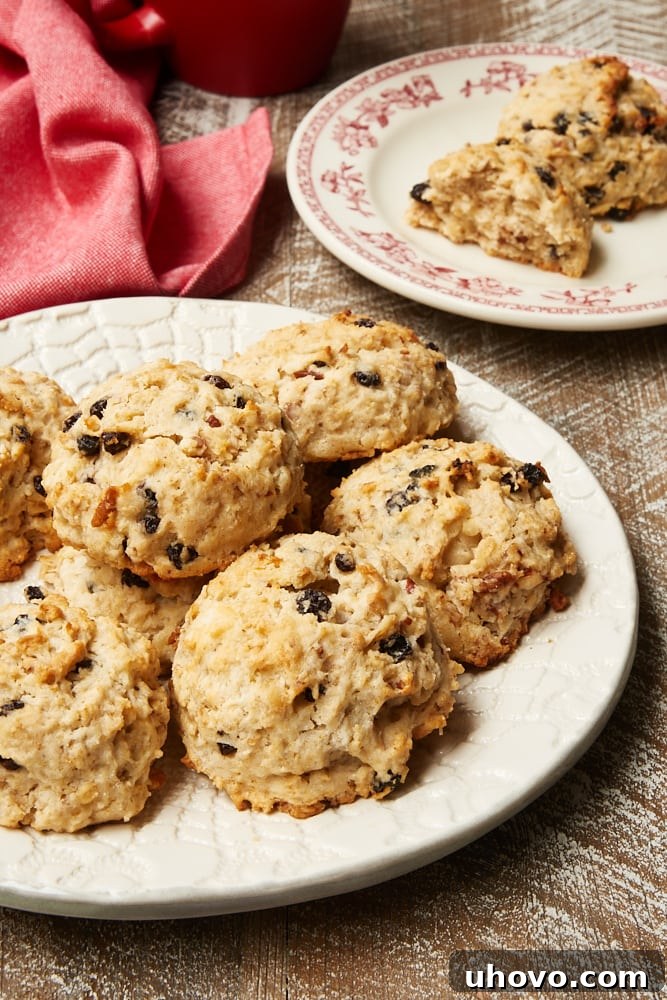
- Bake to golden perfection: Transfer the baking sheet to the preheated oven and bake for 12 to 15 minutes. The scones are done when they are beautifully golden brown on the edges and tops, and feel firm to the touch. A toothpick inserted into the center should come out clean.
- Serve and enjoy: Allow the scones to cool slightly on the baking sheet before transferring them to a wire rack. Serve them warm from the oven for the ultimate experience, or enjoy them at room temperature. They are delicious plain or with a spread of butter, jam, or even a dollop of clotted cream.
Essential Tips for Scone Success
Achieving perfect scones consistently is easier than you think with these expert tips:
- Measure accurately: This is arguably the most critical rule in baking, especially for scones. Too much flour can lead to dry, crumbly scones, while too little can make them dense. Use a kitchen scale for flour and oats if possible, or employ the spoon-and-sweep method for dry ingredients.
- Keep ingredients cold: Chilled butter and milk are vital. Cold butter creates steam pockets during baking, resulting in a light, flaky texture. If your kitchen is warm, you can even chill your mixing bowl and pastry blender for 10-15 minutes beforehand.
- Don’t over-mix the dough: Overworking the dough develops gluten, which can lead to tough, chewy scones instead of tender, crumbly ones. Mix just until the ingredients are combined and a dough forms – a few dry patches are fine.
- Don’t overbake: Keep a close eye on your scones. Overbaking can quickly dry them out, making them hard and less enjoyable. They should be golden brown, not dark brown.
- Customize with different fruits and nuts: While currants and oats are a classic combination, feel free to experiment! These scones are forgiving and adaptable. Try dried cranberries with orange zest, chopped dried cherries, or a mix of your favorite nuts like pecans or walnuts. The possibilities are endless to suit your taste preferences.
- Use a large scoop for consistency: For uniform scones that bake evenly, a 1/4-cup (4-tablespoon) scoop is incredibly helpful. This ensures each scone is roughly the same size and cooks in the same amount of time.
Storing Your Delicious Scones
To keep your Currant Oat Scones fresh and enjoyable, ensure they are completely cooled before storing. Once cooled, place them in an airtight container at room temperature. They will retain their best quality for up to 2 days. For extended freshness, particularly in warmer climates, you can transfer the airtight container to the refrigerator, where they’ll last a bit longer. Before serving, bring them back to room temperature or warm them briefly in the microwave for a just-baked taste and texture. A quick warm-up can revive their tender crumb and lovely aroma.
Freezing Currant Oat Scones for Future Enjoyment
Scones are excellent candidates for freezing, allowing you to enjoy a homemade treat whenever the craving strikes. There are two primary ways to freeze them:
Freezing Baked Scones:
Once your scones have fully cooled, arrange them in a single layer on a baking sheet and place them in the freezer for about an hour, or until solid. This “flash freezing” prevents them from sticking together. Then, transfer the frozen scones to an airtight, freezer-safe container or heavy-duty freezer bag. They will keep well for up to 3 months. When you’re ready to enjoy, simply thaw them overnight in the refrigerator or for an hour or so at room temperature. You can gently reheat them in a toaster oven or microwave for a few seconds to restore their warmth and softness.
Freezing Unbaked Scones (The Ultimate Convenience):
For ultimate convenience and the taste of freshly baked scones any time, you can freeze the dough before baking. After portioning the dough onto a baking sheet as described in the instructions, place the entire sheet into the freezer until the scones are completely frozen solid. Once frozen, transfer the individual unbaked scones to an airtight, freezer-safe container or bag. They can be stored for up to 3 months.
When you’re ready to bake, there’s no need to thaw! Simply place the frozen scones directly onto a parchment-lined baking sheet and bake them in a preheated oven. You’ll generally need to add an extra 2-5 minutes to the baking time, as they will take slightly longer to cook from frozen. This method is perfect for having fresh, warm scones on demand with minimal effort.
Recipe: Currant Oat Scones
These subtly sweet Currant Oat Scones are a wonderful treat for breakfast, brunch, or a snack!

Yield: 10 scones
Prep Time: 10 minutes
Cook Time: 15 minutes
Total Time: 25 minutes
Ingredients
- 1 ¾ cups (210 g) all-purpose flour
- 1 cup (99 g) old-fashioned rolled oats
- 2 tablespoons (25 g) firmly packed light brown sugar
- 1 teaspoon baking powder
- ¼ teaspoon salt
- ½ cup (113 g) unsalted butter, cold and cut into small cubes
- ½ cup (120 ml) milk
- ¼ cup (60 ml) honey
- ½ cup (80 g) dried currants
- ¼ cup (30 g) chopped nuts, optional
Instructions
- Preheat oven to 400°F (200°C). Line a baking sheet with parchment paper or a silicone liner.
- Stir together the flour, oats, brown sugar, baking powder, and salt. Add the butter, and mix with a pastry blender or a fork until the largest pieces of butter are about the size of small peas.
- Add the milk and honey, and stir just until a dough forms. Gently stir in the currants and nuts.
- Drop the dough by 1/4-cup portions onto the prepared pan, leaving about 2 inches between the scones.
- Bake 12 to 15 minutes, or until the scones are golden brown.
Notes
- Store in an airtight container at room temperature for up to 2 days.
Author: Jennifer McHenry
Course: Scones
Cuisine: American