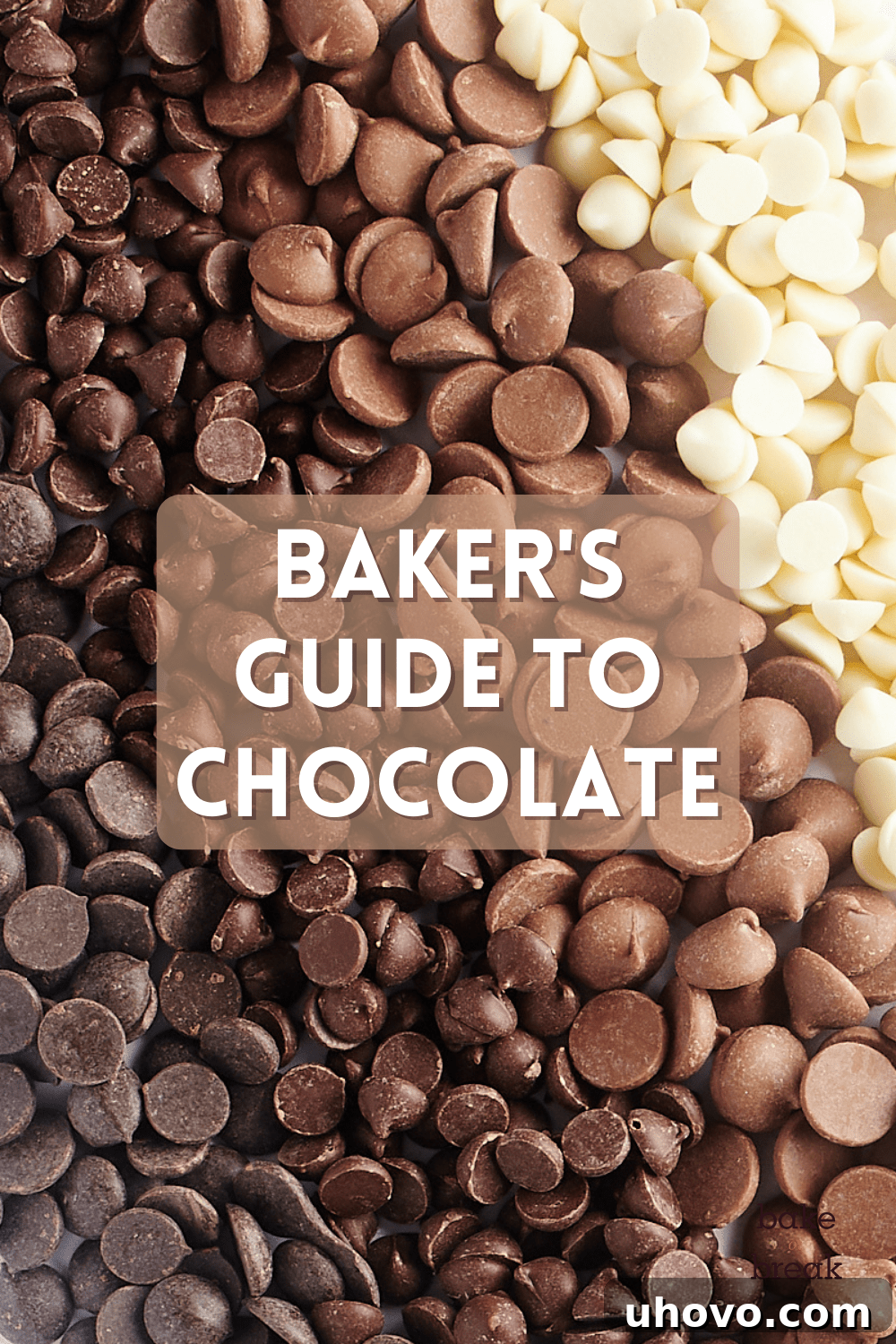
Welcome to the definitive guide for every home baker passionate about chocolate! Whether you’re a beginner taking your first steps into the world of baking or a seasoned professional looking to refine your understanding, mastering the nuances of chocolate is key to creating truly unforgettable desserts. This guide is packed with essential information to help you navigate the vast array of chocolate types, understand their unique properties, and utilize them effectively in your homemade sweet treats.
Table of contents
- Mastering Chocolate: Types and Their Baking Applications
- The Origins of Chocolate: From Cacao Bean to Delight
- Understanding Chocolate Percentages: Decoding Cacao Content
- Unsweetened Chocolate: The Pure, Intense Foundation
- Dark Chocolate: A Spectrum of Richness
- Milk Chocolate: Sweetness and Creaminess Defined
- White Chocolate: The Sweet Embrace of Cocoa Butter
- Chocolate Chips vs. Bars & Discs: Form Follows Function
- Cocoa Powder: The Essence of Chocolate, Demystified
- Beyond the Basics: Exploring Other Chocolate Varieties
- What Defines Good Quality Chocolate?
- Optimal Chocolate Storage: Preserving Flavor and Texture
- More Ingredient Guides for Bakers
Mastering Chocolate: Types and Their Baking Applications
Chocolate holds a special, almost revered place in the culinary world, particularly in baking. It’s not just an ingredient; it’s a source of comfort, luxury, and endless creative possibilities. From fudgy brownies to delicate mousse, chocolate desserts are consistently among the most cherished and sought-after treats. For us home bakers, the journey through the diverse landscape of baking chocolate can be both exciting and, at times, a little daunting. The sheer variety available, coupled with confusing labels like percentages and specialized terminology, often leaves us wondering which chocolate is truly best for our recipe.
This comprehensive guide aims to simplify the complexities of baking chocolate. We’ll explore the most common types of chocolate, demystify their characteristics, and provide practical advice on how to use them to achieve perfect results in your kitchen. Beyond just identification, we’ll delve into the science and art of chocolate, helping you understand what makes each type unique and how it interacts within a recipe. By the end of this guide, you’ll be empowered to choose your chocolate wisely, confidently selecting the ideal variety for any baking project, or simply for enjoying a delicious square on its own. Get ready to elevate your baking skills and delight your taste buds with exquisite chocolate creations!
The Origins of Chocolate: From Cacao Bean to Delight
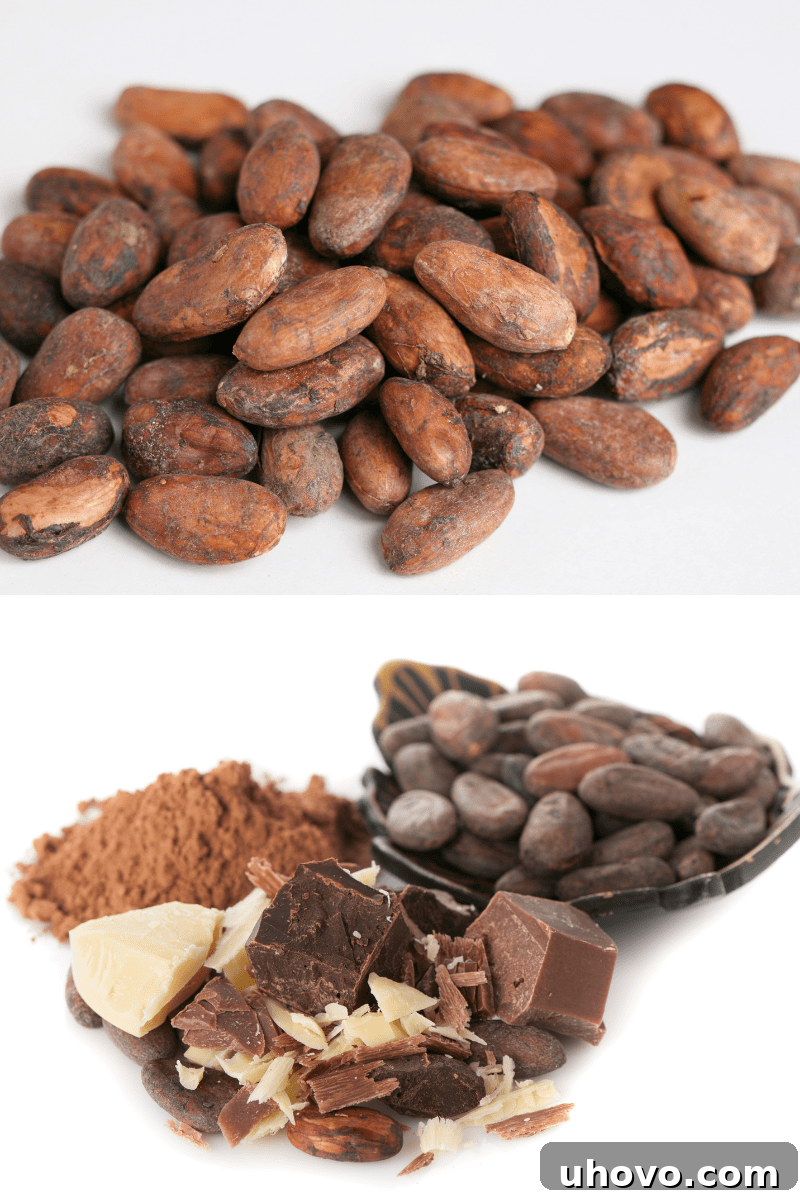
Before we delve into the various types of chocolate, it’s helpful to understand its humble beginnings. All chocolate originates from cacao beans, which are the seeds found within the pods of the Theobroma cacao tree. These beans undergo a meticulous process that transforms them into the rich ingredient we know and love. After harvesting, the beans are fermented, dried, roasted, and then ground into a thick, paste-like substance called chocolate liquor. This “liquor” (which contains no alcohol) is essentially pure chocolate in its most fundamental form. It consists of two primary components: cocoa solids, responsible for chocolate’s distinctive color and intense flavor, and cocoa butter, the natural fat component that gives chocolate its smooth, melt-in-your-mouth texture. The proportion and treatment of these two components are what give rise to the wide array of chocolate types available today.
Understanding Chocolate Percentages: Decoding Cacao Content
You’ve likely seen percentages prominently displayed on chocolate bars, particularly dark chocolate. These percentages refer to the total amount of cacao-derived ingredients—specifically cocoa solids and cocoa butter—present in the chocolate by weight. In essence, it tells you how much of the product truly comes from the cacao bean itself. While chocolate liquor inherently contains both cocoa solids and cocoa butter, many chocolate products have additional cocoa butter added to enhance smoothness and texture, and this extra cocoa butter is included in the percentage calculation.
It’s important to note that a higher cacao percentage generally indicates a stronger, more intense chocolate flavor and less sweetness, as it typically means less sugar has been added. However, two chocolates with the same percentage can taste quite different due to variations in bean origin, roasting profiles, and the specific ratio of cocoa solids to cocoa butter. A higher percentage doesn’t automatically equate to “better” for all applications; it simply signifies a more concentrated cacao flavor profile. Experimenting with different percentages will help you discover your preferred intensity for eating and baking alike.
Unsweetened Chocolate: The Pure, Intense Foundation
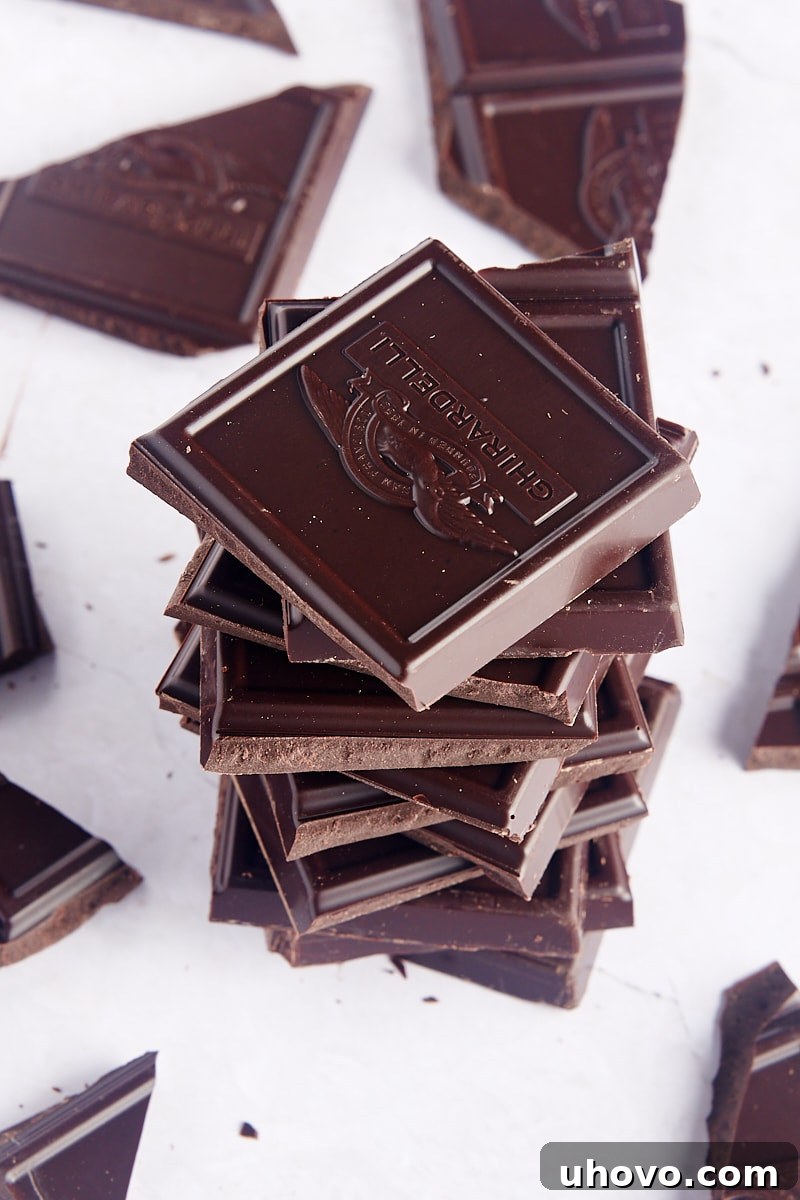
Unsweetened chocolate, also known as baking chocolate or bitter chocolate, stands at the purest end of the chocolate spectrum. It is composed of 100% chocolate liquor, meaning it contains only cocoa solids and cocoa butter, with no added sugar. This complete absence of sugar gives unsweetened chocolate an intensely bitter flavor, making it unsuitable for eating on its own. However, this very bitterness is its superpower in baking. When incorporated into recipes, unsweetened chocolate provides a deep, robust, and complex chocolate flavor that is then balanced by the recipe’s added sugar. It’s often used in rich desserts where a profound chocolate presence is desired, and the sweetness can be precisely controlled by other ingredients. Think of it as the foundational building block for truly dark and decadent chocolate creations.
Recipes made with unsweetened chocolate
- Chocolate Torte
- Mini Chocolate Bundt Cakes with Peanut Butter Filling
- Hazelnut Mocha Brownies
- Oatmeal Brownie Bars
- Chocolate Sheet Cake
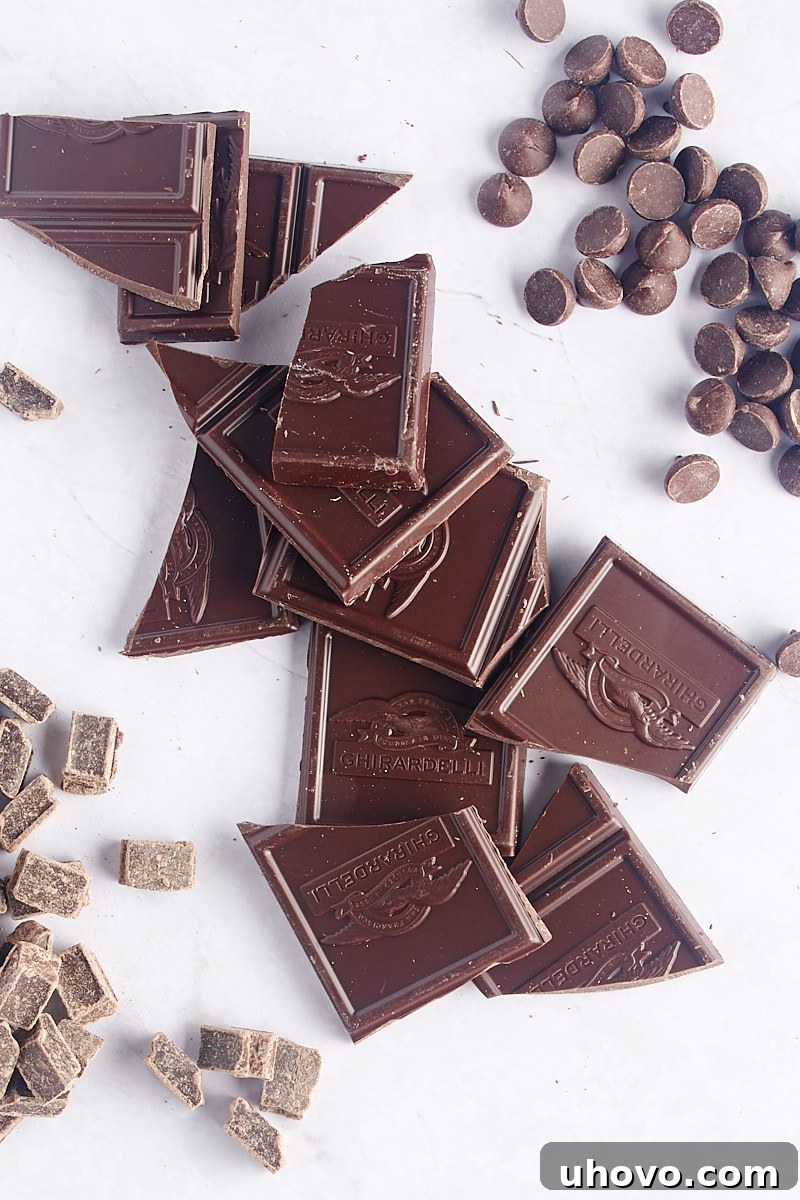
Dark Chocolate: A Spectrum of Richness
Dark chocolate is a beloved category, known for its intense flavor and wide range of applications. It’s typically made from chocolate liquor (or unsweetened chocolate), sugar, and additional cocoa butter, often with vanilla and an emulsifier like lecithin for a smoother texture. What defines dark chocolate is its relatively high cacao content, usually ranging from 35% to over 80%. Unlike milk chocolate, good quality dark chocolate typically contains minimal to no dairy solids, which contributes to its firmer texture and more pronounced chocolate flavor.
The beauty of dark chocolate lies in its versatility. Lower percentages (around 35-50%) offer a balanced sweetness with a noticeable chocolate presence, while higher percentages (70% and above) deliver a powerful, complex bitterness with fruity or earthy notes. For baking, especially for rich desserts like brownies, cakes, and cookies, dark chocolate chips or chopped bars are incredibly popular. I personally find a 70% cacao dark chocolate to be a fantastic all-rounder for many recipes, striking a wonderful balance between intense flavor and just enough sweetness. However, I highly encourage you to experiment with different percentages to discover what best suits your palate and specific baking needs, as each percentage offers a unique flavor experience.
Semisweet Chocolate vs. Bittersweet Chocolate
The terms “semisweet chocolate” and “bittersweet chocolate” are often used interchangeably with dark chocolate, and in many baking scenarios, they can indeed be substituted for one another. Historically, bittersweet chocolate had a higher cacao content (and thus less sugar) than semisweet chocolate, making it, as the name suggests, more bitter. While this distinction still generally holds true, the lines have become blurred over time, and the specific cacao percentage can vary significantly between brands. As a general guideline, chocolate with at least 60-66% cacao content is often labeled bittersweet, while semisweet typically falls in the 35-55% range. However, it’s crucial to taste different brands, as the amount of sugar can vary wildly, meaning one brand’s “bittersweet” might taste sweeter than another’s “semisweet.” Always consider the percentage and your personal preference for sweetness and intensity when choosing between them.
Sweet Dark Chocolate
Sweet dark chocolate presents a unique category within the dark chocolate family. While it is classified as dark chocolate due to the absence of milk solids, it contains a significantly lower cacao percentage, typically ranging from 20-40%, and a much higher sugar content than standard dark chocolates. This results in a product that is considerably sweeter and less bitter, bridging the gap between traditional dark and milk chocolates. A classic example of sweet dark chocolate is German’s chocolate, famed for its distinctively mild and sweet profile, making it a popular choice for specific cake recipes and frostings.
Recipes made with dark chocolate
- Chocolate Mousse
- Irish Cream Brownie Cookies
- Chocolate Chess Pie
- Fudgy Nut Tart
- Brownie Cupcakes
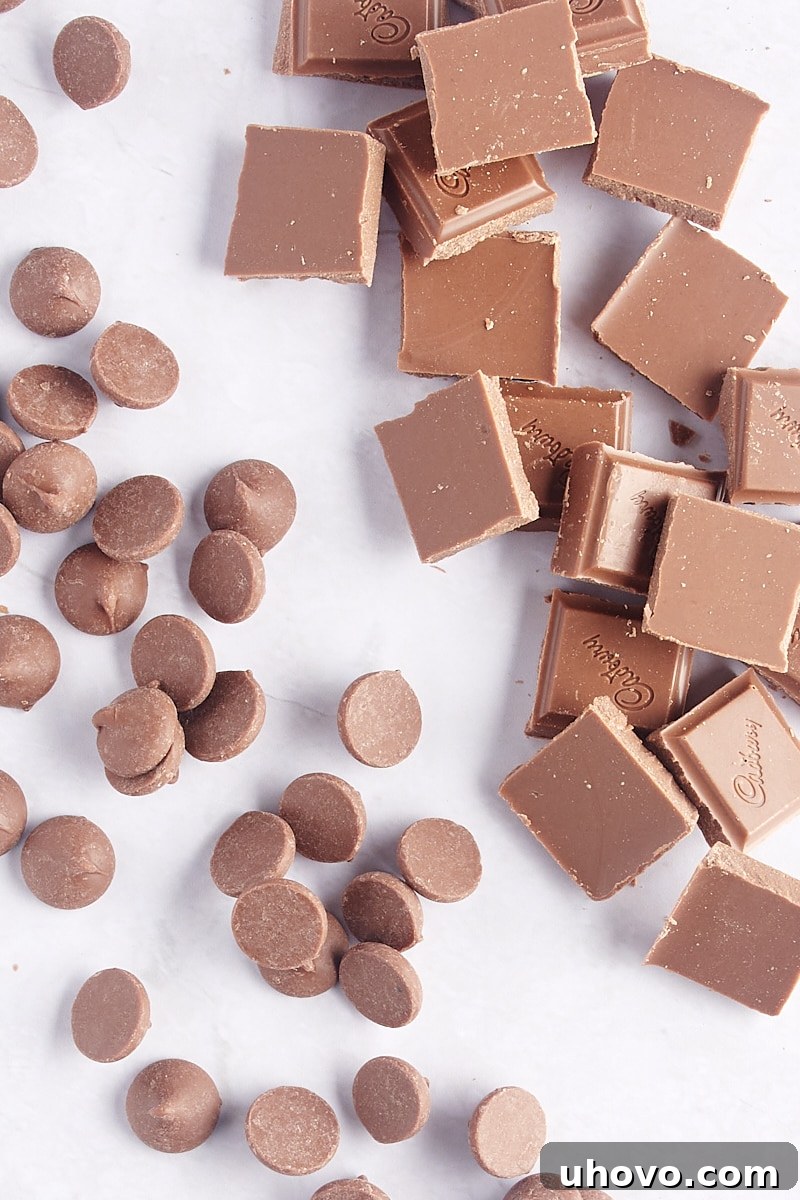
Milk Chocolate: Sweetness and Creaminess Defined
Milk chocolate is perhaps the most universally beloved type of chocolate, characterized by its creamy texture, pronounced sweetness, and milder chocolate flavor. Its composition is similar to dark chocolate, but with the crucial addition of milk solids. These can be in the form of liquid milk, powdered milk, or condensed milk, which contribute to its characteristic light color and tender consistency. In the United States, milk chocolate must contain at least 10% cacao liquor and a minimum of 12% milk solids to bear the name.
Compared to dark chocolate, milk chocolate has a significantly higher sugar content and a lower cacao percentage, resulting in its sweeter profile. The presence of milk fats also makes it softer and causes it to melt more readily. While it is a fantastic snacking chocolate, its softer nature means it behaves differently in baking. It can be a delightful addition to cookies, certain cakes, and frostings, especially when a gentle, sweet chocolate flavor is desired. However, its lower melting point might make it challenging for applications requiring a firm set, such as certain ganaches or molded chocolates, unless specifically formulated for baking (like milk chocolate chips designed to hold their shape). When baking with milk chocolate, consider recipes where its sweetness and creaminess will enhance, rather than overpower, other flavors.
Recipes made with milk chocolate
- Milk Chocolate Brownies
- Peanut Butter Bundt Cake with Milk Chocolate Ganache
- Caramel Chocolate Chip Cookie Bars
- Peanut Butter Cookies with Milk Chocolate Chunks
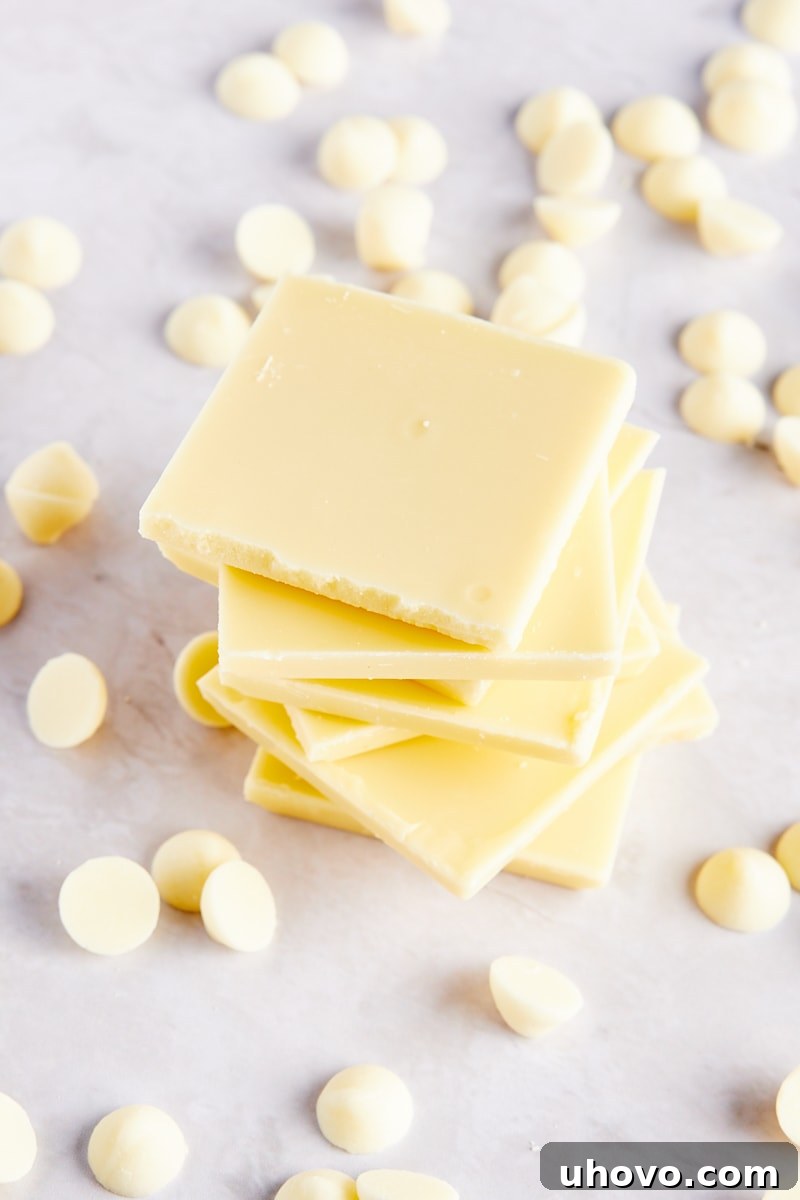
White Chocolate: The Sweet Embrace of Cocoa Butter
White chocolate often sparks debate among purists about whether it’s “real” chocolate, but legally and culinarily, it is indeed a distinct type. Its unique character stems from its composition: it contains cocoa butter, sugar, and milk solids, but crucially, no cocoa solids. The absence of cocoa solids is what gives white chocolate its signature pale, ivory color and distinct sweet, creamy, vanilla-like flavor profile, which is quite different from dark or milk chocolate. To be legally labeled as white chocolate, products in the U.S. must contain at least 20% cocoa butter, a minimum of 14% milk solids, and no more than 55% sugar. The high cocoa butter content is vital for its smooth texture and rich mouthfeel.
White chocolate is excellent for adding a delicate sweetness and creamy richness to desserts. It melts beautifully, making it perfect for drizzles, glazes, mousses, and as an inclusion in cookies and bars. Its mild flavor allows it to pair wonderfully with fruits like raspberries, citrus, and nuts, offering a harmonious contrast without overpowering other ingredients.
White Chocolate vs. White Baking Chips
It’s imperative to distinguish between genuine white chocolate and products labeled “white baking chips,” “white melting wafers,” or “vanilla-flavored baking squares.” While these alternatives may look similar and often serve a similar purpose in recipes (especially for melting), they are not true white chocolate. The key difference lies in the fat content: these imitators replace the essential cocoa butter with less expensive vegetable fats. While they might melt easily, they typically lack the rich flavor and smooth, luxurious mouthfeel of authentic white chocolate. For superior taste and texture in your baked goods, always check the ingredient list to ensure cocoa butter is the primary fat. Investing in quality white chocolate will significantly enhance the outcome of your recipes.
Recipes made with white chocolate
- White Chocolate Macadamia Sandwich Cookies
- Raspberry White Chocolate Icebox Pie
- White Chocolate Brownies
- Peanut Butter White Chocolate Blondies
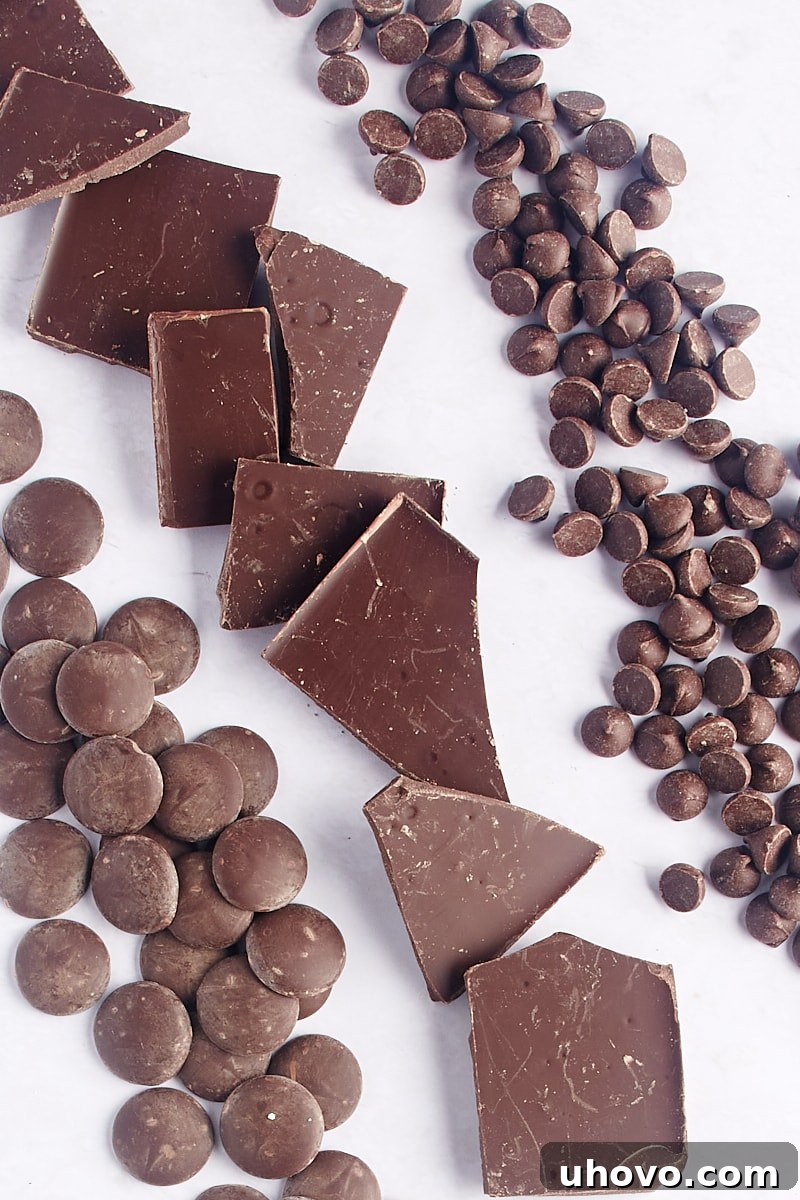
Chocolate Chips vs. Bars & Discs: Form Follows Function
When selecting chocolate for baking, the form it takes can significantly impact the final texture and appearance of your dessert. Understanding the difference between chocolate chips and chocolate bars (or discs/fèves) is crucial.
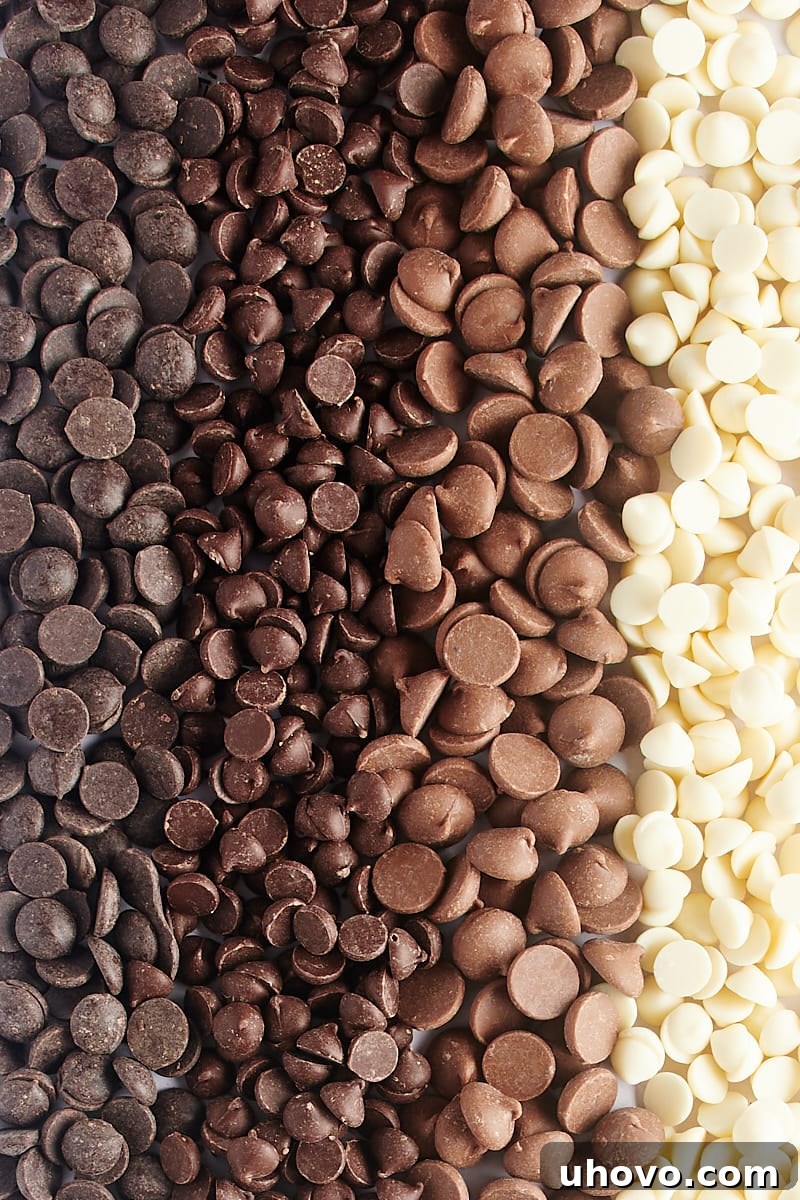
Chocolate chips are specifically engineered to hold their shape during baking. This is achieved by reducing the cocoa butter content, making them more stable under heat. This characteristic is why they maintain their distinct chip shape in chocolate chip cookies, offering delightful pockets of partially melted chocolate without completely dispersing into the dough. They provide a pleasant textural contrast and visual appeal in baked goods where discrete chocolate pieces are desired.
In contrast, chocolate bars, discs, or fèves (small, oval-shaped pieces) are designed with a higher cocoa butter content, which allows them to melt more smoothly and uniformly. This makes them ideal for applications like tempering, ganaches, glazes, or when you need chocolate to fully incorporate into a batter or sauce. When melting chocolate for a recipe, using chopped bars or discs typically yields superior results compared to chips, providing a silkier, more consistent texture.
Substituting one for the other can lead to unintended outcomes. For example, using chopped high-quality chocolate bars in a chocolate chip cookie recipe might result in decadent puddles of melted chocolate rather than distinct chips, as demonstrated by famous recipes like Jacques Torres Chocolate Chip Cookies. While this can be a delicious variation, it’s important to be aware of the differing melting behaviors to ensure your baked goods turn out exactly as intended.
Cocoa Powder: The Essence of Chocolate, Demystified
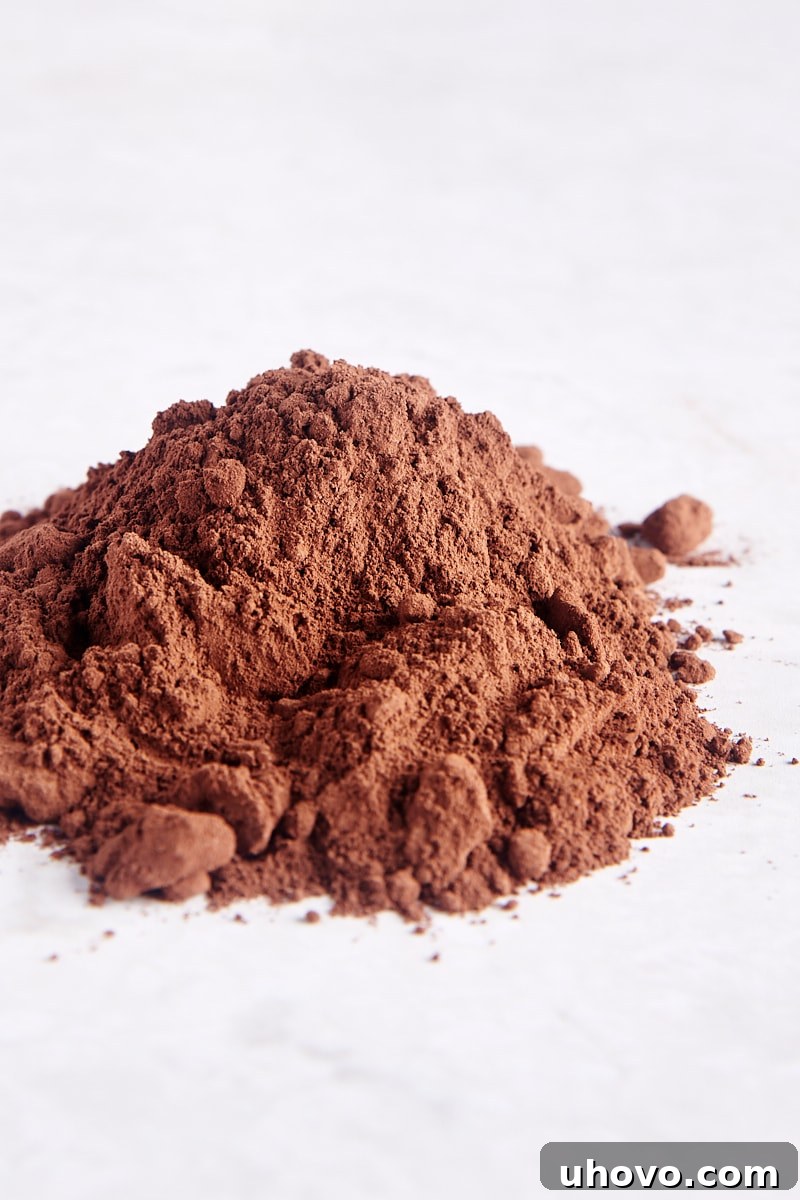
Cocoa powder is a powerful and versatile chocolate ingredient, essentially concentrated chocolate flavor in powdered form. It is produced by pressing most of the cocoa butter out of chocolate liquor, leaving behind a dry cake of cocoa solids, which is then ground into a fine powder. This process concentrates the pure chocolate flavor, making cocoa powder an indispensable item in many baking applications.
There are two main types of unsweetened cocoa powder, each with distinct chemical properties that influence its interaction with other ingredients, particularly leavening agents:
- Natural Cocoa Powder: This is cocoa powder in its purest form, without any further processing. It is acidic, boasting a strong, often slightly fruity, bitter chocolate flavor. Because of its acidity, natural cocoa powder typically reacts with alkaline baking soda, producing carbon dioxide gas that helps baked goods rise. Recipes calling for natural cocoa powder often use baking soda as the primary leavening agent.
- Dutch-Process Cocoa Powder: This cocoa powder has been treated with an alkali solution to neutralize its acidity. This process darkens its color and mellows its flavor, making it smoother, less bitter, and often described as having an “earthier” or “rounder” chocolate taste. Since Dutch-process cocoa is neutral, it does not react with baking soda. Therefore, recipes using Dutch-process cocoa powder usually rely on baking powder (which contains its own acidic component) or other acidic ingredients for leavening.
While you can sometimes substitute one for the other in recipes that don’t rely heavily on specific leavening agents (like fudges or frostings), it’s generally best to stick to the type specified in a recipe to ensure proper rise and optimal flavor balance. Understanding this distinction is key to achieving the desired texture and taste in your chocolate creations.
Recipes made with cocoa powder
- Dark Cocoa Powder Brownies
- 6-Inch Chocolate Cake with Marshmallow Frosting
- Chocolate Sour Cream Bundt Cake
- Mocha Muffins
- Cocoa Cake
Beyond the Basics: Exploring Other Chocolate Varieties
While the main types of chocolate discussed above cover the vast majority of home baking needs, the world of chocolate is rich with other interesting varieties. These may not be staples in every pantry, but they offer unique flavors and textures for more specialized applications or adventurous bakers. Let’s briefly explore a few of these fascinating options:
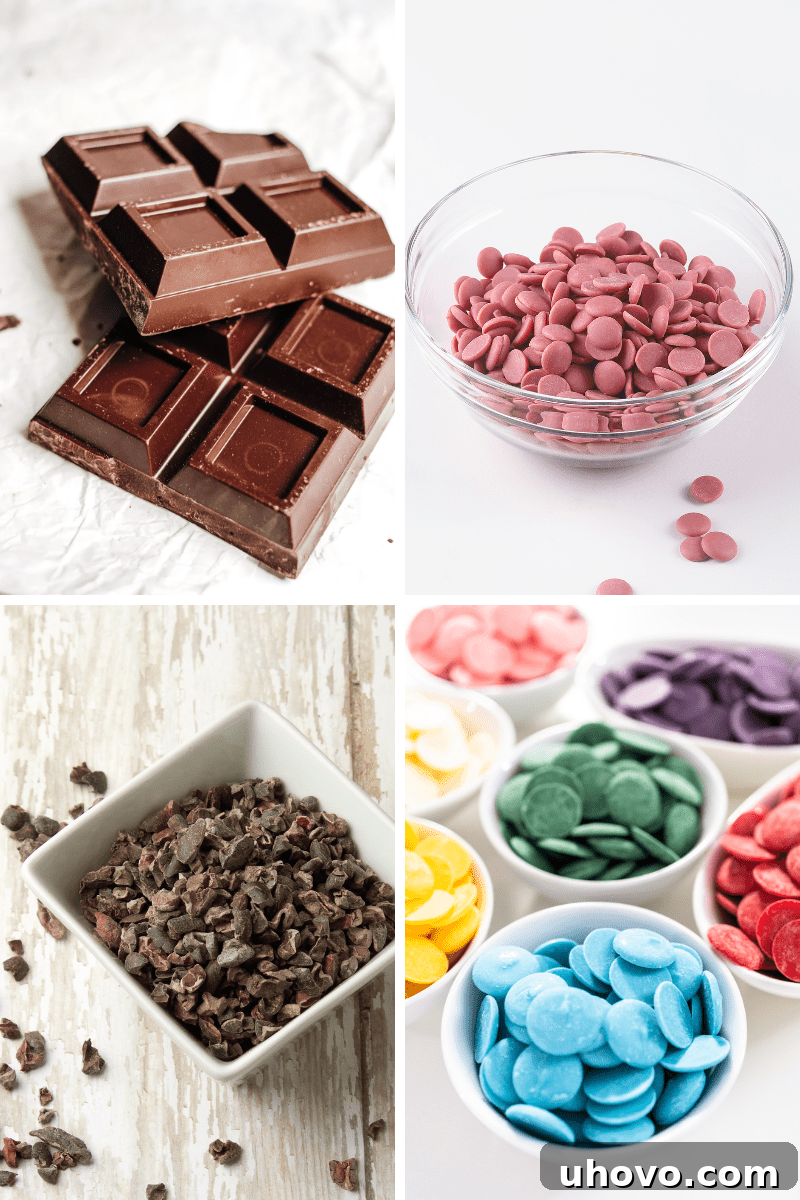
- Couverture Chocolate: This is a high-quality chocolate primarily favored by professional chocolatiers and bakers for its exceptional melting properties and smooth finish. Couverture chocolate is distinguished by its high percentage of cocoa butter (typically 32-39%), which gives it excellent fluidity when melted. This makes it perfect for tempering, creating thin, glossy coatings for confections, molding intricate chocolates, and dipping. Its superior quality often comes with a higher price tag.
- Ruby Chocolate: A relatively new discovery, ruby chocolate was introduced by Barry Callebaut in 2017. Derived from specially selected ruby cacao beans, it boasts a natural vibrant pink hue and a unique berry-like flavor profile that is subtly fruity and tart, without any added berries or colorings. It offers a fresh, novel taste experience that sets it apart from traditional dark, milk, or white chocolates, making it intriguing for modern desserts and confections.
- Gianduja Chocolate: Originating from Turin, Italy, Gianduja is a delightful blend of chocolate and hazelnut paste. It typically has a rich, creamy texture and a distinctive nutty flavor that complements the chocolate beautifully. Its color falls somewhere between milk and dark chocolate, offering a balanced sweetness and depth. If you’re familiar with the taste of popular hazelnut spreads like Nutella, you’ll have a good idea of Gianduja’s delicious profile. It’s excellent for spreads, fillings, and gourmet confections.
- Cocoa Nibs (Cacao Nibs): These are simply dried, roasted, and crushed cacao beans. Essentially, they are chocolate in its most raw, unprocessed form before sugar or other ingredients are added. With no added sugar, cocoa nibs are intensely dark, bitter, and offer a satisfying crunchy texture. They can be sprinkled over desserts, added to granola, or incorporated into baked goods for a concentrated burst of bitter chocolate flavor and a delightful textural contrast.
- Candy Coating (Melting Wafers/Compound Chocolate): It’s important to clarify that products labeled as “candy coating,” “melting wafers,” or “compound chocolate” are not true chocolate. While they are designed to melt easily and are often used for dipping, molding, and decorating, they replace cocoa butter with other vegetable fats (like palm kernel oil). This allows them to be more stable and easier to work with without tempering, but they lack the complex flavor and smooth mouthfeel of genuine chocolate. While convenient, their taste and quality are generally considered inferior to real chocolate, so use them sparingly or where their specific properties are truly needed.
What Defines Good Quality Chocolate?
Determining “good quality” chocolate can be subjective, as personal preference plays a significant role. However, beyond individual taste, several objective characteristics contribute to a chocolate’s overall quality. Learning to identify these can greatly enhance your baking results and eating pleasure.
Texture
A truly fine chocolate should exhibit a firm, smooth texture and, when broken, produce a distinct, sharp “snap.” This crisp break is a hallmark of good quality, especially in dark chocolate, indicating a proper temper and sufficient cocoa butter content. Milk and white chocolates, due to their higher milk solids and sugar, will have a slightly softer snap but should still not be crumbly or yield too easily. In your mouth, good chocolate should melt slowly and evenly, feeling smooth and luxurious on the tongue, without any graininess or waxy residue. This melt is largely due to cocoa butter’s unique property of melting just below body temperature.
Taste
Beyond simply tasting “good,” quality chocolate offers a complex flavor profile that evolves as it melts. It should never leave an unpleasant aftertaste. Instead, the rich, nuanced flavors should linger pleasantly for several minutes after consumption, a sign of well-developed notes and superior ingredients. High-quality chocolate can reveal notes of fruit, nuts, caramel, coffee, or even subtle spices, depending on its origin and processing.
Appearance
Visually, quality chocolate should be uniformly glossy and free from blemishes, streaks, or significant discolorations. A dull, streaky, or pale surface can indicate issues with tempering or storage, such as “bloom” (discussed below). While bloom isn’t necessarily a sign of bad quality chocolate, obvious bubbles, uneven coloration, or other visible flaws can point to poor manufacturing practices or inferior ingredients.
Smell
The aroma of chocolate is an integral part of its sensory experience. A good quality chocolate should possess a rich, pure chocolate scent. This might seem obvious, but chocolate is highly susceptible to absorbing surrounding odors. If your chocolate smells stale, like chemicals, or predominantly of other ingredients rather than chocolate, its flavor profile has likely been compromised. A strong, pleasant chocolate aroma indicates that its essential flavor compounds are intact and will translate well into your baking.
Cost
While often associated with quality, price isn’t always the definitive indicator. Higher-priced chocolates may reflect rare bean origins, artisanal processing, or sustainable sourcing. However, many affordable brands offer excellent quality for home baking. Reputable brands like Guittard and Ghirardelli, for example, consistently provide high-quality baking chocolate that performs exceptionally well without breaking the bank. Focus on the sensory attributes and ingredient list rather than just the price tag.
What is Chocolate Bloom?
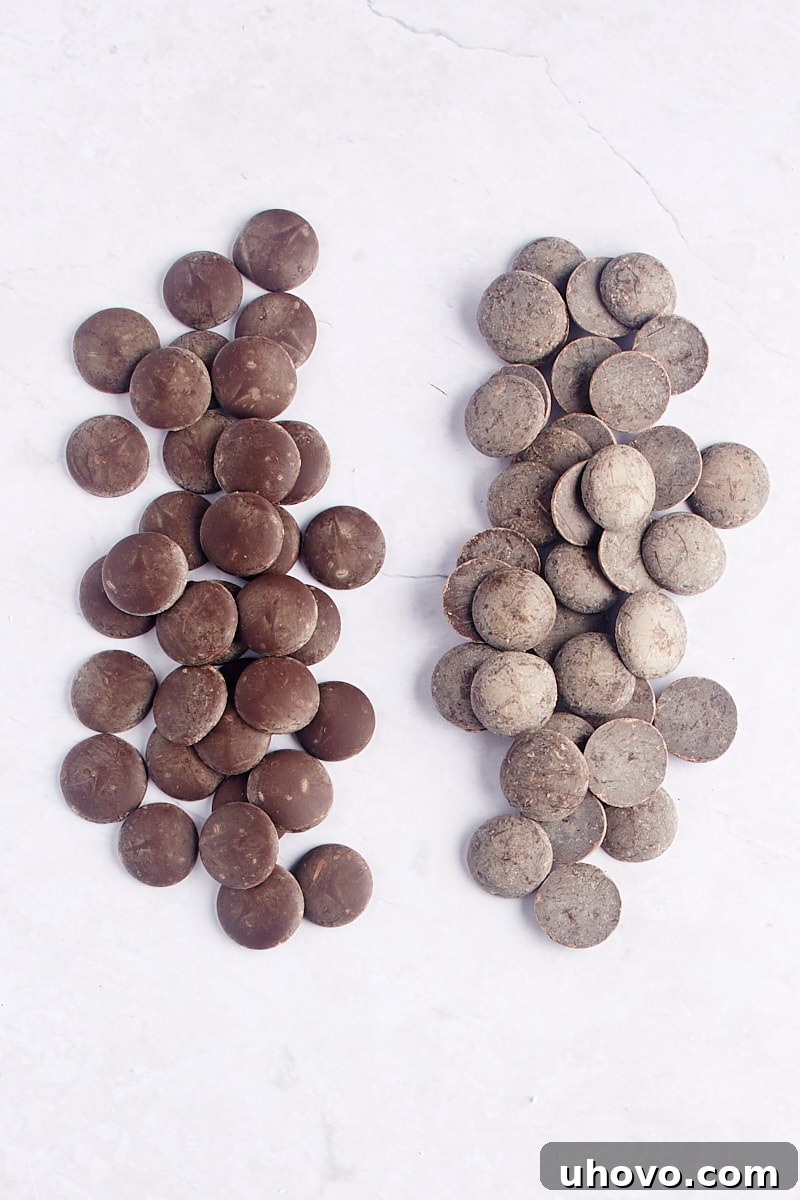
Have you ever noticed a whitish or grayish film on the surface of your chocolate? This phenomenon is known as “bloom,” and it’s a common concern for many bakers. Chocolate bloom occurs when chocolate is exposed to unfavorable environmental conditions, primarily temperature fluctuations, humidity, or excessive light.
There are two types of bloom:
- Fat Bloom: This is the most common type, occurring when the cocoa butter separates from the cocoa solids and rises to the surface, recrystallizing as white streaks or a dusty film. This typically happens when chocolate is stored at fluctuating temperatures (e.g., getting warm and then cooling down).
- Sugar Bloom: Less common, sugar bloom occurs when moisture condenses on the chocolate’s surface, dissolving sugar crystals. As the moisture evaporates, the sugar recrystallizes into a gritty, white, powdery layer. This is often caused by high humidity or drastic temperature changes, such as moving cold chocolate directly into a warm room.
While aesthetically unappealing, bloom generally does not indicate that the chocolate is spoiled or unsafe to eat. More importantly for bakers, it usually has little to no significant impact on the flavor or performance of chocolate in baked goods. If you’re melting the chocolate for ganache, frosting, or mixing it into a batter, the heat will typically cause the fat or sugar crystals to re-melt and reintegrate, making the bloom disappear. Even chocolate chips with bloom mixed into cookies or cakes will likely melt sufficiently in the oven to resolve the issue. So, don’t discard bloomed chocolate prematurely; it’s often perfectly fine for your baking projects!
Optimal Chocolate Storage: Preserving Flavor and Texture
Proper storage is paramount to maintaining the quality, flavor, and texture of your chocolate. Suboptimal conditions can lead to bloom, flavor degradation, or undesirable textures. To keep your chocolate in peak condition, aim for a cool, dark, and dry environment with minimal temperature fluctuations.
- Temperature: Keep chocolate cool, ideally between 60-70°F (15-21°C). Excessive heat will cause it to melt and potentially lead to fat bloom upon cooling.
- Light: Store chocolate in a dark place, away from direct sunlight or even strong artificial light. Light exposure can accelerate oxidation, leading to off-flavors and a diminished chocolate experience.
- Humidity: A dry environment is crucial. High humidity can cause sugar bloom and can also make chocolate absorb unwanted moisture and odors from its surroundings.
- Airtight Container: Chocolate is highly absorbent and can easily pick up aromas from other foods (e.g., onions, spices) if not properly sealed. Always store opened chocolate in an airtight container, such as a zip-top bag or a sealed plastic container. If the original packaging isn’t resealable, transfer the chocolate immediately after opening.
- Shelf Life: When stored correctly, solid chocolate can last for several months, often beyond its “best by” date. Dark chocolate, due to its lower milk and sugar content, generally has a longer shelf life than milk or white chocolate. Always check the packaging for specific recommendations, as ingredients like nuts or caramels can shorten storage time. Cocoa powder also benefits from airtight storage; while it has a long shelf life, its flavor can gradually diminish over time.
Refrigerating and Freezing Chocolate
While not ideal, refrigeration or freezing can be an option if you live in a warm, humid climate where a cool, dry pantry isn’t feasible. However, these methods come with caveats:
- Refrigerator: The refrigerator’s high humidity and presence of strong odors make it generally unsuitable for chocolate storage. Exposure to moisture can cause sugar bloom, and the chocolate can easily absorb surrounding smells, tainting its flavor.
- Freezer: The freezer offers a very dry environment, which can mitigate some humidity concerns, but temperature fluctuations during freezing and thawing can still cause bloom.
If you must refrigerate or freeze chocolate:
- Ensure the chocolate is absolutely hermetically sealed in an airtight container (multiple layers of plastic wrap followed by a freezer-safe bag or container are recommended) to protect it from moisture and odors.
- When ready to use, transfer the chocolate (still in its airtight container) to the refrigerator for a few hours, then to room temperature.
- Crucially, do not open the container until the chocolate has completely reached room temperature. Opening it too soon will cause condensation to form on the cold chocolate, leading to immediate sugar bloom and potentially affecting its texture and flavor.
By following these guidelines, you can ensure your precious chocolate remains in prime condition, ready to transform your baking into something truly exceptional.
More Ingredient Guides for Bakers
- Types of Sugar
- Unsalted vs. Salted Butter for Baking
- Types of Vanilla
- A Baker’s Guide to Wheat Flours
- The Best Apples for Baking