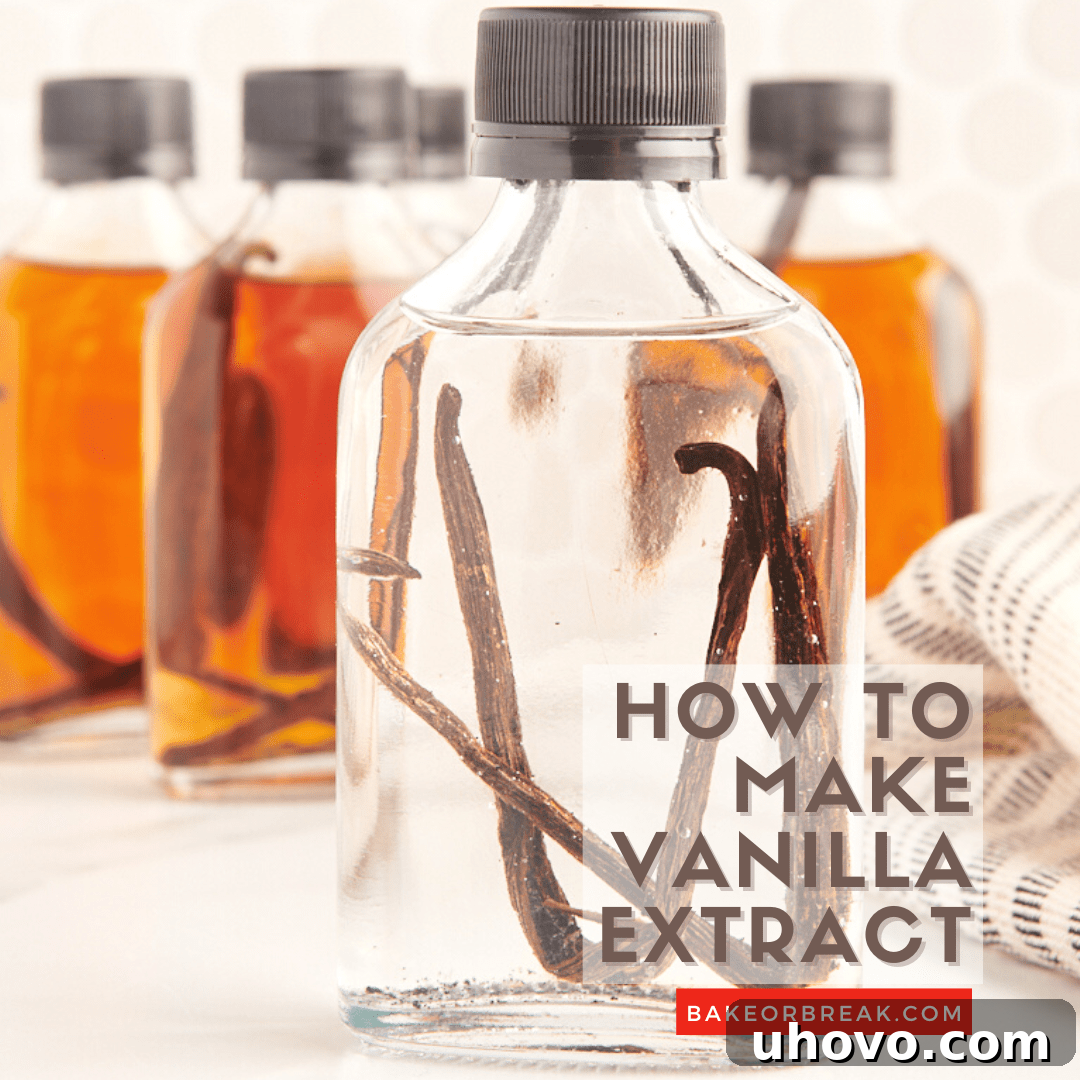
Unlock the secret to superior baking with homemade vanilla extract! Crafted with just two simple ingredients and a dash of patience, this DIY essential is perfect for elevating your culinary creations or delighting fellow bakers with thoughtful, handcrafted gifts.
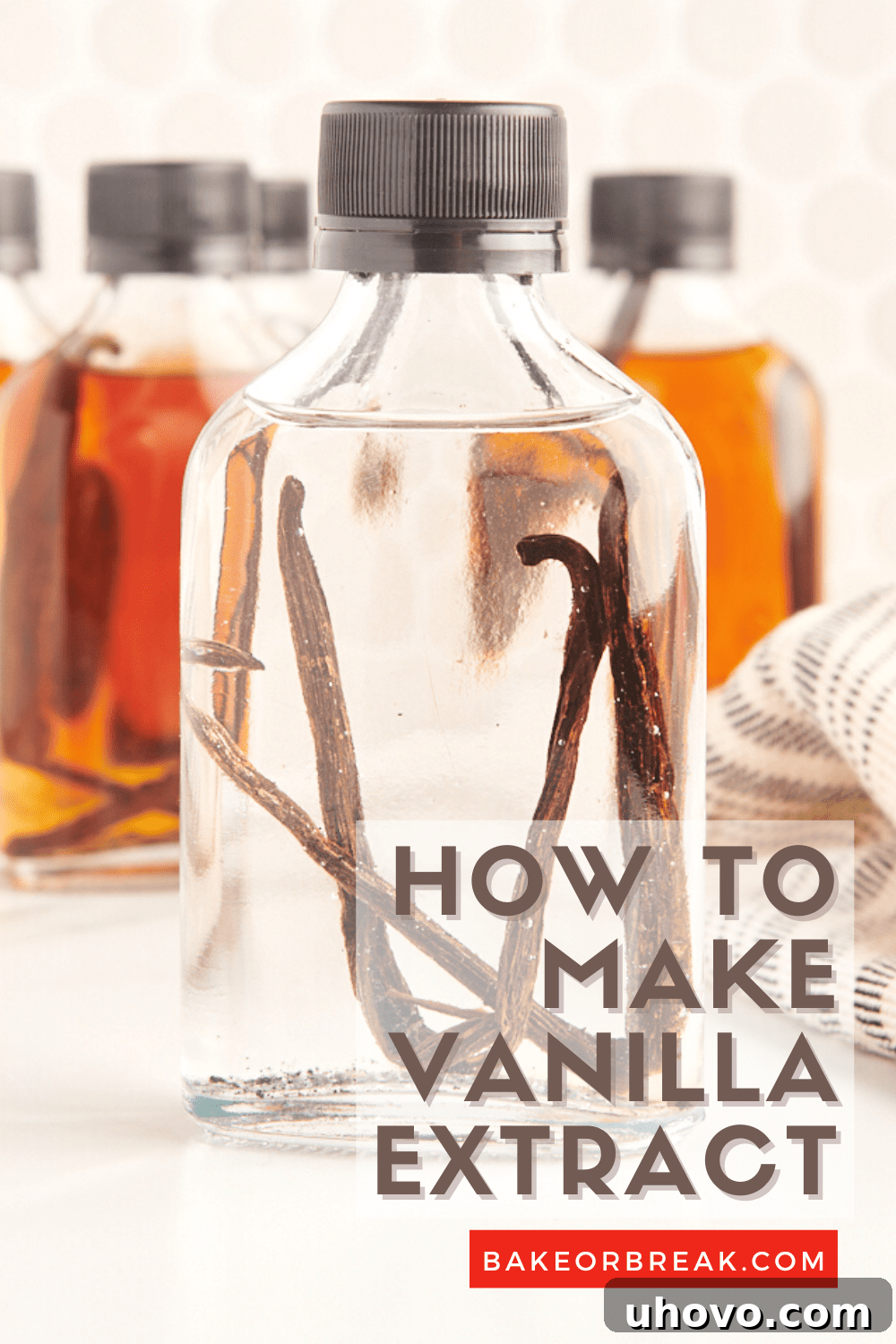
Homemade Vanilla Extract: The Ultimate Guide to Crafting Your Own
Vanilla extract is more than just an ingredient; it’s the soul of countless baked goods, imparting a rich aroma and depth of flavor that can transform an ordinary recipe into something extraordinary. While commercial vanilla extracts are readily available, the magic of homemade vanilla extract lies in its unparalleled quality, customizable flavor, and the sheer satisfaction of creating it yourself.
Making your own vanilla extract is a surprisingly simple and rewarding endeavor. All you need are high-quality vanilla beans, a spirit of your choice, a suitable container, and a little bit of time for the flavors to meld and mature. Beyond the culinary benefits, bottles of homemade vanilla extract also make incredibly thoughtful and impressive gifts for any baking enthusiast in your life. Imagine the joy of presenting a beautifully labeled bottle, knowing it will infuse their creations with a flavor crafted with care.
Why Make Your Own Vanilla Extract?
The decision to make your own vanilla extract brings a host of compelling advantages, extending beyond just the kitchen:
- Superior Flavor and Quality: Commercial extracts, while convenient, often contain additives or are made with lower-grade beans. When you make your own, you control the quality of the vanilla beans and the alcohol, leading to a purer, more complex, and vibrant flavor profile. The longer you let it steep, the richer and more nuanced the taste becomes.
- Cost-Effectiveness in the Long Run: While the initial investment in good vanilla beans might seem higher than a small bottle of store-bought extract, homemade vanilla extract is incredibly economical over time. Once you have a batch going, you can often “top off” your bottles, essentially making a perpetual supply for years.
- A Perfect Personalized Gift: Handcrafted gifts carry a special charm, and homemade vanilla extract is no exception. It’s a practical, luxurious, and unique present that shows genuine effort and thought. You can personalize bottles with custom labels, ribbons, or twine, making each gift truly special.
- Customization and Experimentation: The world of vanilla beans is diverse, with each variety offering distinct flavor notes. Making your own extract allows you to experiment with different types of beans and alcohols, tailoring the extract to your specific preferences or the type of baking you do most often.
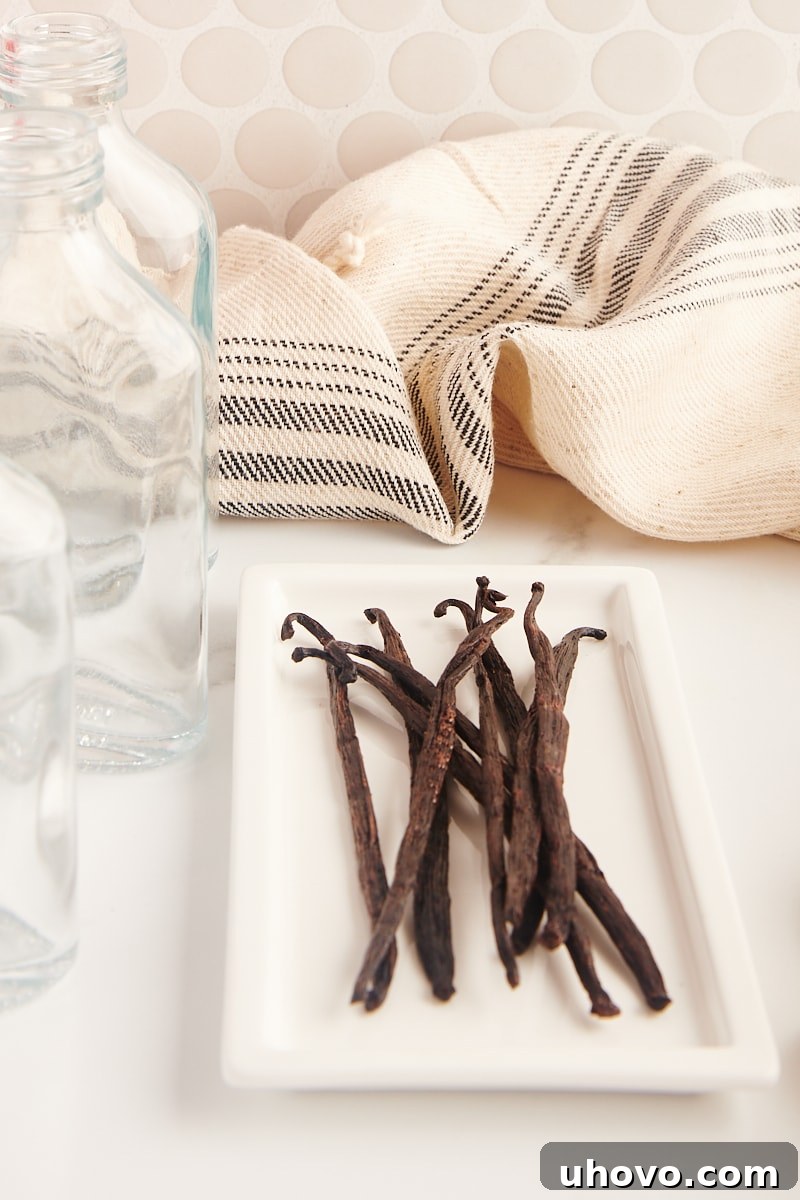
Choosing Your Vanilla Beans
The quality and type of vanilla beans you select are paramount to the flavor of your homemade extract. Understanding the different varieties and grades will help you create an extract perfectly suited to your taste.
Vanilla Bean Varieties: A Flavor Profile Guide
Vanilla beans hail from various regions around the world, and each origin imparts unique characteristics to the bean. Experimenting with these can lead to a diverse collection of extracts:
- Madagascar Bourbon Vanilla Beans: These are the most common and beloved variety, often considered the “classic” vanilla flavor. They are known for their rich, creamy, sweet, and buttery notes, making them incredibly versatile for almost any baking application. If you’re new to making extract, Madagascar beans are an excellent starting point.
- Mexican Vanilla Beans: Offering a bolder, smokier, and spicier profile than Madagascar beans, Mexican vanilla beans often have hints of chocolate and tobacco. They pair exceptionally well with chocolate desserts, savory dishes, or robust baked goods.
- Tahitian Vanilla Beans: Distinctly floral, fruity, and cherry-like, Tahitian vanilla beans have a delicate sweetness. They are often preferred for lighter desserts, custards, fruit tarts, or dishes where you want a more aromatic, nuanced vanilla presence rather than a deep, rich one.
- Ugandan Vanilla Beans: These beans tend to have an earthy, chocolatey aroma with hints of fig and raisin. They offer a deep, rich flavor that can stand up to strong flavors like coffee or dark chocolate.
- Indian Vanilla Beans: Often described as woody and slightly smoky, Indian vanilla beans share some characteristics with Madagascar beans but with a unique depth that makes them interesting for specific applications.
Don’t be afraid to try different varieties or even blend them to create your signature extract!
Understanding Vanilla Bean Grades: A vs. B
Vanilla beans are typically categorized into two grades, which primarily indicate their moisture content and intended use, not their overall quality:
- Grade A (Gourmet or Prime) Beans: These beans are plump, moist, pliable, and visually appealing, with a high moisture content. They are perfect for culinary applications where you want to scrape out the vanilla “caviar” directly into a recipe, as their flavor is easily released when cooked.
- Grade B (Extract or Dry) Beans: Grade B beans are drier, less pliable, and may have splits or blemishes, but this is precisely what makes them ideal for vanilla extract. Their lower moisture content means their flavor is more concentrated and will intensify beautifully over time as it infuses into the alcohol. Many professionals specifically seek out Grade B beans for extract making.
For making vanilla extract, Grade B beans are generally preferred due to their concentrated flavor and cost-effectiveness. However, Grade A beans can also be used, especially if you have some leftover from other recipes.
How Many Vanilla Beans Do You Need?
The ideal ratio of vanilla beans to alcohol is a common question, and while there’s room for personal preference, official standards exist. The U.S. Food and Drug Administration (FDA) stipulates that pure vanilla extract must contain a minimum of 13.35 ounces of vanilla beans per gallon of 35% alcohol (70 proof). While home bakers won’t typically make extract by the gallon, this standard helps us understand the concentration.
For home brewing, we can scale this down. A good rule of thumb is that approximately one ounce of vanilla beans usually contains 6 to 8 beans, depending on their size and moisture content. This allows for easy calculation:
- For a 4-ounce bottle: Use 3 to 4 vanilla beans.
- For an 8-ounce bottle: Use 6 to 8 vanilla beans.
- For a 16-ounce bottle: Use 12 to 16 vanilla beans.
Feel free to adjust based on the thickness and length of your beans, and your desired strength. When in doubt, it’s often better to add a little more for a richer extract.
Single-Fold vs. Double-Fold Vanilla: What’s the Difference?
Vanilla extract is typically categorized by its “fold,” which refers to its strength:
- Single-Fold Vanilla: This is the standard strength found in most grocery stores and is made using the FDA’s specified ratio (13.35 ounces of beans per gallon of alcohol). It’s perfectly suitable for most baking and cooking needs.
- Double-Fold Vanilla: As the name suggests, double-fold vanilla extract is twice as strong, meaning it uses twice the amount of vanilla beans per volume of alcohol. This results in a much more intense vanilla flavor. It’s often preferred by professional bakers or those who desire a potent vanilla punch without adding too much liquid to their recipes.
You can certainly aim for something in between single-fold and double-fold if you prefer. The beauty of homemade extract is the ability to fine-tune the ratio of beans to alcohol to match your exact taste preferences over time.
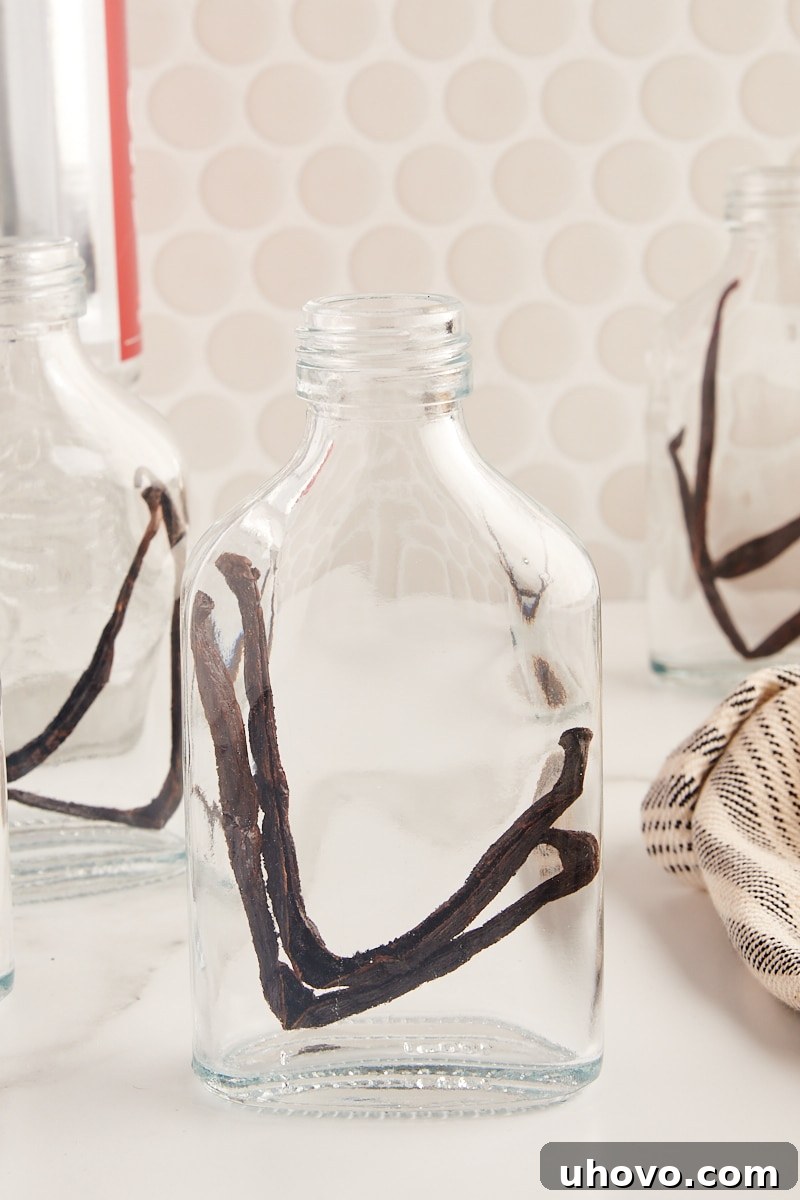
Essential Equipment for Vanilla Extract Making
Before you begin, gathering the right tools will make the process smooth and enjoyable. The most crucial piece of equipment is your container.
Choosing the Right Container: Glass Bottles and Jars
Your container will house your vanilla beans and alcohol for several weeks or months, so choosing wisely is important:
- Material: Always opt for glass. Glass is non-reactive and won’t impart any unwanted flavors to your extract, ensuring the purity of the vanilla.
- Seal: A tight, airtight seal is essential. This prevents the alcohol from evaporating, maintains the concentration of your extract, and keeps external odors from contaminating the delicate vanilla flavor. Swing-top bottles, canning jars with two-piece lids, or bottles with good-quality stoppers are all excellent choices.
- Size: Select a container size that matches the quantity of extract you plan to make. If you’re preparing multiple bottles for gifting, you can either create one large batch and decant it later, or make individual smaller bottles from the start. Common sizes range from 4 oz (100-120ml) for gifts to 8 oz, 16 oz, or even larger for your personal stock.
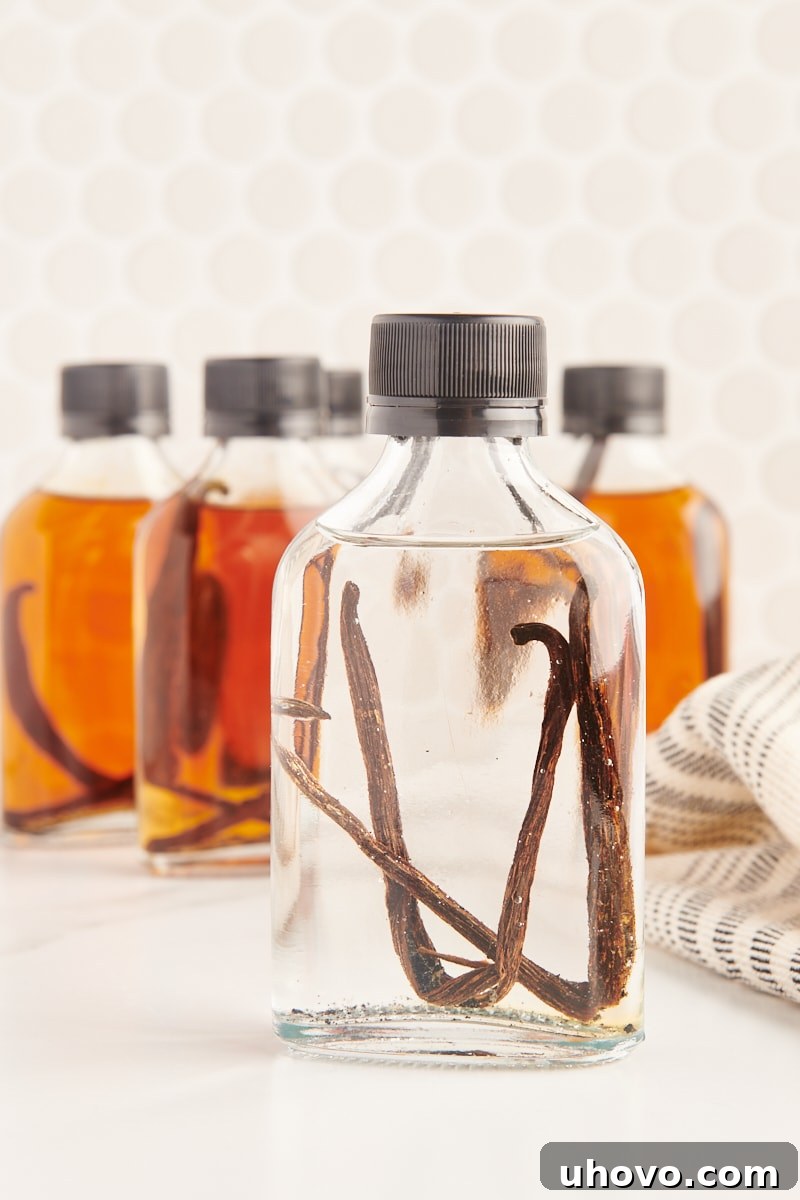
- Clear vs. Amber Glass: Clear glass bottles allow you to admire the beautiful darkening process of your extract, but they offer no protection from light. If using clear bottles, always store them in a dark cabinet. Amber glass bottles, on the other hand, provide natural UV protection, helping to preserve the quality and potency of your extract over time, making them a great choice for long-term storage.
- Cleaning and Sanitization: Regardless of the bottle type, ensure it is thoroughly cleaned and dried before use. For an extra layer of precaution, especially if making gifts or large batches, you can sanitize bottles by boiling them in water for 10 minutes, then allowing them to air dry completely.
A note on cork stoppers: While aesthetically pleasing, cork stoppers are generally not recommended for long-term storage of vanilla extract. Cork is porous and can deteriorate over time, allowing for alcohol evaporation and potential absorption of ambient odors, which can compromise the flavor of your extract.
Selecting the Perfect Alcohol for Your Extract
The alcohol serves as the solvent that extracts the rich flavors from the vanilla beans. The best choices are high-proof, neutral spirits, but you can also experiment with spirits that impart complementary flavors.
Best Alcohol Choices: Vodka, Rum, Brandy, Bourbon
An 80-proof (40% alcohol by volume) spirit is generally the preferred strength for extract making, as it is effective at extracting flavors without being overly harsh:
- Vodka: This is the most popular choice for vanilla extract due to its neutral flavor profile. Vodka allows the pure essence of the vanilla beans to shine through without introducing any competing tastes. It’s an excellent choice for an all-purpose vanilla extract. There’s no need to splurge on an expensive brand; a mid-range, unflavored vodka will work perfectly.
- Bourbon: For a vanilla extract with warm, smoky, and caramel undertones, bourbon is an excellent option. Its distinct flavor pairs wonderfully with vanilla, making it ideal for recipes involving chocolate, caramel, nuts, or hearty baked goods.
- Rum: A good quality rum (especially dark or aged rum) will lend sweet, molasses-like, and slightly spicy notes to your vanilla extract. This combination is fantastic for tropical desserts, spiced cakes, custards, or anything where you want a richer, more exotic vanilla flavor.
- Brandy: Brandy can add subtle fruity, oaky, and sophisticated notes to your vanilla extract. It creates a complex flavor profile that can be wonderful in elegant desserts, fruit-based recipes, or pastries.
Ultimately, the choice of alcohol depends on your personal preference and how you intend to use the extract. Many bakers choose to make batches with different alcohols for a versatile pantry.
Can I Make Nonalcoholic Vanilla Extract?
Yes, you can make a non-alcoholic version of vanilla extract, though its flavor and consistency will differ slightly from traditional alcohol-based extracts. The most common substitute for alcohol is food-grade glycerin. To make non-alcoholic extract, you would typically use a ratio of 3 parts food-grade glycerin to 1 part water. The process for infusing the vanilla beans remains similar. While it works well as a substitute in baking, some find the flavor less intense and the texture thicker than alcohol-based extracts.
Step-by-Step Guide to Making Homemade Vanilla Extract
The process of making vanilla extract is wonderfully straightforward, requiring minimal effort for maximum reward.
Preparing Your Vanilla Beans
Properly preparing your vanilla beans maximizes their flavor extraction:
- Splitting Intact Beans: If you’re using whole, intact vanilla beans, take a sharp knife or a pair of kitchen scissors and carefully slice each bean lengthwise. You don’t need to cut all the way through; the goal is to split them open just enough to expose the tiny, oil-rich vanilla seeds inside. This increases the surface area for the alcohol to extract the flavor compounds.
- Using Scraped Beans: If you’ve previously scraped vanilla beans for another recipe (like custard or ice cream), you can absolutely use these “spent” pods for extract. Just ensure they haven’t been cooked, as cooking can significantly diminish their flavor. Keep in mind that scraped beans will have less potent flavor than intact beans, so you might need to add an extra bean or two to compensate and achieve your desired strength.
Filling Your Bottles: Assembly Instructions
Once your beans are prepared, it’s time to combine them with your chosen spirit:
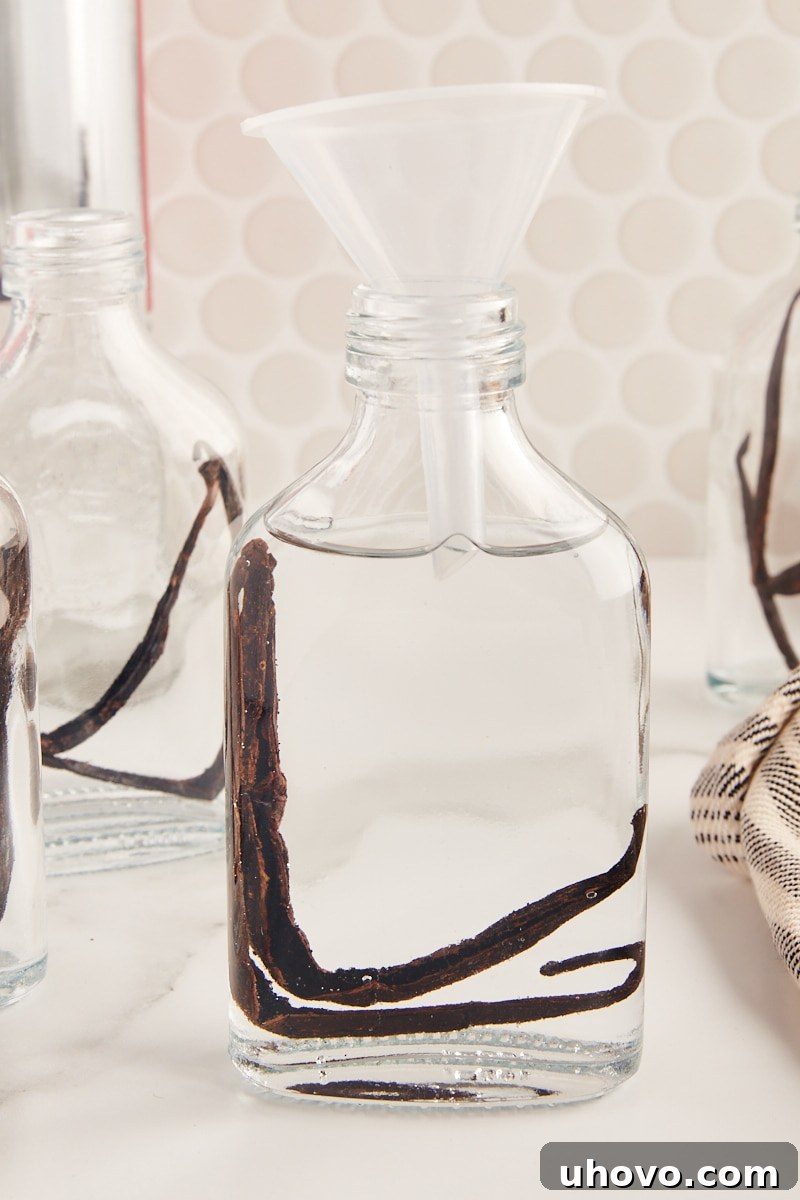
- Place the Vanilla Beans: Gently place your prepared vanilla beans into your clean, dry glass container. If the beans are too long to fit comfortably and be fully submerged, you can fold them or cut them into smaller pieces. Use a narrow object like a chopstick to gently push the beans down if needed, ensuring they rest below where the liquid fill line will be.
- Pour the Alcohol: Measure your chosen alcohol into a liquid measuring cup. Carefully pour the alcohol over the vanilla beans in the bottle. If your container has a narrow opening, a small funnel will be invaluable to prevent spills and mess. Ensure the beans are completely submerged in the alcohol.
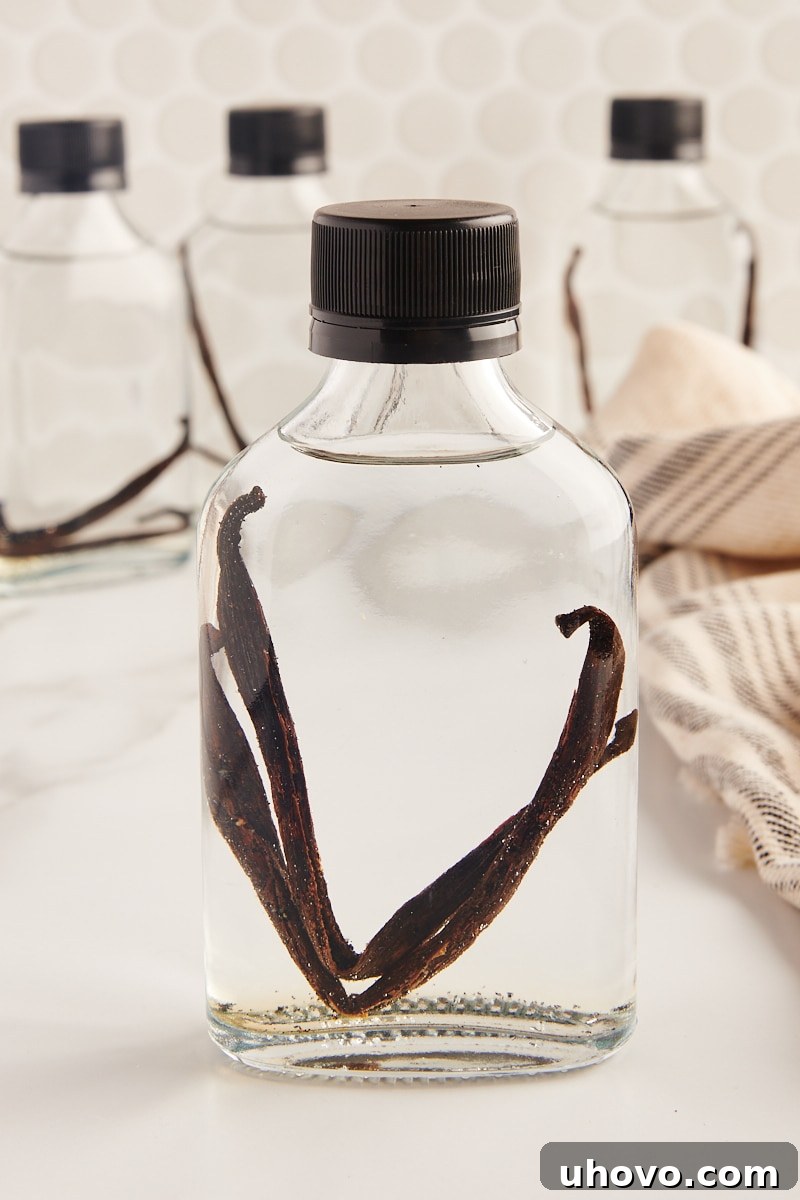
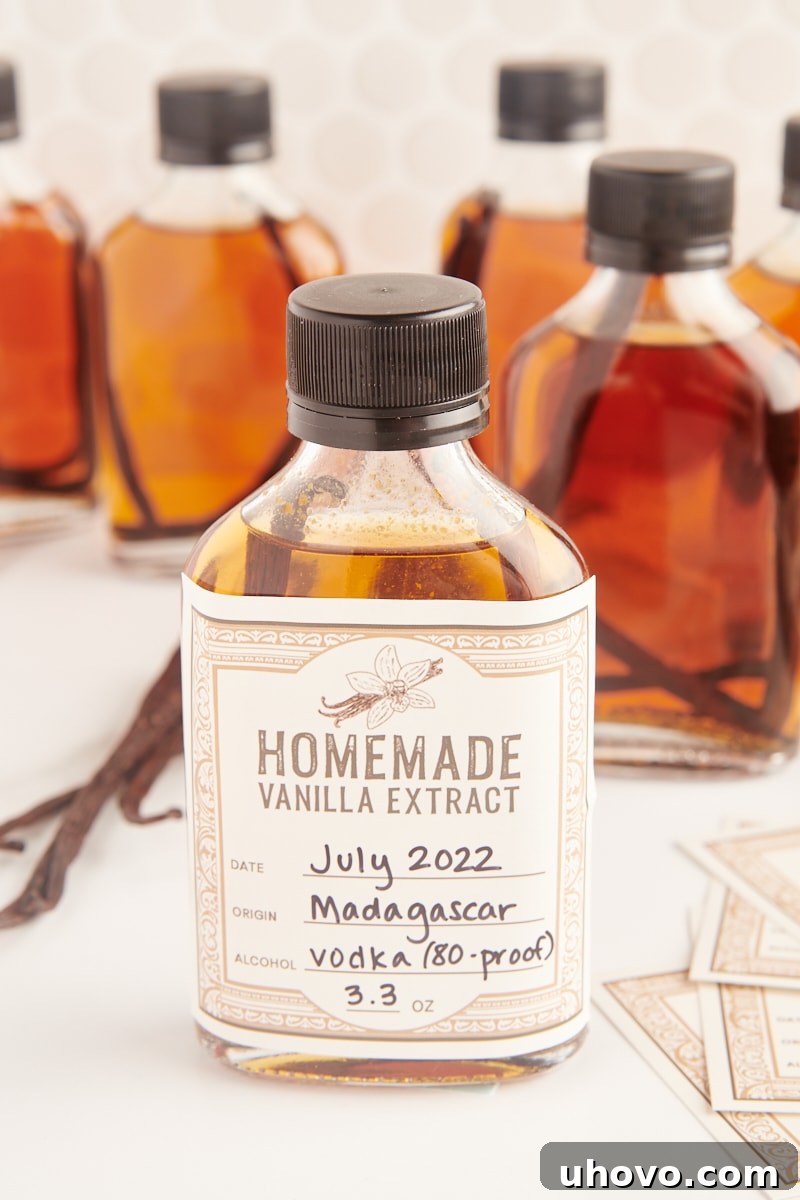
- Seal and Label: Seal the bottle tightly with its cap or stopper. Give it a gentle shake to ensure the beans are fully coated. Immediately label your bottle with at least the date you made it. You might also want to note the type of vanilla beans and alcohol used, especially if you plan to experiment with different varieties. This helps you track progress and identify your favorites.
- Storage: Place your sealed bottle in a cool, dark place, such as a pantry or kitchen cabinet, away from direct sunlight and extreme temperature fluctuations.
The Waiting Game: Aging Your Vanilla Extract
This is where patience becomes a virtue. The magic of vanilla extract doesn’t happen overnight; it’s a process of slow maceration, where the alcohol gradually draws out the complex flavors from the beans.
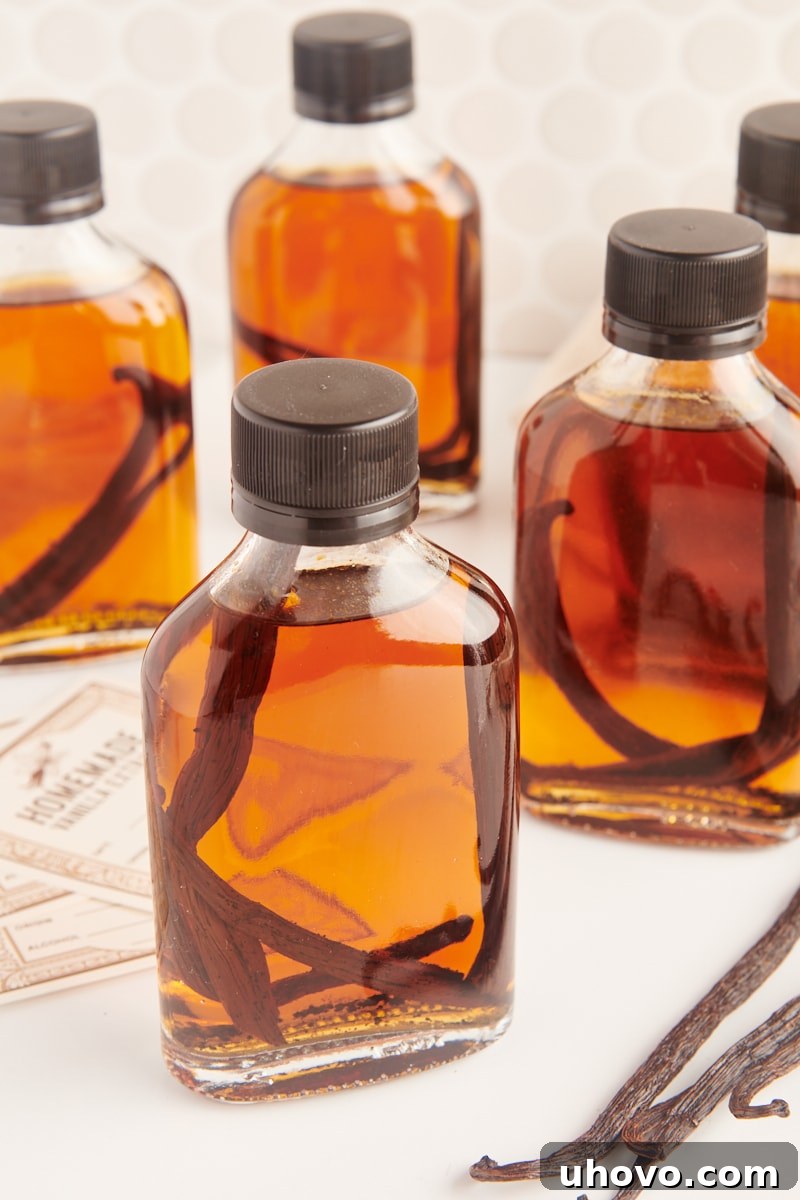
About once a week, give the bottle a gentle shake. You’ll observe the liquid slowly transforming, deepening in color from clear to a rich amber or dark brown, indicating the flavor is developing. While technically the extract can be used after as little as 4 weeks, its flavor will still be quite mild. For a truly rich, robust, and well-rounded vanilla extract, it’s highly recommended to wait at least 8 weeks. Many enthusiasts even prefer to age their extract for 6 months or longer, arguing that the flavor only improves with time, becoming more profound and nuanced. Properly stored in a cool, dark place, homemade vanilla extract has an indefinite shelf life.
Maintaining Your Homemade Vanilla: Refilling and Reusing
One of the fantastic benefits of homemade vanilla extract is its sustainability. You don’t necessarily have to start from scratch every time you run low.
Refilling Your Vanilla Extract Bottles
As you use your vanilla extract, you can easily replenish your supply. This practice is often referred to as making “perpetual vanilla extract.” Simply add more 80-proof alcohol to your bottle to cover the beans again, and give it a gentle shake. This keeps the beans submerged and continuously infusing flavor.
However, keep in mind that the vanilla beans will lose some of their potency over time. If you notice the aroma or flavor of your extract becoming less intense after several refills, it’s a good indication that you should add one or two fresh vanilla beans to rejuvenate the batch. This helps maintain the desired strength and ensures your extract remains flavorful.
Reusing Spent Vanilla Beans for New Batches
Vanilla beans, even after contributing their essence to one batch of extract, can often be reused for new batches. They will, of course, have less flavor to impart with each subsequent use. For the best results in new batches, it’s often advisable to combine these previously used beans with a few fresh, whole vanilla beans. This way, you utilize every last bit of flavor while ensuring the new extract develops a good strength.
Should You Strain Homemade Vanilla Extract?
This is entirely a matter of personal preference. Many home bakers appreciate the tiny specks of vanilla seeds (often called “vanilla caviar”) that remain in unstrained extract, as they signal a natural, high-quality product. These specks are harmless and add a beautiful visual element to dishes.
However, if you prefer a perfectly clear extract, or if your vanilla extract has been aging for a very long time and the beans have started to break down significantly, you can strain it. Simply pour the extract through a fine-mesh sieve or a coffee filter-lined funnel to remove any solids or broken bean pieces. Do this just before you’re ready to bottle it for long-term use or gifting.
Beyond the Extract: What to Do With Used Vanilla Beans
Don’t throw away those vanilla beans once you remove them from your finished extract or after they’ve lost their potency! They still have life left in them, particularly for making vanilla sugar.
To make vanilla sugar, first thoroughly dry the used vanilla beans. You can do this by letting them air dry for a few days or by gently warming them in a low oven. Once completely dry, bury the beans in a jar of granulated sugar, ensuring they are fully covered. Seal the jar tightly and store it in your pantry. In about a month, the sugar will have absorbed the remaining vanilla aroma and flavor, creating a fragrant vanilla sugar that’s perfect for sweetening coffee, tea, or any recipe where you want a hint of vanilla flavor.
Homemade Vanilla Extract Recipe Card
Homemade Vanilla Extract
8 ounces vanilla extract
10 minutes
10 minutes
It only takes a few minutes and a couple of ingredients to make homemade vanilla extract. Use it for your own baking or give it as a gift!
Pin Recipe
Ingredients
- 6 to 8 vanilla beans, about 1 ounce or 28g
- 8 ounces (240 ml) 80-proof vodka, or other 80-proof alcohol like bourbon, rum, or brandy
- glass container with a tight seal
Recommended Products
- 100ml Glass Flask Bottles
- 4 oz Amber Glass Boston Round Bottles
- Swing Top Clear Glass Bottles, 8.5 oz
- Madagascar Vanilla Beans Grade B Pods
- Stainless Steel Funnels, Set of 3
- Vanilla Extract Labels for Homemade Extract
- Homemade with Love Stickers
Instructions
- Split the vanilla beans down the middle with a sharp knife or scissors. Don’t slice all the way through the beans, just open them to expose the inside.
- Place the beans in the container, folding or cutting them as needed to fit.
- Pour the alcohol over the beans, making sure the beans are completely submerged.
- Seal the container tightly, and store in a cool, dark place.
- The extract will be ready to use after as little as 4 weeks, but 8 weeks is better, and longer is likely best for optimal flavor.
Notes
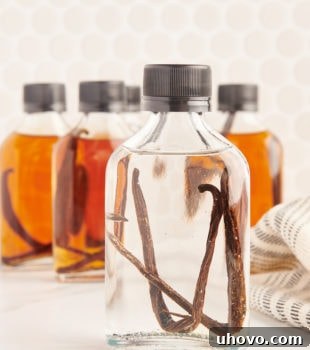
- Scale the recipe as needed to make a smaller bottle for personal use or to make several bottles for storing and gifting. (The bottles pictured here have a 100ml capacity.)
- Store in a cool, dark place. Properly stored, vanilla extract will last for years.
Jennifer McHenry
baking tips
American
Show off your baking masterpiece!
Snap a pic, tag @bakeorbreak, and use #bakeorbreak on Instagram. Can’t wait to see your creation!
Unleash Your Vanilla: Recipes to Try
Once your beautifully crafted homemade vanilla extract is ready, it’s time to put it to good use! Here are some delightful vanilla-forward recipes where your extract will truly shine:
- Vanilla Cake with Vanilla Frosting
- Vanilla Wafers
- Easy Vanilla Pudding
- Vanilla Scones
- Frosted Sugar Cookie Bars
- Vanilla Crumb Muffins
Frequently Asked Questions About Homemade Vanilla Extract
Vodka is generally considered the top choice for making vanilla extract because its neutral flavor allows the pure vanilla essence to dominate. However, you can also use other 80-proof spirits like bourbon, brandy, or rum, which will impart their own complementary flavor notes to the extract.
There isn’t a single “best” type, as it depends on your desired flavor profile. For an all-purpose, classic vanilla extract, Madagascar (Bourbon) vanilla beans are an excellent choice. However, Mexican (smoky, spicy) or Tahitian (floral, fruity) varieties can create unique and delicious extracts. Experiment to find your favorite!
Grade B vanilla beans are often labeled as “extract grade” because their lower moisture content means their flavor is more concentrated and releases beautifully over the extended steeping period required for extract. While Grade A beans can be used, Grade B is typically more economical and effective for this purpose.
A good general guideline is to use 3 to 4 vanilla beans per 4 ounces of alcohol, or 6 to 8 beans per 8 ounces of alcohol. This ratio ensures a rich, flavorful extract, especially if allowed to age for at least 8 weeks.
Yes, you can absolutely reuse vanilla beans for multiple batches of extract. While they will gradually lose potency, you can combine them with fresh beans in new batches to extend their use and extract every last drop of flavor.