
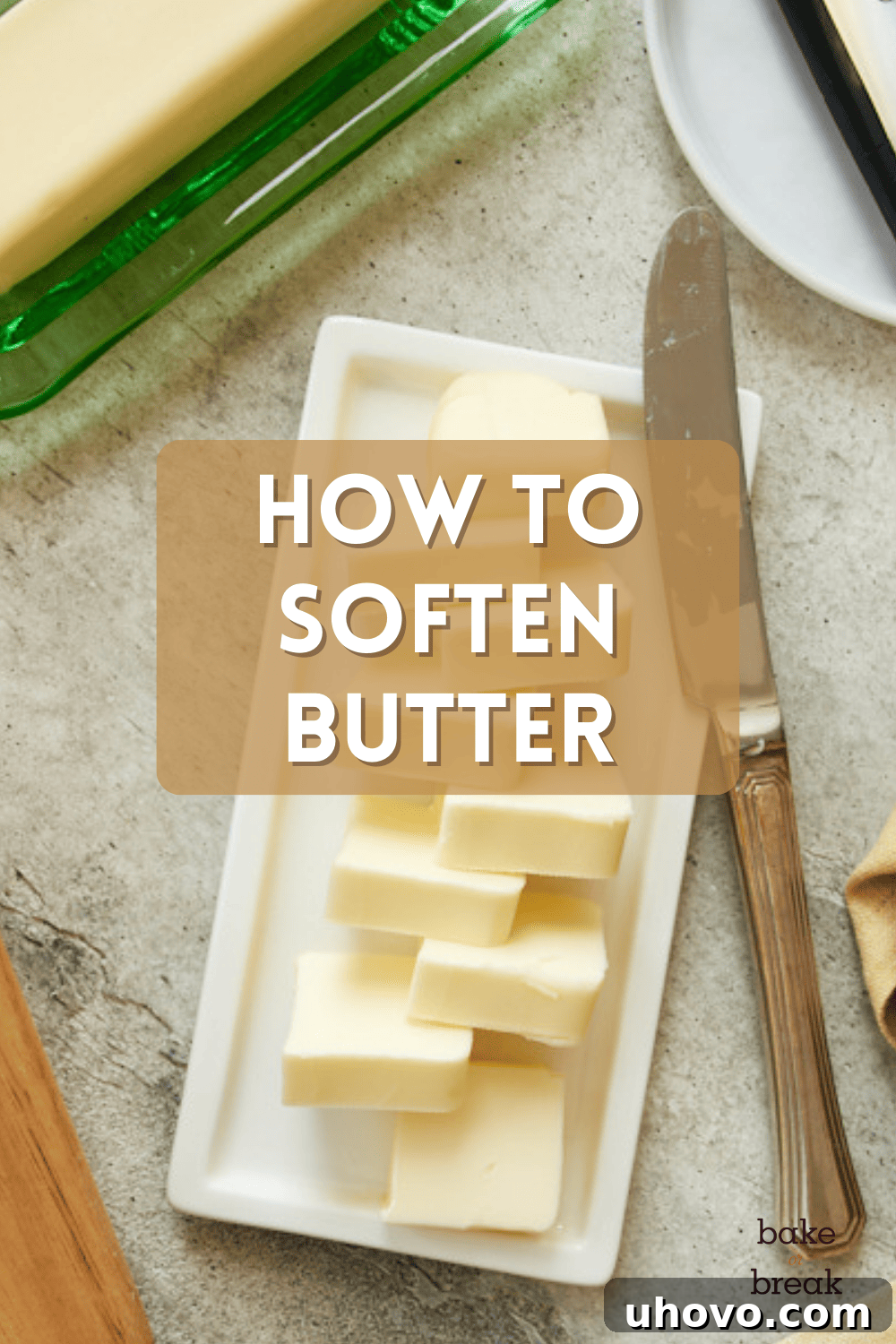
Unlock the secret to perfect baking by mastering the art of softening butter. This comprehensive guide explores various methods to achieve the ideal butter consistency, whether you’re planning a full day of baking or need to quickly prepare your ingredients. Discover the techniques that will elevate your cookies, cakes, and pastries from good to truly exceptional!
The Critical Role of Softened Butter in Baking
Softened butter is more than just a common ingredient; it’s a fundamental element in countless baking recipes, especially those that rely on the crucial creaming method. Achieving the correct butter consistency is paramount for successful mixing, ensuring your cookies, cakes, frostings, and other baked goods develop the perfect texture and rise.
Many bakers, even experienced ones, might not fully grasp the precise meaning behind “softened butter.” It’s one of those frequently used terms that often lacks a clear, universally understood definition. This ambiguity can be particularly frustrating for new bakers embarking on their culinary journey. However, regardless of your baking experience, revisiting the nuances of what constitutes properly softened butter and understanding how to achieve it will undoubtedly enhance your baking results.
What Exactly is Softened Butter for Baking?
The term “softened butter” conjures images of butter that is neither rock-hard from the refrigerator nor melted and oily. Properly softened butter should still feel cool to the touch, almost firm. It should be solid enough to hold its shape, yet pliable enough that when you gently press it with your thumb, it leaves a distinct indent. Another good test is to bend a stick of butter; it should flex without cracking or breaking apart. If you attempt to cut it with a knife, it should offer minimal resistance, gliding through with ease.
A crucial distinction to remember is that butter begins to melt at approximately 68°F (20°C). This melting point is precisely why we emphasize “softened” butter over “room temperature” butter in recipes that require the creaming method. The creaming method, a foundational technique for many baked goods, involves vigorously beating butter, often with sugar, to incorporate tiny air pockets. These air pockets are essential for providing structure and lift, contributing to a light and airy texture in your finished products, like tender cakes and chewy cookies.
If your kitchen’s ambient temperature exceeds 68°F, allowing butter to reach full room temperature will inevitably make it too warm. When butter becomes too warm, the delicate fat molecules begin to break down, losing their ability to trap air effectively during creaming. This leads to less-than-optimal baking outcomes, resulting in dense, flat, or excessively spread-out baked goods.
The ideal internal temperature for softened butter for baking lies within a narrow range: typically between 65°F and 67°F (18°C-19°C). For those who strive for absolute precision, an instant-read thermometer can be a valuable tool to verify the butter’s internal temperature. While not a step I personally take for every recipe, it’s an excellent practice for novice bakers or anyone wishing to confirm their understanding of “softened butter.” Once you internalize this ideal consistency, you’ll find it much easier to achieve consistently perfect results without a thermometer in the future.
One of the most common pitfalls bakers encounter is over-softening the butter. When butter is excessively warm and soft, it negatively impacts the final texture of your baked goods. Cookies tend to spread too much, becoming thin and crispy instead of thick and chewy, while cakes can turn out dense and heavy rather than light and fluffy. Conversely, butter that is too cold can also be problematic, making it difficult to cream properly. However, slightly cold butter will usually continue to soften as it mixes, gradually warming from the friction and agitation of the mixer, often reaching the desired consistency during the creaming process itself. The key is finding that sweet spot of pliability.
Proven Methods for Perfectly Softened Butter
There are several reliable techniques to soften butter, each varying in speed and required effort. Choosing the right method depends largely on how much time you have before you need to start baking. By following these tried-and-true approaches, you can ensure your butter is always at its optimal consistency for creating the best possible baked goods.
The Classic Method: Softening Butter on Your Kitchen Counter
The simplest and often considered the best method for softening butter is also the most patient one: allowing it to sit undisturbed on your kitchen counter. Depending on the ambient temperature of your kitchen, a cold stick of butter typically requires 30 to 45 minutes to reach the perfect softened state. This method is ideal when you can plan ahead for your baking endeavors. A good strategy is to set your butter out when you begin gathering and preparing your other ingredients, knowing that by the time you’re ready for the creaming step, your butter will likely be perfectly softened.
While the goal is softened butter, it’s often beneficial to begin beating it just before it reaches its absolute perfect state. The mechanical action and friction from your mixer will generate a small amount of heat, further warming the butter and bringing it to that ideal 65-67°F range. Avoid leaving butter out for excessively long periods, especially in warm kitchens, as it can quickly move beyond softened to melted, particularly if exposed to direct sunlight.
A Faster Approach: Softening Butter in a Hurry
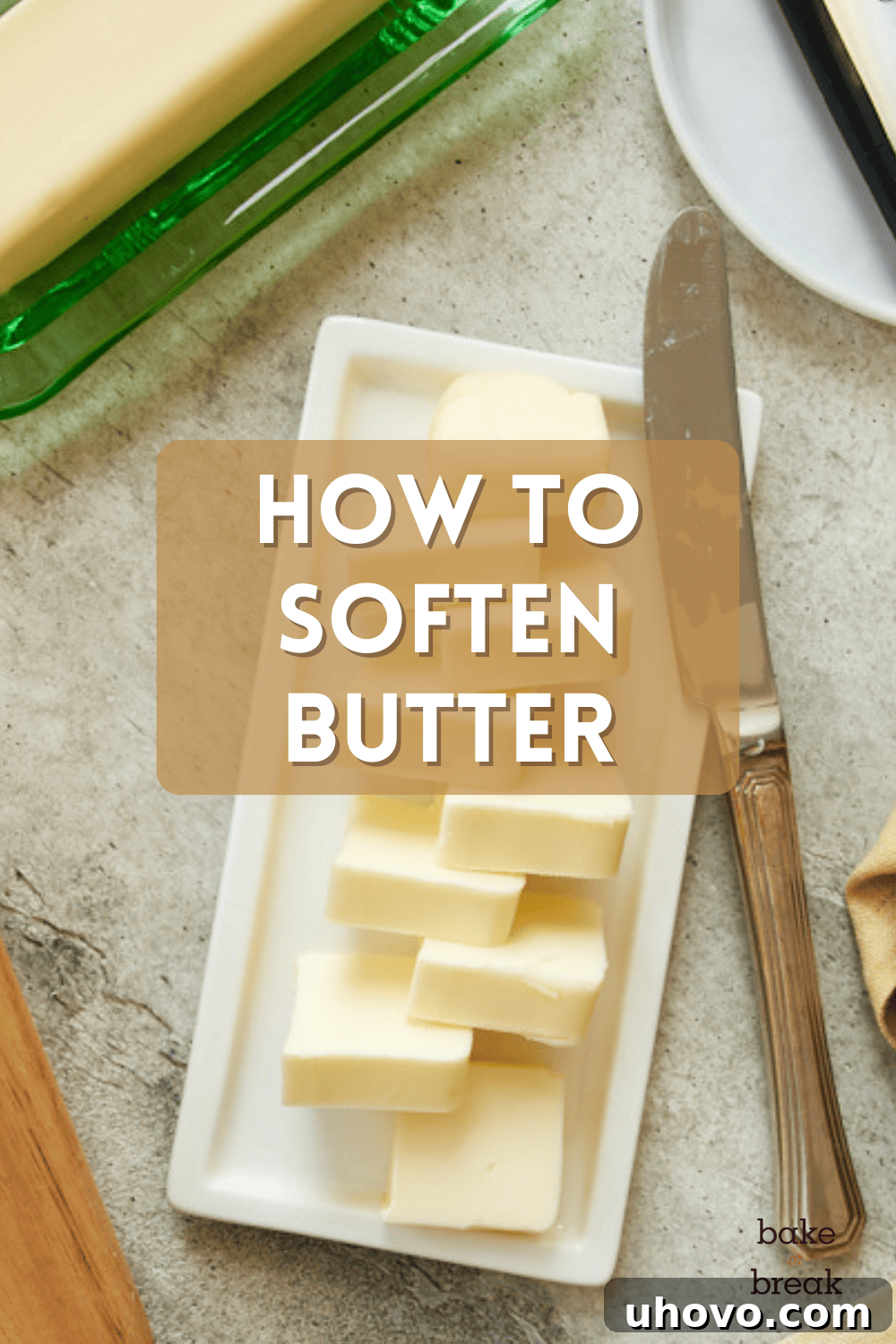
If time is of the essence and you need to expedite the softening process, a simple yet effective trick is to increase the butter’s surface area. Cut the cold butter stick into small, approximately 1-inch (2.5 cm) cubes. Arrange these cubes on a plate, ideally not touching each other, and allow them to sit at room temperature. The greater surface area exposed to the warmer air dramatically reduces the softening time, often cutting it by about half, depending on your kitchen’s warmth. This method achieves the desired pliability much quicker than leaving a whole stick out.
The Grating Technique: Softening Butter with a Grater
Another excellent way to speed up the softening process, akin to the cubing method, is to grate a cold stick of butter using a standard box grater with coarse holes. Grating transforms the butter into fine shreds or ribbons, maximizing its exposure to room temperature air. Spread the grated butter loosely on a plate. The butter will soften very rapidly due to its increased surface area. However, be mindful of the heat from your hands as you hold the butter while grating; try to minimize direct contact to prevent it from melting prematurely. Aim to handle the butter quickly and efficiently.
The Rolling Pin Method: Softening Butter by Flattening
For a slightly more hands-on approach, you can soften butter using a rolling pin. Place the cold stick of butter between two sheets of waxed paper or inside a large, sturdy zip-top bag. Using a rolling pin, gently yet firmly roll the butter, spreading it out as you would a pie crust dough. Continue rolling until the butter is flattened to about 1/4-inch (6 mm) thickness. Once flattened, remove the waxed paper or bag and let the thin sheet of butter sit at room temperature for just a few minutes. While effective at increasing surface area, this method can be a bit more labor-intensive and time-consuming than simply cubing or grating. Often, by the time you’ve completed this step, other simpler methods might have yielded similar results with less effort.
The Mixer Method: Softening Butter with a Stand Mixer
If you’re already planning to use your stand mixer for the recipe, you can leverage it to help soften your butter. Place the cold butter directly into the bowl of your stand mixer. Using the paddle attachment, beat the butter at a low speed. The mechanical agitation and friction generated by the mixer will gradually warm the butter, helping it to soften. Keep an eye on the consistency; as it starts to become pliable, it’s ready. This method is particularly convenient if you’re short on time and your mixer is already out. A hand mixer can also be used, though it will require more direct attention and manual effort.
Methods to Avoid: How NOT to Soften Butter
While various techniques can help you soften butter, some methods are generally discouraged due to their propensity for uneven heating and unpredictable results. Avoiding these can save you from baking disappointments.
- The Microwave: It’s a common temptation to use the microwave for speed, but microwaving butter is almost always a recipe for disaster when aiming for softened butter. Microwaves heat unevenly, often resulting in butter that is still hard in some spots, perfectly softened in others, and completely melted and oily in yet other areas. While some “microwave wizards” might claim success, achieving consistently perfect results requires extreme caution, very low power settings, and constant vigilance, making it highly unreliable for most bakers. It’s best to steer clear.
- The Hot Water/Microwave Oven Trick: Some suggest heating a cup of water in the microwave until steaming, then removing the water and placing the butter inside the warm microwave oven to soften in the residual heat. While this can work, it’s still a risky proposition. The internal temperature of your microwave can vary greatly, and without precise control, you might end up with melted butter or condensation on your butter, which is undesirable. It requires considerable practice to master consistently.
- The Hot Glass Over Butter Method: This theory involves heating a glass with hot water, emptying it, and then placing the warm glass over a stick of butter on the counter, creating a mini “sauna.” While less severe than direct microwaving, this method also suffers from uneven heating. The butter’s exterior will likely soften and even melt before the core reaches the ideal temperature. It’s often inconsistent and can leave you with butter that’s too soft on the outside and still firm on the inside.
For consistent, reliable results, it’s always best to stick to one of the recommended methods listed above.
What to Do If Your Butter Gets Too Soft
Even with the best intentions, butter can sometimes go beyond the perfectly softened stage and become too warm or even partially melted. Unfortunately, once butter has reached this overly soft or melted state, simply refrigerating it won’t restore its original molecular structure in a way that makes it viable for re-softening for tasks like creaming. The fat molecules will have separated, and the butter won’t be able to trap air as effectively. Trying to use overly soft butter for creaming will almost certainly lead to disappointing results, such as cookies that spread excessively thin or cakes that turn out dense and heavy.
However, all is not lost! Do not throw it away. Instead, repurpose your too-soft butter for recipes that specifically call for melted butter or oil. This is a fantastic way to minimize waste and still create delicious treats. Consider using it in recipes like my chewy chocolate chip cookies, which benefit from melted butter for their unique texture. It’s also perfect for moist blueberry crumb muffins, rich dark cocoa powder brownies, or even for greasing baking pans. Embrace the versatility of butter!
Armed with this comprehensive knowledge on how to soften butter correctly, you are now well-equipped to tackle any baking recipe with confidence. Mastering this fundamental skill will undoubtedly lead to more consistent, delicious, and perfectly textured baked goods every time.
Happy baking!
More Essential Baking Tips for Success
Elevate your baking prowess with these additional foundational guides:
- Baking Tips for Beginners: Your Ultimate Starter Guide
- How to Measure Flour Accurately for Consistent Results
- Unsalted vs. Salted Butter: Making the Right Choice for Your Bakes
- Smart Tips for Organizing Your Baking Supplies and Pantry
- Baking Powder vs. Baking Soda: Understanding Their Roles in Leavening
- Choosing the Right Baking Pans for Every Recipe
Frequently Asked Questions About Softening Butter
No, these terms are often mistakenly used interchangeably, but there’s a critical difference for baking. Butter begins to melt at 68°F (20°C). If your kitchen is warmer than this, letting butter come to “room temperature” will make it too warm and compromise your baking results. Properly softened butter should have an internal temperature between 65°F and 67°F (18°C-19°C), meaning it’s pliable but still cool to the touch.
There are several effective methods to speed up the softening process. You can cut the cold butter into small, 1-inch pieces and let them sit at room temperature, which significantly increases the surface area. Another quick method is to grate the butter using a coarse box grater. Alternatively, you can flatten it with a rolling pin between sheets of wax paper, or gently beat it on low speed in a stand mixer to generate friction and warmth.
While tempting for its speed, microwaving butter is generally not recommended for softening butter for baking. Microwaves heat unevenly, typically resulting in butter that is partially melted and partially still cold, rather than consistently softened. This inconsistency can negatively impact the texture and structure of your baked goods. It’s best to use more controlled methods to achieve ideal consistency.
Bake or Break is a participant in the Amazon Services LLC Associates Program, an affiliate advertising program designed to provide a means for us to earn fees by linking to Amazon.com and affiliated sites.