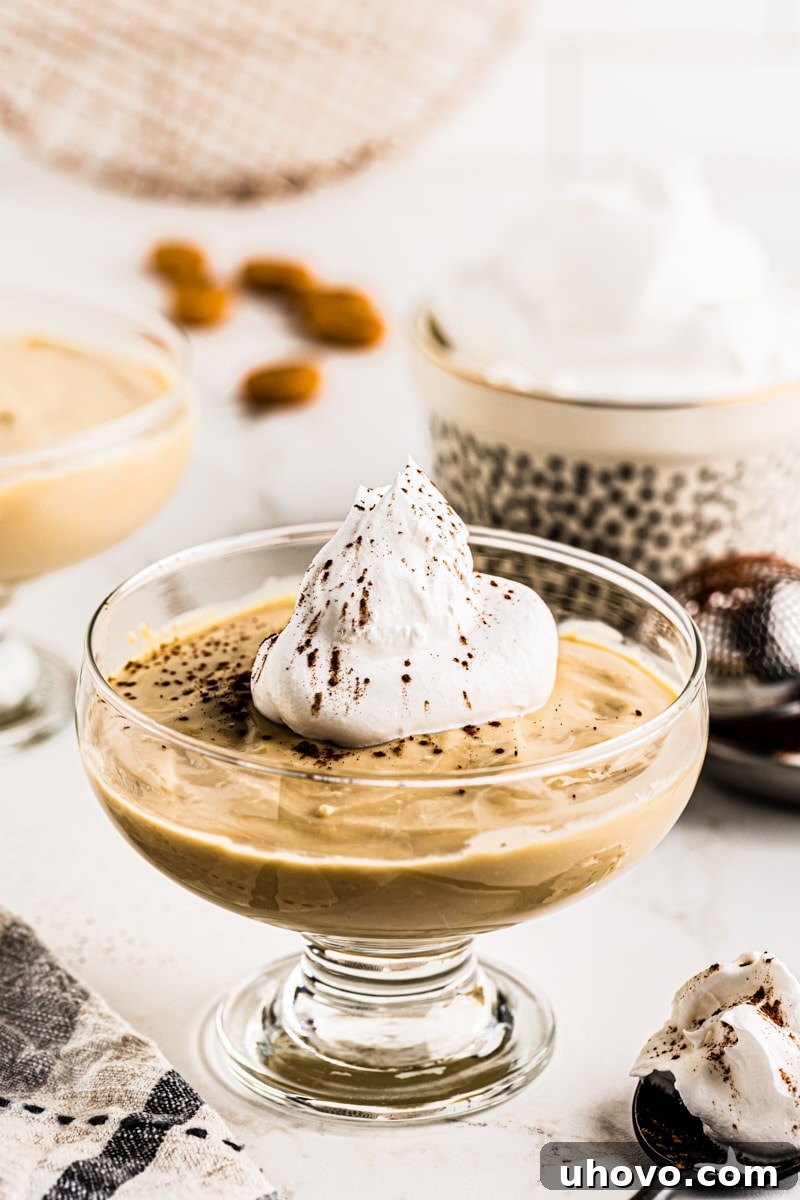
Indulge in the unparalleled delight of homemade butterscotch pudding, a rich and creamy dessert that truly captures the authentic essence of butterscotch flavor. Forget everything you thought you knew about butterscotch if your experience has been limited to artificial imitations. This from-scratch recipe unveils a symphony of buttery brown sugar notes, delivering a taste that defines what butterscotch is meant to be – pure, comforting, and utterly delicious.
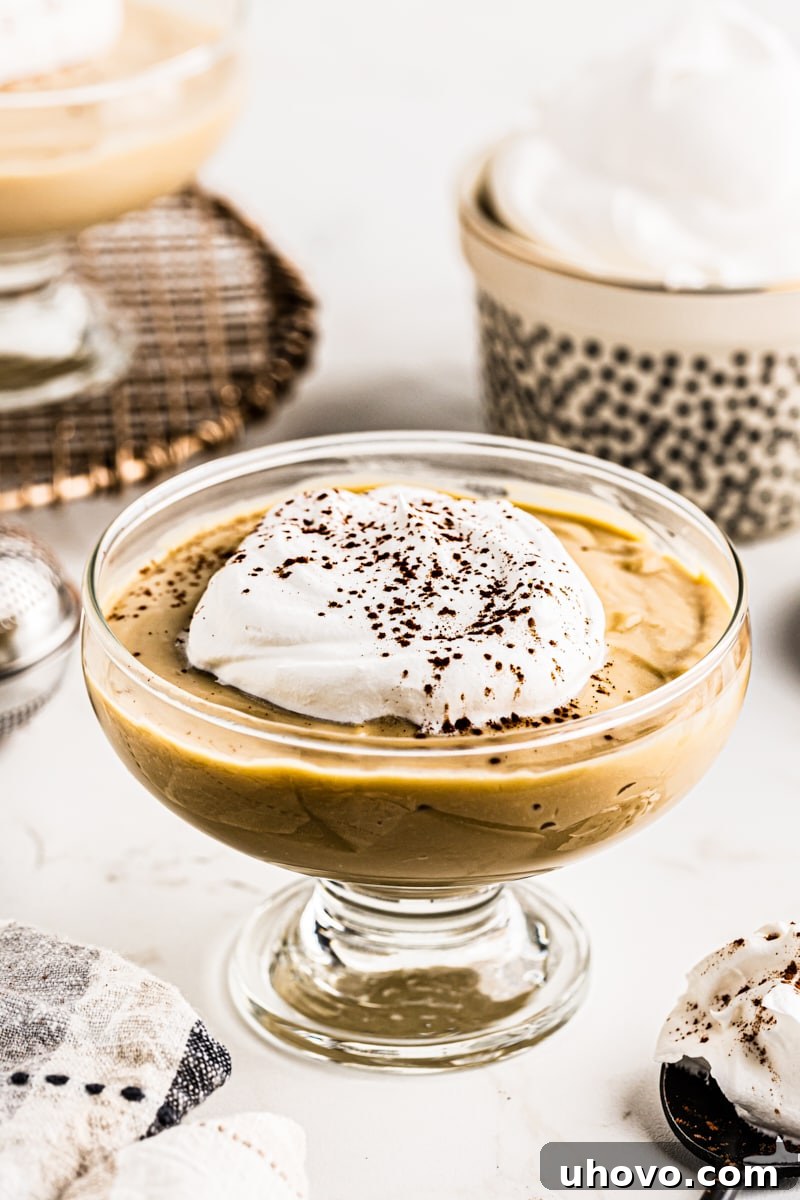
Butterscotch, often overshadowed by other dessert flavors, holds a special place in the hearts of those who appreciate its distinctive warmth. While I genuinely enjoy the chewiness of Oatmeal Butterscotch Cookies and the sweet-and-salty balance of Salted Butterscotch Blondies, I must admit that this homemade butterscotch pudding stands as my ultimate favorite. It embodies the very definition of comfort food – a cool, luxuriously creamy, and perfectly sweet treat that, in my opinion, is simply flawless. This recipe isn’t just about creating a dessert; it’s about rediscovering a classic flavor and elevating it to new heights of culinary pleasure.
Why You’ll Love This Homemade Butterscotch Pudding Recipe
Prepare to fall in love with this butterscotch pudding for several compelling reasons:
- Authentic Butterscotch Flavor, Reimagined. If you’ve ever claimed not to like butterscotch, it’s highly probable that you’ve only encountered the artificial, overly sweet versions. True butterscotch, as featured in this exceptional homemade pudding, is a revelation. It’s essentially a harmonious blend of rich brown sugar and dairy (milk and/or cream), creating a deeply satisfying, complex, and genuinely buttery flavor profile. This isn’t just butterscotch; it’s butterscotch as nature intended it, a testament to simple, quality ingredients.
- An Incredibly Easy & Accessible Dessert. One of the greatest virtues of this pudding recipe is its straightforward simplicity. You don’t need exotic ingredients or advanced culinary skills. With just a handful of common pantry staples – ingredients you likely already have on hand – a sturdy saucepan, and a whisk, you’re well on your way to a gourmet dessert. The process is quick, making it an ideal choice for a spontaneous sweet craving or a last-minute gathering.
- Excellent for Make-Ahead Convenience. The most challenging aspect of preparing this delightful pudding is undoubtedly the waiting game as it chills to perfection. However, this waiting period transforms into a significant advantage for those who love to plan. Dedicate a mere 10 to 15 minutes earlier in the day, whip up a batch, and let it chill in the refrigerator. By the time dessert rolls around, your perfectly set, creamy butterscotch pudding will be ready to serve, allowing you to focus on enjoying your meal and company.
- A Versatile Crowd-Pleaser. This pudding appeals to a wide range of tastes, from children to adults. Its smooth texture and comforting flavor make it a perfect dessert for any occasion, be it a cozy family night, a special dinner party, or simply a treat for yourself. It’s also naturally gluten-free (check your ingredients) and can often be adapted for various dietary needs, making it a truly inclusive dessert.
Essential Ingredients for Your Homemade Butterscotch Pudding
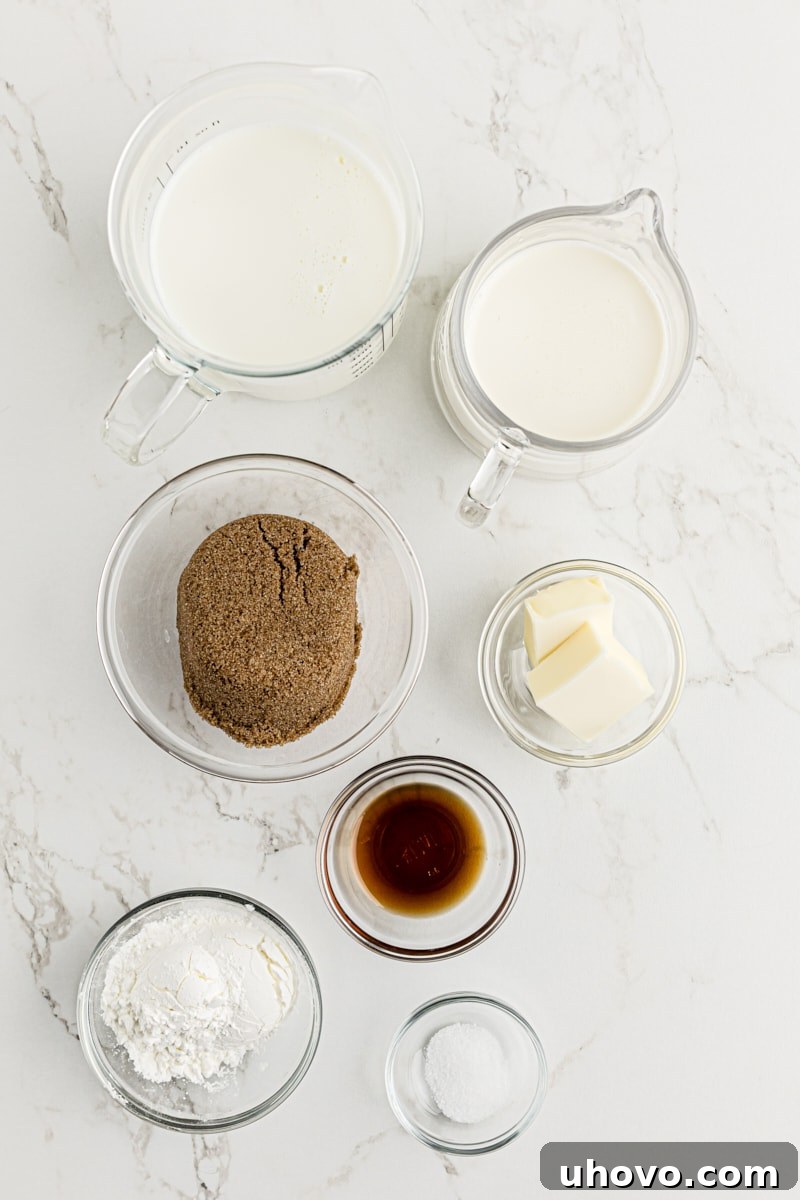
Creating this irresistible butterscotch pudding requires only a few fundamental ingredients, most of which are likely already staples in your kitchen. Each component plays a crucial role in achieving the desired flavor and creamy texture.
For precise quantities and detailed instructions, please refer to the comprehensive recipe card located at the bottom of this article.
- Dark Brown Sugar: This is the star of the show, providing butterscotch with its signature deep, molasses-rich flavor and beautiful golden hue. The higher molasses content in dark brown sugar, compared to light brown sugar, intensifies the butterscotch experience. For a deeper dive into the nuances, explore the differences between Light Brown Sugar vs. Dark Brown Sugar.
- Cornstarch: A vital thickening agent, cornstarch is responsible for transforming the liquid mixture into a luscious, silky-smooth pudding. It provides the perfect consistency without any starchy aftertaste, ensuring a truly decadent mouthfeel.
- Salt: A pinch of salt is essential to balance the sweetness of the brown sugar and enhance all the other flavors, making the butterscotch taste even more pronounced and delicious.
- Milk: For the richest, most decadent pudding, whole milk is highly recommended due to its higher fat content. However, for a slightly lighter option, I’ve successfully achieved fantastic results many times using 2% milk, proving its versatility. The key is to use fresh milk for the best flavor.
- Heavy Cream: This adds an unparalleled level of creaminess and richness, contributing to the pudding’s luxurious texture. It complements the milk beautifully, elevating the overall indulgence of the dessert.
- Unsalted Butter: Incorporating unsalted butter adds to the pudding’s characteristic buttery depth and smoothness. Using unsalted butter gives you complete control over the saltiness of the final product. Learn more about choosing the right butter for your baking endeavors: Unsalted or Salted Butter: Which is Better for Baking?
- Vanilla Extract: A touch of pure vanilla extract rounds out the flavors, adding a warm, aromatic note that beautifully complements the butterscotch. You can opt for high-quality store-bought extract or elevate your baking even further with homemade vanilla extract.
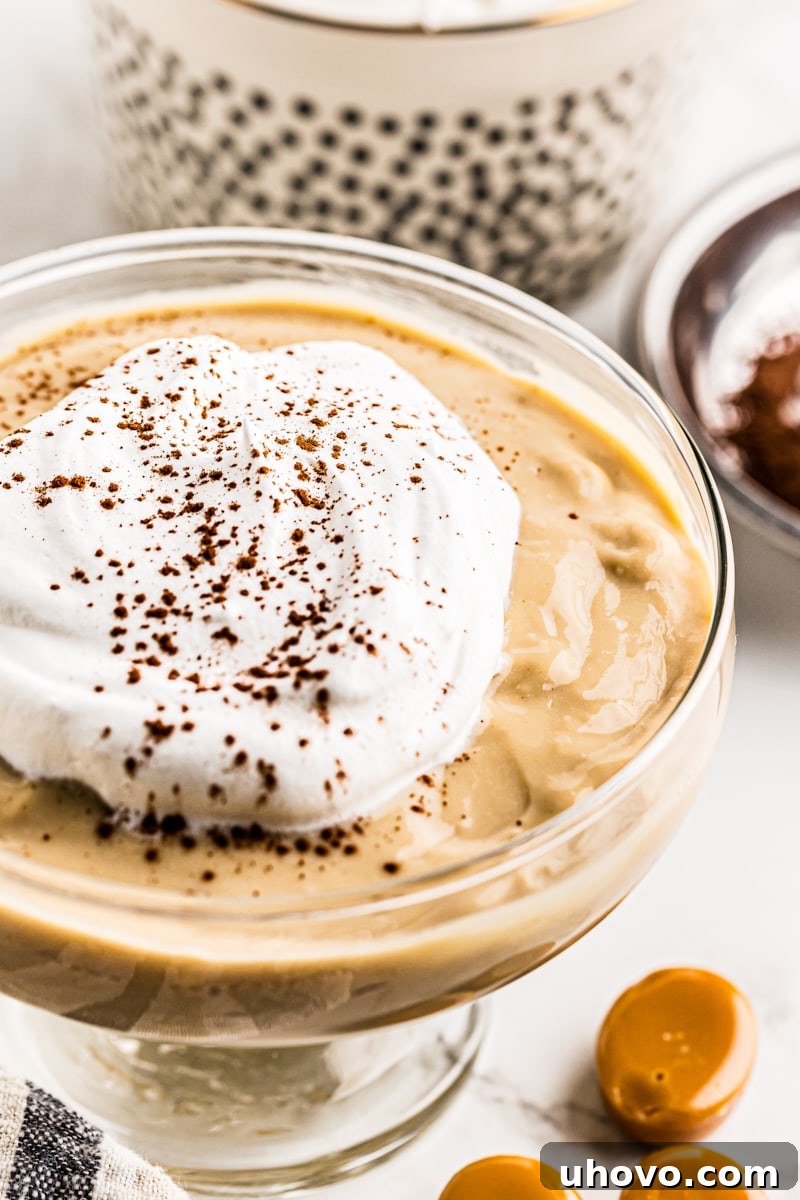
- Sweetened Whipped Cream and Cocoa Powder: These are optional but highly recommended for a delightful garnish, adding a touch of elegance and an extra layer of flavor and texture. A dollop of fresh sweetened whipped cream and a dusting of cocoa powder or chocolate shavings can transform your simple pudding into a showstopper.
Understanding the Nuance: Caramel vs. Butterscotch
It’s common for people to confuse caramel and butterscotch, as both are delightful, sweet, and brown-hued concoctions often used in desserts. However, their distinct ingredients and preparation methods yield unique flavor profiles.
Caramel is traditionally made by heating granulated white sugar until it melts and caramelizes into a deep golden-brown liquid. This process creates a complex flavor that is sweet, sometimes slightly nutty, and often carries a subtle bitter undertone from the cooked sugar. To create a sauce, cream, butter, and sometimes salt are typically added to this melted sugar, resulting in a rich, smooth, and often gooey texture. The primary flavor driver in caramel is the caramelized sugar itself.
Butterscotch, on the other hand, derives its characteristic flavor from the combination of butter and brown sugar. The process begins by melting butter and brown sugar together, often with additional dairy like milk or cream. The brown sugar, with its inherent molasses content, contributes a deeper, more buttery, and less bitter sweetness than granulated sugar. While it can also involve a caramelization step, the defining difference is the prominent role of butter and brown sugar from the outset. This results in a sweet, exceptionally creamy, and distinctly buttery sauce or candy with a smoother, less complex taste compared to the often bolder notes of caramel.
In essence, think of caramel as primarily sugar-driven with secondary butter/cream notes, while butterscotch is a celebration of butter and brown sugar working in harmony to create its signature, comforting taste.
Crafting Your Perfect Homemade Butterscotch Pudding: A Step-by-Step Guide
Making this silky butterscotch pudding is a straightforward process that yields incredibly rewarding results. Follow these simple steps to create a dessert that will impress both your taste buds and your guests.
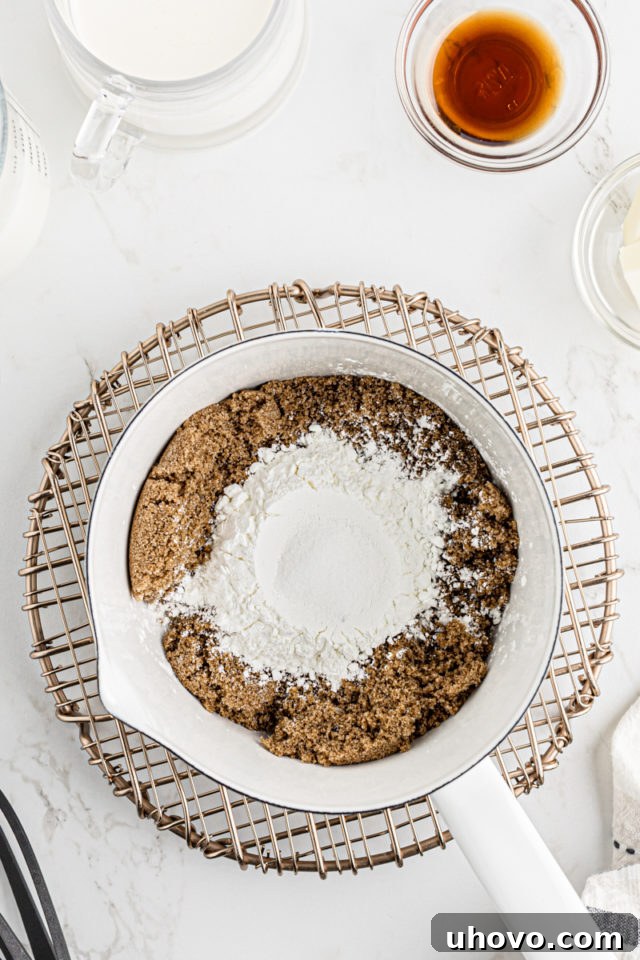
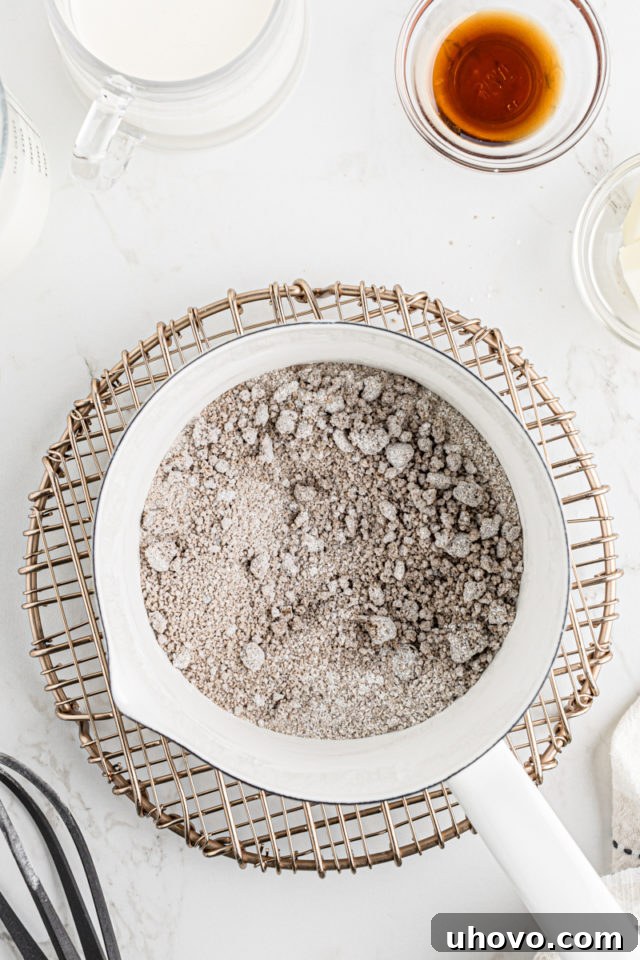
- Prepare Your Dry Ingredients: In a heavy-bottomed medium saucepan, combine the dark brown sugar, cornstarch, and salt. Use a whisk to thoroughly blend these ingredients until no lumps of cornstarch remain. This initial step is crucial for ensuring a smooth, lump-free pudding.
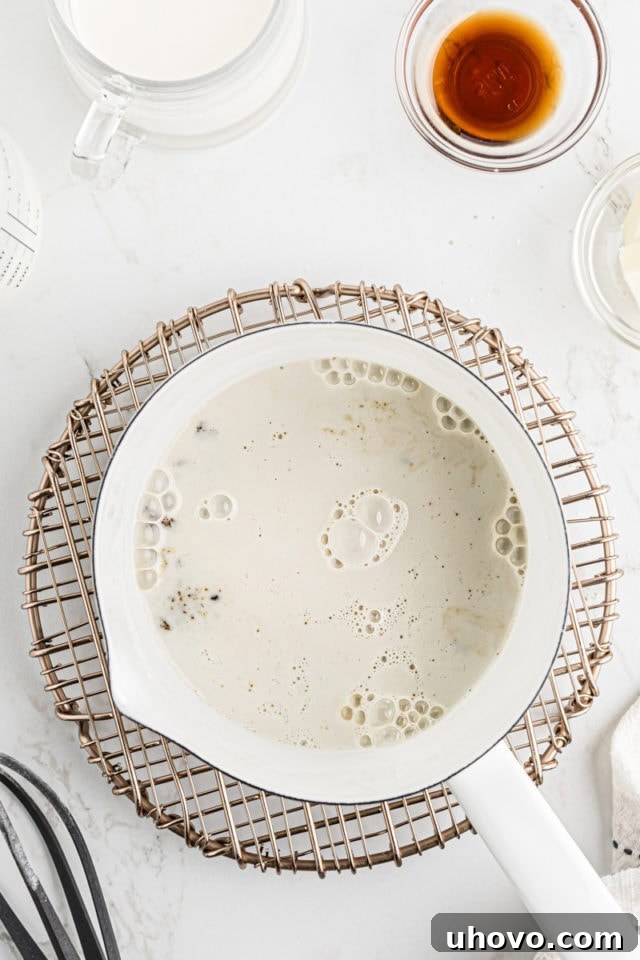
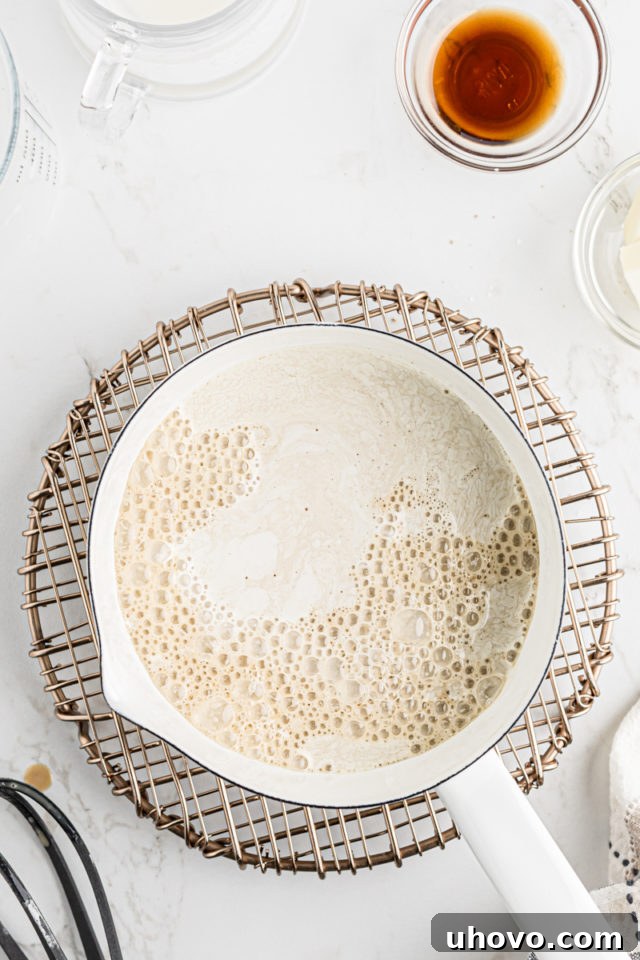
- Introduce the Liquids: Gradually whisk in approximately ½ cup of milk into the dry mixture. Continue whisking until a smooth paste forms. Then, add the remaining milk and the heavy cream, whisking well to ensure all ingredients are fully incorporated and the mixture is uniform.
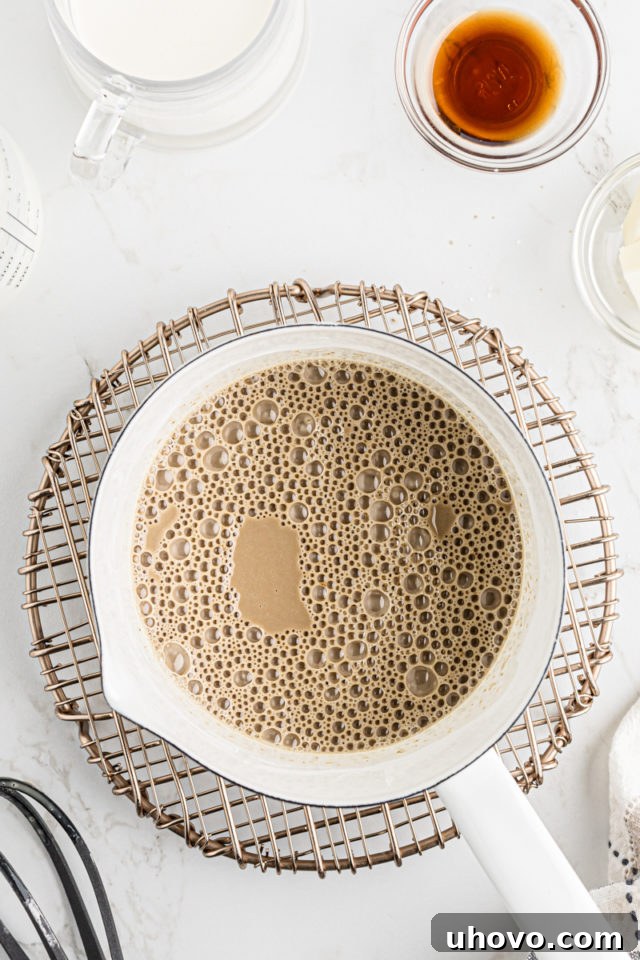
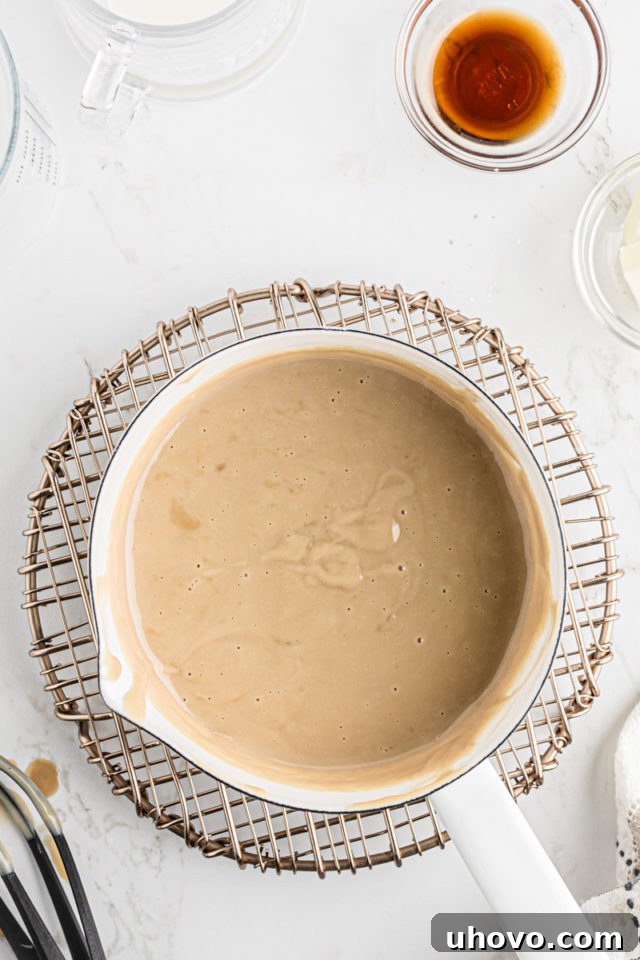
- Cook to Perfection: Place the saucepan over medium heat. Bring the butterscotch pudding mixture to a rolling boil, making sure to whisk frequently to prevent sticking and scorching on the bottom of the pan. Once boiling, reduce the heat slightly and continue to whisk constantly for 1 full minute. This constant whisking during the boil is essential for activating the cornstarch and achieving the proper thick, creamy consistency. You’ll notice the pudding visibly thickening during this minute.
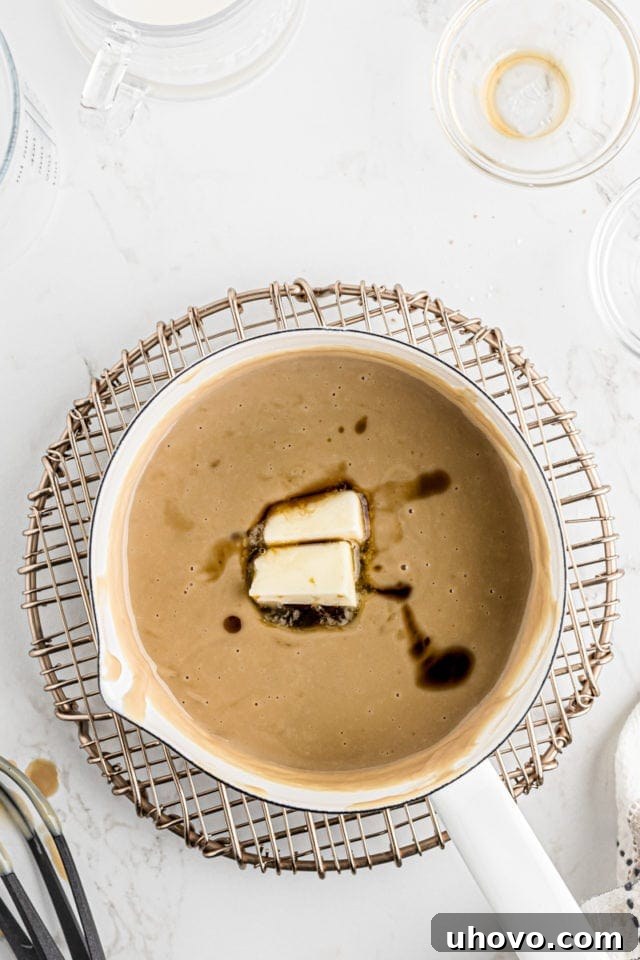
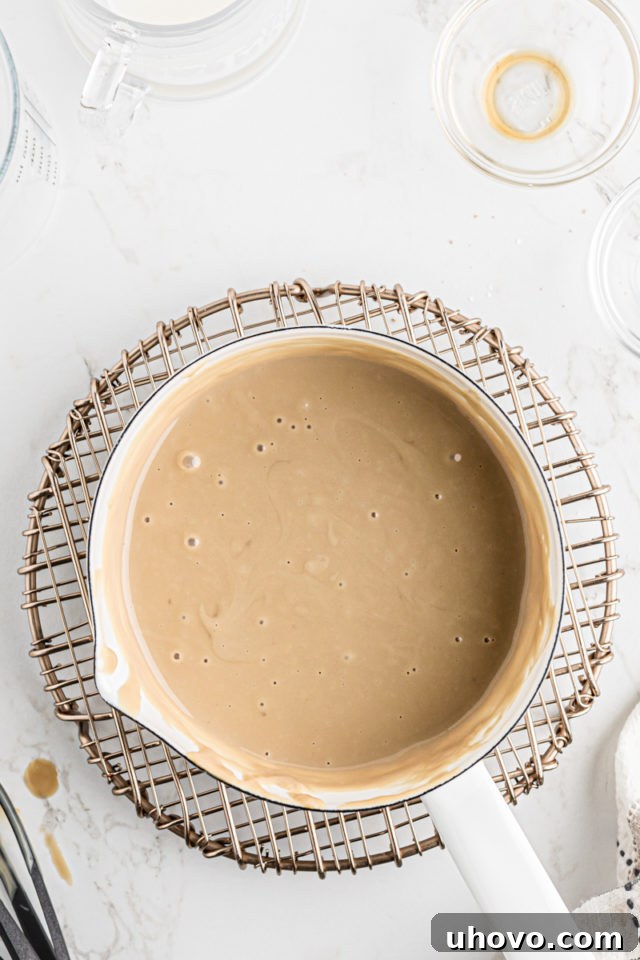
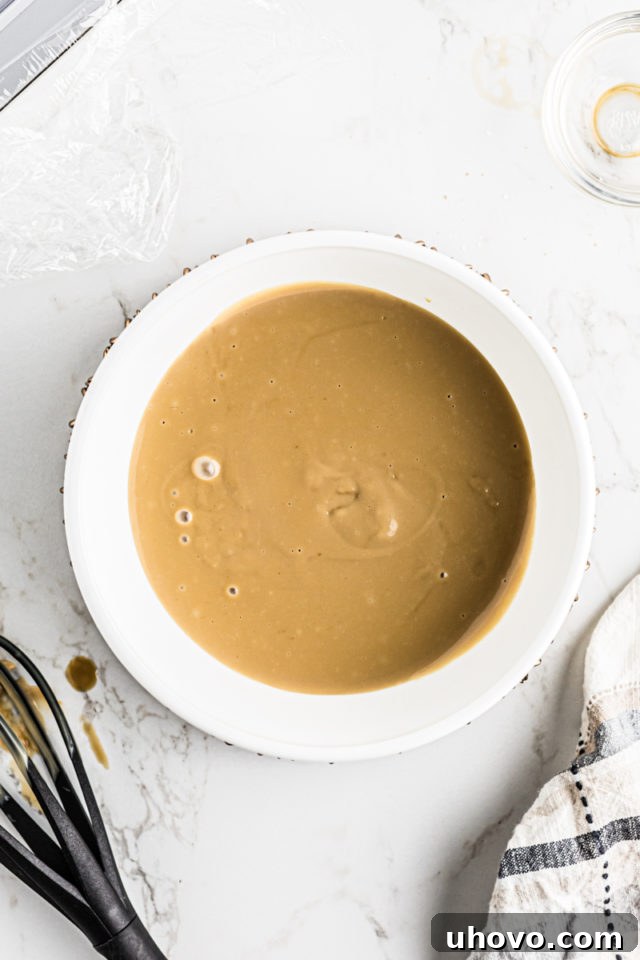
- Finish with Butter and Vanilla: Remove the saucepan from the heat immediately after boiling. Add the cubed unsalted butter and vanilla extract, whisking vigorously until the butter is completely melted and fully incorporated into the pudding. This step adds a final layer of richness and aromatic warmth.
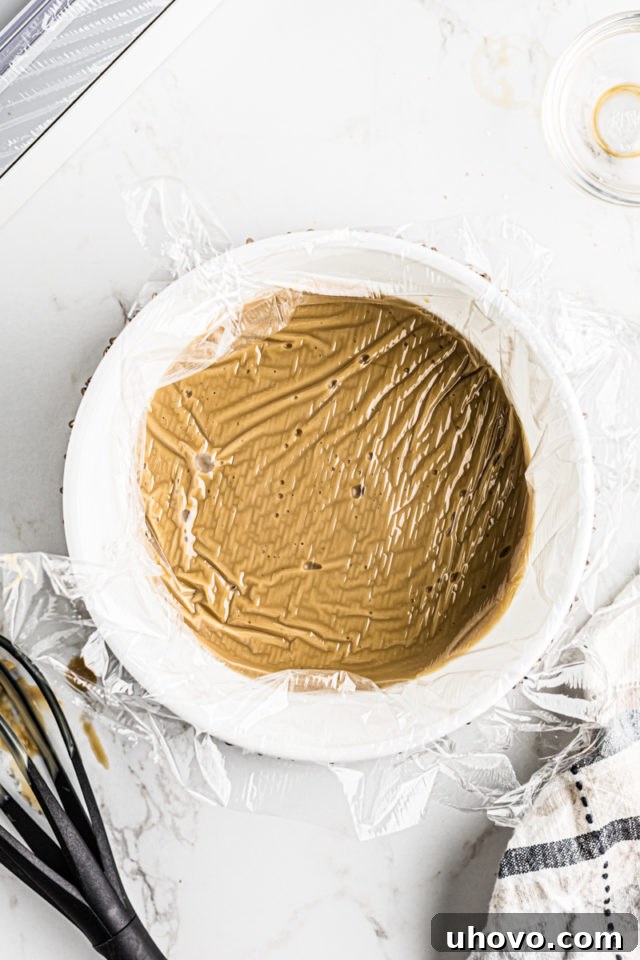
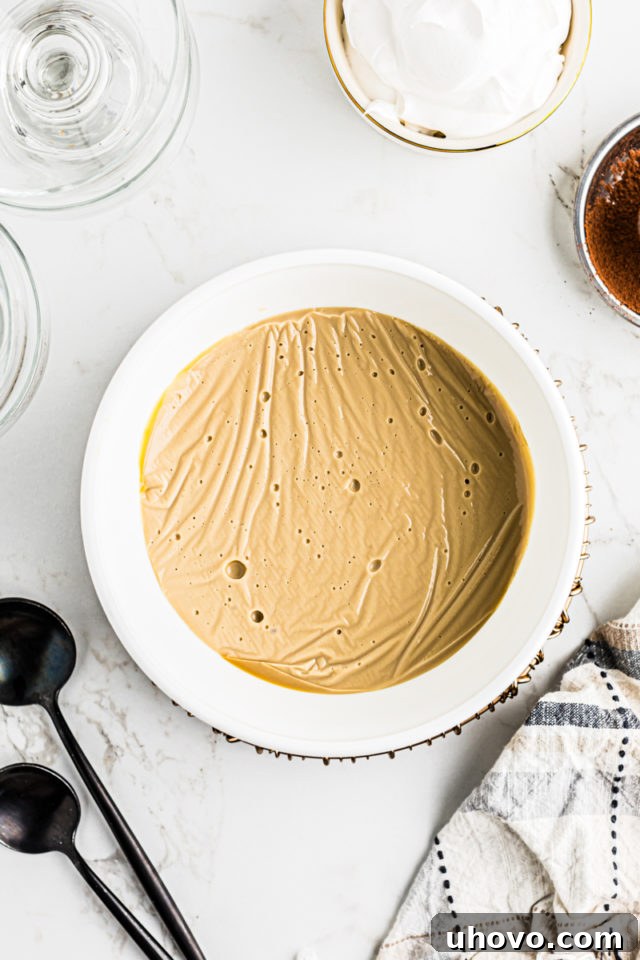
- Chill to Perfection: Pour the warm pudding into a clean bowl or individual serving dishes. Cover the surface of the pudding directly with plastic wrap, pressing it down firmly to eliminate any air pockets. This crucial step prevents a “skin” from forming on top as it cools. Refrigerate for a minimum of 2 hours, or until thoroughly chilled and set. The longer it chills, the firmer and more satisfying its texture will be.
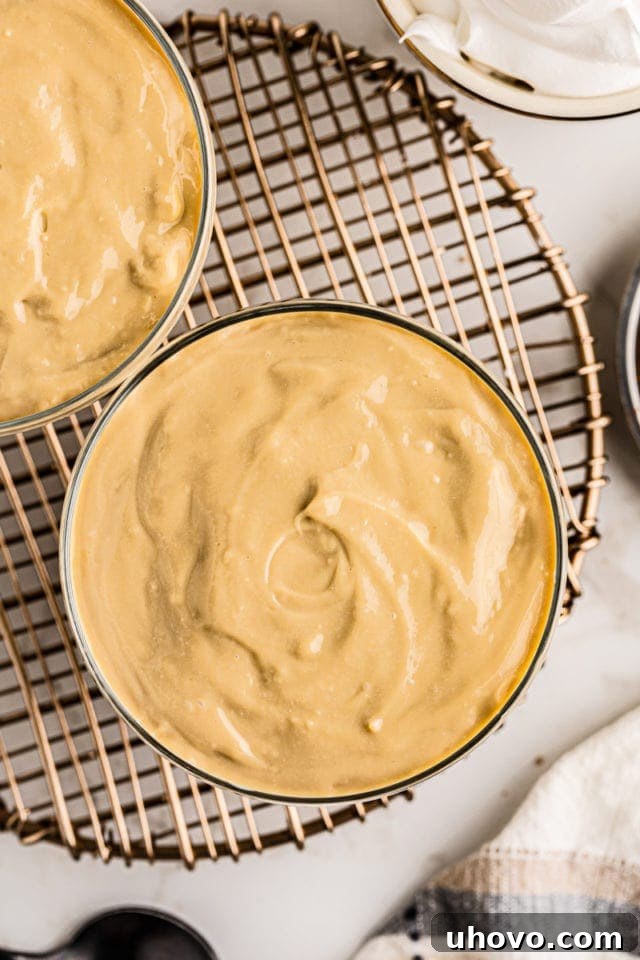
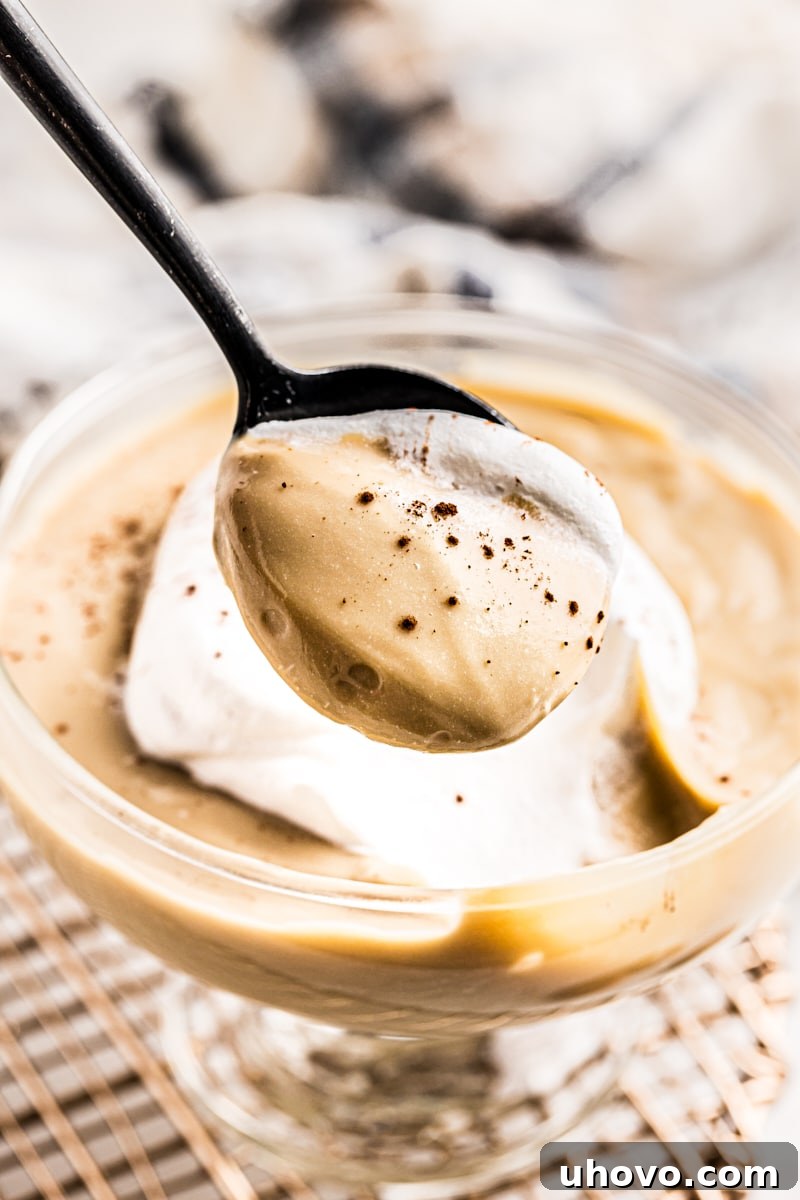
- Serve and Garnish: Once perfectly chilled, spoon the creamy butterscotch pudding into individual serving bowls or glasses. For an extra touch of indulgence, garnish with a generous dollop of sweetened whipped cream and a light dusting of cocoa powder or a few chocolate shavings. Prepare to savor every spoonful!
Expert Tips for Pudding Perfection
Achieving the perfect homemade butterscotch pudding is simple with these expert tips:
- Mise en Place (Have Ingredients Ready): This recipe moves quickly once it’s on the stove. To prevent any last-minute scrambling or burning, measure all your ingredients and have them ready before you begin cooking. This ensures a smooth and stress-free process.
- Constant Whisking is Key: To prevent the pudding from scalding or sticking to the bottom of the pan, and to ensure a lump-free, silky texture, whisk frequently (and constantly once it boils). I highly recommend using a ball whisk; its unique design allows you to reach all the edges and corners of the saucepan more effectively.
- Press Plastic Wrap Directly onto the Surface: This is a golden rule for all custards and puddings. By pressing the plastic wrap directly onto the surface of the warm pudding, you create an airtight seal that prevents the formation of an unappealing “skin” as it cools. (However, if you happen to enjoy that particular texture, you can simply loosely cover the pudding instead!)
- Use a Heavy-Bottomed Saucepan: A heavy saucepan distributes heat more evenly, which significantly reduces the risk of the pudding scorching on the bottom, ensuring consistent cooking.
- Adjust Sweetness to Taste: While the recipe provides a balanced sweetness, feel free to slightly adjust the amount of brown sugar to suit your personal preference. Taste the mixture before boiling if you prefer a less sweet dessert.
- Strain for Ultimate Smoothness: For an absolutely flawless, velvety smooth pudding, consider straining the cooked mixture through a fine-mesh sieve before chilling. This will catch any tiny lumps or cooked bits, ensuring a superior texture.
Delightful Serving Suggestions for Butterscotch Pudding
While this butterscotch pudding is utterly divine on its own, its rich, comforting flavor makes it a fantastic canvas for various delightful toppings and pairings. Here are some ideas to elevate your dessert experience:
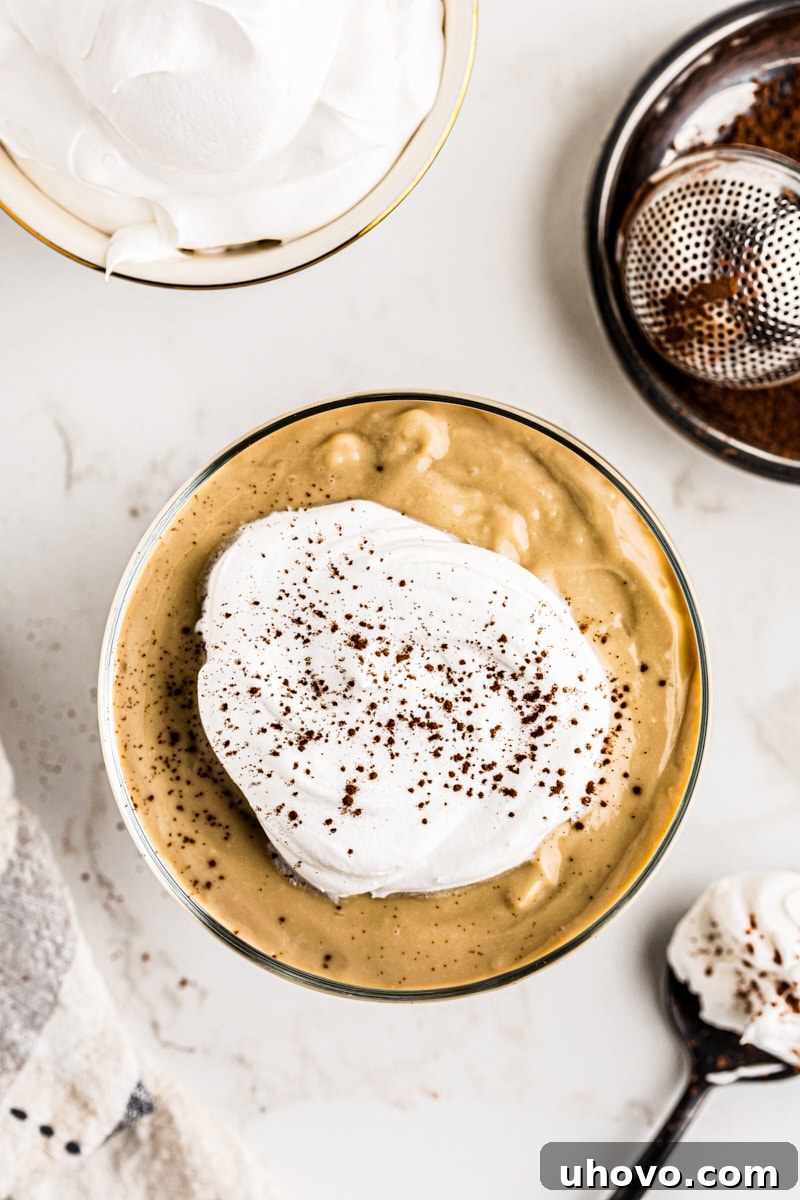
- Classic Whipped Cream & Cocoa: As suggested in the recipe, a generous dollop of freshly made sweetened whipped cream and a light dusting of cocoa powder or chocolate shavings adds both visual appeal and a lovely contrast in texture and flavor.
- Sweet and Salty Twist: A delicate sprinkle of flaky sea salt over the top truly enhances the butterscotch notes, creating an irresistible sweet and salty combination that connoisseurs adore.
- Crunchy Textural Contrast: Add a satisfying crunch with crushed graham crackers, shortbread cookie crumbs, or even finely chopped toasted nuts like pecans or walnuts.
- Fresh Fruit Pairings: Serve alongside fresh berries such as raspberries, blueberries, or sliced strawberries for a burst of freshness and a touch of tartness that beautifully cuts through the pudding’s richness. Sliced bananas also make an excellent companion.
- Layered Parfait: Create an elegant parfait by layering the butterscotch pudding with whipped cream and crumbled cookies or granola in a tall glass.
- Drizzle with Extra Sauce: For an even richer experience, drizzle with a homemade caramel sauce, an additional butterscotch sauce, or even a chocolate fudge sauce.
- Spiced Delights: A tiny pinch of cinnamon or nutmeg dusted over the top can add a subtle, warming spice note that complements the brown sugar beautifully.
- Coffee or Liqueur Pairing: Enjoy your pudding with a hot cup of coffee, or for an adult twist, a splash of bourbon or rum extract can be added to the pudding itself (after cooking) or served as a light drizzle over the top.
Storing Your Delicious Butterscotch Pudding
To keep your homemade butterscotch pudding fresh and creamy, store any leftovers in an airtight container in the refrigerator. It will maintain its excellent taste and texture for up to 3 days. Remember to always press a layer of plastic wrap directly onto the surface of the pudding to prevent the formation of an undesirable skin. This also helps to lock in moisture and flavor.
Can I Freeze This Butterscotch Pudding Recipe?
Yes, butterscotch pudding freezes remarkably well, making it a fantastic option for future cravings or meal prep! You can freeze this recipe for up to 3 months. To freeze, simply pour the cooled pudding into freezer-safe containers, leaving a little headspace, and cover tightly with an airtight lid or plastic wrap pressed directly onto the surface. When you’re ready to enjoy it, transfer the frozen pudding to the refrigerator overnight to thaw gradually. Before serving, give it a good whisk to restore its smooth, creamy consistency, and then serve as usual with your favorite garnishes.
Frequently Asked Questions (FAQ)
Here are answers to some common questions you might have about making and enjoying homemade butterscotch pudding:
- Can I use a different type of milk? While whole milk provides the richest results, 2% milk works very well. Skim milk is not recommended as it lacks the fat content needed for a truly creamy texture. Non-dairy milks like almond or oat milk can be used, but the consistency and flavor may vary slightly, and you might need to adjust the cornstarch amount.
- Why is my pudding lumpy? Lumps usually occur if the dry ingredients (especially cornstarch) weren’t thoroughly whisked before adding liquids, or if the pudding wasn’t whisked frequently enough while cooking. For a truly smooth pudding, you can always pass the cooked mixture through a fine-mesh sieve before chilling.
- How can I make my pudding thicker/thinner? The recipe aims for a perfect consistency. If you prefer it thicker, you could try adding a tiny bit more cornstarch (e.g., ½ teaspoon) in the initial dry mix. If it turns out too thick, you can gently whisk in a tablespoon or two of milk or cream after it’s chilled to loosen it up.
- Can I use light brown sugar instead of dark? While dark brown sugar gives the most authentic and deep butterscotch flavor, light brown sugar can be used. The pudding will be slightly lighter in color and have a milder, less pronounced butterscotch taste.
- Is this pudding gluten-free? Yes, this recipe is naturally gluten-free as long as all your ingredients (like cornstarch) are certified gluten-free. This makes it a great dessert option for those with gluten sensitivities.
- What kind of saucepan is best? A heavy-bottomed saucepan is highly recommended. It distributes heat more evenly, which helps prevent the pudding from sticking and burning on the bottom, ensuring a perfectly cooked, smooth result.
- How long does it take to chill? The pudding requires at least 2 hours to chill and fully set. For the best texture and flavor, chilling for 4 hours or even overnight is ideal.
More Irresistible Pudding Recipes to Explore
If you’ve fallen in love with the comforting simplicity of homemade pudding, you’re in for a treat! Here are a few more delightful pudding recipes to expand your dessert repertoire, each offering its unique charm and flavor:
Butterscotch Pudding
Pin Recipe
Leave a Review
Ingredients
- ½ cup (100 g) firmly packed dark brown sugar
- 2 tablespoons + 2 teaspoons cornstarch
- ¼ teaspoon salt
- 1 ½ cups (360 ml) milk
- ½ cup (120 ml) heavy cream
- 2 tablespoons (28 g) unsalted butter, cut into cubes
- 1 ½ teaspoons vanilla extract
- sweetened whipped cream and cocoa powder, for garnish
Recommended Products
-
Le Creuset Enameled Cast-Iron Saucepan, 2 1/4 Quart
-
Stainless Steel Ball Whisk
Instructions
-
Place the brown sugar, cornstarch, and salt in a heavy medium saucepan. Whisk to combine thoroughly.
-
Add about 1/2 cup of milk and whisk until combined into a smooth paste. Then, add the remaining milk and cream, whisking well to combine all liquids.
-
Bring the mixture to a boil over medium heat, whisking frequently. Once boiling, continue to whisk constantly for 1 minute to thicken.
-
Remove the pan from heat. Add the butter and vanilla extract, and whisk vigorously until fully combined and smooth.
-
Pour the warm pudding into a clean bowl. Cover with plastic wrap, pressing the plastic wrap directly onto the surface of the pudding to prevent a skin from forming.
-
Refrigerate for at least 2 hours, or until thoroughly chilled and set, before serving.
-
If desired, garnish with sweetened whipped cream and a dusting of cocoa powder for an extra touch of indulgence.
Notes
- *Whole milk generally yields the richest results, but this recipe has been successfully made many times with 2% milk, offering a slightly lighter yet still creamy texture.
- This recipe is slightly adapted from Epicurious.
- Store any leftover pudding in an airtight container in the refrigerator for up to 3 days, ensuring plastic wrap is pressed directly onto the surface.