Ever found yourself halfway through a recipe only to realize you don’t have the specific baking pan it calls for? Or perhaps you’re eager to scale a recipe up or down for a different pan size? Understanding the volume capacity of your baking pans is the secret to navigating these culinary dilemmas with confidence. This comprehensive guide will equip you with essential charts detailing the most common pan sizes and their capacities, alongside simple methods to calculate the volume of any baking pan you own. Master these techniques, and you’ll unlock a new level of flexibility and precision in your baking, ensuring perfect results every time.
Unlocking Perfect Bakes: Your Guide to Common Baking Pan Sizes and Capacities
Every home baker has likely faced the frustration of having the perfect recipe ready, only to discover they lack the exact pan. While some pan substitutions are straightforward, others can significantly impact your bake. The key to successful substitution and recipe scaling lies in understanding the volume capacity of your baking pans. This guide provides an invaluable resource of sizes and capacities for the most frequently used baking pans, empowering you to choose the ideal vessel for your culinary creations.
Beyond simple reference, we’ll delve into practical methods for determining any pan’s capacity. Whether you prefer a straightforward mathematical approach or a hands-on, no-math technique, you’ll find easy-to-follow instructions that make guesswork a thing of the past. This knowledge is not just about finding a substitute; it’s about mastering your ingredients and equipment to achieve consistent, delicious results, transforming you into a more adaptable and confident baker.
The Art of Accurate Measurement: How to Measure Any Baking Pan
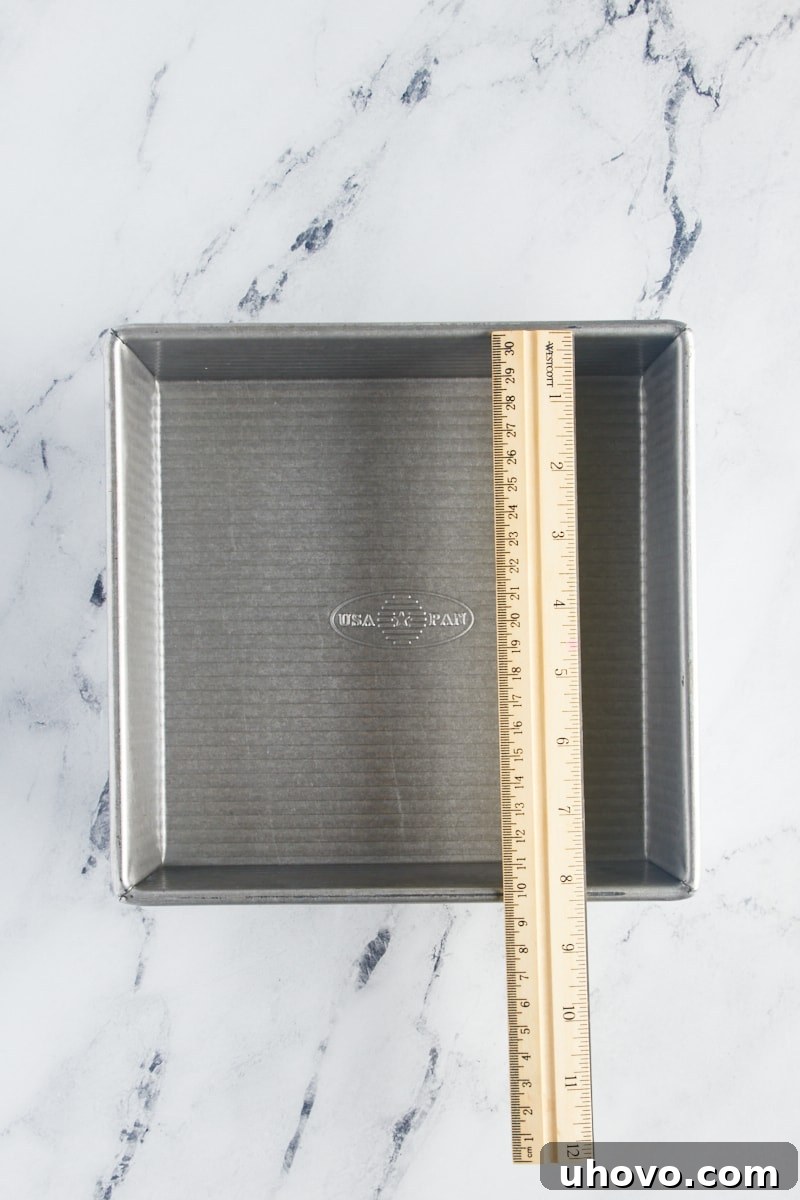
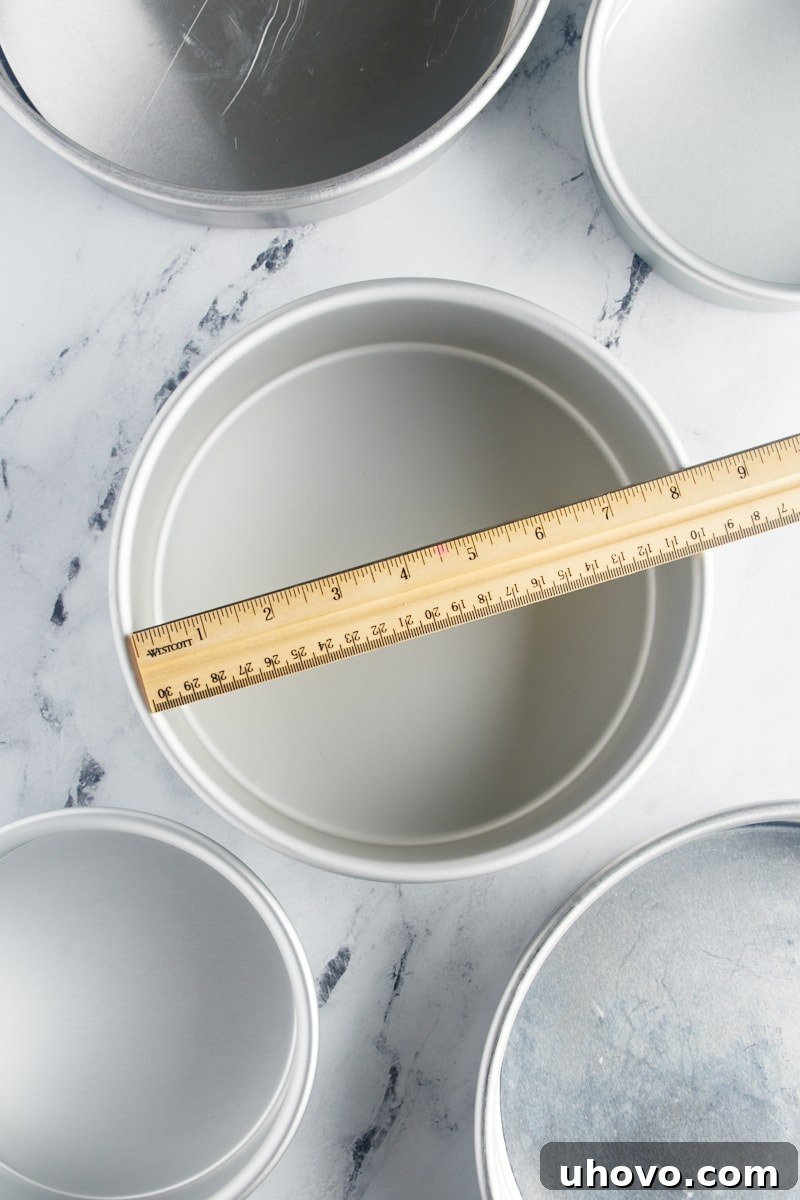
Precision is paramount in baking, and that starts with accurately measuring your equipment. When determining the width, length, and depth of any baking pan, always measure the interior dimensions. Even pans with seemingly thin edges will have their true internal baking space reduced by the material’s thickness. This distinction is crucial, as the outer measurements often found on product labels might not reflect the actual cooking area and volume your recipe will occupy.
For depth, position your ruler straight up and down from the pan’s bottom to its rim, even if the sides are slanted. This provides the most accurate maximum depth. Be aware that manufacturers sometimes list external dimensions, which can lead to slight discrepancies if you measure internally. Keeping this in mind will help you reconcile your measurements with any listed product specifications, ensuring you always know the true capacity of your bakeware.
Calculating Baking Pan Capacity: Math & No-Math Approaches
Knowing your pan’s capacity is fundamental for successful baking, especially when adapting recipes. Fortunately, determining this volume is simpler than you might think. For those who appreciate a precise, mathematical approach, a ruler and a few basic formulas are all you need. However, if numbers aren’t your strong suit, don’t worry – we also cover practical, hands-on methods that don’t require a single equation. Whichever method you choose, gaining this insight into your bakeware will empower you to make informed decisions for every recipe.
The Math Approach: Calculating Capacity for Rectangular and Square Pans
For square or rectangular pans, calculating their capacity involves basic geometry. You have two primary options, depending on the level of precision required for your substitution. The simpler method is to calculate the **area** of the pan by multiplying its length by its width (Length × Width). This is incredibly useful when comparing pans of similar depths. For example, a 9″ x 13″ pan has an area of 117 square inches, while an 8″ x 8″ pan has an area of 64 square inches. If both pans have similar depths, you can quickly estimate that the 8″ x 8″ pan holds roughly half the volume of the 9″ x 13″ pan, making it a viable substitute for a halved recipe.
For a more precise understanding of how much batter a pan can truly hold, you’ll need to calculate its **volume**. This involves multiplying the pan’s length, width, and depth (Length × Width × Depth). The result will be in cubic inches (or cubic centimeters if using metric measurements). To convert cubic inches to a more familiar fluid measurement for baking, such as fluid ounces, remember a simple rule of thumb: one cubic inch is approximately equal to 0.5 fluid ounces. So, for an 8″ x 8″ square pan with a 2″ depth, the volume is 8 × 8 × 2 = 128 cubic inches. Multiplying 128 by 0.5 gives you 64 fluid ounces, which conveniently translates to 8 cups. This calculation provides a highly accurate measure for ensuring your recipe fits perfectly.
The Math Approach: Calculating Capacity for Round Pans
Calculating the capacity of round pans follows similar geometric principles to rectangular ones. Often, simply knowing the **area** of a round pan is sufficient for basic recipe adjustments, especially when substituting between pans of comparable depth. To find the area, you’ll use the formula: Area = π * r², where ‘π’ (pi) is approximately 3.14, and ‘r’ is the radius of the pan. The radius is half the pan’s diameter. First, measure the widest internal point of your round pan to get the diameter, then divide by 2 for the radius. Square the radius (multiply it by itself), and then multiply that result by 3.14. For instance, a 9″ round pan has a diameter of 9 inches, making its radius 4.5 inches. So, 4.5 * 4.5 * 3.14 ≈ 63.59 square inches. Comparing this to an 8″ x 8″ square pan (64 square inches), you can see they have very similar areas, suggesting they could be interchangeable if their depths match.
For a more accurate measure of the pan’s total **volume**, you must factor in its depth. The formula becomes: Volume = π * r² * Depth. Using our 9-inch round pan example with a 2-inch depth, the calculation would be 4.5 * 4.5 * 3.14 * 2 ≈ 127.17 cubic inches. As with rectangular pans, converting cubic inches to fluid ounces is done by multiplying by 0.5, giving us approximately 63.5 fluid ounces, which is about 8 cups. This precise volume is invaluable for scaling recipes.
A crucial exception for round pans arises with those featuring significantly slanted sides. While minor slants won’t drastically alter the calculation, highly sloped sides make geometric formulas much more complex and less accurate. In such cases, the most reliable method for determining capacity is the non-math approach: filling the pan with water and measuring its volume directly (detailed in the next section).
The Math Approach: Calculating Capacity for Oval and Complex Pans
For oval baking pans, the mathematical approach to calculating capacity is a slight variation of the round pan formula, adapted for its two distinct axes. To determine the **area** of an oval pan, you’ll multiply half of its length by half of its width, and then multiply that product by pi (3.14). So, Area = (Length/2) * (Width/2) * π. To then find the total **volume**, simply multiply that calculated area by the depth of the pan. This provides a reasonably accurate estimate for most oval-shaped bakeware.
However, when dealing with baking pans that feature more intricate or complicated shapes, such as decorative Bundt pans, specialty shaped cake pans (like animals or characters), or even fluted tube pans with complex interiors, relying solely on geometric calculations can become incredibly difficult and often inaccurate. The varying curvatures, crevices, and irregular surfaces make precise measurement with a ruler and formula impractical. In these specific scenarios, the most accurate and recommended method for determining capacity is to bypass the math altogether and utilize the hands-on water-filling technique (which we’ll explore in detail below). This ensures you capture the true volume of these unique bakeware pieces, preventing overflows or underfills in your baking projects.
No-Math Zone: Practical Ways to Measure Pan Capacity
For those who prefer to skip the equations or for pans with complex shapes where math becomes cumbersome, there are simple, hands-on methods to accurately determine a baking pan’s volume capacity. These approaches are not only math-free but also incredibly practical and precise, especially for irregularly shaped bakeware. You’ll quickly gain confidence in your pan substitutions without ever needing a calculator.
The simplest and most straightforward method involves using water and a standard liquid measuring cup. Begin by placing your empty pan on a stable, flat surface. Gradually fill the pan with water, either adding one cup at a time and meticulously tracking the total volume, or by filling the pan to its brim and then carefully pouring the water out into a large liquid measuring cup (or multiple smaller ones if necessary). For maximum accuracy, ensure you fill the pan all the way to its functional rim—the point where batter would typically reach without overflowing during baking. This technique directly measures the exact volume your pan can hold.
Another excellent no-math option leverages the power of your digital kitchen scale, provided it has a gram setting. Place your empty pan on the scale and press the ‘tare’ or ‘zero’ button to negate its weight. Then, fill the pan completely to the rim with water. Note the weight in grams. Here’s the magic: because 1 milliliter (ml) of water weighs exactly 1 gram (g), the numerical weight in grams directly corresponds to the pan’s volume capacity in milliliters. While this method isn’t entirely math-free if you need the capacity in cups, the conversion is simple: just remember that 1 cup of liquid is approximately 237 ml. Divide your total milliliters by 237 to get the capacity in cups. These practical methods ensure you always have the correct pan for your recipe, regardless of its shape or your comfort level with math.
Understanding the True Meaning of Baking Pan Capacity for Successful Baking
When we talk about the “volume capacity” of a baking pan, we’re referring to the absolute maximum amount of liquid or batter the pan could hold if filled completely to the very brim. While this measurement is crucial for making accurate comparisons and substitutions, it’s vital to understand that this full capacity is rarely, if ever, the amount you should actually fill the pan with during baking. Treating the pan’s full capacity as its usable capacity is, quite literally, a recipe for disaster.
In practice, most baking pans should only be filled between half to three-quarters full. This critical allowance provides essential headroom for the batter or dough to rise during the baking process without overflowing. The exact fill level can vary depending on the recipe and the type of leavening agents used. For instance, a quick bread or cake that uses baking powder or soda will typically rise more vigorously than a dense brownie or fudge. Overfilling a pan not only leads to messy oven spills but can also result in uneven baking, a heavy, dense texture, or a poorly formed crust. Conversely, underfilling might cause your baked good to dry out or brown too quickly. By respecting the principle of usable capacity, you ensure proper aeration, even cooking, and a beautifully finished product every time.
Mastering Pan Substitutions: Tips for Adapting Recipes with Confidence
Knowing the relative volume and dimensions of various baking pans is an indispensable skill for any home baker, allowing you to confidently substitute pans when your recipe calls for one you don’t possess. However, successful substitution involves more than just matching total capacity; several critical factors must be considered to ensure your baked goods turn out perfectly. Misjudging these elements can lead to uneven baking, overflowing batter, or a significantly altered texture.
- Prioritize Similar Batter Depth and Pan Area: The most effective pan substitutions maintain a similar batter depth in the new pan. This often means focusing on the pan’s surface area. For example, an 8-inch square pan and a 9-inch round pan have very similar bottom surface areas (approximately 64 sq. inches), making them excellent substitutes for each other if their depths are also comparable. Changing the batter’s depth will directly impact baking time and potentially temperature, requiring careful adjustments.
- Opt for Similar Pan Types: Whenever possible, substitute a round pan for another round pan, or a square for a square. Swapping between fundamentally different pan types, such as a delicate Bundt pan for a standard cake pan, can introduce unforeseen challenges. Bundt pans, with their central tube and fluted designs, distribute heat differently and promote specific crust formations that a standard pan cannot replicate.
- Account for Pan Depth: While pan area is a good starting point, always consider the pan’s depth. If the total volume is the same but the new pan is significantly shallower or deeper, the batter will spread thinner or stand taller. This directly affects cooking time and the overall texture of your bake. For maximum accuracy, calculating the full volume (length x width x depth or πr² x depth) is always recommended.
- Adjust Baking Time and Temperature: A change in pan size or shape, especially one that alters batter depth, almost always necessitates adjustments to baking time and possibly temperature. If your batter is thicker in the substitute pan, it will require more time to bake through (and sometimes a slightly lower temperature to prevent over-browning). Conversely, a thinner batter will bake faster (and might benefit from a slightly higher temperature for a shorter duration). Always keep a close eye on your oven and use standard doneness tests (like a toothpick test) as your primary guide.
- Understand When Not to Substitute: Some specialty pans are designed for very specific purposes that cannot be easily replicated. Springform pans are essential for cheesecakes and other delicate bakes that need easy release. Bundt pans create unique shapes and facilitate even cooking for dense batters. Tube pans, particularly for angel food cakes, provide crucial structural support. While you might find a pan with a comparable volume, the absence of these specialized features often means the end result will be significantly different, making substitution ill-advised for certain recipes.
Essential Reference: Dimensions and Capacities of Common Baking Pans
To streamline your baking process and eliminate the need for constant calculations, we’ve compiled a comprehensive collection of charts featuring the dimensions and approximate volume capacities of the most commonly used baking pans. These tables are designed to be a quick and easy reference, perfect for swiftly determining if you have the right pan or what alternative might work best. Please keep in mind that these values are generally rounded to whole numbers for simplicity, offering practical guidance rather than absolute scientific precision.
For our international bakers or those who prefer working with the metric system, here are a few indispensable conversion factors to keep handy:
- 1 inch (in) = 2.54 centimeters (cm)
- 1 cup (US liquid) = 237 milliliters (ml)
These conversions will help you effortlessly switch between measurement systems, ensuring accuracy no matter where your recipe originated. With these charts and conversions at your fingertips, you’ll spend less time measuring and more time enjoying the art of baking.
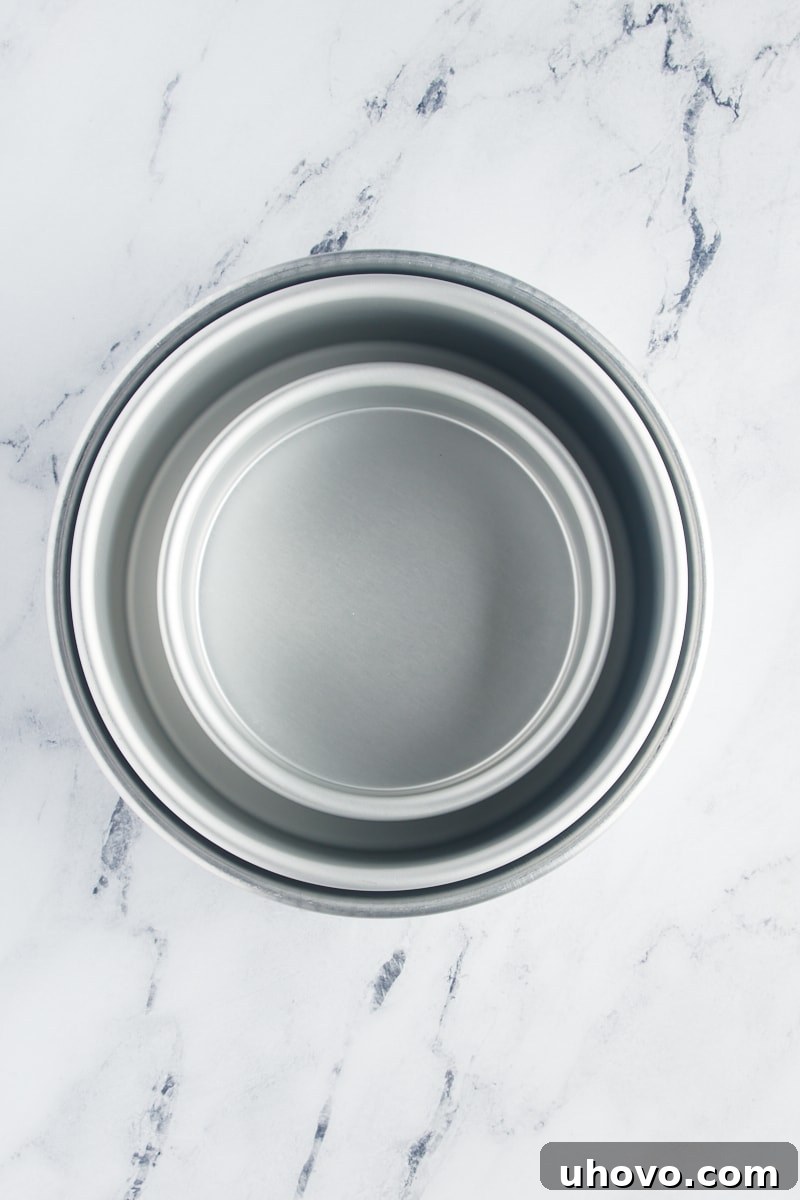
Round Pan Sizes: Your Go-To for Cakes and More
Round baking pans are arguably the most ubiquitous bakeware in any kitchen, primarily celebrated for baking beautiful cakes. Indeed, many bakers simply refer to them as “cake pans” or “round cake pans” due to their prevalent use in layer cakes and celebratory desserts. Beyond cakes, these versatile pans are also perfect for a variety of other baked goods, including comforting cobblers, rich bread puddings, and savory casseroles. The following chart outlines the dimensions and capacities for the round pans you’ll most frequently encounter and utilize in countless recipes, making it easier to select the right size or find a suitable alternative.
| Round Pan Dimensions | Capacity |
|---|---|
| 6″ x 2″ | 4 cups |
| 8″ x 1.5″ | 4 cups |
| 8″ x 2″ | 6 cups |
| 9″ x 1.5″ | 6 cups |
| 9″ x 2″ | 8 cups |
| 10″ x 2″ | 11 cups |
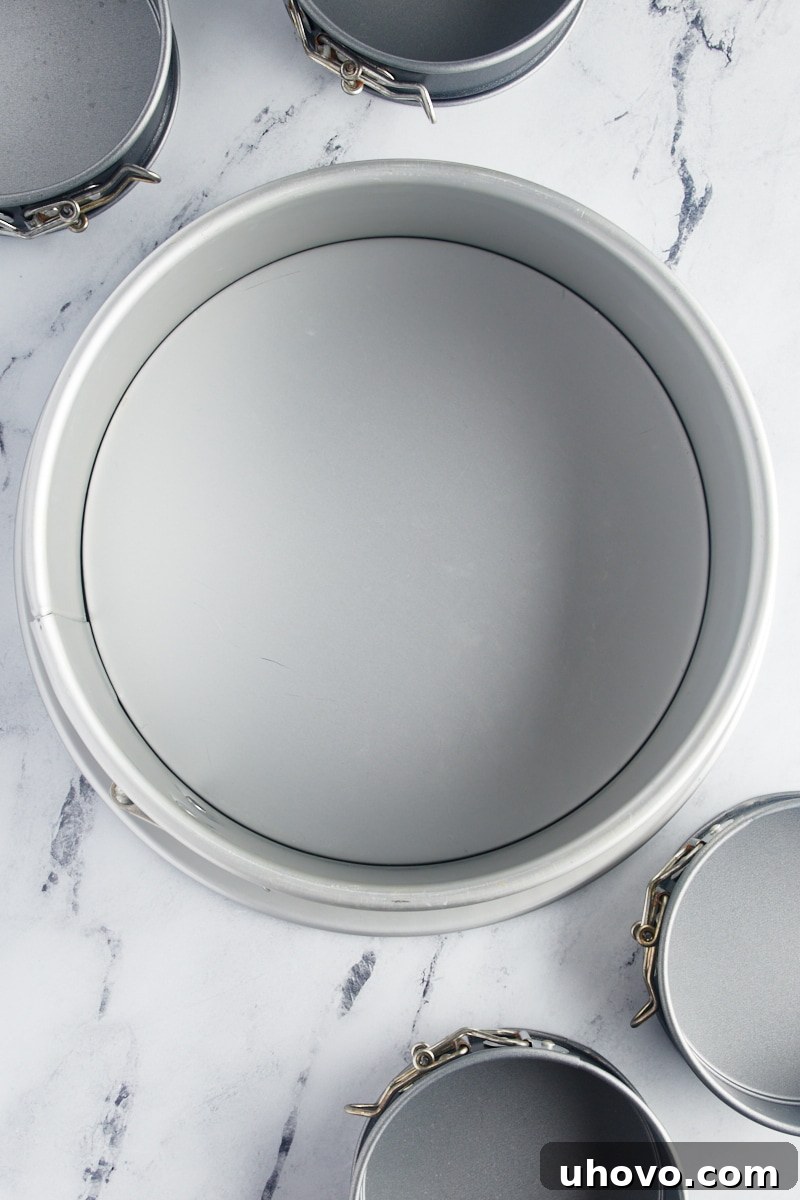
Springform Pan Sizes: The Cheesecake Essential
Springform pans are an indispensable tool in the avid baker’s arsenal, particularly revered for their ability to effortlessly release delicate baked goods. They are an absolute must-have for cheesecakes, allowing the tender, creamy dessert to be showcased without risk of breakage during removal. Beyond cheesecakes, springform pans are incredibly useful for other fragile cakes, tortes, and even savory dishes that benefit from having the pan sides detach after baking, presenting your creation perfectly intact.
It’s worth noting that smaller springform pans, often used for individual desserts or smaller recipes, can come in a wider array of dimensions compared to their larger counterparts. Always take a moment to double-check the specific measurements of your small springform pan before attempting any recipe conversions or substitutions, as slight variations can impact your results. The chart below provides capacities for common springform pan sizes to guide your baking adventures.
| Springform Pan Dimensions | Capacity |
|---|---|
| 4″ x 2″ | 3 cups |
| 6″ x 3″ | 5 cups |
| 9″ x 2.5″ | 10 cups |
| 9″ x 3″ | 12 cups |
| 10″ x 2″ | 12 cups |
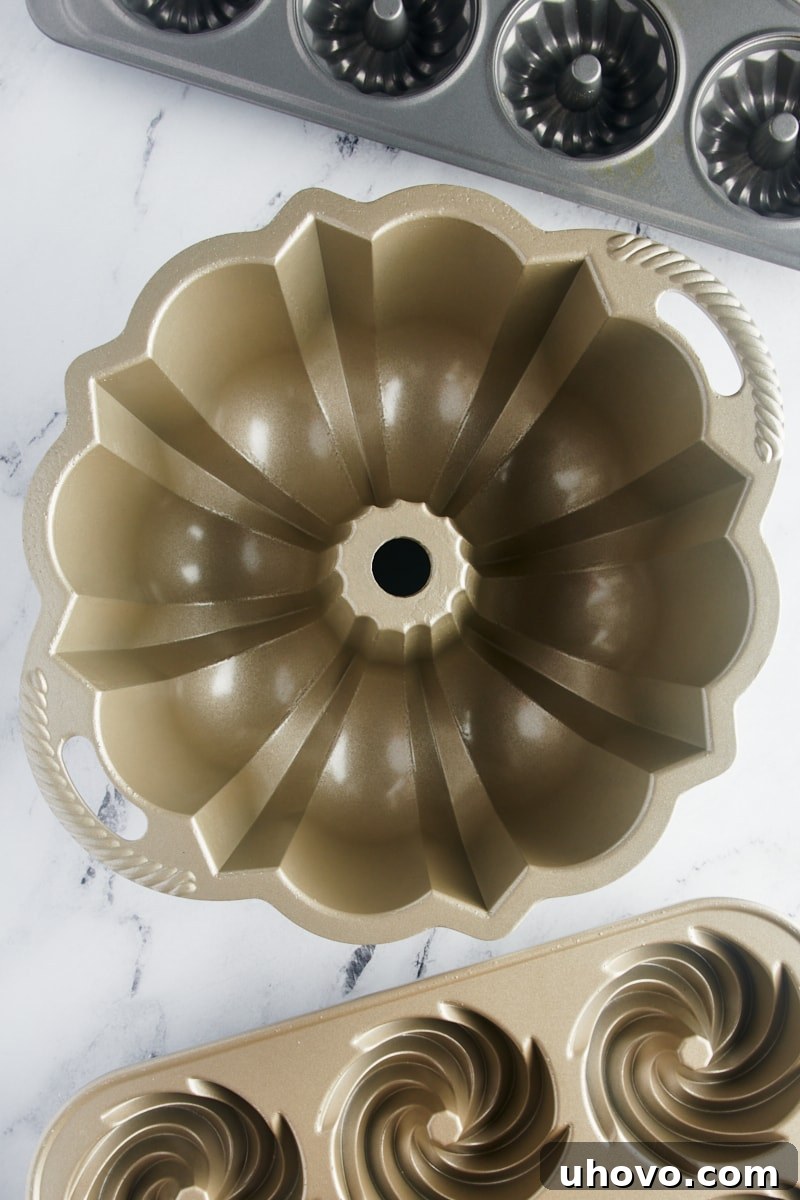
Bundt Pan Sizes: Distinct Shapes, Unique Capacities
Bundt pans are beloved for their elegant, fluted designs that transform simple cakes into visually stunning desserts without the need for intricate frosting. However, their unique and varying designs mean that their capacities can differ quite significantly from one pan to another, even among those labeled with similar dimensions. Many Bundt pans will conveniently have their volume capacity embossed on the pan itself or listed on their packaging. If you’re unsure about your specific pan’s capacity, the most reliable method is to measure the amount of water it can hold, filling it to the very brim.
When it comes to smaller variations like Mini Bundt pans and individual Bundtlette pans, the dimensions and capacities can vary even more widely between different brands and specific models. While the chart below provides a general reference for common sizes, it is always strongly recommended to personally verify your pan’s capacity using the water-filling method before starting any recipe, especially when scaling or substituting. This extra step ensures perfect results and prevents any overflow surprises.
| Bundt Pan Dimensions | Capacity |
|---|---|
| 9″ x 3″ | 7 to 9 cups |
| 10″ x 3.5″ | 10 to 12 cups |
| Bundtlette (Individual) | 1 cup |
| Mini Bundt (Small Individual) | 1/3 cup |
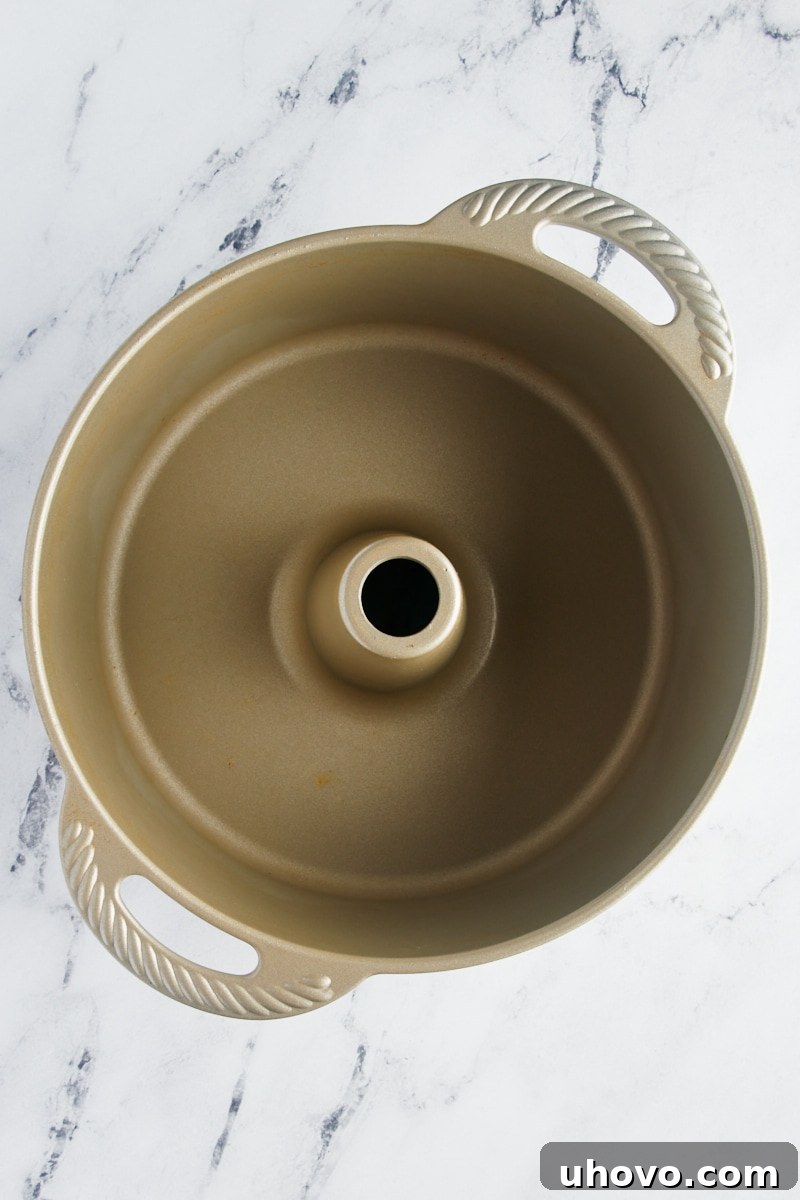
Tube Pan Sizes: The Secret to Light and Airy Cakes
While Bundt pans are technically a specific type of tube pan, their decorative fluting and dense cake applications often lead bakers to consider them a distinct category. True tube pans, by contrast, are characterized by their smooth, straight sides and a flat bottom, which may or may not be detachable. Many models feature a two-piece design with a removable bottom, making unmolding delicate cakes significantly easier. These pans are purpose-built for light, airy cakes that require support as they rise, such as chiffon cakes and, most famously, angel food cakes. In fact, it’s common to see them referred to simply as “angel food cake pans.” The central tube helps distribute heat evenly through the center of the batter, ensuring thorough baking and preventing a gummy middle, which is crucial for these delicate recipes. Understanding their capacities is key to achieving that signature tall, fluffy texture.
| Tube Pan Dimensions | Capacity |
|---|---|
| 8″ x 3″ | 9 cups |
| 9″ x 3″ | 12 cups |
| 10″ x 3″ | 16 cups |
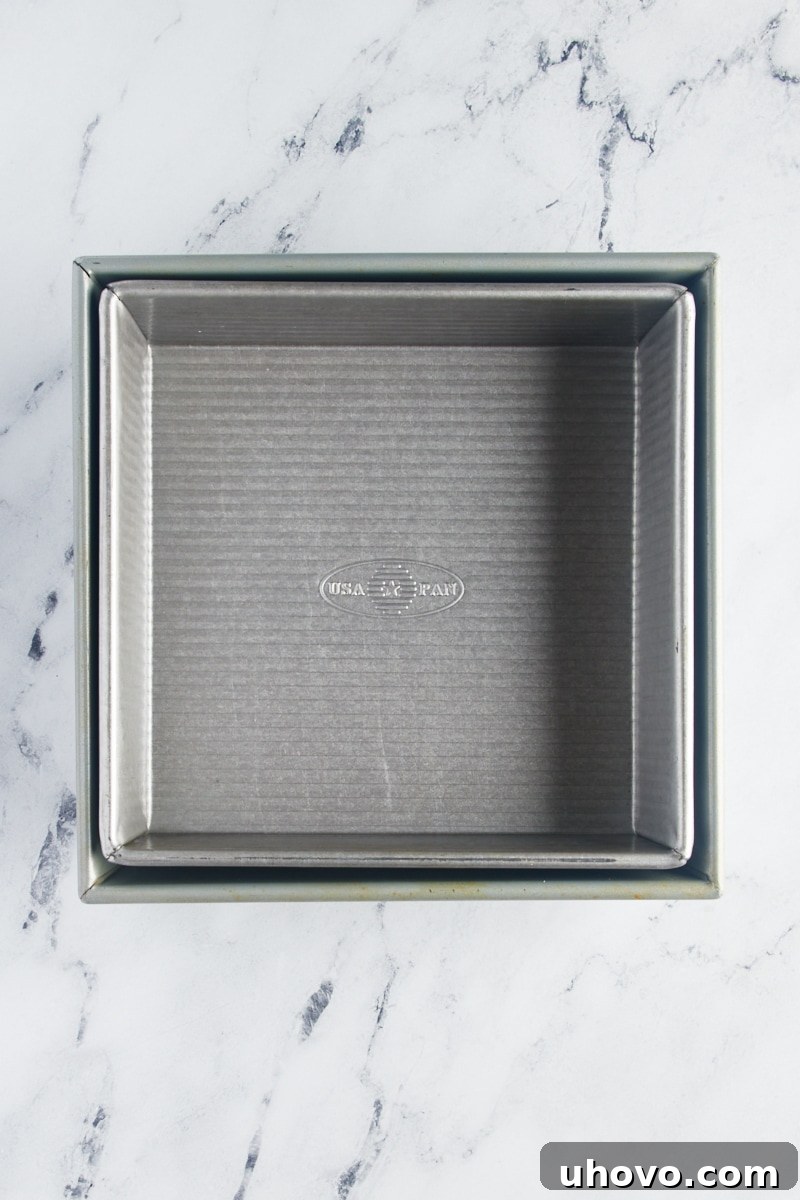
Square Pan Sizes: The Versatile Workhorse of Your Kitchen
Square baking pans are incredibly versatile and a true workhorse in the home kitchen, perfect for a wide array of delicious treats, most notably homemade brownies, but also ideal for bar cookies, small cakes, and savory bakes. Their straight sides make for clean cuts and neat servings. It’s important to recognize how the depth of these pans significantly influences their overall volume capacity. While a standard 8″ x 8″ pan is common, its capacity can vary between 1.5″ and 2″ depths, for example. For consistent and reliable results, especially when following recipes, a 2-inch depth is generally recommended for square pans, as it provides ample space for most batters to rise without overflowing. The chart below details the capacities of common square pan sizes at various depths, helping you choose the perfect pan for your next square-shaped creation.
| Square Pan Dimensions | Capacity |
|---|---|
| 8″ x 8″ x 1.5″ | 6 cups |
| 8″ x 8″ x 2″ | 8 cups |
| 9″ x 9″ x 1.5″ | 8 cups |
| 9″ x 9″ x 2″ | 10 cups |
| 10″ x 10″ x 2″ | 12 cups |
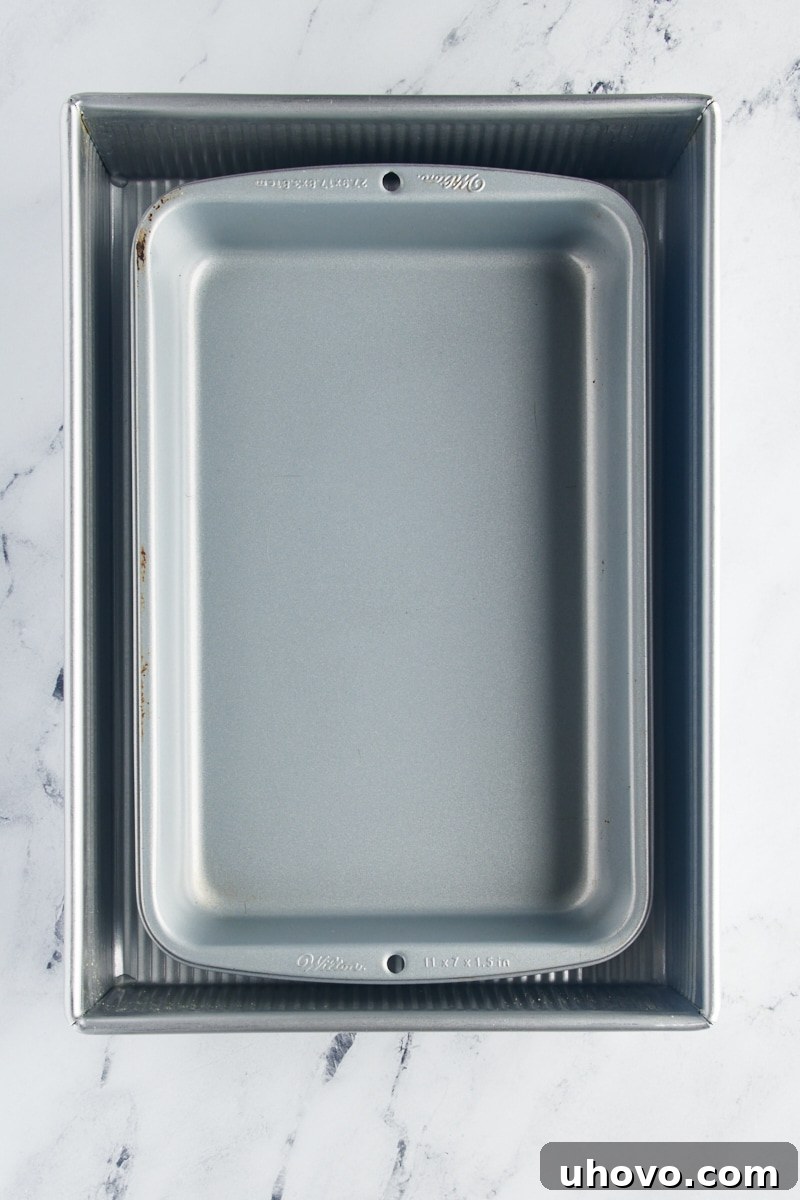
Rectangular Pan Sizes: The Baker’s Everyday Essential
Rectangular pans are arguably the most frequently used pieces of bakeware for many home bakers, with the 9″ x 13″ pan often considered the ultimate kitchen staple. Their generous size and straightforward shape make them incredibly versatile for a vast array of recipes. From sheet cakes, which serve a crowd, to rich brownies, delightful bar cookies, comforting casseroles, and even roasted vegetables, these pans can handle nearly anything you throw at them. Their consistent depth (typically 2 inches) provides ample space for batters to rise without overflowing, ensuring even baking and a beautiful presentation.
Whether you’re preparing a family dinner or a potluck dessert, understanding the capacities of these rectangular pans is key to scaling your recipes correctly and achieving consistent, delicious results. The chart below provides a quick reference for the most common rectangular pan dimensions and their approximate capacities, helping you make informed decisions for all your baking and cooking needs.
| Rectangular Pan Dimensions | Capacity |
|---|---|
| 11″ x 7″ x 2″ | 10 cups |
| 13″ x 9″ x 2″ | 15 cups |
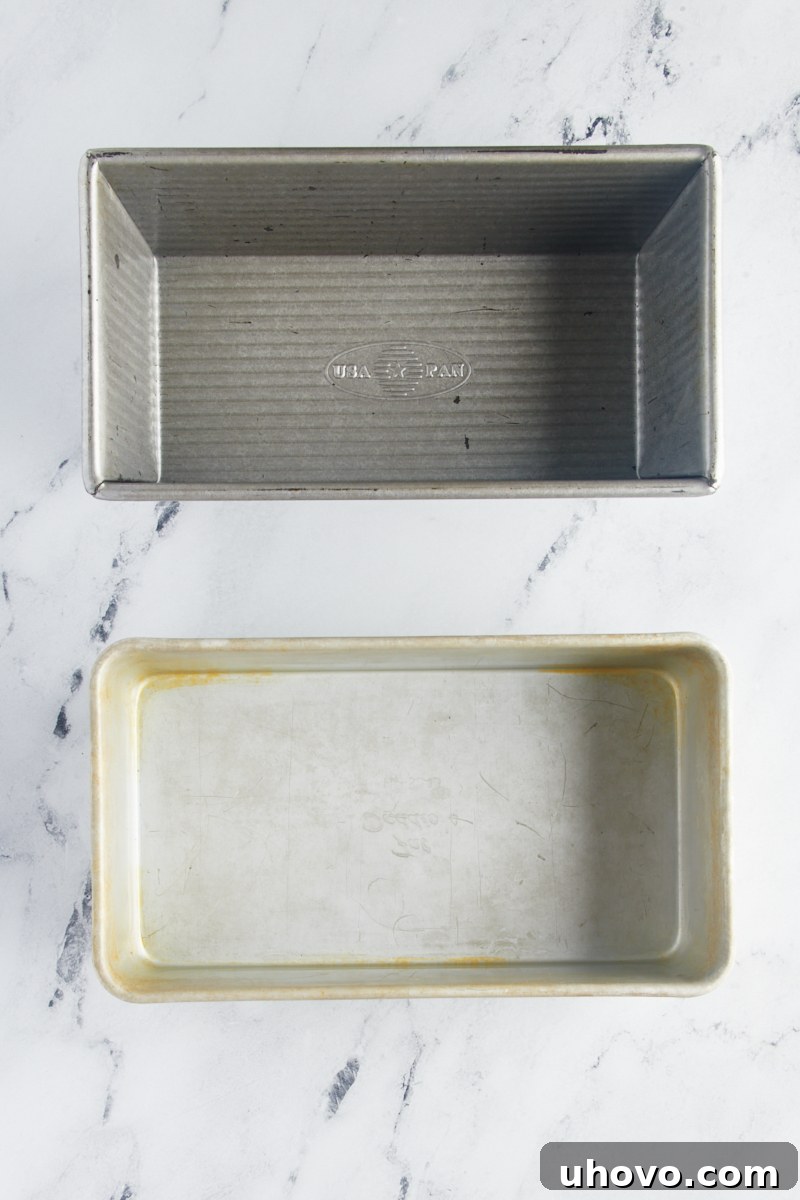
Loaf Pan Sizes: Beyond Bread
Loaf pans are most commonly associated with baking homemade bread, from classic white loaves to rich banana bread and savory meatloaves. However, their unique deep and narrow shape also makes them excellent for baking small, dense cakes, quick breads, and even individual-sized casseroles. A peculiar aspect of loaf pans is the variability in what’s considered a “standard” size. A pan labeled simply as “loaf pan” can confusingly have either a 6-cup or an 8-cup capacity. This significant difference means that precise measurement of your specific pan is crucial if you’re uncertain about its volume, preventing any over- or under-filling issues.
Mini loaf pans, designed for individual servings or gifting, exhibit even greater diversity in their dimensions and capacities across different brands. While we’ve included a common mini loaf size below for general reference, it’s particularly important to measure your specific mini loaf pan before embarking on a baking project that requires a precise batter volume. This vigilance ensures your smaller bakes turn out perfectly shaped and cooked through. The chart below offers a guide to common loaf pan sizes and their approximate capacities.
| Loaf Pan Dimensions | Capacity |
|---|---|
| 8.5″ x 4.5″ x 2.5″ | 6 cups |
| 9″ x 5″ x 3″ | 8 cups |
| 5.75″ x 3″ (mini) | 2 cups |
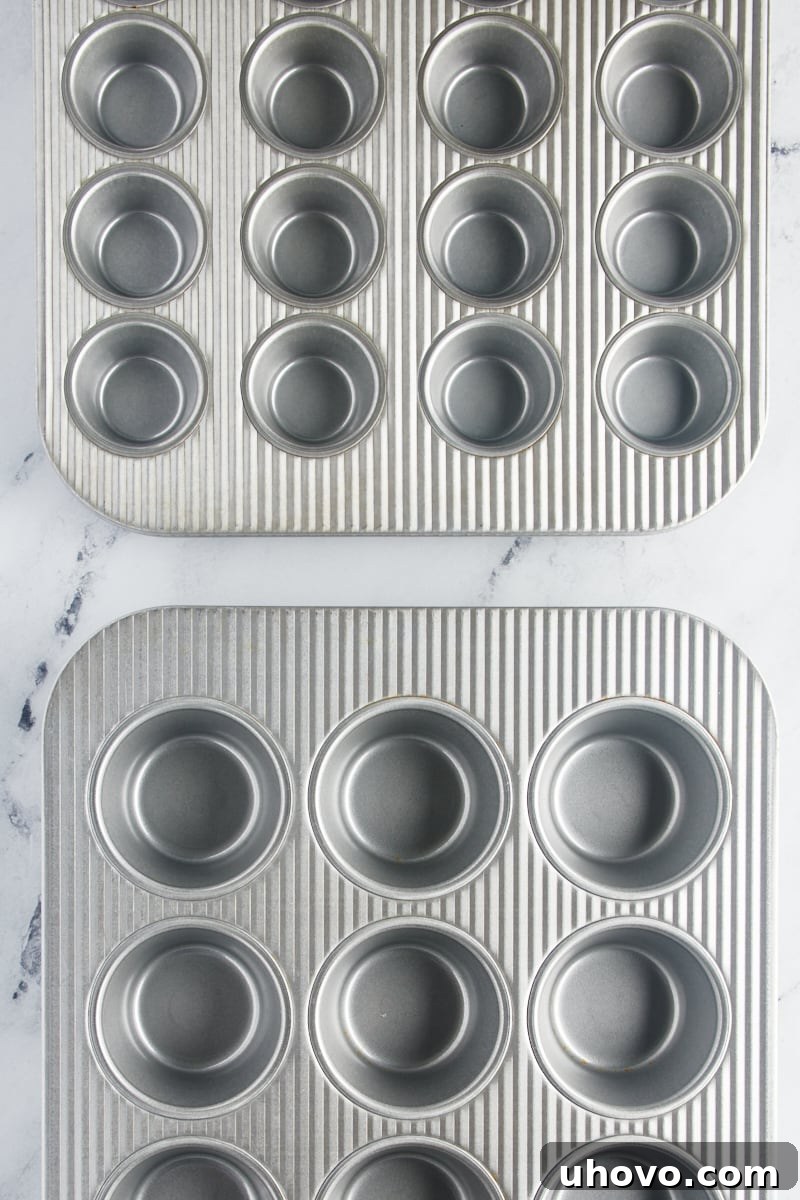
Muffin Pan Sizes: Crafting Perfect Portions
For enthusiasts of perfectly portioned muffins and cupcakes, a muffin pan is an absolute kitchen essential. These specialized pans, designed with individual cups, are crucial for achieving that characteristic domed top and evenly baked texture for your favorite portable treats. Generally, muffin pans tend to adhere to fairly consistent sizing standards across manufacturers, which simplifies recipe adaptation. However, as with all bakeware, occasional exceptions do exist, particularly with specialty or novelty designs. The chart below outlines the standard dimensions and capacities for mini, standard, and jumbo muffin pans.
While the consistency is usually reliable, if you ever encounter a pan that seems unusually sized, or if a recipe requires absolute precision, it’s always a good practice to quickly verify the capacity of your individual muffin cups using the water-filling method. This ensures that each muffin or cupcake receives the ideal amount of batter, preventing spills and guaranteeing uniform results across your batch.
| Muffin Pan Dimensions | Capacity |
|---|---|
| 1.75″ x 0.75″ (mini) | 1/8 cup |
| 2.75″ x 1.125″ (standard) | 1/4 cup |
| 3″ x 1.25″ (jumbo) | 5/8 cup |
Sheet Pan Sizes: From Cookies to Cakes
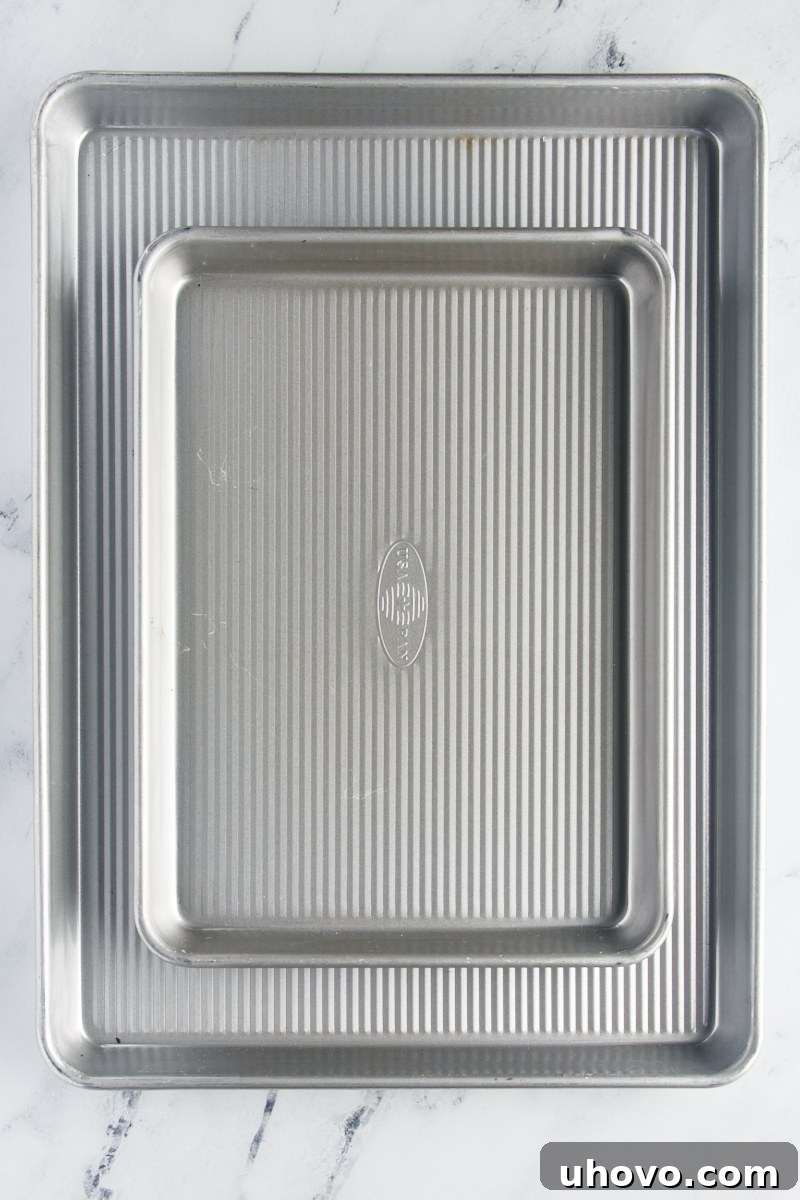
Sheet pans are incredibly versatile pieces of bakeware, extending their utility far beyond simply baking cookies. While they are indeed perfect for single layers of cookies, roasting vegetables, or baking savory dishes where volume capacity isn’t the primary concern, their flat, rectangular surface and shallow depth make them equally suitable for a variety of baked goods where a larger, thinner layer is desired. These include sheet cakes, delightful bar cookies, and fudgy brownies. The term “jelly roll pan” specifically refers to a smaller, shallower sheet pan, traditionally used for baking thin sponge cakes that can be rolled.
Understanding the standard sizes and capacities of these pans is crucial for adapting recipes that call for specific dimensions. Whether you’re scaling up a cookie recipe for a large gathering or ensuring your sheet cake batter fits perfectly, these measurements are invaluable. The following chart details common sheet pan and jelly roll pan dimensions along with their approximate capacities, covering the sizes you are most likely to encounter in baking recipes and grocery stores.
| Sheet Pan Dimensions | Capacity |
|---|---|
| 9″ x 13″ x 1″ (quarter sheet) | 7 cups |
| 18″ x 13″ x 1″ (half sheet) | 14 cups |
| 10.5″ x 15.5″ x 1″ (jelly roll) | 10 cups |
| 12.5″ x 17.5″ x 1″ (jelly roll) | 12 cups |
Elevate Your Baking Skills: More Insights and Resources for Baking Pans
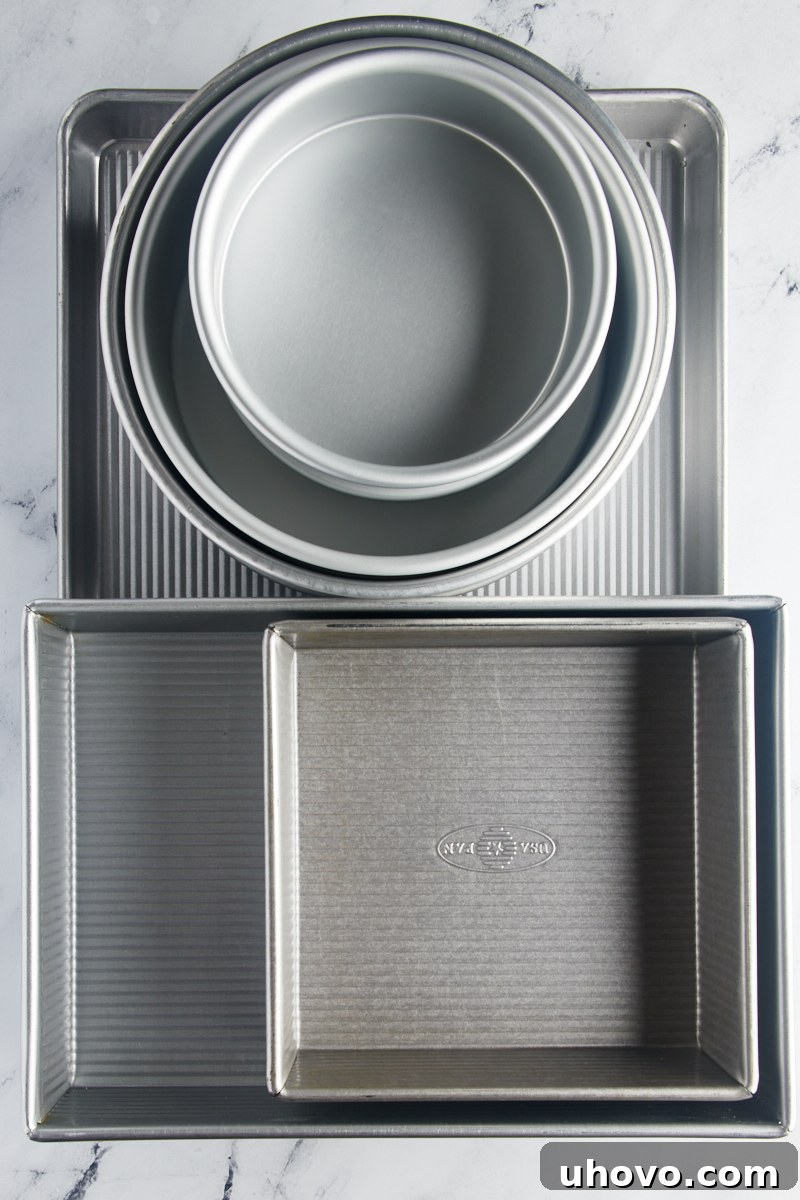
Armed with a deeper understanding of baking pan sizes, capacities, and the art of substitution, you’re well on your way to becoming a more confident and versatile baker. This knowledge not only helps you troubleshoot on the fly but also opens up new possibilities for adapting recipes and experimenting with different bakes. The right pan is often the unsung hero behind a perfectly executed dessert or savory dish, influencing everything from texture and browning to overall presentation.
To further enhance your bakeware wisdom and elevate your culinary craft, explore these additional resources:
- How to Choose Baking Pans: A detailed guide to selecting the best pans for your needs and projects.
- A Baker’s Guide to Sheet Pans: Dive deeper into the world of sheet pans, their uses, and how to maximize their potential.
- How to Organize Baking Supplies: Practical advice for keeping your kitchen tidy and your bakeware accessible.
And for a curated selection of high-quality baking pans that I personally recommend, be sure to visit my Amazon storefront. Happy baking!
Bake or Break is a participant in the Amazon Services LLC Associates Program, an affiliate advertising program designed to provide a means for us to earn fees by linking to Amazon.com and affiliated sites.