Have you ever dreamt of a flaky, buttery pie crust that tastes infinitely better than anything you can buy at the store? Imagine achieving that perfect golden base for your sweet and savory pies with just a few simple ingredients and clear, easy-to-follow steps. This comprehensive guide is designed to empower you to master the art of homemade pie crust, transforming a seemingly daunting baking task into a delightful and rewarding experience. Say goodbye to store-bought limitations and hello to pies that truly stand out!
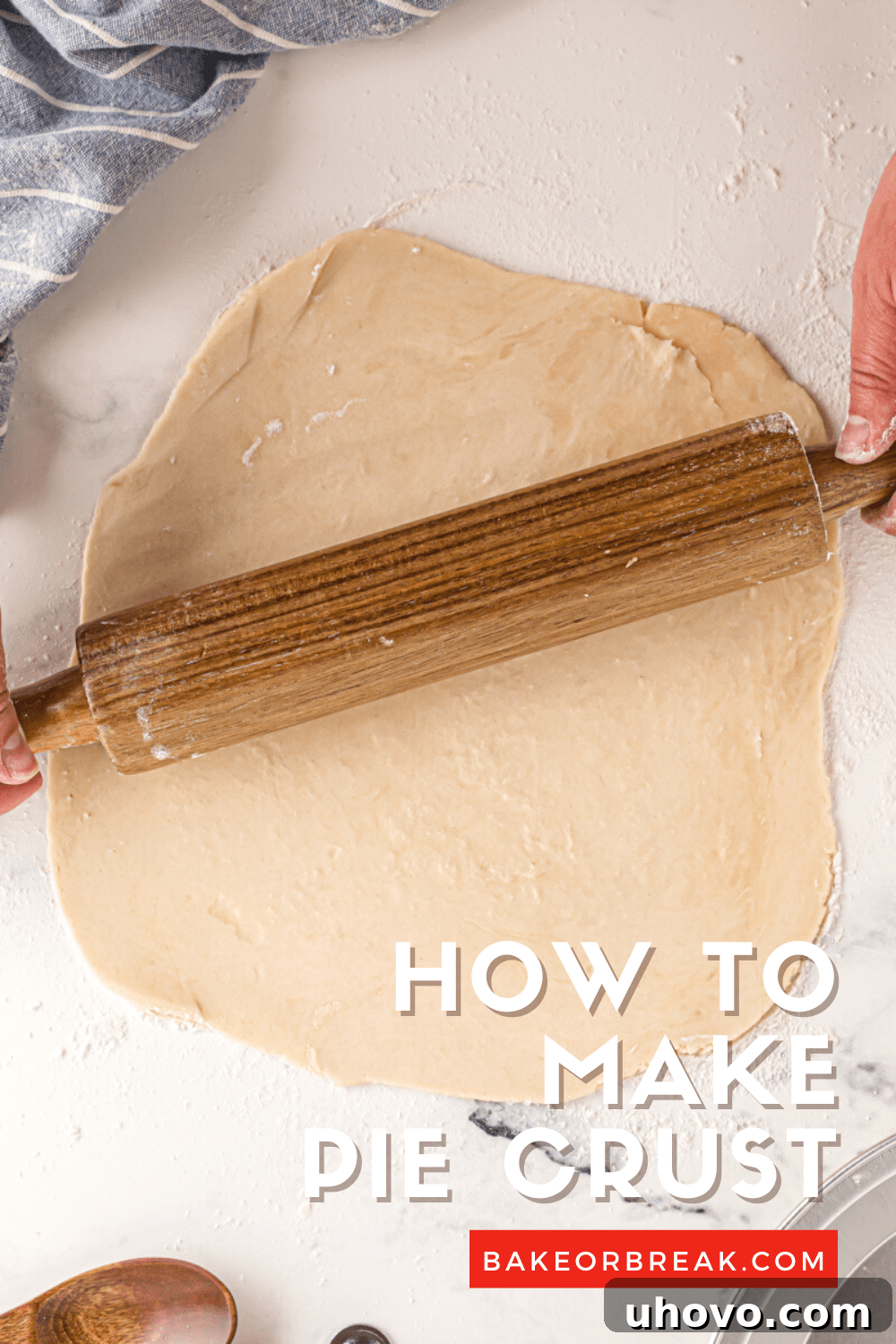
Table of Contents
- The Journey to Your Perfect Homemade Pie Crust
- What Defines an Exceptional Pie Crust?
- The Superiority of All-Butter Pie Crust
- Essential Ingredients for a Flawless Crust
- Mixing by Hand vs. Food Processor: Which Method is Best for You?
- Step-by-Step: Crafting Pie Crust by Hand
- Step-by-Step: Making Pie Crust with a Food Processor
- Mastering the Art of Rolling Out Pie Crust
- Seamlessly Transferring Pie Crust to the Pan
- Pro Tips for Transferring Pie Crust
- Elevating Your Pie: Creative Decorative Edges
- The Essentials of Blind Baking Pie Crust
- Recommended Tools for Pie Crust Perfection
- Key Tips for Pie Crust Success
- Can You Freeze Unbaked Pie Crust?
- Ready to Bake? Pie Recipes to Try
The Journey to Your Perfect Homemade Pie Crust
For many aspiring bakers, the thought of making pie crust from scratch can feel like climbing Mount Everest. For years, I too found myself intimidated by the process, grappling with various techniques and recipes, often resulting in crusts that were either too tough, too crumbly, or simply lacked that desired flakiness. It was a journey marked by countless experiments, a fair share of baking mishaps, and a generous dose of scientific curiosity.
But then, through diligent research, learning from the successes and challenges of other passionate bakers, and a renewed commitment to patience, I finally unlocked the secrets to a truly exceptional homemade pie crust. The feeling of success when that perfectly flaky, golden crust emerged from the oven was nothing short of exhilarating! And I firmly believe that if I can conquer this baking challenge, so can you. Once you experience the unparalleled taste and texture of your own handcrafted pie crust, you’ll undoubtedly bid a permanent farewell to the often-disappointing store-bought alternatives.
This recipe isn’t just about ingredients; it’s about understanding the “why” behind each step, empowering you with the knowledge to troubleshoot and adapt. We’ll explore the critical role of temperature, the art of gentle mixing, and the joy of creating something truly special from scratch. Get ready to embark on a culinary adventure that will forever change your pie-making game!
Want to save this recipe for later? Many home bakers find it helpful to keep their favorite recipes organized. Consider bookmarking this page or printing the full recipe card at the bottom of this article for easy access during your baking session. Having your recipe handy ensures a smooth and stress-free baking experience.
What Defines an Exceptional Pie Crust?
While personal preferences can vary, a truly great pie crust typically embodies two primary characteristics: incredible flakiness and a rich, irresistible buttery flavor. These elements are not just desirable; they are the hallmarks of a superior homemade pie.
The degree of flakiness in your crust is largely determined by the type of fat you use and, perhaps even more crucially, your mixing method. Flaky layers are created when tiny pockets of fat melt during baking, releasing steam and creating separation within the dough. This process yields those delightful, tender layers that snap with each bite. For maximum flakiness, it’s essential to keep the fat cold and handle the dough minimally to avoid overdeveloping gluten.
As for the buttery taste, the answer is simple: use real butter! Unsalted butter not only provides an unparalleled depth of flavor but also contributes significantly to the crust’s texture. Its unique composition helps create a tender, rich dough that perfectly complements any filling, whether sweet or savory. While other fats can offer certain advantages, butter delivers that classic, sought-after taste that makes a pie truly memorable.
The Superiority of All-Butter Pie Crust
My unwavering preference lies with an all-butter pie crust. While you’ll encounter numerous recipes that call for shortening, or even a blend of butter and shortening, I firmly believe that butter offers a superior flavor profile that cannot be matched. Shortening is often praised for its ability to create exceptionally flaky crusts due to its higher melting point and lack of water content. However, with the right technique—primarily by ensuring your butter is very cold and avoiding overworking the dough—you can achieve an equally, if not more, tender and flaky crust using only butter, all while enjoying its rich, nuanced taste.
The secret to butter’s flakiness lies in its composition. Butter contains about 80% fat and 20% water. When these cold butter pieces are incorporated into the flour and then baked, the water turns into steam, creating delicate pockets that puff up and separate the layers of dough. This results in that desirable, multi-layered texture. The key is to keep the butter solid until it hits the hot oven, which means maintaining a cold dough throughout the mixing and rolling process.
If you’re accustomed to using shortening and prefer its handling properties, you can certainly experiment. For a compromise between flavor and ease of handling, consider substituting half of the butter in this recipe with a high-quality shortening. This “half butter, half shortening” approach can offer a good balance for those transitioning to an all-butter recipe. However, I encourage you to try the pure butter version first and discover the unmatched richness it brings to your pies!
Essential Ingredients for a Flawless Crust
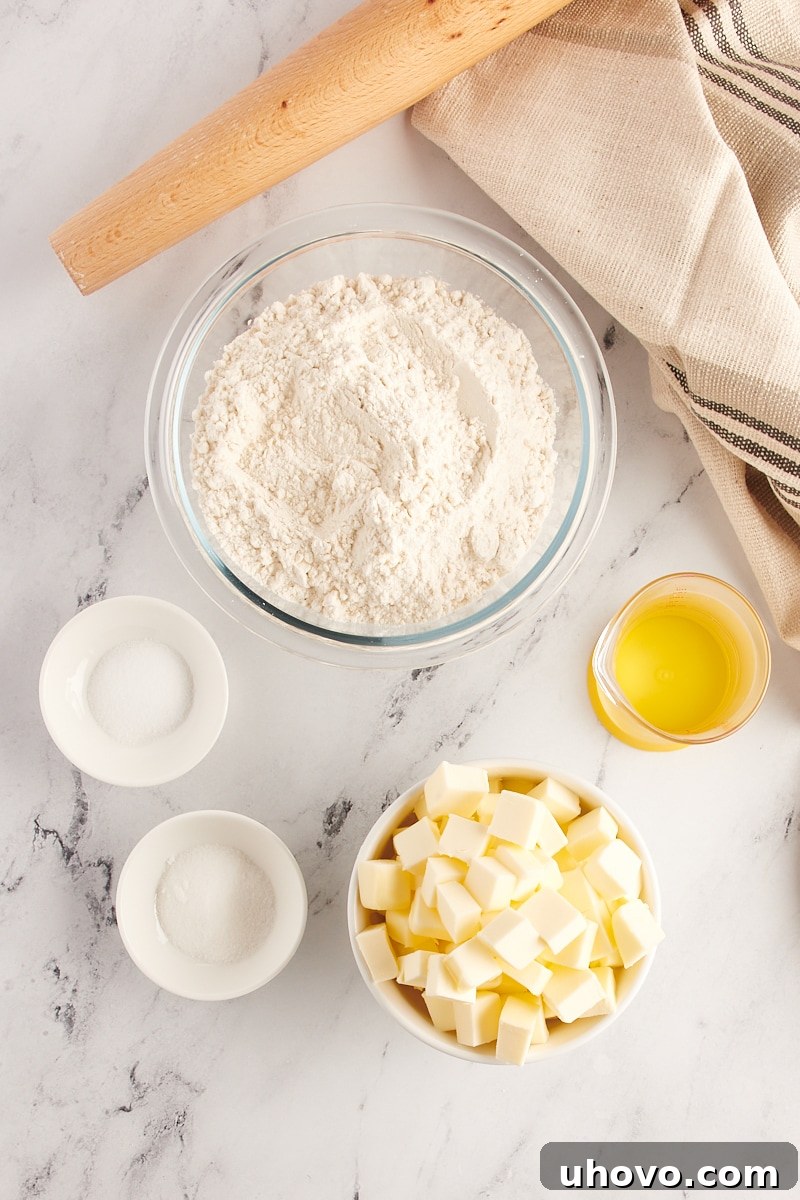
Crafting a delectable homemade pie crust requires only a handful of fundamental ingredients. The magic truly happens when these simple components are combined with precision and care. Below, you’ll find a detailed explanation of each ingredient and its crucial role in achieving pie crust perfection. For exact quantities and step-by-step instructions, please refer to the recipe card at the conclusion of this article.
- All-purpose flour: This forms the foundational structure of your pie crust. Accurate measurement is paramount for consistent results. While many bakers rely on volumetric cup measures, weighing your flour with a kitchen scale provides the highest precision, preventing a dense or overly dry crust. If you don’t have a scale, use the “spoon and sweep” method: lightly spoon flour into your measuring cup until it overflows, then level it off with a straight edge. Avoid packing the flour down. Learn more about measuring flour accurately here.
- Granulated sugar: A small amount of sugar in your pie crust is optional but highly recommended. It adds a subtle hint of sweetness that enhances the overall flavor, especially for fruit pies, and also aids in browning, giving your crust that beautiful golden hue. If you prefer a completely savory crust, or are making a pie with a very sweet filling, feel free to omit it.
- Salt: Often overlooked, salt is a flavor enhancer that balances the richness of the butter and brings out the best in both the crust and its filling. Don’t skip it!
- Unsalted butter: The star of the show! It is absolutely critical that your butter is unsalted and, more importantly, very cold. Cut it into uniform ½-inch cubes and return it to the refrigerator (or even the freezer for 10-15 minutes) until you’re ready to use it. Cold butter is essential because it prevents rapid gluten development, promotes flakiness by creating steam pockets, and keeps the dough from becoming greasy and difficult to work with. If the butter melts into the flour too quickly, you’ll end up with a tough, bread-like crust rather than a tender, flaky one.
- Very cold water: Just like the butter, the water needs to be extremely cold. I often recommend placing ice cubes in a measuring cup of water for 5-10 minutes, then measuring out the required amount, ensuring the water is truly icy. Cold water helps keep the butter solid, minimizes gluten formation, and allows for better control over the dough’s hydration without developing toughness. The exact amount of water can vary slightly depending on the humidity in your kitchen and the flour, so add it gradually.
Using high-quality, fresh ingredients will always yield the best results. Investing in good butter, for instance, makes a noticeable difference in the final taste of your homemade pie crust.
Mixing by Hand vs. Food Processor: Which Method is Best for You?
This versatile pie crust recipe can be prepared using either traditional hand-mixing methods or the convenience of a food processor. There isn’t one definitively “better” approach; rather, it’s about choosing the method that best suits your comfort level, available tools, and desired speed.
Mixing by hand offers a more tactile experience. Using a pastry blender, two knives, or even your fingertips allows you to feel the dough’s texture evolve, giving you precise control over how the butter is incorporated. This method tends to take a bit more time and effort, but it significantly reduces the risk of overworking the dough, which can lead to a tough crust. It’s an excellent option for those who enjoy the meditative process of baking and want to feel truly connected to their ingredients.
Conversely, mixing with a food processor is undeniably quicker and more efficient. The rapid pulsing action can cut the butter into the flour in a fraction of the time. However, this speed comes with a caveat: it’s incredibly easy to over-mix the dough if you’re not paying close attention. Over-processing can quickly turn flaky butter pieces into a smooth paste, hindering flakiness, and can also overdevelop the gluten, resulting in a tough crust. In my early days of pie baking, I exclusively used a pastry blender, but I’ve come to appreciate the expediency of a food processor, especially on busy days, provided I maintain a watchful eye. Just ensure your food processor has adequate capacity (an 11-cup model works well for a double crust).
Both methods, when executed correctly, will yield a fantastic pie crust. I’ve provided detailed steps for both below, so you can confidently choose the approach that resonates most with your baking style.
Step-by-Step: Crafting Pie Crust by Hand
Making this all-butter pie crust by hand is a straightforward process that rewards patience and a light touch. This recipe yields enough dough for a 9-inch double-crust pie, or two single-crust pies. If you only need a single crust, simply halve the ingredient quantities. Let’s get started:
- Prepare your ingredients and tools: Before you begin, gather all your ingredients and ensure your butter is cubed and very cold, and your water is icy. Having everything ready (mise en place) will help you work quickly and keep the butter from warming up. You’ll need a large mixing bowl and your preferred tool for cutting in butter (pastry blender, two knives, or a fork).
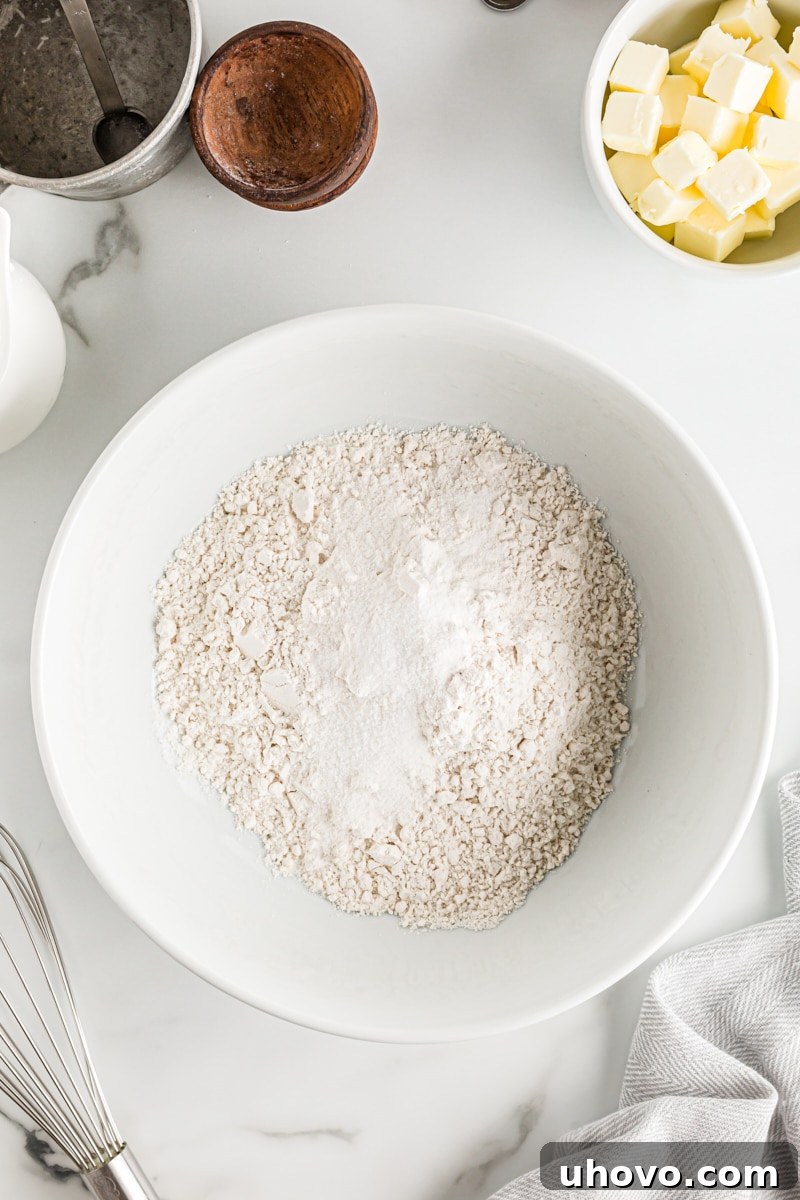
- Combine the dry ingredients: In your large mixing bowl, whisk together the all-purpose flour, granulated sugar (if using), and salt. Whisking ensures these ingredients are evenly distributed, which is important for consistent flavor throughout the crust.
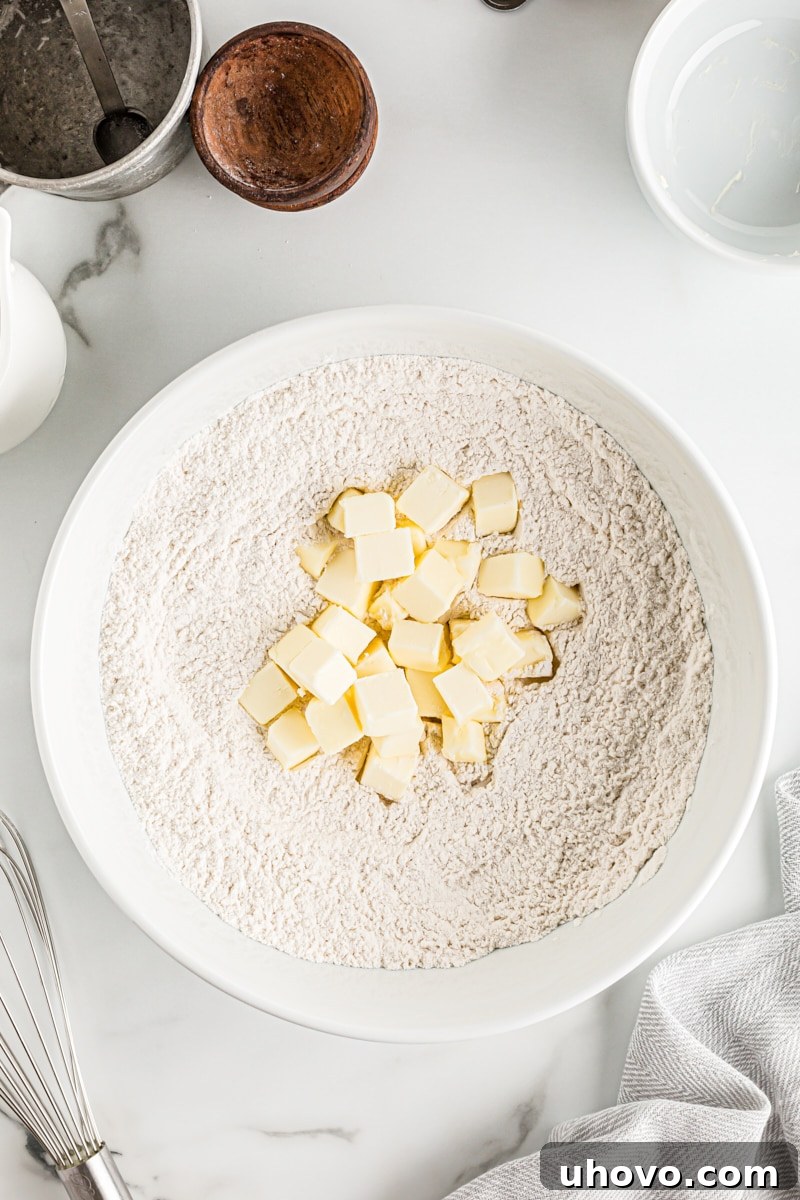
- Incorporate the cold butter: Add the very cold, cubed butter directly into the flour mixture. Using a pastry blender, two knives, or even your fingertips (working quickly to minimize heat transfer), begin to cut the butter into the dry ingredients. Continue mixing until the butter is mostly incorporated, but still remains in visible pieces about the size of small peas or flattened almonds. It’s crucial not to over-mix here; these small butter pieces are what create the flaky layers in your baked crust.
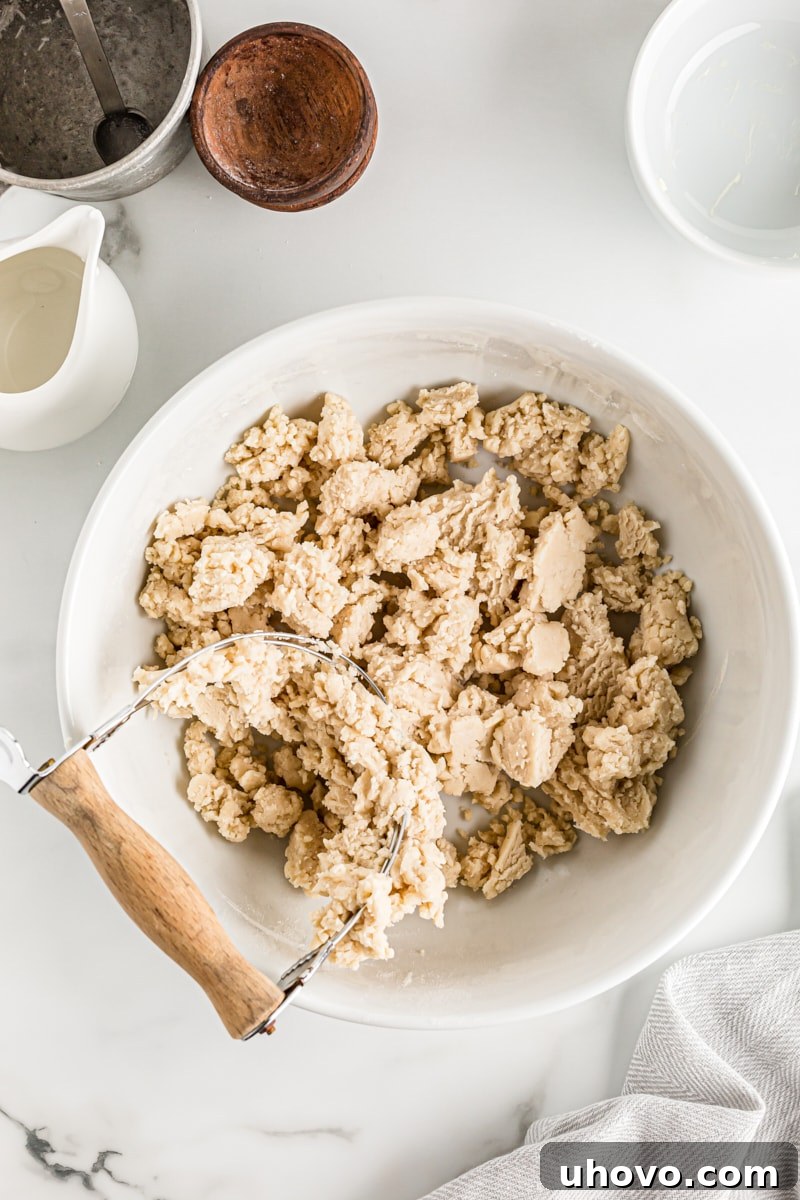
- Gradually add the cold water: Begin by drizzling about 2 tablespoons of the very cold water over the flour and butter mixture. Use your hands to gently toss and press the mixture. Continue adding the remaining water, one tablespoon at a time, mixing just until the dough starts to come together and form large, shaggy clumps. The goal is to add just enough water for the dough to hold together when squeezed, but without being sticky. Be mindful not to over-mix at this stage, as it can activate too much gluten and result in a tough crust. The amount of water needed can vary based on humidity, so trust your judgment and the dough’s feel.
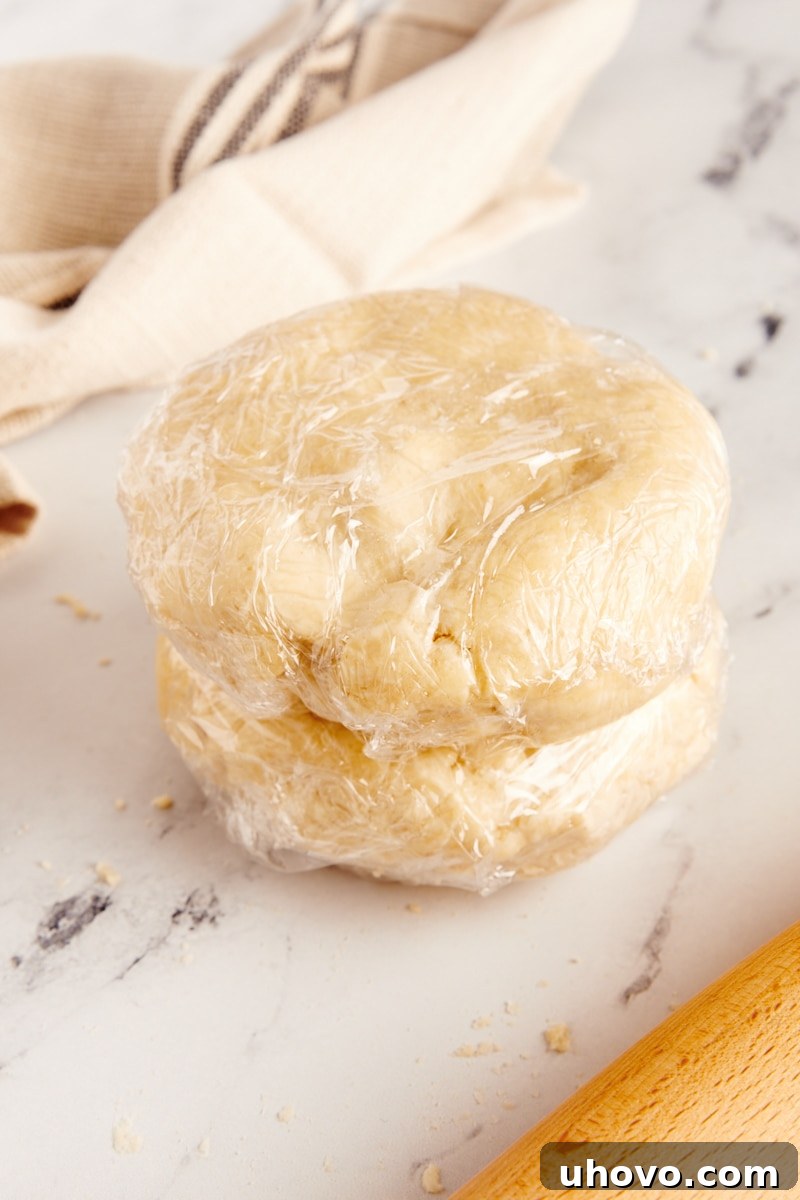
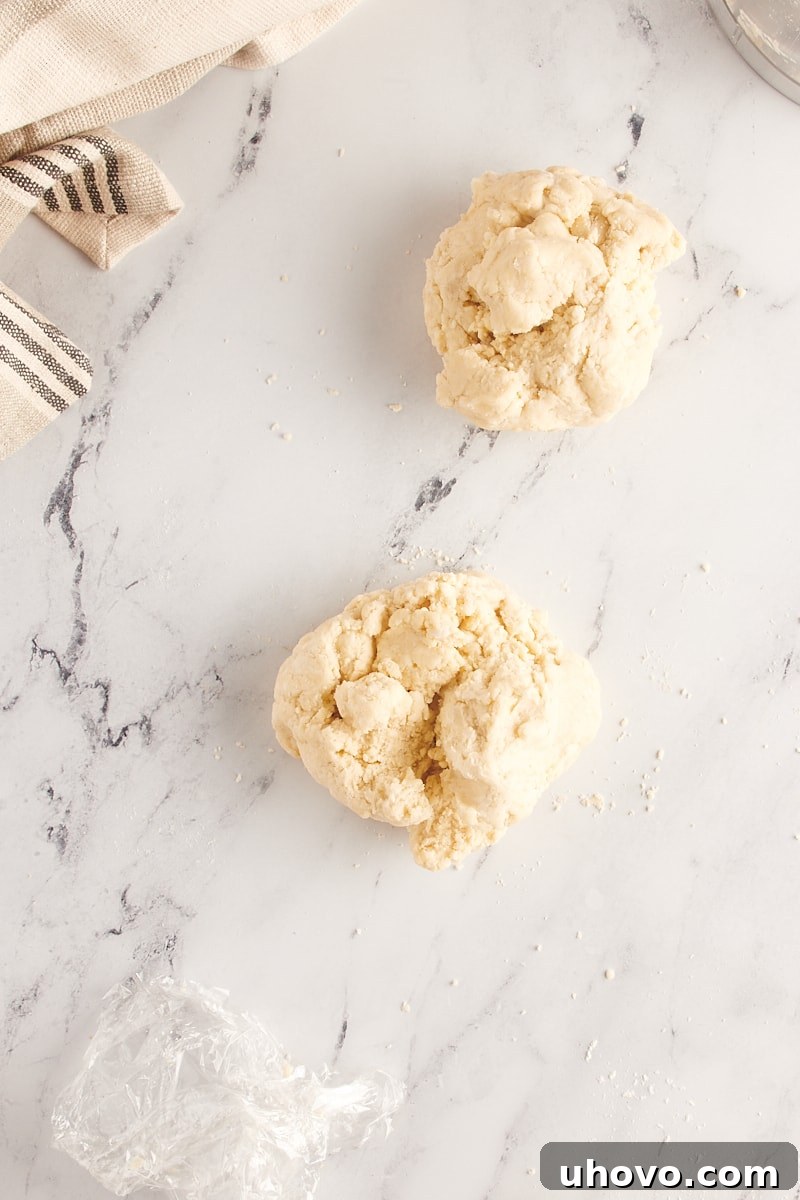
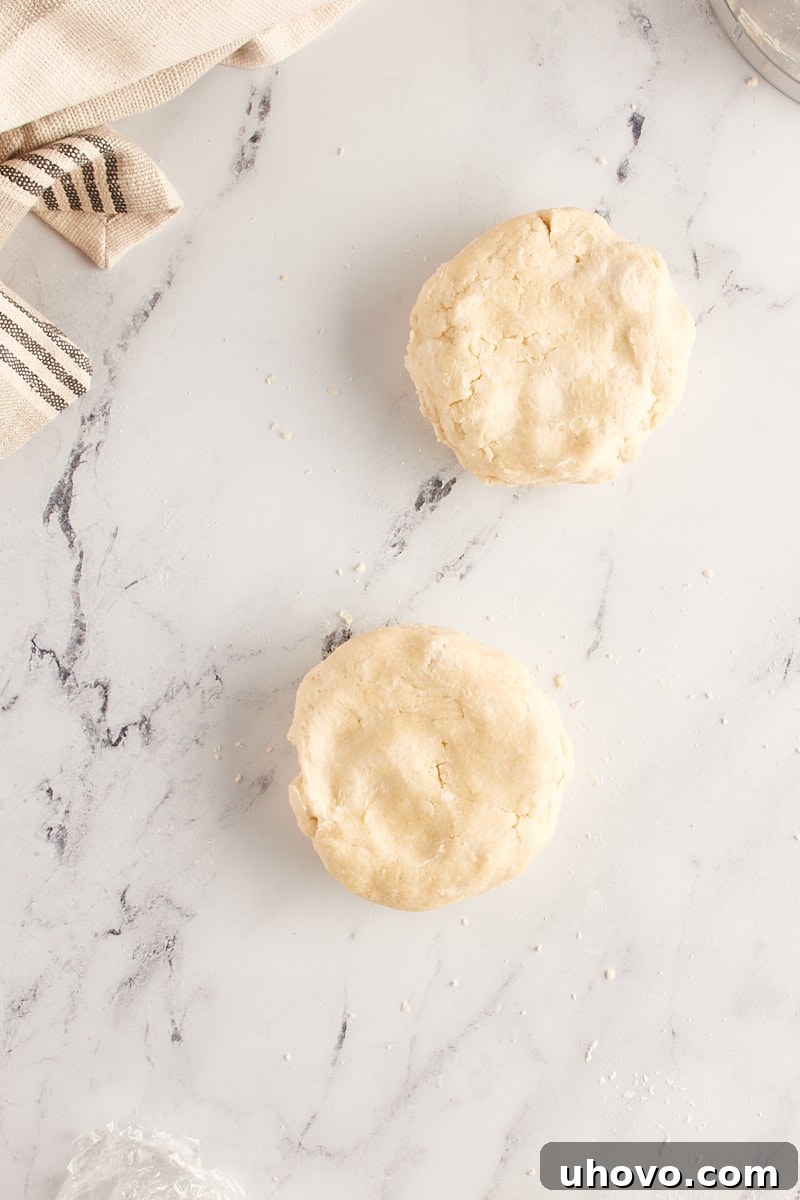
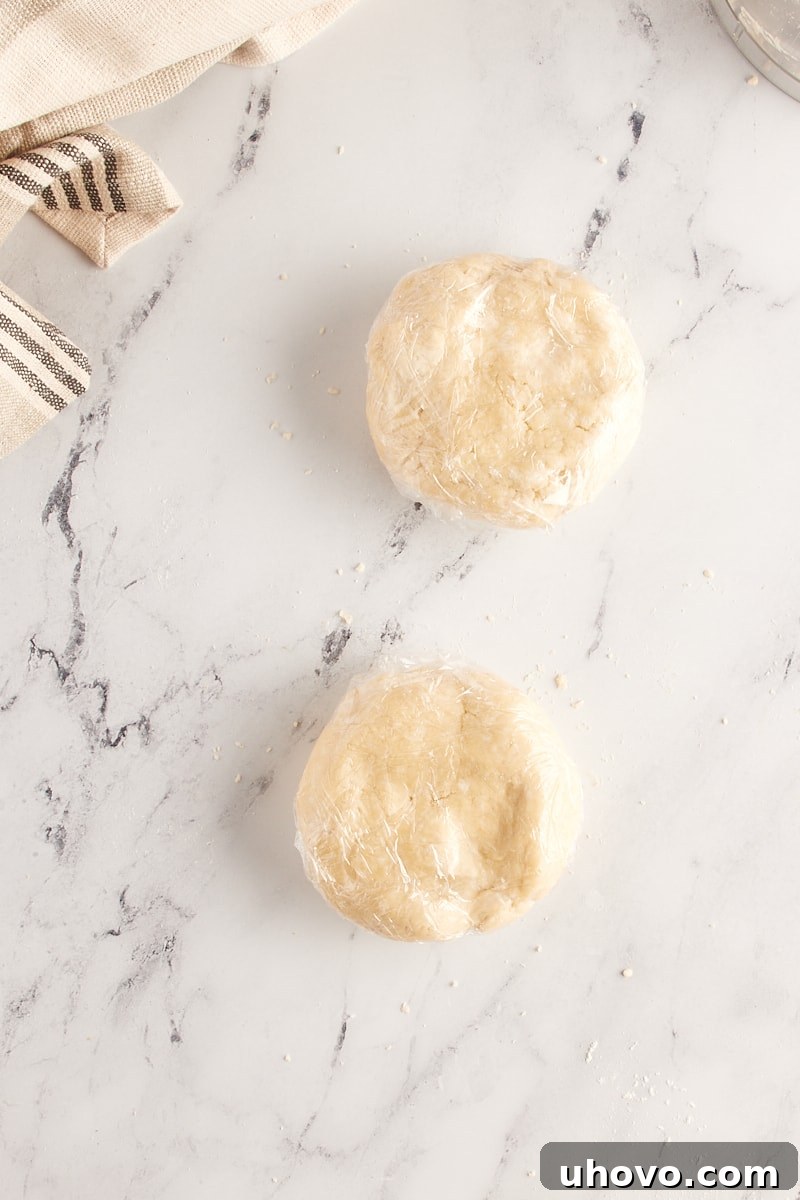
- Chill the dough: Gently gather the dough and divide it in half. For each half, flatten it into a disc about 1-inch thick. Wrapping the dough into a disc shape makes it easier to roll out later. Tightly wrap each disc individually in plastic wrap, ensuring no air can get in. Place the wrapped dough in the refrigerator for at least 2 hours. This chilling period is crucial: it allows the gluten to relax, which prevents shrinkage during baking, and it re-chills the butter, preparing it for those signature flaky layers. The dough can be refrigerated for up to 5 days, making it perfect for preparing ahead of time.
Step-by-Step: Making Pie Crust with a Food Processor
Utilizing a food processor for pie crust significantly speeds up the mixing process, but requires careful attention to avoid over-mixing. Ensure your food processor is adequately sized for the task (an 11-cup capacity is generally ideal for a double crust). The principles remain the same as hand-mixing: keep everything cold and work quickly.
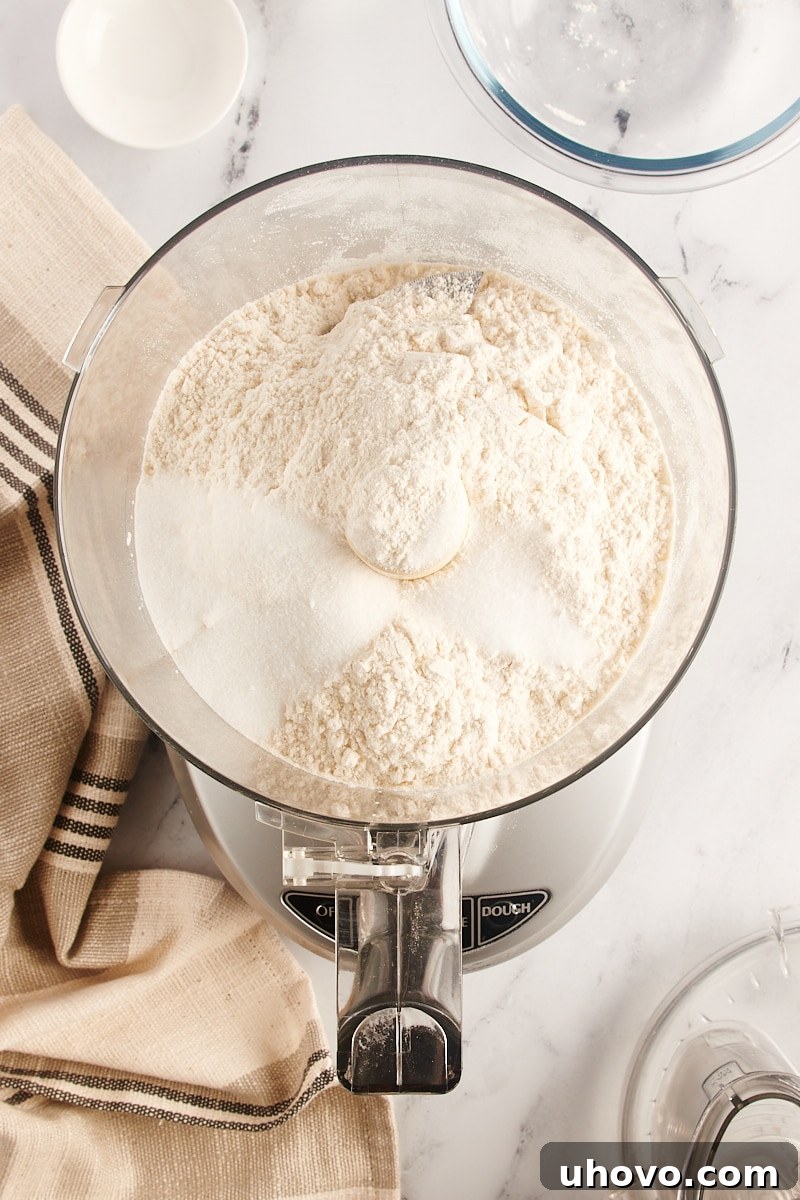
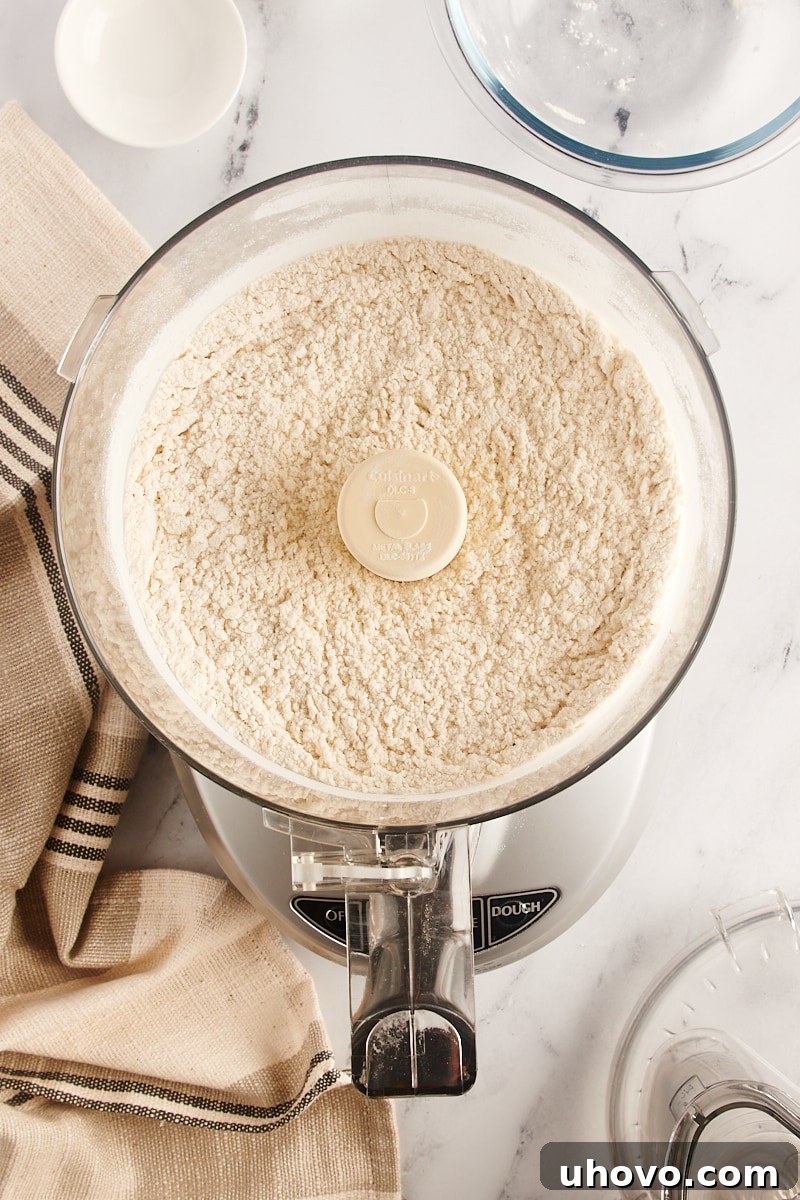
- Combine the dry ingredients: Add the all-purpose flour, granulated sugar, and salt to the bowl of your food processor fitted with the blade attachment. Pulse the mixture a few times (3-5 short pulses) to ensure these ingredients are thoroughly combined and evenly distributed.
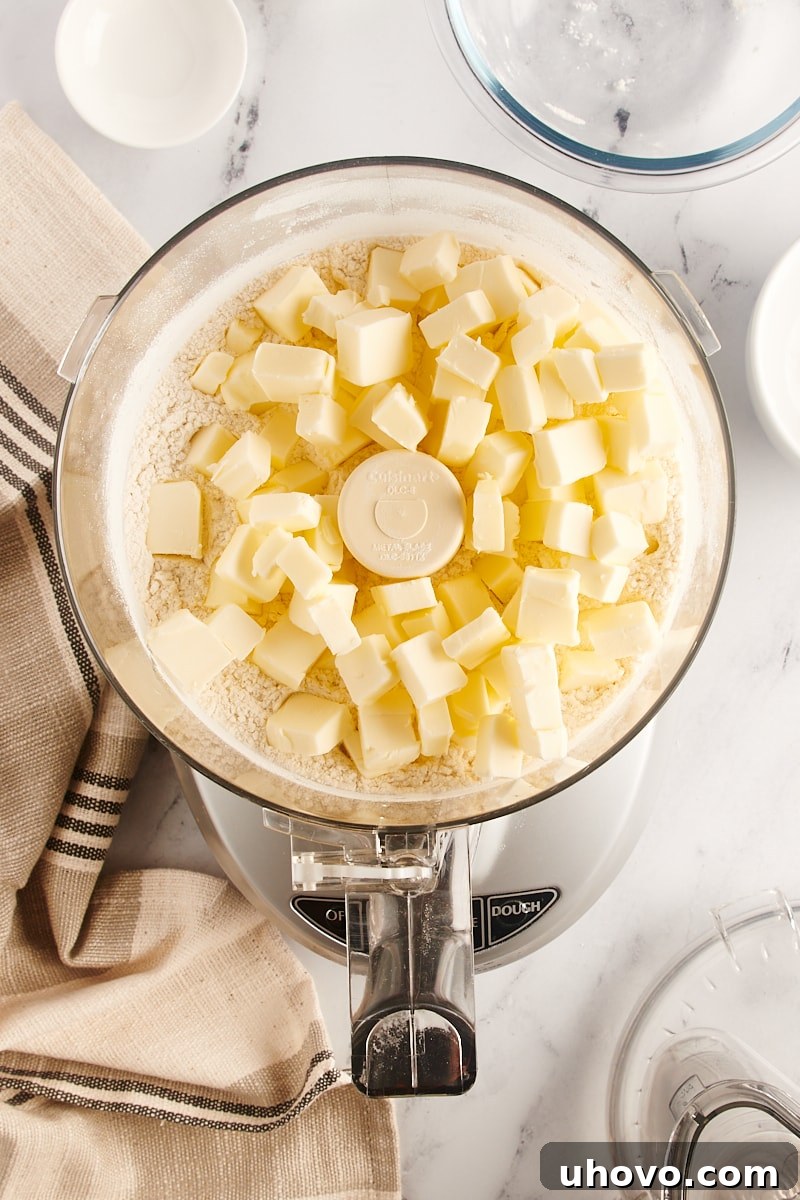
- Add the cold butter: Distribute the cold, cubed butter evenly over the dry ingredients in the food processor bowl. Pulse the machine in short bursts, typically 8-12 pulses, until the butter is broken down into pieces resembling large peas or small beans. It’s crucial not to let the machine run continuously, as this generates heat and will melt the butter and overwork the dough. Observe the mixture carefully after each pulse.
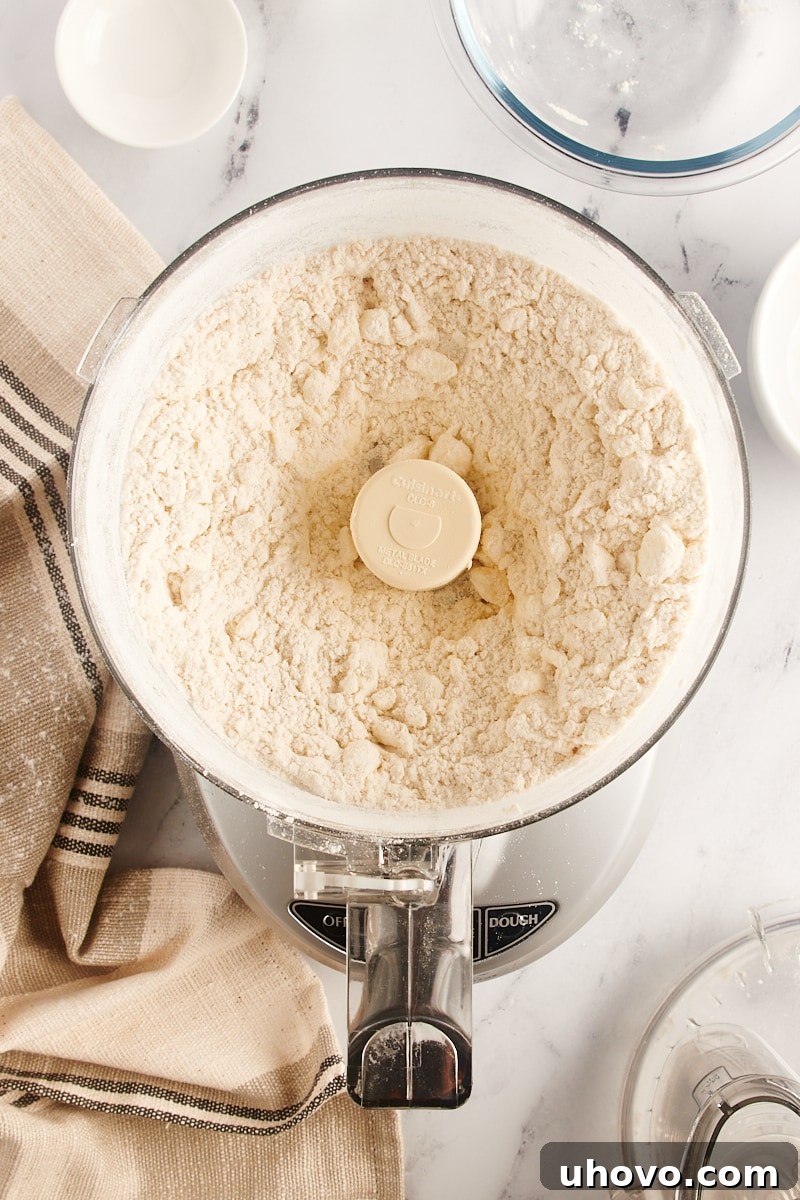
- Gradually add the cold water: Drizzle about half of the measured cold water over the flour and butter mixture. Secure the lid and turn on the food processor, allowing it to run continuously. Gradually add the remaining water through the feed tube in a slow, steady stream. Stop mixing the moment the dough begins to clump together and form a ball or several large, shaggy clumps. This typically takes only 10-20 seconds after the water is added. Resist the urge to let it run longer, even if it looks like it could mix more evenly; over-mixing is the enemy of flaky crust. You might not need all of the water, so stop as soon as it comes together.
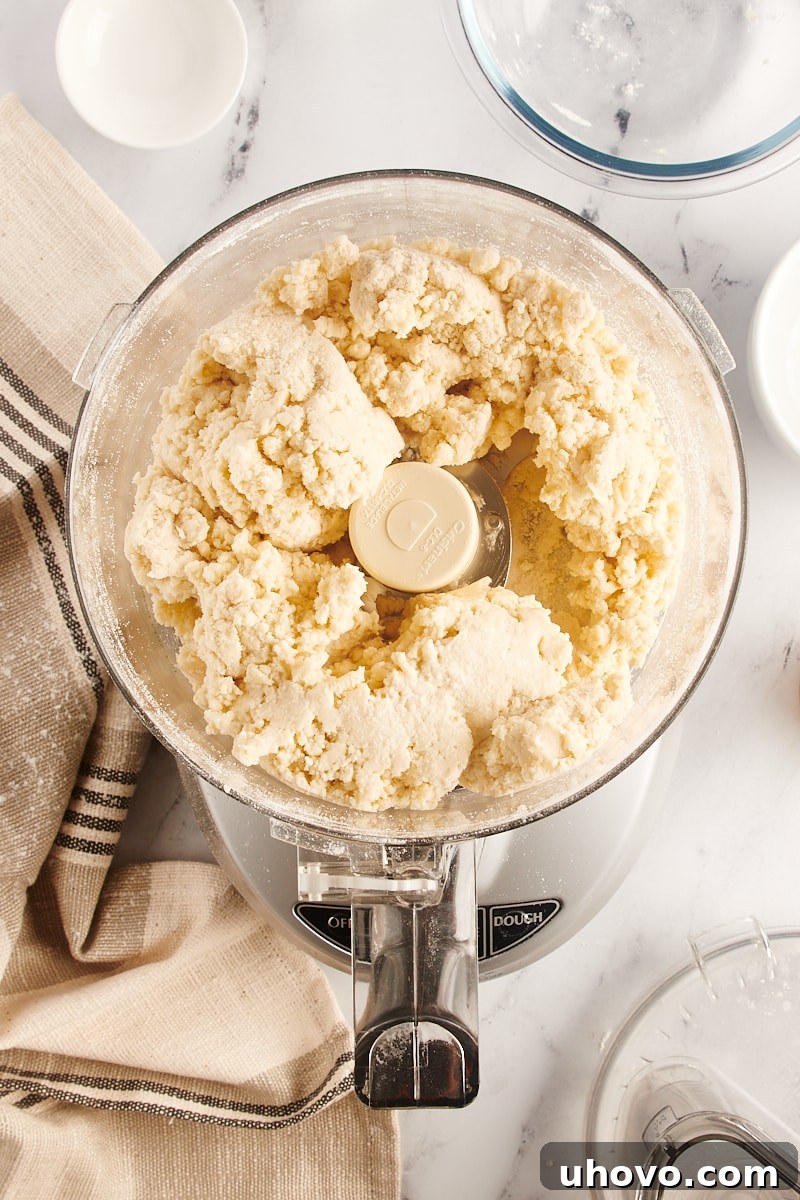
- Chill the dough: Transfer the dough to a clean work surface. Gently divide it in half and flatten each portion into a disc about 1-inch thick. Wrap each disc tightly in plastic wrap to prevent it from drying out. Refrigerate for at least 2 hours, or up to 5 days, to allow the gluten to relax and the butter to firm up. This essential chilling period will make the dough much easier to roll out and will contribute to a beautifully flaky, tender crust.
Mastering the Art of Rolling Out Pie Crust
Rolling out pie crust can feel like a make-or-break moment, but with the right technique and a little patience, it becomes an enjoyable step in the baking process. Here’s how to ensure your pie crust rolls out beautifully every time:
- Prepare your work surface: Choose a clean, cool surface for rolling, such as a silicone mat, waxed paper, parchment paper, a pastry board, or even a clean countertop. Lightly flour the surface. The goal is to use just enough flour to prevent sticking, but not so much that you incorporate excess flour into the dough, which can make the crust tough. Keep a small reserve of flour nearby for dusting your rolling pin or the dough as needed.
- Temper the chilled dough: Remove one disc of pie crust dough from the refrigerator. If it has been chilled for more than a couple of hours, it might be too stiff to roll immediately. Allow it to sit at room temperature for 5-10 minutes. The dough should still be quite cold to the touch but pliable enough that it doesn’t crack when you start rolling and can be rolled without exerting extraordinary force. A slightly softer, yet still cold, dough is much easier to manage.
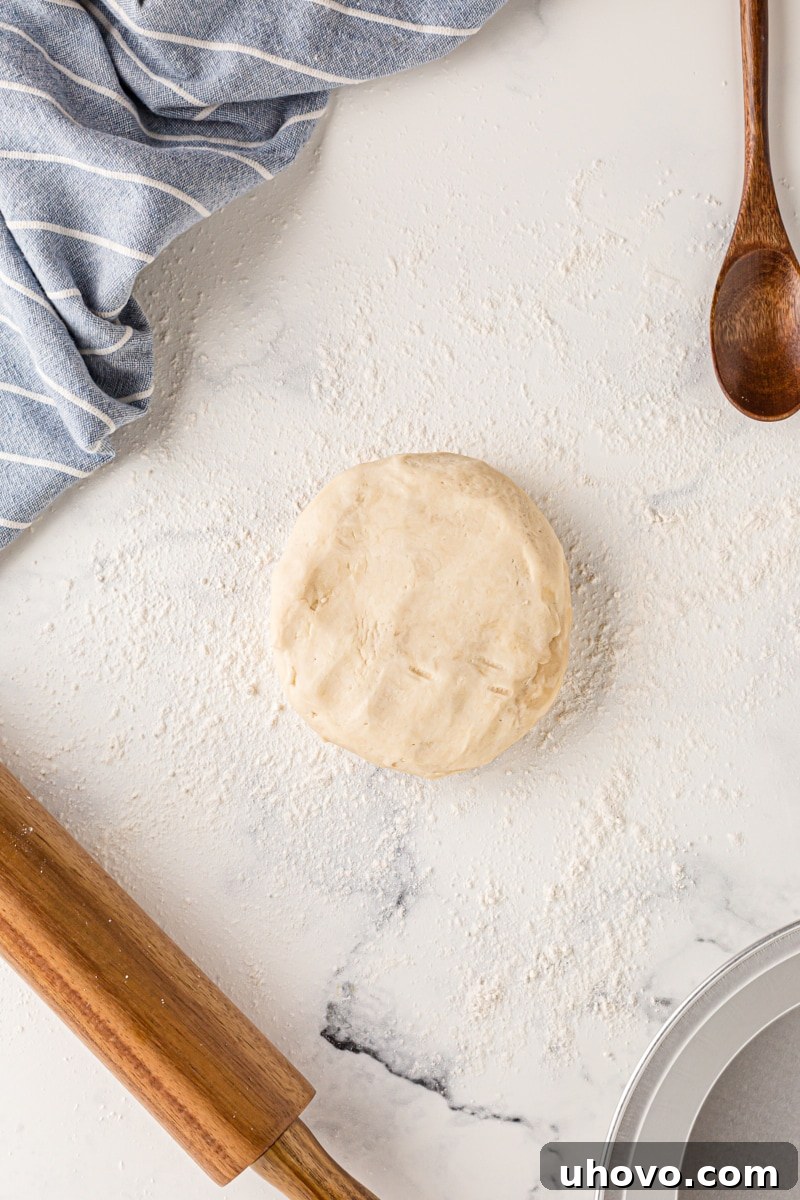
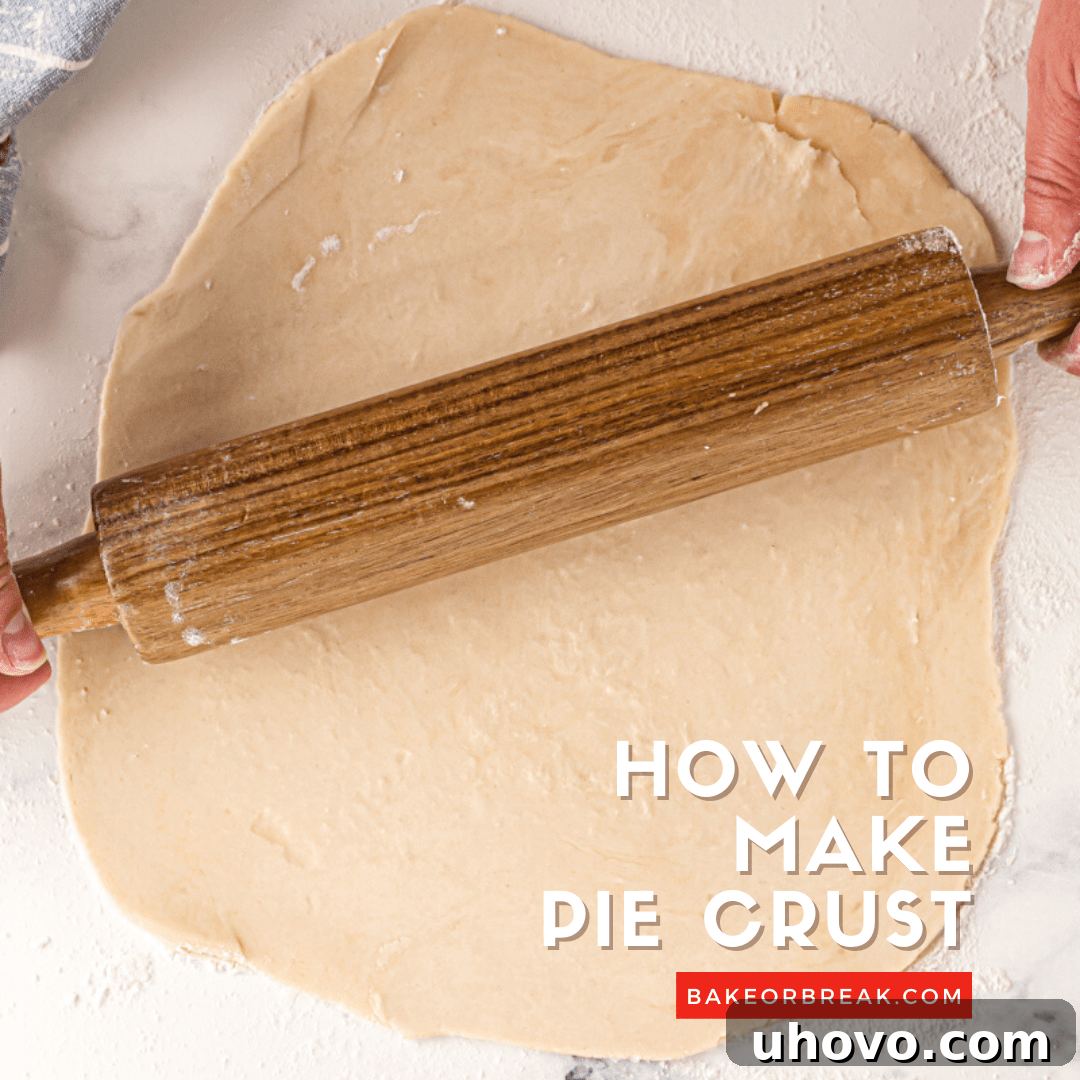
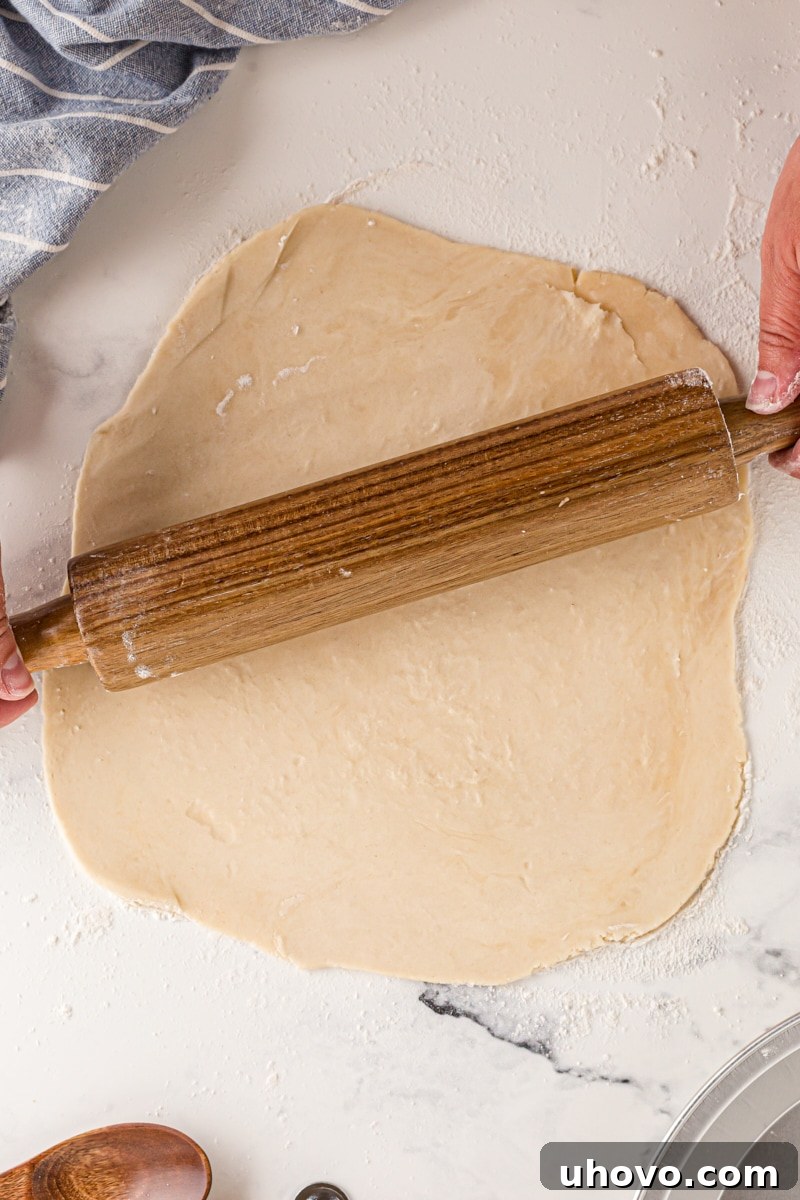
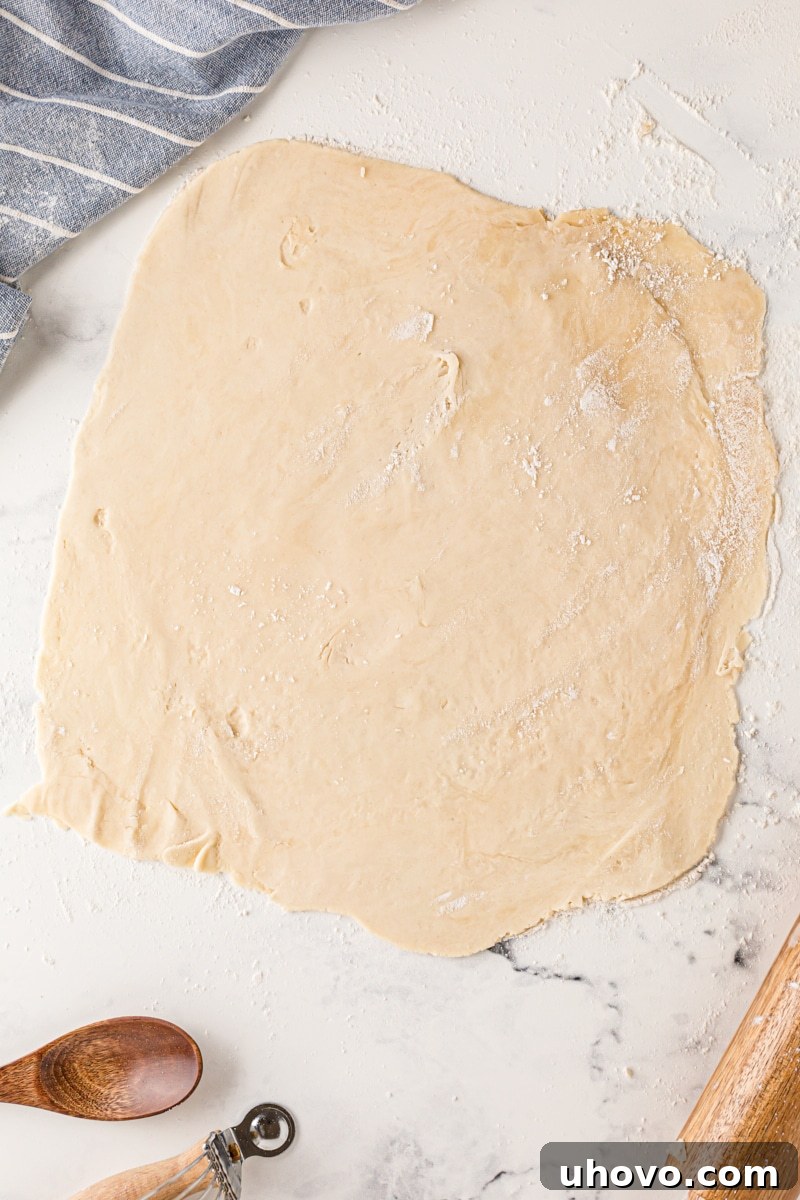
- Roll out the dough evenly: Place your rolling pin in the center of the dough disc and roll outwards towards the edges. Apply even pressure as you roll, extending the dough into a circle. If the rolling pin begins to stick, lightly dust it with flour or sprinkle a tiny bit on top of the dough. After each roll, rotate the dough approximately 45 degrees. This frequent rotation helps to ensure an even thickness and prevents the dough from sticking to your surface in one spot, making it easier to lift. Continue this process of rolling from the center outwards and rotating until the dough reaches the appropriate size and thickness. For a standard 9-inch pie, aim for a circle roughly 12 inches in diameter and about ⅛-inch thick. This size allows for enough overhang to trim and crimp the edges beautifully.
Seamlessly Transferring Pie Crust to the Pan
Once you’ve successfully rolled out your pie crust, the next hurdle is transferring it gracefully into the pie pan without tearing or stretching. While there are a few tried-and-true methods, I’ll share the techniques that I find most reliable and user-friendly.
One common and effective method involves folding the crust into a manageable shape. Start by gently folding the rolled-out crust in half to form a semi-circle. Next, fold it in half again, creating a triangle. With the dough now compactly folded, you can carefully pick it up and position the point of the triangle in the center of your pie pan. From there, simply unfold the crust, first opening it into a semi-circle, then fully opening it to cover the pan. Gently ease the dough into the contours of the pan, making sure it settles without stretching.
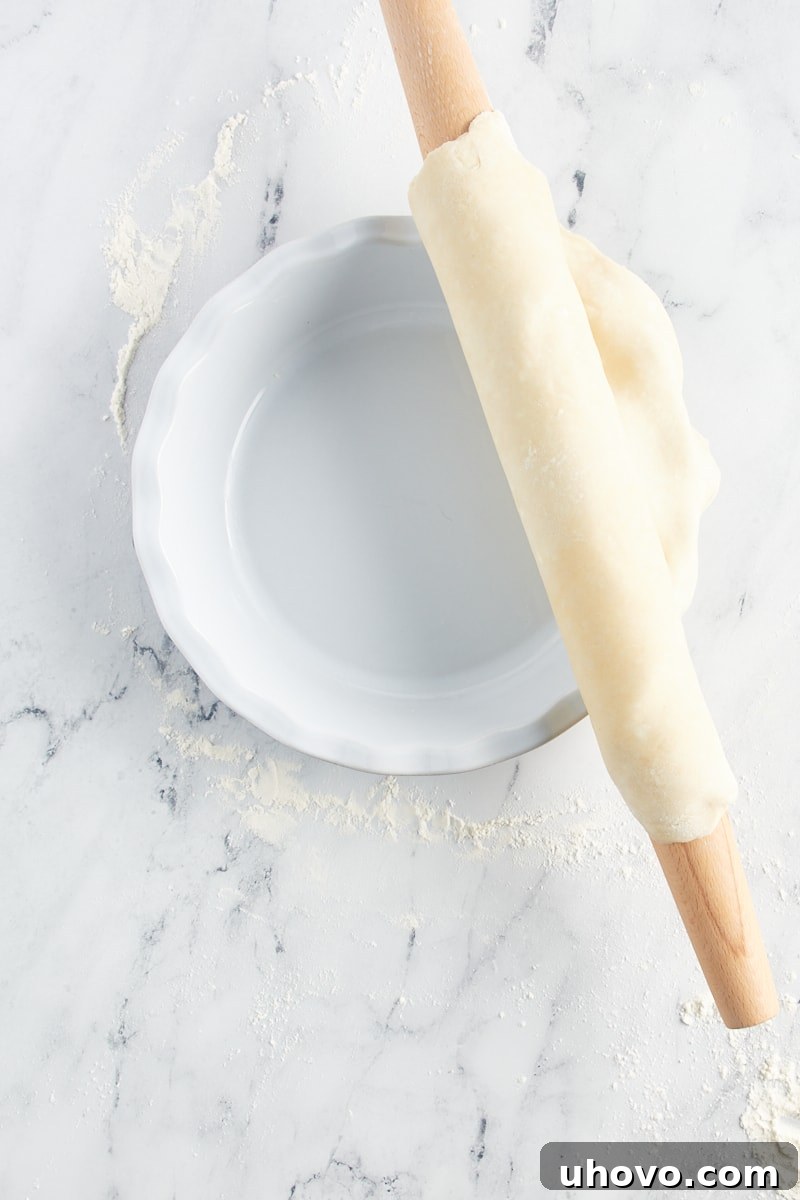
My personal preferred method, especially for standard pie plates, involves using the rolling pin itself. This technique minimizes handling and provides good support for the delicate dough. Begin by positioning your rolling pin near one edge of the rolled-out crust. Carefully lift the edge of the dough and drape it over the rolling pin. Then, slowly roll the rolling pin forward, allowing the pie crust to loosely wrap itself around the pin. The key is to keep it loose, not tight, to avoid stretching.
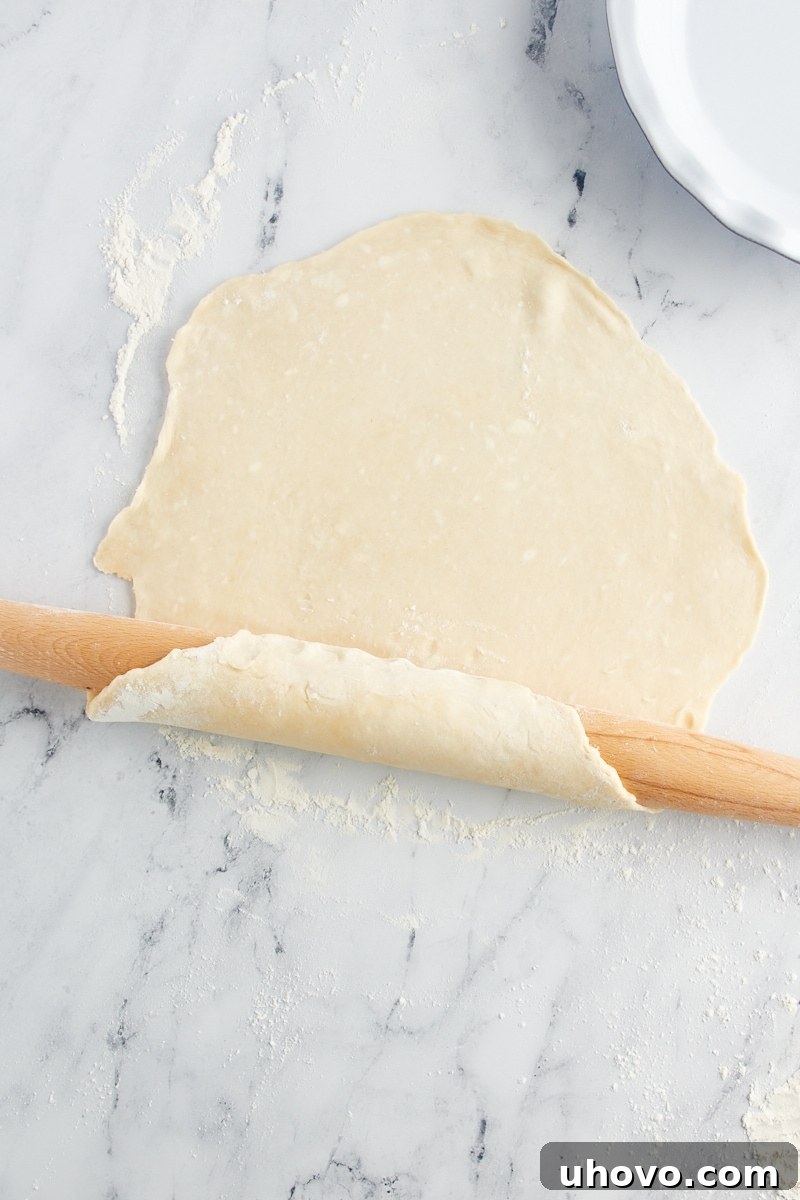
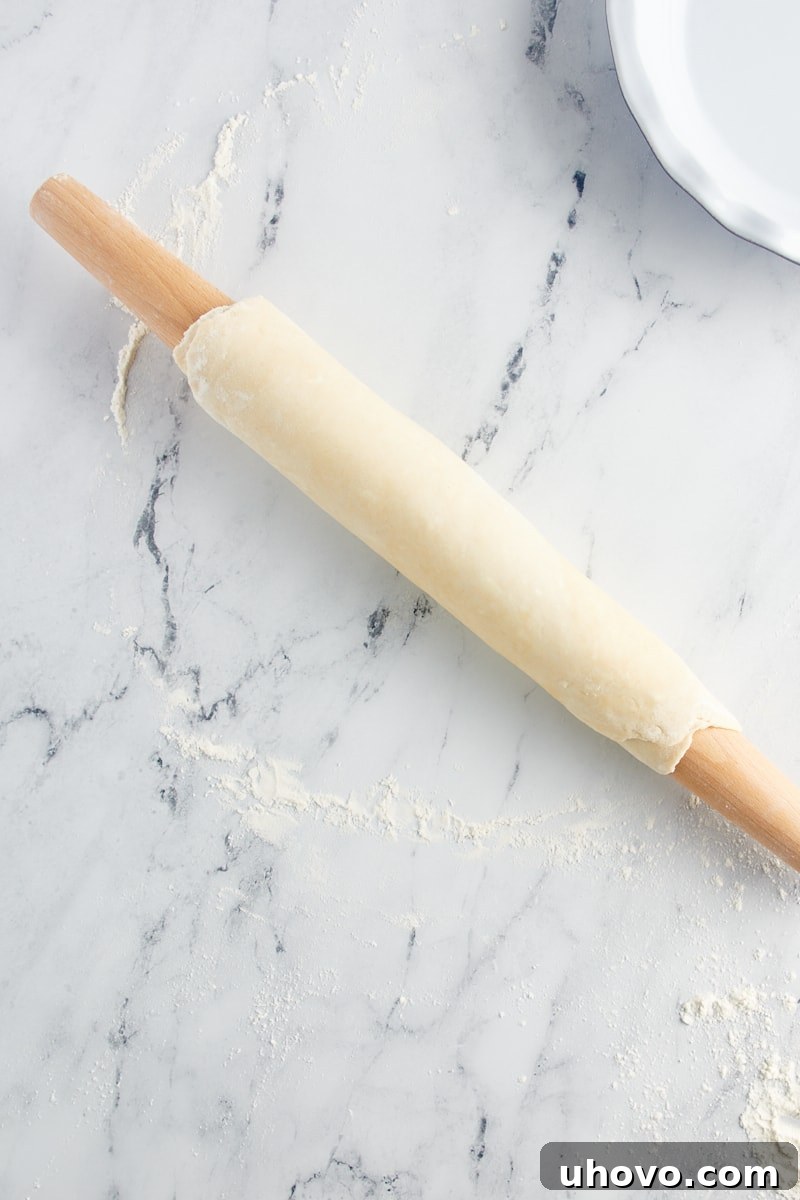
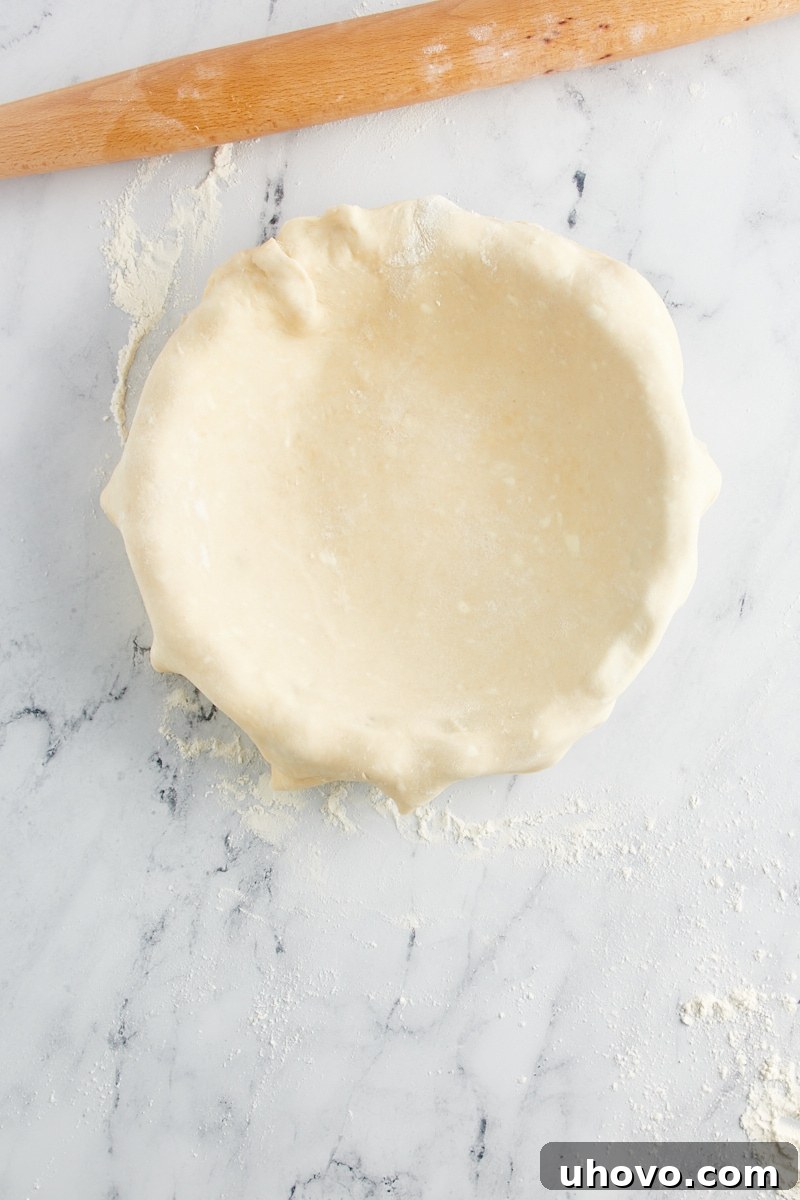
Once the dough is loosely wrapped around the rolling pin, lift the rolling pin and position it near one edge of your pie pan. Gently unroll the crust, allowing it to unfurl directly into the pan. Aim for an approximate 1-inch overhang around the edges. After the dough is in the pan, use your fingertips to softly press it into the bottom and up the sides, ensuring it fits snugly into all the curves without stretching. This gentle pressing is key to preventing the crust from shrinking during baking.
Pro Tips for Transferring Pie Crust
No matter which method you choose, keeping these key points in mind will help ensure a successful transfer and a beautifully shaped pie crust:
- Dust lightly for anti-sticking: Before folding or wrapping, lightly sprinkle a tiny bit of flour over the surface of the dough, or on your rolling pin. This small amount of flour acts as insurance, preventing the delicate dough from sticking to itself during the transfer and making it easier to unfold or unroll seamlessly into the pan.
- Handle with care – avoid stretching: This is perhaps the most critical rule for transferring pie crust. Do not pull, tug, or stretch the dough to make it fit or to wrap it around your rolling pin. Any stretching will cause the gluten to tense up, and the dough will inevitably shrink back significantly during baking, resulting in a smaller, misshapen crust. Always keep the dough loosely folded or wrapped around the rolling pin to maintain its relaxed state and original size. If you notice it’s too sticky or tearing, gently re-flour your surface and rolling pin, and proceed with caution.
Elevating Your Pie: Creative Decorative Edges
Once your pie crust is snugly settled in the pan, it’s time for the fun part: adding a personal touch with decorative edges! Beyond merely functionality, crimped and styled edges add visual appeal and a professional finish to your homemade pies. There are endless possibilities for creative designs, allowing you to showcase your artistic flair.
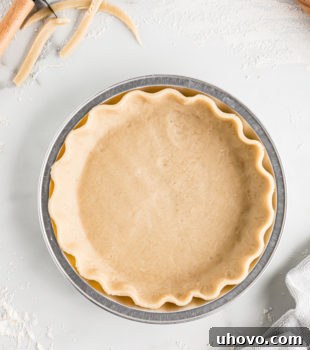
Begin by trimming any excess dough around the circumference of the pan. You’ll want to leave approximately a ½ to 1-inch overhang. This extra dough is then tucked underneath itself to create a slightly thicker, sturdier edge. A robust edge provides a better foundation for holding your chosen decorative pattern and helps prevent over-browning of the crust’s perimeter. Now, let your imagination guide you!
Here are some of my favorite simple, yet elegant, ways to decorate pie crusts:
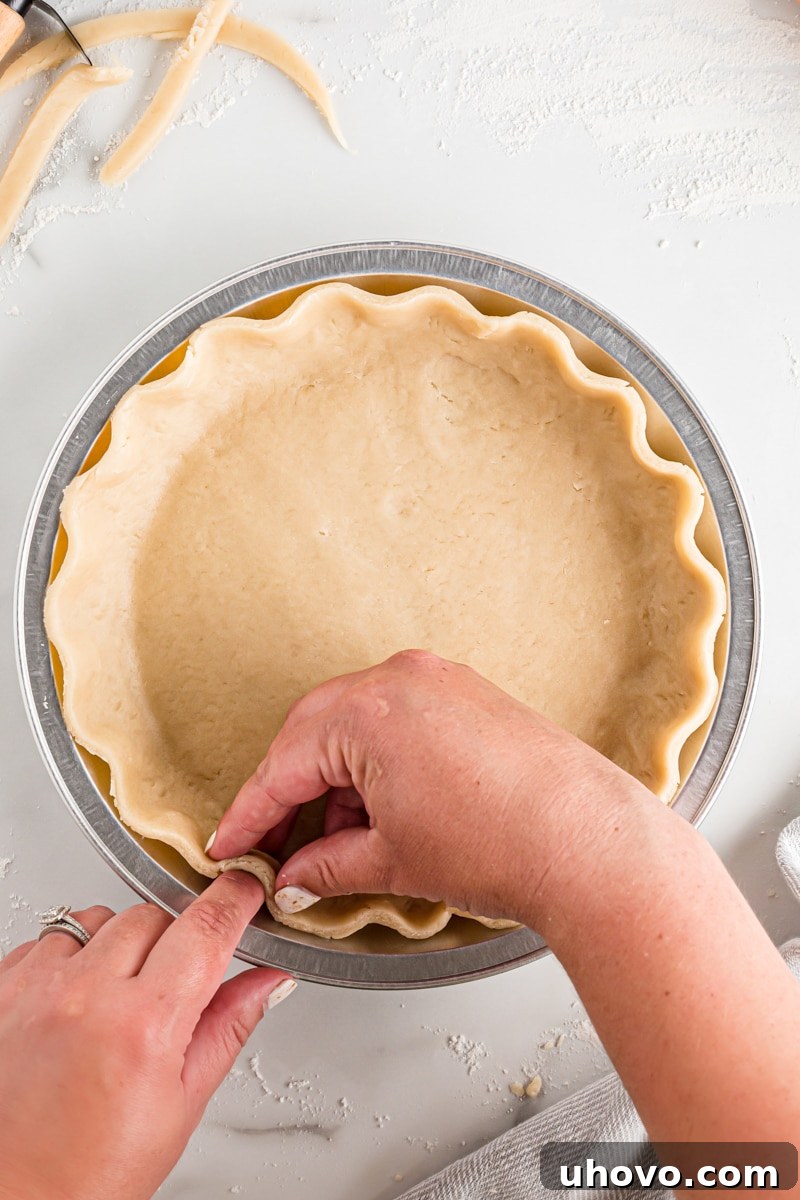
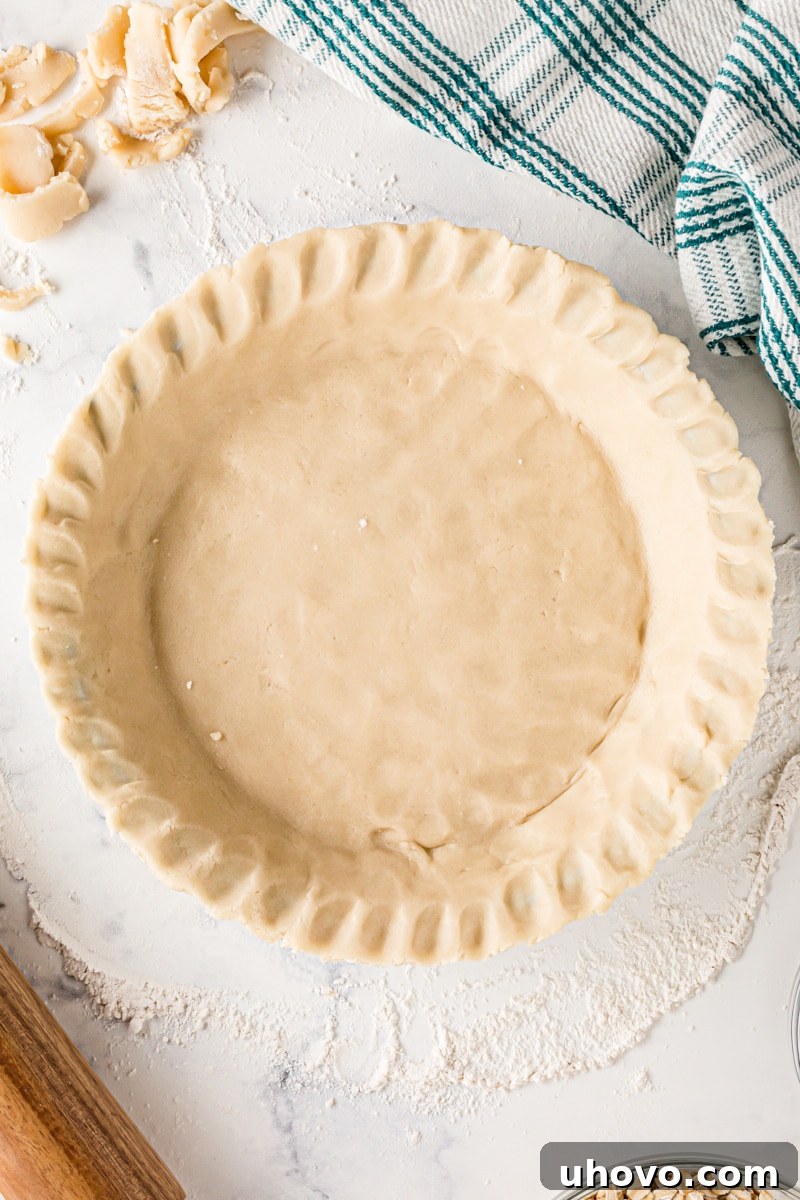
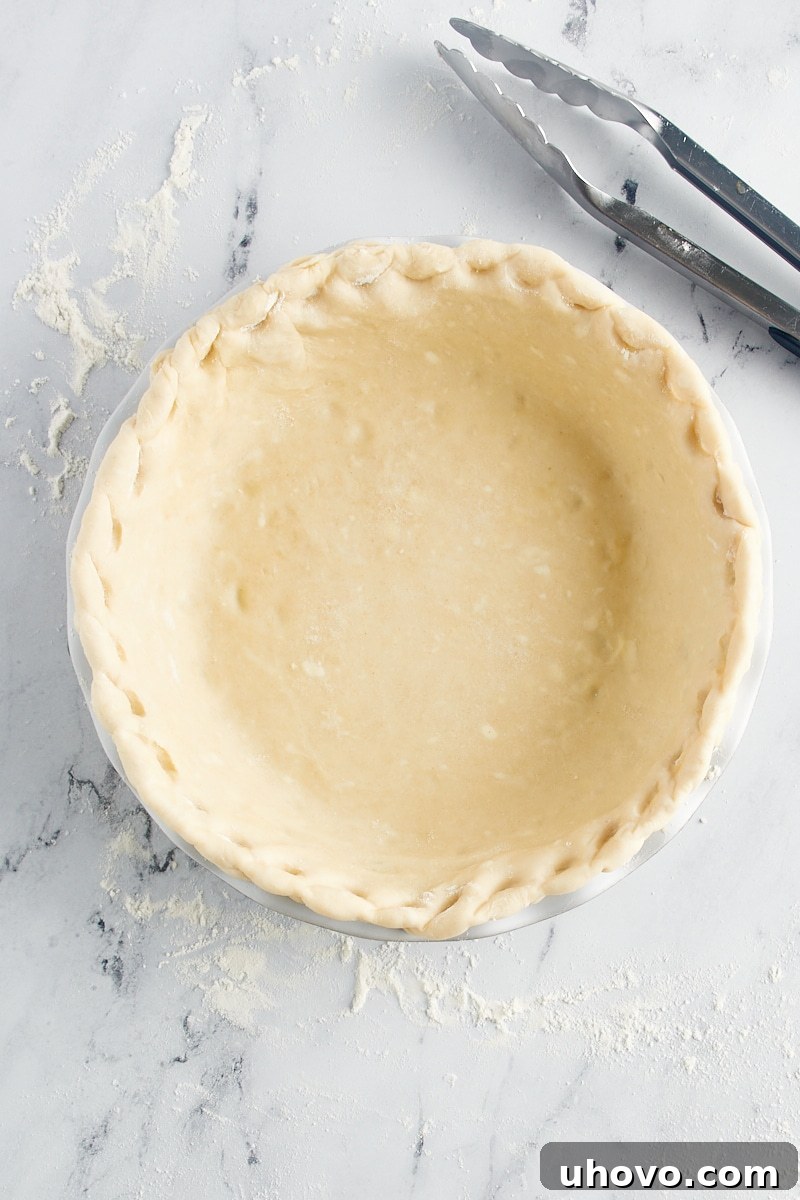
- Classic Fluted Edge: This is a timeless and elegant design. Use the thumb and forefinger of one hand to hold the dough, while simultaneously pressing the knuckle of your other hand’s forefinger into the dough between your thumb and forefinger. Repeat this motion all the way around the edge of the pie.
- Fork Impressions: A simple yet effective method. Press the tines of a fork into the dough all around the crust for a uniform pattern. For added complexity, you can create a crosshatch or chevron pattern by pressing the fork at an angle, as beautifully demonstrated with Chocolate Chip Coconut Pecan Pie.
- Rope Design: This creates a beautiful braided effect. Similar to the fluted edge, use two fingers from opposite hands, positioned at approximately a 45-degree angle to the pan, to gently twist and pinch the dough. Alternatively, you can achieve a similar effect by carefully twisting small sections of the dough between your thumb and forefinger.
- Knife Cuts: For a clean, modern look, use a sharp knife to make small, partial cuts at regular intervals around the edges (like this Apple Crumb Pie). Or, for a more geometric pattern, cut the crust into strips and alternately fold them inwards for a checkerboard appearance.
- Simple Tucked Edge: Sometimes, less is more. For a minimalist and contemporary aesthetic, simply tuck the excess dough underneath itself to create a thick, unadorned edge. This allows the pie filling to be the star.
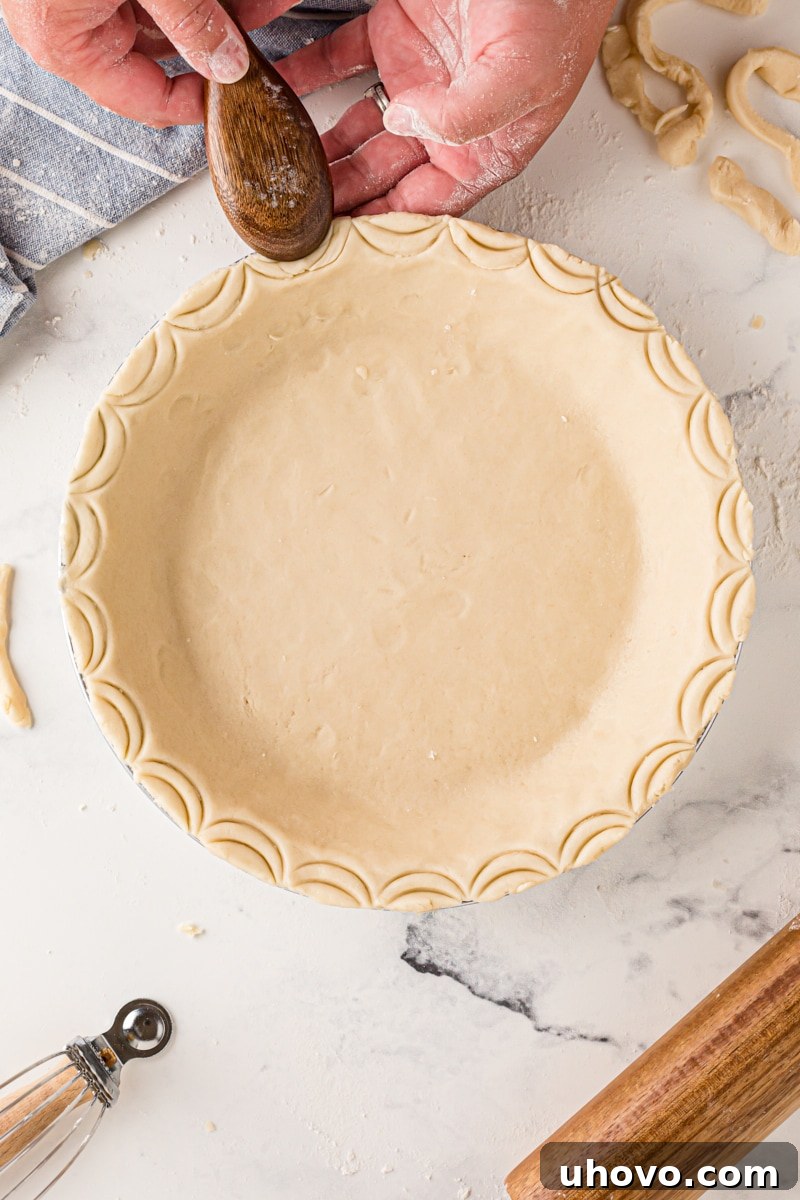
- Spoon Scallops: Utilize the rounded bottom of a spoon to create gentle, recurring indentations for a charming scalloped edge. You can make single indentations or overlap them for a double-scalloped effect.
- Kitchen Tongs Texture: For a unique, textured pattern, lightly press the edges of your crust with kitchen tongs. The patterned grip of the tongs will leave an interesting design without cutting through the dough.
- Combine Designs: Don’t be afraid to mix and match! Flute the edges and then add small fork indentations for a layered look. Experiment with alternating different designs or combine a couple of techniques to create your own signature pie edge that is truly one-of-a-kind.
- Get Creative! Look around your kitchen for other tools that might make interesting impressions – the back of a cookie cutter, a small bottle cap, or even a clean comb. Have fun and let your creativity shine!
After you’ve meticulously decorated your pie crust edges, it’s a crucial step to place the entire pie pan back into the refrigerator or freezer for at least 30 minutes. If your kitchen is particularly warm, chill it for a bit longer. This final chilling ensures that the butter remains cold and firm, helping the intricate design you just worked so hard on to hold its shape beautifully throughout the baking process, preventing it from drooping or losing definition.
The Essentials of Blind Baking Pie Crust
Blind baking, also known as parbaking, is a technique where the pie crust is partially or fully baked before the filling is added. This step is indispensable for certain pie recipes, particularly those with liquid fillings that don’t require extensive baking (like custard pies or quiches) or no-bake fillings (such as chocolate cream pie or fresh fruit tarts) where a crisp, fully cooked crust is essential. Blind baking prevents a soggy bottom and ensures an evenly baked crust.
Here are the key steps to effectively blind bake your pie crust:
1. Ensure thorough chilling: The importance of chilling cannot be overstated. After you’ve fitted the crust into the pan and carefully formed your decorative edges, return the pie pan to the refrigerator or freezer. A minimum of 30 minutes (or even longer, up to an hour) of chilling will firm up the butter and relax the gluten, significantly reducing the likelihood of the crust shrinking away from the sides of the pan during baking. This helps maintain the desired shape and size.
2. Consider docking the crust: Docking involves gently pricking the bottom and sides of the crust with a fork. While not always strictly necessary, especially if you’re using pie weights, it can help prevent large air bubbles from forming and puffing up the crust during baking. These small holes allow steam to escape, promoting a more even bake. If you’re using a heavy layer of pie weights, docking might be less critical, but it’s a good habit for consistency.
3. Utilize pie weights: This step is paramount for blind baking. Line the chilled crust with parchment paper or foil, ensuring it covers the bottom and extends up the sides. Then, fill the lined crust with pie weights. The weights provide even pressure across the surface of the dough, preventing the crust from slumping down the sides or puffing up excessively in the middle. While dedicated ceramic or metal pie weights are highly recommended for their even heat distribution and reusability, you can also use dried beans, uncooked rice, or granulated sugar as alternatives. Just be aware that dried beans and rice may not be reusable for cooking after baking due to the high heat. Ensure the weights fill the entire bottom surface and extend slightly up the sides to support the crust.
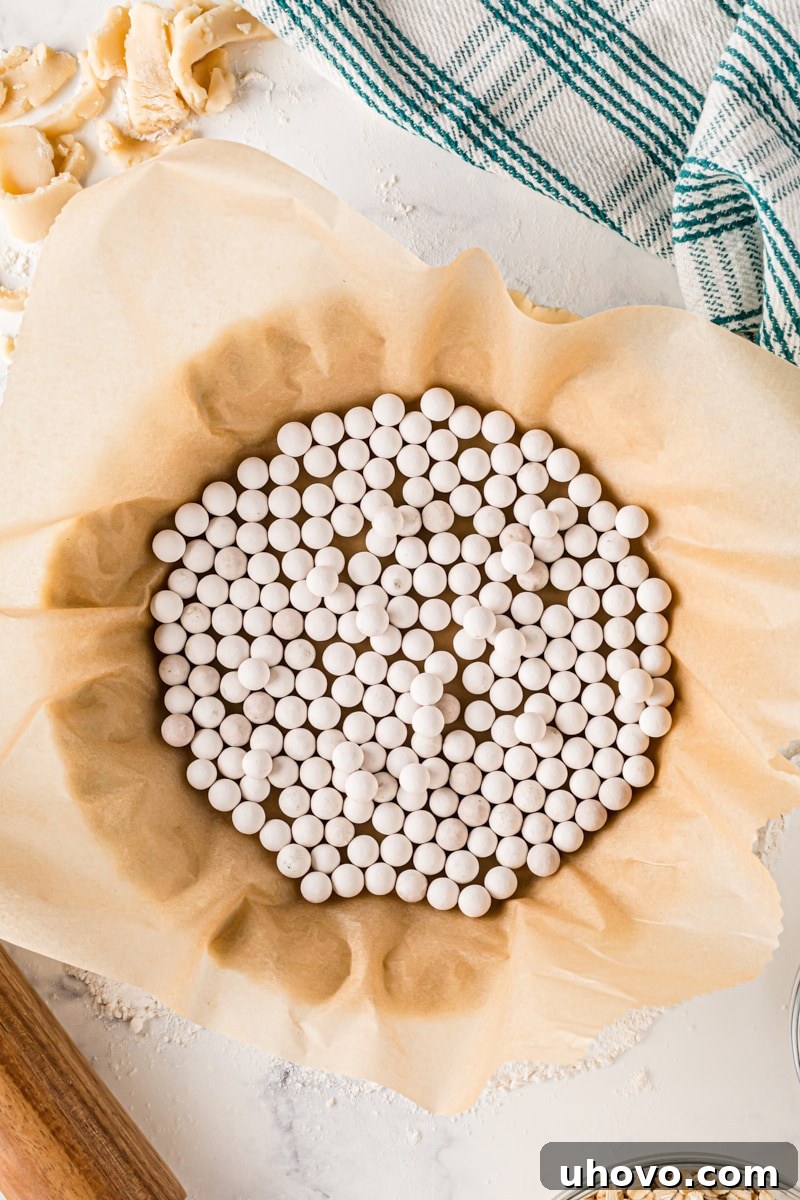
Baking the blind crust: The duration and temperature for blind baking will depend on whether your recipe calls for a partially baked or fully baked crust. Always refer to your specific pie recipe’s instructions for precise timing and temperature guidelines, as they are tailored to the filling and overall bake.
For a partially-baked crust (parbaked), which is typically used for pies that will have a wet filling and bake further, the goal is to set the crust and give it a head start. You’ll want it to achieve a light golden brown color and feel set to the touch. Once the filling is added, it will continue to bake and brown with the pie.
For a fully-baked crust, used for pies with unbaked fillings, the crust needs to be completely golden brown and crisp throughout. This ensures it’s sturdy enough to hold a no-bake filling without becoming soggy and provides a satisfying texture.
As a general guideline, preheat your oven to 375°F (190°C). For a partially-baked crust, bake with pie weights for about 15 minutes. Then, carefully remove the parchment paper and pie weights, and bake for an additional 5 minutes or until the edges are lightly golden and the bottom appears set. For a fully-baked crust, bake with pie weights for 15-20 minutes. Remove the parchment paper and weights, then continue baking for another 5-10 minutes, or until the crust is thoroughly golden brown and crisp.
Recommended Tools for Pie Crust Perfection
While you don’t need a professional bakery’s worth of equipment to make a fantastic pie crust, having a few key tools can significantly streamline the process and improve your results. Here are the tools I personally recommend for crafting a basic, yet superb, pie crust. For an even wider selection of helpful baking gadgets, be sure to explore my Pie Baking Essentials in my Amazon storefront. (As an Amazon Associate, Bake or Break earns from qualifying purchases.)
- Pastry blender (or pastry cutter): For those who prefer the tactile experience of mixing by hand, a pastry blender is indispensable. It efficiently cuts cold butter into flour without transferring heat from your hands, ensuring those crucial pea-sized butter pieces remain intact for a flaky crust.
- Food processor: If speed and minimal effort are your priorities, a food processor is a game-changer. It quickly incorporates butter into flour, significantly reducing prep time. It’s particularly useful if you find hand-mixing challenging or if you tend to over-mix when doing it by hand. Just remember to use short pulses and avoid over-processing.
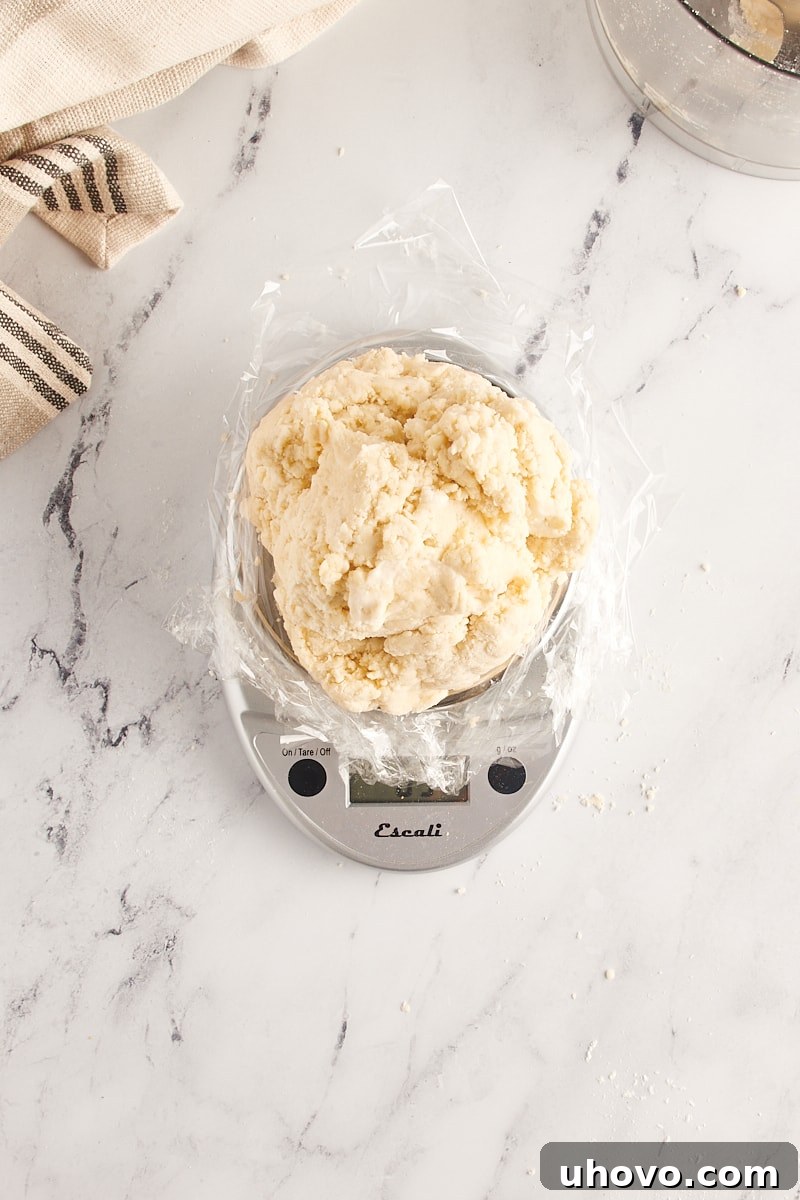
- Digital kitchen scale: For ultimate accuracy in baking, especially when measuring flour, a digital scale is invaluable. It eliminates the inconsistencies of volumetric measurements (cups) and ensures repeatable results. It’s also incredibly helpful for dividing your dough evenly into discs before chilling, guaranteeing two perfectly sized crusts.
- Rolling pin: The choice of rolling pin often comes down to personal preference. There are three main types:
- Tapered (or French) rolling pins: Many pastry chefs favor these as they offer excellent control and a more direct feel for the dough’s thickness.
- Cylindrical rolling pins: These offer a classic, even rolling surface.
- Handled rolling pins: Familiar to most home bakers, these are easy to grip and maneuver.
Rolling pins come in various materials such as wood, silicone, or metal. Use whichever type and material you feel most comfortable and confident with.
- Ruler: A simple 12-inch ruler is an understated but incredibly useful tool for ensuring your crust is rolled to the correct thickness (⅛-inch) and diameter (e.g., 12 inches for a 9-inch pie). While fancy pastry mats with printed measurements exist, a basic ruler often suffices and offers timeless practicality.
- Pie plate: Pie pans come in a myriad of materials and designs, each with slightly different heat conductivity. I often reach for a metal pie plate because it provides predictable and thorough baking, promoting a beautifully browned and crisp bottom crust. If you prefer glass or ceramic, be aware that these materials conduct heat differently and might require slight adjustments to baking time or temperature to achieve similar results, often taking a bit longer to heat up and retaining heat longer.
Key Tips for Pie Crust Success
Armed with knowledge and a great recipe, you’re well on your way to making a truly incredible homemade pie crust. To ensure your efforts are crowned with perfect results, here are a few final, invaluable tips for success:
- Temperature is everything: This is arguably the most critical factor in achieving a flaky crust. Always start with very cold butter and ice-cold water. Once these ingredients are on your counter, work swiftly to incorporate them into the flour, minimizing the time they spend warming up. Throughout the rolling process, if the dough becomes too soft or sticky, don’t hesitate to pop it back into the refrigerator for 10-15 minutes to re-chill. Even after you’ve trimmed and crimped your beautiful edges, a final chill in the refrigerator or freezer for at least 30 minutes will help the butter firm up and relax the gluten, preventing the crust from shrinking and helping your decorative patterns hold their shape during baking.
- Do not over-mix: Over-mixing is the archenemy of flaky pie crust. When flour and water are combined, gluten begins to develop. Excessive mixing overdevelops this gluten, resulting in a tough, chewy, and bread-like crust, rather than the desired tender and flaky texture. Whether mixing by hand or with a food processor, stop as soon as the dough just barely comes together in large clumps. It should still look a bit shaggy, not smooth and uniform. Resist the urge to keep mixing until it’s perfectly cohesive.
- Use just enough water: The amount of water needed can fluctuate based on factors like the humidity in your kitchen and the specific brand or type of flour you’re using. Add the very cold water gradually, one tablespoon at a time, mixing until the dough starts to form large, shaggy clumps that hold together when gently squeezed. Too much water will create a sticky dough that requires more flour (leading to a tougher crust) and more mixing. Too little water, conversely, will result in a dry, crumbly dough that’s difficult to roll out and prone to cracking. Aim for a dough that feels slightly moist but not wet, and pliable but not sticky.
- Don’t let those trimmed scraps go to waste: After you’ve trimmed your pie crust edges, you’ll inevitably have some leftover dough. Instead of discarding them, transform these delicious scraps into delightful treats! Roll them out, cut them into shapes, sprinkle with cinnamon sugar, and bake them to make pie crust cookies. It’s a fantastic way to enjoy a little bonus treat and prevent food waste.
Can You Freeze Unbaked Pie Crust?
Absolutely, yes! Freezing unbaked pie crust is an excellent way to prepare ahead of time, saving you valuable time on busy baking days. It’s a fantastic solution for meal prep or simply having a homemade crust on standby for impromptu pie cravings.
To freeze your pie dough, simply follow the recipe instructions for mixing, forming, and wrapping the dough discs. Once wrapped tightly in plastic wrap, place each disc into an airtight, freezer-safe bag or container. This double-layer protection helps prevent freezer burn and keeps the dough fresh. Properly stored, unbaked pie crust can maintain its quality in the freezer for up to 3 months.
When you’re ready to use your frozen pie crust, transfer the wrapped dough from the freezer to the refrigerator and allow it to thaw overnight. This slow thawing process is ideal. Once thawed, let the dough sit at room temperature for a few minutes (usually 10-15 minutes) until it softens just enough to be rolled out without cracking. It should still feel cold to the touch but be pliable. This convenient method ensures you always have a delicious homemade pie crust within reach, ready to be transformed into your next culinary masterpiece.
Ready to Bake? Pie Recipes to Try
Now that you’re armed with the knowledge and confidence to make your own perfect all-butter pie crust, it’s time to put your skills to delicious use! This versatile crust is the ideal foundation for a wide array of sweet and savory pies. Challenge yourself and delight your taste buds with some of my favorite pie recipes:
- Classic Pecan Pie
- Rich Black Bottom Oatmeal Pie
- Southern-inspired Chess Pie
Or explore any of my other delightful traditional crust pies, all of which will sing with the addition of your freshly made, flaky pie crust. Happy baking!
Homemade All-Butter Pie Crust
Pin Recipe
Leave a Review
Ingredients
- 2 ½ cups (300 g) all-purpose flour
- 2 teaspoons sugar*
- 1 teaspoon salt
- 1 cup (226 g) unsalted butter, cold and cut into 1/2-inch cubes
- 6 to 8 tablespoons (90 to 120 ml) very cold water
Recommended Products
-
Pastry Blender
-
Cuisinart 11-Cup Food Processor
-
Escali Kitchen Scale
Instructions
To mix by hand
-
Whisk together the flour, sugar, and salt in a large bowl.
-
Add the cold, cubed butter and mix with a pastry blender, a fork, or two knives until the butter pieces are about the size of peas. Do not over-mix.
-
Drizzle about 2 tablespoons of very cold water over the dough mixture. Continue mixing, adding about a tablespoon of water at a time until the dough just begins to come together in large clumps. You may not need all of the water; stop when the dough holds together when gently squeezed. Do not over-mix.
-
Divide the dough in half and flatten each half into a disc. Wrap each disc tightly in plastic wrap. Refrigerate for at least 2 hours and up to 5 days.
To mix in the food processor
-
Place the flour, sugar, and salt in the bowl of a food processor. Pulse a few times to combine.
-
Add the cold, cubed butter and pulse several times (8-12 pulses) until the butter pieces are about the size of large peas.
-
Drizzle about half of the very cold water over the dough mixture. Cover and turn on the food processor, gradually adding more water through the feed tube until the dough just begins to clump together. Do not over-mix.
-
Divide the dough in half and flatten each half into a disc. Wrap each disc tightly in plastic wrap. Refrigerate for at least 2 hours and up to 5 days.
Notes
- *The sugar is optional if you prefer a completely savory crust or are making a pie with a very sweet filling.