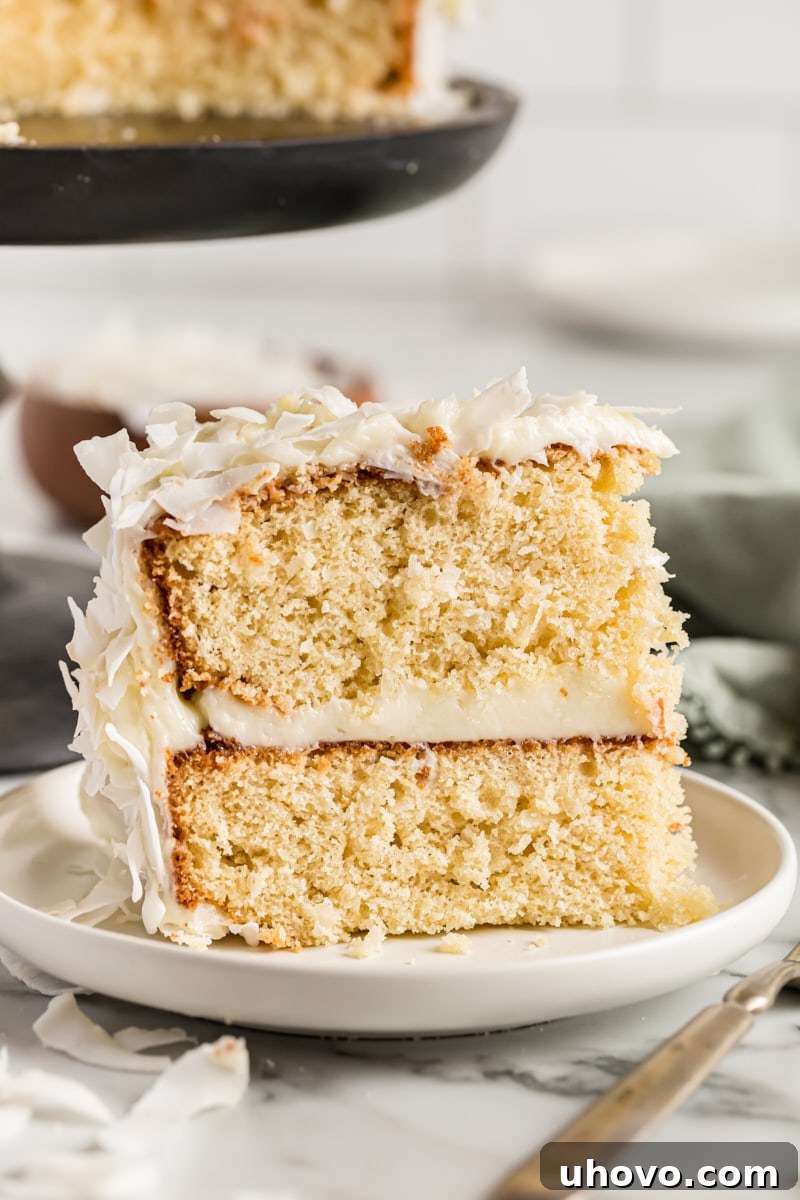
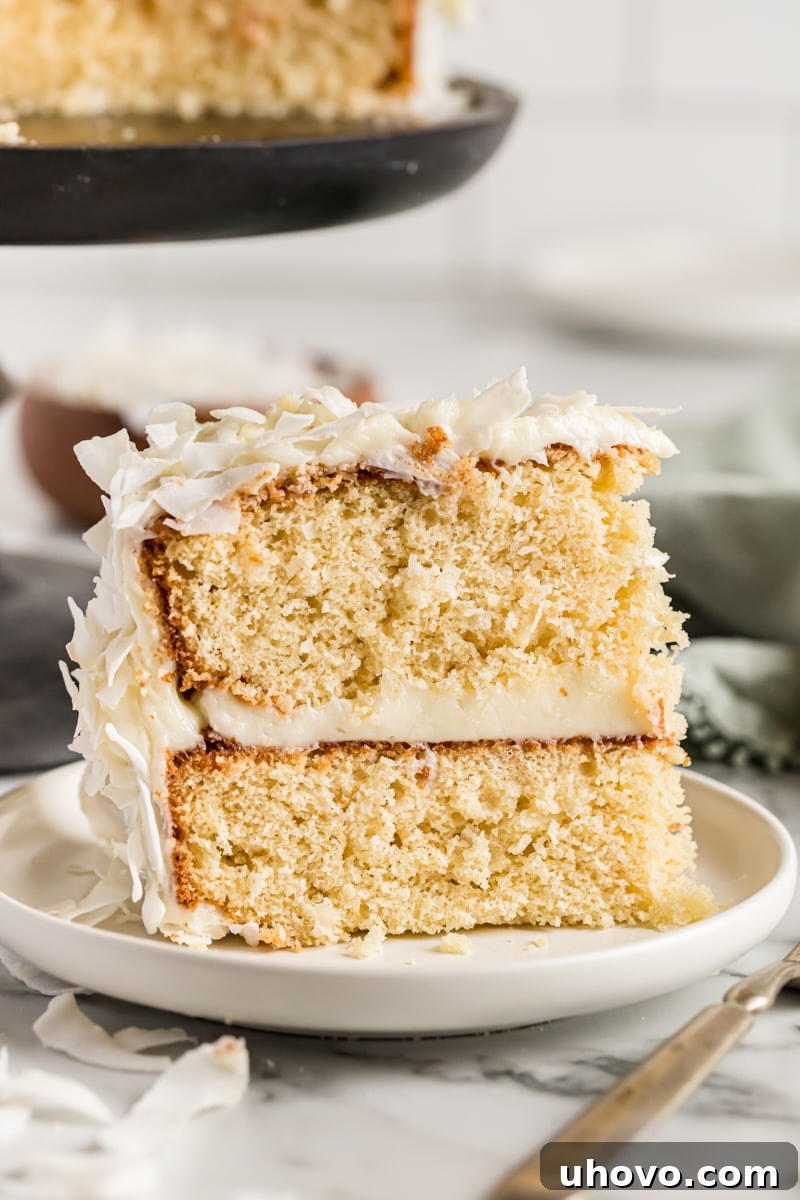
Coconut cake is more than just a dessert; it’s a cherished symbol of Southern hospitality and a delightful indulgence that captures the essence of tropical flavors in a sophisticated, sweet package. This classic Southern masterpiece typically features two tender, coconut-infused cake layers, generously slathered with rich, creamy frosting, and adorned with an abundance of delicate shredded coconut. It’s an undeniable hit for anyone who adores the sweet, nutty taste of coconut.
The Enduring Charm of Southern Coconut Cake
In the culinary pantheon of old-fashioned Southern cake recipes, coconut cake holds a revered place, standing proudly alongside other iconic treats like Hummingbird Cake, German Chocolate Cake, and Mahogany Cake. Each bite of a well-made coconut cake evokes a sense of comfort and tradition, making it a staple for family gatherings and festive celebrations. While many variations exist, our particular recipe draws inspiration from Ina Garten’s beloved cookbook, Barefoot Contessa at Home. It offers a delightful twist on the classic, incorporating a luxurious cream cheese frosting that elevates the flavor profile to new heights. If cream cheese frosting works wonders for carrot cake and red velvet, it’s absolutely irresistible on a moist coconut cake!
For those seeking a more traditional, straightforward approach to coconut cake, you might also enjoy our Coconut Sheet Cake, a simpler, yet equally delicious, old-fashioned option.
Why This Coconut Cake Recipe is a Must-Try
Our carefully crafted coconut cake recipe isn’t just another dessert; it’s an experience waiting to happen. Here’s why this particular recipe will become your new favorite:
- A Classic Reimagined with a Twist: While honoring the beloved Southern classic, this recipe introduces a rich, tangy cream cheese frosting that perfectly complements the sweet coconut flavor. The cake itself boasts a slightly denser, yet incredibly moist and tender crumb, setting it apart from lighter, more airy versions. This unique texture makes for an unexpectedly delightful coconut cake that is every bit as delicious and satisfying as its traditional counterparts. It’s a culinary journey that surprises and delights the palate.
- Effortless Elegance in a Layer Cake: The idea of baking a layer cake can often seem intimidating, but this recipe is designed to be surprisingly straightforward and fuss-free. Even novice bakers can achieve stunning results. The generous blanket of shredded coconut on top and sides beautifully conceals any minor imperfections in the frosting, eliminating the need for precise piping or elaborate decorating techniques. This ensures a beautiful presentation with minimal stress, making it a perfect project for any baker.
- The Perfect Centerpiece for Any Celebration: Elevate your next gathering with a dessert that stands out from the usual chocolate or vanilla offerings. This coconut cake serves a generous number of people and its exquisite flavor profile, combined with its elegant appearance, makes it an ideal choice for parties, holidays, or any special occasion. It’s guaranteed to impress your guests and leave a lasting impression.
Stay Connected for More Delicious Recipes!
Want to ensure you never miss out on our best baking secrets and mouth-watering recipes? Join our community! Enter your email address below, and we’ll send this delightful coconut cake recipe directly to your inbox, along with a curated selection of our most popular creations. It’s the easiest way to keep your baking inspiration flowing!
Essential Ingredients for Your Coconut Cake Masterpiece
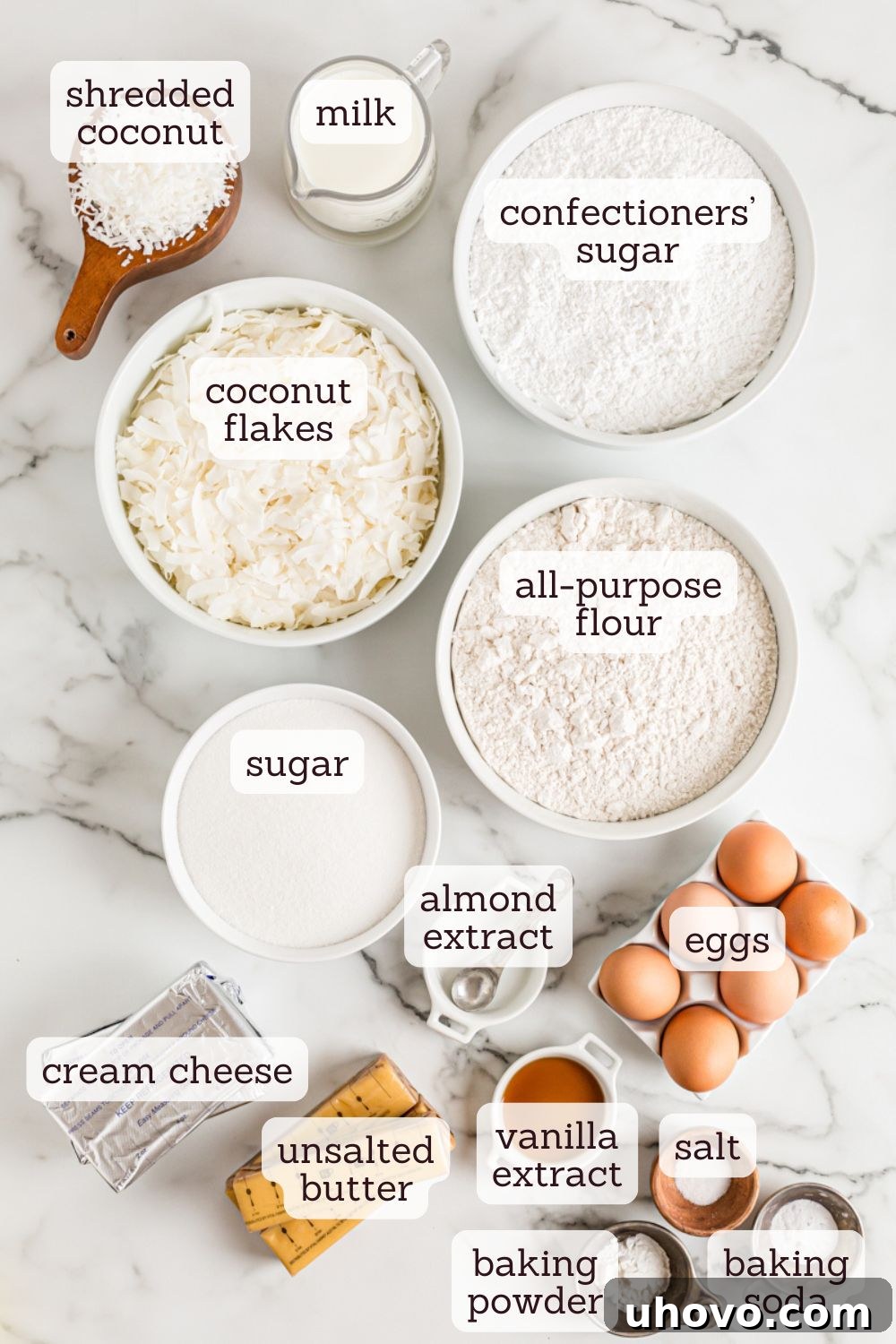
Crafting the perfect coconut cake starts with having the right ingredients, prepared correctly. Below is a comprehensive list of what you’ll need for both the luscious cake layers and the rich, tangy cream cheese frosting. Remember to consult the full recipe card further down for precise quantities and detailed instructions.
For the Moist and Flavorful Cake Layers:
- Unsalted Butter: This is the foundation of a rich cake. It’s crucial to let your butter soften at room temperature for at least 30 minutes, or even longer, before you begin. Properly softened butter creams beautifully with sugar, incorporating air that contributes to the cake’s tender texture. Avoid melting it, as this will change the cake’s structure.
- Granulated Sugar: Provides sweetness and also helps to tenderize the cake crumb and keep it moist.
- Eggs: Essential for structure, richness, and moisture. Just like butter, eggs should be at room temperature. This allows them to emulsify better with the butter and sugar, creating a smoother, more uniform batter that bakes evenly.
- Vanilla Extract: A universal flavor enhancer that adds warmth and depth, complementing the coconut beautifully.
- Almond Extract: This is our secret weapon! Almond extract brings a wonderfully complex, slightly floral, and cherry-like note that perfectly highlights and amplifies the coconut flavor without overpowering it. It truly makes this cake unforgettable.
- All-Purpose Flour: The primary structural component of the cake. For accurate measurements and consistent baking results, always measure your flour correctly, ideally by weight or using the “spoon and level” method to avoid a dense cake.
- Baking Powder: A leavening agent that helps the cake rise, contributing to its light and fluffy texture.
- Baking Soda: Another leavener, activated by acidic ingredients (like buttermilk, if used, or some chemical reactions within the batter). It works with baking powder to ensure a good rise.
- Kosher Salt: Don’t skip the salt! It balances the sweetness and enhances all the other flavors in the cake.
- Milk: Adds moisture and richness to the batter. Whole milk is generally recommended for its fat content, which contributes to a more tender and flavorful cake, but 2% milk can be used if that’s what you have on hand.
- Sweetened Shredded Coconut: The star of the show! Make sure to use *shredded* coconut for the cake batter, as its finer texture incorporates seamlessly. While larger coconut flakes are beautiful for decoration, they can alter the cake’s internal texture. The sweetness of this coconut adds to the overall delightful taste.
For the Irresistibly Tangy Cream Cheese Frosting:
- Cream Cheese: The base for our signature tangy frosting. It must be at room temperature to ensure it whips up smooth and lump-free with the butter. Use full-fat cream cheese for the best texture and flavor.
- Unsalted Butter: Also needs to be softened to room temperature for the same reasons as the cream cheese – for a perfectly smooth, creamy frosting.
- Vanilla Extract: Enhances the frosting’s sweetness and adds a classic flavor dimension.
- Almond Extract: A touch of almond extract in the frosting ties all the flavors together, echoing the subtle notes in the cake and creating a harmonious taste experience.
- Confectioners’ Sugar (Powdered Sugar): Provides sweetness and structure to the frosting. It’s essential to sift this first to eliminate any lumps, guaranteeing a silky-smooth, professional-looking frosting.
- Sweetened Shredded Coconut (for garnish): Used generously to coat the outside of the cake, providing both beautiful texture and an intensified coconut flavor.
Almond Extract: To Substitute or Not to Substitute?
Almond extract is a key ingredient in this particular coconut cake recipe, offering a unique and complex flavor profile that truly elevates the dessert. Its distinctive taste is often described as a delicate blend of cherry and floral notes, which remarkably enhances the natural sweetness of the coconut. If you don’t have almond extract readily available, have a nut allergy, or simply prefer to omit it, you can certainly use an equal amount of additional vanilla extract. While the cake will still be delicious, the almond extract adds a layer of sophistication and depth that is truly special. We highly recommend trying it if you can – it’s often the subtle difference that makes this the best coconut cake recipe you’ll ever try!
Step-by-Step Guide: Crafting Your Perfect Coconut Cake
Creating this beautiful and delicious coconut cake is a rewarding process. Follow these detailed steps to ensure a flawless bake and a stunning presentation. We’ve included progress images to guide you through each stage.
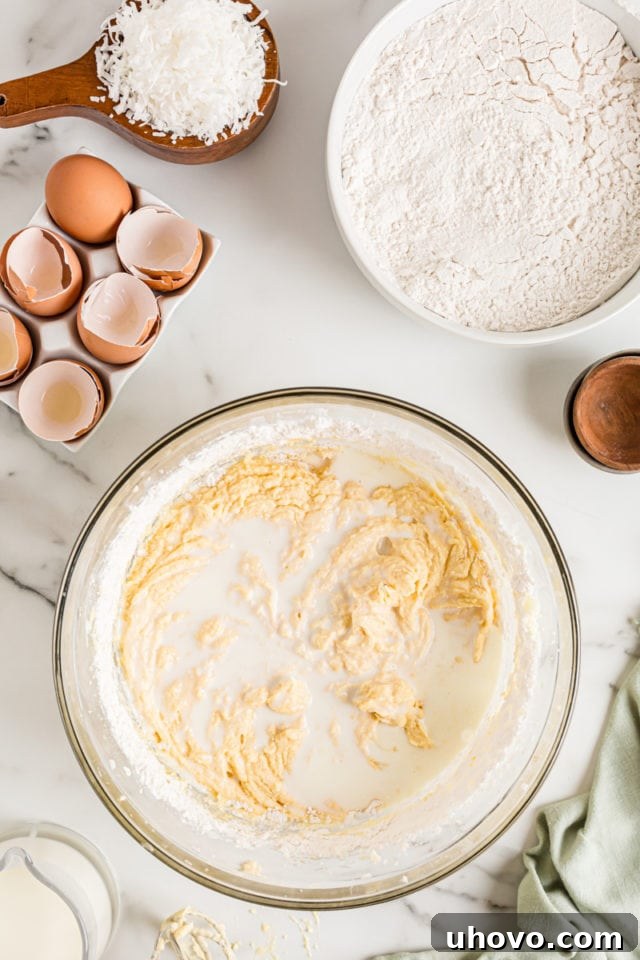
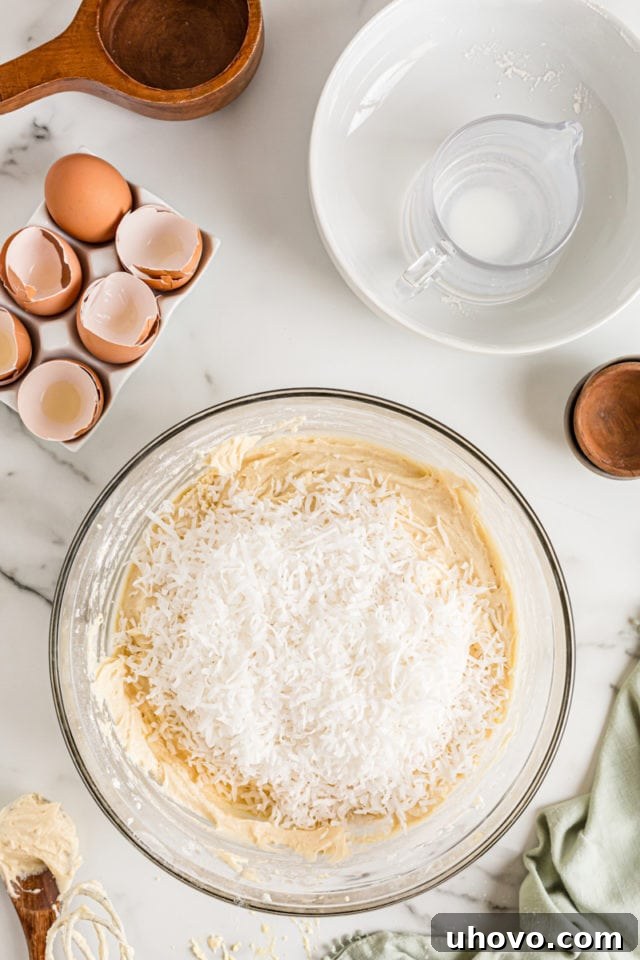
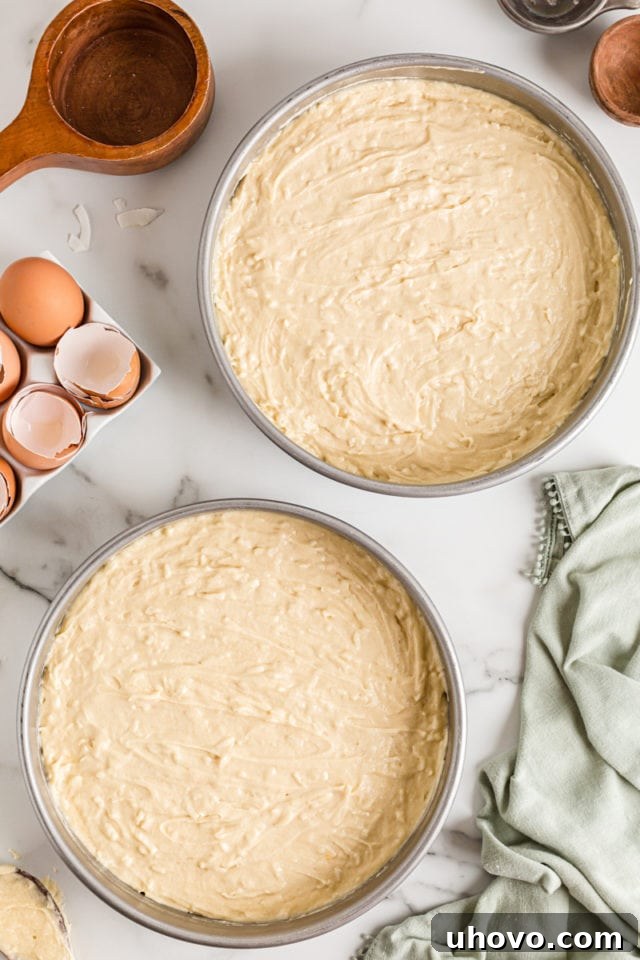
To Prepare the Moist Coconut Cake Layers:
- Step 1: Prepare Your Pans and Oven. Begin by preheating your oven to a precise 350°F (175°C). This ensures the oven is at the correct temperature when the cakes go in, promoting an even rise. Thoroughly grease two 9-inch round cake pans. Then, line the bottoms of each pan with parchment paper. This vital step prevents sticking. Finally, grease the parchment paper and lightly dust the entire pan (sides and bottom) with a thin layer of flour, tapping out any excess. This creates a non-stick surface, ensuring your beautiful cake layers release perfectly.
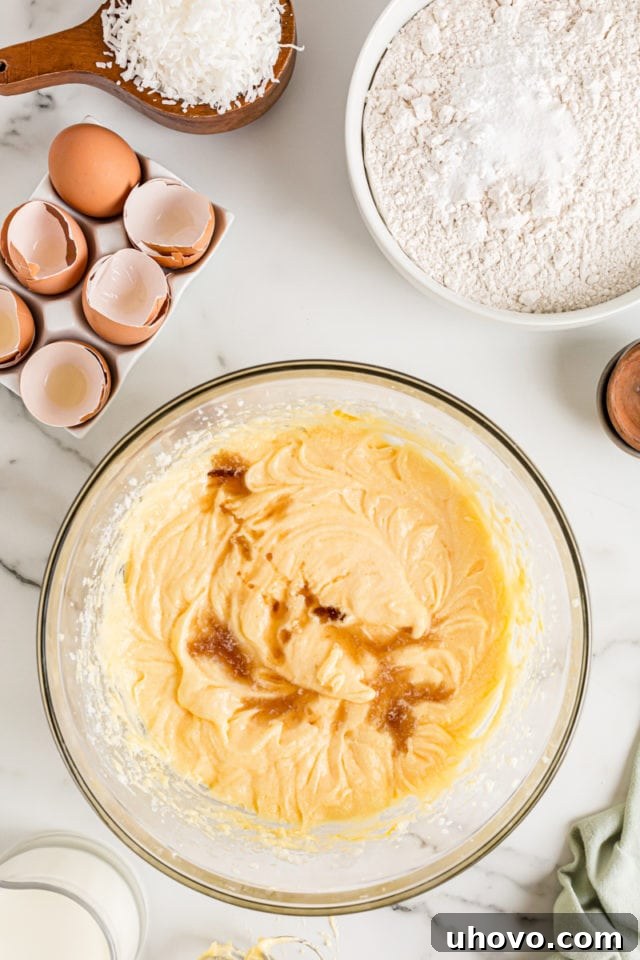
- Step 2: Cream Wet Ingredients for Airiness. In a large mixing bowl, using an electric mixer on medium-high speed, beat the softened unsalted butter and granulated sugar together. Continue beating for about 3-5 minutes, until the mixture is visibly light in color and fluffy in texture. This creaming process incorporates air, which contributes to the cake’s tender crumb. Next, add the room temperature eggs, one at a time, beating well after each addition to fully incorporate. Finish by beating in both the vanilla and almond extracts. Don’t be alarmed if the mixture appears slightly lumpy at this stage; it’s normal.
- Step 3: Combine Dry and Wet Ingredients. In a separate, medium-sized mixing bowl, sift together the all-purpose flour, baking powder, baking soda, and kosher salt. Sifting removes lumps and aerates the dry ingredients, leading to a lighter cake. With your electric mixer on low speed, gradually add the sifted dry ingredients to the wet mixture in three alternating portions, interspersing them with two portions of the milk. Mix just until the ingredients are combined and no streaks of flour remain. Be careful not to overmix, as this can develop the gluten too much, resulting in a tough cake. Finally, gently fold in the sweetened shredded coconut using a rubber spatula.
- Step 4: Bake to Golden Perfection. Divide the prepared cake batter evenly between your two greased and floured cake pans. Use a rubber spatula to gently smooth the tops of each layer. Bake in the preheated oven for approximately 45 to 55 minutes. The cakes are done when their tops are beautifully golden brown and a wooden toothpick inserted into the very center comes out clean, with no wet batter attached.
- Step 5: Proper Cooling for Structure. Once baked, remove the cakes from the oven and allow them to cool in their pans on wire racks for 30 minutes. This initial cooling period allows the cakes to firm up and prevents them from breaking when handled. After 30 minutes, carefully invert the cakes onto the wire racks, remove the pans and parchment paper, and let them cool completely to room temperature. Rushing this step will result in melted frosting!
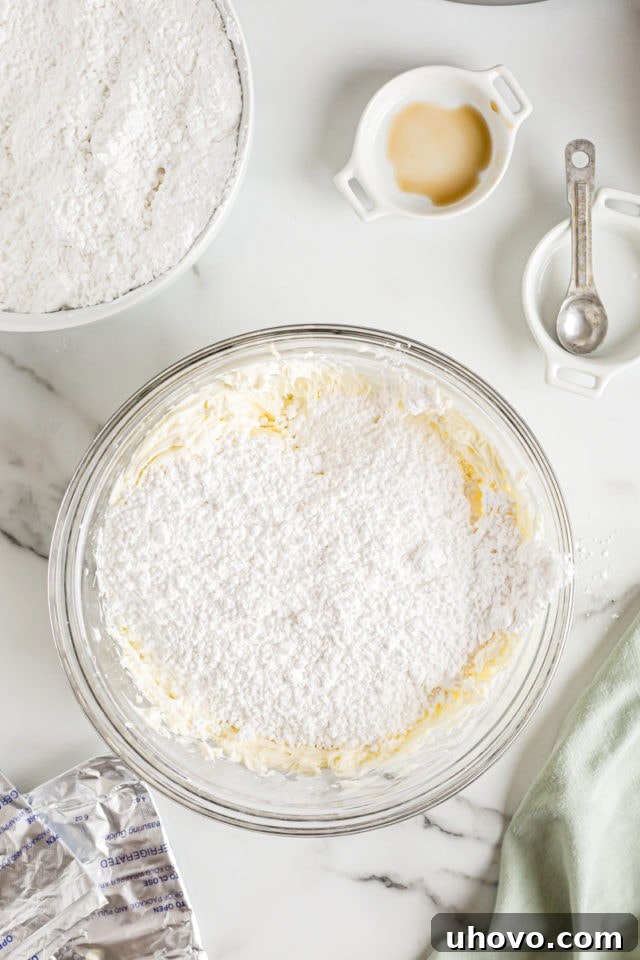
To Prepare the Frosting and Assemble Your Cake:
- Step 1: Prepare the Silky Cream Cheese Frosting. In a clean mixing bowl, using an electric mixer on low speed, beat together the softened cream cheese, softened unsalted butter, vanilla extract, and almond extract until well combined and creamy. Gradually add the sifted confectioners’ sugar, mixing on low speed until all the sugar is incorporated. Increase the speed to medium-high and beat until the frosting is light, fluffy, and perfectly smooth. Avoid over-beating, as this can make the frosting too thin.
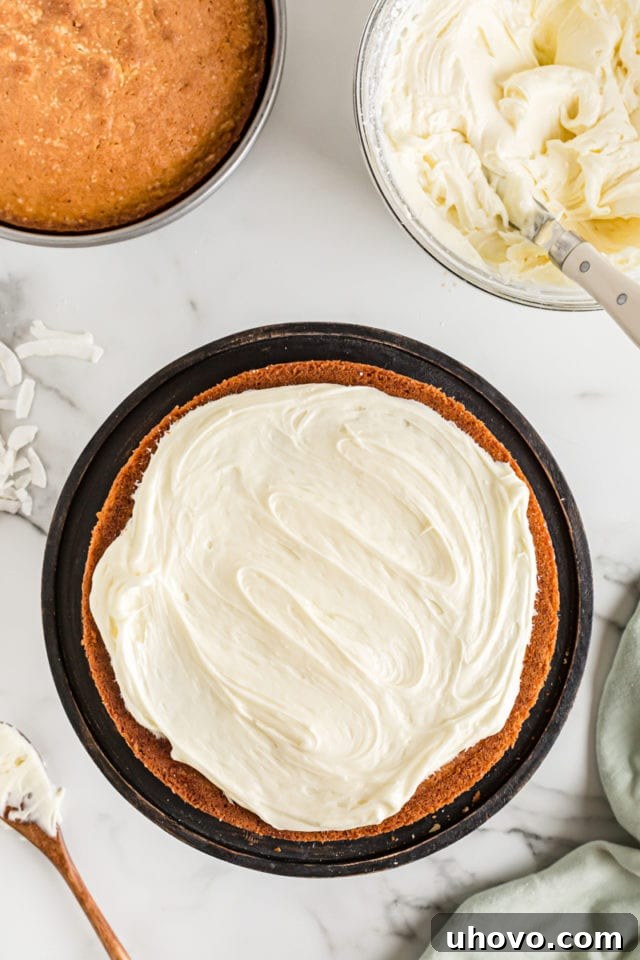
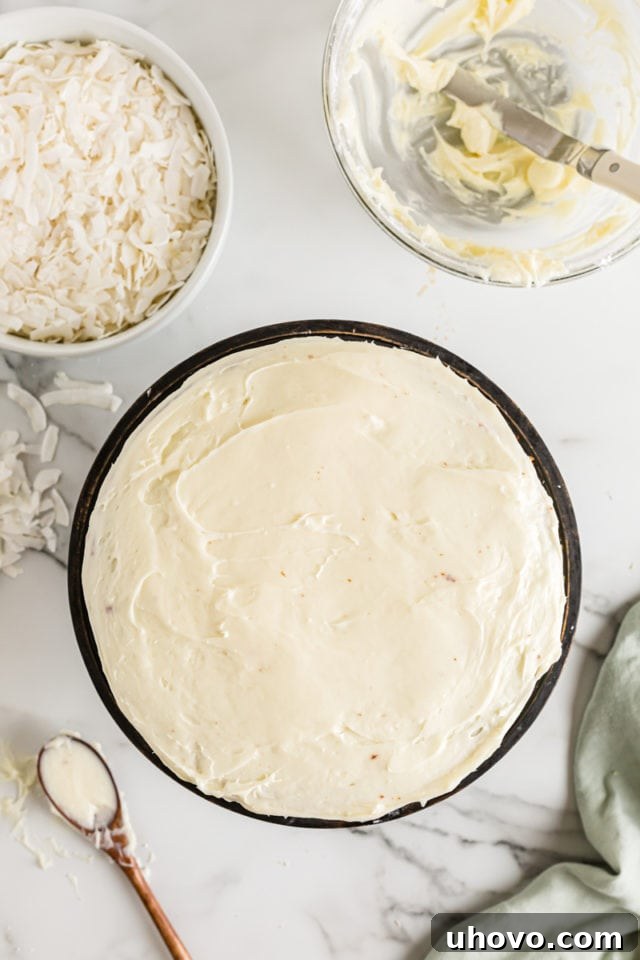
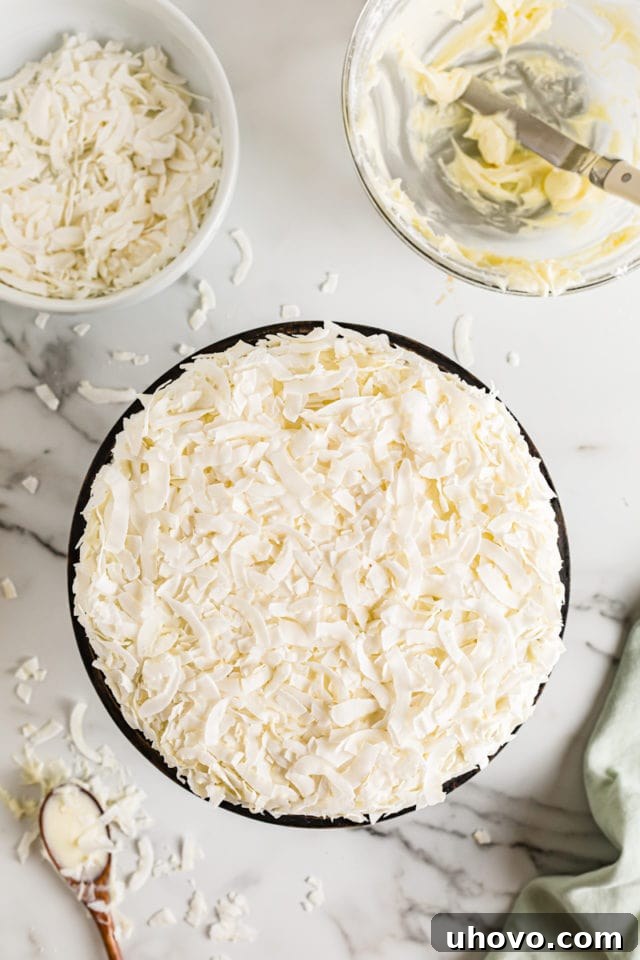
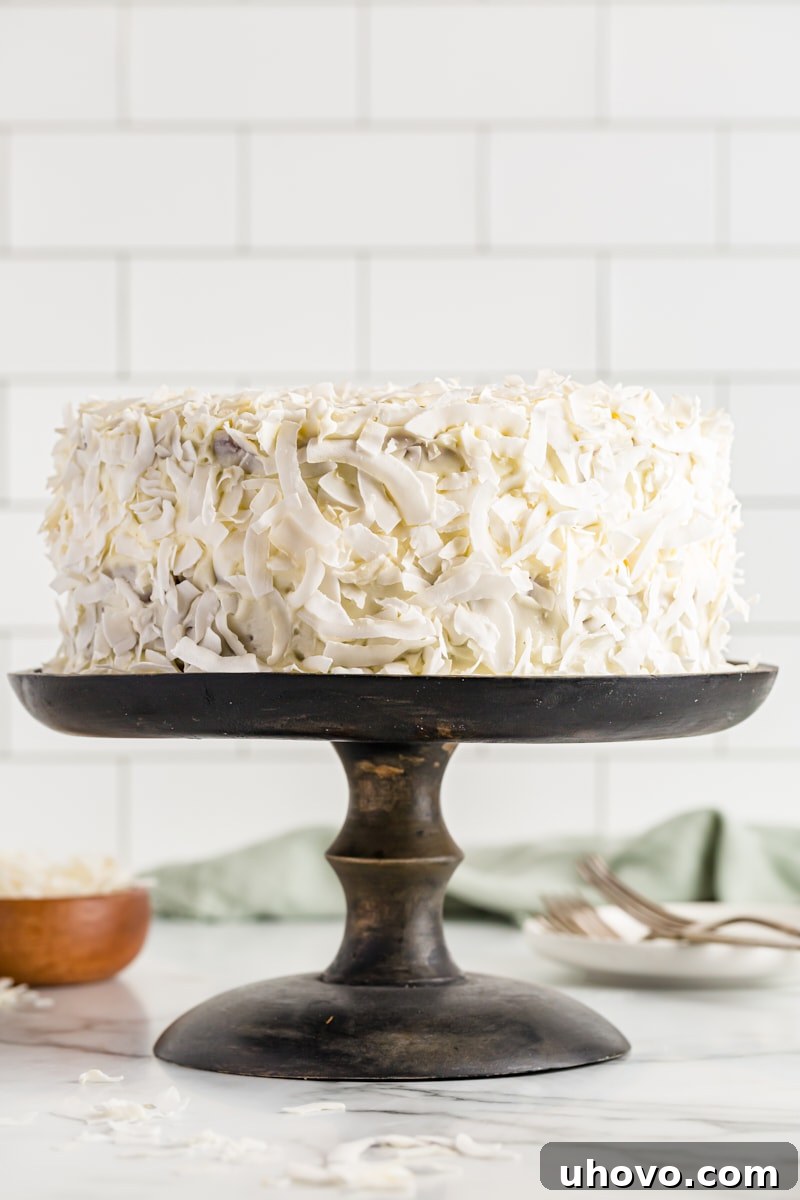
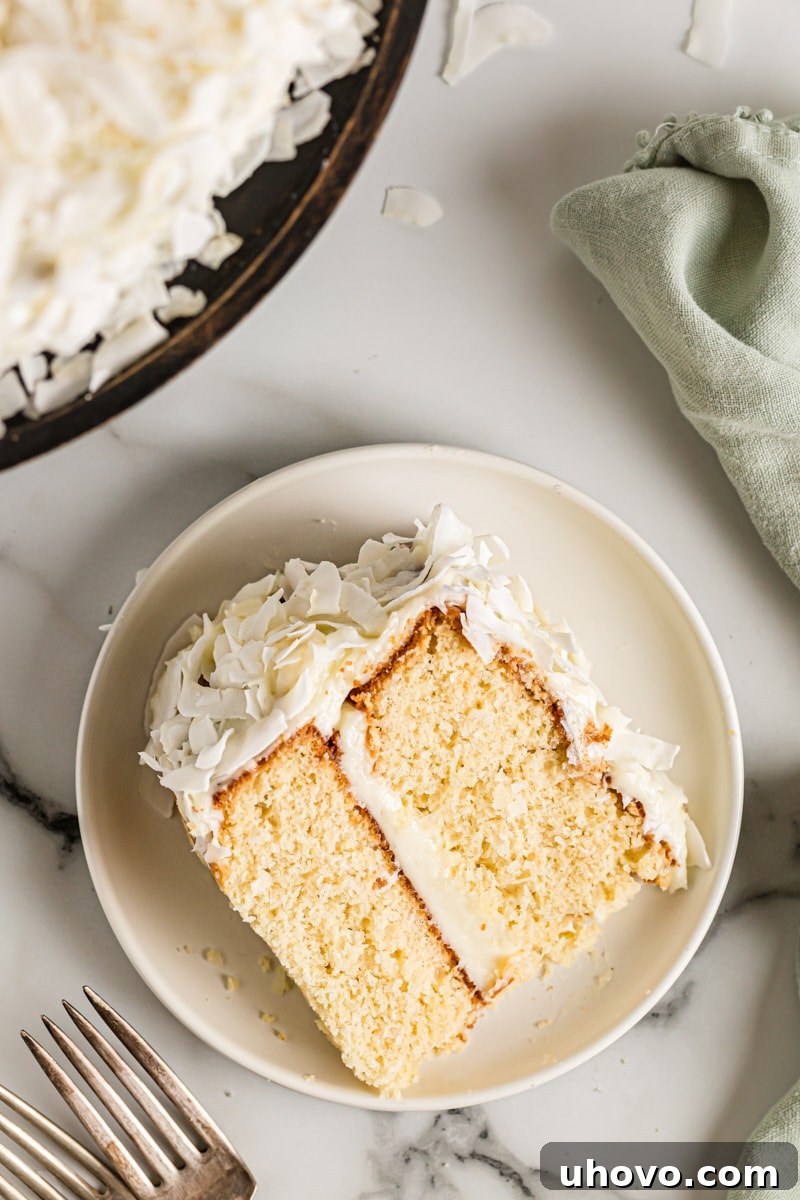
- Step 2: Assemble and Decorate Your Cake. Once both cake layers are completely cool, place one layer onto your serving plate or cake stand. Spread about one-third of the cream cheese frosting evenly over the top of this first layer. Carefully place the second cake layer directly on top. Use the remaining frosting to generously cover the top and sides of the entire cake, striving for an even coating. Finally, and perhaps the most fun part, lavishly sprinkle sweetened shredded coconut over the top and gently press it into the sides of the cake. This not only adds a beautiful texture and intense coconut flavor but also handily disguises any frosting imperfections!
Expert Tips for a Flawless Coconut Cake Every Time
Achieving a bakery-quality coconut cake at home is entirely within your reach with these helpful tips and tricks. Pay attention to these details, and your cake will be nothing short of spectacular:
- Precision with Batter Weight: For perfectly even cake layers, a kitchen scale is your best friend. Weigh your empty mixing bowl before adding ingredients, then weigh it again once your batter is complete. Subtract the initial weight to get the total batter weight. Divide this number by two, and that’s the exact amount of batter that should go into each prepared cake pan. This simple step guarantees uniform layers, making assembly much easier and resulting in a beautifully balanced cake.
- Leveling Your Cake Layers: It’s common for cake layers to bake with a slight dome in the center. While this doesn’t affect flavor, it can make stacking and frosting challenging. Once your cakes are completely cool, use a long, serrated knife (like a bread knife) to carefully shave off any excess dome, creating a perfectly flat top surface. This provides a stable base for your next layer and ensures a professional-looking finish.
- Patience is Key: Always Cool Your Cake Completely: This cannot be stressed enough! While it’s tempting to frost a warm cake, doing so will inevitably lead to a runny, melted mess. Your cream cheese frosting is butter-based and will simply slide off warm cake layers. Ensure your cake layers are completely cooled to room temperature, which can take several hours, before you even think about applying the frosting. If you’re short on time, you can even wrap cooled layers in plastic and refrigerate them briefly to speed up the cooling process.
- Embrace the Lazy Susan for Easy Frosting: If you have a cake decorating turntable (or a lazy Susan), now is the time to use it! Frosting the sides of a layer cake becomes incredibly simple and smooth when you can slowly rotate the cake as you apply the frosting. This allows for continuous, even strokes, making the process much more efficient and enjoyable.
- Don’t Overmix the Batter: Once you start adding flour to your wet ingredients, mix only until just combined. Overmixing develops the gluten in the flour, which can lead to a tough, rubbery cake. A few small lumps of flour are better than an overmixed batter.
- Room Temperature Ingredients for Best Emulsification: We mentioned it for butter and eggs, but it’s worth reiterating. Room temperature ingredients blend together more smoothly, creating a homogeneous batter that traps air more effectively, leading to a lighter, finer crumb. Plan ahead and take your cold ingredients out of the fridge at least 30 minutes to an hour before you start baking.
Storage and Freezing Instructions for Your Coconut Cake
Proper storage is essential to keep your homemade coconut cake fresh, moist, and delicious for as long as possible. Given its luscious cream cheese frosting, refrigeration is key.
- Storing in the Refrigerator: Because this exquisite coconut cake features a cream cheese frosting, it absolutely needs to be stored in the refrigerator. To keep it from drying out, cover the entire cake loosely with plastic wrap. Alternatively, if you have leftover slices or smaller portions, transfer them to an airtight storage container. When properly stored, your cake will maintain its delightful freshness for 3 to 4 days. Remember to bring individual slices to room temperature for about 15-20 minutes before serving to fully appreciate the cake’s flavors and the frosting’s creamy texture.
- Can I Freeze This Coconut Cake? Absolutely! This coconut cake freezes beautifully, allowing you to enjoy a taste of summer any time of the year, or prepare it ahead for future events. You can freeze the cake for up to 3 months without compromising its quality.
- To freeze a whole cake or a large portion: First, place the frosted cake (uncovered) on a parchment-lined baking sheet and freeze it until the frosting is firm, typically for 1-2 hours. This “flash freezing” prevents the frosting from sticking to the wrapping. Once the frosting is firm, carefully wrap the entire cake tightly with a few layers of plastic wrap, followed by a layer of aluminum foil. This double-layer protection is crucial to prevent freezer burn and keep unwanted odors out.
- To freeze individual slices or smaller leftovers: Place them in an airtight freezer-safe container, separating layers with parchment paper if stacking.
To serve, transfer the frozen cake (still wrapped) to the refrigerator and let it thaw slowly overnight. Once thawed, bring it to room temperature for about an hour before serving for optimal enjoyment.
The Perfect Classic for Spring and Festive Celebrations
Coconut layer cake has long been a beloved tradition for spring gatherings, and it’s easy to understand why. Its delicate flavors and stunning visual appeal make it a spectacular centerpiece for any special occasion. The combination of soft, tender cake layers, the rich and creamy frosting, and the snowy, ethereal finish of shredded coconut creates a dessert that is both elegant and inviting. It’s particularly well-suited for holidays like Easter, where its bright, fresh taste complements the season’s new beginnings. Beyond Easter, consider this beautiful cake for bridal showers, baby showers, Mother’s Day brunches, or simply any event that calls for a touch of extra sweetness and sophistication.
If you’re meticulously planning your holiday menu, you’ll discover this delightful cake proudly featured in our curated collection of the best Easter desserts for your festive table. It stands shoulder to shoulder with other springtime favorites, including classic carrot cake, indulgent chocolate creations, and a vibrant array of other bright spring treats, ensuring a diverse and delicious spread.
No matter the occasion, serving this exquisite coconut cake is sure to infuse your table with a little extra sweetness, a lot of cherished tradition, and an abundance of joy. It’s more than just a dessert; it’s an edible celebration.
Frequently Asked Questions About Coconut Cake
- Can I use frozen coconut? Yes, if you only have frozen shredded coconut, it will work just fine. Thaw it completely and pat it dry with paper towels to remove excess moisture before adding it to the batter or using it for garnish.
- How can I make my coconut cake extra moist? Beyond using room temperature ingredients and not overmixing, ensuring your oven temperature is accurate and not over-baking are crucial. You can also lightly brush cake layers with coconut milk or a simple syrup after baking for added moisture, though this recipe is designed to be very moist already!
- What kind of coconut should I use? For the cake batter, sweetened shredded coconut is recommended for its fine texture and flavor. For decorating the outside, you can use either sweetened shredded coconut or larger, unsweetened coconut flakes for a different visual and textural appeal.
- Can I make this cake ahead of time? Absolutely! The cake layers can be baked a day or two in advance, cooled completely, wrapped tightly in plastic wrap, and stored at room temperature or refrigerated. The frosting can also be made a day ahead and stored in the fridge, then re-whipped briefly before frosting. Once assembled, the cake keeps well in the fridge for 3-4 days.
More Irresistible Coconut Desserts You’ll Love
If you’ve fallen in love with the delightful taste of coconut, there’s a whole world of other treats waiting to be explored! Here are more fantastic coconut-inspired recipes from our kitchen:
Coconut Cake
12 servings
30 minutes
55 minutes
30 minutes
1 hour 55 minutes
Pin Recipe
Leave a Review
Ingredients
For the cake:
- 1 ½ cups (339 g) unsalted butter, softened
- 2 cups (400 g) granulated sugar
- 5 large eggs, at room temperature
- 1 ½ teaspoons vanilla extract
- 1 ½ teaspoons almond extract
- 3 cups (360 g) all-purpose flour
- 1 teaspoon baking powder
- ½ teaspoon baking soda
- ½ teaspoon kosher salt
- 1 cup (240 ml) milk
- 4 ounces (113 g) sweetened shredded coconut
For the frosting:
- 16 ounces (454 g) cream cheese, softened
- 1 cup (226 g) unsalted butter, softened
- ¾ teaspoon vanilla extract
- ¼ teaspoon almond extract
- 16 ounces (454 g) confectioners’ sugar, sifted
- 6 ounces (170 g) sweetened shredded coconut
Recommended Products
-
USA Pan Bakeware Round Cake Pan, 9 inch
-
OXO 3 Cup Stainless Steel Sifter
-
Barefoot Contessa at Home Cookbook
Instructions
To make the cake:
-
Preheat oven to 350°F (175°C). Grease two 9-inch round cake pans and line each with parchment paper. Grease the paper and dust with flour.
-
With an electric mixer on medium speed, mix the butter and sugar on medium-high speed until light and fluffy (about 3-5 minutes). Add the eggs, one at a time, mixing well after each addition. Add the extracts and mix. The mixture will look a bit lumpy.
-
Sift the flour, baking powder, baking soda, and salt. Turn the mixer on low speed and add the dry ingredients in three portions, alternating with two portions of the milk. Mix just until combined. Fold in the coconut.
-
Divide the batter evenly between prepared pans. Smooth the tops of each. Bake for 45-55 minutes, or until the tops are browned and a toothpick inserted in the center comes out clean. Cool in the pans on a wire rack for 30 minutes. Then, remove from the pans to finish cooling on wire racks.
To make the frosting:
-
Using an electric mixer on low speed, combine the cream cheese, butter, and extracts. Add the confectioners’ sugar and mix just until smooth.
-
Spread the frosting on the first layer. Place the second layer on top and frost the top and sides. Sprinkle the top and sides with coconut.
Notes
- Recipe adapted from Barefoot Contessa at Home.
- How to store: Cover the cake loosely with plastic wrap or transfer leftovers to an airtight storage container. The cake will keep in the refrigerator for 3 to 4 days.
- How to freeze: You can freeze coconut cake for up to 3 months. To freeze a whole cake or a large portion of leftovers, I recommend placing it on a parchment-lined baking sheet and freezing it uncovered. Once the frosting has frozen through, wrap the cake tightly with a few layers of plastic wrap. Leftovers can be frozen in an airtight container. Let the cake thaw in the refrigerator before serving.
Jennifer McHenry
Cakes
American